

Effects of education to facilitate knowledge about chronic pain for adults: a systematic review with meta-analysis
Open accessThe DOI matches its Crossref record; 42 of the 43 references it cites were found in a registry or an index, and 1 are not checked yet.
Abstract
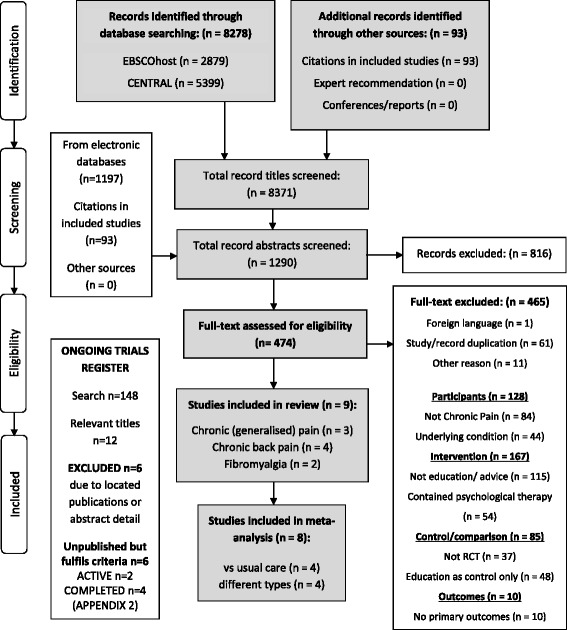
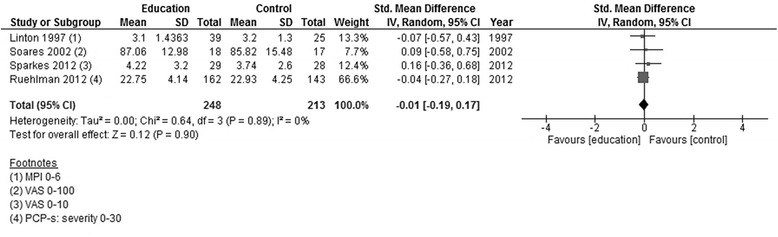
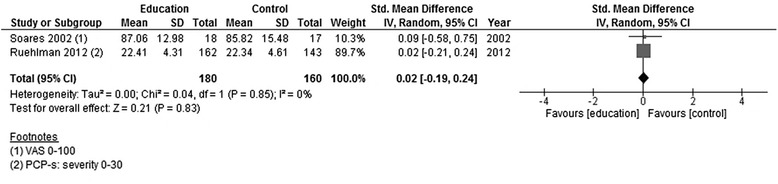
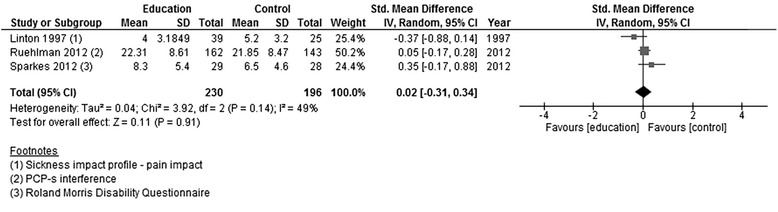
BACKGROUND: Chronic pain can contribute to disability, depression, anxiety, sleep disturbances, poor quality of life and increased health care costs, with close to 20 % of the adult population in Europe reporting chronic pain. To empower the person to self-manage, it is advocated that education and training about the nature of pain and its effects and how to live with pain is provided. The objective of this review is to determine the level of evidence for education to facilitate knowledge about chronic pain, delivered as a stand-alone intervention for adults, to reduce pain and disability. METHODS: We identified randomised controlled trials of educational intervention for chronic pain by searching CENTRAL, MEDLINE, EMBASE and ongoing trials registries (inception to December 2013). Main inclusion criteria were (1) pain >3 months; (2) study design that allowed isolation of effects of education and (3) measures of pain or disability. Two reviewers independently screened and appraised each study. RESULTS: Nine studies were analysed. Pooled data from five studies, where the comparator group was usual care, showed no improvement in pain or disability. In the other four studies, comparing different types of education, there was no evidence for an improvement in pain; although, there was evidence (from one study) of a decrease in disability with a particular form of education-pain neurophysiology education (PNE). Post-hoc analysis of psychosocial outcomes reported in the studies showed evidence of a reduction in catastrophising and an increase of knowledge about pain following PNE. CONCLUSIONS: The evidence base is limited by the small numbers of studies, their relatively small sample sizes, and the diversity in types of education studied. From that limited evidence, the only support for this type of education is for PNE, though it is insufficiently strong to recommend conclusively that PNE should be delivered as a stand-alone intervention. It therefore remains sensible to recommend that education be delivered in conjunction with other pain management approaches as we cannot confidently conclude that education alone is effective in reducing pain intensity or related disability in chronic pain in adults.
Overview
The claims and statistics of this paper haven’t been checked yet.
Free: it reads the open-access text and checks the first 5 claims that cite a source we can check. Create a free account to check every claim.
Integrity signals
Registry
Cites
Statistics
Figures

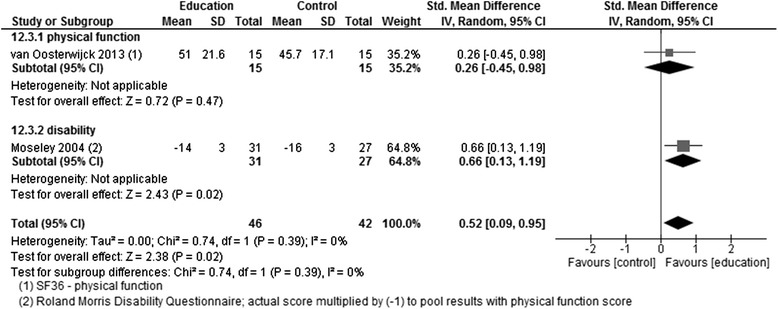

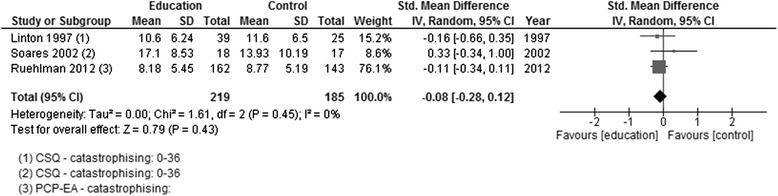
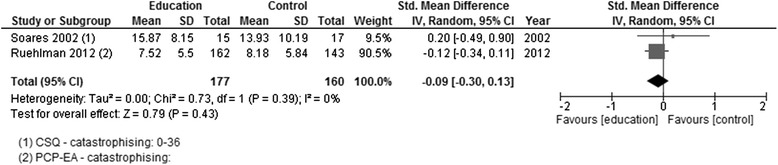
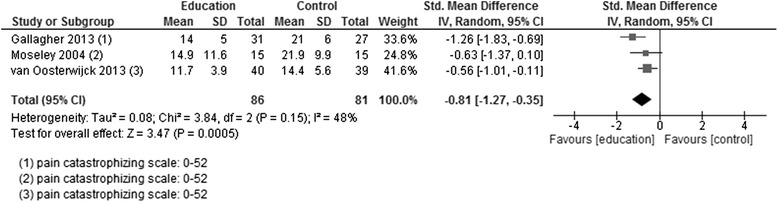



Verification
Claims the paper makes
The claims and statistics of this paper haven’t been checked yet.
Free: it reads the open-access text and checks the first 5 claims that cite a source we can check. Create a free account to check every claim.
Claims other papers make about this one
Each is checked against this paper’s own text: does it say what the citing paper says it does?
The check wasn’t confident either way, so it gives no verdict — never disputed.
In the citing paper
“Evidence shows that the beneficial effects of hypnosis are specific to the suggestion.[27, 61]”
From The chronic pain skills study: Protocol for a randomized controlled trial comparing hypnosis, mindfulness meditation and pain education in Veterans (2020) · cites this paper as [61]
Experimental — accuracy not yet measured
Self-check
Percentages, sums and reported differences re-computed from the paper’s own numbers.
The self-check needs the paper’s full text.
Citations
Cites
1 retracted
Transcutaneous electrical nerve stimulation (TENS) for chronic pain
Nnoaham, K. E., & Kumbang, J. (2008) · Cochrane Database of Systematic Reviews · doi:10.1002/14651858.cd003222.pub2 · Cited by 261
RetractedPreferred Reporting Items for Systematic Reviews and Meta-Analyses: the PRISMA statement
Moher, D., Liberati, A., Tetzlaff, J., Altman, D. G., & for the PRISMA Group (2009) · BMJ · doi:10.1136/bmj.b2535 · Cited by 83,823
Preferred reporting items for systematic reviews and meta-analyses: the PRISMA Statement.
(2009) · PubMed Central · Cited by 44,859
Preferred Reporting Items for Systematic Reviews and Meta-Analyses: The PRISMA Statement
Moher, D., Liberati, A., Tetzlaff, J., & Altman, D. G. (2009) · Journal of Clinical Epidemiology · doi:10.1016/j.jclinepi.2009.06.005 · Cited by 19,575
Survey of chronic pain in Europe: Prevalence, impact on daily life, and treatment
Breivik, H., Collett, B., Ventafridda, V., Cohen, R., & Gallacher, D. (2006) · European Journal of Pain · doi:10.1016/j.ejpain.2005.06.009 · Cited by 5,486 · cited 1×
“anxiety, sleep disturbances, poor quality of life, and increased health care costs, with close to 20 % of the adult population in Europe reporting chronic pain [1].”
BackgroundPsychological therapies for the management of chronic pain (excluding headache) in adults
Williams, A. C. D. C., Eccleston, C., & Morley, S. (2012) · Cochrane Database of Systematic Reviews · doi:10.1002/14651858.cd007407.pub3 · Cited by 1,634
The epidemiology of chronic pain in the community
Elliott, A. M., Smith, B. H., Penny, K. I., Cairns Smith, W., & Alastair Chambers, W. (1999) · The Lancet · doi:10.1016/s0140-6736(99)03057-3 · Cited by 1,208 · cited 1×
“The issues with aging and pain are more complex than simply pain being a direct correlate of biological age, though there does appear to be justification for considering pain in older people as a distinct issue [13–16].”
BackgroundSelf-citationGuidance on the management of pain in older people
(2013) · Age and Ageing · doi:10.1093/ageing/afs200 · Cited by 727 · cited 1×
“The issues with aging and pain are more complex than simply pain being a direct correlate of biological age, though there does appear to be justification for considering pain in older people as a distinct issue [13–16].”
BackgroundSelf-citationLouw, A., Diener, I., Butler, D. S., & Puentedura, E. J. (2011) · Archives of Physical Medicine and Rehabilitation · doi:10.1016/j.apmr.2011.07.198 · Cited by 687 · cited 3×
“Four studies fulfilled both criteria for low risk of bias [28, 32, 33, 35], and one fulfilled one of the two criteria [36].”
BackgroundMethodA Randomized Controlled Trial of Intensive Neurophysiology Education in Chronic Low Back Pain
Moseley, G. L., Nicholas, M. K., & Hodges, P. W. (2004) · The Clinical Journal of Pain · doi:10.1097/00002508-200409000-00007 · Cited by 537 · cited 19×
“Nine studies were included (Ferrell et al. 1997 [17], Gallagher et al. 2013 [18]; Linton et al. 1997 [11], Morrison et al. 1988 [12], Moseley et al. 2004 [19], PAIN INTENSITY Education versus usual care “average pain” Soares 2002; Ruehlman 2013 18 17 35 SMD random 0 0.02 [−0.19, 0.24] 0.21 0.83…”
BackgroundMethodInfluential
Research works printed but not linked: 5
- 7. Review Manager (RevMan). [Computer program]. Version 5.3. Copenhagen: The Nordic Cochrane Centre, The Cochrane Collaboration; 2014.
- 8. Higgins J, Green S. The Cochrane Handbook for Systematic Reviews of Interventions. Version 5.1.0 edition. The Cochrane Collaboration, 2011; 2011.
- 21. Van Oosterwijck J, Meeus M, Paul L, et al. Pain physiology education improves health status and endogenous pain inhibition in fibromyalgia. Clin. 2013;29(10):873-82.
- 28. Dush D. Effectiveness of home-study extended patient education for chronic pain. Am J Pain Manag. 2006;16(1):5-11.
- 40. Andrade SC, Araújo AGR, Vilar MJ. Escola de coluna para pacientes com lombalgia cronica inespecifica: Beneficios da associacao de exercicios e educacao ao paciente. Acta Reumatol Port. 2008;33:443-50.
Cited by
Watson, J. A., Ryan, C. G., Cooper, L., Ellington, D., Whittle, R., Lavender, M., Dixon, J., Atkinson, G., Cooper, K., & Martin, D. J. (2019) · The Journal of Pain · doi:10.1016/j.jpain.2019.02.011 · Cited by 428
Self-citationPatient Education and Health Literacy
Wittink, H., & Oosterhaven, J. (2018) · Musculoskeletal Science and Practice · doi:10.1016/j.msksp.2018.06.004 · Cited by 267
Wood, L., & Hendrick, P. A. (2019) · European Journal of Pain · doi:10.1002/ejp.1314 · Cited by 257
Reframing chronic pain as a disease, not a symptom: rationale and implications for pain management
Clauw, D. J., Essex, M. N., Pitman, V., & Jones, K. D. (2019) · Postgraduate Medicine · doi:10.1080/00325481.2019.1574403 · Cited by 256
Multi-disciplinary interventions for chronic pain involving education: a systematic review
Joypaul, S., Kelly, F., McMillan, S. S., & King, M. A. (2019) · PLOS ONE · doi:10.1371/journal.pone.0223306 · Cited by 119
“More recent meta-analyses were restricted to small numbers of included papers and the investigation of education as a solitary intervention rather than as part of MD programs [31, 32].”
BackgroundMarris, D., Theophanous, K., Cabezon, P., Dunlap, Z., & Donaldson, M. (2021) · Physiotherapy Theory and Practice · doi:10.1080/09593985.2019.1633714 · Cited by 113
“Other reviews have been published in the last five years examining the effect of pain education in: adults with chronic pain (Geneen et al. 2015); patients with chronic musculoskeletal pain (Louw, Diener, Butler, and Puentedura, 2011); patients with low back pain (Clarke, Ryan, and Martin, 2011); and pain education fo…”
BackgroundGalan-Martin, M. A., Montero-Cuadrado, F., Lluch-Girbes, E., Coca-López, M. C., Mayo-Iscar, A., & Cuesta-Vargas, A. (2020) · Journal of Clinical Medicine · doi:10.3390/jcm9041201 · Cited by 96
Valiente-Castrillo, P., Martín‐Pintado‐Zugasti, A., Calvo‐Lobo, C., Beltrán-Alacreu, H., & Fernández‐Carnero, J. (2020) · Acupuncture in Medicine · doi:10.1177/0964528420920300 · Cited by 89
“Typically, it has been recommended that PNE should be delivered in conjunction with other pain management approaches.(18,19) Previous studies have investigated the effectiveness of the combination of TrPDN and PNE for the treatment of chronic pain.”
King, R., Robinson, V., Elliott-Button, H. L., Watson, J. A., Ryan, C. G., & Martin, D. (2018) · Pain Research and Management · doi:10.1155/2018/3745651 · Cited by 81
Self-citationSchofield, P., Dunham, M., Martin, D., Bellamy, G., Francis, S., Sookhoo, D., Bonacaro, A., Hamid, E., Chandler, R. C., Abdulla, A., et al. (2020) · British Journal of Pain · doi:10.1177/2049463720976155 · Cited by 67
Self-citationRis, I., Søgaard, K., Gram, B., Agerbo, K., Boyle, E., & Juul‐Kristensen, B. (2016) · Manual Therapy · doi:10.1016/j.math.2016.08.004 · Cited by 70
The impact of music interventions on motor rehabilitation following stroke in elderly
ALTENMÜLLER, E. O., & James, C. E. (2020) · Elsevier eBooks · doi:10.1016/b978-0-12-817422-7.00016-x · Cited by 61
Sasaki, R., Honda, Y., Ohga, S., Fukushima, T., Tanaka, N., Kajiwara, Y., Nakagawa, K., Takahashi, A., Sakamoto, Y., Morita, H., et al. (2022) · PLoS ONE · doi:10.1371/journal.pone.0275591 · Cited by 78
Uritani, D., Kasza, J., Campbell, P. K., Metcalf, B., & Egerton, T. (2020) · BMC Musculoskeletal Disorders · doi:10.1186/s12891-020-03305-2 · Cited by 67
King, R., Robinson, V., Ryan, C. G., & Martin, D. J. (2016) · Patient Education and Counseling · doi:10.1016/j.pec.2016.03.008 · Cited by 53
Self-citationThe management of fibromyalgia from a psychosomatic perspective: an overview
Sancassiani, F., Machado, S., Ruggiero, V., Cacace, E., Carmassi, C., Gesi, C., Dell’Osso, L., & Carta, M. G. (2017) · International Review of Psychiatry · doi:10.1080/09540261.2017.1320982 · Cited by 51
“In fact, how people with FM regulate their cognitions and emotions may be relevant for pain management, the adjustment to the impact of FM, and their quality-of-life (Geneen et al., 2015).”
BackgroundPain and Function in Chronic Musculoskeletal Pain—Treating the Whole Person
Mallick‐Searle, T., Sharma, K., Toal, P., & Gutman, A. (2021) · Journal of Multidisciplinary Healthcare · doi:10.2147/jmdh.s288401 · Cited by 62
Reina‐Varona, Á., Madroñero‐Miguel, B., Fierro‐Marrero, J., Paris‐Alemany, A., & Touche, R. L. (2024) · Headache The Journal of Head and Face Pain · doi:10.1111/head.14696 · Cited by 58
Barrenengoa‐Cuadra, M. J., Muñoa‐Capron‐Manieux, M., Fernández‐Luco, M., Angón‐Puras, L. Á., Romón‐Gómez, A. J., Azkuenaga, M., Etxebarria, A., Orrantia, G., Pikaza, A., Uribe‐Etxebarria, L., et al. (2021) · European Journal of Pain · doi:10.1002/ejp.1738 · Cited by 54
Galán-Martín, M. Á., Montero-Cuadrado, F., Lluch‐Girbés, E., Coca-López, M. C., Mayo-Íscar, A., & Vargas, A. I. C. (2019) · BMC Musculoskeletal Disorders · doi:10.1186/s12891-019-2889-1 · Cited by 55
The use of pain neuroscience education in older adults with chronic back and/or lower extremity pain
Rufa, A., Beissner, K., & Dolphin, M. (2018) · Physiotherapy Theory and Practice · doi:10.1080/09593985.2018.1456586 · Cited by 51
“It has been suggested that one-on-one education is superior to group sessions, (Moseley, 2003), and combining PNE with other interventions is thought to be more effective (Blickenstaff and Pearson, 2016; Geneen et al, 2015; Puentedura and Flynn, 2016).”
BackgroundGatzinsky, K. P., Eldabe, S. S., Deneuville, J.-P., Duyvendak, W., Naïditch, N., Buyten, J. V., & Rigoard, P. (2019) · Pain Research and Management · doi:10.1155/2019/8184592 · Cited by 44
“-ere is, however, growing evidence showing that a structured, mixed rehabilitative approach [35] combining pain education [36, 37], behavioral approach [38], and patient-centered exercise programs aiming to gradually expose the patient to fearful or painful movement to improve function [39] seems more effective than t…”
BackgroundIbrahim, A. A., Akindele, M. O., & Ganiyu, S. O. (2023) · BMC Musculoskeletal Disorders · doi:10.1186/s12891-022-06108-9 · Cited by 42
Pas, R., Meeus, M., Malfliet, A., Baert, I., Oosterwijck, S. V., Leysen, L., Nijs, J., & Ickmans, K. (2018) · Brazilian Journal of Physical Therapy · doi:10.1016/j.bjpt.2018.02.004 · Cited by 32
“Pain coping and pain beliefs might be positively addressed by PNE.(14,15) Moreover, since previous findings indicate that a better understanding of the nature of the illness results in improved patient outcomes,(19) PNE should be provided to children.”
BackgroundInfluentialJoypaul, S., Kelly, F., & King, M. A. (2018) · Pain Medicine · doi:10.1093/pm/pny241 · Cited by 36
Nøst, T. H., Steinsbekk, A., Bratås, O., & Grønning, K. (2018) · BMC Health Services Research · doi:10.1186/s12913-018-3843-x · Cited by 37
Widerström-Noga, E. G., Anderson, K. D., Perez, S., Martinez‐Arizala, A., Calle-Coule, L., & Fleming, L. (2020) · Pain Medicine · doi:10.1093/pm/pnaa058 · Cited by 26
The role of pain in pulmonary rehabilitation: a qualitative study
Harrison, S. L., Lee, A. L., Button, H., Shea, R., Goldstein, R. S., Brooks, D., Ryan, C. G., & Martin, D. (2017) · International Journal of COPD · doi:10.2147/copd.s145442 · Cited by 31
“23), Teesside University, Borough road, Middlesborough, Ts1 3Ba, UK Tel +44 1642 738412 email s.l.harrison@tees.ac.uk Journal name: International Journal of COPD Article Designation: Original Research Year: 2017 Volume: 12 Running head verso: Harrison et al Running head recto: Pain and pulmonary rehabilitation DOI: ht…”
BackgroundInfluentialSelf-citationAreso-Bóveda, P. B., Mambrillas-Varela, J., García-Gómez, B., Moscosio-Cuevas, J. I., González-Lama, J., Arnaiz-Rodríguez, E., del Barco, M. B. A., & Teodoro-Blanco, P. S. (2022) · BMC Musculoskeletal Disorders · doi:10.1186/s12891-022-05284-y · Cited by 37
Exploring how people with chronic pain understand their pain: a qualitative study
Keen, S., Lomeli-Rodriguez, M., & Williams, A. C. D. C. (2021) · Scandinavian Journal of Pain · doi:10.1515/sjpain-2021-0060 · Cited by 34
“Systematic reviews show small effect sizes [20, 21], often equivalent to physiotherapy alone [19].”
BackgroundNøst, T. H., Steinsbekk, A., Bratås, O., & Grønning, K. (2018) · BMJ Open · doi:10.1136/bmjopen-2018-023017 · Cited by 27
Hidaka, R., Tanaka, T., Hashikura, K., Oka, H., Matsudaira, K., Moro, T., Matsuda, K., Kawano, H., & Tanaka, S. (2023) · BMC Musculoskeletal Disorders · doi:10.1186/s12891-023-06496-6 · Cited by 30
“There is evidence that specific pain neurophysiology education could reduce pain catastrophizing and increase knowledge about pain in people with chronic pain [47].”
BackgroundOosterhaven, J., Pell, C. L., Schröder, C. D., Popma, H., Spierenburg, L., Devillé, W. L. J. M., & Wittink, H. M. (2023) · PAIN Reports · doi:10.1097/pr9.0000000000001093 · Cited by 28
“5,10,15,23 A systematic review has shown that PNE reduces catastrophising and increases knowledge about the complexity of pain.”
BackgroundDigital cognitive behavioral therapy vs education for pain in adults with sickle cell disease
Jonassaint, C. R., Lalama, C. M., Carroll, C. P., Badawy, S. M., Hamm, M., Stinson, J., Lalloo, C., Saraf, S. L., Gordeuk, V. R., Cronin, R. M., et al. (2024) · Blood Advances · doi:10.1182/bloodadvances.2024013861 · Cited by 26
“30,31 Given the promising evidence and accessible resources, structured educational interventions have the potential to improve outcomes in SCD.”
Pain Neuroscience Education in cancer survivors with persistent pain: A pilot study
Pas, R., Leysen, L., Goeij, W. D., Vossebeld, L., van Wilgen, P., Groef, A. D., & Kooning, M. D. (2020) · Journal of Bodywork and Movement Therapies · doi:10.1016/j.jbmt.2020.06.027 · Cited by 24
Deguchi, N., Hirakawa, Y., Izawa, S., Yokoyama, K., Muraki, K., Oshibuti, R., & Higaki, Y. (2019) · BMC Musculoskeletal Disorders · doi:10.1186/s12891-019-2913-5 · Cited by 20
Williams, R. M., Ehde, D. M., Day, M., Turner, A. P., Hakimian, S., Gertz, K., Ciol, M., McCall, A., Kincaid, C., Pettet, M. W., et al. (2020) · Contemporary Clinical Trials · doi:10.1016/j.cct.2020.105935 · Cited by 19
“Note that in contrast to many studies that involve a common Session 1 that covers basic pain education,[60] in this study only the Education condition will include this information.”
ResultEfficacy of psychological interventions for dysmenorrhea: a meta-analysis
Rogers, S. K., Galloway, A., Hirsh, A. T., Zapolski, T. C. B., Chen, C. X., & Rand, K. L. (2023) · Pain Medicine · doi:10.1093/pm/pnad058 · Cited by 25
Evidence-based approaches for the management of fibromyalgia syndrome: a scoping review
Adams, N., McVeigh, J. G., Vargas, A. I. C., & Abokdeer, S. A. (2023) · Physical Therapy Reviews · doi:10.1080/10833196.2022.2157945 · Cited by 24
Self-citationReducing Opioid Use for Patients With Chronic Pain: An Evidence-Based Perspective
Wenger, S., Drott, J. T., Fillipo, R., Findlay, A., Genung, A., Heiden, J., & Bradt, J. (2018) · Physical Therapy · doi:10.1093/ptj/pzy025 · Cited by 21
Miller-Matero, L. R., Coleman, J. P., Smith-Mason, C. E., Moore, D. A., Marszalek, D., & Ahmedani, B. K. (2019) · Pain Medicine · doi:10.1093/pm/pnz082 · Cited by 17
der Gucht, E. V., Dams, L., Haenen, V., Godderis, L., Morlion, B. J., Bernar, K., Evenepoel, M., Vrieze, T. D., Vandendriessche, T., Asnong, A., et al. (2021) · Clinical Rehabilitation · doi:10.1177/02692155211006865 · Cited by 21
Hardman, R., Lawn, S., & Tsourtos, G. (2018) · Pain Medicine · doi:10.1093/pm/pny167 · Cited by 19
Blake, H., Somerset, S., & Greaves, S. (2021) · Healthcare · doi:10.3390/healthcare10010056 · Cited by 21
Barrenengoa‐Cuadra, M. J., Angón‐Puras, L. Á., Moscosio-Cuevas, J. I., González-Lama, J., Fernández‐Luco, M., & Ballarín, R. G. (2020) · Atención Primaria · doi:10.1016/j.aprim.2019.10.007 · Cited by 28
Bertin, C., Delage, N., Rolland, B., Pennel, L., Fatseas, M., Trouvin, A., Delorme, J., Chenaf, C., & Authier, N. (2020) · Neuroscience & Biobehavioral Reviews · doi:10.1016/j.neubiorev.2020.12.015 · Cited by 19
Fujiwara, A., Ida, M., Watanabe, K., Kawanishi, H., Kimoto, K., Yoshimura, K., Shinohara, K., & Kawaguchi, M. (2021) · Medicine · doi:10.1097/md.0000000000027482 · Cited by 19
“A systematic review examined the effect of education in facilitating chronic pain knowledge in adults.([26]) The effectiveness of education alone in reducing disability was not conclusive due to limited evidence.”
BackgroundCarral, J. M. C., Vázquez, O. C., Ledesma, S. N., & Pruimboom, L. (2025) · Annals of Physical and Rehabilitation Medicine · doi:10.1016/j.rehab.2025.102020 · Cited by 21
Bilterys, T., Kregel, J., Nijs, J., Meeus, M., Danneels, L. A., Cagnie, B. J., Looveren, E. V., & Malfliet, A. (2021) · Musculoskeletal Science and Practice · doi:10.1016/j.msksp.2021.102494 · Cited by 21
Tatikola, S. P., Natarajan, V., Amaravadi, S. K., Desai, V. K., Asirvatham, A. R., & Nagaraja, R. (2024) · Journal of Bodywork and Movement Therapies · doi:10.1016/j.jbmt.2024.11.016 · Cited by 18
Andrews-Cooper, I. N., & Kozachik, S. (2019) · Pain Management Nursing · doi:10.1016/j.pmn.2019.06.016 · Cited by 15
Educación al paciente con fibromialgia. Revisión sistemática de ensayos clínicos aleatorizados
Elizagaray-García, I., González, J. M., & Gil‐Martínez, A. (2016) · Revista de Neurología · doi:10.33588/rn.6202.2015446 · Cited by 40
Back, C. G. N., Liebano, R. E., & Ávila, M. A. (2020) · Pain Management · doi:10.2217/pmt-2020-0024 · Cited by 18
Slatman, S., Ostelo, R., van Goor, H., Staal, J. B., & Knoop, J. (2023) · BMC Musculoskeletal Disorders · doi:10.1186/s12891-023-06232-0 · Cited by 21
“Pain education has shown to be effective in the management of chronic pain, when incorporated within a multimodal therapy [39].”
BackgroundInvestigation of patients' understanding of fibromyalgia: Results from an online qualitative survey
Black, L. L., Black, W. R., Chadwick, A. L., Christofferson, J. L., Katz, H., & Kragenbrink, M. E. (2024) · Patient Education and Counseling · doi:10.1016/j.pec.2024.108156 · Cited by 16
“There are several well-established pain educational programs with versions developed for both clinicians and patients [12,23].”
A Survey of People With Parkinson’s and Their Carers: The Management of Pain in Parkinson’s
Naisby, J., Amjad, A., Ratcliffe, N., Yarnall, A. J., Rochester, L., Walker, R. W., & Baker, K. (2021) · Journal of Geriatric Psychiatry and Neurology · doi:10.1177/08919887211023592 · Cited by 14
“While exercise is also advocated for themanagement of pain in the general population(20,21) this is often in conjunction with other strategies including education and support.(22,23) Given that PwP in this survey highlighted exercise as a key strategy for reducing pain, future work to investigate pain management strat…”
BackgroundPain and Disability Transitions Among Older Americans: The Role of Education
Sun, F., Zimmer, Z., & Zajacova, A. (2023) · Journal of Pain · doi:10.1016/j.jpain.2023.01.014 · Cited by 13
Fujiwara, A., Watanabe, K., Ida, M., Kawanishi, H., Kimoto, K., Yoshimura, K., Shinohara, K., & Kawaguchi, M. (2021) · Journal of Anesthesia · doi:10.1007/s00540-021-02992-y · Cited by 13
Mills, K. M., Preston, E., Schmitt, B. M. C., Brochu, H. K., Schafer, E. A., Robinette, P. E., Sterling, E. K., & Coronado, R. A. (2020) · Journal of Manual & Manipulative Therapy · doi:10.1080/10669817.2020.1821327 · Cited by 13
“improving pain knowledge and catastrophizing and reducing disability when combined with other pain management strategies [13,50].”
BackgroundDinsdale, A., Atkins, C., Golds, L., Gough, A., Jessen, K., & Forbes, R. (2025) · Musculoskeletal Science and Practice · doi:10.1016/j.msksp.2025.103328 · Cited by 14
Development of a pain education resource for people with spinal cord injury
Widerström-Noga, E. G., Anderson, K. D., Robayo, L. E., Perez, S., Martinez‐Arizala, A., Calle-Coule, L., Cherup, N. P., & Fernandez, G. E. (2023) · Frontiers in Public Health · doi:10.3389/fpubh.2023.1197944 · Cited by 11
Pancorbo-Hidalgo, P. L., & Bellido‐Vallejo, J. C. (2019) · International Journal of Environmental Research and Public Health · doi:10.3390/ijerph16234604 · Cited by 12
“The ability of people to manage their pain increase when training on the nature and effects of pain, and how to live with pain, is provided [19].”
BackgroundBabatunde, O. O., Shivji, N. A., Rowlands, G., Quicke, J. G., Healey, E. L., Protheroe, J., & van der Windt, D. (2023) · Health Open Research · doi:10.12688/healthopenres.13151.1 · Cited by 8
Bittencourt, J. V., Meziat‐Filho, N., Nogueira, L. A. C., & dos Reis, F. J. J. (2019) · Brazilian Journal Of Pain · doi:10.5935/2595-0118.20190030 · Cited by 12
Abordaje no farmacológico del dolor
Bazterrica, I. A., Galán-Martín, M. Á., & Montero-Cuadrado, F. (2020) · FMC - Formación Médica Continuada en Atención Primaria · doi:10.1016/j.fmc.2019.09.009 · Cited by 14
Perspectives of patients with chronic pain about a pain science education video
Dannecker, E. A., Royse, L. A., Vilceanu, D., Warne-Griggs, M. D., Keleh, S. A., Stucky, R. C., Bloom, T., & Mehr, D. R. (2021) · Physiotherapy Theory and Practice · doi:10.1080/09593985.2021.1934920 · Cited by 10
“Pain science education can beneficially change some patients’ pain beliefs (Geneen et al., 2015; Louw, Zimney, Puentedura, and Diener, 2016; Watson et al., 2019).”
BackgroundCoping with fibromyalgia during the COVID-19 pandemic: adjustment and wellbeing
Bacon, A. M., White, L., & Norman, A. (2021) · Psychology and Health · doi:10.1080/08870446.2021.2013484 · Cited by 12
“…or personal growth) can be emotionally beneficial, reducing hyperarousal in the central nervous system and supporting symptom management (Edwards et al., 2009; Feliu-Soler, et al, 2017; Galves-Sanchez, et al, 2018; Geneen et al., 2012, 2015; Malfliet et al., 2017; Van Houdenhove & Luyten, 2007).”
Lundin, Å., Ekman, I., Wallström, S., Andréll, P., & Lundberg, M. (2023) · BMJ Open · doi:10.1136/bmjopen-2022-066617 · Cited by 12
“38 Our study also found that the losing familiarity with the body when suffering from pain hindered the participants’ return to work.”
BackgroundThe effectiveness of education for people with shoulder pain: A systematic review
Zhang, Z., Ferreira, G. E., Downes, J. S., Cockburn, J. V., Burke, W. J., Malliaras, P., Filho, L. F. S., Maher, C. G., & Zadro, J. R. (2024) · Musculoskeletal Science and Practice · doi:10.1016/j.msksp.2024.103246 · Cited by 8
Di‐Bonaventura, S., Fernández‐Carnero, J., & Peña, R. F. (2024) · PLoS ONE · doi:10.1371/journal.pone.0289430 · Cited by 7
Marques, E. S., Meziat‐Filho, N., Ferreira, P. D. S., de Andrade, F. G., Ramsay, E., Corrêa, L. A., & Nogueira, L. A. C. (2018) · European Journal of Physiotherapy · doi:10.1080/21679169.2018.1531922 · Cited by 7
“patients, the vast majority of the previous studies used individualised sessions [11,45].”
ResultApp-Based Pain Management and Opioid Education Program for Patients in Clinic Waiting Rooms
Highland, K. B., Giordano, N. A., Kirk, K., Rojas, W., Robinson-Morris, L., & Krzyzek, M. A. (2020) · Pain Management Nursing · doi:10.1016/j.pmn.2020.10.007 · Cited by 7
Nøst, T. H., Woodhouse, A., Dale, L.-O., Hara, K. W., & Steinsbekk, A. (2021) · Scandinavian Journal of Pain · doi:10.1515/sjpain-2021-0099 · Cited by 8
Interdisziplinäre multimodale Schmerztherapie im Alter
Mattenklodt, P., Ingenhorst, A., Flatau, B., Becker, K., & Grießinger, N. (2023) · Der Schmerz · doi:10.1007/s00482-023-00721-w · Cited by 5
Curtis, S., & Pirie, K. I. (2017) · British Journal of Pain · doi:10.1177/2049463717728809 · Cited by 7
León-Ariza, J. S., Prada, D., Leon-Ariza, D. S., Castillo, C., & Leon‐Sarmiento, F. E. (2019) · Clinical EEG and Neuroscience · doi:10.1177/1550059418825169 · Cited by 4
Developing the Network Pain Rehabilitation Limburg: a feasibility study protocol
Lamper, C., Kroese, M., Köke, A. J. A., Ruwaard, D., Verbunt, J., & Huijnen, I. P. J. (2019) · BMJ Open · doi:10.1136/bmjopen-2018-025962 · Cited by 6
Interdisziplinäre multimodale Schmerztherapie im Alter
Mattenklodt, P., Ingenhorst, A., Flatau, B., Becker, K., & Griessinger, N. (2023) · Die Anaesthesiologie · doi:10.1007/s00101-024-01392-7 · Cited by 6
Grønning, K., Nøst, T. H., Rannestad, T., & Bratås, O. (2018) · SAGE Open Medicine · doi:10.1177/2050312118817427 · Cited by 4
Zetterberg, H., Owiredua, C., Åsenlöf, P., Lennartsson, R., Jansen, G. B., Boersma, K., Linton, S. J., Rème, S. E., Shaw, W. S., Nicholas, M. K., et al. (2022) · Journal of Occupational Rehabilitation · doi:10.1007/s10926-022-10074-3 · Cited by 7
“It is also known that early preventive interventions, such as cognitive-behavioral interventions or patient education, display limited value for low risk groups [12, 42, 43].”
BackgroundOrr, N. L., Sutherland, J. L., Huang, A., Wahl, K., Noga, H. L., Brotto, L. A., Maher, C., Bedaiwy, M. A., Williams, C., Allaire, C., et al. (2023) · Journal of Endometriosis and Uterine Disorders · doi:10.1016/j.jeud.2023.100027 · Cited by 5
Pain Neuroscience Education and Neuroimaging—A Narrative Review
Corbo, D. (2024) · Brain Sciences · doi:10.3390/brainsci14090947 · Cited by 3
“…chronic pain pathologies with regards to pain intensity, fear of movement, psychosocial function, catastrophizing, and kinesiophobia, both in the short and long term [27–30], chronic pain for disability [32], and effectiveness in pain intensity and disability in both the short and long term [37].”
BackgroundResultPain education to women with fibromyalgia using the DolorÔmetro game
do Nascimento, R. M., Maia, J. B. D. S., de Medeiros, S. A., Silva, H. J. D. A., Lins, C. A. D. A., & de Souza, M. C. (2020) · Brazilian Journal Of Pain · doi:10.5935/2595-0118.20200026 · Cited by 5
Wickering, L., Lautwein, C., Fiegler, A., Allerdißen, L., Kloos, T., Schneider, M., & Hechler, T. (2024) · Der Schmerz · doi:10.1007/s00482-024-00793-2 · Cited by 2
Harni, V., Babić, D., Hadžavdić, S. L., & Barišić, D. (2024) · Journal of Gynecology and Obstetrics · doi:10.11648/j.jgo.20241202.14 · Cited by 2
Other Psychiatric Disorders, Psychosocial Factors, Sleep, and Pain
Bair, M. J., & Owen‐Smith, A. A. (2024) · Oxford University Press eBooks · doi:10.1093/9780197675250.003.0006 · Cited by 5
Funao, H., Momosaki, R., Tsujikawa, M., Kawamoto, E., Esumi, R., & Shimaoka, M. (2024) · JMIR Research Protocols · doi:10.2196/58734 · Cited by 2
Approches thérapeutiques de la douleur en kinésithérapie
Maître, J.-H., & Crouan, A. (2017) · Kinésithérapie la Revue · doi:10.1016/j.kine.2017.02.133 · Cited by 3
Mankelow, J., Ryan, C. G., Taylor, P., Simpson, D., & Martin, D. (2019) · International Journal of Therapy and Rehabilitation · doi:10.12968/ijtr.2018.0083 · Cited by 2
Self-citationLamper, C., Huijnen, I. P. J., Goossens, M. E. J. B., Winkens, B., Ruwaard, D., Verbunt, J., & Kroese, M. (2020) · Health and Quality of Life Outcomes · doi:10.1186/s12955-020-01569-9 · Cited by 5
Ordoñez‐Mora, L. T., Rosero, I. D., Osorio, M. A. M., Bozal, R. G., Jordan, G. Q., Agudelo, J. A., González‐Ruíz, K., & Valencia, J. C. A. (2023) · BMJ Open · doi:10.1136/bmjopen-2022-071493 · Cited by 4
Azer, G., Gibbs, M. T., Jones, M. D., Morrison, N. M. V., Azer, A., & Marshall, P. W. (2024) · Musculoskeletal Care · doi:10.1002/msc.1885 · Cited by 2
Dubé, M.-O., Massé‐Alarie, H., Pinard, A.-M., Marier-Deschênes, P., Lanthier-Plante, J., Tittley, J., Dupuis, F., Capitaine, C. L., & Roy, J. (2024) · JOSPT open. · doi:10.2519/josptopen.2024.0070 · Cited by 1
Comachio, J., Halliday, M. H., Ferreira, P. H., Eyles, J. P., Patterson, T., Roberts, D., Ho, E. K., & Beckenkamp, P. R. (2025) · Musculoskeletal Science and Practice · doi:10.1016/j.msksp.2025.103313 · Cited by 1
Ferron, S., Clavel, A. L., Panopoulos, G., Kaper, G. M., & Gustafson, S. K. (2025) · Journal of Opioid Management · doi:10.5055/jom.0953 · Cited by 1
Combined Pain Neuroscience Education and Progressive Muscle Relaxation for Post-Thoracoscopic Pain
Wang, X., Li, W., Wang, F., Liu, Y., Zhao, Q., Liu, J., & Zhu, Y. (2026) · Pain Management Nursing · doi:10.1016/j.pmn.2026.03.024 · Cited by 1
Psychological Subtypes and Intervention Strategies in Burning Mouth Syndrome: A Narrative Review
Li, J., Mu, J., Sun, T., Li, X., Wu, F., Zhuo, Y., He, J. I., & Liu, F. (2026) · Journal of Pain Research · doi:10.2147/jpr.s600859 · Cited by 1
“89,90 Additionally, the emotion exposure-based interventions currently lack sufficient empirical support and may be regarded as adjunctive or experimental approaches.”
Deguchi, N., Hirakawa, Y., Izawa, S., Yokoyama, K., Muraki, K., Oshibuti, R., & Higaki, Y. (2019) · Japanese Journal of Health Promotion and Physical Therapy · doi:10.9759/hppt.9.31 · Cited by 1
Stollenga, D., Preuper, H. R. S., Dijkstra, P. U., Boonstra, A. M., & Reneman, M. F. (2020) · Disability and Rehabilitation · doi:10.1080/09638288.2020.1800839 · Cited by 2
“There is limited evidence that pain neurophysiology education (PNE) significantly increases knowledge about pain [30].”
BackgroundDuckworth, M. P., Iezzi, T., & Carlson, G. E. (2018) · Springer eBooks · doi:10.1007/978-3-319-70539-2_12 · Cited by 2
Metadata
- Authors
- Geneen, L. J., Martin, D. J., Adams, N., Clarke, C., Dunbar, M., Jones, D., McNamee, P., Schofield, P., & Smith, B. H.
- Affiliations
- University of Dundee (GB)
- Teesside University (GB)
- Northumbria University (GB)
- University of Glasgow (GB)
- University of Aberdeen (GB)
- University of Greenwich (GB)
- Corresponding author
- Geneen, Louise J.
- Venue
- Systematic Reviews
- Published
- 2015-10-01
- Volume
- 4
- Issue
- 1
- Pages
- 132-132
- ISSN
- 2046-4053 (ISSN-L)
- PMC
- PMC4591560
- OpenAlex
- W2113885172
- Cited by
- 129
- References
- 43
- Citations by year
- 2026: 8 · 2025: 10 · 2024: 20 · 2023: 14 · 2022: 5 · 2021: 14 · 2020: 21 · 2019: 16 · 2018: 13 · 2017: 5 · 2016: 3
- FWCI
- 0.88
- Type
- journal article
- Language
- en
- Open access
- gold
- doi.org
- Licence
- Locations
- Systematic Reviews (publishedVersion, cc-by)
- Europe PMC (PubMed Central) (publishedVersion, cc-by)
- PubMed Central (publishedVersion, cc-by)
- PubMed (publishedVersion)
- Discovery Research Portal (University of Dundee) (publishedVersion, cc-by)
- Northumbria Research Link (Northumbria University) (acceptedVersion)
- SHURA (Sheffield Hallam University Research Archive) (Sheffield Hallam University) (acceptedVersion)
- Anglia Ruskin Research Online (Anglia Ruskin University) (submittedVersion)
- Aberdeen University Research Archive (Aberdeen University) (submittedVersion)
- Teesside University Research Portal (Teesside University) (submittedVersion, cc-by-nc-nd)
- Figshare (submittedVersion, cc-by)
- Edinburgh Research Explorer (University of Edinburgh) (submittedVersion, cc-by)
- Funders
- Medical Research Council
- Topics
- Health Sciences › Health Professions › Physical Therapy, Sports Therapy and Rehabilitation › Musculoskeletal pain and rehabilitation
- Health Sciences › Medicine › Anesthesiology and Pain Medicine › Pain Management and Treatment
- Health Sciences › Medicine › Pediatrics, Perinatology and Child Health › Pediatric Pain Management Techniques
- Keywords
- chronic pain, patient education, pain knowledge, pain catastrophizing, disability, pain self-management, psychosocial outcomes, pain intensity
- MeSH terms
- Adult, Disability Evaluation, Humans, Health Knowledge, Attitudes, Practice, Patient Education as Topic, Self Care, Treatment Outcome, Catastrophization, Chronic Pain, Pain Management
About these checks
Registry, retraction, Cites and statistics results are computed, not judged, with one exception: a printed reference that no index lists is read once by a model before it counts as a citation error. Claims are extracted by a model and kept only when their quote appears verbatim in the text; each cited source is then checked, with a model’s help, for whether it says what the claim relies on. Those verdicts can be wrong — read the claim’s quote and the cited source before relying on one.
Statistics and arithmetic are recomputed, not judged.
Confidence bands are shown only for fields calibrated on our annotated test set. None is calibrated yet, so no band is shown.
What counts as a claim ›How we measure confidence ›How we check this ›
Are you an author, or do you see a problem with this page? Request a review
Data sources
Bibliographic data: Semantic Scholar, OpenAlex, Crossref.
Contains information from the Semantic Scholar Academic Graph Datasets, made available under the ODC Attribution License (ODC-BY 1.0).
Semantic Scholar’s data is described in: Kinney, R., et al. (2023). The Semantic Scholar Open Data Platform. arXiv:2301.10140.
