

Clarifying differences between reviews within evidence ecosystems
Open accessThe DOI matches its Crossref record; 45 of the 46 references it cites were found in a registry or an index.
Abstract
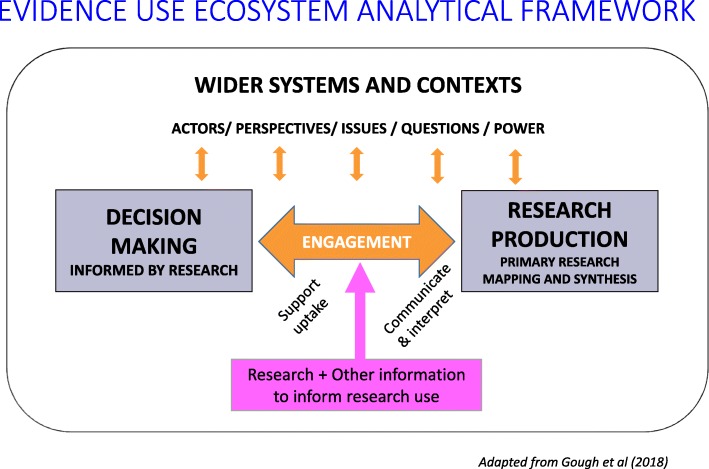
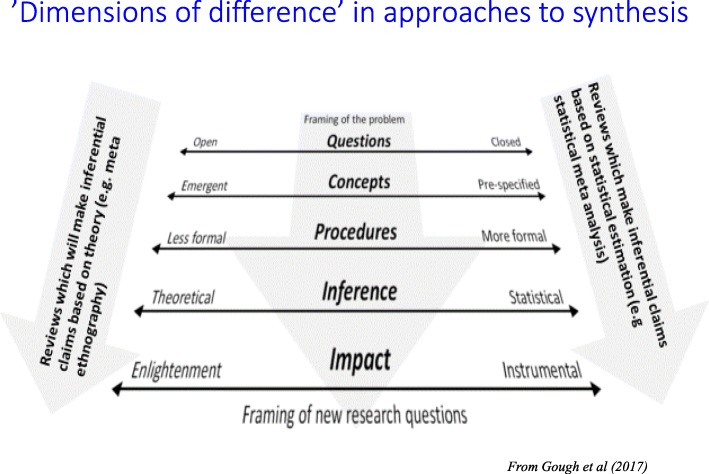
This paper builds on a 2012 paper by the same authors which argued that the types and brands of systematic review do not sufficiently differentiate between the many dimensions of different review questions and review methods (Gough et al., Syst Rev 1:28, 2012). The current paper extends this argument by considering the dynamic contexts, or 'evidence ecosystems', within which reviews are undertaken; the fact that these ecosystems are constantly changing; and the relevance of this broader context for understanding 'dimensions of difference' in the unfolding development and refinement of review methods.The concept of an evidence ecosystem is used to consider particular issues within the three key dimensions of difference outlined in the 2012 paper of (1) review aims and approach, (2) structure and components of reviews, and (3) breadth, depth, and 'work done' by reviews.
Overview
The claims and statistics of this paper haven’t been checked yet.
Free: it reads the open-access text and checks the first 5 claims that cite a source we can check. Create a free account to check every claim.
Integrity signals
Registry
Cites
Statistics
Figures
Verification
Claims the paper makes
The claims and statistics of this paper haven’t been checked yet.
Free: it reads the open-access text and checks the first 5 claims that cite a source we can check. Create a free account to check every claim.
Self-check
Percentages, sums and reported differences re-computed from the paper’s own numbers.
The self-check needs the paper’s full text.
Citations
Cites
Preferred Reporting Items for Systematic Reviews and Meta-Analyses: the PRISMA statement
Moher, D., Liberati, A., Tetzlaff, J., Altman, D. G., & for the PRISMA Group (2009) · BMJ · doi:10.1136/bmj.b2535 · Cited by 83,823
Wang, G., Ma, R., Qiao, G., Wada, K., Aizawa, Y., & Satoh, T. (2015) · Integrative Medicine International · doi:10.1159/000368408 · Cited by 18,657
Shea, B. J., Reeves, B. C., Wells, G., Thuku, M., Hamel, C., Moran, J., Moher, D., Tugwell, P., Welch, V., Kristjansson, E., et al. (2017) · BMJ · doi:10.1136/bmj.j4008 · Cited by 10,636
ROBIS: A new tool to assess risk of bias in systematic reviews was developed
Whiting, P., Savović, J., Higgins, J. P. T., Caldwell, D. M., Reeves, B. C., Shea, B., Davies, P., Kleijnen, J., & Churchill, R. (2016) · Journal of Clinical Epidemiology · doi:10.1016/j.jclinepi.2015.06.005 · Cited by 2,272
The Many Meanings of Research Utilization
Weiss, C. H. (1979) · Public Administration Review · doi:10.2307/3109916 · Cited by 2,222 · cited 3×
“The research available being driven by academic interests (a ‘push’ production model) and not being relevant in the topic or focus for potential users of research (with a ‘pull’ demand and problem-solving model) [10]”
BackgroundAvoidable waste in the production and reporting of research evidence
Chalmers, I., & Glasziou, P. (2009) · The Lancet · doi:10.1016/s0140-6736(09)60329-9 · Cited by 2,208
Grading quality of evidence and strength of recommendations for diagnostic tests and strategies
Schünemann, H. J., Oxman, A. D., Brozek, J., Glasziou, P., Jaeschke, R., Vist, G. E., Williams, J. W., Kunz, R., Craig, J., Montori, V. M., et al. (2008) · BMJ · doi:10.1136/bmj.39500.677199.ae · Cited by 1,782
An Enquiry concerning Human Understanding
Hume, D. (1748) · The Clarendon Edition of the Works of David Hume: An Enquiry concerning Human Understanding · doi:10.1093/oseo/instance.00032980 · Cited by 1,595
RAMESES publication standards: realist syntheses
Wong, G., Greenhalgh, T., Westhorp, G., Buckingham, J., & Pawson, R. (2013) · BMC Medicine · doi:10.1186/1741-7015-11-21 · Cited by 1,374
Alonso-Coello, P., Schünemann, H. J., Moberg, J., Brignardello-Petersen, R., Akl, E. A., Davoli, M., Treweek, S., Mustafa, R. A., Rada, G., Rosenbaum, S., et al. (2016) · BMJ · doi:10.1136/bmj.i2016 · Cited by 1,317
Research works printed but not linked: 3
- Langer L Tripney J Gough D The science of using science: researching the use of sesearch evidence in decision-making 2016 London EPPI-Centre, Social Science Research Unit, UCL Institute of Education, University College London 2016
- Gough D Kenny C Vigurs C Stansfield C Rosen R Taylor T Social values related to the development of health and care guidance: literature review for NICE by its Research Support Unit. Report of the Research Support Unit for the National Institute for Health and Care Excellence 2014 London EPPI-Centre, Social Science Research Unit, Institute of Education, University of London
- Peersman G (1996) A descriptive mapping of health promotion studies in young people, EPPI Research Report 1996 London EPPI-Centre, Social Science Research Unit, Institute of Education, University of London
Cited by
The PRISMA 2020 statement: An updated guideline for reporting systematic reviews
Page, M. J., McKenzie, J. E., Bossuyt, P. M., Boutron, I., Hoffmann, T. C., Mulrow, C. D., Shamseer, L., Tetzlaff, J. M., Akl, E. A., Brennan, S. E., et al. (2021) · BMJ · doi:10.1136/bmj.n71 · Cited by 108,283
Self-citationThe PRISMA 2020 statement: an updated guideline for reporting systematic reviews
Page, M. J., McKenzie, J. E., Bossuyt, P. M., Boutron, I., Hoffmann, T. C., Mulrow, C. D., Shamseer, L., Tetzlaff, J. M., Akl, E. A., Brennan, S. E., et al. (2021) · Systematic Reviews · doi:10.1186/s13643-021-01626-4 · Cited by 13,874
Self-citationThe PRISMA 2020 Statement: An Updated Guideline for Reporting Systematic Reviews
Page, M. J., McKenzie, J. E., Bossuyt, P. M., Boutron, I., Hoffmann, T. C., Mulrow, C. D., Shamseer, L., Tetzlaff, J. M., Akl, E. A., Brennan, S. E., et al. (2021) · International Journal of Surgery · doi:10.1016/j.ijsu.2021.105906 · Cited by 11,748
Self-citationThe PRISMA 2020 statement: An updated guideline for reporting systematic reviews
Page, M. J., McKenzie, J. E., Bossuyt, P. M., Boutron, I., Hoffmann, T. C., Mulrow, C. D., Shamseer, L., Tetzlaff, J. M., Akl, E. A., Brennan, S. E., et al. (2021) · PLoS Medicine · doi:10.1371/journal.pmed.1003583 · Cited by 5,148
“Systematic reviews therefore generate various types of knowledge for different users of reviews (such as patients, healthcare providers, researchers, and policy makers).[1,2]To ensure a systematic review is valuable to users, authors should prepare a transparent, complete, and accurate account of why the review was do…”
BackgroundSelf-citationThe PRISMA 2020 statement: an updated guideline for reporting systematic reviews
Page, M. J., McKenzie, J., Bossuyt, P., Boutron, I., Hoffmann, T., mulrow, C., Shamseer, L., Tetzlaff, J., Akl, E., Brennan, S. E., et al. (2020) · doi:10.31222/osf.io/v7gm2 · Cited by 5,177
Self-citationThe PRISMA 2020 statement: An updated guideline for reporting systematic reviews
Page, M. J., McKenzie, J. E., Bossuyt, P. M., Boutron, I., Hoffmann, T. C., Mulrow, C. D., Shamseer, L., Tetzlaff, J. M., Akl, E. A., Brennan, S. E., et al. (2021) · Journal of Clinical Epidemiology · doi:10.1016/j.jclinepi.2021.03.001 · Cited by 4,265
Self-citationDeclaración PRISMA 2020: una guía actualizada para la publicación de revisiones sistemáticas
Page, M. J., McKenzie, J. E., Bossuyt, P. M., Boutron, I., Hoffmann, T. C., Mulrow, C. D., Shamseer, L., Tetzlaff, J. M., Akl, E. A., Brennan, S. E., et al. (2021) · Revista Española de Cardiología · doi:10.1016/j.recesp.2021.06.016 · Cited by 2,095
Self-citationDeclaración PRISMA 2020: una guía actualizada para la publicación de revisiones sistemáticas
Page, M. J., McKenzie, J. E., Bossuyt, P. M., Boutron, I., Hoffmann, T. C., Mulrow, C. D., Shamseer, L., Tetzlaff, J. M., Akl, E. A., Brennan, S. E., et al. (2021) · Revista Española de Cardiología (English Edition) · doi:10.1016/j.rec.2021.07.010 · Cited by 1,313
“Systematic reviews therefore generate various types of knowledge for different users of reviews (such as patients, healthcare providers, researchers, and policy makers) [1 , 2] .”
BackgroundSelf-citationMethodological guidance for the conduct of mixed methods systematic reviews
Stern, C., Lizarondo, L., Carrier, J., Godfrey, C., Rieger, K., Salmond, S., Apóstolo, J., Kirkpatrick, P., & Loveday, H. (2020) · JBI Evidence Synthesis · doi:10.11124/jbisrir-d-19-00169 · Cited by 700
A declaração PRISMA 2020: diretriz atualizada para relatar revisões sistemáticas
Page, M. J., McKenzie, J. E., Bossuyt, P. M., Boutron, I., Hoffmann, T. C., Mulrow, C. D., Shamseer, L., Tetzlaff, J. M., Akl, E. A., Brennan, S. E., et al. (2022) · Revista Panamericana de Salud Pública · doi:10.26633/rpsp.2022.112 · Cited by 433
“Epidemiologia e Serviços de Saúde, Brasília, 31(2):e2022107, 2022 8 TRADUÇÃO A declaração PRISMA 2020”
InfluentialSelf-citationMethodological guidance for the conduct of mixed methods systematic reviews
Stern, C., Lizarondo, L., Carrier, J., Godfrey, C., Rieger, K., Salmond, S., Apostolo, J., Kirkpatrick, P., & Loveday, H. (2021) · JBI Evidence Implementation · doi:10.1097/xeb.0000000000000282 · Cited by 209
Brokerage at the science–policy interface: from conceptual framework to practical guidance
Gluckman, P. D., Bardsley, A., & Kaiser, M. (2021) · Humanities and Social Sciences Communications · doi:10.1057/s41599-021-00756-3 · Cited by 171
“…graded for decision making (Welton, 2012; Dias et al., 2013), and while this idea has significant faults even within medical practice (Atkins et al., 2004; Bagshaw and Bellomo, 2008), it is significantly more complex when used in other domains for informing public policy (Gough et al., 2019).”
BackgroundPravila PRISMA 2020.: ažurirane smjernice za izvještavanje u sustavnim pregledima
Page, M. J., Grimshaw, J. M., Hróbjartsson, A., Lalu, M. M., Li, T., Loder, E. W., Mayo-Wilson, E., McGuinness, L., McDonald, S., Stewart, L. A., et al. (2021) · Medicina Fluminensis · doi:10.21860/medflum2021_264903 · Cited by 163
Self-citationA declaração PRISMA 2020: diretriz atualizada para relatar revisões sistemáticas
Page, M. J., McKenzie, J. E., Bossuyt, P. M., Boutron, I., Hoffmann, T., Mulrow, C. D., Shamseer, L., Tetzlaff, J., Akl, E. A., Brennan, S., et al. (2022) · Epidemiologia e Serviços de Saúde · doi:10.5123/s1679-49742022000200033 · Cited by 387
Self-citationJindal‐Snape, D., Symonds, J. E., Hannah, E. F. S., & Barlow, W. (2021) · Frontiers in Education · doi:10.3389/feduc.2021.540027 · Cited by 168
“It employs a systematic mapping approach (Gough et al., 2019) where the focus is on conceptualisation and discourse surrounding transitions rather than study findings.”
BackgroundTeaching Socioscientific Issues: A Systematic Review
Högström, P., Gericke, N., Wallin, J. E., & Bergman, E. (2024) · Science & Education · doi:10.1007/s11191-024-00542-y · Cited by 193
“The strategies in our review design are in line with suggestions by Gough et al. (2019).”
InfluentialAuthor guidelines for conducting systematic reviews and meta‐analyses
Prill, R., Karlsson, J., Ayeni, O. R., & Becker, R. (2021) · Knee Surgery Sports Traumatology Arthroscopy · doi:10.1007/s00167-021-06631-7 · Cited by 115
“The type of review depends on the evidence ecosystem in which it is produced [2].”
BackgroundEvidence Synthesis International (ESI): Position Statement
Gough, D., Davies, P., Jamtvedt, G., Langlois, E., Littell, J., Lotfi, T., Masset, E., Merlin, T., Pullin, A. S., Ritskes-Hoitinga, M., et al. (2020) · Systematic Reviews · doi:10.1186/s13643-020-01415-5 · Cited by 78
Self-citationScoping reviews and rapid reviews
Sabiston, C. M., Vani, M., de Jonge, M., & Nesbitt, A. (2022) · International Review of Sport and Exercise Psychology · doi:10.1080/1750984x.2021.1964095 · Cited by 74
“between key theoretical concepts, contextualize vast and complex information, and inform the development of systematic review protocols (Armstrong et al., 2011; Gough et al., 2019; Munn et al., 2018).”
BackgroundMethodInfluentialGough, D. (2021) · Review of Research in Education · doi:10.3102/0091732x20985072 · Cited by 78
“He sees the use of research evidence as occurring within an evidence ecosystem (Best & Holmes, 2010, Gough et al., 2019) and that the two core parts of that system are, first, the perspectives and values with which we use and create research evidence, and second, the formal accountable processes…”
BackgroundMethodInfluentialSelf-citationKpomasse, C. C., Kouame, Y. A. E., N’nanle, O., Houndonougbo, F. M., Tona, K., & Oke, O. E. (2023) · Journal of Applied Animal Research · doi:10.1080/09712119.2023.2228374 · Cited by 62
Defining Coordinated Care for People with Rare Conditions: A Scoping Review
Walton, H., Hudson, E., Simpson, A., Ramsay, A. I. G., Kai, J., Morris, S., Sutcliffe, A. G., & Fulop, N. (2020) · International Journal of Integrated Care · doi:10.5334/ijic.5464 · Cited by 57
Who Cares about Using Education Research in Policy and Practice? Strengthening Research Engagement
OECD (2022) · Educational research and innovation · doi:10.1787/d7ff793d-en · Cited by 104
Future of Evidence Ecosystem Series: Evidence ecosystems and learning health systems: why bother?
Vandvik, P. O., & Brandt, L. (2020) · Journal of Clinical Epidemiology · doi:10.1016/j.jclinepi.2020.02.008 · Cited by 48
Bougioukas, K. I., Bouras, E., Avgerinos, K. I., Dardavessis, T., & Haidich, A. (2020) · Health Information & Libraries Journal · doi:10.1111/hir.12318 · Cited by 57
The Application of Artificial Intelligence Models for Food Security: A Review
Sarku, R., Clemen, U. A., & Clemen, T. (2023) · Agriculture · doi:10.3390/agriculture13102037 · Cited by 54
Taraza, E., Anastasiadou, S., Papademetriou, C., & Masouras, A. N. (2024) · Sustainability · doi:10.3390/su16030960 · Cited by 75
Subban, P., Woodcock, S., Sharma, U., & May, F. (2022) · Teaching and Teacher Education · doi:10.1016/j.tate.2022.103853 · Cited by 88
Stokes, G., Sutcliffe, K., & Thomas, J. (2022) · BMJ Evidence-Based Medicine · doi:10.1136/bmjebm-2022-112060 · Cited by 36
“6 Technological advances and automation have helped to speed up processes such as study identification.”
BackgroundInfluentialSelf-citationImplementing GRADE in systematic reviews that adhere to JBI methodological conduct
Stern, C., Munn, Z., Barker, T. H., Porritt, K. A., Stone, J., Pap, R., Khalil, H., & Aromataris, E. (2024) · JBI Evidence Synthesis · doi:10.11124/jbies-23-00543 · Cited by 45
“10,11 A key objective to support the establishment of the JBI Adelaide GRADE Centre focused on supporting members of the JBI Collaboration (JBIC; currently comprising more than 80 entities across 42 countries) 12 to adopt and appropriately use GRADE within their diverse application of methodologies…”
MethodHow to Conduct a Systematic Review and Meta-Analysis: A Guide for Clinicians
Zaccagnini, M., & Li, J. (2023) · Respiratory Care · doi:10.4187/respcare.10971 · Cited by 51
“33 Additionally, because systematic reviews are frequently cited, some researchers conduct them less rigorously and hope it will be published just because it is labeled as a systematic review.”
Investigating different typologies for the synthesis of evidence: a scoping review protocol
Munn, Z., Pollock, D., Price, C., Aromataris, E., Stern, C., Stone, J. C., Barker, T. H., Godfrey, C. M., Clyne, B., Booth, A., et al. (2023) · JBI Evidence Synthesis · doi:10.11124/jbies-22-00122 · Cited by 26
Akl, E. A., Haddaway, N., Gabriel Rada, G., & Lotfi, T. (2020) · Journal of Clinical Epidemiology · doi:10.1016/j.jclinepi.2020.01.025 · Cited by 32
Appels, L., Mæyer, S. D., Faddar, J., & Petegem, P. V. (2022) · Educational Research Review · doi:10.1016/j.edurev.2022.100494 · Cited by 42
Roles and functions in clinical care for registered nurses with a PhD—A systematic literature review
Orton, M., Follin, N. N., Dannapfel, P., & Wengström, Y. (2021) · Scandinavian Journal of Caring Sciences · doi:10.1111/scs.12979 · Cited by 30
“(20,21) Our method was based on a systematic literature review of data compiled from scientific studies published between 1986 and 2020 relating to our research questions in order to improve our understanding of these issues.”
MethodEnabling knowledge brokerage intermediaries to be evidence-informed
Gough, D., Maidment, C., & Sharples, J. (2021) · Evidence & Policy · doi:10.1332/174426421x16353477842207 · Cited by 27
“This can be conceived of as an evidence ecosystem that exists within a wider system of various stakeholders influencing research production and research use (Best and Holmes 2010; Gough et al, 2019).”
Self-citationHolm, A. L., Salemonsen, E., & Severinsson, E. (2021) · Nursing Open · doi:10.1002/nop2.789 · Cited by 21
“Using several research methods in a review can be a challenge at the synthesis stage (Gough et al., 2019) and be a limitation of an integrative review.”
MethodGlobal stakeholder perspectives of home birth: a systematic scoping review
Brunton, G., Wahab, S., Sheikh, H. I., & Davis, B. M. (2021) · Systematic Reviews · doi:10.1186/s13643-021-01837-9 · Cited by 19
A Step-by-Step Approach to Systematic Reviews in Educational Research
Ghamrawi, N., Shal, T., Ghamrawi, N. A. R., Abu-Tineh, A. M. H., Alshaboul, Y. M. K., & Alazaizeh, M. (2025) · European Journal of Educational Research · doi:10.12973/eu-jer.14.2.549 · Cited by 88
The many faces of disability in evidence for policy and practice: embracing complexity
Rivas, C. A., Tomomatsu, I., & Gough, D. (2021) · Evidence & Policy · doi:10.1332/174426421x16147909420727 · Cited by 18
Self-citationLocal and indigenous knowledge (LIK) in science learning: A systematic literature review
Latip, A., Hernani, & Kadarohman, A. (2024) · Journal of Turkish Science Education · doi:10.36681/tused.2024.035 · Cited by 64
“The research approach used was a systematic literature review (SLR) which aims to obtain data and a description of a variable research explicitly and other esential issues in research (Gough et al., 2019).”
Rouleau, G., Hong, Q. N., Kaur, N., Gagnon, M., Côté, J., Bouix‐Picasso, J., & Pluye, P. (2021) · Journal of Mixed Methods Research · doi:10.1177/15586898211054243 · Cited by 15
“These adjectives are applicable to primary studies, reviews of studies, and review of reviews (Gough et al., 2019).”
BackgroundMethodInfluentialRapid systematic reviews for synthesizing research on built environment
Lagisz, M., Vasilakopoulou, K., Bridge, C. E., Santamouris, M., & Nakagawa, S. (2022) · Environmental Development · doi:10.1016/j.envdev.2022.100730 · Cited by 16
Ferguson, S. L., Kerrigan, M. R., & Hovey, K. A. (2020) · Research Synthesis Methods · doi:10.1002/jrsm.1436 · Cited by 17
“The distinction between these approaches is not limited to the similarity and dissimilarity of the data; several synthesis methods can be used for both approaches.(39,40) We prefer the terms aggregation and configuration because they do not confuse the novice researcher who may not realize that all SMSRs, indeed all r…”
MethodResearch Synthesis Infrastructures: Shaping Knowledge in Education
Hammond, J. W., Moss, P., Huynh, M. Q., & Lagoze, C. (2020) · Review of Research in Education · doi:10.3102/0091732x20907350 · Cited by 12
Critoph, D. J., Cable, M., Farmer, J., Hatcher, H. M., Kuhn, I. L., Taylor, R. M., & Smith, L. (2024) · Psycho-Oncology · doi:10.1002/pon.6317 · Cited by 10
“Often criticised as having little systematic critical appraisal because of resource constraints and lack of time, 58,59 scoping reviews are frequently used to describe the nature of a research field rather than present an exhaustive synthesis of findings.”
BackgroundSalifu, G. A.-N., & Salifu, Z. (2024) · Sustainable Environment · doi:10.1080/27658511.2024.2397860 · Cited by 13
“Since the study incorporated evidence from a pool of ideological, theoretical and epistemological perspectives (Gough et al., 2019), it was far from being a bare-bone review of evidence on green economy catalysts (Snilstveit et al., 2012).”
RetractedAdding value to core outcome set development using multimethod systematic reviews
Brunton, G., Webbe, J., Oliver, S. R., & Gale, C. P. (2020) · Research Synthesis Methods · doi:10.1002/jrsm.1391 · Cited by 11
“Our findings suggest that, if the purpose of such reviews is to “list” potential outcome domains for discussion rather than to synthesize effect sizes, they should be more usefully considered scoping reviews which aim to “map” the research.(65,68) As a starting point for discussion of BRUNTON ET AL.”
BackgroundSelf-citationCornito, C. M. (2021) · Innovation journal of social sciences and economic review. · doi:10.36923/ijsser.v3i3.122 · Cited by 22
Opportunities and Challenges for Research Synthesis in Applied Linguistics: Three Scholars Reflect
Plonsky, L., Isaacs, T., & Taylor, L. B. (2025) · Research Synthesis in Applied Linguistics · doi:10.1080/29984475.2025.2518085 · Cited by 9
Bird, K. S., Stokes, N., Tomlinson, M., & Rivas, C. A. (2023) · Journal of Family Violence · doi:10.1007/s10896-023-00541-7 · Cited by 11
“This balance of resources raises ethical concerns as such funding structures arguably fail to maximise existing research knowledge and/ or use this research to inform policy and practice decisions (Gough et al., 2019).”
BackgroundSensever, F. D. A., Alves, C. P. D. L., Lima, G. D. S., Loomans, B. A. C., Opdam, N. J. M., & Pereira‐Cenci, T. (2022) · Journal of Dentistry · doi:10.1016/j.jdent.2022.104282 · Cited by 9
Main, P. A. E., & Anderson, S. (2022) · JMIR Research Protocols · doi:10.2196/28625 · Cited by 7
“Where the full text of the article is assessed as relevant to the research questions, quality appraisal will be conducted by 2 people using the weighted evidence approach developed by the Evidence for Policy and Practice Information and Co-ordinating Centre at the Institute for Education in the University of London [5…”
MethodRosendal, K. A., Lehn-Christiansen, S., & Overgaard, D. (2022) · Nursing Inquiry · doi:10.1111/nin.12503 · Cited by 5
Navarro, R. C. (2024) · Propósitos y Representaciones · doi:10.20511/pyr2024.v12.1958 · Cited by 9
Jo, C. L., Burchett, H., Bastías, M., Campbell, P., Gamage, D. G., Henaff, L., Kagina, B. M. N., Lunny, C., Marti, M., Muloiwa, R., et al. (2021) · Vaccine · doi:10.1016/j.vaccine.2021.04.045 · Cited by 6
“Reviews now not only investigate whether an intervention worked but how 230 and under what conditions [16, 18-20].”
BackgroundSelf-citationStern, C., Loveday, H. P., Godfrey, C. M., Pollock, D., Hong, Q. N., Rieger, K. L., Stephenson, M., Kurian, N., Fiorini, J., & Lizarondo, L. M. (2025) · JBI Evidence Synthesis · doi:10.11124/jbies-24-00569 · Cited by 7
Over 1000 terms have been used to describe evidence synthesis: a scoping review
Pollock, D., Hasanoff, S., Barker, T. H., Clyne, B., Tricco, A. C., Booth, A., Godfrey, C., Khalil, H., Jia, R. M., Taneri, P.-E., et al. (2026) · BMJ Evidence-Based Medicine · doi:10.1136/bmjebm-2024-113391 · Cited by 5
“This search was tested to ensure it picked up key articles 4 13 22–24 which had been identified”
Melillo, K. D. (2020) · Springer eBooks · doi:10.1007/978-3-030-37504-1_2 · Cited by 7
Misaki, E. (2023) · African Journal of Science Technology Innovation and Development · doi:10.1080/20421338.2023.2259880 · Cited by 6
Cook, E. A. (2025) · International Sociology · doi:10.1177/02685809251336694 · Cited by 7
“A systematic review is conducted for the purpose of collecting the evidence relevant to a specific question and making an assessment of its quality according to a set of pre-defined and transparent criteria (Gough et al., 2019).”
The state of glacier hydrology research in Canada
Hanly, K., Marshall, S. J., & McDowell, G. (2023) · Canadian Water Resources Journal / Revue canadienne des ressources hydriques · doi:10.1080/07011784.2023.2289805 · Cited by 5
“…sciences to rigorously assess interventions across many cases (Munn et al. 2018), uses formal search protocols, inclusion criteria, and structured appraisal strategies to increase the transparency (Gough, Thomas, and Oliver 2019) and reproducibility (Page et al. 2021) of literature-based analyses.”
BackgroundTsouloufi, T. K., Donnison, L. M., Smyth, K. L., & Peters, A. R. (2020) · Animal Health Research Reviews · doi:10.1017/s1466252319000203 · Cited by 4
“A variety of terms, including evidence map, scoping review and systematic map, are currently widely used under the evidence mapping review methodology (Grant and Booth, 2009; Gough et al., 2019).”
BackgroundManson, J., Taylor, P., Mawson, S., Bayly, J., Keen, C., Gath, J., Green, T., Anderson, F., Smith, R. A., & O’Cathain, A. (2025) · Palliative Medicine · doi:10.1177/02692163251331166 · Cited by 7
Miao, X., Yin, I. Z., Zhang, H., & Siu, K. W. M. (2025) · Applied Research in Quality of Life · doi:10.1007/s11482-025-10490-6 · Cited by 8
“Systematic review was chosen for this study because it generates various types of knowledge for different evaluation users (Gough et al., 2019).”
Nuraeni, A., Nugraha, Y., & Aminanto, M. E. (2025) · International Journal of Advances in Data and Information Systems · doi:10.59395/ijadis.v6i2.1404 · Cited by 4
“Future research is encouraged to involve multiple reviewers and compute inter-rater agreement to improve analytical rigor and reduce bias [20].”
Płaszewski, M. (2022) · International Journal of Environmental Research and Public Health · doi:10.3390/ijerph19116659 · Cited by 3
“Some recent classification approaches do not even consider narrative reviews, as lacking explicit rigorous methods of conduct [46].”
BackgroundThe state of mountain research in Canada
McDowell, G., & Hanly, K. (2022) · Journal of Mountain Science · doi:10.1007/s11629-022-7569-1 · Cited by 5
“Here, methodological systematization, transparency, and reproducibility (Gough et al. 2017; Gough et al. 2019), as well as the utilization of widely accepted reporting guidelines (i.e. PRISMA) increase understanding of review procedures and results (Page et al. 2021).”
MethodMeta-epidemiology and reporting characteristics of mapping reviews: a scoping review
Li, Y., Ghogomu, E., Khalil, H., Hui, X., E, F., Campbell, F., Li, X., Gaarder, M., Nduku, P. M., White, H., et al. (2025) · Journal of Clinical Epidemiology · doi:10.1016/j.jclinepi.2024.111648 · Cited by 2
Green jobs. Concept analysis and situation in the Autonomous Community of the Basque Country
Basterra, M. L., & Gómez, J. F. (2023) · Oñati Socio-legal Series · doi:10.35295/osls.iisl.1780 · Cited by 8
The knowledge base of financial technology: a bibliometric analysis review
Kundy, V. P., & Shah, K. (2024) · SN Business & Economics · doi:10.1007/s43546-024-00670-1 · Cited by 5
“PRISMA concentrates on strate - gies that authors might employ to ensure that the study findings are fully and trans - parently conveyed (Gough et al. 2019).”
Hong, Q. N., & Brunton, G. (2025) · Education for Information · doi:10.1177/01678329251323445 · Cited by 2
Tompson, A., Thomas, J., Rutter, H., Blanchard, L., Cott, É., Glover, R. E., Knai, C., Maani, N., van Schalkwyk, M. C., Welch, V. A., et al. (2026) · Systematic Reviews · doi:10.1186/s13643-026-03187-w · Cited by 3
“These are networks of interactions – including the flow of information—among different organisations and people involved in the production, translation, and use of evidence such as scientific research [35, 36].”
Self-citationPlace-based learning in K-12 science education: A systematic review
Ge, J., Cheng, J., Liang, X., & Zhang, J. L. (2026) · Educational Research Review · doi:10.1016/j.edurev.2026.100826 · Cited by 6
Impactos do TDAH à Adolescência: Revisão Sistemática de Literatura
Pires, S. M. A. M., Pontes, F. A. R., Pereira, B. L. D. S., Amoras, J. D. F., & Silva, S. S. D. C. (2024) · Revista Brasileira de Educação Especial · doi:10.1590/1980-54702024v30e0174 · Cited by 20
“Ela pode fornecer compêndios determi-nados de um nicho de conhecimento, indicar prioridades de pesquisas e lacunas de uma dada ciência, avaliar teorias acerca do porquê e de que modo os fenômenos ocorrem (Gough et al., 2019; Gurevitch et al., 2018, Page et al., 2021).”
Plooij, J., & Delnoij, D. M. J. (2025) · Expert Review of Pharmacoeconomics & Outcomes Research · doi:10.1080/14737167.2025.2467379 · Cited by 2
“Throughout the whole ‘evidence ecosystem’ [9], from the design of a trial to market access, reimbursement and actual clinical use, synergy is therefore required, preferably with a focus on patient-relevant outcomes [6].”
Na, H.-U., Park, S.-H., Woo, H., Han, Y.-H., Geum, J.-H., Lee, J., & Ha, W.-B. (2022) · Journal of Korean Medicine Rehabilitation · doi:10.18325/jkmr.2022.32.3.85 · Cited by 2
Ann Oakley: new learning and global influence from working across conventional boundaries
Oliver, S. R. (2023) · London Review of Education · doi:10.14324/lre.21.1.11 · Cited by 2
Self-citationBrandon, J., & Bagnall, A. (2024) · medRxiv · doi:10.1101/2024.10.04.24313099 · Cited by 2
Evidence-Based Research Integrity Policy
Redman, B. K. (2023) · Springer eBooks · doi:10.1007/978-3-031-27111-3_3 · Cited by 1
Expectations of wildlife health surveillance systems and implications for system design
Stephen, C., & Berezowski, J. A. (2025) · Research Directions One Health · doi:10.1017/one.2025.4 · Cited by 1
van Haselen, R. A., Loef, M., Dua, P. K., Zhong, L. L. D., Teut, M., Wale, J., Manchanda, R., & Baumgartner, S. (2026) · Frontiers in Public Health · doi:10.3389/fpubh.2026.1752779 · Cited by 4
“Systematic reviews are produced and used in the broader context of what has been described as an ‘evidence ecosystem’ (53).”
Consumers’ perception of native advertising on social media – A systematic literature review
Hübner, M., Henseler, J., & Thalmann, J. (2026) · Journal of Marketing Communications · doi:10.1080/13527266.2026.2648839 · Cited by 4
AlMekkawi, M., ElKhalil, R., Aldawsari, A. N., Qatouni, F., Pandarakutty, S., Nalubega, S., Maalouf, I., Belfakir, M., Bashayreh, I. H., & Maqbali, M. A. H. A. (2026) · Nurse Education Today · doi:10.1016/j.nedt.2026.107218 · Cited by 5
Factors Associated with Teachers’ Suicide Literacy and Self-Efficacy: A Scoping Review
Goagoses, N., Wilke, J., Orzessek, P., von Düring, U., & Vesterling, C. (2026) · Journal of Loss and Trauma · doi:10.1080/15325024.2026.2678821 · Cited by 1
Kiran, P., Sahoo, N., Dash, B., Mohanty, B., & Jena, S. (2024) · Cureus · doi:10.7759/cureus.76625 · Cited by 1
Evidence on evidence-informed policy and practice
Gough, D., Sharples, J., & Maidment, C. (2022) · Educational research and innovation · doi:10.1787/5ee7de7c-en · Cited by 2
Self-citationSensemaking: uma revisão sistemática e uma agenda de pesquisa
Santos, I. L., & Borges, J. F. (2023) · Gestão org · doi:10.51359/1679-1827.2023.256287
Measurement instruments of STEM affective learning: a systematic review
Wieselmann, J. R., Dare, E. A., Roehrig, G., & Ring‐Whalen, E. A. (2022) · Elsevier eBooks · doi:10.1016/b978-0-12-818630-5.13014-3 · Cited by 4
What advice can we offer to authors? Reflections from the statisticians’ bench
Hooper, R., Tovey, D. I., Tricco, A. C., & Veroniki, A. A. (2024) · Journal of Clinical Epidemiology · doi:10.1016/j.jclinepi.2024.111579 · Cited by 2
(2022) · Frontiers research topics · doi:10.3389/978-2-88974-538-8
Perspectives on education research
Bangs, J., Henry, M., Nagy, E. K., Prøitz, T. S., Schneider, M., Tseng, V., Damme, D. V., & Yurita, M. (2022) · Educational research and innovation · doi:10.1787/e83abf22-en · Cited by 1
Facilitating research use: Scary Barriers (and Super Mechanisms)
Torres, J. M. (2022) · Educational research and innovation · doi:10.1787/cd4e8487-en · Cited by 3
Individuals’ extrinsic and intrinsic incentives to produce education research
OECD (2022) · Educational research and innovation · doi:10.1787/a195b515-en
Levels of individuals’ activity reported by systems in research production.
OECD (2022) · Educational research and innovation · doi:10.1787/dc8ed027-en
Presence of mechanisms facilitating the use of educational research, 2021
OECD (2022) · Educational research and innovation · doi:10.1787/901c32b1-en
Size and strength of ministries’ networks
OECD (2022) · Educational research and innovation · doi:10.1787/267b1dd7-en
OECD (2022) · Educational research and innovation · doi:10.1787/e5bf3102-en
Overview of policy makers’ learning opportunities
OECD (2022) · Educational research and innovation · doi:10.1787/911001f0-en
Relevance of ministry connections to organisations active in facilitating research use in policy
OECD (2022) · Educational research and innovation · doi:10.1787/04374594-en
Metadata
- Authors
- Gough, D., Thomas, J., & Oliver, S.
- Affiliations
- University College London (GB)
- University of Johannesburg (ZA)
- Corresponding author
- Gough, David
- Venue
- Systematic Reviews
- Published
- 2019-07-15
- Volume
- 8
- Issue
- 1
- Pages
- 170-170
- ISSN
- 2046-4053 (ISSN-L)
- PMC
- PMC6631872
- OpenAlex
- W2961682569
- Cited by
- 115
- References
- 46
- Citations by year
- 2026: 13 · 2025: 14 · 2024: 14 · 2023: 10 · 2022: 28 · 2021: 24 · 2020: 11 · 2019: 1
- FWCI
- 10.69
- Type
- journal article
- Language
- en
- Open access
- gold
- doi.org
- Licence
- cc-by
- creativecommons.org/licenses/by/4.0/ (tdm)
- creativecommons.org/licenses/by/4.0/ (vor)
- Locations
- Systematic Reviews (publishedVersion, cc-by)
- PubMed Central (publishedVersion, cc-by)
- PubMed (publishedVersion)
- DOAJ (DOAJ: Directory of Open Access Journals) (submittedVersion, cc-by-sa)
- UCL Discovery (University College London) (submittedVersion)
- Funders
- World Health Organization
- Department of Health and Social Care
- Department for International Development
- Alliance for Health Policy and Systems Research
- Economic and Social Research Council
- Topics
- Social Sciences › Decision Sciences › Statistics, Probability and Uncertainty › Meta-analysis and systematic reviews
- Social Sciences › Sociology and Political Science › Delphi Technique in Research
- Health Sciences › Medicine › Public Health, Environmental and Occupational Health › Clinical practice guidelines implementation
- Keywords
- evidence ecosystem, review methodology
- MeSH terms
- Systematic Reviews as Topic, Humans, Research Design, Ecosystem
About these checks
Registry, retraction, Cites and statistics results are computed, not judged, with one exception: a printed reference that no index lists is read once by a model before it counts as a citation error. Claims are extracted by a model and kept only when their quote appears verbatim in the text; each cited source is then checked, with a model’s help, for whether it says what the claim relies on. Those verdicts can be wrong — read the claim’s quote and the cited source before relying on one.
Statistics and arithmetic are recomputed, not judged.
Confidence bands are shown only for fields calibrated on our annotated test set. None is calibrated yet, so no band is shown.
What counts as a claim ›How we measure confidence ›How we check this ›
Are you an author, or do you see a problem with this page? Request a review
Data sources
Bibliographic data: Semantic Scholar, OpenAlex, Crossref.
Contains information from the Semantic Scholar Academic Graph Datasets, made available under the ODC Attribution License (ODC-BY 1.0).
Semantic Scholar’s data is described in: Kinney, R., et al. (2023). The Semantic Scholar Open Data Platform. arXiv:2301.10140.
