

The influence of contextual factors on healthcare quality improvement initiatives: a realist review
Open accessThe DOI matches its Crossref record; 79 of the 80 references it cites were found in a registry or an index, and 1 are not checked yet.
Abstract
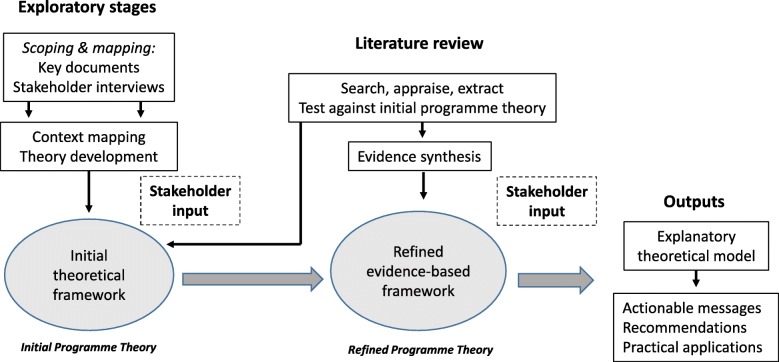
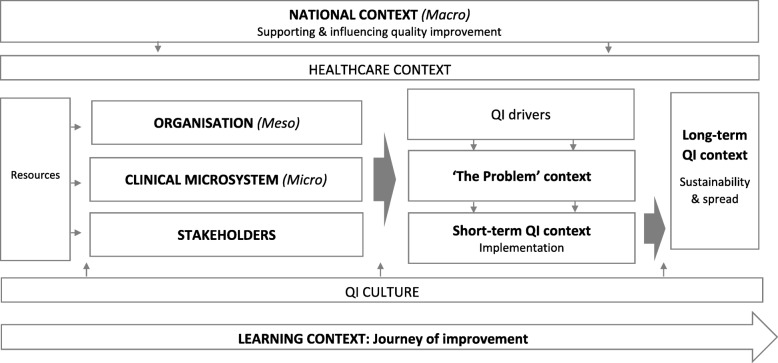
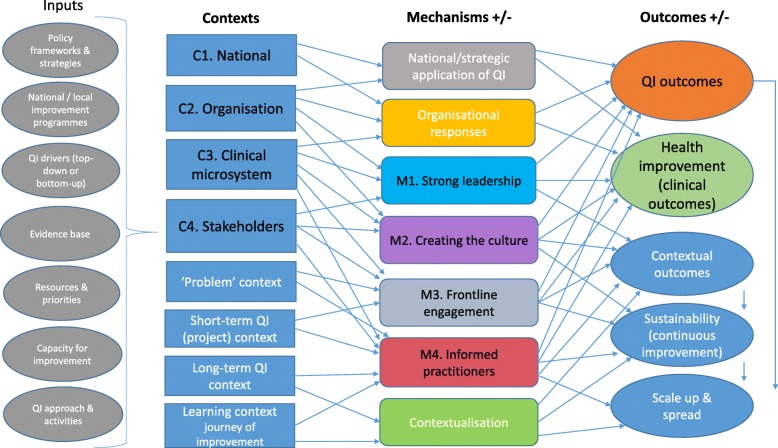
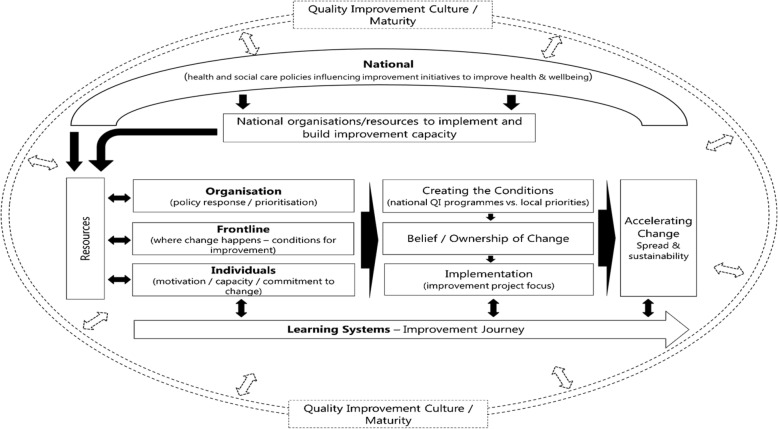
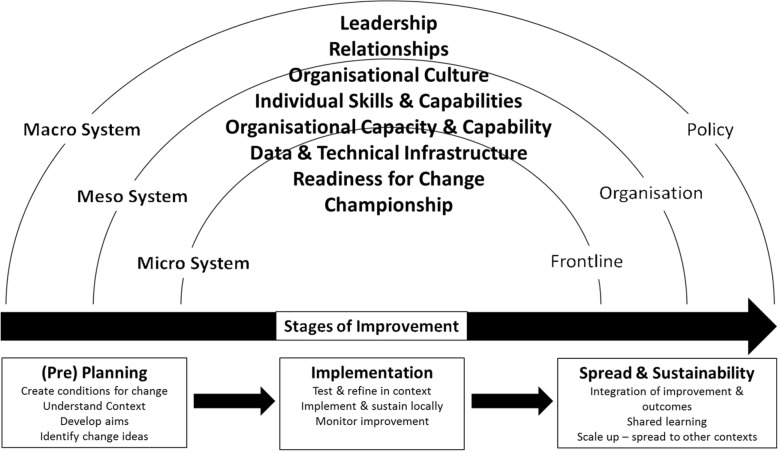
Background: Recognising the influence of context and the context-sensitive nature of quality improvement (QI) interventions is crucial to implementing effective improvements and successfully replicating them in new settings, yet context is still poorly understood. To address this challenge, it is necessary to capture generalisable knowledge, first to understand which aspects of context are most important to QI and why, and secondly, to explore how these factors can be managed to support healthcare improvement, in terms of implementing successful improvement initiatives, achieving sustainability and scaling interventions. The research question was how and why does context influence quality improvement initiatives in healthcare? Methods: A realist review explored the contextual conditions that influence healthcare improvement. Realist methodology integrates theoretical understanding and stakeholder input with empirical research findings. The review aimed to identify and understand the role of context during the improvement cycle, i.e. planning, implementation, sustainability and transferability; and distil new knowledge to inform the design and development of context-sensitive QI initiatives. We developed a preliminary theory of the influence of context to arrive at a conceptual and theoretical framework. Results: Thirty-five studies were included in the review, demonstrating the interaction of key contextual factors across healthcare system levels during the improvement cycle. An evidence-based explanatory theoretical model is proposed to illustrate the interaction between contextual factors, system levels (macro, meso, micro) and the stages of the improvement journey. Findings indicate that the consideration of these contextual factors would enhance the design and delivery of improvement initiatives, across a range of improvement settings. Conclusions: This is the first realist review of context in QI and contributes to a deeper understanding of how context influences quality improvement initiatives. The distillation of key contextual factors offers the potential to inform the design and development of context-sensitive interventions to enhance improvement initiatives and address the challenge of spread and sustainability. Future research should explore the application of our conceptual model to enhance improvement-planning processes. Systematic review registration: PROSPERO CRD42017062135
Overview
The claims and statistics of this paper haven’t been checked yet.
Free: it reads the open-access text and checks the first 5 claims that cite a source we can check. Create a free account to check every claim.
Integrity signals
Registry
Cites
Statistics
Figures
Verification
Claims the paper makes
The claims and statistics of this paper haven’t been checked yet.
Free: it reads the open-access text and checks the first 5 claims that cite a source we can check. Create a free account to check every claim.
Self-check
Percentages, sums and reported differences re-computed from the paper’s own numbers.
The self-check needs the paper’s full text.
Citations
Cites
Damschroder, L. J., Aron, D. C., Keith, R. E., Kirsh, S. R., Alexander, J. A., & Lowery, J. C. (2009) · Implementation Science · doi:10.1186/1748-5908-4-50 · Cited by 14,496 · cited 2×
“The variability within the body of literature in this area [9, 16, 17, 25] suggests that further work is required to unpack the role of context, and explore which characteristics of context matter, and how, why, when and for whom they matter.”
BackgroundDiffusion of Innovations in Service Organizations: Systematic Review and Recommendations
GREENHALGH, T., ROBERT, G., MACFARLANE, F., BATE, P., & KYRIAKIDOU, O. (2004) · The Milbank Quarterly · doi:10.1111/j.0887-378x.2004.00325.x · Cited by 7,448 · cited 1×
“This review emphasises the importance of stakeholders (individuals/teams and their capacities and skills) within the improvement process, particularly around the key roles of change agents and champions [19, 81] in supporting the success of QI interventions at the microsystem and senior organisational support for init…”
BackgroundRealist review - a new method of systematic review designed for complex policy interventions
Pawson, R., Greenhalgh, T., Harvey, G., & Walshe, K. (2005) · Journal of Health Services Research & Policy · doi:10.1258/1355819054308530 · Cited by 3,190 · cited 3×
“terms of context, mechanism and outcome (CMO) configurations [26, 27].”
BackgroundOgrinc, G., Davies, L., Goodman, D., Batalden, P., Davidoff, F., & Stevens, D. (2016) · BMJ Quality & Safety · doi:10.1136/bmjqs-2015-004411 · Cited by 2,996 · cited 1×
“0 publication guidelines for quality improvement studies in healthcare [13] recognises context as one of the fundamental reporting items.”
BackgroundPawson, R. (2006) · doi:10.4135/9781849209120 · Cited by 1,791 · cited 6×
“The starting point for the notion of context in realist review is the four contextual ‘layers’ defined by Pawson et al [27]: individuals, interpersonal relations, institution and infrastructure.”
BackgroundMethodInfluentialWhat drives change? Barriers to and incentives for achieving evidence‐based practice
Grol, R., & Wensing, M. (2004) · Medical Journal of Australia · doi:10.5694/j.1326-5377.2004.tb05948.x · Cited by 1,378 · cited 3×
“Quality improvement in healthcare is a relatively new area, [1, 8] furthered by the work of the Institute for Healthcare Improvement in the USA [1].”
BackgroundRAMESES publication standards: realist syntheses
Wong, G., Greenhalgh, T., Westhorp, G., Buckingham, J., & Pawson, R. (2013) · BMC Medicine · doi:10.1186/1741-7015-11-21 · Cited by 1,374
What is "quality improvement" and how can it transform healthcare?
Batalden, P. B., & Davidoff, F. (2007) · Quality and Safety in Health Care · doi:10.1136/qshc.2006.022046 · Cited by 1,100 · cited 1×
“‘healthcare improvement’, which incorporates changes leading to ‘better patient outcomes (health), better system performance (care) and better professional development’ [2].”
BackgroundPfadenhauer, L. M., Gerhardus, A., Mozygemba, K., Lysdahl, K. B., Booth, A., Hofmann, B., Wahlster, P., Polus, S., Burns, J., Brereton, L., et al. (2017) · Implementation Science · doi:10.1186/s13012-017-0552-5 · Cited by 1,016 · cited 1×
“This scoping exercise included the identification and scrutiny of key publications examining the role of context in healthcare quality improvement [10, 11, 14, 16, 23, 34, 35].”
BackgroundImplementation, context and complexity
May, C. R., Johnson, M., & Finch, T. (2016) · Implementation Science · doi:10.1186/s13012-016-0506-3 · Cited by 978 · cited 1×
“Contextual ‘confounders’ that act as barriers to improvement in one setting may be facilitators in other settings; such confounders often represent ‘typical’ healthcare conditions [15].”
Background
Research works printed but not linked: 4
- Health Foundation. Overcoming challenges to improving quality. Lessons from the Health Foundation's improvement programme evaluations and relevant literature. London: Health Foundation; 2012.
- Horton T, Illingworth J, Warburton W. The spread challenge. London: Health Foundation; 2018.
- Øvretveit J. How does context affect quality improvement? In: Perspectives on context. London: The Health Foundation; 2014.
- Fulop N, Robert G. Context for successful quality improvement: evidence review. London: The Health Foundation; 2015.
Cited by
Items 201–298 of 298
Organizational learning for improvement of fragmented healthcare systems
Lørum, R. M. (2025) · Chalmers Research (Chalmers University of Technology) · doi:10.63959/chalmers.dt/5787
Dimensions of Health System Performance Assessment: A Scoping Review
Safizade, K., Dargahi, H., Mosadeghrad, A. M., & Pooyan, E. J. (2025) · Iranian Journal of Public Health · doi:10.18502/ijph.v54i11.20387
“Of course, the requirement of such a thing is that the policies and priorities themselves are realistic and applicable (48).”
Radovich, E. (2024) · LSHTM Research Online (London School of Hygiene and Tropical Medicine) · doi:10.17037/pubs.04674551
Delameillieure, A., Vandekerkhof, S., Grootven, B. V., Wuyts, W. A., & Dobbels, F. (2021) · Figshare · doi:10.6084/m9.figshare.15179618
da Silva, E. P., Saturno-Hernández, P. J., de Freitas, M. R., & da Silva Gama, Z. A. (2024) · Figshare · doi:10.6084/m9.figshare.25200659
Gengiah, S., Connolly, C. A., Yende‐Zuma, N., Barker, P., Nunn, A., Padayatchi, N., Taylor, M., Loveday, M., & Naidoo, K. (2021) · Figshare · doi:10.6084/m9.figshare.16639957
Kumwenda, W., Bengtson, A. M., Wallie, S. D., Chikaonda, T., Matoga, M., Bula, A. K., Villiera, J., Kamanga, E., Hosseinipour, M. C., & Mwapasa, V. (2024) · Figshare · doi:10.6084/m9.figshare.26753875
Gengiah, S., Connolly, C. A., Yende‐Zuma, N., Barker, P., Nunn, A., Padayatchi, N., Taylor, M., Loveday, M., & Naidoo, K. (2021) · Figshare · doi:10.6084/m9.figshare.16639966
Mielke, J., Leppla, L., Valenta, S., Zullig, L. L., Zúñiga, F., Staudacher, S., Teynor, A., & De Geest, S. (2022) · Figshare · doi:10.6084/m9.figshare.21258810
Aunger, J. A., Millar, R. W., Greenhalgh, J., Mannion, R., Rafferty, A.-M., & McLeod, H. (2021) · Figshare · doi:10.6084/m9.figshare.14266594
Aunger, J. A., Millar, R. W., Greenhalgh, J., Mannion, R., Rafferty, A.-M., & McLeod, H. (2021) · Figshare · doi:10.6084/m9.figshare.14266600
Vanegas, M. A. Z., & Saturno-Hernández, P. J. (2020) · Figshare · doi:10.6084/m9.figshare.12839148
Danhieux, K., Buffel, V., Remmen, R., Wouters, E., & van Olmen, J. (2023) · Figshare · doi:10.6084/m9.figshare.22615792
Mielke, J., Leppla, L., Valenta, S., Zullig, L. L., Zúñiga, F., Staudacher, S., Teynor, A., & De Geest, S. (2022) · Figshare · doi:10.6084/m9.figshare.21258816
Delameillieure, A., Vandekerkhof, S., Grootven, B. V., Wuyts, W. A., & Dobbels, F. (2021) · Figshare · doi:10.6084/m9.figshare.15179615
Kumwenda, W., Bengtson, A. M., Wallie, S. D., Chikaonda, T., Matoga, M., Bula, A. K., Villiera, J., Kamanga, E., Hosseinipour, M. C., & Mwapasa, V. (2024) · Figshare · doi:10.6084/m9.figshare.26384624
Mielke, J., Leppla, L., Valenta, S., Zullig, L. L., Zúñiga, F., Staudacher, S., Teynor, A., & De Geest, S. (2022) · Figshare · doi:10.6084/m9.figshare.21258813
Mielke, J., Leppla, L., Valenta, S., Zullig, L. L., Zúñiga, F., Staudacher, S., Teynor, A., & De Geest, S. (2022) · Figshare · doi:10.6084/m9.figshare.21258807
Gengiah, S., Connolly, C. A., Yende‐Zuma, N., Barker, P., Nunn, A., Padayatchi, N., Taylor, M., Loveday, M., & Naidoo, K. (2021) · Figshare · doi:10.6084/m9.figshare.16639972
Gengiah, S., Connolly, C. A., Yende‐Zuma, N., Barker, P., Nunn, A., Padayatchi, N., Taylor, M., Loveday, M., & Naidoo, K. (2021) · Figshare · doi:10.6084/m9.figshare.16639963
Hyde, A. M., Johnson, E., Luig, T., Schroeder, D., Carbonneau, M., Campbell-Scherer, D., & Tandon, P. (2023) · Figshare · doi:10.6084/m9.figshare.23520053
Vanegas, M. A. Z., & Saturno-Hernández, P. J. (2020) · Figshare · doi:10.6084/m9.figshare.12839145
da Silva, E. P., Saturno-Hernández, P. J., de Freitas, M. R., & da Silva Gama, Z. A. (2024) · Figshare · doi:10.6084/m9.figshare.25200713
Procureur, F., Estifanos, A., Keraga, D., Kiflie Alemayehu, A., Hailemariam, N., Schellenberg, J., Magge, H., & Hill, Z. E. (2023) · Figshare · doi:10.6084/m9.figshare.22662426
Delameillieure, A., Vandekerkhof, S., Grootven, B. V., Wuyts, W. A., & Dobbels, F. (2021) · Figshare · doi:10.6084/m9.figshare.15179612
Delameillieure, A., Vandekerkhof, S., Grootven, B. V., Wuyts, W. A., & Dobbels, F. (2021) · Figshare · doi:10.6084/m9.figshare.15179603
Khurshid, Z., McAuliffe, É., & Brún, A. D. (2021) · Figshare · doi:10.6084/m9.figshare.17083991
Danhieux, K., Buffel, V., Remmen, R., Wouters, E., & van Olmen, J. (2023) · Figshare · doi:10.6084/m9.figshare.22615795
Jiao, Z. (. (2024) · cIRcle (University of British Columbia) · doi:10.14288/1.0445265
Delameillieure, A., Vandekerkhof, S., Grootven, B. V., Wuyts, W. A., & Dobbels, F. (2021) · Figshare · doi:10.6084/m9.figshare.15179609
Delameillieure, A., Vandekerkhof, S., Grootven, B. V., Wuyts, W. A., & Dobbels, F. (2021) · Figshare · doi:10.6084/m9.figshare.15179606
Hughes Spence, S., Khurshid, Z., Flynn, M. A., Fitzsimons, J., & Brún, A. D. (2024) · Figshare · doi:10.6084/m9.figshare.26571043
Hughes Spence, S., Khurshid, Z., Flynn, M. A., Fitzsimons, J., & Brún, A. D. (2024) · Figshare · doi:10.6084/m9.figshare.26571046
Kumwenda, W., Bengtson, A. M., Wallie, S. D., Chikaonda, T., Matoga, M., Bula, A. K., Villiera, J., Kamanga, E., Hosseinipour, M. C., & Mwapasa, V. (2024) · Figshare · doi:10.6084/m9.figshare.26384681
Gengiah, S., Connolly, C. A., Yende‐Zuma, N., Barker, P., Nunn, A., Padayatchi, N., Taylor, M., Loveday, M., & Naidoo, K. (2021) · Figshare · doi:10.6084/m9.figshare.16639969
Aunger, J. A., Millar, R. W., Greenhalgh, J., Mannion, R., Rafferty, A.-M., & McLeod, H. (2021) · Figshare · doi:10.6084/m9.figshare.14266597
Gengiah, S., Connolly, C. A., Yende‐Zuma, N., Barker, P., Nunn, A., Padayatchi, N., Taylor, M., Loveday, M., & Naidoo, K. (2021) · Figshare · doi:10.6084/m9.figshare.16639960
Odendaal, W., Chetty, T., Goga, A. E., Tomlinson, M., Singh, Y., Marshall, C., Kauchali, S., Pillay, Y., Makua, M., & Hunt, X. (2023) · Figshare · doi:10.6084/m9.figshare.23812550
Lørum, R. M. (2023) · Chalmers Research (Chalmers University of Technology)
Bramwell, D., Checkland, K., Forbes, L. J. L., Partridge, S., Peckham, S., & Spooner, S. (2023) · Kent Academic Repository (University of Kent)
For Whose Benefit? Service User Involvement, Co-Production and Healthcare Quality Improvement
Kapadi, A. (2023) · White Rose eTheses Online (University of Leeds, The University of Sheffield, University of York)
Educating Providers to Use CRAFFT Screening in Adolescents
Ngunjiri, E. T., & Ngunjiri, E. T. (2023) · UA Campus Repository (The University of Arizona)
Strategies Healthcare Leaders Use to Improve Patient Experience to Enhance Hospital Performance
Lofbom, C. (2024) · ScholarWorks (Walden University)
Román Sánchez, E. (2024) · Institutional Repository of the University of Granada (University of Granada)
Ahmed, M. (2024) · Theseus (Ammattikorkeakoulujen)
Culture, barriers, and enablers of primary health care quality improvement in Kenya
Odhus, C. O. (2025) · Lancaster EPrints (Lancaster University) · doi:10.17635/lancaster/thesis/3031
A collective case study of shared implementation leadership in nursing
Castiglione, S. A. (2025) · eScholarship@McGill (McGill) · doi:10.82308/1869
Study on the Sustained Dissemination of Patient Innovation within Hospital Organizations
出島, 徹., デジマ, ト., & Dejima, T. (2025) · Institutional Repositories DataBase (IRDB) · doi:10.18880/0002002118
NAVIGATING FAILURE: HOW LEADERS DEFINE, DETECT, AND MANAGE FAILURE IN HEALTHCARE QUALITY IMPROVEMENT
Rakowski, N. (2025) · MacSphere (McMaster University) · doi:10.71548/15019
Røe, I., Sogstad, M., & Lyng, H. B. (2025) · Health Services Insights · doi:10.1177/11786329251403887
“26-28 Organizational structure has often been treated as “context” and, therefore, not analyzed independently.”
InfluentialGujral, H., Diamond, M. L., Minet, L., Pant, P., Sperling, D., Wiseman, C. L. S., Xu, J., Easterbrook, S., & Franklin, M. (2026) · doi:10.22541/essoar.176859160.02011221/v1
Phillips, L. (2025) · Digital Commons - ACU (Abilene Christian University)
Li, X. Y. (.-A. (2023) · TSpace (University of Toronto)
Jessome-Croteau, L. (2025) · TSpace (University of Toronto)
Harmonizing sanitary inspections in vaccination services: Towards safer immunization practice
Nogueira, C. C. C., da Veiga, C. R. P., Veiga, C. P. D., da Silva, D. M., Guimarães, E. A. D. A., & de Miranda, W. D. (2026) · Health Policy and Technology · doi:10.1016/j.hlpt.2026.101201
Laughter-inducing Interventions for Workplace Stress Management: A Scoping Review
Matteau, L., Gilbert‐Ouimet, M., Stefan, T., Demers, J., Jenny, J. I. N., Toupin, I., Medrano, M. C., & LeBlanc, A. (2026) · Safety and Health at Work · doi:10.1016/j.shaw.2026.03.006
“…such as guided breathing, gentle warm-ups, brief relaxation, or structured laughter exercises could be more easily integrated into workplace routines because they require minimal space or disruption, and align more closely with existing wellness practices (e.g., mindfulness micro-breaks) [42,43].”
Schoultz, M., Kirton, A., Scott, J., Flynn, D., Beattie, M., Denford, S., & Dickens, G. L. (2026) · International Journal of Environmental Research and Public Health · doi:10.3390/ijerph23040431
“Care homes are complex systems with multi-agency interactions involving GPs, hospitals, and social care services, as well as variability in resident profiles, staffing models, and organisational cultures [18,19].”
Interprofessional Collaboration and Education in Hospital Settings: An Ethnographic Study
Balague-Viladrich, G., Monforte‐Royo, C., & Matos, F. (2026) · Journal of Medical Education and Curricular Development · doi:10.1177/23821205261437355
“11 Formal IPE learning activities are often context sensitive, 12 and those successful in one setting may not necessarily work in another.”
Antimicrobials for neonates: evaluation and prescribing practices in Australian neonatal units
Spotswood, N. E., Grace, E., Dargaville, P. A., Beeson, J. G., Hickey, L. M., Haeusler, G. M., Bryant, P. A., Cooper, C. M., & Keir, A. (2026) · BMC Pediatrics · doi:10.1186/s12887-026-06748-z
“Neonatal AMS employing quality improvement methods, with the centre’s context considered in change processes, have been demonstrated highly effective at reducing antimicrobial use rates in heterogeneous neonatal populations [35–37].”
McGowan, J. G. (2025) · Apollo (University of Cambridge) · doi:10.17863/cam.129879
Learning to see differently: what Indigenous knowledge can teach us about change
Aurelio, M. G. (2026) · British Journal of Healthcare Management · doi:10.12968/bjhc.2026.0020
Hut-Mossel, L., de Felice, E., Welker, G. A., Tulleken, J., Ahaus, K., & Gans, R. O. B. (2026) · BMC Medical Education · doi:10.1186/s12909-026-09541-9
“The second section describes four challenges for the successful implementation of clinical audits for QI awareness, QI skills and QI leadership behaviors in PGME, which align with established contextual factors influencing healthcare QI initiatives (see Table 3) [34].”
Mohsin, S. S., Gill⁴, T., Ghotto³, A. U., Mistry, A. A., Samuel, H., Shezad, W., Zaid, M., Jameel, M. T., Amanullah, M., & Hasan¹, B. (2026) · BMJ Open Quality · doi:10.1136/bmjoq-2025-004059
Reigas, V. (2026) · Family Medicine & Primary Care Review · doi:10.5114/fmpcr.2026.159462
Wang, G., Song, W., Xue, N., Zhao, H., Ma, Y., Zhang, T., 魏经汉, Sun, L., Hertz, J. T., Yap, M. C., et al. (2026) · Geriatric Nursing · doi:10.1016/j.gerinurse.2026.104179
Kwesiga, J. M., Bwanika, J. M., Musingunzi, D., Akimana, B., Banonya, H., Kabakari, B., Mutumba, S., Kitaka, S. B., Seggane, M., Nyirenda, M., et al. (2026) · PLOS Global Public Health · doi:10.1371/journal.pgph.0006657
Implementation of a Self-Help Swallowing Exercise Program in Head and Neck Cancer
van der Scheer, F. A., Hendrickx, J.-J., Eerenstein, S. E. J., Vergeer, M. R., Voortman, J., Wiersma, A. L., van Bemmel, A. J. M., de Ridder, M., Elbers, J. B. W., Verbeek, H. H. G., et al. (2026) · Folia Phoniatrica et Logopaedica · doi:10.1159/fpl/acvag001
Chowdhury, S., Islam, R., Paul, S., & Nizam, R. (2026) · SSRN Electronic Journal · doi:10.2139/ssrn.7227562
Pap, R., McManamny, T. E., Lloyd, R., Blanchard, I., King, R., & Coster, J. E. (2026) · Paramedicine · doi:10.1177/27536386261475270
Building a Culture of Anticipation
Rasmussen, K. (2026) · Springer eBooks · doi:10.1007/978-3-032-26054-3_10
Rasmussen, K. (2026) · Springer eBooks · doi:10.1007/978-3-032-26054-3_1
Comparative Policy Analysis of Healthcare Healthy Eating Policies in C anada
Kennedy, L. J., Kirk, S., Dykeman, A., Sim, M., Leigh, J. P., & Mah, C. L. (2026) · Health Promotion Journal of Australia · doi:10.1002/hpja.70231
“However, based on CQI principles and evidence, organisations will likely need context-sensitive benchmarks based on local settings, needs and data [33].”
Litchfield, I. J. (2025) · Journal of Medical Internet Research · doi:10.2196/81034
Pichumani, A., Ziaudeen, Z., Bobanski, L., Elam, M. E., Delaney, M. M., Molina, R. L., & Semrau, K. E. A. (2026) · IJQHC Communications · doi:10.1093/ijcoms/lyag039
Kratz, M., Pfau, J., Zschaler, S., Kosiol, J., & Schürr, A. (2026) · ACM/IEEE International Conference on Model Driven Engineering Languages and Systems (MODELS) · doi:10.1145/3837062.3839356
“Context is essential for quality improvement in healthcare [16], meaning that optimisation-problem specifications need to be adapted for different wards, hospitals, countries, etc.”
Lavender Aromatherapy To Reduce Anxiety Among Elderly Residents At A Nursing Home In Indramayu
Ruswadi, I., Wennie, J., & Masliha, M. (2026) · Jurnal Kesehatan Manarang · doi:10.33490/jkm.v12i2.1989
“…of lavender aromatherapy in nursing homes represents a promising strategy to improve psychological well-being among older adults while potentially reducing dependence on pharmacological therapies and improving the quality of geriatric care (Coles et al., 2020)(Mehrabian et al., 2022).”
Persson, M., Westergren, A., Hagell, P., Jagomägi, T., Mehendale, F. V., Radojičić, J., Calleja‐Agius, J., Sharratt, N. D., Davies, G., Koleventi, K., et al. (2026) · The Cleft Palate-Craniofacial Journal · doi:10.1177/10556656261481863
Walmisley, U., Akintola, O., Nyembezi, A., Khumalo, B., Wagner, C., Schaay, N., Jacobs, T., & George, A. S. (2026) · Global Public Health · doi:10.1080/17441692.2026.2716997
Alzahrani, H. A., AlHumaid, L. A., Alkhaldi, N., & Alimam, D. M. (2026) · Scientific Reports · doi:10.1038/s41598-026-69908-2
“A supportive culture and leadership are essential for quality improvement, promoting healthcare efficiency and safety, maintaining performance, and enhancing job satisfaction 44 .”
Different ways of understanding patient participation in cancer care: A phenomenographic study
Hult, A., Lundgren, E., Fröjd, C., & Jangland, E. (2026) · Patient Education and Counseling · doi:10.1016/j.pec.2026.109870
Varley, E., Lorway, R. R., & Bhatia, S. (2026) · Social Science & Medicine · doi:10.1016/j.socscimed.2026.119659
Steen, C. A., Schmidt, E., Liem, R. S. L., Schmitz, R. F., Blok, J. J., Hamming, J. F., & Schepers, A. (2026) · The Joint Commission Journal on Quality and Patient Safety · doi:10.1016/j.jcjq.2026.09.001
Jadeja, N., Strysko, J. P., Matula, S. T., Magagani, L., Mokomane, M., Coffin, S. E., Steenhoff, A. P., Kagiso, M., Holmes, A. H., Nakstad, B., et al. (2026) · BMC Health Services Research · doi:10.1186/s12913-026-15357-6
Chopra, M., Rajkhowa, P., Ghosal, S., Ikhile, D., Rao, N., Gupta, M., Cassambai, S., Venkateshmurthy, N. S., Oli, N., Pachya, A. T., et al. (2026) · BMJ Public Health · doi:10.1136/bmjph-2025-004602
“56 Therefore, to scale and adopt meaningfully the PCMH models, there is a pressing need for rigorous, equity-driven implementation trials that incorporate community-based mechanisms, contextual adaptation and sustained policy support.”
Toward a Framework for Assessing Patient-Facing Gen AI Tools in Mental Healthcare
Durneva, P., & Ghorbanie, H. (2026) · International Journal of Medical Informatics · doi:10.1016/j.ijmedinf.2026.106741
Shallal, T. M. A., & D’Souza, R. F. (2026) · PLoS ONE · doi:10.1371/journal.pone.0356377
“Medical educationists have applied the CFIR to analyze the barriers and facilitators of curriculum adoption [15,16].”
Guasconi, M., Maserati, M., Fargione, N., Bisotti, G., Biella, A., Quitadamo, V. M., & Casella, G. (2025) · Acta bio-medica dell'Ateneo parmense/Acta biomedica · doi:10.23750/abm.v96i3.16434
TOBING, O. D. L. (2025) · Hasanuddin University Repository
Sayram, A. A. A. (2024) · Review of Contemporary Philosophy
Disalvo, D., Giannitrapani, K. F., Lorenz, K., Offner, K. L., Roberts, S., Puranam, S., Mickelsen, J., DeNatale, M., & Agar, M. R. (2026) · Journal of General Internal Medicine · doi:10.1007/s11606-026-10824-6
Arunagiri, K. P., Allison, P. J., Kannan, S., & Talla, P. K. (2026) · Digital Health · doi:10.1177/20552076261483455
Tadahal, V., Dwivedi, R., & Sahoo, K. C. (2026) · Discover Public Health · doi:10.1186/s12982-026-03027-1
Remote Data Collection in Qualitative Health Research: A Realist-Informed Evaluation
Boardman, F., Roberts, J. L., Seers, K., Clark, C. C. A., Harris, B., Staniszewska, S. H., Onuegbu, C. M., Aktas, P., & Griffiths, F. E. (2026) · International Journal of Qualitative Methods · doi:10.1177/16094069261486222
Hersom, C., & Torre, A. (2026) · Frontiers in Psychology · doi:10.3389/fpsyg.2026.1900181
Sloth, C. F. H., Mose, L. S., Andersen, P., Knudsen, T., & Overgaard, C. (2026) · Journal of Health Organization and Management · doi:10.1108/jhom-02-2026-0158
Austin, E. E., Cheek, C., Richardson, L., Testa, L., Dominello, A., Long, J. C., Carrigan, A., Ellis, L. A., Norman, A., Murphy, M., et al. (2024) · doi:10.3389/fpsyt.2024.1368129.s002
Tesfaye, A., Tesema, N., Starr, N. E., Nofal, M. R., Aynalem, N., -, M. A., Taye, S., Arimino, S., Weiser, T. G., & Mammo, T. N. (2026) · World Journal of Surgery · doi:10.1002/wjs.70676
Metadata
- Authors
- Coles, E., Anderson, J., Maxwell, M., Harris, F. M., Gray, N. M., Milner, G., & MacGillivray, S.
- Affiliations
- University of Stirling (GB)
- University of Dundee (GB)
- Corresponding author
- Coles, Emma
- Venue
- Systematic Reviews
- Published
- 2020-04-26
- Volume
- 9
- Issue
- 1
- Pages
- 94-94
- ISSN
- 2046-4053 (ISSN-L)
- PMC
- PMC7184709
- OpenAlex
- W3019114423
- Cited by
- 246
- References
- 80
- Citations by year
- 2026: 32 · 2025: 49 · 2024: 62 · 2023: 45 · 2022: 21 · 2021: 32 · 2020: 5
- FWCI
- 26.88
- Type
- journal article
- Language
- en
- Open access
- gold
- doi.org
- Licence
- cc-by
- creativecommons.org/licenses/by/4.0/ (tdm)
- creativecommons.org/licenses/by/4.0/ (vor)
- Locations
- Systematic Reviews (publishedVersion, cc-by)
- PubMed Central (publishedVersion, cc-by)
- PubMed (publishedVersion)
- Discovery Research Portal (University of Dundee) (publishedVersion, cc-by)
- DOAJ (DOAJ: Directory of Open Access Journals) (submittedVersion, cc-by-sa)
- Stirling Online Research Repository (University of Stirling) (submittedVersion, cc-by)
- Funders
- Scottish Funding Council (242343290)
- Topics
- Health Sciences › Health Professions › General Health Professions › Health Policy Implementation Science
- Health Sciences › Medicine › Public Health, Environmental and Occupational Health › Healthcare Quality and Management
- Health Sciences › Health Professions › General Health Professions › Health Sciences Research and Education
- Keywords
- healthcare quality improvement, contextual factors, context-sensitive interventions, improvement cycle, sustainability of improvement, scaling up interventions, transferability, improvement planning
- MeSH terms
- Delivery of Health Care, Health Facilities, Humans, Quality of Health Care, Research Design, Quality Improvement
About these checks
Registry, retraction, Cites and statistics results are computed, not judged, with one exception: a printed reference that no index lists is read once by a model before it counts as a citation error. Claims are extracted by a model and kept only when their quote appears verbatim in the text; each cited source is then checked, with a model’s help, for whether it says what the claim relies on. Those verdicts can be wrong — read the claim’s quote and the cited source before relying on one.
Statistics and arithmetic are recomputed, not judged.
Confidence bands are shown only for fields calibrated on our annotated test set. None is calibrated yet, so no band is shown.
What counts as a claim ›How we measure confidence ›How we check this ›
Are you an author, or do you see a problem with this page? Request a review
Data sources
Bibliographic data: Semantic Scholar, OpenAlex, Crossref.
Contains information from the Semantic Scholar Academic Graph Datasets, made available under the ODC Attribution License (ODC-BY 1.0).
Semantic Scholar’s data is described in: Kinney, R., et al. (2023). The Semantic Scholar Open Data Platform. arXiv:2301.10140.
