

The influence of contextual factors on healthcare quality improvement initiatives: a realist review
Open accessThe DOI matches its Crossref record; 79 of the 80 references it cites were found in a registry or an index, and 1 are not checked yet.
Abstract
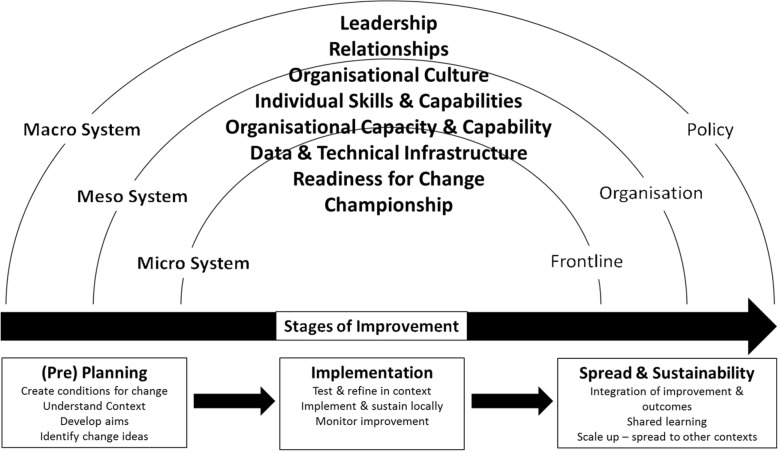
Background: Recognising the influence of context and the context-sensitive nature of quality improvement (QI) interventions is crucial to implementing effective improvements and successfully replicating them in new settings, yet context is still poorly understood. To address this challenge, it is necessary to capture generalisable knowledge, first to understand which aspects of context are most important to QI and why, and secondly, to explore how these factors can be managed to support healthcare improvement, in terms of implementing successful improvement initiatives, achieving sustainability and scaling interventions. The research question was how and why does context influence quality improvement initiatives in healthcare? Methods: A realist review explored the contextual conditions that influence healthcare improvement. Realist methodology integrates theoretical understanding and stakeholder input with empirical research findings. The review aimed to identify and understand the role of context during the improvement cycle, i.e. planning, implementation, sustainability and transferability; and distil new knowledge to inform the design and development of context-sensitive QI initiatives. We developed a preliminary theory of the influence of context to arrive at a conceptual and theoretical framework. Results: Thirty-five studies were included in the review, demonstrating the interaction of key contextual factors across healthcare system levels during the improvement cycle. An evidence-based explanatory theoretical model is proposed to illustrate the interaction between contextual factors, system levels (macro, meso, micro) and the stages of the improvement journey. Findings indicate that the consideration of these contextual factors would enhance the design and delivery of improvement initiatives, across a range of improvement settings. Conclusions: This is the first realist review of context in QI and contributes to a deeper understanding of how context influences quality improvement initiatives. The distillation of key contextual factors offers the potential to inform the design and development of context-sensitive interventions to enhance improvement initiatives and address the challenge of spread and sustainability. Future research should explore the application of our conceptual model to enhance improvement-planning processes. Systematic review registration: PROSPERO CRD42017062135
Overview
The claims and statistics of this paper haven’t been checked yet.
Free: it reads the open-access text and checks the first 5 claims that cite a source we can check. Create a free account to check every claim.
Integrity signals
Registry
Cites
Statistics
Figures
Verification
Claims the paper makes
The claims and statistics of this paper haven’t been checked yet.
Free: it reads the open-access text and checks the first 5 claims that cite a source we can check. Create a free account to check every claim.
Self-check
Percentages, sums and reported differences re-computed from the paper’s own numbers.
The self-check needs the paper’s full text.
Citations
Cites
Damschroder, L. J., Aron, D. C., Keith, R. E., Kirsh, S. R., Alexander, J. A., & Lowery, J. C. (2009) · Implementation Science · doi:10.1186/1748-5908-4-50 · Cited by 14,496 · cited 2×
“The variability within the body of literature in this area [9, 16, 17, 25] suggests that further work is required to unpack the role of context, and explore which characteristics of context matter, and how, why, when and for whom they matter.”
BackgroundDiffusion of Innovations in Service Organizations: Systematic Review and Recommendations
GREENHALGH, T., ROBERT, G., MACFARLANE, F., BATE, P., & KYRIAKIDOU, O. (2004) · The Milbank Quarterly · doi:10.1111/j.0887-378x.2004.00325.x · Cited by 7,448 · cited 1×
“This review emphasises the importance of stakeholders (individuals/teams and their capacities and skills) within the improvement process, particularly around the key roles of change agents and champions [19, 81] in supporting the success of QI interventions at the microsystem and senior organisational support for init…”
BackgroundRealist review - a new method of systematic review designed for complex policy interventions
Pawson, R., Greenhalgh, T., Harvey, G., & Walshe, K. (2005) · Journal of Health Services Research & Policy · doi:10.1258/1355819054308530 · Cited by 3,190 · cited 3×
“terms of context, mechanism and outcome (CMO) configurations [26, 27].”
BackgroundOgrinc, G., Davies, L., Goodman, D., Batalden, P., Davidoff, F., & Stevens, D. (2016) · BMJ Quality & Safety · doi:10.1136/bmjqs-2015-004411 · Cited by 2,996 · cited 1×
“0 publication guidelines for quality improvement studies in healthcare [13] recognises context as one of the fundamental reporting items.”
BackgroundPawson, R. (2006) · doi:10.4135/9781849209120 · Cited by 1,791 · cited 6×
“The starting point for the notion of context in realist review is the four contextual ‘layers’ defined by Pawson et al [27]: individuals, interpersonal relations, institution and infrastructure.”
BackgroundMethodInfluentialWhat drives change? Barriers to and incentives for achieving evidence‐based practice
Grol, R., & Wensing, M. (2004) · Medical Journal of Australia · doi:10.5694/j.1326-5377.2004.tb05948.x · Cited by 1,378 · cited 3×
“Quality improvement in healthcare is a relatively new area, [1, 8] furthered by the work of the Institute for Healthcare Improvement in the USA [1].”
BackgroundRAMESES publication standards: realist syntheses
Wong, G., Greenhalgh, T., Westhorp, G., Buckingham, J., & Pawson, R. (2013) · BMC Medicine · doi:10.1186/1741-7015-11-21 · Cited by 1,374
What is "quality improvement" and how can it transform healthcare?
Batalden, P. B., & Davidoff, F. (2007) · Quality and Safety in Health Care · doi:10.1136/qshc.2006.022046 · Cited by 1,100 · cited 1×
“‘healthcare improvement’, which incorporates changes leading to ‘better patient outcomes (health), better system performance (care) and better professional development’ [2].”
BackgroundPfadenhauer, L. M., Gerhardus, A., Mozygemba, K., Lysdahl, K. B., Booth, A., Hofmann, B., Wahlster, P., Polus, S., Burns, J., Brereton, L., et al. (2017) · Implementation Science · doi:10.1186/s13012-017-0552-5 · Cited by 1,016 · cited 1×
“This scoping exercise included the identification and scrutiny of key publications examining the role of context in healthcare quality improvement [10, 11, 14, 16, 23, 34, 35].”
BackgroundImplementation, context and complexity
May, C. R., Johnson, M., & Finch, T. (2016) · Implementation Science · doi:10.1186/s13012-016-0506-3 · Cited by 978 · cited 1×
“Contextual ‘confounders’ that act as barriers to improvement in one setting may be facilitators in other settings; such confounders often represent ‘typical’ healthcare conditions [15].”
BackgroundKAPLAN, H. C., BRADY, P. W., DRITZ, M. C., HOOPER, D. K., LINAM, W. M., FROEHLE, C. M., & MARGOLIS, P. (2010) · Milbank Quarterly · doi:10.1111/j.1468-0009.2010.00611.x · Cited by 714 · cited 3×
“Other reviews have demonstrated similarities [10, 23, 34, 78], which is unsurprising, given that the origins of QI in healthcare can be traced to the USA [1] and most QI training curricula are founded in the USA [83].”
BackgroundExplaining Michigan: Developing an Ex Post Theory of a Quality Improvement Program
DIXON-WOODS, M., BOSK, C. L., AVELING, E. L., GOESCHEL, C. A., & PRONOVOST, P. J. (2011) · Milbank Quarterly · doi:10.1111/j.1468-0009.2011.00625.x · Cited by 603 · cited 1×
“One of the key challenges in healthcare improvement is that what works in one setting does not always readily transfer to other settings [5, 6].”
BackgroundDixon-Woods, M., McNicol, S., & Martin, G. (2012) · BMJ Quality & Safety · doi:10.1136/bmjqs-2011-000760 · Cited by 601
Kaplan, H. C., Provost, L. P., Froehle, C. M., & Margolis, P. A. (2012) · BMJ Quality & Safety · doi:10.1136/bmjqs-2011-000010 · Cited by 572 · cited 1×
“The variability within the body of literature in this area [9, 16, 17, 25] suggests that further work is required to unpack the role of context, and explore which characteristics of context matter, and how, why, when and for whom they matter.”
BackgroundAre quality improvement collaboratives effective? A systematic review
Wells, S., Tamir, O., Gray, J., Naidoo, D., Bekhit, M., & Goldmann, D. (2018) · BMJ Quality & Safety · doi:10.1136/bmjqs-2017-006926 · Cited by 442
Li, S.-A., Jeffs, L., Barwick, M., & Stevens, B. (2018) · Systematic Reviews · doi:10.1186/s13643-018-0734-5 · Cited by 433
RAMESES publication standards: realist syntheses
Wong, G., Greenhalgh, T., Westhorp, G., Buckingham, J., & Pawson, R. (2013) · Journal of Advanced Nursing · doi:10.1111/jan.12095 · Cited by 385 · cited 1×
“The review was conducted and reported in accordance with the Realist And Meta-narrative Evidence Syntheses: Evolving Standards (RAMESES) guidance and publication standards [31, 32].”
MethodUnderstanding organisational culture for healthcare quality improvement
Mannion, R., & Davies, H. (2018) · BMJ · doi:10.1136/bmj.k4907 · Cited by 380 · cited 1×
“The key elements within this domain are related to culture and the multiple subcultures that can act both to drive change and to undermine improvement efforts [75].”
BackgroundGoodman, D., Ogrinc, G., Davies, L., Baker, G. R., Barnsteiner, J., Foster, T. C., Gali, K., Hilden, J., Horwitz, L., Kaplan, H. C., et al. (2016) · BMJ Quality & Safety · doi:10.1136/bmjqs-2015-004480 · Cited by 374
Jagosh, J. (2019) · Annual Review of Public Health · doi:10.1146/annurev-publhealth-031816-044451 · Cited by 346 · cited 1×
“the realist approach [72, 73], this sense-checking exercise was invaluable.”
BackgroundØvretveit, J. (2011) · BMJ Quality & Safety · doi:10.1136/bmjqs.2010.045955 · Cited by 340 · cited 2×
“This scoping exercise included the identification and scrutiny of key publications examining the role of context in healthcare quality improvement [10, 11, 14, 16, 23, 34, 35].”
BackgroundPublication guidelines for quality improvement in health care: evolution of the SQUIRE project
Davidoff, F., Batalden, P., Stevens, D., Ogrinc, G., Mooney, S., & for the SQUIRE development group (2008) · Quality and Safety in Health Care · doi:10.1136/qshc.2008.029066 · Cited by 324
Digging for Nuggets: How ‘Bad’ Research Can Yield ‘Good’ Evidence
Pawson, R. (2006) · International Journal of Social Research Methodology · doi:10.1080/13645570600595314 · Cited by 317 · cited 1×
“Documents were then assessed for methodological rigour (whether the methods used to generate the relevant data were credible, plausible and trustworthy), whilst bearing in mind that even methodologically weak studies that would be otherwise excluded by a traditional systematic review may contain potentially valuable ‘…”
MethodNielsen, K., & Miraglia, M. (2017) · Human Relations · doi:10.1177/0018726716670226 · Cited by 315
Rycroft-Malone, J., Seers, K., Chandler, J., Hawkes, C. A., Crichton, N., Allen, C., Bullock, I., & Strunin, L. (2013) · Implementation Science · doi:10.1186/1748-5908-8-28 · Cited by 303 · cited 3×
“Many studies considered and compared pre- and post-implementation contexts [38, 41, 46, 48, 67].”
BackgroundMethodExplaining Matching Michigan: an ethnographic study of a patient safety program
Dixon-Woods, M., Leslie, M., Tarrant, C., & Bion, J. (2013) · Implementation Science · doi:10.1186/1748-5908-8-70 · Cited by 291 · cited 7×
“2013, UK [43] Adult intensive care units Reducing central line bloodstream infections; improvements in patient safety and reduce 30 day mortality.”
BackgroundInfluentialTomoaia-Cotisel, A., Scammon, D. L., Waitzman, N. J., Cronholm, P. F., Halladay, J. R., Driscoll, D. L., Solberg, L. I., Hsu, C., Tai-Seale, M., Hiratsuka, V., et al. (2013) · The Annals of Family Medicine · doi:10.1370/afm.1549 · Cited by 240 · cited 16×
“Scotland/ USA: broad range of 8 QI projects set within two hospitals in Scotland and the USA.”
BackgroundMethodInfluentialBenning, A., Ghaleb, M., Suokas, A., Dixon-Woods, M., Dawson, J., Barber, N., Franklin, B. D., Girling, A., Hemming, K., Carmalt, M., et al. (2011) · BMJ · doi:10.1136/bmj.d195 · Cited by 226 · cited 6×
“However, misalignment of QI programme goals to local conditions/priorities, or an inability to achieve fit, was also highlighted [37, 38, 43, 61, 70] as a challenge when a mismatch between features of programme design/delivery and implementation contexts occurred.”
BackgroundMethodInfluentialProtocol—the RAMESES II study: developing guidance and reporting standards for realist evaluation
Greenhalgh, T., Wong, G., Jagosh, J., Greenhalgh, J., Manzano, A., Westhorp, G., & Pawson, R. (2015) · BMJ Open · doi:10.1136/bmjopen-2015-008567 · Cited by 197
Taylor, S. L., Dy, S., Foy, R., Hempel, S., McDonald, K. M., Øvretveit, J., Pronovost, P. J., Rubenstein, L. V., Wachter, R. M., & Shekelle, P. G. (2011) · BMJ Quality & Safety · doi:10.1136/bmjqs.2010.049379 · Cited by 178 · cited 2×
“Throughout the improvement journey, different aspects of context can assume more or less importance (exerting more or less influence), depending on the type of intervention being implemented, its infancy or maturity, stage of implementation, system level at which it is targeted, and, in the case of multi-component int…”
BackgroundKringos, D. S., Sunol, R., Wagner, C., Mannion, R., Michel, P., Klazinga, N. S., Groene, O., & on behalf of the DUQuE Consortium (2015) · BMC Health Services Research · doi:10.1186/s12913-015-0906-0 · Cited by 175 · cited 2×
“Other reviews have demonstrated similarities [10, 23, 34, 78], which is unsurprising, given that the origins of QI in healthcare can be traced to the USA [1] and most QI training curricula are founded in the USA [83].”
BackgroundKrein, S. L., Damschroder, L. J., Kowalski, C. P., Forman, J. H., Hofer, T. P., & Saint, S. K. (2010) · Social Science & Medicine · doi:10.1016/j.socscimed.2010.07.041 · Cited by 168 · cited 15×
“Scotland/ USA: broad range of 8 QI projects set within two hospitals in Scotland and the USA.”
BackgroundInfluentialMcCormack, B., Rycroft-Malone, J., DeCorby, K., Hutchinson, A. M., Bucknall, T., Kent, B., Schultz, A., Snelgrove-Clarke, E., Stetler, C., Titler, M., et al. (2013) · Implementation Science · doi:10.1186/1748-5908-8-107 · Cited by 147 · cited 2×
“This review emphasises the importance of stakeholders (individuals/teams and their capacities and skills) within the improvement process, particularly around the key roles of change agents and champions [19, 81] in supporting the success of QI interventions at the microsystem and senior organisational support for init…”
BackgroundColes, E., Wells, M., Maxwell, M., Harris, F., Anderson, J. M., Gray, N. M., Milner, G., & MacGillivray, S. A. (2017) · Systematic Reviews · doi:10.1186/s13643-017-0566-8 · Cited by 139 · cited 1×
“No changes were made to the published review protocol [33].”
Self-citationCurry, L. A., Brault, M. A., Linnander, E. L., McNatt, Z., Brewster, A. L., Cherlin, E., Flieger, S. P., Ting, H. H., & Bradley, E. H. (2018) · BMJ Quality & Safety · doi:10.1136/bmjqs-2017-006989 · Cited by 130 · cited 14×
“Scotland/ USA: broad range of 8 QI projects set within two hospitals in Scotland and the USA.”
BackgroundInfluentialLean and leadership practices: development of an initial realist program theory
Goodridge, D. M., Westhorp, G., Rotter, T., Dobson, R., & Bath, B. L. (2015) · BMC Health Services Research · doi:10.1186/s12913-015-1030-x · Cited by 129 · cited 1×
“However, realist understandings of ‘what works, for whom and in what settings’ are portable and can generate transferable, generalisable lessons [30].”
BackgroundQuality improvement made simple
(2021) · doi:10.37829/hf-2021-i05 · Cited by 128
Øvretveit, J. C., Shekelle, P. G., Dy, S. M., McDonald, K. M., Hempel, S., Pronovost, P., Rubenstein, L., Taylor, S. L., Foy, R., & Wachter, R. M. (2011) · BMJ Quality & Safety · doi:10.1136/bmjqs.2010.047035 · Cited by 112 · cited 1×
“’s [74] view of contextual conditions as ‘influences which interact with each other, and interact with the implementation process’; however, we also acknowledge the dynamic relationship between contextual factors and system levels that occurs during the entire cycle of improvement, pre- and post-implementation.”
BackgroundSommerbakk, R., Haugen, D. F., Tjora, A., Kaasa, S., & Hjermstad, M. J. (2016) · BMC Palliative Care · doi:10.1186/s12904-016-0132-5 · Cited by 102 · cited 5×
“Gjestsen et al. 2017, Norway [49] Home-based care services National programme established to develop and implement assistive living technologies is integrated in primary care services by 2020.”
BackgroundInfluentialInfluence of organizational culture on quality healthcare delivery
Carney, M. (2011) · International Journal of Health Care Quality Assurance · doi:10.1108/09526861111160562 · Cited by 90 · cited 4×
“Carney 2011, Republic of Ireland [40] Clinical and non-clinical heads of departments within hospitals n/a—study was an exploration of the pivotal role of head of department/directorate to healthcare management and its influence on healthcare planning and quality healthcare delivery. n/a Organisational culture.”
BackgroundInfluentialBoaz, A., Robert, G., Locock, L., Sturmey, G., Gager, M., Vougioukalou, S., Ziebland, S., & Fielden, J. (2016) · Journal of Health Organization and Management · doi:10.1108/jhom-02-2015-0027 · Cited by 81 · cited 1×
“Boaz et al. 2016, UK [39] Intensive care units and lung cancer pathways Implement improvement priorities identified through a participatory/co-design process Intensive care units prioritised improvements in enhancing basic care, reducing noise and sleep deprivation, communication, patient-doctor…”
BackgroundGagliardi, A. R., Webster, F., Brouwers, M. C., Baxter, N. N., Finelli, A., & Gallinger, S. (2014) · BMC Health Services Research · doi:10.1186/s12913-014-0545-x · Cited by 78 · cited 9×
“Flynn and Hartfield 2016, Canada [46] Paediatric Intensive Care Unit Improve hand hygiene practice within the paediatric intensive care unit Need to understand barriers and facilitators around implementing initiatives in complex systems.”
BackgroundMethodInfluentialShea, C. M., Turner, K. L., Albritton, J., & Reiter, K. L. (2018) · Health Care Management Review · doi:10.1097/hmr.0000000000000194 · Cited by 71
McDonald, K. M. (2013) · Academic Pediatrics · doi:10.1016/j.acap.2013.04.013 · Cited by 70 · cited 2×
“The variability within the body of literature in this area [9, 16, 17, 25] suggests that further work is required to unpack the role of context, and explore which characteristics of context matter, and how, why, when and for whom they matter.”
BackgroundReed, J. E., Kaplan, H. C., & Ismail, S. (2018) · BMC Health Services Research · doi:10.1186/s12913-018-3348-7 · Cited by 68 · cited 1×
“Reed et al. 2018, UK [64] 72 Ohio maternity hospitals; 2 hospitals (Scotland and USA: 4 QI projects within each hospital) Ohio: improve birth registry accuracy and reduce elective deliveries < 39 weeks.”
BackgroundSchierhout, G., Hains, J., Si, D., Kennedy, C., Cox, R., Kwedza, R., O’Donoghue, L., Fittock, M., Brands, J., Lonergan, K., et al. (2013) · Implementation Science · doi:10.1186/1748-5908-8-119 · Cited by 67 · cited 8×
“…improvement interventions occurred Improvement aim Care or quality gap; deficiency that intervention aims to address Context description/features Schierhout et al. 2013, Australia [68] Community-based health centres Support best practice in prevention and management of chronic disease in…”
BackgroundMethodResultInfluentialUnpacking the black box of improvement
Ramaswamy, R., Reed, J. E., Livesley, N., Boguslavsky, V., García‐Elorrio, E., Sax, S., Diarra, H., Kimble, L. E., & Parry, G. J. (2018) · International Journal for Quality in Health Care · doi:10.1093/intqhc/mzy009 · Cited by 64 · cited 2×
“The mutually emergent domains and contextual factors identified in this review are all interconnected—and to a lesser degree, overlapping—so they cannot be viewed in isolation, underlining the complex systems approach to QI [3, 24].”
BackgroundWong, G., Greenhalgh, T., Westhorp, G., & Pawson, R. (2014) · Cited by 63
The interplay of contextual elements in implementation: an ethnographic case study
McCullough, M. B., Chou, A. F., Solomon, J. L., Petrakis, B. A., Kim, B., Park, A. M., Benedict, A. J., Hamilton, A. B., & Rose, A. J. (2015) · BMC Health Services Research · doi:10.1186/s12913-015-0713-7 · Cited by 60 · cited 16×
“Scotland/ USA: broad range of 8 QI projects set within two hospitals in Scotland and the USA.”
BackgroundMethodInfluentialDückers, M. L., Wagner, C., Vos, L., & Groenewegen, P. P. (2011) · Implementation Science · doi:10.1186/1748-5908-6-18 · Cited by 54 · cited 5×
“Dückers et al. 2011, Holland [44] Across hospital organisations Stimulate the development of quality management systems and the spread of methods to improve patient safety and logistics Address the lagging development of quality management systems optimisation of healthcare delivery through organisationalwide diffusio…”
BackgroundMethodInfluentialGjestsen, M. T., Wiig, S., & Testad, I. (2017) · BMJ Open · doi:10.1136/bmjopen-2016-015455 · Cited by 50 · cited 8×
“2017, Norway [49] Home-based care services National programme established to develop and implement assistive living technologies is integrated in primary care services by 2020.”
BackgroundMethodInfluentialGreen, S. A., Bell, D., & Mays, N. (2017) · BMC Health Services Research · doi:10.1186/s12913-017-2070-1 · Cited by 49 · cited 2×
“Green et al. 2017, UK [50] Acute medical hospital wards COPD bundle aims to improve the quality and consistency of the care received by patients, and to reduce variations in care processes and clinical outcomes.”
BackgroundTeam Effectiveness and Organizational Context in the Implementation of a Clinical Innovation
Lukas, C. V., Mohr, D. C., & Meterko, M. (2009) · Quality Management in Health Care · doi:10.1097/01.qmh.0000344591.56133.90 · Cited by 47 · cited 1×
“[76] suggest that in some instances the clinical microsystem culture may assume more significance to improvement than the wider organisational culture, which ties in with the importance of clinical microsystems within the review programme theory.”
BackgroundTeam dynamics within quality improvement teams: a scoping review
Rowland, P., Lising, D., Sinclair, L. B., & Baker, G. R. (2018) · International Journal for Quality in Health Care · doi:10.1093/intqhc/mzy045 · Cited by 44 · cited 1×
“Other reviews have demonstrated similarities [10, 23, 34, 78], which is unsurprising, given that the origins of QI in healthcare can be traced to the USA [1] and most QI training curricula are founded in the USA [83].”
BackgroundHarveian Oration 2018: Improving quality and safety in healthcare
Dixon‐Woods, M. (2019) · Clinical Medicine · doi:10.7861/clinmedicine.19-1-47 · Cited by 42
CIHR Team in Children’s Pain, Yamada, J., Squires, J. E., Estabrooks, C. A., Victor, C. J., & Stevens, B. (2017) · BMC Health Services Research · doi:10.1186/s12913-017-2029-2 · Cited by 40
Szymczak, J. E. (2018) · BMJ Quality & Safety · doi:10.1136/bmjqs-2018-008512 · Cited by 39
A qualitative study of contextual factors’ impact on measures to reduce surgery cancellations
Hovlid, E., & Bukve, O. (2014) · BMC Health Services Research · doi:10.1186/1472-6963-14-215 · Cited by 38 · cited 9×
“Gjestsen et al. 2017, Norway [49] Home-based care services National programme established to develop and implement assistive living technologies is integrated in primary care services by 2020.”
BackgroundMethodResultInfluentialHarvey, G., Llewellyn, S., Maniatopoulos, G., Boyd, A., & Procter, R. (2018) · BMC Health Services Research · doi:10.1186/s12913-018-3176-9 · Cited by 37 · cited 5×
“Multiple interactions between different aspects of context were reported across the evidence, for example the influence of macro-level contexts on the micro system or the tensions and trade-offs between the two [38, 43, 49, 52, 53, 57, 60, 63].”
BackgroundInfluentialPapoutsi, C., Poots, A. J., Clements, J. T. C., Wyrko, Z., Offord, N., & Reed, J. E. (2018) · Age and Ageing · doi:10.1093/ageing/afx194 · Cited by 35 · cited 1×
“Papoutsi et al. 2018, UK [61] Acute Medical Units or equivalent Aim to reduce harm and increase assessment reliability for older people admitted acutely to hospital, through the introduction of a checklist to increase completion of key clinical admission assessments and improve communication.”
BackgroundGoing Beyond Systematic Reviews: Realist and Meta-Narrative Reviews
Otte-Trojel, T., & Wong, G. (2016) · Studies in health technology and informatics · doi:10.3233/978-1-61499-635-4-275 · Cited by 32
Ontario's Emergency Department Process Improvement Program: The Experience of Implementation
Rotteau, L., Webster, F., Salkeld, E., Hellings, C., Guttmann, A., Vermeulen, M. J., Bell, R. S., Zwarenstein, M., Rowe, B. H., Nigam, A., et al. (2015) · Academic Emergency Medicine · doi:10.1111/acem.12688 · Cited by 31 · cited 8×
“Flynn and Hartfield 2016, Canada [46] Paediatric Intensive Care Unit Improve hand hygiene practice within the paediatric intensive care unit Need to understand barriers and facilitators around implementing initiatives in complex systems.”
BackgroundInfluentialShekelle, P., Pronovost, P. J., Wachter, R. M., Carr, L. H., Foy, R., Dy, S. M., Hempel, S., McDonald, K. M., Øvretveit, J., & Rubenstein, L. V. (2010) · Cited by 31
Hamilton, J., Verrall, T., Maben, J., Griffiths, P., Avis, K., Baker, G. R., & Teare, G. F. (2014) · BMC Health Services Research · doi:10.1186/s12913-014-0642-x · Cited by 30 · cited 1×
“Hamilton et al. 2014, Canada [52] Surgical units in tertiary and secondary hospitals in Saskatchewan Implement RTC in all surgical units in tertiary and secondary hospitals in Saskatchewan.”
BackgroundSutton, E., Dixon‐Woods, M., & Tarrant, C. (2016) · BMJ Open · doi:10.1136/bmjopen-2015-010988 · Cited by 27 · cited 1×
“Sutton et al. 2016, UK [70] Transitions of care across care boundaries— between residential care settings and hospital Reduce unplanned readmissions from residential care homes.”
BackgroundKaplan, H. C., Sherman, S. N., Cleveland, C., Goldenhar, L. M., Lannon, C., & Bailit, J. L. (2015) · BMJ Quality & Safety · doi:10.1136/bmjqs-2015-003984 · Cited by 26 · cited 13×
“Scotland/ USA: broad range of 8 QI projects set within two hospitals in Scotland and the USA.”
BackgroundInfluentialArmstrong, N., Herbert, G., & Brewster, L. (2016) · Family Practice · doi:10.1093/fampra/cmw049 · Cited by 25 · cited 3×
“…improvement interventions occurred Improvement aim Care or quality gap; deficiency that intervention aims to address Context description/features Armstrong et al. 2016, UK [37] Primary care practices Improve the quality of the chronic kidney disease (CKD), register and implement the CKD bundles…”
BackgroundBalasubramanian, B. A., Heurtin‐Roberts, S., Krasny, S., Rohweder, C. L., Fair, K. N., Olmos‐Ochoa, T. T., Stange, K. C., & Gorin, S. S. (2017) · The Journal of the American Board of Family Medicine · doi:10.3122/jabfm.2017.03.160151 · Cited by 23
Clinical Quality Improvement and Quality Improvement Research
Mormer, E., & Stevans, J. M. (2019) · Perspectives of the ASHA Special Interest Groups · doi:10.1044/2018_pers-st-2018-0003 · Cited by 23 · cited 1×
“ical settings [20], the influence of context is highly significant, and so stripping out contextual factors from improvement research limits the usefulness and generalisability of findings [21].”
BackgroundRostami, P., Ashcroft, D. M., & Tully, M. P. (2018) · PLoS ONE · doi:10.1371/journal.pone.0192224 · Cited by 21 · cited 3×
“Three distinct types of context were identified: the setting(s) of care in which QI&I takes place; the context of the team conducting a specific project; the wider context supporting general QI&I. Rostami et al. 2018, UK [65] Medication safety in primary and secondary care Implementation of a national Medication Safet…”
BackgroundInfluentialFlynn, R., & Hartfield, D. S. (2016) · Leadership in health services · doi:10.1108/lhs-11-2015-0039 · Cited by 19 · cited 1×
“Flynn and Hartfield 2016, Canada [46] Paediatric Intensive Care Unit Improve hand hygiene practice within the paediatric intensive care unit Need to understand barriers and facilitators around implementing initiatives in complex systems.”
BackgroundMeehan, T. P., Qazi, D. J., Hoof, T. J. V., Ho, S., Eckenrode, S., Spenard, A., Pandolfi, M. M., Johnson, F. U., & Quetti, D. (2015) · Journal of the American Medical Directors Association · doi:10.1016/j.jamda.2015.02.015 · Cited by 18 · cited 15×
“Scotland/ USA: broad range of 8 QI projects set within two hospitals in Scotland and the USA.”
BackgroundMethodInfluentialEdward, K., Walker, K., & Duff, J. S. (2017) · International Journal for Quality in Health Care · doi:10.1093/intqhc/mzx099 · Cited by 18 · cited 6×
“Improvement in quality of care for Indigenous Australians.”
BackgroundInfluentialPower, M., Brewster, L., Parry, G. J., Brotherton, A. M., Minion, J. T., Ozierański, P., McNicol, S., Harrison, A., & Dixon‐Woods, M. (2016) · BMJ Open · doi:10.1136/bmjopen-2016-011886 · Cited by 14 · cited 4×
“Power et al. 2016, UK [63] Range of primary and secondary care settings Develop a shared national, regional and locally aligned safety focus on 4 harms, establish measurement system to capture harm-free care and deliver improved outcomes.”
BackgroundInfluentialPhung, V., Essam, N., Asghar, Z. B., Spaight, A., & Siriwardena, A. N. (2015) · Journal of Evaluation in Clinical Practice · doi:10.1111/jep.12438 · Cited by 13 · cited 2×
“2016, UK [62] Emergency care pathways for Ambulance Service care bundles for acute myocardial infarction and stroke Increase the reliability of delivering the AMI (> 70%) and stroke (> 90%) care bundles.”
BackgroundGrooms, H. R., Froehle, C. M., Provost, L., Handyside, J. R., & Kaplan, H. C. (2016) · American Journal of Medical Quality · doi:10.1177/1062860616644323 · Cited by 10 · cited 16×
“Scotland/ USA: broad range of 8 QI projects set within two hospitals in Scotland and the USA.”
BackgroundMethodResultInfluentialPallari, E., Khadjesari, Z., Green, J. S. A., & Sevdalis, N. (2018) · The American Journal of Surgery · doi:10.1016/j.amjsurg.2018.11.008 · Cited by 7
Context Matters: Practitioner Perspectives on Immunization Delivery Quality Improvement Efforts
Gingold, J. A., Briccetti, C., Zook, K., Gillespie, C. W., Gubernick, R. S., Moon, R. Y., & Fu, L. Y. (2016) · Clinical Pediatrics · doi:10.1177/0009922815625874 · Cited by 6 · cited 15×
“Scotland/ USA: broad range of 8 QI projects set within two hospitals in Scotland and the USA.”
BackgroundResultInfluentialDarley, S., Walshe, K., Boaden, R., Proudlove, N. C., & Goff, M. (2018) · International Journal for Quality in Health Care · doi:10.1093/intqhc/mzy081 · Cited by 5 · cited 3×
“Darley et al. 2018, UK [42] Maternity services n/a—study was an exploration of the utilisation of an improvement capability assessment tool.”
BackgroundBailey, S. F., Brisley, A., Blakeman, T., Weisshaar, C., & Howard, S. J. (2018) · Kent Academic Repository (University of Kent) · Cited by 3
Research works printed but not linked: 4
- Health Foundation. Overcoming challenges to improving quality. Lessons from the Health Foundation's improvement programme evaluations and relevant literature. London: Health Foundation; 2012.
- Horton T, Illingworth J, Warburton W. The spread challenge. London: Health Foundation; 2018.
- Øvretveit J. How does context affect quality improvement? In: Perspectives on context. London: The Health Foundation; 2014.
- Fulop N, Robert G. Context for successful quality improvement: evidence review. London: The Health Foundation; 2015.
Cited by
Nikiphorou, E., Santos, E. J. F., Marques, A., Böhm, P., Bijlsma, J. W., Daien, C. I., Esbensen, B. A., Ferreira, R. J. O., Fragoulis, G. E., Holmes, P., et al. (2021) · Annals of the Rheumatic Diseases · doi:10.1136/annrheumdis-2021-220249 · Cited by 315
Aunger, J. A., Millar, R. W., Greenhalgh, J., Mannion, R., Rafferty, A.-M., & McLeod, H. (2021) · Systematic Reviews · doi:10.1186/s13643-021-01630-8 · Cited by 143
Mitigating Vaccine Hesitancy and Building Trust to Prevent Future Measles Outbreaks in England
Thompson, S., Meyer, J. C., Burnett, R. J., & Campbell, S. (2023) · Vaccines · doi:10.3390/vaccines11020288 · Cited by 61
“This resonates with wider quality improvement literature that emphasises systemic approaches with interventions at micro, meso and macro levels that reinforce each other [113].”
BackgroundAlsubahi, N., Pavlova, M., Alzahrani, A. A., Ahmad, A., & Groot, W. N. J. (2024) · Healthcare · doi:10.3390/healthcare12030315 · Cited by 62
“Previous studies highlighted the role of cultural and contextual factors in influencing care quality and satisfaction [47,48].”
BackgroundFactors of the Revisit Intention of Patients in the Primary Health Care System in Argentina
Pighin, M., Álvarez-Risco, A., Del-Aguila-Arcentales, S., Rojas-Osorio, M., & Yáñez, J. A. (2022) · Sustainability · doi:10.3390/su142013021 · Cited by 58
Metadata
- Authors
- Coles, E., Anderson, J., Maxwell, M., Harris, F. M., Gray, N. M., Milner, G., & MacGillivray, S.
- Affiliations
- University of Stirling (GB)
- University of Dundee (GB)
- Corresponding author
- Coles, Emma
- Venue
- Systematic Reviews
- Published
- 2020-04-26
- Volume
- 9
- Issue
- 1
- Pages
- 94-94
- ISSN
- 2046-4053 (ISSN-L)
- PMC
- PMC7184709
- OpenAlex
- W3019114423
- Cited by
- 246
- References
- 80
- Citations by year
- 2026: 32 · 2025: 49 · 2024: 62 · 2023: 45 · 2022: 21 · 2021: 32 · 2020: 5
- FWCI
- 26.88
- Type
- journal article
- Language
- en
- Open access
- gold
- doi.org
- Licence
- cc-by
- creativecommons.org/licenses/by/4.0/ (tdm)
- creativecommons.org/licenses/by/4.0/ (vor)
- Locations
- Systematic Reviews (publishedVersion, cc-by)
- PubMed Central (publishedVersion, cc-by)
- PubMed (publishedVersion)
- Discovery Research Portal (University of Dundee) (publishedVersion, cc-by)
- DOAJ (DOAJ: Directory of Open Access Journals) (submittedVersion, cc-by-sa)
- Stirling Online Research Repository (University of Stirling) (submittedVersion, cc-by)
- Funders
- Scottish Funding Council (242343290)
- Topics
- Health Sciences › Health Professions › General Health Professions › Health Policy Implementation Science
- Health Sciences › Medicine › Public Health, Environmental and Occupational Health › Healthcare Quality and Management
- Health Sciences › Health Professions › General Health Professions › Health Sciences Research and Education
- Keywords
- healthcare quality improvement, contextual factors, context-sensitive interventions, improvement cycle, sustainability of improvement, scaling up interventions, transferability, improvement planning
- MeSH terms
- Delivery of Health Care, Health Facilities, Humans, Quality of Health Care, Research Design, Quality Improvement
About these checks
Registry, retraction, Cites and statistics results are computed, not judged, with one exception: a printed reference that no index lists is read once by a model before it counts as a citation error. Claims are extracted by a model and kept only when their quote appears verbatim in the text; each cited source is then checked, with a model’s help, for whether it says what the claim relies on. Those verdicts can be wrong — read the claim’s quote and the cited source before relying on one.
Statistics and arithmetic are recomputed, not judged.
Confidence bands are shown only for fields calibrated on our annotated test set. None is calibrated yet, so no band is shown.
What counts as a claim ›How we measure confidence ›How we check this ›
Are you an author, or do you see a problem with this page? Request a review
Data sources
Bibliographic data: Semantic Scholar, OpenAlex, Crossref.
Contains information from the Semantic Scholar Academic Graph Datasets, made available under the ODC Attribution License (ODC-BY 1.0).
Semantic Scholar’s data is described in: Kinney, R., et al. (2023). The Semantic Scholar Open Data Platform. arXiv:2301.10140.
