

Research Screener: a machine learning tool to semi-automate abstract screening for systematic reviews
Open accessThe DOI matches its Crossref record; 56 of the 57 references it cites were found in a registry or an index.
Abstract
Background: Systematic reviews and meta-analyses provide the highest level of evidence to help inform policy and practice, yet their rigorous nature is associated with significant time and economic demands. The screening of titles and abstracts is the most time consuming part of the review process with analysts required review thousands of articles manually, taking on average 33 days. New technologies aimed at streamlining the screening process have provided initial promising findings, yet there are limitations with current approaches and barriers to the widespread use of these tools. In this paper, we introduce and report initial evidence on the utility of Research Screener, a semi-automated machine learning tool to facilitate abstract screening. Methods: Three sets of analyses (simulation, interactive and sensitivity) were conducted to provide evidence of the utility of the tool through both simulated and real-world examples. Results: Research Screener delivered a workload saving of between 60 and 96% across nine systematic reviews and two scoping reviews. Findings from the real-world interactive analysis demonstrated a time saving of 12.53 days compared to the manual screening, which equates to a financial saving of USD 2444. Conservatively, our results suggest that analysts who scan 50% of the total pool of articles identified via a systematic search are highly likely to have identified 100% of eligible papers. Conclusions: In light of these findings, Research Screener is able to reduce the burden for researchers wishing to conduct a comprehensive systematic review without reducing the scientific rigour for which they strive to achieve.
Overview
The claims and statistics of this paper haven’t been checked yet.
Free: it reads the open-access text and checks the first 5 claims that cite a source we can check. Create a free account to check every claim.
Integrity signals
Registry
Cites
Statistics
Figures
Verification
Claims the paper makes
The claims and statistics of this paper haven’t been checked yet.
Free: it reads the open-access text and checks the first 5 claims that cite a source we can check. Create a free account to check every claim.
Claims other papers make about this one
Each is checked against this paper’s own text: does it say what the citing paper says it does?
The source backs part of the claim, not all of it — or backs it for a different population, condition or comparison.
In the citing paper
“However, these tools, sometimes referred to as discriminative artificial intelligence (AI) technologies, generally require human researchers providing large amount of sufficiently diverse data for training and active learning [1, 3, 5, 6].”
From Testing the utility of GPT for title and abstract screening in environmental systematic evidence synthesis (2025) · cites this paper as [5]
Experimental — accuracy not yet measuredThe source backs part of the claim, not all of it — or backs it for a different population, condition or comparison.
In the citing paper
“In summary, ML-assisted systematic reviews can significantly reduce workload and have proven accurate across various fields and review topics.”
From Machine Learning-Assisted Systematic Review: A Case Study in Learning Analytics (2025) · cites this paper as Chai et al. (2021)
Experimental — accuracy not yet measuredThe source backs part of the claim, not all of it — or backs it for a different population, condition or comparison.
In the citing paper
“Traditional systematic reviews, despite their high-quality evidence, are labor-intensive and error-prone, especially during the abstract screening phase.”
From Machine Learning-Assisted Systematic Review: A Case Study in Learning Analytics (2025) · cites this paper as Chai et al., 2021
Experimental — accuracy not yet measuredThe cited source says what the claim attributes to it.
In the citing paper
“Screening titles and abstracts is a critical component of the review process (Chai et al., 2021).”
From Screening Smarter, Not Harder: A Comparative Analysis of Machine Learning Screening Algorithms and Heuristic Stopping Criteria for Systematic Reviews in Educational Research (2024) · cites this paper as Chai et al., 2021
The cited source says what the claim attributes to it.
In the citing paper
“However, these tools are still evolving, and their performance may vary across domains and even within the same domain (Burgard & Bittermann, 2023; Chai et al., 2021; van de Schoot et al., 2021).”
From Screening Smarter, Not Harder: A Comparative Analysis of Machine Learning Screening Algorithms and Heuristic Stopping Criteria for Systematic Reviews in Educational Research (2024) · cites this paper as Chai et al., 2021
3 more claims about this paper
Create a free account to see every claim other papers make about this one.
Self-check
Percentages, sums and reported differences re-computed from the paper’s own numbers.
The self-check needs the paper’s full text.
Citations
Cites
Vaswani, A., Shazeer, N., Parmar, N., Uszkoreit, J., Jones, L., Gomez, A. N., Kaiser, L., & Polosukhin, I. (2017) · arXiv · doi:10.48550/arxiv.1706.03762 · Cited by 120,404
BERT: Pre-training of Deep Bidirectional Transformers for Language Understanding
Devlin, J., Chang, M.-W., Lee, K., & Toutanova, K. (2019) · Proceedings of the 2019 Conference of the North American Chapter of the Association for Computational Linguistics: Human Language Technologies, Volume 1 (Long and Short Papers) · doi:10.18653/v1/n19-1423 · Cited by 54,325
Glove: Global Vectors for Word Representation
Pennington, J., Socher, R., & Manning, C. (2014) · Proceedings of the 2014 Conference on Empirical Methods in Natural Language Processing (EMNLP) · doi:10.3115/v1/d14-1162 · Cited by 34,071
PRISMA-P Group, Moher, D., Shamseer, L., Clarke, M., Ghersi, D., Liberati, A., Petticrew, M., Shekelle, P., & Stewart, L. A. (2015) · Systematic Reviews · doi:10.1186/2046-4053-4-1 · Cited by 26,223
Rayyan-a web and mobile app for systematic reviews.
Ouzzani, M., Hammady, H., Fedorowicz, Z., & Elmagarmid, A. (2016) · Systematic Reviews · doi:10.1186/s13643-016-0384-4 · Cited by 26,092
Advances in neural information processing systems 7
Cios, K., & Shields, M. (1997) · Neurocomputing · doi:10.1016/s0925-2312(97)90018-7 · Cited by 22,059
Distributed Representations of Sentences and Documents
Le, Q. V., & Mikolov, T. (2014) · arXiv (Cornell University) · doi:10.48550/arxiv.1405.4053 · Cited by 4,934
De-duplication of database search results for systematic reviews in EndNote
Bramer, W. M., Giustini, D., de Jonge, G. B., Holland, L., & Bekhuis, T. (2016) · Journal of the Medical Library Association : JMLA · doi:10.3163/1536-5050.104.3.014 · Cited by 2,103 · cited 1×
“Using a traditional manual approach [6], the de-duplication took approximately 7 h to complete, though with Research Screener this process was completed in a matter of seconds.”
MethodSeventy-five trials and eleven systematic reviews a day: how will we ever keep up?
Bastian, H., Glasziou, P., & Chalmers, I. (2010) · PLoS Medicine · doi:10.1371/journal.pmed.1000326 · Cited by 1,188 · cited 2×
“As a research methodology, systematic reviews first appeared around the 1970s, and since that time their appeal has grown exponentially (e.g. by 2007 there were 11 systematic reviews published every day [4]).”
BackgroundMethodAn open source machine learning framework for efficient and transparent systematic reviews
van de Schoot, R., de Bruin, J., Schram, R., Zahedi, P., de Boer, J., Weijdema, F., Kramer, B., Huijts, M., Hoogerwerf, M., Ferdinands, G., et al. (2021) · Nature Machine Intelligence · doi:10.1038/s42256-020-00287-7 · Cited by 1,157
Cited by
The role of digitalization in business and management: a systematic literature review
Calderon-Monge, E., & Ribeiro-Soriano, D. (2024) · Review of Managerial Science · doi:10.1007/s11846-023-00647-8 · Cited by 233
Artificial intelligence for literature reviews: opportunities and challenges
Bolaños, F., Salatino, A., Osborne, F., & Motta, E. (2024) · Artificial Intelligence Review · doi:10.1007/s10462-024-10902-3 · Cited by 246
Automated Paper Screening for Clinical Reviews Using Large Language Models
Guo, E., Gupta, M., Deng, J., Park, Y.-J., Paget, M., & Naugler, C. (2023) · arXiv · doi:10.48550/arxiv.2305.00844 · Cited by 230
Automated paper screening for clinical reviews using large language models: Data analysis study
Guo, E., Gupta, M., Deng, J., Park, Y.-J., Paget, M., & Naugler, C. (2024) · Journal of Medical Internet Research · doi:10.2196/48996 · Cited by 205
“This is especially problematic for small research groups, review projects with broad inclusion criteria (such as network meta-analyses), or time-constrained review projects (such as reviews relating to COVID-19 during the early stages of the pandemic) [7].”
Tools to support the automation of systematic reviews: a scoping review.
Khalil, H., Ameen, D., & Zarnegar, A. (2022) · Journal of Clinical Epidemiology · doi:10.1016/j.jclinepi.2021.12.005 · Cited by 190
Valizadeh, A., Moassefi, M., Nakhostin-Ansari, A., Hosseini Asl, S. H., Saghab Torbati, M., Aghajani, R., Maleki Ghorbani, Z., & Faghani, S. (2022) · BMC Medical Research Methodology · doi:10.1186/s12874-022-01631-8 · Cited by 159
“Chai et al. in 2021 [21] introduced a new tool named “Research Screener” which utilizes deep learning algorithms for the semi-automated screening process.”
MethodGuidance on terminology, application, and reporting of citation searching: the TARCiS statement
Hirt, J., Nordhausen, T., Fürst, T., Ewald, H., & Appenzeller‐Herzog, C. (2024) · BMJ · doi:10.1136/bmj-2023-078384 · Cited by 183
Boetje, J., & van de Schoot, R. (2024) · Systematic Reviews · doi:10.1186/s13643-024-02502-7 · Cited by 146
“However, defining a stopping rule is difficult as the cost of labeling additional records must be balanced against the cost of errors made by the model [15].”
Mallawaarachchi, S., Burley, J., Mavilidi, M., Howard, S. J., Straker, L., Kervin, L., Staton, S., Hayes, N., Machell, A., Torjinski, M., et al. (2024) · JAMA Pediatrics · doi:10.1001/jamapediatrics.2024.2620 · Cited by 142
Development of Prompt Templates for Large Language Model–Driven Screening in Systematic Reviews
Cao, C., Sang, J., Arora, R., Chen, D., Kloosterman, R., Cecere, M., Gorla, J., Saleh, R., Drennan, I., Teja, B., et al. (2025) · Annals of Internal Medicine · doi:10.7326/annals-24-02189 · Cited by 91
Handling effect size dependency in meta-analysis
Gucciardi, D. F., Lines, R. L. J., & Ntoumanis, N. (2021) · International Review of Sport and Exercise Psychology · doi:10.1080/1750984x.2021.1946835 · Cited by 103
“With significant advancements in computer and data science on the rise (Marshall & Wallace, 2019), we expect that many of the elements of the systematic review process will be optimised in years to come (e.g. machine learning in screening articles; Chai et al., 2021).”
Self-citationOfori-Boateng, R., Aceves-Martins, M., Wiratunga, N., & Moreno-Garcia, C. F. (2024) · Artificial Intelligence Review · doi:10.1007/s10462-024-10844-w · Cited by 86
Campos, D. G., Fütterer, T., Gfrörer, T., Lavelle-Hill, R., Murayama, K., König, L., Hecht, M., Zitzmann, S., & Scherer, R. (2024) · Educational Psychology Review · doi:10.1007/s10648-024-09862-5 · Cited by 75
“Whereas several studies have demonstrated the potential of ML-based tools to alleviate reviewer workload and save time in the screening process (Chai et al., 2021; Gates et al., 2019; Hamel et al., 2020; Howard et al., 2020; van de Schoot et al., 2021), there is a noticeable lack of research…”
Papa, V., Varotto, E., Galli, M., Vaccarezza, M., & Galassi, F. M. (2022) · Anatomical Sciences Education · doi:10.1002/ase.2162 · Cited by 87
Prompting is all you need: LLMs for systematic review screening
(2024) · doi:10.1101/2024.06.01.24308323 · Cited by 72
Methodological insights into ChatGPT’s screening performance in systematic reviews
Issaiy, M., Ghanaati, H., Kolahi, S., Shakiba, M., Jalali, A. H., Zarei, D., Kazemian, S., Avanaki, M. A., & Firouznia, K. (2024) · BMC Medical Research Methodology · doi:10.1186/s12874-024-02203-8 · Cited by 69
Cowie, K., Rahmatullah, A., Hardy, N., Holub, K., & Kallmes, K. (2022) · JMIR Medical Informatics · doi:10.2196/33219 · Cited by 68
Utilizing ASReview in screening primary studies for meta-research in SLA: A step-by-step tutorial
Quan, Y., Tytko, T., & Hui, B. (2024) · Research Methods in Applied Linguistics · doi:10.1016/j.rmal.2024.100101 · Cited by 64
Santos, Á. O. D., da Silva, E. S., Couto, L. M., Reis, G. V. L., & Belo, V. S. (2023) · Journal of Biomedical Informatics · doi:10.1016/j.jbi.2023.104389 · Cited by 64
Fintech: from budding to explosion - an overview of the current state of research
Sun, Y., Li, S., & Wang, R. (2022) · Review of Managerial Science · doi:10.1007/s11846-021-00513-5 · Cited by 79
Affengruber, L., van der Maten, M. M., Spiero, I., Nussbaumer-Streit, B., Mahmić-Kaknjo, M., Ellen, M. E., Goossen, K., Kantorova, L., Hooft, L., Riva, N., et al. (2024) · BMC Medical Research Methodology · doi:10.1186/s12874-024-02320-4 · Cited by 52
“…[37, 44, 48, 59] • EPPI-reviewer [37, 60, 119, 128] • Rayyan [36, 37, 39, 60, 74, 95, 97, 120, 128] • RCT classifier [118] • Research screener [33] • RobotAnalyst [36, 37, 48, 106, 109] • SRA-helper for EndNote [36] • SWIFT-active screener [37, 64] • SWIFT-Review [74] Full-text retrieval - -…”
BackgroundMethodInfluentialNeuroimage analysis using artificial intelligence approaches: a systematic review
Bacon, E. J., He, D., Achi, N. A. D., Wang, L., Li, H., Yao-Digba, P. D. Z., Monkam, P., & Qi, S. (2024) · Medical & Biological Engineering & Computing · doi:10.1007/s11517-024-03097-w · Cited by 64
“The adopted strategy is designed to ensure rigor and transparency, aligning with the PRISMA (Preferred Reporting Items for Systematic Reviews and Meta-Analyses) methodological procedures [39, 40].”
Tóth, B., Berek, L., Gulácsi, L., Péntek, M., & Zrubka, Z. (2024) · Systematic Reviews · doi:10.1186/s13643-024-02592-3 · Cited by 48
Literature review papers: the search and selection process
van Wee, B., & Banister, D. (2023) · Journal of Decision System · doi:10.1080/12460125.2023.2197703 · Cited by 68
“For example, Chai et al. (2021) discuss the screening of abstracts making use of Machine Learning.”
Haby, M. M., Barreto, J. O. M., Kim, J. Y. H., Peiris, S., Mansilla, C., Torres, M., Guerrero‐Magaña, D. E., & Revéiz, L. (2023) · Research Synthesis Methods · doi:10.1002/jrsm.1664 · Cited by 53
Ntoumanis, N., Dølven, S., Barkoukis, V., Boardley, I. D., Hvidemose, J. S., Juhl, C. B., & Gucciardi, D. F. (2024) · British Journal of Sports Medicine · doi:10.1136/bjsports-2023-107910 · Cited by 54
Self-citationAutomation tools to support undertaking scoping reviews
Khalil, H., Pollock, D., McInerney, P., Evans, C., Moraes, E. B., Godfrey, C. M., Alexander, L., Tricco, A., Peters, M. D. J., Pieper, D., et al. (2024) · Research Synthesis Methods · doi:10.1002/jrsm.1731 · Cited by 43
Wong, M. L., Girdler, S. J., Afsharnejad, B., Ntoumanis, N., Milbourn, B. T., Kebble, P. G., Morris, S. L., & Black, M. H. (2024) · Autism · doi:10.1177/13623613241240603 · Cited by 41
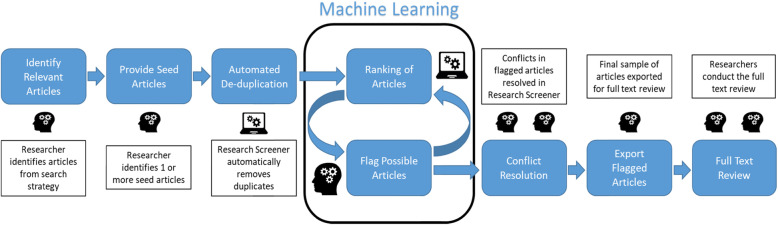
“Researcher Screener is designed to be a semi-automated tool employing machine learning algorithms and data mining to streamline the screening process (Chai et al., 2021).”
MethodBurgard, T., & Bittermann, A. (2023) · Zeitschrift für Psychologie · doi:10.1027/2151-2604/a000509 · Cited by 29
Large language models in clinical trials: applications, technical advances, and future directions
Lin, A., Wang, Z., Jiang, A., Chen, L., Qi, C., Zhu, L., Mou, W., Gan, W., Zeng, D., Xiao, M., et al. (2025) · BMC Medicine · doi:10.1186/s12916-025-04348-9 · Cited by 48
“Several applications, such as RobotReviewer [36], ResearchScreener [37], DistillerSR [38], and Abstrackr [39], have already been developed to extract information from scientific articles or abstracts, assess research quality, and draw inferences regarding treatment effects.”
A meta-analysis of self-regulation and digital recreation from birth to adolescence
Howard, S. J., Hayes, N., Mallawaarachchi, S. R., Johnson, D. M., Neilsen‐Hewett, C., MacKenzie, J. E., Bentley, L. A., & White, S. L. J. (2024) · Computers in Human Behavior · doi:10.1016/j.chb.2024.108472 · Cited by 49
Perlman‐Arrow, S., Loo, N., Bobrovitz, N., Yan, T., & Arora, R. K. (2023) · Research Synthesis Methods · doi:10.1002/jrsm.1636 · Cited by 30
“29 [10] 30 Furthermore, few reports have evaluated the impact of implementing NLP tools into 31 living literature reviews, [13] and none have assessed user-tool interactions or user satis32 faction in this context.”
BackgroundMethodInfluentialThe Promise and Challenges of Using LLMs to Accelerate the Screening Process of Systematic Reviews
Huotala, A., Kuutila, M., Ralph, P., & Mäntylä, M. (2024) · International Conference on Evaluation and Assessment in Software Engineering (EASE) · doi:10.1145/3661167.3661172 · Cited by 64
Review article: Prehospital telehealth for emergency care: A scoping review
Janerka, C., Leslie, G. D., Mellan, M., & Arendts, G. (2023) · Emergency Medicine Australasia · doi:10.1111/1742-6723.14224 · Cited by 44
Galli, C., Gavrilova, A. V., & Calciolari, E. (2025) · Information · doi:10.3390/info16050378 · Cited by 36
Exploring Categories of Family Violence Across the Lifespan: A Scoping Review
Warren, A., Blundell, B., Chung, D., & Waters, R. (2023) · Trauma Violence & Abuse · doi:10.1177/15248380231169486 · Cited by 39
“Given the large volume of literature allocated for abstract screening, Research Screener (Chai et al., 2021), an online tool that semi-automates abstract screening for systematic and scoping reviews through machine learning and natural language processing, was also used to assist.”
BackgroundInfluentialRiaz, I. B., Naqvi, S. A. A., Hasan, B., & Murad, M. H. (2024) · Mayo Clinic Proceedings Digital Health · doi:10.1016/j.mcpdig.2024.05.023 · Cited by 36
Abogunrin, S., Muir, J. M., Zerbini, C., & Sarri, G. (2025) · Frontiers in Pharmacology · doi:10.3389/fphar.2025.1454245 · Cited by 27
Davies, C. A., Cordier, R., Graham, P., Littlefair, D., Speyer, R., & Melo, D. (2025) · Education Sciences · doi:10.3390/educsci15050582 · Cited by 50
ASReview LAB v.2: Open-source text screening with multiple agents and a crowd of experts
de Bruin, J., Lombaers, P., Kaandorp, C., Teijema, J., van der Kuil, T., Yazan, B., Dong, A., & van de Schoot, R. (2025) · Patterns · doi:10.1016/j.patter.2025.101318 · Cited by 27
Theorizing across boundaries: How to conduct a ‘breakout’ literature review
Gruner, R. L., & Minunno, R. (2023) · International Journal of Management Reviews · doi:10.1111/ijmr.12356 · Cited by 34
Dunlop, E., Pham, N. M., Hoang, D. V., Mazahery, H., Neo, B., Shrapnel, J., Kalmpourtzidou, Α., Chai, K. E. K., Ng, L., & Black, L. J. (2025) · Journal of Public Health · doi:10.1093/pubmed/fdaf080 · Cited by 34
“Following automated deduplication of retrieved articles in R version 4.3.1 (R Core Team, Vienna, Austria), abstracts were loaded into the validated tool, Research Screener, 16 along with 12 ‘seed’ (exemplar) articles.”
InfluentialSelf-citationAdvanced midwifery practice: A scoping review
Toll, K., Sharp, T., Reynolds, K., & Bradfield, Z. (2023) · Women and Birth · doi:10.1016/j.wombi.2023.10.001 · Cited by 28
Hendry, D., Rohl, A. L., Rasmussen, C. L., Zabatiero, J. G., Cliff, D. P., Smith, S. S., MacKenzie, J. E., Pattinson, C. L., Straker, L. M., & Campbell, A. (2023) · Sensors · doi:10.3390/s23249661 · Cited by 27
“Title and abstract screening was performed by two researchers (DH and LS) independently, with assistance from “Research Screener version 1.0”, an artificial intelligence-based software system that iteratively learns from screening decisions to reduce the need to review irrelevant papers [17].”
MethodInfluentialSezer, B., Riddell, H., Gucciardi, D. F., Sheldon, K. M., Sedikides, C., Vasconcellos, D., Jackson, B., Thøgersen‐Ntoumani, C., & Ntoumanis, N. (2025) · Motivation Science · doi:10.1037/mot0000366 · Cited by 32
“According to simulation studies, systematic reviewers are highly likely to identify 100% of eligible manuscripts after scanning 50% of the total pool via Research Screener (Chai et al., 2021).”
Self-citationCampbell, F., Sutton, A., Pollock, D., Garritty, C., Tricco, A. C., Schmidt, L., & Khalil, H. (2025) · BMJ Evidence-Based Medicine · doi:10.1136/bmjebm-2023-112389 · Cited by 43
“52 Active learning is a semi-automated process that can identify potentially eligible studies more rapidly than conventional screening methods with the same investment of workload.”
Weerakkody, A., White, J., Hill, C., Godecke, E., & Singer, B. (2023) · Journal of physiotherapy · doi:10.1016/j.jphys.2023.08.007 · Cited by 31
Simpson, A., Teague, S. J., Kramer, B., Lin, A. P., Thornton, A., Budden, T., Furzer, B. J., Jeftic, I., Dimmock, J. A., Rosenberg, M., et al. (2024) · Health Psychology Review · doi:10.1080/17437199.2024.2391787 · Cited by 34
“Retrieved article information (i.e., titles and abstracts) was imported into EndNote 20, deduplicated, and then transferred into Research Screener (see Chai et al., 2021), a validated semi-automated machine learning tool which ranks and reorders articles based on relevance to the review.”
InfluentialMurdoch, E. M., Lines, R. L. J., Crane, M. F., Ntoumanis, N., Brade, C. J., Quested, E., Ayers, J., & Gucciardi, D. F. (2021) · International Review of Sport and Exercise Psychology · doi:10.1080/1750984x.2021.1977974 · Cited by 25
“Preliminary evidence supports the utility of Research Screener for semi-automating the screening process (Chai et al., 2021).”
MethodSelf-citationMobile health applications for self-management in chronic lung disease: a systematic review
Quach, S., Michaelchuk, W. W., Benoit, A., Oliveira, A., Packham, T., Goldstein, R. S., & Brooks, D. (2023) · Network Modeling Analysis in Health Informatics and Bioinformatics · doi:10.1007/s13721-023-00419-0 · Cited by 29
“Titles and abstracts were screened by three reviewers (SQ, WM, AM) on Research Screener (Chai et al. 2021), a machine learning tool, designed to increase screening efficiency.”
BackgroundMethodInfluentialProchaska, C., & Gallios, G. (2021) · Processes · doi:10.3390/pr9071177 · Cited by 21
Perceptions of Canadian vascular surgeons toward artificial intelligence and machine learning
Li, B., de Mestral, C., Mamdani, M., & Al-Omran, M. A. (2022) · Journal of Vascular Surgery Cases and Innovative Techniques · doi:10.1016/j.jvscit.2022.06.018 · Cited by 23
“…literature demonstrating that AI/ML algorithms can be trained to diagnose peripheral artery disease 4 and predict mortality risk, 33 analyze imaging data to predict abdominal aortic aneurysm growth, 2 automate article screening for systematic reviews, 34 and facilitate surgical simulations.”
BackgroundMurdoch, E. M., Chapman, M. T., Crane, M. F., & Gucciardi, D. F. (2022) · Stress and Health · doi:10.1002/smi.3199 · Cited by 24
“Evidence supports the utility of Research Screener for semi-automating the screening process (Chai et al., 2021).”
MethodSelf-citationBrown, J. A., Capper, T. S., Hegney, D. G., Donovan, H., Williamson, M. J., Calleja, P., Solomons, T., & Wilson, S. (2023) · JBI Evidence Synthesis · doi:10.11124/jbies-22-00367 · Cited by 23
Using machine learning for continuous updating of meta-analysis in educational context
Chernikova, O., Stadler, M. J., Melev, I., & Fischer, F. (2024) · Computers in Human Behavior · doi:10.1016/j.chb.2024.108215 · Cited by 22
Machine learning for accelerating screening in evidence reviews
Chappell, M., Edwards, M., Watkins, D., Marshall, C., & Graziadio, S. (2023) · Cochrane Evidence Synthesis and Methods · doi:10.1002/cesm.12021 · Cited by 20
Reproducibility and Data Storage for Active Learning-Aided Systematic Reviews
Lombaers, P., de Bruin, J., & van de Schoot, R. (2024) · Applied Sciences · doi:10.3390/app14093842 · Cited by 20
“…effective in screening large amounts of textual data [9,14,16–19] and is successfully implemented in screening software like Abstrackr [17], ASReview [9], Colandr [18], FASTREAD [16], Rayyan [20], RobotAnalyst [21], Research Screener [22], DistillerSR [23], and robotreviewer [24]. priority.”
Machine Learning assisted systematic reviewing in orthopaedics
Pijls, B. G. (2024) · Journal of Orthopaedics · doi:10.1016/j.jor.2023.11.051 · Cited by 16
Nykvist, B., Macura, B., Xylia, M., & Olsson, E. (2025) · Environmental Evidence · doi:10.1186/s13750-025-00360-x · Cited by 17
Smoking and Complications After Cancer Surgery: A Systematic Review and Meta-Analysis
Wong, C., Asfia, S. K. B. M., Myles, P. S., Cunningham, J. E., Greenhalgh, E. M., Dean, E., Doncovio, S., Briggs, L., Graves, N., & McCaffrey, N. (2025) · JAMA Network Open · doi:10.1001/jamanetworkopen.2025.0295 · Cited by 26
Rapid review methods series: Guidance on the use of supportive software
Affengruber, L., Nußbaumer-Streit, B., Hamel, C., van der Maten, M. M., Thomas, J., Mavergames, C., Spijker, R., & Gartlehner, G. (2024) · BMJ Evidence-Based Medicine · doi:10.1136/bmjebm-2023-112530 · Cited by 17
Lim, A. M. L., McDowell, L. J., Hurt, C. N., Tourneau, C. L., Homma, A., Shenouda, G., Thomson, D. J., Moya‐Plana, A., Henson, C. E., Szturz, P., et al. (2024) · The Lancet Oncology · doi:10.1016/s1470-2045(24)00067-6 · Cited by 15
Ajiji, P., Cottin, J., Picot, C., Uzunali, A., Ripoche, E., Cucherat, M., & Maison, P. (2022) · European Journal of Clinical Pharmacology · doi:10.1007/s00228-022-03329-8 · Cited by 14
Johnson, S., Lim, E., Jacoby, P. A., Faraone, S. V., Su, B. M., Solmi, M., Forrest, B., Furfaro, B., von Klier, K., Downs, J. A., et al. (2025) · Molecular Psychiatry · doi:10.1038/s41380-025-03178-8 · Cited by 27
“2) [23].”
Determining cancer stage at diagnosis in population-based cancer registries: A rapid scoping review
Pung, L., Moorin, R. E., Trevithick, R., Taylor, K., Chai, K. E. K., Gewerc, C. G., Ha, N. T., & Smith, S. (2023) · Frontiers in Health Services · doi:10.3389/frhs.2023.1039266 · Cited by 19
“The authors would like to thank Mary Tallon, Research Fellow at the School of Nursing at Curtin University, for peer-reviewing the initial protocol for the review process.”
BackgroundMethodInfluentialSelf-citationPang, X., Saif‐Ur‐Rahman, K., Berhane, S., Yao, X., Kothari, K. U., Taneri, P. E., Thomas, J., & Devane, D. (2025) · Journal of Clinical Epidemiology · doi:10.1016/j.jclinepi.2025.111738 · Cited by 17
Fütterer, T., Campos, D., Gfrörer, T., Lavelle-Hill, R. E., Murayama, K., & Scherer, R. (2025) · Learning and Individual Differences · doi:10.1016/j.lindif.2025.102849 · Cited by 18
Li, L., Mathrani, A., & Sušnjak, T. (2026) · Research Synthesis Methods · doi:10.1017/rsm.2025.10065 · Cited by 30
“Studies have applied AI-driven techniques to enhance efficiency in literature screening [13, 14, 15], data extraction [16, 17, 18, 19], risk-of-bias assessment [20] and heterogeneity reduction [21].”
Hug, S., Cavalheri, V., Lawson-Smith, H., Gucciardi, D. F., & Hill, K. (2024) · Journal of physiotherapy · doi:10.1016/j.jphys.2024.06.003 · Cited by 14
Self-citationMilella, F., & Bandini, S. (2024) · Intelligenza Artificiale · doi:10.3233/ia-240028 · Cited by 17
“Reviewing titles and abstracts was a crucial step in this systematic review (e.g., [16]).”
Ofori-Boateng, R., Escobar, T. G. T., Aceves‐Martins, M., Wiratunga, N., & Moreno‐García, C. F. (2024) · Artificial Intelligence in Medicine · doi:10.1016/j.artmed.2024.102989 · Cited by 12
Shiri, Z., Le, Q. B., Ouerghemmi, H., & Rejeb, H. (2025) · Landscape Architecture and Sustainability · doi:10.1016/j.las.2025.100007 · Cited by 30
Campos, D., Fütterer, T., Gfrörer, T., Lavelle-Hill, R. E., Murayama, K., König, L., Hecht, M., Zitzmann, S., & Scherer, R. (2023) · doi:10.31234/osf.io/fpwc2 · Cited by 11
Sousa, M. S. A., Peiris, S., Figueiró, M. F., Haby, M. M., Baraldi, A. C., Revéiz, L., & Souza, J. P. (2026) · Systematic Reviews · doi:10.1186/s13643-025-02842-y · Cited by 14
Knafou, J., Haas, Q., Borissov, N., Counotte, M. J., Low, N. N., Imeri, H., Ipekci, A. M., Buitrago‐García, D., Heron, L., Amini, P., et al. (2023) · Systematic Reviews · doi:10.1186/s13643-023-02247-9 · Cited by 15
“Moreover, the ensemble tends to get confused for some of the EPI: … study sub-subclasses, predicting often Cohort (4) instead of Case-control (3), Cross-sectional (5) instead of Qualitative (12), Modelling (9) instead of Ecological (7), and others.”
BackgroundKemp, S., Spence, A. L., Keller, B. S., Ducker, K. J., & Gucciardi, D. F. (2023) · Scandinavian Journal of Medicine and Science in Sports · doi:10.1111/sms.14453 · Cited by 11
Self-citationPapini, M. G., Avila, A. N., Fitzgerald, M., & Hellewell, S. C. (2024) · Journal of Neurotrauma · doi:10.1089/neu.2024.0039 · Cited by 10
How to Write Effective Prompts for Screening Biomedical Literature Using Large Language Models
Colangelo, M. T., Guizzardi, S., Meleti, M., Calciolari, E., & Galli, C. (2025) · BioMedInformatics · doi:10.3390/biomedinformatics5010015 · Cited by 14
Boetje, J., & van de Schoot, R. (2023) · doi:10.31234/osf.io/c93gq · Cited by 10
The hunt for the last relevant paper: blending the best of humans and AI
van de Schoot, R., Messina Coimbra, B., Evenhuis, T., Lombaers, P., Weijdema, F., de Bruin, L., Neeleman, R., Grandfield, E., Sijbrandij, M., Teijema, J. J., et al. (2025) · European Journal of Psychotraumatology · doi:10.1080/20008066.2025.2546214 · Cited by 6
“…ASReview (van de Schoot et al., 2021), Abstrackr (Wallace et al., 2012), Colandr (Cheng et al., 2018), Covidence, Rayyan (Ouzzani et al., 2016), RobotAnalyst (Przybył a et al., 2018), Research Screener (Chai et al., 2021), DistillerSR (Hamel et al., 2020), and robotreviewer (Marshall et al., 2017).”
Artificial Intelligence Tools for Automating Evidence Synthesis: Scoping Review
Harasgama, S., Pearce, H., Appel, C., Loftus, L., Painter, H., Kuhn, I. L., Karpusheff, J., Ceesay, A., & Ford, J. A. (2026) · Journal of Medical Internet Research · doi:10.2196/81597 · Cited by 13
Kynoch, K., Liu, X., Cabilan, C. J., & Ramis, M. (2023) · JBI Evidence Synthesis · doi:10.11124/jbies-22-00409 · Cited by 13
“These studies were entered into Research Screener (Curtin University, Perth, Australia) 31 as seed articles for the screening process of the remaining citations.”
MethodLai, Y., Cavalheri, V., Sawyer, A., & Hill, K. (2024) · Respiratory Medicine · doi:10.1016/j.rmed.2024.107554 · Cited by 10
Methods for Measuring and Valuing Informal Care: A Systematic Review and Meta-Analysis in Stroke
Das, N., Nguyen, P., Ho, T. Q. A., Lee, P. N., Robinson, S., & Gao, L. (2024) · Value in Health · doi:10.1016/j.jval.2024.06.007 · Cited by 8
Rapid review: A review of methods and recommendations based on current evidence
Guo, Q., Jiang, G., Zhao, Q., Long, Y., Feng, K., Gu, X., Xu, Y., Li, Z., Huang, J., & Du, L. (2024) · Journal of Evidence-Based Medicine · doi:10.1111/jebm.12594 · Cited by 8
Using Chao’s Estimator as a Stopping Criterion for Technology-Assisted Review
Bron, M., van der Heijden, P. G. M., Feelders, A., & Siebes, A. (2025) · ACM Transactions on Information Systems · doi:10.1145/3724116 · Cited by 7
“Recently, systems were proposed and built that potentially reduce the human effort needed by limiting the number of irrelevant documents shown to the reviewer [9, 15, 37, 43].”
Schalk, D., & Fernandes, C. (2024) · Trauma Violence & Abuse · doi:10.1177/15248380241246783 · Cited by 8
“To facilitate a rigorous and systematic approach, Research Screener, a semiautomated machine learning tool, was used to screen the results of the database searches (Chai et al., 2021).”
Bagg, M. K., Hellewell, S. C., Keeves, J., Antonic‐Baker, A., McKimmie, A., Hicks, A. J., Gadowski, A. M., Newcombe, V., Barlow, K. M., Balogh, Z. J., et al. (2023) · Journal of Neurotrauma · doi:10.1089/neu.2023.0464 · Cited by 9
Vascular adaptation to exercise: a systematic review and audit of female representation
Thompson, S. L., Brade, C. J., Henley-Martin, S. R., Naylor, L. H., & Spence, A. L. (2024) · American Journal of Physiology-Heart and Circulatory Physiology · doi:10.1152/ajpheart.00788.2023 · Cited by 9
Remuneration Review: Risk, Planning, and Modelling beyond the Covid Crisis
Cherrington, M., Airehrour, D., Madanian, S., Lu, J., Xu, Q., & Artiushkina, P. (2021) · IEEE Annual Information Technology, Electronics and Mobile Communication Conference (IEMCON) · doi:10.1109/iemcon53756.2021.9623069 · Cited by 11
Performance Comparison of Large Language Models for Efficient Literature Screening
Colangelo, M. T., Guizzardi, S., Meleti, M., Calciolari, E., & Galli, C. (2025) · BioMedInformatics · doi:10.3390/biomedinformatics5020025 · Cited by 8
“Notably, tools like Rayyan [43] and Research Screener [44] emphasize iterative feedback, learning from each inclusion/exclusion to refine predictions.”
Addison, S. M., Campion, E. D., Landsman, M. J., Rogalin, C. L., & Veeh, C. A. (2025) · Research on Social Work Practice · doi:10.1177/10497315251357190 · Cited by 7
“Screening tools such as Abstrackr (Wallace et al., 2012), Rayyan (Olofsson et al., 2017), RobotAnalyst (Przybyla et al., 2018), Research Screener (Chai et al., 2021), and Covidence (n.d.-a) boast ef fi - ciency, but come with their own limitations, including cost and opaqueness as to the algorithms…”
InfluentialA guide to using technological applications to facilitate systematic reviews
Gibbs, K. D., Loveless, J., & Crane, S. M. (2022) · Worldviews on Evidence-Based Nursing · doi:10.1111/wvn.12611 · Cited by 14
Jayasundara, D. M. C. S., Jayawardane, I. A., Denuwara, H. M. B. H., & Jayasingha, T. D. K. M. (2024) · International Journal of Gynecology & Obstetrics · doi:10.1002/ijgo.15378 · Cited by 6
Questionnaires Measuring Physical Activity in Clinical Pediatric Populations: A Systematic Review
Lew, S. M., Hewlett, C. K. L., Anderson, D., Finberg, M., Ng, L., Spence, A. L., Maiorana, A., Shetty, V. B., & Davey, R. J. (2022) · Pediatric Exercise Science · doi:10.1123/pes.2022-0003 · Cited by 7
Self-citationThorne, J., Hellewell, S. C., Cowen, G., & Fitzgerald, M. (2023) · Brain Injury · doi:10.1080/02699052.2023.2211352 · Cited by 6
McCaffrey, N., Bucholc, J., Ng, L., Chai, K. E. K., Livingstone, A., Murphy, A., & Gordon, L. G. (2023) · BMJ Open · doi:10.1136/bmjopen-2023-079052 · Cited by 7
Self-citationAguirre, A. M. G., & Figueroa-Vallejo, C. J. (2022) · Revista de Investigación Desarrollo e Innovación · doi:10.19053/20278306.v12.n2.2022.15271 · Cited by 9
Reproducibility and Data storage Checklist for Active Learning-Aided Systematic ReviewsPreprint
Lombaers, P., Bruin, J. D., & van de Schoot, R. (2023) · doi:10.31234/osf.io/g93zf · Cited by 6
Marpole, R. M., Bowen, A. C., Langdon, K., Wilson, A. C., & Gibson, N. (2024) · Acta Paediatrica · doi:10.1111/apa.17240 · Cited by 6
Metadata
- Authors
- Chai, K. E. K., Lines, R. L. J., Gucciardi, D. F., & Ng, L.
- Affiliations
- Curtin University (AU)
- Corresponding author
- Ng, Leo
- Venue
- Systematic Reviews
- Published
- 2021-04-01
- Volume
- 10
- Issue
- 1
- Pages
- 93-93
- ISSN
- 2046-4053 (ISSN-L)
- PMC
- PMC8017894
- OpenAlex
- W3143985904
- Cited by
- 190
- References
- 57
- Citations by year
- 2026: 38 · 2025: 50 · 2024: 43 · 2023: 40 · 2022: 13 · 2021: 6
- FWCI
- 1.06
- Type
- journal article
- Language
- en
- Open access
- gold
- doi.org
- Licence
- cc-by
- creativecommons.org/licenses/by/4.0/ (tdm)
- creativecommons.org/licenses/by/4.0/ (vor)
- Locations
- Systematic Reviews (publishedVersion, cc-by)
- PubMed Central (publishedVersion, cc-by)
- PubMed (publishedVersion)
- DOAJ (DOAJ: Directory of Open Access Journals) (submittedVersion, cc-by-sa)
- Topics
- Social Sciences › Decision Sciences › Statistics, Probability and Uncertainty › Meta-analysis and systematic reviews
- Social Sciences › General Social Sciences › Computational and Text Analysis Methods
- Physical Sciences › Computer Science › Information Systems › Information Retrieval and Search Behavior
- Keywords
- abstract screening, machine learning, semi-automated screening, scoping review, workload reduction, eligibility screening
- MeSH terms
- Machine Learning, Systematic Reviews as Topic, Humans, Mass Screening, Research, Workload
About these checks
Registry, retraction, Cites and statistics results are computed, not judged, with one exception: a printed reference that no index lists is read once by a model before it counts as a citation error. Claims are extracted by a model and kept only when their quote appears verbatim in the text; each cited source is then checked, with a model’s help, for whether it says what the claim relies on. Those verdicts can be wrong — read the claim’s quote and the cited source before relying on one.
Statistics and arithmetic are recomputed, not judged.
Confidence bands are shown only for fields calibrated on our annotated test set. None is calibrated yet, so no band is shown.
What counts as a claim ›How we measure confidence ›How we check this ›
Are you an author, or do you see a problem with this page? Request a review
Data sources
Bibliographic data: Semantic Scholar, OpenAlex, Crossref.
Contains information from the Semantic Scholar Academic Graph Datasets, made available under the ODC Attribution License (ODC-BY 1.0).
Semantic Scholar’s data is described in: Kinney, R., et al. (2023). The Semantic Scholar Open Data Platform. arXiv:2301.10140.
