

Alcohol consumption patterns and HIV viral suppression among persons receiving HIV care in Florida: an observational study
Open accessThe DOI matches its Crossref record; 32 of the 32 references it cites were found in a registry or an index.
Abstract
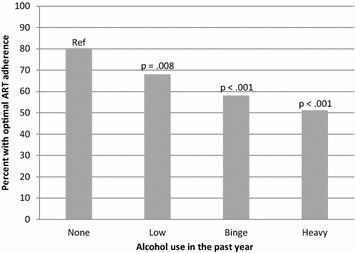
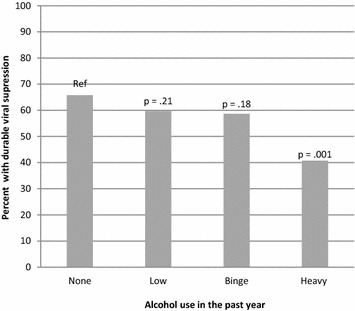
BACKGROUND: Alcohol consumption has been associated with poor antiretroviral therapy (ART) adherence but less is known about its relationship to HIV viral suppression, or whether certain drinking patterns have a stronger association than others. The objectives of this study were to determine the association of different patterns of alcohol consumption to HIV viral suppression and ART adherence, and to determine whether any associations of alcohol with HIV viral suppression were mediated by poor ART adherence. METHODS: This observational study used baseline data from 619 HIV+ participants, recruited across 8 clinical and community settings across Florida as part of the Florida Cohort from 2014 to 2016. Alcohol consumption was measured by self-report, and grouped into four categories: heavy drinking (>7/week for women or >14 drinks/week for men); binge, but not heavy drinking (≥4 or >5 drinks/occasion for women and men, respectively), low level drinking (neither heavy nor binge), and abstinence. Serum HIV RNA measurements were obtained from statewide HIV surveillance data, and durable viral suppression was defined as achieving HIV viral suppression (<200 copies/ml) at every assessment in the past 12 months. RESULTS: The majority of the 619 participants were male (63%) and aged 45 or greater (65%). The proportion of participants with heavy, binge, low-level drinking and abstinence was 9, 25, 37 and 30%, respectively. Optimal ART adherence (≥95%) was reported by 68%, and 60% achieved durable viral suppression. In multivariable analysis controlling for demographic factors, drug use, and homelessness, heavy drinking (compared to abstinence) was associated with increased odds of failing to achieve durable viral suppression (OR 2.16, 95% CI 1.08-4.32) whereas binge drinking alone was not significantly associated with this outcome (OR 1.04, 95% CI 0.64-1.70). Both heavy drinking and binge drinking were significantly associated with suboptimal ART adherence. Mediation analyses suggested that only a small proportion of the relationship between heavy drinking and suboptimal viral suppression was due to poor ART adherence. CONCLUSIONS: Exceeding weekly recommended levels of alcohol consumption (heavy drinking) was significantly associated with poor HIV viral suppression and ART non-adherence, while binge drinking was associated with suboptimal ART adherence in this sample. Clinicians should attempt to address heavy drinking in their patients with HIV.
Overview
The claims and statistics of this paper haven’t been checked yet.
Free: it reads the open-access text and checks the first 5 claims that cite a source we can check. Create a free account to check every claim.
Integrity signals
Registry
Cites
Statistics
Figures
Verification
Claims the paper makes
The claims and statistics of this paper haven’t been checked yet.
Free: it reads the open-access text and checks the first 5 claims that cite a source we can check. Create a free account to check every claim.
Claims other papers make about this one
Each is checked against this paper’s own text: does it say what the citing paper says it does?
The source backs part of the claim, not all of it — or backs it for a different population, condition or comparison.
In the citing paper
“Further, only two studies used mediation analysis to examine these relationships which limits our understanding of the importance of the adherence pathway relative to other potential pathways.”
From Associations Between Patterns of Alcohol Use and Viral Load Suppression Amongst Women Living with HIV in South Africa (2021) · cites this paper as [23]
Experimental — accuracy not yet measuredThe source backs part of the claim, not all of it — or backs it for a different population, condition or comparison.
In the citing paper
“Unhealthy alcohol use is prevalent among people with HIV (PWH) and associated with significant health-related consequences.”
From A Randomized Feasibility/Acceptability Trial of Acceptance and Commitment Therapy for People with HIV Who Drink at Unhealthy Levels. (2026) · cites this paper as [7]
Experimental — accuracy not yet measuredThe cited source says what the claim attributes to it.
In the citing paper
“Other studies have reported associations between alcohol use and viral suppression after controlling for adherence [20–23].”
From Associations Between Patterns of Alcohol Use and Viral Load Suppression Amongst Women Living with HIV in South Africa (2021) · cites this paper as [23]
The cited source says what the claim attributes to it.
In the citing paper
“These studies produced conflicting results: one reported direct effects of alcohol use on viral suppression and indirect effects via adherence [23], whereas the other only found indirect effects through adherence [20].”
From Associations Between Patterns of Alcohol Use and Viral Load Suppression Amongst Women Living with HIV in South Africa (2021) · cites this paper as [23]
In the citing paper
“An exception has been Cook et al. [23] who specified patterns of drinking characterised by different degrees of frequency and quantity, noting that frequent heavy drinking impacted on viral suppression, but not other patterns of drinking marked by occasional heavy drinking, light drinking, or abstinence.”
From Associations Between Patterns of Alcohol Use and Viral Load Suppression Amongst Women Living with HIV in South Africa (2021) · cites this paper as [23]
Self-check
Percentages, sums and reported differences re-computed from the paper’s own numbers.
The self-check needs the paper’s full text.
Citations
Cites
The PHQ-9: Validity of a brief depression severity measure
Kroenke, K., Spitzer, R. L., & Williams, J. B. W. (2001) · Journal of General Internal Medicine · doi:10.1046/j.1525-1497.2001.016009606.x · Cited by 44,910
A Brief Measure for Assessing Generalized Anxiety Disorder: The GAD-7
Spitzer, R. L., Kroenke, K., Williams, J. B. W., & Löwe, B. (2006) · Archives of Internal Medicine · doi:10.1001/archinte.166.10.1092 · Cited by 31,765 · cited 1×
“The Personal Health Questionnaire Depression Scale (PHQ-8 score) and Generalized Anxiety Disorder 7-item scale (GAD-7) were used to assess current depressive symptoms (PHQ-8 score ≥10) and current anxiety symptoms (GAD-7 score ≥10), respectively [23, 24].”
MethodAdherence to Protease Inhibitor Therapy and Outcomes in Patients with HIV Infection
Paterson, D. L., Swindells, S., Mohr, J., Brester, M., Vergis, E. N., Squier, C., Wagener, M. M., & Singh, N. (2000) · Annals of Internal Medicine · doi:10.7326/0003-4819-133-1-200007040-00004 · Cited by 3,289 · cited 1×
“Adherence of 95% or greater is considered optimal adherence and has been associated with improved outcomes in terms of CD4 count and viral suppression [28, 29].”
BackgroundValeri, L., & VanderWeele, T. J. (2013) · Psychological Methods · doi:10.1037/a0031034 · Cited by 2,132 · cited 2×
“The mediation macro developed by Valeri and VanderWeele was used to calculate the bootstrap confidence intervals with 1000 bootstrap samples [30].”
MethodAUDIT‐C as a Brief Screen for Alcohol Misuse in Primary Care
Bradley, K. A., DeBenedetti, A. F., Volk, R. J., Williams, E. C., Frank, D., & Kivlahan, D. R. (2007) · Alcoholism: Clinical and Experimental Research · doi:10.1111/j.1530-0277.2007.00403.x · Cited by 1,632 · cited 1×
“These three drinking items are based on the AUDIT-C, a 3-item scaled used to screen for drinking in primary care settings [21].”
MethodHelping Patients Who Drink Too Much: A Clinician's Guide: (495492006-001)
US Department of Health and Human Services; National Institutes of Health; National Institute on Alcohol Abuse and Alcoholism (2005) · PsycEXTRA Dataset · doi:10.1037/e495492006-001 · Cited by 589
Human Immunodeficiency Virus Transmission at Each Step of the Care Continuum in the United States
Skarbinski, J., Rosenberg, E., Paz-Bailey, G., Hall, H. I., Rose, C. E., Viall, A. H., Fagan, J. L., Lansky, A., & Mermin, J. H. (2015) · JAMA Internal Medicine · doi:10.1001/jamainternmed.2014.8180 · Cited by 550 · cited 2×
“Lack of HIV viral suppression is associated with more rapid HIV disease progression, cardiovascular complications [2] and transmission of HIV within the community [1].”
BackgroundMannheimer, S., Friedland, G., Matts, J., Child, C., Chesney, M., & Terry Beirn Community Programs for Clinical Research on, A. I. D. S. (2002) · Clinical Infectious Diseases · doi:10.1086/339074 · Cited by 512 · cited 1×
“Adherence of 95% or greater is considered optimal adherence and has been associated with improved outcomes in terms of CD4 count and viral suppression [28, 29].”
BackgroundAlcohol Use and Antiretroviral Adherence: Review and Meta-Analysis
Hendershot, C. S., Stoner, S. A., Pantalone, D. W., & Simoni, J. M. (2009) · JAIDS Journal of Acquired Immune Deficiency Syndromes · doi:10.1097/qai.0b013e3181b18b6e · Cited by 492 · cited 1×
“While researchers have consistently found an association between alcohol consumption and poor ART adherence [6, 7], relatively few studies have reported on the association of alcohol consumption to HIV viral suppression in the ART era [8].”
BackgroundAzar, M. M., Springer, S. A., Meyer, J. P., & Altice, F. L. (2010) · Drug and Alcohol Dependence · doi:10.1016/j.drugalcdep.2010.06.014 · Cited by 394 · cited 1×
“While researchers have consistently found an association between alcohol consumption and poor ART adherence [6, 7], relatively few studies have reported on the association of alcohol consumption to HIV viral suppression in the ART era [8].”
Background
Cited by
Velloza, J., Kemp, C. G., Aunon, F. M., Ramaiya, M. K., Creegan, E., & Simoni, J. M. (2020) · AIDS and Behavior · doi:10.1007/s10461-019-02716-0 · Cited by 145
Alcohol Use and the Risk of Communicable Diseases
Morojele, N. K., Shenoi, S., Shuper, P. A., Braithwaite, R. S., & Rehm, J. T. (2021) · Nutrients · doi:10.3390/nu13103317 · Cited by 81
Myers, B., Lombard, C., Joska, J. A., Abdullah, F., Naledi, T., Lund, C., Petersen Williams, P., Stein, D. J., & Sorsdahl, K. R. (2021) · AIDS and Behavior · doi:10.1007/s10461-021-03263-3 · Cited by 47
“These studies produced conflicting results: one reported direct effects of alcohol use on viral suppression and indirect effects via adherence [23], whereas the other only found indirect effects through adherence [20].”
BackgroundMethodResultInfluentialSubstance use and the HIV care continuum: important advances
Korthuis, P. T., & Edelman, E. J. (2018) · Addiction Science & Clinical Practice · doi:10.1186/s13722-018-0114-4 · Cited by 37
“[9] carefully examined the role of alcohol, demonstrating that people with HIV who report heavy drinking experienced increased odds of failing to achieve sustained HIV viral suppression.”
BackgroundWilson, I. B., Tie, Y., Padilla, M., Rogers, W. H., & Beer, L. (2020) · AIDS · doi:10.1097/qad.0000000000002689 · Cited by 40
Ibañez, G. E., Zhou, Z., Cook, C. L., Slade, T. A., Somboonwit, C., Morano, J., Harman, J. S., BRYANT, K. J., Whitehead, N. E., Brumback, B., et al. (2020) · AIDS Care · doi:10.1080/09540121.2020.1748867 · Cited by 38
Self-citationDoshi, R. H., Sande, E., Ogwal, M., Kiyingi, H., McIntyre, A. F., Kusiima, J., Musinguzi, G., Serwadda, D., & Hladik, W. (2018) · PLoS ONE · doi:10.1371/journal.pone.0201352 · Cited by 32
Ferguson, T. F., Theall, K. P., Brashear, M., Maffei, V., Beauchamp, A., Siggins, R. W., Simon, L., Mercante, D., Nelson, S., Welsh, D. A., et al. (2020) · Alcoholism: Clinical and Experimental Research · doi:10.1111/acer.14336 · Cited by 26
“(Kariuki et al., 2016, Cook et al., 2017) The strengths of the study include the number of alcohol assessments completed on the same population in the same time frame and in the same environment, the availability of data from men and women, and black and white PLWH who are currently in care.”
BackgroundDo Symptoms of Depression Interact with Substance Use to Affect HIV Continuum of Care Outcomes?
Fojo, A. T., Lesko, C. R., Calkins, K. L., Moore, R. D., McCaul, M. E., Hutton, H. E., Mathews, W. C., Crane, H. M., Christopoulos, K., Cropsey, K. L., et al. (2018) · AIDS and Behavior · doi:10.1007/s10461-018-2269-0 · Cited by 28
Parcesepe, A. M., Lancaster, K., Edelman, E. J., DeBoni, R., Ross, J., Atwoli, L., Tlali, M., Althoff, K., Tine, J., Duda, S. N., et al. (2020) · PLoS ONE · doi:10.1371/journal.pone.0237772 · Cited by 24
Lipira, L., Rao, D., Nevin, P. E., Kemp, C. G., Cohn, S. E., Turan, J. M., Simoni, J. M., Andrasik, M. P., French, A. L., Unger, J. M., et al. (2020) · Drug and Alcohol Dependence · doi:10.1016/j.drugalcdep.2019.107753 · Cited by 23
Fisk-Hoffman, R. J., Ranger, S. S., Gracy, A., Gracy, H. R., Manavalan, P., Widmeyer, M., Leeman, R. F., Cook, R. L., & Canidate, S. S. (2024) · AIDS Patient Care and STDs · doi:10.1089/apc.2024.0067 · Cited by 28
Self-citationTerapia com antirretrovirais: grau de adesão e a percepção dos indivíduos com HIV/Aids
de Freitas, J. P., Sousa, L. R. M., Cruz, M. C. M. D. A., Pereira-Caldeira, N. M. V., & Gir, E. (2018) · Acta Paulista de Enfermagem · doi:10.1590/1982-0194201800046 · Cited by 21
Dunne, E. M., Cook, R. L., & Ennis, N. (2018) · AIDS and Behavior · doi:10.1007/s10461-018-2278-z · Cited by 27
Self-citationSatre, D. D., Sarovar, V., Leyden, W. A., Hare, C. B., Catz, S. L., BRYANT, K. J., Williams, E. C., Hojilla, J. C., Horberg, M. A., & Silverberg, M. J. (2019) · AIDS and Behavior · doi:10.1007/s10461-019-02742-y · Cited by 22
Self-citationRentería, M. A., Byrd, D., Coulehan, K., Miranda, C., Fuentes, A., Rosario, A. K., Morris, E. P., & Mindt, M. R. (2020) · Neuropsychology · doi:10.1037/neu0000612 · Cited by 21
Hall, C. D. X., Morgan, E., Bundy, C., Foran, J. E., Janulis, P. F., Newcomb, M. E., & Mustanski, B. S. (2021) · AIDS and Behavior · doi:10.1007/s10461-021-03179-y · Cited by 20
Kotlaja, M. M., & Carson, J. (2018) · International journal of offender therapy and comparative criminology · doi:10.1177/0306624x18814184 · Cited by 18
Long, J. E., Richardson, B. A., Wanje, G., Wilson, K. S., Shafi, J., Mandaliya, K. N., Simoni, J. M., Kinuthia, J., Jaoko, W. G., & McClelland, R. S. (2020) · PLoS ONE · doi:10.1371/journal.pone.0242817 · Cited by 23
Mannes, Z. L., Dunne, E. M., Ferguson, E. G., Cook, R. L., & Ennis, N. (2020) · AIDS Care · doi:10.1080/09540121.2020.1808163 · Cited by 18
“…race/ethnicity, non-married status, lack of insurance, and MSM status have been associated with substance use/misuse and utilization of substance use treatment services among PLWH (Crane et al., 2017; Gamarel et al., 2016; Goldstein et al., 2005; Goulet et al., 2007; Mimiaga et al., 2013).”
BackgroundResultInfluentialSelf-citationPatterns of Alcohol Use Among Patients Living With HIV in Urban, Large Rural, and Small Rural Areas
Bensley, K. M., McGinnis, K. A., Fortney, J. C., Chan, K. C. G., Dombrowski, J. C., Ornelas, I. J., Edelman, E. J., Goulet, J. L., Satre, D. D., Justice, A. C., et al. (2018) · The Journal of Rural Health · doi:10.1111/jrh.12326 · Cited by 16
Doshi, R. K., Byrne, M. E., Levy, M. E., Varga, L., Kuo, I. C., Horberg, M. A., Castel, A. D., & Monroe, A. K. (2021) · AIDS and Behavior · doi:10.1007/s10461-021-03157-4 · Cited by 16
Comorbidities among persons living with HIV (PLWH) in Florida: a network analysis
Ahmed, S., Algarin, A. B., Thadar, H., Zhou, Z., Taskin, T., Vaddiparti, K., Villalba, K., Wang, Y., Ennis, N., Morano, J. P., et al. (2022) · AIDS Care · doi:10.1080/09540121.2022.2038363 · Cited by 15
“Our previous study found that heavy alcohol consumption was significantly associated with poor viral suppression and non-adherence to ART (Cook et al., 2017).”
BackgroundSelf-citationLesko, C. R., Nance, R. M., Lau, B. M., Fojo, A. T., Hutton, H. E., Delaney, J. A., Crane, H. M., Cropsey, K. L., Mayer, K. H., Napravnik, S., et al. (2020) · AIDS and Behavior · doi:10.1007/s10461-020-03065-z · Cited by 15
“Despite mixed findings for the association between alcohol use and viral suppression, alcohol use has been relatively consistently associated with lower ART adherence, poorer retention in care, and lower ART receipt [10, 49, 50].”
BackgroundResultCachay, E. R., Moges, T. S., Qin, H., Bamford, L. P., Grelotti, D. J., & Mathews, W. C. (2023) · Addictive Behaviors Reports · doi:10.1016/j.abrep.2023.100486 · Cited by 15
“Few studies have examined adherence-mediated and direct effects of hazardous alcohol and substance use on HIV viral suppression (Cook et al., 2017; Feelemyer et al., 2020; Kahler et al., 2017; Parsons, Rosof, & Mustanski, 2008).”
BackgroundMethodCumulative HIV Viremia Copy-Years and Hypertension in People Living with HIV
Xu, Y., Chen, X., Wijayabahu, A. T., Zhou, Z. H., Yu, B., Spencer, E. C., & Cook, R. L. (2020) · Current HIV Research · doi:10.2174/1570162x18666200131122206 · Cited by 12
“Detailed information of this cohort has been previously described [56, 57].”
Self-citationIncarceration History and HIV Care Among Individuals Living with HIV in Florida, 2014–2018
Ibañez, G. E., Zhou, Z. H., Algarin, A. B., Ayala, D. V., Spencer, E. C., Somboonwit, C., Teo, G. M. E., & Cook, R. L. (2021) · AIDS and Behavior · doi:10.1007/s10461-021-03250-8 · Cited by 12
“1 3 (consuming ≥ 4 [for women] or five drinks [for men] in one sitting in the past 12 months) [28].”
BackgroundSelf-citationLesko, C. R., Gnang, J. S., Fojo, A. T., Hutton, H. E., McCaul, M. E., Delaney, J. A., Cachay, E. R., Mayer, K. H., Crane, H. M., Batey, D. S., et al. (2023) · Annals of Epidemiology · doi:10.1016/j.annepidem.2023.07.002 · Cited by 11
Edsall, A. E., Dinh, T. T. T., Mai, P. P., Hoffman, K. A., Nguyen, H. T. T., Khuyen, T. T., Trang, N. T., Bart, G. B., Giang, L. M., & Korthuis, P. T. (2020) · The Journal of Behavioral Health Services & Research · doi:10.1007/s11414-020-09730-4 · Cited by 11
Woolf-King, S. E., Firkey, M., Foley, J. D., Bricker, J., Hahn, J. A., Asiago-Reddy, E., Wikier, J., Moskal, D., Sheinfil, A. Z., Ramos, J., et al. (2022) · AIDS and Behavior · doi:10.1007/s10461-022-03649-x · Cited by 10
Satre, D. D., Sarovar, V., Leyden, W. A., Leibowitz, A., Lam, J. O., Hojilla, J. C., Davy-Méndez, T., Hare, C. B., & Silverberg, M. J. (2022) · Aging & Mental Health · doi:10.1080/13607863.2022.2084504 · Cited by 12
“Responses were dichotomized at ≥95%, a widely used cutoff associated with viral control (Altice et al., 2019; Cook et al., 2017).”
BackgroundMethodMorawej, Z., Nyundo, A., Kinyaga, A., Kirway, V., Kagoye, S. A., Turiho, A. K., & Nakasujja, N. (2022) · AIDS Research and Therapy · doi:10.1186/s12981-022-00485-w · Cited by 13
Bizuneh, G. K., Bayleyegn, Z. W., Dagnew, A. D., Anagaw, Y. K., Limenh, L. W., Aragie, Y. S., Melese, M., Ayenew, W. A., Beyna, A. T., Ayele, H. S., et al. (2024) · Scientific Reports · doi:10.1038/s41598-024-79406-y · Cited by 15
Britton, M. K., Porges, E. C., Bryant, V. E., & Cohen, R. A. (2020) · Alcoholism Clinical and Experimental Research · doi:10.1111/acer.14530 · Cited by 10
Self-citationPredictors of HIV Viral Load Suppression After Enhanced Adherence Counseling, Nekemte, Ethiopia
Mosisa, Y., Desisa, A. E., Duftu, K. B., Biru, B., Diriba, D., Shama, A. T., Lemi, M., Fetensa, G., & Feyisa, B. R. (2024) · Journal of Epidemiology and Global Health · doi:10.1007/s44197-024-00246-0 · Cited by 9
“Similarly, when compared to non-drinkers in Florida and South Africa, excessive alcohol intake was linked to suboptimal ART adherence and HIV viral suppression [ 17, 18 ].”
ResultPain and unhealthy alcohol use among people living with HIV : A prospective cohort study
Palfai, T. P., Winter, M. R., Magane, K. M., Heeren, T., Bernier, L., Murray, G. E., Saitz, R., Kim, T. W., & Stein, M. D. (2024) · Alcoholism Clinical and Experimental Research · doi:10.1111/acer.15447 · Cited by 8
Seneadza, N. A. H., Kwara, A., Lauzardo, M., Prins, C., Zhou, Z. H., Séraphin, M. N., Ennis, N., Morano, J. P., Brumback, B., & Cook, R. L. (2022) · PLoS ONE · doi:10.1371/journal.pone.0271917 · Cited by 7
Self-citationThe Impact of Alcohol Use on Antiretroviral Therapy Adherence in Koreans Living with HIV
Kim, J. Y., Yang, Y., Kim, H. K., & Kim, J. Y. (2018) · Asian Nursing Research · doi:10.1016/j.anr.2018.10.002 · Cited by 9
Ma, J., Delaney, J. A., Ruderman, S. A., Nance, R. M., Hahn, A. W., Drumright, L. N., Whitney, B. M., Fredericksen, R. J., Mixson, L. S., Merrill, J. O., et al. (2024) · AIDS and Behavior · doi:10.1007/s10461-024-04532-7 · Cited by 7
Schafer, K. R., Tanner, A. E., Mann‐Jackson, L., Alonzo, J., Song, E., & Rhodes, S. D. (2022) · Southern Medical Journal · doi:10.14423/smj.0000000000001345 · Cited by 6
Heavy Alcohol Use and HIV Outcomes: The Moderating Role of Pain
Lucero, M. M., Palfai, T. P., Heeren, T., Stein, M. D., Kim, T. W., & Saitz, R. (2024) · AIDS and Behavior · doi:10.1007/s10461-023-04250-6 · Cited by 6
“Our study may inform the understanding of mixed findings observed in previous work [5, 7–9] on the influences of alcohol on HIV viral suppression.”
Sebeelo, T. B., & Belgrave, L. L. (2021) · The Qualitative Report · doi:10.46743/2160-3715/2021.4136 · Cited by 6
“Other studies have noted the negative effects of alcohol misuse such as mortality and morbidity (Naimi et al., 2019; Rehm & Shield, 2014) and risk of HIV infection (Cook et al., 2017; Fritz et al., 2010; Letamo et al., 2016).”
BackgroundLesko, C. R., Hutton, H. E., Edwards, J. K., McCaul, M. E., Fojo, A. T., Keruly, J. C., Moore, R. D., & Chander, G. (2021) · AIDS and Behavior · doi:10.1007/s10461-021-03487-3 · Cited by 8
Brousseau, N. M., Kalichman, S. C., Watson, R. J., & Eaton, L. A. (2023) · AIDS Care · doi:10.1080/09540121.2023.2206096 · Cited by 6
“…disease progression demonstrated that when compared to abstinence, heavy drinking (i.e., >7 drinks/ week for women or >14 drinks/week for men) was associated with unsuppressed HIV, whereas binge drinking (i.e., ≥4 or >5 drinks/occasion for women and men respectively) was not (Cook et al., 2017).”
BackgroundShuper, P. A. (2021) · AIDS and Behavior · doi:10.1007/s10461-021-03302-z · Cited by 6
Binge Drinking Relates to Worse Neurocognitive Functioning Among Adults Aging with HIV
Paolillo, E. W., Saloner, R., Kohli, M., Watson, C. W., Moore, R. C., Heaton, R. K., & Moore, D. J. (2021) · Journal of the International Neuropsychological Society · doi:10.1017/s1355617721000783 · Cited by 7
“…proinflammatory and neuroimmune response, and excitotoxicity leading to neuronal damage in frontal and hippocampal regions) (Campanella et al., 2013; Crews et al., 2015; Maurage et al., 2012; Meyerhoff et al., 2004; Petit, Maurage, Kornreich, Verbanck, & Campanella, 2014; Waszkiewicz et al., 2018).”
BackgroundNavarro, R., Paredes, J. L., Echevarria, J. I., González-Lagos, E., Graña, A., Mejía, F., & Otero, L. (2021) · PLoS ONE · doi:10.1371/journal.pone.0256289 · Cited by 6
“Alcohol consumption and substance abuse have been associated to low adherence to ARV and to unsuppressed viremia [9,46].”
BackgroundXu, Y., Chen, X., Zhou, Z., Morano, J. P., & Cook, R. L. (2019) · AIDS Care · doi:10.1080/09540121.2019.1668521 · Cited by 5
“We analyzed data of 659 participants who were enrolled in the Florida Cohort Study (http://sharc-research.org/) (Cook et al., 2017; Sharpe et al., 2017).”
MethodSelf-citationParisi, C. E., Wang, Y., Varma, D. S., Vaddiparti, K., Ibañez, G. E., Carrillo, L. C., & Cook, R. L. (2023) · The American Journal of Drug and Alcohol Abuse · doi:10.1080/00952990.2023.2176234 · Cited by 5
Self-citationMental health, substance use, and risky sexual behaviors among women living with HIV
Deaterly, C. D., Varma, D. S., Li, Y., Manavalan, P., & Cook, R. L. (2023) · Journal of Nursing Scholarship · doi:10.1111/jnu.12900 · Cited by 9
Self-citationNegative Consequences of Alcohol Use among People Living with HIV
Fisk-Hoffman, R. J., Richards, V. L., Leeman, R. F., Brumback, B., Cook, C. L., & Cook, R. L. (2021) · Substance Use & Misuse · doi:10.1080/10826084.2021.1899232 · Cited by 4
“…among people living with HIV (PLWH) in the United States, and is associated with decreased care engagement, suboptimal medication adherence, and failure to achieve viral suppression (Cook et al., 2017; Crane et al., 2017; Hendershot et al., 2009; Vagenas et al., 2015; Williams et al., 2019).”
BackgroundSelf-citationParisi, C. E., Gracy, H. R., Bush, N. J., Cook, R. L., Wang, Y., & Chichetto, N. E. (2023) · Alcoholism Clinical and Experimental Research · doi:10.1111/acer.15165 · Cited by 5
Self-citationFisk-Hoffman, R. J., Liu, Y., Somboonwit, C., Widmeyer, M., Canidate, S. S., Prosperi, M., & Cook, R. L. (2024) · AIDS Care · doi:10.1080/09540121.2024.2383872 · Cited by 5
“…being unhoused, younger age, mistrust in healthcare providers, and/or experiences of discrimination in healthcare settings (Algarin et al., 2020; Benning et al., 2020; Castro et al., 2015; Cook et al., 2017; Crim et al., 2020; Hendershot et al., 2009; Kalich-man et al., 2016; Mimiaga et al., 2020).”
Self-citationFisk-Hoffman, R. J., Parisi, C. E., Siuluta, N., Manavalan, P., Bilello, L. A., Cohen, C. H., Dévieux, J. G., Ibañez, G. E., Kuretski, J., Somboonwit, C., et al. (2025) · JMIR Research Protocols · doi:10.2196/69702 · Cited by 4
“From these data, our team identified several factors associated with poor HIV viral suppression, including heavy alcohol consumption, other substance use, depression and anxiety symptoms, and suboptimal ART adherence [20-25].”
Self-citationCocaine/crack and cannabis use among transgender women in Goiás, Central Brazil
Magalhães, L. S., dos Santos, K. C., Silva, B. V. D. E., Filho, G. F. D. S., Silva, G. R. D. C. E., Guimarães, R. A., Pillon, S. C., Caetano, K. A. A., Martins, R. M. B., Carneiro, M. A. D. S., et al. (2024) · PLoS ONE · doi:10.1371/journal.pone.0304219 · Cited by 3
“Drug use can interfere with adherence to HIV pre-exposure prophylaxis [35], contributing to the burden of HIV [36].”
BackgroundSelf-citationErly, S. J., Campos, L., Buskin, S. E., & Reuer, J. R. (2023) · Journal of Public Health Research · doi:10.1177/22799036231182031 · Cited by 3
“Age 18–24 10 (1) 25–34 94 (10) 35–44 176 (21) 45–54 284 (34) ≥55 294 (34) Race American Indian/Alaska Native 9 (1)”
Richards, V. L., Leeman, R. F., Wang, Y., Cook, C. L., Prins, C., Ennis, N., Spencer, E. C., & Cook, R. L. (2022) · AIDS and Behavior · doi:10.1007/s10461-022-03674-w · Cited by 3
“Some studies support the presence of a dose-response relationship between alcohol use and poor outcomes [16, 22] whereas others support a clear cutpoint when alcohol use becomes harmful [17, 18].”
BackgroundSelf-citationBeesiga, B., Marson, K. G., Fatch, R., Emenyonu, N. I., Adong, J., Kekibiina, A., Puryear, S. B., Lodi, S., McDonell, M. G., Muyindike, W. R., et al. (2023) · AIDS and Behavior · doi:10.1007/s10461-023-04042-y · Cited by 4
A Latent Class Analysis of Substance Use and Longitudinal HIV RNA Patterns Among PWH in DC Cohort
Byrne, M. E., Monroe, A. K., Doshi, R. K., Horberg, M. A., & Castel, A. D. (2024) · AIDS and Behavior · doi:10.1007/s10461-023-04257-z · Cited by 2
“Substance Use Disorders are prevalent among people with HIV (PWH) and include a range of substances such as alcohol, cannabis, stimulants, opioids, hallucinogens, and sedatives [1, 2].”
Knudsen, H. K., Gotham, H. J., Solinger, E., Swan, E. A., Brinker, J., Patel, S. V., Tueller, S., Bradshaw, M., Mungo, J., Philbrick, S. M., et al. (2025) · Addiction Science & Clinical Practice · doi:10.1186/s13722-025-00612-8 · Cited by 2
“These rates are particularly concerning because SUDs negatively impact the HIV care continuum, including retention in HIV care, medication adherence, and viral load suppression [4–6].”
Applebaum, J. W., McDonald, S. E., Britton, M. K., Escobar, K., Garofalo, R., Cohen, C. H., Li, Z., Widmeyer, M., Fabelo, H. E., Wang, Y., et al. (2026) · AIDS and Behavior · doi:10.1007/s10461-025-04947-w · Cited by 2
“Durable Viral Suppression: To identify durable viral suppression, we followed the methodology from Cook et al., 2017 [84]: HIV viral load data was sourced from HIV surveillance records.”
Self-citationAgas, A., Kalluru, J., Leiser, B., Garcia, R., Kataru, H., & Haorah, J. (2021) · Alcohol · doi:10.1016/j.alcohol.2021.04.003 · Cited by 2
Richards, V. L., Zhou, Z., Wang, Y., Vaddiparti, K., Brumback, B., & Cook, R. L. (2021) · Substance Use & Misuse · doi:10.1080/10826084.2021.1892138 · Cited by 3
“Sub-optimal antiretroviral therapy (ART) adherence and decreased viral suppression has been associated with heavy drinking among persons living with HIV (PLWH)(Chander et al., 2006; Cook et al., 2017; Williams et al., 2016).”
BackgroundSelf-citationDavy-Méndez, T., Sarovar, V., Levine‐Hall, T., Lea, A. N., Sterling, S., Chi, F. W., Palzes, V. A., Luu, M. N., Flamm, J., Hare, C. B., et al. (2022) · AIDS and Behavior · doi:10.1007/s10461-022-03873-5 · Cited by 2
“In a Florida cohort, 25% of PWH reported exceeding daily limits only, and 9% reported exceeding weekly limits (with or without excessive daily drinking) [42].”
BackgroundResultSelf-citationMaitha, G. M., Kikuvi, G. M., Wanzala, P., & Kirui, F. (2021) · Pan African Medical Journal · doi:10.11604/pamj.2021.38.103.25793 · Cited by 2
“The mean CD4 count change from base line and follow up for HIV/HBV co-infected was 132 cells/ul while that of HIV mono-infected was 16 cells/ul after ART initiation as shown in (Table 3) (Figure 1).”
ResultInfluentialWoolf-King, S. E., Dalton, M. R., Firkey, M., Sheinfil, A., Bucci, V., Estrada, B., Ramos, J., Hahn, J. A., Bricker, J., Gump, B., et al. (2026) · AIDS and Behavior · doi:10.1007/s10461-025-04990-7 · Cited by 1
“Between 27 and 40% of PWH report drinking at unhealthy levels [3–5] which is associated with a range of health-related consequences, including mortality [6], lack of viral suppression [7, 8], less ART utilization [8, 9], and sub-optimal adherence to ART [10].”
Pence, B. W., Darnell, D. A., Ranna-Stewart, M., Psaros, C., Gaynes, B. N., Grimes, L., Henderson, S., Parman, M. A., Filipowicz, T., Gaddis, K., et al. (2024) · JAIDS Journal of Acquired Immune Deficiency Syndromes · doi:10.1097/qai.0000000000003457 · Cited by 2
Siuluta, N., Parisi, C. E., Candidate, S. S., Sherbuk, J. E., Wang, Y., Widmeyer, M., Somboonwit, C., Dévieux, J. G., Cook, R. L., & Chichetto, N. E. (2025) · Addiction Science & Clinical Practice · doi:10.1186/s13722-025-00581-y · Cited by 1
“Additional studies have highlighted the importance of both physical activity and spiritual growth in maintaining sobriety [11, 22, 23].”
Self-citationAssefa, G. W., Yesuf, T., & Tassew, W. C. (2026) · Journal of the International Association of Providers of AIDS Care (JIAPAC) · doi:10.1177/23259582261439620 · Cited by 1
“30 Patients who had no smoking history were 1.48 times more likely to have viral resuppression at any time as compared to its counterparts [AHR: 1.488 (95% CI: 1.04, 2.13)] after adjusting of multiple confounders (Figure 3).”
InfluentialRichards, V. L., Berey, B. L., Lu, H., Stetten, N. E., Fisk-Hoffman, R. J., Wang, Y., Brumback, B., & Cook, R. L. (2020) · The Canadian Journal of Addiction · doi:10.1097/cxa.0000000000000098 · Cited by 1
Self-citationParisi, C. E., Siuluta, N., Canidate, S. S., Cook, R. L., Wang, Y., Widmeyer, M., Somboonwit, C., Dévieux, J. G., & Chichetto, N. E. (2024) · Addiction Science & Clinical Practice · doi:10.1186/s13722-024-00491-5 · Cited by 1
Self-citationAdesão irregular aos antirretrovirais por pessoas vivendo com HIV/AIDS
Freitas, J. P. D. O. [. (2018) · Digital Library of Theses and Dissertations (Universidade de São Paulo) · doi:10.11606/d.22.2018.tde-05102018-184621
Acute retroviral syndrom — challenges in maintain of adherence, underestimated role of alcohol
Yakovlev, A. A., Георгиевич, Д. А., Борисович, М. В., Kelly, J. A., & Крамынин, Л. А. (2022) · V M BEKHTEREV REVIEW OF PSYCHIATRY AND MEDICAL PSYCHOLOGY · doi:10.31363/2313-7053-2022-56-1-95-104
Amplified HIV Transmission Risk Among People Living With HIV in Southeast Brazil
Reis, R. K., Antonini, M., Sousa, L. R. M., Rocha, K. A. D. A., Ferreira, G. R. O. N., Vettore, M. V., & Gir, E. (2023) · Journal of the Association of Nurses in AIDS Care · doi:10.1097/jnc.0000000000000421
Fisk-Hoffman, R. J., Ranger, S., Gracy, A., Siuluta, N., Parisi, C. E., Payton, I. K., Cook, R. L., & Canidate, S. S. (2024) · Journal of Addiction Medicine · doi:10.1097/adm.0000000000001410
Self-citationDeaterly, C. D., Forsyth, B., Nazario, P., Bhagwat, S., Parker, L. A., Starkweather, A. R., Cook, R. L., & Varma, D. S. (2025) · Journal of the Association of Nurses in AIDS Care · doi:10.1097/jnc.0000000000000529
Self-citationManicone, A. M., & Brune, J. E. (2025) · American Journal of Respiratory Cell and Molecular Biology · doi:10.1165/rcmb.2025-0236ed
Parisi, C. E., Gracy, A., Ranger, S., Fisk-Hoffman, R. J., Siuluta, N., Payton, I. K., Cook, R. L., & Canidate, S. S. (2025) · BMC Public Health · doi:10.1186/s12889-025-24146-5
“Hazardous alcohol use and alcohol use disorder (AUD) are common among people with HIV (PWH) [1, 2] and are associated with poor HIV outcomes, including non-suppressed viral load and suboptimal medication adherence [3–6].”
Self-citationWoolf‐King, S. E., Presutti, E., McKenna, O., Hahn, J. A., Abar, B. W., Dahne, J., Gump, B. B., Bendinskas, K. G., & Maisto, S. A. (2025) · Contemporary Clinical Trials · doi:10.1016/j.cct.2025.108130 · Cited by 1
Wang, Y., Kinsler, J. J., Altice, F. L., Alarcón, M. A., Pesaressi, E., & Seminario, A. L. (2025) · HIV Research & Clinical Practice · doi:10.1080/25787489.2025.2588013
“Frequent alcohol consumption has been associated with accelerated HIV disease progression, lower CD4 counts, higher viral loads, and is also related to poor treatment engagement and low adherence to medication [9,17,18].”
Trepka, M. J., Gonzales, S., Ward, M. K., Fennie, K., Sheehan, D. M., Jean-Gilles, M. M., Devieux, J., Gray, A., Ladner, R. A., & Yoo, C. (2026) · AIDS and Behavior · doi:10.1007/s10461-026-05082-w · Cited by 1
Siuluta, N., Gracy, A., Ranger, S., Parisi, C. E., Fisk-Hoffman, R. J., Payton, I. K., Cook, R. L., & Canidate, S. S. (2026) · AIDS Research and Therapy · doi:10.1186/s12981-026-00915-z
“Further details regarding the study have been published elsewhere [31].”
Self-citationWould the provision of pet-related services improve the health of pet-owning people with HIV?
Gutierrez, S., Manavalan, P., McDonald, S. E., Escobar, K., Cohen, C. H., Widmeyer, M., Fabelo, H. E., Cook, R., & Applebaum, J. W. (2026) · Human-Animal Interactions · doi:10.1079/hai.2026.0030
Self-citationBleasdale, J., Schrimshaw, E. W., Bilello, L., Kuretski, J., Widmeyer, M., Cook, R. L., & Westmoreland, D. A. (2026) · AIDS and Behavior · doi:10.1007/s10461-026-05303-2
Self-citation
Metadata
- Authors
- Cook, R. L., Zhou, Z., Kelso-Chichetto, N. E., Janelle, J., Morano, J. P., Somboonwit, C., Carter, W., Ibanez, G. E., Ennis, N., Cook, C. L., Cohen, R. A., Brumback, B., & Bryant, K.
- Affiliations
- University of Florida Health (US)
- University of South Florida (US)
- Florida Department of Health (US)
- University of Florida (US)
- National Institute on Alcohol Abuse and Alcoholism (US)
- Corresponding author
- Cook, R. L.
- ORCID
- Venue
- Addiction Science & Clinical Practice
- Published
- 2017-09-27
- Volume
- 12
- Issue
- 1
- Pages
- 22-22
- ISSN
- 1940-0632 (ISSN-L)
- 1940-0640
- PMC
- PMC5615807
- OpenAlex
- W2752611082
- Semantic Scholar
- 5a218bed45c25e49cb940483604ad5e08b89417b
- Cited by
- 85
- References
- 32
- Citations by year
- 2026: 6 · 2025: 9 · 2024: 12 · 2023: 9 · 2022: 9 · 2021: 14 · 2020: 11 · 2019: 5 · 2018: 10
- FWCI
- 5.47
- Type
- journal article
- Language
- en
- Open access
- gold
- doi.org
- Licence
- cc-by
- creativecommons.org/licenses/by/4.0/ (tdm)
- creativecommons.org/licenses/by/4.0/ (vor)
- Locations
- Addiction Science & Clinical Practice (publishedVersion, cc-by)
- Europe PMC (PubMed Central) (publishedVersion, cc-by)
- PubMed Central (publishedVersion, cc-by)
- PubMed (publishedVersion)
- University of Florida Digital Collections (University of Florida) (submittedVersion, cc-by)
- DOAJ (DOAJ: Directory of Open Access Journals) (submittedVersion, cc-by-sa)
- Funders
- National Institute on Alcohol Abuse and Alcoholism (U24 AA022002)
- State of Florida via the University of Miami Miller School of Medicine Institute for AIDS and Emerging Infectious Diseases
- Topics
- Health Sciences › Medicine › Infectious Diseases › HIV/AIDS Research and Interventions
- Health Sciences › Medicine › Epidemiology › HIV, Drug Use, Sexual Risk
- Health Sciences › Medicine › Epidemiology › Substance Abuse Treatment and Outcomes
- Keywords
- alcohol consumption, HIV viral suppression, antiretroviral therapy adherence, heavy drinking, binge drinking, alcohol use patterns, HIV care, HIV RNA suppression, substance use
- MeSH terms
- Sustained Virologic Response, Adult, Alcohol Drinking, Female, Florida, Humans, Male, Middle Aged, Poverty, Socioeconomic Factors, Health Behavior, HIV Infections, Drug Monitoring, Anti-HIV Agents
About these checks
Registry, retraction, Cites and statistics results are computed, not judged, with one exception: a printed reference that no index lists is read once by a model before it counts as a citation error. Claims are extracted by a model and kept only when their quote appears verbatim in the text; each cited source is then checked, with a model’s help, for whether it says what the claim relies on. Those verdicts can be wrong — read the claim’s quote and the cited source before relying on one.
Statistics and arithmetic are recomputed, not judged.
Confidence bands are shown only for fields calibrated on our annotated test set. None is calibrated yet, so no band is shown.
What counts as a claim ›How we measure confidence ›How we check this ›
Are you an author, or do you see a problem with this page? Request a review
Data sources
Bibliographic data: Semantic Scholar, OpenAlex, Crossref.
Contains information from the Semantic Scholar Academic Graph Datasets, made available under the ODC Attribution License (ODC-BY 1.0).
Semantic Scholar’s data is described in: Kinney, R., et al. (2023). The Semantic Scholar Open Data Platform. arXiv:2301.10140.
