

Timing of carbohydrate ingestion did not affect inflammatory response and exercise performance during prolonged intermittent running
Open accessThe DOI matches its Crossref record; 31 of the 31 references it cites were found in a registry or an index.
Abstract
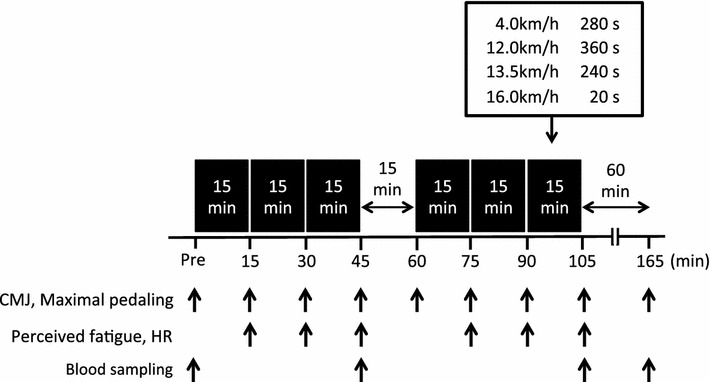
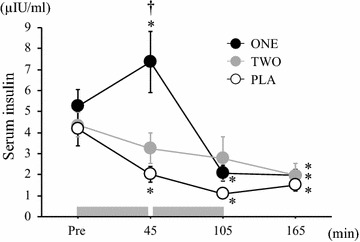
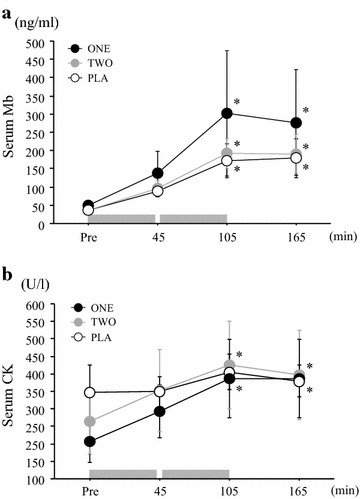
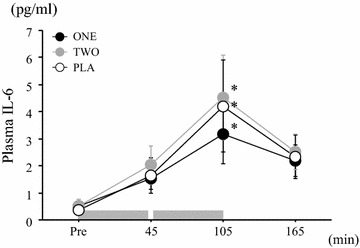
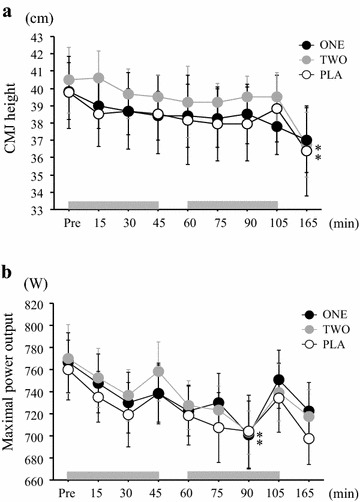
BACKGROUND: Carbohydrate ingestion during exercise is known to attenuate exercise-induced elevation of plasma IL-6 concentration. However, the influence of timing of carbohydrate ingestion remains unclear. PURPOSE: The present study investigated the influence of different timing of carbohydrate ingestion during a simulated soccer game on exercise performance, metabolic and inflammatory responses. METHODS: Seven active males performed 3 exercise trials in a randomized order. The exercise consisted of two consecutive bouts of 45 min running (4-16 km/h), separated with 15 min rest period between bouts. The subjects ingested carbohydrate gel (1.0 g/kg) immediately before the first bout of exercise (ONE), immediately before first and second bouts of exercise (0.5 g/kg for each ingestion) (TWO) or placebo immediately before exercise (PLA) Time course changes of maximal jump height, peak power output during 6-s maximal pedaling, perceived fatigue and heart rate (HR) were monitored. Blood samples were also drawn to determine blood glucose, serum insulin, free fatty acid (FFA), myoglobin (Mb), creatine kinase (CK) and plasma IL-6 concentrations. RESULTS: Blood glucose and serum insulin concentrations were significantly higher in the ONE trial after first bout of 45 min exercise compared with PLA trial (P < 0.05), while serum FFA concentration was significantly elevated in PLA compared with ONE and TWO trials after second bout of exercise (P < 0.05). However, changes of jump height, peak power output during 6-s maximal pedaling, perceived fatigue, HR, or indirect muscle damage (Mb, CK) and inflammatory (IL-6) markers were not significantly different among three trials (P > 0.05). CONCLUSIONS: The timing of carbohydrate ingestion did not affect exercise performance, exercise-induced muscle damage or inflammatory response during a simulated soccer game.
Overview
The claims and statistics of this paper haven’t been checked yet.
Free: it reads the open-access text and checks the first 5 claims that cite a source we can check. Create a free account to check every claim.
Integrity signals
Registry
Cites
Statistics
Figures
Verification
Claims the paper makes
The claims and statistics of this paper haven’t been checked yet.
Free: it reads the open-access text and checks the first 5 claims that cite a source we can check. Create a free account to check every claim.
Claims other papers make about this one
Each is checked against this paper’s own text: does it say what the citing paper says it does?
The cited source says what the claim attributes to it.
In the citing paper
“More recently, Mizuno and colleagues [60] concluded that timing the intake of a carbohydrate gel (1.0 g/kg) did not impact the inflammatory response or exercise performance throughout completion of two 45-min bouts of intermittent (4–16 km/h) running.”
From International society of sports nutrition position stand: nutrient timing (2017) · cites this paper as [60]
Self-check
Percentages, sums and reported differences re-computed from the paper’s own numbers.
The self-check needs the paper’s full text.
Citations
Cites
Frey, S., Rauf Mir, A., & Lucas, M. (1999) · Journal of Renal Nutrition · doi:10.1016/s1051-2276(99)90003-1 · Cited by 805
Evidence that interleukin-6 is produced in human skeletal muscle during prolonged running
Ostrowski, K., Rohde, T., Zacho, M., Asp, S., & Pedersen, B. K. (1998) · The Journal of Physiology · doi:10.1111/j.1469-7793.1998.949bp.x · Cited by 673 · cited 1×
“2009), swelling of muscle (Hirose et al.”
Characterization of inflammatory responses to eccentric exercise in humans
Peake, J., Nosaka, K., & Suzuki, K. (2026) · Exercise Immunology Review · doi:10.22029/eir.2005.1616 · Cited by 498
Etiology of Exercise-Induced Muscle Damage
Clarkson, P. M., & Sayers, S. P. (1999) · Canadian Journal of Applied Physiology · doi:10.1139/h99-020 · Cited by 365
Changes in inflammatory mediators following eccentric exercise of the elbow flexors
Hirose, L., Nosaka, K., Newton, M., Laveder, A., Kano, M., Peake, J. M., & Suzuki, K. (2026) · PubMed · doi:10.22029/eir.2004.1607 · Cited by 311
Carbohydrate and the cytokine response to 2.5 h of running
Nehlsen-Cannarella, S. L., Fagoaga, O. R., Nieman, D. C., Henson, D. A., Butterworth, D. E., Schmitt, R. L., Bailey, E. M., Warren, B. J., Utter, A., & Davis, J. M. (1997) · Journal of Applied Physiology · doi:10.1152/jappl.1997.82.5.1662 · Cited by 311 · cited 1×
“In the previous studies that reported beneficial effect of carbohydrate ingestion (Nehlsen-Cannarella et al. 1997; Nieman et al. 2005), the subjects were provided carbohydrate frequently during prolonged exercise (every 15 min).”
The effect of graded exercise on IL‐6 release and glucose uptake in human skeletal muscle
Helge, J. W., Stallknecht, B., Pedersen, B. K., Galbo, H., Kiens, B., & Richter, E. A. (2003) · The Journal of Physiology · doi:10.1113/jphysiol.2002.030437 · Cited by 212 · cited 1×
“Plausible reason for reduced IL-6 concentration by exogenous carbohydrate supply during exercise linked to muscle glycogen content (Helge et al. 2003).”
Time course of muscle adaptation after high force eccentric exercise
Nosaka, K., Clarkson, P. M., McGuiggin, M. E., & Byrne, J. M. (1991) · European Journal of Applied Physiology and Occupational Physiology · doi:10.1007/bf00760804 · Cited by 183
Immune and Oxidative Changes During and Following the Western States Endurance Run
(2003) · International Journal of Sports Medicine · doi:10.1055/s-2003-42018 · Cited by 153
Child, R. B., Saxton, J., & Donnelly, A. (1998) · Journal of Sports Sciences · doi:10.1080/02640419808559358 · Cited by 136
Muscle Cytokine mRNA Changes after 2.5 h of Cycling: Influence of Carbohydrate
NIEMAN, D. C., DAVIS, J. M., HENSON, D. A., GROSS, S. J., DUMKE, C. L., UTTER, A. C., VINCI, D. M., CARSON, J. A., BROWN, A., MCANULTY, S. R., et al. (2005) · Medicine & Science in Sports & Exercise · doi:10.1249/01.mss.0000175054.99588.b1 · Cited by 122 · cited 1×
“In the previous studies that reported beneficial effect of carbohydrate ingestion (Nehlsen-Cannarella et al. 1997; Nieman et al. 2005), the subjects were provided carbohydrate frequently during prolonged exercise (every 15 min).”
Metabolic responses to a 48-h ultra-marathon run in middle-aged male amateur runners
Kłapcińska, B., Waśkiewicz, Z., Chrapusta, S. J., Sadowska‐Krępa, E., Czuba, M., & Langfort, J. (2013) · European Journal of Applied Physiology · doi:10.1007/s00421-013-2714-8 · Cited by 117
Chen, T. C., Chen, H.-L., Lin, M.-J., Wu, C.-J., & Nosaka, K. (2009) · European Journal of Applied Physiology · doi:10.1007/s00421-009-1016-7 · Cited by 110
Bandelow, S., Maughan, R., Shirreffs, S., Ozgünen, K., Kurdak, S., Ersöz, G., Binnet, M., & Dvorak, J. (2010) · Scandinavian Journal of Medicine & Science in Sports · doi:10.1111/j.1600-0838.2010.01220.x · Cited by 101
Immune and inflammation responses to a 3-day period of intensified running versus cycling
Nieman, D. C., Luo, B., Dréau, D., Henson, D. A., Shanely, R. A., Dew, D. A., & Meaney, M. P. (2013) · Brain Behavior and Immunity · doi:10.1016/j.bbi.2013.09.004 · Cited by 94
Welc, S. S., & Clanton, T. L. (2013) · Experimental Physiology · doi:10.1113/expphysiol.2012.068189 · Cited by 93
Interaction of exercise and insulin action in humans
Wasserman, D. H., Geer, R. J., Rice, D. E., Bracy, D., Flakoll, P. J., Brown, L. L., Hill, J. O., & Abumrad, N. N. (1991) · American Journal of Physiology-Endocrinology and Metabolism · doi:10.1152/ajpendo.1991.260.1.e37 · Cited by 91
Bishop, N. C., Gleeson, M., Nicholas, C. W., & Ali, A. (2002) · International Journal of Sport Nutrition and Exercise Metabolism · doi:10.1123/ijsnem.12.2.145 · Cited by 83
Carbohydrate ingestion and soccer skill performance during prolonged intermittent exercise
Ali, A., & Williams, C. (2009) · Journal of Sports Sciences · doi:10.1080/02640410903334772 · Cited by 81
Influence of carbohydrate supplementation on skill performance during a soccer match simulation
Russell, M., Benton, D., & Kingsley, M. (2012) · Journal of Science and Medicine in Sport · doi:10.1016/j.jsams.2011.12.006 · Cited by 80
Sim, M., DAWSON, B. T., Landers, G. J., Wiegerinck, E. T. G., Swinkels, D. W., Townsend, M. A., Trinder, D., & Peeling, P. (2011) · European Journal of Applied Physiology · doi:10.1007/s00421-011-2156-0 · Cited by 72
Running Pace Decrease during a Marathon Is Positively Related to Blood Markers of Muscle Damage
Del Coso, J., Fernández, D., Abián-Vicen, J., Salinero, J. J., González-Millán, C., Areces, F., Ruiz, D., Gallo, C., Calleja-González, J., & Pérez-González, B. (2013) · PLoS ONE · doi:10.1371/journal.pone.0057602 · Cited by 71
Phillips, S., Turner, A. P., Gray, S., Sanderson, M. F., & Sproule, J. (2010) · European Journal of Applied Physiology · doi:10.1007/s00421-010-1404-z · Cited by 52
A Microcycle of Inflammation Following a Team Handball Game
Chatzinikolaou, A., Christoforidis, C., Avloniti, A., Draganidis, D., Jamurtas, A. Z., Stampoulis, T., Ermidis, G., Sovatzidis, A., Papassotiriou, I., Kambas, A., et al. (2014) · Journal of Strength and Conditioning Research · doi:10.1519/jsc.0000000000000330 · Cited by 49
Comparison of Inflammatory Responses to a Soccer Match Between Elite Male and Female Players
Souglis, A. G., Papapanagiotou, A., Bogdanis, G. C., Travlos, A. K., Apostolidis, N. G., & Geladas, N. D. (2015) · Journal of Strength and Conditioning Research · doi:10.1519/jsc.0000000000000767 · Cited by 48
SUGIURA, K., & KOBAYASHI, K. (1998) · Medicine & Science in Sports & Exercise · doi:10.1097/00005768-199811000-00011 · Cited by 47
Abbey, E. L., & Rankin, J. W. (2009) · International Journal of Sport Nutrition and Exercise Metabolism · doi:10.1123/ijsnem.19.6.659 · Cited by 44
Interleukin-6 stimulates gluconeogenesis in primary cultures of rat hepatocytes
Blumberg, D., Hochwald, S. N., Brennan, M. F., & BURT, M. E. (1995) · Metabolism · doi:10.1016/0026-0495(95)90255-4 · Cited by 43
Satkunskienė, D., Stasiulis, A., Zaičenkovienė, K., Sakalauskaitė, R., & Rauktys, D. (2015) · The Journal of Strength and Conditioning Research · doi:10.1519/jsc.0000000000000908 · Cited by 10
Kohara, A., Morishima, T., Uchida, H., Ito, T., & Goto, K. (2014) · International Journal of Sport and Health Science · doi:10.5432/ijshs.201323 · Cited by 6
Self-citationOriginals)Changes in Leukocytes after Eccentric Exercise of the Elbow Flexors
Nosaka, K., & Sakamoto, K. (2000) · Terrestrial Environment Research Center (University of Tsukuba) · Cited by 4
Cited by
International society of sports nutrition position stand: nutrient timing
Kerksick, C. M., Arent, S., Schoenfeld, B. J., Stout, J. R., Campbell, B., Wilborn, C. D., Taylor, L., Kalman, D., Smith-Ryan, A. E., Kreider, R. B., et al. (2017) · Journal of the International Society of Sports Nutrition · doi:10.1186/s12970-017-0189-4 · Cited by 622
“More recently, Mizuno and colleagues [60] concluded that timing the intake of a carbohydrate gel (1.”
BackgroundFoo, W. L., Tester, E., Close, G. L., Areta, J. L., & Morton, J. P. (2025) · Sports Medicine · doi:10.1007/s40279-025-02224-3 · Cited by 9
Cheng, G., Zhang, Z., Shi, Z., & Qiu, Y. (2025) · Frontiers in Nutrition · doi:10.3389/fnut.2025.1567438 · Cited by 10
Silalertdetkul, S. (2023) · Journal of Physical Education and Sport · doi:10.7752/jpes.2023.06180 · Cited by 3
O tempo da ingestão de nutrientes: o impacto no rendimento desportivo
Pereira, J. T. C. (2025) · Portuguese National Funding Agency for Science, Research and Technology (RCAAP Project by FCT)
Metadata
- Authors
- Mizuno, S., Kojima, C., & Goto, K.
- Affiliations
- Ritsumeikan University (JP)
- Corresponding author
- Goto, Kazushige
- Venue
- SpringerPlus
- Published
- 2016-04-23
- Volume
- 5
- Issue
- 1
- Pages
- 506-506
- ISSN
- 2193-1801 (ISSN-L)
- PMC
- PMC4842188
- OpenAlex
- W2338492087
- Cited by
- 4
- References
- 31
- Citations by year
- 2025: 2 · 2023: 1 · 2017: 1
- FWCI
- 0.36
- Type
- journal article
- Language
- en
- Open access
- diamond
- doi.org
- Locations
- SpringerPlus (publishedVersion, cc-by)
- Europe PMC (PubMed Central) (publishedVersion, cc-by)
- PubMed Central (publishedVersion, cc-by)
- PubMed (publishedVersion)
- Funders
- Ritsumeikan University (JP)
- Topics
- Health Sciences › Medicine › Physiology (medical) › Exercise and Physiological Responses
- Health Sciences › Nursing › Nutrition and Dietetics › Muscle metabolism and nutrition
- Health Sciences › Medicine › Orthopedics and Sports Medicine › Sports Performance and Training
- Keywords
- exercise-induced inflammation, interleukin-6, exercise performance, intermittent operation, muscle damage, creatine kinase, myoglobin, free fatty acids, blood glucose, serum insulin, subjective fatigue, carbohydrate gels
About these checks
Registry, retraction, Cites and statistics results are computed, not judged, with one exception: a printed reference that no index lists is read once by a model before it counts as a citation error. Claims are extracted by a model and kept only when their quote appears verbatim in the text; each cited source is then checked, with a model’s help, for whether it says what the claim relies on. Those verdicts can be wrong — read the claim’s quote and the cited source before relying on one.
Statistics and arithmetic are recomputed, not judged.
Confidence bands are shown only for fields calibrated on our annotated test set. None is calibrated yet, so no band is shown.
What counts as a claim ›How we measure confidence ›How we check this ›
Are you an author, or do you see a problem with this page? Request a review
Data sources
Bibliographic data: Semantic Scholar, OpenAlex, Crossref.
Contains information from the Semantic Scholar Academic Graph Datasets, made available under the ODC Attribution License (ODC-BY 1.0).
Semantic Scholar’s data is described in: Kinney, R., et al. (2023). The Semantic Scholar Open Data Platform. arXiv:2301.10140.
