

Gut resistome development in healthy twin pairs in the first year of life
Open accessThe DOI matches its Crossref record; 38 of the 38 references it cites were found in a registry or an index.
Abstract
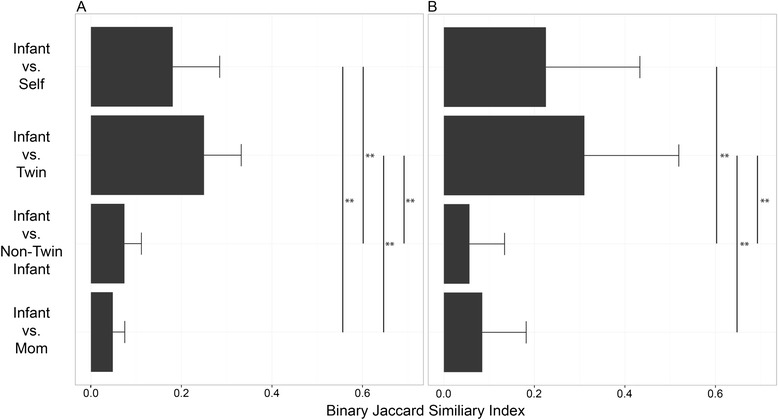
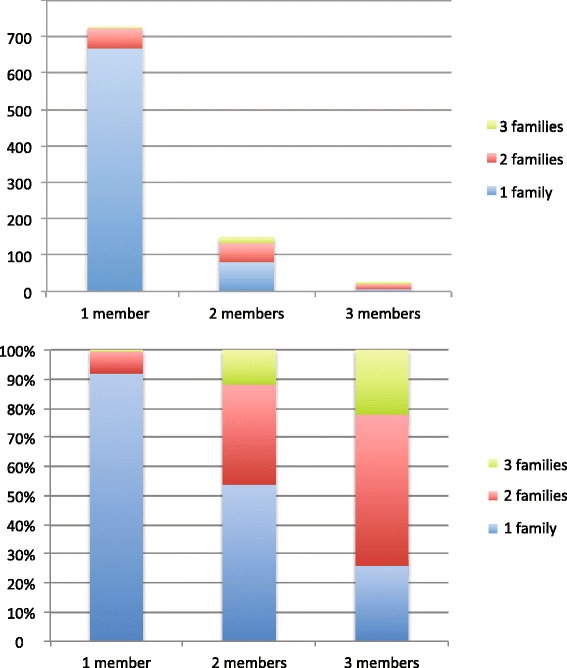
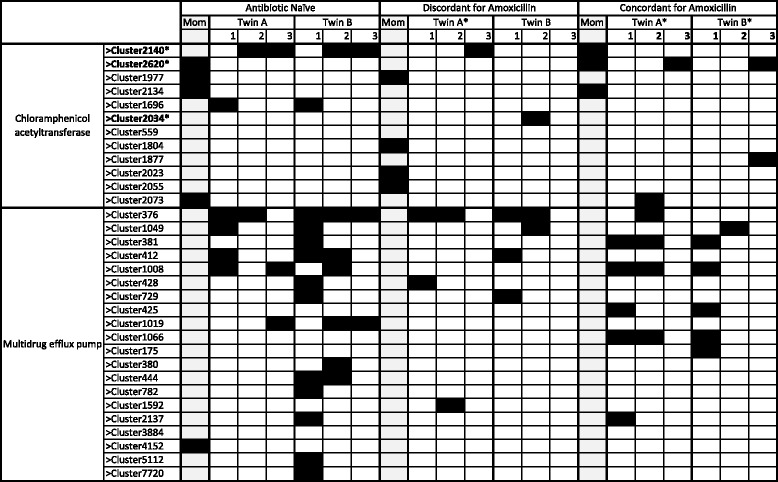
BACKGROUND: The early life of the human host marks a critically important time for establishment of the gut microbial community, yet the developmental trajectory of gut community-encoded resistance genes (resistome) is unknown. We present a longitudinal study of the fecal antibiotic resistome of healthy amoxicillin-exposed and antibiotic-naive twins and their mothers during the first year of life. RESULTS: We extracted metagenomic DNA (mgDNA) from fecal samples collected from three healthy twin pairs at three timepoints (1 or 2 months, 6 or 7 months, and 11 months) and from their mothers (collected at delivery). The mgDNA was used to construct metagenomic expression libraries in an Escherichia coli host. These libraries were screened for antibiotic resistance, and functionally selected resistance genes were sequenced and annotated. A diverse fecal resistome distinct from the maternal resistome was apparent by 2 months of age, and infants' fecal resistomes included resistance to clinically important broad-spectrum beta-lactam antibiotics (e.g., piperacillin-tazobactam, aztreonam, cefepime) not found in their mothers. Dissemination of resistance genes among members of a given family was positively correlated with sharing of those same resistance genes between unrelated families, potentially identifying within-family sharing as a marker of resistance genes emerging in the human community at large. Finally, we found a distinct developmental trajectory for a community-encoded function: chloramphenicol resistance. All study subjects at all timepoints harbored chloramphenicol resistance determinants, but multidrug efflux pumps (rarely found in mothers) were the primary effectors of chloramphenicol resistance in young infants. Chloramphenicol acetyltransferases were more common in mothers than in infants and were found in nearly all the infants at later timepoints. CONCLUSIONS: Our results suggest that healthy 1-2-month-old infants' gut microbes harbor clinically relevant resistance genes distinct from those of their mothers, and that family-specific shared environmental factors early in life shape resistome development.
Overview
The claims and statistics of this paper haven’t been checked yet.
Free: it reads the open-access text and checks the first 5 claims that cite a source we can check. Create a free account to check every claim.
Integrity signals
Registry
Cites
Statistics
Figures
Verification
Claims the paper makes
The claims and statistics of this paper haven’t been checked yet.
Free: it reads the open-access text and checks the first 5 claims that cite a source we can check. Create a free account to check every claim.
Claims other papers make about this one
Each is checked against this paper’s own text: does it say what the citing paper says it does?
In the citing paper
“twins display remarkably greater resistome similarity to each other than to unrelated infants or their mothers, suggesting that vertical transmission does not play a crucial role in its establishment.”
From Antibiotic-Induced Changes in the Intestinal Microbiota and Disease (2016) · cites this paper as [105]
In the citing paper
“appears early in life, detectable in infants as early as two months after birth [105].”
From Antibiotic-Induced Changes in the Intestinal Microbiota and Disease (2016) · cites this paper as [105]
Self-check
Percentages, sums and reported differences re-computed from the paper’s own numbers.
The self-check needs the paper’s full text.
Citations
Cites
Harris, P. A., Taylor, R., Thielke, R., Payne, J., Gonzalez, N., & Conde, J. G. (2009) · Journal of Biomedical Informatics · doi:10.1016/j.jbi.2008.08.010 · Cited by 51,384
QIIME allows analysis of high-throughput community sequencing data
Caporaso, J. G., Kuczynski, J., Stombaugh, J., Bittinger, K., Bushman, F. D., Costello, E. K., Fierer, N., Peña, A. G., Goodrich, J. K., Gordon, J. I., et al. (2010) · Nature Methods · doi:10.1038/nmeth.f.303 · Cited by 34,887
Cd-hit: a fast program for clustering and comparing large sets of protein or nucleotide sequences
Li, W., & Godzik, A. (2006) · Bioinformatics · doi:10.1093/bioinformatics/btl158 · Cited by 11,410
Cd-hit: Accelerated for clustering the next-generation sequencing data
Fu, L., Niu, B., Zhu, Z., Wu, S., & Li, W. (2012) · Bioinformatics · doi:10.1093/bioinformatics/bts565 · Cited by 11,175
A core gut microbiome in obese and lean twins
Turnbaugh, P. J., Hamady, M., Yatsunenko, T., Cantarel, B. L., Duncan, A., Ley, R. E., Sogin, M. L., Jones, W. J., Roe, B. A., Affourtit, J. P., et al. (2009) · Nature · doi:10.1038/nature07540 · Cited by 7,823
Human gut microbiome viewed across age and geography
Yatsunenko, T., Rey, F. E., Manary, M. J., Trehan, I., Dominguez-Bello, M. G., Contreras, M., Magris, M., Hidalgo, G., Baldassano, R. N., Anokhin, A. P., et al. (2012) · Nature · doi:10.1038/nature11053 · Cited by 7,815 · cited 3×
“Prior studies have shown that Enterobacteriaceae are enriched in the gut microbial communities of young infants and decrease with time [15, 29]; the observed decrease in chloramphenicol-resistant multidrug efflux pumps during the first year of life in this cohort may be a reflection of maturation of the gut microbial…”
BackgroundResultSelf-citationDevelopment of the Human Infant Intestinal Microbiota
Palmer, C., Bik, E. M., DiGiulio, D. B., Relman, D. A., & Brown, P. O. (2007) · PLoS Biology · doi:10.1371/journal.pbio.0050177 · Cited by 2,877 · cited 2×
“Prior microbiome studies of twin infants have shown that siblings’ microbiomes undergo similar changes over time [13] and are similar to each other irrespective of zygosity [15, 20, 21]; the patterns of sharing of resistance-associated proteins between twin siblings we observed are consistent with this prior work on t…”
ResultSuccession of microbial consortia in the developing infant gut microbiome
Koenig, J. E., Spor, A., Scalfone, N., Fricker, A. D., Stombaugh, J., Knight, R., Angenent, L. T., & Ley, R. E. (2011) · Proceedings of the National Academy of Sciences · doi:10.1073/pnas.1000081107 · Cited by 2,540 · cited 1×
“While the overall architecture of the gut microbial community undergoes chaotic shifts in the first years of life before stabilizing towards an adult-like state [13–16], the trajectory and dynamics of resistome development in healthy young infants are poorly understood.”
BackgroundDethlefsen, L., & Relman, D. A. (2011) · Proceedings of the National Academy of Sciences · doi:10.1073/pnas.1000087107 · Cited by 2,421 · cited 1×
“Prior studies have shown acute antibiotic-induced perturbations in adult gut microbial community concomitant with host antibiotic exposure, followed by partial recovery [24, 25].”
BackgroundDethlefsen, L., Huse, S., Sogin, M. L., & Relman, D. A. (2008) · PLoS Biology · doi:10.1371/journal.pbio.0060280 · Cited by 2,361 · cited 1×
“Prior studies have shown acute antibiotic-induced perturbations in adult gut microbial community concomitant with host antibiotic exposure, followed by partial recovery [24, 25].”
BackgroundThe shared antibiotic resistome of soil bacteria and human pathogens
Forsberg, K. J., Reyes, A., Wang, B., Selleck, E. M., Sommer, M. O. A., & Dantas, G. (2012) · Science · doi:10.1126/science.1220761 · Cited by 1,650
Self-citationHarmsen, H. J. M., Wildeboer–Veloo, A. C. M., Raangs, G. C., Wagendorp, A. A., Klijn, N., Bindels, J. G., & Welling, G. W. (2000) · Journal of Pediatric Gastroenterology and Nutrition · doi:10.1002/j.1536-4801.2000.tb02655.x · Cited by 1,337
Bacterial phylogeny structures soil resistomes across habitats
Forsberg, K. J., Patel, S., Gibson, M. K., Lauber, C. L., Knight, R., Fierer, N., & Dantas, G. (2014) · Nature · doi:10.1038/nature13377 · Cited by 1,287
Self-citationLongitudinal analysis of microbial interaction between humans and the indoor environment
Lax, S., Smith, D. P., Hampton-Marcell, J., Owens, S. M., Handley, K. M., Scott, N. M., Gibbons, S. M., Larsen, P., Shogan, B. D., Weiss, S., et al. (2014) · Science · doi:10.1126/science.1254529 · Cited by 917
Self-citationFunctional characterization of the antibiotic resistance reservoir in the human microflora
Sommer, M. O. A., Dantas, G., & Church, G. M. (2009) · Science · doi:10.1126/science.1176950 · Cited by 878 · cited 1×
“Importantly, our past studies with adult and pediatric human microbiome samples have demonstrated functional capture of numerous resistance genes of Firmicutes, Bacteroidetes, and Actinobacteria origin, without over-representation of Proteobacterial genes [5, 28], suggesting the observed Enterobacteriaceae multidrug e…”
BackgroundSelf-citationMicrobes in the neonatal intensive care unit resemble those found in the gut of premature infants
Brooks, B., Firek, B. A., Miller, C. S., Sharon, I., Thomas, B. C., Baker, R., Morowitz, M. J., & Banfield, J. F. (2014) · Microbiome · doi:10.1186/2049-2618-2-1 · Cited by 614
Shoemaker, N. B., Vlamakis, H., Hayes, K., & Salyers, A. A. (2001) · Applied and Environmental Microbiology · doi:10.1128/aem.67.2.561-568.2001 · Cited by 529
Turnbaugh, P. J., Quince, C., Faith, J. J., McHardy, A. C., Yatsunenko, T., Niazi, F., Affourtit, J., Egholm, M., Henrissat, B., Knight, R., et al. (2010) · Proceedings of the National Academy of Sciences · doi:10.1073/pnas.1002355107 · Cited by 478
Lewandowsky, S. (2015) · Bristol Research (University of Bristol) · doi:10.5523/bris.swyt56qr4vaj17op9cw3sag7d · Cited by 369
Makino, H., Kushiro, A., Ishikawa, E., Kubota, H., Gawad, A., Sakai, T., Oishi, K., Martin, R., Ben-Amor, K., Knol, J., et al. (2013) · PLoS ONE · doi:10.1371/journal.pone.0078331 · Cited by 302
Outpatient antibiotic prescribing in the United States: 2000 to 2010
Lee, G. C., Reveles, K. R., Attridge, R. T., Lawson, K. A., Mansi, I. A., Lewis, J. S., & Frei, C. R. (2014) · BMC Medicine · doi:10.1186/1741-7015-12-96 · Cited by 231 · cited 1×
“Children in the United States are heavily antibioticexposed [11, 12], with unclear effects on resistome development.”
BackgroundVallès, Y., Artacho, A., Pascual-García, A., Ferrús, M. L., Gosalbes, M. J., Abellán, J. J., & Francino, M. P. (2014) · PLoS Genetics · doi:10.1371/journal.pgen.1004406 · Cited by 203
Recent Trends in Outpatient Antibiotic Use in Children
Vaz, L. E., Kleinman, K. P., Raebel, M. A., Nordin, J. D., Lakoma, M. D., Dutta-Linn, M. M., & Finkelstein, J. A. (2014) · Pediatrics · doi:10.1542/peds.2013-2903 · Cited by 189
Pediatric Fecal Microbiota Harbor Diverse and Novel Antibiotic Resistance Genes
Moore, A. M., Patel, S., Forsberg, K. J., Wang, B., Bentley, G., Razia, Y., Qin, X., Tarr, P. I., & Dantas, G. (2013) · PLoS ONE · doi:10.1371/journal.pone.0078822 · Cited by 186
Self-citationAntibiotics and the resistant microbiome
Sommer, M. O., & Dantas, G. (2011) · Current Opinion in Microbiology · doi:10.1016/j.mib.2011.07.005 · Cited by 174
Self-citationAcquired Antibiotic Resistance: Are We Born with It?
Zhang, L., Kinkelaar, D., Huang, Y., Li, Y., Li, X., & Wang, H. H. (2011) · Applied and Environmental Microbiology · doi:10.1128/aem.05087-11 · Cited by 155
de Vries, L. E., Vallès, Y., Agersø, Y., Vaishampayan, P. A., García-Montaner, A., Kuehl, J. V., Christensen, H., Barlow, M., & Francino, M. P. (2011) · PLoS ONE · doi:10.1371/journal.pone.0021644 · Cited by 145
Diene, S. M., Merhej, V., Henry, M., El Filali, A., Roux, V., Robert, C., Azza, S., Gavory, F., Barbe, V., La Scola, B., et al. (2013) · Molecular Biology and Evolution · doi:10.1093/molbev/mss236 · Cited by 145
Karami, N., Martner, A., Enne, V. I., Swerkersson, S., Adlerberth, I., & Wold, A. E. (2007) · Journal of Antimicrobial Chemotherapy · doi:10.1093/jac/dkm327 · Cited by 129
Metagenomic insights into the human gut resistome and the forces that shape it
Forslund, K., Sunagawa, S., Coelho, L. P., & Bork, P. (2014) · BioEssays · doi:10.1002/bies.201300143 · Cited by 103
Campos, C. E. B., Fenner, I., Wiese, N., Lensing, C., Christner, M., Rohde, H., Aepfelbacher, M., Fenner, T., & Hentschke, M. (2014) · International Journal of Medical Microbiology · doi:10.1016/j.ijmm.2014.04.012 · Cited by 98
Trobos, M., Lester, C. H., Olsen, J. E., Frimodt-Moller, N., & Hammerum, A. M. (2008) · Journal of Antimicrobial Chemotherapy · doi:10.1093/jac/dkn437 · Cited by 83
Fouhy, F., Ogilvie, L. A., Jones, B. V., Ross, R. P., Ryan, A. C., Dempsey, E. M., Fitzgerald, G. F., Stanton, C., & Cotter, P. D. (2014) · PLoS ONE · doi:10.1371/journal.pone.0108016 · Cited by 65
Associations between bacterial communities of house dust and infant gut
Konya, T., Koster, B., Maughan, H., Escobar, M. D., Azad, M. B., Guttman, D. S., Sears, M. R., Becker, A. B., Brook, J. R., Takaro, T. K., et al. (2014) · Environmental Research · doi:10.1016/j.envres.2014.02.005 · Cited by 65
Presence of specific antibiotic (tet) resistance genes in infant faecal microbiota
Gueimonde, M., Salminen, S., & Isolauri, E. (2006) · FEMS Immunology & Medical Microbiology · doi:10.1111/j.1574-695x.2006.00112.x · Cited by 63
Gurnee, E. A., Ndao, I. M., Johnson, J. R., Johnston, B., Gonzalez, M. D., Burnham, C. D., Hall-Moore, C. M., McGhee, J. E., Mellmann, A., Warner, B. B., et al. (2015) · The Journal of Infectious Diseases · doi:10.1093/infdis/jiv278 · Cited by 55
Self-citationTetracycline resistance genes acquired at birth
Alicea-Serrano, A. M., Contreras, M., Magris, M., Hidalgo, G., & Domínguez-Bello, M. G. (2013) · Archives of Microbiology · doi:10.1007/s00203-012-0864-4 · Cited by 42
Identification of novel antimicrobial resistance genes from microbiota on retail spinach
Berman, H. F., & Riley, L. W. (2013) · BMC Microbiology · doi:10.1186/1471-2180-13-272 · Cited by 28
Cited by
Dissemination of Antimicrobial Resistance in Microbial Ecosystems through Horizontal Gene Transfer
von Wintersdorff, C. J. H., Penders, J., van Niekerk, J. M., Mills, N. D., Majumder, S., van Alphen, L. B., Savelkoul, P. H. M., & Wolffs, P. F. G. (2016) · Frontiers in Microbiology · doi:10.3389/fmicb.2016.00173 · Cited by 1,707
“…or activated sludge (Mori et al., 2008; Parsley et al., 2010), as well as in the microbiota of animals (Kazimierczak et al., 2009; Wichmann et al., 2014) and humans (Sommer et al., 2009; Cheng et al., 2012;Moore et al., 2013, 2015; Card et al., 2014; Fouhy et al., 2014; Clemente et al., 2015).”
BackgroundAntibiotics and the Human Gut Microbiome: Dysbioses and Accumulation of Resistances
Francino, M. P. (2016) · Frontiers in Microbiology · doi:10.3389/fmicb.2015.01543 · Cited by 945
Langdon, A., Crook, N., & Dantas, G. (2016) · Genome Medicine · doi:10.1186/s13073-016-0294-z · Cited by 912
Self-citationAntibiotic-Induced Changes in the Intestinal Microbiota and Disease
Becattini, S., Taur, Y., & Pamer, E. G. (2016) · Trends in Molecular Medicine · doi:10.1016/j.molmed.2016.04.003 · Cited by 901
“The ‘resistome’ is defined as the pool of all ARGs present in a given microbiome, and appears early in life, being detectable in infants as early as 2 months after birth [105].”
BackgroundPärnänen, K., Karkman, A., Hultman, J., Lyra, C., Bengtsson-Palme, J., Larsson, D. G. J., Rautava, S., Isolauri, E., Salminen, S., Kumar, H., et al. (2018) · Nature Communications · doi:10.1038/s41467-018-06393-w · Cited by 678
Metadata
- Authors
- Moore, A. M., Ahmadi, S., Patel, S., Gibson, M. K., Wang, B., Ndao, I. M., Deych, E., Shannon, W., Tarr, P. I., Warner, B. B., & Dantas, G.
- Affiliations
- Washington University in St. Louis (US)
- Corresponding author
- Dantas, Gautam
- ORCID
- Venue
- Microbiome
- Published
- 2015-06-25
- Volume
- 3
- Issue
- 1
- Pages
- 27-27
- ISSN
- 2049-2618 (ISSN-L)
- PMC
- PMC4480905
- OpenAlex
- W2124253153
- Cited by
- 109
- References
- 38
- Citations by year
- 2026: 3 · 2025: 5 · 2024: 5 · 2023: 13 · 2022: 13 · 2021: 11 · 2020: 12 · 2019: 11 · 2018: 11 · 2017: 11 · 2016: 12 · 2015: 2
- FWCI
- 4.98
- Type
- journal article
- Language
- en
- Update notices
- erratum (2015-07-23)
- Open access
- gold
- doi.org
- Licence
- cc-by
- creativecommons.org/licenses/by/4.0 (tdm)
- creativecommons.org/licenses/by/4.0 (vor)
- Locations
- Microbiome (publishedVersion, cc-by)
- PubMed Central (publishedVersion, cc-by)
- PubMed (publishedVersion)
- Digital Commons@Becker (Washington University School of Medicine) (submittedVersion)
- Funders
- National Institutes of Health (R01GM099538, P30DK052574, T32 HD043010-08)
- March of Dimes Foundation (6-FY12-394)
- Children's Discovery Institute (MD-II-2011-117, MDII_2009-1)
- National Science Foundation (DGE-11143954)
- Topics
- Health Sciences › Medicine › Microbiology (medical) › Antibiotic Resistance in Bacteria
- Life Sciences › Biochemistry, Genetics and Molecular Biology › Molecular Biology › Gut microbiota and health
- Physical Sciences › Environmental Science › Pollution › Pharmaceutical and Antibiotic Environmental Impacts
- Keywords
- gut resistome, antibiotic resistance genes, infant gut microbiota, twin pairs, mother-to-child transmission, beta-lactam resistance, chloramphenicol resistance, multidrug efflux pumps, chloramphenicol acetyltransferase, early life development, fecal microbiota
About these checks
Registry, retraction, Cites and statistics results are computed, not judged, with one exception: a printed reference that no index lists is read once by a model before it counts as a citation error. Claims are extracted by a model and kept only when their quote appears verbatim in the text; each cited source is then checked, with a model’s help, for whether it says what the claim relies on. Those verdicts can be wrong — read the claim’s quote and the cited source before relying on one.
Statistics and arithmetic are recomputed, not judged.
Confidence bands are shown only for fields calibrated on our annotated test set. None is calibrated yet, so no band is shown.
What counts as a claim ›How we measure confidence ›How we check this ›
Are you an author, or do you see a problem with this page? Request a review
Data sources
Bibliographic data: Semantic Scholar, OpenAlex, Crossref.
Contains information from the Semantic Scholar Academic Graph Datasets, made available under the ODC Attribution License (ODC-BY 1.0).
Semantic Scholar’s data is described in: Kinney, R., et al. (2023). The Semantic Scholar Open Data Platform. arXiv:2301.10140.
