

Gut resistome development in healthy twin pairs in the first year of life
Open accessThe DOI matches its Crossref record; 38 of the 38 references it cites were found in a registry or an index.
Abstract
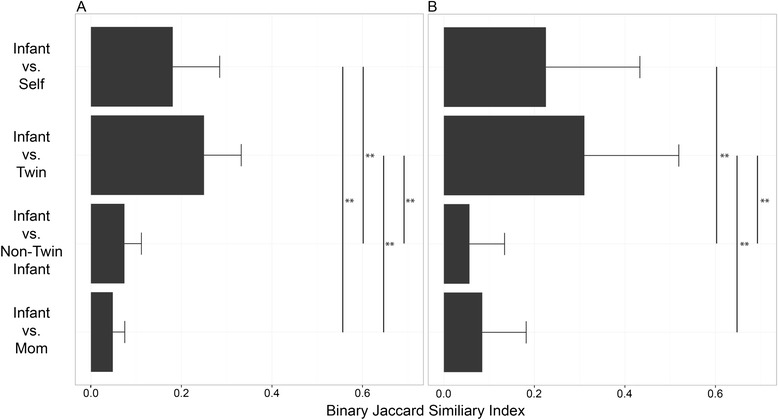
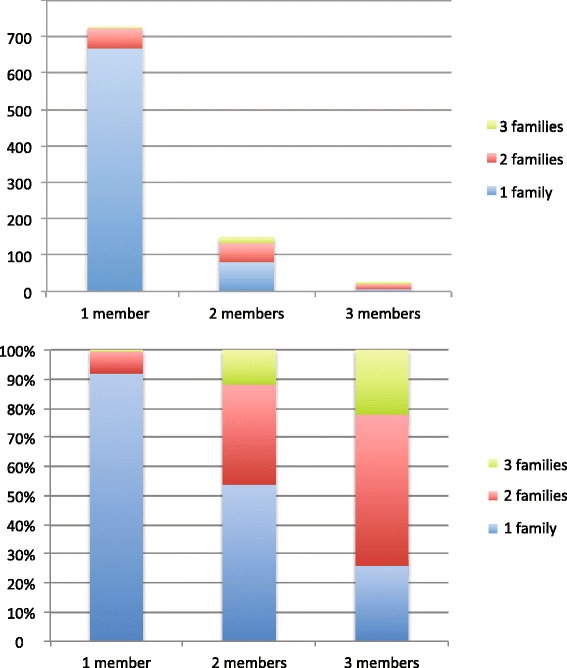
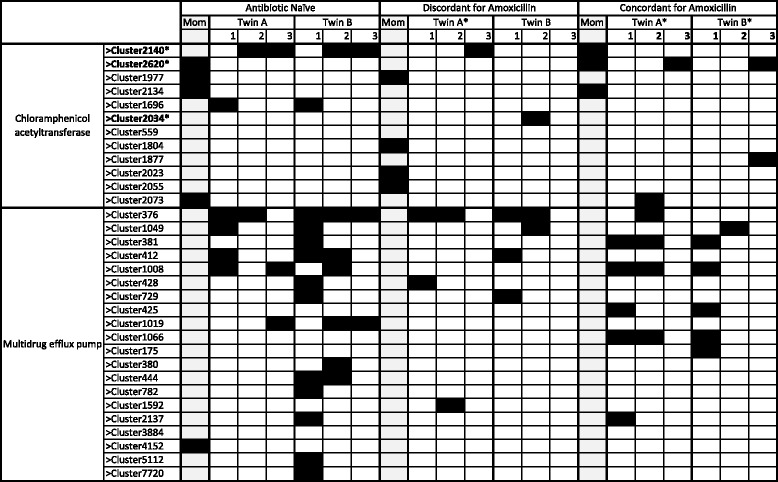
BACKGROUND: The early life of the human host marks a critically important time for establishment of the gut microbial community, yet the developmental trajectory of gut community-encoded resistance genes (resistome) is unknown. We present a longitudinal study of the fecal antibiotic resistome of healthy amoxicillin-exposed and antibiotic-naive twins and their mothers during the first year of life. RESULTS: We extracted metagenomic DNA (mgDNA) from fecal samples collected from three healthy twin pairs at three timepoints (1 or 2 months, 6 or 7 months, and 11 months) and from their mothers (collected at delivery). The mgDNA was used to construct metagenomic expression libraries in an Escherichia coli host. These libraries were screened for antibiotic resistance, and functionally selected resistance genes were sequenced and annotated. A diverse fecal resistome distinct from the maternal resistome was apparent by 2 months of age, and infants' fecal resistomes included resistance to clinically important broad-spectrum beta-lactam antibiotics (e.g., piperacillin-tazobactam, aztreonam, cefepime) not found in their mothers. Dissemination of resistance genes among members of a given family was positively correlated with sharing of those same resistance genes between unrelated families, potentially identifying within-family sharing as a marker of resistance genes emerging in the human community at large. Finally, we found a distinct developmental trajectory for a community-encoded function: chloramphenicol resistance. All study subjects at all timepoints harbored chloramphenicol resistance determinants, but multidrug efflux pumps (rarely found in mothers) were the primary effectors of chloramphenicol resistance in young infants. Chloramphenicol acetyltransferases were more common in mothers than in infants and were found in nearly all the infants at later timepoints. CONCLUSIONS: Our results suggest that healthy 1-2-month-old infants' gut microbes harbor clinically relevant resistance genes distinct from those of their mothers, and that family-specific shared environmental factors early in life shape resistome development.
Overview
The claims and statistics of this paper haven’t been checked yet.
Free: it reads the open-access text and checks the first 5 claims that cite a source we can check. Create a free account to check every claim.
Integrity signals
Registry
Cites
Statistics
Figures
Verification
Claims the paper makes
The claims and statistics of this paper haven’t been checked yet.
Free: it reads the open-access text and checks the first 5 claims that cite a source we can check. Create a free account to check every claim.
Claims other papers make about this one
Each is checked against this paper’s own text: does it say what the citing paper says it does?
In the citing paper
“twins display remarkably greater resistome similarity to each other than to unrelated infants or their mothers, suggesting that vertical transmission does not play a crucial role in its establishment.”
From Antibiotic-Induced Changes in the Intestinal Microbiota and Disease (2016) · cites this paper as [105]
In the citing paper
“appears early in life, detectable in infants as early as two months after birth [105].”
From Antibiotic-Induced Changes in the Intestinal Microbiota and Disease (2016) · cites this paper as [105]
Self-check
Percentages, sums and reported differences re-computed from the paper’s own numbers.
The self-check needs the paper’s full text.
Citations
Cites
Harris, P. A., Taylor, R., Thielke, R., Payne, J., Gonzalez, N., & Conde, J. G. (2009) · Journal of Biomedical Informatics · doi:10.1016/j.jbi.2008.08.010 · Cited by 51,384
QIIME allows analysis of high-throughput community sequencing data
Caporaso, J. G., Kuczynski, J., Stombaugh, J., Bittinger, K., Bushman, F. D., Costello, E. K., Fierer, N., Peña, A. G., Goodrich, J. K., Gordon, J. I., et al. (2010) · Nature Methods · doi:10.1038/nmeth.f.303 · Cited by 34,887
Cd-hit: a fast program for clustering and comparing large sets of protein or nucleotide sequences
Li, W., & Godzik, A. (2006) · Bioinformatics · doi:10.1093/bioinformatics/btl158 · Cited by 11,410
Cd-hit: Accelerated for clustering the next-generation sequencing data
Fu, L., Niu, B., Zhu, Z., Wu, S., & Li, W. (2012) · Bioinformatics · doi:10.1093/bioinformatics/bts565 · Cited by 11,175
A core gut microbiome in obese and lean twins
Turnbaugh, P. J., Hamady, M., Yatsunenko, T., Cantarel, B. L., Duncan, A., Ley, R. E., Sogin, M. L., Jones, W. J., Roe, B. A., Affourtit, J. P., et al. (2009) · Nature · doi:10.1038/nature07540 · Cited by 7,823
Human gut microbiome viewed across age and geography
Yatsunenko, T., Rey, F. E., Manary, M. J., Trehan, I., Dominguez-Bello, M. G., Contreras, M., Magris, M., Hidalgo, G., Baldassano, R. N., Anokhin, A. P., et al. (2012) · Nature · doi:10.1038/nature11053 · Cited by 7,815 · cited 3×
“Prior studies have shown that Enterobacteriaceae are enriched in the gut microbial communities of young infants and decrease with time [15, 29]; the observed decrease in chloramphenicol-resistant multidrug efflux pumps during the first year of life in this cohort may be a reflection of maturation of the gut microbial…”
BackgroundResultSelf-citationDevelopment of the Human Infant Intestinal Microbiota
Palmer, C., Bik, E. M., DiGiulio, D. B., Relman, D. A., & Brown, P. O. (2007) · PLoS Biology · doi:10.1371/journal.pbio.0050177 · Cited by 2,877 · cited 2×
“Prior microbiome studies of twin infants have shown that siblings’ microbiomes undergo similar changes over time [13] and are similar to each other irrespective of zygosity [15, 20, 21]; the patterns of sharing of resistance-associated proteins between twin siblings we observed are consistent with this prior work on t…”
ResultSuccession of microbial consortia in the developing infant gut microbiome
Koenig, J. E., Spor, A., Scalfone, N., Fricker, A. D., Stombaugh, J., Knight, R., Angenent, L. T., & Ley, R. E. (2011) · Proceedings of the National Academy of Sciences · doi:10.1073/pnas.1000081107 · Cited by 2,540 · cited 1×
“While the overall architecture of the gut microbial community undergoes chaotic shifts in the first years of life before stabilizing towards an adult-like state [13–16], the trajectory and dynamics of resistome development in healthy young infants are poorly understood.”
BackgroundDethlefsen, L., & Relman, D. A. (2011) · Proceedings of the National Academy of Sciences · doi:10.1073/pnas.1000087107 · Cited by 2,421 · cited 1×
“Prior studies have shown acute antibiotic-induced perturbations in adult gut microbial community concomitant with host antibiotic exposure, followed by partial recovery [24, 25].”
BackgroundDethlefsen, L., Huse, S., Sogin, M. L., & Relman, D. A. (2008) · PLoS Biology · doi:10.1371/journal.pbio.0060280 · Cited by 2,361 · cited 1×
“Prior studies have shown acute antibiotic-induced perturbations in adult gut microbial community concomitant with host antibiotic exposure, followed by partial recovery [24, 25].”
Background
Cited by
Dissemination of Antimicrobial Resistance in Microbial Ecosystems through Horizontal Gene Transfer
von Wintersdorff, C. J. H., Penders, J., van Niekerk, J. M., Mills, N. D., Majumder, S., van Alphen, L. B., Savelkoul, P. H. M., & Wolffs, P. F. G. (2016) · Frontiers in Microbiology · doi:10.3389/fmicb.2016.00173 · Cited by 1,707
“…or activated sludge (Mori et al., 2008; Parsley et al., 2010), as well as in the microbiota of animals (Kazimierczak et al., 2009; Wichmann et al., 2014) and humans (Sommer et al., 2009; Cheng et al., 2012;Moore et al., 2013, 2015; Card et al., 2014; Fouhy et al., 2014; Clemente et al., 2015).”
BackgroundAntibiotics and the Human Gut Microbiome: Dysbioses and Accumulation of Resistances
Francino, M. P. (2016) · Frontiers in Microbiology · doi:10.3389/fmicb.2015.01543 · Cited by 945
Langdon, A., Crook, N., & Dantas, G. (2016) · Genome Medicine · doi:10.1186/s13073-016-0294-z · Cited by 912
Self-citationAntibiotic-Induced Changes in the Intestinal Microbiota and Disease
Becattini, S., Taur, Y., & Pamer, E. G. (2016) · Trends in Molecular Medicine · doi:10.1016/j.molmed.2016.04.003 · Cited by 901
“The ‘resistome’ is defined as the pool of all ARGs present in a given microbiome, and appears early in life, being detectable in infants as early as 2 months after birth [105].”
BackgroundPärnänen, K., Karkman, A., Hultman, J., Lyra, C., Bengtsson-Palme, J., Larsson, D. G. J., Rautava, S., Isolauri, E., Salminen, S., Kumar, H., et al. (2018) · Nature Communications · doi:10.1038/s41467-018-06393-w · Cited by 678
Development of the gut microbiota in infancy and its impact on health in later life
Tanaka, M., & Nakayama, J. (2017) · Allergology International · doi:10.1016/j.alit.2017.07.010 · Cited by 639
Next-generation approaches to understand and combat the antibiotic resistome
Crofts, T. S., Gasparrini, A. J., & Dantas, G. (2017) · Nature Reviews Microbiology · doi:10.1038/nrmicro.2017.28 · Cited by 535
Self-citationDevelopmental dynamics of the preterm infant gut microbiota and antibiotic resistome
Gibson, M. K., Wang, B., Ahmadi, S., Burnham, C.-A. D., Tarr, P. I., Warner, B. B., & Dantas, G. (2016) · Nature Microbiology · doi:10.1038/nmicrobiol.2016.24 · Cited by 457
Self-citationStrain-Level Analysis of Mother-to-Child Bacterial Transmission during the First Few Months of Life
Yassour, M., Jason, E., Hogstrom, L. J., Arthur, T. D., Tripathi, S., Siljander, H., Selvenius, J., Oikarinen, S., Hyöty, H., Virtanen, S. M., et al. (2018) · Cell Host & Microbe · doi:10.1016/j.chom.2018.06.007 · Cited by 455
“, 2016) and others’ (Moore et al., 2015) previous findings (Figure S4).”
Xiong, W., Wang, Y., Sun, Y., Ma, L., Zeng, Q., Jiang, X., Li, A., Zeng, Z., & Zhang, T. (2018) · Microbiome · doi:10.1186/s40168-018-0419-2 · Cited by 274
Antibiotics and the developing infant gut microbiota and resistome
Gibson, M. K., Crofts, T. S., & Dantas, G. (2015) · Current Opinion in Microbiology · doi:10.1016/j.mib.2015.07.007 · Cited by 246
Self-citationBaumann-Dudenhoeffer, A. M., D’Souza, A. W., Tarr, P. I., Warner, B. B., & Dantas, G. (2018) · Nature Medicine · doi:10.1038/s41591-018-0216-2 · Cited by 203
Self-citationGasparrini, A. J., Markley, J. L., Kumar, H., Wang, B., Fang, L., Irum, S., Symister, C. T., Wallace, M., Burnham, C.-A. D., Andleeb, S., et al. (2020) · Communications Biology · doi:10.1038/s42003-020-0966-5 · Cited by 191
Self-citationThe Threat of Antimicrobial Resistance on the Human Microbiome
Brinkac, L., Voorhies, A., Gomez, A., & Nelson, K. E. (2017) · Microbial Ecology · doi:10.1007/s00248-017-0985-z · Cited by 186
“Nonetheless, other reports point to an infant gut resistome that is unique and different from that of the mothers and that includes resistance to broad-spectrum β-lactam antibiotics, suggesting that early environmental determinants (different from maternal ones) also shape AMR development in the infant gut [58, 59].”
BackgroundFeng, J., Li, B., Jiang, X., Yang, Y., Wells, G. F., Zhang, T., & Li, X. (2018) · Environmental Microbiology · doi:10.1111/1462-2920.14009 · Cited by 185
Development of Gut Microbiota in the First 1000 Days after Birth and Potential Interventions
Pantazi, A. C., Bălașa, A. L., Mihai, C. M., Chisnoiu, T., Lupu, V. V., Kassim, M. A. K., Mihai, L., Frecuș, C. E., Chirila, S. I., Lupu, A., et al. (2023) · Nutrients · doi:10.3390/nu15163647 · Cited by 184
Microbial diversity in individuals and their household contacts following typical antibiotic courses
Abeles, S. R., Jones, M. B., Santiago-Rodriguez, T. M., Ly, M., Klitgord, N., Yooseph, S., Nelson, K. E., & Pride, D. T. (2016) · Microbiome · doi:10.1186/s40168-016-0187-9 · Cited by 169
Adverse consequences of neonatal antibiotic exposure
Cotten, C. M. (2016) · Current Opinion in Pediatrics · doi:10.1097/mop.0000000000000338 · Cited by 167
Collective Resistance in Microbial Communities by Intracellular Antibiotic Deactivation
Sorg, R. A., Lin, L., van Doorn, G. S., Sorg, M., Olson, J., Nizet, V., & Veening, J.-W. (2016) · PLOS Biology · doi:10.1371/journal.pbio.2000631 · Cited by 159
Good microbes, bad genes? The dissemination of antimicrobial resistance in the human microbiome
Crits-Christoph, A., Hallowell, H. A., Koutouvalis, K., & Suez, J. (2022) · Gut Microbes · doi:10.1080/19490976.2022.2055944 · Cited by 156
“Acquisition of ARGs within the human microbiome starts immediately after birth, as infants will be colonized by at least some bacteria encoding ARGs even in the absence of individual antibiotic exposure,(2) and this assemblage is influenced by the vertical transmission of ARGs and mobile genetic elements through mater…”
BackgroundClass C β-Lactamases: Molecular Characteristics
Philippon, A., Arlet, G., Labia, R., & Iorga, B. I. (2022) · Clinical Microbiology Reviews · doi:10.1128/cmr.00150-21 · Cited by 139
Adaptive Strategies of the Candidate Probiotic E. coli Nissle in the Mammalian Gut
Crook, N., Ferreiro, A. L., Gasparrini, A. J., Pesesky, M. W., Gibson, M. K., Wang, B., Sun, X., Condiotte, Z. J., Dobrowolski, S., Peterson, D. A., et al. (2019) · Cell Host & Microbe · doi:10.1016/j.chom.2019.02.005 · Cited by 138
Self-citationDiscordant transmission of bacteria and viruses from mothers to babies at birth
Maqsood, R., Rodgers, R., Rodríguez, C., Handley, S. A., Ndao, I. M., Tarr, P. I., Warner, B. B., Lim, E. S., & Holtz, L. R. (2019) · Microbiome · doi:10.1186/s40168-019-0766-7 · Cited by 134
Self-citationHuman microbiomes and antibiotic resistance
Baron, S. A., Diene, S. M., & Rolain, J.-M. (2018) · Human Microbiome Journal · doi:10.1016/j.humic.2018.08.005 · Cited by 128
Early microbiota, antibiotics and health
Nogacka, A. M., Salazar, N., Arboleya, S., Suárez, M., Fernández, N., Sánchez, G. S., Reyes‐Gavilán, C. G. D. L., & Gueimonde, M. (2017) · Cellular and Molecular Life Sciences · doi:10.1007/s00018-017-2670-2 · Cited by 113
Bifidobacterial Dominance of the Gut in Early Life and Acquisition of Antimicrobial Resistance
Taft, D. H., Liu, J., Maldonado-Gomez, M. X., Akre, S., Huda, M. N., Ahmad, S. M., Stephensen, C. B., & Mills, D. A. (2018) · mSphere · doi:10.1128/msphere.00441-18 · Cited by 107
ResFinderFG v2.0: a database of antibiotic resistance genes obtained by functional metagenomics
Gschwind, R., Perović, S. U., Weiss, M., Petitjean, M., Lao, J., Coelho, L. P., & Ruppé, É. (2023) · Nucleic Acids Research · doi:10.1093/nar/gkad384 · Cited by 92
Li, X., Brejnrod, A., Thorsen, J., Zachariasen, T., Trivedi, U., Russel, J., Vestergaard, G., Stokholm, J., Rasmussen, M. A., & Sørensen, S. J. (2023) · Nature Communications · doi:10.1038/s41467-023-44289-6 · Cited by 85
Muurinen, J., Richert, J. A., Wickware, C. L., Richert, B. T., & Johnson, T. A. (2021) · Scientific Reports · doi:10.1038/s41598-021-84759-9 · Cited by 83
Talat, A., Blake, K. S., Dantas, G. A., & Khan, A. U. (2023) · Microbiology Spectrum · doi:10.1128/spectrum.04102-22 · Cited by 80
Self-citationThe infant gut resistome is associated with E. coli and early-life exposures
Lebeaux, R. M., Coker, M. O., Dade, E. F., Palys, T. J., Morrison, H. G., Ross, B. D., Baker, E. R., Karagas, M. R., Madan, J. C., & Hoen, A. G. (2021) · BMC Microbiology · doi:10.1186/s12866-021-02129-x · Cited by 68
The human gut resistome: Current concepts & future prospects
Singh, S., Verma, N., & Taneja, N. (2019) · The Indian Journal of Medical Research · doi:10.4103/ijmr.ijmr_1979_17 · Cited by 68
Maternal-infant antibiotic resistance genes transference: what do we know?
Samarra, A., Esteban-Torres, M., Cabrera‐Rubio, R., Bernabeu, M., Arboleya, S., Gueimonde, M., & Collado, M. C. (2023) · Gut Microbes · doi:10.1080/19490976.2023.2194797 · Cited by 63
Development of the oral resistome during the first decade of life
Sukumar, S., Wang, F., Simpson, C. A., Willet, C. E., Chew, T., Hughes, T. E., Bockmann, M. R., Sadsad, R., Martin, F. E., Lydecker, H. W., et al. (2023) · Nature Communications · doi:10.1038/s41467-023-36781-w · Cited by 62
Impact of international travel and diarrhea on gut microbiome and resistome dynamics
Boolchandani, M., Blake, K. S., Tilley, D. H., Cabada, M. M., Schwartz, D. J., Patel, S., Morales, M. L., Meza, R. A., Soto, G. M., Isidean, S. D., et al. (2022) · Nature Communications · doi:10.1038/s41467-022-34862-w · Cited by 60
Self-citationD’Souza, A. W., Boolchandani, M., Patel, S., Galazzo, G., van Hattem, J. M., Arcilla, M. S., Melles∗, D. C., de Jong, M. D., Schultsz, C., Bootsma, M., et al. (2021) · Genome Medicine · doi:10.1186/s13073-021-00893-z · Cited by 55
Self-citationZohra, T., Numan, M., Ikram, A., Salman, M., Khan, T., Din, M., Salman, M., Farooq, A., Amir, A., & Ali, M. (2021) · Microorganisms · doi:10.3390/microorganisms9050954 · Cited by 54
Three Innovations of Next-Generation Antibiotics: Evolvability, Specificity, and Non-Immunogenicity
Shim, H. (2023) · Antibiotics · doi:10.3390/antibiotics12020204 · Cited by 54
Impact of long-term dietary habits on the human gut resistome in the Dutch population
Stege, P. B., Hordijk, J., Shetty, S. A., Visser, M., Viveen, M. C., Rogers, M. R. C., Gijsbers, E. F., Dierikx, C. M., van der Plaats, R. Q. J., van Duijkeren, E., et al. (2022) · Scientific Reports · doi:10.1038/s41598-022-05817-4 · Cited by 53
Daele, E. V., Knol, J., & Belzer, C. (2019) · Critical Reviews in Microbiology · doi:10.1080/1040841x.2019.1680601 · Cited by 51
Sukhum, K. V., Vargas, R. C., Boolchandani, M., D’Souza, A. W., Patel, S., Kesaraju, A., Walljasper, G., Hegde, H., Ye, Z., Valenzuela, R. K., et al. (2021) · mBio · doi:10.1128/mbio.00798-21 · Cited by 49
Self-citationImpact of antibiotics on off-target infant gut microbiota and resistance genes in cohort studies
Lebeaux, R. M., Madan, J. C., Nguyen, Q. P., Coker, M. O., Dade, E. F., Moroishi, Y., Palys, T. J., Ross, B. D., Pettigrew, M. M., Morrison, H. G., et al. (2022) · Pediatric Research · doi:10.1038/s41390-022-02104-w · Cited by 46
Guitor, A. K., Yousuf, E. I., Raphenya, A. R., Hutton, E. K., Morrison, K. M., McArthur, A. G., Wright, G. D., & Stearns, J. C. (2022) · Microbiome · doi:10.1186/s40168-022-01327-7 · Cited by 44
Antibiotic resistance potential of the healthy preterm infant gut microbiome
Rose, G., Shaw, A. G., Sim, K., Wooldridge, D. J., Li, M.-S., Gharbia, S., Misra, R., & Kroll, J. S. (2017) · PeerJ · doi:10.7717/peerj.2928 · Cited by 44
Korry, B. J., Cabral, D. J., & Belenky, P. A. (2020) · Frontiers in Microbiology · doi:10.3389/fmicb.2020.00322 · Cited by 43
Yun, J., Muurinen, J., Nykäsenoja, S., Seppä‐Lassila, L., Sali, V., Suomi, J., Tuominen, P., Joutsen, S., Hämäläinen, M., Olkkola, S., et al. (2021) · Preventive Veterinary Medicine · doi:10.1016/j.prevetmed.2021.105408 · Cited by 43
Poulin‐Laprade, D., Brouard, J., Gagnon, N., Turcotte, A., Langlois, A., Matte, J. J., Carrillo, C. D., Zaheer, R., McAllister, T. A., Topp, E., et al. (2021) · Applied and Environmental Microbiology · doi:10.1128/aem.02612-20 · Cited by 42
Antimicrobial Resistance Genes (ARGs), the Gut Microbiome, and Infant Nutrition
Theophilus, R. J., & Taft, D. H. (2023) · Nutrients · doi:10.3390/nu15143177 · Cited by 41
Longitudinal dynamics of farmer and livestock nasal and faecal microbiomes and resistomes
Mahmud, B., Vargas, R. C., Sukhum, K. V., Patel, S., Liao, J., Hall, L. R., Kesaraju, A., Le, T., Kitchner, T., Kronholm, E., et al. (2024) · Nature Microbiology · doi:10.1038/s41564-024-01639-4 · Cited by 40
Self-citationExploring a Complex Interplay: Kidney–Gut Axis in Pediatric Chronic Kidney Disease
Mocanu, A., Bogos, R. A., Lazaruc, T. I., Trandafir, L. M., Lupu, V. V., Ioniuc, I. K., Alecsa, M., Ivanov, A. V., Lupu, A., & Stârcea, I. M. (2023) · Nutrients · doi:10.3390/nu15163609 · Cited by 39
Yoon, K. A., Kim, K., Kim, W., Bang, W. Y., Ahn, N.-H., Bae, C., Yeo, J., & Lee, S. H. (2020) · Toxins · doi:10.3390/toxins12010047 · Cited by 37
Sarmiento, M. R. A., de Paula, T. O., Borges, F. M., Machado, A. B. F., Resende, J. A., Moreira, A. P. B., Luquetti, S. C. P. D., Cesar, D. E., da Silva, V. L., & Diniz, C. G. (2019) · Genes · doi:10.3390/genes10050349 · Cited by 36
Häsler, R., Kautz, C., Rehman, A., Podschun, R., Gaßling, V., Brzoska, P. M., Sherlock, J. K., Gräsner, J., Hoppenstedt, G., Schubert, S., et al. (2018) · Microbiome · doi:10.1186/s40168-018-0414-7 · Cited by 36
First 1000 Days of Life: Consequences of Antibiotics on Gut Microbiota
Aires, J. (2021) · Frontiers in Microbiology · doi:10.3389/fmicb.2021.681427 · Cited by 35
Potential Elimination of Human Gut Resistome by Exploiting the Benefits of Functional Foods
Tsigalou, C., Konstantinidis, T., Stavropoulou, E., Bezirtzoglou, E. E., & Tsakris, A. (2020) · Frontiers in Microbiology · doi:10.3389/fmicb.2020.00050 · Cited by 34
Sosa-Moreno, A., Comstock, S. S., Sugino, K. Y., Ma, T. F., Paneth, N., Davis, Y., Olivero, R. M., Schein, R., Maurer, J., & Zhang, L. (2020) · PLoS ONE · doi:10.1371/journal.pone.0234751 · Cited by 34
Waskito, L. A., Rezkitha, Y. A. A., Vilaichone, R., Wibawa, I. D. N., Mustika, S., Sugihartono, T., & Miftahussurur, M. (2022) · Antibiotics · doi:10.3390/antibiotics11050654 · Cited by 34
Mills, M. C., Lee, S., Piperata, B. A., Garabed, R. B., Choi, B., & Lee, J. (2023) · Microbiome · doi:10.1186/s40168-023-01636-5 · Cited by 33
Obiakor, C. V., Tun, H. M., Bridgman, S. L., Arrieta, M., & Kozyrskyj, A. L. (2018) · Expert Review of Clinical Immunology · doi:10.1080/1744666x.2018.1521271 · Cited by 32
The Gut Resistome is Highly Dynamic During the First Months of Life
von Wintersdorff, C. J. H., Wolffs, P. F. G., Savelkoul, P. H. M., Nijsen, R. R., Lau, S., Gerhold, K., Hamelmann, E. H., & Penders, J. (2016) · Future Microbiology · doi:10.2217/fmb.15.154 · Cited by 28
Berendes, D. M., Knee, J., Sumner, T., Capone, D., Lai, A., Wood, A. R., Patel, S., Nalá, R., Cumming, O., & Brown, J. M. (2019) · PLoS ONE · doi:10.1371/journal.pone.0225464 · Cited by 28
Self-citationBian, J., Wang, H., Ding, H., Song, Y., Zhang, X., Tang, X., Zhong, Y., & Zhao, C. (2022) · The Science of The Total Environment · doi:10.1016/j.scitotenv.2022.159907 · Cited by 28
Lebeaux, R. M., Karalis, D., Lee, J., Whitehouse, H. C., Madan, J. C., Karagas, M. R., & Hoen, A. G. (2022) · Gut Microbes · doi:10.1080/19490976.2022.2120743 · Cited by 23
Combining metagenomics and metatranscriptomics to study human, animal and environmental resistomes
Wang, Y., Hu, Y., & Gao, G. F. (2020) · Medicine in Microecology · doi:10.1016/j.medmic.2020.100014 · Cited by 23
Patangia, D. V., Grimaud, G. M., O'Shea, C., Ryan, C. A., Dempsey, E. M., Stanton, C., & Ross, R. P. (2024) · Microbiome · doi:10.1186/s40168-023-01732-6 · Cited by 20
Diverse Distribution of Resistomes in the Human and Environmental Microbiomes
Lim, M. Y., Cho, Y., & Rho, M. (2018) · Current Genomics · doi:10.2174/1389202919666180911130845 · Cited by 20
The neonatal intestinal resistome and factors that influence it—a systematic review
Léo, S., Curtis, N. C., & Zimmermann, P. (2022) · Clinical Microbiology and Infection · doi:10.1016/j.cmi.2022.07.014 · Cited by 18
Blake, K. S., Kumar, H., Loganathan, A., Williford, E. E., Diorio‐Toth, L., Xue, Y.-P., Tang, W. K., Campbell, T., Chong, D. D., Angtuaco, S., et al. (2024) · Communications Biology · doi:10.1038/s42003-024-06023-w · Cited by 14
Self-citationJanowski, A. B., & Newland, J. G. (2017) · F1000Research · doi:10.12688/f1000research.8533.1 · Cited by 13
Makarova, S. G., Namazova-Baranova, L. S., Ereshko, O. A., Yasakov, D. S., & Sadchikov, P. E. (2019) · Педиатрическая фармакология · doi:10.15690/pf.v16i1.1999 · Cited by 12
Erratum: Gut resistome development in healthy twin pairs in the first year of life
Moore, A. M., Ahmadi, S., Patel, S., Gibson, M. K., Wang, B., Ndao, I. M., Deych, E., Shannon, W. D., Tarr, P. I., Warner, B. B., et al. (2015) · Microbiome · doi:10.1186/s40168-015-0095-4 · Cited by 11
Self-citationCabrera, P. M., Bokulich, N. A., & Zimmermann, P. (2025) · Microbiology Spectrum · doi:10.1128/spectrum.02278-24 · Cited by 11
Tan, H., Wang, L., Chen, Y., Li, X., Zhou, H., Wang, Z., & Tan, Z. (2023) · Bioresource Technology · doi:10.1016/j.biortech.2023.129943 · Cited by 11
Kelley, K., Dogru, D., Huang, Q., Yang, Y., Palm, N. W., Ludvigsson, J., & Altındiş, E. (2025) · Microbiology Spectrum · doi:10.1128/spectrum.01468-24 · Cited by 10
Girdhar, K., Huang, Q., Dogru, Y. D., Yang, Y., Tolstikov, V., Chrudinová, M., Raisingani, A., Ludvigsson, J. F., Kiebish, M. A., Palm, N. W., et al. (2020) · bioRxiv (Cold Spring Harbor Laboratory) · doi:10.1101/2020.02.29.971242 · Cited by 9
Experimental Epidemiology of Antibiotic Resistance: Looking for an Appropriate Animal Model System
Llop, P., Latorre, A., & Moyá, A. (2018) · Microbiology Spectrum · doi:10.1128/microbiolspec.mtbp-0007-2016 · Cited by 9
Age- and diet-driven assembly of the gut antibiotic resistome in humans and food-producing animals
Zhang, T., Wang, J., Feng, Q., Xu, X., Zhu, W., Mao, S., & Liu, J. (2026) · Gut Microbes · doi:10.1080/19490976.2025.2610052 · Cited by 8
Xue, X., Li, X., Liu, J., Zhu, L., Zhou, L., Jia, J., & Wang, Z. (2023) · Aquatic Toxicology · doi:10.1016/j.aquatox.2023.106459 · Cited by 8
Microbiome establishment and maturation: early life environmental factors
Yee, A. L., Das, P., Garcia, M. C. S., Buschmann, M. M., & Gilbert, J. A. (2020) · Elsevier eBooks · doi:10.1016/b978-0-12-820602-7.00002-7 · Cited by 7
Host genetic and environmental factors shape the human gut resistomePreprint
Roy, C. I. L., Bowyer, R. C. E., Carr, V. R., Costeira, R., Fernandez, J. C., Martin, T. C., Spector, T. D., Steves, C. J., Moyes, D. L., Forslund, S. K., et al. (2020) · bioRxiv (Cold Spring Harbor Laboratory) · doi:10.1101/2020.05.18.092973 · Cited by 6
Yang, J. H., Xu, Z., Wang, X., Zhang, X., Zhu, Y., & Guo, J. (2025) · Environmental Research · doi:10.1016/j.envres.2025.121057 · Cited by 6
The Microbiome of the Upper Respiratory Tract in Newborns – Integration into Clinical Practice
Старовойтова, А. С., Улезко, Е. А., & О., С. И. (2022) · Педиатрия Восточная Европа · doi:10.34883/pi.2022.10.3.008 · Cited by 5
Emergence of antibiotic resistance in gut microbiota and its effect on human health
Kumar, M., Sharma, A., Verma, A., & Shrivastava, R. (2022) · Elsevier eBooks · doi:10.1016/b978-0-323-91313-3.00002-7 · Cited by 4
The Human Gut Antibiotic Resistome in the Metagenomic Era: Progress and Perspectives
Hu, Y., & Zhu, B. (2016) · doi:10.11979/idtm.201601006 · Cited by 4
zakhour, R. G., Khafaja, S., Korman, R., Boutros, C. F., Zein, Z. E., Chmaisse, A., Haj, M., Haddara, A., Houry, Z. E., Jbahi, M., et al. (2025) · Infection and Drug Resistance · doi:10.2147/idr.s488436 · Cited by 4
Metagenomics of Antimicrobial Resistance in Gut Microbiome
Imchen, M., & Kumavath, R. (2018) · InTech eBooks · doi:10.5772/intechopen.76214 · Cited by 3
Ilina, E. N., Olekhnovich, E. I., & Pavlenko, A. V. (2017) · Nauchno-prakticheskii zhurnal «Patogenez» · doi:10.25557/gm.2017.3.8494 · Cited by 3
Correia, V. G., Pinheiro, B., Carvalho, A. L., & Palma, A. S. (2019) · Wiley eBooks · doi:10.1002/9781119282549.ch1 · Cited by 2
Herrera, T. I., & Cotten, C. M. (2019) · Elsevier eBooks · doi:10.1016/b978-0-323-54391-0.00005-9 · Cited by 2
Anatomical and Physiological Characteristics of the Digestive Tract in Childhood
Ciampo, L. A. D., & Ciampo, I. R. L. D. (2020) · Archives of Current Research International · doi:10.9734/acri/2020/v20i330184 · Cited by 2
Understanding the resistome of the human microbiome: A metagenomic approach
Barik, S., Kannoth, S., Deepthi, M., José, M., Prabhu, D. C., Sadanandan, S., & Grace, T. (2024) · Elsevier eBooks · doi:10.1016/b978-0-323-91631-8.00016-0 · Cited by 1
The Gut Microbiome in Pediatrics
Cresci, G., & Teitelbaum, J. E. (2021) · Elsevier eBooks · doi:10.1016/b978-0-323-67293-1.00004-9 · Cited by 1
Gut Microbiota and Antibiotics: Dysbiosis and Antimicrobial Resistance
Imchen, M., Moopantakath, J., & Kumavath, R. (2021) · Elsevier eBooks · doi:10.1016/b978-0-12-819265-8.00049-8 · Cited by 1
Farooq, S., Talat, A., Dhariwal, A., Petersen, F. C., & Khan, A. U. (2025) · International Journal of Antimicrobial Agents · doi:10.1016/j.ijantimicag.2025.107458 · Cited by 1
Muurinen, J., Richert, J., Wickware, C., Richert, B., & Johnson, T. A. (2020) · bioRxiv (Cold Spring Harbor Laboratory) · doi:10.1101/2020.02.19.957100 · Cited by 1
Mimiça, M. J. (2018) · LA Referencia (Red Federada de Repositorios Institucionales de Publicaciones Científicas) · Cited by 1
Characterization of the infant gut microbiota mobilome
Ravi, A. (2017) · NVA (Nasjonalt vitenarkiv) · Cited by 1
Perturbations in the human gut microbiome with antibiotic therapy and intestinal disorders
Panda, S. (2015) · LA Referencia (Red Federada de Repositorios Institucionales de Publicaciones Científicas) · Cited by 1
Handing on Health to the Next Generation
Holmes, E. C., MacIntyre, D. A., Modi, N., & Marchesi, J. R. (2016) · Elsevier eBooks · doi:10.1016/b978-0-12-800344-2.00008-2
Metagenomic insights into the reservoirs and dissemination of antibiotic resistance
von Wintersdorff, C. J. H. (2016) · Research Publications (Maastricht University) · doi:10.26481/dis.20161219cw
Metadata
- Authors
- Moore, A. M., Ahmadi, S., Patel, S., Gibson, M. K., Wang, B., Ndao, I. M., Deych, E., Shannon, W., Tarr, P. I., Warner, B. B., & Dantas, G.
- Affiliations
- Washington University in St. Louis (US)
- Corresponding author
- Dantas, Gautam
- ORCID
- Venue
- Microbiome
- Published
- 2015-06-25
- Volume
- 3
- Issue
- 1
- Pages
- 27-27
- ISSN
- 2049-2618 (ISSN-L)
- PMC
- PMC4480905
- OpenAlex
- W2124253153
- Cited by
- 109
- References
- 38
- Citations by year
- 2026: 3 · 2025: 5 · 2024: 5 · 2023: 13 · 2022: 13 · 2021: 11 · 2020: 12 · 2019: 11 · 2018: 11 · 2017: 11 · 2016: 12 · 2015: 2
- FWCI
- 4.98
- Type
- journal article
- Language
- en
- Update notices
- erratum (2015-07-23)
- Open access
- gold
- doi.org
- Licence
- cc-by
- creativecommons.org/licenses/by/4.0 (tdm)
- creativecommons.org/licenses/by/4.0 (vor)
- Locations
- Microbiome (publishedVersion, cc-by)
- PubMed Central (publishedVersion, cc-by)
- PubMed (publishedVersion)
- Digital Commons@Becker (Washington University School of Medicine) (submittedVersion)
- Funders
- National Institutes of Health (R01GM099538, P30DK052574, T32 HD043010-08)
- March of Dimes Foundation (6-FY12-394)
- Children's Discovery Institute (MD-II-2011-117, MDII_2009-1)
- National Science Foundation (DGE-11143954)
- Topics
- Health Sciences › Medicine › Microbiology (medical) › Antibiotic Resistance in Bacteria
- Life Sciences › Biochemistry, Genetics and Molecular Biology › Molecular Biology › Gut microbiota and health
- Physical Sciences › Environmental Science › Pollution › Pharmaceutical and Antibiotic Environmental Impacts
- Keywords
- gut resistome, antibiotic resistance genes, infant gut microbiota, twin pairs, mother-to-child transmission, beta-lactam resistance, chloramphenicol resistance, multidrug efflux pumps, chloramphenicol acetyltransferase, early life development, fecal microbiota
About these checks
Registry, retraction, Cites and statistics results are computed, not judged, with one exception: a printed reference that no index lists is read once by a model before it counts as a citation error. Claims are extracted by a model and kept only when their quote appears verbatim in the text; each cited source is then checked, with a model’s help, for whether it says what the claim relies on. Those verdicts can be wrong — read the claim’s quote and the cited source before relying on one.
Statistics and arithmetic are recomputed, not judged.
Confidence bands are shown only for fields calibrated on our annotated test set. None is calibrated yet, so no band is shown.
What counts as a claim ›How we measure confidence ›How we check this ›
Are you an author, or do you see a problem with this page? Request a review
Data sources
Bibliographic data: Semantic Scholar, OpenAlex, Crossref.
Contains information from the Semantic Scholar Academic Graph Datasets, made available under the ODC Attribution License (ODC-BY 1.0).
Semantic Scholar’s data is described in: Kinney, R., et al. (2023). The Semantic Scholar Open Data Platform. arXiv:2301.10140.
