

The DOI matches its Crossref record; 148 of the 151 references it cites were found in a registry or an index.
The vaginal microbiota, human papillomavirus infection and cervical intraepithelial neoplasia: What do we know and where are we going next
Open accessAbstract
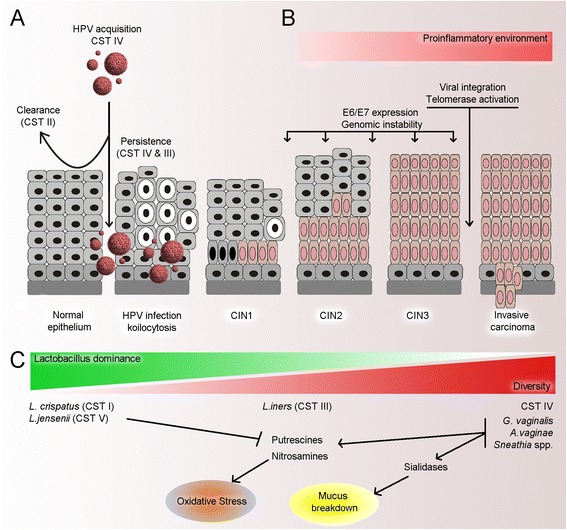
The vaginal microbiota plays a significant role in health and disease of the female reproductive tract. Next-generation sequencing techniques based upon the analysis of bacterial 16S rRNA genes permit in-depth study of vaginal microbial community structure to a level of detail not possible with standard culture-based microbiological techniques. The human papillomavirus (HPV) causes both cervical intraepithelial neoplasia (CIN) and cervical cancer. Although the virus is highly prevalent, only a small number of women have a persistent HPV infection and subsequently develop clinically significant disease. There is emerging evidence which leads us to conclude that increased diversity of vaginal microbiota combined with reduced relative abundance of Lactobacillus spp. is involved in HPV acquisition and persistence and the development of cervical precancer and cancer. In this review, we summarise the current literature and discuss potential mechanisms for the involvement of vaginal microbiota in the evolution of CIN and cervical cancer. The concept of manipulation of vaginal bacterial communities using pre- and probiotics is also discussed as an exciting prospect for the field of cervical pathology.
Overview
The claims and statistics of this paper haven’t been checked yet.
Run the check — free, no account needed. It reads the open-access text and checks the sources it cites.
Integrity signals
Registry
Cites
Statistics
Figures
Verification
Claims the paper makes
The claims and statistics of this paper haven’t been checked yet.
Run the check — free, no account needed. It reads the open-access text and checks the sources it cites.
Claims other papers make about this one
Each is checked against this paper’s own text: does it say what the citing paper says it does?
The source backs part of the claim, not all of it — or backs it for a different population, condition or comparison.
In the citing paper
“Untreated women attending for colposcopy have a higher risk of preterm birth than do women without CIN, probably explained by inherent characteristics and genetic, epigenetic, or microbiome factors.40, 41, 42”
From Comparative effectiveness and risk of preterm birth of local treatments for cervical intraepithelial neoplasia and stage IA1 cervical cancer: a systematic review and network meta-analysis (2022) · cites this paper as [42]
Experimental — accuracy not yet measuredIn the citing paper
“Further evidence indicates that the cervicovaginal microbiota plays a substantial role in the persistence and regression of the virus and thus has important implications for subsequent disease (Chang and Parsonnet, 2010; Mitra et al., 2016).”
From Viral Infections, the Microbiome, and Probiotics (2021) · cites this paper as Mitra et al., 2016
Self-check
Percentages, sums and reported differences re-computed from the paper’s own numbers.
The self-check needs the paper’s full text.
Citations
Cites
Cancer incidence and mortality worldwide: Sources, methods and major patterns in GLOBOCAN 2012
Ferlay, J., Soerjomataram, I., Dikshit, R., Eser, S., Mathers, C., Rebelo, M., Parkin, D. M., Forman, D., & Bray, F. (2015) · International Journal of Cancer · doi:10.1002/ijc.29210 · Cited by 28,766
Inflammation and cancer: back to Virchow?
Balkwill, F., & Mantovani, A. (2001) · The Lancet · doi:10.1016/s0140-6736(00)04046-0 · Cited by 7,746
Turnbaugh, P. J., Ley, R. E., Hamady, M., Fraser-Liggett, C. M., Knight, R., & Gordon, J. I. (2007) · Nature · doi:10.1038/nature06244 · Cited by 6,091
Vaginal microbiome of reproductive-age women
Ravel, J., Gajer, P., Abdo, Z., Schneider, G. M., Koenig, S. S. K., McCulle, S. L., Karlebach, S., Gorle, R., Russell, J., Tacket, C. O., et al. (2011) · Proceedings of the National Academy of Sciences · doi:10.1073/pnas.1002611107 · Cited by 4,254
Nicholson, J. K., Lindon, J. C., & Holmes, E. C. (1999) · Xenobiotica · doi:10.1080/004982599238047 · Cited by 3,991
Kostic, A. D., Chun, E., Robertson, L., Glickman, J. N., Gallini, C. A., Michaud, M., Clancy, T. E., Chung, D. C., Lochhead, P., Hold, G. L., et al. (2013) · Cell Host & Microbe · doi:10.1016/j.chom.2013.07.007 · Cited by 2,718
Rubinstein, M. R., Wang, X., Liu, W., Hao, Y., Cai, G., & Han, Y. W. (2013) · Cell Host & Microbe · doi:10.1016/j.chom.2013.07.012 · Cited by 2,476
Human papillomavirus and cervical cancer
Burd, E. M. (2003) · Clinical Microbiology Reviews · doi:10.1128/cmr.16.1.1-17.2003 · Cited by 2,420
Amsel, R., Totten, P. A., Spiegel, C. A., Chen, K. C. S., Eschenbach, D. A., & Holmes, K. K. (1983) · The American Journal of Medicine · doi:10.1016/0002-9343(83)91112-9 · Cited by 2,412
Are We Really Vastly Outnumbered? Revisiting the Ratio of Bacterial to Host Cells in Humans
Sender, R., Fuchs, S., & Milo, R. (2016) · Cell · doi:10.1016/j.cell.2016.01.013 · Cited by 2,050
Cited by
Sorted by citations
Vaginal microbiota and the potential of Lactobacillus derivatives in maintaining vaginal health
Chee, W. J. Y., Chew, S. Y., & Than, L. T. L. (2020) · Microbial Cell Factories · doi:10.1186/s12934-020-01464-4 · Cited by 761
Kombe, A. J. K., Li, B., Zahid, A., Mengist, H. M., Bounda, G., Zhou, Y. Y., & Jin, T. (2021) · Frontiers in Public Health · doi:10.3389/fpubh.2020.552028 · Cited by 715
Uterine Microbiota: Residents, Tourists, or Invaders?
Baker, J. M., Chase, D. M., & Herbst‐Kralovetz, M. M. (2018) · Frontiers in Immunology · doi:10.3389/fimmu.2018.00208 · Cited by 400
Diversity of vaginal microbiome and metabolome during genital infections
Ceccarani, C., Foschi, C., Parolin, C., D’Antuono, A., Gaspari, V., Consolandi, C., Laghi, L., Camboni, T., Vitali, B., Severgnini, M., et al. (2019) · Scientific Reports · doi:10.1038/s41598-019-50410-x · Cited by 351
Brusselaers, N., Shrestha, S., van de Wijgert, J. H. H. M., & Verstraelen, H. (2018) · American Journal of Obstetrics and Gynecology · doi:10.1016/j.ajog.2018.12.011 · Cited by 321
Paola, M. D., Sani, C., Clemente, A. M., Iossa, A., Perissi, E., Castronovo, G., Tanturli, M., Rivero, D., Cozzolino, F., Cavalieri, D., et al. (2017) · Scientific Reports · doi:10.1038/s41598-017-09842-6 · Cited by 312
Mitra, A., MacIntyre, D. A., Ntritsos, G., Smith, A., Tsilidis, K. K., Marchesi, J. R., Bennett, P. R., Moscicki, A., & Kyrgiou, M. (2020) · Nature Communications · doi:10.1038/s41467-020-15856-y · Cited by 258
Interplay among Vaginal Microbiome, Immune Response and Sexually Transmitted Viral Infections
Torcia, M. G. (2019) · International Journal of Molecular Sciences · doi:10.3390/ijms20020266 · Cited by 203
Translocation of vaginal microbiota is involved in impairment and protection of uterine health
Wang, J., Li, Z., Ma, X., Du, L., Jia, Z., Cui, X., Yu, L., Yang, J., Xiao, L., Zhang, B., et al. (2021) · Nature Communications · doi:10.1038/s41467-021-24516-8 · Cited by 197
Curty, G., de Carvalho, P. S., & Soares, M. A. (2019) · International Journal of Molecular Sciences · doi:10.3390/ijms21010222 · Cited by 193
Viral Infections, the Microbiome, and Probiotics
Harper, A., Vijayakumar, V., Ouwehand, A. C., ter Haar, J., Obis, D., Espadaler, J., Binda, S., Desiraju, S., & Day, R. (2021) · Frontiers in Cellular and Infection Microbiology · doi:10.3389/fcimb.2020.596166 · Cited by 177
Chen, Y., Qiu, X., Wang, W., Li, D., Wu, A., Hong, Z., Di, W. J., & Qiu, L. (2020) · BMC Infectious Diseases · doi:10.1186/s12879-020-05324-9 · Cited by 179
Bowden, S. J., Doulgeraki, T., Bouras, E., Markozannes, G., Athanasiou, A., Grout-Smith, H., Kechagias, K. S., Ellis, L. B., Zuber, V., Chadeau‐Hyam, M., et al. (2023) · BMC Medicine · doi:10.1186/s12916-023-02965-w · Cited by 211
Borgogna, J.-L. C., Shardell, M. D., Santori, E. K., Nelson, T., Rath, J. M., Glover, E., Ravel, J., Gravitt, P. E., Yeoman, C. J., & Brotman, R. M. (2019) · BJOG An International Journal of Obstetrics & Gynaecology · doi:10.1111/1471-0528.15981 · Cited by 175
Gupta, S., Palmer, C., Bik, E. M., Cárdenas, J. P., Núñez, H., Kraal, L., Bird, S. W., Bowers, J., Smith, A. J., Walton, N. A., et al. (2018) · Frontiers in Public Health · doi:10.3389/fpubh.2018.00077 · Cited by 163
Cervical Carcinoma: Oncobiology and Biomarkers
Volkova, L. V., Pashov, P. A. I., & Omelchuk, N. N. (2021) · International Journal of Molecular Sciences · doi:10.3390/ijms222212571 · Cited by 149
Role of Vaginal Microbiota Dysbiosis in Gynecological Diseases and the Potential Interventions
Han, Y., Liu, Z., & Chen, T. (2021) · Frontiers in Microbiology · doi:10.3389/fmicb.2021.643422 · Cited by 144
Crosstalk between Vaginal Microbiome and Female Health: A review
Gupta, S., Kakkar, V., & Bhushan, I. (2019) · Microbial Pathogenesis · doi:10.1016/j.micpath.2019.103696 · Cited by 151
Liang, Y., Chen, M., Qin, L., Wan, B., & Wang, H. (2019) · Infectious Agents and Cancer · doi:10.1186/s13027-019-0243-8 · Cited by 144
Opposing Wnt signals regulate cervical squamocolumnar homeostasis and emergence of metaplasia
Chumduri, C., Gurumurthy, R. K., Berger, H., Dietrich, O., Kumar, N., Koster, S., Brinkmann, V., Hoffmann, K., Drabkina, M., Arampatzi, P., et al. (2021) · Nature Cell Biology · doi:10.1038/s41556-020-00619-0 · Cited by 133
Palma, E., Recine, N., Domenici, L., Giorgini, M., Pierangeli, A., & Panici, P. B. (2018) · BMC Infectious Diseases · doi:10.1186/s12879-017-2938-z · Cited by 132
Precancer Atlas to Drive Precision Prevention Trials
Spira, A. E., Yurgelun, M. B. B., Alexandrov, L. B., Rao, A., Bejar, R., Polyák, K., Giannakis, M., Shilatifard, A., Finn, O. J., Dhodapkar, M., et al. (2017) · Cancer Research · doi:10.1158/0008-5472.can-16-2346 · Cited by 132
Lim, Y., Fukuma, N. M., Totsika, M., Kenny, L., Morrison, M., & Punyadeera, C. (2018) · Frontiers in Cellular and Infection Microbiology · doi:10.3389/fcimb.2018.00267 · Cited by 119
Defining the relationship between vaginal and urinary microbiomes
Komesu, Y. M., Dinwiddie, D. L., Richter, H. E., Lukacz, E. S., Sung, V. W., Siddiqui, N. Y., Zyczynski, H. M., Ridgeway, B., Rogers, R. G., Arya, L. A., et al. (2019) · American Journal of Obstetrics and Gynecology · doi:10.1016/j.ajog.2019.08.011 · Cited by 128
Roles of the Microbiota of the Female Reproductive Tract in Gynecological and Reproductive Health
Zhu, B., Tao, Z., Edupuganti, L., Serrano, M. G., & Buck, G. A. (2022) · Microbiology and Molecular Biology Reviews · doi:10.1128/mmbr.00181-21 · Cited by 131
The Vaginal Microbiome: A Long Urogenital Colonization Throughout Woman Life
Auriemma, R. S., Scairati, R., Vecchio, G. D., Liccardi, A., Verde, N., Pirchio, R., Pivonello, R., Ercolini, D., & Colao, A. (2021) · Frontiers in Cellular and Infection Microbiology · doi:10.3389/fcimb.2021.686167 · Cited by 114
Microbiome and Cervical Cancer
Castanheira, C. P., Sallas, M. L., Nunes, R. A. L., Lorenzi, N. P. C., & Termini, L. (2020) · Pathobiology · doi:10.1159/000511477 · Cited by 114
Wang, H., Ma, Y., Li, R., Chen, X., Wan, L., & Zhao, W. (2019) · The Journal of Infectious Diseases · doi:10.1093/infdis/jiz325 · Cited by 109
Vaginal microbiota and human papillomavirus infection among young Swedish women
Cheng, L., Norenhag, J., Hu, Y. O. O., Brusselaers, N., Fransson, E., Ährlund‐Richter, A., Guðnadóttir, U., Angelidou, P., Zha, Y., Hamsten, M., et al. (2020) · npj Biofilms and Microbiomes · doi:10.1038/s41522-020-00146-8 · Cited by 105
Microbiota dysbiosis is associated with HPV‑induced cervical carcinogenesis
Kwaśniewski, W. M., Wołuń-Cholewa, M., Kotarski, J., Warchol, W. J., Kuźma, D., Kwaśniewska, A., & Goździcka‐Józefiak, A. (2018) · Oncology Letters · doi:10.3892/ol.2018.9509 · Cited by 110
Organoids of the female reproductive tract
Chumduri, C., & Turco, M. Y. (2021) · Journal of Molecular Medicine · doi:10.1007/s00109-020-02028-0 · Cited by 110
Microbiota and HPV: The role of viral infection on vaginal microbiota
Santella, B., Schettino, M. T., Franci, G., FRANCISCIS, P. D., Colacurci, N., Schiattarella, A., & Galdiero, M. (2022) · Journal of Medical Virology · doi:10.1002/jmv.27837 · Cited by 150
Chao, X., Sun, T., Wang, S., Fan, Q., Shi, H., Zhu, L., & Lang, J. (2019) · International Journal of Gynecological Cancer · doi:10.1136/ijgc-2018-000032 · Cited by 89
Athanasiou, A., Veroniki, A. A., Efthimiou, O., Kalliala, I., Naci, H., Bowden, S., Paraskevaidi, M., Arbyn, M., Lyons, D., Martin-Hirsch, P., et al. (2022) · The Lancet Oncology · doi:10.1016/s1470-2045(22)00334-5 · Cited by 85
HPV infection and bacterial microbiota in the placenta, uterine cervix and oral mucosa
Tuominen, H. K., Rautava, S., Syrjänen, S., Collado, M. C., & Rautava, J. (2018) · Scientific Reports · doi:10.1038/s41598-018-27980-3 · Cited by 81
Lin, A., Xiong, M., Jiang, A., Huang, L., Wong, H. Z. H., Feng, S., Zhang, C., Yu, H., Chen, L., Chi, H., et al. (2025) · iMeta · doi:10.1002/imt2.70070 · Cited by 99
Kesic, V. I., Carcopino, X., Preti, M., Vieira‐Baptista, P., Bevilacqua, F., Bornstein, J., Chargari, C., Cruickshank, M. E., Erzeneoglu, B. E., Gallio, N., et al. (2023) · International Journal of Gynecological Cancer · doi:10.1136/ijgc-2022-004213 · Cited by 79
Shin, M., Liu, G., Mugo, N., Garcia, P. J., Rao, D. W., Broshkevitch, C. J., Eckert, L. O., Pinder, L. F., Wasserheit, J. N., & Barnabas, R. V. (2021) · Frontiers in Public Health · doi:10.3389/fpubh.2021.670032 · Cited by 88
Depiction of Vaginal Microbiota in Women With High-Risk Human Papillomavirus Infection
Wei, Z., Chen, H., Wang, C., Yang, G., Han, S., & Zhang, S.-L. (2021) · Frontiers in Public Health · doi:10.3389/fpubh.2020.587298 · Cited by 75
Relationship between the Cervical Microbiome, HIV Status, and Precancerous Lesions
Klein, C., Gonzalez, D., Samwel, K., Kahesa, C., Mwaiselage, J. D., Aluthge, N. D., Fernando, S. C., West, J. T., Wood, C. A., & Angeletti, P. C. (2019) · mBio · doi:10.1128/mbio.02785-18 · Cited by 86
Vaginal Microbiota and HPV Infection: Novel Mechanistic Insights and Therapeutic Strategies
Li, Y., Yu, T., Huang, Y., Li, D., Yu, T., Yuan, T., Rahaman, A., Ali, S. M., Farhat, A., Dian, Z., et al. (2020) · Infection and Drug Resistance · doi:10.2147/idr.s210615 · Cited by 78
Why Human Papillomavirus Acute Infections Matter
Alizon, S., Murall, C. L., & Bravo, I. G. (2017) · Viruses · doi:10.3390/v9100293 · Cited by 77
The interplay between human papillomavirus and vaginal microbiota in cervical cancer development
Sharifian, K., Shoja, Z., & Jalilvand, S. (2023) · Virology Journal · doi:10.1186/s12985-023-02037-8 · Cited by 81
Wiik, J., Sengpiel, V., Kyrgiou, M., Nilsson, S., Mitra, A., Tanbo, T. G., Jonassen, C. M., Tannæs, T. M., & Sjøborg, K. (2019) · BMC Women s Health · doi:10.1186/s12905-019-0727-0 · Cited by 72
Onywera, H., Williamson, A., Mbulawa, Z. Z. A., Coetzee, D. J., & Meiring, T. L. (2019) · Papillomavirus Research · doi:10.1016/j.pvr.2019.04.006 · Cited by 74
From Microbiome to Inflammation: The Key Drivers of Cervical Cancer
Zhou, Z., Long, H., Cheng, Y., Luo, H., Wen, D., & Gao, L. (2021) · Frontiers in Microbiology · doi:10.3389/fmicb.2021.767931 · Cited by 79
Aguilera, J., Gálvez-Ontiveros, Y., & Rivas, A. (2020) · Frontiers in Microbiology · doi:10.3389/fmicb.2020.578007 · Cited by 72
Yang, M., Li, L., Jiang, C., Qin, X., Zhou, M., Mao, X., & Xing, H. (2020) · BMC Infectious Diseases · doi:10.1186/s12879-020-05349-0 · Cited by 66
Bacterial vaginosis and surgical site infections
Soper, D. E. (2019) · American Journal of Obstetrics and Gynecology · doi:10.1016/j.ajog.2019.09.002 · Cited by 70
Microbiome factors in HPV-driven carcinogenesis and cancers
Lin, D., Kouzy, R., Jaoude, J. A., Noticewala, S. S., Medrano, A. Y. D., Klopp, A. H., Taniguchi, C. M., & Colbert, L. E. (2020) · PLoS Pathogens · doi:10.1371/journal.ppat.1008524 · Cited by 66
Dellino, M., Cascardi, E., Laganà, A. S., Vagno, G. D., Malvası, A., Zaccaro, R., Maggipinto, K., Cazzato, G., Scacco, S., Tinelli, R., et al. (2022) · Infectious Agents and Cancer · doi:10.1186/s13027-022-00465-9 · Cited by 69
Arokiyaraj, S., Seo, S. S., Kwon, M., Lee, J. K., & Kim, M. K. (2018) · Scientific Reports · doi:10.1038/s41598-018-33750-y · Cited by 69
Nicolò, S., Tanturli, M., Mattiuz, G., Antonelli, A., Baccani, I., Bonaiuto, C., Baldi, S., Nannini, G., Menicatti, M., Bartolucci, G., et al. (2021) · International Journal of Molecular Sciences · doi:10.3390/ijms22126487 · Cited by 65
Association of Cervical Dysbacteriosis, HPV Oncogene Expression, and Cervical Lesion Progression
Liu, H., Liang, H., Li, D., Wang, M., & Li, Y. (2022) · Microbiology Spectrum · doi:10.1128/spectrum.00151-22 · Cited by 70
Mitra, A., MacIntyre, D. A., Paraskevaidi, M., Moscicki, A., Mahajan, V., Smith, A., Lee, Y. S., Lyons, D., Paraskevaidis, E. A., Marchesi, J. R., et al. (2021) · Genome Medicine · doi:10.1186/s13073-021-00977-w · Cited by 68
Interventions targeted at women to encourage the uptake of cervical screening
Staley, H., Shiraz, A., Shreeve, N., Bryant, A., Martin‐Hirsch, P. L., & Gajjar, K. B. (2021) · Cochrane Database of Systematic Reviews · doi:10.1002/14651858.cd002834.pub3 · Cited by 61
Gardella, B., Pasquali, M. F., Verde, M. L., Cianci, S., Torella, M., & Dominoni, M. (2022) · International Journal of Molecular Sciences · doi:10.3390/ijms23137174 · Cited by 66
Orlandi, E. M., Iacovelli, N. A., Tombolini, V., Rancati, T., Polimeni, A., Cecco, L. D., Valdagni, R., & Felice, F. D. (2019) · Oral Oncology · doi:10.1016/j.oraloncology.2019.104453 · Cited by 60
Frąszczak, K., Barczyński, B., & Kondracka, A. (2022) · Cancers · doi:10.3390/cancers14194909 · Cited by 62
Siqueira, J. D., Curty, G., Deng, X., Hofer, C. B., Machado, E. S., Seuánez, H. N., Soares, M. A., Delwart, E., & Soares, E. A. J. M. (2019) · Viruses · doi:10.3390/v11050422 · Cited by 57
Ritu, W., Enqi, W., Zheng, S., Wang, J., Ling, Y., & Wang, Y. (2018) · Cancer Prevention Research · doi:10.1158/1940-6207.capr-18-0233 · Cited by 57
Dysbiosis of vaginal microbiota associated with persistent high-risk human papilloma virus infection
Mei, L., Wang, T., Chen, Y., Wei, D., Zhang, Y., Cui, T., Meng, J., Zhang, X., Liu, Y., Ding, L., et al. (2022) · Journal of Translational Medicine · doi:10.1186/s12967-021-03201-w · Cited by 57
Fan, Q., Wu, Y., Li, M., An, F., Yao, L., Wang, M., Wang, X., Yuan, J., Jiang, K., Li, M., et al. (2021) · Cell Death and Disease · doi:10.1038/s41419-021-04388-y · Cited by 58
Vaginal Microbiota Changes Caused by HPV Infection in Chinese Women
Zhang, Y., Xu, X., Yu, L., Shi, X., Min, M., Xiong, L., Pan, J., Zhang, Y., Liu, P., Wu, G., et al. (2022) · Frontiers in Cellular and Infection Microbiology · doi:10.3389/fcimb.2022.814668 · Cited by 55
Basavaprabhu, H. N., Shivanna, S. K., & Prabha, R. (2020) · Microbial Pathogenesis · doi:10.1016/j.micpath.2020.104029 · Cited by 57
Curty, G., Costa, R. L., Siqueira, J. D., Meyrelles, Â. R., Machado, E. S., Soares, E. A., & Soares, M. A. (2017) · Scientific Reports · doi:10.1038/s41598-017-17351-9 · Cited by 56
HPV and Recurrent Respiratory Papillomatosis: A Brief Review
Ouda, A., Elsabagh, A. A., Elmakaty, I., Gupta, I., Vranić, S., Al-Thawadi, H., & Moustafa, A. A. (2021) · Life · doi:10.3390/life11111279 · Cited by 54
Cascardi, E., Cazzato, G., Daniele, A., Silvestris, E., Cormio, G., Vagno, G. D., Malvası, A., Loizzi, V., Scacco, S., Pinto, V., et al. (2022) · Biology · doi:10.3390/biology11081114 · Cited by 55
Suehiro, T. T., Malaguti, N., Damke, E., Uchimura, N. S., Gimenes, F., Souza, R. P., da Silva, V. R. S., & Consolaro, M. E. L. (2019) · International Journal of Gynecological Cancer · doi:10.1136/ijgc-2018-000076 · Cited by 55
Host Genetic Factors Associated with Vaginal Microbiome Composition in Kenyan Women
Mehta, S. D., Nannini, D. R., Otieno, F., Green, S. J., Agingu, W., LANDAY, A. L., Zheng, Y., & Hou, L. (2020) · mSystems · doi:10.1128/msystems.00502-20 · Cited by 53
Zhang, H., Lu, J., Lü, Y., Cai, Q., Liu, H., & Xu, C. (2018) · Scientific Reports · doi:10.1038/s41598-018-23389-0 · Cited by 53
Chao, X., Sun, T., Wang, S., Tan, X., Fan, Q., Shi, H., Zhu, L., & Lang, J. (2020) · Annals of Translational Medicine · doi:10.21037/atm.2019.12.115 · Cited by 53
Current status of therapeutic HPV vaccines
Clark, K. T., & Trimble, C. L. (2019) · Gynecologic Oncology · doi:10.1016/j.ygyno.2019.12.017 · Cited by 51
Liu, Y., Zhao, X., Wu, F. L., Chen, J., Luo, J., Wu, C., & Chen, T. (2024) · Aging · doi:10.18632/aging.206032 · Cited by 49
How the Cervical Microbiota Contributes to Cervical Cancer Risk in Sub-Saharan Africa
Klein, C., Kahesa, C., Mwaiselage, J. D., West, J. T., Wood, C. A., & Angeletti, P. C. (2020) · Frontiers in Cellular and Infection Microbiology · doi:10.3389/fcimb.2020.00023 · Cited by 50
Role of the microbiome in oral cancer occurrence, progression and therapy
Li, Z., Liu, Y., & Zhang, L. (2022) · Microbial Pathogenesis · doi:10.1016/j.micpath.2022.105638 · Cited by 51
Lactobacillus iners and Genital Health: Molecular Clues to an Enigmatic Vaginal Species
Holm, J. B., Carter, K. A., Ravel, J., & Brotman, R. M. (2023) · Current Infectious Disease Reports · doi:10.1007/s11908-023-00798-5 · Cited by 48
Role of Lactobacillus in Female Infertility Via Modulating Sperm Agglutination and Immobilization
Zhang, F., Dai, J., & Chen, T. (2021) · Frontiers in Cellular and Infection Microbiology · doi:10.3389/fcimb.2020.620529 · Cited by 48
Kaelin, E. A., Skidmore, P. T., Łaniewski, P., Holland, L. A., Chase, D. M., Herbst‐Kralovetz, M. M., & Lim, E. S. (2022) · mSystems · doi:10.1128/msystems.00064-22 · Cited by 47
Protective Mechanisms of Vaginal Lactobacilli against Sexually Transmitted Viral Infections
Avitabile, E., Menotti, L., Croatti, V., Giordani, B., Parolin, C., & Vitali, B. (2024) · International Journal of Molecular Sciences · doi:10.3390/ijms25179168 · Cited by 51
Filardo, S., Pietro, M. D., Porpora, M. G., Recine, N., Farcomeni, A., Latino, M. A., & Sessa, R. (2017) · Frontiers in Cellular and Infection Microbiology · doi:10.3389/fcimb.2017.00321 · Cited by 45
Aerobic Vaginitis—Underestimated Risk Factor for Cervical Intraepithelial Neoplasia
Plisko, O., Žodžika, J., Jermakova, I., Pčolkina, K., Prusakevica, A., Liepniece‐Karele, I., Donders, G. G. G., & Rezeberga, D. (2021) · Diagnostics · doi:10.3390/diagnostics11010097 · Cited by 46
Cela, V., Daniele, S., Obino, M. E. R., Ruggiero, M. R., Zappelli, E., Ceccarelli, L., Papini, F., Marzi, I., Scarfò, G., Tosi, F., et al. (2022) · Journal of Clinical Medicine · doi:10.3390/jcm11092481 · Cited by 45
Organ‐on‐a‐Chip Systems for Women's Health Applications
Nawroth, J. C., Rogal, J., Weiß, M., Brucker, S. Y., & Loskill, P. (2017) · Advanced Healthcare Materials · doi:10.1002/adhm.201700550 · Cited by 44
Lactobacillus crispatus accelerates re‐epithelialization in vaginal epithelial cell line MS 74
Takada, K., Komine‐Aizawa, S., Kuramochi, T., Ito, S., Trinh, Q. D., Pham, N. T. K., Sasano, M., & Hayakawa, S. (2018) · American Journal of Reproductive Immunology · doi:10.1111/aji.13027 · Cited by 45
Vaginal dysbiosis and the potential of vaginal microbiome-directed therapeutics
Valeriano, V. D., Lahtinen, E., Hwang, I., Zhang, Y., Du, J., & Schuppe‐Koistinen, I. (2024) · Frontiers in Microbiomes · doi:10.3389/frmbi.2024.1363089 · Cited by 49
Mendoza‐Almanza, G., Ortíz-Sánchez, E., Rocha‐Zavaleta, L., Rivas-Santiago, C., Esparza-Ibarra, E. L., & Olmos, J. (2019) · Oncology Letters · doi:10.3892/ol.2019.10718 · Cited by 42
Zhang, Z., Li, T., Zhang, D., Zong, X., Bai, H., Bi, H., & Liu, Z. (2021) · BMC Microbiology · doi:10.1186/s12866-021-02152-y · Cited by 43
Dysbiosis of Cervical and Vaginal Microbiota Associated With Cervical Intraepithelial Neoplasia
Lin, S., Zhang, B., Lin, Y., Lin, Y., & Zuo, X. (2022) · Frontiers in Cellular and Infection Microbiology · doi:10.3389/fcimb.2022.767693 · Cited by 41
Gao, Q., Fan, T., Luo, S., Zheng, J., Zhang, L., Cao, L., Zhang, Z., Li, L., Huang, Z., Zhang, H., et al. (2023) · Translational Oncology · doi:10.1016/j.tranon.2023.101714 · Cited by 42
Bik, E. M., Bird, S. W., Bustamante, J. P., León, L. E., Nieto, P. A., Addae, K., Alegría-Mera, V., Bravo, C., Bravo, D., Cárdenas, J. P., et al. (2019) · PLoS ONE · doi:10.1371/journal.pone.0215945 · Cited by 40
Mycoplasma Co-Infection Is Associated with Cervical Cancer Risk
Klein, C., Samwel, K., Kahesa, C., Mwaiselage, J. D., West, J. T., Wood, C. A., & Angeletti, P. C. (2020) · Cancers · doi:10.3390/cancers12051093 · Cited by 41
Vaginal microbiome of women with adenomyosis: A case-control study
Kunaseth, J., Waiyaput, W., Chanchaem, P., Sawaswong, V., Permpech, R., Payungporn, S., & Sophonsritsuk, A. (2022) · PLoS ONE · doi:10.1371/journal.pone.0263283 · Cited by 41
Xu, X., Zhang, Y., Yu, L., Shi, X., Min, M., Xiong, L., Pan, J., Liu, P., Wu, G., & Gao, G. (2022) · Scientific Reports · doi:10.1038/s41598-022-10532-1 · Cited by 42
Vaginal microbiota transplantation is a truly opulent and promising edge: fully grasp its potential
Meng, Y., Sun, J., & Zhang, G. (2024) · Frontiers in Cellular and Infection Microbiology · doi:10.3389/fcimb.2024.1280636 · Cited by 41
Uterine microbiome—low biomass and high expectations†
Garcia-Grau, I., Simón, C., & Moreno, I. (2018) · Biology of Reproduction · doi:10.1093/biolre/ioy257 · Cited by 42
Contrasting diversity of vaginal lactobacilli among the females of Northeast India
Purkayastha, S. D., Bhattacharya, M. K., Prasad, H. K., Upadhyaya, H., Lala, S., Pal, K., Das, M., Sharma, G. D., & Bhattacharjee, M. J. (2019) · BMC Microbiology · doi:10.1186/s12866-019-1568-6 · Cited by 40
Dareng, E., Ma, B., Adebamowo, S. N., Famooto, A., Ravel, J., Pharoah, P. D. P., & Adebamowo, C. (2020) · Scientific Reports · doi:10.1038/s41598-020-76003-7 · Cited by 38
Bifidobacteria, Lactobacilli... when, how and why to use them
Matera, M. (2024) · Global Pediatrics · doi:10.1016/j.gpeds.2024.100139 · Cited by 43
Mancilla, V., Jimenez, N. R., Bishop, N. S., Flores, M. A., & Herbst‐Kralovetz, M. M. (2024) · Journal of Epidemiology and Global Health · doi:10.1007/s44197-024-00201-z · Cited by 43
Metadata
- Authors
- Mitra, A., MacIntyre, D. A., Marchesi, J. R., Lee, Y. S., Bennett, P. R., & Kyrgiou, M.
- Affiliations
- Hammersmith Hospital (GB)
- St Mary's Hospital (GB)
- Corresponding author
- MacIntyre, David A.
- Kyrgiou, Maria
- Venue
- Microbiome
- Published
- 2016-11-01
- Volume
- 4
- Issue
- 1
- Pages
- 58-58
- ISSN
- 2049-2618 (ISSN-L)
- PMC
- PMC5088670
- OpenAlex
- W2546959673
- Cited by
- 484
- References
- 151
- Citations by year
- 2026: 51 · 2025: 52 · 2024: 71 · 2023: 54 · 2022: 62 · 2021: 75 · 2020: 46 · 2019: 37 · 2018: 19 · 2017: 14
- FWCI
- 2.63
- Type
- journal article
- Language
- en
- Open access
- gold
- doi.org
- Licence
- cc-by
- Locations
- Microbiome (publishedVersion, cc-by)
- PubMed Central (publishedVersion, cc-by)
- PubMed (publishedVersion)
- ORCA Online Research @Cardiff (Cardiff University) (acceptedVersion)
- Spiral (Imperial College London) (submittedVersion, cc-by)
- Funders
- British Society Of Colposcopy and Cervical Pathology (P47773)
- Imperial College Healthcare Charity (P47907)
- Genesis Research Trust (P55549)
- Research Trainees Coordinating Centre
- Programme Grants for Applied Research (P45272)
- Medical Research Council (P47569)
- Topics
- Life Sciences › Immunology and Microbiology › Microbiology › Reproductive tract infections research
- Health Sciences › Medicine › Epidemiology › Cervical Cancer and HPV Research
- Life Sciences › Biochemistry, Genetics and Molecular Biology › Molecular Biology › Gut microbiota and health
- Keywords
- vaginal microbiota, human papillomavirus, cervical intraepithelial neoplasia, cervical cancer, Lactobacillus, microbial diversity, persistent HPV infection, probiotics, prebiotics, cervical precancerous lesions
- MeSH terms
- Uterine Cervical Dysplasia, Uterine Cervical Neoplasms, Female, Humans, Lactobacillus, RNA, Ribosomal, 16S, Vagina, Oxidative Stress, Probiotics, Papillomaviridae, Papillomavirus Infections, Microbiota, Dysbiosis
About these checks
Registry, retraction, Cites and statistics results are computed, not judged, with one exception: a printed reference that no index lists is read once by a model before it counts as a citation error. Claims are extracted by a model and kept only when their quote appears verbatim in the text; each cited source is then checked, with a model’s help, for whether it says what the claim relies on. Those verdicts can be wrong — read the claim’s quote and the cited source before relying on one.
Statistics and arithmetic are recomputed, not judged.
Confidence bands are shown only for fields calibrated on our annotated test set. None is calibrated yet, so no band is shown.
What counts as a claim ›How we measure confidence ›How we check this ›
Are you an author, or do you see a problem with this page? Request a review
