

Taxa-function robustness in microbial communities
Open accessThe DOI matches its Crossref record; 62 of the 62 references it cites were found in a registry or an index.
Abstract
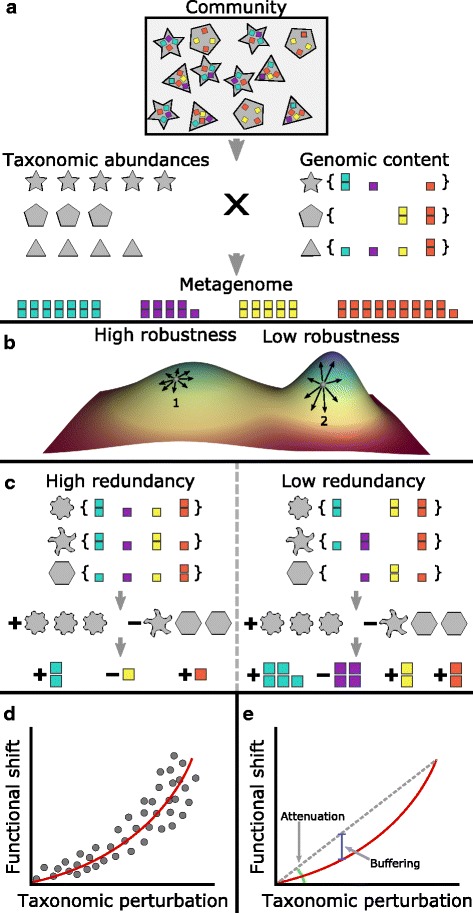
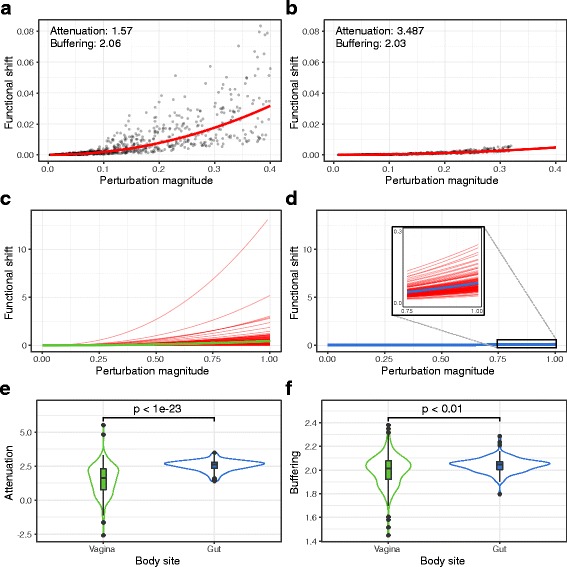
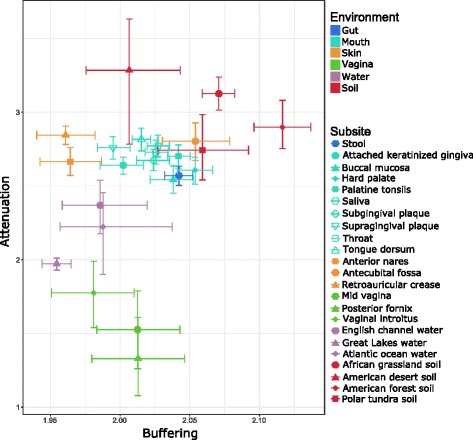
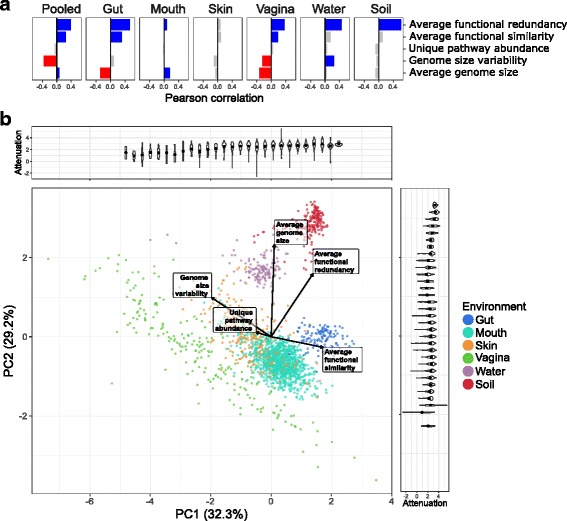
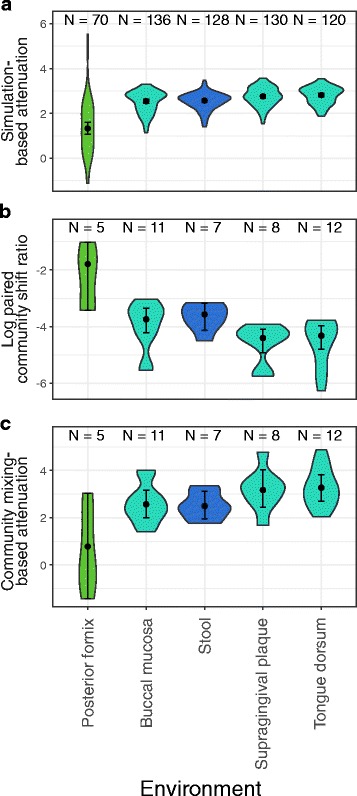
BACKGROUND: The species composition of a microbial community is rarely fixed and often experiences fluctuations of varying degrees and at varying frequencies. These perturbations to a community's taxonomic profile naturally also alter the community's functional profile-the aggregate set of genes encoded by community members-ultimately altering the community's overall functional capacities. The magnitude of such functional changes and the specific shift that will occur in each function, however, are strongly dependent on how genes are distributed across community members' genomes. This gene distribution, in turn, is determined by the taxonomic composition of the community and would markedly differ, for example, between communities composed of species with similar genomic content vs. communities composed of species whose genomes encode relatively distinct gene sets. Combined, these observations suggest that community functional robustness to taxonomic perturbations could vary widely across communities with different compositions, yet, to date, a systematic study of the inherent link between community composition and robustness is lacking. RESULTS: In this study, we examined how a community's taxonomic composition influences the robustness of that community's functional profile to taxonomic perturbation (here termed taxa-function robustness) across a wide array of environments. Using a novel simulation-based computational model to quantify this taxa-function robustness in host-associated and non-host-associated communities, we find notable differences in robustness between communities inhabiting different body sites, including significantly higher robustness in gut communities compared to vaginal communities that cannot be attributed solely to differences in species richness. We additionally find between-site differences in the robustness of specific functions, some of which are potentially related to site-specific environmental conditions. These taxa-function robustness differences are most strongly associated with differences in overall functional redundancy, though other aspects of gene distribution also influence taxa-function robustness in certain body environments, and are sufficient to cluster communities by environment. Further analysis revealed a correspondence between our robustness estimates and taxonomic and functional shifts observed across human-associated communities. CONCLUSIONS: Our analysis approach revealed intriguing taxa-function robustness variation across environments and identified features of community and gene distribution that impact robustness. This approach could be further applied for estimating taxa-function robustness in novel communities and for informing the design of synthetic communities with specific robustness requirements.
Overview
The claims and statistics of this paper haven’t been checked yet.
Free: it reads the open-access text and checks the first 5 claims that cite a source we can check. Create a free account to check every claim.
Integrity signals
Registry
Cites
Statistics
Figures
Verification
Claims the paper makes
The claims and statistics of this paper haven’t been checked yet.
Free: it reads the open-access text and checks the first 5 claims that cite a source we can check. Create a free account to check every claim.
Claims other papers make about this one
Each is checked against this paper’s own text: does it say what the citing paper says it does?
The source backs part of the claim, not all of it — or backs it for a different population, condition or comparison.
In the citing paper
“Robustness as a metric expresses information about the degree of change a community will undergo after a perturbation and how fast and to what degree it can recover, if at all.”
From The Microbiota-Gut-Brain Axis (2019) · cites this paper as Eng and Borenstein, 2018
Experimental — accuracy not yet measuredIn the citing paper
“This observation is somewhat analogous to the relative stability of the human gut microbiome functions compared with its microbial taxa (58, 59).”
From The human tumor microbiome is composed of tumor type–specific intracellular bacteria (2020) · cites this paper as [59]
Self-check
Percentages, sums and reported differences re-computed from the paper’s own numbers.
The self-check needs the paper’s full text.
Citations
Cites
KEGG: Kyoto Encyclopedia of Genes and Genomes
Kanehisa, M. (2000) · Nucleic Acids Research · doi:10.1093/nar/28.1.27 · Cited by 37,077 · cited 7×
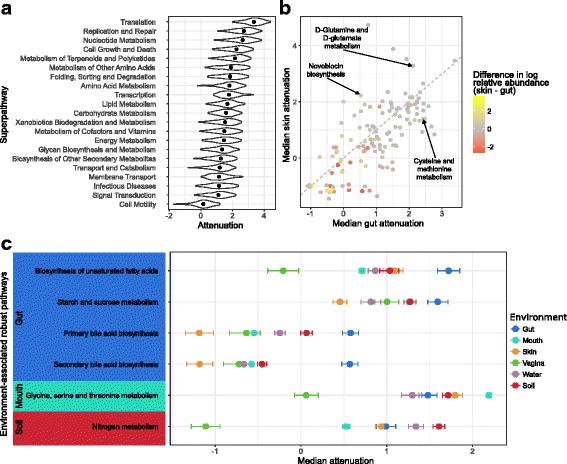
“4 Attenuation of individual functions. a The density of attenuation values for each KEGG superpathway across all communities, with dots indicating the median attenuation. b A scatterplot of the median attenuation of each function in skin communities vs. gut communities.”
InfluentialQIIME allows analysis of high-throughput community sequencing data
Caporaso, J. G., Kuczynski, J., Stombaugh, J., Bittinger, K., Bushman, F. D., Costello, E. K., Fierer, N., Peña, A. G., Goodrich, J. K., Gordon, J. I., et al. (2010) · Nature Methods · doi:10.1038/nmeth.f.303 · Cited by 34,887 · cited 1×
“me), which provides OTU tables generated with the QIIME workflow [53] using Greengenes OTUs [54].”
KEGG: Kyoto Encyclopedia of Genes and Genomes
Ogata, H., Goto, S., Sato, K., Fujibuchi, W., Bono, H., & Kanehisa, M. (1999) · Nucleic Acids Research · doi:10.1093/nar/27.1.29 · Cited by 31,232
Structure, function and diversity of the healthy human microbiome
The Human Microbiome Project Consortium (2012) · Nature · doi:10.1038/nature11234 · Cited by 11,726
A human gut microbial gene catalogue established by metagenomic sequencing
MetaHIT Consortium, Qin, J., Li, R., Raes, J., Arumugam, M., Burgdorf, K. S., Manichanh, C., Nielsen, T., Pons, N., Levenez, F., et al. (2010) · Nature · doi:10.1038/nature08821 · Cited by 11,624 · cited 1×
“Using such data, gene-level analyses have provided insight into the functional capacities of various microbial communities [7, 8] and how those capacities change over time or vary with altered environmental conditions [9, 10].”
Greengenes, a Chimera-Checked 16S rRNA Gene Database and Workbench Compatible with ARB
DeSantis, T. Z., Hugenholtz, P., Larsen, N., Rojas, M., Brodie, E. L., Keller, K., Huber, T., Dalevi, D., Hu, P., & Andersen, G. L. (2006) · Applied and Environmental Microbiology · doi:10.1128/aem.03006-05 · Cited by 10,891 · cited 2×
“me), which provides OTU tables generated with the QIIME workflow [53] using Greengenes OTUs [54].”
Diet rapidly and reproducibly alters the human gut microbiome
David, L. A., Maurice, C. F., Carmody, R. N., Gootenberg, D. B., Button, J. E., Wolfe, B. E., Ling, A. V., Devlin, A. S., Varma, Y., Fischbach, M. A., et al. (2014) · Nature · doi:10.1038/nature12820 · Cited by 10,100 · cited 1×
“Indeed, noticeable alterations to taxonomic composition often accompany large environmental changes, such as in the gut microbiota following diet switches [47], in skin communities during and after”
Predictive functional profiling of microbial communities using 16S rRNA marker gene sequences
Langille, M. G. I., Zaneveld, J., Caporaso, J. G., McDonald, D., Knights, D., Reyes, J. A., Clemente, J. C., Burkepile, D. E., Vega Thurber, R. L., Knight, R., et al. (2013) · Nature Biotechnology · doi:10.1038/nbt.2676 · Cited by 9,116 · cited 4×
“KO abundances were predicted using PICRUSt [13] tables to first normalize each OTU’s relative abundance by its 16S rRNA copy number and then infer KO abundance from the genomic content of each OTU.”
InfluentialKEGG as a reference resource for gene and protein annotation
Kanehisa, M., Sato, Y., Kawashima, M., Furumichi, M., & Tanabe, M. (2016) · Nucleic Acids Research · doi:10.1093/nar/gkv1070 · Cited by 7,387 · cited 7×
“4 Attenuation of individual functions. a The density of attenuation values for each KEGG superpathway across all communities, with dots indicating the median attenuation. b A scatterplot of the median attenuation of each function in skin communities vs. gut communities.”
InfluentialKEGG for linking genomes to life and the environment
Kanehisa, M., Araki, M., Goto, S., Hattori, M., Hirakawa, M., Itoh, M., Katayama, T., Kawashima, S., Okuda, S., Tokimatsu, T., et al. (2007) · Nucleic Acids Research · doi:10.1093/nar/gkm882 · Cited by 6,782 · cited 1×
“Pathwaylevel functional summaries, as defined by the KEGG BRITE hierarchy [57], were obtained by evenly distributing each KO’s average copy number across all pathways that contain that KO.”
Cited by
Cryan, J. F., O'Riordan, K. J., Cowan, C. S. M., Sandhu, K. V., Bastiaanssen, T. F. S., Boehme, M., Codagnone, M. G., Cussotto, S., Fulling, C., Golubeva, A. V., et al. (2019) · Physiological Reviews · doi:10.1152/physrev.00018.2018 · Cited by 5,286
The human tumor microbiome is composed of tumor type–specific intracellular bacteria
Nejman, D., Livyatan, I., Fuks, G., Gavert, N., Zwang, Y., Geller, L. T., Rotter-Maskowitz, A., Weiser, R., Mallel, G., Gigi, E., et al. (2020) · Science · doi:10.1126/science.aay9189 · Cited by 2,464
From hairballs to hypotheses–biological insights from microbial networks
Röttjers, L., & Faust, K. (2018) · FEMS Microbiology Reviews · doi:10.1093/femsre/fuy030 · Cited by 714
“For example, the taxonomic composition of the gutmicrobiome may not be robust to dietary changes (David et al. 2014), even when the functional composition does display robustness (Eng and Borenstein 2018).”
BackgroundQin, Y., Havulinna, A. S., Liu, Y., Jousilahti, P., Ritchie, S. C., Tokolyi, A., Sanders, J. G., Valsta, L., Brożyńska, M., Zhu, Q., et al. (2022) · Nature Genetics · doi:10.1038/s41588-021-00991-z · Cited by 586
The Healthy Microbiome—What Is the Definition of a Healthy Gut Microbiome?
Shanahan, F., Ghosh, T. S., & O’Toole, P. W. (2021) · Gastroenterology · doi:10.1053/j.gastro.2020.09.057 · Cited by 383
Leibovitzh, H., Lee, S.-H., Xue, M., Raygoza Garay, J. A., Hernandez-Rocha, C., Madsen, K. L., Meddings, J. B., Guttman, D. S., Espin-Garcia, O., Smith, M. I., et al. (2022) · Gastroenterology · doi:10.1053/j.gastro.2022.07.004 · Cited by 202
Wu, Y., Cheng, X., Jiang, G., Tang, H., Ming, S., Tang, L., Lu, J., Guo, C., Shan, H., & Huang, X. (2021) · npj Biofilms and Microbiomes · doi:10.1038/s41522-021-00232-5 · Cited by 204
Ma, T., Villot, C., Renaud, D. L., Skidmore, A. L., Chevaux, E., Steele, M. A., & Guan, L. L. (2020) · The ISME Journal · doi:10.1038/s41396-020-0678-3 · Cited by 186
Serrano, J., Smith, K. R., Crouch, A. L., Sharma, V., Yi, F., Vargova, V., LaMoia, T. E., Dupont, L. M., Serna, V. A., Tang, F., et al. (2021) · Microbiome · doi:10.1186/s40168-020-00976-w · Cited by 139
Gresse, R., Durand, F. C., Dunière, L., Blanquet‐Diot, S., & Forano, É. (2019) · Microorganisms · doi:10.3390/microorganisms7090343 · Cited by 122
Halophilic microbial community compositional shift after a rare rainfall in the Atacama Desert
Uritskiy, G., Getsin, S. N., Munn, A., Gómez‐Silva, B., Dávila, A. F., Glass, B., Taylor, J., & DiRuggiero, J. (2019) · The ISME Journal · doi:10.1038/s41396-019-0468-y · Cited by 76
Islam, S. M. R., Foysal, M. J., Hoque, M. N., Mehedi, H. M. H., Rob, M. A., Salauddin, A., Tanzina, A. Y., Biswas, S., Noyon, S. H., Siddiki, A. Z., et al. (2022) · Frontiers in Medicine · doi:10.3389/fmed.2022.821777 · Cited by 75
Deciphering the Ecology of Cystic Fibrosis Bacterial Communities: Towards Systems-Level Integration
Bevivino, A., Bacci, G., Dřevínek, P., Nelson, M. T., Hoffman, L. R., & Mengoni, A. (2019) · Trends in Molecular Medicine · doi:10.1016/j.molmed.2019.07.008 · Cited by 67
Anda, V. D., Zapata‐Peñasco, I., Blaz, J., Poot-Hernández, A. C., Contreras‐Moreira, B., González-Laffitte, M., Gámez, N., Hernández-Rosales, M., Eguiarte, L. E., & Souza, V. (2018) · Frontiers in Microbiology · doi:10.3389/fmicb.2018.02606 · Cited by 52
“As expected by the ecological theory on perturbations (Eng and Borenstein, 2018), the modifications of environmental conditions lead to changes in the proportion of species members in the community (measured at genera level).”
BackgroundMicrobial Functional Diversity Correlates with Species Diversity along a Temperature Gradient
Ruhl, I. A., Sheremet, A., Smirnova, A. V., Sharp, C. E., Grasby, S. E., Strous, M., & Dunfield, P. F. (2022) · mSystems · doi:10.1128/msystems.00991-21 · Cited by 55
Nikolova, C., Ijaz, U. Z., Magill, C. R., Kleindienst, S., Joye, S. B., & Gutiérrez, T. (2021) · Microbiome · doi:10.1186/s40168-021-01143-5 · Cited by 35
Recent advances and health implications of dietary fasting regimens on the gut microbiome
Mohr, A. E., Gumpricht, E., Sears, D. D., & Sweazea, K. L. (2021) · American Journal of Physiology-Gastrointestinal and Liver Physiology · doi:10.1152/ajpgi.00475.2020 · Cited by 40
Basile, A., Heinken, A., Hertel, J., Smarr, L. L., Li, W., Treu, L., Valle, G., Campanaro, S., & Thiele, I. (2023) · Gut Microbes · doi:10.1080/19490976.2023.2226921 · Cited by 34
“The microbial composition varies between individuals,(75) which may not necessarily translate into functional or metabolic differences.(76) However, certain metabolic functions may require the presence of specific microbial species.”
BackgroundTyakht, A., Manolov, A. I., Kanygina, A. V., Ischenko, D. S., Kovarsky, B. A., Popenko, A., Pavlenko, A. V., Elizarova, A., Rakitina, D. V., Baikova, I. P., et al. (2018) · BMC Genomics · doi:10.1186/s12864-018-5306-5 · Cited by 36
“still provides functional homeostasis [53].”
Chukwuneme, C. F., & Babalola, O. O. (2025) · Agrosystems Geosciences & Environment · doi:10.1002/agg2.70169 · Cited by 38
Guo, W., Zhou, M., Li, F., Neves, A. L. A., Ma, T., Bi, S., Wang, W., Long, R., & Guan, L. L. (2024) · BMC Biology · doi:10.1186/s12915-024-02035-4 · Cited by 40
“This data analysis was in accordance with a previous study [122], with slight modifications according to the author’s suggestions.”
BackgroundResultInfluentialButyrate Production Pathway Abundances Are Similar in Human and Nonhuman Primate Gut Microbiomes
Mallott, E. K., & Amato, K. R. (2021) · Molecular Biology and Evolution · doi:10.1093/molbev/msab279 · Cited by 29
“2014, 2015), and the gut microbiome is considered to be generally functionally robust compared with the microbiome of other body sites and other environments (Eng and Borenstein 2018).”
BackgroundMorrissey, K. L., Iveša, L., Delva, S., D’hondt, S., Willems, A., & Clerck, O. D. (2021) · Ecology and Evolution · doi:10.1002/ece3.8184 · Cited by 31
Long-term homeostasis in microbial consortia via auxotrophic cross-feeding
Grandel, N. E., Alexander, A. M., Peng, X., Palamountain, C., Alnahhas, R. N., Hirning, A. J., Josić́, K., & Bennett, M. R. (2025) · Nature Communications · doi:10.1038/s41467-025-63575-z · Cited by 29
“Thesecommunities exhibit complex collective behaviors such as patterning 19 – 21 , increased robustness 22 – 25 , and co-evolution through horizontalgene transfer 26 – 28 .”
Expressions of resistome is linked to the key functions and stability of active rumen microbiome
Ma, T., Zaheer, R., McAllister, T. A., Guo, W., Li, F., Tu, Y., Diao, Q., & Guan, L. L. (2022) · Animal Microbiome · doi:10.1186/s42523-022-00189-6 · Cited by 26
Sauma-Sánchez, T., Alcorta, J., Tamayo-Leiva, J., Díez, B., Bezuidenhout, H., Cowan, D. A., & Ramond, J. (2024) · FEMS Microbiology Ecology · doi:10.1093/femsec/fiae157 · Cited by 26
Renganathan, P., & Gaysina, L. A. (2025) · Processes · doi:10.3390/pr13103218 · Cited by 32
Eng, A., Hayden, H. S., Pope, C. E., Brittnacher, M., Vo, A. T., Weiss, E. J., Hager, K. R., Leung, D. H., Heltshe, S. L., Raftery, D., et al. (2021) · BMC Microbiology · doi:10.1186/s12866-021-02305-z · Cited by 24
Self-citationDefining Coarse-Grainability in a Model of Structured Microbial Ecosystems
Moran, J., & Tikhonov, M. (2022) · Physical Review X · doi:10.1103/physrevx.12.021038 · Cited by 29
Wu, Q., Ning, Z., Zhang, A., Zhang, X., Sun, Z., & Figeys, D. (2025) · Analytical Chemistry · doi:10.1021/acs.analchem.4c06645 · Cited by 19
Trego, A. C., Keating, C., Nzeteu, C., Graham, A., O’Flaherty, V., & Ijaz, U. Z. (2022) · Microorganisms · doi:10.3390/microorganisms10101961 · Cited by 18
Ma, S., Geng, H., Yan, C., Han, X., Xu, D., Zhao, F., Blake, R. E., Zhou, B., Chen, H., Yuan, R., et al. (2022) · Journal of Environmental Management · doi:10.1016/j.jenvman.2022.116372 · Cited by 21
Iablokov, S. N., Klimenko, N. S., Efimova, D. A., Shashkova, T., Novichkov, P. S., Rodionov, D. A., & Tyakht, A. (2021) · Frontiers in Molecular Biosciences · doi:10.3389/fmolb.2020.603740 · Cited by 21
“In the gut, the functional profile is generally less variable than the taxonomic one (Eng and Borenstein, 2018).”
BackgroundThe microbiome’s fiber degradation profile and its relationship with the host diet
Cohen, Y., & Borenstein, E. (2022) · BMC Biology · doi:10.1186/s12915-022-01461-6 · Cited by 19
Self-citationAlam, K., Nair, L. S., Mukherjee, S., Kaur, K., Singh, M., Kaity, S., Ravichandiran, V., Banerjee, S., & Roy, S. (2024) · Bio-Design and Manufacturing · doi:10.1007/s42242-024-00282-6 · Cited by 19
“Advanced statistical tools, including principal component analysis, multidimensional scaling algorithms, and comparative relative abundance, have allowed factors in the diversity metric and provided a robust understanding of the microbiota [4, 5].”
A primer and discussion on DNA-based microbiome data and related bioinformatics analyses
Douglas, G. M., & Langille, M. G. I. (2021) · Peer Community Journal · doi:10.24072/pcjournal.2 · Cited by 17
Wang, C., Dong, J., Ji, B., Lv, Y., Song, Y., Li, Q., Sun, C., Zong, R., & Zhang, M. (2025) · Journal of Hazardous Materials · doi:10.1016/j.jhazmat.2025.139020 · Cited by 15
Rojas‐Gätjens, D., Arce‐Rodríguez, A., Puente‐Sánchez, F., Avendaño, R., Libby, E., Mora‐Amador, R., Rojas-Jiménez, K., Fuentes‐Schweizer, P., Pieper, D. H., & Chavarría, M. (2021) · Extremophiles · doi:10.1007/s00792-020-01213-w · Cited by 12
Nutritional interventions to counteract the detrimental consequences of early-life stress
Geertsema, J., Juncker, H. G., Wilmes, L., Burchell, G. L., de Rooij, S. R., van Goudoever, J. B., O’Riordan, K. J., Clarke, G. A., Cryan, J. F., & Kőrösi, A. (2025) · Molecular Psychiatry · doi:10.1038/s41380-025-03020-1 · Cited by 17
Microbiome Structure and Function: A New Framework for Interpreting Data
Greslehner, G. P. (2020) · BioEssays · doi:10.1002/bies.201900255 · Cited by 9
Microbial Community Response to Carbon-Nitrogen Ratio Manipulation in Biofloc Culture
Tanay, D. D., Abella, T. T., Cruz, E. M. V., Sace, C. F., Fajardo, L. J., Velasco, R. R., & Abucay, J. S. (2020) · The Philippine Journal of Fisheries · doi:10.31398/tpjf/27.2.2019a0014 · Cited by 11
Genotype-associated heritable rumen bacteria can be a stable microbiota passed to the offspring
Zang, X., Sun, H., Xue, M., Liang, S., Guan, L. L., & Liu, J. (2024) · ISME Communications · doi:10.1093/ismeco/ycad020 · Cited by 8
“Taxa-function stability was used to assess functional stability and defined as the functional shift given a perturbation to the microbiota composition [15].”
InfluentialAvila-Jaime, B., Kawas, J. R., & García-Mazcorro, J. F. (2018) · Livestock Science · doi:10.1016/j.livsci.2018.04.017 · Cited by 9
Liu, L., Kaur, G. I. J., Kumar, A., Kanwal, A., & Singh, S. P. (2024) · Cardiovascular & Hematological Agents in Medicinal Chemistry · doi:10.2174/0118715257273506231208045308 · Cited by 8
Yang, P., Zhu, X. H., & Ning, K. (2023) · Communications Biology · doi:10.1038/s42003-023-04753-x · Cited by 8
Linking niche size and phylogenetic signals to predict future soil microbial relative abundances
Bissett, A. B., Mamet, S. D., Lamb, E. G., & Siciliano, S. D. (2023) · Frontiers in Microbiology · doi:10.3389/fmicb.2023.1097909 · Cited by 7
“, 2013) bacterial relative abundances can be linked to broad ecosystem functions (Eng and Borenstein, 2018; Mushinski et al., 2018).”
BackgroundDrivers of ecological assembly in the hindgut of Atlantic Cod fed a macroalgal supplemented diet
Keating, C., Bolton‐Warberg, M., Hinchcliffe, J., Davies, R., Whelan, S., Wan, A. H. L., FitzGerald, R. D., Davies, S. J., Smith, C. J., & Ijaz, U. Z. (2022) · npj Biofilms and Microbiomes · doi:10.1038/s41522-022-00296-x · Cited by 8
From gut dysbiosis to eubiosis: understanding microbiome recovery as an ecological process
Kennedy, M. S., & Chang, E. B. (2026) · Gut Microbes · doi:10.1080/19490976.2026.2649448 · Cited by 7
“This effect may derive from multiple mechanisms—functional redundancy, or the capacity of many different taxa to perform the same functions, generally increases with taxonomic diversity 104 , buffering the functional output of an ecosystem against the loss of specific taxa 105 .”
Bt toxins alter bacterial communities and their potential functions in earthworm intestines
Wang, L., Fan, Y., Zou, L., Ge, L., Jiang, W., Chao, S., Lv, B., Zhao, K., Chen, J., & Li, P. (2024) · Environmental Pollution · doi:10.1016/j.envpol.2024.125591 · Cited by 8
Pesantes, N., Barberá, A., Pérez-Rocher, B., Artacho, A., Vargas, S. L., Moyá, A., & Ruiz‐Ruiz, S. (2023) · Frontiers in Microbiology · doi:10.3389/fmicb.2023.1094071 · Cited by 7
“This has recently been described as taxa-function relationships ( Vieira-Silva et al., 2016; Eng and Borenstein, 2018).”
Ijaz, U. Z., Ameer, A., Saleem, F., Gul, F., Keating, C., & Javed, S. (2024) · Frontiers in Systems Biology · doi:10.3389/fsysb.2024.1432791 · Cited by 5
“For example, while gut microbial communities may be more similar, vaginal microbial communities show much more variability (Eng and Borenstein, 2018a).”
IPCO: Inference of Pathways from Co-variance analysis
Das, M., Ghosh, T. S., & Jeffery, I. B. (2020) · BMC Bioinformatics · doi:10.1186/s12859-020-3404-2 · Cited by 6
Liu, H., Li, S., Li, H., & Peng, Z.-C. (2025) · Plants · doi:10.3390/plants14121852 · Cited by 7
“Moreover, compared to rare taxa, abundant taxa generally have a lower beta-diversity—less variation in community composition compared to rare taxa [47].”
Zhu, F., Wei, Y., Wang, F., Xia, Z., Gou, M., & Tang, Y. (2023) · International Microbiology · doi:10.1007/s10123-023-00458-7 · Cited by 4
“These results suggest that microbial consortia can maintain their specific function when faced with external disturbances, that is, functional robustness (Eng and Borenstein 2018; Little et al. 2008).”
Wu, D., Xing, T., Yong, Y., Zhang, Y.-J., Hou, J., Liu, H.-B., Guo, W., & Zhao, X. (2023) · International Biodeterioration & Biodegradation · doi:10.1016/j.ibiod.2023.105721 · Cited by 4
Metagenomic insights into the functional genes across transects in a typical estuarine marsh
Yangyao, J., Chen, H., Wang, Y.-F., Kan, P., Yao, J., Zhang, D., Sun, W., & Yao, Z. (2022) · The Science of The Total Environment · doi:10.1016/j.scitotenv.2022.159593 · Cited by 4
Human-associated gut bacterial dysbiosis affects the anti-colitic activity of 3-DF and 3-HF
Haro-Reyes, J. A., Raghupathi, J. K., Hamaker, B. R., & Reddivari, L. (2025) · Food & Function · doi:10.1039/d5fo03053f · Cited by 3
Multi-omics reveals taxonomic and functional adaptations of soil microbiota to Bt toxin exposure
Wang, L., Liang, Z., Liang, J., Ge, L., Zou, L., Fan, Y., Xu, Q., Zhang, Y. E. L., Lv, B., Zhao, K., et al. (2026) · Journal of Hazardous Materials · doi:10.1016/j.jhazmat.2026.141175 · Cited by 3
Sharma, V., Malla, M. A., Kori, R. K., Yadav, R. S., & Azam, Z. (2021) · The Open Microbiology Journal · doi:10.2174/1874285802115010177 · Cited by 7
Bacci, G., Taccetti, G., Dolce, D., Armanini, F., Segata, N., Cesare, F. D., Lucidi, V., Fiscarelli, E. V., Morelli, P., Casciaro, R., et al. (2019) · bioRxiv (Cold Spring Harbor Laboratory) · doi:10.1101/609057 · Cited by 3
Ma, S., Geng, H., Yan, C., Han, X., Xu, D., Zhao, F., Blake, R. E., Zhou, B., Chen, H., Yuan, R., et al. (2022) · SSRN Electronic Journal · doi:10.2139/ssrn.4166090 · Cited by 2
Basile, A., Heinken, A., Hertel, J., Smarr, L. L., Li, W., Treu, L., Valle, G., Campanaro, S., & Thiele, I. (2022) · bioRxiv (Cold Spring Harbor Laboratory) · doi:10.1101/2022.12.19.520975 · Cited by 2
Divya, K. P., Hari, P., Kanwar, N., Aggarwal, N., Dhoat, P. S., Liu, L., Kanwal, A., & Singh, S. P. (2023) · Advanced Gut & Microbiome Research · doi:10.1155/2023/5431615 · Cited by 2
Ruiz‐Ruiz, S., Piquer-Esteban, S., Pérez-Rocher, B., Pérez‐Brocal, V., Arnau, V., Artacho, A., Diaz, W., Jiménez‐Hernández, N., Pons, J., Ja, C., et al. (2026) · Scientific Reports · doi:10.1038/s41598-026-35033-3 · Cited by 1
la Vega-Camarillo, E. D., Arreola‐Vargas, J., Mathur, S. K., Singla, R., Shankar, S., Klemashevich, C. L., Santos, J. A., Antony‐Babu, S., & Shim, W. B. (2026) · Bioresource Technology · doi:10.1016/j.biortech.2026.134924 · Cited by 1
Shui, Z., Huang, K., Meng, M., Liu, X., Ding, X., Yuan, Q., Luo, H., Wang, D., & Zhang, X. (2026) · Water Research · doi:10.1016/j.watres.2026.126300 · Cited by 1
Microbiome stewardship: definition and guiding principles for implementation
O’Doherty, K. C., Beijbom, M., Allen‐Vercoe, E., Choudoir, M. J., Silva, D. S., Bonilla, C. Y., Debelius, J. W., Elton, S., Hauptmann, A. L., Heyland, A., et al. (2026) · Sustainable Microbiology · doi:10.1093/sumbio/qvag028 · Cited by 2
“Functional redundancy allows differ ent tax a to perf orm similar r oles, making community function more stable despite taxonomic turnover (Eng and Borenstein 2018 , Tian et al. 2020 ).”
Does Salivary Microbiome Reflect The Functional Activity Profile Of Oral Microbiota?
Станиславовна, К. Е., Igumnov, I. A., Markova, D., Belkova, N. L., & Сутурина, Л. В. (2022) · Russian Open Medical Journal · doi:10.15275/rusomj.2022.0120 · Cited by 1
Diabankana, R. G. C., Komissarov, E. N., Afordoanyi, D. M., Islamov, B. R., Sukhanov, A. Y., Shulga, E., Filimonova, M. N., Saparmyradov, K., Trachtmann, N. V., & Validov, S. Z. (2025) · Soil Systems · doi:10.3390/soilsystems9040116 · Cited by 1
Rojas‐Gätjens, D., Arce‐Rodríguez, A., Puente‐Sánchez, F., Avendaño, R., Libby, E., Mora‐Amador, R., Rojas-Jiménez, K., Fuentes‐Schweizer, P., Pieper, D. H., & Chavarría, M. (2020) · bioRxiv (Cold Spring Harbor Laboratory) · doi:10.1101/2020.09.24.312660 · Cited by 1
Keating, C., Bolton‐Warberg, M., Hinchcliffe, J., Davies, R., Whelan, S., Wan, A. H. L., FitzGerald, R. D., Davies, S. J., Smith, C. J., & Ijaz, U. Z. (2021) · bioRxiv (Cold Spring Harbor Laboratory) · doi:10.1101/2021.08.24.457479 · Cited by 1
“Taxa-Function Robustness Following the procedure of Eng and Borenstein (2018)55, the taxa-function robustness measure of the cod hindgut microbial communities was calculated.”
BackgroundMethodSerrano, J., Smith, K. R., Crouch, A. L., Sharma, V., Yi, F., Vargová, V., LaMoia, T. E., Dupont, L. M., Serna, V. A., Tang, F., et al. (2020) · doi:10.21203/rs.2.23608/v1 · Cited by 2
Nikolova, C., Ijaz, U. Z., Magill, C. R., Kleindienst, S., Joye, S. B., & Gutiérrez, T. (2021) · Research Square · doi:10.21203/rs.3.rs-555433/v1 · Cited by 2
Nile, S. H., Sharma, A., Sharma, A., Kaur, N., Rani, A., Kaur, S., & Kuksal, K. (2025) · Research Square · doi:10.21203/rs.3.rs-8201956/v1 · Cited by 1
Sciellour, M. L. (2019) · theses.fr (ABES) · doi:10.70675/9856b9fbz4b6fz4178zb870z35e3676a87e0 · Cited by 3
Ma, T., Zaheer, R., McAllister, T. A., Guo, W., Li, F., Tu, Y., Diao, Q., & Guan, L. L. (2022) · Figshare · doi:10.6084/m9.figshare.20003882
Ma, T., Zaheer, R., McAllister, T. A., Guo, W., Li, F., Tu, Y., Diao, Q., & Guan, L. L. (2022) · Figshare · doi:10.6084/m9.figshare.20003879
Ma, T., Zaheer, R., McAllister, T. A., Guo, W., Li, F., Tu, Y., Diao, Q., & Guan, L. L. (2022) · Figshare · doi:10.6084/m9.figshare.20003885
Nikolova, C., Ijaz, U. Z., Magill, C. R., Kleindienst, S., Joye, S. B., & Gutierrez, T. (2021) · Figshare · doi:10.6084/m9.figshare.16655450
Nikolova, C., Ijaz, U. Z., Magill, C. R., Kleindienst, S., Joye, S. B., & Gutierrez, T. (2021) · Figshare · doi:10.6084/m9.figshare.16655459
Nikolova, C., Ijaz, U. Z., Magill, C. R., Kleindienst, S., Joye, S. B., & Gutierrez, T. (2021) · Figshare · doi:10.6084/m9.figshare.16655456
Nikolova, C., Ijaz, U. Z., Magill, C. R., Kleindienst, S., Joye, S. B., & Gutierrez, T. (2021) · Figshare · doi:10.6084/m9.figshare.16655462
Eng, A., Hayden, H. S., Pope, C. E., Brittnacher, M. J., Vo, A. T., Weiss, E. J., Hager, K. R., Leung, D. H., Heltshe, S. L., Raftery, D., et al. (2021) · Figshare · doi:10.6084/m9.figshare.16625506
Self-citationNikolova, C., Ijaz, U. Z., Magill, C. R., Kleindienst, S., Joye, S. B., & Gutierrez, T. (2021) · Figshare · doi:10.6084/m9.figshare.16655435
Eng, A., Hayden, H. S., Pope, C. E., Brittnacher, M. J., Vo, A. T., Weiss, E. J., Hager, K. R., Leung, D. H., Heltshe, S. L., Raftery, D., et al. (2021) · Figshare · doi:10.6084/m9.figshare.16625509
Self-citationNikolova, C., Ijaz, U. Z., Magill, C. R., Kleindienst, S., Joye, S. B., & Gutierrez, T. (2021) · Figshare · doi:10.6084/m9.figshare.16655438
Nikolova, C., Ijaz, U. Z., Magill, C. R., Kleindienst, S., Joye, S. B., & Gutierrez, T. (2021) · Figshare · doi:10.6084/m9.figshare.16655447
Wang, X., Fang, S., Jia, H., Hao, G., Xing, Y., Tao, R., Tian, Q., Zhang, H., & Zheng, L. (2026) · ACS ES&T Water · doi:10.1021/acsestwater.5c01188
Modulating the vector microbiota for the control of vector-borne pathogens
Maître, A. (2024) · theses.fr (ABES) · doi:10.70675/daa0720bzfce2z41d0z8287z0d8583f968ee
Yu, H., Elsheikha, H. M., Wang, H.-P., Gao, Y., Liu, R., Ma, H., Jiang, J., Li, Y., & Zhang, X. (2026) · Microbiology Spectrum · doi:10.1128/spectrum.01564-26
“Functional redundancy within microbial communities likely buffers NAD + precur sor availability, suggesting that community-level complementarity mitigates acute disruptions in vitamin biosynthetic capacity (43, 47).”
Igwe, A. N., & Afkhami, M. E. (2026) · Microbial Genomics · doi:10.1099/mgen.0.001835
“This feature also contributes to taxa-function decoupling, where ecosystem functions remain stable despite taxonomic compositional shifts [21].”
Fan, H., Zhao, Y., Liu, S., Zhong, E., Wang, C., Yang, N., & Bai, L. (2026) · Environmental Pollution · doi:10.1016/j.envpol.2026.129324
Metadata
- Authors
- Eng, A., & Borenstein, E.
- Affiliations
- University of Washington (US)
- Santa Fe Institute (US)
- Corresponding author
- Borenstein, Elhanan
- Venue
- Microbiome
- Published
- 2018-03-02
- Volume
- 6
- Issue
- 1
- Pages
- 45-45
- ISSN
- 2049-2618 (ISSN-L)
- PMC
- PMC5833107
- OpenAlex
- W2794489850
- Cited by
- 89
- References
- 62
- Citations by year
- 2026: 10 · 2025: 10 · 2024: 8 · 2023: 7 · 2022: 14 · 2021: 22 · 2020: 8 · 2019: 6 · 2018: 4
- FWCI
- 3.56
- Type
- journal article
- Language
- en
- Open access
- gold
- doi.org
- Licence
- cc-by
- creativecommons.org/licenses/by/4.0/ (tdm)
- creativecommons.org/licenses/by/4.0/ (vor)
- Locations
- Microbiome (publishedVersion, cc-by)
- Europe PMC (PubMed Central) (publishedVersion, cc-by)
- PubMed Central (publishedVersion, cc-by)
- PubMed (publishedVersion)
- DOAJ (DOAJ: Directory of Open Access Journals) (submittedVersion, cc-by-sa)
- Funders
- National Institutes of Health (DP2 AT007802-01)
- Topics
- Life Sciences › Biochemistry, Genetics and Molecular Biology › Molecular Biology › Gut microbiota and health
- Physical Sciences › Environmental Science › Ecology › Microbial Community Ecology and Physiology
- Physical Sciences › Environmental Science › Nature and Landscape Conservation › Ecology and Vegetation Dynamics Studies
- Keywords
- host-associated microbiome, gut microbiota, vaginal microbiota, body site differences, community composition, synthetic microbial communities
- MeSH terms
- Bacteria, Computer Simulation, Environment, Female, Humans, Phylogeny, RNA, Ribosomal, 16S, Vagina, Gastrointestinal Tract, Biodiversity, Metagenomics, Cellular Microenvironment, Microbiota
About these checks
Registry, retraction, Cites and statistics results are computed, not judged, with one exception: a printed reference that no index lists is read once by a model before it counts as a citation error. Claims are extracted by a model and kept only when their quote appears verbatim in the text; each cited source is then checked, with a model’s help, for whether it says what the claim relies on. Those verdicts can be wrong — read the claim’s quote and the cited source before relying on one.
Statistics and arithmetic are recomputed, not judged.
Confidence bands are shown only for fields calibrated on our annotated test set. None is calibrated yet, so no band is shown.
What counts as a claim ›How we measure confidence ›How we check this ›
Are you an author, or do you see a problem with this page? Request a review
Data sources
Bibliographic data: Semantic Scholar, OpenAlex, Crossref.
Contains information from the Semantic Scholar Academic Graph Datasets, made available under the ODC Attribution License (ODC-BY 1.0).
Semantic Scholar’s data is described in: Kinney, R., et al. (2023). The Semantic Scholar Open Data Platform. arXiv:2301.10140.
