

Faecal microbiota transplant from aged donor mice affects spatial learning and memory via modulating hippocampal synaptic plasticity- and neurotransmission-related proteins in young recipients
Open accessPublished version of a preprint
The DOI matches its Crossref record; 82 of the 82 references it cites were found in a registry or an index.
Abstract
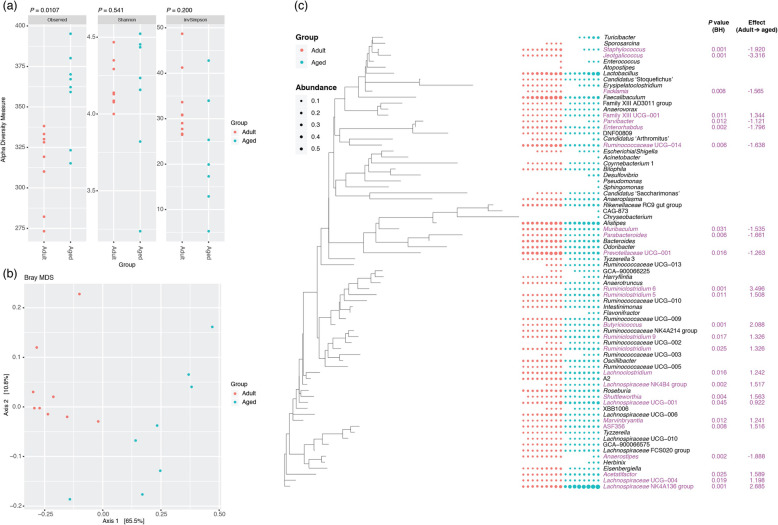
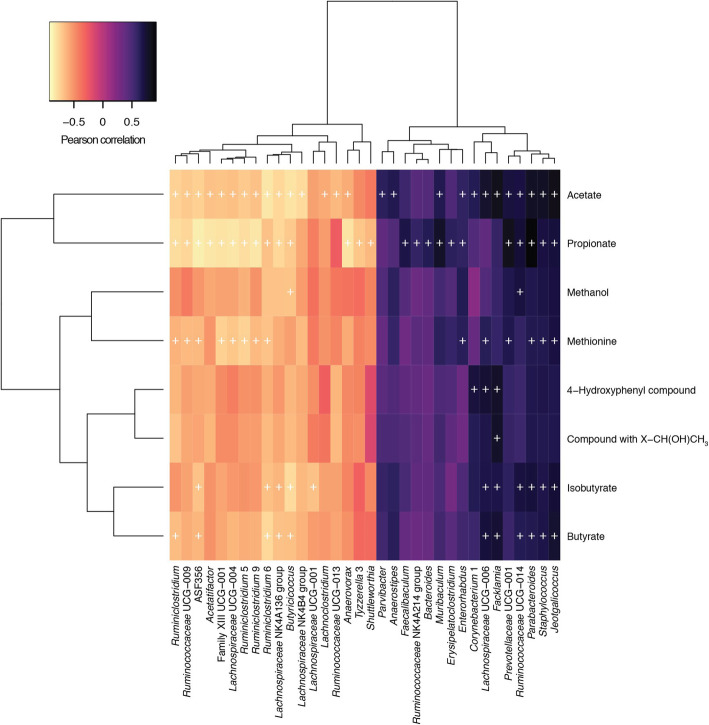
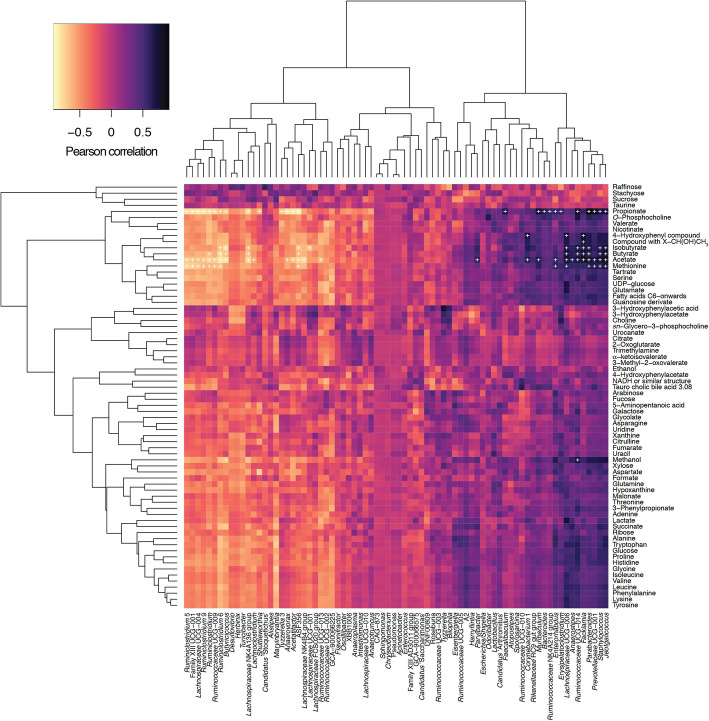
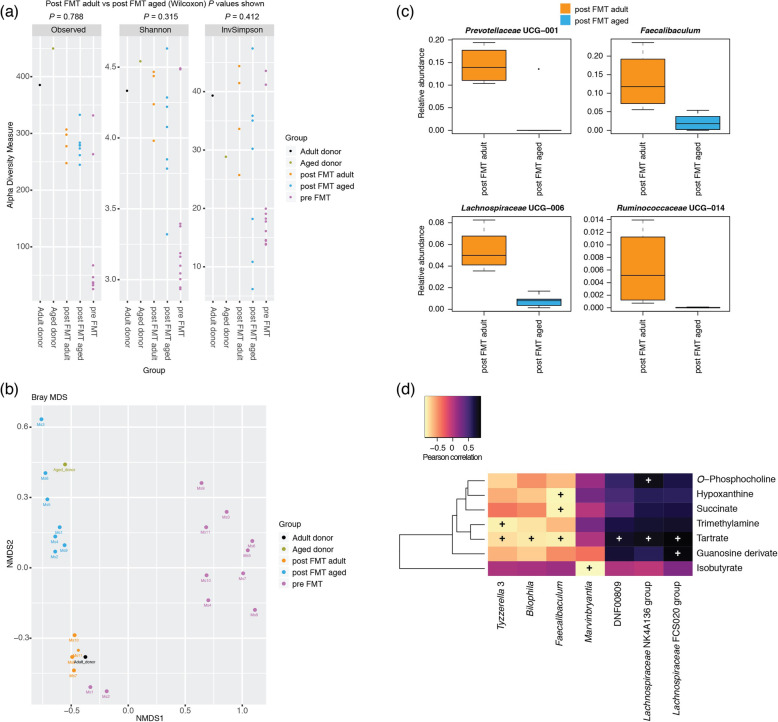
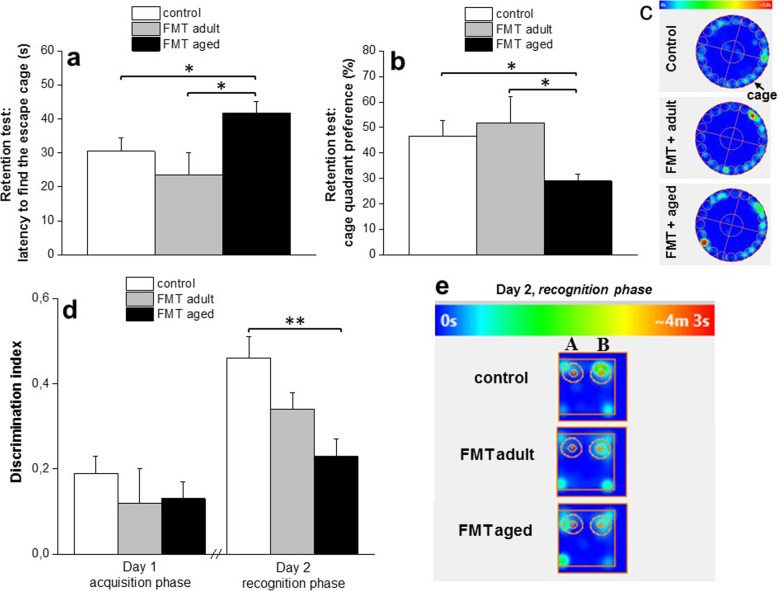
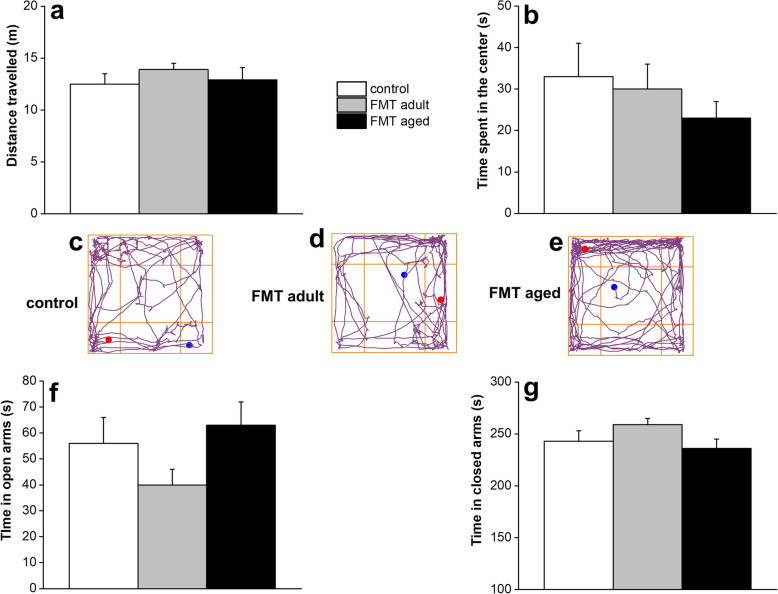
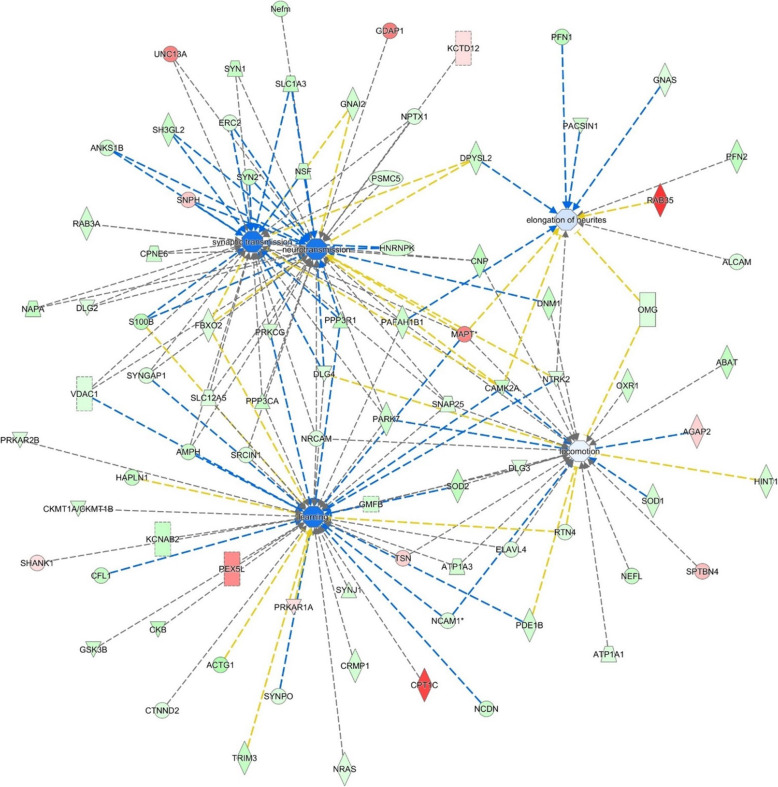
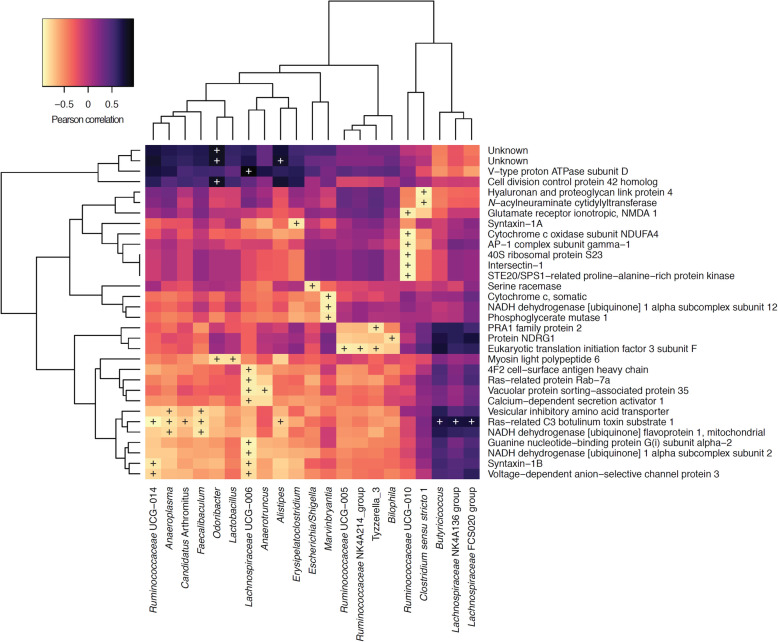
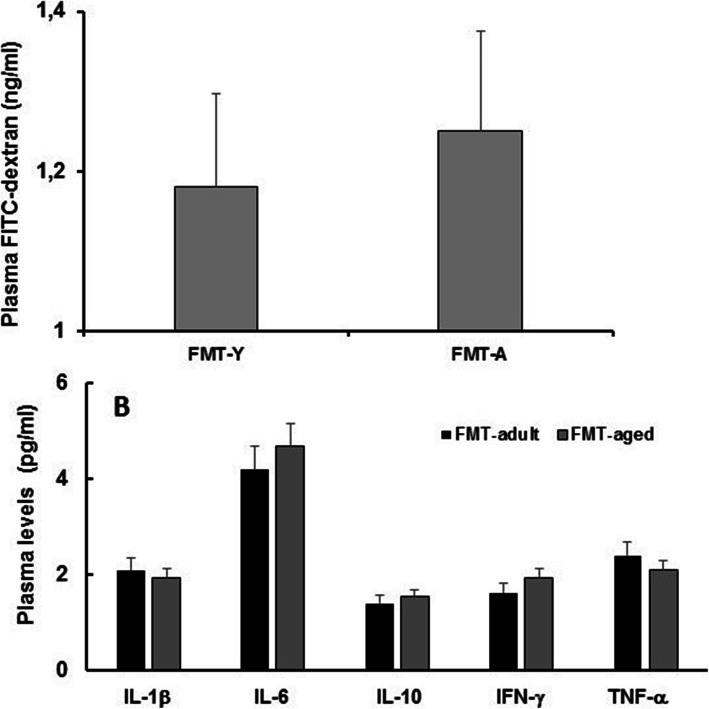
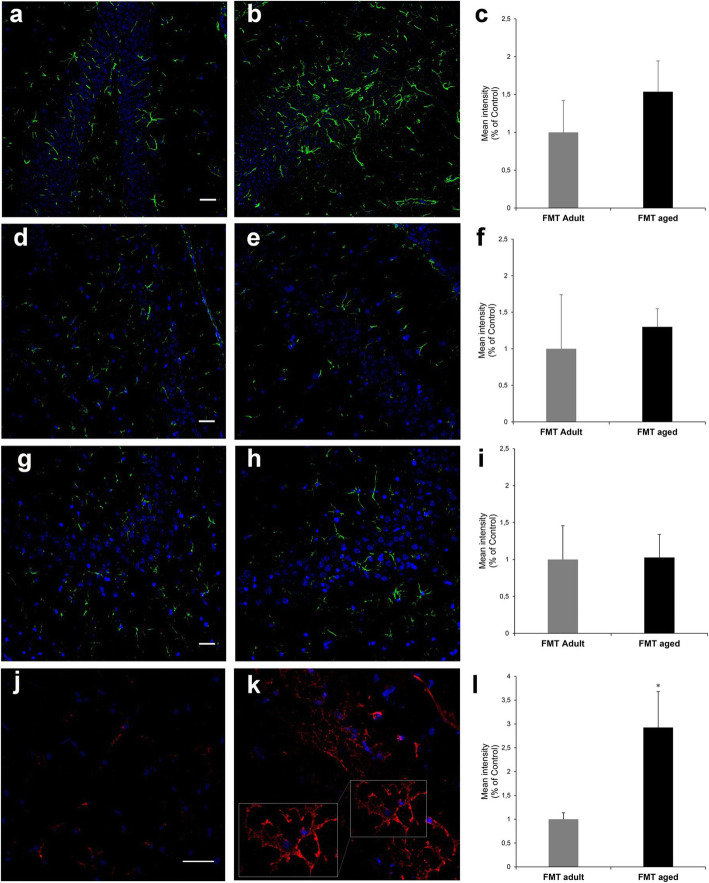
Background: The gut-brain axis and the intestinal microbiota are emerging as key players in health and disease. Shifts in intestinal microbiota composition affect a variety of systems; however, evidence of their direct impact on cognitive functions is still lacking. We tested whether faecal microbiota transplant (FMT) from aged donor mice into young adult recipients altered the hippocampus, an area of the central nervous system (CNS) known to be affected by the ageing process and related functions. Results: Young adult mice were transplanted with the microbiota from either aged or age-matched donor mice. Following transplantation, characterization of the microbiotas and metabolomics profiles along with a battery of cognitive and behavioural tests were performed. Label-free quantitative proteomics was employed to monitor protein expression in the hippocampus of the recipients. We report that FMT from aged donors led to impaired spatial learning and memory in young adult recipients, whereas anxiety, explorative behaviour and locomotor activity remained unaffected. This was paralleled by altered expression of proteins involved in synaptic plasticity and neurotransmission in the hippocampus. Also, a strong reduction of bacteria associated with short-chain fatty acids (SCFAs) production ( Lachnospiraceae, Faecalibaculum , and Ruminococcaceae ) and disorders of the CNS ( Prevotellaceae and Ruminococcaceae ) was observed. Finally, the detrimental effect of FMT from aged donors on the CNS was confirmed by the observation that microglia cells of the hippocampus fimbria, acquired an ageing-like phenotype; on the contrary, gut permeability and levels of systemic and local (hippocampus) cytokines were not affected. Conclusion: These results demonstrate that age-associated shifts of the microbiota have an impact on protein expression and key functions of the CNS. Furthermore, these results highlight the paramount importance of the gut-brain axis in ageing and provide a strong rationale to devise therapies aiming to restore a young-like microbiota to improve cognitive functions and the declining quality of life in the elderly.
Overview
The claims and statistics of this paper haven’t been checked yet.
Free: it reads the open-access text and checks the first 5 claims that cite a source we can check. Create a free account to check every claim.
Integrity signals
Registry
Cites
Statistics
Figures
Verification
Claims the paper makes
The claims and statistics of this paper haven’t been checked yet.
Free: it reads the open-access text and checks the first 5 claims that cite a source we can check. Create a free account to check every claim.
Claims other papers make about this one
Each is checked against this paper’s own text: does it say what the citing paper says it does?
The source backs part of the claim, not all of it — or backs it for a different population, condition or comparison.
In the citing paper
“the family Prevotellaceae has been reported to be positively related to SCFA levels in humans (Arumugam et al., 2011) and affects spatial learning and memory by modulating neurotransmission and hippocampal synaptic plasticity (D’Amato et al., 2020)”
From The modulatory effects of gut microbes and metabolites on blood-brain barrier integrity and brain function in sepsis-associated encephalopathy (2023) · cites this paper as D’Amato et al., 2020
Experimental — accuracy not yet measuredIn the citing paper
“Young mice transplanted with an aged donor microbiota display defects in spatial learning and memory [33]”
From Fecal microbiota transfer between young and aged mice reverses hallmarks of the aging gut, eye, and brain (2022) · cites this paper as [33]
Self-check
Percentages, sums and reported differences re-computed from the paper’s own numbers.
The self-check needs the paper’s full text.
Citations
Cites
DADA2: High–resolution sample inference from Illumina amplicon data
Callahan, B. J., McMurdie, P. J., Rosen, M. J., Han, A. W., Johnson, A. J. A., & Holmes, S. P. (2016) · Nature Methods · doi:10.1038/nmeth.3869 · Cited by 35,698
phyloseq: An R Package for Reproducible Interactive Analysis and Graphics of Microbiome Census Data
McMurdie, P. J., & Holmes, S. (2013) · PLoS ONE · doi:10.1371/journal.pone.0061217 · Cited by 21,322
Global patterns of 16S rRNA diversity at a depth of millions of sequences per sample
Caporaso, J. G., Lauber, C. L., Walters, W. A., Berg-Lyons, D., Lozupone, C. A., Turnbaugh, P. J., Fierer, N., & Knight, R. (2011) · Proceedings of the National Academy of Sciences · doi:10.1073/pnas.1000080107 · Cited by 9,711
Enterotypes of the human gut microbiome
MetaHIT Consortium (additional members), Arumugam, M., Raes, J., Pelletier, E., Le Paslier, D., Yamada, T., Mende, D. R., Fernandes, G. R., Tap, J., Bruls, T., et al. (2011) · Nature · doi:10.1038/nature09944 · Cited by 7,548
Perez-Riverol, Y., Csordas, A., Bai, J., Bernal-Llinares, M., Hewapathirana, S., Kundu, D. J., Inuganti, A., Griss, J., Mayer, G., Eisenacher, M., et al. (2019) · Nucleic Acids Research · doi:10.1093/nar/gky1106 · Cited by 6,693
Inflamm‐aging: An Evolutionary Perspective on Immunosenescence
FRANCESCHI, C., BONAFÈ, M., VALENSIN, S., OLIVIERI, F., DE LUCA, M., OTTAVIANI, E., & DE BENEDICTIS, G. (2000) · Annals of the New York Academy of Sciences · doi:10.1111/j.1749-6632.2000.tb06651.x · Cited by 5,358
Cryan, J. F., O'Riordan, K. J., Cowan, C. S. M., Sandhu, K. V., Bastiaanssen, T. F. S., Boehme, M., Codagnone, M. G., Cussotto, S., Fulling, C., Golubeva, A. V., et al. (2019) · Physiological Reviews · doi:10.1152/physrev.00018.2018 · Cited by 5,286
Mind-altering microorganisms: the impact of the gut microbiota on brain and behaviour
Cryan, J. F., & Dinan, T. G. (2012) · Nature Reviews Neuroscience · doi:10.1038/nrn3346 · Cited by 4,572
Indigenous bacteria from the gut microbiota regulate host serotonin biosynthesis
Yano, J. M., Yu, K., Donaldson, G. P., Shastri, G. G., Ann, P., Ma, L., Nagler, C. R., Ismagilov, R. F., Mazmanian, S. K., & Hsiao, E. Y. (2015) · Cell · doi:10.1016/j.cell.2015.02.047 · Cited by 3,614
Host microbiota constantly control maturation and function of microglia in the CNS
Erny, D., Hrabě de Angelis, A. L., Jaitin, D., Wieghofer, P., Staszewski, O., David, E., Keren-Shaul, H., Mahlakoiv, T., Jakobshagen, K., Buch, T., et al. (2015) · Nature Neuroscience · doi:10.1038/nn.4030 · Cited by 3,569 · cited 1×
“Germfree mice bear significant abnormalities in BBB structure and integrity [18] and in microglial numbers and morphology [19] profoundly complicating interpretation of the effects of FMT in our model.”
Background
Cited by
A Comprehensive Review on the Role of the Gut Microbiome in Human Neurological Disorders
Sorboni, S. G., Moghaddam, H. S., Jafarzadeh-Esfehani, R., & Soleimanpour, S. (2022) · Clinical Microbiology Reviews · doi:10.1128/cmr.00338-20 · Cited by 522
Mou, Y., Du, Y., Zhou, L., Yue, J., Hu, X., Liu, Y., Chen, S., Lin, X., Zhang, G., Xiao, H., et al. (2022) · Frontiers in Immunology · doi:10.3389/fimmu.2022.796288 · Cited by 432
Parker, A., Romano, S., Ansorge, R., Aboelnour, A., Le Gall, G., Savva, G. M., Pontifex, M. G., Telatin, A., Baker, D., Jones, E., et al. (2022) · Microbiome · doi:10.1186/s40168-022-01243-w · Cited by 368
Self-citationMicrobiota from young mice counteracts selective age-associated behavioral deficits
Boehme, M., Guzzetta, K. E., Bastiaanssen, T. F. S., van de Wouw, M., Moloney, G. M., Gual-Grau, A., Spichak, S., Olavarría-Ramírez, L., Fitzgerald, P., Morillas, E., et al. (2021) · Nature Aging · doi:10.1038/s43587-021-00093-9 · Cited by 313
Chakrabarti, A., Geurts, L., Hoyles, L., Iozzo, P., Kraneveld, A. D., La Fata, G., Miani, M., Patterson, E., Pot, B., Shortt, C., et al. (2022) · Cellular and Molecular Life Sciences · doi:10.1007/s00018-021-04060-w · Cited by 237
Self-citationThe Potential of Metabolomics in Biomedical Applications
Gonzalez-Covarrubias, V., Martínez-Martínez, E., & del Bosque-Plata, L. (2022) · Metabolites · doi:10.3390/metabo12020194 · Cited by 227
“The RNA sequencing of the medial prefrontal cortex in a rodent model demonstrated a correlation between short-term memory and the expression of inflammatory genes, aromatic amino acid routes, and clusters of bacterial species [87].”
BackgroundAgeing of the gut microbiome: Potential influences on immune senescence and inflammageing
Conway, J., & A Duggal, N. (2021) · Ageing Research Reviews · doi:10.1016/j.arr.2021.101323 · Cited by 188
Helicobacter pylori infection has a detrimental impact on the efficacy of cancer immunotherapies
Oster, P., Vaillant, L., Riva, E., McMillan, B., Begka, C., Truntzer, C., Richard, C., Leblond, M. M., Messaoudene, M., Machremi, E., et al. (2022) · Gut · doi:10.1136/gutjnl-2020-323392 · Cited by 176
Lee, J., Venna, V. R., Durgan, D. J., Shi, H., Hudobenko, J., Putluri, N., Petrosino, J., McCullough, L. D., & Bryan, R. M. (2020) · Gut Microbes · doi:10.1080/19490976.2020.1814107 · Cited by 150
Gheorghe, C. E., Ritz, N. L., Martin, J. A., Wardill, H. R., Cryan, J. F., & Clarke, G. (2021) · Gut Microbes · doi:10.1080/19490976.2021.1941711 · Cited by 148
Lu, S., Zhao, Q., Guan, Y., Sun, Z., Li, W., Guo, S., & Zhang, A. (2024) · Biomedicine & Pharmacotherapy · doi:10.1016/j.biopha.2024.117207 · Cited by 159
The Microbiota–Gut–Brain Axis and Neurological Disorders: A Comprehensive Review
Nakhal, M. M., Yassin, L. K., Alyaqoubi, R., Saeed, S., Alderei, A., Alhammadi, A., Alshehhi, M., Almehairbi, A., Houqani, S. A., BaniYas, S., et al. (2024) · Life · doi:10.3390/life14101234 · Cited by 154
Cao, Q., Shen, M., Li, R., Liu, Y., Zeng, Z., Zhou, J., Niu, D., Zhang, Q., Wang, R., Yao, J., et al. (2025) · Journal of Neuroinflammation · doi:10.1186/s12974-025-03454-y · Cited by 155
“These findings suggest that gut microbiota associated with disease can cause neurodamage via the SCFAs-microglia pathway, leading to abnormal behavior [149].”
Ma, J., Liu, Z., Gao, X., Bao, Y., Hong, Y., He, X., Zhu, W., Li, Y., Huang, W., Zheng, N., et al. (2023) · Pharmacological Research · doi:10.1016/j.phrs.2023.106687 · Cited by 141
Olson, C. A., Iñiguez, A. J., Yang, G. E., Fang, P., Pronovost, G. N., Jameson, K. G., Rendon, T. K., Paramo, J., Barlow, J. T., Ismagilov, R. F., et al. (2021) · Cell Host & Microbe · doi:10.1016/j.chom.2021.07.004 · Cited by 129
“Moreover, depleting the microbiome by germ-free rearing or antibiotic treatment disrupts cognitive performance across various tasks for working and spatial memory when compared with controls raised with conventional microbiomes (Chu et al., 2019; D’Amato et al., 2020; Fröhlich et al., 2016; Gareau et al., 2011; Hoban…”
BackgroundGlymphatic System as a Gateway to Connect Neurodegeneration From Periphery to CNS
Natale, G., Limanaqi, F., Busceti, C. L., Mastroiacovo, F., Nicoletti, F., Puglisi‐Allegra, S., & Fornai, F. (2021) · Frontiers in Neuroscience · doi:10.3389/fnins.2021.639140 · Cited by 125
Jurcău, M. C., Jurcău, A., Cristian, A., Hogea, V. O., Diaconu, R. G., & Nunkoo, V. S. (2024) · International Journal of Molecular Sciences · doi:10.3390/ijms251910535 · Cited by 104
“While microbial components and small molecules [314], short-chain fatty acids, bile acids [315], methane, and hydrogen gas [316] exert anti-inflammatory effects, lipopolysaccharides, trimethylamine N-oxide, and ammonia may act as pro-inflammatory factors [315].”
BackgroundMurray, E. R., Kemp, M., & Nguyen, T. T. (2022) · Archives of Clinical Neuropsychology · doi:10.1093/arclin/acac008 · Cited by 92
“Of particular relevance to aging and Alzheimer’s disease, colonization of GF mice with microbiota of old conventional mice promotes greater endotoxemia, systemic inflammation, impaired spatial learning and memory, and altered hippocampal synaptic plasticity and neurotransmission, compared with colonization from young…”
BackgroundMatheson, J.-A. T., & Holsinger, R. M. D. (2023) · International Journal of Molecular Sciences · doi:10.3390/ijms24021001 · Cited by 104
“This finding is supported by other research demonstrating that the transfer of FMT from old WT donors impairs spatial learning and memory in young WT recipients [36], while ageing-related symptoms are improved for old WT recipients of FMT from young WT donors [37].”
Hohman, L. S., & Osborne, L. C. (2022) · Aging Cell · doi:10.1111/acel.13700 · Cited by 101
Damiani, F., Cornuti, S., & Tognini, P. (2023) · Neuropharmacology · doi:10.1016/j.neuropharm.2023.109491 · Cited by 100
Baldi, S., Mundula, T., Nannini, G., & Amedei, A. (2021) · World Journal of Gastroenterology · doi:10.3748/wjg.v27.i39.6715 · Cited by 98
Self-citationGut microbiota and microbial metabolites for osteoporosis
Zheng, X.-Q., Wang, D.-B., Jiang, Y., & Song, C. (2024) · Gut Microbes · doi:10.1080/19490976.2024.2437247 · Cited by 98
The influence of gut microbiota alteration on age-related neuroinflammation and cognitive decline
Shah, Z., & Alsegiani, A. S. (2022) · Neural Regeneration Research · doi:10.4103/1673-5374.335837 · Cited by 95
Chu, C.-Q., Yu, L.-L., Qi, G.-Y., Mi, Y.-S., Wu, W.-Q., Lee, Y.-K., Zhai, Q.-X., Tian, F.-W., & Chen, W. (2022) · Neuroscience & Biobehavioral Reviews · doi:10.1016/j.neubiorev.2022.104556 · Cited by 83
Bacterial induction of B cell senescence promotes age-related changes in the gut microbiota
Kawamoto, S., Uemura, K., Hori, N., Takayasu, L., Konishi, Y., Katoh, K., Matsumoto, T., Suzuki, M., Sakai, Y., Matsudaira, T., et al. (2023) · Nature Cell Biology · doi:10.1038/s41556-023-01145-5 · Cited by 91
Xiao, Y., Feng, Y., Zhao, J., Chen, W., & Lu, W. (2024) · Journal of Advanced Research · doi:10.1016/j.jare.2024.03.005 · Cited by 88
Gut microbial-derived phenylacetylglutamine accelerates host cellular senescence
Yang, H., Wang, T., Qian, C., Wang, H., Yu, D., Shi, M., Fu, M., Liu, X., Pan, M., Rong, X., et al. (2025) · Nature Aging · doi:10.1038/s43587-024-00795-w · Cited by 86
“Gut commensals are suggested to have a causal role in accelerating the aging process through fecal microbiota transplant (FMT) experiments between young and aged mice 7–10 , which may be linked to the alteration of microbial metabolites 8,9 .”
Sharma, R. (2022) · Probiotics and Antimicrobial Proteins · doi:10.1007/s12602-021-09903-3 · Cited by 75
“A recent study demonstrated that fecal microbiota transplantation from aged murine donors led to impaired spatial learning and memory in young adult recipients accompanied by a strong reduction of short-chain fatty acids (SCFAs) producing bacteria such Lachnospiraceae, Faecalibaculum, and Ruminococcaceae [85].”
BackgroundGut microbiota of the young ameliorates physical fitness of the aged in mice
Kim, K. H., Chung, Y., Huh, J.-W., Park, D. J., Cho, Y., Oh, Y., Jeong, H., Yoon, J., Kang, J., Shin, H.-S., et al. (2022) · Microbiome · doi:10.1186/s40168-022-01386-w · Cited by 85
Zhang, Y., Shen, Y., Liufu, N., Liu, L., Li, W., Shi, Z., Zheng, H., Mei, X., Chen, C.-Y., Jiang, Z., et al. (2023) · Molecular Psychiatry · doi:10.1038/s41380-023-02216-7 · Cited by 83
“6i).”
From Obesity to Hippocampal Neurodegeneration: Pathogenesis and Non-Pharmacological Interventions
Lee, T. H.-Y., & Yau, S. (2020) · International Journal of Molecular Sciences · doi:10.3390/ijms22010201 · Cited by 84
Sun, P., Wang, M., Li, Z., Wei, J., Liu, F., Zheng, W., Zhu, X., Chai, X., & Zhao, S. (2022) · Theranostics · doi:10.7150/thno.72756 · Cited by 82
“Butyricicoccus [34] and Roseburia [35] are the primary butyrate producers in the colon.”
BackgroundSadovnikova, I. S., Gureev, A. P., Ignatyeva, D. A., Gryaznova, M. V., Chernyshova, E. V., Krutskikh, E. P., Novikova, A. G., & Popov, V. N. (2021) · Pharmaceuticals · doi:10.3390/ph14070607 · Cited by 73
Microbiota-Gut-Brain Axis Regulation of Adult Hippocampal Neurogenesis
Guzzetta, K. E., Cryan, J. F., & O’Leary, O. F. (2022) · Brain Plasticity · doi:10.3233/bpl-220141 · Cited by 81
“memory and learning ability and altered synaptic 513 plasticity-related protein expression [146].”
BackgroundChu, C., Yu, L., Li, Y. H., Guo, H., Zhai, Q., Chen, W., & Tian, F. (2023) · Nutrients · doi:10.3390/nu15071737 · Cited by 81
“Faecalibaculum, as SCFA-producing bacteria, have been observed to be reduced in the intestines of aging mice [59].”
BackgroundJin, Z., Yang, Y., Cao, Y., Wen, Q., Xi, Y., Cheng, J., Zhao, Q., Weng, J., Hong, K., Jiang, H., et al. (2023) · Microbiome · doi:10.1186/s40168-023-01659-y · Cited by 77
“…from aged donor mice affects spatial learning and memory in young recipients via modulation of hippocampal synaptic plasticity-and neurotransmission-related proteins, whereas FMT from young mice to aged mice reverses hallmarks of the aging and selective age-associated behavioral deficits [20–23].”
BackgroundPark, S.-H., Lee, J. H., Kim, J., Kim, T. J., Shin, J., Im, J. H., Cha, B., Lee, S., Kwon, K. S., Shin, Y. W., et al. (2022) · Aging · doi:10.18632/aging.204230 · Cited by 74
“Cognitive decline may occur in transplanted adult mice after FMT for spatial learning and memory through changes in the hippocampal synaptic plasticity-associated and neurotransmissionrelated proteins [7, 8].”
BackgroundWarren, A., Nyavor, Y., Zarabian, N., Mahoney, A., & Frame, L. A. (2024) · Frontiers in Immunology · doi:10.3389/fimmu.2024.1365673 · Cited by 73
Exploring the microbiota-gut-brain axis: impact on brain structure and function
Yassin, L. K., Nakhal, M. M., Alderei, A., Almehairbi, A., Mydeen, A. B., Akour, A. A., & Hamad, M. I. K. (2025) · Frontiers in Neuroanatomy · doi:10.3389/fnana.2025.1504065 · Cited by 74
Chen, Y., Ouyang, Y., Chen, X., Chen, R., Ruan, Q., Farag, M. A., Chen, X., & Zhao, C. (2022) · International Journal of Biological Macromolecules · doi:10.1016/j.ijbiomac.2022.05.109 · Cited by 68
The gut microbiota is an emerging target for improving brain health during ageing
Boehme, M., Guzzetta, K. E., Wasén, C., & Cox, L. M. (2022) · Gut Microbiome · doi:10.1017/gmb.2022.11 · Cited by 62
Li, B., Yan, Y., Zhang, T., Xu, H., Wu, X., Yao, G., Li, X., Yan, C., & Wu, L.-L. (2024) · Frontiers in Pharmacology · doi:10.3389/fphar.2024.1362464 · Cited by 61
Qu, Y., Su, C., Zhao, Q., Shi, A., Zhao, F., Tang, L., Xu, D., Xiang, Z., Wang, Y., Wang, Y., et al. (2022) · Frontiers in Pharmacology · doi:10.3389/fphar.2022.837543 · Cited by 60
Coletto, E., Latousakis, D., Pontifex, M. G., Crost, E. H., Vaux, L., Santamarina, E. P., Goldson, A. J., Brion, A., Hajihosseini, M. K., Vauzour, D., et al. (2022) · Gut Microbes · doi:10.1080/19490976.2022.2073784 · Cited by 60
“It is well established that anxiety-related behaviors, stress, and depression can affect neurogenesis by altering the proliferation and differentiation of immature granule cells and ultimately the generation of new neurons,(24,25) and studies in gnotobiotic mouse models have demonstrated the role of the gut microbiota…”
BackgroundSelf-citationAge-associated gut microbiota impairs hippocampus-dependent memory in a vagus-dependent manner
Rei, D., Saha, S., Haddad, M., Rubio, A. H., Perlaza, B. L., Berard, M., Ungeheuer, M., Sokol, H., & Lledo, P. (2022) · JCI Insight · doi:10.1172/jci.insight.147700 · Cited by 57
Leblic, B. C., Selma‐Royo, M., Collado, M. C., Abril, N., & García‐Barrera, T. (2021) · Journal of Agricultural and Food Chemistry · doi:10.1021/acs.jafc.1c02622 · Cited by 55
Effects of High-Fat Diet During Childhood on Precocious Puberty and Gut Microbiota in Mice
Bo, T., Liu, M., Tang, L., Lv, J., Wen, J., & Wang, D. (2022) · Frontiers in Microbiology · doi:10.3389/fmicb.2022.930747 · Cited by 55
Ma, J., Li, M., Bao, Y., Huang, W., He, X., Hong, Y., Wei, W., Liu, Z., Gao, X., Yang, Y., et al. (2024) · Pharmacological Research · doi:10.1016/j.phrs.2024.107361 · Cited by 56
Fecal microbiota transplantation: a novel strategy for treating Alzheimer’s disease
Xiang, W., Xiang, H., Wang, J., Jiang, Y., Pan, C., Ji, B.-J., & Zhang, A. (2023) · Frontiers in Microbiology · doi:10.3389/fmicb.2023.1281233 · Cited by 52
Liu, Y., Li, X., Chen, Y., Yao, Q., Zhou, J., Wang, X., Meng, Q., Ji, J., Yu, Z., & Chen, X. (2025) · Frontiers in Microbiology · doi:10.3389/fmicb.2025.1556827 · Cited by 52
Glinert, A., Turjeman, S., Elliott, E., & Koren, O. (2021) · Biological reviews/Biological reviews of the Cambridge Philosophical Society · doi:10.1111/brv.12812 · Cited by 52
“Young GF mice transplanted with the microbiome of aged mice exhibited a decrease in plasticity and in expression of neurotransmission-related genes in the hippocampus, alongside marked cognitive deficits (D’Amato et al., 2020).”
BackgroundLi, X., Zhao, T., Gu, J., Wang, Z., Lin, J., Wang, R.-S., Duan, T., Li, Z., Dong, R., Wang, W., et al. (2022) · Chinese Medicine · doi:10.1186/s13020-022-00578-8 · Cited by 52
Jiang, Z., Wang, X., Zhang, H., Yin, J., Zhao, P., Yin, Q., & Wang, Z. (2023) · MedComm · doi:10.1002/mco2.268 · Cited by 50
Harness the functions of gut microbiome in tumorigenesis for cancer treatment
Lee, M. (2021) · Cancer Communications · doi:10.1002/cac2.12200 · Cited by 50
Hashim, H. M., & Makpol, S. (2022) · Frontiers in Cellular Neuroscience · doi:10.3389/fncel.2022.1007166 · Cited by 49
“…cognitive deficits, particularly spatial learning and memory, reduces the amyloid-β (Aβ) deposition and tau protein phosphorylation and modifies abnormalities activity in gut macrophages and circulating inflammatory monocytes in the blood (Sun et al., 2019b; D’Amato et al., 2020; Kim et al., 2020).”
BackgroundAbdolmaleky, H. M., & Zhou, J. (2023) · Nutrients · doi:10.3390/nu15153456 · Cited by 49
Crosstalk between gut microbiota and cellular senescence: a vicious cycle leading to aging gut
Kawamoto, S., & Hara, E. (2024) · Trends in Cell Biology · doi:10.1016/j.tcb.2023.12.004 · Cited by 49
Impacts of food additives on gut microbiota and host health
Li, P., Qu, R., Li, M., Sheng, P., Jin, L., Huang, X., & Xu, Z. Z. (2024) · Food Research International · doi:10.1016/j.foodres.2024.114998 · Cited by 50
Chen, P., Huang, J., Rao, L., Zhu, W., Yu, Y., Xiao, F., Huang, Y., Wu, Y., Hu, R., Liu, X., et al. (2021) · The Science of The Total Environment · doi:10.1016/j.scitotenv.2021.150963 · Cited by 49
Gao, Q., Tian, W., Yang, H., Hu, H., Zheng, J., Yao, X., Hu, B., & Liu, H. (2023) · Journal of Ethnopharmacology · doi:10.1016/j.jep.2023.117136 · Cited by 47
Chen, Y., Meng, P., Cheng, S., Jia, Y., Wen, Y. F., Yang, X., Yao, Y., Pan, C., Li, C., Zhang, H., et al. (2021) · Molecular Brain · doi:10.1186/s13041-021-00843-1 · Cited by 47
Gut microbiome and Alzheimer’s disease: What we know and what remains to be explored
Kapoor, B., Biswas, P., Gulati, M., Rani, P., & Gupta, R. (2024) · Ageing Research Reviews · doi:10.1016/j.arr.2024.102570 · Cited by 46
Intestinal interoceptive dysfunction drives age-associated cognitive decline
Cox, T. O., Devason, A. S., de Araujo, A., Mason, S., Subramanian, M., Salvador, A. F. M., Descamps, H. C., Kim, J., Zhu, Y., Litichevskiy, L., et al. (2026) · Nature · doi:10.1038/s41586-026-10191-6 · Cited by 46
Yin, C., Zhang, M., Jin, S., Zhou, Y., Ding, L., Lv, Q., Huang, Z., Zhou, J., Chen, J., Wang, P., et al. (2024) · Phytomedicine · doi:10.1016/j.phymed.2024.155725 · Cited by 45
Yang, Y., Lu, M., Xu, Y., Qian, J., Le, G., & Xie, Y. (2022) · Journal of Agricultural and Food Chemistry · doi:10.1021/acs.jafc.2c04847 · Cited by 44
Selenium supplementation influences mice testicular selenoproteins driven by gut microbiota
Ramírez‐Acosta, S., Selma‐Royo, M., Collado, M. C., Navarro, F., Abril, N., & García‐Barrera, T. (2022) · Scientific Reports · doi:10.1038/s41598-022-08121-3 · Cited by 44
Li, Z., Zhang, F., Sun, M., Liu, J., Zhao, L., Liu, S., Li, S., & Wang, B. (2023) · PeerJ · doi:10.7717/peerj.15122 · Cited by 43
“…in humans ( Arumugam et al., 2011 ) and affects spatial learning and memory by modulating neurotransmission and hippocampal synaptic plasticity ( D’Amato et al., 2020 ); the family Christensenellaceae characteristically carries out a saccharolytic reaction, and its end products include volatile…”
Zhen, Y., Ge, L., Xu, Q., Hu, L., Wei, W., Huang, J., Loor, J. J., Yang, Q., Wang, M., & Zhou, P. (2022) · Frontiers in Immunology · doi:10.3389/fimmu.2022.848248 · Cited by 43
“Moreover, Lachnospiraceae family, Ruminococcaceae family, and Rikenella genus of Rikenellaceae family are all reported to be closely related to the production of SCFAs in the intestine (52, 53).”
BackgroundImpact of Gut Microbiome Manipulation in 5xFAD Mice on Alzheimer’s Disease-Like Pathology
Guilherme, M. D. S., Nguyen, V. T. T., Reinhardt, C., & Endres, K. (2021) · Microorganisms · doi:10.3390/microorganisms9040815 · Cited by 41
Gao, T., Li, Y., Wang, X., Tao, R., & Ren, F. (2023) · Phytomedicine · doi:10.1016/j.phymed.2023.155051 · Cited by 40
Gao, T., Wang, Z., Cao, J., Dong, Y., & Chen, Y. (2021) · Oxidative Medicine and Cellular Longevity · doi:10.1155/2021/9981480 · Cited by 39
Gut Microbiota Feature of Senile Osteoporosis by Shallow Shotgun Sequencing Using Aged Rats Model
Wang, N., Ma, S., & Fu, L. (2022) · Genes · doi:10.3390/genes13040619 · Cited by 40
“Lachnospiraceae bacterium M18 and Lachnospiraceae bacterium A4 belong to the Lachnospiraceae family, which could produce short-chain fatty acids and were beneficial for bone health [38].”
BackgroundEstablishment and Resilience of Transplanted Gut Microbiota in Aged Mice
Wang, Y., Tang, J., Lv, Q., Tan, Y., Dong, X., Liu, H., Zhao, N., He, Z., Kou, Y., Tan, Y. Q., et al. (2021) · iScience · doi:10.1016/j.isci.2021.103654 · Cited by 39
Fecal microbiota transplantation, a tool to transfer healthy longevity
Novelle, M. G., Naranjo-Martínez, B., Lopez-Canovas, J. L., & Díaz‐Ruiz, A. (2024) · Ageing Research Reviews · doi:10.1016/j.arr.2024.102585 · Cited by 37
“FMT from male aged mice (24 months) to young recipients (3 months) affected spatial learning and memory in the young recipients (D ’ Amato et al., 2020).”
Role of PPAR-Allopregnanolone Signaling in Behavioral and Inflammatory Gut-Brain Axis Communications
Pinna, G. (2023) · Biological Psychiatry · doi:10.1016/j.biopsych.2023.04.025 · Cited by 37
Ren, B., Wang, L., Mulati, A., Liu, Y., Liu, Z., & Liu, X. (2021) · Frontiers in Nutrition · doi:10.3389/fnut.2021.746592 · Cited by 35
Microbial Therapeutics in Neurocognitive and Psychiatric Disorders
Alagiakrishnan, K., & Halverson, T. (2021) · Journal of Clinical Medicine Research · doi:10.14740/jocmr4575 · Cited by 34
“They found that there was a significant impairment in spatial learning and memory, while anxiety, explorative behavior, and locomotor activity remained unchanged in the young adult mice recipients [130].”
BackgroundThe microbiota-gut- hippocampus axis
Salami, M., & Soheili, M. (2022) · Frontiers in Neuroscience · doi:10.3389/fnins.2022.1065995 · Cited by 34
“In one clinical trial, fecal microbiota transplantation from aged donors weaken spatial learning and memory in young adult recipients (D’Amato et al., 2020).”
BackgroundHassib, L., de Oliveira, C. L., Rouvier, G. A., Kanashiro, A., Guimarães, F. S., & Ferreira, F. R. (2023) · Gut Microbes · doi:10.1080/19490976.2023.2226282 · Cited by 34
Qiao, C.-M., Zhou, Y., Quan, W., Ma, X., Zhao, L., Shi, Y. W., Hong, H., Wu, J., Niu, G.-Y., Chen, Y.-N., et al. (2023) · Neurotherapeutics · doi:10.1007/s13311-023-01420-1 · Cited by 34
“FMT of elderly donor mice triggered phenotypic changes in glia cells of the hippocampus fimbria but did not affect gut permeability or levels of systemic and brain cytokines [21].”
BackgroundUnlocking the mind-gut connection: Impact of human microbiome on cognition
Castells‐Nobau, A., Mayneris‐Perxachs, J., & Fernández‐Real, J. M. (2024) · Cell Host & Microbe · doi:10.1016/j.chom.2024.07.019 · Cited by 32
Gulej, R., Patai, R., Ungvari, A., Kállai, A., Tarantini, S., Yabluchanskiy, A., Huffman, D. M., Conboy, M. J., Conboy, I. M., Kivimäki, M., et al. (2025) · GeroScience · doi:10.1007/s11357-025-01657-y · Cited by 32
Fecal Microbiota Transplantation Attenuates Frailty via Gut-Muscle Axis in Old Mice
Zhu, M., Huang, Y., Wang, Z., Jin, Z., Cao, J., Zhong, Q., & Xiong, Z. (2024) · Aging and Disease · doi:10.14336/ad.2024.0321 · Cited by 31
“It has also been found that FMT can improve cognitive impairment and Parkinson's syndrome in older mice through the gut-brain axis [18, 19].”
Kim, H., Shin, J., Kim, S., Kim, S., Cho, B., Park, S., Park, G., Shin, H., Park, M. S., & Kim, J. (2022) · Biochemical and Biophysical Research Communications · doi:10.1016/j.bbrc.2022.03.024 · Cited by 31
Fang, Z., Zhou, Y., Chen, K. G., Wang, J., Liu, X., & Jia, P. (2025) · Frontiers in Neuroscience · doi:10.3389/fnins.2025.1587818 · Cited by 29
Gut microbiota regulates exercise-induced hormetic modulation of cognitive function
Cintado, E., Muela, P., Rodriguez, L., Alcaide, I., Tezanos, P., Vlčková, K., Valderrama, B., Bastiaanssen, T. F. S., Rodríguez-Muñoz, M., CEBALLOS, M. L. D., et al. (2025) · EBioMedicine · doi:10.1016/j.ebiom.2025.105876 · Cited by 29
“56 The observed microbial changes align with several established patterns in the exercise-microbiome literature.”
Neuroplasticity and the microbiome: how microorganisms influence brain change
Noman, A. A., Alhudhaibi, A. M., Mou, M. A., Tonni, S. D., Shehab, H. M., Iba, N. J., Taha, T. H., & Abdallah, E. M. (2025) · Frontiers in Microbiology · doi:10.3389/fmicb.2025.1629349 · Cited by 29
“Restoring a youthful microbiota could, therefore, enhance cognitive function and address the declining quality of life in older adults (D’Amato et al., 2020).”
Celorrio, M., Shumilov, K., Rodgers, R., Schriefer, L. A., Li, Y., Baldridge, M. T., & Friess, S. H. (2023) · Journal of Neurotrauma · doi:10.1089/neu.2022.0356 · Cited by 29
“24 In”
Application of mesenchymal stem cells for anti-senescence and clinical challenges
Wang, Y., Gao, T., & Wang, B. (2023) · Stem Cell Research & Therapy · doi:10.1186/s13287-023-03497-z · Cited by 29
“So it is a basis for assessing motor activity and anxiety behavior in mice [67] by the open field test [68] to determine the degree of senescence.”
BackgroundMethodCrossland, N. A., Beck, S., Tan, W. Y., Lo, M., Mason, J. B., Zhang, C., Guo, W., & Crott, J. W. (2023) · Gut Microbes · doi:10.1080/19490976.2023.2288187 · Cited by 28
Aged Gut Microbiota Contributes to Cognitive Impairment and Hippocampal Synapse Loss in Mice
Li, M., Ren, J., Bao, Y., Wei, W., Yu, X., He, X., gulisima, M., Sheng, L., Zheng, N., Wan, J., et al. (2025) · Aging Cell · doi:10.1111/acel.70064 · Cited by 27
Gut Microbiota and Targeted Biomarkers Analysis in Patients With Cognitive Impairment
Lu, S., Yang, Y., Xu, Q., Wang, S., Yu, J. Z., Zhang, B., Wang, Z., Zhang, Y., Lu, W., & Hong, K. (2022) · Frontiers in Neurology · doi:10.3389/fneur.2022.834403 · Cited by 27
“Fecal microbiota transplant from aged donor mice into young recipients leads to impaired spatial learning and memory (14).”
BackgroundLi, T., Tian, D., Lu, M., Wang, B., Li, J., Xu, B., Chen, H., & Wu, S. (2022) · Ecotoxicology and Environmental Safety · doi:10.1016/j.ecoenv.2022.113726 · Cited by 27
Causal relationship between gut microflora and dementia: a Mendelian randomization study
Fu, J., Qin, Y., Xiao, L., & Dai, X. (2024) · Frontiers in Microbiology · doi:10.3389/fmicb.2023.1306048 · Cited by 27
Caruso, M. G., Nicolas, S., Lucassen, P. J., Mul, J. D., O’Leary, O. F., & Nolan, Y. M. (2024) · Brain Plasticity · doi:10.3233/bpl-230157 · Cited by 26
“Interestingly, in a reverse experiment in which gutmicrobiotawastransplantedfromolderagedmice (24months)intoyoung(3months)recipientmicevia FMT,adecreaseinspatiallearningandmemoryanda differentialexpressionofproteinsinvolvedinsynap-ticplasticityandneurotransmissionwasobserved [191].”
BackgroundZhang, S. Q., Wang, X., Liu, S., Hu, C. Y., & Meng, Y. (2024) · Brain Behavior and Immunity · doi:10.1016/j.bbi.2024.09.008 · Cited by 26
Parra‐Martínez, C., Selma‐Royo, M., Leblic, B. C., Collado, M. C., Abril, N., & García‐Barrera, T. (2022) · Journal of Hazardous Materials · doi:10.1016/j.jhazmat.2022.129443 · Cited by 26
Hu, C., Liu, M., Sun, B., Tang, L., Zhou, X., & Chen, L. (2022) · Environment International · doi:10.1016/j.envint.2022.107418 · Cited by 26
Liu, Y., Zhao, P., Cai, Z., He, P., Wang, J., He, H., Zhu, Z., Guo, X., Ma, K., Peng, K., et al. (2024) · Chinese Medicine · doi:10.1186/s13020-024-00991-1 · Cited by 26
“Notably, Faecalibaculum could produce rich influence on hippocampus synaptic plasticity and neurotransmission, which in turn affects spatial learning and memory [64, 65].”
Background
Metadata
- Authors
- D’Amato, A., Di Cesare Mannelli, L., Lucarini, E., Man, A. L., Le Gall, G., Branca, J. J. V., Ghelardini, C., Amedei, A., Bertelli, E., Regoli, M., Pacini, A., Luciani, G., Gallina, P., Altera, A., Narbad, A., Gulisano, M., Hoyles, L., Vauzour, D., & Nicoletti, C.
- Affiliations
- University of Milan (IT)
- University of Florence (IT)
- Earlham Institute (GB)
- University of Siena (IT)
- Azienda Ospedaliero-Universitaria Careggi (IT)
- Quadram Institute (GB)
- Nottingham Trent University (GB)
- University of East Anglia (GB)
- Corresponding author
- Vauzour, David
- Nicoletti, Claudio
- ORCID
- Venue
- Microbiome
- Published
- 2020-10-01
- Volume
- 8
- Issue
- 1
- Pages
- 140-140
- ISSN
- 2049-2618 (ISSN-L)
- PMC
- PMC7532115
- OpenAlex
- W3089698117
- Cited by
- 269
- References
- 75
- Citations by year
- 2026: 17 · 2025: 50 · 2024: 62 · 2023: 48 · 2022: 61 · 2021: 29 · 2020: 2
- FWCI
- 11.67
- Type
- journal article
- Language
- en
- Open access
- gold
- doi.org
- Licence
- cc-by
- creativecommons.org/licenses/by/4.0 (tdm)
- creativecommons.org/licenses/by/4.0 (vor)
- Locations
- Microbiome (publishedVersion, cc-by)
- bioRxiv (Cold Spring Harbor Laboratory) (acceptedVersion, cc-by)
- PubMed Central (publishedVersion, cc-by)
- PubMed (publishedVersion)
- Nottingham Trent University's Institutional Repository (Nottingham Trent Repository) (acceptedVersion)
- UEA Digital Repository (University of East Anglia) (acceptedVersion)
- Florence Research (University of Florence) (submittedVersion, other-oa)
- Archivio Istituzionale della Ricerca (Universita Degli Studi Di Milano) (submittedVersion, other-oa)
- Institutional Research Information System (University of Udine) (submittedVersion, cc-by)
- DOAJ (DOAJ: Directory of Open Access Journals) (submittedVersion, cc-by-sa)
- Spiral (Imperial College London) (submittedVersion, cc-by)
- Use Siena air (University of Siena) (submittedVersion, cc-by)
- Funders
- Ente Cassa di Risparmio di Firenze
- Biotechnology and Biological Sciences Research Council (BB/J004529/1)
- Medical Research Council (MR/L01632X/1)
- Topics
- Life Sciences › Biochemistry, Genetics and Molecular Biology › Molecular Biology › Gut microbiota and health
- Health Sciences › Medicine › Gastroenterology › Gastrointestinal motility and disorders
- Life Sciences › Neuroscience › Neurology › Neuroinflammation and Neurodegeneration Mechanisms
- Keywords
- gut-brain axis, aging, spatial learning and memory, hippocampus, synaptic plasticity, neurotransmission, short-chain fatty acids, Lachnospiraceae, Ruminococcaceae, microglia, cognitive decline
- MeSH terms
- Fecal Microbiota Transplantation, Aging, Animals, Hippocampus, Male, Memory, Mice, Inbred C57BL, Synaptic Transmission, Neuronal Plasticity, Quality of Life, Mice, Spatial Learning
About these checks
Registry, retraction, Cites and statistics results are computed, not judged, with one exception: a printed reference that no index lists is read once by a model before it counts as a citation error. Claims are extracted by a model and kept only when their quote appears verbatim in the text; each cited source is then checked, with a model’s help, for whether it says what the claim relies on. Those verdicts can be wrong — read the claim’s quote and the cited source before relying on one.
Statistics and arithmetic are recomputed, not judged.
Confidence bands are shown only for fields calibrated on our annotated test set. None is calibrated yet, so no band is shown.
What counts as a claim ›How we measure confidence ›How we check this ›
Are you an author, or do you see a problem with this page? Request a review
Data sources
Bibliographic data: Semantic Scholar, OpenAlex, Crossref.
Contains information from the Semantic Scholar Academic Graph Datasets, made available under the ODC Attribution License (ODC-BY 1.0).
Semantic Scholar’s data is described in: Kinney, R., et al. (2023). The Semantic Scholar Open Data Platform. arXiv:2301.10140.
