

Faecal microbiota transplant from aged donor mice affects spatial learning and memory via modulating hippocampal synaptic plasticity- and neurotransmission-related proteins in young recipients
Open accessPublished version of a preprint
The DOI matches its Crossref record; 82 of the 82 references it cites were found in a registry or an index.
Abstract
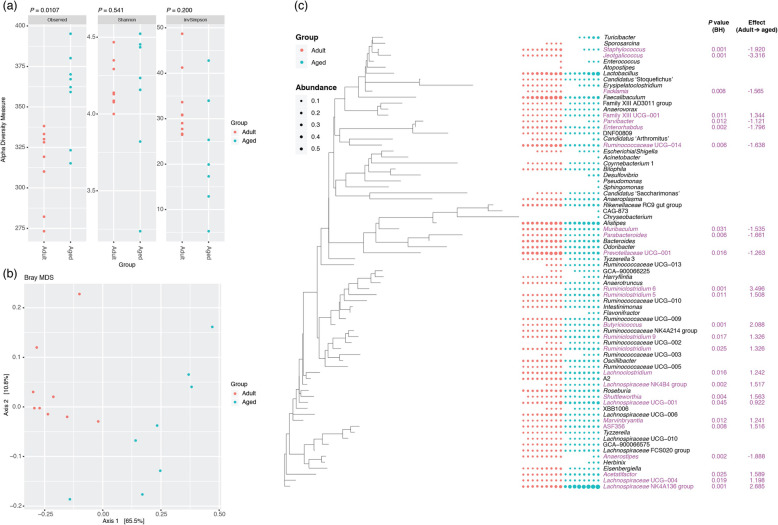
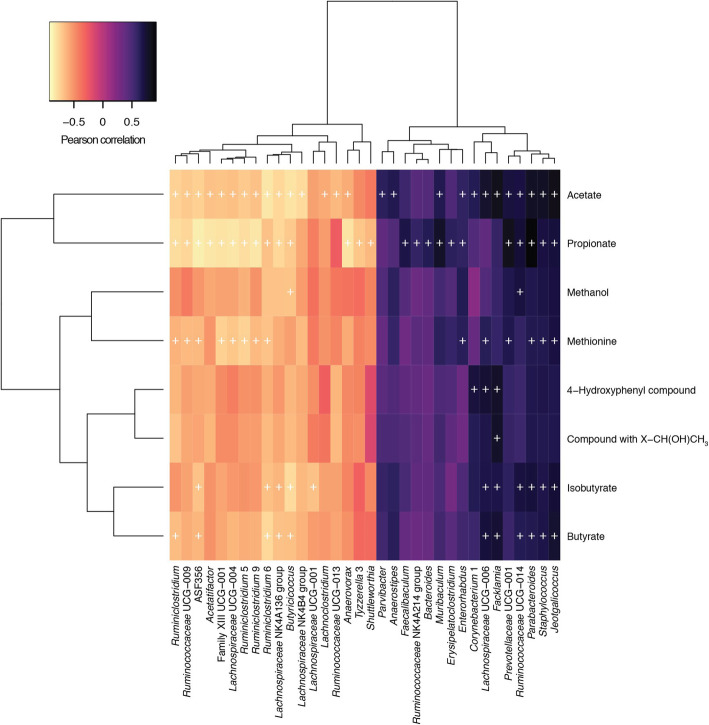
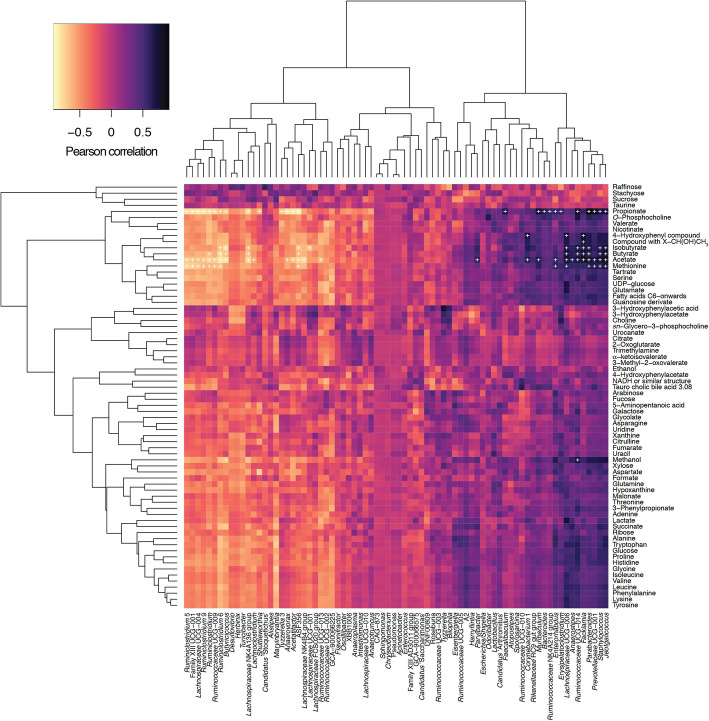
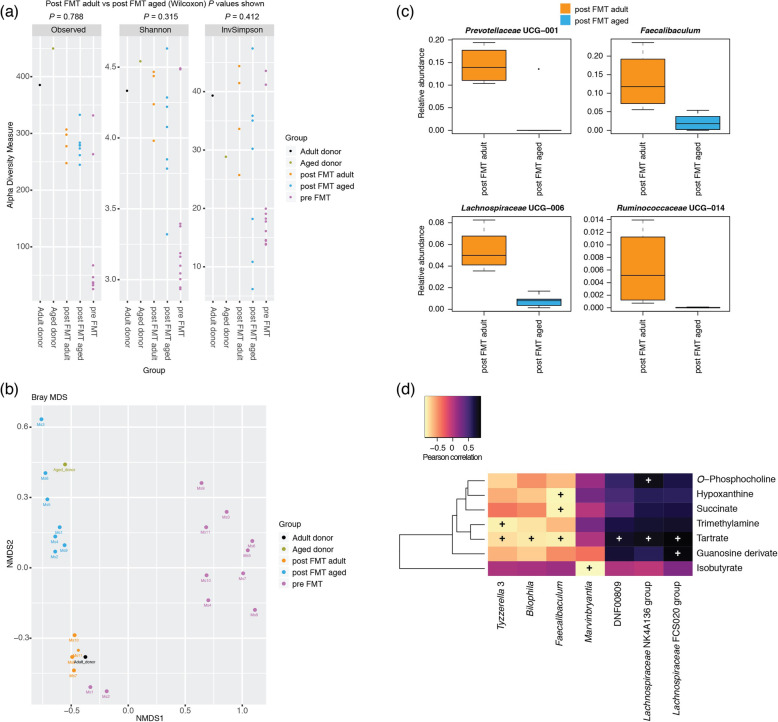
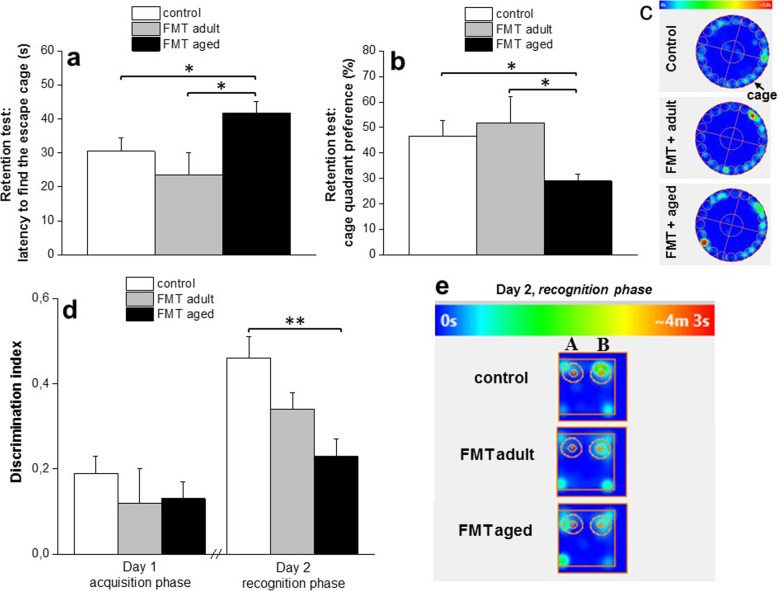
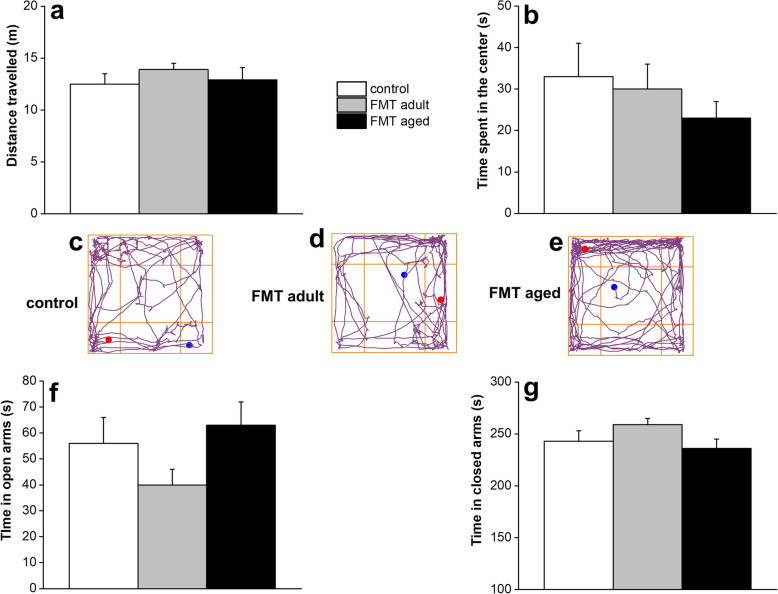
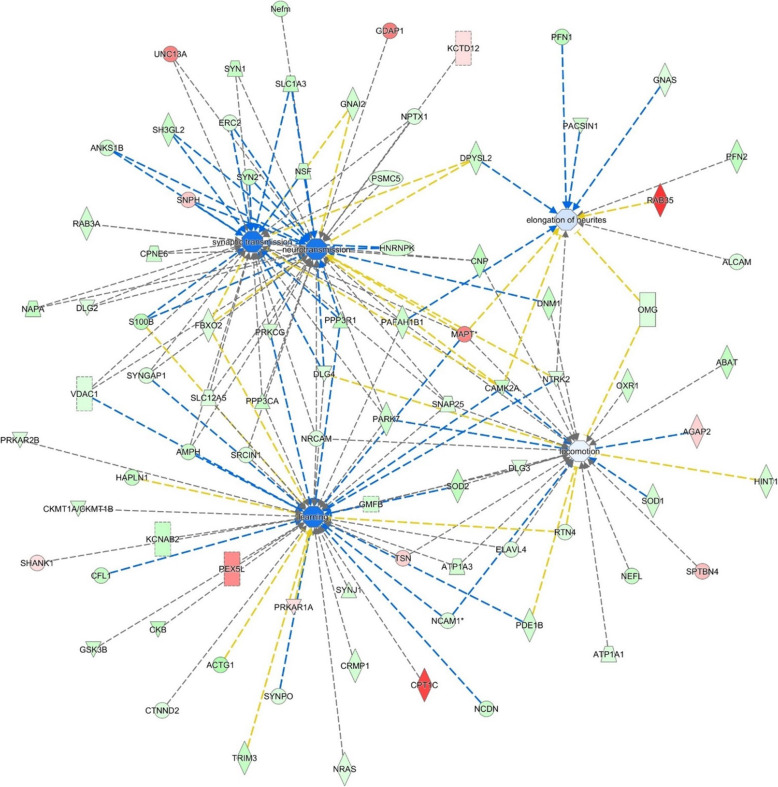
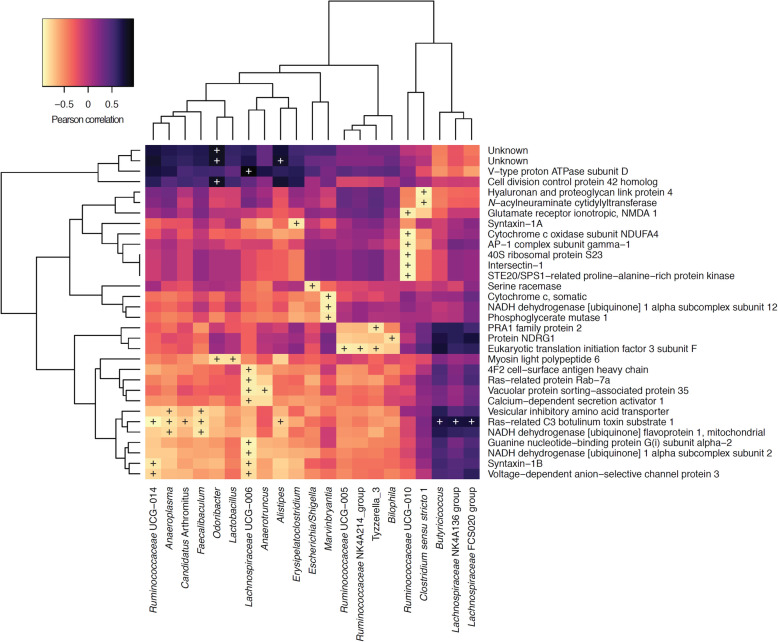
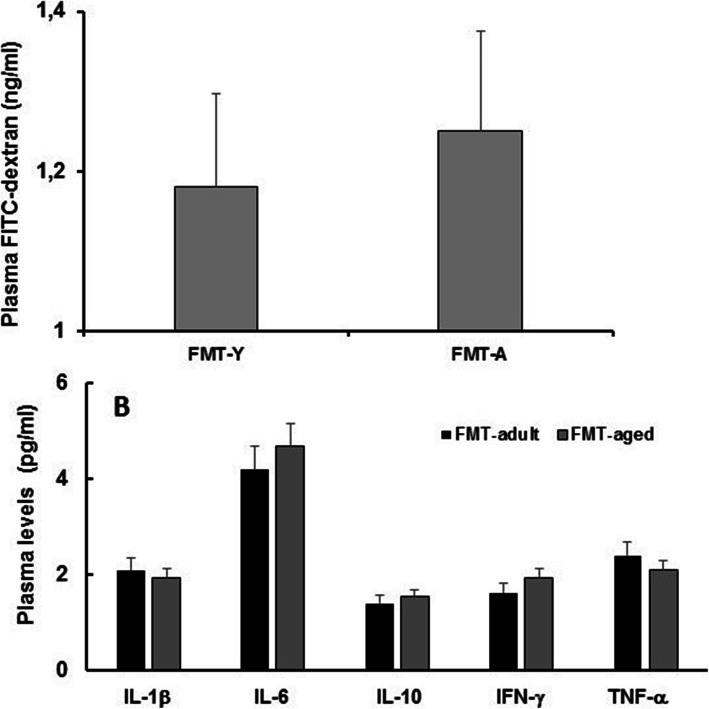
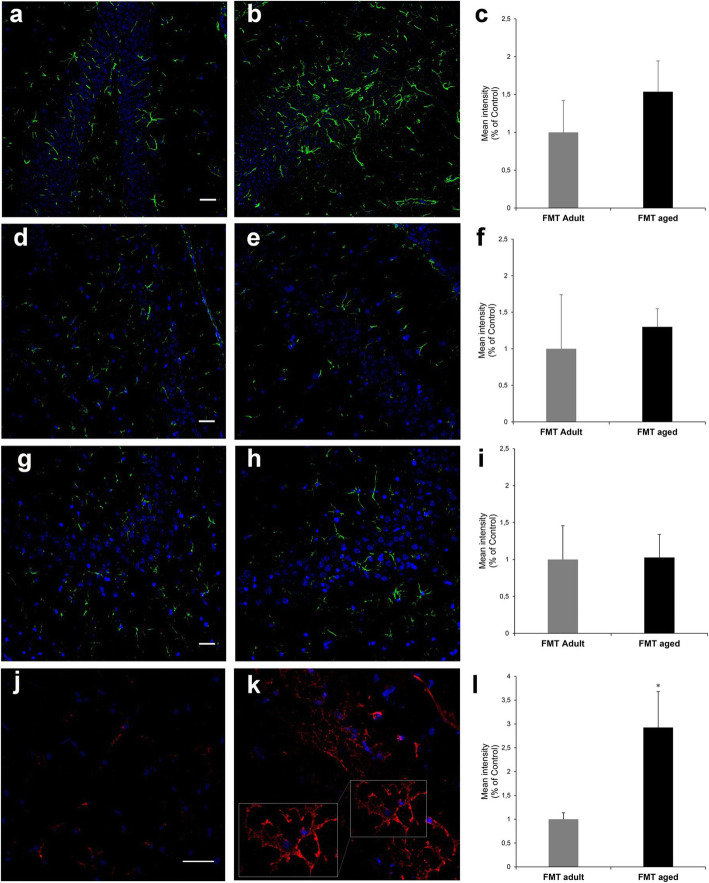
Background: The gut-brain axis and the intestinal microbiota are emerging as key players in health and disease. Shifts in intestinal microbiota composition affect a variety of systems; however, evidence of their direct impact on cognitive functions is still lacking. We tested whether faecal microbiota transplant (FMT) from aged donor mice into young adult recipients altered the hippocampus, an area of the central nervous system (CNS) known to be affected by the ageing process and related functions. Results: Young adult mice were transplanted with the microbiota from either aged or age-matched donor mice. Following transplantation, characterization of the microbiotas and metabolomics profiles along with a battery of cognitive and behavioural tests were performed. Label-free quantitative proteomics was employed to monitor protein expression in the hippocampus of the recipients. We report that FMT from aged donors led to impaired spatial learning and memory in young adult recipients, whereas anxiety, explorative behaviour and locomotor activity remained unaffected. This was paralleled by altered expression of proteins involved in synaptic plasticity and neurotransmission in the hippocampus. Also, a strong reduction of bacteria associated with short-chain fatty acids (SCFAs) production ( Lachnospiraceae, Faecalibaculum , and Ruminococcaceae ) and disorders of the CNS ( Prevotellaceae and Ruminococcaceae ) was observed. Finally, the detrimental effect of FMT from aged donors on the CNS was confirmed by the observation that microglia cells of the hippocampus fimbria, acquired an ageing-like phenotype; on the contrary, gut permeability and levels of systemic and local (hippocampus) cytokines were not affected. Conclusion: These results demonstrate that age-associated shifts of the microbiota have an impact on protein expression and key functions of the CNS. Furthermore, these results highlight the paramount importance of the gut-brain axis in ageing and provide a strong rationale to devise therapies aiming to restore a young-like microbiota to improve cognitive functions and the declining quality of life in the elderly.
Overview
The claims and statistics of this paper haven’t been checked yet.
Free: it reads the open-access text and checks the first 5 claims that cite a source we can check. Create a free account to check every claim.
Integrity signals
Registry
Cites
Statistics
Figures
Verification
Claims the paper makes
The claims and statistics of this paper haven’t been checked yet.
Free: it reads the open-access text and checks the first 5 claims that cite a source we can check. Create a free account to check every claim.
Claims other papers make about this one
Each is checked against this paper’s own text: does it say what the citing paper says it does?
The source backs part of the claim, not all of it — or backs it for a different population, condition or comparison.
In the citing paper
“the family Prevotellaceae has been reported to be positively related to SCFA levels in humans (Arumugam et al., 2011) and affects spatial learning and memory by modulating neurotransmission and hippocampal synaptic plasticity (D’Amato et al., 2020)”
From The modulatory effects of gut microbes and metabolites on blood-brain barrier integrity and brain function in sepsis-associated encephalopathy (2023) · cites this paper as D’Amato et al., 2020
Experimental — accuracy not yet measuredIn the citing paper
“Young mice transplanted with an aged donor microbiota display defects in spatial learning and memory [33]”
From Fecal microbiota transfer between young and aged mice reverses hallmarks of the aging gut, eye, and brain (2022) · cites this paper as [33]
Self-check
Percentages, sums and reported differences re-computed from the paper’s own numbers.
The self-check needs the paper’s full text.
Citations
Cites
DADA2: High–resolution sample inference from Illumina amplicon data
Callahan, B. J., McMurdie, P. J., Rosen, M. J., Han, A. W., Johnson, A. J. A., & Holmes, S. P. (2016) · Nature Methods · doi:10.1038/nmeth.3869 · Cited by 35,698
phyloseq: An R Package for Reproducible Interactive Analysis and Graphics of Microbiome Census Data
McMurdie, P. J., & Holmes, S. (2013) · PLoS ONE · doi:10.1371/journal.pone.0061217 · Cited by 21,322
Global patterns of 16S rRNA diversity at a depth of millions of sequences per sample
Caporaso, J. G., Lauber, C. L., Walters, W. A., Berg-Lyons, D., Lozupone, C. A., Turnbaugh, P. J., Fierer, N., & Knight, R. (2011) · Proceedings of the National Academy of Sciences · doi:10.1073/pnas.1000080107 · Cited by 9,711
Enterotypes of the human gut microbiome
MetaHIT Consortium (additional members), Arumugam, M., Raes, J., Pelletier, E., Le Paslier, D., Yamada, T., Mende, D. R., Fernandes, G. R., Tap, J., Bruls, T., et al. (2011) · Nature · doi:10.1038/nature09944 · Cited by 7,548
Perez-Riverol, Y., Csordas, A., Bai, J., Bernal-Llinares, M., Hewapathirana, S., Kundu, D. J., Inuganti, A., Griss, J., Mayer, G., Eisenacher, M., et al. (2019) · Nucleic Acids Research · doi:10.1093/nar/gky1106 · Cited by 6,693
Inflamm‐aging: An Evolutionary Perspective on Immunosenescence
FRANCESCHI, C., BONAFÈ, M., VALENSIN, S., OLIVIERI, F., DE LUCA, M., OTTAVIANI, E., & DE BENEDICTIS, G. (2000) · Annals of the New York Academy of Sciences · doi:10.1111/j.1749-6632.2000.tb06651.x · Cited by 5,358
Cryan, J. F., O'Riordan, K. J., Cowan, C. S. M., Sandhu, K. V., Bastiaanssen, T. F. S., Boehme, M., Codagnone, M. G., Cussotto, S., Fulling, C., Golubeva, A. V., et al. (2019) · Physiological Reviews · doi:10.1152/physrev.00018.2018 · Cited by 5,286
Mind-altering microorganisms: the impact of the gut microbiota on brain and behaviour
Cryan, J. F., & Dinan, T. G. (2012) · Nature Reviews Neuroscience · doi:10.1038/nrn3346 · Cited by 4,572
Indigenous bacteria from the gut microbiota regulate host serotonin biosynthesis
Yano, J. M., Yu, K., Donaldson, G. P., Shastri, G. G., Ann, P., Ma, L., Nagler, C. R., Ismagilov, R. F., Mazmanian, S. K., & Hsiao, E. Y. (2015) · Cell · doi:10.1016/j.cell.2015.02.047 · Cited by 3,614
Host microbiota constantly control maturation and function of microglia in the CNS
Erny, D., Hrabě de Angelis, A. L., Jaitin, D., Wieghofer, P., Staszewski, O., David, E., Keren-Shaul, H., Mahlakoiv, T., Jakobshagen, K., Buch, T., et al. (2015) · Nature Neuroscience · doi:10.1038/nn.4030 · Cited by 3,569 · cited 1×
“Germfree mice bear significant abnormalities in BBB structure and integrity [18] and in microglial numbers and morphology [19] profoundly complicating interpretation of the effects of FMT in our model.”
BackgroundApolipoprotein E and Alzheimer disease: risk, mechanisms and therapy
Liu, C.-C., Kanekiyo, T., Xu, H., & Bu, G. (2013) · Nature Reviews Neurology · doi:10.1038/nrneurol.2012.263 · Cited by 3,459
Daneman, R., & Prat, A. (2015) · Cold Spring Harbor Perspectives in Biology · doi:10.1101/cshperspect.a020412 · Cited by 3,437 · cited 1×
“For instance, although major alterations of the bloodbrain barrier (BBB) components were not detected, we observed a downregulation of proteins involved in glucose transport across the BBB such as SlcA1 and A3 [41] following FMT from aged donors (Additional file 1) that might contribute to the dysfunctional bioenerget…”
BackgroundGEOquery: a bridge between the Gene Expression Omnibus (GEO) and BioConductor
Davis, S., & Meltzer, P. S. (2007) · Bioinformatics · doi:10.1093/bioinformatics/btm254 · Cited by 3,303
Exact sequence variants should replace operational taxonomic units in marker-gene data analysis
Callahan, B. J., McMurdie, P. J., & Holmes, S. P. (2017) · The ISME Journal · doi:10.1038/ismej.2017.119 · Cited by 3,300
Normal gut microbiota modulates brain development and behavior
Heijtz, R. D., Wang, S., Anuar, F., Qian, Y., Björkholm, B., Samuelsson, A., Hibberd, M. L., Forssberg, H., & Pettersson, S. (2011) · Proceedings of the National Academy of Sciences · doi:10.1073/pnas.1010529108 · Cited by 3,228
The gut microbiota influences blood-brain barrier permeability in mice
Braniste, V., Al-Asmakh, M., Kowal, C., Anuar, F., Abbaspour, A., Tóth, M., Korecka, A., Bakocevic, N., Ng, L. G., Kundu, P., et al. (2014) · Science Translational Medicine · doi:10.1126/scitranslmed.3009759 · Cited by 2,530
The novel object recognition memory: neurobiology, test procedure, and its modifications
Antunes, M., & Biala, G. (2012) · Cognitive Processing · doi:10.1007/s10339-011-0430-z · Cited by 2,390
Gut microbiome alterations in Alzheimer’s disease
Vogt, N. M., Kerby, R. L., Dill-McFarland, K. A., Harding, S. J., Merluzzi, A. P., Johnson, S. C., Carlsson, C. M., Asthana, S., Zetterberg, H., Blennow, K., et al. (2017) · Scientific Reports · doi:10.1038/s41598-017-13601-y · Cited by 2,137
Gut microbiota are related to Parkinson's disease and clinical phenotype
Scheperjans, F., Aho, V., Pereira, P. A. B., Koskinen, K., Paulin, L., Pekkonen, E., Haapaniemi, E., Kaakkola, S., Eerola‐Rautio, J., Pohja, M., et al. (2015) · Movement Disorders · doi:10.1002/mds.26069 · Cited by 1,968
Wake, H., Moorhouse, A. J., Jinno, S., Kohsaka, S., & Nabekura, J. (2009) · The Journal of Neuroscience · doi:10.1523/jneurosci.4363-08.2009 · Cited by 1,619 · cited 1×
“cells monitor and regulate specific neuronal elements including synapses [43] and neuronal cell bodies [44] and in so doing they play an active role in neuronal surveillance in homeostatic conditions as well as in response to disease and injury.”
BackgroundThe vagus nerve at the interface of the microbiota-gut-brain axis
Bonaz, B., Bazin, T., & Pellissier, S. (2018) · Frontiers in Neuroscience · doi:10.3389/fnins.2018.00049 · Cited by 1,397
Fernandes, A. D., Reid, J. N., Macklaim, J. M., McMurrough, T. A., Edgell, D. R., & Gloor, G. B. (2014) · Microbiome · doi:10.1186/2049-2618-2-15 · Cited by 1,329
O’Toole, P. W., & Jeffery, I. B. (2015) · Science · doi:10.1126/science.aac8469 · Cited by 1,202
Gut microbes and the brain: paradigm shift in neuroscience
Mayer, E. A., Knight, R., Mazmanian, S. K., Cryan, J. F., & Tillisch, K. (2014) · The Journal of Neuroscience · doi:10.1523/jneurosci.3299-14.2014 · Cited by 1,033
Bercik, P., Park, A. J., Sinclair, D., Khoshdel, A., Lu, J., Huang, X., Deng, Y., Blennerhassett, P. A., Fahnestock, M., Moine, D., et al. (2011) · Neurogastroenterology & Motility · doi:10.1111/j.1365-2982.2011.01796.x · Cited by 1,018
Altered Histone Acetylation Is Associated with Age-Dependent Memory Impairment in Mice
Peleg, S., Sananbenesi, F., Zovoilis, A., Burkhardt, S., Bahari-Javan, S., Agis-Balboa, R. C., Cota, P., Wittnam, J. L., Gogol-Doering, A., Opitz, L., et al. (2010) · Science · doi:10.1126/science.1186088 · Cited by 951
Gut instincts: microbiota as a key regulator of brain development, ageing and neurodegeneration
Dinan, T. G., & Cryan, J. F. (2017) · The Journal of Physiology · doi:10.1113/jp273106 · Cited by 813
Miyake, S., Kim, S., Suda, W., Oshima, K., Nakamura, M., Matsuoka, T., Chihara, N., Tomita, A., Sato, W., Kim, S.-W., et al. (2015) · PLoS ONE · doi:10.1371/journal.pone.0137429 · Cited by 809
Parracho, H. M., Bingham, M. O., Gibson, G. R., & McCartney, A. L. (2005) · Journal of Medical Microbiology · doi:10.1099/jmm.0.46101-0 · Cited by 784
Gastrointestinal Microflora Studies in Late‐Onset Autism
Finegold, S. M., Molitoris, D., Song, Y., Liu, C., Vaisanen, M., Bolte, E., McTeague, M., Sandler, R., Wexler, H., Marlowe, E. M., et al. (2002) · Clinical Infectious Diseases · doi:10.1086/341914 · Cited by 742
msa: an R package for multiple sequence alignment
Bodenhofer, U., Bonatesta, E., Horejš-Kainrath, C., & Hochreiter, S. (2015) · Bioinformatics · doi:10.1093/bioinformatics/btv494 · Cited by 735
Molecular phenomics and metagenomics of hepatic steatosis in non-diabetic obese women
Hoyles, L., Fernández-Real, J.-M., Federici, M., Serino, M., Abbott, J., Charpentier, J., Heymes, C., Luque, J. L., Anthony, E., Barton, R. H., et al. (2018) · Nature Medicine · doi:10.1038/s41591-018-0061-3 · Cited by 720
Self-citationFröhlich, E. E., Farzi, A., Mayerhofer, R., Reichmann, F., Jačan, A., Wagner, B., Zinser, E., Bordag, N., Magnes, C., Fröhlich, E., et al. (2016) · Brain Behavior and Immunity · doi:10.1016/j.bbi.2016.02.020 · Cited by 720
Apolipoprotein E Genotype and Sex Risk Factors for Alzheimer Disease: A Meta-analysis
Neu, S. C., Pa, J., Kukull, W., Beekly, D., Kuzma, A., Gangadharan, P., Wang, L.-S., Romero, K., Arneric, S. P., Redolfi, A., et al. (2017) · JAMA Neurology · doi:10.1001/jamaneurol.2017.2188 · Cited by 674
Healthspan and lifespan extension by fecal microbiota transplantation into progeroid mice
Bárcena, C., Valdés-Mas, R., Mayoral, P., Garabaya, C., Durand, S., Rodríguez, F., Fernández-García, M. T., Salazar, N., Nogacka, A. M., Garatachea, N., et al. (2019) · Nature Medicine · doi:10.1038/s41591-019-0504-5 · Cited by 661
The effects of aging in the hippocampus and cognitive decline
Bettio, L. E. B., Rajendran, L., & Gil-Mohapel, J. (2017) · Neuroscience & Biobehavioral Reviews · doi:10.1016/j.neubiorev.2017.04.030 · Cited by 649
Reciprocal Regulation between Resting Microglial Dynamics and Neuronal Activity In Vivo
Li, Y., Du, X.-F., Liu, C.-S., Wen, Z.-L., & Du, J.-L. (2012) · Developmental Cell · doi:10.1016/j.devcel.2012.10.027 · Cited by 562
Stevens, B. R., Goel, R., Seungbum, K., Richards, E. M., Holbert, R. C., Pepine, C. J., & Raizada, M. K. (2018) · Gut · doi:10.1136/gutjnl-2017-314759 · Cited by 508
De Palma, G., Lynch, M. D. J., Lu, J., Dang, V. T., Deng, Y., Jury, J., Umeh, G., Miranda, P. M., Pigrau Pastor, M., Sidani, S., et al. (2017) · Science Translational Medicine · doi:10.1126/scitranslmed.aaf6397 · Cited by 505
The hippocampus in aging and disease: From plasticity to vulnerability
Bartsch, T., & Wulff, P. (2015) · Neuroscience · doi:10.1016/j.neuroscience.2015.07.084 · Cited by 465
Age-related changes in behavior in C57BL/6J mice from young adulthood to middle age
Shoji, H., Takao, K., Hattori, S., & Miyakawa, T. (2016) · Molecular Brain · doi:10.1186/s13041-016-0191-9 · Cited by 451
Aged Gut Microbiota Contributes to Systemical Inflammaging after Transfer to Germ-Free Mice
Fransen, F., van Beek, A. A., Borghuis, T., Aidy, S. E., Hugenholtz, F., van der Gaast – de Jongh, C., Savelkoul, H. F. J., De Jonge, M. I., Boekschoten, M. V., Smidt, H., et al. (2017) · Frontiers in Immunology · doi:10.3389/fimmu.2017.01385 · Cited by 403
Le Gall, G., Noor, S. O., Ridgway, K., Scovell, L., Jamieson, C., Johnson, I. T., Colquhoun, I. J., Kemsley, E. K., & Narbad, A. (2011) · Journal of Proteome Research · doi:10.1021/pr2003598 · Cited by 348
Self-citationHow to increase serotonin in the human brain without drugs
Young, S. N. (2007) · Journal of Psychiatry and Neuroscience · doi:10.1139/jpn.0738 · Cited by 335
GLUT4 Mobilization Supports Energetic Demands of Active Synapses
Ashrafi, G., Wu, Z., Farrell, R. J., & Ryan, T. A. (2017) · Neuron · doi:10.1016/j.neuron.2016.12.020 · Cited by 326
Schwiertz, A., Spiegel, J., Dillmann, U., Grundmann, D., Bürmann, J., Faßbender, K., Schäfer, K.-H., & Unger, M. M. (2018) · Parkinsonism & Related Disorders · doi:10.1016/j.parkreldis.2018.02.022 · Cited by 318
The neurobiology of memory changes in normal aging
Erickson, C. (2003) · Experimental Gerontology · doi:10.1016/s0531-5565(02)00160-2 · Cited by 267
The interneuron energy hypothesis: Implications for brain disease
Kann, O. (2016) · Neurobiology of Disease · doi:10.1016/j.nbd.2015.08.005 · Cited by 262
Ding, F., Yao, J., Rettberg, J. R., Chen, S., & Brinton, R. D. (2013) · PLoS ONE · doi:10.1371/journal.pone.0079977 · Cited by 262
Barnes Maze Procedure for Spatial Learning and Memory in Mice
Pitts, M. (2018) · BIO-PROTOCOL · doi:10.21769/bioprotoc.2744 · Cited by 259 · cited 1×
“Barnes Maze test: this test was conducted according to previously described method [69].”
MethodEvolving complexity of MIF signaling
Jankauskas, S. S., Wong, D. W. L., Bucala, R., Djudjaj, S., & Boor, P. (2019) · Cellular Signalling · doi:10.1016/j.cellsig.2019.01.006 · Cited by 247
Li, W., Dowd, S. E., Scurlock, B., Acosta-Martinez, V., & Lyte, M. (2009) · Physiology & Behavior · doi:10.1016/j.physbeh.2008.12.004 · Cited by 246
Tran, T. T. T., Corsini, S., Kellingray, L., Hegarty, C., Le Gall, G., Narbad, A., Müller, M., Tejera, N., O'Toole, P. W., Minihane, A.-M., et al. (2019) · The FASEB Journal · doi:10.1096/fj.201900071r · Cited by 233
Self-citationHart, A. D., Wyttenbach, A., Hugh Perry, V., & Teeling, J. L. (2012) · Brain, Behavior, and Immunity · doi:10.1016/j.bbi.2011.11.006 · Cited by 230
Age-related changes in Arc transcription and DNA methylation within the hippocampus
Penner, M. R., Roth, T. L., Chawla, M. K., Hoang, L. T., Roth, E. D., Lubin, F. D., Sweatt, J. D., Worley, P. F., & Barnes, C. A. (2011) · Neurobiology of Aging · doi:10.1016/j.neurobiolaging.2010.01.009 · Cited by 215
Pearson-Leary, J., Zhao, C., Bittinger, K., Eacret, D., Luz, S., Vigderman, A. S., Dayanim, G., & Bhatnagar, S. (2020) · Molecular Psychiatry · doi:10.1038/s41380-019-0380-x · Cited by 206
Kundu, P., Lee, H. U., Garcia-Perez, I., Tay, E. X. Y., Kim, H., Faylon, L. E., Martin, K. A., Purbojati, R., Drautz-Moses, D. I., Ghosh, S., et al. (2019) · Science Translational Medicine · doi:10.1126/scitranslmed.aau4760 · Cited by 201 · cited 1×
“Recently, it has been reported that FMT from aged donor mice into young germ-free (GF) recipients increased hippocampal neurogenesis, intestinal growth and activation of the prolongevity signalling pathways in the liver [16]; however, up to date, the direct impact of the ageing microbiota on cognitive functioning and…”
BackgroundThe intestinal barrier in multiple sclerosis: implications for pathophysiology and therapeutics
Camara-Lemarroy, C. R., Metz, L., Meddings, J. B., Sharkey, K. A., & Wee Yong, V (2018) · Brain · doi:10.1093/brain/awy131 · Cited by 187
Crost, E. H., Le Gall, G., Laverde-Gomez, J. A., Mukhopadhya, I., Flint, H. J., & Juge, N. (2018) · Frontiers in Microbiology · doi:10.3389/fmicb.2018.02558 · Cited by 169 · cited 1×
“Metabolites were analysed and quantified by 1H-NMR analysis as previously described [67].”
MethodBehavioral changes in aging female C57BL/6 mice
Fahlström, A., Qian, Y., & Ulfhake, B. (2009) · Neurobiology of Aging · doi:10.1016/j.neurobiolaging.2009.11.003 · Cited by 159
Microbiota influence the development of the brain and behaviors in C57BL/6J mice
Lu, J., Synowiec, S., Lu, L., Yu, Y., Bretherick, T., Takada, S., Yarnykh, V., Caplan, J., Caplan, M., Claud, E. C., et al. (2018) · PLoS ONE · doi:10.1371/journal.pone.0201829 · Cited by 159
Intestinal epithelial barrier functions in ageing
Branca, J. J. V., Gulisano, M., & Nicoletti, C. (2019) · Ageing Research Reviews · doi:10.1016/j.arr.2019.100938 · Cited by 156
Self-citationEffects of Intestinal Microbiota on Brain Development in Humanized Gnotobiotic Mice
Lu, J., Lu, L., Yu, Y., Cluette-Brown, J., Martin, C. R., & Claud, E. C. (2018) · Scientific Reports · doi:10.1038/s41598-018-23692-w · Cited by 151
F4/80 and the related adhesion‐GPCRs
Gordon, S., Hamann, J., Lin, H., & Stacey, M. (2011) · European Journal of Immunology · doi:10.1002/eji.201141715 · Cited by 150
Boehme, M., van de Wouw, M., Bastiaanssen, T. F. S., Olavarría-Ramírez, L., Lyons, K., Fouhy, F., Golubeva, A. V., Moloney, G. M., Minuto, C., Sandhu, K. V., et al. (2020) · Molecular Psychiatry · doi:10.1038/s41380-019-0425-1 · Cited by 128 · cited 1×
“Also, previous works showed increased anxiety-like behaviours associated to cognitive impairments in middle-aged and aged mice [36, 37], which could be prevented by prebiotic supplementation [37].”
BackgroundStilling, R. M., Benito, E., Barth, J., Gertig, M., Capece, V., Burckhardt, S., Bonn, S., & Fischer, A. (2014) · Frontiers in Cellular Neuroscience · doi:10.3389/fncel.2014.00373 · Cited by 116
Biology of Microglia in the Developing Brain
Kaur, C., Rathnasamy, G., & Ling, E.-A. (2017) · Journal of Neuropathology & Experimental Neurology · doi:10.1093/jnen/nlx056 · Cited by 114
Arqués, J. L., Hautefort, I., Ivory, K., Bertelli, E., Regoli, M., Clare, S., Hinton, J. C. D., & Nicoletti, C. (2009) · Gastroenterology · doi:10.1053/j.gastro.2009.04.010 · Cited by 97
Self-citationMazzawi, T., Lied, G. A., Sangnes, D. A., El-Salhy, M., Hov, J. R., Gilja, O. H., Hatlebakk, J. G., & Hausken, T. (2018) · PLoS ONE · doi:10.1371/journal.pone.0194904 · Cited by 92 · cited 1×
“Not surprisingly, faecal microbiota transplant (FMT) is being investigated as a therapeutic option not only for GI-tract-related diseases [13], but also for CNS disorders [14, 15].”
BackgroundJeong, J.-J., Kim, K.-A., Jang, S.-E., Woo, J.-Y., Han, M. J., & Kim, D.-H. (2015) · PLOS ONE · doi:10.1371/journal.pone.0116533 · Cited by 86
Age-related Defects in Sensorimotor Activity, Spatial Learning, and Memory in C57BL/6 Mice
Barreto, G., Huang, T.-T., & Giffard, R. G. (2010) · Journal of Neurosurgical Anesthesiology · doi:10.1097/ana.0b013e3181d56c98 · Cited by 83
Spatial Cognition in Adult and Aged Mice Exposed to High-Fat Diet
Kesby, J. P., Kim, J. J., Scadeng, M., Woods, G., Kado, D. M., Olefsky, J. M., Jeste, D. V., Achim, C. L., & Semenova, S. (2015) · PLOS ONE · doi:10.1371/journal.pone.0140034 · Cited by 79
Altered temporal patterns of anxiety in aged and amyloid precursor protein (APP) transgenic mice
Bedrosian, T. A., Herring, K. L., Weil, Z. M., & Nelson, R. J. (2011) · Proceedings of the National Academy of Sciences · doi:10.1073/pnas.1103098108 · Cited by 77
dos Santos, E. F., Busanello, E. N. B., Miglioranza, A., Zanatta, Â., Barchak, A. G., Vargas, C. R., Saute, J., Rosa, C., Carrion, M. J., Camargo, D., et al. (2009) · Metabolic Brain Disease · doi:10.1007/s11011-009-9139-4 · Cited by 76
Singh, P., & Thakur, M. K. (2014) · Biogerontology · doi:10.1007/s10522-014-9504-5 · Cited by 72
Weber, M., Wu, T., Hanson, J. E., Alam, N. M., Solanoy, H., Ngu, H., Lauffer, B. E., Lin, H. H., Dominguez, S. L., Reeder, J., et al. (2015) · eneuro · doi:10.1523/eneuro.0047-15.2015 · Cited by 71
Muhia, M., Yee, B. K., Feldon, J., Markopoulos, F., & Knuesel, I. (2010) · European Journal of Neuroscience · doi:10.1111/j.1460-9568.2010.07079.x · Cited by 71
Maukonen, J., Mättö, J., Satokari, R., Söderlund, H., Mattila-Sandholm, T., & Saarela, M. (2006) · FEMS Microbiology Ecology · doi:10.1111/j.1574-6941.2006.00179.x · Cited by 69
The Beneficial Role of Thiamine in Parkinson Disease
Lương, K. V. Q., & Nguyễn, L. T. H. (2013) · CNS Neuroscience & Therapeutics · doi:10.1111/cns.12078 · Cited by 57
Tests for Anxiety‐Related Behavior in Mice
Hölter, S. M., Einicke, J., Sperling, B., Zimprich, A., Garrett, L., Fuchs, H., Gailus‐Durner, V., Hrabé de Angelis, M., & Wurst, W. (2015) · Current Protocols in Mouse Biology · doi:10.1002/9780470942390.mo150010 · Cited by 50
Variability and temporal dynamics of novel object recognition in aging male C57BL/6 mice
Traschütz, A., Kummer, M. P., Schwartz, S., & Heneka, M. T. (2017) · Behavioural Processes · doi:10.1016/j.beproc.2017.11.009 · Cited by 49
The pathogenesis of amyotrophic lateral sclerosis
Robberecht, W., & Bosch, L. V. D. (1998) · Neuroscience Research Communications · doi:10.1002/(sici)1520-6769(199809/10)23:2<77::aid-nrc2>3.0.co;2-y · Cited by 6
Cited by
A Comprehensive Review on the Role of the Gut Microbiome in Human Neurological Disorders
Sorboni, S. G., Moghaddam, H. S., Jafarzadeh-Esfehani, R., & Soleimanpour, S. (2022) · Clinical Microbiology Reviews · doi:10.1128/cmr.00338-20 · Cited by 522
Mou, Y., Du, Y., Zhou, L., Yue, J., Hu, X., Liu, Y., Chen, S., Lin, X., Zhang, G., Xiao, H., et al. (2022) · Frontiers in Immunology · doi:10.3389/fimmu.2022.796288 · Cited by 432
Parker, A., Romano, S., Ansorge, R., Aboelnour, A., Le Gall, G., Savva, G. M., Pontifex, M. G., Telatin, A., Baker, D., Jones, E., et al. (2022) · Microbiome · doi:10.1186/s40168-022-01243-w · Cited by 368
Self-citationMicrobiota from young mice counteracts selective age-associated behavioral deficits
Boehme, M., Guzzetta, K. E., Bastiaanssen, T. F. S., van de Wouw, M., Moloney, G. M., Gual-Grau, A., Spichak, S., Olavarría-Ramírez, L., Fitzgerald, P., Morillas, E., et al. (2021) · Nature Aging · doi:10.1038/s43587-021-00093-9 · Cited by 313
Chakrabarti, A., Geurts, L., Hoyles, L., Iozzo, P., Kraneveld, A. D., La Fata, G., Miani, M., Patterson, E., Pot, B., Shortt, C., et al. (2022) · Cellular and Molecular Life Sciences · doi:10.1007/s00018-021-04060-w · Cited by 237
Self-citation
Metadata
- Authors
- D’Amato, A., Di Cesare Mannelli, L., Lucarini, E., Man, A. L., Le Gall, G., Branca, J. J. V., Ghelardini, C., Amedei, A., Bertelli, E., Regoli, M., Pacini, A., Luciani, G., Gallina, P., Altera, A., Narbad, A., Gulisano, M., Hoyles, L., Vauzour, D., & Nicoletti, C.
- Affiliations
- University of Milan (IT)
- University of Florence (IT)
- Earlham Institute (GB)
- University of Siena (IT)
- Azienda Ospedaliero-Universitaria Careggi (IT)
- Quadram Institute (GB)
- Nottingham Trent University (GB)
- University of East Anglia (GB)
- Corresponding author
- Vauzour, David
- Nicoletti, Claudio
- ORCID
- Venue
- Microbiome
- Published
- 2020-10-01
- Volume
- 8
- Issue
- 1
- Pages
- 140-140
- ISSN
- 2049-2618 (ISSN-L)
- PMC
- PMC7532115
- OpenAlex
- W3089698117
- Cited by
- 269
- References
- 75
- Citations by year
- 2026: 17 · 2025: 50 · 2024: 62 · 2023: 48 · 2022: 61 · 2021: 29 · 2020: 2
- FWCI
- 11.67
- Type
- journal article
- Language
- en
- Open access
- gold
- doi.org
- Licence
- cc-by
- creativecommons.org/licenses/by/4.0 (tdm)
- creativecommons.org/licenses/by/4.0 (vor)
- Locations
- Microbiome (publishedVersion, cc-by)
- bioRxiv (Cold Spring Harbor Laboratory) (acceptedVersion, cc-by)
- PubMed Central (publishedVersion, cc-by)
- PubMed (publishedVersion)
- Nottingham Trent University's Institutional Repository (Nottingham Trent Repository) (acceptedVersion)
- UEA Digital Repository (University of East Anglia) (acceptedVersion)
- Florence Research (University of Florence) (submittedVersion, other-oa)
- Archivio Istituzionale della Ricerca (Universita Degli Studi Di Milano) (submittedVersion, other-oa)
- Institutional Research Information System (University of Udine) (submittedVersion, cc-by)
- DOAJ (DOAJ: Directory of Open Access Journals) (submittedVersion, cc-by-sa)
- Spiral (Imperial College London) (submittedVersion, cc-by)
- Use Siena air (University of Siena) (submittedVersion, cc-by)
- Funders
- Ente Cassa di Risparmio di Firenze
- Biotechnology and Biological Sciences Research Council (BB/J004529/1)
- Medical Research Council (MR/L01632X/1)
- Topics
- Life Sciences › Biochemistry, Genetics and Molecular Biology › Molecular Biology › Gut microbiota and health
- Health Sciences › Medicine › Gastroenterology › Gastrointestinal motility and disorders
- Life Sciences › Neuroscience › Neurology › Neuroinflammation and Neurodegeneration Mechanisms
- Keywords
- gut-brain axis, aging, spatial learning and memory, hippocampus, synaptic plasticity, neurotransmission, short-chain fatty acids, Lachnospiraceae, Ruminococcaceae, microglia, cognitive decline
- MeSH terms
- Fecal Microbiota Transplantation, Aging, Animals, Hippocampus, Male, Memory, Mice, Inbred C57BL, Synaptic Transmission, Neuronal Plasticity, Quality of Life, Mice, Spatial Learning
About these checks
Registry, retraction, Cites and statistics results are computed, not judged, with one exception: a printed reference that no index lists is read once by a model before it counts as a citation error. Claims are extracted by a model and kept only when their quote appears verbatim in the text; each cited source is then checked, with a model’s help, for whether it says what the claim relies on. Those verdicts can be wrong — read the claim’s quote and the cited source before relying on one.
Statistics and arithmetic are recomputed, not judged.
Confidence bands are shown only for fields calibrated on our annotated test set. None is calibrated yet, so no band is shown.
What counts as a claim ›How we measure confidence ›How we check this ›
Are you an author, or do you see a problem with this page? Request a review
Data sources
Bibliographic data: Semantic Scholar, OpenAlex, Crossref.
Contains information from the Semantic Scholar Academic Graph Datasets, made available under the ODC Attribution License (ODC-BY 1.0).
Semantic Scholar’s data is described in: Kinney, R., et al. (2023). The Semantic Scholar Open Data Platform. arXiv:2301.10140.
