

The DOI matches its Crossref record; 238 of the 238 references it cites were found in a registry or an index.
From gut microbiota to host appetite: gut microbiota-derived metabolites as key regulators
Open accessAbstract
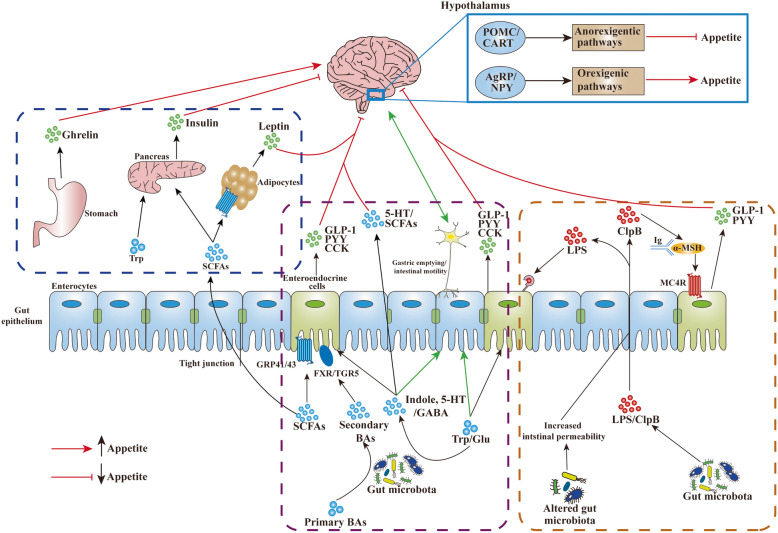
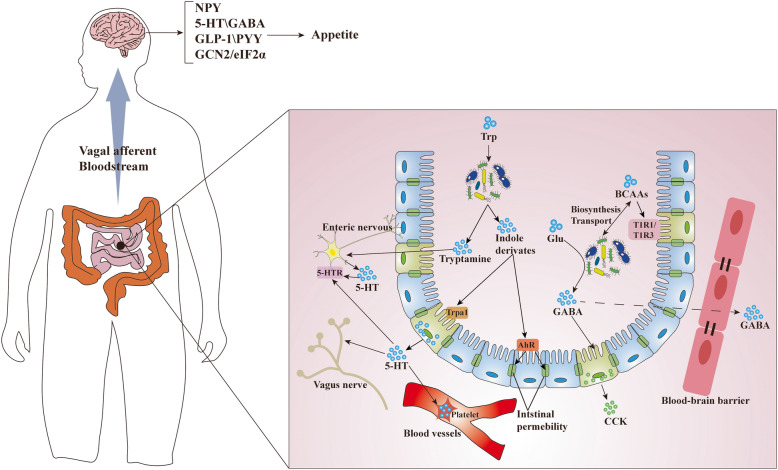
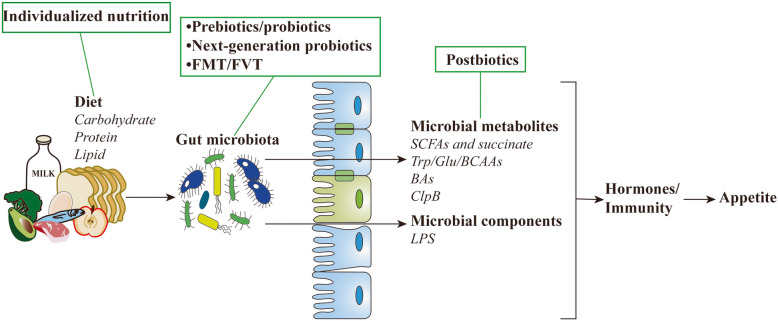
Feelings of hunger and satiety are the key determinants for maintaining the life of humans and animals. Disturbed appetite control may disrupt the metabolic health of the host and cause various metabolic disorders. A variety of factors have been implicated in appetite control, including gut microbiota, which develop the intricate interactions to manipulate the metabolic requirements and hedonic feelings. Gut microbial metabolites and components act as appetite-related signaling molecules to regulate appetite-related hormone secretion and the immune system, or act directly on hypothalamic neurons. Herein, we summarize the effects of gut microbiota on host appetite and consider the potential molecular mechanisms. Furthermore, we propose that the manipulation of gut microbiota represents a clinical therapeutic potential for lessening the development and consequence of appetite-related disorders.
Overview
The claims and statistics of this paper haven’t been checked yet.
Run the check — free, no account needed. It reads the open-access text and checks the sources it cites.
Integrity signals
Registry
Cites
Statistics
Figures
Verification
Claims the paper makes
The claims and statistics of this paper haven’t been checked yet.
Run the check — free, no account needed. It reads the open-access text and checks the sources it cites.
Claims other papers make about this one
Each is checked against this paper’s own text: does it say what the citing paper says it does?
In the citing paper
“The gut microbiome, along with its metabolites, has been reported to modulate ghrelin secretion and CNS functions.”
From Microbiota–gut–brain axis and its therapeutic applications in neurodegenerative diseases (2024) · cites this paper as [553]
Self-check
Percentages, sums and reported differences re-computed from the paper’s own numbers.
The self-check needs the paper’s full text.
Citations
Cites
Items 201–238 of 238
Nutrient Sensing in CD11c Cells Alters the Gut Microbiota to Regulate Food Intake and Body Mass
Chagwedera, D. N., Ang, Q. Y., Bisanz, J. E., Leong, Y. A., Ganeshan, K., Cai, J., Patterson, A. D., Turnbaugh, P. J., & Chawla, A. (2019) · Cell Metabolism · doi:10.1016/j.cmet.2019.05.002 · Cited by 40
Capello, A. E. M., & Markus, C. R. (2014) · Psychoneuroendocrinology · doi:10.1016/j.psyneuen.2014.03.005 · Cited by 39
Gioacchini, G., Ciani, E., Pessina, A., Cecchini, C., Silvi, S., Rodiles, A., Merrifield, D. L., Olivotto, I., & Carnevali, O. (2018) · Microbial Ecology · doi:10.1007/s00248-018-1177-1 · Cited by 39
Yin, J., Ma, J., Li, Y., Ma, X., Chen, J., Zhang, H., Wu, X., Feng-na, L., Liu, Z., Li, T., et al. (2020) · Food & Function · doi:10.1039/c9fo01757g · Cited by 38
Self-citationZapata, R. C., Singh, A., Ajdari, N. M., & Chelikani, P. K. (2018) · Obesity · doi:10.1002/oby.22136 · Cited by 37
Jejunal Leptin-PI3K Signaling Lowers Glucose Production
Rasmussen, B. A., Breen, D. M., Duca, F. A., Côté, C. D., Zadeh‐Tahmasebi, M., Filippi, B., & Lam, T. K. T. (2013) · Cell Metabolism · doi:10.1016/j.cmet.2013.11.014 · Cited by 34
Constans, C., Ahnine, H., Santin, M. D., Lehéricy, S., Tanter, M., Pouget, P., & Aubry, J. (2018) · Journal of Controlled Release · doi:10.1016/j.jconrel.2019.12.006 · Cited by 34
Familial co-aggregation of schizophrenia and eating disorders in Sweden and Denmark
Zhang, R., Larsen, J. T., Kuja‐Halkola, R., Thornton, L. M., Yao, S., Larsson, H., Lichtenstein, P., Petersen, L. V., Bulik, C. M., & Bergen, S. E. (2020) · Molecular Psychiatry · doi:10.1038/s41380-020-0749-x · Cited by 34
Chicory Roots for Prebiotics and Appetite Regulation: A Pilot Study in Mice
Fouré, M., Dugardin, C., Foligné, B., Hance, P., Cadalen, T., Delcourt, A., Taminiau, B., Daube, G., Ravallec, R., Cudennec, B., et al. (2018) · Journal of Agricultural and Food Chemistry · doi:10.1021/acs.jafc.8b01055 · Cited by 33
Ayaso, R., Ghattas, H., Abiad, M. G., & Obeid, O. (2014) · Nutrients · doi:10.3390/nu6072509 · Cited by 32
Lactobacillus paracasei subsp paracasei L. casei W8 suppresses energy intake acutely
Bjerg, A. T., Kristensen, M., Ritz, C., Holst, J. J., Rasmussen, C., Leser, T. D., Wellejus, A., & Astrup, A. V. (2014) · Appetite · doi:10.1016/j.appet.2014.07.016 · Cited by 31
Embodiment and the Other's look in feeding and eating disorders
Stanghellini, G. (2019) · World Psychiatry · doi:10.1002/wps.20683 · Cited by 31
Janssen, P., Vos, R., Oudenhove, L. V., & Tack, J. (2011) · Neurogastroenterology and Motility · doi:10.1111/j.1365-2982.2010.01655.x · Cited by 30
Coquerel, Q., Sinno, M. H., Boukhettala, N., Coëffier, M., Terashi, M., Bôle‐Feysot, C., Breuillé, D., Déchelotte, P., & Fetissov, S. O. (2011) · Psychoneuroendocrinology · doi:10.1016/j.psyneuen.2011.05.008 · Cited by 27
Gartner, S. N., Aidney, F. C., Klockars, A., Prosser, C. G., Carpenter, E. A., Isgrove, K., Levine, A. S., & Olszewski, P. K. (2018) · Appetite · doi:10.1016/j.appet.2018.02.015 · Cited by 27
Wang, D. M., Chacher, B., Liu, H. Y., Wang, J. K., Lin, J., & Liu, J. (2014) · animal · doi:10.1017/s1751731114002651 · Cited by 26
Tian, M., Heng, J., Song, H., Shi, K., Lin, X., Chen, F., Guan, W., & Zhang, S. (2019) · Journal of Agricultural and Food Chemistry · doi:10.1021/acs.jafc.9b02381 · Cited by 26
Self-citationDominique, M., Legrand, R., Galmiche, M. C., Azhar, S., Deroissart, C., Guérin, C., do Rego, J. L., Léon, F., Nobis, S., Lambert, G., et al. (2019) · Nutrients · doi:10.3390/nu11102514 · Cited by 26
SIRT1 accelerates the progression of activity-based anorexia
Robinette, T. M., Nicholatos, J. W., Francisco, A. B., Brooks, K. E., Diao, R. Y., Sorbi, S., Ricca, V., Nacmias, B., Brieño‐Enríquez, M. A., & Libert, S. (2020) · Nature Communications · doi:10.1038/s41467-020-16348-9 · Cited by 26
Ullrich, S. S., Fitzgerald, P. C. E., Giesbertz, P., Steinert, R. E., Horowitz, M., & Feinle‐Bisset, C. (2018) · Nutrients · doi:10.3390/nu10040463 · Cited by 22
McVeay, C., Fitzgerald, P. C. E., Ullrich, S. S., Steinert, R. E., Horowitz, M., & Feinle‐Bisset, C. (2019) · American Journal of Clinical Nutrition · doi:10.1093/ajcn/nqz020 · Cited by 22
Leidmaa, E., Gazea, M., Patchev, A. V., Pissioti, A., Gassen, N. C., Kimura, M., Liposits, Z., Kalló, I., & Almeida, O. F. X. (2019) · Acta Physiologica · doi:10.1111/apha.13345 · Cited by 22
Wang, D., Liu, H., Wang, C., Liu, J., & Ferguson, J. D. (2013) · Livestock Science · doi:10.1016/j.livsci.2013.01.012 · Cited by 21
Saito, H., Nakakita, Y., Segawa, S., & Tsuchiya, Y. (2019) · Beneficial Microbes · doi:10.3920/bm2018.0091 · Cited by 21
Sobrido‐Cameán, D., Yáñez-Guerra, L. A., Robledo, D., López-Varela, E., Rodicio, M. C., Elphick, M. R., Anadón, R., & Barreiro‐Iglesias, A. (2019) · Brain Structure and Function · doi:10.1007/s00429-019-01999-2 · Cited by 21
Jiang, J., Qi, L., Lv, Z., Wei, Q., & Shi, F. (2020) · Journal of the Science of Food and Agriculture · doi:10.1002/jsfa.10838 · Cited by 21
Cabral, L. Q. T., Ximenez, J. A., Moreno, K. G. T., & Fernandes, R. (2020) · Clinical Nutrition · doi:10.1016/j.clnu.2020.10.028 · Cited by 21
Histone deacetylase 4 (HDAC4): a new player in anorexia nervosa?
Sild, M., & Booij, L. (2019) · Molecular Psychiatry · doi:10.1038/s41380-019-0366-8 · Cited by 19
Bouhajja, H., Bougacha‐Elleuch, N., Lucas, N., Legrand, R., Marrakchi, R., Kaveri, S. V., Jamoussi, K., Ayadi, H., Abid, M., Mnif‐Feki, M., et al. (2018) · Nutrition and Diabetes · doi:10.1038/s41387-018-0044-y · Cited by 18
van Lingen, M. R., Sidorova, M. V., Alenina, N. V., & Klempin, F. (2019) · Frontiers in Cell and Developmental Biology · doi:10.3389/fcell.2019.00065 · Cited by 18
Loh, K., Zhang, L., Brandon, A. E., Wang, Q., Begg, D. P., Qi, Y., Fu, M., Kulkarni, R. N., Teo, J. D., Baldock, P. A. J., et al. (2017) · Molecular Metabolism · doi:10.1016/j.molmet.2017.06.017 · Cited by 17
van Golen, L. W., IJzerman, R. G., Huisman, M. C., Hensbergen, J. F., Hoogma, R. P. L. M., Drent, M. L., Lammertsma, A. A., & Diamant, M. (2013) · Diabetes Care · doi:10.2337/dc13-0093 · Cited by 16
Ortega-Vega, E. L., Guzmán-Castañeda, S. J., Campo, O., Velásquez-Mejía, E. P., de la Cuesta‐Zuluaga, J., Bedoya, G., & Escobar, J. S. (2019) · Gut Microbes · doi:10.1080/19490976.2019.1619440 · Cited by 16
Gerö, D., Steinert, R. E., Hosa, H., Cummings, D. E., & Bueter, M. (2018) · Diabetes Care · doi:10.2337/dc17-2515 · Cited by 11
Proteins released by E. coli in the gut influence host appetite control
Greenhill, C. (2015) · Nature Reviews Endocrinology · doi:10.1038/nrendo.2015.213 · Cited by 9
Antiobesogenic effects of central GIPR antagonism
Yue, J. T. Y., & Lam, T. K. T. (2019) · Journal of Clinical Investigation · doi:10.1172/jci130755 · Cited by 7
Hagve, M., Gjessing, P. F., Hole, M. J., Jansen, K. M., Fuskevåg, O., Mollnes, T. E., Larsen, T. S., & Irtun, Ø. (2019) · Endocrinology · doi:10.1210/en.2019-00374 · Cited by 7
Hanachi, M., Manichanh, C., Latour, E., Levenez, F., Cournède, N., Dore, J. M., & Melchior, J. (2016) · Clinical Nutrition · doi:10.1016/s0261-5614(16)30686-0 · Cited by 2
Research works printed but not linked: 5
- Perry RJ, Peng L, Barry NA, Cline GW, Zhang D, Cardone RL, et al. Acetate mediates a microbiome-brain-beta-cell axis to promote metabolic syndrome. Nature. 2016;534:213-7. · DOI · Paper page
- Xu J, Bartolome CL, Low CS, Yi X, Chien C-H, Wang P, et al. Genetic identification of leptin neural circuits in energy and glucose homeostases. Nature. 2018;556:505-9. · DOI
- Dominique M, Legrand R, Galmiche M, Azhar S, Deroissart C, Guérin C, et al. Changes in microbiota and bacterial protein caseinolytic peptidase B during food restriction in mice: relevance for the onset and perpetuation of anorexia nervosa. Nutrients. 2019;11:2514. · DOI
- Everard A, Lazarevic V, Derrien M, Girard M, Muccioli GG, Neyrinck AM, et al. Responses of gut microbiota and glucose and lipid metabolism to prebiotics in genetic obese and diet-induced leptin-resistant mice. Diabetes. 2011;60:2775-86. · DOI · Paper page
- Bagarolli RA, Tobar N, Oliveira AG, Araújo TG, Carvalho BM, Rocha GZ, et al. Probiotics modulate gut microbiota and improve insulin sensitivity in DIO mice. J Nutr Biochem. 2017;50:16-25. · DOI · Paper page
Cited by
Sorted by citations
Microbiota–gut–brain axis and its therapeutic applications in neurodegenerative diseases
Loh, J. S., Mak, W. Q., Tan, L. K. S., Ng, C. X., Chan, H. H., Yeow, S. H., Foo, J. B., Ong, Y. S., How, C. W., & Khaw, K. Y. (2024) · Signal Transduction and Targeted Therapy · doi:10.1038/s41392-024-01743-1 · Cited by 1,193
Functions of Gut Microbiota Metabolites, Current Status and Future Perspectives
Liu, J., Tan, Y., Cheng, H., Zhang, D., Feng, W., & Peng, C. (2022) · Aging and disease · doi:10.14336/ad.2022.0104 · Cited by 529
Crosstalk between glucagon-like peptide 1 and gut microbiota in metabolic diseases
Zeng, Y., Wu, Y., Zhang, Q., & Xiao, X. (2023) · mBio · doi:10.1128/mbio.02032-23 · Cited by 180
Lagoumintzis, G., & Patrinos, G. P. (2023) · Human Genomics · doi:10.1186/s40246-023-00561-w · Cited by 132
Gut microbiota regulates postprandial GLP-1 response via ileal bile acid-TGR5 signaling
Wang, Q., Lin, H., Shen, C., Zhang, M., Wang, X., Yuan, M., Yuan, M., Jia, S., Cao, Z., Wu, C., et al. (2023) · Gut Microbes · doi:10.1080/19490976.2023.2274124 · Cited by 126
Metadata
- Authors
- Han, H., Yi, B., Zhong, R., Wang, M., Zhang, S., Ma, J., Yin, Y., Yin, J., Chen, L., & Zhang, H.
- Affiliations
- University of Liège (BE)
- Chinese Academy of Agricultural Sciences (CN)
- Hunan Agricultural University (CN)
- Chinese Academy of Sciences (CN)
- Corresponding author
- Yin, Jie
- Zhang, Hongfu
- Venue
- Microbiome
- Published
- 2021-07-20
- Volume
- 9
- Issue
- 1
- Pages
- 162-162
- ISSN
- 2049-2618 (ISSN-L)
- PMC
- PMC8293578
- OpenAlex
- W3184092071
- Cited by
- 292
- References
- 238
- Citations by year
- 2026: 45 · 2025: 67 · 2024: 71 · 2023: 61 · 2022: 41 · 2021: 7
- FWCI
- 4.75
- Type
- journal article
- Language
- en
- Open access
- gold
- doi.org
- Locations
- Microbiome (publishedVersion, cc-by)
- PubMed Central (publishedVersion, cc-by)
- PubMed (publishedVersion)
- ORBi (University of Liège) (submittedVersion, other-oa)
- DOAJ (DOAJ: Directory of Open Access Journals) (submittedVersion, cc-by-sa)
- Funders
- National Natural Science Foundation (31702119, 31672428)
- Agricultural Science and Technology Innovation Program (CAAS-ZDRW202006-02, ASTIP-IAS07)
- Central Public-interest Scientific Institution Basal Research Fund, Chinese Academy of Fishery Sciences (Y2021GH01-4)
- Topics
- Life Sciences › Biochemistry, Genetics and Molecular Biology › Molecular Biology › Gut microbiota and health
- Life Sciences › Neuroscience › Endocrine and Autonomic Systems › Regulation of Appetite and Obesity
- Health Sciences › Medicine › Gastroenterology › Gastrointestinal motility and disorders
- Keywords
- gut microbiota, appetite regulation, hunger and satiety, microbial metabolites, appetite-regulating hormones, hypothalamic neurons, immune system, metabolic disorders, microbiome manipulation
- MeSH terms
- Gastrointestinal Microbiome, Animals, Appetite, Appetite Regulation, Humans, Immune System
About these checks
Registry, retraction, Cites and statistics results are computed, not judged, with one exception: a printed reference that no index lists is read once by a model before it counts as a citation error. Claims are extracted by a model and kept only when their quote appears verbatim in the text; each cited source is then checked, with a model’s help, for whether it says what the claim relies on. Those verdicts can be wrong — read the claim’s quote and the cited source before relying on one.
Statistics and arithmetic are recomputed, not judged.
Confidence bands are shown only for fields calibrated on our annotated test set. None is calibrated yet, so no band is shown.
What counts as a claim ›How we measure confidence ›How we check this ›
Are you an author, or do you see a problem with this page? Request a review
