

The DOI matches its Crossref record; 238 of the 238 references it cites were found in a registry or an index.
From gut microbiota to host appetite: gut microbiota-derived metabolites as key regulators
Open accessAbstract
Feelings of hunger and satiety are the key determinants for maintaining the life of humans and animals. Disturbed appetite control may disrupt the metabolic health of the host and cause various metabolic disorders. A variety of factors have been implicated in appetite control, including gut microbiota, which develop the intricate interactions to manipulate the metabolic requirements and hedonic feelings. Gut microbial metabolites and components act as appetite-related signaling molecules to regulate appetite-related hormone secretion and the immune system, or act directly on hypothalamic neurons. Herein, we summarize the effects of gut microbiota on host appetite and consider the potential molecular mechanisms. Furthermore, we propose that the manipulation of gut microbiota represents a clinical therapeutic potential for lessening the development and consequence of appetite-related disorders.
Overview
The claims and statistics of this paper haven’t been checked yet.
Run the check — free, no account needed. It reads the open-access text and checks the sources it cites.
Integrity signals
Registry
Cites
Statistics
Figures
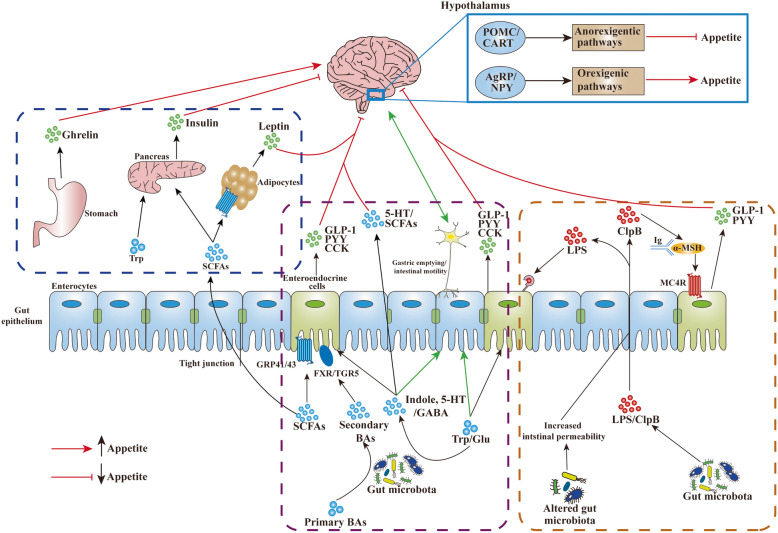
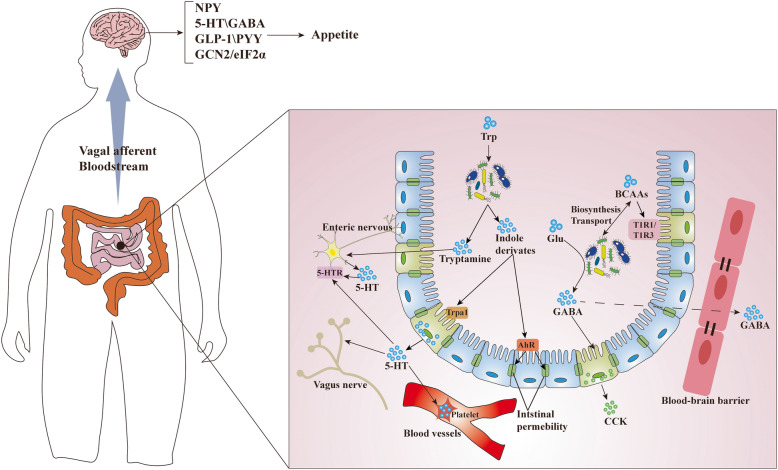
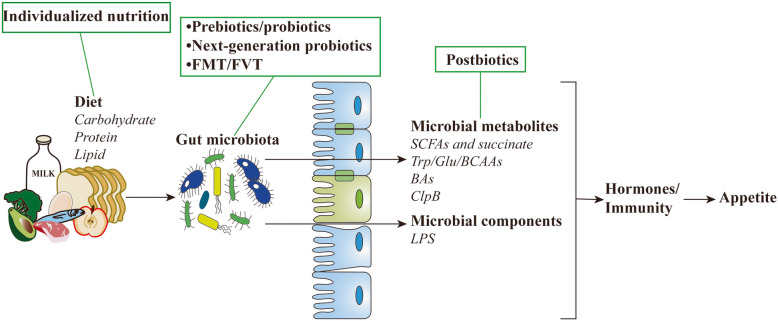
Verification
Claims the paper makes
The claims and statistics of this paper haven’t been checked yet.
Run the check — free, no account needed. It reads the open-access text and checks the sources it cites.
Claims other papers make about this one
Each is checked against this paper’s own text: does it say what the citing paper says it does?
The cited source says what the claim attributes to it.
In the citing paper
“The gut microbiome, along with its metabolites, has been reported to modulate ghrelin secretion and CNS functions.”
From Microbiota–gut–brain axis and its therapeutic applications in neurodegenerative diseases (2024) · cites this paper as [553]
Self-check
Percentages, sums and reported differences re-computed from the paper’s own numbers.
The self-check needs the paper’s full text.
Citations
Cites
The gut microbiota as an environmental factor that regulates fat storage
Bäckhed, F., Ding, H., Wang, T., Hooper, L. V., Koh, G. Y., Nagy, A., Semenkovich, C. F., & Gordon, J. I. (2004) · Proceedings of the National Academy of Sciences · doi:10.1073/pnas.0407076101 · Cited by 6,245
Cryan, J. F., O'Riordan, K. J., Cowan, C. S. M., Sandhu, K. V., Bastiaanssen, T. F. S., Boehme, M., Codagnone, M. G., Cussotto, S., Fulling, C., Golubeva, A. V., et al. (2019) · Physiological Reviews · doi:10.1152/physrev.00018.2018 · Cited by 5,286
Richness of human gut microbiome correlates with metabolic markers
Le Chatelier, E., Nielsen, T., Qin, J., Prifti, E., Hildebrand, F., Falony, G., Almeida, M., Arumugam, M., Batto, J.-M., Kennedy, S., et al. (2013) · Nature · doi:10.1038/nature12506 · Cited by 4,662
Cross-talk between Akkermansia muciniphila and intestinal epithelium controls diet-induced obesity
Everard, A., Belzer, C., Geurts, L., Ouwerkerk, J. P., Druart, C., Bindels, L. B., Guiot, Y., Derrien, M., Muccioli, G. G., Delzenne, N. M., et al. (2013) · Proceedings of the National Academy of Sciences · doi:10.1073/pnas.1219451110 · Cited by 4,511
Gut Microbiota from Twins Discordant for Obesity Modulate Metabolism in Mice
Ridaura, V. K., Faith, J. J., Rey, F. E., Cheng, J., Duncan, A. E., Kau, A. L., Griffin, N. W., Lombard, V., Henrissat, B., Bain, J. R., et al. (2013) · Science · doi:10.1126/science.1241214 · Cited by 3,788
Indigenous bacteria from the gut microbiota regulate host serotonin biosynthesis
Yano, J. M., Yu, K., Donaldson, G. P., Shastri, G. G., Ann, P., Ma, L., Nagler, C. R., Ismagilov, R. F., Mazmanian, S. K., & Hsiao, E. Y. (2015) · Cell · doi:10.1016/j.cell.2015.02.047 · Cited by 3,614
Newgard, C. B., An, J., Bain, J. R., Muehlbauer, M. J., Stevens, R. D., Lien, L. F., Haqq, A. M., Shah, S. H., Arlotto, M., Slentz, C. A., et al. (2009) · Cell Metabolism · doi:10.1016/j.cmet.2009.02.002 · Cited by 3,165
Human Genetics Shape the Gut Microbiome
Goodrich, J. K., Waters, J. L., Poole, A. C., Sutter, J. L., Koren, O., Blekhman, R., Beaumont, M., Van Treuren, W., Knight, R., Bell, J. T., et al. (2014) · Cell · doi:10.1016/j.cell.2014.09.053 · Cited by 3,164
Metabolite profiles and the risk of developing diabetes
Wang, T. J., Larson, M. G., Vasan, R. S., Cheng, S., Rhee, E. P., McCabe, E., Lewis, G. D., Fox, C. S., Jacques, P. F., Fernandez, C., et al. (2011) · Nature Medicine · doi:10.1038/nm.2307 · Cited by 3,143
Cani, P. D., Possemiers, S., Van de Wiele, T., Guiot, Y., Everard, A., Rottier, O., Geurts, L., Naslain, D., Neyrinck, A., Lambert, D. M., et al. (2009) · Gut · doi:10.1136/gut.2008.165886 · Cited by 2,518
Sayin, S. I., Wahlström, A., Felin, J., Jäntti, S., Marschall, H.-U., Bamberg, K., Angelin, B., Hyötyläinen, T., Orešič, M., & Bäckhed, F. (2013) · Cell Metabolism · doi:10.1016/j.cmet.2013.01.003 · Cited by 2,331
Psychosomatic medicine in Germany: more timely than ever
Zipfel, S., Herzog, W., Kruse, J., & Henningsen, P. (2016) · Psychotherapy and Psychosomatics · doi:10.1159/000447701 · Cited by 2,323
Plovier, H., Everard, A., Druart, C., Depommier, C., Van Hul, M., Geurts, L., Chilloux, J., Ottman, N., Duparc, T., Lichtenstein, L., et al. (2017) · Nature Medicine · doi:10.1038/nm.4236 · Cited by 2,204
Human gut microbes impact host serum metabolome and insulin sensitivity
Pedersen, H. K., Gudmundsdottir, V., Nielsen, H. B., Hyotylainen, T., Nielsen, T., Jensen, B. A. H., Forslund, K., Hildebrand, F., Prifti, E., Falony, G., et al. (2016) · Nature · doi:10.1038/nature18646 · Cited by 2,116
The neuroactive potential of the human gut microbiota in quality of life and depression
Valles-Colomer, M., Falony, G., Darzi, Y., Tigchelaar, E. F., Wang, J., Tito, R. Y., Schiweck, C., Kurilshikov, A., Joossens, M., Wijmenga, C., et al. (2019) · Nature Microbiology · doi:10.1038/s41564-018-0337-x · Cited by 1,963
Clarke, G., Grenham, S., Scully, P., Fitzgerald, P., Moloney, R. D., Shanahan, F., Dinan, T. G., & Cryan, J. F. (2013) · Molecular Psychiatry · doi:10.1038/mp.2012.77 · Cited by 1,893
Dietary fiber and prebiotics and the gastrointestinal microbiota
Holscher, H. D. (2017) · Gut Microbes · doi:10.1080/19490976.2017.1290756 · Cited by 1,808
The short-chain fatty acid acetate reduces appetite via a central homeostatic mechanism
Frost, G., Sleeth, M. L., Sahuri-Arisoylu, M., Lizarbe, B., Cerdan, S., Brody, L., Anastasovska, J., Ghourab, S., Hankir, M., Zhang, S., et al. (2014) · Nature Communications · doi:10.1038/ncomms4611 · Cited by 1,771
Self-citationCowley, M. A., Smith, R. G., Diano, S., Tschöp, M., Pronchuk, N., Grove, K. L., Strasburger, C. J., Bidlingmaier, M., Esterman, M., Heiman, M. L., et al. (2003) · Neuron · doi:10.1016/s0896-6273(03)00063-1 · Cited by 1,679
Pasolli, E., Asnicar, F., Manara, S., Zolfo, M., Karcher, N., Armanini, F., Beghini, F., Manghi, P., Tett, A., Ghensi, P., et al. (2019) · Cell · doi:10.1016/j.cell.2019.01.001 · Cited by 1,591
Kimura, I., Ozawa, K., Inoue, D., Imamura, T., Kimura, K., Maeda, T., Terasawa, K., Kashihara, D., Hirano, K., Tani, T., et al. (2013) · Nature Communications · doi:10.1038/ncomms2852 · Cited by 1,512
Gut microbiome and serum metabolome alterations in obesity and after weight-loss intervention
Liu, R., Hong, J., Xu, X., Feng, Q., Zhang, D., Gu, Y., Shi, J., Zhao, S., Liu, W., Wang, X., et al. (2017) · Nature Medicine · doi:10.1038/nm.4358 · Cited by 1,501
Genetic Risk, Adherence to a Healthy Lifestyle, and Coronary Disease
Khera, A. V., Emdin, C. A., Drake, I., Natarajan, P., Bick, A. G., Cook, N. R., Chasman, D. I., Baber, U., Mehran, R., Rader, D. J., et al. (2016) · New England Journal of Medicine · doi:10.1056/nejmoa1605086 · Cited by 1,460
A gut bacterial pathway metabolizes aromatic amino acids into nine circulating metabolites
Dodd, D., Spitzer, M. H., Van Treuren, W., Merrill, B. D., Hryckowian, A. J., Higginbottom, S. K., Le, A., Cowan, T. M., Nolan, G. P., Fischbach, M. A., et al. (2017) · Nature · doi:10.1038/nature24661 · Cited by 1,425
Chambers, E. S., Viardot, A., Psichas, A., Morrison, D. J., Murphy, K. G., Zac-Varghese, S. E. K., MacDougall, K., Preston, T., Tedford, C., Finlayson, G. S., et al. (2015) · Gut · doi:10.1136/gutjnl-2014-307913 · Cited by 1,424
Gut microbial metabolites as multi-kingdom intermediates
Krautkramer, K. A., Fan, J., & Bäckhed, F. (2021) · Nature Reviews Microbiology · doi:10.1038/s41579-020-0438-4 · Cited by 1,398
Reigstad, C. S., Salmonson, C. E., III, J. F. R., Szurszewski, J. H., Linden, D. R., Sonnenburg, J. L., Farrugia, G., & Kashyap, P. C. (2015) · The FASEB Journal · doi:10.1096/fj.14-259598 · Cited by 1,335
Leptin regulation of bone resorption by the sympathetic nervous system and CART
Elefteriou, F., Ahn, J. D., Takeda, S., Starbuck, M., Yang, X., Liu, X., Kondo, H., Richards, W. G., Bannon, T. W., Noda, M., et al. (2005) · Nature · doi:10.1038/nature03398 · Cited by 1,311
Acetate mediates a microbiome–brain–β-cell axis to promote metabolic syndrome
Perry, R. J., Peng, L., Barry, N. A., Cline, G. W., Zhang, D., Cardone, R. L., Petersen, K. F., Kibbey, R. G., Goodman, A. L., & Shulman, G. I. (2016) · Nature · doi:10.1038/nature18309 · Cited by 1,299
Pleiotropic Roles of Bile Acids in Metabolism
de Aguiar Vallim, T. Q., Tarling, E. J., & Edwards, P. A. (2013) · Cell Metabolism · doi:10.1016/j.cmet.2013.03.013 · Cited by 1,209
Human Gut Microbiota from Autism Spectrum Disorder Promote Behavioral Symptoms in Mice
Sharon, G., Cruz, N. J., Kang, D.-W., Gandal, M. J., Wang, B., Kim, Y.-M., Zink, E. M., Casey, C. P., Taylor, B. C., Lane, C. J., et al. (2019) · Cell · doi:10.1016/j.cell.2019.05.004 · Cited by 1,182
Wang, K., Liao, M., Zhou, N., Bao, L., Ma, K., Zheng, Z., Wang, Y., Liu, C., Wang, W., Wang, J., et al. (2019) · Cell Reports · doi:10.1016/j.celrep.2018.12.028 · Cited by 1,174
γ-Aminobutyric acid production by culturable bacteria from the human intestine
Barrett, E., Ross, R. P., O'Toole, P. W., Fitzgerald, G. F., & Stanton, C. (2012) · Journal of Applied Microbiology · doi:10.1111/j.1365-2672.2012.05344.x · Cited by 1,156
Initiative, A. N. G., Watson, H. J., Eating Disorders Working Group of the Psychiatric Genomics Consortium, Yilmaz, Z., Thornton, L. M., Hübel, C., Coleman, J. R. I., Gaspar, H. A., Bryois, J., Hinney, A., et al. (2019) · Nature Genetics · doi:10.1038/s41588-019-0439-2 · Cited by 1,109
Date, Y., Murakami, N., Toshinai, K., Matsukura, S., Niijima, A., Matsuo, H., Kangawa, K., & Nakazato, M. (2002) · Gastroenterology · doi:10.1053/gast.2002.35954 · Cited by 1,099
Everard, A., Lazarevic, V., Derrien, M., Girard, M., Muccioli, G. G., Neyrinck, A. M., Possemiers, S., Van Holle, A., François, P., de Vos, W. M., et al. (2011) · Diabetes · doi:10.2337/db11-0227 · Cited by 1,076
Kootte, R. S., Levin, E., Salojärvi, J., Smits, L. P., Hartstra, A. V., Udayappan, S. D., Hermes, G., Bouter, K. E., Koopen, A. M., Holst, J. J., et al. (2017) · Cell Metabolism · doi:10.1016/j.cmet.2017.09.008 · Cited by 1,039
Ghosh, T. S., Rampelli, S., Jeffery, I. B., Santoro, A., Neto, M., Capri, M., Giampieri, E., Jennings, A., Candela, M., Turroni, S., et al. (2020) · Gut · doi:10.1136/gutjnl-2019-319654 · Cited by 991
Next-generation probiotics: the spectrum from probiotics to live biotherapeutics
O’Toole, P. W., Marchesi, J. R., & Hill, C. (2017) · Nature Microbiology · doi:10.1038/nmicrobiol.2017.57 · Cited by 971
Amar, J., Chabo, C., Waget, A., Klopp, P., Vachoux, C., Bermúdez‐Humarán, L. G., Smirnova, N. F., Bergé, M., Sulpice, T., Lahtinen, S. J., et al. (2011) · EMBO Molecular Medicine · doi:10.1002/emmm.201100159 · Cited by 877
Cani, P. D., Osto, M., Geurts, L., & Everard, A. (2012) · Gut Microbes · doi:10.4161/gmic.19625 · Cited by 864
Dewulf, E. M., Cani, P. D., Claus, S. P., Fuentes, S., Puylaert, P. G., Neyrinck, A. M., Bindels, L. B., de Vos, W. M., Gibson, G. R., Thissen, J.-P., et al. (2013) · Gut · doi:10.1136/gutjnl-2012-303304 · Cited by 825
Udo, T., & Grilo, C. M. (2018) · Biological Psychiatry · doi:10.1016/j.biopsych.2018.03.014 · Cited by 799
Cani, P. D., Lecourt, E., Dewulf, E. M., Sohet, F. M., Pachikian, B. D., Naslain, D., Backer, F. D., Neyrinck, A. M., & Delzenne, N. M. (2009) · American Journal of Clinical Nutrition · doi:10.3945/ajcn.2009.28095 · Cited by 788
Microbiota-Produced Succinate Improves Glucose Homeostasis via Intestinal Gluconeogenesis
Vadder, F. D., Kovatcheva‐Datchary, P., Zitoun, C., Duchampt, A., Bäckhed, F., & Mithieux, G. (2016) · Cell Metabolism · doi:10.1016/j.cmet.2016.06.013 · Cited by 779
Gut hormones and the regulation of energy homeostasis
Murphy, K. G., & Bloom, S. R. (2006) · Nature · doi:10.1038/nature05484 · Cited by 778
Wu, T.-R., Lin, C.-S., Chang, C., Lin, T., Martel, J., Ko, Y., Ojcius, D. M., Lu, C., Young, J. D., & Lai, H. (2018) · Gut · doi:10.1136/gutjnl-2017-315458 · Cited by 768
Parnell, J. A., & Reimer, R. A. (2009) · American Journal of Clinical Nutrition · doi:10.3945/ajcn.2009.27465 · Cited by 749
Daily sampling reveals personalized diet-microbiome associations in humans
Johnson, A. J., Vangay, P., Al-Ghalith, G. A., Hillmann, B. M., Ward, T. L., Shields-Cutler, R. R., Kim, A. D., Shmagel, A. K., Syed, A. N., Walter, J., et al. (2019) · Cell Host & Microbe · doi:10.1016/j.chom.2019.05.005 · Cited by 742
Williams, B. B., Van Benschoten, A. H., Cimermancic, P., Donia, M. S., Zimmermann, M., Taketani, M., Ishihara, A., Kashyap, P. C., Fraser, J. S., & Fischbach, M. A. (2014) · Cell Host & Microbe · doi:10.1016/j.chom.2014.09.001 · Cited by 732
Microbial tryptophan metabolites regulate gut barrier function via the aryl hydrocarbon receptor
Scott, S. A., Fu, J., & Chang, P. V. (2020) · Proceedings of the National Academy of Sciences · doi:10.1073/pnas.2000047117 · Cited by 696
Butyrate reduces appetite and activates brown adipose tissue via the gut-brain neural circuit
Li, Z., Yi, C.-X., Katiraei, S., Kooijman, S., Zhou, E., Chung, C. K., Gao, Y., van den Heuvel, J. K., Meijer, O. C., Berbée, J. F. P., et al. (2018) · Gut · doi:10.1136/gutjnl-2017-314050 · Cited by 674
Barton, W., Penney, N. C., Cronin, O., Garcia-Perez, I., Molloy, M. G., Holmes, E., Shanahan, F., Cotter, P. D., & O'Sullivan, O. (2018) · Gut · doi:10.1136/gutjnl-2016-313627 · Cited by 647
Toward a Wiring Diagram Understanding of Appetite Control
Andermann, M. L., & Lowell, B. B. (2017) · Neuron · doi:10.1016/j.neuron.2017.06.014 · Cited by 633
De Vadder, F., Grasset, E., Mannerås Holm, L., Karsenty, G., Macpherson, A. J., Olofsson, L. E., & Bäckhed, F. (2018) · Proceedings of the National Academy of Sciences · doi:10.1073/pnas.1720017115 · Cited by 566
Aberrant gut microbiota alters host metabolome and impacts renal failure in humans and rodents
Wang, X., Yang, S., Li, S., Zhao, L., Hao, Y., Qin, J., Zhang, L., Zhang, C., Bian, W., Zuo, L., et al. (2020) · Gut · doi:10.1136/gutjnl-2019-319766 · Cited by 553
Self-citationBacterial metabolite indole modulates incretin secretion from intestinal enteroendocrine L cells
Chimerel, C., Emery, E., Summers, D. K., Keyser, U., Gribble, F. M., & Reimann, F. (2014) · Cell Reports · doi:10.1016/j.celrep.2014.10.032 · Cited by 548
Zarrinpar, A., Chaix, A., Xu, Z. Z., Chang, M. W., Marotz, C. A., Saghatelian, A., Knight, R., & Panda, S. (2018) · Nature Communications · doi:10.1038/s41467-018-05336-9 · Cited by 546
Metabolic and hedonic drives in the neural control of appetite: who is the boss?
Berthoud, H. (2011) · Current Opinion in Neurobiology · doi:10.1016/j.conb.2011.09.004 · Cited by 543
Accumulation of succinate controls activation of adipose tissue thermogenesis
Mills, E. L., Pierce, K. A., Jedrychowski, M. P., Garrity, R., Winther, S., Vidoni, S., Yoneshiro, T., Spinelli, J. B., Lu, G. Z., Kazak, L., et al. (2018) · Nature · doi:10.1038/s41586-018-0353-2 · Cited by 539
Crane, J. D., Palanivel, R., Mottillo, E. P., Bujak, A. L., Wang, H., Ford, R. J., Collins, A., Blümer, R. M. E., Fullerton, M. D., Yabut, J. M., et al. (2014) · Nature Medicine · doi:10.1038/nm.3766 · Cited by 509
Personalized Mapping of Drug Metabolism by the Human Gut Microbiome
Javdan, B., Lopez, J. G., Chankhamjon, P., Lee, Y.-C. J., Hull, R., Wu, Q., Wang, X., Chatterjee, S., & Donia, M. S. (2020) · Cell · doi:10.1016/j.cell.2020.05.001 · Cited by 492
Ghrelin action in the brain controls adipocyte metabolism
Theander-Carrillo, C. (2006) · Journal of Clinical Investigation · doi:10.1172/jci25811 · Cited by 465
Microbiota modulate sympathetic neurons via a gut–brain circuit
Muller, P. A., Schneeberger, M., Matheis, F., Wang, P., Kerner, Z. J., Ilanges, A., Pellegrino, K., del Mármol, J. I., Castro, T. B. R., Furuichi, M., et al. (2020) · Nature · doi:10.1038/s41586-020-2474-7 · Cited by 465
Wanders, A. J., van den Borne, J. J. G. C., de Graaf, C., Hulshof, T. G., Jonathan, M. C., Kristensen, M., Mars, M., Schols, H. A., & Feskens, E. J. M. (2011) · Obesity Reviews · doi:10.1111/j.1467-789x.2011.00895.x · Cited by 461
Microbiota-gut-brain axis: Modulator of host metabolism and appetite
van de Wouw, M., Schellekens, H., Dinan, T. G., & Cryan, J. F. (2017) · The Journal of Nutrition · doi:10.3945/jn.116.240481 · Cited by 461
Bhattarai, Y., Williams, B. B., Battaglioli, E. J., Whitaker, W. R., Till, L., Grover, M., Linden, D. R., Akiba, Y., Kandimalla, K. K., Zachos, N. C., et al. (2018) · Cell Host & Microbe · doi:10.1016/j.chom.2018.05.004 · Cited by 436
Serotonin Reciprocally Regulates Melanocortin Neurons to Modulate Food Intake
Heisler, L. K., Jobst, E. E., Sutton, G. M., Zhou, L., Borók, E., Thornton-Jones, Z. D., Liu, H. Y., Zigman, J. M., Balthasar, N., Kishi, T., et al. (2006) · Neuron · doi:10.1016/j.neuron.2006.06.004 · Cited by 433
Elevated circulating levels of succinate in human obesity are linked to specific gut microbiota
Serena, C., Ceperuelo‐Mallafré, V., Keiran, N., Queipo‐Ortuño, M. I., Bernal, R., Gómez-Huelgas, R., Urpí-Sardà, M., Sabater, M., Pérez‐Brocal, V., Andrés‐Lacueva, C., et al. (2018) · The ISME Journal · doi:10.1038/s41396-018-0068-2 · Cited by 415
Microbiota depletion promotes browning of white adipose tissue and reduces obesity
Suárez-Zamorano, N., Fabbiano, S., Chevalier, C., Stojanović, O., Colin, D. J., Stevanović, A., Veyrat-Durebex, C., Tarallo, V., Rigo, D., Germain, S., et al. (2015) · Nature Medicine · doi:10.1038/nm.3994 · Cited by 403
Role of the gut microbiota in host appetite control: bacterial growth to animal feeding behaviour
Fetissov, S. O. (2017) · Nature Reviews Endocrinology · doi:10.1038/nrendo.2016.150 · Cited by 403
Gut microbial products regulate murine gastrointestinal motility via Toll-like receptor 4 signaling
Anitha, M., Vijay–Kumar, M., Sitaraman, S. V., Gewirtz, A. T., & Srinivasan, S. (2012) · Gastroenterology · doi:10.1053/j.gastro.2012.06.034 · Cited by 397
Zeng, S.-L., Li, S., Xiao, P., Cai, Y., Chu, C., Chen, B., Li, P., Li, J., & Liu, E. (2020) · Science Advances · doi:10.1126/sciadv.aax6208 · Cited by 396
Yunes, R. А., Poluektova, E. U., Dyachkova, M. S., Klimina, K. M., Kovtun, A. S., Averina, O. V., Orlova, V. S., & Даниленко, В. Н. (2016) · Anaerobe · doi:10.1016/j.anaerobe.2016.10.011 · Cited by 389
Melatonin reprogramming of gut microbiota improves lipid dysmetabolism in high‐fat diet‐fed mice
Yin, J., Li, Y., Han, H. L., Chen, S., Gao, J., Liu, G., Wu, X., Deng, J., Yu, Q., Huang, X., et al. (2018) · Journal of Pineal Research · doi:10.1111/jpi.12524 · Cited by 387
Self-citationKrashes, M. J., Shah, B. P., Koda, S., & Lowell, B. B. (2013) · Cell Metabolism · doi:10.1016/j.cmet.2013.09.009 · Cited by 373
Deciphering a neuronal circuit that mediates appetite
Wu, Q., Clark, M. S., & Palmiter, R. D. (2012) · Nature · doi:10.1038/nature10899 · Cited by 359
Leptin secretion and leptin receptor in the human stomach
Sobhani, I., Bado, A., Vissuzaine, C., Buyse, M., Kermorgant, S., Laigneau, J.-P., Attoub, S., Lehy, T., Hénin, D., Mignon, M., et al. (2000) · Gut · doi:10.1136/gut.47.2.178 · Cited by 339
Solon‐Biet, S. M., Cogger, V. C., Pulpitel, T., Wahl, D., Clark, X., Bagley, E. E., Gregoriou, G. C., Senior, A. M., Wang, Q., Brandon, A. E., et al. (2019) · Nature Metabolism · doi:10.1038/s42255-019-0059-2 · Cited by 338
Ye, L., Bae, M., Cassilly, C. D., Jabba, S. V., Thorpe, D. W., Martin, A. M., Lu, H.-Y., Wang, J., Thompson, J., Lickwar, C. R., et al. (2020) · Cell Host & Microbe · doi:10.1016/j.chom.2020.11.011 · Cited by 338
GABA and GABA receptors in the gastrointestinal tract: from motility to inflammation
Auteri, M., Zizzo, M. G., & Serio, R. (2014) · Pharmacological Research · doi:10.1016/j.phrs.2014.12.001 · Cited by 322
Breton, J., Tennoune, N., Lucas, N., Francois, M., Legrand, R., Jacquemot, J., Goichon, A., Guérin, C., Peltier, J., Pestel-Caron, M., et al. (2016) · Cell Metabolism · doi:10.1016/j.cmet.2015.10.017 · Cited by 321
The gut–brain axis mediates sugar preference
Tan, H.-E., Sisti, A. C., Jin, H., Vignovich, M., Villavicencio, M., Tsang, K. S., Goffer, Y., & Zuker, C. S. (2020) · Nature · doi:10.1038/s41586-020-2199-7 · Cited by 321
Mack, I., Cuntz, U., Grämer, C., Niedermaier, S., Pohl, C., Schwiertz, A., Zimmermann, K., Zipfel, S., Enck, P., & Penders, J. (2016) · Scientific Reports · doi:10.1038/srep26752 · Cited by 313
Branched-chain amino acids in disease
White, P. J., & Newgard, C. B. (2019) · Science · doi:10.1126/science.aav0558 · Cited by 308
Kleiman, S. C., Watson, H. J., Bulik-Sullivan, E. C., Huh, E. Y., Tarantino, L. M., Bulik, C. M., & Carroll, I. M. (2015) · Psychosomatic Medicine · doi:10.1097/psy.0000000000000247 · Cited by 303
The unmapped chemical complexity of our diet
Barabási, A.-Ĺ., Menichetti, G., & Loscalzo, J. (2019) · Nature Food · doi:10.1038/s43016-019-0005-1 · Cited by 301
Modulation of a Circulating Uremic Solute via Rational Genetic Manipulation of the Gut Microbiota
Devlin, A. S., Marcobal, A. M., Dodd, D., Nayfach, S., Plummer, N. S., Meyer, T., Pollard, K. S., Sonnenburg, J. L., & Fischbach, M. A. (2016) · Cell Host & Microbe · doi:10.1016/j.chom.2016.10.021 · Cited by 300
Genetic identification of leptin neural circuits in energy and glucose homeostases
Xu, J., Bartolome, C. L., Low, C., Yi, X., Chien, C.-H., Wang, P., & Kong, D. (2018) · Nature · doi:10.1038/s41586-018-0049-7 · Cited by 289
Grasset, E., Puel, A., Charpentier, J., Collet, X., Christensen, J. E., Tercé, F., & Burcelin, R. (2017) · Cell Metabolism · doi:10.1016/j.cmet.2017.04.013 · Cited by 284
Schirra, J., Nicolaus, M., Roggel, R., Katschinski, M., Storr, M., Woerle, H. J., & Göke, B. (2005) · Gut · doi:10.1136/gut.2004.059741 · Cited by 275
Perinatal factors affect the gut microbiota up to four years after birth
Fouhy, F., Watkins, C., Hill, C. J., O’Shea, C.-A., Nagle, B., Dempsey, E. M., O’Toole, P. W., Ross, R. P., Ryan, C. A., & Stanton, C. (2019) · Nature Communications · doi:10.1038/s41467-019-09252-4 · Cited by 274
Rapid binge-like eating and body weight gain driven by zona incerta GABA neuron activation
Zhang, X., & van den Pol, A. N. (2017) · Science · doi:10.1126/science.aam7100 · Cited by 273
A neurotransmitter produced by gut bacteria modulates host sensory behaviour
O’Donnell, M. P., Fox, B. W., Chao, P.-H., Schroeder, F. C., & Sengupta, P. (2020) · Nature · doi:10.1038/s41586-020-2395-5 · Cited by 270
The gut microbiota drives the impact of bile acids and fat source in diet on mouse metabolism
Just, S., Mondot, S., Ecker, J., Wegner, K., Rath, E., Gau, L., Streidl, T., Hery-Arnaud, G., Schmidt, S., Lesker, T. R., et al. (2018) · Microbiome · doi:10.1186/s40168-018-0510-8 · Cited by 269
Probiotics modulate gut microbiota and improve insulin sensitivity in DIO mice
Bagarolli, R. A., Tobar, N., Oliveira, A. G., Araújo, T. G., Carvalho, B. M., Rocha, G. Z., Vecina, J. F., Calisto, K., Guadagnini, D., Prada, P. O., et al. (2017) · The Journal of Nutritional Biochemistry · doi:10.1016/j.jnutbio.2017.08.006 · Cited by 266
Zhang, Y., Huang, R., Cheng, M., Wang, L., Chao, J., Li, J., Zheng, P., Xie, P., Zhang, Z., & Yao, H. (2019) · Microbiome · doi:10.1186/s40168-019-0733-3 · Cited by 263
Faecal virome transplantation decreases symptoms of type 2 diabetes and obesity in a murine model
Rasmussen, T. S., Mentzel, C. M. J., Kot, W., Castro-Mejía, J. L., Zuffa, S., Swann, J. R., Hansen, L. H., Vogensen, F. K., Hansen, A. K., & Nielsen, D. S. (2020) · Gut · doi:10.1136/gutjnl-2019-320005 · Cited by 260
Rodriguez, J., Hiel, S., Neyrinck, A. M., Roy, T. L., Pötgens, S. A., Leyrolle, Q., Pachikian, B. D., Gianfrancesco, M. A., Cani, P. D., Paquot, N., et al. (2020) · Gut · doi:10.1136/gutjnl-2019-319726 · Cited by 257
Connection Between BMI-Related Plasma Metabolite Profile and Gut Microbiota
Ottosson, F. A., Brunkwall, L., Ericson, U., Nilsson, P. M., Almgren, P., Fernandez, C., Melander, O., & Orho‐Melander, M. (2018) · The Journal of Clinical Endocrinology & Metabolism · doi:10.1210/jc.2017-02114 · Cited by 250
Kuhre, R. E., Albrechtsen, N. J. W., Larsen, O., Jepsen, S. L., Balk-Møller, E., Andersen, D. B., Deacon, C. F., Schoonjans, K., Reimann, F. M., Gribble, F. M., et al. (2018) · Molecular Metabolism · doi:10.1016/j.molmet.2018.03.007 · Cited by 245
Mitchison, D., Mond, J., Bussey, K., Griffiths, S., Trompeter, N., Lonergan, A. R., Pike, K. M., Murray, S. B., & Hay, P. (2019) · Psychological Medicine · doi:10.1017/s0033291719000898 · Cited by 239
Gut Dysbiosis in Patients with Anorexia Nervosa
Morita, C., Tsuji, H., Hata, T., Gondo, M., Takakura, S., Kawai, K., Yoshihara, K., Ogata, K., Nomoto, K., Miyazaki, K., et al. (2015) · PLOS ONE · doi:10.1371/journal.pone.0145274 · Cited by 238
Jing, Y., Yu, Y., Bai, F., Wang, L., Yang, D., Zhang, C., Qin, C., Yang, M., Zhang, D., Zhu, Y., et al. (2021) · Microbiome · doi:10.1186/s40168-021-01007-y · Cited by 234
Diet, genetics, and the gut microbiome drive dynamic changes in plasma metabolites
Fujisaka, S., Avila-Pacheco, J., Soto, M., Kostic, A., Dreyfuss, J. M., Pan, H., Ussar, S., Altindis, E., Li, N., Bry, L., et al. (2018) · Cell Reports · doi:10.1016/j.celrep.2018.02.060 · Cited by 231
Gut microbiota modulate neurobehavior through changes in brain insulin sensitivity and metabolism
Soto, M., Herzog, C., Pacheco, J. A., Fujisaka, S., Bullock, K., Clish, C. B., & Kahn, C. R. (2018) · Molecular Psychiatry · doi:10.1038/s41380-018-0086-5 · Cited by 216
Schéle, E., Grahnemo, L., Anesten, F., Hallén, A., Bäckhed, F., & Jansson, J.-O. (2013) · Endocrinology · doi:10.1210/en.2012-2151 · Cited by 209
Song, X., Zhong, L., Lyu, N., Liu, F., Li, B., Hao, Y., Xue, Y., Li, J., Feng, Y., Ma, Y., et al. (2019) · Genomics Proteomics & Bioinformatics · doi:10.1016/j.gpb.2019.03.001 · Cited by 209
Israelyan, N., Colle, A. D., Li, Z., Park, Y., Xing, A., Jacobsen, J. P. R., Luna, R. A., Jensen, D. D., Madra, M., Saurman, V. E., et al. (2019) · Gastroenterology · doi:10.1053/j.gastro.2019.04.022 · Cited by 206
Byrne, C. S., Chambers, E. S., Alhabeeb, H., Chhina, N., Morrison, D. J., Preston, T., Tedford, C., Fitzpatrick, J., Irani, C., Busza, A., et al. (2016) · The American Journal of Clinical Nutrition · doi:10.3945/ajcn.115.126706 · Cited by 201
Iwasaki, Y., Sendo, M., Dezaki, K., Hira, T., Sato, T., Nakata, M., Goswami, C., Aoki, R., Arai, T., Kumari, P., et al. (2018) · Nature Communications · doi:10.1038/s41467-017-02488-y · Cited by 200
Melanocortin-4 Receptor Signalling: Importance for Weight Regulation and Obesity Treatment
Kühnen, P., Krude, H., & Biebermann, H. (2019) · Trends in Molecular Medicine · doi:10.1016/j.molmed.2018.12.002 · Cited by 196
Adipose tissue derived bacteria are associated with inflammation in obesity and type 2 diabetes
Massier, L., Chakaroun, R., Tabei, S., Crane, A., Didt, K. D., Fallmann, J., von Bergen, M., Haange, S.-B., Heyne, H., Stumvoll, M., et al. (2020) · Gut · doi:10.1136/gutjnl-2019-320118 · Cited by 194 · cited 1×
“In addition, in vivo and in vitro studies showed that the translocation of living gut microbiota to adipose tissues induced by increased intestinal permeability influences energy metabolism through inhibiting the leptin signaling in obese humans and mice [36, 37].”
BackgroundKarusheva, Y., Kössler, T., Straßburger, K., Markgraf, D. F., Mastrototaro, L., Jeleník, T., Simon, M., Pesta, D. H., Zaharia, O., Bódis, K. B., et al. (2019) · American Journal of Clinical Nutrition · doi:10.1093/ajcn/nqz191 · Cited by 188
Food Intake and Eating Behavior After Bariatric Surgery
Al‐Najim, W., Docherty, N. G., & le Roux, C. W. (2018) · Physiological Reviews · doi:10.1152/physrev.00021.2017 · Cited by 185
Genome-wide meta-analysis uncovers novel loci influencing circulating leptin levels
Kilpeläinen, T. O., Carli, J. F. M., Skowronski, A. A., Sun, Q., Kriebel, J., Feitosa, M. F., Hedman, Å. K., Drong, A., Hayes, J. E., Zhao, J., et al. (2016) · Nature Communications · doi:10.1038/ncomms10494 · Cited by 183
Hallschmid, M., Higgs, S., Thienel, M., Ott, V., & Lehnert, H. (2012) · Diabetes · doi:10.2337/db11-1390 · Cited by 181
Takanaga, H., Ohtsuki, S., Hosoya, K., & Terasaki, T. (2001) · Journal of Cerebral Blood Flow & Metabolism · doi:10.1097/00004647-200110000-00012 · Cited by 179
Panaro, B. L., Tough, I. R., Engelstoft, M. S., Matthews, R. T., Digby, G. J., Møller, C. L., Svendsen, B., Gribble, F., Reimann, F., Holst, J. J., et al. (2014) · Cell Metabolism · doi:10.1016/j.cmet.2014.10.004 · Cited by 179
Fetissov, S. O., Hamze Sinno, M., Coëffier, M., Bole-Feysot, C., Ducrotté, P., Hökfelt, T., & Déchelotte, P. (2008) · Nutrition · doi:10.1016/j.nut.2007.12.006 · Cited by 175
Insulin controls food intake and energy balance via NPY neurons
Loh, K., Zhang, L., Brandon, A. E., Wang, Q., Begg, D. P., Qi, Y., Fu, M., Kulkarni, R. N., Teo, J. D., Baldock, P. A. J., et al. (2017) · Molecular Metabolism · doi:10.1016/j.molmet.2017.03.013 · Cited by 173
Identification of a Brainstem Circuit Controlling Feeding
Nectow, A. R., Schneeberger, M., Zhang, H., Field, B. C., Renier, N., Azevedo, E. P., Patel, B., Liang, Y., Mitra, S. S., Tessier‐Lavigne, M., et al. (2017) · Cell · doi:10.1016/j.cell.2017.06.045 · Cited by 172
Self-citationThe blood–brain barrier as an endocrine tissue
Banks, W. A. (2019) · Nature Reviews Endocrinology · doi:10.1038/s41574-019-0213-7 · Cited by 168
NTS Catecholamine Neurons Mediate Hypoglycemic Hunger via Medial Hypothalamic Feeding Pathways
Aklan, İ., Sayar, N., Yavuz, Y., Ateş, T., Çoban, İ., Alkan, F. K., Filiz, G., Topcu, I. C., Öncül, M., Dilsiz, P., et al. (2019) · Cell Metabolism · doi:10.1016/j.cmet.2019.11.016 · Cited by 160
PAX6 maintains β cell identity by repressing genes of alternative islet cell types
Swisa, A., Avrahami, D., Eden, N., Zhang, J., Feleke, E., Dahan, T., Cohen‐Tayar, Y., Stolovich-Rain, M., Kaestner, K. H., Gläser, B., et al. (2016) · Journal of Clinical Investigation · doi:10.1172/jci88015 · Cited by 155
Gut microbiota, dietary intakes and intestinal permeability reflected by serum zonulin in women
Mörkl, S., Lackner, S., Meinitzer, A., Mangge, H., Lehofer, M., Halwachs, B., Gorkiewicz, G., Kashofer, K., Painold, A., Holl, A. K., et al. (2018) · European Journal of Nutrition · doi:10.1007/s00394-018-1784-0 · Cited by 154
Short-chain fatty acids and microbiota metabolites attenuate ghrelin receptor signaling
Torres‐Fuentes, C., Golubeva, A. V., Zhdanov, A. V., Wallace, S., Arboleya, S., Papkovsky, D. B., Aidy, S. E., Ross, P., Roy, B. L., Stanton, C., et al. (2019) · The FASEB Journal · doi:10.1096/fj.201901433r · Cited by 154
Autoantibodies against neuropeptides are associated with psychological traits in eating disorders
Fetissov, S. O., Harro, J., Jaanisk, M., Järv, A., Podar, I., Allik, J., Nilsson, I., Sakthivel, P., Lefvert, A. K., & Hökfelt, T. (2005) · Proceedings of the National Academy of Sciences · doi:10.1073/pnas.0507204102 · Cited by 152
Nucleus of the Solitary Tract Serotonin 5-HT2C Receptors Modulate Food Intake
D'Agostino, G., Lyons, D., Cristiano, C., Lettieri, M., Olarte-Sanchez, C., Burke, L. K., Greenwald-Yarnell, M., Cansell, C., Doslikova, B., Georgescu, T., et al. (2018) · Cell Metabolism · doi:10.1016/j.cmet.2018.07.017 · Cited by 149
Intestinal Virome in Patients With Alcoholic Hepatitis
Jiang, L., Lang, S., Duan, Y., Zhang, X., Gao, B., Chopyk, J., Schwanemann, L. K., Cots, M. V., Bataller, R. A., Bosques‐Padilla, F., et al. (2020) · Hepatology · doi:10.1002/hep.31459 · Cited by 149
Hume, M. P., Nicolucci, A. C., & Reimer, R. A. (2017) · American Journal of Clinical Nutrition · doi:10.3945/ajcn.116.140947 · Cited by 147
Gut-Proglucagon-Derived Peptides Are Essential for Regulating Glucose Homeostasis in Mice
Song, Y., Koehler, J. A., Baggio, L. L., Powers, A. C., Sandoval, D. A., & Drucker, D. J. (2019) · Cell Metabolism · doi:10.1016/j.cmet.2019.08.009 · Cited by 140
Sánchez, M., Darimont, C., Panahi, S., Drapeau, V., Marette, A., Taylor, V. H., Doré, J., & Tremblay, A. (2017) · Nutrients · doi:10.3390/nu9030284 · Cited by 138
Li, X., Wang, E., Yin, B., Fang, D., Chen, P., WANG, G., Zhao, J., Zhang, H., & Chen, W. (2017) · Beneficial Microbes · doi:10.3920/bm2016.0167 · Cited by 136
Self-citationReimer, R. A., Willis, H. J., Tunnicliffe, J. M., Park, H., Madsen, K. L., & Soto‐Vaca, A. (2017) · Molecular Nutrition & Food Research · doi:10.1002/mnfr.201700484 · Cited by 136
Hypothalamic Angptl4/Fiaf Is a Novel Regulator of Food Intake and Body Weight
Kim, H.-K., Youn, B., Shin, M.-S., NamKoong, C., Park, K. H., Baik, J., Kim, J. B., Park, J., Lee, K., Kim, Y., et al. (2010) · Diabetes · doi:10.2337/db10-0145 · Cited by 134
Transcriptional Basis for Rhythmic Control of Hunger and Metabolism within the AgRP Neuron
Cedernaes, J., Huang, W., Ramsey, K. M., Waldeck, N. J., Cheng, L., Marcheva, B., Omura, C., Kobayashi, Y., Peek, C. B., Levine, D. C., et al. (2019) · Cell Metabolism · doi:10.1016/j.cmet.2019.01.023 · Cited by 129
Probiotic treatment reduces appetite and glucose level in the zebrafish model
Falcinelli, S., Rodiles, A., Unniappan, S., Picchietti, S., Gioacchini, G., Merrifield, D. L., & Carnevali, O. (2016) · Scientific Reports · doi:10.1038/srep18061 · Cited by 127
Acyl-CoA-Binding Protein Is a Lipogenic Factor that Triggers Food Intake and Obesity
Pedro, J. M. B., Sica, V., Martins, I., Pol, J. G., Loos, F., Maiuri, M. C., Durand, S., Bossut, N., Aprahamian, F., Anagnostopoulos, G., et al. (2019) · Cell Metabolism · doi:10.1016/j.cmet.2019.07.010 · Cited by 127
Hankir, M. K., Seyfried, F., Hintschich, C. A., Diep, T. A., Kleberg, K., Kranz, M., Deuther‐Conrad, W., Téllez, L. A., Rullmann, M., Patt, M., et al. (2017) · Cell Metabolism · doi:10.1016/j.cmet.2016.12.006 · Cited by 125
ASICs Mediate Food Responses in an Enteric Serotonergic Neuron that Controls Foraging Behaviors
Rhoades, J. L., Nelson, J. C., Nwabudike, I., Yu, S. K., McLachlan, I. G., Madan, G. K., Abebe, E., Powers, J. R., Colón‐Ramos, D. A., & Flavell, S. W. (2018) · Cell · doi:10.1016/j.cell.2018.11.023 · Cited by 125
Takagi, K., Legrand, R., Asakawa, A., Amitani, H., François, M., Tennoune, N., Coëffier, M., Claeyssens, S., do Rego, J.-C., Déchelotte, P., et al. (2013) · Nature Communications · doi:10.1038/ncomms3685 · Cited by 121
Lai, H.-H., Chiu, C., Kong, M., Chang, C., & Chen, C. (2019) · Nutrients · doi:10.3390/nu11051150 · Cited by 118
Bacterial Peptidoglycans from Microbiota in Neurodevelopment and Behavior
Gonzalez-Santana, A., & Diaz Heijtz, R. (2020) · Trends in Molecular Medicine · doi:10.1016/j.molmed.2020.05.003 · Cited by 118
Elevated plasma concentrations of bacterial ClpB protein in patients with eating disorders
Breton, J., Legrand, R., Akkermann, K., Järv, A., Harro, J., Déchelotte, P., & Fetissov, S. O. (2016) · International Journal of Eating Disorders · doi:10.1002/eat.22531 · Cited by 117
Lysine Restriction Affects Feed Intake and Amino Acid Metabolism via Gut Microbiome in Piglets
Yin, J., Han, H. L., Li, Y., Liu, Z., Zhao, Y., Fang, R., Huang, X., Zheng, J., Ren, W., Wu, F., et al. (2017) · Cellular Physiology and Biochemistry · doi:10.1159/000485782 · Cited by 117
Self-citationCox, H. M., Tough, I. R., Woolston, A.-M., Zhang, L., Nguyen, A., Sainsbury, A., & Herzog, H. (2010) · Cell Metabolism · doi:10.1016/j.cmet.2010.04.014 · Cited by 116
Hata, T., Miyata, N., Takakura, S., Yoshihara, K., Asano, Y., Kimura-Todani, T., Yamashita, M., Zhang, X.-T., Watanabe, N., Mikami, K., et al. (2019) · Endocrinology · doi:10.1210/en.2019-00408 · Cited by 116
Alteration of intestinal barrier function during activity-based anorexia in mice
Jésus, P., Ouelaa, W., François, M., Riachy, L., Guérin, C., Aziz, M., Do Rego, J.-C., Déchelotte, P., Fetissov, S. O., & Coëffier, M. (2014) · Clinical Nutrition · doi:10.1016/j.clnu.2013.11.006 · Cited by 114
Evaluating the profound effect of gut microbiome on host appetite in pigs
Yang, H., Yang, M. J., Fang, S., Huang, X., He, M., Ke, S., Gao, J., Wu, J., Zhou, Y., Fu, H., et al. (2018) · BMC Microbiology · doi:10.1186/s12866-018-1364-8 · Cited by 113
Al-Muzafar, H. M., & Amin, K. A. (2017) · BMC Complementary and Alternative Medicine · doi:10.1186/s12906-016-1540-z · Cited by 112
Noble, E. E., Hahn, J. D., Konanur, V., Hsu, T. M., Page, S. J., Cortella, A. M., Liu, C. M., Song, M. Y., Suarez, A. N., Szujewski, C. C., et al. (2018) · Cell Metabolism · doi:10.1016/j.cmet.2018.05.001 · Cited by 111
Medina-Rodriguez, E. M., Madorma, D., O’Connor, G., Mason, B. L., Han, D., Deo, S. K., Oppenheimer, M., Nemeroff, C. B., Trivedi, M. H., Daunert, S., et al. (2020) · American Journal of Psychiatry · doi:10.1176/appi.ajp.2020.19090960 · Cited by 110
Genetic and metabolic links between the murine microbiome and memory
Mao, J., Kim, Y., Zhou, Y., Hu, D., Zhong, C., Chang, H., Brislawn, C., Fansler, S. J., Langley, S. A., Wang, Y., et al. (2020) · Microbiome · doi:10.1186/s40168-020-00817-w · Cited by 108
Scheuing, N., Bartus, B., Berger, G., Haberland, H., Icks, A., Knauth, B., Nellen‐Hellmuth, N., Rosenbauer, J., Teufel, M., Holl, R. W., et al. (2014) · Diabetes Care · doi:10.2337/dc13-2156 · Cited by 106
de Clercq, N. C., Frissen, M. N., Davids, M., Groen, A. K., & Nieuwdorp, M. (2019) · Psychotherapy and Psychosomatics · doi:10.1159/000495044 · Cited by 106
Legrand, R., Lucas, N., Dominique, M., Azhar, S., Deroissart, C., Solliec, M.-A. L., Rondeaux, J., Nobis, S., Guérin, C., Léon, F., et al. (2020) · International Journal of Obesity · doi:10.1038/s41366-019-0515-9 · Cited by 106
NPY mediates the rapid feeding and glucose metabolism regulatory functions of AgRP neurons
Engström, L., Pereira, M. M. A., Solís, A. J. D., Fenselau, H., & Brüning, J. C. (2020) · Nature Communications · doi:10.1038/s41467-020-14291-3 · Cited by 99
Hanachi, M., Manichanh, C., Schoenenberger, A., Pascal, V., Levenez, F., Cournède, N., Dore, J. M., & Melchior, J. (2018) · Clinical Nutrition · doi:10.1016/j.clnu.2018.10.004 · Cited by 98
Wang, Y., Kim, J., Schmit, M. B., Cho, T. S., Fang, C., & Cai, H. (2019) · Nature Communications · doi:10.1038/s41467-019-10715-x · Cited by 95
Identifying Microbiome-Mediated Behaviour in Wild Vertebrates
Davidson, G. L., Raulo, A., & Knowles, S. C. L. (2020) · Trends in Ecology & Evolution · doi:10.1016/j.tree.2020.06.014 · Cited by 94
Liu, J., Segovia, I., Yuan, X., & Gao, Z. (2020) · International Journal of Molecular Sciences · doi:10.3390/ijms21030910 · Cited by 91
Endotoxemia-mediated activation of acetyltransferase P300 impairs insulin signaling in obesity
Cao, J., Peng, J., An, H., He, Q., Boronina, T. N., Guo, S., White, M. F., Cole, P. A., & He, L. (2017) · Nature Communications · doi:10.1038/s41467-017-00163-w · Cited by 89
Steinert, R. E., Luscombe‐Marsh, N. D., Little, T. J., Standfield, S., Otto, B., Horowitz, M., & Feinle‐Bisset, C. (2014) · The Journal of Clinical Endocrinology & Metabolism · doi:10.1210/jc.2014-1943 · Cited by 87
Steroid receptor coactivator-1 modulates the function of Pomc neurons and energy homeostasis
Yang, Y., van der Klaauw, A. A., Zhu, L., Cacciottolo, T. M., He, Y., Stadler, L. K. J., Wang, C., Xu, P., Saito, K., Hinton, A. O., Jr., et al. (2019) · Nature Communications · doi:10.1038/s41467-019-08737-6 · Cited by 85
Fetissov, S. O., & Hökfelt, T. G. M. (2019) · Current Opinion in Pharmacology · doi:10.1016/j.coph.2019.07.004 · Cited by 85
Suarez, A. N., Liu, C. M., Cortella, A. M., Noble, E. E., & Kanoski, S. E. (2019) · Biological Psychiatry · doi:10.1016/j.biopsych.2019.10.012 · Cited by 85
Narmaki, E., Borazjani, M., Ataie‐Jafari, A., Hariri, N., Doost, A. H., Qorbani, M., & Saidpour, A. (2020) · Nutritional Neuroscience · doi:10.1080/1028415x.2020.1826763 · Cited by 85
Yan, S., Shi, R., Li, L., Ma, S., Zhang, H., Jin, Y., Wang, J., Pan, J., Wang, Q., Jin, X., et al. (2019) · Molecular Nutrition & Food Research · doi:10.1002/mnfr.201900521 · Cited by 84
Self-citationRegional differences in nutrient‐induced secretion of gut serotonin
Martin, A. M., Lumsden, A. L., Young, R. L., Jessup, C. F., Spencer, N. J., & Keating, D. J. (2017) · Physiological Reports · doi:10.14814/phy2.13199 · Cited by 83
Tith, R. M., Paradis, G., Potter, B. J., Low, N. C. P., Healy‐Profitós, J., He, S., & Auger, N. (2019) · JAMA Psychiatry · doi:10.1001/jamapsychiatry.2019.2914 · Cited by 82
Matsumoto, M., Ooga, T., Kibe, R., Aiba, Y., Koga, Y., & Benno, Y. (2017) · PLoS ONE · doi:10.1371/journal.pone.0169207 · Cited by 80
Selective Ablation of Peptide YY Cells in Adult Mice Reveals Their Role in Beta Cell Survival
Sam, A. H., Gunner, D. J., King, A., Persaud, S. J., Brooks, L. J., Hostomska, K., Ford, H. E., Liu, B., Ghatei, M. A., Bloom, S. R., et al. (2012) · Gastroenterology · doi:10.1053/j.gastro.2012.04.047 · Cited by 79
Neural Insensitivity to the Effects of Hunger in Women Remitted From Anorexia Nervosa
Kaye, W. H., Wierenga, C. E., Bischoff‐Grethe, A., Berner, L. A., Ely, A. V., Bailer, U. F., Paulus, M. P., & Fudge, J. L. (2020) · American Journal of Psychiatry · doi:10.1176/appi.ajp.2019.19030261 · Cited by 77
Chemogenetics defines receptor-mediated functions of short chain free fatty acids
Bolognini, D., Barki, N., Butcher, A. J., Hudson, B. D., Sergeev, E., Molloy, C., Hodge, D., Bradley, S. J., Gouill, C. L., Bouvier, M., et al. (2019) · Nature Chemical Biology · doi:10.1038/s41589-019-0270-1 · Cited by 74
Arnoriaga‐Rodríguez, M., Mayneris‐Perxachs, J., Burokas, A., Pérez‐Brocal, V., Moyá, A., Portero‐Otín, M., Ricart, W., Maldonado, R. J., & Fernández‐Real, J. M. (2020) · Microbiome · doi:10.1186/s40168-020-00837-6 · Cited by 74
Gut microbiota alteration in a mouse model of Anorexia Nervosa
Breton, J., Tirelle, P., Hasanat, S., Pernot, A., L’Huillier, C., do-Rego, J.-C., Déchelotte, P., Coëffier, M., Bindels, L. B., & Ribet, D. (2020) · Clinical Nutrition · doi:10.1016/j.clnu.2020.05.002 · Cited by 71
Emerging role of autoantibodies against appetite-regulating neuropeptides in eating disorders
Fetissov, S. O., Sinno, M. H., Coquerel, Q., do-Rego, J.-C., Coëffier, M., Gilbert, D., Hökfelt, T. G. M., & Déchelotte, P. (2008) · Nutrition · doi:10.1016/j.nut.2008.06.021 · Cited by 69
Wang, D., Wang, C., Liu, H., Liu, J., & Ferguson, J. D. (2013) · Journal of Dairy Science · doi:10.3168/jds.2012-6285 · Cited by 67
Rangwala, S. M., D’Aquino, K. E., Zhang, Y.-M., Bader, L., Edwards, W., Zheng, S., Eckardt, A. J., Lacombe, A., Pick, R. R., Moreno, V., et al. (2019) · Cell Metabolism · doi:10.1016/j.cmet.2019.01.017 · Cited by 67
Lee, J., Jang, J., Kwon, M., Lim, S. K., Kim, N., Lee, J., Park, H. K., Yun, M., Shin, M., Jo, H. E., et al. (2018) · Molecular Nutrition & Food Research · doi:10.1002/mnfr.201800329 · Cited by 65
Higuchi, S., Ahmad, T. R., Argueta, D. A., Perez, P. A., Zhao, C., Schwartz, G. J., DiPatrizio, N. V., & Haeusler, R. A. (2020) · Gut · doi:10.1136/gutjnl-2019-319693 · Cited by 65
Park, S., Aintablian, A., Coupé, B., & Bouret, S. G. (2020) · Nature Communications · doi:10.1038/s41467-020-15624-y · Cited by 65
Effects of gut microbiota on leptin expression and body weight are lessened by high-fat diet in mice
Yao, H., Fan, C., Fan, X., Lu, Y., Wang, Y., Wang, R., Tang, T., & Qi, K. (2020) · British Journal Of Nutrition · doi:10.1017/s0007114520001117 · Cited by 63
Lu, V. B., Rievaj, J., O’Flaherty, E. A. A., Smith, C. A., Pais, R., Pattison, L. A., Tolhurst, G., Leiter, A. B., Bulmer, D. C., Gribble, F. M., et al. (2019) · Nature Communications · doi:10.1038/s41467-019-09045-9 · Cited by 56
Zhao, Y., Wu, X., Xu, S.-X., Xie, J.-Y., Xiang, K.-W., Feng, L., Liu, Y., Jiang, W., Wu, P., Zhao, J., et al. (2019) · Fish Physiology and Biochemistry · doi:10.1007/s10695-019-00651-4 · Cited by 56
Kopeikina, E., Dukhinova, M., Yung, A. W. Y., Veremeyko, T., Kuznetsova, I. S., Lau, T. Y. B., Levchuk, K., & Ponomarev, E. D. (2020) · Progress in Neurobiology · doi:10.1016/j.pneurobio.2020.101783 · Cited by 56
Blood-brain barrier permeability in galactosamine-induced hepatic encephalopathy
Knudsen, G. M., Poulsen, H. E., & Paulson, O. B. (1988) · Journal of Hepatology · doi:10.1016/s0168-8278(88)80030-8 · Cited by 55
A novel function of intestinal gluconeogenesis: Central signaling in glucose and energy homeostasis
Mithieux, G. (2009) · Nutrition · doi:10.1016/j.nut.2009.06.010 · Cited by 55
Simon, J. J., Stopyra, M. A., Mönning, E., Sailer, S., Lavandier, N., Kihm, L., Bendszus, M., Preissl, H. T., Herzog, W., & Friederich, H. (2020) · Journal of Clinical Investigation · doi:10.1172/jci136782 · Cited by 55
Miao, J., Adewole, D. I., Liu, S., Xi, P., Yang, C., & Yin, Y. (2019) · Journal of Agricultural and Food Chemistry · doi:10.1021/acs.jafc.9b00446 · Cited by 53
Self-citationPayahoo, L., Khajebishak, Y., Alivand, M. R., Soleimanzade, H., Alipour, S., Barzegari, A., & Ostadrahimi, A. (2019) · Appetite · doi:10.1016/j.appet.2019.05.032 · Cited by 53
Glucagon-Like Peptide-1 Inhibits Blood-Brain Glucose Transfer in Humans
Lerche, S. S., Brock, B., Rungby, J., Bøtker, H. E., Møller, N., Rodell, A. B., Bibby, B. M., Holst, J. J., Schmitz, O., & GJEDDE, A. H. (2007) · Diabetes · doi:10.2337/db07-1162 · Cited by 52
Hira, T., 須藤僚也, Kishimoto, Y., Kanahori, S., & Hara, H. (2017) · European Journal of Nutrition · doi:10.1007/s00394-017-1381-7 · Cited by 49
Immunoglobulin G modulation of the melanocortin 4 receptor signaling in obesity and eating disorders
Lucas, N., Legrand, R., Bôle‐Feysot, C., Breton, J., Coëffier, M., Akkermann, K., Järv, A., Harro, J., Déchelotte, P., & Fetissov, S. O. (2019) · Translational Psychiatry · doi:10.1038/s41398-019-0422-9 · Cited by 48
Modasia, A. A., Parker, A., Jones, E. J., Stentz, R., Brion, A., Goldson, A. J., Defernez, M., Wileman, T., Blackshaw, L. A., & Carding, S. R. (2020) · Frontiers in Microbiology · doi:10.3389/fmicb.2020.575595 · Cited by 48
Kim, E. R., Wu, Z., Sun, H., Xu, Y., Mangieri, L. R., Xu, Y., & Tong, Q. (2015) · Journal of Neuroscience · doi:10.1523/jneurosci.1110-15.2015 · Cited by 44
Placental miR-340 mediates vulnerability to activity based anorexia in mice
Schroeder, M., Jakovcevski, M., Polacheck, T., Drori, Y., Luoni, A., Röh, S., Zaugg, J., Ben‐Dor, S., Albrecht, C., & Chen, A. (2018) · Nature Communications · doi:10.1038/s41467-018-03836-2 · Cited by 44
Gut Microbiota: FFAR Reaching Effects on Islets
Priyadarshini, M., Navarro, G., & Layden, B. T. (2018) · Endocrinology · doi:10.1210/en.2018-00296 · Cited by 43
Intestinal nutrients elicit satiation through concomitant activation of CCK1 and 5-HT3 receptors
Savastano, D. M., & Covașă, M. (2007) · Physiology & Behavior · doi:10.1016/j.physbeh.2007.04.017 · Cited by 40
Research works printed but not linked: 5
- Perry RJ, Peng L, Barry NA, Cline GW, Zhang D, Cardone RL, et al. Acetate mediates a microbiome-brain-beta-cell axis to promote metabolic syndrome. Nature. 2016;534:213-7. · DOI · Paper page
- Xu J, Bartolome CL, Low CS, Yi X, Chien C-H, Wang P, et al. Genetic identification of leptin neural circuits in energy and glucose homeostases. Nature. 2018;556:505-9. · DOI
- Dominique M, Legrand R, Galmiche M, Azhar S, Deroissart C, Guérin C, et al. Changes in microbiota and bacterial protein caseinolytic peptidase B during food restriction in mice: relevance for the onset and perpetuation of anorexia nervosa. Nutrients. 2019;11:2514. · DOI
- Everard A, Lazarevic V, Derrien M, Girard M, Muccioli GG, Neyrinck AM, et al. Responses of gut microbiota and glucose and lipid metabolism to prebiotics in genetic obese and diet-induced leptin-resistant mice. Diabetes. 2011;60:2775-86. · DOI · Paper page
- Bagarolli RA, Tobar N, Oliveira AG, Araújo TG, Carvalho BM, Rocha GZ, et al. Probiotics modulate gut microbiota and improve insulin sensitivity in DIO mice. J Nutr Biochem. 2017;50:16-25. · DOI · Paper page
Cited by
Sorted by citations
Microbiota–gut–brain axis and its therapeutic applications in neurodegenerative diseases
Loh, J. S., Mak, W. Q., Tan, L. K. S., Ng, C. X., Chan, H. H., Yeow, S. H., Foo, J. B., Ong, Y. S., How, C. W., & Khaw, K. Y. (2024) · Signal Transduction and Targeted Therapy · doi:10.1038/s41392-024-01743-1 · Cited by 1,193
Functions of Gut Microbiota Metabolites, Current Status and Future Perspectives
Liu, J., Tan, Y., Cheng, H., Zhang, D., Feng, W., & Peng, C. (2022) · Aging and disease · doi:10.14336/ad.2022.0104 · Cited by 529
Crosstalk between glucagon-like peptide 1 and gut microbiota in metabolic diseases
Zeng, Y., Wu, Y., Zhang, Q., & Xiao, X. (2023) · mBio · doi:10.1128/mbio.02032-23 · Cited by 180
Lagoumintzis, G., & Patrinos, G. P. (2023) · Human Genomics · doi:10.1186/s40246-023-00561-w · Cited by 132
Gut microbiota regulates postprandial GLP-1 response via ileal bile acid-TGR5 signaling
Wang, Q., Lin, H., Shen, C., Zhang, M., Wang, X., Yuan, M., Yuan, M., Jia, S., Cao, Z., Wu, C., et al. (2023) · Gut Microbes · doi:10.1080/19490976.2023.2274124 · Cited by 126
Metadata
- Authors
- Han, H., Yi, B., Zhong, R., Wang, M., Zhang, S., Ma, J., Yin, Y., Yin, J., Chen, L., & Zhang, H.
- Affiliations
- University of Liège (BE)
- Chinese Academy of Agricultural Sciences (CN)
- Hunan Agricultural University (CN)
- Chinese Academy of Sciences (CN)
- Corresponding author
- Yin, Jie
- Zhang, Hongfu
- Venue
- Microbiome
- Published
- 2021-07-20
- Volume
- 9
- Issue
- 1
- Pages
- 162-162
- ISSN
- 2049-2618 (ISSN-L)
- PMC
- PMC8293578
- OpenAlex
- W3184092071
- Cited by
- 292
- References
- 238
- Citations by year
- 2026: 45 · 2025: 67 · 2024: 71 · 2023: 61 · 2022: 41 · 2021: 7
- FWCI
- 4.75
- Type
- journal article
- Language
- en
- Open access
- gold
- doi.org
- Locations
- Microbiome (publishedVersion, cc-by)
- PubMed Central (publishedVersion, cc-by)
- PubMed (publishedVersion)
- ORBi (University of Liège) (submittedVersion, other-oa)
- DOAJ (DOAJ: Directory of Open Access Journals) (submittedVersion, cc-by-sa)
- Funders
- National Natural Science Foundation (31702119, 31672428)
- Agricultural Science and Technology Innovation Program (CAAS-ZDRW202006-02, ASTIP-IAS07)
- Central Public-interest Scientific Institution Basal Research Fund, Chinese Academy of Fishery Sciences (Y2021GH01-4)
- Topics
- Life Sciences › Biochemistry, Genetics and Molecular Biology › Molecular Biology › Gut microbiota and health
- Life Sciences › Neuroscience › Endocrine and Autonomic Systems › Regulation of Appetite and Obesity
- Health Sciences › Medicine › Gastroenterology › Gastrointestinal motility and disorders
- Keywords
- gut microbiota, appetite regulation, hunger and satiety, microbial metabolites, appetite-regulating hormones, hypothalamic neurons, immune system, metabolic disorders, microbiome manipulation
- MeSH terms
- Gastrointestinal Microbiome, Animals, Appetite, Appetite Regulation, Humans, Immune System
About these checks
Registry, retraction, Cites and statistics results are computed, not judged, with one exception: a printed reference that no index lists is read once by a model before it counts as a citation error. Claims are extracted by a model and kept only when their quote appears verbatim in the text; each cited source is then checked, with a model’s help, for whether it says what the claim relies on. Those verdicts can be wrong — read the claim’s quote and the cited source before relying on one.
Statistics and arithmetic are recomputed, not judged.
Confidence bands are shown only for fields calibrated on our annotated test set. None is calibrated yet, so no band is shown.
What counts as a claim ›How we measure confidence ›How we check this ›
Are you an author, or do you see a problem with this page? Request a review
