

Epigenetic inheritance and the missing heritability
Open accessThe DOI matches its Crossref record; 111 of the 111 references it cites were found in a registry or an index.
Abstract
Genome-wide association studies of complex physiological traits and diseases consistently found that associated genetic factors, such as allelic polymorphisms or DNA mutations, only explained a minority of the expected heritable fraction. This discrepancy is known as "missing heritability", and its underlying factors and molecular mechanisms are not established. Epigenetic programs may account for a significant fraction of the "missing heritability." Epigenetic modifications, such as DNA methylation and chromatin assembly states, reflect the high plasticity of the genome and contribute to stably alter gene expression without modifying genomic DNA sequences. Consistent components of complex traits, such as those linked to human stature/height, fertility, and food metabolism or to hereditary defects, have been shown to respond to environmental or nutritional condition and to be epigenetically inherited. The knowledge acquired from epigenetic genome reprogramming during development, stem cell differentiation/de-differentiation, and model organisms is today shedding light on the mechanisms of (a) mitotic inheritance of epigenetic traits from cell to cell, (b) meiotic epigenetic inheritance from generation to generation, and (c) true transgenerational inheritance. Such mechanisms have been shown to include incomplete erasure of DNA methylation, parental effects, transmission of distinct RNA types (mRNA, non-coding RNA, miRNA, siRNA, piRNA), and persistence of subsets of histone marks.
Overview
The claims and statistics of this paper haven’t been checked yet.
Free: it reads the open-access text and checks the first 5 claims that cite a source we can check. Create a free account to check every claim.
Integrity signals
Registry
Cites
Statistics
Figures
Verification
Claims the paper makes
The claims and statistics of this paper haven’t been checked yet.
Free: it reads the open-access text and checks the first 5 claims that cite a source we can check. Create a free account to check every claim.
Claims other papers make about this one
Each is checked against this paper’s own text: does it say what the citing paper says it does?
The cited source says what the claim attributes to it.
In the citing paper
“Indeed, inherited epigenetic patterns (254–256) and environmental factors (257, 258) other than childhood trauma (such as heavy metals (259), parenting style, and early trauma such as maternal separation (260)) may all impact the epigenetic pattern and hence childhood trauma-induced differential health outcomes.”
From Epigenetic Modifications in Stress Response Genes Associated With Childhood Trauma (2019) · cites this paper as [254]
Self-check
Percentages, sums and reported differences re-computed from the paper’s own numbers.
The self-check needs the paper’s full text.
Citations
Cites
The language of covalent histone modifications
Strahl, B. D., & Allis, C. D. (2000) · Nature · doi:10.1038/47412 · Cited by 8,679 · cited 2×
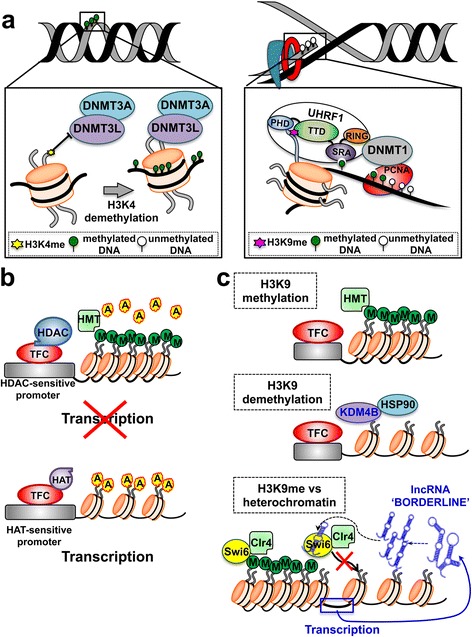
“the bromodomain motif that docks onto acetylated lysines [92]), which drive chromatin packaging around nucleosomes [88, 91] (Fig.”
BackgroundFinding the missing heritability of complex diseases
Manolio, T. A., Collins, F. S., Cox, N. J., Goldstein, D. B., Hindorff, L. A., Hunter, D. J., McCarthy, M. I., Ramos, E. M., Cardon, L. R., Chakravarti, A., et al. (2009) · Nature · doi:10.1038/nature08494 · Cited by 8,336 · cited 1×
“Epistatic components need to be integrated by estimates of the contribution of non-genetic factors, globally designated as the “missing heritability” [7, 8].”
BackgroundOkano, M., Bell, D. W., Haber, D. A., & Li, E. (1999) · Cell · doi:10.1016/s0092-8674(00)81656-6 · Cited by 6,143 · cited 4×
“Recent findings showed that in the absence of histone H3, DNMT3A exists in an autoinhibitory form, in which the ATRX–DNMT3–DNMT3L (ADD) domain binds to diseasesa Molecular defects thic folds; flat nasal bridge; p; everted lower lip; Mutations in ATRX gene, hypomethylation of specific repeat and satellite sequences fac…”
BackgroundInfluentialConversion of 5-Methylcytosine to 5-Hydroxymethylcytosine in Mammalian DNA by MLL Partner TET1
Tahiliani, M., Koh, K. P., Shen, Y., Pastor, W. A., Bandukwala, H., Brudno, Y., Agarwal, S., Iyer, L. M., Liu, D. R., Aravind, L., et al. (2009) · Science · doi:10.1126/science.1170116 · Cited by 5,836 · cited 1×
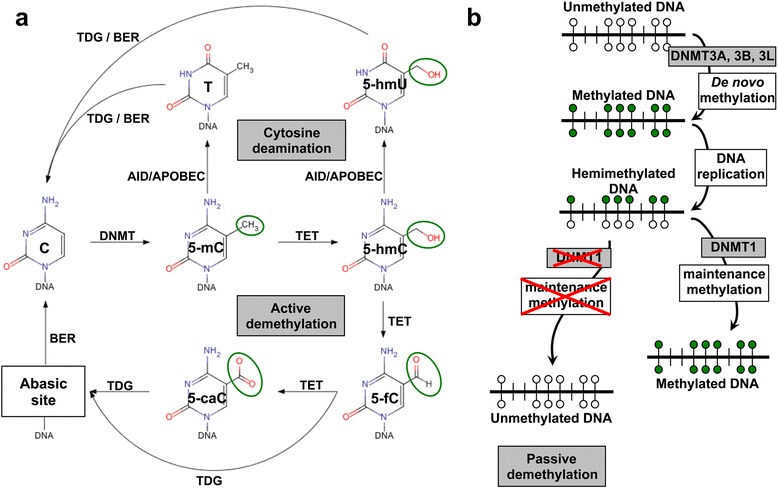
“5-hmC is then converted to 5-formylcytosine (5-fC) and 5-carboxylcytosine (5-caC) [30].”
BackgroundChen, X., Xiu, M., Xing, J., Yu, S., Min, D., & Guo, F. (2017) · Cellular Physiology and Biochemistry · doi:10.1159/000479439 · Cited by 5,742
Common SNPs explain a large proportion of the heritability for human height
Yang, J., Benyamin, B., McEvoy, B. P., Gordon, S., Henders, A. K., Nyholt, D. R., Madden, P. A., Heath, A. C., Martin, N. G., Montgomery, G. W., et al. (2010) · Nature Genetics · doi:10.1038/ng.608 · Cited by 4,446 · cited 1×
“Although dedicated procedures for SNP-associated analyses have significantly increased their combined predictive power [15], a large amount of heritable heightassociated factors remains undetectable by conventional GWAS, suggesting that such non-DNA sequence-linked information may be associated to epigenetic heredity.”
BackgroundEsteller, M. (2008) · New England Journal of Medicine · doi:10.1056/nejmra072067 · Cited by 3,662
Tet-Mediated Formation of 5-Carboxylcytosine and Its Excision by TDG in Mammalian DNA
He, Y.-F., Li, B.-Z., Li, Z., Liu, P., Wang, Y., Tang, Q., Ding, J., Jia, Y., Chen, Z., Li, L., et al. (2011) · Science · doi:10.1126/science.1210944 · Cited by 2,770 · cited 2×
“This leaves an abasic site that is subsequently processed through the base excision repair (BER) pathway [33] (Fig.”
BackgroundEpigenetic Transgenerational Actions of Endocrine Disruptors and Male Fertility
Anway, M. D., Cupp, A. S., Uzumcu, M., & Skinner, M. K. (2005) · Science · doi:10.1126/science.1108190 · Cited by 2,563 · cited 1×
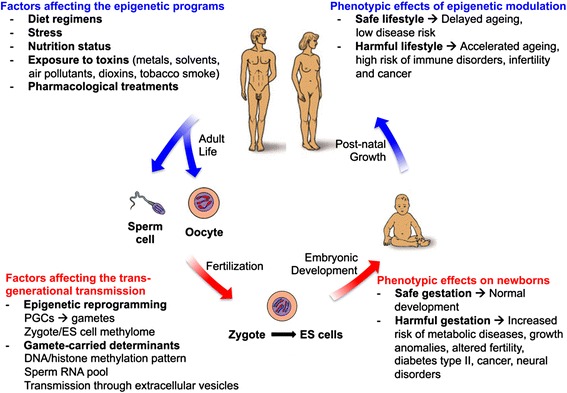
“Remarkably, transgenerational transmission of these effects through the male germ line was then observed in F1 to F4 generations [82].”
BackgroundGenome-scale DNA methylation maps of pluripotent and differentiated cells
Meissner, A., Mikkelsen, T. S., Gu, H., Wernig, M., Hanna, J., Sivachenko, A., Zhang, X., Bernstein, B. E., Nusbaum, C., Jaffe, D. B., et al. (2008) · Nature · doi:10.1038/nature07107 · Cited by 2,536 · cited 1×
“It has been shown that during early mitotic divisions of a mammalian embryo, daughter cells derived from the zygote have a globally hypomethylated genome [50] and a transcriptionally active chromatin due to histone H4 acetylation [51].”
Background
Cited by
Items 101–200 of 332
Correa, F. A., Jorge, A. A. L., Nakaguma, M., Canton, A. P. M., da Costa, S. S., Funari, M. F. A., Lerário, A. M., França, M. M., Carvalho, L. R. S., Krepischi, A. C. V., et al. (2017) · Clinical Endocrinology · doi:10.1111/cen.13535 · Cited by 15
Ma, Z., Wang, Y., Quan, Y., Wang, Z., Liu, Y., & Ding, Z. (2022) · Human Genomics · doi:10.1186/s40246-022-00410-2 · Cited by 20
Pharmacogenetic and pharmacogenomic discovery strategies
Crisafulli, C., Romeo, P. D., Calabrò, M., Epasto, L. M., & Alberti, S. (2019) · Cancer Drug Resistance · doi:10.20517/cdr.2018.008 · Cited by 14
“…on identifying therapy-responsive subgroups on the basis of evolving tumor subgroup classifications [1] , as based on pathological and clinical parameters [2] , tumor stage [3] , cancer biomarkers [4,5] and cancer drivers [6-14] , including both somatic and hereditary epigenetic changes [15,16] .”
Self-citationChen, C., Wei, Y., Wei, L., Chen, J., Chen, X., Dong, X., He, J., Lin, L., Zhu, Y., Huang, H., et al. (2020) · Aging · doi:10.18632/aging.103284 · Cited by 14
“First, this is the first epigenome-wide study to investigate the interaction between DNA methylation and age on NSCLC survival, which provides new evidence to account for the missing heritability of complex diseases [43] and may further reveal the role of age in heterogeneity of NSCLC prognosis and treatment efficacy.”
BackgroundBlay, C., Planes, S., & Ky, C. (2018) · Journal of Heredity · doi:10.1093/jhered/esy015 · Cited by 13
“This variance is known as “missing heritability” and its underlying factors and mechanisms are not precisely established (Trerotola et al. 2015).”
BackgroundBughio, F., Huckell, G. R., & Maggert, K. A. (2019) · Proceedings of the National Academy of Sciences · doi:10.1073/pnas.1909724116 · Cited by 14
Baumann, A., Buribayev, Z., Wolkenhauer, O., Salybekov, A. A., & Wolfien, M. (2025) · Epigenomes · doi:10.3390/epigenomes9010005 · Cited by 20
“Following DNA damage, changes in DNA methylation patterns and histone modifications at break sites can alter gene expression, creating a “memory” of the damage that is inherited by daughter cells [13].”
Ashwani, Sharma, A., Choudhary, M. K., Gugulothu, D. B., Pandita, D., Verma, S., Vora, L. K., Khatri, D. K., & Garabadu, D. (2025) · Molecular Neurobiology · doi:10.1007/s12035-025-04868-8 · Cited by 20
“This occurrence can be explained in part by the part that epigenetic pathways played in the emergence of MS [72].”
Analog epigenetic memory revealed by targeted chromatin editing
(2025) · doi:10.1016/j.xgen.2025.100985 · Cited by 13
“11,19,20,48 Furthermore, H3K4me3 but not H3K9me3 is associated with transcriptionally active promoters, 20 leading to our chromatin modification model (Figures 2J and S5; see STAR Methods; and Table S7 for the chemical reaction system).”
5-Methoxy-N,N-dimethyltryptamine: An Ego-Dissolving Endogenous Neurochemical Catalyst of Creativity
Germann, C. B. (2019) · Activitas Nervosa Superior · doi:10.1007/s41470-019-00063-y · Cited by 17
Role of the BMP6 protein in breast cancer and other types of cancer
García-Muro, A. M., García-Ruvalcaba, A., de la Torre, L. D. C. R., & Sánchez-López, J. Y. (2021) · Growth Factors · doi:10.1080/08977194.2021.1994964 · Cited by 16
“However, they report no amplification for BMP6 gene neither in patients with metastases nor patients without it (Tsyganov et al. 2019).”
BackgroundMethodThomson, K., Game, J., Karouta, C., Morgan, I. G., & Ashby, R. (2021) · The FASEB Journal · doi:10.1096/fj.202101487r · Cited by 14
Analog epigenetic memory revealed by targeted chromatin editing
Palacios, S., Bruno, S., Weiss, R., Salibi, E., Kane, A., Ilia, K., & Del Vecchio, D. (2024) · doi:10.1101/2024.02.13.580200 · Cited by 13
Saino, N., Albetti, B., Ambrosini, R., Caprioli, M., Costanzo, A., Mariani, J., Parolini, M., Romanò, A., Rubolini, D., Formenti, G., et al. (2019) · Scientific Reports · doi:10.1038/s41598-019-42798-3 · Cited by 14
Martinez, M. E., Stohn, J. P., Mutina, E. M., Whitten, R. J., & Hernández, A. (2022) · Frontiers in Neuroscience · doi:10.3389/fnins.2022.1055116 · Cited by 14
“According mostly to studies in rodents, these factors may include environmental exposures or pathological circumstances in previous generations capable of eliciting alterations in the epigenetic information of the germ line (Goriely and Wilkie, 2010; Koch, 2014b; Prokopuk et al., 2015; Rodgers et al., 2015; Trerotola…”
BackgroundRealo, A., van der Most, P. J., Allïk, J., Esko, T., Jeronimus, B. F., Kööts‐Ausmees, L., Mõttus, R., Tropf, F. C., Snieder, H., & Ormel, J. (2017) · Journal of Personality · doi:10.1111/jopy.12297 · Cited by 18
Introduction to Genome Biology and Diversity
Youssef, N., Budd, A., & Bielawski, J. P. (2019) · Methods in molecular biology · doi:10.1007/978-1-4939-9074-0_1 · Cited by 20
“passed from one generation to the next [129, 130].”
BackgroundGenetic and epigenetic analyses of panic disorder in the post-GWAS era
Morimoto, Y., Ono, S., Kurotaki, N., Imamura, A., & Ozawa, H. (2020) · Journal of Neural Transmission · doi:10.1007/s00702-020-02205-y · Cited by 12
Smith, D. A., Jheeta, S., Fuentes, H. V., & Palacios-Pérez, M. (2022) · Life · doi:10.3390/life12081197 · Cited by 15
Agrelius, T. C., Altman, J. E., & Dudycha, J. L. (2022) · Heredity · doi:10.1038/s41437-022-00581-7 · Cited by 17
“Evidence continues to mount that transmission of epigenetic modifications can be stable across generations, including those induced via environmental cues (Chong and Whitelaw 2004; Richards 2006; Trerotola et al. 2015; Herman and Sultan 2016).”
BackgroundCocoş, R., & Popescu, B. O. (2024) · Human Genomics · doi:10.1186/s40246-024-00704-7 · Cited by 19
“As we further discuss, it is reasonable to integrate other components capable of capturing the impact of complex non-additive genetic influences, ranging from gene-gene interactions to gene-by-environment and epigenetics-gene interactions [101, 200, 201].”
Pujol-Borrell, R., Álvarez-Sierra, D., Jaraquemada, D., Marín-Sánchez, A., & Colobran, R. (2018) · Hormone and Metabolic Research · doi:10.1055/a-0755-7927 · Cited by 10
“Transgenerational inheritance of epigenetic traits – a field still in its infancy in mammals [69] – could play a role in this missing heritability and it could be applicable to autoimmune thyroid diseases [70].”
BackgroundHeritability of Sleep and Its Disorders in Childhood and Adolescence
Lewis, K. S., & Gregory, A. M. (2021) · Current Sleep Medicine Reports · doi:10.1007/s40675-021-00216-z · Cited by 13
“These factors and other mechanisms such as epigenetic inheritance [59] may explain why SNP heritability estimates are often much lower than those from twin studies.”
ResultMitotic drive in asymmetric epigenetic inheritance
Ranjan, R., & Chen, X. (2022) · Biochemical Society Transactions · doi:10.1042/bst20200267 · Cited by 10
Epigenetics, heritability and longitudinal analysis
Nustad, H. E., Almeida, M., Canty, A. J., LeBlanc, M., Page, C. M., & Melton, P. E. (2018) · BMC Genetics · doi:10.1186/s12863-018-0648-1 · Cited by 12
“This model of epigenetic inheritance can be explained through (a) mitotic inheritance of phenotypes across cell generations, (b) inheritance across successive meiotic divisions, and (c) transgenerational inheritance, which requires proof of h(2) across multiple generations [14].”
Rice, R. C., Gil, D. V., Baratta, A. M., Frawley, R. R., Hill, S. Y., Farris, S. P., & Homanics, G. E. (2023) · Neurobiology of Stress · doi:10.1016/j.ynstr.2023.100603 · Cited by 12
Mutations of short tandem repeats explain abundant trait heritability in Arabidopsis
Zhang, Z., Jiang, J., Xu, Y., Dent, C., Sureshkumar, S., Balasubramanian, S., & Guo, Y. (2025) · Genome biology · doi:10.1186/s13059-025-03720-5 · Cited by 11
“Third, epigenetic inheritance in addition to Mendelian heredity of DNA sequences could explain "missing heritability" to some extent [38].”
On the Role of Seminal Fluid Protein and Nucleic Acid Content in Paternal Epigenetic Inheritance
Patlar, B. (2022) · International Journal of Molecular Sciences · doi:10.3390/ijms232314533 · Cited by 12
Can all heritable biology really be reduced to a single dimension?
Babbitt, G. A., Coppola, E. E., Alawad, M. A., & Hudson, A. O. (2015) · Gene · doi:10.1016/j.gene.2015.12.043 · Cited by 10
Laufer, V. A., Chen, J. Y., Langefeld, C. D., & Bridges, S. L. (2017) · Rheumatic Disease Clinics of North America · doi:10.1016/j.rdc.2017.04.012 · Cited by 10
Ji, X., Lin, L., Fan, J., Li, Y., Wei, Y., Shen, S., Su, L., Shafer, A., Bjaanæs, M. M., Karlsson, A., et al. (2021) · Molecular Oncology · doi:10.1002/1878-0261.13167 · Cited by 12
Genetic and epigenetic regulation of intestinal fibrosis
Li, C., & Kuemmerle, J. F. (2016) · United European Gastroenterology Journal · doi:10.1177/2050640616659023 · Cited by 12
Chronic nicotine exposure alters sperm small RNA content in C57BL/6J mouse model
Zeid, D., & Gould, T. J. (2023) · Developmental Psychobiology · doi:10.1002/dev.22367 · Cited by 10
A broken network of susceptibility genes in the monocytes of Crohn’s disease patients
Liu, H., Guan, L., Su, X., Zhao, L., Shu, Q., & Zhang, J. (2024) · Life Science Alliance · doi:10.26508/lsa.202302394 · Cited by 9
“…(8, 11), as well as the causes of incomplete linkage disequilibrium between causal variants and genotyped SNPs (12), missing variant with small effect (11), missing rare variant with large effect (11), structure variant poorly captured by existing arrays (11), and epigenetic modi fi cations (13).”
BackgroundSafaralizadeh, R., Eslahi, M., Nematbakhsh, N., Dastmalchi, N., & Teimourian, S. (2022) · CNS & Neurological Disorders - Drug Targets · doi:10.2174/1871527321666220119104649 · Cited by 9
Szukiewicz, D. (2022) · Vitamins and hormones · doi:10.1016/bs.vh.2022.11.005 · Cited by 11
Genetic and Epigenetic Differentiation in Response to Genomic Selection for Avian Lay Date
Lindner, M., Verhagen, I., Mateman, A. C., van Oers, K., Laine, V. N., & Visser, M. E. (2024) · Evolutionary Applications · doi:10.1111/eva.13703 · Cited by 8
“Epigenetics marks, that is chemical modifications of the DNA sequences or DNA-associated histones, are suggested to con - tribute to heritable phenotypic variation (Trerotola et al., 2015 ).”
Schreiber, S. P., Villalba, J. J., & Meyer‐Ficca, M. L. (2025) · Animals · doi:10.3390/ani15121787 · Cited by 8
Expanding Role of Epigenetics in Human Health and Disease
Chakrabarti, S. K., & Chattopadhyay, D. (2024) · Exploratory Research and Hypothesis in Medicine · doi:10.14218/erhm.2023.00086 · Cited by 11
Advancing the use of noncoding RNA in regulatory toxicology: Report of an ECETOC workshop
Aigner, A. M., Buesen, R., Gant, T. W., Gooderham, N. J., Greim, H. A., Hackermüller, J., Hubesch, B., Laffont, M., Marczylo, E. L., Meister, G., et al. (2016) · Regulatory Toxicology and Pharmacology · doi:10.1016/j.yrtph.2016.09.018 · Cited by 10
“It is hypothesized that, if such gene transcription processes are disturbed, e.g. by environmental or epigenetic factors, the phenotype of the resulting embryo can potentially be affected (Trerotola et al. 2015).”
BackgroundEpigenetic Regulation of the Protein Translation Machinery
Holland, M. L. (2017) · EBioMedicine · doi:10.1016/j.ebiom.2017.02.018 · Cited by 8
“This intriguing conundrum of ‘missing heritability’ has led to much speculation as to its origin (Trerotola et al., 2015).”
BackgroundComprehensive Analysis of Differently Expressed and Methylated Genes in Preeclampsia
Xu, W., Ru, P., Gu, Z., Zhang, R., Pang, X., Huang, Y., Liu, Z., & Liu, M. (2020) · Computational and Mathematical Methods in Medicine · doi:10.1155/2020/2139270 · Cited by 8
“Epigenetics indicated that the change of gene expression was heritable, but did not turn out to be in DNA [13, 14].”
BackgroundInfluentialExamining the extent of environmental contributions toward DNA methylation and phenotypic variation
Pacht, E., Murdoch, B. M., & McKay, S. (2021) · Animal Frontiers · doi:10.1093/af/vfab056 · Cited by 9
Smith, D. A., Palacios-Pérez, M., & Jheeta, S. (2022) · Life · doi:10.3390/life12020287 · Cited by 9
Magierecka, A., Aristeidou, A., Papaevripidou, M., Gibson, J. K., Sloman, K. A., & Metcalfe, N. B. (2022) · Proceedings of the Royal Society B Biological Sciences · doi:10.1098/rspb.2022.1462 · Cited by 8
Epigenetic developmental programming and intergenerational effects of thyroid hormones
Hernández, A., Martínez, M. E., Chaves, C. M., & Anselmo, J. (2023) · Vitamins and hormones · doi:10.1016/bs.vh.2023.01.003 · Cited by 11
Chimpanzees, War, and History: Are Men Born to Kill?
Ferguson, R. B. (2023) · doi:10.1093/oso/9780197506752.001.0001 · Cited by 12
Disentangling the complexity of psoriasis in the post-genome-wide association era
Antonatos, C., Grafanaki, K., Georgiou, S., Εvangelou, Ε., & Vasilopoulos, Y. (2023) · Genes and Immunity · doi:10.1038/s41435-023-00222-x · Cited by 11
“Such fi ndings could forge a model of epigenetic inheritance providing insights into the missing heritability [17].”
BackgroundGenetic risk scores in complex eye disorders
Igo, R. P., & Bailey, J. N. C. (2019) · Elsevier eBooks · doi:10.1016/b978-0-12-816222-4.00016-2 · Cited by 9
Soerensen, M., Hozakowska-Roszkowska, D. M., Nygaard, M., Larsen, M. J., Schwämmle, V., Christensen, K., Christiansen, L., & Tan, Q. (2020) · Frontiers in Neuroscience · doi:10.3389/fnins.2020.00233 · Cited by 8
Application of epigenetics for allergen-free peanut production: a comprehensive review
Gelaye, Y., & Luo, H. (2025) · Epigenetics Insights · doi:10.48130/epi-0025-0006 · Cited by 7
The Future of CRISPR Applications in the Lab, the Clinic and Society
Hough, S. H., & Ajetunmobi, A. (2017) · Advances in experimental medicine and biology · doi:10.1007/978-3-319-63904-8_9 · Cited by 8
Digital Sequence Information on Genetic Resources and the Convention on Biological Diversity
Lyal, C. H. C. (2022) · Ius gentium · doi:10.1007/978-3-030-88711-7_21 · Cited by 8
Lipohyperplasia dolorosa – neu betrachtet
Brenner, E. (2023) · Phlebologie · doi:10.1055/a-2090-0877 · Cited by 8
Genome-wide methylome stability and parental effects in the worldwide distributed Lombardy poplar
Broeck, A. V., Meese, T., Verschelde, P., Cox, K., Heinze, B., Deforce, D. L. D., Meester, E. D., & Nieuwerburgh, F. V. (2024) · BMC Biology · doi:10.1186/s12915-024-01816-1 · Cited by 7
“Genome-wide association studies (GWAS) of complex plant traits, such as bud 64 set in trees, consistently found that genetic factors only explained a minority of the expected 65 heritable fraction [10].”
Erfan, R., Shaker, O. G., Khalil, M. A. F., Mahmoud, F. A. M., Gomaa, M. S., Abu-El-Azayem, A. K., Zaki, O. M., Ahmed, A. M., Samy, A., & Mohammed, A. (2023) · Inflammatory Bowel Diseases · doi:10.1093/ibd/izad210 · Cited by 7
Single-cell genome-wide studies give new insight into nongenetic cell-to-cell variability in animals
Golov, A. K., Razin, S. V., & Gavrilov, A. A. (2016) · Histochemistry and Cell Biology · doi:10.1007/s00418-016-1466-z · Cited by 12
“For instance, meiotic and transgenerational inheritance are the focus of intense epigenetic research (Heard and Martienssen 2014; Trerotola et al. 2015), but are beyond the scope of epigenetics in the initial sense of the term.”
BackgroundThe flight of the locus of selection: Some intricate relationships between evolutionary elements
Becker, A. M. (2018) · Behavioural Processes · doi:10.1016/j.beproc.2018.01.002 · Cited by 6
50‐Hz MF does not affect global DNA methylation of SH‐SY5Y cells treated with the neurotoxin MPP+
Benassi, B., Santangeli, S., Merla, C., Tarantini, L., Bollati, V., Butera, A., Marino, C., & Consales, C. (2018) · Bioelectromagnetics · doi:10.1002/bem.22158 · Cited by 7
“The main epigenetic modifications include chromatin remodeling, DNA methylation, and non-coding RNA mechanisms [Trerotola et al., 2015].”
BackgroundDiscovering the shared biology of cognitive traits determined by genetic overlap
Guimaraes, J., Bralten, J., Greven, C. U., Franke, B., Sprooten, E., & Beckmann, C. F. (2019) · NeuroImage · doi:10.1016/j.neuroimage.2019.116409 · Cited by 7
Aggarwal, N., Rathore, M., Jan, F., Sharma, D., Kumar, S., Thudi, M., Jighly, A., Varshney, R. K., & Mir, R. R. (2026) · Theoretical and Applied Genetics · doi:10.1007/s00122-026-05293-8 · Cited by 10
“In these context, transposable elements and epigenetic alterations, such as DNA methylation, have been proposed as additional sources of heritable phenotypic variation that may contribute to explaining components of missing heritability (Trerotola et al. 2015; Bourrat and Lu 2017).”
Fingelkurts, A. A., & Fingelkurts, A. A. (2023) · Brain Sciences · doi:10.3390/brainsci13030520 · Cited by 7
Diagnostic value and role of serum miR-15a-5p in patients with schizophrenia
Xu, Z., Yang, R., Chen, G., & Jiang, M. (2024) · Annals of General Psychiatry · doi:10.1186/s12991-023-00489-4 · Cited by 7
“However, recent studies revealed that only 2–3% of the transcripts of advanced organisms encode proteins, and most of the DNA transcripts are non-coding RNA (ncRNAs) [5].”
BackgroundHMCN1 variants aggravate epidermolysis bullosa simplex phenotype
Bergson, S., Sarig, O., Giladi, M., Mohamad, J., Salem, M., Smorodinsky-Atias, K., Sade, O., Manori, B., Assaf, S., Malovitski, K., et al. (2025) · The Journal of Experimental Medicine · doi:10.1084/jem.20240827 · Cited by 6
Pan, S., Guo, Y., Yu, W., Zhang, J., Qiao, X., Li, L., Xu, P., & Zhai, Y. (2023) · International Journal of Molecular Sciences · doi:10.3390/ijms24032602 · Cited by 6
Sperm-Specific MicroRNAs - Their Role and Function
Carroll, M. (2016) · Genetics & Genomic Sciences · doi:10.24966/ggs-2485/100003 · Cited by 6
Eichten, S. R., Srivastava, A., Reddiex, A. J., Ganguly, D. R., Heussler, A., Streich, J., Wilson, P. B., & Borevitz, J. (2020) · G3 Genes Genomes Genetics · doi:10.1534/g3.120.401189 · Cited by 8
“potential sources of the missing heritability are varied and include; rare variants, structural variation, epistasis, and the focus of this article, epigenomics [1–3].”
BackgroundGenetic control of non-genetic inheritance in mammals: state-of-the-art and perspectives
Tomar, A., & Teperino, R. (2020) · Mammalian Genome · doi:10.1007/s00335-020-09841-5 · Cited by 6
Zhu, J., Guan, J., Ji, X., Song, X., Xu, X., Wang, Q., Zhang, Q., Guo, R., Wang, R., & Zhang, R. (2022) · Molecular Genetics and Genomics · doi:10.1007/s00438-022-01869-3 · Cited by 6
Missing Causality and Heritability of Autoimmune Hepatitis
Czaja, A. J. (2022) · Digestive Diseases and Sciences · doi:10.1007/s10620-022-07728-w · Cited by 7
“Epistatic interactions between genes can help explain the missing heritability of complex genetic diseases by incorporating non-additive, genetic effects into the paradigms of pathogenesis [117, 255, 260, 261].”
BackgroundEpigenome-wide association study of plasma lipids in West Africans: the RODAM study
van der Linden, E. L., Meeks, K. A. C., Chilunga, F. P., Hayfron-Benjamin, C. F., Bahendeka, S., Klipstein‐Grobusch, K., Venema, A., van den Born, B. H., Agyemang, C. O., Henneman, P., et al. (2023) · EBioMedicine · doi:10.1016/j.ebiom.2023.104469 · Cited by 6
Integrative genetic and epigenetic control of skeletal muscle fiber traits in agricultural animals
Chang, X., & Ma, J. (2025) · Frontiers in Genetics · doi:10.3389/fgene.2025.1566553 · Cited by 7
A genome-wide scan of non-coding RNAs and enhancers for refractive error and myopia
Tedja, M. S., Swierkowska, J., Enthoven, C. A., Meester‐Smoor, M. A., Hysi, P. G., Felix, J. F., Cowan, C. S., Cherry, T. J., van der Spek, P. J., Ghanbari, M., et al. (2025) · Human Genetics · doi:10.1007/s00439-024-02721-x · Cited by 7
Epigenetics of Transgenerational Inheritance of Disease
Blake, G. E. T., Rakoczy, J., & Watson, E. D. (2018) · Elsevier eBooks · doi:10.1016/b978-0-12-812215-0.00026-1 · Cited by 5
Kubiak, M., Pryszcz, L. P., Białas, W., & Celińska, E. (2021) · Microorganisms · doi:10.3390/microorganisms9091798 · Cited by 6
“Apart from DNA methylation, other epigenetic modifications including histone modification contribute to the hereditary transmission of chromatin states, and the gene activation or silencing [23,30].”
BackgroundModel reduction and stochastic analysis of the histone modification circuit
Bruno, S., Williams, R. J., & Vecchio, D. D. (2022) · European Control Conference (ECC) · doi:10.23919/ecc55457.2022.9838047 · Cited by 9
Epigenetic Mechanisms of Blood-Pressure Regulation
Markel, А. L., & Redina, O. E. (2018) · Molecular Biology · doi:10.1134/s0026893317050120 · Cited by 5
Tokic, S., Novakovic, B., Leopold‐Posch, B., Mühlberger, M., Hoch, D., Loegl, J., Bernhart, E. M., Saffery, R., Desoyé, G., & Hiden, U. (2024) · The Journal of Physiology · doi:10.1113/jp285910 · Cited by 4
“As changes in DNA methylation patterns can be passed to the daughter cells during cell division, these patterns can remain even if the cause is no longer present (Lange and Schneider, 2010, Trerotola et al., 2015) and affect endothelial function in the long term.”
Pregnolato, S., Sabir, H., Luyt, K., Rienecker, K. D. A., Isles, A. R., & Chakkarapani, E. (2022) · Brain and Neuroscience Advances · doi:10.1177/23982128221097568 · Cited by 4
“CpG islands are nearly always unmethylated (Deaton and Bird, 2011; Jones, 2012; Rivera and Ren, 2013; Saxonov et al., 2006; Trerotola et al., 2015; Ziller et al., 2013), with few exceptions (e.”
BackgroundSalamanca, C., González‐Hormazábal, P., Recabarren, A. S., Recabarren, P. A., Pantoja, R., Leiva, N., V, Pardo, R. A., V, & Suazo, J. (2020) · Pediatric Research · doi:10.1038/s41390-020-0994-3 · Cited by 6
Antenatal depression and maternal infant directed speech during the first postnatal year
O’Leary, N., Jairaj, C., Nixon, E., Quigley, J., & O’Keane, V. (2021) · Infant Behavior and Development · doi:10.1016/j.infbeh.2021.101605 · Cited by 6
Hyper-Coordinated DNA Methylation is Altered in Schizophrenia and Associated with Brain Function
Chen, J., Schwarz, K., Zang, Z., Braun, U., Harneit, A., Kremer, T. L., Ma, R., Schweiger, J. I., Moessnang, C., Geiger, L. S., et al. (2021) · Schizophrenia Bulletin Open · doi:10.1093/schizbullopen/sgab036 · Cited by 5
Phenotypic but no genetic adaptation in zooplankton 24 years after an abrupt +10°C climate change
Pais-Costa, A. J., Lievens, E., Redón, S., Sánchez, M. I., Jabbour‐Zahab, R., Joncour, P., Hòa, N. V., Stappen, G. V., & Lenormand, T. (2022) · Evolution Letters · doi:10.1002/evl3.280 · Cited by 7
Evolutionary Foundationalism: The Myth of the Chemical Given
Walsh, D. M. (2023) · The MIT Press eBooks · doi:10.7551/mitpress/14642.003.0021 · Cited by 5
Chatziparasidis, G., Chatziparasidi, M. R., Kantar, A., & Bush, A. (2024) · Pediatric Pulmonology · doi:10.1002/ppul.26935 · Cited by 7
“29 Conceptually, in asthma pathogenesis there must be a third significant factor the presence of which determines whether the effects of the lung insult(s) is/are transient or lifelong.”
BackgroundArbeev, K. G., Akushevich, I. V., Kulminski, A. M., Ukraintseva, S. V., & Yashin, A. I. (2014) · Advances in Geriatrics · doi:10.1155/2014/957073 · Cited by 4
Epigenetics of Major Depressive Disorder
Wang, K. Z., Dada, O. O., Bani‐Fatemi, A., Tasmim, S., Monda, M., Graff, A., & Luca, V. D. (2019) · Elsevier eBooks · doi:10.1016/b978-0-323-58131-8.00002-1 · Cited by 5
Panigrahi, M., Nayak, S. S., Rajawat, D., Bose, A., Bharia, N., Das, S., Sharma, A., & Dutt, T. (2025) · Mammalian Genome · doi:10.1007/s00335-025-10138-8 · Cited by 14
“In domestication, epigenomics helps explain missing heritability, differential gene expression, and links between genetic variation and phenotypes (Schmitz et al. 2013; Trerotola et al. 2015).”
Male obesity causes adipose mitochondrial dysfunction in F1 mouse progeny via a let-7-DICER axis
Huang, C. H., Park, J.-H., Altıntaş, A., Stanić, N., de Leon, K. K., Skog, S., Kalogeropoulos, P., Topel, H., Madsen, T., Zanner, S., et al. (2026) · Nature Communications · doi:10.1038/s41467-026-69686-5 · Cited by 5
Jiang, X., Zhang, M., Yuan, X., Wang, L., Jiao, W., Mao, J., Ye, W., Yu, D., Tian, Z., & Song, Q. (2026) · Molecular Plant · doi:10.1016/j.molp.2026.02.013 · Cited by 7
Wright, C., Lei, J., Bernal, J. S., Zhu‐Salzman, K., & Medina, R. F. (2022) · Ecological Entomology · doi:10.1111/een.13185 · Cited by 4
“From a molecular perspective, epigenetic modifications, including DNA methylation and histone modification, may play a role in transgenerational fecundity compensation by altering the expression of genes without affecting their DNA sequences (Trerotola et al., 2015; Vilcinskas, 2016).”
BackgroundNon-Coding RNAs and Innate Immune Responses in Cancer
Díaz, C. R., Hernández‐Huerta, M. T., Mayoral, L. P.-C., Villegas, M. E. A., Zenteno, E., Cruz, M. M., Mayoral, E. P., Pina-Canseco, M. D. S., Andrade, G. M., Castellanos, A., et al. (2024) · Biomedicines · doi:10.3390/biomedicines12092072 · Cited by 4
“Mechanisms involved in heritable epigenetic changes include DNA methylation, histone modifications, acetylation, phosphorylation, and ubiquitination. ncRNAs are also regulators of the epigenetic status of human DNA [107,108].”
BackgroundKühl, M., Wu, P., Shrestha, A., Engelhorn, J., Mukherjee, S., Hartwig, T., & Stich, B. (2025) · Journal of Experimental Botany · doi:10.1093/jxb/eraf422 · Cited by 6
Martinez, M. E., Karaczyn, A. A., Wu, Z., Bennett, C. A., Matoin, K. L., Daigle, H. M., & Hernández, A. (2024) · Epigenetics · doi:10.1080/15592294.2024.2376948 · Cited by 3
Bonilla, M., McPherson, M., Coreas, J., Boulos, M., Chavol, P., Alrabadi, R. I., & Loza‐Coll, M. (2021) · Alcoholism Clinical and Experimental Research · doi:10.1111/acer.14647 · Cited by 3
Smith, D. A., Palacios-Pérez, M., & Jheeta, S. (2022) · Gastrointestinal Disorders · doi:10.3390/gidisord4030012 · Cited by 3
Mosher, M. J., & Schanfield, M. S. (2015) · Journal of Archaeological Science Reports · doi:10.1016/j.jasrep.2015.11.004 · Cited by 3
Introduction to Epigenetic Inheritance: Definition, Mechanisms, Implications and Relevance
Lassi, M., & Teperino, R. (2020) · Springer eBooks · doi:10.1007/978-3-030-35213-4_9 · Cited by 6
Transcriptome‐wide genotype–phenotype associations in Daphnia in a predation risk environment
Ravindran, S. P., Tams, V., & Cordellier, M. (2020) · Journal of Evolutionary Biology · doi:10.1111/jeb.13699 · Cited by 3
“Underlying factors and mechanisms such as different epigenetic modifications add to variation and plasticity without changing DNA sequences (Trerotola et al., 2015).”
BackgroundXu, Y., & Xiao, L. (2024) · Molecular Biology · doi:10.1134/s0026893324060116 · Cited by 2
“Epigenetic inheritance denotes heritable alterations in gene expression devoid of changes in gene sequence [1, 2].”
Metadata
- Authors
- Trerotola, M., Relli, V., Simeone, P., & Alberti, S.
- Affiliations
- University of Chieti-Pescara (IT)
- Corresponding author
- Alberti, Saverio
- Venue
- Human Genomics
- Published
- 2015-07-28
- Volume
- 9
- Issue
- 1
- Pages
- 17-17
- ISSN
- 1473-9542 (ISSN-L)
- 1479-7364
- PMC
- PMC4517414
- OpenAlex
- W1580250799
- Cited by
- 318
- References
- 111
- Citations by year
- 2026: 9 · 2025: 22 · 2024: 26 · 2023: 61 · 2022: 31 · 2021: 26 · 2020: 28 · 2019: 30 · 2018: 25 · 2017: 24 · 2016: 30 · 2015: 3
- FWCI
- 2.65
- Type
- journal article
- Language
- en
- Open access
- gold
- doi.org
- Locations
- Human Genomics (publishedVersion, cc-by)
- PubMed Central (publishedVersion, cc-by)
- PubMed (publishedVersion)
- Funders
- Italian Ministry of Health (RF-EMR-2006-361866)
- Italian Ministry of Development (Made in Italy MI0100424)
- Compagnia di San Paolo (Grant 2489IT)
- Fondazione Cassa di Risparmio della Provincia di Chieti (ᅟ)
- Topics
- Life Sciences › Biochemistry, Genetics and Molecular Biology › Molecular Biology › Epigenetics and DNA Methylation
- Life Sciences › Biochemistry, Genetics and Molecular Biology › Genetics › Genetic Syndromes and Imprinting
- Health Sciences › Medicine › Pediatrics, Perinatology and Child Health › Birth, Development, and Health
- Keywords
- missing heritability, epigenetic inheritance, DNA methylation, chromatin inheritance, complex traits, transgenerational epigenetic inheritance, parental effects, histone modifications, genome reprogramming, nutritional epigenetics, height, fertility, food metabolism
- MeSH terms
- Cell Differentiation, Gene Expression Regulation, Humans, Meiosis, Mitosis, DNA Methylation, Chromatin Assembly and Disassembly, Epigenesis, Genetic, Genome-Wide Association Study, Cellular Reprogramming
About these checks
Registry, retraction, Cites and statistics results are computed, not judged, with one exception: a printed reference that no index lists is read once by a model before it counts as a citation error. Claims are extracted by a model and kept only when their quote appears verbatim in the text; each cited source is then checked, with a model’s help, for whether it says what the claim relies on. Those verdicts can be wrong — read the claim’s quote and the cited source before relying on one.
Statistics and arithmetic are recomputed, not judged.
Confidence bands are shown only for fields calibrated on our annotated test set. None is calibrated yet, so no band is shown.
What counts as a claim ›How we measure confidence ›How we check this ›
Are you an author, or do you see a problem with this page? Request a review
Data sources
Bibliographic data: Semantic Scholar, OpenAlex, Crossref.
Contains information from the Semantic Scholar Academic Graph Datasets, made available under the ODC Attribution License (ODC-BY 1.0).
Semantic Scholar’s data is described in: Kinney, R., et al. (2023). The Semantic Scholar Open Data Platform. arXiv:2301.10140.
