

Epigenetic inheritance and the missing heritability
Open accessThe DOI matches its Crossref record; 111 of the 111 references it cites were found in a registry or an index.
Abstract
Genome-wide association studies of complex physiological traits and diseases consistently found that associated genetic factors, such as allelic polymorphisms or DNA mutations, only explained a minority of the expected heritable fraction. This discrepancy is known as "missing heritability", and its underlying factors and molecular mechanisms are not established. Epigenetic programs may account for a significant fraction of the "missing heritability." Epigenetic modifications, such as DNA methylation and chromatin assembly states, reflect the high plasticity of the genome and contribute to stably alter gene expression without modifying genomic DNA sequences. Consistent components of complex traits, such as those linked to human stature/height, fertility, and food metabolism or to hereditary defects, have been shown to respond to environmental or nutritional condition and to be epigenetically inherited. The knowledge acquired from epigenetic genome reprogramming during development, stem cell differentiation/de-differentiation, and model organisms is today shedding light on the mechanisms of (a) mitotic inheritance of epigenetic traits from cell to cell, (b) meiotic epigenetic inheritance from generation to generation, and (c) true transgenerational inheritance. Such mechanisms have been shown to include incomplete erasure of DNA methylation, parental effects, transmission of distinct RNA types (mRNA, non-coding RNA, miRNA, siRNA, piRNA), and persistence of subsets of histone marks.
Overview
The claims and statistics of this paper haven’t been checked yet.
Free: it reads the open-access text and checks the first 5 claims that cite a source we can check. Create a free account to check every claim.
Integrity signals
Registry
Cites
Statistics
Figures
Verification
Claims the paper makes
The claims and statistics of this paper haven’t been checked yet.
Free: it reads the open-access text and checks the first 5 claims that cite a source we can check. Create a free account to check every claim.
Claims other papers make about this one
Each is checked against this paper’s own text: does it say what the citing paper says it does?
The cited source says what the claim attributes to it.
In the citing paper
“Indeed, inherited epigenetic patterns (254–256) and environmental factors (257, 258) other than childhood trauma (such as heavy metals (259), parenting style, and early trauma such as maternal separation (260)) may all impact the epigenetic pattern and hence childhood trauma-induced differential health outcomes.”
From Epigenetic Modifications in Stress Response Genes Associated With Childhood Trauma (2019) · cites this paper as [254]
Self-check
Percentages, sums and reported differences re-computed from the paper’s own numbers.
The self-check needs the paper’s full text.
Citations
Cites
The language of covalent histone modifications
Strahl, B. D., & Allis, C. D. (2000) · Nature · doi:10.1038/47412 · Cited by 8,679 · cited 2×
“the bromodomain motif that docks onto acetylated lysines [92]), which drive chromatin packaging around nucleosomes [88, 91] (Fig.”
BackgroundFinding the missing heritability of complex diseases
Manolio, T. A., Collins, F. S., Cox, N. J., Goldstein, D. B., Hindorff, L. A., Hunter, D. J., McCarthy, M. I., Ramos, E. M., Cardon, L. R., Chakravarti, A., et al. (2009) · Nature · doi:10.1038/nature08494 · Cited by 8,336 · cited 1×
“Epistatic components need to be integrated by estimates of the contribution of non-genetic factors, globally designated as the “missing heritability” [7, 8].”
BackgroundOkano, M., Bell, D. W., Haber, D. A., & Li, E. (1999) · Cell · doi:10.1016/s0092-8674(00)81656-6 · Cited by 6,143 · cited 4×
“Recent findings showed that in the absence of histone H3, DNMT3A exists in an autoinhibitory form, in which the ATRX–DNMT3–DNMT3L (ADD) domain binds to diseasesa Molecular defects thic folds; flat nasal bridge; p; everted lower lip; Mutations in ATRX gene, hypomethylation of specific repeat and satellite sequences fac…”
BackgroundInfluentialConversion of 5-Methylcytosine to 5-Hydroxymethylcytosine in Mammalian DNA by MLL Partner TET1
Tahiliani, M., Koh, K. P., Shen, Y., Pastor, W. A., Bandukwala, H., Brudno, Y., Agarwal, S., Iyer, L. M., Liu, D. R., Aravind, L., et al. (2009) · Science · doi:10.1126/science.1170116 · Cited by 5,836 · cited 1×
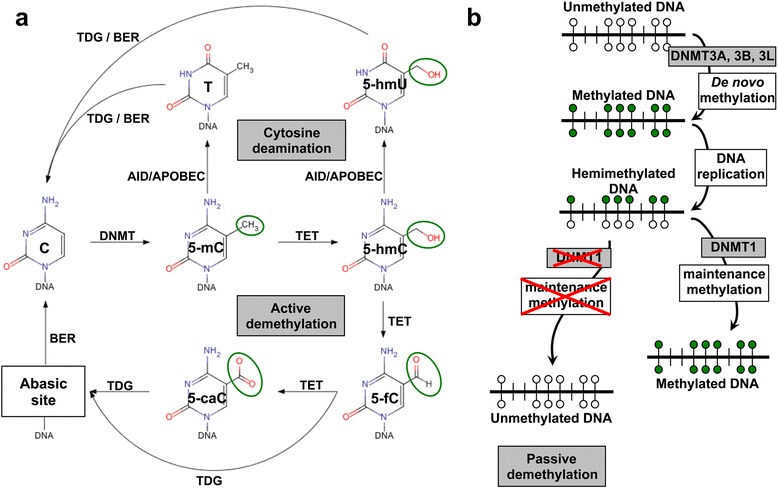
“5-hmC is then converted to 5-formylcytosine (5-fC) and 5-carboxylcytosine (5-caC) [30].”
BackgroundChen, X., Xiu, M., Xing, J., Yu, S., Min, D., & Guo, F. (2017) · Cellular Physiology and Biochemistry · doi:10.1159/000479439 · Cited by 5,742
Common SNPs explain a large proportion of the heritability for human height
Yang, J., Benyamin, B., McEvoy, B. P., Gordon, S., Henders, A. K., Nyholt, D. R., Madden, P. A., Heath, A. C., Martin, N. G., Montgomery, G. W., et al. (2010) · Nature Genetics · doi:10.1038/ng.608 · Cited by 4,446 · cited 1×
“Although dedicated procedures for SNP-associated analyses have significantly increased their combined predictive power [15], a large amount of heritable heightassociated factors remains undetectable by conventional GWAS, suggesting that such non-DNA sequence-linked information may be associated to epigenetic heredity.”
BackgroundEsteller, M. (2008) · New England Journal of Medicine · doi:10.1056/nejmra072067 · Cited by 3,662
Tet-Mediated Formation of 5-Carboxylcytosine and Its Excision by TDG in Mammalian DNA
He, Y.-F., Li, B.-Z., Li, Z., Liu, P., Wang, Y., Tang, Q., Ding, J., Jia, Y., Chen, Z., Li, L., et al. (2011) · Science · doi:10.1126/science.1210944 · Cited by 2,770 · cited 2×
“This leaves an abasic site that is subsequently processed through the base excision repair (BER) pathway [33] (Fig.”
BackgroundEpigenetic Transgenerational Actions of Endocrine Disruptors and Male Fertility
Anway, M. D., Cupp, A. S., Uzumcu, M., & Skinner, M. K. (2005) · Science · doi:10.1126/science.1108190 · Cited by 2,563 · cited 1×
“Remarkably, transgenerational transmission of these effects through the male germ line was then observed in F1 to F4 generations [82].”
BackgroundGenome-scale DNA methylation maps of pluripotent and differentiated cells
Meissner, A., Mikkelsen, T. S., Gu, H., Wernig, M., Hanna, J., Sivachenko, A., Zhang, X., Bernstein, B. E., Nusbaum, C., Jaffe, D. B., et al. (2008) · Nature · doi:10.1038/nature07107 · Cited by 2,536 · cited 1×
“It has been shown that during early mitotic divisions of a mammalian embryo, daughter cells derived from the zygote have a globally hypomethylated genome [50] and a transcriptionally active chromatin due to histone H4 acetylation [51].”
BackgroundA gene hypermethylation profile of human cancer.
Esteller, M., Corn, P. G., Baylin, S. B., & Herman, J. G. (2001) · PubMed · Cited by 2,327
Stability and flexibility of epigenetic gene regulation in mammalian development
Reik, W. (2007) · Nature · doi:10.1038/nature05918 · Cited by 1,963 · cited 1×
“It has been shown that during early mitotic divisions of a mammalian embryo, daughter cells derived from the zygote have a globally hypomethylated genome [50] and a transcriptionally active chromatin due to histone H4 acetylation [51].”
BackgroundTransgenerational epigenetic inheritance: myths and mechanisms
Heard, E., & Martienssen, R. A. (2014) · Cell · doi:10.1016/j.cell.2014.02.045 · Cited by 1,864 · cited 1×
“In this regard, it should be noted that purely parental effects, such as the impact of direct in utero exposure to particular nutritional, hormonal, or stress/ toxin environments, do not represent true transgenerational heredity [67].”
BackgroundStructure and ligand of a histone acetyltransferase bromodomain
Dhalluin, C., Carlson, J. E., Zeng, L., He, C., Aggarwal, A. K., Zhou, M.-M., & Zhou, M.-M. (1999) · Nature · doi:10.1038/20974 · Cited by 1,732 · cited 1×
“the bromodomain motif that docks onto acetylated lysines [92]), which drive chromatin packaging around nucleosomes [88, 91] (Fig.”
BackgroundThe mystery of missing heritability: Genetic interactions create phantom heritability
Zuk, O., Hechter, E., Sunyaev, S. R., & Lander, E. S. (2012) · Proceedings of the National Academy of Sciences · doi:10.1073/pnas.1119675109 · Cited by 1,542 · cited 2×
“0/ independent contributions to complex phenotypes, such effects being essentially additive [5].”
BackgroundDolinoy, D. C., Huang, D., & Jirtle, R. L. (2007) · Proceedings of the National Academy of Sciences · doi:10.1073/pnas.0703739104 · Cited by 1,369 · cited 1×
“utero and neonatal exposure to low doses of Bisphenol A and/or phthalates causes epigenetic alterations [71], such as differential methylation at CpG islands, histone modifications, and altered expression of ncRNAs and miRNAs [80, 81].”
BackgroundCharting a dynamic DNA methylation landscape of the human genome
Ziller, M. J., Gu, H., Müller, F., Donaghey, J., Tsai, L. T.-Y., Kohlbacher, O., De Jager, P. L., Rosen, E. D., Bennett, D. A., Bernstein, B. E., et al. (2013) · Nature · doi:10.1038/nature12433 · Cited by 1,357 · cited 1×
“Approximately 60–80 % of the 28 million CpG dinucleotides in the human genome are methylated [18, 19].”
BackgroundParental olfactory experience influences behavior and neural structure in subsequent generations
Dias, B. G., & Ressler, K. J. (2014) · Nature Neuroscience · doi:10.1038/nn.3594 · Cited by 1,338 · cited 1×
“Genes encoding olfactory receptors, in cases where mice associated specific odors with fearful experience, were also found differentially methylated in sperm, and this methylation pattern was transmitted to F1 and F2 generations [60].”
BackgroundDistinctive chromatin in human sperm packages genes for embryo development
Hammoud, S. S., Nix, D. A., Zhang, H., Purwar, J., Carrell, D. T., & Cairns, B. R. (2009) · Nature · doi:10.1038/nature08162 · Cited by 1,320
Implication of sperm RNAs in transgenerational inheritance of the effects of early trauma in mice
Gapp, K., Jawaid, A., Sarkies, P., Bohacek, J., Pelczar, P., Prados, J., Farinelli, L., Miska, E., & Mansuy, I. M. (2014) · Nature Neuroscience · doi:10.1038/nn.3695 · Cited by 1,306 · cited 1×
“DNA methylation signatures driving altered behavioral/metabolic phenotypes (from exposure to maternal stress) were subsequently shown to be transgenerationally transmitted to the offspring [83], through miRNA delivery by sperm cells to the oocyte [63, 83].”
BackgroundDynamic Reprogramming of DNA Methylation in the Early Mouse Embryo
Santos, F., Hendrich, B., Reik, W., & Dean, W. (2002) · Developmental Biology · doi:10.1006/dbio.2001.0501 · Cited by 1,212 · cited 1×
“Therefore, they are an epigenetically homogeneous cell population [52, 53].”
BackgroundCarone, B. R., Fauquier, L., Habib, N., Shea, J. M., Hart, C. E., Li, R., Bock, C., Li, C., Gu, H., Zamore, P. D., et al. (2010) · Cell · doi:10.1016/j.cell.2010.12.008 · Cited by 1,159 · cited 1×
“RNA molecules packaged in sperm represent an additional contributor to transgenerational transmission of epigenetic traits and have been shown to profoundly affect offspring phenotypes [61, 62].”
BackgroundDynamic regulation of 5-hydroxymethylcytosine in mouse ES cells and during differentiation
Ficz, G., Branco, M. R., Seisenberger, S., Santos, F., Krueger, F., Hore, T. A., Marques, C. J., Andrews, S., & Reik, W. (2011) · Nature · doi:10.1038/nature10008 · Cited by 1,133 · cited 3×
“Thus, the balance between hydroxymethylation and methylation in the genome appears to be linked with the balance between pluripotency and lineage commitment [32].”
BackgroundCho, Y. S., Go, M. J., Kim, Y. J., Heo, J. Y., Oh, J. H., Ban, H.-J., Yoon, D., Lee, M. H., Kim, D.-J., Park, M., et al. (2009) · Nature Genetics · doi:10.1038/ng.357 · Cited by 1,015 · cited 1×
“Most of these genes were demonstrated to be largely overlapping in Caucasian and non-Caucasian populations [13, 14], consistent with an actual identification of the most relevant height-associated determinants.”
BackgroundRNA interference in the nucleus: roles for small RNAs in transcription, epigenetics and beyond
Castel, S. E., & Martienssen, R. A. (2013) · Nature Reviews Genetics · doi:10.1038/nrg3355 · Cited by 976 · cited 2×
“These siRNAs act by modulating transcriptional gene silencing of histone methyltransferases, with consequent rearrangement of the chromatin structure [106].”
BackgroundEpigenetics and environmental chemicals
Baccarelli, A., & Bollati, V. (2009) · Current Opinion in Pediatrics · doi:10.1097/mop.0b013e32832925cc · Cited by 932 · cited 1×
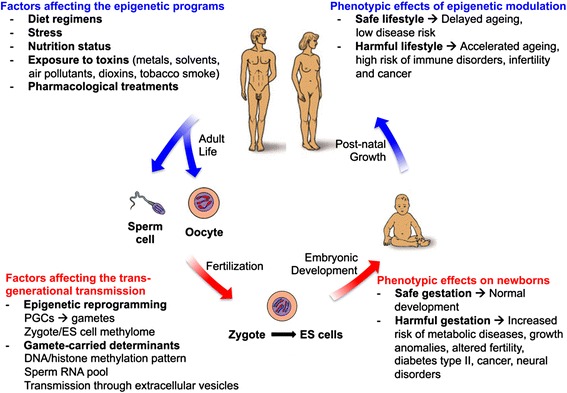
“Epigenetic modifications were also shown to be caused by exposure to environmental toxins, including metals (cadmium, arsenic, nickel, chromium, and methylmercury), solvents (trichloroethylene), air pollutants (black carbon, benzene), food-chain contaminants (dioxins), and tobacco smoke (nicotine, benzo(a)pyrene) [78,…”
BackgroundRNA-mediated non-mendelian inheritance of an epigenetic change in the mouse
Rassoulzadegan, M., Grandjean, V., Gounon, P., Vincent, S., Gillot, I., & Cuzin, F. (2006) · Nature · doi:10.1038/nature04674 · Cited by 921 · cited 1×
“RNA molecules packaged in sperm represent an additional contributor to transgenerational transmission of epigenetic traits and have been shown to profoundly affect offspring phenotypes [61, 62].”
BackgroundTETonic shift: biological roles of TET proteins in DNA demethylation and transcription
Pastor, W. A., Aravind, L., & Rao, A. (2013) · Nature Reviews Molecular Cell Biology · doi:10.1038/nrm3589 · Cited by 897 · cited 2×
“Consequently, transient U:G and T:G mismatches can be generated, though most of these mutations can be efficiently repaired by the TDG/BER pathway [40].”
BackgroundAPOBEC3B is an enzymatic source of mutation in breast cancer
Burns, M. B., Lackey, L., Carpenter, M. A., Rathore, A., Land, A. M., Leonard, B., Refsland, E. W., Kotandeniya, D., Tretyakova, N., Nikas, J. B., et al. (2013) · Nature · doi:10.1038/nature11881 · Cited by 838 · cited 1×
“Notably, dysregulated APOBEC3B-catalyzed deamination can provide a chronic source of DNA damage, with consequent TP53 inactivation; this was shown to lead to development of breast cancer [41].”
BackgroundGenome-wide association analysis identifies 20 loci that influence adult height
Initiative, D. G., Weedon, M. N., The Wellcome Trust Case Control Consortium, Cambridge GEM Consortium, Lango, H., Lindgren, C. M., Wallace, C., Evans, D. M., Mangino, M., Freathy, R. M., et al. (2008) · Nature Genetics · doi:10.1038/ng.121 · Cited by 826
Epigenetic inheritance during the cell cycle
Probst, A. V., Dunleavy, E., & Almouzni, G. (2009) · Nature Reviews Molecular Cell Biology · doi:10.1038/nrm2640 · Cited by 795 · cited 1×
“These and other findings also demonstrated that H3K9me3 and H3K27me3 are central marks for cellular memory [97, 100], and are propagated by continuous modification of both new and old histones through the generations.”
Germline DNA Demethylation Dynamics and Imprint Erasure Through 5-Hydroxymethylcytosine
Hackett, J. A., Sengupta, R., Zylicz, J. J., Murakami, K., Lee, C., Down, T. A., & Surani, M. A. (2013) · Science · doi:10.1126/science.1229277 · Cited by 792 · cited 1×
“This progressive loss of 5-mC occurs concurrently with an enrichment of 5-hmC, suggesting a genome-scale conversion of 5mC to 5-hmC for the epigenomic reprogramming of these cells [31].”
BackgroundInterpreting the language of histone and DNA modifications
Rothbart, S. B., & Strahl, B. D. (2014) · Biochimica et Biophysica Acta (BBA) - Gene Regulatory Mechanisms · doi:10.1016/j.bbagrm.2014.03.001 · Cited by 720 · cited 2×
“the bromodomain motif that docks onto acetylated lysines [92]), which drive chromatin packaging around nucleosomes [88, 91] (Fig.”
BackgroundGenomic profiling of DNA methyltransferases reveals a role for DNMT3B in genic methylation
Baubec, T., Colombo, D. F., Wirbelauer, C., Schmidt, J., Burger, L., Krebs, A. R., Akalin, A., & Schübeler, D. (2015) · Nature · doi:10.1038/nature14176 · Cited by 705 · cited 1×
“Both DNMT3A and DNMT3B localize to methylated, CpG-dense regions and preferentially bind to the bodies of transcribed genes but are excluded from regions of active promoters and enhancers [23].”
BackgroundRepressive and active histone methylation mark distinct promoters in human and mouse spermatozoa
Brykczynska, U., Hisano, M., Erkek, S., Ramos, L., Oakeley, E. J., Roloff, T. C., Beisel, C., Schübeler, D., Stadler, M. B., & Peters, A. H. F. M. (2010) · Nature Structural & Molecular Biology · doi:10.1038/nsmb.1821 · Cited by 680 · cited 1×
“However, not all histones in sperm are replaced by protamines, and epigenetic marks such as H3K4me2 and H3K27me3 have been detected in sperm [57, 58].”
BackgroundPark, J.-H., Wacholder, S., Gail, M. H., Peters, U., Jacobs, K. B., Chanock, S. J., & Chatterjee, N. (2010) · Nature Genetics · doi:10.1038/ng.610 · Cited by 678 · cited 1×
“However, the genetic components identified to date only explain 20 % of this heritable fraction [9].”
BackgroundA Unique Gene Regulatory Network Resets the Human Germline Epigenome for Development
Tang, W. W. C., Dietmann, S., Irie, N., Leitch, H. G., Floros, V. I., Bradshaw, C. R., Hackett, J. A., Chinnery, P. F., & Surani, M. A. (2015) · Cell · doi:10.1016/j.cell.2015.04.053 · Cited by 670 · cited 1×
“However, genome-wide DNA methylation profiling in PGCs revealed that, although the bulk of the genome becomes demethylated [44, 45], several loci escape this epigenetic erasure [46].”
BackgroundMany sequence variants affecting diversity of adult human height
Gudbjartsson, D. F., Walters, G. B., Thorleifsson, G., Stefansson, H., Halldorsson, B. V., Zusmanovich, P., Sulem, P., Thorlacius, S., Gylfason, A., Steinberg, S., et al. (2008) · Nature Genetics · doi:10.1038/ng.122 · Cited by 666 · cited 1×
“A significant fraction of height-determining genes has been identified by GWAS analysis [10–12].”
BackgroundSearching for missing heritability: Designing rare variant association studies
Zuk, O., Schaffner, S. F., Samocha, K., Do, R., Hechter, E., Kathiresan, S., Daly, M. J., Neale, B. M., Sunyaev, S. R., & Lander, E. S. (2014) · Proceedings of the National Academy of Sciences · doi:10.1073/pnas.1322563111 · Cited by 635 · cited 2×
“However, simple models of additive effects of ever-smaller components have remained as yet unproven [4–7].”
BackgroundAberrant Epigenetic Landscape in Cancer: How Cellular Identity Goes Awry
Berdasco, M., & Esteller, M. (2010) · Developmental Cell · doi:10.1016/j.devcel.2010.10.005 · Cited by 618 · cited 1×
“Exposure of parents to distinct diet regimens, stress, drugs, or endocrine/metabolic dysfunctions, was shown to additionally affect the transgenerational transmission of altered DNA methylation patterns [69–75].”
BackgroundTargets and dynamics of promoter DNA methylation during early mouse development
Borgel, J., Guibert, S., Li, Y., Chiba, H., Schübeler, D., Sasaki, H., Forné, T., & Weber, M. (2010) · Nature Genetics · doi:10.1038/ng.708 · Cited by 601 · cited 6×
“However, genome-wide DNA methylation profiling in PGCs revealed that, although the bulk of the genome becomes demethylated [44, 45], several loci escape this epigenetic erasure [46].”
BackgroundInfluentialThe Transcriptome and DNA Methylome Landscapes of Human Primordial Germ Cells
Guo, F., Yan, L., Guo, H., Li, L., Hu, B., Zhao, Y., Yong, J., Hu, Y., Wang, X., Wei, Y., et al. (2015) · Cell · doi:10.1016/j.cell.2015.05.015 · Cited by 600 · cited 1×
“However, genome-wide DNA methylation profiling in PGCs revealed that, although the bulk of the genome becomes demethylated [44, 45], several loci escape this epigenetic erasure [46].”
BackgroundChromatin replication and epigenome maintenance
Alabert, C., & Groth, A. (2012) · Nature Reviews Molecular Cell Biology · doi:10.1038/nrm3288 · Cited by 592 · cited 1×
“Hence, histones act as carriers of epigenetic information, and the kinetics of PTM restoration appears to play a critical role in epigenetic inheritance [90, 98].”
BackgroundIdentification of ten loci associated with height highlights new biological pathways in human growth
Initiative, T. D. G., Lettre, G., FUSION, KORA, The Prostate, L. C. A. O. C. S. T., Study, T. N. H., SardiNIA, Jackson, A. U., Gieger, C., Schumacher, F. R., et al. (2008) · Nature Genetics · doi:10.1038/ng.125 · Cited by 588 · cited 1×
“A significant fraction of height-determining genes has been identified by GWAS analysis [10–12].”
BackgroundDNA methylation dynamics of the human preimplantation embryo
Smith, Z. D., Chan, M. M., Humm, K. C., Karnik, R., Mekhoubad, S., Regev, A., Eggan, K., & Meissner, A. (2014) · Nature · doi:10.1038/nature13581 · Cited by 580 · cited 1×
“Recent evidence from genome-scale DNA methylation analysis of human development confirmed a transient, highly dynamic state of global hypomethylation that affects most CpGs [43].”
BackgroundGenome-wide Profiling of 5-Formylcytosine Reveals Its Roles in Epigenetic Priming
Song, C.-X., Szulwach, K. E., Dai, Q., Fu, Y., Mao, S.-Q., Lin, L., Street, C., Li, Y., Poidevin, M., Wu, H., et al. (2013) · Cell · doi:10.1016/j.cell.2013.04.001 · Cited by 550 · cited 1×
“The thymine DNA glycosylase (TDG) efficiently excises both 5-fC and 5-caC [33, 34].”
BackgroundRivera, C. M., & Ren, B. (2013) · Cell · doi:10.1016/j.cell.2013.09.011 · Cited by 550 · cited 1×
“Approximately 60–80 % of the 28 million CpG dinucleotides in the human genome are methylated [18, 19].”
BackgroundUnderstanding the relationship between DNA methylation and histone lysine methylation
Rose, N. R., & Klose, R. J. (2014) · Biochimica et Biophysica Acta (BBA) - Gene Regulatory Mechanisms · doi:10.1016/j.bbagrm.2014.02.007 · Cited by 542 · cited 1×
“The largest body of knowledge has been gathered on histone methylation and acetylation [84], which cooperates in re-shaping chromatin organization.”
BackgroundProgramming and Inheritance of Parental DNA Methylomes in Mammals
Wang, L., Zhang, J., Duan, J., Gao, X., Zhu, W., Lu, X., Yang, L., Zhang, J., Li, G., Ci, W., et al. (2014) · Cell · doi:10.1016/j.cell.2014.04.017 · Cited by 531 · cited 1×
“It was recently reported that 5-hmC and 5-fC do exist in both maternal and paternal genomes and that 5-mC or its oxidized derivatives can be converted to unmodified cytosines through active demethylation rather than by passive dilution during embryonic development [48].”
BackgroundDNMT3L Stimulates the DNA Methylation Activity of Dnmt3a and Dnmt3b through a Direct Interaction
Suetake, I., Shinozaki, F., Miyagawa, J., Takeshima, H., & Tajima, S. (2004) · Journal of Biological Chemistry · doi:10.1074/jbc.m400181200 · Cited by 516 · cited 6×
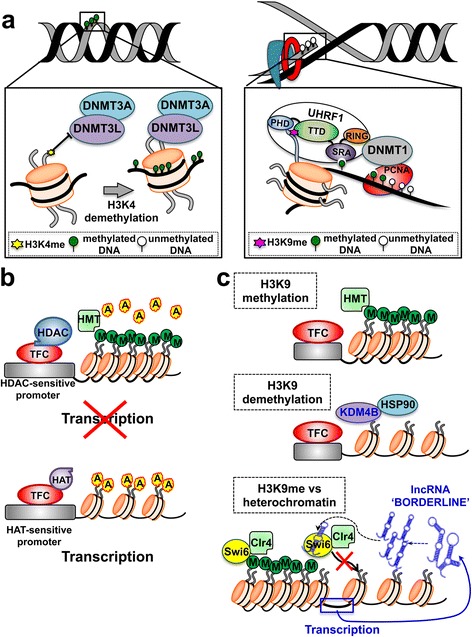
“This histone code interacts closely with DNA methylation: unmethylated Lys-4 on H3 histone (H3K4) acts as a docking site for DNMT3A, which is recruited on nucleosomes and methylates associated target nucleotides [21, 22].”
BackgroundInfluentialMaternal nutrition at conception modulates DNA methylation of human metastable epialleles
Dominguez-Salas, P., Moore, S. E., Baker, M. S., Bergen, A. W., Cox, S. E., Dyer, R. A., Fulford, A. J., Guan, Y., Laritsky, E., Silver, M. J., et al. (2014) · Nature Communications · doi:10.1038/ncomms4746 · Cited by 506 · cited 1×
“DNA methylation was shown to be affected by periconceptional maternal plasma concentrations of micronutrients involved in one-carbon metabolism, such as folate, B2 vitamin, methionine, and betaine [70].”
BackgroundMatoba, S., Liu, Y., Lu, F., Iwabuchi, K. A., Shen, L., Inoue, A., & Zhang, Y. (2014) · Cell · doi:10.1016/j.cell.2014.09.055 · Cited by 471 · cited 1×
“Moreover, reprogramming-resistant regions strongly enriched for H3K9me3 were demonstrated to be critical barriers for efficient reprogramming [56].”
BackgroundPGC7 binds histone H3K9me2 to protect against conversion of 5mC to 5hmC in early embryos
Nakamura, T., Liu, Y.-J., Nakashima, H., Umehara, H., Inoue, K., Matoba, S., Tachibana, M., Ogura, A., Shinkai, Y., & Nakano, T. (2012) · Nature · doi:10.1038/nature11093 · Cited by 465 · cited 1×
“Moreover, interaction of Dppa3 with histone H3K9me2 blocks the activity of TET3, favoring the maintenance of DNA methylation [86].”
BackgroundReprogramming DNA methylation in the mammalian life cycle: building and breaking epigenetic barriers
Seisenberger, S., Peat, J. R., Hore, T. A., Santos, F., Dean, W., & Reik, W. (2013) · Philosophical Transactions of the Royal Society B: Biological Sciences · doi:10.1098/rstb.2011.0330 · Cited by 456 · cited 1×
“Erasure and reconstitution of epigenetic signatures during early body development Reprogramming/re-establishment of epigenetic signatures was also shown to be necessary for proper development of a mature organism [49].”
BackgroundSeason of Conception in Rural Gambia Affects DNA Methylation at Putative Human Metastable Epialleles
Waterland, R. A., Kellermayer, R., Laritsky, E., Rayco-Solon, P., Harris, R. A., Travisano, M., Zhang, W., Torskaya, M. S., Zhang, J., Shen, L., et al. (2010) · PLoS Genetics · doi:10.1371/journal.pgen.1001252 · Cited by 454 · cited 1×
“Exposure of parents to distinct diet regimens, stress, drugs, or endocrine/metabolic dysfunctions, was shown to additionally affect the transgenerational transmission of altered DNA methylation patterns [69–75].”
BackgroundFouse, S. D., Shen, Y., Pellegrini, M., Cole, S., Meissner, A., Van Neste, L., Jaenisch, R., & Fan, G. (2008) · Cell Stem Cell · doi:10.1016/j.stem.2007.12.011 · Cited by 452 · cited 1×
“Among them, the polycomb-group (PcG) proteins recognize specific histone modifications such as the H3K27me3 and participate in maintenance of repressed chromatin domains [93].”
BackgroundCitrullination regulates pluripotency and histone H1 binding to chromatin
Christophorou, M. A., Castelo-Branco, G., Halley-Stott, R. P., Oliveira, C. S., Loos, R., Radzisheuskaya, A., Mowen, K. A., Bertone, P., Silva, J. C. R., Zernicka-Goetz, M., et al. (2014) · Nature · doi:10.1038/nature12942 · Cited by 412 · cited 1×
“Histone PTMs were further shown to be a critical mechanism for maintaining stem cell pluripotency [89].”
BackgroundTwo distinct modes for propagation of histone PTMs across the cell cycle
Alabert, C., Barth, T. K., Reverón-Gómez, N., Sidoli, S., Schmidt, A., Jensen, O. N., Imhof, A., & Groth, A. (2015) · Genes & Development · doi:10.1101/gad.256354.114 · Cited by 402 · cited 1×
“Recent findings suggested that most PTM levels are maintained according to the simple paradigm that new histones acquire modifications to become identical to the old ones [99].”
BackgroundChromatin dynamics during cellular reprogramming
Apostolou, E., & Hochedlinger, K. (2013) · Nature · doi:10.1038/nature12749 · Cited by 398 · cited 1×
“These and other findings also demonstrated that H3K9me3 and H3K27me3 are central marks for cellular memory [97, 100], and are propagated by continuous modification of both new and old histones through the generations.”
Structural insight into autoinhibition and histone H3-induced activation of DNMT3A
Guo, X., Wang, L., Li, J., Ding, Z., Xiao, J., Yin, X., He, S., Shi, P., Dong, L., Li, G., et al. (2015) · Nature · doi:10.1038/nature13899 · Cited by 361 · cited 2×
“Once the DNMT3A–DNMT3L complex is recruited to the nucleosome, unmethylated H3K4 binds to the ADD domain and stimulates DNMT3A to undergo a significant conformational change from an autoinhibitory form to an active form that can bind DNA and exert DNA methylation activity [85].”
BackgroundDNA Demethylation Dynamics in the Human Prenatal Germline
Gkountela, S., Zhang, K. X., Shafiq, T. A., Liao, W.-W., Hargan-Calvopiña, J., Chen, P.-Y., & Clark, A. T. (2015) · Cell · doi:10.1016/j.cell.2015.05.012 · Cited by 349 · cited 1×
“However, genome-wide DNA methylation profiling in PGCs revealed that, although the bulk of the genome becomes demethylated [44, 45], several loci escape this epigenetic erasure [46].”
BackgroundDu, Z., Song, J., Wang, Y., Zhao, Y., Guda, K., Yang, S., Kao, H.-Y., Xu, Y., Willis, J., Markowitz, S. D., et al. (2010) · Science Signaling · doi:10.1126/scisignal.2001462 · Cited by 338 · cited 13×
“An additional path of passive DNA demethylation proceeds through destabilization of DNMT1, which is then followed by “loss by dilution” of 5-mC through successive replication cycles.”
BackgroundInfluentialHawkins, N. J., & Ward, R. L. (2001) · JNCI Journal of the National Cancer Institute · doi:10.1093/jnci/93.17.1307 · Cited by 334 · cited 1×
“Most studied examples include patients with sporadic colorectal cancer with a microsatellite instability phenotype that shows methylation and silencing of the gene encoding MLH1 (Table 3), indicating that epigenetic silencing can result directly in genomic instability in transformed cells [108, 109].”
BackgroundDavis, A. P., Murphy, C. G., Saraceni-Richards, C. A., Rosenstein, M. C., Wiegers, T. C., & Mattingly, C. J. (2009) · Nucleic Acids Research · doi:10.1093/nar/gkn580 · Cited by 324
Epigenetic inheritance uncoupled from sequence-specific recruitment
Ragunathan, K., Jih, G., & Moazed, D. (2015) · Science · doi:10.1126/science.1258699 · Cited by 320
Regulation of DNMT1 stability through SET7-mediated lysine methylation in mammalian cells
Estève, P.-O., Chin, H. G., Benner, J., Feehery, G. R., Samaranayake, M., Horwitz, G. A., Jacobsen, S. E., & Pradhan, S. (2009) · Proceedings of the National Academy of Sciences · doi:10.1073/pnas.0810362106 · Cited by 318 · cited 13×
“An additional path of passive DNA demethylation proceeds through destabilization of DNMT1, which is then followed by “loss by dilution” of 5-mC through successive replication cycles.”
BackgroundInfluentialEpigenetics of Reprogramming to Induced Pluripotency
Papp, B., & Plath, K. (2013) · Cell · doi:10.1016/j.cell.2013.02.043 · Cited by 307 · cited 1×
“Erasure and reconstitution of DNA methylation patterns in adult stem cells Somatic cell nuclear transfer has been utilized as one of the procedures to obtain reprogramming of somatic cells toward a totipotent state, with the generation of induced pluripotent stem cells [54, 55].”
MethodBisphenol A exposure leads to specific microRNA alterations in placental cells
Avissar-Whiting, M., Veiga, K. R., Uhl, K. M., Maccani, M. A., Gagne, L. A., Moen, E. L., & Marsit, C. J. (2010) · Reproductive Toxicology · doi:10.1016/j.reprotox.2010.04.004 · Cited by 271 · cited 1×
“utero and neonatal exposure to low doses of Bisphenol A and/or phthalates causes epigenetic alterations [71], such as differential methylation at CpG islands, histone modifications, and altered expression of ncRNAs and miRNAs [80, 81].”
BackgroundParamutation in Drosophila linked to emergence of a piRNA-producing locus
de Vanssay, A., Bougé, A.-L., Boivin, A., Hermant, C., Teysset, L., Delmarre, V., Antoniewski, C., & Ronsseray, S. (2012) · Nature · doi:10.1038/nature11416 · Cited by 255
Restricted epigenetic inheritance of H3K9 methylation
Audergon, P. N. C. B., Catania, S., Kagansky, A., Tong, P., Shukla, M., Pidoux, A. L., & Allshire, R. C. (2015) · Science · doi:10.1126/science.1260638 · Cited by 254
Nongenetic inheritance and transgenerational epigenetics
Szyf, M. (2015) · Trends in Molecular Medicine · doi:10.1016/j.molmed.2014.12.004 · Cited by 238 · cited 6×
“Transgenerational inheritance of epigenetic patterns [16, 66] is key to a model of “epigenetic missing heredity”.”
BackgroundInfluentialChen, Z., Mann, J. R., Hsieh, C., Riggs, A. D., & Chédin, F. (2005) · Journal of Cellular Biochemistry · doi:10.1002/jcb.20447 · Cited by 230 · cited 6×
“This histone code interacts closely with DNA methylation: unmethylated Lys-4 on H3 histone (H3K4) acts as a docking site for DNMT3A, which is recruited on nucleosomes and methylates associated target nucleotides [21, 22].”
BackgroundInfluentialDNA Methylation and Differentiation: Silencing, Upregulation and Modulation of Gene Expression
Ehrlich, M., & Lacey, M. (2013) · Epigenomics · doi:10.2217/epi.13.43 · Cited by 228 · cited 1×
“DNA methylation at CpG islands modulates gene transcription and is involved in alternative promoter usage and regulation of short and long ncRNA processing and of enhancer activity [24–26].”
Background(2000) · American Journal of Public Health · doi:10.2105/ajph.90.4.627 · Cited by 225 · cited 1×
“and Crohn’s disease, is affected by interaction with dynamic environmental factors, such as host pathogens or nutritional status [68].”
BackgroundIntragenic DNA methylation in transcriptional regulation, normal differentiation and cancer
Kulis, M., Queirós, A. C., Beekman, R., & Martín-Subero, J. I. (2013) · Biochimica et Biophysica Acta (BBA) - Gene Regulatory Mechanisms · doi:10.1016/j.bbagrm.2013.08.001 · Cited by 223 · cited 1×
“DNA methylation at CpG islands modulates gene transcription and is involved in alternative promoter usage and regulation of short and long ncRNA processing and of enhancer activity [24–26].”
BackgroundBridging the transgenerational gap with epigenetic memory
Lim, J. P., & Brunet, A. (2013) · Trends in Genetics · doi:10.1016/j.tig.2012.12.008 · Cited by 221 · cited 2×
“Specific genetic/DNA sequence variants are typically inherited transgenerationally as Mendelian alleles and are supposed to carry with them all the genetic information that acts as inheritable determinant [1].”
BackgroundEstève, P.-O., Chang, Y., Samaranayake, M., Upadhyay, A. K., Horton, J. R., Feehery, G. R., Cheng, X., & Pradhan, S. (2011) · Nature Structural & Molecular Biology · doi:10.1038/nsmb.1939 · Cited by 220 · cited 2×
“On the opposite side, AKT1 phosphorylates DNMT1 at Ser143 and stabilizes the protein [37].”
BackgroundLujambio, A., Portela, A., Liz, J., Melo, S. A., Rossi, S., Spizzo, R., Croce, C. M., Calin, G. A., & Esteller, M. (2010) · Oncogene · doi:10.1038/onc.2010.361 · Cited by 193 · cited 1×
“DNA methylation at CpG islands modulates gene transcription and is involved in alternative promoter usage and regulation of short and long ncRNA processing and of enhancer activity [24–26].”
BackgroundMaccani, M. A., Avissar-Whiting, M., Banister, C. E., McGonnigal, B., Padbury, J. F., & Marsit, C. J. (2010) · Epigenetics · doi:10.4161/epi.5.7.12762 · Cited by 189 · cited 1×
“Epigenetic modifications were also shown to be caused by exposure to environmental toxins, including metals (cadmium, arsenic, nickel, chromium, and methylmercury), solvents (trichloroethylene), air pollutants (black carbon, benzene), food-chain contaminants (dioxins), and tobacco smoke (nicotine, benzo(a)pyrene) [78,…”
BackgroundA Histone Methylation Network Regulates Transgenerational Epigenetic Memory in C. elegans
Greer, E. L., Beese-Sims, S. E., Brookes, E., Spadafora, R., Zhu, Y., Rothbart, S. B., Aristizábal-Corrales, D., Chen, S., Badeaux, A. I., Jin, Q., et al. (2014) · Cell Reports · doi:10.1016/j.celrep.2014.02.044 · Cited by 183 · cited 1×
“transmission of epigenetic information through multiple generations [1, 105].”
BackgroundSplit Decision: What Happens to Nucleosomes during DNA Replication?
Annunziato, A. T. (2005) · Journal of Biological Chemistry · doi:10.1074/jbc.r400039200 · Cited by 172 · cited 1×
“However, incorporation of new, largely unmodified histones also occurs [96–98].”
BackgroundProteomic characterization of novel histone post-translational modifications
Arnaudo, A. M., & Garcia, B. A. (2013) · Epigenetics & Chromatin · doi:10.1186/1756-8935-6-24 · Cited by 161 · cited 1×
“Less common histone PTMs have been recently identified [87, 88].”
BackgroundPhthalates: Toxicogenomics and inferred human diseases
Singh, S., & Li, S. S.-L. (2010) · Genomics · doi:10.1016/j.ygeno.2010.11.008 · Cited by 159 · cited 1×
“Exposure of parents to distinct diet regimens, stress, drugs, or endocrine/metabolic dysfunctions, was shown to additionally affect the transgenerational transmission of altered DNA methylation patterns [69–75].”
BackgroundCossetti, C., Lugini, L., Astrologo, L., Saggio, I., Fais, S., & Spadafora, C. (2014) · PLoS ONE · doi:10.1371/journal.pone.0101629 · Cited by 151 · cited 1×
“Subcutaneous injection of human melanoma cells stably expressing enhanced green fluorescent protein (EGFP) led to the transfer of EGFP mRNA in murine sperm heads, likely through exosomes-mediated transport [65].”
BackgroundEpigenetic inheritance: histone bookmarks across generations
Campos, E. I., Stafford, J. M., & Reinberg, D. (2014) · Trends in Cell Biology · doi:10.1016/j.tcb.2014.08.004 · Cited by 146 · cited 2×
“Hence, histones act as carriers of epigenetic information, and the kinetics of PTM restoration appears to play a critical role in epigenetic inheritance [90, 98].”
BackgroundHenckel, A., Nakabayashi, K., Sanz, L. A., Feil, R., Hata, K., & Arnaud, P. (2009) · Human Molecular Genetics · doi:10.1093/hmg/ddp277 · Cited by 138 · cited 4×
“5 (e.g., IGF2) growth; repetitive nd/or repeatedly putting rs; seizures; no verbal skills; MeCP2 mutations culties; broad thumbs and nd malignant tumors, Mutation in CREB-binding protein (histone acetylation) sis; auditory and visual Mutation in Rsk-2 (histone phosphorylation) eating; triangular shaped ends to lessen…”
BackgroundInfluentialOkada, Y., Kamatani, Y., Takahashi, A., Matsuda, K., Hosono, N., Ohmiya, H., Daigo, Y., Yamamoto, K., Kubo, M., Nakamura, Y., et al. (2010) · Human Molecular Genetics · doi:10.1093/hmg/ddq091 · Cited by 119 · cited 1×
“Most of these genes were demonstrated to be largely overlapping in Caucasian and non-Caucasian populations [13, 14], consistent with an actual identification of the most relevant height-associated determinants.”
BackgroundBisphenol A and phthalates exhibit similar toxicogenomics and health effects
Singh, S., & Li, S. S.-L. (2011) · Gene · doi:10.1016/j.gene.2011.11.035 · Cited by 114 · cited 1×
“Exposure of parents to distinct diet regimens, stress, drugs, or endocrine/metabolic dysfunctions, was shown to additionally affect the transgenerational transmission of altered DNA methylation patterns [69–75].”
BackgroundThe Sperm Epigenome: Implications for the Embryo
Gannon, J. R., Emery, B. R., Jenkins, T. G., & Carrell, D. T. (2013) · Advances in experimental medicine and biology · doi:10.1007/978-1-4614-7783-9_4 · Cited by 110 · cited 1×
“Erasure of DNA methylation patterns in the zygote Erasure of DNA methylation patterns of the gametes (oocyte and sperm [42]) in the zygote was shown to occur immediately after fertilization.”
BackgroundNoncoding RNAs prevent spreading of a repressive histone mark
Valsecchi, C. I. K., Kulasegaran‐Shylini, R., Shimada, Y., Hotz, H.-R., & Bühler, M. (2013) · Nature Structural & Molecular Biology · doi:10.1038/nsmb.2619 · Cited by 107
Epigenetic Regulation by Heritable RNA
Liebers, R., Rassoulzadegan, M., & Lyko, F. (2014) · PLoS Genetics · doi:10.1371/journal.pgen.1004296 · Cited by 86 · cited 2×
“Moreover, miRNA-mediated signals can change DNA methylation patterns in the F2 sperm, and this signature can be maintained and replicated through subsequent mitotic and meiotic cycles [63].”
BackgroundElements of ‘missing heritability’
Marian, A. J. (2012) · Current Opinion in Cardiology · doi:10.1097/hco.0b013e328352707d · Cited by 81 · cited 2×
“However, simple models of additive effects of ever-smaller components have remained as yet unproven [4–7].”
BackgroundChromatin and extracellular vesicle associated sperm RNAs
Johnson, G. D., Mackie, P. M., Jodar, M., Moskovtsev, S. I., & Krawetz, S. A. (2015) · Nucleic Acids Research · doi:10.1093/nar/gkv591 · Cited by 78 · cited 1×
“Notably, RNA expressed in somatic cells can be transferred to gametes via extracellular vesicles [64].”
BackgroundEmbryological aspects of inducible morphological defenses in Daphnia
Laforsch, C., & Tollrian, R. (2004) · Journal of Morphology · doi:10.1002/jmor.10270 · Cited by 70 · cited 1×
“Support for this model is provided by the evidence that phenotypic plasticity can emerge over rapid time scales, at rates that are orders of magnitude higher than the processes of natural selection [16, 17].”
BackgroundArnold, C. N., Goel, A., Compton, C., Marcus, V., Niedzwiecki, D., Dowell, J. M., Wasserman, L., Inoue, T., Mayer, R. J., Bertagnolli, M. M., et al. (2004) · Cancer Biology & Therapy · doi:10.4161/cbt.3.1.590 · Cited by 58
Epigenetics of cellular reprogramming
Krishnakumar, R., & Blelloch, R. H. (2013) · Current Opinion in Genetics & Development · doi:10.1016/j.gde.2013.06.005 · Cited by 54 · cited 1×
“Erasure and reconstitution of DNA methylation patterns in adult stem cells Somatic cell nuclear transfer has been utilized as one of the procedures to obtain reprogramming of somatic cells toward a totipotent state, with the generation of induced pluripotent stem cells [54, 55].”
MethodMale germline transmits fetal alcohol epigenetic marks for multiple generations: a review
Sarkar, D. K. (2015) · Addiction Biology · doi:10.1111/adb.12186 · Cited by 53 · cited 1×
“Hence, 5-hmC is inevitably lost at each replication cycle [35].”
BackgroundSantos, J., Pereira, C., Gregorio, A. D., Spruce, T., Alder, O., Rodríguez, T. A., Azuara, V., Merkenschlager, M., & Fisher, A. G. (2010) · Epigenetics & Chromatin · doi:10.1186/1756-8935-3-1 · Cited by 50 · cited 1×
“Therefore, they are an epigenetically homogeneous cell population [52, 53].”
BackgroundDNA methylation prevents the amplification of TROP1, a tumor-associated cell surface antigen gene.
Alberti, S., Nutini, M., & Herzenberg, L. A. (1994) · Proceedings of the National Academy of Sciences · doi:10.1073/pnas.91.13.5833 · Cited by 49 · cited 2×
“This proces X chromosome inactivation, imprinting control regions (ICR) [27], heterochromatin folding and maintenance of genomic stability [28, 29].”
BackgroundSelf-citationATM Mediates pRB Function To Control DNMT1 Protein Stability and DNA Methylation
Shamma, A., Suzuki, M., Hayashi, N., Kobayashi, M., Sasaki, N., Nishiuchi, T., Doki, Y., Okamoto, T., Kohno, S., Muranaka, H., et al. (2013) · Molecular and Cellular Biology · doi:10.1128/mcb.01597-12 · Cited by 45 · cited 13×
“An additional path of passive DNA demethylation proceeds through destabilization of DNMT1, which is then followed by “loss by dilution” of 5-mC through successive replication cycles.”
BackgroundInfluentialEpigenetic heredity of human height
Simeone, P., & Alberti, S. (2014) · Physiological Reports · doi:10.14814/phy2.12047 · Cited by 45 · cited 3×
“It would also help explaining the cases of rapid, heritable adaptations to changing environmental conditions, such as for human stature [2, 3], and the occurrence of hereditary epistatic effects.”
BackgroundSelf-citationDNA methylation prevents transfection of genes for specific surface antigens.
Alberti, S., & Herzenberg, L. A. (1988) · Proceedings of the National Academy of Sciences · doi:10.1073/pnas.85.22.8391 · Cited by 43 · cited 2×
“This had a heavy impact on gene function and tightly prevented the expression of the CD5 gene, though not of CD8 [59].”
BackgroundSelf-citationMutations of TP53 induce loss of DNA methylation and amplification of the TROP1 gene
Nasr, A. F., Nutini, M., Palombo, B., Guerra, E., & Alberti, S. (2003) · Oncogene · doi:10.1038/sj.onc.1206248 · Cited by 42 · cited 2×
“This proces X chromosome inactivation, imprinting control regions (ICR) [27], heterochromatin folding and maintenance of genomic stability [28, 29].”
BackgroundSelf-citationTripaldi, R., Stuppia, L., & Alberti, S. (2013) · Biochimica et Biophysica Acta (BBA) - Reviews on Cancer · doi:10.1016/j.bbcan.2013.02.002 · Cited by 41 · cited 4×
“Moreover, distinct epigenetic defects, such as in Beckwith–Wiedemann, Prader–Willi, Angelman’s, Rett, and Silver–Russell syndromes ([2] and references therein), were correspondingly shown to cause hereditary growth anomalies, indicating that body stature is under a heritable epigenetic control.”
BackgroundInfluentialSelf-citationIpenberg, I., Guttmann‐Raviv, N., Khoury, H. P., Kupershmit, I., & Ayoub, N. (2013) · Journal of Biological Chemistry · doi:10.1074/jbc.c113.462770 · Cited by 34 · cited 12×
“Pharmacological inhibition of Hsp90 results in ubiquitin-dependent proteasomal degradation of KDM4B, which is accompanied by increased methylation of H3K9 [95] (Fig.”
BackgroundInfluentialInsights into missing heritability
Koch, L. (2014) · Nature Reviews Genetics · doi:10.1038/nrg3713 · Cited by 29
Kvigne, V. L., Leonardson, G. R., Borzelleca, J. F., & Welty, T. K. (2008) · Maternal and Child Health Journal · doi:10.1007/s10995-007-0308-y · Cited by 25
Transgenerational epigenetic inheritance requires a much deeper analysis
Sharma, A. (2015) · Trends in Molecular Medicine · doi:10.1016/j.molmed.2015.02.010 · Cited by 24 · cited 2×
“elegans, it has recently been shown that neurons can transmit double-stranded RNA (dsRNA) to the germ cells to initiate transgenerational silencing of their target genes [16, 66].”
BackgroundAn epigenetic twist on the missing heritability of complex traits
Koch, L. (2014) · Nature Reviews Genetics · doi:10.1038/nrg3698 · Cited by 17 · cited 1×
“Epistatic components need to be integrated by estimates of the contribution of non-genetic factors, globally designated as the “missing heritability” [7, 8].”
BackgroundKvigne, V. L., Leonardson, G. R., Borzelleca, J. F., Brock, E. L., Neff-Smith, M., & Welty, T. K. (2008) · Maternal and Child Health Journal · doi:10.1007/s10995-008-0367-8 · Cited by 16
Cancer gene silencing without DNA hypermethylation
Yu, Q. (2008) · Epigenetics · doi:10.4161/epi.3.6.7202 · Cited by 8 · cited 1×
“PcG proteins take part to the regulation of X-chromosome inactivation and maintenance of stem cell identity [94].”
Background
Cited by
Pigeyre, M., Yazdi, F. T., Kaur, Y., & Meyre, D. (2016) · Clinical Science · doi:10.1042/cs20160136 · Cited by 402
Genetics of Parkinson's disease: An introspection of its journey towards precision medicine
Bandres-Ciga, S., Diez-Fairen, M., Kim, J. J., & Singleton, A. B. (2020) · Neurobiology of Disease · doi:10.1016/j.nbd.2020.104782 · Cited by 370
Genetic contributions to NAFLD: leveraging shared genetics to uncover systems biology
Eslam, M., & George, J. (2020) · Nature Reviews Gastroenterology & Hepatology · doi:10.1038/s41575-019-0212-0 · Cited by 308
Epigenetic Modifications in Stress Response Genes Associated With Childhood Trauma
Jiang, S., Postovit, L., Cattaneo, A., Binder, E. B., & Aitchison, K. J. (2019) · Frontiers in Psychiatry · doi:10.3389/fpsyt.2019.00808 · Cited by 288
Genetic impacts on DNA methylation: research findings and future perspectives
Villicaña, S., & Bell, J. T. (2021) · Genome Biology · doi:10.1186/s13059-021-02347-6 · Cited by 242
“Furthermore, GWASs also face the “missing heritability” problem and epigenetic signals (potentially, through meQTLs) might explain a proportion of the phenotype missing heritability [27, 170].”
Background
Metadata
- Authors
- Trerotola, M., Relli, V., Simeone, P., & Alberti, S.
- Affiliations
- University of Chieti-Pescara (IT)
- Corresponding author
- Alberti, Saverio
- Venue
- Human Genomics
- Published
- 2015-07-28
- Volume
- 9
- Issue
- 1
- Pages
- 17-17
- ISSN
- 1473-9542 (ISSN-L)
- 1479-7364
- PMC
- PMC4517414
- OpenAlex
- W1580250799
- Cited by
- 318
- References
- 111
- Citations by year
- 2026: 9 · 2025: 22 · 2024: 26 · 2023: 61 · 2022: 31 · 2021: 26 · 2020: 28 · 2019: 30 · 2018: 25 · 2017: 24 · 2016: 30 · 2015: 3
- FWCI
- 2.65
- Type
- journal article
- Language
- en
- Open access
- gold
- doi.org
- Locations
- Human Genomics (publishedVersion, cc-by)
- PubMed Central (publishedVersion, cc-by)
- PubMed (publishedVersion)
- Funders
- Italian Ministry of Health (RF-EMR-2006-361866)
- Italian Ministry of Development (Made in Italy MI0100424)
- Compagnia di San Paolo (Grant 2489IT)
- Fondazione Cassa di Risparmio della Provincia di Chieti (ᅟ)
- Topics
- Life Sciences › Biochemistry, Genetics and Molecular Biology › Molecular Biology › Epigenetics and DNA Methylation
- Life Sciences › Biochemistry, Genetics and Molecular Biology › Genetics › Genetic Syndromes and Imprinting
- Health Sciences › Medicine › Pediatrics, Perinatology and Child Health › Birth, Development, and Health
- Keywords
- missing heritability, epigenetic inheritance, DNA methylation, chromatin inheritance, complex traits, transgenerational epigenetic inheritance, parental effects, histone modifications, genome reprogramming, nutritional epigenetics, height, fertility, food metabolism
- MeSH terms
- Cell Differentiation, Gene Expression Regulation, Humans, Meiosis, Mitosis, DNA Methylation, Chromatin Assembly and Disassembly, Epigenesis, Genetic, Genome-Wide Association Study, Cellular Reprogramming
About these checks
Registry, retraction, Cites and statistics results are computed, not judged, with one exception: a printed reference that no index lists is read once by a model before it counts as a citation error. Claims are extracted by a model and kept only when their quote appears verbatim in the text; each cited source is then checked, with a model’s help, for whether it says what the claim relies on. Those verdicts can be wrong — read the claim’s quote and the cited source before relying on one.
Statistics and arithmetic are recomputed, not judged.
Confidence bands are shown only for fields calibrated on our annotated test set. None is calibrated yet, so no band is shown.
What counts as a claim ›How we measure confidence ›How we check this ›
Are you an author, or do you see a problem with this page? Request a review
Data sources
Bibliographic data: Semantic Scholar, OpenAlex, Crossref.
Contains information from the Semantic Scholar Academic Graph Datasets, made available under the ODC Attribution License (ODC-BY 1.0).
Semantic Scholar’s data is described in: Kinney, R., et al. (2023). The Semantic Scholar Open Data Platform. arXiv:2301.10140.
