

Epigenetic inheritance and the missing heritability
Open accessThe DOI matches its Crossref record; 111 of the 111 references it cites were found in a registry or an index.
Abstract
Genome-wide association studies of complex physiological traits and diseases consistently found that associated genetic factors, such as allelic polymorphisms or DNA mutations, only explained a minority of the expected heritable fraction. This discrepancy is known as "missing heritability", and its underlying factors and molecular mechanisms are not established. Epigenetic programs may account for a significant fraction of the "missing heritability." Epigenetic modifications, such as DNA methylation and chromatin assembly states, reflect the high plasticity of the genome and contribute to stably alter gene expression without modifying genomic DNA sequences. Consistent components of complex traits, such as those linked to human stature/height, fertility, and food metabolism or to hereditary defects, have been shown to respond to environmental or nutritional condition and to be epigenetically inherited. The knowledge acquired from epigenetic genome reprogramming during development, stem cell differentiation/de-differentiation, and model organisms is today shedding light on the mechanisms of (a) mitotic inheritance of epigenetic traits from cell to cell, (b) meiotic epigenetic inheritance from generation to generation, and (c) true transgenerational inheritance. Such mechanisms have been shown to include incomplete erasure of DNA methylation, parental effects, transmission of distinct RNA types (mRNA, non-coding RNA, miRNA, siRNA, piRNA), and persistence of subsets of histone marks.
Overview
The claims and statistics of this paper haven’t been checked yet.
Free: it reads the open-access text and checks the first 5 claims that cite a source we can check. Create a free account to check every claim.
Integrity signals
Registry
Cites
Statistics
Figures
Verification
Claims the paper makes
The claims and statistics of this paper haven’t been checked yet.
Free: it reads the open-access text and checks the first 5 claims that cite a source we can check. Create a free account to check every claim.
Claims other papers make about this one
Each is checked against this paper’s own text: does it say what the citing paper says it does?
The cited source says what the claim attributes to it.
In the citing paper
“Indeed, inherited epigenetic patterns (254–256) and environmental factors (257, 258) other than childhood trauma (such as heavy metals (259), parenting style, and early trauma such as maternal separation (260)) may all impact the epigenetic pattern and hence childhood trauma-induced differential health outcomes.”
From Epigenetic Modifications in Stress Response Genes Associated With Childhood Trauma (2019) · cites this paper as [254]
Self-check
Percentages, sums and reported differences re-computed from the paper’s own numbers.
The self-check needs the paper’s full text.
Citations
Cites
The language of covalent histone modifications
Strahl, B. D., & Allis, C. D. (2000) · Nature · doi:10.1038/47412 · Cited by 8,679 · cited 2×
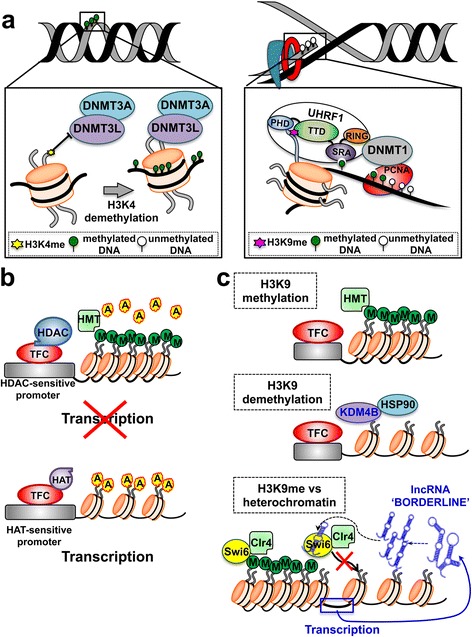
“the bromodomain motif that docks onto acetylated lysines [92]), which drive chromatin packaging around nucleosomes [88, 91] (Fig.”
BackgroundFinding the missing heritability of complex diseases
Manolio, T. A., Collins, F. S., Cox, N. J., Goldstein, D. B., Hindorff, L. A., Hunter, D. J., McCarthy, M. I., Ramos, E. M., Cardon, L. R., Chakravarti, A., et al. (2009) · Nature · doi:10.1038/nature08494 · Cited by 8,336 · cited 1×
“Epistatic components need to be integrated by estimates of the contribution of non-genetic factors, globally designated as the “missing heritability” [7, 8].”
BackgroundOkano, M., Bell, D. W., Haber, D. A., & Li, E. (1999) · Cell · doi:10.1016/s0092-8674(00)81656-6 · Cited by 6,143 · cited 4×
“Recent findings showed that in the absence of histone H3, DNMT3A exists in an autoinhibitory form, in which the ATRX–DNMT3–DNMT3L (ADD) domain binds to diseasesa Molecular defects thic folds; flat nasal bridge; p; everted lower lip; Mutations in ATRX gene, hypomethylation of specific repeat and satellite sequences fac…”
BackgroundInfluentialConversion of 5-Methylcytosine to 5-Hydroxymethylcytosine in Mammalian DNA by MLL Partner TET1
Tahiliani, M., Koh, K. P., Shen, Y., Pastor, W. A., Bandukwala, H., Brudno, Y., Agarwal, S., Iyer, L. M., Liu, D. R., Aravind, L., et al. (2009) · Science · doi:10.1126/science.1170116 · Cited by 5,836 · cited 1×
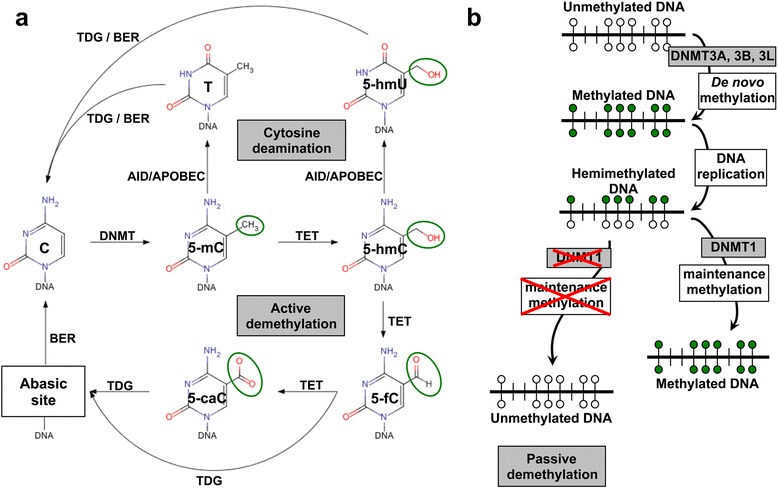
“5-hmC is then converted to 5-formylcytosine (5-fC) and 5-carboxylcytosine (5-caC) [30].”
BackgroundChen, X., Xiu, M., Xing, J., Yu, S., Min, D., & Guo, F. (2017) · Cellular Physiology and Biochemistry · doi:10.1159/000479439 · Cited by 5,742
Common SNPs explain a large proportion of the heritability for human height
Yang, J., Benyamin, B., McEvoy, B. P., Gordon, S., Henders, A. K., Nyholt, D. R., Madden, P. A., Heath, A. C., Martin, N. G., Montgomery, G. W., et al. (2010) · Nature Genetics · doi:10.1038/ng.608 · Cited by 4,446 · cited 1×
“Although dedicated procedures for SNP-associated analyses have significantly increased their combined predictive power [15], a large amount of heritable heightassociated factors remains undetectable by conventional GWAS, suggesting that such non-DNA sequence-linked information may be associated to epigenetic heredity.”
BackgroundEsteller, M. (2008) · New England Journal of Medicine · doi:10.1056/nejmra072067 · Cited by 3,662
Tet-Mediated Formation of 5-Carboxylcytosine and Its Excision by TDG in Mammalian DNA
He, Y.-F., Li, B.-Z., Li, Z., Liu, P., Wang, Y., Tang, Q., Ding, J., Jia, Y., Chen, Z., Li, L., et al. (2011) · Science · doi:10.1126/science.1210944 · Cited by 2,770 · cited 2×
“This leaves an abasic site that is subsequently processed through the base excision repair (BER) pathway [33] (Fig.”
BackgroundEpigenetic Transgenerational Actions of Endocrine Disruptors and Male Fertility
Anway, M. D., Cupp, A. S., Uzumcu, M., & Skinner, M. K. (2005) · Science · doi:10.1126/science.1108190 · Cited by 2,563 · cited 1×
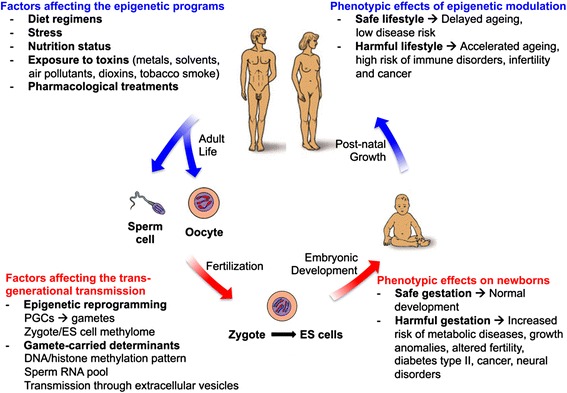
“Remarkably, transgenerational transmission of these effects through the male germ line was then observed in F1 to F4 generations [82].”
BackgroundGenome-scale DNA methylation maps of pluripotent and differentiated cells
Meissner, A., Mikkelsen, T. S., Gu, H., Wernig, M., Hanna, J., Sivachenko, A., Zhang, X., Bernstein, B. E., Nusbaum, C., Jaffe, D. B., et al. (2008) · Nature · doi:10.1038/nature07107 · Cited by 2,536 · cited 1×
“It has been shown that during early mitotic divisions of a mammalian embryo, daughter cells derived from the zygote have a globally hypomethylated genome [50] and a transcriptionally active chromatin due to histone H4 acetylation [51].”
Background
Cited by
Pigeyre, M., Yazdi, F. T., Kaur, Y., & Meyre, D. (2016) · Clinical Science · doi:10.1042/cs20160136 · Cited by 402
Genetics of Parkinson's disease: An introspection of its journey towards precision medicine
Bandres-Ciga, S., Diez-Fairen, M., Kim, J. J., & Singleton, A. B. (2020) · Neurobiology of Disease · doi:10.1016/j.nbd.2020.104782 · Cited by 370
Genetic contributions to NAFLD: leveraging shared genetics to uncover systems biology
Eslam, M., & George, J. (2020) · Nature Reviews Gastroenterology & Hepatology · doi:10.1038/s41575-019-0212-0 · Cited by 308
Epigenetic Modifications in Stress Response Genes Associated With Childhood Trauma
Jiang, S., Postovit, L., Cattaneo, A., Binder, E. B., & Aitchison, K. J. (2019) · Frontiers in Psychiatry · doi:10.3389/fpsyt.2019.00808 · Cited by 288
Genetic impacts on DNA methylation: research findings and future perspectives
Villicaña, S., & Bell, J. T. (2021) · Genome Biology · doi:10.1186/s13059-021-02347-6 · Cited by 242
“Furthermore, GWASs also face the “missing heritability” problem and epigenetic signals (potentially, through meQTLs) might explain a proportion of the phenotype missing heritability [27, 170].”
BackgroundGenetics of Combined Pituitary Hormone Deficiency: Roadmap into the Genome Era
Fang, Q., George, A. S., Brinkmeier, M. L., Mortensen, A. H., Gergics, P., Cheung, L. Y. M., Daly, A. Z., Ajmal, A., Pérez Millán, M. I., Ozel, A. B., et al. (2016) · Endocrine Reviews · doi:10.1210/er.2016-1101 · Cited by 210
“Some of the missing heritability could be attributable to gene-gene interactions and epigenetic effects (43).”
BackgroundCartilage repair by mesenchymal stem cells: Clinical trial update and perspectives
Lee, W. Y.-W., & Wang, B. (2017) · Journal of Orthopaedic Translation · doi:10.1016/j.jot.2017.03.005 · Cited by 207
“Interestingly, although the genome sequence did not change, the epigenetic pattern was still inheritable [90], this provides a clue that extracellular signalling can possibly be passed to descendants.”
BackgroundMissing heritability of complex diseases: case solved?
Génin, E. (2020) · Human Genetics · doi:10.1007/s00439-019-02034-4 · Cited by 206
Robinson, N., & Bergen, S. E. (2021) · Frontiers in Genetics · doi:10.3389/fgene.2021.686666 · Cited by 178
Anti-senescence compounds: A potential nutraceutical approach to healthy aging
Gurău, F., Baldoni, S., Prattichizzo, F., Espinosa, E., Amenta, F., Procopio, A. D., Albertini, M. C., Bonafè, M., & Olivieri, F. (2018) · Ageing Research Reviews · doi:10.1016/j.arr.2018.05.001 · Cited by 179
Genotypic Context and Epistasis in Individuals and Populations
Sackton, T. B., & Hartl, D. L. (2016) · Cell · doi:10.1016/j.cell.2016.06.047 · Cited by 149
“, 2012), tandem repeat polymorphisms (Hannan, 2010), and epigenetic effects (Trerotola et al., 2015).”
Danchin, É., Pocheville, A., Rey, O., Pujol, B., & Blanchet, S. (2018) · Biological reviews/Biological reviews of the Cambridge Philosophical Society · doi:10.1111/brv.12453 · Cited by 168
“Inclusive inheritance has paramount medical implications by allowing the study of the various components of the inheritance of so-called ‘genetic disorders’, which in fact may be substantially inherited non-genetically (Holliday, 1987; Hales & Barker, 2001; Gluckman et al., 2009; Brookfield, 2013; Danchin, 2013; Trero…”
BackgroundEpigenetics and the Evolution of Darwin’s Finches
Skinner, M. K., Guerrero‐Bosagna, C., Haque, M. M., Nilsson, E. E., Koop, J. A. H., Knutie, S. A., & Clayton, D. H. (2014) · Genome Biology and Evolution · doi:10.1093/gbe/evu158 · Cited by 137
DNA methylation-based variation between human populations
Kader, F., & Ghai, M. (2016) · Molecular Genetics and Genomics · doi:10.1007/s00438-016-1264-2 · Cited by 137
“DNA methylation (and other epigenetic changes) provides a biological link between an individual’s environmental exposures and their phenotypes and contribute to trans-generational inheritance of complex traits (Trerotola et al. 2015).”
BackgroundEpigenetics and obesity cardiomyopathy: From pathophysiology to prevention and management
Zhang, Y., & Ren, J. T. (2016) · Pharmacology & Therapeutics · doi:10.1016/j.pharmthera.2016.03.005 · Cited by 115
Bridging the explanatory gaps: What can we learn from a biological agency perspective?
Sultan, S. E., Moczek, A. P., & Walsh, D. M. (2021) · BioEssays · doi:10.1002/bies.202100185 · Cited by 126
The role of aberrant DNA methylation in cancer initiation and clinical impacts
Geissler, F., Nesic, K., Kondrashova, O., Dobrovic, A., Swisher, E. M., Scott, C. L., & Wakefield, M. J. (2024) · Therapeutic Advances in Medical Oncology · doi:10.1177/17588359231220511 · Cited by 117
Biological information systems: Evolution as cognition-based information management
Miller, W. B. (2017) · Progress in Biophysics and Molecular Biology · doi:10.1016/j.pbiomolbio.2017.11.005 · Cited by 109
Tajuddin, S. M., Hernandez, D. G., Chen, B. H., Hooten, N. N., Mode, N. A., Nalls, M. A., Singleton, A., Ejiogu, N., Chitrala, K. N., Zonderman, A. B., et al. (2019) · Clinical Epigenetics · doi:10.1186/s13148-019-0722-1 · Cited by 105
Type 1 diabetes genome‐wide association studies: not to be lost in translation
Pociot, F. (2017) · Clinical & Translational Immunology · doi:10.1038/cti.2017.51 · Cited by 112
Early-life adversity and long-term neurobehavioral outcomes: epigenome as a bridge?
Vaiserman, A. M., & Koliada, A. K. (2017) · Human Genomics · doi:10.1186/s40246-017-0129-z · Cited by 97
“The phases of post-fertilization demethylation and remethylation are likely playing a role in the removal of epigenetic information acquired by the parental generation [27, 28].”
NMDA receptor hypofunction for schizophrenia revisited: perspectives from epigenetic mechanisms
Snyder, M. A., & Gao, W. (2019) · Schizophrenia Research · doi:10.1016/j.schres.2019.03.010 · Cited by 80
“Epigenetic mechanisms tightly control gene expression and repression without any alteration to the DNA sequence, and importantly may provide a mechanism for the missed heritability in SZ (Akbarian, 2014; Trerotola et al., 2015).”
BackgroundNon-enzymatic covalent modifications: a new link between metabolism and epigenetics
Zheng, Q., Maksimovic, I., Upad, A., & David, Y. (2020) · Protein & Cell · doi:10.1007/s13238-020-00722-w · Cited by 100
Mukherjee, S., Dasgupta, S., Mishra, P. K., & Chaudhury, K. (2021) · Environmental Science and Pollution Research · doi:10.1007/s11356-021-16056-x · Cited by 99
“Transgenerational epigenetic inheritance deals with epigenetic marks—i.e. DNA methylation, histone modifications, and non-coding RNAs—that are acquired in one generation and get stably transferred to the next generation through the gametes (Trerotola et al. 2015; Blake and Watson 2016).”
BackgroundTorday, J. S., & Miller, W. B. (2017) · Progress in Biophysics and Molecular Biology · doi:10.1016/j.pbiomolbio.2017.07.013 · Cited by 86
“…viewed purely as a cellular architectural element (Hardin et al., 2015), but in fact additionally aids and abets the collection of epigenetic marks (Trerotola et al., 2015), just as every other aspect of the cell participates (Torday and Rehan, 2017), including its prime importance for the…”
Genetic and epigenetic epidemiology of chronic widespread pain
Kerr, J. I., & Burri, A. V. (2017) · Journal of Pain Research · doi:10.2147/jpr.s143869 · Cited by 86
“35 Epigenetics describes changes in gene expression caused by mechanisms other than differences in the underlying DNA sequence and that can be induced as a response to external environmental factors or stochastic events within the cell.”
Sun, X., Cui, Y., Feng, H., Liu, H., & Liu, X. (2019) · The Journal of Experimental Medicine · doi:10.1084/jem.20190550 · Cited by 88
“Epigenetic modifications regulate gene expression in a heritable manner without affecting genomic sequences (Trerotola et al., 2015).”
Ahsan, M., Ek, W. E., Rask-Andersen, M., Karlsson, T., Lind-Thomsen, A., Enroth, S., Gyllensten, U., & Johansson, Å. (2017) · PLOS Genetics · doi:10.1371/journal.pgen.1007005 · Cited by 73
Grandmaternal smoking increases asthma risk in grandchildren: A nationwide Swedish cohort
Lodge, C., Bråbäck, L., Lowe, A. J., Dharmage, S. C., Olsson, D., & Forsberg, B. (2017) · Clinical & Experimental Allergy · doi:10.1111/cea.13031 · Cited by 73
“Recent reviews have helped to differentiate between transgenerational and intergenerational effects.(15,25) Essentially, transmission can only be considered transgenerational when an exposure in grandmothers (F0) has been shown to increase the risk in great grandchildren (F3).”
BackgroundNutrients and the microenvironment to feed a T cell army
Johnson, M. O., Siska, P. J., Contreras, D. C., & Rathmell, J. C. (2016) · Seminars in Immunology · doi:10.1016/j.smim.2016.09.003 · Cited by 67
Recent progress in epigenetics of obesity
Wu, F., & Yin, R. (2022) · Diabetology & Metabolic Syndrome · doi:10.1186/s13098-022-00947-1 · Cited by 85
“Mitosis can maintain epigenetic changes throughout the cell cycle, and meiosis can transfer epigenetic changes across generations [11].”
BackgroundInfluentialAMPK: An Epigenetic Landscape Modulator
Gongol, B., Sari, I., Bryant, T., Rosete, G., & Marin, T. (2018) · International Journal of Molecular Sciences · doi:10.3390/ijms19103238 · Cited by 69
Epigenetic Editing: On the Verge of Reprogramming Gene Expression at Will
Cano-Rodríguez, D., & Rots, M. G. (2016) · Current Genetic Medicine Reports · doi:10.1007/s40142-016-0104-3 · Cited by 70
“Since epigenetic marks are inherited by daughter cells, the reprogramming might even be stable and maintained through cell divisions [6, 65].”
BackgroundBogin, B. A., Varea, C., Hermanussen, M., & Scheffler, C. (2018) · American Journal of Physical Anthropology · doi:10.1002/ajpa.23357 · Cited by 79
Thyroid function across the lifespan: do age-related changes matter?
Walsh, J. P. (2022) · Endocrinology and Metabolism · doi:10.3803/enm.2022.1463 · Cited by 59
“Although non-permanent, epigenetic modifications can be transmitted to subsequent generations, and may account for some of the missing heritability of thyroid function [24].”
BackgroundDNA methylation and chromatin modifiers in colorectal cancer
Vymetalkova, V., Vodicka, P., Vodenkova, S., Alonso, S., & Schneider-Stock, R. (2019) · Molecular Aspects of Medicine · doi:10.1016/j.mam.2019.04.002 · Cited by 57
Autism spectrum disorder: Trends in research exploring etiopathogenesis
Gyawali, S., & Patra, B. N. (2019) · Psychiatry and Clinical Neurosciences · doi:10.1111/pcn.12860 · Cited by 78
“However, not all epigenetic marks are erased and some can be passed on through generations.(16) DNA methylation can be assessed through studies of pattern globally, epigenome-wide, or through candidate gene DNA methylation analyses.”
BackgroundInter‐ and Transgenerational Effects of Paternal Exposure to Inorganic Arsenic
Gong, Y., Xue, Y., Li, X., Zhang, Z., Zhou, W., Marcolongo, P., Benedetti, A., Mao, S., Han, L., Ding, G., et al. (2021) · Advanced Science · doi:10.1002/advs.202002715 · Cited by 60
Therapeutic Cancer Vaccines—T Cell Responses and Epigenetic Modulation
Kartikasari, A. E. R., Prakash, M. D., Cox, M., Wilson, K., Boer, J. C., Cauchi, J. A., & Plebanski, M. (2019) · Frontiers in Immunology · doi:10.3389/fimmu.2018.03109 · Cited by 54
“Herein, we will firstly introduce fundamental concepts, and then review in depth: (1) the epigenetic mechanisms involved in vaccine-induced T cell mediated immunity, (2) T cell responses and epigenetic modulations induced by adjuvant systems to promote an anti-cancer environment, and (3) the epigenetic mechanisms invo…”
BackgroundInfluentialExposure to Endocrine-Disrupting Chemicals and Type 2 Diabetes Mellitus in Later Life
Lin, J., & Yin, R. (2022) · Exposure and Health · doi:10.1007/s12403-022-00486-0 · Cited by 63
Epigenetic mechanisms in pulmonary arterial hypertension: the need for global perspectives
Chelladurai, P., Seeger, W., & Pullamsetti, S. S. (2016) · European Respiratory Review · doi:10.1183/16000617.0036-2016 · Cited by 57
Verma, D., Ekman, A., Bivik, C. A., & Enerbäck, C. (2017) · Journal of Investigative Dermatology · doi:10.1016/j.jid.2017.11.036 · Cited by 59
“Because parental exposure to environmental triggers has been shown to affect the transgenerational transmission of altered DNA methylation (Trerotola et al., 2015), epigenetics may contribute to the missing heritability in psoriasis.”
Kammel, A., Saussenthaler, S., Jähnert, M., Jonas, W., Stirm, L., Hoeflich, A., Staiger, H., Fritsche, A., Häring, H.-U., Joost, H.-G., et al. (2016) · Human Molecular Genetics · doi:10.1093/hmg/ddw121 · Cited by 52
“DNA methylation at CpG dinucleotides or histone modifications) modify gene expression without altering genomic sequences and are therefore missed in conventional genome-wide association studies (5,6).”
Towards DNA methylation detection using biosensors
Syedmoradi, L., Esmaeili, F., & Norton, M. L. (2016) · The Analyst · doi:10.1039/c6an01649a · Cited by 51
Mok, A., Rhead, B., Holingue, C., Shao, X., Quach, H., Quach, D. L., Sinclair, E., Graf, J. D., Imboden, J. B., Link, T. M., et al. (2018) · Arthritis & Rheumatology · doi:10.1002/art.40408 · Cited by 50
“Methylation profiles can be maintained across cell division cycles and between generations and may contribute to the “missing heritability” suggested by current genome-wide association study findings (7).”
BackgroundBorderline Personality Disorder in Adolescence as a Generalization of Disorganized Attachment
Miljkovitch, R., Deborde, A.-S., Bernier, A., Corcos, M., Speranza, M., & Pham-Scottez, A. (2018) · Frontiers in Psychology · doi:10.3389/fpsyg.2018.01962 · Cited by 47
“Likewise, genetic, epigenetic, or constitutional factors involved in the onset of BPD (Gunderson and Lyons-Ruth, 2008; Trerotola et al., 2015; Trull, 2015; Jones-Mason et al., 2016) have not been considered here, and their role should not be minimized.”
BackgroundNon-Random Genome Editing and Natural Cellular Engineering in Cognition-Based Evolution
Miller, W. B., Enguita, F. J., & Leitão, A. L. (2021) · Cells · doi:10.3390/cells10051125 · Cited by 50
“Trerotola et al. provide an extensive review of genome-wide association studies of physiological traits, phenotypic variations, and a variety of genetically associated diseases [35].”
BackgroundThe McDonnell Genome Institute, Zou, L. S., Erdos, M. R., Taylor, D. L., Chines, P. S., Varshney, A., Parker, S. C. J., Collins, F. S., & Didion, J. P. (2018) · BMC Genomics · doi:10.1186/s12864-018-4766-y · Cited by 47
“There is strong evidence that methylation is a mode for heritable transmission of epigenetic information, as it can be stably propagated through both mitosis and meiosis [35-39].”
BackgroundMicroevolution of medically important mosquitoes – A review
Suesdek, L. (2018) · Acta Tropica · doi:10.1016/j.actatropica.2018.12.013 · Cited by 53
Epigenetic cell memory: The gene’s inner chromatin modification circuit
Bruno, S., Williams, R. J., & Vecchio, D. D. (2022) · PLoS Computational Biology · doi:10.1371/journal.pcbi.1009961 · Cited by 57
“Specifically, protein readers bind the modification and recruit writers of the same modification to nearby unmodified histones ([10], Chapter 22 and [36, 37, 27, 38]).”
Martinez, M. E., Duarte, C. W., Stohn, J. P., Karaczyn, A. A., Wu, Z., DeMambro, V., & Hernández, A. (2018) · Molecular Psychiatry · doi:10.1038/s41380-018-0281-4 · Cited by 53
Benincasa, G., Costa, D., Infante, T., Lucchese, R., Donatelli, F., & Napoli, C. (2019) · Thrombosis Research · doi:10.1016/j.thromres.2019.03.008 · Cited by 47
The Genetic Basis of Thyroid Function: Novel Findings and New Approaches
Kuś, A., Chaker, L., Teumer, A., Peeters, R. P., & Medici, M. (2020) · The Journal of Clinical Endocrinology & Metabolism · doi:10.1210/clinem/dgz225 · Cited by 44
“Therefore, epigenetic modifications can be responsible for an important part of the “missing heritability” (114).”
BackgroundQuinlan, J., Pearson, L. N., Clukay, C. J., Mitchell, M. M., Boston, Q., Gravlee, C. C., & Mulligan, C. J. (2016) · PLoS ONE · doi:10.1371/journal.pone.0167700 · Cited by 44
When chromatin organisation floats astray: the Srcap gene and Floating–Harbor syndrome
Messina, G., Atterrato, M. T., & Dimitri, P. (2016) · Journal of Medical Genetics · doi:10.1136/jmedgenet-2016-103842 · Cited by 48
Genomic imprinting and evolution of insect societies
Matsuura, K. (2019) · Population Ecology · doi:10.1002/1438-390x.12026 · Cited by 40
Szukiewicz, D., Stangret, A., Ruiz‐Ruiz, C., Olivares, E. G., Şoriţău, O., Șușman, S., & Szewczyk, G. (2021) · Stem Cell Reviews and Reports · doi:10.1007/s12015-020-10115-5 · Cited by 46
Adampourezare, M., Dehghan, G., Hasanzadeh, M., & Feizi, M. H. (2021) · Biomedicine & Pharmacotherapy · doi:10.1016/j.biopha.2021.111845 · Cited by 43
Epigenetics in the primary biliary cholangitis and primary sclerosing cholangitis
Cheung, A., LaRusso, N., Gores, G., & Lazaridis, K. (2017) · Seminars in Liver Disease · doi:10.1055/s-0037-1603324 · Cited by 37
Tough, D. F., & Prinjha, R. K. (2016) · Epigenomics · doi:10.2217/epi-2016-0144 · Cited by 37
Who's your daddy?: paternal inheritance of metabolic disease risk
Isganaitis, E., Suehiro, H., & Cardona, C. (2017) · Current Opinion in Endocrinology, Diabetes & Obesity · doi:10.1097/med.0000000000000307 · Cited by 36
Szukiewicz, D. (2023) · International Journal of Molecular Sciences · doi:10.3390/ijms241512195 · Cited by 45
Barrera‐Redondo, J., Piñero, D., & Eguiarte, L. E. (2020) · Frontiers in Genetics · doi:10.3389/fgene.2020.00742 · Cited by 40
“Other methods rely on population data at a genomic scale from many (sometimes hundreds) individuals (as obtained from exome sequencing or RAD-seq), namely the extended Bayesian skyline plots (Heled and Drummond, 2008; Trucchi et al., 2014) and the stairway plots (Liu and Fu, 2015).”
MethodSantini, F., Kefauver, S. C., Araus, J. L., de Dios, V. R., Martín-García, S., Grivet, D., & Voltas, J. (2020) · New Phytologist · doi:10.1111/nph.16862 · Cited by 36
Livshits, G., Malkin, I., Freidin, M. B., Xia, Y., Gao, F., Wang, J., Spector, T. D., MacGregor, A. J., Bell, J. T., & Williams, F. M. K. (2017) · Pain · doi:10.1097/j.pain.0000000000000880 · Cited by 37
“changes in gene expression, and may account for a substantial fraction of the “missing heritability”.(54) On the other hand, an individual’s epigenetic profile is dynamic and prone to environmental influence as well as genetic factors.”
BackgroundGély-Pernot, A., Hao, C., Legoff, L., Multigner, L., D’Cruz, S. C., Kervarrec, C., Jégou, B., Tevosian, S. G., & Smagulova, F. O. (2018) · Scientific Reports · doi:10.1038/s41598-018-28670-w · Cited by 40
An Overview of Advances in Rare Cancer Diagnosis and Treatment
Christyani, G., Carswell, M., Qin, S., & Kim, W. (2024) · International Journal of Molecular Sciences · doi:10.3390/ijms25021201 · Cited by 36
“Epigenetics is referred to as a biology field that explores heritable epigenetic modifications without altering the DNA sequence [120].”
BackgroundXu, J., Li, C., & Kang, X. (2023) · Frontiers in Physiology · doi:10.3389/fphys.2023.1267456 · Cited by 34
Refurbishing the germline epigenome: Out with the old, in with the new
Hogg, K., & Western, P. S. (2015) · Seminars in Cell and Developmental Biology · doi:10.1016/j.semcdb.2015.09.012 · Cited by 30
Unravelling the Roles of Susceptibility Loci for Autoimmune Diseases in the Post-GWAS Era
Ye, Y., Gillespie, K. M., & Rodríguez, S. (2018) · Genes · doi:10.3390/genes9080377 · Cited by 34
“Other possible factors explaining missing heritability may include inaccurate heritability estimates, study design limitations of GWAS (such as sample size, type of genetic variants considered), non-additive genetic effects (epistasis, gene and environment interaction), epigenetics and disease heterogeneity [43,63,64].”
BackgroundSayols-Baixeras, S., Tiwari, H. K., & Aslibekyan, S. W. (2018) · BMC Proceedings · doi:10.1186/s12919-018-0119-8 · Cited by 47
Epigenetic Effects of n-3 LCPUFAs: A Role in Pediatric Metabolic Syndrome
Amatruda, M., Ippolito, G., Vizzuso, S., Vizzari, G., Banderali, G., & Verduci, E. (2019) · International Journal of Molecular Sciences · doi:10.3390/ijms20092118 · Cited by 34
Temkin, A. M., Bowers, R. R., Ulmer, C. Z., Penta, K. L., Bowden, J. A., Nyland, J., Baatz, J. E., & Spyropoulos, D. D. (2019) · Scientific Reports · doi:10.1038/s41598-018-38383-9 · Cited by 27
Kabza, M., Karolak, J. A., Rydzanicz, M., Udziela, M., Gasperowicz, P., Płoski, R., Szaflik, J. P., & Gajęcka, M. (2019) · Investigative Ophthalmology & Visual Science · doi:10.1167/iovs.18-25916 · Cited by 34
Primer in Genetics and Genomics, Article 6: Basics of Epigenetic Control
Fessele, K. L., & Wright, F. (2017) · Biological Research For Nursing · doi:10.1177/1099800417742967 · Cited by 32
Iwaya, C., Kitajima, H., Yamamoto, K., Maeda, Y., Sonoda, N., Shibata, H., & Inoguchi, T. (2018) · Biochemical and Biophysical Research Communications · doi:10.1016/j.bbrc.2017.12.104 · Cited by 27
Metabolomics Analysis of Mesenchymal Stem Cells.
Goodarzi, P., Alavi-Moghadam, S., Payab, M., Larijani, B. A., Rahim, F., Gilany, K., Bana, N., Tayanloo-Beik, A., Heravani, N. F., Hadavandkhani, M., et al. (2019) · PubMed Central · doi:10.22088/ijmcm.bums.8.2.30 · Cited by 36
“The study of heritable modifications (not sequence changes) of DNA is called epigenomics (43, 44).”
BackgroundExposure to drugs of abuse induce effects that persist across generations
Baratta, A. M., Rathod, R. S., Plasil, S. L., Seth, A., & Homanics, G. E. (2020) · International review of neurobiology · doi:10.1016/bs.irn.2020.08.003 · Cited by 30
Beyond Defiance: An Augmented Investment Perspective on Creativity
Sternberg, R. J., & Lubart, T. (2022) · The Journal of Creative Behavior · doi:10.1002/jocb.567 · Cited by 34
Sun, Y., Zhu, J., Yang, Y., Zhang, Z., Zhong, H., Zeng, G., Zhou, D., Nowakowski, R. S., Long, J., Wu, C., et al. (2023) · Translational Psychiatry · doi:10.1038/s41398-023-02695-w · Cited by 26
“Frist, our study can help fi ll the gap for systematic methylation analysis of AD risk which can provide insights in the etiology of AD [60].”
BackgroundZhang, R., Lai, L., Dong, X., He, J., You, D., Chen, C., Lin, L., Zhu, Y., Huang, H., Shen, S., et al. (2019) · Molecular Oncology · doi:10.1002/1878-0261.12482 · Cited by 28
“First, this is the first study to investigate the interaction between DNA methylation and smoking cessation on lung cancer survival on an epigenome-wide scale, which provides new evidence to account for the missing heritability of complex diseases (Trerotola et al., 2015).”
BackgroundRe-evaluating the relationship between missing heritability and the microbiome
Douglas, G. M., Bielawski, J. P., & Langille, M. G. I. (2020) · Microbiome · doi:10.1186/s40168-020-00839-4 · Cited by 42
“sion of epigenetic signals also has been suggested to contribute to classical estimates of additive genetic effects [27, 28].”
The genotype–phenotype distinction: from Mendelian genetics to 21st century biology
Pontarotti, G., Mossio, M., & Pocheville, A. (2022) · Genetica · doi:10.1007/s10709-022-00159-5 · Cited by 27
“While genetic explanations of missing heritability are available, another kind of explanation is that the identification of the genotype with the DNA sequence, inherited from molecular biology, led biologists to overlook the putative role of epigenetic factors in inheritance (see Slatkin 2009; Trerotola et al. 2015).”
Clustering of immune-mediated diseases in sarcoidosis
Terwiel, M., Grutters, J. C., & van Moorsel, C. H. M. (2019) · Current Opinion in Pulmonary Medicine · doi:10.1097/mcp.0000000000000598 · Cited by 25
Czaja, A. J. (2017) · Alimentary Pharmacology & Therapeutics · doi:10.1111/apt.14324 · Cited by 22
Epigenetic Effects in Livestock Breeding
Yakovlev, A. F. (2018) · Russian Journal of Genetics · doi:10.1134/s1022795418080148 · Cited by 37
Lee, J. H., Kim, H. S., Jang, S. W., & Lee, G. R. (2022) · Scientific Reports · doi:10.1038/s41598-022-27230-7 · Cited by 22
Ryan, C. P., & Kuzawa, C. W. (2020) · Evolutionary Anthropology Issues News and Reviews · doi:10.1002/evan.21828 · Cited by 23
IGF1 gene is epigenetically activated in preterm infants with intrauterine growth restriction
Kantake, M., Ikeda, N., Nakaoka, H., Ohkawa, N., Tanaka, T., Miyabayashi, K., Shoji, H., & Shimizu, T. (2020) · Clinical Epigenetics · doi:10.1186/s13148-020-00901-w · Cited by 19
Verrando, P., Capovilla, M., & Rahmani, R. (2016) · Toxicology · doi:10.1016/j.tox.2016.09.003 · Cited by 19
Overexpression of mRNA-decapping enzyme 1a predicts disease-specific survival in malignant melanoma
Tang, Y., Xie, C. L., Zhang, Y., You, Q., & Zhang, W. (2017) · Melanoma Research · doi:10.1097/cmr.0000000000000406 · Cited by 19
The missing heritability in type 1 diabetes
Pang, H., Lin, J., Luo, S., Huang, G., Li, X., Xie, Z., & Zhou, Z. (2022) · Diabetes Obesity and Metabolism · doi:10.1111/dom.14777 · Cited by 20
“supplement to Mendelian heredity, may explain the missing heritability caused by the lack of detection in DNA sequence-based analysis.(95)”
BackgroundBubbling beyond the barrier: exosomal RNA as a vehicle for soma–germline communication
Phillips, D., & Noble, D. (2023) · The Journal of Physiology · doi:10.1113/jp284420 · Cited by 19
“…offspring because of their involvement in regulating transcription (Allis & Jenuwein, 2016) and because their patterning in both somatic and germ cells is responsive to environmental change (Jaenisch & Bird, 2003; Szyf, 2015) and correlated between parent and offspring (Trerotola et al., 2015).”
BackgroundEpigenetic Therapies in Melanoma—Targeting DNA Methylation and Histone Modification
Țigu, A. B., Ivancuta, A., Uhl, A., Sabo, A. C., Nistor, M., Mureșan, X. M., Cenariu, D., Timis, T., Diculescu, D. M., & Gulei, D. (2025) · Biomedicines · doi:10.3390/biomedicines13051188 · Cited by 23
“…of tumor suppressor In other malignancies, as well as in melanoma, methylated promoters of tumor suppressor genes trigger gene silencing and further promote the initiation and development of cancer [45,46]. trigger gene silencing and further promote the initiation and development of cancer [45,46].”
The Logic of Transgenerational Inheritance: Timescales of Adaptation
Sengupta, T., Kaletsky, R. L., & Murphy, C. T. (2023) · Annual Review of Cell and Developmental Biology · doi:10.1146/annurev-cellbio-020923-114620 · Cited by 19
Mahmood, A., Shah, A. A., Umair, M., Wu, Y., & Khan, A. U. (2021) · Clinical Genetics · doi:10.1111/cge.14019 · Cited by 17
Walsh, D. M. (2021) · Biological Theory · doi:10.1007/s13752-020-00367-2 · Cited by 22
Preconception paternal mental disorders and child health: Mechanisms and interventions
Tan, X., Luo, J., Ding, X., & Li, H. (2022) · Neuroscience & Biobehavioral Reviews · doi:10.1016/j.neubiorev.2022.104976 · Cited by 17
Nayan, N. M., Husin, A., & Siran, R. (2024) · Early Human Development · doi:10.1016/j.earlhumdev.2024.106120 · Cited by 16
Role of epigenetics in corneal health and disease
Sood, S., Tiwari, A., Sangwan, J., Vohra, M., Sinha, N. R., Tripathi, R., Sangwan, V., & Mohan, R. R. (2024) · Progress in Retinal and Eye Research · doi:10.1016/j.preteyeres.2024.101318 · Cited by 15
Metadata
- Authors
- Trerotola, M., Relli, V., Simeone, P., & Alberti, S.
- Affiliations
- University of Chieti-Pescara (IT)
- Corresponding author
- Alberti, Saverio
- Venue
- Human Genomics
- Published
- 2015-07-28
- Volume
- 9
- Issue
- 1
- Pages
- 17-17
- ISSN
- 1473-9542 (ISSN-L)
- 1479-7364
- PMC
- PMC4517414
- OpenAlex
- W1580250799
- Cited by
- 318
- References
- 111
- Citations by year
- 2026: 9 · 2025: 22 · 2024: 26 · 2023: 61 · 2022: 31 · 2021: 26 · 2020: 28 · 2019: 30 · 2018: 25 · 2017: 24 · 2016: 30 · 2015: 3
- FWCI
- 2.65
- Type
- journal article
- Language
- en
- Open access
- gold
- doi.org
- Locations
- Human Genomics (publishedVersion, cc-by)
- PubMed Central (publishedVersion, cc-by)
- PubMed (publishedVersion)
- Funders
- Italian Ministry of Health (RF-EMR-2006-361866)
- Italian Ministry of Development (Made in Italy MI0100424)
- Compagnia di San Paolo (Grant 2489IT)
- Fondazione Cassa di Risparmio della Provincia di Chieti (ᅟ)
- Topics
- Life Sciences › Biochemistry, Genetics and Molecular Biology › Molecular Biology › Epigenetics and DNA Methylation
- Life Sciences › Biochemistry, Genetics and Molecular Biology › Genetics › Genetic Syndromes and Imprinting
- Health Sciences › Medicine › Pediatrics, Perinatology and Child Health › Birth, Development, and Health
- Keywords
- missing heritability, epigenetic inheritance, DNA methylation, chromatin inheritance, complex traits, transgenerational epigenetic inheritance, parental effects, histone modifications, genome reprogramming, nutritional epigenetics, height, fertility, food metabolism
- MeSH terms
- Cell Differentiation, Gene Expression Regulation, Humans, Meiosis, Mitosis, DNA Methylation, Chromatin Assembly and Disassembly, Epigenesis, Genetic, Genome-Wide Association Study, Cellular Reprogramming
About these checks
Registry, retraction, Cites and statistics results are computed, not judged, with one exception: a printed reference that no index lists is read once by a model before it counts as a citation error. Claims are extracted by a model and kept only when their quote appears verbatim in the text; each cited source is then checked, with a model’s help, for whether it says what the claim relies on. Those verdicts can be wrong — read the claim’s quote and the cited source before relying on one.
Statistics and arithmetic are recomputed, not judged.
Confidence bands are shown only for fields calibrated on our annotated test set. None is calibrated yet, so no band is shown.
What counts as a claim ›How we measure confidence ›How we check this ›
Are you an author, or do you see a problem with this page? Request a review
Data sources
Bibliographic data: Semantic Scholar, OpenAlex, Crossref.
Contains information from the Semantic Scholar Academic Graph Datasets, made available under the ODC Attribution License (ODC-BY 1.0).
Semantic Scholar’s data is described in: Kinney, R., et al. (2023). The Semantic Scholar Open Data Platform. arXiv:2301.10140.
