

Canadian practice guidelines for the treatment of children and adolescents with eating disorders
Open accessThe DOI matches its Crossref record; 297 of the 297 references it cites were found in a registry or an index.
Abstract
OBJECTIVES: Eating disorders are common and serious conditions affecting up to 4% of the population. The mortality rate is high. Despite the seriousness and prevalence of eating disorders in children and adolescents, no Canadian practice guidelines exist to facilitate treatment decisions. This leaves clinicians without any guidance as to which treatment they should use. Our objective was to produce such a guideline. METHODS: Using systematic review, the Grading of Recommendations Assessment, Development, and Evaluation (GRADE) system, and the assembly of a panel of diverse stakeholders from across the country, we developed high quality treatment guidelines that are focused on interventions for children and adolescents with eating disorders. RESULTS: Strong recommendations were supported specifically in favour of Family-Based Treatment, and more generally in terms of least intensive treatment environment. Weak recommendations in favour of Multi-Family Therapy, Cognitive Behavioural Therapy, Adolescent Focused Psychotherapy, adjunctive Yoga and atypical antipsychotics were confirmed. CONCLUSIONS: Several gaps for future work were identified including enhanced research efforts on new primary and adjunctive treatments in order to address severe eating disorders and complex co-morbidities.
Overview
The claims and statistics of this paper haven’t been checked yet.
Free: it reads the open-access text and checks the first 5 claims that cite a source we can check. Create a free account to check every claim.
Integrity signals
Registry
Cites
Statistics
Figures
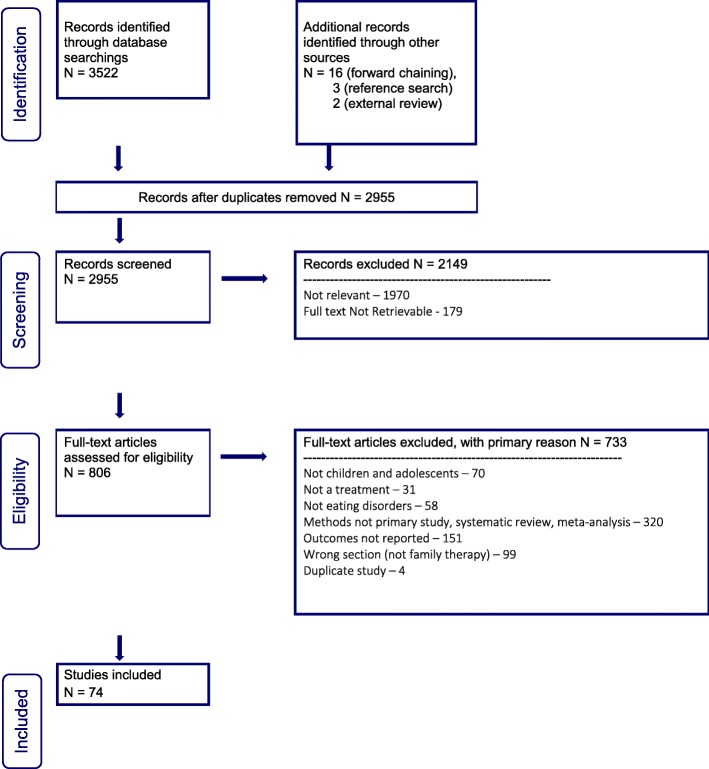
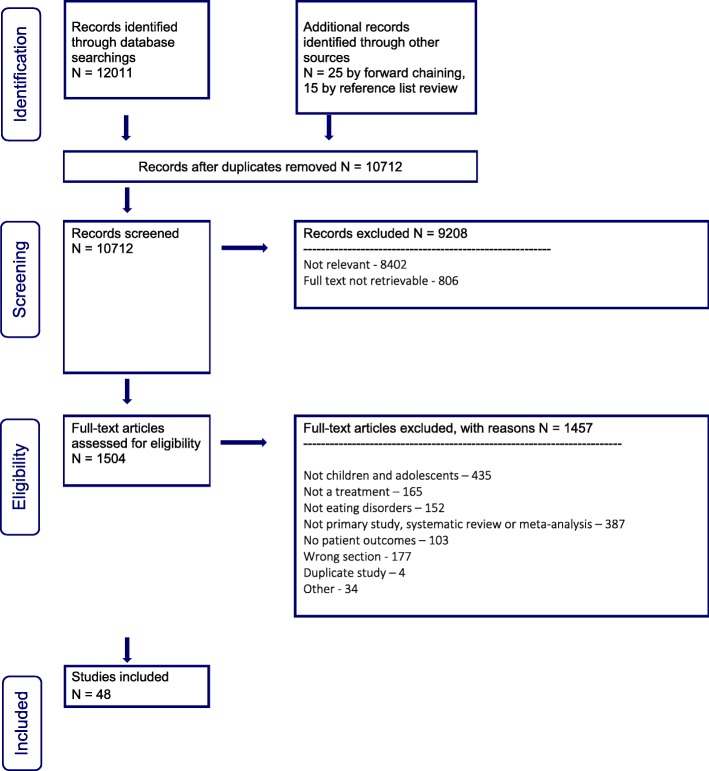
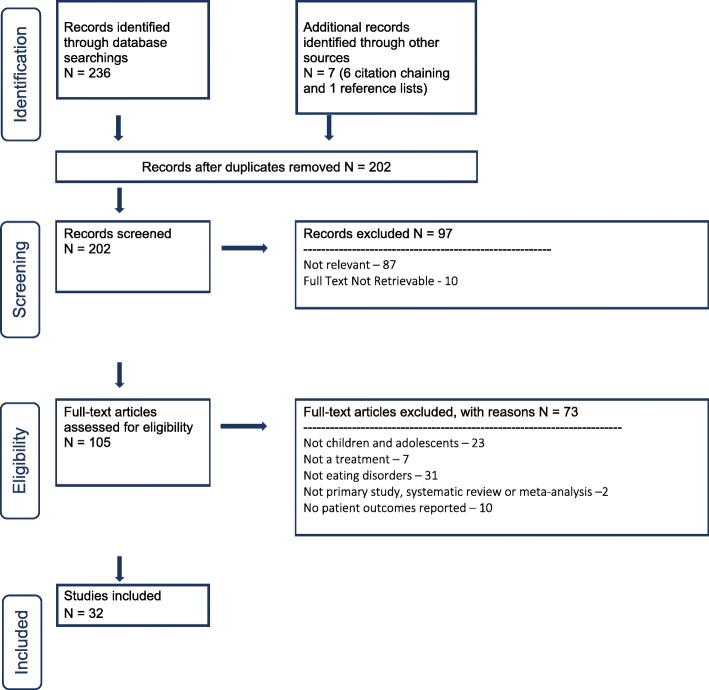
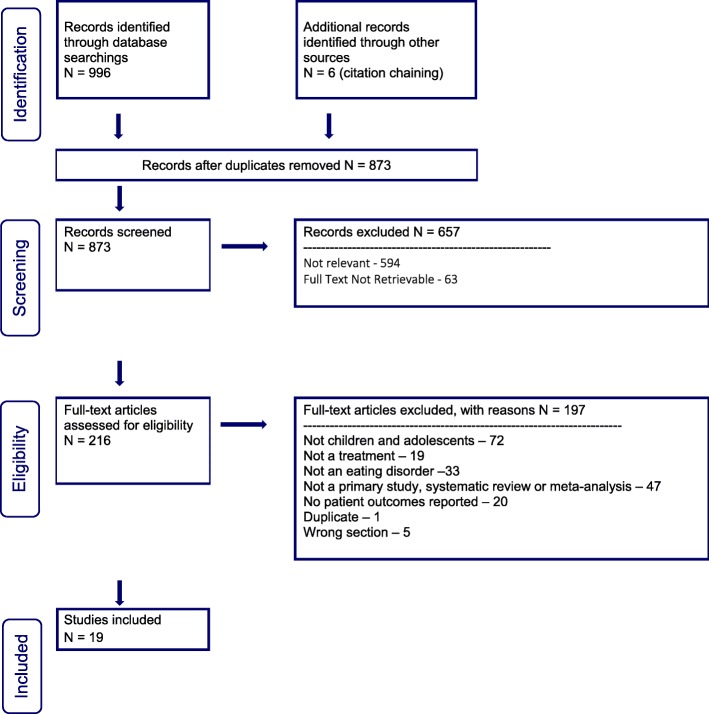
Verification
Claims the paper makes
The claims and statistics of this paper haven’t been checked yet.
Free: it reads the open-access text and checks the first 5 claims that cite a source we can check. Create a free account to check every claim.
Claims other papers make about this one
Each is checked against this paper’s own text: does it say what the citing paper says it does?
The cited source says what the claim attributes to it.
In the citing paper
“Three published guidelines were found for the treatment of children and adolescents with EDs (41–43).”
The cited source says what the claim attributes to it.
In the citing paper
“The Canadian guideline for children and adolescents with EDs only mentions trauma and PTSD in reference to ARFID (41).”
Self-check
Percentages, sums and reported differences re-computed from the paper’s own numbers.
The self-check needs the paper’s full text.
Citations
Cites
Cochrane Handbook for Systematic Reviews of Interventions: Cochrane Book Series
(2008) · doi:10.1002/9780470712184 · Cited by 25,048
GRADE: an emerging consensus on rating quality of evidence and strength of recommendations
Guyatt, G. H., Oxman, A. D., Vist, G. E., Kunz, R., Falck-Ytter, Y., Alonso-Coello, P., & Schünemann, H. J. (2008) · BMJ · doi:10.1136/bmj.39489.470347.ad · Cited by 23,305
Cumpston, M., Li, T., Page, M. J., Chandler, J., Welch, V. A., Higgins, J. P., & Thomas, J. (2019) · Cochrane Database of Systematic Reviews · doi:10.1002/14651858.ed000142 · Cited by 7,218
AGREE II: advancing guideline development, reporting and evaluation in health care
Brouwers, M. C., Kho, M. E., Browman, G. P., Burgers, J. S., Cluzeau, F., Feder, G., Fervers, B., Graham, I. D., Grimshaw, J., Hanna, S. E., et al. (2010) · Canadian Medical Association Journal · doi:10.1503/cmaj.090449 · Cited by 3,790
Self-citationGRADE guidelines: a new series of articles in the Journal of Clinical Epidemiology
Guyatt, G. H., Oxman, A. D., Schünemann, H. J., Tugwell, P., & Knottnerus, A. (2011) · Journal of Clinical Epidemiology · doi:10.1016/j.jclinepi.2010.09.011 · Cited by 3,094
Arcelus, J., Mitchell, A. J., Wales, J., & Nielsen, S. (2011) · Archives of General Psychiatry · doi:10.1001/archgenpsychiatry.2011.74 · Cited by 2,864
Review of the prevalence and incidence of eating disorders
Hoek, H. W., & van Hoeken, D. (2003) · International Journal of Eating Disorders · doi:10.1002/eat.10222 · Cited by 1,458
Users' guides to the medical literature : a manual for evidence-based clinical practice
Guyatt, G. H., Rennie, D., Meade, M. O., & Cook, D. J. (2002) · Cited by 1,196
Mortality in anorexia nervosa.
(1995) · American Journal of Psychiatry · doi:10.1176/ajp.152.7.1073 · Cited by 974
Development and validation of the sociocultural attitudes towards appearance questionnaire
Heinberg, L. J., Thompson, J. K., & Stormer, S. (1995) · International Journal of Eating Disorders · doi:10.1002/1098-108x(199501)17:1<81::aid-eat2260170111>3.0.co;2-y · Cited by 949
Guidelines International Network: Toward International Standards for Clinical Practice Guidelines
Qaseem, A., Forland, F., Macbeth, F., Ollenschläger, G., Phillips, S., van der Wees, P., & for the Board of Trustees of the Guidelines International Network* (2012) · Annals of Internal Medicine · doi:10.7326/0003-4819-156-7-201204030-00009 · Cited by 902
An Evaluation of Family Therapy in Anorexia Nervosa and Bulimia Nervosa
Russell, G. F. M. (1987) · Archives of General Psychiatry · doi:10.1001/archpsyc.1987.01800240021004 · Cited by 889
Lock, J., Le Grange, D., Agras, W. S., Moye, A., Bryson, S. W., & Jo, B. (2010) · Archives of General Psychiatry · doi:10.1001/archgenpsychiatry.2010.128 · Cited by 866
A Conceptual Model of Psychosomatic Illness in Children: Family Organization and Family Therapy
Minuchin, S. (1975) · Archives of General Psychiatry · doi:10.1001/archpsyc.1975.01760260095008 · Cited by 843
Use of GRADE grid to reach decisions on clinical practice guidelines when consensus is elusive
Jaeschke, R., Guyatt, G. H., Dellinger, P., Schunemann, H., Levy, M. M., Kunz, R., Norris, S., Bion, J., & for the GRADE working group (2008) · BMJ · doi:10.1136/bmj.a744 · Cited by 577
Eisler, I., Dare, C., Hodes, M., Russell, G., Dodge, E., & Le Grange, D. (2000) · Journal of Child Psychology and Psychiatry · doi:10.1111/1469-7610.00660 · Cited by 550
A Comparison of Short- and Long-Term Family Therapy for Adolescent Anorexia Nervosa
Lock, J., Agras, W. S., Bryson, S., & Kraemer, H. C. (2005) · Journal of the American Academy of Child & Adolescent Psychiatry · doi:10.1097/01.chi.0000161647.82775.0a · Cited by 452
Couturier, J., Kimber, M., & Szatmari, P. (2013) · International Journal of Eating Disorders · doi:10.1002/eat.22042 · Cited by 445
Self-citationA Controlled Comparison of Family Versus Individual Therapy for Adolescents With Anorexia Nervosa
ROBIN, A. L., SIEGEL, P. T., MOYE, A. W., GILROY, M., DENNIS, A. B., & SIKAND, A. (1999) · Journal of the American Academy of Child & Adolescent Psychiatry · doi:10.1097/00004583-199912000-00008 · Cited by 397
le Grange, D., Crosby, R. D., Rathouz, P. J., & Leventhal, B. L. (2007) · Archives of General Psychiatry · doi:10.1001/archpsyc.64.9.1049 · Cited by 363
The case for early intervention in anorexia nervosa: theoretical exploration of maintaining factors
Treasure, J., & Russell, G. (2011) · British Journal of Psychiatry · doi:10.1192/bjp.bp.110.087585 · Cited by 330
Evaluation of family treatments in adolescent anorexia nervosa: A pilot study
Le Grange, D., Eisler, I., Dare, C., & Russell, G. F. M. (1992) · International Journal of Eating Disorders · doi:10.1002/1098-108x(199212)12:4<347::aid-eat2260120402>3.0.co;2-w · Cited by 305
Schmidt, U., Lee, S., Beecham, J., Perkins, S., Treasure, J., Yi, I., Winn, S., Robinson, P., Murphy, R., Keville, S., et al. (2007) · American Journal of Psychiatry · doi:10.1176/ajp.2007.164.4.591 · Cited by 274
Comparison of 2 Family Therapies for Adolescent Anorexia Nervosa: A Randomized Parallel Trial
Agras, W. S., Lock, J., Brandt, H., Bryson, S. W., Dodge, E., Halmi, K. A., Jo, B., Johnson, C., Kaye, W., Wilfley, D., et al. (2014) · JAMA Psychiatry · doi:10.1001/jamapsychiatry.2014.1025 · Cited by 272
Users’ Guides to the Medical Literature: A Manual for Evidence-Based Clinical Practice
Kleinbart, J., & Williams, M. V. (2002) · ACP Journal Club · doi:10.7326/acpjc-2002-136-2-a17 · Cited by 268
Le Grange, D., Hughes, E. K., Court, A., Yeo, M., Crosby, R. D., & Sawyer, S. M. (2016) · Journal of the American Academy of Child & Adolescent Psychiatry · doi:10.1016/j.jaac.2016.05.007 · Cited by 266
Herpertz-Dahlmann, B., Schwarte, R., Krei, M., Egberts, K., Warnke, A., Wewetzer, C., Pfeiffer, E., Fleischhaker, C., Scherag, A., Holtkamp, K., et al. (2014) · The Lancet · doi:10.1016/s0140-6736(13)62411-3 · Cited by 261
COMORBIDITY AND OUTCOME IN EATING DISORDERS
Herzog, D. B., Nussbaum, K. M., & Marmor, A. K. (1996) · Psychiatric Clinics of North America · doi:10.1016/s0193-953x(05)70385-3 · Cited by 253
Schmidt, U., Lee, S., Beecham, J., Perkins, S., Treasure, J., Yi, I., Winn, S., Robinson, P., Murphy, R., Keville, S., et al. (2009) · Focus · doi:10.1176/foc.7.4.foc512 · Cited by 246
Le Grange, D., Lock, J., Agras, W. S., Bryson, S. W., & Jo, B. (2015) · Journal of the American Academy of Child & Adolescent Psychiatry · doi:10.1016/j.jaac.2015.08.008 · Cited by 243
Dalle Grave, R., Calugi, S., Doll, H. A., & Fairburn, C. G. (2013) · Behaviour Research and Therapy · doi:10.1016/j.brat.2012.09.008 · Cited by 234
Randomized Controlled Clinical Trial of Yoga in the Treatment of Eating Disorders
Carei, T. R., Fyfe-Johnson, A. L., Breuner, C. C., & Brown, M. A. (2010) · Journal of Adolescent Health · doi:10.1016/j.jadohealth.2009.08.007 · Cited by 233
Comparison of Family Therapy and Family Group Psychoeducation in Adolescents with Anorexia Nervosa
Geist, R., Heinmaa, M., Stephens, D., Davis, R., & Katzman, D. K. (2000) · The Canadian Journal of Psychiatry · doi:10.1177/070674370004500208 · Cited by 232
Eccles, M. P., Grimshaw, J. M., Shekelle, P., Schünemann, H. J., & Woolf, S. (2012) · Implementation Science · doi:10.1186/1748-5908-7-60 · Cited by 229
Madden, S., Miskovic-Wheatley, J., Wallis, A., Kohn, M., Lock, J., Le Grange, D., Jo, B., Clarke, S., Rhodes, P., Hay, P., et al. (2015) · Psychological Medicine · doi:10.1017/s0033291714001573 · Cited by 205
Eisler, I., Simic, M., Hodsoll, J., Asen, E., Berelowitz, M., Connan, F., Ellis, G., Hugo, P., Schmidt, U., Treasure, J., et al. (2016) · BMC Psychiatry · doi:10.1186/s12888-016-1129-6 · Cited by 197
Lock, J., & La Via, M. C. (2015) · Journal of the American Academy of Child & Adolescent Psychiatry · doi:10.1016/j.jaac.2015.01.018 · Cited by 181
BALL, J., & MITCHELL, P. (2004) · Eating Disorders · doi:10.1080/10640260490521389 · Cited by 165
Heffner, M., Sperry, J., Eifert, G. H., & Detweiler, M. (2002) · Cognitive and Behavioral Practice · doi:10.1016/s1077-7229(02)80053-0 · Cited by 162
Behavior Therapy of Anorexia Nervosa: Effectiveness of Activity as a Reinforcer of Weight Gain
BLINDER, B. J., FREEMAN, D. M. A., & STUNKARD, A. J. (1970) · American Journal of Psychiatry · doi:10.1176/ajp.126.8.1093 · Cited by 150
A Placebo-Controlled Pilot Study of Adjunctive Olanzapine for Adolescents with Anorexia Nervosa
Kafantaris, V., Leigh, E., Hertz, S., Berest, A., Schebendach, J., Sterling, W. M., Saito, E., Sunday, S., Higdon, C., Golden, N. H., et al. (2011) · Journal of Child and Adolescent Psychopharmacology · doi:10.1089/cap.2010.0139 · Cited by 145
Lock, J., Le Grange, D., Agras, W. S., Fitzpatrick, K. K., Jo, B., Accurso, E., Forsberg, S., Anderson, K., Arnow, K., & Stainer, M. (2015) · Behaviour Research and Therapy · doi:10.1016/j.brat.2015.07.015 · Cited by 140
Utilizing Telehealth to deliver family‐based treatment for adolescent anorexia nervosa
Anderson, K. E., Byrne, C. E., Crosby, R. D., & Le Grange, D. (2017) · International Journal of Eating Disorders · doi:10.1002/eat.22759 · Cited by 134
Godart, N., Berthoz, S., Curt, F., Perdereau, F., Rein, Z., Wallier, J., Horreard, A.-S., Kaganski, I., Lucet, R., Atger, F., et al. (2012) · PLoS ONE · doi:10.1371/journal.pone.0028249 · Cited by 122
Dialectical Behavior Therapy of Anorexia and Bulimia Nervosa Among Adolescents: A Case Series
Salbach‐Andrae, H., Bohnekamp, I., Pfeiffer, E. F., Lehmkuhl, U., & Miller, A. L. (2008) · Cognitive and Behavioral Practice · doi:10.1016/j.cbpra.2008.04.001 · Cited by 121
Holtkamp, K., Konrad, K., Kaiser, N., Ploenes, Y., Heussen, N. M., Grzella, I., & Herpertz‐Dahlmann, B. (2004) · Journal of Psychiatric Research · doi:10.1016/j.jpsychires.2004.08.001 · Cited by 118
Hagman, J., Gralla, J., Sigel, E., Ellert, S., Dodge, M., Gardner, R., O'Lonergan, T., Frank, G., & Wamboldt, M. Z. (2011) · Journal of the American Academy of Child & Adolescent Psychiatry · doi:10.1016/j.jaac.2011.06.009 · Cited by 118
Development of emotion acceptance behavior therapy for anorexia nervosa: a case series
Wildes, J. E., & Marcus, M. D. (2011) · International Journal of Eating Disorders · doi:10.1002/eat.20826 · Cited by 118
An Open Trial of Fluoxetine for Adolescents with Bulimia Nervosa
Kotler, L. A., Devlin, M. J., Davies, M., & Walsh, B. T. (2003) · Journal of Child and Adolescent Psychopharmacology · doi:10.1089/104454603322572660 · Cited by 117
Ornstein, R. M., Essayli, J. H., Nicely, T. A., Masciulli, E., & Lane‐Loney, S. (2017) · International Journal of Eating Disorders · doi:10.1002/eat.22737 · Cited by 112
Goddard, E., Hibbs, R., Raenker, S., Salerno, L., Arcelus, J., Boughton, N., Connan, F., Goss, K., Laszlo, B., Morgan, J., et al. (2013) · BMC Psychiatry · doi:10.1186/1471-244x-13-287 · Cited by 111
Gowers, S., Clark, A., Roberts, C., Byford, S., Barrett, B., Griffiths, A., Edwards, V, Bryan, C., Smethurst, N., Rowlands, L., et al. (2010) · Health Technology Assessment · doi:10.3310/hta14150 · Cited by 107
Family therapy for adolescent anorexia nervosa
Grange, D. L. (1999) · Journal of Clinical Psychology · doi:10.1002/(sici)1097-4679(199906)55:6<727::aid-jclp6>3.0.co;2-3 · Cited by 99
Strober, M. A., Freeman, R., Lampert, C., Diamond, J., Teplinsky, C., & DeAntonio, M. (2006) · International Journal of Eating Disorders · doi:10.1002/eat.20293 · Cited by 96
Olanzapine in children and adolescents with chronic anorexia nervosa. A study of five cases
Mehler, C., Wewetzer, C., Schulze, U., Warnke, A., Theisen, F., & Dittmann, R. (2001) · European Child & Adolescent Psychiatry · doi:10.1007/s007870170039 · Cited by 94
Boachie, A., Goldfield, G. S., & Spettigue, W. (2003) · International Journal of Eating Disorders · doi:10.1002/eat.10115 · Cited by 94
Self-citationLoeb, K. L., Walsh, B. T., Lock, J., Grange, D. L., Jones, J. M., Marcus, S. M., Weaver, J. C., & Dobrow, I. J. (2007) · Journal of the American Academy of Child & Adolescent Psychiatry · doi:10.1097/chi.0b013e318058a98e · Cited by 94
Brewerton, T. D., & D'Agostino, M. (2017) · Journal of Child and Adolescent Psychopharmacology · doi:10.1089/cap.2017.0133 · Cited by 92
Dalle Grave, R., Calugi, S., El Ghoch, M., Conti, M., & Fairburn, C. G. (2014) · Frontiers in Psychiatry · doi:10.3389/fpsyt.2014.00014 · Cited by 91
Dalle Grave, R., Calugi, S., Sartirana, M., & Fairburn, C. G. (2015) · Behaviour Research and Therapy · doi:10.1016/j.brat.2015.07.014 · Cited by 90
Family-Based Treatment for Adolescents With Anorexia Nervosa: A Dissemination Study
Couturier, J., Isserlin, L., & Lock, J. (2010) · Eating Disorders · doi:10.1080/10640261003719443 · Cited by 89
Self-citationEmotionally focused family therapy for bulimia: Changing attachment patterns.
Johnson, S. M., Maddeaux, C., & Blouin, J. (1998) · Psychotherapy · doi:10.1037/h0087728 · Cited by 89
Hillebrand, J. J., Elburg, A. A. V., Kas, M. J., van Engeland, H., & Adan, R. A. H. (2005) · Biological Psychiatry · doi:10.1016/j.biopsych.2005.04.008 · Cited by 88
Frank, G. K. W., Shott, M. E., Hagman, J. O., Schiel, M. A., DeGuzman, M. C., & Rossi, B. (2017) · International Journal of Eating Disorders · doi:10.1002/eat.22704 · Cited by 86
Strandjord, S. E., Ng, H., & Rome, E. S. (2015) · International Journal of Eating Disorders · doi:10.1002/eat.22438 · Cited by 85
Predictive factors of length of inpatient treatment in anorexia nervosa
Lievers, L. S., Curt, F., Wallier, J., Perdereau, F., Rein, Z., Jeammet, P., & Godart, N. T. (2008) · European Child & Adolescent Psychiatry · doi:10.1007/s00787-008-0706-8 · Cited by 84
Leitenberg, H., Agras, W. S., & Thomson, L. E. (1968) · Behaviour Research and Therapy · doi:10.1016/0005-7967(68)90009-0 · Cited by 84
Schlegl, S., Diedrich, A., Neumayr, C., Fumi, M., Naab, S., & Voderholzer, U. (2015) · European Eating Disorders Review · doi:10.1002/erv.2416 · Cited by 84
Manualized Family-Based Treatment for Anorexia Nervosa: A Case Series
Grange, D. L., Binford, R. B., & Loeb, K. L. (2004) · Journal of the American Academy of Child & Adolescent Psychiatry · doi:10.1097/01.chi.0000145373.68863.85 · Cited by 83
Sibéoni, J., Orri, M., Valentin, M., Podlipski, M.-A., Colin, S., Pradère, J., & Révah‐Levy, A. (2017) · PLoS ONE · doi:10.1371/journal.pone.0169493 · Cited by 83
Sexual, body-image, and personality attitudes in anorexia nervosa
Leon, G. R., Lucas, A. R., Colligan, R. C., Ferdinande, R. J., & Kamp, J. D. (1985) · Research on Child and Adolescent Psychopathology · doi:10.1007/bf00910645 · Cited by 82
Food Refusal After An Incident of Choking: A Posttraumatic Eating Disorder
Chatoor, I., Conley, C. S., & DICKSON, L. (1988) · Journal of the American Academy of Child & Adolescent Psychiatry · doi:10.1097/00004583-198801000-00016 · Cited by 81
Family therapy for bulimia nervosa in adolescents: an exploratory study
Dodge, E., Hodes, M., Eisler, I., & Dare, C. (1995) · Journal of Family Therapy · doi:10.1111/j.1467-6427.1995.tb00004.x · Cited by 80
Dialectical Behavior Therapy Modified for Adolescent Binge Eating Disorder: A Case Report
Safer, D. L., Couturier, J. L., & Lock, J. (2007) · Cognitive and Behavioral Practice · doi:10.1016/j.cbpra.2006.06.001 · Cited by 80
Self-citationTreatment of Anorexia Nervosa With Behavior Modification
Halmi, K. A. (1975) · Archives of General Psychiatry · doi:10.1001/archpsyc.1975.01760190095011 · Cited by 80
Predictors of weight maintenance after hospital discharge in adolescent anorexia nervosa
Castro‐Fornieles, J., Casulà, V., Saura, B., Martínez, E., Lazaro, L., Vila, M., Plana, M. T., & Toro, J. (2007) · International Journal of Eating Disorders · doi:10.1002/eat.20340 · Cited by 80
Case Study: Anorexia Nervosa and Autistic Disorder in an Adolescent Girl
Fisman, S., Steele, M. M., Short, J. A., BYRNE, T., & LAVALLEE, C. (1996) · Journal of the American Academy of Child & Adolescent Psychiatry · doi:10.1097/00004583-199607000-00021 · Cited by 79
Family-Based Therapy for Adolescents with Bulimia Nervosa
Grange, D. L., Lock, J. D., & Dymek, M. P. (2003) · American Journal of Psychotherapy · doi:10.1176/appi.psychotherapy.2003.57.2.237 · Cited by 77
Stefini, A., Salzer, S., Reich, G., Horn, H., Winkelmann, K., Bents, H., Rutz, U., Frost, U., von Boetticher, A., Ruhl, U. E., et al. (2017) · Journal of the American Academy of Child & Adolescent Psychiatry · doi:10.1016/j.jaac.2017.01.019 · Cited by 77
Rienecke, R. D. (2014) · Journal of Family Therapy · doi:10.1111/1467-6427.12055 · Cited by 76
Fischer, S., & Peterson, C. (2015) · Psychotherapy · doi:10.1037/a0036065 · Cited by 76
Spettigue, W., Norris, M. L., Santos, A., & Obeid, N. (2018) · Journal of Eating Disorders · doi:10.1186/s40337-018-0205-3 · Cited by 75
Self-citationShort‐Term Intensive Family Therapy for Adolescent Eating Disorders: 30‐Month Outcome
Marzola, E., Knatz, S., Murray, S. B., Rockwell, R., Boutelle, K., Eisler, I., & Kaye, W. H. (2015) · European Eating Disorders Review · doi:10.1002/erv.2353 · Cited by 74
Is Family Therapy Useful for Treating Children With Anorexia Nervosa? Results of a Case Series
Lock, J., Grange, D. L., Forsberg, S., & Hewell, K. (2006) · Journal of the American Academy of Child & Adolescent Psychiatry · doi:10.1097/01.chi.0000233208.43427.4c · Cited by 74
Girz, L. P., Robinson, A. L., Foroughe, M. F., Jasper, K., & Boachie, A. (2012) · Journal of Family Therapy · doi:10.1111/j.1467-6427.2012.00618.x · Cited by 74
Self-citationOlanzapine Use for the Adjunctive Treatment of Adolescents with Anorexia Nervosa
Norris, M. L., Spettigue, W. J., Buchholz, A., Henderson, K. A., Gomez, R., Maras, D., Gaboury, I., & Ni, A. (2011) · Journal of Child and Adolescent Psychopharmacology · doi:10.1089/cap.2010.0131 · Cited by 73
Self-citationAdolescent Focused Psychotherapy for Adolescents with Anorexia Nervosa
Fitzpatrick, K. K., MOYE, A. W., Rienecke, R. D., Lock, J., & Grange, D. L. (2009) · Journal of Contemporary Psychotherapy · doi:10.1007/s10879-009-9123-7 · Cited by 70
Rhodes, P., Baillee, A., Brown, J., & Madden, S. (2008) · Journal of Family Therapy · doi:10.1111/j.1467-6427.2008.00418.x · Cited by 70
Lock, J., Fitzpatrick, K. K., Agras, W. S., Weinbach, N., & Jo, B. (2018) · European Eating Disorders Review · doi:10.1002/erv.2571 · Cited by 67
Mirtazapine and Weight Gain in Avoidant and Restrictive Food Intake Disorder
Gray, E., Chen, T., Menzel, J., Schwartz, T., & Kaye, W. H. (2018) · Journal of the American Academy of Child & Adolescent Psychiatry · doi:10.1016/j.jaac.2018.01.011 · Cited by 67
McHugh, M. D. (2007) · International Journal of Eating Disorders · doi:10.1002/eat.20425 · Cited by 66
What Predicts Maintenance of Weight for Adolescents Medically Hospitalized for Anorexia Nervosa?
Lock, J., & Litt, I. (2003) · Eating Disorders · doi:10.1002/erv.496 · Cited by 66
Adjusting cognitive behavior therapy for adolescents with bulimia nervosa: results of case series
Lock, J. (2005) · American Journal of Psychotherapy · doi:10.1176/appi.psychotherapy.2005.59.3.267 · Cited by 64
The effectiveness of a day program for the treatment of adolescent anorexia nervosa
Goldstein, M., Peters, L., Baillie, A., McVeagh, P., Minshall, G., & Fitzjames, D. (2011) · International Journal of Eating Disorders · doi:10.1002/eat.20789 · Cited by 64
RISPERIDONE IN ANOREXIA NERVOSA
Newman-Toker, J. (2000) · Journal of the American Academy of Child & Adolescent Psychiatry · doi:10.1097/00004583-200008000-00002 · Cited by 63
Dahlgren, C. L., Lask, B. D., Landrø, N. I., & Rø, Ø. (2013) · International Journal of Eating Disorders · doi:10.1002/eat.22155 · Cited by 62
Bloomfield, B. S., Fischer, A. J., Clark, R. R., & Dove, M. (2018) · Behavior Analysis in Practice · doi:10.1007/s40617-018-0251-y · Cited by 62
Stockford, C., Stenfert Kroese, B., Beesley, A., & Leung, N. (2019) · Eating Disorders · doi:10.1080/10640266.2018.1512301 · Cited by 61
Leggero, C., Masi, G., Brunori, E., Calderoni, S., Carissimo, R., Maestro, S., & Muratori, F. (2010) · Journal of Child and Adolescent Psychopharmacology · doi:10.1089/cap.2009.0072 · Cited by 60
Pros and cons of using the mental health act for severe eating Disorders in Adolescents
Ayton, A., Keen, C., & Lask, B. (2009) · European Eating Disorders Review · doi:10.1002/erv.887 · Cited by 59
Aripiprazole in anorexia nervosa and low‐weight bulimia nervosa: Case reports
Trunko, M. E., Schwartz, T. A., Duvvuri, V., & Kaye, W. H. (2011) · International Journal of Eating Disorders · doi:10.1002/eat.20807 · Cited by 59
Behavioral treatment of choking phobia in an adolescent: An experimental analysis
Chorpita, B. F., Vitali, A. E., & Barlow, D. H. (1997) · Journal of Behavior Therapy and Experimental Psychiatry · doi:10.1016/s0005-7916(97)00027-x · Cited by 58
Timko, C. A., Zucker, N. L., Herbert, J. D., Rodriguez, D., & Merwin, R. M. (2015) · Behaviour Research and Therapy · doi:10.1016/j.brat.2015.03.011 · Cited by 58
Fennig, S., Klomek, A. B., Shahar, B., Sarel‐Michnik, Z., & Hadas, A. (2015) · Early Intervention in Psychiatry · doi:10.1111/eip.12234 · Cited by 57
Cognitive-Behavioral Treatment of Health-Impairing Food Phobias in Children
Singer, L. T., Ambuel, B., Wade, S. L., & Jaffe, A. C. (1992) · Journal of the American Academy of Child & Adolescent Psychiatry · doi:10.1097/00004583-199209000-00011 · Cited by 57
Murray, S. B., Anderson, L. K., Cusack, A., Nakamura, T., Rockwell, R. E., Griffiths, S., & Kaye, W. H. (2015) · Eating Disorders · doi:10.1080/10640266.2015.1044345 · Cited by 56
Rockwell, R. E., Boutelle, K. N., Trunko, M. E., Jacobs, M. J., & Kaye, W. H. (2011) · European Eating Disorders Review · doi:10.1002/erv.1094 · Cited by 56
Lázaro, L., Font, E., Moreno, E., Calvo, R. M., Vila, M., Andrés-Perpiñá, S., Canalda, G., Martínez, E., & Castro‐Fornieles, J. (2010) · European Eating Disorders Review · doi:10.1002/erv.1054 · Cited by 56
Case Report: Delivery of Family Therapy in the Treatment of Anorexia Nervosa Using Telehealth
Goldfield, G. S., & Boachie, A. (2003) · Telemedicine Journal and e-Health · doi:10.1089/153056203763317729 · Cited by 56
Self-citationThe Effects of a Multiple Family Therapy on Adolescents with Eating Disorders: An Outcome Study
Gelin, Z., Fuso, S., Hendrick, S., Cook‐Darzens, S., & Simon, Y. (2014) · Family Process · doi:10.1111/famp.12103 · Cited by 56
Length of Stay of Inpatients with Eating Disorders
Morris, J., Simpson, A. V., & Voy, S. J. (2013) · Clinical Psychology & Psychotherapy · doi:10.1002/cpp.1865 · Cited by 55
Dukarm, C. P. (2005) · Journal of Women's Health · doi:10.1089/jwh.2005.14.345 · Cited by 55
Hillen, S., Dempfle, A., Seitz, J., Herpertz‐Dahlmann, B., & Bühren, K. (2015) · BMC Psychiatry · doi:10.1186/s12888-015-0516-8 · Cited by 54
Short-term outcome of anorexia nervosa in adolescents after inpatient treatment: a prospective study
Salbach‐Andrae, H., Schneider, N., Seifert, K., Pfeiffer, E. F., Lenz, K., Lehmkuhl, U., & Korte, A. (2009) · European Child & Adolescent Psychiatry · doi:10.1007/s00787-009-0024-9 · Cited by 54
A case series of family‐based treatment for adolescents with atypical anorexia nervosa
Hughes, E. K., Le Grange, D., Court, A., & Sawyer, S. M. (2017) · International Journal of Eating Disorders · doi:10.1002/eat.22662 · Cited by 54
Fischer, A. J., Luiselli, J. K., & Dove, M. B. (2015) · Clinical Practice in Pediatric Psychology · doi:10.1037/cpp0000090 · Cited by 53
TREATMENT OF ANOREXIA NERVOSA USING OPERANT CONDITIONING TECHNIQUES
Garfinkel, P. E., Kline, S. A., & Stancer, H. C. (1973) · The Journal of Nervous and Mental Disease · doi:10.1097/00005053-197312000-00004 · Cited by 52
Hollesen, A., Clausen, L., & Rokkedal, K. (2013) · Journal of Family Therapy · doi:10.1111/1467-6427.12000 · Cited by 52
A Behavioral Parent-Training Intervention for a Child With Avoidant/Restrictive Food Intake Disorder
Murphy, J., & Zlomke, K. R. (2016) · Clinical Practice in Pediatric Psychology · doi:10.1037/cpp0000128 · Cited by 52
A study of psycho-pathology and treatment of children with phagophobia.
Okada, A., Tsukamoto, C., Hosogi, M., Yamanaka, E., Watanabe, K., Ootyou, K., & Morishima, T. (2007) · Institutional Repositories DataBase (IRDB) · doi:10.18926/amo/32896 · Cited by 51
Olanzapine use in adolescent anorexia nervosa
Dennis, K., Grange, D. L., & Bremer, J. (2006) · Eating and Weight Disorders - Studies on Anorexia Bulimia and Obesity · doi:10.1007/bf03327760 · Cited by 50
Rate of Weight Gain of Inpatients with Anorexia Nervosa Under Two Behavioral Contracts
Solanto, M. V., Hertz, S. M., Jacobson, M. S., Golden, N. H., & Heller, L. (1994) · PEDIATRICS · doi:10.1542/peds.93.6.989 · Cited by 49
Johnston, J. A. Y., O'Gara, J. S. X., Koman, S. L., Baker, C. W., & Anderson, D. A. (2015) · Journal of Clinical Psychology · doi:10.1002/jclp.22176 · Cited by 49
Simic, M., Stewart, C. S., Eisler, I., Baudinet, J., Hunt, K., O'Brien, J., & McDermott, B. (2018) · International Journal of Eating Disorders · doi:10.1002/eat.22959 · Cited by 49
Follow‐up mortality study of compulsorily treated patients with anorexia nervosa
Ward, A., Ramsay, R., Russell, G., & Treasure, J. (2015) · International Journal of Eating Disorders · doi:10.1002/eat.22377 · Cited by 49
A multiple-baseline evaluation of the treatment of food phobia in a young boy
Nock, M. K. (2002) · Journal of Behavior Therapy and Experimental Psychiatry · doi:10.1016/s0005-7916(02)00046-0 · Cited by 48
Lock, J., Darcy, A., Fitzpatrick, K. K., Vierhile, M., & Sadeh‐Sharvit, S. (2017) · International Journal of Eating Disorders · doi:10.1002/eat.22733 · Cited by 48
Naturalistic Outcome of Family‐Based Inpatient Treatment for Adolescents with Anorexia Nervosa
Halvorsen, I., Reas, D. L., Nilsen, J., & Rø, Ø. (2017) · European Eating Disorders Review · doi:10.1002/erv.2572 · Cited by 48
Paulson‐Karlsson, G., Engström, I., & Nevonen, L. (2008) · Eating Disorders · doi:10.1080/10640260802570130 · Cited by 47
Intensive multi‐family therapy for adolescent anorexia nervosa: an open study of 30 families
Salaminiou, E., Campbell, M., Simic, M., Kuipers, E., & Eisler, I. (2015) · Journal of Family Therapy · doi:10.1111/1467-6427.12075 · Cited by 46
Temperament and character among Korean children and adolescents with anxiety disorders
Cho, S.-C., Jung, S.-W., Kim, B., Hwang, J., Shin, M., Kim, J.-W., Chungh, D.-S., & Kim, H. (2008) · European Child & Adolescent Psychiatry · doi:10.1007/s00787-008-0699-3 · Cited by 45
Couturier, J. L., & Mahmood, A. (2009) · Eating Disorders · doi:10.1080/10640260902991236 · Cited by 44
Self-citationHenderson, K. A., Buchholz, A., Obeid, N., Mossière, A. M., Maras, D., Norris, M. L., Harrison, M. E., Feder, S., & Spettigue, W. J. (2013) · Eating Disorders · doi:10.1080/10640266.2014.857512 · Cited by 44
Self-citationAnorexia nervosa in teenagers: Change in family function after family therapy, at 2-year follow-up
Wallin, U., & Kronvall, P. (2002) · Nordic Journal of Psychiatry · doi:10.1080/080394802760322132 · Cited by 43
Mehler‐Wex, C., Romanos, M., Kirchheiner, J., & Schulze, U. M. E. (2008) · European Eating Disorders Review · doi:10.1002/erv.843 · Cited by 43
Pennell, A., Couturier, J., Grant, C., & Johnson, N. (2016) · International Journal of Eating Disorders · doi:10.1002/eat.22602 · Cited by 43
Self-citationOrnstein, R. M., Lane‐Loney, S. E., & Hollenbeak, C. S. (2012) · Eating and Weight Disorders - Studies on Anorexia Bulimia and Obesity · doi:10.1007/bf03325344 · Cited by 42
Treatment of anorexia nervosa in a specialty care continuum
Treat, T. A., McCabe, E. B., Gaskill, J. A., & Marcus, M. D. (2008) · International Journal of Eating Disorders · doi:10.1002/eat.20571 · Cited by 41
The Role of the Family in the Treatment of Anorexia Nervosa
Liebman, R., Minuchin, S., & Baker, L. (1974) · Journal of the American Academy of Child Psychiatry · doi:10.1016/s0002-7138(09)61315-7 · Cited by 41
Spettigue, W. J., Norris, M. L., Maras, D., Obeid, N., Feder, S., Harrison, M. E., Gomez, R., Fu, M. C., Henderson, K. A., & Buchholz, A. (2018) · Journal of the Canadian Academy of Child and Adolescent Psychiatry · Cited by 41
Self-citationTurkiewicz, G., Pinzon, V., Lock, J., & Fleitlich‐Bilyk, B. (2010) · Brazilian Journal of Psychiatry · doi:10.1590/s1516-44462010005000001 · Cited by 40
Predictive factors of dropout from inpatient treatment for anorexia nervosa
the EVHAN Group, Roux, H., Ali, A., Lambert, S., Radon, L., Huas, C., Curt, F., Berthoz, S., & Godart, N. T. (2016) · BMC Psychiatry · doi:10.1186/s12888-016-1010-7 · Cited by 40
Shugar, G., & Krueger, S. (1995) · International Journal of Eating Disorders · Cited by 40
Multi-Family Therapy for Bulimia Nervosa in Adolescence
Stewart, C. S., Voulgari, S., Eisler, I., Hunt, K., & Simic, M. (2015) · Eating Disorders · doi:10.1080/10640266.2015.1044348 · Cited by 39
Ohmann, S., Popow, C., Wurzer, M., Karwautz, A. F. K., Sackl‐Pammer, P., & Schuch, B. (2013) · Neuropsychiatrie · doi:10.1007/s40211-013-0065-7 · Cited by 38
Bourion-Bédès, S., Baumann, C., Kermarrec, S., Ligier, F., Feillet, F., Bonnemains, C., Guillemin, F., & Kabuth, B. (2012) · Journal of Adolescent Health · doi:10.1016/j.jadohealth.2012.06.017 · Cited by 38
Exposure-Based Family Therapy (FBT-E): An Open Case Series of a New Treatment for Anorexia Nervosa
Hildebrandt, T., Bacow, T. L., Greif, R., & Flores, A. (2013) · Cognitive and Behavioral Practice · doi:10.1016/j.cbpra.2013.10.006 · Cited by 37
Aripiprazole, a partial dopamine agonist to improve adolescent anorexia nervosa—A case series
Frank, G. (2015) · International Journal of Eating Disorders · doi:10.1002/eat.22485 · Cited by 37
Rienecke, R. D., Richmond, R. L., & Lebow, J. R. (2016) · Eating Behaviors · doi:10.1016/j.eatbeh.2016.06.017 · Cited by 37
A Pilot Study of an Acceptance-Based Separated Family Treatment for Adolescent Anorexia Nervosa
Merwin, R. M., Zucker, N. L., & Timko, C. A. (2013) · Cognitive and Behavioral Practice · doi:10.1016/j.cbpra.2012.11.001 · Cited by 36 · cited 1×
“…ano randomization bno control condition Bibliography: Case Series - Hurst 2019 [72], Hildebrandt 2014 [70], Timko 2015 [71] Case Reports - Hurst 2015 [74], Merwin 2013 [73] Table 8 FBT plus CBT for children and adolescents with Bulimia Nervosa Certainty assessment Impact Certainty Importance №…”
BackgroundFocus on perfectionism in female adolescent anorexia nervosa
Hurst, K., & Zimmer‐Gembeck, M. J. (2015) · International Journal of Eating Disorders · doi:10.1002/eat.22417 · Cited by 36
Vall, E., & Wade, T. D. (2017) · Clinical Psychologist · doi:10.1111/cp.12091 · Cited by 36
Kunz, R., Fretheim, A., Cluzeau, F., Wilt, T. J., Qaseem, A., Lelgemann, M., Kelson, M., Guyatt, G. H., & Schünemann, H. J. (2012) · Proceedings of the American Thoracic Society · doi:10.1513/pats.201208-056st · Cited by 34
EMDR Treatment of Children and Adolescents With a Choking Phobia
de Roos, C., & de Jongh, A. (2008) · Journal of EMDR Practice and Research · doi:10.1891/1933-3196.2.3.201 · Cited by 34
Harrison, A., Stavri, P., Ormond, L., McEnemy, F., Akyol, D., Qureshi, A., & Al‐Khairulla, H. (2018) · European Eating Disorders Review · doi:10.1002/erv.2584 · Cited by 34
Accurso, E. C., Astrachan-Fletcher, E. B., O’Brien, S., McClanahan, S. F., & Grange, D. L. (2017) · Eating Disorders · doi:10.1080/10640266.2017.1330319 · Cited by 33
Banerjee, S., Bhandari, R. P., & Rosenberg, D. R. (2005) · Journal of Developmental & Behavioral Pediatrics · doi:10.1097/00004703-200504000-00008 · Cited by 32
Gabel, K., Pinhas, L., Eisler, I., Katzman, D. K., & Heinmaa, M. (2014) · Europe PMC (PubMed Central) · Cited by 31
Mirtazapine in the treatment of adolescent anorexia nervosa
Hrdlička, M., Beranova, I., Zámečníková, R., & Urbánek, T. (2008) · European Child & Adolescent Psychiatry · doi:10.1007/s00787-007-0670-8 · Cited by 31
Adolescents and eating disorders: An examination of a day treatment program
Dancyger, I. F., Fornari, V., Schneider, M., Fisher, M., Frank, S., Goodman, B., Sison, C., & Wisotsky, W. (2003) · Eating and Weight Disorders - Studies on Anorexia Bulimia and Obesity · doi:10.1007/bf03325021 · Cited by 31
Hypnobehavioral Approaches for School-Age Children with Dysphagia and Food Aversion: A Case Series
CULBERT, T. P., KAJANDER, R. L., Kohen, D. P., & Reaney, J. B. (1996) · Journal of Developmental & Behavioral Pediatrics · doi:10.1097/00004703-199610000-00008 · Cited by 31
A Focus on Behavior Management of Avoidant/Restrictive Food Intake Disorder (ARFID): A Case Series
Pitt, P. D., & Middleman, A. B. (2017) · Clinical Pediatrics · doi:10.1177/0009922817721158 · Cited by 31
Depestele, L., Claes, L., Dierckx, E., Colman, R., Schoevaerts, K., & Lemmens, G. M. D. (2017) · European Eating Disorders Review · doi:10.1002/erv.2556 · Cited by 31
Follow‐up mortality study of compulsorily treated patients with anorexia nervosa
Ward, A., Ramsay, R., Russell, G., & Treasure, J. (2016) · International Journal of Eating Disorders · doi:10.1002/eat.22530 · Cited by 30
Factors Influencing Research Drug Trials in Adolescents With Anorexia Nervosa
Norris, M. L., Spettigue, W., Buchholz, A., Henderson, K. A., & Obeid, N. (2010) · Eating Disorders · doi:10.1080/10640261003719468 · Cited by 30
Self-citationCognitive‐behavioral therapy for adolescents with binge eating syndromes: A case series
Schapman, A. M., Lock, J., & Couturier, J. L. (2006) · International Journal of Eating Disorders · doi:10.1002/eat.20253 · Cited by 30
Self-citationLorazepam in the Treatment of Posttraumatic Feeding Disorder
Kardas, M., Cermik, B. B., Ekmekçi, S., Uzuner, S., & Gökçe, S. (2014) · Journal of Child and Adolescent Psychopharmacology · doi:10.1089/cap.2013.0149 · Cited by 30
Fernández-del-Valle, M., Larumbe‐Zabala, E., Morande-Lavin, G., & Ruiz, M. P. (2015) · Disability and Rehabilitation · doi:10.3109/09638288.2015.1041612 · Cited by 29
Educative Treatment of Patients and Parents in Anorexia Nervosa
Groen, J. J., & Feldman-Toledano, Z. (1966) · The British Journal of Psychiatry · doi:10.1192/bjp.112.488.671 · Cited by 29
Maxmen, J. S. (1974) · JAMA · doi:10.1001/jama.1974.03230450035022 · Cited by 29
Classical and operant procedures in the treatment of a case of food aversion in a young child
Siegel, L. J. (1982) · Journal of Clinical Child Psychology · doi:10.1080/15374418209533082 · Cited by 29
Ornstein, R. M., Lane‐Loney, S. E., & Hollenbeak, C. S. (2011) · Journal of Adolescent Health · doi:10.1016/j.jadohealth.2010.11.107 · Cited by 29
Cognitive behaviour therapy for anorexia nervosa: Some preliminary findings
Cooper, P., & Fairburn, C. G. (1984) · Journal of Psychosomatic Research · doi:10.1016/0022-3999(84)90083-7 · Cited by 28
Olanzapine treatment of an adolescent girl with anorexia nervosa
Ercan, E. S., Copkunol, H., Çýkoðlu, S., & Varan, A. (2003) · Human Psychopharmacology Clinical and Experimental · doi:10.1002/hup.492 · Cited by 28
Ghoch, M. E., Milanese, C., Calugi, S., Müller, M. J., Pourhassan, M., Ruocco, A., & Grave, R. D. (2014) · Clinical Nutrition · doi:10.1016/j.clnu.2014.12.012 · Cited by 27
Evolution of serum biochemical indicators in anorexia nervosa patients: a 1‐year follow‐up study
Nova, E., López‐Vidriero, I., Varela, P., Casas, J., & Marcos, A. (2007) · Journal of Human Nutrition and Dietetics · doi:10.1111/j.1365-277x.2007.00833.x · Cited by 27
Goldstein, M., Murray, S. B., Griffiths, S., Rayner, K. E., Podkowka, J., Bateman, J. E., Wallis, A., & Thornton, C. E. (2016) · International Journal of Eating Disorders · doi:10.1002/eat.22568 · Cited by 27
Group analytic therapy for eating disorders: Preliminary results in a single‐group study
Prestano, C., Coco, G. L., Gullo, S., & Verso, G. L. (2008) · European Eating Disorders Review · doi:10.1002/erv.871 · Cited by 26
Predictors of short-term outcome variables in hospitalised female adolescents with eating disorders
Mekori‐Domachevsky, E., Halevy, L., Ziv, S. I., Moreno, A., Enoch‐Levy, A., Weizman, A., & Stein, D. J. (2016) · International Journal of Psychiatry in Clinical Practice · doi:10.1080/13651501.2016.1229794 · Cited by 26
Three-month follow-up in a family-based partial hospitalization program
Rienecke, R. D., & Richmond, R. L. (2017) · Eating Disorders · doi:10.1080/10640266.2017.1388665 · Cited by 26
Life-Threatening Food Refusal in Two Nine-Year-Old Girls: Re-Thinking the Maudsley Model
Rhodes, P., Prunty, M. C., & Madden, S. (2009) · Clinical Child Psychology and Psychiatry · doi:10.1177/1359104508100136 · Cited by 25
Sertraline in underweight binge eating/purging‐type eating disorders: Five case reports
Frank, G., Kaye, W. H., & Marcus, M. D. (2001) · International Journal of Eating Disorders · doi:10.1002/eat.1048 · Cited by 25
Selective eating in a 9-year-old boy: Family therapy as a first-line treatment
Murray, S. B., Thornton, C., & Wallis, A. (2012) · Clinical Child Psychology and Psychiatry · doi:10.1177/1359104512452418 · Cited by 25
Kalisvaart, J. L., & Hergenroeder, A. C. (2007) · International Journal of Adolescent Medicine and Health · doi:10.1515/ijamh.2007.19.2.155 · Cited by 24
Fluoxetine in Posttraumatic Eating Disorder in 2-Year-Old Twins
Çelik, G. G., Diler, R. S., Tahiroğlu, A. Y., & Avcı, A. (2007) · Journal of Child and Adolescent Psychopharmacology · doi:10.1089/cap.2006.0057 · Cited by 24
Follow‐up Assessment of Cognitive Remediation Therapy in Adolescent Anorexia Nervosa: A Pilot Study
Herbrich, L., van Noort, B. M., Pfeiffer, E. F., Lehmkuhl, U., Winter, S., & Kappel, V. (2017) · European Eating Disorders Review · doi:10.1002/erv.2501 · Cited by 24
Martin‐Wagar, C. A., Holmes, S. C., & Bhatnagar, K. A. C. (2018) · Eating Disorders · doi:10.1080/10640266.2018.1528085 · Cited by 24
Bright light treatment of depressive symptoms in patients with restrictive type of anorexia nervosa
Janas-Kozik, M. H., Krzystanek, M., Stachowicz, M., Krupka-Matuszczyk, I., Janas, A. J., & RYBAKOWSKI, J. K. (2010) · Journal of Affective Disorders · doi:10.1016/j.jad.2010.10.014 · Cited by 23
Enhanced cognitive behavioural therapy for an adolescent with purging disorder: A case report
Sysko, R., & Hildebrandt, T. (2010) · European Eating Disorders Review · doi:10.1002/erv.1044 · Cited by 23
Behavioral Treatment of Anexoria Nervosa
Ollendick, T. H. (1979) · Behavior Modification · doi:10.1177/014544557931009 · Cited by 23
Mirtazapine for Choking Phobia: Report of a Pediatric Case
Tanıdır, C., & Hergüner, S. (2015) · Journal of Child and Adolescent Psychopharmacology · doi:10.1089/cap.2015.0145 · Cited by 23
An Exploratory Evaluation of the Family Meal Intervention for Adolescent Anorexia Nervosa
Herscovici, C. R., Kovalskys, I., & Orellana, L. (2015) · Family Process · doi:10.1111/famp.12199 · Cited by 23
Long‐term follow up of hospitalized pediatric anorexia nervosa restricting type
Tasaka, K., Matsubara, K., Takamiya, S., Ishikawa, S., Iwata, A., & Nigami, H. (2016) · Pediatrics International · doi:10.1111/ped.13194 · Cited by 23
Is psychotherapy mandatory during the acute refeeding period in the treatment of anorexia nervosa?
Danziger, Y., Carel, C. A., Tyano, S., & Mimouni, M. (1989) · Journal of Adolescent Health Care · doi:10.1016/0197-0070(89)90067-3 · Cited by 22
Treatment of Adolescent Anorexia Nervosa Using Manualized Family-Based Treatment
Krautter, T. H., & Lock, J. (2004) · Clinical Case Studies · doi:10.1177/1534650103259623 · Cited by 21
Examining supervised meals in patients with restrictive eating disorders
Kells, M. R., Davidson, K. G., Hitchko, L., O'Neil, K., Schubert-Bob, P., & McCabe, M. A. (2012) · Applied Nursing Research · doi:10.1016/j.apnr.2012.06.003 · Cited by 21
Cognitive therapy for bulimia nervosa: an A‐B replication series
Cooper, M., Todd, G., Turner, H. M., & Wells, A. (2007) · Clinical Psychology & Psychotherapy · doi:10.1002/cpp.548 · Cited by 21
Day program for young people with anorexia nervosa
Green, J. E., Melvin, G. A., Newman, L. K., Jones, M., Taffe, J. R., & Gordon, M. (2015) · Australasian Psychiatry · doi:10.1177/1039856215584513 · Cited by 21
Family‐based treatment with cognitive behavioural therapy for anorexia
Hurst, K., & Zimmer‐Gembeck, M. J. (2018) · Clinical Psychologist · doi:10.1111/cp.12152 · Cited by 21
Çiyiltepe, M., & Türkbay, T. (2006) · The Turkish Journal of Pediatrics · doi:10.24953/turkjpediatr.2006.2602 · Cited by 20
Research works printed but not linked: 9
- National Institute of Health and Care Excellence Eating disorders: recognition and treatment 2017 United Kingdom the National Institute of Health and Care Excellence 28654225
- Higgins JPT Thomas J Chandler J Cumpston M Li T Page MJ Welch VA Cochrane Handbook for Systematic Reviews of Interventions 2019 2 Chichester Wiley PMC10284251 31643080
- Yousuf MI Using experts’ opinion through the Delphi technique Pract Assess Res Eval 2007 12 4 1 8
- Lane D Kern R Multidimensional treatment of a 14-year-old anorexia nervosa patient J Child Adolesc Psychother 1987 4 3 211 215
- Anis N Isomaa R Kaltiala-Heino R Adolescent psychiatric inpatients with first hospitalization due to anorexia nervosa: can rehospitalization be predcited by clinical features Psychiatr Fenn 2016 47 76 94
- Strik Lievers L Curt F Wallier J Perdereau F Rein Z Jeammet P Godart N Predictive factors of length of inpatient treatment in anorexia nervosa Eur Child Adolesc Psychiatry 2009 18 2 75 84 10.1007/s00787-008-0706-8 18810311 · DOI
- Garner D Magana C Anorexia nervosa, in clinical behavior therapy: adults and children, M. Hersen, Editor 2002 New York Wiley
- van der Leer G Clinical practice guidelines for the BC eating disorders continuum of services 2012
- Dalle Grave R Inpatient cognitive behavior therapy for adolescents with anorexia nervosa: immediate and longer-term effects Front Psychiatry 2014 5 14 10.3389/fpsyt.2014.00014 24575055 PMC3921605 · DOI · Paper page
Cited by
Linardon, J., Messer, M., Rodgers, R. F., & Fuller‐Tyszkiewicz, M. (2022) · International Journal of Eating Disorders · doi:10.1002/eat.23640 · Cited by 169
Matheson, B. E., Bohon, C., & Lock, J. (2020) · International Journal of Eating Disorders · doi:10.1002/eat.23326 · Cited by 119
“Family-based treatment (FBT) is an empirically supported treatment for child and adolescent anorexia nervosa (AN) and bulimia nervosa (BN) (Couturier et al., 2020; Hay et al., 2014; Le Grange, Lock, Agras, Bryson, & Jo, 2015; Lock & Le Grange, 2015; National Institute for Health and Care…”
BackgroundManagement of eating disorders for people with higher weight: clinical practice guideline
Ralph, A. F., Brennan, L., Byrne, S., Caldwell, B., Farmer, J., Hart, L. M., Heruc, G. A., Maguire, S., Piya, M. K., Quin, J., et al. (2022) · Journal of Eating Disorders · doi:10.1186/s40337-022-00622-w · Cited by 107
“For BED, adult treatments are recommended [49] and for ARFID there is no recommendation, but CBT is noted as promising [52].”
BackgroundAttia, E., & Walsh, B. T. (2025) · JAMA · doi:10.1001/jama.2025.0132 · Cited by 138
Couturier, J., Pellegrini, D., Miller, C., Bhatnagar, N., Boachie, A., Bourret, K., Brouwers, M., Coelho, J. S., Dimitropoulos, G., Findlay, S., et al. (2021) · Journal of Eating Disorders · doi:10.1186/s40337-021-00394-9 · Cited by 86
“This team is skilled in guideline development having just published the first Canadian Practice Guidelines for the treatment of children and adolescents with EDs [25].”
BackgroundMethodInfluentialSelf-citation
Metadata
- Authors
- Couturier, J., Isserlin, L., Norris, M., Spettigue, W., Brouwers, M., Kimber, M., McVey, G., Webb, C., Findlay, S., Bhatnagar, N., Snelgrove, N., Ritsma, A., Preskow, W., Miller, C., Coelho, J., Boachie, A., Steinegger, C., Loewen, R., Loewen, T., Waite, E., Ford, C., Bourret, K., Gusella, J., Geller, J., LaFrance, A., LeClerc, A., Scarborough, J., Grewal, S., Jericho, M., Dimitropoulos, G., & Pilon, D.
- Affiliations
- McMaster University (CA)
- University of Ottawa (CA)
- University of Toronto (CA)
- Canadian Mental Health Association (CA)
- University of British Columbia (CA)
- Ministry of Health and Long Term Care (CA)
- St. Joseph's Care Group (CA)
- Dalhousie University (CA)
- McMaster Children's Hospital (CA)
- University of Calgary (CA)
- Corresponding author
- Couturier, Jennifer
- ORCID
- Venue
- Journal of Eating Disorders
- Published
- 2020-02-01
- Volume
- 8
- Issue
- 1
- Pages
- 4-4
- ISSN
- 2050-2974 (ISSN-L)
- PMC
- PMC6995106
- OpenAlex
- W3003924712
- Cited by
- 215
- References
- 296
- Citations by year
- 2026: 16 · 2025: 31 · 2024: 46 · 2023: 45 · 2022: 29 · 2021: 42 · 2020: 6
- FWCI
- 2.38
- Type
- journal article
- Language
- en
- Open access
- gold
- doi.org
- Licence
- cc-by
- creativecommons.org/licenses/by/4.0/ (tdm)
- creativecommons.org/licenses/by/4.0/ (vor)
- Locations
- Journal of Eating Disorders (publishedVersion, cc-by)
- PubMed Central (publishedVersion, cc-by)
- PubMed (publishedVersion)
- uO Research (University of Ottawa) (submittedVersion, public-domain)
- TSpace (University of Toronto) (submittedVersion, cc-by)
- cIRcle (University of British Columbia) (submittedVersion, cc-by)
- DOAJ (DOAJ: Directory of Open Access Journals) (submittedVersion)
- Libraries and Cultural Resources (University of Calgary) (submittedVersion)
- Funders
- Canadian Institutes of Health Research (KRS-144053)
- Topics
- Social Sciences › Psychology › Clinical Psychology › Eating Disorders and Behaviors
- Health Sciences › Medicine › Psychiatry and Mental health › Child Nutrition and Feeding Issues
- Health Sciences › Nursing › Nutrition and Dietetics › Nutrition, Health and Food Behavior
- Keywords
- eating disorders, children, adolescents, treatment guidelines, family-based treatment, multifamily therapy, cognitive behavioral therapy, yoga, atypical antipsychotics, treatment intensity, GRADE recommendations
About these checks
Registry, retraction, Cites and statistics results are computed, not judged, with one exception: a printed reference that no index lists is read once by a model before it counts as a citation error. Claims are extracted by a model and kept only when their quote appears verbatim in the text; each cited source is then checked, with a model’s help, for whether it says what the claim relies on. Those verdicts can be wrong — read the claim’s quote and the cited source before relying on one.
Statistics and arithmetic are recomputed, not judged.
Confidence bands are shown only for fields calibrated on our annotated test set. None is calibrated yet, so no band is shown.
What counts as a claim ›How we measure confidence ›How we check this ›
Are you an author, or do you see a problem with this page? Request a review
Data sources
Bibliographic data: Semantic Scholar, OpenAlex, Crossref.
Contains information from the Semantic Scholar Academic Graph Datasets, made available under the ODC Attribution License (ODC-BY 1.0).
Semantic Scholar’s data is described in: Kinney, R., et al. (2023). The Semantic Scholar Open Data Platform. arXiv:2301.10140.
