

Canadian practice guidelines for the treatment of children and adolescents with eating disorders
Open accessThe DOI matches its Crossref record; 297 of the 297 references it cites were found in a registry or an index.
Abstract
OBJECTIVES: Eating disorders are common and serious conditions affecting up to 4% of the population. The mortality rate is high. Despite the seriousness and prevalence of eating disorders in children and adolescents, no Canadian practice guidelines exist to facilitate treatment decisions. This leaves clinicians without any guidance as to which treatment they should use. Our objective was to produce such a guideline. METHODS: Using systematic review, the Grading of Recommendations Assessment, Development, and Evaluation (GRADE) system, and the assembly of a panel of diverse stakeholders from across the country, we developed high quality treatment guidelines that are focused on interventions for children and adolescents with eating disorders. RESULTS: Strong recommendations were supported specifically in favour of Family-Based Treatment, and more generally in terms of least intensive treatment environment. Weak recommendations in favour of Multi-Family Therapy, Cognitive Behavioural Therapy, Adolescent Focused Psychotherapy, adjunctive Yoga and atypical antipsychotics were confirmed. CONCLUSIONS: Several gaps for future work were identified including enhanced research efforts on new primary and adjunctive treatments in order to address severe eating disorders and complex co-morbidities.
Overview
The claims and statistics of this paper haven’t been checked yet.
Free: it reads the open-access text and checks the first 5 claims that cite a source we can check. Create a free account to check every claim.
Integrity signals
Registry
Cites
Statistics
Figures
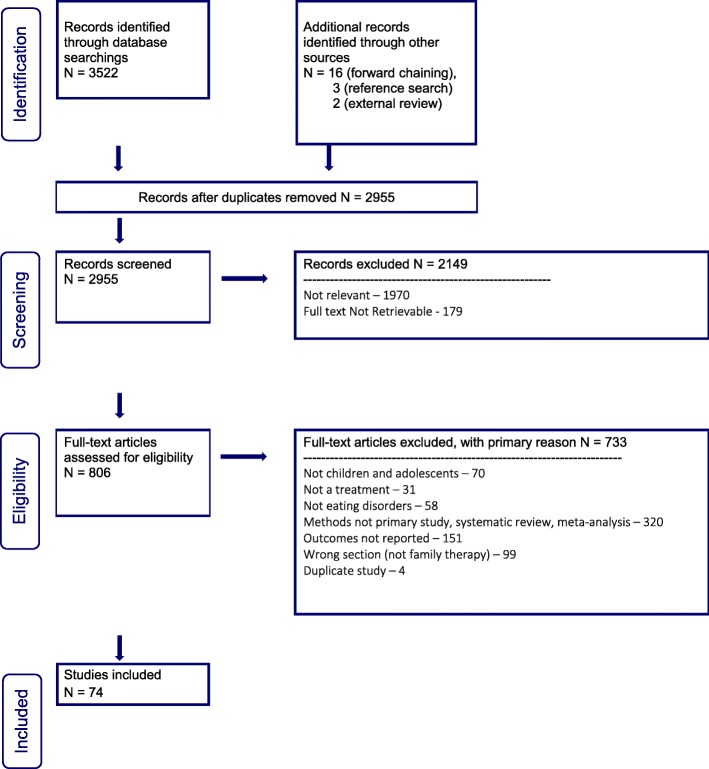
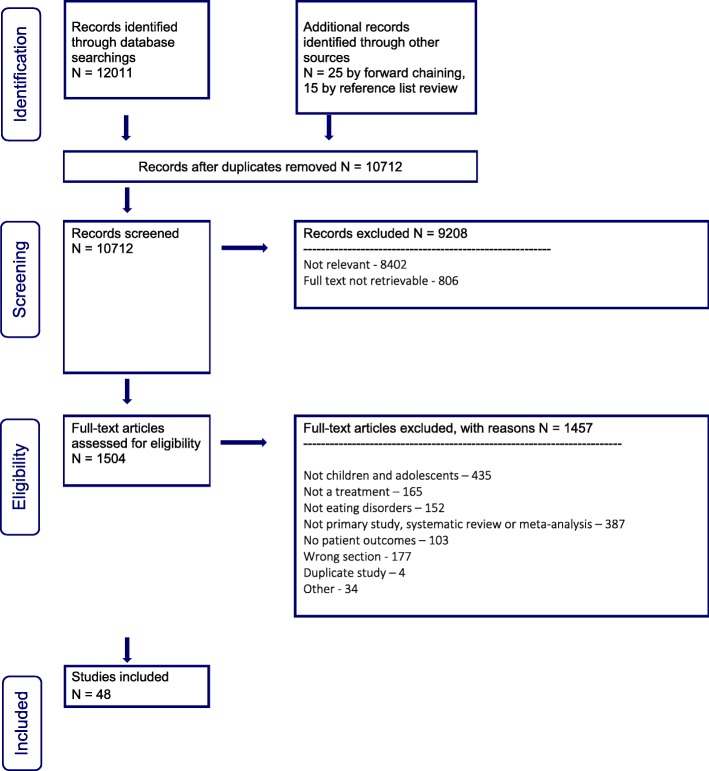
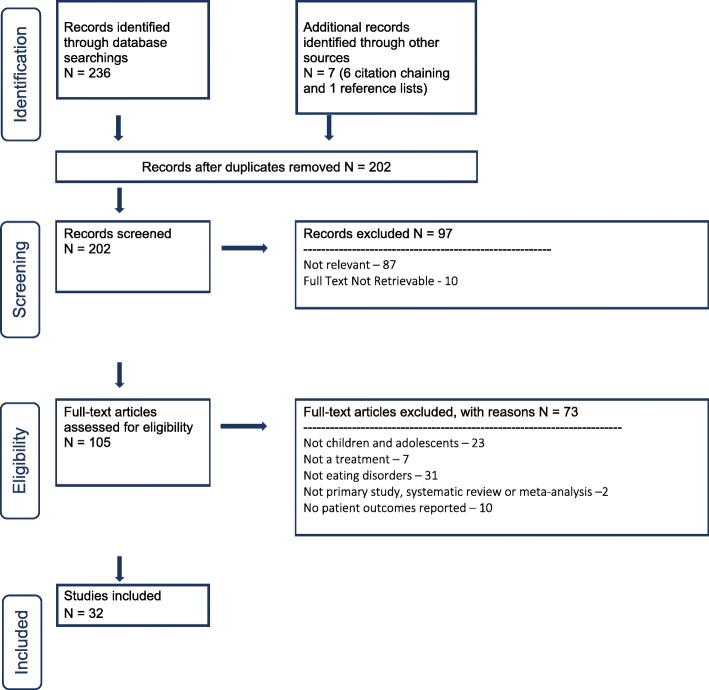
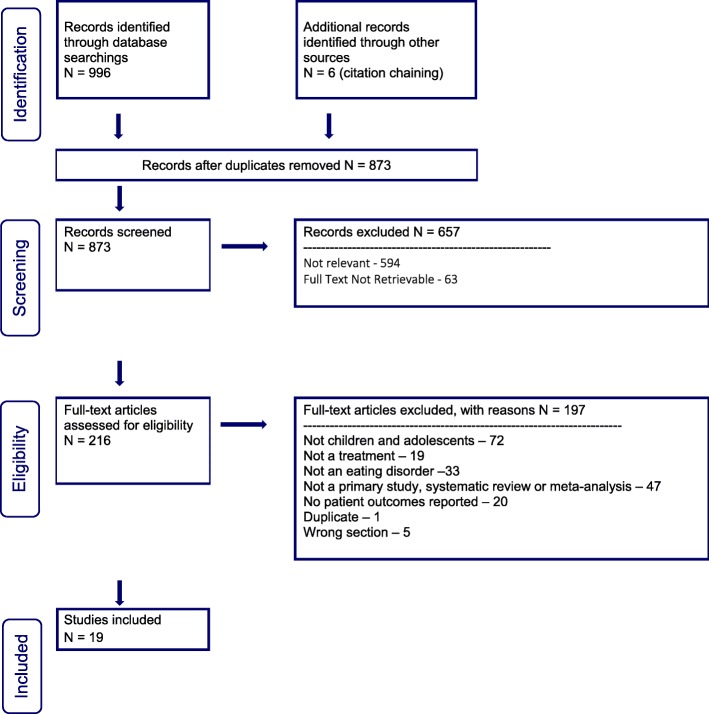
Verification
Claims the paper makes
The claims and statistics of this paper haven’t been checked yet.
Free: it reads the open-access text and checks the first 5 claims that cite a source we can check. Create a free account to check every claim.
Claims other papers make about this one
Each is checked against this paper’s own text: does it say what the citing paper says it does?
The cited source says what the claim attributes to it.
In the citing paper
“Three published guidelines were found for the treatment of children and adolescents with EDs (41–43).”
The cited source says what the claim attributes to it.
In the citing paper
“The Canadian guideline for children and adolescents with EDs only mentions trauma and PTSD in reference to ARFID (41).”
Self-check
Percentages, sums and reported differences re-computed from the paper’s own numbers.
The self-check needs the paper’s full text.
Citations
Cites
Cochrane Handbook for Systematic Reviews of Interventions: Cochrane Book Series
(2008) · doi:10.1002/9780470712184 · Cited by 25,048
GRADE: an emerging consensus on rating quality of evidence and strength of recommendations
Guyatt, G. H., Oxman, A. D., Vist, G. E., Kunz, R., Falck-Ytter, Y., Alonso-Coello, P., & Schünemann, H. J. (2008) · BMJ · doi:10.1136/bmj.39489.470347.ad · Cited by 23,305
Cumpston, M., Li, T., Page, M. J., Chandler, J., Welch, V. A., Higgins, J. P., & Thomas, J. (2019) · Cochrane Database of Systematic Reviews · doi:10.1002/14651858.ed000142 · Cited by 7,218
AGREE II: advancing guideline development, reporting and evaluation in health care
Brouwers, M. C., Kho, M. E., Browman, G. P., Burgers, J. S., Cluzeau, F., Feder, G., Fervers, B., Graham, I. D., Grimshaw, J., Hanna, S. E., et al. (2010) · Canadian Medical Association Journal · doi:10.1503/cmaj.090449 · Cited by 3,790
Self-citationGRADE guidelines: a new series of articles in the Journal of Clinical Epidemiology
Guyatt, G. H., Oxman, A. D., Schünemann, H. J., Tugwell, P., & Knottnerus, A. (2011) · Journal of Clinical Epidemiology · doi:10.1016/j.jclinepi.2010.09.011 · Cited by 3,094
Arcelus, J., Mitchell, A. J., Wales, J., & Nielsen, S. (2011) · Archives of General Psychiatry · doi:10.1001/archgenpsychiatry.2011.74 · Cited by 2,864
Review of the prevalence and incidence of eating disorders
Hoek, H. W., & van Hoeken, D. (2003) · International Journal of Eating Disorders · doi:10.1002/eat.10222 · Cited by 1,458
Users' guides to the medical literature : a manual for evidence-based clinical practice
Guyatt, G. H., Rennie, D., Meade, M. O., & Cook, D. J. (2002) · Cited by 1,196
Mortality in anorexia nervosa.
(1995) · American Journal of Psychiatry · doi:10.1176/ajp.152.7.1073 · Cited by 974
Development and validation of the sociocultural attitudes towards appearance questionnaire
Heinberg, L. J., Thompson, J. K., & Stormer, S. (1995) · International Journal of Eating Disorders · doi:10.1002/1098-108x(199501)17:1<81::aid-eat2260170111>3.0.co;2-y · Cited by 949
Research works printed but not linked: 9
- National Institute of Health and Care Excellence Eating disorders: recognition and treatment 2017 United Kingdom the National Institute of Health and Care Excellence 28654225
- Higgins JPT Thomas J Chandler J Cumpston M Li T Page MJ Welch VA Cochrane Handbook for Systematic Reviews of Interventions 2019 2 Chichester Wiley PMC10284251 31643080
- Yousuf MI Using experts’ opinion through the Delphi technique Pract Assess Res Eval 2007 12 4 1 8
- Lane D Kern R Multidimensional treatment of a 14-year-old anorexia nervosa patient J Child Adolesc Psychother 1987 4 3 211 215
- Anis N Isomaa R Kaltiala-Heino R Adolescent psychiatric inpatients with first hospitalization due to anorexia nervosa: can rehospitalization be predcited by clinical features Psychiatr Fenn 2016 47 76 94
- Strik Lievers L Curt F Wallier J Perdereau F Rein Z Jeammet P Godart N Predictive factors of length of inpatient treatment in anorexia nervosa Eur Child Adolesc Psychiatry 2009 18 2 75 84 10.1007/s00787-008-0706-8 18810311 · DOI
- Garner D Magana C Anorexia nervosa, in clinical behavior therapy: adults and children, M. Hersen, Editor 2002 New York Wiley
- van der Leer G Clinical practice guidelines for the BC eating disorders continuum of services 2012
- Dalle Grave R Inpatient cognitive behavior therapy for adolescents with anorexia nervosa: immediate and longer-term effects Front Psychiatry 2014 5 14 10.3389/fpsyt.2014.00014 24575055 PMC3921605 · DOI · Paper page
Cited by
Linardon, J., Messer, M., Rodgers, R. F., & Fuller‐Tyszkiewicz, M. (2022) · International Journal of Eating Disorders · doi:10.1002/eat.23640 · Cited by 169
Matheson, B. E., Bohon, C., & Lock, J. (2020) · International Journal of Eating Disorders · doi:10.1002/eat.23326 · Cited by 119
“Family-based treatment (FBT) is an empirically supported treatment for child and adolescent anorexia nervosa (AN) and bulimia nervosa (BN) (Couturier et al., 2020; Hay et al., 2014; Le Grange, Lock, Agras, Bryson, & Jo, 2015; Lock & Le Grange, 2015; National Institute for Health and Care…”
BackgroundManagement of eating disorders for people with higher weight: clinical practice guideline
Ralph, A. F., Brennan, L., Byrne, S., Caldwell, B., Farmer, J., Hart, L. M., Heruc, G. A., Maguire, S., Piya, M. K., Quin, J., et al. (2022) · Journal of Eating Disorders · doi:10.1186/s40337-022-00622-w · Cited by 107
“For BED, adult treatments are recommended [49] and for ARFID there is no recommendation, but CBT is noted as promising [52].”
BackgroundAttia, E., & Walsh, B. T. (2025) · JAMA · doi:10.1001/jama.2025.0132 · Cited by 138
Couturier, J., Pellegrini, D., Miller, C., Bhatnagar, N., Boachie, A., Bourret, K., Brouwers, M., Coelho, J. S., Dimitropoulos, G., Findlay, S., et al. (2021) · Journal of Eating Disorders · doi:10.1186/s40337-021-00394-9 · Cited by 86
“This team is skilled in guideline development having just published the first Canadian Practice Guidelines for the treatment of children and adolescents with EDs [25].”
BackgroundMethodInfluentialSelf-citationMoreno, R., Buckelew, S. M., Accurso, E. C., & Raymond‐Flesch, M. (2023) · Journal of Eating Disorders · doi:10.1186/s40337-022-00730-7 · Cited by 99
The five tenets of family-based treatment for adolescent eating disorders
Rienecke, R. D., & Grange, D. L. (2022) · Journal of Eating Disorders · doi:10.1186/s40337-022-00585-y · Cited by 117
Baudinet, J., Eisler, I., Dawson, L., Simic, M., & Schmidt, U. (2021) · International Journal of Eating Disorders · doi:10.1002/eat.23616 · Cited by 72
“MFT-AN is now a recommended treatment for adolescents by several practice guidelines (Couturier et al., 2020; Heruc et al., 2020; NICE, 2017) and a specific version has recently been developed for adolescents with bulimia nervosa (MFT-BN; Stewart et al.”
BackgroundBrewerton, T. D. (2023) · Frontiers in Psychiatry · doi:10.3389/fpsyt.2023.1149433 · Cited by 46
“The Canadian guideline for children and adolescents with EDs only mentions trauma and PTSD in reference to ARFID (41).”
BackgroundPruccoli, J., De Rosa, M., Chiasso, L., Perrone, A., & Parmeggiani, A. (2022) · Italian Journal of Pediatrics · doi:10.1186/s13052-022-01308-4 · Cited by 46
Watts, R., Archibald, T., Hembry, P., Howard, M., Kelly, C., Loomes, R., Markham, L., Moss, H., Munuve, A., Oros, A., et al. (2023) · EClinicalMedicine · doi:10.1016/j.eclinm.2023.102190 · Cited by 58
Austin, A., Anderson, A. G., Jc, L., Steen, H. V., Savard, C., Bergmann, C., Singh, M., Devoe, D. J. A., Gorrell, S., Patten, S. B., et al. (2024) · International Journal of Eating Disorders · doi:10.1002/eat.24252 · Cited by 53
“Currently, the universally recommended treatment for adolescents with AN is eating disorder focused family therapy, or FT-ED (e.g., Couturier et al. 2020; Crone et al. 2023; NICE 2017).”
Self-citationGorrell, S., Byrne, C. E., Trojanowski, P. J., Fischer, S. F., & Grange, D. L. (2022) · Eating and Weight Disorders - Studies on Anorexia Bulimia and Obesity · doi:10.1007/s40519-022-01367-w · Cited by 43
“Family-based treatment (FBT) is the current first-line approach for treating adolescent AN and a recommended approach for adolescent BN [9].”
BackgroundEating Disorders in Primary Care: Diagnosis and Management.
Klein, D. A., Sylvester, J. E., & Schvey, N. A. (2021) · American family physician · Cited by 75
Anorexia nervosa: Outpatient treatment and medical management
Frostad, S., & Bentz, M. (2022) · World Journal of Psychiatry · doi:10.5498/wjp.v12.i4.558 · Cited by 52
Eating disorders and oral health: a scoping review
Presskreischer, R., Prado, M. A., Kuraner, S. E., Arusilor, I.-M., & Pike, K. M. (2023) · Journal of Eating Disorders · doi:10.1186/s40337-023-00778-z · Cited by 46
Thorey, S., Blanchet, C., Guessoum, S. B., Moro, M. R., Ludot, M., & Carretier, É. (2023) · PLoS ONE · doi:10.1371/journal.pone.0278189 · Cited by 36
“(Continued) Study Year Country Study method Number of subjects Mean age and/ or range Type of ED AAP + dose and/or mean dose Study duration Results Mehler et al. 2001 Germany Case report 5 12–17 years Anorexia nervosa Olanzapine 5–12.5 mg/d 6 weeks// 8 weeks in hosp and 2 months postdischarge// 2 months// 7 weeks// No…”
BackgroundInfluentialUnderstanding outcomes in family-based treatment for adolescent anorexia nervosa: a network approach
Hagan, K. E., Matheson, B. E., Datta, N., L’Insalata, A. M., Onipede, Z. A., Gorrell, S., Mondal, S., Bohon, C., Grange, D. L., & Lock, J. (2021) · Psychological Medicine · doi:10.1017/s0033291721001604 · Cited by 42
Gorrell, S., Reilly, E. E., Brosof, L. C., & Grange, D. L. (2022) · Adolescent Health Medicine and Therapeutics · doi:10.2147/ahmt.s334977 · Cited by 38
“with anorexia nervosa (AN) and recommended for those with bulimia nervosa (BN), with evidence that cognitive-based therapy (CBT) may also be an efficacious treatment option for some adolescents.(5) FBT is a manualized, evidence-based”
BackgroundParental experiences with their child’s eating disorder treatment journey
Coelho, J. S., Suen, J., Marshall, S. K., Burns, A., Lam, P., & Geller, J. (2021) · Journal of Eating Disorders · doi:10.1186/s40337-021-00449-x · Cited by 31
“CRT represents a promising adjunctive treatment that is compatible with an initial focus on physical recovery [9].”
BackgroundInfluentialSelf-citationBryant, E., Aouad, P., Hambleton, A., Touyz, S., & Maguire, S. (2022) · Frontiers in Psychiatry · doi:10.3389/fpsyt.2022.894178 · Cited by 32
Nadarajah, A., Dimitropoulos, G., Grant, C., Webb, C., & Couturier, J. L. (2021) · Frontiers in Psychiatry · doi:10.3389/fpsyt.2021.624942 · Cited by 34
“Canadian practice guidelines to support clinicians’ decisionmaking about ED treatments for children and adolescents have recently been published (14).”
Self-citationBryant‐Waugh, R., Loomes, R., Munuve, A., & Rhind, C. (2021) · Journal of Behavioral and Cognitive Therapy · doi:10.1016/j.jbct.2020.11.001 · Cited by 37
Williams, N. I., Souza, M. J. D., Misra, M. D. D. S. K., Nattiv, A., Joy, E. A., Barrack, M. T., Ricker, E. A., Gorrell, S., Koltun, K. J., O’Donnell, E., et al. (2025) · Sports Medicine · doi:10.1007/s40279-025-02332-0 · Cited by 43
Baudinet, J., Eisler, I., Konstantellou, A., Hunt, T., Kassamali, F., McLaughlin, N., Simic, M., & Schmidt, U. H. (2023) · European Eating Disorders Review · doi:10.1002/erv.3006 · Cited by 36
Grennan, L., Nicula, M., Pellegrini, D., Giuliani, K., Crews, E., Webb, C., Gouveia, M., Loewen, T., & Couturier, J. L. (2022) · Journal of Eating Disorders · doi:10.1186/s40337-022-00719-2 · Cited by 33
“In the Canadian Practice Guidelines for the Treatment of Children and Adolescents [1] and its addendum on virtual care recommendations [19], in-person and virtual peer support groups for parents and/or caregivers were highlighted as a gap in the ED care continuum that are acutely needed.”
BackgroundSelf-citationLower rates of readmission following integration of family-based treatment in a higher level of care
Huryk, K. M., Casasnovas, A. F., Feehan, M., Paseka, K., Gazzola, P., & Loeb, K. L. (2020) · Eating Disorders · doi:10.1080/10640266.2020.1823173 · Cited by 23
“Family-based treatment (FBT) is the leading evidence-based outpatient intervention for adolescent anorexia nervosa (AN; Couturier et al., 2020; Lock & Le Grange, 2019; National Institute for Health Care and Excellence, 2017).”
BackgroundA systematic review of eating disorders and family functioning.
Rienecke, R., Trotter, X., & Jenkins, P. E. (2024) · Clinical Psychology Review · doi:10.1016/j.cpr.2024.102462 · Cited by 25
The Role of the Noradrenergic System in Eating Disorders: A Systematic Review
Pruccoli, J., Parmeggiani, A., Cordelli, D. M., & Lanari, M. (2021) · International Journal of Molecular Sciences · doi:10.3390/ijms222011086 · Cited by 25
Couturier, J. L., Pellegrini, D., Grennan, L., Nicula, M., Miller, C., Agar, P., Webb, C., Anderson, K. E., Barwick, M. A., Dimitropoulos, G., et al. (2022) · Journal of Eating Disorders · doi:10.1186/s40337-022-00631-9 · Cited by 24
Self-citationPruccoli, J., Bergonzini, L., Tempa, A. L., & Parmeggiani, A. (2022) · Biomedicines · doi:10.3390/biomedicines10123167 · Cited by 19
“Despite small to medium-sized Randomized Controlled Trials (RCT) have been published on the use of specific drugs in this population, particularly in mixed-age groups, including children and adolescents aged over 18 years, the results of these studies have not provided clear support for efficacy [8,11].”
MethodCurrent approaches in the recognition and management of eating disorders
Hay, P., Rankin, R. M., Ramjan, L. M., & Conti, J. (2023) · The Medical Journal of Australia · doi:10.5694/mja2.52008 · Cited by 22
Early-onset anorexia nervosa: a scoping review and management guidelines
Ayrolles, A., Clarke, J., Godart, N. T., André-Carletti, C., Barbe, C., Bargiacchi, A., Blanchet, C., Bergametti, F., Bertrand, V., Caldagues, E., et al. (2024) · Journal of Eating Disorders · doi:10.1186/s40337-024-01130-9 · Cited by 28
“Multifamily therapy (MFT) may be a reasonable treatment option with weak recommendations [40, 49].”
InfluentialLoomes, R., & Bryant‐Waugh, R. (2021) · Journal of Eating Disorders · doi:10.1186/s40337-021-00511-8 · Cited by 28
Lantzouni, E., & Grady, R. (2021) · Journal of Pediatric and Adolescent Gynecology · doi:10.1016/j.jpag.2021.01.010 · Cited by 21
Wergeland, G., Ghaderi, A., Fjermestad, K., Enebrink, P., Halsaa, L., Njardvik, U., Riise, E. N., Vorren, G., & Öst, L. (2024) · European Child and Adolescent Psychiatry · doi:10.1007/s00787-024-02544-1 · Cited by 20
“Clinical practice guidelines and consensus statements have been developed for the management of ED in children and adolescents up to 18 years [ 11–14].”
Pediatric Patients Hospitalized With Eating Disorders in Ontario, Canada, Over Time
Smith, S. A., Charach, A., To, T. M., Toulany, A., Fung, K., & Saunders, N. R. (2023) · JAMA Network Open · doi:10.1001/jamanetworkopen.2023.46012 · Cited by 20
Pruccoli, J., Rosa, S., Cesaroni, C. A., Malaspina, E., & Parmeggiani, A. (2021) · Journal of Clinical Medicine · doi:10.3390/jcm10163605 · Cited by 18
“Recent guidelines accept inpatient treatment for cases with AN and severe metabolic impairment, but less intensive treatment environments should be adopted when possible [16].”
BackgroundInfluentialDolman, L. I., Thornley, S., Doxtdator, K., Leclerc, A., Findlay, S. M., Grant, C., Breakey, V. R., & Couturier, J. L. (2020) · Clinical Child Psychology and Psychiatry · doi:10.1177/1359104520981401 · Cited by 19
“As such, recently published Canadian practice guidelines for paediatric eating disorder management have identified FBT as a promising area warranting further research in the ARFID context (Couturier et al., 2020).”
BackgroundResultSelf-citationDatta, N., Hagan, K. E., Bohon, C., Stern, M., Kim, B., Matheson, B. E., Gorrell, S., Grange, D. L., & Lock, J. (2022) · International Journal of Eating Disorders · doi:10.1002/eat.23867 · Cited by 23
Richardson, C., Phillips, S. M., & Paslakis, G. (2021) · Psychiatry Research · doi:10.1016/j.psychres.2021.114263 · Cited by 16
Ispas, A. G., Forray, A. I., Lacurezeanu, A., Petreuș, D., Gavrilaș, L. I., & Cherecheș, R. M. (2025) · Nutrients · doi:10.3390/nu17061067 · Cited by 22
“These initiatives can potentially have a significant impact because they prevent EDs, encourage healthy weight management, and enhance mental health support for early detection [94,95].”
Wye, E. M. V., Matheson, B. E., Citron, K. E., Yang, H., Datta, N., Bohon, C., & Lock, J. (2022) · Contemporary Clinical Trials · doi:10.1016/j.cct.2022.107036 · Cited by 20
Couturier, J. L., Pellegrini, D., Miller, C., Agar, P., Webb, C., Anderson, K. E., Barwick, M. A., Dimitropoulos, G., Findlay, S. M., Kimber, M., et al. (2021) · Implementation Science Communications · doi:10.1186/s43058-021-00143-8 · Cited by 17
Self-citationCara, M. D., Rizzo, C., Corallo, F., Cardile, D., Calabrò, R. S., Quartarone, A., Buda, M., & Cucinotta, F. (2023) · Children · doi:10.3390/children10081297 · Cited by 26
“[98] state that different ARFID subtypes benefit more from different strategies.”
BackgroundNicula, M., Grennan, L., Loewen, T., Crews, E., Giuliani, K., Webb, C., Gouveia, M., & Couturier, J. L. (2023) · International Journal of Eating Disorders · doi:10.1002/eat.24042 · Cited by 18
Self-citationHaas, V. K., Nadler, J., Crosby, R. D., Madden, S., Kohn, M. R., Grange, D. L., Gonçalves, A. S. O., Hebebrand, J., & Correll, C. U. (2022) · European Eating Disorders Review · doi:10.1002/erv.2907 · Cited by 17
Wales, J. A., Brewin, N., Susi, K., Eivors, A., Whight, D., & Leatherland, R. (2021) · Mental Health Review Journal · doi:10.1108/mhrj-01-2020-0005 · Cited by 18
Eating Disorders: Diagnosis and Management Considerations for the IBD Practice
Paniz, G. R., Lebow, J. R., Sim, L. A., Lacy, B. E., Farraye, F. A., & Werlang, M. E. (2021) · Inflammatory Bowel Diseases · doi:10.1093/ibd/izab138 · Cited by 18
Stone, K. D., Dimitropoulos, G., & MacMaster, F. P. (2021) · PsyArXiv (OSF Preprints) · doi:10.31234/osf.io/w7v2f · Cited by 24
“We therefore could focus our efforts on funding research that combines current and well-established therapies, such as family-based treatment (Couturier et al., 2013; Doyle et al., 2010; Lock et al., 2010), with novel neurostimulation and neuroimaging techniques to potentially accelerate clinical…”
BackgroundSelf-citationFrank, B., Arnold, S., Jaite, C., & Correll, C. U. (2023) · Journal of Eating Disorders · doi:10.1186/s40337-023-00862-4 · Cited by 16
Toro, V. D., Aedo, K., & Pascuala Urrejola, N. (2021) · Andes pediatrica · doi:10.32641/andespediatr.v92i2.2794 · Cited by 22
Forsberg, S., Gorrell, S., Accurso, E. C., Trainor, C. M., Garber, A. K., Buckelew, S. M., & Grange, D. L. (2021) · Children s Health Care · doi:10.1080/02739615.2021.1984240 · Cited by 12
Pruccoli, J., Pelusi, M., Romagnoli, G., Malaspina, E., Moscano, F. C., & Parmeggiani, A. (2021) · Brain Sciences · doi:10.3390/brainsci11091242 · Cited by 11
“Based on our data, we hypothesize that early use of AAP in selected patients hospitalized for AN may shorten the treatment process of inpatients suffering from acute AN, enabling a quicker transition to a less intensive level of care as recommended by recent guidelines [7].”
BackgroundMethodInfluentialPruccoli, J., Pettenuzzo, I., & Parmeggiani, A. (2022) · Journal of Child and Adolescent Psychopharmacology · doi:10.1089/cap.2022.0003 · Cited by 11
“Despite a general paucity of data, olanzapine presents the most relevant evidence for the treatment of AN among AAP (Couturier et al. 2020).”
InfluentialBruett, L. D., Forsberg, S., Accurso, E. C., Gorrell, S., Hail, L., Keyser, J. D., Grange, D. L., & Huryk, K. M. (2022) · Journal of Eating Disorders · doi:10.1186/s40337-022-00590-1 · Cited by 11
“, Anorexia Nervosa (AN), Atypical Anorexia Nervosa (AAN), many presentations of Other Specified Feeding and Eating Disorder (OSFED)) [11], can be even harder for families to access than less specialized care given that, within the United States, only 52 providers within 13 states have completed the FBT certification p…”
BackgroundPeer support for eating disorders in Canada: program user perspectives
LaMarre, A., Couturier, J. L., Dimitropoulos, G., Jones, S., Kumar, S., Obeid, N., & Wozney, L. (2024) · Journal of Eating Disorders · doi:10.1186/s40337-024-01068-y · Cited by 36
“Just as peer support for family members has been suggested to be an important part of the treatment and support continuum [41], peer support for those with EDs might also be considered.”
BackgroundSelf-citationPruccoli, J., & Parmeggiani, A. (2021) · Eating and Weight Disorders - Studies on Anorexia Bulimia and Obesity · doi:10.1007/s40519-021-01260-y · Cited by 10
Nicula, M., Kimber, M., Boylan, K., Grant, C., Laliberte, M. M., Miller, K., Dimitropoulos, G., Trollope, K., Webb, C., & Couturier, J. L. (2023) · European Eating Disorders Review · doi:10.1002/erv.3027 · Cited by 11
“Peer support can increase hope and connect parents to other parents of adolescents with EDs and can motivate adolescents after hearing from peers in recovery from an ED (Beveridge et al., 2019; Cleverley et al., 2020; Couturier et al., 2020; Franklin et al., 2019).”
Self-citationBaudinet, J., Eisler, I., Roddy, M., Turner, J., Simic, M., & Schmidt, U. H. (2024) · Journal of Eating Disorders · doi:10.1186/s40337-024-01064-2 · Cited by 18
“MFT is also recommended by some international guidelines in the treatment of adolescent anorexia nervosa [20, 34, 39].”
BackgroundClinicians' Experiences of Eating Disorder Focused Family Therapy With Autistic Young People
Duffy, F., Peebles, I., Clark, E., Loomes, R., Thomson, L., Maloney, E., & Nimbley, E. (2025) · European Eating Disorders Review · doi:10.1002/erv.3173 · Cited by 11
Egbert, A. H., Gorrell, S., Smith, K. E., Goldschmidt, A. B., Hughes, E. K., Sawyer, S. M., Yeo, M., Lock, J., & Grange, D. L. (2023) · European Eating Disorders Review · doi:10.1002/erv.2968 · Cited by 9
Zakers, A., & Cimolai, V. (2023) · Child and Adolescent Psychiatric Clinics of North America · doi:10.1016/j.chc.2022.08.014 · Cited by 13
Funderud, I., Halvorsen, I., Kvakland, A.-L., Nilsen, J.-V., Skjønhaug, J., Stedal, K., & Rø, Ø. (2023) · Journal of Eating Disorders · doi:10.1186/s40337-023-00814-y · Cited by 9
Matheson, B. E., Bohon, C., Grange, D. L., & Lock, J. (2023) · Eating Disorders · doi:10.1080/10640266.2023.2229091 · Cited by 9
“…eating disorders, including BED and BN. Family-based treatment (FBT) is an efficacious treatment for adolescents with anorexia nervosa (AN) and BN (Couturier et al., 2020; Datta et al., 2022; Lock & Le Grange, 2019) with preliminary evidence suggesting its utility in Avoidant Restrictive Food…”
BackgroundSocial support for young people with eating disorders—An integrative review
Ramjan, L. M., Smith, B. W., Miskovic‐Wheatley, J., Pathrose, S. P., & Hay, P. (2024) · International Journal of Mental Health Nursing · doi:10.1111/inm.13363 · Cited by 15
Baudinet, J., Eisler, I., Simic, M., & Schmidt, U. H. (2021) · Journal of Eating Disorders · doi:10.1186/s40337-021-00426-4 · Cited by 13
Newton-John, T. R. O. (2022) · Canadian Journal of Pain · doi:10.1080/24740527.2022.2038032 · Cited by 10
Novack, K., Dufour, R., Picard, L., Taddeo, D., Nadeau, P., Katzman, D. K., Booij, L., & Chadi, N. (2023) · Annals of General Psychiatry · doi:10.1186/s12991-023-00443-4 · Cited by 10
Couturier, J. L., Pellegrini, D., Grennan, L., Nicula, M., Miller, C., Agar, P., Webb, C., Anderson, K. E., Barwick, M. A., Dimitropoulos, G., et al. (2022) · Translational Behavioral Medicine · doi:10.1093/tbm/ibac086 · Cited by 10
Self-citationDimitropoulos, G., Singh, M., Mushquash, C. J., Kimber, M., Hutt‐MacLeod, D., Moore, E. K., Perri, A., Webb, C., Norman, L., Sauerwein, J., et al. (2023) · European Eating Disorders Review · doi:10.1002/erv.3026 · Cited by 8
“Guideline development (following the framework of Graham et al., 2003) will be led by members of the research team who have expertise in EDs and will facilitate consensus discussions and oversee conflict‐of‐ interest disclosures (Couturier et al., 2020).”
Self-citationApproach to anorexia nervosa and atypical anorexia nervosa in adolescents
Parpia, R., Spettigue, W. J., & Norris, M. L. (2023) · Canadian Family Physician · doi:10.46747/cfp.6906387 · Cited by 15
Self-citationMárquez, M. C., Sánchez, J. M., Salazar, A. M., Martínez, C. V., Valderrama, F., & Rojas‐Gualdrón, D. F. (2022) · Revista Colombiana de Psiquiatría (English ed ) · doi:10.1016/j.rcpeng.2022.08.007 · Cited by 14
Couturier, J. L., Sami, S., Nicula, M., Pellegrini, D., Webb, C., Johnson, N., & Lock, J. (2022) · International Journal of Eating Disorders · doi:10.1002/eat.23837 · Cited by 7
Self-citationO’Sullivan, H., Goodwin, J., O’Malley, M., Happell, B., & O’Donovan, Á. (2024) · International Journal of Mental Health Nursing · doi:10.1111/inm.13278 · Cited by 9
Ruiz, Á., Marcos, Y. Q., Zarceño, E. L., Sebastián, M. J. Q., Roncero, M., & Sanmartín, R. (2024) · Family Process · doi:10.1111/famp.13049 · Cited by 8
Toward the Integration of Family Therapy and Family-Based Treatment for Eating Disorders
Gorrell, S., Simic, M., & Grange, D. L. (2023) · Springer eBooks · doi:10.1007/978-3-030-97416-9_59-1 · Cited by 17
The role of risperidone in the treatment of children and adolescents with anorexia nervosa
Pruccoli, J., Bergonzini, L., Pettenuzzo, I., & Parmeggiani, A. (2023) · Journal of Psychopharmacology · doi:10.1177/02698811231177248 · Cited by 7
“No other RCTs or case-control studies in the field are available, to the best of our knowledge (Couturier et al., 2020).”
BackgroundInfluentialPersonalised and precision mental health in eating disorders: why routine outcome measurement is key
Austin, A., & Allen, K. (2025) · Journal of Eating Disorders · doi:10.1186/s40337-025-01290-2 · Cited by 7
“This shift is especially pertinent to EDs, where recommended first-line treatment approaches are psychotherapeutic in nature [14, 16, 42]).”
Mittertreiner, E. J. E., Couturier, J. L., Simone, M., Small, C., Courtney‐Martin, G., Moisey, L. L., Panahi, S., & Lacroix, E. (2024) · Applied Physiology, Nutrition, and Metabolism · doi:10.1139/apnm-2024-0088 · Cited by 7
Self-citationPsychopharmacology Review for Eating Disorders Among Children, Adolescents, and Adults
Ali, Z., & Couturier, J. L. (2024) · FOCUS The Journal of Lifelong Learning in Psychiatry · doi:10.1176/appi.focus.20230043 · Cited by 11
Self-citationEffective Treatment Approaches for Eating Disorders in Children and Adolescents: A Review Article
AlHarbi, Y. F., Saleh, F., & Shahat, K. A. (2024) · Cureus · doi:10.7759/cureus.74003 · Cited by 9
Pruccoli, J., & Parmeggiani, A. (2023) · Pharmacopsychiatry · doi:10.1055/a-2018-4946 · Cited by 6
Bindseil, I., Stutzman, D. L., Schiel, M. A., Sheffield, K., & Hagman, J. (2025) · Journal of Child and Adolescent Psychopharmacology · doi:10.1089/cap.2025.0013 · Cited by 5
“…ndings may be in part due to ED treatment guidelines not providing unique monitoring recommendations for youth with AN, perceived differences in risk among this patient population, in addition to institution-speci fi c practices (Couturier et al., 2020; Crone et al., 2023; Hornberger et al., 2021).”
InfluentialObeid, N., Lavallée, N., Bradley, A. H. M., & Norris, M. L. (2025) · Journal of Eating Disorders · doi:10.1186/s40337-025-01351-6 · Cited by 8
“Given the multi-systemic involvement of EDs [21], lack of standardized operational definitions of remission, relapse, and good outcomes [71], and abundance of data parameters involved in ED care, there is a need for experts to collaborate together to derive minimum datasets across socio-cultural,…”
Self-citationOuyang, H., Wang, Y., & Chen, J. (2025) · Journal of Eating Disorders · doi:10.1186/s40337-025-01454-0 · Cited by 7
“Nota-bly, current ED treatment guidelines rarely offer specific recommendations for PTSD screening or intervention, focusing instead on optimal timing for trauma-focused treatment initiation [143–145].”
Katsuki, F., Watanabe, N., Kondo, M., Sawada, H., & Yamada, A. (2024) · Journal of Eating Disorders · doi:10.1186/s40337-024-01013-z · Cited by 10
Coelho, J. S., Pardiwala, T., Marshall, S. K., Lam, P., Grewal, S., Virani, A., Pérez, A. O., & Geller, J. (2024) · Journal of Eating Disorders · doi:10.1186/s40337-024-01044-6 · Cited by 6
“Although FBT is the only approach that is strongly recommended by the Canadian pediatric eating disorder guidelines, several other approaches can be recommended (e.g., cognitive behavioural therapy, adolescent focused psychotherapy, adjunctive yoga and atypical antipsychotics) [21].”
BackgroundSelf-citationSubjective Experience of Antidepressant Prescription Among Adolescents With Anorexia Nervosa
Ludot, M., David, V., Carretier, É., Lachal, J., Moro, M. R., & Blanchet, C. (2022) · Frontiers in Psychiatry · doi:10.3389/fpsyt.2022.770903 · Cited by 5
Pang, N., Nagata, J. M., Testa, A. M., & Ganson, K. T. (2024) · Journal of Eating Disorders · doi:10.1186/s40337-024-01098-6 · Cited by 11
Linguistic Markers of Anorexia Nervosa: Preliminary Data from a Prospective Observational Study
Minori, G., Gagliardi, G., Cuteri, V., Tamburini, F., Malaspina, E., Gualandi, P., Rossi, F., Moscano, F. C., Francia, V., & Parmeggiani, A. (2020) · Archivio istituzionale della ricerca (Alma Mater Studiorum Università di Bologna) · doi:10.1007/s40519-022-01425-3 · Cited by 9
“Many different treatment settings are available to individuals with AN, ranging from outpatient to inpatient programs according to the gravity of the illness [3].”
BackgroundPruccoli, J., Pugliano, R., Pranzetti, B., & Parmeggiani, A. (2023) · European Journal of Pediatrics · doi:10.1007/s00431-023-04960-y · Cited by 8
“Current guidelines on the treatment of children and adolescents with FED report the use of these treatments (mainly antidepressants and antipsychotics) across the scientific literature, despite the acknowledged side effect profile and the limited evidence for efficacy [23].”
BackgroundInfluentialThe future of eating disorders research: an editorial
Touyz, S. W., & Hay, P. (2022) · Journal of Eating Disorders · doi:10.1186/s40337-022-00538-5 · Cited by 5
Anxiety, Depressive, and Eating Disorders in Adolescents
Mader, K., & Kelly, C. (2024) · Primary Care Clinics in Office Practice · doi:10.1016/j.pop.2024.05.012 · Cited by 5
Guillén, V. (2024) · Family Process · doi:10.1111/famp.13090 · Cited by 6
Drury, C. R., Singh, S., Manzano, M. A., Gorrell, S., Reilly, E. E., Odette, M. A., Accurso, E. C., Brosof, L. C., Bruett, L. D., Forsberg, S., et al. (2025) · International Journal of Eating Disorders · doi:10.1002/eat.24511 · Cited by 5
García–Fernández, G. (2023) · Revista de Psicología Clínica con Niños y Adolescentes · doi:10.21134/rpcna.2023.10.1.10 · Cited by 6
Matheson, B. E., Wye, E. M. V., Whyte, A., & Lock, J. (2024) · International Journal of Eating Disorders · doi:10.1002/eat.24182 · Cited by 4
Armour, C. Q., Feicht, R., & Gahagan, J. (2024) · Journal of Eating Disorders · doi:10.1186/s40337-024-01121-w · Cited by 8
“For example, Couturier et al. (2020) assembled a panel of stakeholders, including those with lived experience, to establish Canadian practice guidelines for the treatment of children and adolescents with eating disorders [28].”
BackgroundA guide to the community management of paediatric eating disorders
Coret, M., Vyver, E., Harrison, M. E., Toulany, A., Vandermorris, A., & Agostino, H. (2024) · Paediatrics & Child Health · doi:10.1093/pch/pxae037 · Cited by 6
Metadata
- Authors
- Couturier, J., Isserlin, L., Norris, M., Spettigue, W., Brouwers, M., Kimber, M., McVey, G., Webb, C., Findlay, S., Bhatnagar, N., Snelgrove, N., Ritsma, A., Preskow, W., Miller, C., Coelho, J., Boachie, A., Steinegger, C., Loewen, R., Loewen, T., Waite, E., Ford, C., Bourret, K., Gusella, J., Geller, J., LaFrance, A., LeClerc, A., Scarborough, J., Grewal, S., Jericho, M., Dimitropoulos, G., & Pilon, D.
- Affiliations
- McMaster University (CA)
- University of Ottawa (CA)
- University of Toronto (CA)
- Canadian Mental Health Association (CA)
- University of British Columbia (CA)
- Ministry of Health and Long Term Care (CA)
- St. Joseph's Care Group (CA)
- Dalhousie University (CA)
- McMaster Children's Hospital (CA)
- University of Calgary (CA)
- Corresponding author
- Couturier, Jennifer
- ORCID
- Venue
- Journal of Eating Disorders
- Published
- 2020-02-01
- Volume
- 8
- Issue
- 1
- Pages
- 4-4
- ISSN
- 2050-2974 (ISSN-L)
- PMC
- PMC6995106
- OpenAlex
- W3003924712
- Cited by
- 215
- References
- 296
- Citations by year
- 2026: 16 · 2025: 31 · 2024: 46 · 2023: 45 · 2022: 29 · 2021: 42 · 2020: 6
- FWCI
- 2.38
- Type
- journal article
- Language
- en
- Open access
- gold
- doi.org
- Licence
- cc-by
- creativecommons.org/licenses/by/4.0/ (tdm)
- creativecommons.org/licenses/by/4.0/ (vor)
- Locations
- Journal of Eating Disorders (publishedVersion, cc-by)
- PubMed Central (publishedVersion, cc-by)
- PubMed (publishedVersion)
- uO Research (University of Ottawa) (submittedVersion, public-domain)
- TSpace (University of Toronto) (submittedVersion, cc-by)
- cIRcle (University of British Columbia) (submittedVersion, cc-by)
- DOAJ (DOAJ: Directory of Open Access Journals) (submittedVersion)
- Libraries and Cultural Resources (University of Calgary) (submittedVersion)
- Funders
- Canadian Institutes of Health Research (KRS-144053)
- Topics
- Social Sciences › Psychology › Clinical Psychology › Eating Disorders and Behaviors
- Health Sciences › Medicine › Psychiatry and Mental health › Child Nutrition and Feeding Issues
- Health Sciences › Nursing › Nutrition and Dietetics › Nutrition, Health and Food Behavior
- Keywords
- eating disorders, children, adolescents, treatment guidelines, family-based treatment, multifamily therapy, cognitive behavioral therapy, yoga, atypical antipsychotics, treatment intensity, GRADE recommendations
About these checks
Registry, retraction, Cites and statistics results are computed, not judged, with one exception: a printed reference that no index lists is read once by a model before it counts as a citation error. Claims are extracted by a model and kept only when their quote appears verbatim in the text; each cited source is then checked, with a model’s help, for whether it says what the claim relies on. Those verdicts can be wrong — read the claim’s quote and the cited source before relying on one.
Statistics and arithmetic are recomputed, not judged.
Confidence bands are shown only for fields calibrated on our annotated test set. None is calibrated yet, so no band is shown.
What counts as a claim ›How we measure confidence ›How we check this ›
Are you an author, or do you see a problem with this page? Request a review
Data sources
Bibliographic data: Semantic Scholar, OpenAlex, Crossref.
Contains information from the Semantic Scholar Academic Graph Datasets, made available under the ODC Attribution License (ODC-BY 1.0).
Semantic Scholar’s data is described in: Kinney, R., et al. (2023). The Semantic Scholar Open Data Platform. arXiv:2301.10140.
