

Exploring Mianzi consciousness congruence and its impact on unethical pro-organizational behavior
Open accessThe DOI matches its Crossref record; 53 of the 53 references it cites were found in a registry or an index; 7 of the 41 sources its claims cite were checked for support.
Abstract
BACKGROUND: In Chinese culture, the concept of Mianzi holds significant importance in interpersonal interactions. Mianzi represents one's social standing, dignity, and reputation, influencing behaviors and decisions within various contexts. Mianzi consciousness manifests in two primary forms: proactive and defensive. Proactive Mianzi consciousness involves efforts to enhance one's social image, while defensive Mianzi consciousness focuses on protecting one's existing reputation. Analyzing the impact of the two Mianzi consciousness dimensions on individuals' attitudes and behaviors is effective for understanding interpersonal dynamics in China. This study specifically examined the relationship between high Mianzi consciousness congruence and unethical pro-organizational behavior (UPB). UPB refers to actions taken by employees that are intended to benefit their organization but are unethical or morally questionable. By investigating how congruence in proactive and defensive Mianzi consciousness influences the likelihood of engaging in UPB, this research aimed to uncover the underlying social and psychological mechanisms driving such behavior. METHODS: Employing polynomial regression and response surface analysis method, this study developed a model that combines the proactive Mianzi consciousness and the defensive Mianzi consciousness into different Mianzi management strategies and tested the relationship between high Mianzi consciousness congruence and UPB. RESULTS: Sample data collected at two time points one month apart supported all hypotheses. Specifically, the findings revealed that high levels of Mianzi consciousness congruence (i.e., all-around type in Mianzi management strategies) positively relate to UPB, and verified the mediation effect of external work locus of control and the moderation effect of relational psychological contract. CONCLUSION: This research advanced a novel, synergistic perspective on the role of social Mianzi and contributed to the localized UPB research, thus helping to find a path to prevent UPB from occurring in the Chinese sociocultural context.
Overview
CoChat Summary
TL;DR
This study uses polynomial regression and response surface analysis to show that high congruence between proactive and defensive Mianzi consciousness (the “all-around type”) is positively related to unethical pro-organizational behavior (UPB) among Chinese employees. The relationship is mediated by external work locus of control and moderated by relational psychological contract.
Key findings
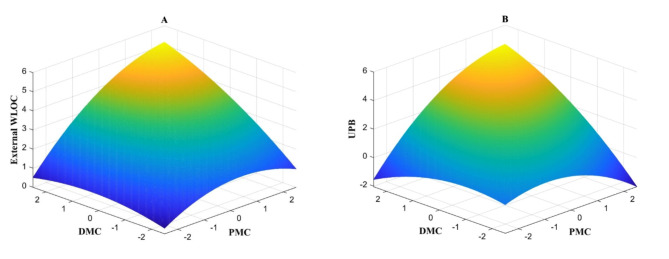
- High Mianzi consciousness congruence was positively related to UPB: the incongruence line had a negative, significant curvature (β = −0.68, p < .01) and non-significant slope (β = −0.11, ns), while the congruence line had a positive, significant slope (β = 0.94, p < .001) and non-significant curvature (β = −0.02, ns).
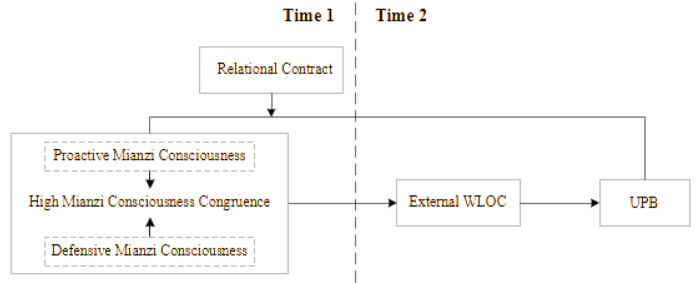
- External work locus of control mediated the relationship between high Mianzi consciousness congruence and UPB: indirect effect γ1 × γ2 = 0.61, p < .001, 95% bootstrap CI [0.44, 0.79]; total effect = 0.99, 95% CI [0.93, 1.05].
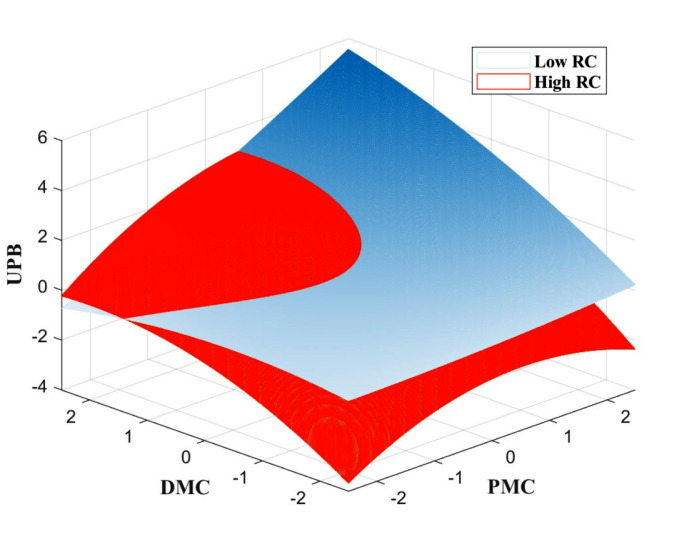
- Relational contract moderated the relationship: adding interaction terms significantly improved the model (ΔF = 5.06, p < .001), and the relationship was stronger for employees perceiving a bad relational contract (low RC axis of symmetry X = 0.32; high RC X = −0.45).
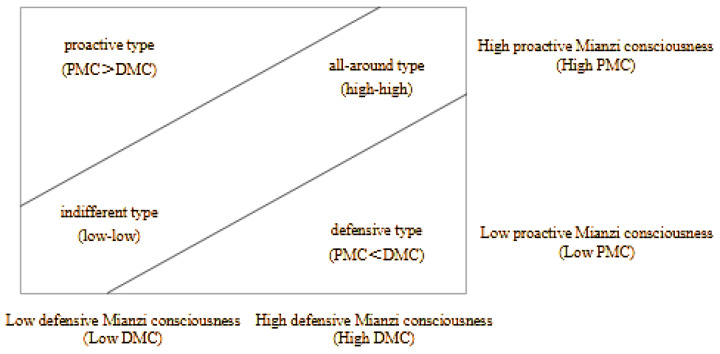
- Sample proportions were 48.68% all-around type, 27.64% indifferent type, and 23.68% incongruent (5.92% defensive type, 17.76% proactive type).
Methods
- Chinese workers in mainland China completed surveys at two time points one month apart: 689 recruited at Time 1, 670 completed (97.24%); 414 completed Time 2 (61.79% wave response; 60.09% overall), yielding N = 414. Participants were 55.7% female, 73.4% married, 54.8% bachelor’s degree, 63.8% average employees; mean age 34.05 years (SD = 8.14), mean tenure 5.18 years (SD = 5.08).
- Measures included proactive and defensive Mianzi consciousness (Zhang et al., 2011), external work locus of control (Spector, 1988), relational psychological contract (Wang, 2011), and UPB (Umphress et al., 2010), all on 5-point Likert scales; Cronbach’s alphas were 0.90–0.94 for the main scales.
- Analyses used polynomial regression and response surface analysis (Edwards, 2002), block variable mediation with 5,000 bias-corrected bootstrap resamples, and moderated polynomial regression in Mplus 8.5 and SPSS 23.
Limitations
- The paper states that data came from a single source, so common method bias may remain; future studies could use different sources, such as colleague ratings of Mianzi consciousness, to reduce social-desirability bias.
- The paper states that participants were Chinese workers, so generalizability to non-Chinese societies is unknown; cross-cultural research is suggested.
- The paper states that the defensive type proportion was below 10% (5.92%), precluding meaningful comparison between proactive and defensive types; it also notes the high correlation between proactive and defensive Mianzi consciousness and suggests measuring them at different times or sources or developing a more discriminative scale.
- Evident in the text: key constructs were highly correlated (e.g., proactive and defensive Mianzi consciousness r = .84; external WLOC and UPB r = .83), which may raise discriminant-validity concerns despite the reported five-factor CFA fit.
Model-written summary. Check it against the paper before relying on it.
Integrity signals
Registry
Cites
Statistics
Figures
Verification
Claims the paper makes
6 Valid · 1 Not valid · 24 Not checked · 30 Own results and interpretations
The cited sources support only part of this claim — read each source’s verdict below.
In the paper
“Research has indicated that when employees prioritize their short-term interests over the organization’s long-term reputation, they are more likely to engage in UPB [35].”
§ Exploring Mianzi consciousness congruence and its impact on unethical pro-organizational behavior > The moderating role of relational contract
What the sources say
- Partly supportedcites [35] Lee A, Schwarz G, Newman A, Legood A. Investigating when and why psychological entitlement predicts unethical pro-organizational behavior. J Bus Ethics. 2019;154(1):109–26. 10.1007/s10551-017-3456-z. 10.1007/s10551-017-3456-z sourceExperimental — accuracy not yet measured
The Theoretical Implications section (page unavailable) reports that employees high in psychological entitlement were more willing to engage in UPB to satisfy their own status needs. The introduction (page unavailable) says UPB may harm an organization’s reputation in the long term. The paper does not establish that employees weigh short-term interests against long-term reputational harm or that this specific prioritization predicts UPB. (LLM, conf=0.84)
hedgedstates an association- Asserted: passes — The authors put it forward as true.
- Checkable: passes — It can be checked against evidence.
- Load-bearing: unclear — It is unclear whether the paper’s conclusions depend on it.
- Based: passes — The paper gives a reason why it holds.
- Partly supported
The sources with a verdict support this claim; the rest weren’t checked yet, have no full text we could read, or their verdicts aren’t rated yet.
In the paper
“Besides the above inference, previous UPB research has provided support for the positive relationship between external WLOC and UPB [31, 32].”
§ Exploring Mianzi consciousness congruence and its impact on unethical pro-organizational behavior > Linking high Mianzi consciousness congruence, external WLOC, and UPB
What the sources say
- Supportedcites [31] Qureshi AR, Raza B, Ahmed A. Impact of work regulatory focus and work locus of control on unethical pro-organizational behaviors in pharmaceuticals: mediating role of reflective moral attentiveness. RADS J Bus Manag. 2022;4(1):76–89. source
The Correlations section reports a strong positive relationship between external WLOC and UPB. The results section also states that external WLOC significantly predicts UPB, with higher external WLOC associated with higher UPB. (LLM, conf=0.94)
- Not checked — no full text of the sourcecites [32] Tang C, Chen Y, Wei W. External work locus of control and unethical pro-organizational behavior: A dual-path model. In: Academy of Management Annual Meeting: 29 July 2020; virtually. 10.5465/AMBPP.2020.13294abstract source
plainstates an association- Asserted: passes — The authors put it forward as true.
- Checkable: passes — It can be checked against evidence.
- Load-bearing: passes — The paper’s conclusions depend on it.
- Based: passes — The paper gives a reason why it holds.
- Supported
A result the paper reports from its own data — it cites no other source for it, so there is none to check. The quote shows it is in the paper.
In the paper
“the significance of the indirect effect was supported based on 5000 bias-corrected bootstrap samples (γ1 × γ2 = 0.61, p < .001). The 95% confidence interval did not contain 0 (CI = [0.44, 0.79]), thereby supporting hypothesis 2.”
§ Exploring Mianzi consciousness congruence and its impact on unethical pro-organizational behavior > Results
plainstates a causen = 5,000- Asserted: passes — The authors put it forward as true.
- Checkable: passes — It can be checked against evidence.
- Load-bearing: passes — The paper’s conclusions depend on it.
- Based: passes — The paper gives a reason why it holds.
A result the paper reports from its own data — it cites no other source for it, so there is none to check. The quote shows it is in the paper.
In the paper
“Sample data collected at two time points one month apart supported all hypotheses.”
§ Exploring Mianzi consciousness congruence and its impact on unethical pro-organizational behavior > Abstract > Results
plainstates an association- Asserted: passes — The authors put it forward as true.
- Checkable: passes — It can be checked against evidence.
- Load-bearing: passes — The paper’s conclusions depend on it.
- Based: passes — The paper gives a reason why it holds.
A result the paper reports from its own data — it cites no other source for it, so there is none to check. The quote shows it is in the paper.
In the paper
“Effects of external WLOC on UPB (γ2) | 0.62*** | [0.44, 0.78]”
§ Exploring Mianzi consciousness congruence and its impact on unethical pro-organizational behavior > Results
plainstates an associationn = 414- Asserted: passes — The authors put it forward as true.
- Checkable: passes — It can be checked against evidence.
- Load-bearing: passes — The paper’s conclusions depend on it.
- Based: passes — The paper gives a reason why it holds.
19 more claims
Create a free account to see all 61 claims and to verify the 4 references still open.
- Probably not a substantial claim. 27
- It may state two separate claims as one. 18
- The quote only partly states this claim. 1
Self-check
Percentages, sums and reported differences re-computed from the paper’s own numbers.
Each contradiction between two passages listed here was confirmed by an independent check.
Rated minor: it would not touch a result — a value no result rests on, a p-value that stays on the same side of the significance level, or a conflict that is clerical, resolved elsewhere in the paper, or outside its own findings.
In the paper
§ Exploring Mianzi consciousness congruence and its impact on unethical pro-organizational behavior > Results
“| Curvature | − 0.38* | − 0.38* | − 0.68** | − 0.68** |”
§ Exploring Mianzi consciousness congruence and its impact on unethical pro-organizational behavior > Results
“| PMC2 | | − 0.15* | | − 0.22** | | PMC×DMC | | 0.16* | | 0.33** | | DMC2 | | − 0.07 | | − 0.14* |”
Citations
Cites
Generalized expectancies for internal versus external control of reinforcement.
Rotter, J. B. (1966) · Psychological Monographs: General and Applied · doi:10.1037/h0092976 · Cited by 21,937 · cited 4×
“Similarly, in the conceptualization of locus of control, Rotter (1966) depicted the feelings of externals within a collective context as that they feel they are “a small cog in a big machine” [25].”
BackgroundInfluentialBack-translation for cross-cultural research.
Brislin, R. W. (1970) · Journal of Cross-Cultural Psychology · doi:10.1177/135910457000100301 · Cited by 14,091 · cited 1×
“To adapt them for use in a Mandarin Chinese context, we followed a standard “back-translation” procedure [41].”
Method(2008) · Environmental Chemometrics · doi:10.1201/9781420067972-10 · Cited by 8,170
A Beginner's Guide to Structural Equation Modeling: Fourth Edition
Schumacker, R. E., & Lomax, R. G. (2015) · doi:10.4324/9781315749105 · Cited by 6,604
A Beginner's Guide to Structural Equation Modeling
Schumacker, R. E., & Lomax, R. G. (2004) · doi:10.4324/9781410610904 · Cited by 6,235
Social learning and clinical psychology.
Rotter, J. B. (1954) · Prentice-Hall, Inc eBooks · doi:10.1037/10788-000 · Cited by 3,848
Psychological Contracts in Organizations: Understanding Written and Unwritten Agreements
Rousseau, D. (1995) · doi:10.4135/9781452231594 · Cited by 3,453
Social Learning and Personality Development
Rotter, J. B., Bandura, A., & Walters, R. H. (1964) · The American Journal of Psychology · doi:10.2307/1421043 · Cited by 1,826
Understanding and managing the threat of common method bias: Detection, prevention and control
Kock, F., Berbekova, A., & Assaf, A. G. (2021) · Tourism Management · doi:10.1016/j.tourman.2021.104330 · Cited by 1,692 · cited 1×
“The above approaches have been proven effective in reducing common method bias [40].”
BackgroundThe value of value congruence.
Edwards, J. R., & Cable, D. M. (2009) · Journal of Applied Psychology · doi:10.1037/a0014891 · Cited by 1,582 · cited 2×
“To test the indirect effect of high Mianzi consciousness congruence (i.e., all-around type preference) on UPB via external WLOC (hypothesis 2), we conducted the block variable approach [49].”
MethodThe Hierarchical Model of Approach-Avoidance Motivation
Elliot, A. J. (2006) · Motivation and Emotion · doi:10.1007/s11031-006-9028-7 · Cited by 1,385 · cited 1×
“This division not only aligns with Mianzi theory, but also mirrors the approach-avoid-ance framework, where individuals are motivated by both the pursuit of positive outcomes and the avoidance of negative ones [9].”
BackgroundHo, D. Y.-F. (1976) · American Journal of Sociology · doi:10.1086/226145 · Cited by 1,168 · cited 3×
“Proactive Mianzi consciousness refers specifically to people’s wish to obtain Mianzi, while defensive Mianzi consciousness reflects the apprehension about losing Mianzi [5, 6].”
BackgroundResultDevelopment of the Work Locus of Control Scale
Spector, P. E. (1988) · Journal of Occupational Psychology · doi:10.1111/j.2044-8325.1988.tb00470.x · Cited by 1,041 · cited 3×
“External work locus of control was assessed using Spec-tor’s (1988) work locus of control scale [12].”
BackgroundMethodShanock, L. R., Baran, B. E., Gentry, W. A., Pattison, S. C., & Heggestad, E. D. (2010) · Journal of Business and Psychology · doi:10.1007/s10869-010-9183-4 · Cited by 1,000 · cited 1×
“In addition, according to the suggestion of Shanock et al. (2010), we analyzed the statistical sample proportion: the proportion of Mianzi consciousness incongru-ence was 23.68% (5.92% for defensive type, 17.76% for proactive type) [51].”
InfluentialConsequences Of The Psychological Contract For The Employment Relationship: A Large Scale Survey*
Coyle‐Shapiro, J., & Kessler, I. (2000) · Journal of Management Studies · doi:10.1111/1467-6486.00210 · Cited by 994 · cited 1×
“Relational psychologucal contract was assessed using the 5-item Wang’s (2011) perception of psychological contract scale, which was a well-developed version based on existing research [45–47].”
MethodBehavior in organizations as a function of employee's locus of control.
Spector, P. E. (1982) · Psychological Bulletin · doi:10.1037/0033-2909.91.3.482 · Cited by 981 · cited 1×
“In addition, some scholars suggested through their research that externals have greater compliance than internals [28].”
BackgroundUmphress, E. E., Bingham, J. B., & Mitchell, M. S. (2010) · Journal of Applied Psychology · doi:10.1037/a0019214 · Cited by 873
Hui, C., Lee, C., & Rousseau, D. M. (2004) · Journal of Applied Psychology · doi:10.1037/0021-9010.89.2.311 · Cited by 568
Brickson, S. (2000) · The Academy of Management Review · doi:10.5465/amr.2000.2791604 · Cited by 556 · cited 2×
“One of them, Brickson (2000), proposed that individuals’ social identity is usually related to an external locus of control, while individuals’ personal identity is likely related an internal locus of control [27].”
BackgroundFace consciousness and risk aversion: Do they affect consumer decision‐making?
Bao, Y., Zhou, K. Z., & Su, C. (2003) · Psychology & Marketing · doi:10.1002/mar.10094 · Cited by 419 · cited 1×
“Researchers generally define Mianzi consciousness as an individual’s motivation to acquire, preserve, and prevent the loss of Mianzi in order to present themselves better to others within their social network [2].”
BackgroundThe psychological contract: A critical review
Cullinane, N., & Dundon, T. (2006) · International Journal of Management Reviews · doi:10.1111/j.1468-2370.2006.00123.x · Cited by 393 · cited 1×
“Psychological contract provides a key clue for analyzing behavioral choices in organizational contexts [37].”
BackgroundSocial Exchange Theory: The Two Traditions
Stolte, J. F., & Ekeh, P. P. (1975) · Canadian Journal of Sociology / Cahiers canadiens de sociologie · doi:10.2307/3340424 · Cited by 372
Antecedents and consequences of relational components of the new psychological contract
Cavanaugh, M. A., & Noe, R. A. (1999) · Journal of Organizational Behavior · doi:10.1002/(sici)1099-1379(199905)20:3<323::aid-job901>3.0.co;2-m · Cited by 325 · cited 1×
“Thus, these employees tend to focus on their own affairs rather than the long-term development of the organization [38, 39].”
BackgroundInterpersonal Communication: The Social Exchange Approach.
Leffler, A., & Roloff, M. E. (1982) · Contemporary Sociology · doi:10.2307/2068564 · Cited by 315 · cited 1×
“Self-interest is a common and not entirely negative concept in the process [18].”
BackgroundInvestigating When and Why Psychological Entitlement Predicts Unethical Pro-organizational Behavior
Lee, A., Schwarz, G., Newman, A., & Legood, A. (2019) · Journal of Business Ethics · doi:10.1007/s10551-017-3456-z · Cited by 300 · cited 1×
“Research has indicated that when employees prioritize their short-term interests over the organization’s long-term reputation, they are more likely to engage in UPB [35].”
BackgroundEffelsberg, D., Solga, M., & Gurt, J. (2014) · Journal of Business Ethics · doi:10.1007/s10551-013-1644-z · Cited by 281 · cited 1×
“These employees will be more inclined to get a positive appraisal within the organization by engaging in UPB, when UPB doesn’t merely concern the reputation of the organization, but also their own Mianzi [24].”
BackgroundCheng, B., Lin, H., & Kong, Y. (2023) · Journal of Business Research · doi:10.1016/j.jbusres.2023.113987 · Cited by 272
Edwards, J. R. (2003) · PsycEXTRA Dataset · doi:10.1037/e576892011-020 · Cited by 215
Suazo, M. M. (2009) · Journal of Managerial Psychology · doi:10.1108/02683940910928856 · Cited by 210 · cited 2×
“Relational psychological contract (relational contract) is characterized by long-term employment relationships with mutual trust, emotional support, and loyalty [13, 14].”
BackgroundZhang, X.-A., Cao, Q., & Grigoriou, N. (2011) · The Journal of Social Psychology · doi:10.1080/00224540903366669 · Cited by 191 · cited 6×
“Compared to those of indifferent type, all-around type employees may have a stronger desire for highly positive social appraisal and making a deeper impression [6].”
BackgroundMethodResultInfluentialZhang, S. (2020) · Journal of Business Ethics · doi:10.1007/s10551-018-3966-3 · Cited by 180 · cited 1×
“These translated measures have been widely employed in Chinese settings and have demonstrated robust psychometric properties and validity, as evidenced by previous studies [42–44].”
MethodSelf-citationO'Neill, B. S., & Adya, M. (2007) · Journal of Managerial Psychology · doi:10.1108/02683940710745969 · Cited by 173 · cited 2×
“Relational psychological contract (relational contract) is characterized by long-term employment relationships with mutual trust, emotional support, and loyalty [13, 14].”
BackgroundB., I. H. D., & Yutang, L. (1936) · The Geographical Journal · doi:10.2307/1785842 · Cited by 166
Kerssen‐Griep, J., Trees, A. R., & Hess, J. A. (2008) · Communication Education · doi:10.1080/03634520802027347 · Cited by 122 · cited 1×
“At this time a positive spiral emerges, where these employees’ external WLOC gradually strengthens [30], which may in turn increase their engagement in the UPB.”
BackgroundGraham, K. A., Resick, C. J., Margolis, J. A., Shao, P., Hargis, M. B., & Kiker, J. D. (2020) · Human Relations · doi:10.1177/0018726719862851 · Cited by 119
Internal Versus External Control of Reinforcement: A Review of the Locus of Control Construct
Kormanik, M. B., & Rocco, T. S. (2009) · Human Resource Development Review · doi:10.1177/1534484309342080 · Cited by 111 · cited 2×
“Accordingly, Kormanik & Rocco (2009) found in their research that an individual’s locus of control can change based on their experiences [20].”
BackgroundFeeling Guilty and Entitled: Paradoxical Consequences of Unethical Pro-organizational Behavior
Chen, M., Chen, C. C., & Schminke, M. (2023) · Journal of Business Ethics · doi:10.1007/s10551-022-05109-x · Cited by 83 · cited 1×
“In a large number of studies of antecedents of UPB, the choosing mechanism has been well recognized [33, 34], where it was considered a common process for employees when reacting to ethical dilemmas in the organization.”
BackgroundBuild Coalitions to Fit: Autonomy Expectations, Competence Mobilization, and Job Crafting
Wong, S. I., Škerlavaj, M., & Černe, M. (2016) · Human Resource Management · doi:10.1002/hrm.21805 · Cited by 52 · cited 1×
“This view is consistent with previous polynomial regression and response surface analysis research, which concluded that the congruence between two different variables may lead to stronger behavioral motivation of individuals [21–23].”
ResultPredictors and Outcomes of Relational and Transactional Psychological Contract
Aggarwal, U., & Bhargava, S. (2010) · Psychological Studies · doi:10.1007/s12646-010-0033-2 · Cited by 43 · cited 2×
“Thus, these employees tend to focus on their own affairs rather than the long-term development of the organization [38, 39].”
BackgroundByza, O. A. U., Schuh, S. C., Dörr, S. L., Spörrle, M., & Maier, G. W. (2017) · Journal of Organizational Behavior · doi:10.1002/job.2200 · Cited by 41
Zhao, H., Zhang, H., & Xu, Y. (2018) · The Journal of Social Psychology · doi:10.1080/00224545.2018.1507992 · Cited by 38 · cited 2×
“For example, some researchers have found that the pressure to maintain Mianzi can sometimes lead to unethical actions, as employees may prioritize Mianzi over ethical considerations [3, 4].”
BackgroundGoswami, A., Park, H. I., & Beehr, T. A. (2019) · Journal of Business and Psychology · doi:10.1007/s10869-019-09638-7 · Cited by 36
Exploring purchase intentions of new energy vehicles: Do “mianzi” and green peer influence matter?
Zhao, H., Bai, R., Liu, R., & Wang, H. (2022) · Frontiers in Psychology · doi:10.3389/fpsyg.2022.951132 · Cited by 26 · cited 1×
“However, these findings are inconsistent with some existing research, where researchers adapted the items of proactive Mianzi consciousness and defensive Mianzi consciousness together as the scale for Mianzi consciousness [11, 15].”
ResultDealing With Negative Workplace Gossip: From the Perspective of Face
Zong, B., Xu, S., Zhang, L., & Qu, J. (2021) · Frontiers in Psychology · doi:10.3389/fpsyg.2021.629376 · Cited by 22 · cited 1×
“For example, some researchers have found that the pressure to maintain Mianzi can sometimes lead to unethical actions, as employees may prioritize Mianzi over ethical considerations [3, 4].”
BackgroundApproach or Avoidance? The Dual Role of Face in Fashion Consumption
Wang, W., Zhang, X.-A., Li, J., & Sun, G. (2020) · Journal of Global Marketing · doi:10.1080/08911762.2019.1654055 · Cited by 16
Liao, Z., Chen, J., Jia, L., Chen, X., & Ding, H. (2023) · Computers & Industrial Engineering · doi:10.1016/j.cie.2023.109575 · Cited by 13 · cited 1×
“These translated measures have been widely employed in Chinese settings and have demonstrated robust psychometric properties and validity, as evidenced by previous studies [42–44].”
MethodZhang, S., & Zhou, B. (2024) · Current Psychology · doi:10.1007/s12144-023-05432-0 · Cited by 13
Self-citationPredictors of Chinese Users’ Location Disclosure Behavior: An Empirical Study on WeChat
Chen, S., Shao, B., & Zhi, K. (2018) · Information · doi:10.3390/info9090219 · Cited by 11 · cited 1×
“Some researchers also found that proactive Mianzi consciousness and defensive Mianzi consciousness have similar effects on individual behaviors [16].”
BackgroundTang, M., Li, F., Miesing, P., Mei, M., & Xu, P. (2022) · Frontiers in Psychology · doi:10.3389/fpsyg.2022.870655 · Cited by 10 · cited 2×
“For example, researchers found a positive relationship between proactive Mianzi consciousness and entrepreneurial intentions but a negative relationship between defensive Mianzi consciousness between entre-preneurial intentions [7].”
BackgroundSiswanto, S., & Darus, U. (2020) · Management and Economic Journal (MEC-J) · doi:10.18860/mec-j.v4i2.9914 · Cited by 5 · cited 1×
“External WLOC was also found to be negatively related to work ethics [29].”
BackgroundExternal Work Locus of Control and Unethical Pro-Organizational Behavior: A Dual-Path Model
Tang, C., Chen, Y., & Wei, W. (2020) · Academy of Management Proceedings · doi:10.5465/ambpp.2020.13294abstract · Cited by 2 · cited 1×
“Besides the above inference, previous UPB research has provided support for the positive relationship between external WLOC and UPB [31, 32].”
ResultQureshi, A. R., Raza, B., & Ahmed, A. (2022) · RADS Journal of Business Management · doi:10.37962/jbm.v4i1.95
(1963)
Research works printed but not linked: 1
- Wang G. Research on the relationship of knowledge employees’ psychological contract perception and innovation behavior. Phd thesis. Wuhan University, Economics and Management School; 2011.
Cited by
Min, H., Mirza, S. S., & Huang, C. (2025) · Journal of Corporate Accounting & Finance · doi:10.1002/jcaf.70011 · Cited by 9
Wang, Y. (2025) · Psychological Reports · doi:10.1177/00332941251318973 · Cited by 5
Ali, S. A. (2025) · Cogent Education · doi:10.1080/2331186x.2025.2588835 · Cited by 11
“…of mi (cid:1) anzi typically appears in two ways: one is proactive, where individuals strive to elevate their social standing; and the other is defensive, where the focus is on safeguarding their existing reputation and avoiding actions that might lead to embarrassment (B. Zhou & Zhang, 2024).”
Zhao, K., Kamil, N. L. M., Nordin, W. N. A. W. M., & Idris, M. A. (2026) · Asian Business & Management · doi:10.1057/s41291-026-00352-w
Liu, D., & Paracha, S. (2026) · Innovations in Education and Teaching International · doi:10.1080/14703297.2026.2703709
Metadata
- Authors
- Zhou, B., & Zhang, S.
- Affiliations
- Shanxi University (CN)
- Corresponding author
- Zhang, Suchuan
- Venue
- BMC Psychology
- Published
- 2024-08-12
- Volume
- 12
- Issue
- 1
- Pages
- 436-436
- ISSN
- 2050-7283 (ISSN-L)
- PMC
- PMC11320878
- OpenAlex
- W4401514955
- Semantic Scholar
- 06d1e1451a3aac897c0775a697c63deae8e19733
- Cited by
- 23
- References
- 52
- Citations by year
- 2026: 19 · 2025: 4
- FWCI
- 8.57
- Type
- journal article
- Language
- en
- Open access
- gold
- doi.org
- Licence
- cc-by-nc-nd
- creativecommons.org/licenses/by-nc-nd/4.0 (tdm)
- creativecommons.org/licenses/by-nc-nd/4.0 (vor)
- Locations
- BMC Psychology (publishedVersion, cc-by-nc-nd)
- PubMed Central (publishedVersion, cc-by-nc-nd)
- PubMed (publishedVersion)
- DOAJ (DOAJ: Directory of Open Access Journals) (submittedVersion, cc-by-sa)
- Funders
- the National Natural Science Foundation of China (72071124)
- Topics
- Social Sciences › Business, Management and Accounting › Organizational Behavior and Human Resource Management › Ethics in Business and Education
- Social Sciences › Business, Management and Accounting › Organizational Behavior and Human Resource Management › Job Satisfaction and Organizational Behavior
- Social Sciences › Psychology › Social Psychology › Cultural Differences and Values
- Keywords
- unethical pro-organizational behavior, external locus of control, relational psychological contract, Chinese culture, social reputation, employee unethical behavior
- MeSH terms
- Group Dynamics, Adult, China, Consciousness, Female, Humans, Male, Morals, Social Behavior, Organizational Culture
About these checks
Registry, retraction, Cites and statistics results are computed, not judged, with one exception: a printed reference that no index lists is read once by a model before it counts as a citation error. Claims are extracted by a model and kept only when their quote appears verbatim in the text; each cited source is then checked, with a model’s help, for whether it says what the claim relies on. Those verdicts can be wrong — read the claim’s quote and the cited source before relying on one.
The claim verdicts this report counts are experimental: their accuracy is not yet measured.
A language model drew the claims from the paper on 2026-10-01, under version 3 of the claim definition (model deepseek-v4.1-flash, prompt extract-v3).
A second model labelled each claim on 2026-10-01 (model jev-1.13-20260917, definition revision gold-guideline-v0.2).
Cited sources are checked with a language model’s help (gpt-6-sol).
Statistics and arithmetic are recomputed, not judged.
Confidence bands are shown only for fields calibrated on our annotated test set. None is calibrated yet, so no band is shown.
What counts as a claim ›How we measure confidence ›How we check this ›
Are you an author, or do you see a problem with this page? Request a review
Data sources
Bibliographic data: Semantic Scholar, OpenAlex, Crossref.
Contains information from the Semantic Scholar Academic Graph Datasets, made available under the ODC Attribution License (ODC-BY 1.0).
Semantic Scholar’s data is described in: Kinney, R., et al. (2023). The Semantic Scholar Open Data Platform. arXiv:2301.10140.
