

The DOI matches its Crossref record; 4 of the 4 references it cites were found in a registry or an index.
Enhancing creative process engagement in university students: the mediating role of trust and empowerment and the moderating effect of proactive personality in humble teacher leadership
Overview
The claims and statistics of this paper haven’t been checked yet.
Run the check — free, no account needed. It reads the open-access text and checks the sources it cites.
Integrity signals
Registry
Cites
Statistics
Figures
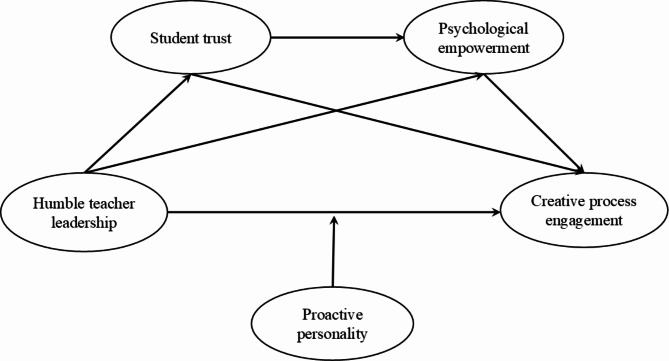
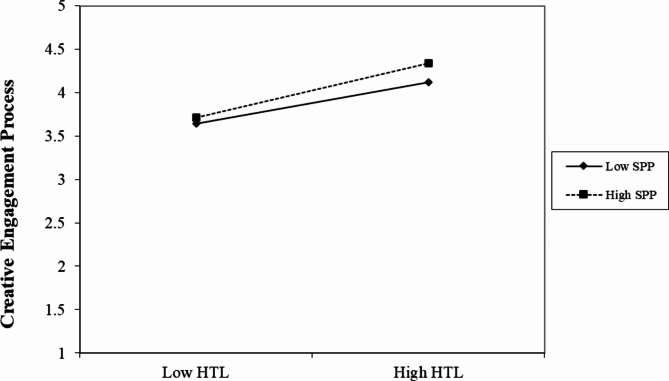
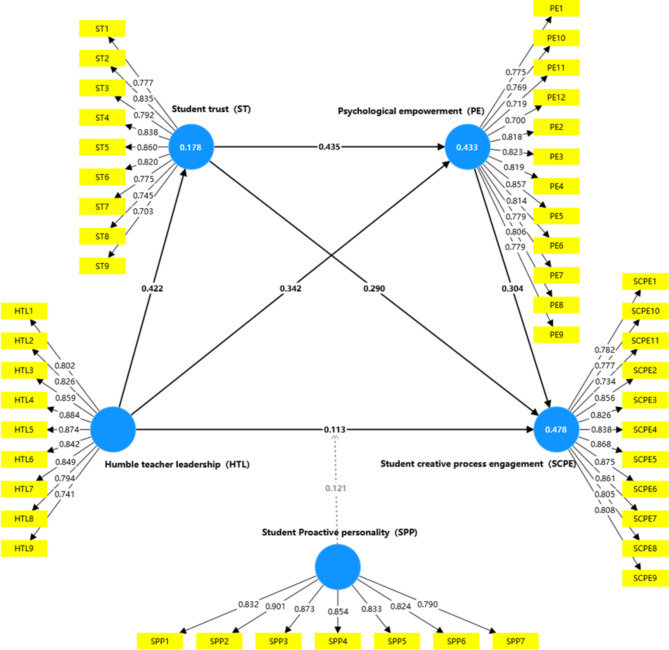
Verification
Claims the paper makes
The claims and statistics of this paper haven’t been checked yet.
Run the check — free, no account needed. It reads the open-access text and checks the sources it cites.
Claims other papers make about this one
Each is checked against this paper’s own text: does it say what the citing paper says it does?
In the citing paper
“Liderazgo humilde o de base segura Promueve la confianza, la escucha y la creatividad como condiciones del compromiso organizacional.”
From Del liderazgo a la organización que aprende: una revisión sistemática desde la transcomplejidad en educación superior (2026) · cites this paper as Zhang & Chi (2025)
Self-check
Percentages, sums and reported differences re-computed from the paper’s own numbers.
The self-check needs the paper’s full text.
Citations
Cites
Zimmerman, M. A. (2000) · Handbook of Community Psychology · doi:10.1007/978-1-4615-4193-6_2 · Cited by 1,653
Warning for excessive positivity: Authentic leadership and other traps in leadership studies
Alvesson, M., & Einola, K. (2019) · The Leadership Quarterly · doi:10.1016/j.leaqua.2019.04.001 · Cited by 412
A meta-analysis of the role of trust in the leadership- performance relationship
Legood, A., van der Werff, L., Lee, A., & Den Hartog, D. (2021) · European Journal of Work and Organizational Psychology · doi:10.1080/1359432x.2020.1819241 · Cited by 241
Peng, S., & Huang, Y. (2024) · BMC Psychology · doi:10.1186/s40359-024-02110-z · Cited by 19
Research works printed but not linked: 75
- Børte K, Nesje K, Lillejord S. Barriers to student active learning in higher education. Teach High Educ. 2023;28(3):597–615. · DOI
- Zhang X, Bartol KM. Linking empowering leadership and employee creativity: the influence of psychological empowerment, intrinsic motivation, and creative process engagement. Acad Manag J. 2010;53(1):107–28. · DOI
- Tantawy M, Herbert K, McNally JJ, Mengel T, Piperopoulos P, Foord D. Bringing creativity back to entrepreneurship education: creative self-efficacy, creative process engagement, and entrepreneurial intentions. J Bus Venturing Insights, 2021;15:e00239. · DOI
- Soh K. Fostering student creativity through teacher behaviors. Think Skills Creativity. 2017;23:58–66. · DOI
- Lillejord S, Børte K, Nesje K, Ruud E. Learning and Teaching with Technology in Higher Education – a Systematic Review. 2018.www.kunnskapssenter.no
- Kwan P. Is transformational leadership theory passé? Revisiting the integrative effect of instructional leadership and transformational leadership on student outcomes. Educational Adm Q. 2020;56(2):321–49. · DOI
- Xu J. Enhancing Student Creativity in Chinese universities: the role of teachers’ spiritual Leadership and the Mediating effects of positive psychological capital and sense of self-esteem. Thinking Skills and Creativity; 2024;101567. · DOI
- Kelemen TK, Matthews SH, Matthews MJ, Henry SE. Humble leadership: a review and synthesis of leader expressed humility. J Organizational Behav. 2023;44(2):202–24. · DOI · Paper page
- Chandler JA, Johnson NE, Jordan SL, Short JC. A meta-analysis of humble leadership: reviewing individual, team, and organizational outcomes of leader humility. Leadersh Q. 2023;34(1):101660. · DOI · Paper page
- Zou WQ, Chen SC. Teacher-expressed Humility and Students’ learning motivation: the mediating role of academic self-efficacy and the moderating role of teacher ability trustworthiness. The Asia-Pacific Education Researcher; 2024;1–12. · DOI
- Han S, Liu D, Lv Y. The influence of psychological safety on students’ creativity in project-based learning: the mediating role of psychological empowerment. Front Psychol. 2022;13:865123. · DOI
- Rousseau DM, Sitkin SB, Burt RS, Camerer C. Not so different after all: a cross-discipline view of trust. Acad Manage Rev. 1998;23(3):393–404. · DOI · Paper page
- Mitchell RM, Kensler L, Tschannen-Moran M. Student trust in teachers and student perceptions of safety: positive predictors of student identification with school. Int J Leadersh Educ. 2018;21(2):135–54. · DOI
- Forrester R. Empowerment: rejuvenating a potent idea. Acad Manage Perspect. 2000;14(3):67–80. · DOI
- Spreitzer GM. Psychological empowerment in the workplace: dimensions, measurement, and validation. Acad Manag J. 1995;38(5):1442–65. · DOI
- Saleem S, Tourigny L, Raziq MM, Shaheen S, Goher A. Servant leadership and performance of public hospitals: trust in the leader and psychological empowerment of nurses. J Nurs Adm Manag. 2022;30(5):1206–14. · DOI
- Mirza MZ, Qaiser MI, Memon MA. High-performance work systems, psychological empowerment and creative process engagement: a componential theory of creativity perspective. Creativity Innov Manage. 2024;33(2):166–80. · DOI
- Bateman TS, Crant JM. The proactive component of organizational behavior. J Organizational Behav. 1993;14:103–18. https://doi.org/10.1002/job.4030140202 · DOI
- Li HUI, Jin H, Chen T. Linking proactive personality to creative performance: the role of job crafting and high-involvement work systems. J Creative Behav. 2020;54(1):196–210. · DOI
- Chen P, Bao C, Gao Q. Proactive personality and academic engagement: the mediating effects of teacher-student relationships and academic self-efficacy. Front Psychol. 2021;12:652994. · DOI
- Blau P. Exchange and power in social life. Routledge. 2017. · DOI · Paper page
- Cropanzano R, Mitchell MS. Social exchange theory: an interdisciplinary review. J Manag. 2005;31(6):874–900.
- Qu Y, Zhu J, Goddard RD. Modesty brings gains: linking humble leadership to knowledge sharing via psychological safety and psychological empowerment in professional learning communities. Educ Stud. 2022;50(6):1444–65. https://doi.org/10.1080/03055698.2022.2103648. · DOI
- Shang Y, Xu J, Liu H. Supervisor developmental feedback and postgraduate student creativity: a relationship quality perspective. High Educ. 2024;87(2):381–99. · DOI
- Deci EL, Ryan RM. Self-determination theory. Handb Theor Social Psychol. 2012;1(20):416–36.
- Maddens L, Depaepe F, Raes A, Elen J. Fostering students’ motivation towards learning research skills: the role of autonomy, competence and relatedness support. Instr Sci. 2023;51(1):165–99. · DOI
- Schermuly CC, Meyer B. Transformational leadership, psychological empowerment, and flow at work. Eur J Work Organizational Psychol. 2020;29(5):740–52. · DOI
- Lin X, Tse HH, Shao B, Duan J. How do humble leaders unleash followers’ leadership potential? The roles of workplace status and individualistic orientation. Journal of Organizational Behavior. 2024. · DOI
- Liu H, Ahmed J, Anjum S, M. A., Mina A. Leader humility and employees’ creative performance: the role of intrinsic motivation and work engagement. Front Psychol. 2024;15:1278755. · DOI
- Kwok MLJ, Kwong R, Wong M. How to facilitate motivational regulation strategies: perspectives on teacher humility and teacher-student relationship. Comput Educ. 2022;191:104645. · DOI
- Willis AS. Teachers’ cultural, social and emotional capabilities: how teacher compassion and humility is an antecedent to student confidence. Pedagogy Cult Soc. 2023;31(1):91–108. · DOI
- Rubenstein LD, Callan GL, Ridgley LM. Anchoring the creative process within a self-regulated learning framework: inspiring assessment methods and future research. Educational Psychol Rev. 2018;30:921–45. · DOI
- Zimmerman BJ. Dimensions of academic self-regulation: a conceptual framework for education. Self-regulation of learning and performance. Routledge; 2023;3–21. · DOI
- Gardiner P. Learning to think together: Creativity, interdisciplinary collaboration and epistemic control. Think Skills Creativity. 2020;38:100749. · DOI
- McAllister DJ. Affect-and cognition-based trust as foundations for interpersonal cooperation in organizations. Acad Manag J. 1995;38(1):24–59. · DOI · Paper page
- Dirks KT, de Jong B. Trust within the workplace: a review of two waves of research and a glimpse of the third. Annual Rev Organizational Psychol Organizational Behav. 2022;9(1):247–76. · DOI
- Legood A, van der Werff L, Lee A, den Hartog D, van Knippenberg D. A critical review of the conceptualization, operationalization, and empirical literature on cognition-based and affect‐based trust. J Manage Stud. 2023;60(2):495–537. · DOI
- Cho J, Schilpzand P, Huang L, Paterson T. How and when humble leadership facilitates employee job performance: the roles of feeling trusted and job autonomy. J Leadersh Organizational Stud. 2021;28(2):169–84. · DOI
- Dirks KT, Ferrin DL. Trust in leadership: meta-analytic findings and implications for research and practice. J Appl Psychol. 2002;87(4):611. · DOI · Paper page
- Liborius P, Kiewitz C. When leader humility meets follower competitiveness: relationships with follower affective trust, intended and voluntary turnover. J Vocat Behav. 2022;135:103719. · DOI · Paper page
- Pachler D, Kuonath A, Frey D. How transformational lecturers promote students’ engagement, creativity, and task performance: the mediating role of trust in lecturer and self-efficacy. Learn Individual Differences. 2019;69:162–72. · DOI
- Fan M, Cai W, Jiang L. Can team resilience boost team creativity among undergraduate students? A sequential mediation model of team creative efficacy and team trust. Front Psychol. 2021;12:604692. · DOI
- Conger JA, Kanungo RN. The empowerment process: integrating theory and practice. Acad Manage Rev. 1988;13(3):471–82. · DOI
- O’Donoghue D, Van Der Werff L. Empowering leadership: balancing self-determination and accountability for motivation. Personnel Rev. 2022;51(4):1205–20. · DOI
- Busque-Carrier M, Ratelle CF, Le Corff Y. Work values and job satisfaction: the mediating role of basic psychological needs at work. J Career Dev. 2022;49(6):1386–401. · DOI
- You JW. The relationship among college students’ psychological capital, learning empowerment, and engagement. Learn Individual Differences. 2016;49:17–24. · DOI
- Shukla A, Arora V. A holistic approach to student empowerment and assessment of its impact on educational outcomes through psychological ownership. Stud High Educ. 2023;48(8):1315–32. · DOI
- Maksić S, Jošić S. Scaffolding the development of creativity from the students’ perspective. Think Skills Creativity. 2021;41:100835. · DOI
- Asghar F, Mahmood S, Iqbal Khan K, Gohar Qureshi M, Fakhri M. Eminence of leader humility for follower creativity during COVID-19: the role of self-efficacy and proactive personality. Front Psychol. 2022;12:790517. · DOI
- Robinson GM, Magnusen MJ. Developing servant Leadership through experience and practice: a Case Study in Service Learning. Behav Sci. 2024;14(9):801. · DOI
- Bin Saeed B, Afsar B, Shahjeha A, Imad Shah S. Does transformational leadership foster innovative work behavior? The roles of psychological empowerment, intrinsic motivation, and creative process engagement. Economic research-Ekonomska istraživanja. 2019;32(1):254–81. · DOI
- Amerstorfer CM, von Freiin C. Student perceptions of academic engagement and student-teacher relationships in problem-based learning. Front Psychol. 2021;12:713057. · DOI
- Llorente-Alonso M, García-Ael C, Topa G. A meta-analysis of psychological empowerment: antecedents, organizational outcomes, and moderating variables. Curr Psychol. 2024;43(2):1759–84. · DOI
- Su W, Zhang Y, Yin Y, Dong X. The influence of teacher-student relationship on innovative behavior of graduate student: the role of proactive personality and creative self-efficacy. Think Skills Creativity. 2024;52:101529. · DOI
- Lam W, Lee C, Taylor MS, Zhao HH. Does proactive personality matter in leadership transitions? Effects of proactive personality on new leader identification and responses to new leaders and their change agendas. Acad Manag J. 2018;61(1):245–63. · DOI
- Parker SK, Bindl UK, Strauss K. Making things happen: a model of proactive motivation. J Manag. 2010;36(4):827–56.
- Wang Y, Liu J, Zhu Y. Humble leadership, psychological safety, knowledge sharing, and follower creativity: a cross-level investigation. Front Psychol. 2018;9:1727. · DOI
- Shaw KH, Mao J. Leader–follower congruence in humility and follower voice: the mediating role of affective attachment. Curr Psychol. 2023;42:486–95. https://doi.org/10.1007/s12144-021-01475-3 · DOI
- Zhang LF, Li M, Xie Z, Cao F. Psychological ownership: incremental validity in predicting academics’ creativity-generating teaching styles beyond organizational commitment. Think Skills Creativity. 2024;52:101526. · DOI
- Brislin RW. Back-translation for cross-cultural research. J Cross-Cult Psychol. 1970;1(3):185–216. · DOI · Paper page
- Owens BP, Hekman DR. How does leader humility influence team performance? Exploring the mechanisms of contagion and collective promotion focus. Acad Manag J. 2016;59(3):1088–111. · DOI
- Kock N. Common method bias in PLS-SEM: a full collinearity assessment approach. Int J e-Collaboration (ijec). 2015;11(4):1–10. · DOI · Paper page
- Ringle CM, Sarstedt M, Sinkovics N, Sinkovics RR. A perspective on using partial least squares structural equation modelling in data articles. Data Brief. 2023;48:109074. · DOI
- Chin WW. How to write up and report PLS analyses. Handbook of partial least squares: concepts, methods and applications. Berlin, Heidelberg: Springer Berlin Heidelberg; 2009;655–90.
- Hair JF Jr, Matthews LM, Matthews RL, Sarstedt M. PLS-SEM or CB-SEM: updated guidelines on which method to use. Int J Multivar Data Anal. 2017;1(2):107–23. · DOI · Paper page
- Hair JF, Risher JJ, Sarstedt M, Ringle CM. When to use and how to report the results of PLS-SEM. Eur Bus Rev. 2019;31(1):2–24. · DOI · Paper page
- Henseler J, Fassott G. Testing moderating effects in PLS path models: An illustration of available procedures. Handbook of partial least squares: Concepts, methods and applications, 2010;713–735. · DOI
- Luhmann N. Familiarity, confidence, trust: problems and alternatives. Trust: Mak Breaking Coop Relations. 2000;6(1):94–107.
- Ergeneli A, Arı GS, Metin S. Psychological empowerment and its relationship to trust in immediate managers. J Bus Res. 2007;60(1):41–9. · DOI
- Seibert SE, Wang G, Courtright SH. Antecedents and consequences of psychological and team empowerment in organizations: a meta-analytic review. J Appl Psychol. 2011;96(5):981. · DOI
- Mao J, Chiu CY, Owens BP, Brown JA, Liao J. Growing followers: exploring the effects of leader humility on follower self-expansion, self‐efficacy, and performance. J Manage Stud. 2019;56(2):343–71. · DOI
- Tuncdogan A, Acar OA, Stam D. Individual differences as antecedents of leader behavior: towards an understanding of multi-level outcomes. Leadersh Q. 2017;28(1):40–64. · DOI
- Xie F, Derakhshan A. A conceptual review of positive teacher interpersonal communication behaviors in the instructional context. Front Psychol. 2021;12:708490. · DOI
- Kilic M, Uslukilic G, Üstündağ Öcal N. Exploring the relationship between proactive personality, individual innovation, and mental health in university students. BMC Public Health. 2024;24(1):3177. · DOI
- Wenner JA, Campbell T. The theoretical and empirical basis of teacher leadership: a review of the literature. Rev Educ Res. 2017;87(1):134–71. · DOI
Cited by
Sorted by citations
GARCIA, M. A. (2026) · Espacios · doi:10.48082/espacios-a26v47n01r04 · Cited by 2
Metadata
- Authors
- Zhang, X., & Chi, J.
- Venue
- BMC Psychology
- Published
- 2025-01-16
- Volume
- 13
- Issue
- 1
- ISSN
- 2050-7283
- PMC
- PMC11740467
- Cited by
- 14
- References
- 4
- Language
- en
- Licence
- Funders
- China General Project "Research on Evolution and Governance of Industry-University-Research Collaborative Innovation Ecosystem in National Independent Innovation Demonstration Zone" (18BGL271)
About these checks
Registry, retraction, Cites and statistics results are computed, not judged, with one exception: a printed reference that no index lists is read once by a model before it counts as a citation error. Claims are extracted by a model and kept only when their quote appears verbatim in the text; each cited source is then checked, with a model’s help, for whether it says what the claim relies on. Those verdicts can be wrong — read the claim’s quote and the cited source before relying on one.
Statistics and arithmetic are recomputed, not judged.
Confidence bands are shown only for fields calibrated on our annotated test set. None is calibrated yet, so no band is shown.
What counts as a claim ›How we measure confidence ›How we check this ›
Are you an author, or do you see a problem with this page? Request a review
