

The DOI matches its Crossref record; 90 of the 90 references it cites were found in a registry or an index.
eToxPred: a machine learning-based approach to estimate the toxicity of drug candidates
Open accessAbstract
BACKGROUND: The efficiency of drug development defined as a number of successfully launched new pharmaceuticals normalized by financial investments has significantly declined. Nonetheless, recent advances in high-throughput experimental techniques and computational modeling promise reductions in the costs and development times required to bring new drugs to market. The prediction of toxicity of drug candidates is one of the important components of modern drug discovery. RESULTS: In this work, we describe eToxPred, a new approach to reliably estimate the toxicity and synthetic accessibility of small organic compounds. eToxPred employs machine learning algorithms trained on molecular fingerprints to evaluate drug candidates. The performance is assessed against multiple datasets containing known drugs, potentially hazardous chemicals, natural products, and synthetic bioactive compounds. Encouragingly, eToxPred predicts the synthetic accessibility with the mean square error of only 4% and the toxicity with the accuracy of as high as 72%. CONCLUSIONS: eToxPred can be incorporated into protocols to construct custom libraries for virtual screening in order to filter out those drug candidates that are potentially toxic or would be difficult to synthesize. It is freely available as a stand-alone software at https://github.com/pulimeng/etoxpred .
Overview
The claims and statistics of this paper haven’t been checked yet.
Run the check — free, no account needed. It reads the open-access text and checks the sources it cites.
Integrity signals
Registry
Cites
Statistics
Figures
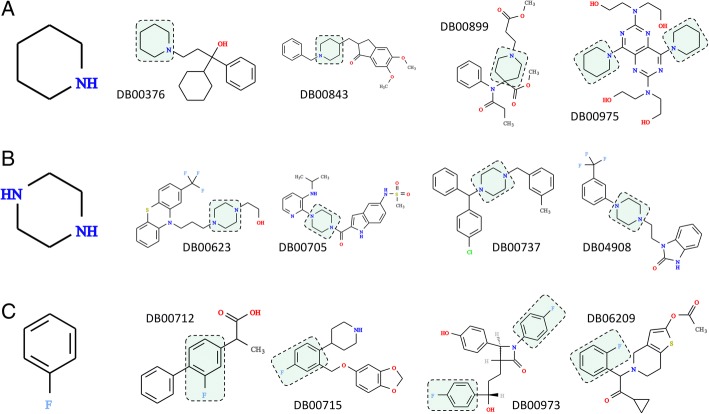
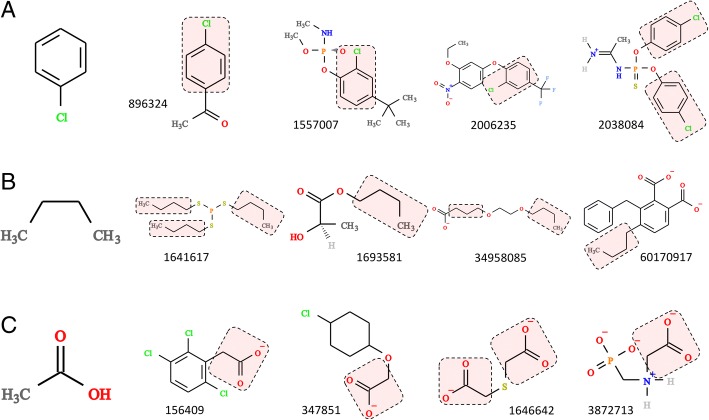
Verification
Claims the paper makes
The claims and statistics of this paper haven’t been checked yet.
Run the check — free, no account needed. It reads the open-access text and checks the sources it cites.
Claims other papers make about this one
Each is checked against this paper’s own text: does it say what the citing paper says it does?
In the citing paper
“AI-based methods have also been able to predict the toxicity of drug candidates [6].”
From The role of AI in drug discovery: challenges, opportunities, and strategies (2023) · cites this paper as [6]
Self-check
Percentages, sums and reported differences re-computed from the paper’s own numbers.
The self-check needs the paper’s full text.
Citations
Cites
Breiman, L. (2001) · Machine Learning · doi:10.1023/a:1010933404324 · Cited by 133,538 · cited 1×
“DeepTox was reported to outperform deep neural networks (DNNs) [31], support vector machines (SVMs) [32], random forests (RF) [33], and elastic nets [34].”
BackgroundTrott, O., & Olson, A. J. (2010) · Journal of Computational Chemistry · doi:10.1002/jcc.21334 · Cited by 38,412 · cited 1×
“VS performed with high-performance computing machines renders docking programs such as AutoDock Vina [19], rDock [20], Glide [21], and FlexX [22] capable to search through millions of compounds in a matter of days or even hours.”
MethodClassification and Regression Trees.
Ryzin, J. V., Breiman, L., Friedman, J. H., Olshen, R. A., & Stone, C. J. (1986) · Journal of the American Statistical Association · doi:10.2307/2288003 · Cited by 21,030
Regularization Paths for Generalized Linear Models via Coordinate Descent
Friedman, J., Hastie, T., & Tibshirani, R. (2010) · Journal of Statistical Software · doi:10.18637/jss.v033.i01 · Cited by 19,927 · cited 1×
“DeepTox was reported to outperform deep neural networks (DNNs) [31], support vector machines (SVMs) [32], random forests (RF) [33], and elastic nets [34].”
BackgroundDeep learning in neural networks: an overview
Schmidhuber, J. (2015) · Neural Networks · doi:10.1016/j.neunet.2014.09.003 · Cited by 18,570
Stochastic relaxation, gibbs distributions, and the bayesian restoration of images.
Geman, S., & Geman, D. (1984) · IEEE Transactions on Pattern Analysis and Machine Intelligence · doi:10.1109/tpami.1984.4767596 · Cited by 17,949 · cited 1×
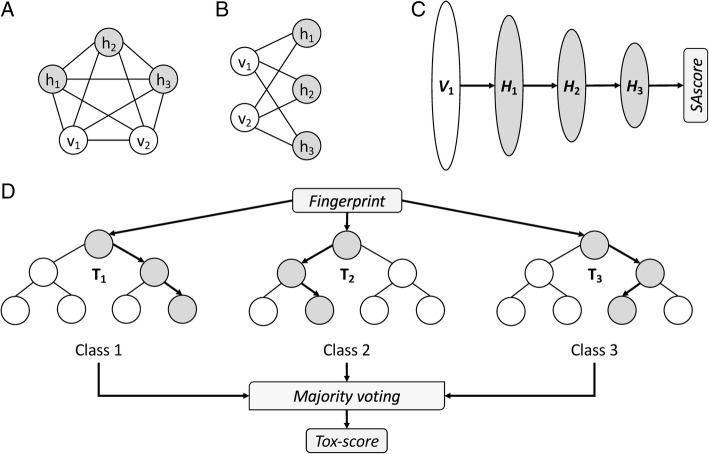
“The training process involves the optimization of the weight vector through Gibbs sampling [38].”
MethodAn Introduction to Statistical Learning
James, G., Witten, D., Hastie, T., & Tibshirani, R. (2013) · Springer Texts in Statistics · doi:10.1007/978-1-4614-7138-7 · Cited by 12,106 · cited 1×
“In this work, the SAscore predictor is evaluated with a 5-fold cross-validation protocol, which was empirically demonstrated to be sufficient for most applications [64].”
MethodClassification And Regression Trees
Breiman, L., Friedman, J. H., Olshen, R. A., & Stone, C. J. (2017) · doi:10.1201/9781315139470 · Cited by 11,417
Open Babel: An open chemical toolbox
O'Boyle, N. M., Banck, M. S., James, C. A. J., Morley, C., Vandermeersch, T., & Hutchison, G. R. (2011) · Journal of Cheminformatics · doi:10.1186/1758-2946-3-33 · Cited by 10,745 · cited 1×
“Input data to machine learning models are 1024-bit Day-light fingerprints constructed for dataset compounds with Open Babel [61].”
MethodFriesner, R. A., Banks, J. L., Murphy, R. B., Halgren, T. A., Klicic, J. J., Mainz, D. T., Repasky, M. P., Knoll, E. H., Shelley, M., Perry, J. K., et al. (2004) · Journal of Medicinal Chemistry · doi:10.1021/jm0306430 · Cited by 10,057 · cited 1×
“VS performed with high-performance computing machines renders docking programs such as AutoDock Vina [19], rDock [20], Glide [21], and FlexX [22] capable to search through millions of compounds in a matter of days or even hours.”
Method
Research works printed but not linked: 2
- Theano_Development_Team: Theano: A Python framework for fast computation of mathematical expressions. arXiv e-prints 2016:abs/1605.02688.
- Tanimoto TT. An elementary mathematical theory of classification and prediction. In: Book An elementary mathematical theory of classification and prediction. (editor ed.^eds.). City; 1958.
Cited by
Sorted by citations
Items 101–200 of 212
Artificial Intelligence perspectives in advancing Persian Herbal Medicine: A systematic review
Soltani, S., Khodaie, L., & Surana, V. (2025) · Advances in Integrative Medicine · doi:10.1016/j.aimed.2025.03.001 · Cited by 6
Kumar, P., Mahor, A., & Tomar, R. (2025) · Current Drug Discovery Technologies · doi:10.2174/0115701638364199250123062248 · Cited by 6
AI for predicting chemical-effect associations at the chemical universe level— deepFPlearn
Schor, J., Scheibe, P., Bernt, M., Busch, W., Lai, C., & Hackermüller, J. (2022) · Briefings in Bioinformatics · doi:10.1093/bib/bbac257 · Cited by 7
“[32] developed eToxPred to quickly estimate the toxicity of extensive collections of low molecular weight organic chemicals.”
BackgroundMethodRai, S., Shukla, S., Scotti, L., & Mani, A. (2023) · Current Medicinal Chemistry · doi:10.2174/0929867331666230807151708 · Cited by 6
O’Donovan, S. D., Driessens, K., Lopatta, D., Wimmenauer, F., Lukas, A., Neeven, J., Stumm, T., Smirnov, E. N., Lenz, M., Ertaylan, G., et al. (2020) · PLoS ONE · doi:10.1371/journal.pone.0236392 · Cited by 6
Drug Response Prediction of Liver Cancer Cell Line Using Deep Learning
Hassan, M., Ali, S., Sanaullah, M., Shahzad, K., Mushtaq, S., Abbasi, R., Ali, Z., & Alquhayz, H. (2021) · Computers, materials & continua/Computers, materials & continua (Print) · doi:10.32604/cmc.2022.020055 · Cited by 7
The fate of drug discovery in academia; dumping in the publication landfill?
Saqib, U., Demaree, I. S., Obukhov, A. G., Baig, M. S., Ariel, A., & Hajela, K. (2024) · Oncotarget · doi:10.18632/oncotarget.28552 · Cited by 6
Dual Targeting of DNA Damage Response Proteins Implicated in Cancer Radioresistance
Vasilopoulos, S. N., Güner, H., Apaydın, M. U., Pavlopoulou, A., & Georgakilas, A. G. (2023) · Genes · doi:10.3390/genes14122227 · Cited by 5
“The freely available tools e ToxPred [25] (based on a machine learning algorithm) and pkCSM [26] (based on key toxicity parameters) were employed to reliably evaluate the toxicity risk of the novel ligand.”
MethodAl-Jubouri, B., Desiati, I., Wijanarko, W., & Espallargas, N. (2025) · ACS Applied Materials & Interfaces · doi:10.1021/acsami.4c10622 · Cited by 6
Zhang, W., Song, X.-X., Li, X., Yan, B., Sun, L., Yuan, W., Li, Y., & Zhang, H. (2025) · Journal of Chemical Education · doi:10.1021/acs.jchemed.5c00349 · Cited by 5
Park, M., Song, W., Ahn, H., & Kim, S. (2025) · EBioMedicine · doi:10.1016/j.ebiom.2025.105994 · Cited by 5
“Notably, our model (AUPRC of GPD + Chemical: 0.629) consistently outperformed various state-of-the-art models (AUPRC of eToxPred, 43 indicate the baseline.”
InfluentialSingh, S., Kumar, S., Quadir, S. S., Bhandari, S., Baniya, B., Joshi, G., Jain, C. P., & Choudhary, D. K. (2025) · Journal of Pharmaceutical Innovation · doi:10.1007/s12247-025-09940-3 · Cited by 6
Revolutionizing Drug Discovery: A Systematic Review of AI and Machine Learning Application
Chowdhury, I. J., Hossan, M. S., Khan, M. Z., Mahboob, T. Z., Sutradhar, Y., Hossain, M. A., & Masum, M. (2025) · International Conference on Self Sustainable Artificial Intelligence Systems (ICSSAS) · doi:10.1109/icssas66150.2025.11081368 · Cited by 5
“[26][27].”
Computational resources in healthcare
Sharma, N., Naorem, L. D., Gupta, S., & Raghava, G. P. S. (2021) · Wiley Interdisciplinary Reviews Data Mining and Knowledge Discovery · doi:10.1002/widm.1437 · Cited by 5
Choudhary, R., Bhowmick, S., Abdelghani, H. T. M., Patil, P. C., & Chikhale, R. V. (2024) · Journal of Molecular Structure · doi:10.1016/j.molstruc.2024.139360 · Cited by 5
Upadhyay, V., Anand, M., & Maranas, C. D. (2025) · PLoS Computational Biology · doi:10.1371/journal.pcbi.1012516 · Cited by 5
Artificial Intelligence for Drug Toxicity and Safety
Joshi-Barr, S., & Wampole, M. E. (2024) · Springer eBooks · doi:10.1007/978-3-031-35529-5_134 · Cited by 5
Maria, L., Lauro, F., Díaz-Cedillo, F., Marcela, R., & Alvarez-Ramirez, M. (2023) · Clinical Cancer Investigation Journal · doi:10.51847/5myimtzexf · Cited by 4
“Some methods have been used to predict the degree of toxicity of various compounds such as ADME/Tox, [52] eToxPred, [53] GUSSAR.”
MethodMaria, L., FigueroaValverde, L., Díaz-Cedillo, F., Marcela, R., & Alvarez-Ramirez, M. (2024) · Asian journal of Current Research in Clinical Cancer · doi:10.51847/oti4ctfqwq · Cited by 4
Machine Learning Approaches to Rational Drug Design
Akhtar, S., Khan, M. K. A., & Osama, K. (2020) · Springer eBooks · doi:10.1007/978-981-15-6815-2_12 · Cited by 4
Voting-Boosting: A novel machine learning ensemble for the prediction of Infants' Data
lowast, S., Mansotra, V., Kour, P., & Kumar, S. (2020) · Indian Journal of Science and Technology · doi:10.17485/ijst/v13i22.468 · Cited by 4
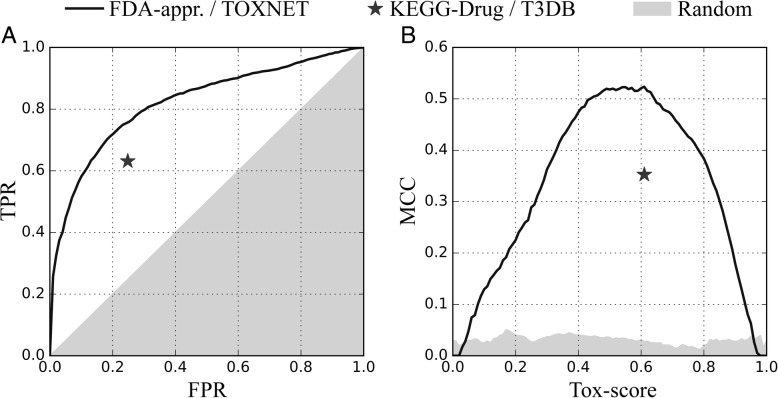
“5 MCC Matthew’s correlation coefficient (MCC) is a well-balanced measure for the quality of binary classifications ranging from -1 (anti-correlation) to +1 (a perfect classifier) with values around 0 corresponding to a random guess (34).”
MethodDeepDrug: Applying AI for the Advancement of Drug Discovery
Mukhopadhyay, S., Bryliński, M., Bess, A., Berglind, F., Galliano, C., & McGrew, P. F. (2022) · International Conference on Communication Systems & Networks (COMSNETS) · doi:10.1109/comsnets53615.2022.9668586 · Cited by 4
Self-citationRowaiye, A. B., Oli, A. N., Onuh, O. A., Emeter, N. W., Bur, D., Obideyi, O. A., Dayisi, O. C., Akpa, J. N., Birah, L., Omaka, E. E., et al. (2022) · African Journal of Infectious Diseases · doi:10.21010/ajid.v16i2.9 · Cited by 4
Revolutionizing Drug Discovery
Sayal, A., Jha, J., Chaithra, N., Gangodkar, A. R., & Banu, S. S. (2024) · Wiley eBooks · doi:10.1002/9781394234196.ch7 · Cited by 4
Kolpe, M. S., Suryawanshi, V. S., Eldesoky, G. E., Hossain, D., Patil, P. C., & Bhowmick, S. (2024) · ChemistrySelect · doi:10.1002/slct.202403302 · Cited by 3
Artificial intelligence in drug discovery: Current applications and future directions
Alanazi, A. A. A., Fahad, . I. A. A., Almorshed, A. S. A., Alrbian, A. A. M., Alnughaymishi, A. A. S., Al-Mutairi, N. H. B., Alajmi, A. A., & Otaibi, S. G. A. (2022) · International Journal of Health Sciences · doi:10.53730/ijhs.v6ns10.15290 · Cited by 5
“Deep learning, for example, has been applied in drug screening by leveraging protein-ligand interactions as input values for DeepTox to predict drug toxicity with high accuracy [75].”
BackgroundMethodBridging the digital divide in the pharmaceutical industry: A future research agenda
Miozza, M., Lombardo, S. M., Galvagno, M., & Magni, L. (2025) · Social Science & Medicine · doi:10.1016/j.socscimed.2025.118832 · Cited by 7
Regional immunity in the respiratory tract: challenges and opportunities
Wang, S., Chen, S., Dai, L., Li, F., Li, H., Liu, K., Meng, X., Wang, J., Yue, H., Zhu, A., et al. (2026) · 中国科学通报:英文版 · doi:10.1016/j.scib.2026.04.057 · Cited by 3
Singh, P. K., Sachan, K., Khandelwal, V., Singh, S., & Singh, S. (2024) · Recent Patents on Biotechnology · doi:10.2174/0118722083297406240313090140 · Cited by 3
Molla, A., Akhter, H., Rafi, E. I., Islam, A., Lipy, E. P., Miah, M. A. S., & Islam, S. (2025) · ACS Omega · doi:10.1021/acsomega.5c09902 · Cited by 4
Processing and Interpretation of Analytical Data with a High Degree of Uncertainty
Зенкевич, И. Г., Nikitina, D. A., & Сергеевна, К. А. (2022) · Journal of Analytical Chemistry · doi:10.1134/s1061934822090143 · Cited by 3
Role of Artificial Intelligence in the Toxicity Prediction of Drugs
Malani, M., Kasturi, A., Moinul, M., Gayen, S., Hota, C., & Nirmal, J. (2023) · Springer eBooks · doi:10.1007/978-981-19-7834-0_22 · Cited by 3
DTox: A deep neural network-based in visio lens for large scale toxicogenomics data
Hase, T., Ghosh, S., Aisaki, K., Kitajima, S., Kanno, J., Kitano, H., & Yachie‐Kinoshita, A. (2024) · The Journal of Toxicological Sciences · doi:10.2131/jts.49.105 · Cited by 3
Hernández, A. F. (2021) · Elsevier eBooks · doi:10.1016/b978-0-323-85215-9.00011-8 · Cited by 4
Predicting toxicity from chemical structure of a drug compound
Pawar, B., More, A., Nagaraja, S., Tekade, M., & Tekade, R. K. (2023) · Elsevier eBooks · doi:10.1016/b978-0-443-15840-7.00008-7 · Cited by 2
Applications of Artificial Intelligence in Drug Design, Discovery and Development
Rajagopal, K. (2023) · Journal of Applied Pharmaceutical Science · doi:10.7324/japs.2023.9.1ed · Cited by 2
Vashishth, T. K., Sharma, V., Sharma, K. K., Vidyant, S., & Bhardwaj, A. (2024) · Advances in medical technologies and clinical practice book series · doi:10.4018/979-8-3693-3212-2.ch012 · Cited by 2
Wang, X., Zhao, T., Liang, B., Fang, J., Dong, Q., & Chen, Q. (2025) · Journal of Inflammation Research · doi:10.2147/jir.s505554 · Cited by 2
KG-DTA: A knowledge graph-based meta-path learning framework to predict drug-target binding affinity
Ranjan, A., Bess, A., Sajol, M. S. I., Rajasekaran, M., Alvin, C., & Mukhopadhyay, S. (2024) · International Conference on AI-ML Systems (AIMLSystems) · doi:10.1145/3703412.3703426 · Cited by 3
Self-citationAi derivation and exploration of antibiotic class spaces
Bess, A., Rowland, S., Alvin, C., & Mukhopadhyay, S. (2026) · Journal of Cheminformatics · doi:10.1186/s13321-026-01153-1 · Cited by 2
“Synthetic accessibility scores computed using RDKit and e ToxPred [28] confirmed that top-ranked hybrid candidates remain within a synthetically tractable range, comparable to known DrugBank antibiotics.”
Self-citationKamboj, S., & Kumar, M. (2026) · Elsevier eBooks · doi:10.1016/b978-0-443-34059-8.00002-6 · Cited by 2
Khan, K., Jalal, K., Alam, Y. S. J., Alotaibi, G., Mouslem, A. K. A., Uddin, R., Hassan, S. S., & Basharat, Z. (2023) · Journal of Biomolecular Structure and Dynamics · doi:10.1080/07391102.2023.2191148 · Cited by 2
“For induction in the therapy development pipeline, early information on drug-like moiety toxicity and side effects are crucial (Chen & Ung, 2001; Pu et al., 2019).”
MethodArivanantham, S., Sekar, P., Sundhararajan, N., Nagalingam, Y., & Raju, S. K. (2023) · World Journal of Biology Pharmacy and Health Sciences · doi:10.30574/wjbphs.2023.16.2.0467 · Cited by 2
Role of Artificial Intelligence in Developing Hospital Information Management Systems
Triana, I. K. D. L., Agustina, P. D. C., Febrian, R., Wiadnya, I. D. G. P., & Paramarta, V. (2024) · JMMR (Jurnal Medicoeticolegal dan Manajemen Rumah Sakit) · doi:10.18196/jmmr.v13i1.127 · Cited by 2
Production and development of novel drug targets through AI
Mahmoud, G. A., Riad, O. K. M., & Badawy, M. S. E. M. (2024) · Methods in microbiology · doi:10.1016/bs.mim.2024.05.002 · Cited by 2
Pawar, A. D., Abdelghani, H. T. M., Deka, H., Battula, M. S., Maiti, S., Patil, P. C., Bhowmick, S., & Chikhale, R. V. (2025) · Medicinal Chemistry · doi:10.2174/0115734064333216250110034315 · Cited by 2
Narasannagari, L., & Bhardwaj, D. S. (2025) · Advances in computational intelligence and robotics book series · doi:10.4018/979-8-3693-9521-9.ch003 · Cited by 2
Raisinghani, N. (2023) · Research Square · doi:10.21203/rs.3.rs-2996968/v1 · Cited by 2
Kantak, M., & Shende, P. K. (2023) · Toxicology Research · doi:10.1093/toxres/tfad001 · Cited by 1
In Silico and Biophysical Techniques in Anticancer Drug Discovery Research
Ghazi, A., & Yap, B. K. (2024) · Interdisciplinary cancer research · doi:10.1007/16833_2024_235 · Cited by 1
The Role of Artificial Intelligence in the Discovery of New Drugs
Barcelos, M. P., & da Silva, C. H. T. D. P. (2024) · Engineering materials · doi:10.1007/978-3-031-75984-0_14 · Cited by 1
ProToxin, a Predictor of Protein Toxicity
Yang, Y., Zhang, H., & Vihinen, M. (2025) · Toxins · doi:10.3390/toxins17100489 · Cited by 1
Chaurasia, A., Ansari, M. M., Tripathi, G., Sharma, D., Shukla, S. K., Singh, B. N., & Siddiqi, M. I. (2025) · Journal of Computer-Aided Molecular Design · doi:10.1007/s10822-025-00695-0 · Cited by 1
Chowdhury, R. T., Pathan, S. I., Akhter, H., Uddin, M. N., Sultana, M., Adhikery, D., Rahman, M. T., Akhter, S., Lyzu, C., & Abdurrahim, M. (2025) · Phytomedicine Plus · doi:10.1016/j.phyplu.2025.100952 · Cited by 1
Zhang, Y., Liu, Y., Xiao, Z., & Chen, J. (2026) · Environmental Science & Technology · doi:10.1021/acs.est.5c16775 · Cited by 2
Vishwakarma, S. K., Roque‐Borda, C. A., Delgado, O. J. R., Mishra, A., Qriouet, Z., Mishra, A., Meneguin, A. B., & Pavan, F. R. (2026) · Future Pharmacology · doi:10.3390/futurepharmacol6020018 · Cited by 1
“Similarly, eToxPred focuses on peptide toxicity classification, an increasingly relevant area as interest grows in peptide-based TB therapies [200]; PreADMET offers predictions for Ames mutagenicity, skin sensitization, plasma protein binding, and blood–brain barrier permeability, making it…”
Synthesis, crystal structure, and bioactivity of two new levosimendan analogues
Cardenas‐Yong, E., Flores‐Monroy, J., Arenaza‐Corona, A., González‐Sebastián, L., Flores-Álamo, M., Orjuela, A. L., Alí‐Torres, J., Velasco‐Bejarano, B., & Morales‐Morales, D. (2026) · Journal of Molecular Structure · doi:10.1016/j.molstruc.2026.146656 · Cited by 1
Artificial neural network–based inference of drug–target interactions
Melamane, S., Mandava, T. T., Manda, A., Luphade, L. N., Khamanga, S. M., Makoni, P. A., Demana, P. H., Matafwali, S. K., & Witika, B. A. (2023) · Elsevier eBooks · doi:10.1016/b978-0-323-91763-6.00015-1 · Cited by 2
Shaping The Future of Healthcare with Artificial Intelligence: Current Trends and Beyond
Sathya, M. (2024) · African Journal of Biomedical Research · doi:10.53555/ajbr.v27i4s.5590 · Cited by 1
Human Stem Cells for Drug Toxicity Evaluation: A Comprehensive Review
Idris, M. M., & Nawaz, S. S. (2025) · Journal of Current Toxicology and Venomics · doi:10.2174/0129505704335182241218112943 · Cited by 1
Artificial intelligence in experimental studies and in drug design
Galagudza, M. M., Toropova, Y. G., & Конради, А. О. (2025) · Russian Journal for Personalized Medicine · doi:10.18705/2782-3806-2025-5-1-58-65 · Cited by 1
AI’s Potential: Embracing AI in the Future of Healthcare
Prakash, V., Dua, K., Debono, C. J., & Garg, L. (2025) · Studies in computational intelligence · doi:10.1007/978-3-031-80813-5_20 · Cited by 1
Hasan, M. S. A., Emon, Y., Alshahrani, M. Y., Rakib, I. H., Mia, E., Sultana, A., Hasan, A., & Islam, M. T. (2025) · Naunyn-Schmiedeberg s Archives of Pharmacology · doi:10.1007/s00210-025-04538-5 · Cited by 1
“These models look for warning signs, such as harmful substances created during metabolism or problems with important body channels (Pu et al. 2019).”
Machine Learning (ML) and Toxicity Studies
Ghosh, S., & Dasgupta, R. (2022) · Springer eBooks · doi:10.1007/978-981-16-8881-2_21 · Cited by 1
Proposed Improvements for Automated Chemical Safety Evaluations Using In-Silico TechniquesPreprint
Jordan, B. (2020) · Preprints.org · doi:10.20944/preprints202005.0408.v1
Khan, S., Islam, A., Firoz, A., Chaudhary, A. A., Kamal, M. A., & Malik, A. (2021) · Research Square · doi:10.21203/rs.3.rs-1161248/v1
“DeepDrug The DeepDrug team is a semi- nalist in the IBM Watson Arti cial Intelligence XPRIZE competition, for which the team created a time-e cient AI-based platform to discover new drugs or repurpose existing drugs for emerging infectious diseases including COVID-19 (Pu et al., 2019).”
BackgroundToxicogenomics for the prediction of carcinogenicity of xenobiotic substances
Srivastava, A. K., Kumar, D., Singh, D. R., & Singh, R. K. (2022) · Elsevier eBooks · doi:10.1016/b978-0-323-90560-2.00005-4
Machine learning empowered drug discovery
Kumar, T. D. A., & Naraparaju, S. (2022) · German Journal of Pharmaceuticals and Biomaterials · doi:10.5530/gjpb.2022.2.6
Kumar, H., Tang, L.-Y., Yang, C., & Kim, P. (2022) · Research Square · doi:10.21203/rs.3.rs-2202839/v1
Kumar, H., Tang, L.-Y., Yang, C., & Kim, P. (2022) · Research Square · doi:10.21203/rs.3.rs-2188660/v1
Hull, R., Manabile, M. A., & Dlamini, Z. (2023) · Springer eBooks · doi:10.1007/978-3-031-21506-3_11
Gaikwad, N. B. A. (2023) · Proceeding International Conference on Science and Engineering · doi:10.52783/cienceng.v11i1.289
Alvarez-Ramirez, M., Lauro, F., Díaz-Cedillo, F., Marcela, R., Maria, L., Mateu-Armand, V., & Tomas, L. (2023) · Clinical Cancer Investigation Journal · doi:10.51847/iviqzrp5lt
“In the literature, there are some methods to predict the degree of toxicity of various compounds such as ADME/Tox, [43] eToxPred, [44] and GUSSAR.”
MethodValdiviezo, J. (2023) · Revista de Química · doi:10.18800/quimica.202302.002 · Cited by 1
Multi-Objective Evolution for Automated Chemistry
Aslan, B., da Silva, F. S. C., & Nitschke, G. (2023) · IEEE Symposium Series on Computational Intelligence (SSCI) · doi:10.1109/ssci52147.2023.10372035
“Uni-Mol yielded an accuracy (table I) comparable with the accuracy and reliability of existing methods [2], [38]–[40], where such methods remain disadvantaged by costly trial and error optimisation.”
MethodA New Era of Machine Learning Augmenting Pharmaceutical Industry
Pargaien, A. V., Pargaien, S., Chilwal, B., Gupta, S., Nawaz, A., Adhikari, M., & Khan, F. (2023) · International Conference on Ambient Intelligence in Health Care (ICAIHC) · doi:10.1109/icaihc59020.2023.10430483
Artificial Intelligence for Drug Toxicity and Safety
Joshi-Barr, S., & Wampole, M. E. (2023) · Springer eBooks · doi:10.1007/978-3-030-73317-9_134-1
Shpotak, M. O., & Иванушкина, Н. Г. (2024) · Microsystems Electronics and Acoustics · doi:10.20535/2523-4455.mea.295601
Arab, I., Laukens, K., & Bittremieux, W. (2024) · bioRxiv (Cold Spring Harbor Laboratory) · doi:10.1101/2024.05.25.595894
“However, these experiments are resource-intensive in terms of both time and finances [3][4][5].”
BackgroundPawar, A. P., Almutairi, T. M., Shinde, O. D., & Chikhale, R. V. (2024) · Journal of Computational Biophysics and Chemistry · doi:10.1142/s2737416524500674
Evaluating chemical effects on human neural cells through calcium imaging and deep learning
Ku, R. Y., Bansal, A., Dutta, D. J., Yamashita, S., Peloquin, J., Vu, D. N., Shen, Y., Uchida, T., Torii, M., & Hashimoto‐Torii, K. (2024) · iScience · doi:10.1016/j.isci.2024.111298
Targeting Lin28: Insights into Biology and Advances with AI-Driven Drug Development
Matias-Barrios, V. M., Manskaia, E., Cherkasov, A. R., & Dong, X. (2025) · Serican Journal of Medicine · doi:10.17161/sjm.v2i1.23166
The Influence of Artificial Intelligence in Drug Discovery and Development
Krishnan, S., Rajendran, K., Yogeshwaran, V. N., & Radhakrishnan, B. (2024) · Medical virology · doi:10.1007/978-981-97-2938-8_3
Impact of Medical Information Science on Drug Discovery and Pharmaceutical Data Management
Sudheer, K., Baxi, P., Sidhu, J., Keshav, K., Jamuna, K., Homavazir, Z., & Sahu, P. K. (2024) · Seminars in Medical Writing and Education · doi:10.56294/mw2024516
Artificial Intelligence in Pharmaceutical Drug Development-challenges and the Way Forward
Krishnaswami, V., Muruganantham, S., Raja, J., Arthanari, S., Selvaraj, B. R., & Dharmian, J. P. (2025) · Current Artificial Intelligence · doi:10.2174/0129503752359512250325061847
The Current Landscape of AI Application in Healthcare: A Review
Ajimatanrareje, G. A., Ekeh, C., Igwilo, S. O. M. A. C. I., & Osunkwo, C. (2025) · American Journal of Innovation in Science and Engineering · doi:10.54536/ajise.v4i2.4432 · Cited by 4
“Pu et al. (2019) used AI with the goal of redefining toxicity testing.”
Chen, C., & Lin, Z. (2025) · Elsevier eBooks · doi:10.1016/b978-0-443-30010-3.00015-5
From Molecule to Market: The Role of AI in Shaping Modern Pharmacoeconomics
Aziz, S., Jabal, G. A. A., Dayoob, M., Hameed, M. A., Aslam, A., & Alshehade, S. A. (2025) · Lecture notes in networks and systems · doi:10.1007/978-3-031-96631-6_23
A robust graph-based computational model for predicting drug-induced liver injury compounds
Yao, Q., Ji, X., Liu, C., & Wang, Y. (2025) · PeerJ Computer Science · doi:10.7717/peerj-cs.3416
Chen, J., Si, Y.-W., Un, C.-W., & Siu, S. W. I. (2021) · Figshare · doi:10.6084/m9.figshare.17088152
Gretscher, P., Keck, A., Wolff, J., Konig, A. S., & Graf‐Vlachy, L. (2026) · Springer eBooks · doi:10.1007/978-3-658-36874-6_26-1 · Cited by 1
Artificial Intelligence in Drug Discovery and Diagnosis: Challenges, Opportunities, and Strategies
Mishra, A. K., Verma, S., Yadav, S., & Chanchal, D. K. (2026) · Current Indian Science · doi:10.2174/012210299x411339260202160840
Ziablitsev, S. V., Yevstifeiev, D. I., Likhodiievskyi, V. V., Aleksandrenko, N. O., & Fedko, K. O. (2025) · Medical Science of Ukraine (MSU) · doi:10.32345/2664-4738.4.2025.09
Imaging of the fish embryo model and applications to toxicology
Genest, D. (2019) · theses.fr (ABES) · doi:10.70675/aaaff214zcdb9z4820zbe38z5ecda94a48fa · Cited by 1
“Thus, it is especially useful for drug design and toxicity prediction [148, 149, 150, 151, 152, 153].”
BackgroundSahoo, S. K., Tripathy, B., & Khadanga, M. (2026) · Current Bioinformatics · doi:10.2174/0115748936413988251219064552
Targeting SARS-CoV-2 main protease (3CLpro) with Paeonia-derived phytochemicals
Sandallı, C., Bostancioglu, S. M., Sandallı, A., Turumtay, E. A., Almohazey, D., Alsaeed, M. S., Alhamid, G., Rabaan, A. A., Turumtay, H., Ami, E., et al. (2026) · In Silico Pharmacology · doi:10.1007/s40203-026-00630-7
“SA raw is the raw synthetic accessibility score (1–10) (Pu et al. 2019).”
InfluentialMACHINE LEARNING APPLICATIONS IN TOXICOLOGY: CURRENT APPROACHES AND FUTURE PERSPECTIVES
Yaşar, S., Çetin, R., & Kızılkaya, M. B. (2026) · Ankara Universitesi Eczacilik Fakultesi Dergisi · doi:10.33483/jfpau.1655343
Metadata
- Authors
- Pu, L., Naderi, M., Liu, T., Wu, H.-C., Mukhopadhyay, S., & Brylinski, M.
- Affiliations
- Louisiana State University (US)
- Venue
- BMC Pharmacology and Toxicology
- Published
- 2019-01-08
- Volume
- 20
- Issue
- 1
- Pages
- 2-2
- ISSN
- 2050-6511 (ISSN-L)
- PMC
- PMC6325674
- OpenAlex
- W2918544128
- Cited by
- 212
- References
- 90
- Citations by year
- 2026: 21 · 2025: 33 · 2024: 50 · 2023: 44 · 2022: 29 · 2021: 20 · 2020: 10 · 2019: 5
- FWCI
- 10.88
- Type
- journal article
- Language
- en
- Open access
- gold
- doi.org
- Locations
- BMC Pharmacology and Toxicology (publishedVersion, cc-by)
- Europe PMC (PubMed Central) (publishedVersion, cc-by)
- PubMed Central (publishedVersion, cc-by)
- PubMed (publishedVersion)
- Civil War Book Review (submittedVersion)
- DOAJ (DOAJ: Directory of Open Access Journals) (submittedVersion, cc-by-sa)
- Funders
- National Institute of General Medical Sciences (R35GM119524)
- Topics
- Life Sciences › Pharmacology, Toxicology and Pharmaceutics › Drug Discovery › Computational Drug Discovery Methods
- Physical Sciences › Materials Science › Materials Chemistry › Machine Learning in Materials Science
- Health Sciences › Veterinary › Small Animals › Animal testing and alternatives
- Keywords
- toxicity prediction, drug candidates, synthetic accessibility, molecular fingerprints, machine learning, virtual screening, small organic molecules, drug-likeness, chemical toxicity
- MeSH terms
- Machine Learning, Algorithms, Animals, Humans, Drug Discovery, Drug-Related Side Effects and Adverse Reactions
About these checks
Registry, retraction, Cites and statistics results are computed, not judged, with one exception: a printed reference that no index lists is read once by a model before it counts as a citation error. Claims are extracted by a model and kept only when their quote appears verbatim in the text; each cited source is then checked, with a model’s help, for whether it says what the claim relies on. Those verdicts can be wrong — read the claim’s quote and the cited source before relying on one.
Statistics and arithmetic are recomputed, not judged.
Confidence bands are shown only for fields calibrated on our annotated test set. None is calibrated yet, so no band is shown.
What counts as a claim ›How we measure confidence ›How we check this ›
Are you an author, or do you see a problem with this page? Request a review
