

Combination immunotherapy with α-CTLA-4 and α-PD-L1 antibody blockade prevents immune escape and leads to complete control of metastatic osteosarcoma
Open accessThe DOI matches its Crossref record; 49 of the 49 references it cites were found in a registry or an index.
Abstract
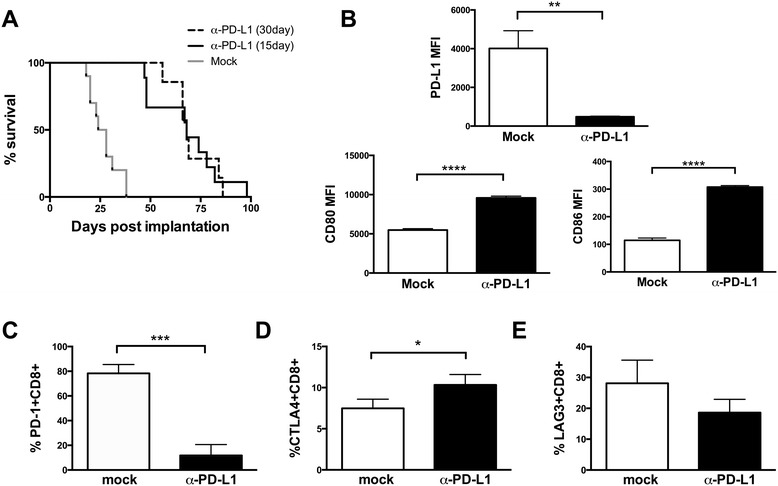
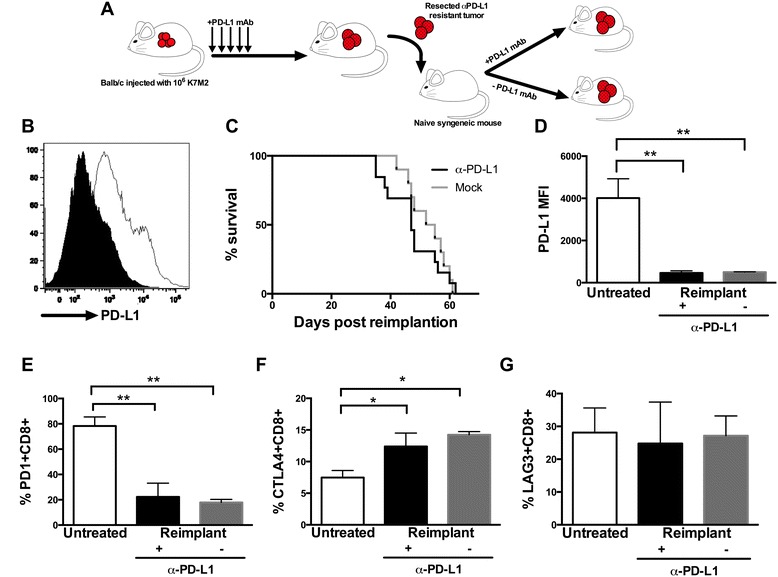
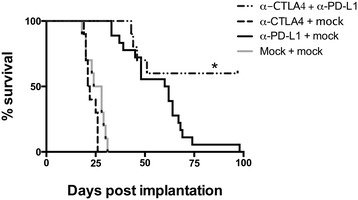
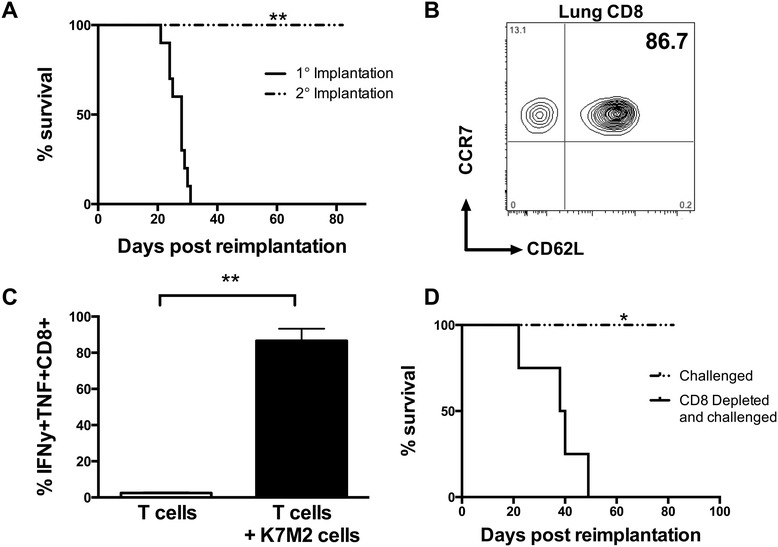
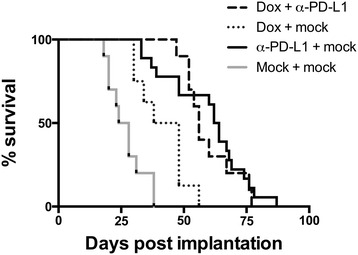
BACKGROUND: Osteosarcoma is one of the most common bone cancers in children. Most patients with metastatic osteosarcoma die of pulmonary disease and limited curative therapeutic options exist for such patients. We have previously shown that PD-1 limits the efficacy of CTL to mediate immune control of metastatic osteosarcoma in the K7M2 mouse model of pulmonary metastatic disease and that blockade of PD-1/PD-L1 interactions can partially improve survival outcomes by enhancing the function of osteosarcoma-specific CTL. However, PD-1/PD-L1 blockade-treated mice eventually succumb to disease due to selection of PD-L1 mAb-resistant tumor cells. We investigated the mechanism of tumor cell resistance after blockade, and additional combinational therapies to combat resistance. METHODS: We used an implantable model of metastatic osteosarcoma, and evaluated survival using a Log-rank test. Cellular analysis of the tumor was done post-mortem with flow cytometry staining, and evaluated using a T-test to compare treatment groups. RESULTS: We show here that T cells infiltrating PD-L1 antibody-resistant tumors upregulate additional inhibitory receptors, notably CTLA-4, which impair their ability to mediate tumor rejection. Based on these results we have tested combination immunotherapy with α-CTLA-4 and α-PD-L1 antibody blockade in the K7M2 mouse model of metastatic osteosarcoma and show that this results in complete control of tumors in a majority of mice as well as immunity to further tumor inoculation. CONCLUSIONS: Thus, combinational immunotherapy approaches to block additional inhibitory pathways in patients with metastatic osteosarcoma may provide new strategies to enhance tumor clearance and resistance to disease.
Overview
The claims and statistics of this paper haven’t been checked yet.
Free: it reads the open-access text and checks the first 5 claims that cite a source we can check. Create a free account to check every claim.
Integrity signals
Registry
Cites
Statistics
Figures
Verification
Claims the paper makes
The claims and statistics of this paper haven’t been checked yet.
Free: it reads the open-access text and checks the first 5 claims that cite a source we can check. Create a free account to check every claim.
Claims other papers make about this one
Each is checked against this paper’s own text: does it say what the citing paper says it does?
The source backs part of the claim, not all of it — or backs it for a different population, condition or comparison.
In the citing paper
“A study demonstrated that anti-PD-L1 treatment for metastatic osteosarcoma upregulate additional inhibitory receptors including CTLA-4, which contributed to the resistance of anti-PD-L1 therapy.”
From Advances on immunotherapy for osteosarcoma (2024) · cites this paper as [152]
Experimental — accuracy not yet measuredThe cited source says what the claim attributes to it.
In the citing paper
“a combination therapy of anti-PD-L1 with anti-CTLA-4 antibody completely controlled metastatic osteosarcoma in an osteosarcoma mouse model [152].”
From Advances on immunotherapy for osteosarcoma (2024) · cites this paper as [152]
Self-check
Percentages, sums and reported differences re-computed from the paper’s own numbers.
The self-check needs the paper’s full text.
Citations
Cites
PD-1 and PD-L1 Immune Checkpoint Blockade to Treat Breast Cancer
Hartkopf, A. D., Taran, F.-A., Wallwiener, M., Walter, C. B., Krämer, B., Grischke, E.-M., & Brucker, S. Y. (2016) · Breast Care · doi:10.1159/000453569 · Cited by 30,845
Adverse Renal Effects of Immune Checkpoint Inhibitors: A Narrative Review
Wanchoo, R., Karam, S., Uppal, N. N., Barta, V. S., Deray, G., Devoe, C., Launay-Vacher, V., Jhaveri, K. D., & on behalf of Cancer and Kidney International Network Workgroup on Immune Checkpoint Inhibitors (2017) · American Journal of Nephrology · doi:10.1159/000455014 · Cited by 15,256
Improved Survival with Ipilimumab in Patients with Metastatic Melanoma
Hodi, F. S., O'Day, S. J., McDermott, D. F., Weber, R. W., Sosman, J. A., Haanen, J. B., Gonzalez, R., Robert, C., Schadendorf, D., Hassel, J. C., et al. (2010) · New England Journal of Medicine · doi:10.1056/nejmoa1003466 · Cited by 15,155 · cited 1×
“Alternative immune checkpoint controls (CTLA-4, PD-1, LAG-3, TIM-3) on T cells provide tumors with several options for avoiding tumorreactive immune responses [31-36,28].”
BackgroundSafety, activity, and immune correlates of anti–PD-1 antibody in cancer
Topalian, S. L., Hodi, F. S., Brahmer, J. R., Gettinger, S. N., Smith, D. C., McDermott, D. F., Powderly, J. D., Carvajal, R. D., Sosman, J. A., Atkins, M. B., et al. (2012) · New England Journal of Medicine · doi:10.1056/nejmoa1200690 · Cited by 12,628 · cited 1×
“Alternative immune checkpoint controls (CTLA-4, PD-1, LAG-3, TIM-3) on T cells provide tumors with several options for avoiding tumorreactive immune responses [31-36,28].”
BackgroundTumor-associated B7-H1 promotes T-cell apoptosis: A potential mechanism of immune evasion
Dong, H., Strome, S. E., Salomao, D. R., Tamura, H., Hirano, F., Flies, D. B., Roche, P. C., Lu, J., Zhu, G., Tamada, K., et al. (2002) · Nature Medicine · doi:10.1038/nm730 · Cited by 5,025
Nivolumab plus Ipilimumab in Advanced Melanoma
Wolchok, J. D., Kluger, H., Callahan, M. K., Postow, M. A., Rizvi, N. A., Lesokhin, A. M., Segal, N. H., Ariyan, C. E., Gordon, R.-A., Reed, K., et al. (2013) · New England Journal of Medicine · doi:10.1056/nejmoa1302369 · Cited by 4,230 · cited 1×
“In humans, ipilimumab (α-CTLA-4) and nivolumab (αPD-1) mAb combinational blockade has shown promise in clinical trials against advanced melanoma with 40-50% of patients achieving objective responses and a reduction in tumor burden [10].”
BackgroundIwai, Y., Ishida, M., Tanaka, Y., Okazaki, T., Honjo, T., & Minato, N. (2002) · Proceedings of the National Academy of Sciences · doi:10.1073/pnas.192461099 · Cited by 3,203 · cited 1×
“Alternative immune checkpoint controls (CTLA-4, PD-1, LAG-3, TIM-3) on T cells provide tumors with several options for avoiding tumorreactive immune responses [31-36,28].”
BackgroundBrahmer, J. R., Drake, C. G., Wollner, I., Powderly, J. D., Picus, J., Sharfman, W. H., Stankevich, E., Pons, A., Salay, T. M., McMiller, T. L., et al. (2010) · Journal of Clinical Oncology · doi:10.1200/jco.2009.26.7609 · Cited by 2,961 · cited 1×
“Alternative immune checkpoint controls (CTLA-4, PD-1, LAG-3, TIM-3) on T cells provide tumors with several options for avoiding tumorreactive immune responses [31-36,28].”
BackgroundIFNγ and lymphocytes prevent primary tumour development and shape tumour immunogenicity
Shankaran, V., Ikeda, H., Bruce, A. T., White, J. M., Swanson, P. E., Old, L. J., & Schreiber, R. D. (2001) · Nature · doi:10.1038/35074122 · Cited by 2,896 · cited 1×
“Accumulating evidence suggests that although the immune system identifies and eliminates pre-cancerous and cancerous cells, tumors still develop in immune competent individuals due to ineffective elimination, resulting in an equilibrium phase of tumor development [22-25].”
BackgroundCTLA-4 can function as a negative regulator of T cell activation
Walunas, T. L., Lenschow, D. J., Bakker, C. Y., Linsley, P. S., Freeman, G. J., Green, J. M., Thompson, C. B., & Bluestone, J. A. (1994) · Immunity · doi:10.1016/1074-7613(94)90071-x · Cited by 2,222 · cited 1×
“Supernatant from UC10-4F10-11 hybridoma cells [43]”
Cited by
Items 101–200 of 206
Neoadjuvant Chemotherapy for Adults with Osteogenic Sarcoma
Robinson, M. J., & Davis, E. J. (2024) · Current Treatment Options in Oncology · doi:10.1007/s11864-024-01269-2 · Cited by 32
“Results from a study conducted by Lussier et al. found success (50% control of tumor spread) when utilizing this combined approach for metastatic osteosarcoma in murine models [38, 39].”
BackgroundLangenau, D. M., Sweet-Cordero, A., Wechsler‐Reya, R. J., & Dyer, M. A. (2015) · Cancer Research · doi:10.1158/0008-5472.can-15-1308 · Cited by 28
PD-1 and PD-L1 Expression in Osteosarcoma: Which Specimen to Evaluate?
Chen, S. D., Guenther, L. M., Aronhalt, A., Cardillo, L., Janeway, K. A., & Church, A. J. (2019) · Journal of Pediatric Hematology/Oncology · doi:10.1097/mph.0000000000001685 · Cited by 24
Exosomal Long Non-Coding RNA ANCR Mediates Drug Resistance in Osteosarcoma
Hu, X., Wen, Y., Tan, L., Wang, J., Tang, F., Wang, Y., Zheng, C., Zhang, Y., Gong, T., & Min, L. (2022) · Frontiers in Oncology · doi:10.3389/fonc.2021.735254 · Cited by 24
Cancer combination therapies by silencing of CTLA‐4, PD‐L1, and TIM3 in osteosarcoma
Sorkhabi, A. D., Sarkesh, A., Fotouhi, A., Saeedi, H., & Maleki, L. A. (2022) · IUBMB Life · doi:10.1002/iub.2655 · Cited by 24
“Investigations on the K7M2 mouse model of metastatic OS found that dual α-CTLA-4 and α-PD-L1 antibody blockade yielded complete tumor control and long-term disease-free survival of 60%, but treatment with α-CTLA-4 or α-PD-L1 antibody alone had no survival benefit.(36) In line with these findings, a randomized phase II…”
ResultHennessy, M., Wahba, A., Felix, K., Cabrera, M., Segura, M. G., Kundra, V., Ravoori, M. K., Stewart, J., Kleinerman, E. S., Jensen, V. B., et al. (2020) · International Journal of Cancer · doi:10.1002/ijc.33382 · Cited by 22
“In preclinical murine models of osteosarcoma, when used alone or in combination with other therapies, antibodies against CTLA-4 or PD-1 have shown benefit by upregulating the antitumor activity of cytotoxic T cells.(11-13) In a xenograft osteosarcoma mouse model, anti-PD-1 therapy resulted in regression of pulmonary m…”
BackgroundBelgiovine, C., Mebelli, K., Raffaele, A., Cicco, M. D., Rotella, J., Pedrazzoli, P., Zecca, M., Riccipetitoni, G., & Comoli, P. (2024) · International Journal of Molecular Sciences · doi:10.3390/ijms25063225 · Cited by 25
“Additionally, 50% of treated mice experienced complete protection from metastasis and T cell memory protection against future tumor inoculation following PD-1/CTLA-4 signaling inhibition with combined therapy [159].”
BackgroundMartins‐Neves, S. R., Sampaio-Ribeiro, G., & Gomes, C. M. F. (2022) · International Journal of Molecular Sciences · doi:10.3390/ijms231911416 · Cited by 22
Advances in the Management of Pediatric Sarcomas
Tejada, F. N. H., Zamudio, A. G., Marques-Piubelli, M. L., Cuglievan, B., & Harrison, D. J. (2020) · Current Oncology Reports · doi:10.1007/s11912-020-00995-8 · Cited by 30
Progress in the application of hydrogels in immunotherapy of gastrointestinal tumors
Zheng, H., Li, M., Wu, L., Liu, W., Liu, Y., Gao, J., & Lu, Z. (2023) · Drug Delivery · doi:10.1080/10717544.2022.2161670 · Cited by 23
“T lymphocytes of the immune system can be weakened in the detection of cancer cells by malignant tumor cells through the PD-1/PD-L1 pathway and other pathways and elude immunosurveillance, thus achieving immune escape (Lussier et al., 2015; Wang et al., 2017).”
BackgroundTranslational cell biology of highly malignant osteosarcoma
Roessner, A., Lohmann, C. H., & Jechorek, D. (2021) · Pathology International · doi:10.1111/pin.13080 · Cited by 23
Chen, C., Zhang, H., Yu, Y., Huang, Q., Wang, W., Niu, J., Lou, J., Ren, T., Huang, Y., & Guo, W. (2021) · Aging · doi:10.18632/aging.203196 · Cited by 17
“Although numerous novel anticarcinogens have been clinically applied, including immune checkpoint inhibitors and molecular-targeting drugs, the prognosis for recurrent and metastatic OS has remained stagnant over the last decades owing to the poor response rate to these drugs [3].”
BackgroundImmune checkpoint and inflammation as therapeutic targets in pancreatic carcinoma
Kimbara, S., & Kondo, S. (2016) · World Journal of Gastroenterology · doi:10.3748/wjg.v22.i33.7440 · Cited by 18
Early Lymphocyte Recovery and Outcome in Osteosarcoma
Lee, L. H., Lin, F., Pope, J., & Wagner, L. M. (2016) · Journal of Pediatric Hematology/Oncology · doi:10.1097/mph.0000000000000717 · Cited by 18
“Median age at diagnosis (range) (y) 14 (6-26) Age<18 y 41 Female:male 23:30 Primary tumor location (n [%]) Axial 4 (8)”
BackgroundXIAO, J., Xiao, H. P., CAI, Y., LIAO, J., LIU, J., YAO, L., & LI, S. (2023) · Oncology Research Featuring Preclinical and Clinical Cancer Therapeutics · doi:10.32604/or.2023.030767 · Cited by 18
PD-1/PD-L1 blockade in paediatric cancers: What does the future hold?
Moreno-Vicente, J., Beers, S. A., & Gray, J. C. (2019) · Cancer Letters · doi:10.1016/j.canlet.2019.04.025 · Cited by 16
Liu, P., Xiao, Q., Zhou, B. R., Dai, Z., & Kang, Y. (2019) · World Neurosurgery · doi:10.1016/j.wneu.2019.05.121 · Cited by 18
Nuytemans, L., Sys, G., Creytens, D., & Lapeire, L. (2021) · Acta Clinica Belgica · doi:10.1080/17843286.2019.1683129 · Cited by 16
“Eventually, tumors in thesemousemodels became resistant to anti-PD-1 by upregulation of inhibitory receptors on tumor-infiltrating lymphocytes, including CTLA-4 [5].”
BackgroundEvaluation of tumor-infiltrating lymphocytes in osteosarcomas of the jaws: a multicenter study
Alves, P. M., de Arruda, J. A. A., Arantes, D. A. C., Costa, S. F. D. S., de Souza, L. L., Pontes, H. A. R., Fonseca, F. P., Mesquita, R. A., Nonaka, C. F. W., Mendonça, E. F., et al. (2018) · Archiv für Pathologische Anatomie und Physiologie und für Klinische Medicin · doi:10.1007/s00428-018-2499-6 · Cited by 20
Pratt, H. G., Justin, E. M., & Lindsey, B. A. (2020) · Advances in experimental medicine and biology · doi:10.1007/978-3-030-43085-6_6 · Cited by 16
In vivo and in vitro inhibition of osteosarcoma growth by the pan Bcl-2 inhibitor AT-101
Masuelli, L., Benvenuto, M., Izzi, V., Zago, E., Mattera, R., Cerbelli, B., Potenza, V., Fazi, S., Ciuffa, S., Tresoldi, I., et al. (2019) · Investigational New Drugs · doi:10.1007/s10637-019-00827-y · Cited by 15
LRP8 activates STAT3 to induce PD-L1 expression in osteosarcoma
Zheng, S., Wei, Y., Jiang, Y., & Hao, Y. (2020) · Tumori Journal · doi:10.1177/0300891620952872 · Cited by 15
Khalili‐Tanha, G., Fiuji, H., Gharib, M., Moghbeli, M., Khalili‐Tanha, N., Rahmani, F., Shakour, N., Maftooh, M., Hassanian, S. M., Asgharzadeh, F., et al. (2023) · Life Sciences · doi:10.1016/j.lfs.2023.121865 · Cited by 17
RetractedSERPINH1 enhances the malignancy of osteosarcoma via PI3K-Akt signaling pathway
Xia, K., Huang, X., Zhao, Y., Yang, I., & Guo, W. (2023) · Translational Oncology · doi:10.1016/j.tranon.2023.101802 · Cited by 15
“However, due to limitations in understanding the specific molecular mechanisms of osteosarcoma development and progression, the long-term prognosis of osteosarcoma has remained poor in recent decades, especially for patients with metastasis or relapse, with 5-year survival rates of 20% [4].”
BackgroundLi, H., He, Y., Peng, H., & Liu, P. (2017) · Molecular Medicine Reports · doi:10.3892/mmr.2017.6245 · Cited by 15
“Despite intensive investigation, effective therapies for osteosarcoma have remained unchanged for the last 30 years, with a five‐year survival rate of ≤20% (3).”
Nasab, N. T., Jalili‐Nik, M., Afshari, A. R., Farimani, A. R., & Soukhtanloo, M. (2023) · Journal of Biochemical and Molecular Toxicology · doi:10.1002/jbt.23486 · Cited by 15
Role of Immunotherapy in Sarcomas
Dalal, S., Shan, K. S., Dar, N. N. T., Hussein, A. M., & Ergle, A. (2024) · International Journal of Molecular Sciences · doi:10.3390/ijms25021266 · Cited by 16
“Lussier et al. showed that CTLA-4 expression was upregulated in T-cells infiltrating PD-L1 antibody-resistant tumors in mice with metastatic OS, suggesting a potential synergic effect of an anti-CTLA-4 and PD-L1 blockade [37].”
BackgroundThe Role of Ubiquitination in Osteosarcoma Development and Therapies
Mao, P., Feng, Z., Liu, Y., Zhang, K., Zhao, G., Lei, Z., Di, T., & Zhang, H. (2024) · Biomolecules · doi:10.3390/biom14070791 · Cited by 14
“However, the prognosis for metastatic and recurrent osteosarcoma remains unsatisfactory [7].”
BackgroundSterz, U., Grube, M., Herr, W., Menhart, K., Wendl, C., & Vogelhuber, M. (2021) · Frontiers in Oncology · doi:10.3389/fonc.2021.684733 · Cited by 12
“Immunotherapy is currently not established in osteosarcoma and efficacy of dual checkpoint inhibition in osteosarcoma has only been shown in mouse model so far (21) and has been observed in some patients with mixed types of sarcoma (6).”
BackgroundSu, W., Li, Y., Yang, G., Zhao, Y., Zhou, X., Liu, G., Huang, X., Sohail, M., Hussaın, I., Liu, Q., et al. (2025) · International Journal of Nanomedicine · doi:10.2147/ijn.s549587 · Cited by 19
Chimeric antigen receptor T cells in the treatment of osteosarcoma (Review)
Yu, T., Jiang, W., Wang, Y., Zhou, Y. Y., Jiao, J., & Wu, M. (2024) · International Journal of Oncology · doi:10.3892/ijo.2024.5628 · Cited by 14
“Administration of anti‑CTLA‑4 anti‑ bodies has been observed to augment the antitumor response of cytotoxic T cells (110,111).”
BackgroundImmunotherapeutic Strategies in the Management of Osteosarcoma
Supra, R., & Agrawal, D. K. (2023) · Journal of Orthopaedics and Sports Medicine · doi:10.26502/josm.511500076 · Cited by 12
“Moreover, combination therapy for OS has shown promising results using anti-CTLA-4 and anti-PD L1 antibodies which showed improved overall survival in a murine model with OS, whereas no benefits were noted when treated with anti-CTLA-4 antibody alone [47].”
BackgroundChristie, J. D., Appel, N., Zhang, L., Lowe, K. M., Kilbourne, J. A., Daggett-Vondras, J., Elliott, N. M., Lucas, A. R., Blattman, J. N., Rahman, M. M., et al. (2022) · Cancers · doi:10.3390/cancers14020337 · Cited by 14
“Previous studies using the K7M2 lung metastatic osteosarcoma model have shown that immune checkpoint inhibitors anti-PD-L1 and anti-CTLA-4 are efficacious when treatment is initiated very early after tumor seeding [11,12].”
Self-citationShimizu, T., Fuchimoto, Y., Okita, H., Fukuda, K., Kitagawa, Y., Ueno, S., & Kuroda, T. (2018) · Journal of Pediatric Surgery · doi:10.1016/j.jpedsurg.2018.08.023 · Cited by 11
Targeted therapies and checkpoint inhibitors in sarcoma
Vasella, M., Gousopoulos, E., Guidi, M., Storti, G., Song, S. Y., Grieb, G., Pauli, C., Lindenblatt, N., Giovanoli, P., & Kim, B. S. (2021) · QJM · doi:10.1093/qjmed/hcab014 · Cited by 10
Targeted immunotherapy for pediatric solid tumors
Kopp, L. M., & Katsanis, E. (2015) · OncoImmunology · doi:10.1080/2162402x.2015.1087637 · Cited by 10
“metastatic osteosarcoma combination of PD1 antibody and CTLA4 inhibitor lead to complete control of tumors.(55) PD1 ONCOIMMUNOLOGY e1087637-3”
BackgroundA Deep Dive Into the Newest Avenues of Immunotherapy for Pediatric Osteosarcoma: A Systematic Review
Suri, M., Soni, N., Okpaleke, N., Yadav, S., Shah, S., Iqbal, Z., Alharbi, M. G. T., Kalra, H. S., & Hamid, P. (2021) · Cureus · doi:10.7759/cureus.18349 · Cited by 12
Yin, C., Chokkakula, S., Li, J., Li, W., Yang, W., Chong, S., Zhou, W., Wu, H., & Wang, C. (2024) · Heliyon · doi:10.1016/j.heliyon.2024.e27566 · Cited by 11
Osei-Hwedieh, D. O., Sedlacek, A. L., Hernandez, L. M., Agyekum-Yamoah, A., Iyer, S. G., Weiss, K. R., & Binder, R. J. (2023) · JCI Insight · doi:10.1172/jci.insight.170324 · Cited by 10
Sergi, C. M., Burnett, M., Jantuan, E., Hakoum, M., Beug, S. T., Leng, R. P., & Shen, F. (2025) · Biomedicines · doi:10.3390/biomedicines13030664 · Cited by 9
“Studies using the K7M2 mouse model of metastatic OS treated with a combination of CTLA-4 and a PD-1 ICI showed effective control in most individuals, as seen by total tumor suppression [113].”
Palmer, E. P., Cronise, K. E., Haines, L. A., Das, S., Offermann, A., Easton, C. P., & Regan, D. P. (2025) · Cancer Research Communications · doi:10.1158/2767-9764.crc-24-0371 · Cited by 9
Chen, H., Cai, H., Tang, L., Cegang, F., Zhao, H., Wang, B., & Jia, S. (2022) · Current Cancer Drug Targets · doi:10.2174/1568009622666221010105701 · Cited by 9
Xu, Y., Chen, P., Liu, D., Xu, Q., Meng, H., & Wang, X. (2023) · The Journal of Gene Medicine · doi:10.1002/jgm.3528 · Cited by 9
Zhang, J., Song, Y., Ahn, A.-R., Park, H. S., Park, S., Moon, Y. J., Kim, K. M., & Jang, K. Y. (2024) · Cells · doi:10.3390/cells13171444 · Cited by 8
“All authors have read and agreed to the published version of the manuscript.”
BackgroundA 10-year bibliometric analysis in the field of osteosarcoma treatment from 2014 to 2023
Shen, Y., Shao, X.-B., Chen, J., & Tang, X. (2025) · Discover Oncology · doi:10.1007/s12672-025-02007-2 · Cited by 7
“Lussier et al. demonstrated in an OS mouse model that the combination treatment with anti-PD-L1 and anti-CTLA-4 antibodies completely controlled metastatic OS [49].”
Li, D., Li, Y., Cang, J., Yan, X., Wu, F., Sun, X., & Zhang, W. (2025) · Frontiers in Pharmacology · doi:10.3389/fphar.2025.1584245 · Cited by 11
Zhang, X., Wen, Z., Wang, Q., Ren, L., & Zhao, S. (2023) · Frontiers in Immunology · doi:10.3389/fimmu.2023.1199869 · Cited by 9
Chen, W., Pandey, M. S., Sun, H. B., Rolong, A., Cao, M., Liu, D., Wang, J., Zeng, L., Hunter, A. K., & Lin, S. (2021) · mAbs · doi:10.1080/19420862.2021.1914359 · Cited by 7
“osteosarcoma in K7M2 model, while the efficacy of monotherapy using antibodies that block either CTLA-4 or PD-1 alone is limited.(22,23) In clinical practice, combination treatment with anti-CTLA-4 and anti-PD-1 antibodies has resulted in a higher response rate for some tumors, although treatment-related”
BackgroundManhas, K. R., Marshall, P. A., Wagner, C. E., Jurutka, P. W., Mancenido, M. V., Debray, H. Z., & Blattman, J. N. (2022) · Frontiers in Immunology · doi:10.3389/fimmu.2022.746484 · Cited by 9
“ICB therapy using a combination of PD-L1 and CTLA-4 blocking antibodies has been shown to reverse tumor-specific effector T cell exhaustion and increase the number of tumor-infiltrating lymphocytes (TILs) present, resulting in improved anti-tumor immune responses (68, 72, 74).”
BackgroundSelf-citationAdvancements in research on the carbon dots nanomaterials in immune modulate and immunotherapy
He, F., Hong, Y., Li, Q., & Qu, S. (2024) · Chemical Engineering Journal · doi:10.1016/j.cej.2024.157991 · Cited by 7
Zou, Y., Kang, J., Zhu, S., Ren, X., Zheng, L., Niu, J., Qin, X., Li, H., Xiang, L., Jiang, W., et al. (2025) · Frontiers in Immunology · doi:10.3389/fimmu.2025.1651858 · Cited by 7
Wang, H., Zhu, T., Yang, K., Xu, C., Zhang, Z., Liu, G., & Ren, H. (2025) · Frontiers in Oncology · doi:10.3389/fonc.2025.1702219 · Cited by 12
Identification of Functional Immune Biomarkers in Breast Cancer Patients
Derakhshandeh, R., Zhu, Y., Li, J., Hester, D., Younis, R. H., Koka, R., Jones, L. P., Sun, W., Goloubeva, O. G., Tkaczuk, K. H. R., et al. (2024) · International Journal of Molecular Sciences · doi:10.3390/ijms252212309 · Cited by 6
“The results from several recent clinical trials have highlighted the potential for combination therapies based on the patient’s tumor gene expression pattern [12–14].”
Cancer immunotherapy by targeting immune checkpoint receptors
Isakov, N. (2018) · World Journal of Immunology · doi:10.5411/wji.v8.i1.1 · Cited by 6
Predictive value of tumor-infiltrating lymphocytes detected by flow cytometry in colorectal cancer
Hu, Y., Zhao, J., Shen, Y., Zhang, C., Xia, Q., Zhang, G., Wang, B., Wei, B., Yu, R., Ma, J., et al. (2022) · International Immunopharmacology · doi:10.1016/j.intimp.2022.109286 · Cited by 6
NFIL3 Acts as a Nuclear Factor to Increase Osteosarcoma Progression
Xu, J., Xu, G., Zhang, T., Chen, T., Zhao, W., & Wang, G. (2019) · BioMed Research International · doi:10.1155/2019/4068521 · Cited by 7
Chew, H. Y., Chan, V., Simpson, F., & Dolcetti, R. (2020) · Cancers · doi:10.3390/cancers12113392 · Cited by 6
Role of tumor-derived exosomes and immune cells in osteosarcoma progression and targeted therapy
Wang, J., & Shi, K. (2025) · Frontiers in Immunology · doi:10.3389/fimmu.2025.1658358 · Cited by 9
“LUSSIER et al. (111) that anti-PD-L1 antibodies reduced PD-1 expression on CD8 + T cells while increasing CTLA-4 in tumor-in fi ltrating lymphocytes (TILs), suggesting complementary roles in suppressing CTL responses.”
Tulsian, K., Thakker, D., & Vyas, V. K. (2025) · International Journal of Biological Macromolecules · doi:10.1016/j.ijbiomac.2025.141364 · Cited by 6
Endogenous retrovirus envelope as a tumor-associated immunotherapeutic target in murine osteosarcoma
Wedekind, M. F., Miller, K. E., Chen, C., Wang, P.-Y., Hutzen, B. J., Currier, M. A., Nartker, B. A., Roberts, R. D., Boon, L., Conner, J., et al. (2021) · iScience · doi:10.1016/j.isci.2021.102759 · Cited by 6
Liu, J., Yao, Q., Peng, Y., Dong, Z., Tang, L., Su, X., Liu, L., Chen, C., Ramalingam, M., & Cheng, L. (2022) · Frontiers in Bioengineering and Biotechnology · doi:10.3389/fbioe.2022.921107 · Cited by 5
“Nowadays, the best treatment options for osteosarcoma include chemotherapy, surgery, radiotherapy, and immunotherapy (Lussier et al., 2015; Yu et al., 2019; Hız et al., 2021); however, the optimal scheme has not yet been defined.”
BackgroundHu, H., Zhao, J., Yuan, J., & Zhang, M. (2023) · BMC Cancer · doi:10.1186/s12885-023-10752-2 · Cited by 4
Spinal sarcomas and immunity: An undervalued relationship
Moussalem, C. K., Massaad, E., Baassiri, W., Anwar, M. A., Kobeissy, F. H., Eid, A. H., Darwiche, N., & Omeis, I. A. (2019) · Seminars in Cancer Biology · doi:10.1016/j.semcancer.2019.06.009 · Cited by 5
Microwave-triggered organic sensitizer for synergistic dynamic/thermal therapy of osteosarcoma
He, Y., Shu, M., Zhang, G., Xu, Z., Lu, T., Chu, X., Li, M., Ji, X., Zhou, J., Zhou, Q., et al. (2025) · Biomaterials Science · doi:10.1039/d5bm00895f · Cited by 4
Xing, C., Hu, W., & Zhao, L. (2025) · Journal of Translational Medicine · doi:10.1186/s12967-025-06936-y · Cited by 7
“[3–6].”
Zhang, X., Fan, Y., Shen, Z., Chen, Z., & You, W. (2024) · Environmental Toxicology · doi:10.1002/tox.24208 · Cited by 3
Sunbul, F. S., Almuqbil, R. M., Zhang, H., Alhudaithi, S. S., Fernandez, M. E., Aldaqqa, R. R., Garcia, V. A., Robila, V., Halquist, M. S., Gordon, S. W., et al. (2025) · International Journal of Pharmaceutics · doi:10.1016/j.ijpharm.2025.125372 · Cited by 4
Chen, H., Wang, W., Chang, S.-C., Huang, X., & Wang, N. (2024) · Discover Oncology · doi:10.1007/s12672-024-01301-9 · Cited by 5
“However, with the updated management strategies, such as several anti-carcinogens clinically application, the survival rate has not obviously improved for patients who has metastases or not over the last few decades [10].”
Song, M., Zhang, F., & Lin, L. (2019) · Experimental and Therapeutic Medicine · doi:10.3892/etm.2019.7681 · Cited by 3
“It is characterized by the proliferation of tumor cells producing osteoid or immature bone matrix (1,2).”
BackgroundTherapeutic Potential of Ex Vivo Expanded γδ T Cells against Osteosarcoma Cells
Ko, Y., Jeong, Y. H., & Lee, J. A. (2022) · Cells · doi:10.3390/cells11142164 · Cited by 3
Genetically Modified T-cell Therapy for the Treatment of Osteosarcoma: An Update
DeRenzo, C. C., & Gottschalk, S. M. (2016) · Journal of Clinical & Cellular Immunology · doi:10.4172/2155-9899.1000417 · Cited by 3
“Thus disrupting the PD-1 gene locus in CAR T cells has the potential to render T-cells resistant to osteosarcoma induced immunosuppression, and enhance antiosteosarcoma activity.”
BackgroundInfluentialThe Updated Status and Future Direction of Immunotherapy Targeting B7-H1/PD-1 in Osteosarcoma
Fan, M., Qi, L., Zhang, Q., & Wang, L. (2021) · Cancer Management and Research · doi:10.2147/cmar.s285560 · Cited by 3
“effects have also been found when different checkpoint inhibitors were combined.(75) Lussier and his group found”
BackgroundSorteberg, A. L., Ek, L., Lilienthal, I., & Herold, N. (2023) · Springer eBooks · doi:10.1007/978-3-030-80962-1_236-1 · Cited by 2
Abdo, E.-L., Ajib, I., Mounzer, J. E., Husseini, M., Kalaoun, G., Matta, T.-M., Mosleh, R., Nasr, F., Richani, N., Khalil, A., et al. (2025) · Inflammation Research · doi:10.1007/s00011-025-02008-5 · Cited by 3
“Interestingly, combination of Ipilimumab with other immunotherapies such as anti-PD1/PDL1 helped eradicating tumors [156] in advanced melanoma [157, 158], metastatic osteosarcoma [159], colorectal cancer [160], recurrent glioblastoma [161] and renal cell carcinoma [162].”
Guo, X., Zhu, X., Tian, X., Dai, Y. E., Tsedenbal, B., Ibrahim, M. A. A., Han, Y., & Jl, L. (2025) · Journal of Biochemical and Molecular Toxicology · doi:10.1002/jbt.70464 · Cited by 2
Mohanty, R. P., Pan, Y., Lewis, M. M., Soto, M. R., Maier, E. Y., Alzhrani, R. F., & Ghosh, D. (2025) · Bioconjugate Chemistry · doi:10.1021/acs.bioconjchem.5c00257 · Cited by 2
Sorteberg, A. L., Ek, L., Lilienthal, I., & Herold, N. (2025) · Springer eBooks · doi:10.1007/978-3-032-00769-8_236 · Cited by 1
Paediatric therapeutic development workshop on osteosarcoma
Baxter, J. S., Montiel-Equihua, C., Molenaar, J. J., Berlanga, P., Bishop, M. W., Blanc, P., Campbell-Hewson, Q., Casanova, M., Cortés‐Ciriano, I., Crompton, B. D., et al. (2026) · British Journal of Cancer · doi:10.1038/s41416-026-03572-1 · Cited by 1
Diagnosis and Progress in Biological Treatment of Osteosarcoma
谢, 欣. (2019) · Hans Journal of Biomedicine · doi:10.12677/hjbm.2019.93017 · Cited by 1
Osteoidbildende Knochentumoren: Morphologie und aktuelle translationale Zellbiologie
Roessner, A., Schoeder, V., Smolle, M. A., & Haybäck, J. (2020) · Der Pathologe · doi:10.1007/s00292-020-00763-2 · Cited by 2
Immunotherapy for Pediatric Solid Tumors
Nicholls, L. A., & Kopp, L. M. (2020) · Springer eBooks · doi:10.1007/978-3-030-57949-4_2 · Cited by 1
OMICS Approach for Identifying Predictive Biomarkers in Osteosarcoma
Kondo, T. (2017) · InTech eBooks · doi:10.5772/67449
“reported that combination immunotherapy with alpha-CTLA-4 and alpha-PD-L1 antibody might be effective for treating metastatic osteosarcoma [43].”
BackgroundImmune Checkpoint Blockade: Subjugation of the Masses
Lussier, D. M., Appel, N., Johnson, J. L., & Blattman, J. N. (2017) · InTech eBooks · doi:10.5772/67687
“In an implantable mouse model of metastatic osteosarcoma, the authors of this review discovered resistance to α-PD-L1 blockade following treatment due to increases in co-inhibitory receptor expression on TILs, which dual CTLA-4/PD-1 blockade treatment could prevent [28 ].”
BackgroundInfluentialSelf-citationMonoclonal Antibodies Targeting the Immune System
Minard‐Colin, V. (2017) · Springer eBooks · doi:10.1007/978-3-319-43486-5_7
Basic and Translational Research in Osteosarcoma: A Year in Review
Chang, L., Meyers, C. A., Asatrian, G., Shen, J., Scott, M., & James, A. W. (2016) · SM Journal of Orthopedics · doi:10.36876/smjo.1031
“found that combination α-CTLA-4 and α-PD-L1 mAb treatment resulted in a synergistic effect with complete control of tumors in 60% of mice, leading to long-term survival, as compared to 0% with α-PD-L1 mAb treatment alone [7].”
MethodAn, T., Li, Z., Ni, C., Zhou, S., Yang, C., Huang, X., Li, P., & Shen, J. (2020) · Experimental and Therapeutic Medicine · doi:10.3892/etm.2020.8489 · Cited by 1
“As a genetically unstable and highly malignant mesenchymal bone tumor, osteosarcoma is characterized by structural chromosomal alterations (18-20).”
BackgroundMarkel, J. (2020) · The Research Repository @ WVU (West Virginia University) · doi:10.33915/etd.7770 · Cited by 1
Gaspar, N. (2020) · Faculty Opinions – Post-Publication Peer Review of the Biomedical Literature · doi:10.3410/f.736286746.793579340
Eisenlohr, L. C., & Cosma, G. L. (2018) · Faculty Opinions – Post-Publication Peer Review of the Biomedical Literature · doi:10.3410/f.726981821.793545053
Gaspar, N. (2020) · Faculty Opinions – Post-Publication Peer Review of the Biomedical Literature · doi:10.3410/f.726988417.793579334
Expression of CXCL12-CXCR4 in osteosarcoma and its correlation with angiogenesis
Han, L., Shen, Y., Zhao, W., Sun, B., Zhang, X., Cui, K., Zhou, L., & Li, S. (2017) · Oncology and Translational Medicine · doi:10.1007/s10330-016-0211-1
“Metastasis is a complex, non-randomized, and multistep process that involves critical steps such as tumor cell motility, adhesion, invasion, growth, angiogenesis, metastasis-specific organ homing [1], and escape from the immune system [2].”
BackgroundMohanty, R. P., Pan, Y., Lewis, M. M., Soto, M. R., Maier, E. Y., Alzhrani, R. F., & Ghosh, D. (2023) · bioRxiv (Cold Spring Harbor Laboratory) · doi:10.1101/2023.12.22.573144
Xie, W., Ma, T., Wu, H., He, M., Wang, X., & Cui, Y. (2024) · Indian Journal of Pharmaceutical Sciences · doi:10.36468/pharmaceutical-sciences.spl.880
Ma, W., Miao, L., Liu, S., Zeng, Z., Li, J., Wang, F., Shen, N., Yang, Z., Gao, L., & Wang, C. (2024) · Research Square · doi:10.21203/rs.3.rs-5612703/v1
Banu, A., Langdon, S. A., Harun, T., Laouafa, A., Jones, A., Sunassee, K., Kong, A. H., & Terry, S. Y. A. (2025) · SSRN Electronic Journal · doi:10.2139/ssrn.5258565
Banu, A., Langdon, S., Harun, T., Laouafa, A., Jones, A., Sunassee, K., Kong, A. H., & Terry, S. Y. A. (2025) · Clinical and Translational Radiation Oncology · doi:10.1016/j.ctro.2025.101054 · Cited by 1
“Most recently, PD-1 inhibitors pembrolizumab and nivolumab were approved by the U.S. Food and Drug Administration for treating recurrent and metastatic HNSCC in a first or second line setting after progression post platinum therapy, respectively [16].”
de Oliveira, M. C., Fortunato, G. M., da Silva, P. R., Pacheco, B. L. B., da Silva, M. R., & de Oliveira, K. B. (2025) · Discover Oncology · doi:10.1007/s12672-025-04179-3 · Cited by 2
“These benefits also apply to other malignant diseases such as metastatic osteosarcoma [101], colorectal cancer [102], recurrent glioblastoma [103] and renal cell carcinoma [104].”
Xi, D., Teng, Y., Wang, S., Zhang, M., Liu, G., Han, B., Zhang, Y. T., Tian, X., Cheng, C., Wang, S., et al. (2026) · BMC Cancer · doi:10.1186/s12885-026-15746-4 · Cited by 1
“Cells in the TME can secrete growth factors that promote tumor growth, while tumors can also produce inhibitory ligands that enable them to evade the immune system [70].”
Zhang, Z., Liu, L., Liu, J., Chai, Y., & Zhang, X. (2026) · Applied Biochemistry and Biotechnology · doi:10.1007/s12010-026-05620-1
Simard, F. A. (2016) · theses.fr (ABES) · doi:10.70675/69d89730z693dz4330za234z5f8e56bde8d7 · Cited by 1
“The chondrosarcoma subtypes for which the highest benefits of chemotherapy can be observed are mesenchymal and dedifferentiated chondrosarcoma (24, 25).”
Metadata
- Authors
- Lussier, D. M., Johnson, J. L., Hingorani, P., & Blattman, J. N.
- Affiliations
- Arizona State University (US)
- Phoenix Children's Hospital (US)
- Corresponding author
- Blattman, Joseph N
- Venue
- Journal for ImmunoTherapy of Cancer
- Publisher
- BMJ
- Published
- 2015-05-19
- Volume
- 3
- Issue
- 1
- Pages
- 21-21
- ISSN
- 2051-1426 (ISSN-L)
- PMC
- PMC4437699
- OpenAlex
- W1543079591
- Semantic Scholar
- 26bb66eb72941dcfe89fc7943d90e10b7f2174d3
- Cited by
- 206
- References
- 49
- Citations by year
- 2026: 8 · 2025: 21 · 2024: 16 · 2023: 18 · 2022: 14 · 2021: 13 · 2020: 24 · 2019: 28 · 2018: 17 · 2017: 21 · 2016: 21 · 2015: 5
- FWCI
- 9.32
- Type
- journal article
- Language
- en
- Open access
- gold
- doi.org
- Locations
- Journal for ImmunoTherapy of Cancer (publishedVersion, cc-by)
- PubMed Central (publishedVersion, cc-by)
- PubMed (publishedVersion)
- Arizona State University Library Digital Repository (Arizona State University) (submittedVersion)
- Funders
- Hyundai Hope On Wheels (0000-0003-2504-9663)
- Topics
- Health Sciences › Medicine › Oncology › Cancer Immunotherapy and Biomarkers
- Health Sciences › Medicine › Oncology › Sarcoma Diagnosis and Treatment
- Life Sciences › Immunology and Microbiology › Immunology › Immunotherapy and Immune Responses
- Keywords
- metastatic osteosarcoma, combination immunotherapy, CTLA-4 blockade, PD-L1 blockade, PD-1/PD-L1 pathway, immune evasion, lung metastasis, tumor-infiltrating T cells, cancer immunotherapy
About these checks
Registry, retraction, Cites and statistics results are computed, not judged, with one exception: a printed reference that no index lists is read once by a model before it counts as a citation error. Claims are extracted by a model and kept only when their quote appears verbatim in the text; each cited source is then checked, with a model’s help, for whether it says what the claim relies on. Those verdicts can be wrong — read the claim’s quote and the cited source before relying on one.
Statistics and arithmetic are recomputed, not judged.
Confidence bands are shown only for fields calibrated on our annotated test set. None is calibrated yet, so no band is shown.
What counts as a claim ›How we measure confidence ›How we check this ›
Are you an author, or do you see a problem with this page? Request a review
Data sources
Bibliographic data: Semantic Scholar, OpenAlex, Crossref.
Contains information from the Semantic Scholar Academic Graph Datasets, made available under the ODC Attribution License (ODC-BY 1.0).
Semantic Scholar’s data is described in: Kinney, R., et al. (2023). The Semantic Scholar Open Data Platform. arXiv:2301.10140.
