

Combination immunotherapy with α-CTLA-4 and α-PD-L1 antibody blockade prevents immune escape and leads to complete control of metastatic osteosarcoma
Open accessThe DOI matches its Crossref record; 49 of the 49 references it cites were found in a registry or an index.
Abstract
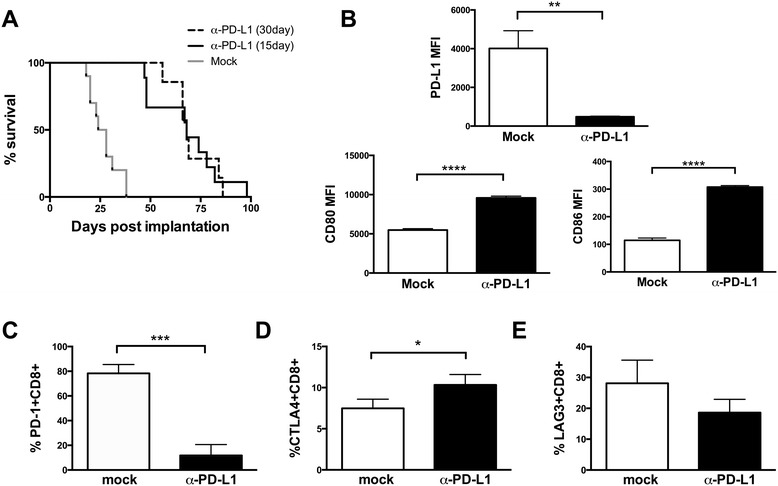
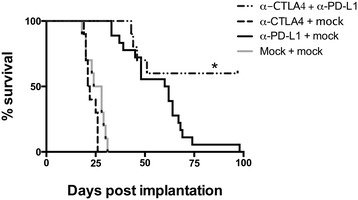
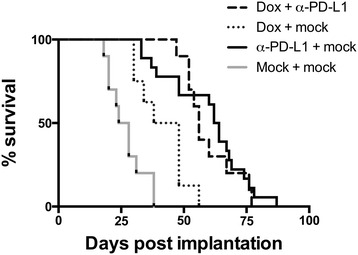
BACKGROUND: Osteosarcoma is one of the most common bone cancers in children. Most patients with metastatic osteosarcoma die of pulmonary disease and limited curative therapeutic options exist for such patients. We have previously shown that PD-1 limits the efficacy of CTL to mediate immune control of metastatic osteosarcoma in the K7M2 mouse model of pulmonary metastatic disease and that blockade of PD-1/PD-L1 interactions can partially improve survival outcomes by enhancing the function of osteosarcoma-specific CTL. However, PD-1/PD-L1 blockade-treated mice eventually succumb to disease due to selection of PD-L1 mAb-resistant tumor cells. We investigated the mechanism of tumor cell resistance after blockade, and additional combinational therapies to combat resistance. METHODS: We used an implantable model of metastatic osteosarcoma, and evaluated survival using a Log-rank test. Cellular analysis of the tumor was done post-mortem with flow cytometry staining, and evaluated using a T-test to compare treatment groups. RESULTS: We show here that T cells infiltrating PD-L1 antibody-resistant tumors upregulate additional inhibitory receptors, notably CTLA-4, which impair their ability to mediate tumor rejection. Based on these results we have tested combination immunotherapy with α-CTLA-4 and α-PD-L1 antibody blockade in the K7M2 mouse model of metastatic osteosarcoma and show that this results in complete control of tumors in a majority of mice as well as immunity to further tumor inoculation. CONCLUSIONS: Thus, combinational immunotherapy approaches to block additional inhibitory pathways in patients with metastatic osteosarcoma may provide new strategies to enhance tumor clearance and resistance to disease.
Overview
The claims and statistics of this paper haven’t been checked yet.
Free: it reads the open-access text and checks the first 5 claims that cite a source we can check. Create a free account to check every claim.
Integrity signals
Registry
Cites
Statistics
Figures
Verification
Claims the paper makes
The claims and statistics of this paper haven’t been checked yet.
Free: it reads the open-access text and checks the first 5 claims that cite a source we can check. Create a free account to check every claim.
Claims other papers make about this one
Each is checked against this paper’s own text: does it say what the citing paper says it does?
The source backs part of the claim, not all of it — or backs it for a different population, condition or comparison.
In the citing paper
“A study demonstrated that anti-PD-L1 treatment for metastatic osteosarcoma upregulate additional inhibitory receptors including CTLA-4, which contributed to the resistance of anti-PD-L1 therapy.”
From Advances on immunotherapy for osteosarcoma (2024) · cites this paper as [152]
Experimental — accuracy not yet measuredThe cited source says what the claim attributes to it.
In the citing paper
“a combination therapy of anti-PD-L1 with anti-CTLA-4 antibody completely controlled metastatic osteosarcoma in an osteosarcoma mouse model [152].”
From Advances on immunotherapy for osteosarcoma (2024) · cites this paper as [152]
Self-check
Percentages, sums and reported differences re-computed from the paper’s own numbers.
The self-check needs the paper’s full text.
Citations
Cites
PD-1 and PD-L1 Immune Checkpoint Blockade to Treat Breast Cancer
Hartkopf, A. D., Taran, F.-A., Wallwiener, M., Walter, C. B., Krämer, B., Grischke, E.-M., & Brucker, S. Y. (2016) · Breast Care · doi:10.1159/000453569 · Cited by 30,845
Adverse Renal Effects of Immune Checkpoint Inhibitors: A Narrative Review
Wanchoo, R., Karam, S., Uppal, N. N., Barta, V. S., Deray, G., Devoe, C., Launay-Vacher, V., Jhaveri, K. D., & on behalf of Cancer and Kidney International Network Workgroup on Immune Checkpoint Inhibitors (2017) · American Journal of Nephrology · doi:10.1159/000455014 · Cited by 15,256
Improved Survival with Ipilimumab in Patients with Metastatic Melanoma
Hodi, F. S., O'Day, S. J., McDermott, D. F., Weber, R. W., Sosman, J. A., Haanen, J. B., Gonzalez, R., Robert, C., Schadendorf, D., Hassel, J. C., et al. (2010) · New England Journal of Medicine · doi:10.1056/nejmoa1003466 · Cited by 15,155 · cited 1×
“Alternative immune checkpoint controls (CTLA-4, PD-1, LAG-3, TIM-3) on T cells provide tumors with several options for avoiding tumorreactive immune responses [31-36,28].”
BackgroundSafety, activity, and immune correlates of anti–PD-1 antibody in cancer
Topalian, S. L., Hodi, F. S., Brahmer, J. R., Gettinger, S. N., Smith, D. C., McDermott, D. F., Powderly, J. D., Carvajal, R. D., Sosman, J. A., Atkins, M. B., et al. (2012) · New England Journal of Medicine · doi:10.1056/nejmoa1200690 · Cited by 12,628 · cited 1×
“Alternative immune checkpoint controls (CTLA-4, PD-1, LAG-3, TIM-3) on T cells provide tumors with several options for avoiding tumorreactive immune responses [31-36,28].”
BackgroundTumor-associated B7-H1 promotes T-cell apoptosis: A potential mechanism of immune evasion
Dong, H., Strome, S. E., Salomao, D. R., Tamura, H., Hirano, F., Flies, D. B., Roche, P. C., Lu, J., Zhu, G., Tamada, K., et al. (2002) · Nature Medicine · doi:10.1038/nm730 · Cited by 5,025
Nivolumab plus Ipilimumab in Advanced Melanoma
Wolchok, J. D., Kluger, H., Callahan, M. K., Postow, M. A., Rizvi, N. A., Lesokhin, A. M., Segal, N. H., Ariyan, C. E., Gordon, R.-A., Reed, K., et al. (2013) · New England Journal of Medicine · doi:10.1056/nejmoa1302369 · Cited by 4,230 · cited 1×
“In humans, ipilimumab (α-CTLA-4) and nivolumab (αPD-1) mAb combinational blockade has shown promise in clinical trials against advanced melanoma with 40-50% of patients achieving objective responses and a reduction in tumor burden [10].”
BackgroundIwai, Y., Ishida, M., Tanaka, Y., Okazaki, T., Honjo, T., & Minato, N. (2002) · Proceedings of the National Academy of Sciences · doi:10.1073/pnas.192461099 · Cited by 3,203 · cited 1×
“Alternative immune checkpoint controls (CTLA-4, PD-1, LAG-3, TIM-3) on T cells provide tumors with several options for avoiding tumorreactive immune responses [31-36,28].”
BackgroundBrahmer, J. R., Drake, C. G., Wollner, I., Powderly, J. D., Picus, J., Sharfman, W. H., Stankevich, E., Pons, A., Salay, T. M., McMiller, T. L., et al. (2010) · Journal of Clinical Oncology · doi:10.1200/jco.2009.26.7609 · Cited by 2,961 · cited 1×
“Alternative immune checkpoint controls (CTLA-4, PD-1, LAG-3, TIM-3) on T cells provide tumors with several options for avoiding tumorreactive immune responses [31-36,28].”
BackgroundIFNγ and lymphocytes prevent primary tumour development and shape tumour immunogenicity
Shankaran, V., Ikeda, H., Bruce, A. T., White, J. M., Swanson, P. E., Old, L. J., & Schreiber, R. D. (2001) · Nature · doi:10.1038/35074122 · Cited by 2,896 · cited 1×
“Accumulating evidence suggests that although the immune system identifies and eliminates pre-cancerous and cancerous cells, tumors still develop in immune competent individuals due to ineffective elimination, resulting in an equilibrium phase of tumor development [22-25].”
BackgroundCTLA-4 can function as a negative regulator of T cell activation
Walunas, T. L., Lenschow, D. J., Bakker, C. Y., Linsley, P. S., Freeman, G. J., Green, J. M., Thompson, C. B., & Bluestone, J. A. (1994) · Immunity · doi:10.1016/1074-7613(94)90071-x · Cited by 2,222 · cited 1×
“Supernatant from UC10-4F10-11 hybridoma cells [43]”
Checkpoint blockade cancer immunotherapy targets tumour-specific mutant antigens
Gubin, M. M., Zhang, X., Schuster, H., Caron, E., Ward, J. P., Noguchi, T., Ivanova, Y., Hundal, J., Arthur, C. D., Krebber, W.-J., et al. (2014) · Nature · doi:10.1038/nature13988 · Cited by 1,974 · cited 6×
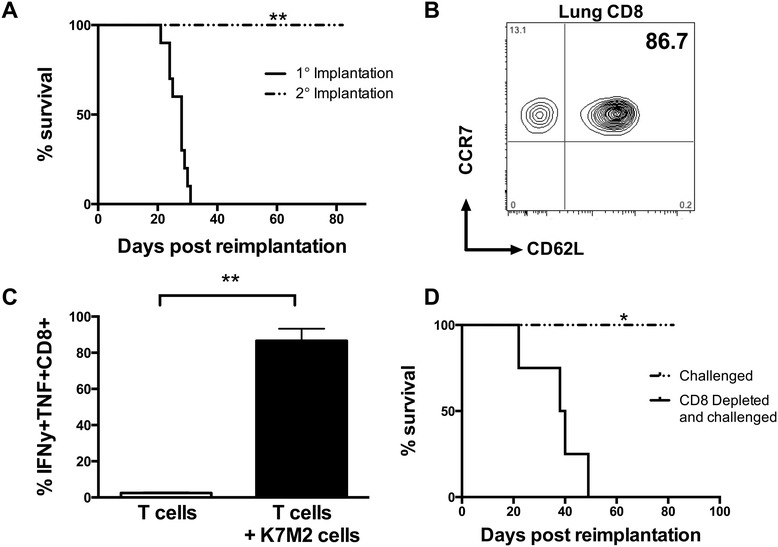
“In order to directly test whether the central-memory phenotype CCR7 + CD62L + CD8+ TILs in tumorimmune mice mediated resistance to subsequent tumor inoculation, we depleted CD8 T cells at day 80 after primary tumor control in α-CTLA-4/α-PD-L1 mAb treated mice with 2.43 hybidoma purified antibodies, followed by re-chal…”
BackgroundInfluentialCounting Antigen-Specific CD8 T Cells: A Reevaluation of Bystander Activation during Viral Infection
Murali-Krishna, K., Altman, J. D., Suresh, M., Sourdive, D. J. D., Zajac, A. J., Miller, J. D., Slansky, J., & Ahmed, R. (1998) · Immunity · doi:10.1016/s1074-7613(00)80470-7 · Cited by 1,943 · cited 1×
“GolgiStop (BD Biosciences) was added at 1 hour to inhibit export of cytokines and after a further 5 hours of incubation, cells were stained for extracellular proteins [41].”
MethodCurran, M. A., Montalvo, W., Yagita, H., & Allison, J. P. (2010) · Proceedings of the National Academy of Sciences · doi:10.1073/pnas.0915174107 · Cited by 1,874 · cited 4×
“Certainly, multiple studies have shown that CTLA-4 blockade can deplete tissue-resident regulatory T cells, and this in turn may indirectly affect CD8+ TIL function, conferring control by alleviating immune suppression at the tumor site [38,8].”
BackgroundResultInfluentialWoo, S.-R., Turnis, M. E., Goldberg, M. V., Bankoti, J., Selby, M., Nirschl, C. J., Bettini, M. L., Gravano, D. M., Vogel, P., Liu, C. L., et al. (2012) · Cancer Research · doi:10.1158/0008-5472.can-11-1620 · Cited by 1,647
Wherry, E. J., Blattman, J. N., Murali-Krishna, K., van der Most, R., & Ahmed, R. (2003) · Journal of Virology · doi:10.1128/jvi.77.8.4911-4927.2003 · Cited by 1,610 · cited 2×
“Lungs were collected in RPMI media and Metastatic osteosarcoma-infiltrating cells were isolated from collagenase-treated lung tissue by centrifugation over a 30/90% Percoll gradient (Sigma-Aldrich, St. Louis, MO) and collection of interface cells before antibody staining of cell populations on an LSRFortessa II flow c…”
MethodSelf-citationMittal, D., Gubin, M. M., Schreiber, R. D., & Smyth, M. J. (2014) · Current Opinion in Immunology · doi:10.1016/j.coi.2014.01.004 · Cited by 1,471 · cited 1×
“Accumulating evidence suggests that although the immune system identifies and eliminates pre-cancerous and cancerous cells, tumors still develop in immune competent individuals due to ineffective elimination, resulting in an equilibrium phase of tumor development [22-25].”
BackgroundSwann, J. B., & Smyth, M. J. (2007) · Journal of Clinical Investigation · doi:10.1172/jci31405 · Cited by 1,447 · cited 1×
“Accumulating evidence suggests that although the immune system identifies and eliminates pre-cancerous and cancerous cells, tumors still develop in immune competent individuals due to ineffective elimination, resulting in an equilibrium phase of tumor development [22-25].”
BackgroundHamanishi, J., Mandai, M., Iwasaki, M., Okazaki, T., Tanaka, Y., Yamaguchi, K., Higuchi, T., Yagi, H., Takakura, K., Minato, N., et al. (2007) · Proceedings of the National Academy of Sciences · doi:10.1073/pnas.0611533104 · Cited by 1,378 · cited 1×
“In particular, tumor cells up-regulate ligands such as PDL1 to exhaust T cell responses [26] and limit immunemediated killing [27-30].”
BackgroundActivation of the PD-1 Pathway Contributes to Immune Escape in EGFR-Driven Lung Tumors
Akbay, E. A., Koyama, S., Carretero, J., Altabef, A., Tchaicha, J. H., Christensen, C. L., Mikse, O. R., Cherniack, A. D., Beauchamp, E. M., Pugh, T. J., et al. (2013) · Cancer Discovery · doi:10.1158/2159-8290.cd-13-0310 · Cited by 1,231 · cited 1×
“Alternative immune checkpoint controls (CTLA-4, PD-1, LAG-3, TIM-3) on T cells provide tumors with several options for avoiding tumorreactive immune responses [31-36,28].”
BackgroundBlockade of B7-H1 and PD-1 by monoclonal antibodies potentiates cancer therapeutic immunity
Hirano, F., Kaneko, K., Tamura, H., Dong, H., Wang, S., Ichikawa, M., Rietz, C., Flies, D. B., Lau, J. S., Zhu, G., et al. (2005) · Cancer Research · doi:10.1158/0008-5472.1089.65.3 · Cited by 1,018 · cited 1×
“Alternative immune checkpoint controls (CTLA-4, PD-1, LAG-3, TIM-3) on T cells provide tumors with several options for avoiding tumorreactive immune responses [31-36,28].”
BackgroundPeggs, K. S., Quezada, S. A., Chambers, C. A., Korman, A. J., & Allison, J. P. (2009) · Journal of Experimental Medicine · doi:10.1084/jem.20082492 · Cited by 967 · cited 1×
“toneally every three days, starting one day after tumor inoculation [44,45].”
BackgroundKager, L., Zoubek, A., Pötschger, U., Kastner, U., Flege, S., Kempf-Bielack, B., Branscheid, D., Kotz, R., Salzer-Kuntschik, M., Winkelmann, W., et al. (2003) · Journal of Clinical Oncology · doi:10.1200/jco.2003.08.132 · Cited by 934
Nomi, T., Sho, M., Akahori, T., Hamada, K., Kubo, A., Kanehiro, H., Nakamura, S., Enomoto, K., Yagita, H., Azuma, M., et al. (2007) · Clinical Cancer Research · doi:10.1158/1078-0432.ccr-06-2746 · Cited by 889 · cited 1×
“These immune checkpoint blockade strategies also appear to enhance clearance of tumors when used in combination with chemotherapy, including during treatment of pancreatic cancer in murine models [13].”
BackgroundMatsuzaki, J., Gnjatic, S., Mhawech-Fauceglia, P., Beck, A., Miller, A., Tsuji, T., Eppolito, C., Qian, F., Lele, S., Shrikant, P., et al. (2010) · Proceedings of the National Academy of Sciences · doi:10.1073/pnas.1003345107 · Cited by 859 · cited 1×
“In order to determine if T cell responses to osteosarcoma metastases in α-PD-L1 mAb treated mice may have become tolerized through engagement of other inhibitory ligands, we evaluated expression of PD-1, CTLA-4, and LAG3 on tumor reactive T cells, as these inhibitory proteins have been shown to be critically important…”
BackgroundDuraiswamy, J., Kaluza, K. M., Freeman, G. J., & Coukos, G. (2013) · Cancer Research · doi:10.1158/0008-5472.can-12-4100 · Cited by 745 · cited 1×
“toneally every three days, starting one day after tumor inoculation [44,45].”
BackgroundHolmgaard, R. B., Zamarin, D., Munn, D. H., Wolchok, J. D., & Allison, J. P. (2013) · Journal of Experimental Medicine · doi:10.1084/jem.20130066 · Cited by 634 · cited 1×
“Combinational immunotherapy using antibodies to CTLA-4, PD-1/PD-L1, with small molecule inhibitors of indolamine deoxygenase (IDO), have also been shown to lead to improved tumor control and increased IL-2 production by tumor infiltrating lymphocytes (TILs) in an implantable melanoma setting [8,9].”
BackgroundImmunostimulatory monoclonal antibodies for cancer therapy
Melero, I., Hervas-Stubbs, S., Glennie, M., Pardoll, D. M., & Chen, L. (2007) · Nature Reviews Cancer · doi:10.1038/nrc2051 · Cited by 627 · cited 1×
“In order to determine if T cell responses to osteosarcoma metastases in α-PD-L1 mAb treated mice may have become tolerized through engagement of other inhibitory ligands, we evaluated expression of PD-1, CTLA-4, and LAG3 on tumor reactive T cells, as these inhibitory proteins have been shown to be critically important…”
BackgroundDeciphering and Reversing Tumor Immune Suppression
Motz, G. T., & Coukos, G. (2013) · Immunity · doi:10.1016/j.immuni.2013.07.005 · Cited by 598 · cited 2×
“In particular, tumor cells up-regulate ligands such as PDL1 to exhaust T cell responses [26] and limit immunemediated killing [27-30].”
BackgroundB7-H1 is a ubiquitous antiapoptotic receptor on cancer cells
Azuma, T., Yao, S., Zhu, G., Flies, A. S., Flies, S. J., & Chen, L. (2008) · Blood · doi:10.1182/blood-2007-11-123141 · Cited by 531 · cited 1×
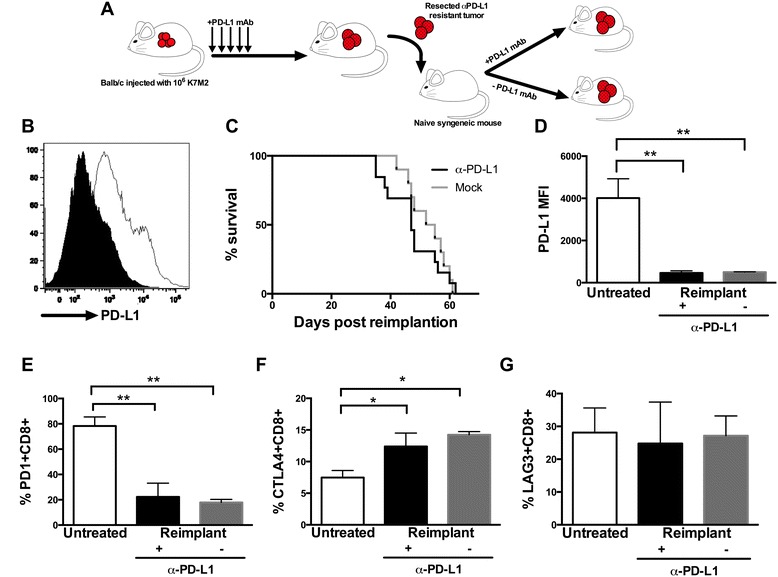
“Tumor cells from α-PD-L1 mAb treated mice appeared to have overall slower growth kinetics in vitro, compared to the parental tumor cells, resulting in an overall longer mean survival of ~50 days versus only ~25 days after reimplantation of tumors from untreated mice, which is to be expected as PD-L1 has been shown to…”
BackgroundAntagonist Antibodies to PD-1 and B7-H1 (PD-L1) in the Treatment of Advanced Human Cancer—Response
Sznol, M., & Chen, L. (2013) · Clinical Cancer Research · doi:10.1158/1078-0432.ccr-13-2234 · Cited by 528
Blank, C., & Mackensen, A. (2007) · Cancer Immunology, Immunotherapy · doi:10.1007/s00262-006-0272-1 · Cited by 505 · cited 1×
“In particular, tumor cells up-regulate ligands such as PDL1 to exhaust T cell responses [26] and limit immunemediated killing [27-30].”
BackgroundAntagonist Antibodies to PD-1 and B7-H1 (PD-L1) in the Treatment of Advanced Human Cancer
Sznol, M., & Chen, L. (2013) · Clinical Cancer Research · doi:10.1158/1078-0432.ccr-12-2063 · Cited by 488
Immune surveillance: a balance between protumor and antitumor immunity
Ostrand-Rosenberg, S. (2008) · Current Opinion in Genetics & Development · doi:10.1016/j.gde.2007.12.007 · Cited by 480 · cited 1×
“Accumulating evidence suggests that although the immune system identifies and eliminates pre-cancerous and cancerous cells, tumors still develop in immune competent individuals due to ineffective elimination, resulting in an equilibrium phase of tumor development [22-25].”
BackgroundB7 family checkpoint regulators in immune regulation and disease
Ceeraz, S., Nowak, E. C., & Noelle, R. J. (2013) · Trends in Immunology · doi:10.1016/j.it.2013.07.003 · Cited by 307 · cited 1×
“In order to determine if T cell responses to osteosarcoma metastases in α-PD-L1 mAb treated mice may have become tolerized through engagement of other inhibitory ligands, we evaluated expression of PD-1, CTLA-4, and LAG3 on tumor reactive T cells, as these inhibitory proteins have been shown to be critically important…”
BackgroundPD-L1 blockade synergizes with IL-2 therapy in reinvigorating exhausted T cells
West, E. E., Jin, H.-T., Rasheed, A.-U., Penaloza-MacMaster, P., Ha, S.-J., Tan, W. G., Youngblood, B., Freeman, G. J., Smith, K. A., & Ahmed, R. (2013) · Journal of Clinical Investigation · doi:10.1172/jci67008 · Cited by 298 · cited 1×
“9G2) in PBS or mock PBS control intraperitoneally every three days, starting one day after tumor inoculation [42].”
CD3/TCR complex‐associated lymphocyte activation gene‐3 molecules inhibit CD3/TCR signaling
Hannier, S., Tournier, M., Bismuth, G., & Triebel, F. (1998) · The Journal of Immunology · doi:10.4049/jimmunol.161.8.4058 · Cited by 248 · cited 1×
“In order to determine if T cell responses to osteosarcoma metastases in α-PD-L1 mAb treated mice may have become tolerized through engagement of other inhibitory ligands, we evaluated expression of PD-1, CTLA-4, and LAG3 on tumor reactive T cells, as these inhibitory proteins have been shown to be critically important…”
BackgroundEnhanced T-Cell Immunity to Osteosarcoma Through Antibody Blockade of PD-1/PD-L1 Interactions
Lussier, D. M., O’Neill, L., Nieves, L. M., McAfee, M. S., Holechek, S. A., Collins, A. W., Dickman, P., Jacobsen, J., Hingorani, P., & Blattman, J. N. (2015) · Journal of Immunotherapy · doi:10.1097/cji.0000000000000065 · Cited by 197 · cited 1×
“upregulation of inhibitory receptors that limit T cell function [6].”
BackgroundSelf-citationProgrammed Cell Death Ligand 1 Expression in Osteosarcoma
Shen, J. K., Cote, G. M., Choy, E., Yang, P., Harmon, D., Schwab, J., Nielsen, G. P., Chebib, I., Ferrone, S., Wang, X., et al. (2014) · Cancer Immunology Research · doi:10.1158/2326-6066.cir-13-0224 · Cited by 193 · cited 1×
“Moreover, both our lab and others have shown that PD-L1 is expressed on human metastatic osteosarcoma tissue, while CTL infiltrating human metastatic osteosarcomas are positive for PD-1 [7].”
ResultA Pilot Study of Anti-CTLA4 Antibody Ipilimumab in Patients with Synovial Sarcoma
Maki, R. G., Jungbluth, A. A., Gnjatic, S., Schwartz, G. K., D’Adamo, D. R., Keohan, M. L., Wagner, M. J., Scheu, K., Chiu, R., Ritter, E., et al. (2013) · Sarcoma · doi:10.1155/2013/168145 · Cited by 179
The PD‐1/PD‐L1 (B7‐H1) Pathway in Chronic Infection‐Induced Cytotoxic T Lymphocyte Exhaustion
Hofmeyer, K. A., Jeon, H., & Zang, X. (2011) · BioMed Research International · doi:10.1155/2011/451694 · Cited by 162 · cited 1×
“In particular, tumor cells up-regulate ligands such as PDL1 to exhaust T cell responses [26] and limit immunemediated killing [27-30].”
BackgroundTsuchiya, H., Kanazawa, Y., Abdel-Wanis, M. E., Asada, N., Abe, S., Isu, K., Sugita, T., & Tomita, K. (2002) · Journal of Clinical Oncology · doi:10.1200/jco.2002.11.028 · Cited by 160 · cited 1×
“Background The effectiveness of conventional therapies for metastatic osteosarcoma has remained unchanged over the last thirty years, with a dismal five-year survival rate of less than 20% [1-5].”
BackgroundManagement of osteosarcoma pulmonary metastases
Harting, M. T., & Blakely, M. L. (2006) · Seminars in Pediatric Surgery · doi:10.1053/j.sempedsurg.2005.11.005 · Cited by 111 · cited 1×
“Background The effectiveness of conventional therapies for metastatic osteosarcoma has remained unchanged over the last thirty years, with a dismal five-year survival rate of less than 20% [1-5].”
BackgroundOsteosarcoma Lung Metastases Detection and Principles of Multimodal Therapy
Carrle, D., & Bielack, S. (2009) · Cancer treatment and research · doi:10.1007/978-1-4419-0284-9_8 · Cited by 72 · cited 1×
“Background The effectiveness of conventional therapies for metastatic osteosarcoma has remained unchanged over the last thirty years, with a dismal five-year survival rate of less than 20% [1-5].”
BackgroundSarcoma Immunotherapy: Past Approaches and Future Directions
D’Angelo, S. P., Tap, W. D., Schwartz, G. K., & Carvajal, R. D. (2014) · Sarcoma · doi:10.1155/2014/391967 · Cited by 67 · cited 1×
“However disease was very advanced, and these blockade inhibitors may be best for treating patients with early metastatic disease, as cells that newly escape into the periphery may co-opt the use of inhibitory receptors to suppress T cell mediated killing of malignant cells [12].”
BackgroundStrauss, S. J., Ng, T., Mendoza‐Naranjo, A., Whelan, J., & Sorensen, P. H. B. (2010) · The Oncologist · doi:10.1634/theoncologist.2010-0093 · Cited by 64 · cited 1×
“Background The effectiveness of conventional therapies for metastatic osteosarcoma has remained unchanged over the last thirty years, with a dismal five-year survival rate of less than 20% [1-5].”
BackgroundDieudonné, F., Marion, A., Marie, P. J., & Modrowski, D. (2012) · Journal of Bone and Mineral Research · doi:10.1002/jbmr.1650 · Cited by 51 · cited 1×
“Doxorubicin hydrochloride (Sigma-Aldrich), was injected at 2mg/kg into the lateral tail vein of K7M2 inoculated mice at +7 days from tumor cell injection [46].”
MethodContribution of PD-L1 to oncogenesis of lymphoma and its RNAi-based targeting therapy
Li, Y., Wang, J., Li, C., & Ke, X. (2012) · Leukemia & lymphoma/Leukemia and lymphoma · doi:10.3109/10428194.2012.673228 · Cited by 38 · cited 1×
“Tumor cells from α-PD-L1 mAb treated mice appeared to have overall slower growth kinetics in vitro, compared to the parental tumor cells, resulting in an overall longer mean survival of ~50 days versus only ~25 days after reimplantation of tumors from untreated mice, which is to be expected as PD-L1 has been shown to…”
BackgroundDoxorubicin enhances CD4+ T-cell immune responses by inducing expression of CD40 ligand and 4-1BB
Park, J. Y., Jang, M. J., Chung, Y. H., Kim, K. Y., Kim, S. S., Lee, W. B., You, S., Choi, Y. S., Hur, D. Y., & Kim, D. (2009) · International Immunopharmacology · doi:10.1016/j.intimp.2009.09.008 · Cited by 37 · cited 1×
“CD4 and CD8 T cells are resistant to doxorubicin treatment with similar stimulation between mock and doxorubicin treated mice, however CD4 T cells can exhibit enhanced proliferation due to increased expression of CD40 ligand and 4-1BB when treated with doxorubicin both in vitro and in vivo [21].”
BackgroundToxicity of checkpoint inhibitors.
Schmerling, R. A. (2014) · PubMed · doi:10.3978/j.issn.2304-3865.2014.08.03 · Cited by 14 · cited 1×
“tients, and it would be imperative to find the most tolerable yet effective combination regimen for these agents in pediatric patients [39].”
Background
Cited by
Enhanced Cancer Immunotherapy by Microneedle Patch-Assisted Delivery of Anti-PD1 Antibody
Wang, C., Ye, Y., Hochu, G. M., Sadeghifar, H., & Gu, Z. (2016) · Nano Letters · doi:10.1021/acs.nanolett.5b05030 · Cited by 784
Current and future therapeutic approaches for osteosarcoma
Harrison, D. J., Geller, D. S., Gill, J. D., Lewis, V. O., & Gorlick, R. (2018) · Expert Review of Anticancer Therapy · doi:10.1080/14737140.2018.1413939 · Cited by 689
Engineered probiotics for local tumor delivery of checkpoint blockade nanobodies
Gurbatri, C. R., Lia, I., Vincent, R., Coker, C., Castro, S., Treuting, P. M., Hinchliffe, T. E., Arpaia, N., & Danino, T. (2020) · Science Translational Medicine · doi:10.1126/scitranslmed.aax0876 · Cited by 647
“Clinically, anti-CTLA-4 mAbs are frequently used in combination with anti-PD-L1 mAbs (40, 41).”
BackgroundSaha, D., Martuza, R. L., & Rabkin, S. D. (2017) · Cancer Cell · doi:10.1016/j.ccell.2017.07.006 · Cited by 591
“Dual blockade of two immune checkpoints has been much more efficacious than monotherapy in preclinical tumor models (Curran et al., 2010; Lussier et al., 2015), including in a VSV vaccine study for glioma (Cockle et al., 2016), and in clinical trials, although it was associated with more frequent…”
BackgroundImmunotherapy for osteosarcoma: Fundamental mechanism, rationale, and recent breakthroughs
Chen, C., Xie, L., Ren, T., Huang, Y., Xu, J., & Guo, W. (2021) · Cancer Letters · doi:10.1016/j.canlet.2020.12.024 · Cited by 569
Metadata
- Authors
- Lussier, D. M., Johnson, J. L., Hingorani, P., & Blattman, J. N.
- Affiliations
- Arizona State University (US)
- Phoenix Children's Hospital (US)
- Corresponding author
- Blattman, Joseph N
- Venue
- Journal for ImmunoTherapy of Cancer
- Publisher
- BMJ
- Published
- 2015-05-19
- Volume
- 3
- Issue
- 1
- Pages
- 21-21
- ISSN
- 2051-1426 (ISSN-L)
- PMC
- PMC4437699
- OpenAlex
- W1543079591
- Semantic Scholar
- 26bb66eb72941dcfe89fc7943d90e10b7f2174d3
- Cited by
- 206
- References
- 49
- Citations by year
- 2026: 8 · 2025: 21 · 2024: 16 · 2023: 18 · 2022: 14 · 2021: 13 · 2020: 24 · 2019: 28 · 2018: 17 · 2017: 21 · 2016: 21 · 2015: 5
- FWCI
- 9.32
- Type
- journal article
- Language
- en
- Open access
- gold
- doi.org
- Locations
- Journal for ImmunoTherapy of Cancer (publishedVersion, cc-by)
- PubMed Central (publishedVersion, cc-by)
- PubMed (publishedVersion)
- Arizona State University Library Digital Repository (Arizona State University) (submittedVersion)
- Funders
- Hyundai Hope On Wheels (0000-0003-2504-9663)
- Topics
- Health Sciences › Medicine › Oncology › Cancer Immunotherapy and Biomarkers
- Health Sciences › Medicine › Oncology › Sarcoma Diagnosis and Treatment
- Life Sciences › Immunology and Microbiology › Immunology › Immunotherapy and Immune Responses
- Keywords
- metastatic osteosarcoma, combination immunotherapy, CTLA-4 blockade, PD-L1 blockade, PD-1/PD-L1 pathway, immune evasion, lung metastasis, tumor-infiltrating T cells, cancer immunotherapy
About these checks
Registry, retraction, Cites and statistics results are computed, not judged, with one exception: a printed reference that no index lists is read once by a model before it counts as a citation error. Claims are extracted by a model and kept only when their quote appears verbatim in the text; each cited source is then checked, with a model’s help, for whether it says what the claim relies on. Those verdicts can be wrong — read the claim’s quote and the cited source before relying on one.
Statistics and arithmetic are recomputed, not judged.
Confidence bands are shown only for fields calibrated on our annotated test set. None is calibrated yet, so no band is shown.
What counts as a claim ›How we measure confidence ›How we check this ›
Are you an author, or do you see a problem with this page? Request a review
Data sources
Bibliographic data: Semantic Scholar, OpenAlex, Crossref.
Contains information from the Semantic Scholar Academic Graph Datasets, made available under the ODC Attribution License (ODC-BY 1.0).
Semantic Scholar’s data is described in: Kinney, R., et al. (2023). The Semantic Scholar Open Data Platform. arXiv:2301.10140.
