

Significance and implications of FDA approval of pembrolizumab for biomarker-defined disease
Open accessThe DOI matches its Crossref record; 49 of the 49 references it cites were found in a registry or an index.
Abstract
The U.S. Food and Drug Administration (FDA) recently approved pembrolizumab, an anti- programmed cell death protein 1 cancer immunotherapeutic, for use in advanced solid tumors in patients with the microsatellite-high/DNA mismatch repair-deficient biomarker. This is the first example of a tissue-agnostic FDA approval of a treatment based on a patient's tumor biomarker status, rather than on tumor histology. Here we discuss key issues and implications arising from the biomarker-based disease classification implied by this historic approval.
Overview
The claims and statistics of this paper haven’t been checked yet.
Free: it reads the open-access text and checks the first 5 claims that cite a source we can check. Create a free account to check every claim.
Integrity signals
Registry
Cites
Statistics
Figures
Verification
Claims the paper makes
The claims and statistics of this paper haven’t been checked yet.
Free: it reads the open-access text and checks the first 5 claims that cite a source we can check. Create a free account to check every claim.
Claims other papers make about this one
Each is checked against this paper’s own text: does it say what the citing paper says it does?
The source backs part of the claim, not all of it — or backs it for a different population, condition or comparison.
In the citing paper
“The underlying cause of the high mutational burden is not important for determining whether a tumor will respond to ICIs, as melanoma and NSCLC, which acquire mutations through UV-and carcinogen-induced DNA damage, respectively, respond just as well to ICIs as do tumors that acquire mutations through genomic instability or deficient mismatch repair (74,80,87).”
From Immune Checkpoint Inhibitors for the Treatment of Cancer: Clinical Impact and Mechanisms of Response and Resistance (2021) · cites this paper as [87]
Experimental — accuracy not yet measured
Self-check
Percentages, sums and reported differences re-computed from the paper’s own numbers.
The self-check needs the paper’s full text.
Citations
Cites
PD-1 and PD-L1 Immune Checkpoint Blockade to Treat Breast Cancer
Hartkopf, A. D., Taran, F.-A., Wallwiener, M., Walter, C. B., Krämer, B., Grischke, E.-M., & Brucker, S. Y. (2016) · Breast Care · doi:10.1159/000453569 · Cited by 30,845
Adverse Renal Effects of Immune Checkpoint Inhibitors: A Narrative Review
Wanchoo, R., Karam, S., Uppal, N. N., Barta, V. S., Deray, G., Devoe, C., Launay-Vacher, V., Jhaveri, K. D., & on behalf of Cancer and Kidney International Network Workgroup on Immune Checkpoint Inhibitors (2017) · American Journal of Nephrology · doi:10.1159/000455014 · Cited by 15,256
Safety, activity, and immune correlates of anti–PD-1 antibody in cancer
Topalian, S. L., Hodi, F. S., Brahmer, J. R., Gettinger, S. N., Smith, D. C., McDermott, D. F., Powderly, J. D., Carvajal, R. D., Sosman, J. A., Atkins, M. B., et al. (2012) · New England Journal of Medicine · doi:10.1056/nejmoa1200690 · Cited by 12,628 · cited 2×
“Pembrolizumab (KEYTRUDA®, Merck & Co., Inc., Kenilworth, NJ) is a humanized, mouse-derived anti-PD-1 antibody that promotes tumor-cell apoptosis by binding to T-cell PD-1 receptors and disrupting interaction with PD-L1 molecules on tumor cells [4, 5].”
Signatures of mutational processes in human cancer
Initiative, A. P. C. G., Alexandrov, L. B., ICGC Breast Cancer Consortium, ICGC MMML-Seq Consortium, PedBrain, I., Nik-Zainal, S., Wedge, D. C., Aparicio, S. A. J. R., Behjati, S., Biankin, A. V., et al. (2013) · Nature · doi:10.1038/nature12477 · Cited by 9,660
PD-1 Blockade in Tumors with Mismatch-Repair Deficiency
Le, D. T., Uram, J. N., Wang, H., Bartlett, B. R., Kemberling, H., Eyring, A. D., Skora, A. D., Luber, B. S., Azad, N. S., Laheru, D., et al. (2015) · New England Journal of Medicine · doi:10.1056/nejmoa1500596 · Cited by 9,377
Self-citationSafety and activity of anti-PD-L1 antibody in patients with advanced cancer
Brahmer, J. R., Tykodi, S. S., Chow, L. Q. M., Hwu, W.-J., Topalian, S. L., Hwu, P., Drake, C. G., Camacho, L. H., Kauh, J., Odunsi, K., et al. (2012) · New England Journal of Medicine · doi:10.1056/nejmoa1200694 · Cited by 7,945 · cited 10×
“Biomarker testing will also become imperative for patients with metastatic disease who are approved to receive pembrolizumab [4].”
InfluentialMismatch repair deficiency predicts response of solid tumors to PD-1 blockade
Le, D. T., Durham, J. N., Smith, K. N., Wang, H., Bartlett, B. R., Aulakh, L. K., Lu, S., Kemberling, H., Wilt, C., Luber, B. S., et al. (2017) · Science · doi:10.1126/science.aan6733 · Cited by 6,645 · cited 4×
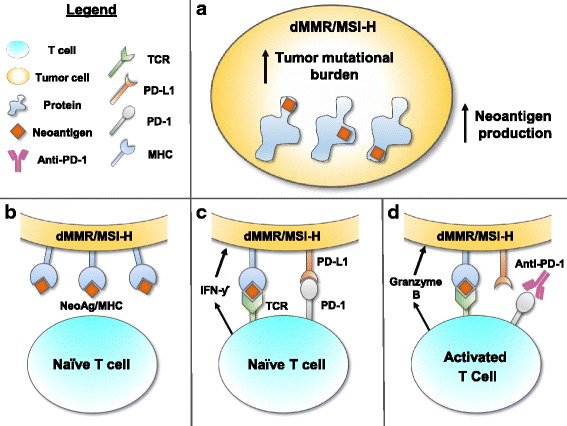
“Increased neoantigen expression by MSI-H/dMMR-positive tumors may also correlate with increased PD-L1 expression, which would promote PD-1-positive T-cell infiltration [6, 7].”
InfluentialSelf-citationPredictive correlates of response to the anti-PD-L1 antibody MPDL3280A in cancer patients
Herbst, R. S., Soria, J.-C., Kowanetz, M., Fine, G. D., Hamid, O., Gordon, M. S., Sosman, J. A., McDermott, D. F., Powderly, J. D., Gettinger, S. N., et al. (2014) · Nature · doi:10.1038/nature14011 · Cited by 5,231
PD-1 Blockade with Nivolumab in Relapsed or Refractory Hodgkin's Lymphoma
Ansell, S. M., Lesokhin, A. M., Borrello, I., Halwani, A., Scott, E. C., Gutierrez, M., Schuster, S. J., Millenson, M. M., Cattry, D., Freeman, G. J., et al. (2015) · New England Journal of Medicine · doi:10.1056/nejmoa1411087 · Cited by 3,560
Safety and Tumor Responses with Lambrolizumab (Anti–PD-1) in Melanoma
Hamid, O., Robert, C., Daud, A., Hodi, F. S., Hwu, W.-J., Kefford, R., Wolchok, J. D., Hersey, P., Joseph, R. W., Weber, J. S., et al. (2013) · New England Journal of Medicine · doi:10.1056/nejmoa1305133 · Cited by 3,392 · cited 1×
“The PD-1/PD-L1 checkpoint has been extensively studied, and PD-1 and PD-L1 inhibitors have induced encouraging clinical responses in patients with NSCLC, melanoma, Hodgkin lymphoma, urothelial carcinoma, RCC, and many other cancers [4, 5, 41 – 45].”
Mutations Associated with Acquired Resistance to PD-1 Blockade in Melanoma
Zaretsky, J. M., Garcia-Diaz, A., Shin, D. S., Escuin-Ordinas, H., Hugo, W., Hu-Lieskovan, S., Torrejon, D. Y., Abril-Rodriguez, G., Sandoval, S., Barthly, L., et al. (2016) · New England Journal of Medicine · doi:10.1056/nejmoa1604958 · Cited by 3,237 · cited 1×
“Anti-PD-1 resistance can arise through several mutation-derived mechanisms, including reduced interferon signaling through inactivation of JAK1 and JAK2, immune escape through HLA loss, as well as altered antigen presentation through loss of beta-2-microglobulin heterozygosity [33 – 35].”
Brahmer, J. R., Drake, C. G., Wollner, I., Powderly, J. D., Picus, J., Sharfman, W. H., Stankevich, E., Pons, A., Salay, T. M., McMiller, T. L., et al. (2010) · Journal of Clinical Oncology · doi:10.1200/jco.2009.26.7609 · Cited by 2,961 · cited 1×
“In an early phase I study of the anti-PD-1 agent nivolumab, one patient with dMMR-positive colo-rectal cancer (CRC) had a durable complete response [22].”
Overman, M. J., McDermott, R., Leach, J. L., Lonardi, S., Lenz, H.-J., Morse, M. A., Desai, J., Hill, A., Axelson, M., Moss, R. A., et al. (2017) · The Lancet Oncology · doi:10.1016/s1470-2045(17)30422-9 · Cited by 2,836 · cited 2×
“The FDA has prioritized this type of clinical trial design, as evidenced by the request for a prospective trial to grant anti-PD-1 nivolumab an extended indication for treating MSI-H/dMMR tumors outside of the original colorectal cancer indication (CheckMate-142) [26].”
Immune Checkpoint Blockade in Cancer Therapy
Postow, M. A., Callahan, M. K., & Wolchok, J. D. (2015) · Journal of Clinical Oncology · doi:10.1200/jco.2014.59.4358 · Cited by 2,709 · cited 2×
“The discovery and validation of immune checkpoints (signal-transducing pathways that modulate immune system activity) as therapeutic targets has transformed cancer immunotherapy [1].”
BackgroundMPDL3280A (anti-PD-L1) treatment leads to clinical activity in metastatic bladder cancer
Powles, T., Eder, J. P., Fine, G. D., Braiteh, F. S., Loriot, Y., Cruz, C., Bellmunt, J., Burris, H. A., Petrylak, D. P., Teng, S.-L., et al. (2014) · Nature · doi:10.1038/nature13904 · Cited by 2,381
CTLA-4 and PD-1 Pathways: Similarities, Differences, and Implications of Their Inhibition
Buchbinder, E. I., & Desai, A. (2016) · American Journal of Clinical Oncology · doi:10.1097/coc.0000000000000239 · Cited by 2,360 · cited 3×
“Cross-talk can also lead to T-cell exhaustion and reduce the efficacy of immunotherapy [2, 46].”
BackgroundPD-L1 expression as a predictive biomarker in cancer immunotherapy
Patel, S. P., & Kurzrock, R. (2015) · Molecular Cancer Therapeutics · doi:10.1158/1535-7163.mct-14-0983 · Cited by 2,291 · cited 2×
“Along with MSI-H/dMMR status, many clinical trials have verified the importance of tumor mutational burden and PD-L1 status in predicting response to treatment, providing additional impetus for developing tissue-agnostic therapies [39, 49].”
BackgroundTopalian, S. L., Sznol, M., McDermott, D. F., Kluger, H. M., Carvajal, R. D., Sharfman, W. H., Brahmer, J. R., Lawrence, D. P., Atkins, M. B., Powderly, J. D., et al. (2014) · Journal of Clinical Oncology · doi:10.1200/jco.2013.53.0105 · Cited by 2,222
Taube, J. M., Anders, R. A., Young, G. D., Xu, H., Sharma, R., McMiller, T. L., Chen, S., Klein, A. P., Pardoll, D. M., Topalian, S. L., et al. (2012) · Science Translational Medicine · doi:10.1126/scitranslmed.3003689 · Cited by 2,157 · cited 1×
“Synergy exists between these two factors as well, as increased IFN-γ release by infiltrating immune cells can upregulate PD-L1 expression [10].”
BackgroundInterferon Receptor Signaling Pathways Regulating PD-L1 and PD-L2 Expression
Garcia-Diaz, A., Shin, D. S., Moreno, B. H., Saco, J., Escuin-Ordinas, H., Rodriguez, G. A., Zaretsky, J. M., Sun, L., Hugo, W., Wang, X., et al. (2017) · Cell Reports · doi:10.1016/j.celrep.2017.04.031 · Cited by 1,942 · cited 1×
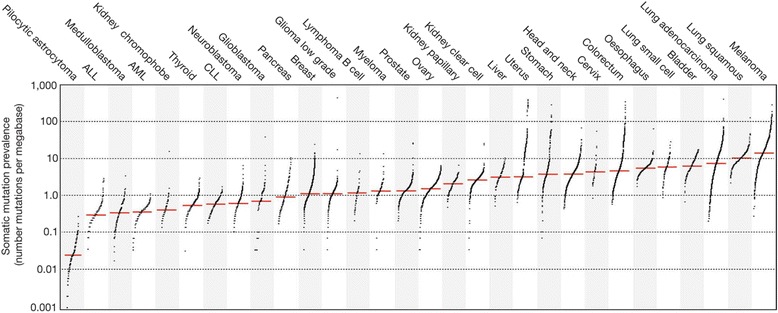
“Studies have noted that both melanoma and NSCLC display increased tumor immune infiltrate and PD-L1 expression [6 – 9].”
T cell costimulatory receptor CD28 is a primary target for PD-1–mediated inhibition
Hui, E., Cheung, J., Zhu, J., Su, X., Taylor, M. J., Wallweber, H. A., Sasmal, D. K., Huang, J., Kim, J. M., Mellman, I., et al. (2017) · Science · doi:10.1126/science.aaf1292 · Cited by 1,689 · cited 1×
“Interactions between PD-1 and PD-L1 primarily inactivate CD28 signaling to suppress T cell activation [3].”
BackgroundAllele-Specific HLA Loss and Immune Escape in Lung Cancer Evolution
McGranahan, N., Rosenthal, R., Hiley, C. T., Rowan, A. J., Watkins, T. B. K., Wilson, G. A., Birkbak, N. J., Veeriah, S., Van Loo, P., Herrero, J., et al. (2017) · Cell · doi:10.1016/j.cell.2017.10.001 · Cited by 1,298
Resistance to checkpoint blockade therapy through inactivation of antigen presentation
Sade-Feldman, M., Jiao, Y. J., Chen, J. H., Rooney, M. S., Barzily-Rokni, M., Eliane, J.-P., Bjorgaard, S. L., Hammond, M. R., Vitzthum, H., Blackmon, S. M., et al. (2017) · Nature Communications · doi:10.1038/s41467-017-01062-w · Cited by 1,005
Classification and characterization of microsatellite instability across 18 cancer types
Hause, R. J., Pritchard, C. C., Shendure, J., & Salipante, S. J. (2016) · Nature Medicine · doi:10.1038/nm.4191 · Cited by 991
Self-citationImmunohistochemistry Versus Microsatellite Instability Testing in Phenotyping Colorectal Tumors
Lindor, N. M., Burgart, L. J., Leontovich, O. N., Goldberg, R. M., Cunningham, J. M., Sargent, D. J., Walsh-Vockley, C., Petersen, G. M., Walsh, M. D., Leggett, B., et al. (2002) · Journal of Clinical Oncology · doi:10.1200/jco.20.4.1043 · Cited by 817 · cited 1×
“Other methods used to determine MMR status include immunohistochemistry for MMR gene products and next-generation sequencing (NGS) to assess microsatellites across the genome [18, 19].”
IFN-γ from lymphocytes induces PD-L1 expression and promotes progression of ovarian cancer
Abiko, K., Matsumura, N., Hamanishi, J., Horikawa, N., Murakami, R., Yamaguchi, K., Yoshioka, Y., Baba, T., Konishi, I., & Mandai, M. (2015) · British Journal of Cancer · doi:10.1038/bjc.2015.101 · Cited by 725
A molecular portrait of microsatellite instability across multiple cancers
Cortes-Ciriano, I., Lee, S., Park, W.-Y., Kim, T.-M., & Park, P. J. (2017) · Nature Communications · doi:10.1038/ncomms15180 · Cited by 658 · cited 1×
“Although the presence of the MSI-H/dMMR biomarker varies across cancer types, clinical trials and pathophysiological studies indicate wide distribution of this biomarker across tumor types (e.g., uterine, gastric, CRC, liver, RCC) [21, 30].”
Cancer biomarker discovery and validation.
Goossens, N., Nakagawa, S., Sun, X., & Hoshida, Y. (2015) · PubMed · doi:10.3978/j.issn.2218-676x.2015.06.04 · Cited by 503 · cited 1×
“Identification of cancer biomarkers has been a significant factor in recent changes in disease classification and therapy [13].”
BackgroundMicrosatellite Instability Testing and Its Role in the Management of Colorectal Cancer
Kawakami, H., Zaanan, A., & Sinicrope, F. A. (2015) · Current Treatment Options in Oncology · doi:10.1007/s11864-015-0348-2 · Cited by 418 · cited 3×
“A tumor is designated MSI-high (MSI-H) if at least 2 of 5 microsatellites harbor mutations [17].”
Microsatellite Instability Detection by Next Generation Sequencing
Salipante, S. J., Scroggins, S. M., Hampel, H. L., Turner, E. H., & Pritchard, C. C. (2014) · Clinical Chemistry · doi:10.1373/clinchem.2014.223677 · Cited by 399 · cited 3×
“Other methods used to determine MMR status include immunohistochemistry for MMR gene products and next-generation sequencing (NGS) to assess microsatellites across the genome [18, 19].”
Self-citationCombination immunotherapy: a road map
Ott, P. A., Hodi, F. S., Kaufman, H. L., Wigginton, J. M., & Wolchok, J. D. (2017) · Journal for ImmunoTherapy of Cancer · doi:10.1186/s40425-017-0218-5 · Cited by 374 · cited 1×
“Combination immunotherapy may be more effective than monotherapy because of its potential to concurrently target multiple immune check-points [40].”
Specific Targeted Therapy of Chronic Myelogenous Leukemia with Imatinib
Deininger, M. W. N., & Druker, B. J. (2003) · Pharmacological Reviews · doi:10.1124/pr.55.3.4 · Cited by 365 · cited 1×
“Imatinib, a tyrosine kinase inhibitor, was rationally designed to inhibit the breakpoint cluster region (BCR)-Abelson (ABL) fusion protein that arises in Philadelphia chromosome-positive patients (~ 90% of all patients with CML) [24].”
Sepulveda, A. R., Hamilton, S. R., Allegra, C. J., Grody, W., Cushman-Vokoun, A. M., Funkhouser, W. K., Kopetz, S. E., Lieu, C., Lindor, N. M., Minsky, B. D., et al. (2017) · Journal of Clinical Oncology · doi:10.1200/jco.2016.71.9807 · Cited by 360
Brahmer, J. R., Rodríguez-Abreu, D., Robinson, A. G., Hui, R., Csőszi, T., Fülöp, A., Gottfried, M., Peled, N., Tafreshi, A., Cuffe, S., et al. (2017) · The Lancet Oncology · doi:10.1016/s1470-2045(17)30690-3 · Cited by 348 · cited 1×
“…NSCLC who received pembrolizumab scored higher on the European Organization for the Research and Treatment of Cancer (EORTC) core quality of life questionnaire than patients who underwent chemotherapy (6.9 [95% CI: 3.3 – 10.6] for pembrolizumab vs. − 0.9 [95% CI: 4.8 – 3.0] for chemotherapy) [47].”
InfluentialWard, J. P., Gubin, M. M., & Schreiber, R. D. (2016) · Advances in Immunology · doi:10.1016/bs.ai.2016.01.001 · Cited by 228 · cited 1×
“Increased tumor mutational burden can promote increased neoantigen expression, which promotes T cell expansion and recruitment [11, 12].”
BackgroundDeficient mismatch repair: Read all about it (Review)
RICHMAN, S. (2015) · International Journal of Oncology · doi:10.3892/ijo.2015.3119 · Cited by 186 · cited 2×
“Tumors positive for the dMMR biomarker commonly accumulate mutations that expand and/or reduce specific repetitive DNA microsatellite sequences [15].”
den Haan, J. M. M., Arens, R., & van Zelm, M. C. (2014) · Immunology Letters · doi:10.1016/j.imlet.2014.10.011 · Cited by 185 · cited 1×
“Cross-talk can also lead to T-cell exhaustion and reduce the efficacy of immunotherapy [2, 46].”
BackgroundVenook, A. P., Niedzwiecki, D., Lopatin, M., Ye, X., Lee, M., Friedman, P. N., Frankel, W., Clark-Langone, K., Millward, C., Shak, S., et al. (2013) · Journal of Clinical Oncology · doi:10.1200/jco.2012.45.1096 · Cited by 175 · cited 1×
“The MSI-H/dMMR biomarker has been used to guide prognosis for patients with stage II CRC, using tests such as Oncotype DX® [27, 28].”
MethodGatalica, Z., Vranic, S., Xiu, J., Swensen, J., & Reddy, S. (2016) · Familial Cancer · doi:10.1007/s10689-016-9884-6 · Cited by 141
Lynch Syndrome: An Updated Review
Sehgal, R., Sheahan, K., O'Connell, P., Hanly, A., Martin, S., & Winter, D. (2014) · Genes · doi:10.3390/genes5030497 · Cited by 139 · cited 2×
“PCR methods, in particular, must account for tissue variability, as traditional methods were primarily validated for use in CRC and will have different sensitivity when applied in other cancers [16].”
Implications of mismatch repair-deficient status on management of early stage colorectal cancer.
Kawakami, H., Zaanan, A., & Sinicrope, F. A. (2015) · Europe PMC (PubMed Central) · doi:10.3978/j.issn.2078-6891.2015.065 · Cited by 82 · cited 1×
“MSI-H/dMMR has also been used to predict the efficacy of chemotherapy for patients with CRC [29].”
Neoantigens encoded in the cancer genome
Schumacher, T. N., & Hacohen, N. (2016) · Current Opinion in Immunology · doi:10.1016/j.coi.2016.07.005 · Cited by 81
An overview of the NCI precision medicine trials-NCI MATCH and MPACT.
Do, K. T., Coyne, G. O., & Chen, A. P. (2015) · PubMed · doi:10.3978/j.issn.2304-3865.2015.08.01 · Cited by 62 · cited 1×
“…ongoing NCI-MATCH trial (Molecular Analysis for Therapy Choice) investigating the efficacy of a variety of therapies against solid tumors positive for a range of biomarkers, including sunitinib against tumors positive for cKIT mutation and afatinib against tumors positive for EFGR mutation [38].”
Mohr, P., Hauschild, A., Trefzer, U., Enk, A., Tilgen, W., Loquai, C., Gogas, H. J., Haalck, T., Koller, J., Dummer, R., et al. (2015) · Journal of Clinical Oncology · doi:10.1200/jco.2014.59.6932 · Cited by 39 · cited 3×
“Increased neoantigen expression by MSI-H/dMMR-positive tumors may also correlate with increased PD-L1 expression, which would promote PD-1-positive T-cell infiltration [6, 7].”
Tumor mutational burden as a potential biomarker for PD1/PD-L1 therapy in colorectal cancer.
George, T. J., Frampton, G. M., Sun, J., Gowen, K. A., Kennedy, M., Greenbowe, J. R., Schrock, A. B., Ali, S. M., Klempner, S. J., Hezel, A. F., et al. (2016) · Journal of Clinical Oncology · doi:10.1200/jco.2016.34.15_suppl.3587 · Cited by 33 · cited 1×
“Along with MSI-H/dMMR status, many clinical trials have verified the importance of tumor mutational burden and PD-L1 status in predicting response to treatment, providing additional impetus for developing tissue-agnostic therapies [39, 49].”
BackgroundGene Signatures in Stage II Colon Cancer: A Clinical Review
Sharif, S., & O’Connell, M. J. (2012) · Current Colorectal Cancer Reports · doi:10.1007/s11888-012-0132-7 · Cited by 27 · cited 1×
“The MSI-H/dMMR biomarker has been used to guide prognosis for patients with stage II CRC, using tests such as Oncotype DX® [27, 28].”
Method(2017) · Journal for ImmunoTherapy of Cancer · doi:10.1186/s40425-017-0297-3 · Cited by 20
Immunotherapy resistance: the answers lie ahead – not in front – of us
Andrews, M. C., & Wargo, J. A. (2017) · Journal for ImmunoTherapy of Cancer · doi:10.1186/s40425-017-0212-y · Cited by 19 · cited 1×
“Additionally, the MSI-H/dMMR biomarker indicates tumor hypermuta-bility, which can promote both immune system recognition and response to anti-PD-1 immunotherapies [31].”
Kaufman, H. L., Atkins, M. B., Dicker, A. P., Jim, H., Garrison, L. P., Herbst, R. S., McGivney, W. T., Silverstein, S., Wigginton, J. M., & Yu, P. P. (2017) · Journal for ImmunoTherapy of Cancer · doi:10.1186/s40425-017-0241-6 · Cited by 17 · cited 1×
“Imatinib moved from initial human trials to FDA approval in CML settings in just 3 years, likely due to intelligent developmental program design [25].”
Background
Cited by
A guide to cancer immunotherapy: from T cell basic science to clinical practice
Waldman, A. D., Fritz, J. M., & Lenardo, M. J. (2020) · Nature Reviews Immunology · doi:10.1038/s41577-020-0306-5 · Cited by 4,154
Applications of machine learning in drug discovery and development
Vamathevan, J., Clark, D., Czodrowski, P., Dunham, I., Ferran, E., Lee, G., Li, B., Madabhushi, A., Shah, P., Spitzer, M., et al. (2019) · Nature Reviews Drug Discovery · doi:10.1038/s41573-019-0024-5 · Cited by 3,228
Bagchi, S., Yuan, R., & Engleman, E. G. (2021) · Annual Review of Pathology: Mechanisms of Disease · doi:10.1146/annurev-pathol-042020-042741 · Cited by 2,189
Vaddepally, R. K., Kharel, P., Pandey, R., Garje, R., & Chandra, A. B. (2020) · Cancers · doi:10.3390/cancers12030738 · Cited by 1,196
Machine Learning in Drug Discovery: A Review
Dara, S., Dhamercherla, S., Jadav, S. S., Babu, C. M., & Ahsan, M. J. (2022) · Artificial Intelligence Review · doi:10.1007/s10462-021-10058-4 · Cited by 792
“It was the first endorsement made by FDA that relates to genetic biomarkers other than tumor type (Boyiadzis et al. 2018), which can highlight the”
Background
Metadata
- Authors
- Boyiadzis, M. M., Kirkwood, J. M., Marshall, J. L., Pritchard, C. C., Azad, N. S., & Gulley, J. L.
- Affiliations
- University of Pittsburgh (US)
- University of Washington (US)
- Johns Hopkins University (US)
- National Institutes of Health (US)
- Corresponding author
- Gulley, James L.
- ORCID
- Venue
- Journal for ImmunoTherapy of Cancer
- Publisher
- BMJ
- Published
- 2018-05-14
- Volume
- 6
- Issue
- 1
- Pages
- 35-35
- ISSN
- 2051-1426 (ISSN-L)
- PMC
- PMC5950135
- OpenAlex
- W2804123836
- Cited by
- 219
- References
- 49
- Citations by year
- 2026: 6 · 2025: 14 · 2024: 18 · 2023: 26 · 2022: 28 · 2021: 43 · 2020: 37 · 2019: 40 · 2018: 7
- FWCI
- 3.32
- Type
- journal article
- Language
- en
- Open access
- gold
- doi.org
- Licence
- cc-by
- creativecommons.org/licenses/by/4.0/ (tdm)
- Locations
- Journal for ImmunoTherapy of Cancer (publishedVersion, cc-by)
- Europe PMC (PubMed Central) (publishedVersion, other-oa)
- PubMed Central (publishedVersion, cc-by)
- PubMed (publishedVersion)
- DOAJ (DOAJ: Directory of Open Access Journals) (submittedVersion, cc-by-sa)
- Funders
- Society for Immunotherapy of Cancer
- Topics
- Health Sciences › Medicine › Oncology › Cancer Immunotherapy and Biomarkers
- Health Sciences › Medicine › Pathology and Forensic Medicine › Genetic factors in colorectal cancer
- Life Sciences › Biochemistry, Genetics and Molecular Biology › Cancer Research › Cancer Genomics and Diagnostics
- Keywords
- pembrolizumab, FDA approval, PD-1 inhibitors, cancer immunotherapy, microsatellite instability-high, mismatch repair deficiency, tumor markers, advanced solid tumors
- MeSH terms
- Antineoplastic Agents, Immunological, Humans, Neoplasms, Biomarkers, Tumor, United States, United States Food and Drug Administration, Antibodies, Monoclonal, Humanized
About these checks
Registry, retraction, Cites and statistics results are computed, not judged, with one exception: a printed reference that no index lists is read once by a model before it counts as a citation error. Claims are extracted by a model and kept only when their quote appears verbatim in the text; each cited source is then checked, with a model’s help, for whether it says what the claim relies on. Those verdicts can be wrong — read the claim’s quote and the cited source before relying on one.
Statistics and arithmetic are recomputed, not judged.
Confidence bands are shown only for fields calibrated on our annotated test set. None is calibrated yet, so no band is shown.
What counts as a claim ›How we measure confidence ›How we check this ›
Are you an author, or do you see a problem with this page? Request a review
Data sources
Bibliographic data: Semantic Scholar, OpenAlex, Crossref.
Contains information from the Semantic Scholar Academic Graph Datasets, made available under the ODC Attribution License (ODC-BY 1.0).
Semantic Scholar’s data is described in: Kinney, R., et al. (2023). The Semantic Scholar Open Data Platform. arXiv:2301.10140.
