

The DOI matches its Crossref record; 217 of the 218 references it cites were found in a registry or an index.
Inconsistencies and Controversies Surrounding the Amyloid Hypothesis of Alzheimer's Disease
Open accessAbstract
The amyloid hypothesis has driven drug development strategies for Alzheimer's disease for over 20 years. We review why accumulation of amyloid-beta (Aβ) oligomers is generally considered causal for synaptic loss and neurodegeneration in AD. We elaborate on and update arguments for and against the amyloid hypothesis with new data and interpretations, and consider why the amyloid hypothesis may be failing therapeutically. We note several unresolved issues in the field including the presence of Aβ deposition in cognitively normal individuals, the weak correlation between plaque load and cognition, questions regarding the biochemical nature, presence and role of Aβ oligomeric assemblies in vivo, the bias of pre-clinical AD models toward the amyloid hypothesis and the poorly explained pathological heterogeneity and comorbidities associated with AD. We also illustrate how extensive data cited in support of the amyloid hypothesis, including genetic links to disease, can be interpreted independently of a role for Aβ in AD. We conclude it is essential to expand our view of pathogenesis beyond Aβ and tau pathology and suggest several future directions for AD research, which we argue will be critical to understanding AD pathogenesis.
Overview
The claims and statistics of this paper haven’t been checked yet.
Run the check — free, no account needed. It reads the open-access text and checks the sources it cites.
Integrity signals
Registry
Cites
Statistics
Figures
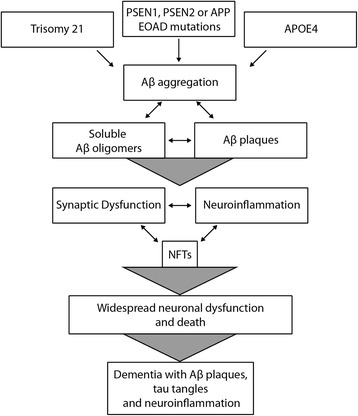
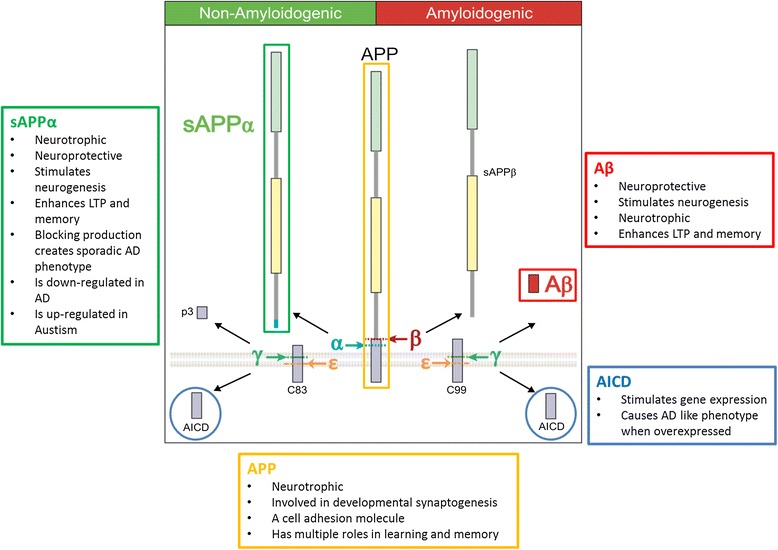
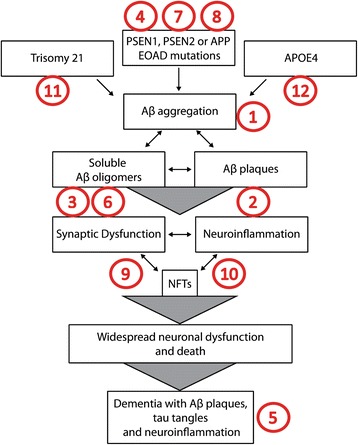
Verification
Claims the paper makes
The claims and statistics of this paper haven’t been checked yet.
Run the check — free, no account needed. It reads the open-access text and checks the sources it cites.
Claims other papers make about this one
Each is checked against this paper’s own text: does it say what the citing paper says it does?
The source backs part of the claim, not all of it — or backs it for a different population, condition or comparison.
In the citing paper
“along with the lack of correlation between plaque load and cognitive decline in AD patients3”
From Amyloid-β induces lipid droplet-mediated microglial dysfunction via the enzyme DGAT2 in Alzheimer’s disease (2025) · cites this paper as [3]
Experimental — accuracy not yet measured
Self-check
Percentages, sums and reported differences re-computed from the paper’s own numbers.
The self-check needs the paper’s full text.
Citations
Cites
Amyloid oligomers exacerbate tau pathology in a mouse model of tauopathy
Selenica, M.-L. B., Brownlow, M., Jimenez, J. P., Lee, D. C., Pena, G., Dickey, C. A., Gordon, M. N., & Morgan, D. (2013) · Neurodegenerative Diseases · doi:10.1159/000337230 · Cited by 10,359
Corder, E. H., Saunders, A. M., Strittmatter, W. J., Schmechel, D. E., Gaskell, P. C., Small, G. W., Roses, A. D., Haines, J. L., & Pericak-Vance, M. A. (1993) · Science · doi:10.1126/science.8346443 · Cited by 9,429
Polazzi, E., Mengoni, I., Caprini, M., Peña‐Altamira, E., Kurtys, E., & Monti, B. (2012) · Neurosignals · doi:10.1159/000337115 · Cited by 9,023
Power failure: why small sample size undermines the reliability of neuroscience
Button, K. S., Ioannidis, J. P. A., Mokrysz, C., Nosek, B. A., Flint, J., Robinson, E. S. J., & Munafò, M. R. (2013) · Nature Reviews Neuroscience · doi:10.1038/nrn3475 · Cited by 7,641 · cited 1×
“Even more so, with recent meta-analyses highlighting some major pitfalls with experimental design and statistical power in neuroscience [208,209], we need to be wary.”
BackgroundGlenner, G. G., & Wong, C. W. (1984) · Biochemical and Biophysical Research Communications · doi:10.1016/s0006-291x(84)80190-4 · Cited by 5,404
The precursor of Alzheimer's disease amyloid A4 protein resembles a cell-surface receptor
Kang, J., Lemaire, H.-G., Unterbeck, A., Salbaum, J. M., Masters, C. L., Grzeschik, K.-H., Multhaup, G., Beyreuther, K., & Müller-Hill, B. (1987) · Nature · doi:10.1038/325733a0 · Cited by 4,619
Inflammation and Alzheimer’s disease
Akiyama, H. (2000) · Neurobiology of Aging · doi:10.1016/s0197-4580(00)00124-x · Cited by 4,514
Amyloid plaque core protein in Alzheimer disease and Down syndrome.
Masters, C. L., Simms, G., Weinman, N. A., Multhaup, G., McDonald, B. L., & Beyreuther, K. (1985) · Proceedings of the National Academy of Sciences · doi:10.1073/pnas.82.12.4245 · Cited by 4,431
Alzheimer's Disease Is a Synaptic Failure
Selkoe, D. J. (2002) · Science · doi:10.1126/science.1074069 · Cited by 4,420
Terry, R. D., Masliah, E., Salmon, D. P., Butters, N., DeTeresa, R., Hill, R., Hansen, L. A., & Katzman, R. (1991) · Annals of Neurology · doi:10.1002/ana.410300410 · Cited by 4,397
Research works printed but not linked: 2
- Roche IU: Roche announces phase II clinical results of crenezumab in Alzheimer’s disease. 2014.
- Zakaib GW: Anti-Amyloid Therapies Combine Forces to Knock Out Plaques. 2014.
Cited by
Sorted by citations
Items 101–200 of 523
Could Alzheimer’s Disease Originate in the Periphery and If So How So?
Morris, G., Berk, M., Maes, M. H. J., & Puri, B. K. (2018) · Molecular Neurobiology · doi:10.1007/s12035-018-1092-y · Cited by 86
Self-citationHolubová, M., Hrubá, L., Popelová, A., Bencze, M., Pražienková, V., Gengler, S., Kratochvílová, H., Haluzı́k, M., Železná, B., Kuneš, J., et al. (2018) · Neuropharmacology · doi:10.1016/j.neuropharm.2018.11.002 · Cited by 82
LaClair, K. D., Donde, A., Ling, J. P., Jeong, Y. H., Chhabra, R., Martin, L. J., & Wong, P. C. (2016) · Acta Neuropathologica · doi:10.1007/s00401-016-1637-y · Cited by 76
The protective role of plant biophenols in mechanisms of Alzheimer's disease
Omar, S. H., Scott, C., Hamlin, A. S., & Obied, H. K. (2017) · The Journal of Nutritional Biochemistry · doi:10.1016/j.jnutbio.2017.02.016 · Cited by 84
Loeffler, D. A. (2023) · Journal of Alzheimer s Disease Reports · doi:10.3233/adr-230025 · Cited by 90
Minter, M. R., Moore, Z., Zhang, M., Brody, K. M., Jones, N. C., Shultz, S. R., Taylor, J. M., & Crack, P. J. (2016) · Acta Neuropathologica Communications · doi:10.1186/s40478-016-0341-4 · Cited by 79
LTP-like cortical plasticity predicts conversion to dementia in patients with memory impairment
Lorenzo, F. D., Motta, C., Casula, E. P., Bonnì, S., Assogna, M., Caltagirone, C., Martorana, A., & Koch, G. (2020) · Brain stimulation · doi:10.1016/j.brs.2020.05.013 · Cited by 82
The meteorology of cytokine storms, and the clinical usefulness of this knowledge
Clark, I. A., & Vissel, B. (2017) · Seminars in Immunopathology · doi:10.1007/s00281-017-0628-y · Cited by 81
Self-citationKrishtal, J., Bragina, O., Metsla, K., Palumaa, P., & Tõugu, V. (2017) · PLoS ONE · doi:10.1371/journal.pone.0186636 · Cited by 76
Robinson, R. L., Rentz, D. M., Andrews, J. S., Zagar, A. J., Kim, Y., Bruemmer, V., Schwartz, R. L., Ye, W., & Fillit, H. M. (2020) · Journal of Alzheimer s Disease · doi:10.3233/jad-191212 · Cited by 78
Circular RNA Encoded Amyloid Beta peptides—A Novel Putative Player in Alzheimer’s Disease
Mo, D., Li, X., Raabe, C. A., Rozhdestvensky, T. S., Skryabin, B. V., & Brosius, J. (2020) · Cells · doi:10.3390/cells9102196 · Cited by 74
The Role of Genetics in Advancing Precision Medicine for Alzheimer’s Disease—A Narrative Review
Freudenberg‐Hua, Y., Li, W., & Davies, P. (2018) · Frontiers in Medicine · doi:10.3389/fmed.2018.00108 · Cited by 80
Atienza, M., Ziontz, J., & Cantero, J. L. (2018) · Sleep Medicine Reviews · doi:10.1016/j.smrv.2018.08.002 · Cited by 76
Neuritic and Diffuse Plaque Associations with Memory in Non-Cognitively Impaired Elderly
Malek-Ahmadi, M., Perez, S. E., Chen, K., & Mufson, E. J. (2016) · Journal of Alzheimer’s Disease · doi:10.3233/jad-160365 · Cited by 73
Yang, A. J. T., Bagit, A., & MacPherson, R. E. K. (2021) · International Journal of Molecular Sciences · doi:10.3390/ijms22094628 · Cited by 77
Granzotto, A., Vissel, B., & Sensi, S. L. (2024) · eLife · doi:10.7554/elife.90633 · Cited by 71
Self-citationBartolotti, N., & Lazarov, O. (2019) · Brain Behavior and Immunity · doi:10.1016/j.bbi.2019.01.004 · Cited by 70
Tian, Y., Jing, G., & Zhang, M. (2023) · Ageing Research Reviews · doi:10.1016/j.arr.2023.101999 · Cited by 77
Chai, Y. L., Chong, J. R., Weng, J., Howlett, D., Halsey, A., Lee, J. H., Attems, J., Aarsland, D., Francis, P. T., Chen, C. P., et al. (2019) · Brain Pathology · doi:10.1111/bpa.12631 · Cited by 73
Mohan, S., Alhazmi, H. A., Hassani, R., Khuwaja, G., Maheshkumar, V. P., Aldahish, A. A., & Chidambaram, K. (2024) · Heliyon · doi:10.1016/j.heliyon.2024.e24786 · Cited by 70
Alzheimer's Disease: From Mitochondrial Perturbations to Mitochondrial Medicine
Cardoso, S., Carvalho, C., Correia, S. C., Seiça, R. M. F., & Moreira, P. I. (2016) · Brain Pathology · doi:10.1111/bpa.12402 · Cited by 69
Fine‐tuning PERK signaling for neuroprotection
Halliday, M., Hughes, D. T., & Mallucci, G. R. (2017) · Journal of Neurochemistry · doi:10.1111/jnc.14112 · Cited by 68
Daroi, P. A., Dhage, S. N., & Juvekar, A. R. (2021) · Journal of Pharmacy and Pharmacology · doi:10.1093/jpp/rgab077 · Cited by 66
Mukhopadhyay, S., & Banerjee, D. (2021) · Journal of Alzheimer s Disease · doi:10.3233/jad-215065 · Cited by 66
de Matos, A. M., Macedo, M. P., & Rauter, A. P. (2017) · Medicinal Research Reviews · doi:10.1002/med.21440 · Cited by 68
Xia, F., Yiu, A. P., Stone, S. S. D., Oh, S. J., Lozano, A. M., Josselyn, S. A., & Frankland, P. W. (2017) · Neuropsychopharmacology · doi:10.1038/npp.2017.100 · Cited by 69
Progress toward Alzheimer's disease treatment: Leveraging the Achilles' heel of Aβ oligomers?
Fantini, J., Chahinian, H., & Yahi, N. (2020) · Protein Science · doi:10.1002/pro.3906 · Cited by 63
Ban, X.-X., Wan, H., Wan, X.-X., Tan, Y.-T., Hu, X., Ban, H.-X., Chen, X., Huang, K. L., Zhāng, Q., & Xiong, K. (2024) · Current Medical Science · doi:10.1007/s11596-024-2832-z · Cited by 68
Prevention and Treatment of Alzheimer’s Disease: Biological Mechanisms of Exercise
McGurran, H., Glenn, J. M., Madero, E. N., & Bott, N. T. (2019) · Journal of Alzheimer s Disease · doi:10.3233/jad-180958 · Cited by 63
Alzheimer’s Disease: Exploring the Role of Inflammation and Implications for Treatment
McCaulley, M. E., & Grush, K. A. (2015) · International Journal of Alzheimer s Disease · doi:10.1155/2015/515248 · Cited by 62
The Role of Cardiolipin in Mitochondrial Function and Neurodegenerative Diseases
Fuentes, J. M., & Morcillo, P. (2024) · Cells · doi:10.3390/cells13070609 · Cited by 64
Biochemical deficits and cognitive decline in brain aging: Intervention by dietary supplements
Poddar, J., Pradhan, M., Ganguly, G., & Chakrabarti, S. (2018) · Journal of Chemical Neuroanatomy · doi:10.1016/j.jchemneu.2018.04.002 · Cited by 63
Neuroprotective effects of geniposide on Alzheimer’s disease pathology
Liu, W., Li, G., Hölscher, C., & Li, L. (2015) · Reviews in the Neurosciences · doi:10.1515/revneuro-2015-0005 · Cited by 62
Emerging drugs to reduce abnormal β-amyloid protein in Alzheimer’s disease patients
Panza, F., Seripa, D., Solfrizzi, V., Imbimbo, B. P., Lozupone, M., Leo, A., Sardone, R., Gagliardi, G., Lofano, L., Creanza, B. C., et al. (2016) · Expert Opinion on Emerging Drugs · doi:10.1080/14728214.2016.1241232 · Cited by 61
Can mouse models mimic sporadic Alzheimer’s disease?
Humpel, C., & Foidl, B. (2020) · Neural Regeneration Research · doi:10.4103/1673-5374.266046 · Cited by 56
Castro, P., Zaman, S. H., & Holland, A. J. (2016) · Journal of Neurology · doi:10.1007/s00415-016-8308-8 · Cited by 59
The role of mitochondrial dysfunction in Alzheimer's disease: A potential pathway to treatment
Reiss, A. B., Ahmed, S., Dayaramani, C., Glass, A. D., Gomolin, I. H., Pinkhasov, A., Stecker, M. M., Wısnıewskı, T., & Leon, J. D. (2022) · Experimental Gerontology · doi:10.1016/j.exger.2022.111828 · Cited by 55
ACU193: An Immunotherapeutic Poised to Test the Amyloid β Oligomer Hypothesis of Alzheimer’s Disease
Krafft, G. A., Jerecı̀ć, J., Siemers, E., & Cline, E. N. (2022) · Frontiers in Neuroscience · doi:10.3389/fnins.2022.848215 · Cited by 54
The Anti-Amyloid Monoclonal Antibody Lecanemab: 16 Cautionary Notes
Kepp, K. P., Sensi, S. L., Johnsen, K. B., Barrio, J. R., Høilund‐Carlsen, P. F., Neve, R. L., Alavi, A. A., Herrup, K., Perry, G. L., Robakis, N. K. R. K., et al. (2023) · Journal of Alzheimer s Disease · doi:10.3233/jad-230099 · Cited by 56
Self-citationZhu, G., Yang, S., Xie, Z., & Wan, X. (2018) · Neuropharmacology · doi:10.1016/j.neuropharm.2018.06.030 · Cited by 54
CuII Binding Properties of N-Truncated Aβ Peptides: In Search of Biological Function
Stefaniak, E., & Bal, W. (2019) · Inorganic Chemistry · doi:10.1021/acs.inorgchem.9b01399 · Cited by 56
Cho, H., Sharma, A. K., Zhang, Y., Gross, M. L., & Mirica, L. M. (2020) · ACS Chemical Neuroscience · doi:10.1021/acschemneuro.0c00114 · Cited by 53
Clinical significance of fluid biomarkers in Alzheimer’s Disease
Lewczuk, P., Łukaszewicz‐Zając, M., Mroczko, P., & Kornhuber, J. (2020) · Pharmacological Reports · doi:10.1007/s43440-020-00107-0 · Cited by 56
α-Synuclein seed amplification technology for Parkinson’s disease and related synucleinopathies
Soto, C. A. (2024) · Trends in biotechnology · doi:10.1016/j.tibtech.2024.01.007 · Cited by 52
A circuit view of deep brain stimulation in Alzheimer’s disease and the possible mechanisms
Yu, D., Yan, H., Zhou, J., Yang, X., Lu, Y., & Han, Y. (2019) · Molecular Neurodegeneration · doi:10.1186/s13024-019-0334-4 · Cited by 52
Gay, N. H., Suwanjang, W., Ruankham, W., Songtawee, N., Wongchitrat, P., Prachayasittikul, V., Prachayasittikul, S., & Phopin, K. (2020) · RSC Advances · doi:10.1039/c9ra06056a · Cited by 53
Bangen, K. J., Initiative, F. T. A. D. N., Clark, A. L., Werhane, M., Edmonds, E. C., Nation, D. A., Evangelista, N., Libon, D. J., Bondi, M. W., & Delano-Wood, L. (2016) · Journal of Alzheimer's Disease · doi:10.3233/jad-150900 · Cited by 51
Sayad, A., Najafi, S., Hussen, B. M., Abdullah, S. T., Movahedpour, A., Taheri, M. N., & Hajiesmaeili, M. (2022) · Frontiers in Aging Neuroscience · doi:10.3389/fnagi.2022.853180 · Cited by 54
Contribution of syndecans to cellular internalization and fibrillation of amyloid-β(1–42)
Letoha, T., Hudák, A., Kúsz, E., Pettkó‐Szandtner, A., Domonkos, I., Jósvay, K., Hofmann‐Apitius, M., & Szilák, L. (2019) · Scientific Reports · doi:10.1038/s41598-018-37476-9 · Cited by 52
Coassembly of Macrocyclic Amphiphiles for Anti-β-Amyloid Therapy of Alzheimer’s Disease
Pan, Y., Wang, H., Xu, X., Tian, H., Zhao, H., Hu, X., Zhao, Y., Liu, Y., Ding, G., Meng, Q., et al. (2020) · CCS Chemistry · doi:10.31635/ccschem.020.202000561 · Cited by 51
Prospects for strain-specific immunotherapy in Alzheimer’s disease and tauopathies
Bittar, A., Sengupta, U., & Kayed, R. (2018) · npj Vaccines · doi:10.1038/s41541-018-0046-8 · Cited by 50
The Post-amyloid Era in Alzheimer's Disease: Trust Your Gut Feeling
Osorio, C. P., Kanukuntla, T., Diaz, E. L., Jafri, N., Cummings, M., & Sfera, A. (2019) · Frontiers in Aging Neuroscience · doi:10.3389/fnagi.2019.00143 · Cited by 50
Liu, Y., Zhang, Y., Liu, P., Bai, H., Li, X., Xiao, J., Yuan, Q., Geng, S., Yin, H., Zhang, H., et al. (2019) · European Journal of Pharmacology · doi:10.1016/j.ejphar.2018.11.004 · Cited by 45
RetractedDNA repair deficiency and senescence in concussed professional athletes involved in contact sports
Schwab, N., Grenier, K., & Hazrati, L.-N. (2019) · Acta Neuropathologica Communications · doi:10.1186/s40478-019-0822-3 · Cited by 47
Pan, Y., Short, J. L., Newman, S. A., Choy, K. H. C., Tiwari, D., Yap, C., Senyschyn, D., Banks, W. A., & Nicolazzo, J. A. (2018) · Brain Behavior and Immunity · doi:10.1016/j.bbi.2018.03.007 · Cited by 50
Behl, C. (2024) · Frontiers in Aging Neuroscience · doi:10.3389/fnagi.2024.1459224 · Cited by 57
Alzheimer's disease vaccine development: A new strategy focusing on immune modulation
Marciani, D. J. (2015) · Journal of Neuroimmunology · doi:10.1016/j.jneuroim.2015.08.008 · Cited by 45
Novel roles of amyloid-beta precursor protein metabolites in fragile X syndrome and autism
Westmark, C. J., Sokol, D. K., Maloney, B., & Lahiri, D. K. (2016) · Molecular Psychiatry · doi:10.1038/mp.2016.134 · Cited by 45
Amyloid Plaques of Alzheimer’s Disease as Hotspots of Glutamatergic Activity
Ovsepian, S. V., O’Leary, V. B., Záborszky, L., Ntziachristos, V., & Dolly, J. O. (2018) · The Neuroscientist · doi:10.1177/1073858418791128 · Cited by 45
Wright, A. L., Konen, L. M., Mockett, B. G., Morris, G. P., Singh, A., Burbano, L. E., Milham, L. T., Hoang, M., Zinn, R., Chesworth, R., et al. (2023) · Molecular Neurodegeneration · doi:10.1186/s13024-023-00632-5 · Cited by 47
Self-citationPeriodontal disease's contribution to Alzheimer's disease progression in Down syndrome
Kamer, A. R., Fortea, J., Videla, S., Mayoral, A., Janal, M. N., Carmona‐Iragui, M., Benejam, B., Craig, R. G., Saxena, D. B., Corby, P. M. A., et al. (2016) · Alzheimer s & Dementia Diagnosis Assessment & Disease Monitoring · doi:10.1016/j.dadm.2016.01.001 · Cited by 49
Chen, F., Ghosh, A., Wu, F., Tang, S., Hu, M. Y., Sun, H., Kong, L., & Hong, H. (2016) · Brain Behavior and Immunity · doi:10.1016/j.bbi.2016.10.021 · Cited by 44
Synaptic actin stabilization protein loss in Down syndrome and Alzheimer disease
Lauterborn, J. C., Cox, C. D., Chan, S. W., Vanderklish, P. W., Lynch, G., & Gall, C. M. (2020) · Brain Pathology · doi:10.1111/bpa.12779 · Cited by 43
Long Non-coding RNA: Insight Into Mechanisms of Alzheimer's Disease
Lan, Z., Chen, Y., Jin, J., Xu, Y., & Zhu, X. (2022) · Frontiers in Molecular Neuroscience · doi:10.3389/fnmol.2021.821002 · Cited by 45
Neuroinflammation in Alzheimer's disease and beneficial action of luteolin
Delgado, A., Cholevas, C., & Theoharides, T. C. (2021) · BioFactors · doi:10.1002/biof.1714 · Cited by 48
Panza, F., Seripa, D., Lozupone, M., Solfrizzi, V., Imbimbo, B. P., Barulli, M. R., Tortelli, R., Capozzo, R., Bisceglia, P., Dimitri, A., et al. (2018) · Expert Opinion on Biological Therapy · doi:10.1080/14712598.2018.1389885 · Cited by 41
Alzheimer’s Disease Biomarkers Revisited From the Amyloid Cascade Hypothesis Standpoint
Alawode, D. O. T., Fox, N. C., Zetterberg, H., & Heslegrave, A. (2022) · Frontiers in Neuroscience · doi:10.3389/fnins.2022.837390 · Cited by 41
Alterations in resting-state network dynamics along the Alzheimer’s disease continuum
Puttaert, D., Coquelet, N., Wens, V., Peigneux, P., Fery, P., Rovaï, A., Trotta, N., Sadeghi, N., Coolen, T., Bier, J. C., et al. (2020) · Scientific Reports · doi:10.1038/s41598-020-76201-3 · Cited by 44
Laval, K., & Enquist, L. W. (2021) · Frontiers in Neurology · doi:10.3389/fneur.2021.658695 · Cited by 43
Almulla, A. F., Supasitthumrong, T., Amrapala, A., Tunvirachaisakul, C., Jaleel, A.-K. K. A., Oxenkrug, G. F., Al‐Hakeim, H. K., & Maes, M. H. J. (2022) · Journal of Alzheimer s Disease · doi:10.3233/jad-220295 · Cited by 35
Therapeutic Potential of Targeting Mitochondria for Alzheimer’s Disease Treatment
Atlante, A., Amadoro, G., Latina, V., & Valenti, D. (2022) · Journal of Clinical Medicine · doi:10.3390/jcm11226742 · Cited by 40
Blood-brain barrier and innate immunity in the pathogenesis of Alzheimer's disease
Šimić, G., Španić, E., Horvat, L. L., & Hof, P. R. (2019) · Progress in molecular biology and translational science · doi:10.1016/bs.pmbts.2019.06.003 · Cited by 40
Kazemeini, S., Nadeem-Tariq, A., Shih, R., Rafanan, J., Ghani, N., & Vida, T. A. (2024) · International Journal of Molecular Sciences · doi:10.3390/ijms252111720 · Cited by 41
Imine-Linked Covalent Organic Framework Modulates Oxidative Stress in Alzheimer’s Disease
Ren, Q., Chen, H., Chen, Y., Song, Z., Ouyang, S., Lian, S., Tao, J., Song, Y., & Zhao, P. (2023) · ACS Applied Materials & Interfaces · doi:10.1021/acsami.2c19839 · Cited by 38
New Pathways Identify Novel Drug Targets for the Prevention and Treatment of Alzheimer’s Disease
Penke, B., Szűcs, M., & Bogár, F. (2023) · International Journal of Molecular Sciences · doi:10.3390/ijms24065383 · Cited by 39
Can insulin signaling pathways be targeted to transport Aβ out of the brain?
Vandal, M., Bourassa, P., & Calon, F. (2015) · Frontiers in Aging Neuroscience · doi:10.3389/fnagi.2015.00114 · Cited by 37
Early Prediction of Alzheimer’s Disease Using Null Longitudinal Model-Based Classifiers
Gavidia‐Bovadilla, G., Kanaan-Izquierdo, S., Mataró, M., Perera-Lluna, A., & Initiative, A. D. N. (2017) · PLoS ONE · doi:10.1371/journal.pone.0168011 · Cited by 37
Cytotoxic species in amyloid-associated diseases: Oligomers or mature fibrils
Siddiqi, M. K., Malik, S., Majid, N., Alam, P., & Khan, R. H. (2019) · Advances in protein chemistry and structural biology · doi:10.1016/bs.apcsb.2019.06.001 · Cited by 38
Targeting the cannabinoid receptor CB2 in a mouse model of l-dopa induced dyskinesia
Rentsch, P., Stayte, S., Egan, T., Clark, I. A., & Vissel, B. (2019) · Neurobiology of Disease · doi:10.1016/j.nbd.2019.104646 · Cited by 36
Self-citationBiomarkers: Our Path Towards a Cure for Alzheimer Disease
Tarawneh, R. M. (2020) · Biomarker Insights · doi:10.1177/1177271920976367 · Cited by 42
Lippi, S. L. P., Smith, M. L., & Flinn, J. M. (2018) · Frontiers in Aging Neuroscience · doi:10.3389/fnagi.2018.00382 · Cited by 35
Protective Effects of Polysaccharides in Neurodegenerative Diseases
Wang, Y., Chen, R., Yang, Z., Wen, Q., Cao, X., Zhao, N., & Yan, J. (2022) · Frontiers in Aging Neuroscience · doi:10.3389/fnagi.2022.917629 · Cited by 40
Targeting epigenetics: A novel promise for Alzheimer’s disease treatment
Jeremic, D., Jiménez‐Díaz, L., & Navarro‐López, J. D. (2023) · Ageing Research Reviews · doi:10.1016/j.arr.2023.102003 · Cited by 36
Garcia‐Ratés, S., Morrill, P. R., Tu, H., Pottiez, G., Badin, A.-S., Garcia, C. T., Heffner, C. M., Coen, C. W., & Greenfield, S. A. (2016) · Neuropharmacology · doi:10.1016/j.neuropharm.2016.02.006 · Cited by 36
AChE as a spark in the Alzheimer’s blaze – Antagonizing effect of a cyclized variant
Behl, T., Kaur, I., Sehgal, A., Singh, S., Sharma, N., Gupta, S., Albratty, M., Najmi, A., Alhazmi, H. A., & BUNGAU, S. G. (2022) · Ageing Research Reviews · doi:10.1016/j.arr.2022.101787 · Cited by 34
CNS Target Identification and Validation: Avoiding the Valley of Death or Naive Optimism?
Hutson, P. H., Clark, J. A., & Cross, A. J. (2016) · The Annual Review of Pharmacology and Toxicology · doi:10.1146/annurev-pharmtox-010716-104624 · Cited by 35
Current and Emerging Pharmacological Targets for the Treatment of Alzheimer’s Disease
Morsy, A., & Trippier, P. C. (2019) · Journal of Alzheimer s Disease · doi:10.3233/jad-190744 · Cited by 36
HSF1 physically neutralizes amyloid oligomers to empower overgrowth and bestow neuroprotection
Tang, Z., Su, K., Xu, M., & Dai, C. (2020) · Science Advances · doi:10.1126/sciadv.abc6871 · Cited by 34
Lewczuk, P., Lelental, N., Lachmann, I., Holzer, M., Flach, K., Brandner, S., Engelborghs, S., Teunissen, C. E., Zetterberg, H., Molinuevo, J. L., et al. (2016) · Journal of Alzheimer s Disease · doi:10.3233/jad-160448 · Cited by 33
Klinger, R. Y., James, O. G., Borges‐Neto, S., Bisanar, T. L., Li, Y., Qi, W., Berger, M., Terrando, N., Newman, M. F., Doraiswamy, P. M., et al. (2018) · Anesthesiology · doi:10.1097/aln.0000000000002103 · Cited by 33
Role of Presenilin in Mitochondrial Oxidative Stress and Neurodegeneration in Caenorhabditis elegans
Sarasija, S., & Norman, K. R. (2018) · Antioxidants · doi:10.3390/antiox7090111 · Cited by 31
Sun, J. L., Stokoe, S. A., Roberts, J. P., Sathler, M. F., Nip, K., Shou, J., Ko, K. H., Tsunoda, S., & Kim, S. (2019) · Neurobiology of Aging · doi:10.1016/j.neurobiolaging.2019.09.005 · Cited by 36
Jankovská, N., Olejár, T., & Matěj, R. (2020) · International Journal of Molecular Sciences · doi:10.3390/ijms22010007 · Cited by 35
Tau protein aggregation: Key features to improve drug discovery screening
Giovannini, J., Smeralda, W., Jouanne, M., Santos, J. S. O., Catto, M., & Voisin‐Chiret, A. S. (2022) · Drug Discovery Today · doi:10.1016/j.drudis.2022.01.009 · Cited by 33
Major Clinical Trials Failed the Amyloid Hypothesis of Alzheimer's Disease
Huang, Y., Shen, J. X., & Zhao, H. (2019) · Journal of the American Geriatrics Society · doi:10.1111/jgs.15830 · Cited by 32
Hariharan, A., Yu, J., Collie, N. D., Zhang, H., & Liu, P. (2019) · Nitric Oxide · doi:10.1016/j.niox.2019.03.006 · Cited by 34
Recent advances of induced pluripotent stem cells application in neurodegenerative diseases
Amin, N., Tan, X., Ren, Q., Zhu, N., Botchway, B. O. A., Hu, Z., & Fang, M. (2019) · Progress in Neuro-Psychopharmacology and Biological Psychiatry · doi:10.1016/j.pnpbp.2019.109674 · Cited by 36
A New Perspective on Alzheimer’s Disease as a Brain Expression of a Complex Metabolic Disorder
Polis, B., & Samson, A. O. (2019) · Codon Publications eBooks · doi:10.15586/alzheimersdisease.2019.ch1 · Cited by 33
The MMP-2/TIMP-2 System in Alzheimer Disease
Wang, H., Huang, L., Wu, L., Lan, J., Feng, X., Li, P., & Peng, Y. (2020) · CNS & Neurological Disorders - Drug Targets · doi:10.2174/1871527319666200812223007 · Cited by 32
Dentoni, G., Castro‐Aldrete, L., Naia, L., & Ankarcrona, M. (2022) · Frontiers in Cell and Developmental Biology · doi:10.3389/fcell.2022.920228 · Cited by 32
Metadata
- Authors
- Morris, G. P., Clark, I. A., & Vissel, B.
- Affiliations
- Garvan Institute of Medical Research (AU)
- Australian National University (AU)
- Corresponding author
- Vissel, Bryce
- Venue
- Acta Neuropathologica Communications
- Published
- 2014-09-18
- Volume
- 2
- Issue
- 1
- Pages
- 135-135
- ISSN
- 2051-5960 (ISSN-L)
- PMC
- PMC4207354
- OpenAlex
- W2148020885
- Cited by
- 522
- References
- 218
- Citations by year
- 2026: 13 · 2025: 44 · 2024: 47 · 2023: 47 · 2022: 42 · 2021: 41 · 2020: 48 · 2019: 59 · 2018: 63 · 2017: 46 · 2016: 49 · 2015: 22 · 2014: 1
- FWCI
- 26.23
- Type
- journal article
- Language
- en
- Open access
- gold
- doi.org
- Locations
- Acta Neuropathologica Communications (publishedVersion, cc-by)
- Europe PMC (PubMed Central) (publishedVersion, cc-by)
- PubMed Central (publishedVersion, cc-by)
- PubMed (publishedVersion)
- ANU Open Research (Australian National University) (submittedVersion, cc-by)
- UTS ePRESS (University of Technology Sydney) (submittedVersion)
- Topics
- Life Sciences › Neuroscience › Cellular and Molecular Neuroscience › Alzheimer's disease research and treatments
- Health Sciences › Medicine › Psychiatry and Mental health › Dementia and Cognitive Impairment Research
- Life Sciences › Neuroscience › Neurology › Neuroinflammation and Neurodegeneration Mechanisms
- Keywords
- amyloid hypothesis, Alzheimer's disease, amyloid-beta oligomers, amyloid plaques, synaptic loss, neurodegeneration, cognitively normal individuals, genetic risk factors, tau pathology, pathological heterogeneity, comorbidities, Alzheimer's disease pathogenesis
- MeSH terms
- Alzheimer Disease, Humans, Synapses, Amyloid beta-Peptides, Neurofibrillary Tangles, tau Proteins, Plaque, Amyloid
About these checks
Registry, retraction, Cites and statistics results are computed, not judged, with one exception: a printed reference that no index lists is read once by a model before it counts as a citation error. Claims are extracted by a model and kept only when their quote appears verbatim in the text; each cited source is then checked, with a model’s help, for whether it says what the claim relies on. Those verdicts can be wrong — read the claim’s quote and the cited source before relying on one.
Statistics and arithmetic are recomputed, not judged.
Confidence bands are shown only for fields calibrated on our annotated test set. None is calibrated yet, so no band is shown.
What counts as a claim ›How we measure confidence ›How we check this ›
Are you an author, or do you see a problem with this page? Request a review
