

Borderline personality disorder and substance use disorders: an updated review
Open accessThe DOI matches its Crossref record; 115 of the 115 references it cites were found in a registry or an index.
Abstract
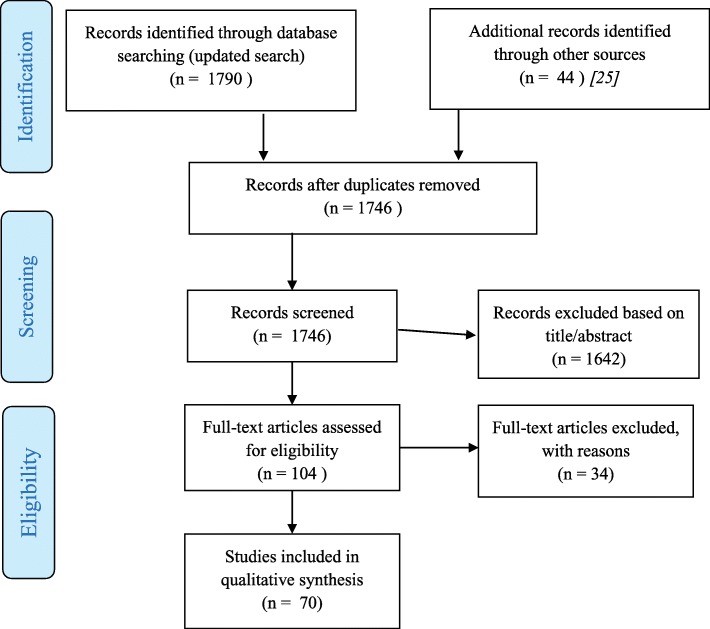
For decades, clinicians and researchers have recognized that borderline personality disorder (BPD) and substance use disorders (SUDs) are often diagnosed within the same person (e.g., (Gunderson JG. Borderline personality disorder: A clinical guide. Washington, D.C.: American Psychiatric Press, 2001; Leichsenring et al., Lancet 377:74-84, 2011; Paris J. Borderline personality disorder: A multidimensional approach. American Psychiatric Pub, 1994; Trull et al., Clin Psychol Rev 20:235-53, 2000)). Previously, we documented the extent of this co-occurrence and offered a number of methodological and theoretical explanations for the co-occurrence (Trull et al., Clin Psychol Rev 20:235-53, 2000). Here, we provide an updated review of the literature on the co-occurrence between borderline personality disorder (BPD) and substance use disorders (SUDs) from 70 studies published from 2000 to 2017, and we compare the co-occurrence of these disorders to that documented by a previous review of 36 studies over 15 years ago (Trull et al., Clin Psychol Rev 20:235-53, 2000).
Overview
The claims and statistics of this paper haven’t been checked yet.
Free: it reads the open-access text and checks the first 5 claims that cite a source we can check. Create a free account to check every claim.
Integrity signals
Registry
Cites
Statistics
Figures
Verification
Claims the paper makes
The claims and statistics of this paper haven’t been checked yet.
Free: it reads the open-access text and checks the first 5 claims that cite a source we can check. Create a free account to check every claim.
Claims other papers make about this one
Each is checked against this paper’s own text: does it say what the citing paper says it does?
The source backs part of the claim, not all of it — or backs it for a different population, condition or comparison.
In the citing paper
“Consistent with prior research in non-AIAN samples, poverty, acculturation, and personality disorders [95,96,97,98] appear to be risk factors for addiction in AIAN individuals as well [33,43,50].”
From Substance and Behavioral Addictions among American Indian and Alaska Native Populations (2022) · cites this paper as [98]
Experimental — accuracy not yet measuredThe cited source says what the claim attributes to it.
In the citing paper
“Around half of those with BPD also have an SUD, and around a quarter of those with an SUD also meet criteria for BPD (Trull et al., 2018).”
From Distress tolerance across substance use, eating, and borderline personality disorders: A meta-analysis (2022) · cites this paper as Trull et al., 2018
The cited source says what the claim attributes to it.
In the citing paper
“Around half of those with BPD also have an SUD, and around a quarter of those with an SUD also meet criteria for BPD (Trull et al., 2018).”
From Distress tolerance across substance use, eating, and borderline personality disorders: A meta-analysis (2022) · cites this paper as Trull et al., 2018
Self-check
Percentages, sums and reported differences re-computed from the paper’s own numbers.
The self-check needs the paper’s full text.
Citations
Cites
Diagnostic and Statistical Manual of Mental Disorders
American Psychiatric Association (2013) · doi:10.1176/appi.books.9780890425596 · Cited by 116,369
Diagnostic and Statistical Manual of Mental Disorders
Williams, J. B. W., & First, M. (2013) · Encyclopedia of Social Work · doi:10.1093/acrefore/9780199975839.013.104 · Cited by 109,519
Preferred Reporting Items for Systematic Reviews and Meta-Analyses: the PRISMA statement
Moher, D., Liberati, A., Tetzlaff, J., Altman, D. G., & for the PRISMA Group (2009) · BMJ · doi:10.1136/bmj.b2535 · Cited by 83,823
Preferred Reporting Items for Systematic Reviews and Meta-Analyses: The PRISMA Statement
Moher, D., Liberati, A., Tetzlaff, J., Altman, D. G., & The PRISMA Group (2009) · PLoS Medicine · doi:10.1371/journal.pmed.1000097 · Cited by 64,042 · cited 1×
“1 for PRISMA Flow Diagram of study selection and exclusion process [26].”
Preferred reporting items for systematic reviews and meta-analyses: the PRISMA Statement.
(2009) · PubMed Central · Cited by 44,859
Wang, G., Ma, R., Qiao, G., Wada, K., Aizawa, Y., & Satoh, T. (2015) · Integrative Medicine International · doi:10.1159/000368408 · Cited by 18,657
(1993) · Cited by 7,136
Cognitive-Behavioral Treatment of Borderline Personality Disorder
Cary, G. L. (1994) · American Journal of Psychotherapy · doi:10.1176/appi.psychotherapy.1994.48.1.155 · Cited by 6,283
DSM-IV Personality Disorders in the National Comorbidity Survey Replication
Lenzenweger, M. F., Lane, M. C., Loranger, A. W., & Kessler, R. C. (2007) · Biological Psychiatry · doi:10.1016/j.biopsych.2006.09.019 · Cited by 1,352
Crowell, S. E., Beauchaine, T. P., & Linehan, M. M. (2009) · Psychological Bulletin · doi:10.1037/a0015616 · Cited by 1,292 · cited 1×
“Contemporary theories suggest that emotion dysregulation as well as impulsivity figure prominently in the development of both disorders [20, 21, 28, 29].”
Background
Research works printed but not linked: 1
- 63. Dammann G, Gerber H, Denier N, Schmid O, Huber C, Riecher-Rossler A, et al. The influence of comorbid personality disorder on patients in heroin- assisted treatment: Pilot data on clinical outcome. Heroin Addict Relat Clin Prob. 2017; in press
Cited by
Items 101–200 of 237
Diagnostic profiles among suicide decedents with and without borderline personality disorder
Kaufman, E. A., Coon, H. H., Shabalin, A. A., Monson, E. T., Chen, D., Staley, M., Keeshin, B. R., Docherty, A. R., Bakian, A. V., & DiBlasi, E. (2024) · Psychological Medicine · doi:10.1017/s0033291724002034 · Cited by 4
Borderline Personality Disorder Among Justice-Involved Populations
Smith, M. D., Kromash, R., Siebert, S. L., Allison, G. J., & Moore, K. E. (2022) · Springer eBooks · doi:10.1007/978-3-030-80882-2_12 · Cited by 5
Santens, E., Dom, G., Dierckx, E., & Claes, L. (2022) · Journal of Clinical Medicine · doi:10.3390/jcm11030591 · Cited by 4
Wojtynkiewicz, E., & Sekowski, M. M. (2022) · Personality and Mental Health · doi:10.1002/pmh.1545 · Cited by 4
Szerman, N., Carlos, P., Pinet, C., Martínez-Raga, J., Basurte, I., & Sáiz, P. A. (2022) · Actas Españolas de Psiquiatría · Cited by 5
Loya, J. M., Tangney, J. P., & Stuewig, J. B. (2022) · Journal of Personality Disorders · doi:10.1521/pedi.2022.36.5.623 · Cited by 4
McCool, M. W., Mochrie, K. D., Lothes, J. E., II, Guendner, E., John, J. S., & Noel, N. E. (2023) · Journal of Clinical Psychology · doi:10.1002/jclp.23564 · Cited by 4
Scamaldo, K. M., Tull, M. T., & Gratz, K. L. (2020) · Psychiatry Research · doi:10.1016/j.psychres.2020.113609 · Cited by 5
Russell, N. M., Frier, M. D., Bortolato, M., & Mangieri, R. A. (2026) · Psychopharmacology · doi:10.1007/s00213-025-06938-0 · Cited by 3
Laffite, H., Díaz-Garrido, J. A., Ordóñez-Carrasco, J. L., Fleta, J. L. H., & Loredo, V. M. (2025) · Borderline Personality Disorder and Emotion Dysregulation · doi:10.1186/s40479-025-00316-0 · Cited by 3
“In this context, substance use may serve as a maladaptive coping strategy to manage trauma-related distress, especially in individuals with elevated emotion dysregulation [59].”
Zanarini, M. C., Temes, C. M., Glass, I. V., Frankenburg, F. R., Fitzmaurice, G. M., Unruh, B. T., & Weiss, R. D. (2025) · American Journal on Addictions · doi:10.1111/ajad.70012 · Cited by 3
Unseen dualities: underdiagnosis of substance use disorders in borderline personality disorder
Nabel, J., Bertele, S., Stapel, B., Scharn, N., & Kahl, K. G. (2025) · Frontiers in Psychiatry · doi:10.3389/fpsyt.2025.1539611 · Cited by 4
“This is in line with fi ndings from a dedicated review article reporting a prevalence of 22.1% for current BPD among cases with a current SUD across studies (15).”
InfluentialWojciechowski, T. W. (2021) · Journal of Psychoactive Drugs · doi:10.1080/02791072.2021.2009067 · Cited by 3
“BPD is associated with deleterious outcomes, including: self-injury, risky sexual behaviors, and drug use (Choukas-Bradley et al. 2020; Trull et al. 2018; Turner et al. 2015).”
BackgroundXie, W., Emery, C. R., Liu, A. Y., Ng, S., Choi, A. W., & CHUI, C. H.-K. (2023) · Development and Psychopathology · doi:10.1017/s0954579423001098 · Cited by 4
“Specifically, current rates of co-occurrence of BPD and AUD were elevated among clinical samples, with some studies recording up to 64% of adults experiencing both conditions (see a review: Trull et al., 2018).”
InfluentialMazloumi, F., Pourasghar, M., & Shariatnia, K. (2024) · doi:10.61838/kman.jayps.5.5.11 · Cited by 3
Livingston, N. R., & Stanton, K. J. (2024) · Personality and Mental Health · doi:10.1002/pmh.1635 · Cited by 3
Ward, M., Benjamin, I., & Zimmerman, M. A. (2021) · Journal of Personality Disorders · doi:10.1521/pedi_2021_35_536 · Cited by 3
Azad, M., Taremian, F., & Shakiba, S. (2025) · Early Intervention in Psychiatry · doi:10.1111/eip.70040 · Cited by 3
Abboud, A. E., Schiebrel, C. M., Nahhas, R. W., Durkin, S., Hua, K., Redding, H., & Gainer, D. M. (2025) · Journal of Psychoactive Drugs · doi:10.1080/02791072.2025.2511752 · Cited by 2
Relationship between childhood parentification, adult attachment styles, and addiction: a review
Demirtaş, S. Ç., Yeşiloğlu, C., & Tamam, L. (2025) · Journal of Dependence · doi:10.51982/bagimli.1721080 · Cited by 2
“(12,42)This finding extends the impact of parentification into the domain of severe psychopathology, suggesting that attachment disruptions from parentification may contribute even to the development of psychosis-related personality patterns.”
Silva, S. G., Pedro, M. O. P., & Castaldelli-Maia, J. M. (2026) · Sao Paulo Medical Journal · doi:10.1590/1516-3180.2024.0480.r1.04112025 · Cited by 2
Affective Factors in the Co-Occurrence of Personality Disorders and Substance Use Disorders
Wycoff, A. M., & Trull, T. J. (2026) · Current Addiction Reports · doi:10.1007/s40429-026-00719-1 · Cited by 2
“Ample research documents high rates of co-occurrence between personality disorders (PDs) and substance use disorders (SUDs) [1–5].”
Self-citationHall, A. S. M., Musliner, K. L., Debost, J.-C., Vilhjálmsson, B. J., Chang, Z., D'Onofrio, B. M., Lichtenstein, P., Kuja‐Halkola, R., & Brikell, I. (2026) · Translational Psychiatry · doi:10.1038/s41398-026-04001-w · Cited by 3
“Accidental poisoning, which showed the highest genetic correlation with BPD among accident-related phenotypes, may be capturing some misclassi fi ed self-harm/suicide attempts [58] and harmful substance use, both associated with BPD [59, 60].”
Rady, A. M., Abdelkarim, A., Ivanoff, A. M., & Molokhia, T. K. (2021) · Current Psychiatry Research and Reviews · doi:10.2174/2666082217666210716130354 · Cited by 2
Guevara, S. A. B., & Paredes, O. E. L. (2021) · Revista Cientifica Ciencia Medica · doi:10.51581/rccm.v23i2.339 · Cited by 2
Taufique, S. R., Weller, R. E., Johnson, B., & Herring, J. M. (2021) · Children s Health Care · doi:10.1080/02739615.2021.1984241 · Cited by 2
Mannion, E., Lukens, J. M., Solomon, P., Lowery, M., & Snitzer, L. (2021) · Family Process · doi:10.1111/famp.12711 · Cited by 2
Hwang, B. J., Unruh, B. T., & Kast, K. A. (2022) · Journal of the Academy of Consultation-Liaison Psychiatry · doi:10.1016/j.jaclp.2022.08.003 · Cited by 2
Transtorno de Personalidade Borderline
de Paula, R. C. C., & Júnior, H. S. D. F. (2023) · Revista Eletrônica Acervo Saúde · doi:10.25248/reas.e12699.2023 · Cited by 2
Tsyngauz, E., Chiu, A. K., & Faruqui, Z. (2023) · Cureus · doi:10.7759/cureus.45253 · Cited by 2
“According to a review of studies that compare the prevalence of substance use disorders in patients with BPD, the prevalence has been as high as 53.19% [9].”
BackgroundInfluentialЛюбов, Е. Б., & Zotov, P. B. (2023) · Суицидология · doi:10.32878/suiciderus.23-14-04(53)-39-56 · Cited by 2
Chen, J. J., Mermin, S. A., Duffy, L., Wong, S., Layfield, S., Rodriguez‐Villa, F., Gelda, S. E., Gelwan, E. M., Eisen, J., Ressler, K. J., et al. (2025) · BMC Psychiatry · doi:10.1186/s12888-025-06928-8 · Cited by 3
Advance Statements to Prevent Treatment Disengagement in Substance Use Disorders
Penzenstadler, L. E., Soares, C., Machado, A., Rothen, S., Picchi, A., Ferrari, P., ZULLINO, D. F., & Khazaal, Y. (2019) · The Canadian Journal of Addiction · doi:10.1097/cxa.0000000000000067 · Cited by 2
Baggio, S., Baudat, S., Daeppen, J., Gmel, G. E., Heller, P., Perroud, N. A., Rothen, S., Sporkert, F., Studer, J., Wolff, H. J., et al. (2020) · Addictive Behaviors · doi:10.1016/j.addbeh.2020.106354 · Cited by 2
“, 2018), bipolar disorder (Di Florio, Craddock, & van den Bree, 2014), antisocial personality disorder (Compton, Conway, Stinson, Colliver, & Grant, 2005), and borderline personality disorder (Trull et al., 2018).”
BackgroundSpecific Anthropology of Vulnerabilities, Substance Misuse, Addiction and Secondary Psychoses
Messas, G. P. (2021) · Springer eBooks · doi:10.1007/978-3-030-62724-9_7 · Cited by 2
Profile of egyptian patients with borderline personality disorder with and without comorbidity
Morsy, M. H. A., El-Ghamry, R. H., Omar, A. N., Zaki, N., ElShahawi, H. H., Naoom, D., & Hashim, R. (2021) · Egyptian Journal of Psychiatry · doi:10.4103/ejpsy.ejpsy_4_21 · Cited by 2
Birds of a Feather Flock Together: Concurrent Personality Disorders and Substance Use Disorders
Fraser, R., Isaif, L., & Laporte, L. (2021) · The Canadian Journal of Addiction · doi:10.1097/cxa.0000000000000126 · Cited by 2
Marceau, E. M., Holmes, G., Mullaney, L., & Grenyer, B. F. S. (2023) · International Journal of Mental Health and Addiction · doi:10.1007/s11469-023-01152-5 · Cited by 1
“…align with the high cooccurrence of SUD and BPD in adults that is well documented in the literature: Depending on index samples, approximately half of those with BPD meet criteria for at least one current SUD, and one quarter of those with SUD also meet criteria for BPD (Trull et al., 2018).”
Personality Disorders: Diagnosis, Assessment, and Intervention Strategies
Lingiardi, V., Muzi, L., & Boldrini, T. (2024) · Cambridge University Press eBooks · doi:10.1017/9781009067287.021 · Cited by 1
Farmanbar, F., Maredpour, A., & MALEKZADEH, M. H. (2024) · doi:10.61838/kman.jayps.5.2.7 · Cited by 1
Cavicchioli, M., Mambreani, J., Conti, G., Mazoli, S., Galli, F., & Begarani, M. (2025) · Journal of Clinical Psychology · doi:10.1002/jclp.23799 · Cited by 1
Borderline Personality and Substance Use Disorder: the Role of Attachment Styles and Mindfulness
Rueda, B., Diego, G. A., Aguirre, U., Herrero, M., & Estévez, A. (2025) · Journal of Psychopathology and Behavioral Assessment · doi:10.1007/s10862-025-10238-4 · Cited by 2
“The systematic review by Trull et al. (2018), based on 70 studies published between 2000 and 2017, reports that approximately 25% of individuals with SUD also present BP.”
Woods, K., Dunn, R., Smith, I., & Basilio, D. D. (2025) · Journal of Autism and Developmental Disorders · doi:10.1007/s10803-025-07050-0 · Cited by 1
Choudhari, N., Narayan, G., & Mahadevan, J. (2026) · Industrial Psychiatry Journal · doi:10.4103/ipj.ipj_286_25 · Cited by 1
Bozzatello, P., Brasso, C., Marin, G., Lerda, G., Rocca, P., & Bellino, S. (2026) · BMC Psychiatry · doi:10.1186/s12888-026-08394-2 · Cited by 1
“Overall, our findings confirmed and extended available evidence suggesting the key role of emotional dysfunction and impulsive dyscontrol as shared vulnerability dimensions underlying SUD in comorbidity with BPD [36, 59, 60].”
InfluentialAnthropological Disproportions (Anthropopathologies)
Messas, G. P. (2021) · Springer eBooks · doi:10.1007/978-3-030-62724-9_3 · Cited by 1
Research on the Borderline Personality Disorder and Treatment
Yao, X. (2021) · International Conference on Public Health and Data Science (ICPHDS) · doi:10.1109/icphds53608.2021.00057 · Cited by 1
Tucker, M. G., Hill, H., Nicholson, E., & Moylan, S. (2021) · International Journal of Mental Health and Addiction · doi:10.1007/s11469-021-00576-1 · Cited by 1
Borderline Personality Disorder: Contemporary Approaches to Conceptualization and Etiology
Trull, T. J., & Hepp, J. (2023) · Oxford University Press eBooks · doi:10.1093/med-psych/9780197542521.003.0028 · Cited by 6
Self-citationPuiu, M. G., Chele, G. E., Riga, S., & Manea, M. C. (2023) · Bulletin of Integrative Psychiatry · doi:10.36219/bpi.2023.2.02 · Cited by 1
“Co-occurring of alcohol dependence with different types of personality disorders is also frequently described in the existing literature (42, 43, 44).”
Erdős, M. B., Karpati, T., Rozgonyi, R., & Jávor, R. (2023) · Mental Health and Social Inclusion · doi:10.1108/mhsi-06-2023-0071 · Cited by 1
Dialectical Behavior Therapy Skills Affecting Drinking in Daily Life
McCool, M. W. (2023) · Alcoholism Treatment Quarterly · doi:10.1080/07347324.2023.2251910 · Cited by 1
Brañas, M. J. A. A., Frankenburg, F. R., Temes, C. M., Fitzmaurice, G. M., & Zanarini, M. C. (2023) · The Journal of Clinical Psychiatry · doi:10.4088/jcp.22m14756 · Cited by 1
Wootton, S., Tkazky, S., & Bergstrøm, H. (2024) · Journal of Forensic Practice · doi:10.1108/jfp-10-2023-0046 · Cited by 1
Fall, E. A. (2020) · Digital Archive @ GSU · doi:10.57709/20536380 · Cited by 1
Høye, A., Jacobsen, B. K., Bramness, J. G., Nesvåg, R., Reichborn‐Kjennerud, T., & Heiberg, I. H. (2021) · Social Psychiatry and Psychiatric Epidemiology · doi:10.1007/s00127-021-02124-7 · Cited by 1
Wiley, J. C. (2022) · PsyArXiv (OSF Preprints) · doi:10.31234/osf.io/t9yhf · Cited by 1
Borderline Personality Disorder and Emergency Departments
Gölcük, Y., & Şahin, M. D. (2025) · Springer eBooks · doi:10.1007/978-3-031-40858-8_549-1 · Cited by 1
Bhui, K. S. (2018) · The British Journal of Psychiatry · doi:10.1192/bjp.2018.243
Developing a model of living with HIV in individuals with personality-related difficulties
Larsson, E. E. C. (2019)
Hooker, J. E. (2019) · Syracuse University Libraries (Syracuse University) · Cited by 1
Psychopathology and cognition as markers of risk for bipolar disorder
Mistry, S. (2020) · ORCA Online Research @Cardiff (Cardiff University)
Memory function in borderline personality disorder
Sajjadi, S. F. (2020) · Otago University Research Archive (University of Otago)
Chiesa, M., Atti, A. R., Licitra, M., Alberti, S., Epifani, A., Gilmozzi, R., & Pozzi, E. (2020) · PubMed · doi:10.36131/cnfioritieditore20200603
“…(Coffey, Schumacher, Baschnagel, Hawk, & Holloman, 2011) we found that psychotic disorder and substance abuse, often found in association with Cluster A and B PD (Trull et al., 2018), did not make a significant contribution to the prediction of PD as categorical and a dimensional constructs.”
BackgroundFamilial Aggregation of Executive Functioning in Borderline Personality Disorder
Koudys, J. W. (2019) · TSpace (University of Toronto)
Solanas, C. P. (2007) · Boletín del Museo e Instituto Camón Aznar · Cited by 1
Substance Use, Abuse, and Disorder Within Forensic Psychiatry
Karlén, M. H. (2022) · Springer eBooks · doi:10.1007/978-3-030-80882-2_17
Wojciechowski, T. W. (2022) · Criminal Justice Review · doi:10.1177/07340168221105000
“Individuals with BPD are at elevated risk for engagement in numerous behaviors, including substance abuse (Lane et al., 2016; Scalzo et al., 2018; Trull et al., 2018).”
BackgroundDBT bei Substanzgebrauchsstörungen (DBT-S)
Zimmermann, P. (2022) · Springer eBooks · doi:10.1007/978-3-662-64627-4_8
Cavicchi, G., Babić, D., Franjić, D., & Ćelić, I. (2023) · Zdravstveni glasnik · doi:10.47960/2303-8616.2023.17.13
Psychotherapeutic Approach to Borderline Personality Disorder
Liu, J. (2023) · Journal of Education Humanities and Social Sciences · doi:10.54097/ehss.v9i.6416
Shirazi, E., Motlagh, M. G., Shad, B. E., & Bakhshipoor, A. (2022) · doi:10.61838/kman.aftj.3.4.11 · Cited by 1
Mazloumi, F. (2024) · Carolina Digital Repository (University of North Carolina at Chapel Hill) · doi:10.17615/p3z8-hg38
Khalkhali, M., fard, M. T., Mousavi, S. Y., Ariannezhad, A., & Farrahi, H. (2024) · Addiction and Health · doi:10.34172/ahj.1501
“24,25 Despite this focus on the above personality disorders, some findings indicate that the association between substance use and personality disorders is not limited to borderline and antisocial traits/ disorders and avoidant, paranoid, and histrionic traits/ disorders, among others, are also…”
BackgroundGonçalves, A. P., & Carvalho, L. D. F. (2024) · Trends in Psychiatry and Psychotherapy · doi:10.47626/2237-6089-2024-0871
“Extreme levels of BPD traits significantly impair various aspects of patients’ lives, leading to difficulties in interpersonal relationship, 61 poor work performance, 1 suicidal tendencies, and substance abuse.”
إبراهيم, د. م. ث., شويخ, ه. أ. م., & سلیمان, م. ف. ع. (2024) · مجلة کلية الآداب بقنا · doi:10.21608/qarts.2024.276810.1905
The Application of Mindfulness in The Treatment of Borderline Personality Disorder
Duan, Y., & Lv, X. (2024) · Transactions on Materials Biotechnology and Life Sciences · doi:10.62051/4rd1jd15 · Cited by 1
“Among individuals in the general population or clinical settings who have a current diagnosis of AUD or alcohol dependence, the prevalence of BPD is roughly 12% to 17% [8].”
Diagnostic Perspectives of Borderline Personality Disorder
Salavati, M., & Selby, E. A. (2024) · Springer eBooks · doi:10.1007/978-3-031-75503-3_2
Pan, M. (2024) · University of North Texas Digital Library (University of North Texas) · doi:10.12794/metadc2415953
González-Mora, D. (2025) · Revista Española de Drogodependencias · doi:10.54108/10104
Gupta, M., Singh, G., & Dhyani, M. (2024) · ShodhKosh Journal of Visual and Performing Arts · doi:10.29121/shodhkosh.v5.i7.2024.4971
Borderline personality disorder: identification, comorbidity, and emerging treatment opportunities
Zobin, М. L. (2025) · Neurology Bulletin · doi:10.17816/nb677346
Practice Assessment Tool for the Care of Patients With Borderline Personality Disorder
Fochtmann, L. J., Medicus, J., Hong, S.-H., & Kuhl, E. A. (2025) · FOCUS The Journal of Lifelong Learning in Psychiatry · doi:10.1176/appi.focus.20250032
Das, J., Biswal, J., & Mohanty, R. (2025) · International Journal of Basic and Applied Sciences · doi:10.14419/e9zt3783
Harrison, R. E., Shyleika, V., Falkenstein, C., Garsevanidze, E., Vishnevskaya, O., Lonnroth, K., Sayakci, Ö., Sinha, A., Sitali, N., Skrahina, A. M., et al. (2022) · Figshare · doi:10.6084/m9.figshare.21256788
Getting a grip on Schizotypy: Elucidating dorsal stream deficits in Schizophrenia Spectrum Disorders
Shen, E. (2023) · ANU Open Research (Australian National University) · doi:10.25911/50ft-rv64
Wibbelink, C. J. M., Arntz, A. R., Grasman, R. P. P. P., Sinnaeve, R., Boog, M., Bremer, O. M. C., Dek, E. C. P., Alkan, S. G., James, C., Koppeschaar, A. M., et al. (2022) · Figshare · doi:10.6084/m9.figshare.19129058
Wibbelink, C. J. M., Arntz, A. R., Grasman, R. P. P. P., Sinnaeve, R., Boog, M., Bremer, O. M. C., Dek, E. C. P., Alkan, S. G., James, C., Koppeschaar, A. M., et al. (2022) · Figshare · doi:10.6084/m9.figshare.19129061
Amestoy, M. E., & Uliaszek, A. (2022) · TSpace (University of Toronto) · doi:10.17605/osf.io/qwt62
Shen, E. (2023) · ANU Open Research (Australian National University) · doi:10.25911/bvjc-sw05
Wibbelink, C. J. M., Arntz, A. R., Grasman, R. P. P. P., Sinnaeve, R., Boog, M., Bremer, O. M. C., Dek, E. C. P., Alkan, S. G., James, C., Koppeschaar, A. M., et al. (2022) · Figshare · doi:10.6084/m9.figshare.19129064
Wibbelink, C. J. M., Arntz, A. R., Grasman, R. P. P. P., Sinnaeve, R., Boog, M., Bremer, O. M. C., Dek, E. C. P., Alkan, S. G., James, C., Koppeschaar, A. M., et al. (2022) · Figshare · doi:10.6084/m9.figshare.19129055
González-Mora, D. (2025) · Repository of Digital Objects for Teaching Research and Culture (University of Valencia)
Sohlberg, E., & Thorström, J. (2023) · DiVA at Umeå University (Umeå University)
Resting State Functional Connectivity and Decision Making in Borderline Personality Disorder
Taha, A. Y. (2024) · UCL Discovery (University College London)
Laurence, B. (2022) · Knowledge UdeS (Institutional Deposit of the University of Sherbrooke)
Metadata
- Authors
- Trull, T. J., Freeman, L. K., Vebares, T. J., Choate, A. M., Helle, A. C., & Wycoff, A. M.
- Affiliations
- University of Missouri (US)
- Corresponding author
- Trull, Timothy J.
- ORCID
- Venue
- Borderline Personality Disorder and Emotion Dysregulation
- Published
- 2018-09-19
- Volume
- 5
- Issue
- 1
- Pages
- 15-15
- ISSN
- 2051-6673 (ISSN-L)
- PMC
- PMC6145127
- OpenAlex
- W2891113994
- Semantic Scholar
- 2cf4abd163eab97054e1066c08e26d06ab09da87
- Cited by
- 196
- References
- 114
- Citations by year
- 2026: 16 · 2025: 24 · 2024: 28 · 2023: 25 · 2022: 31 · 2021: 34 · 2020: 17 · 2019: 17 · 2018: 2
- FWCI
- 2.95
- Type
- journal article
- Language
- en
- Open access
- gold
- doi.org
- Licence
- cc-by
- creativecommons.org/licenses/by/4.0/ (tdm)
- Locations
- Borderline Personality Disorder and Emotion Dysregulation (publishedVersion, cc-by)
- Europe PMC (PubMed Central) (publishedVersion, other-oa)
- PubMed Central (publishedVersion, cc-by)
- PubMed (publishedVersion)
- DOAJ (DOAJ: Directory of Open Access Journals) (submittedVersion, cc-by-sa)
- Funders
- National Institute on Alcohol Abuse and Alcoholism (T32AA013526)
- Topics
- Social Sciences › Psychology › Clinical Psychology › Personality Disorders and Psychopathology
- Health Sciences › Medicine › Epidemiology › Substance Abuse Treatment and Outcomes
- Social Sciences › Psychology › Clinical Psychology › Personality Traits and Psychology
- Keywords
- borderline personality disorder, substance use disorders, comorbidities, co-occurrence of disorders, dual diagnosis, emotional dysregulation
About these checks
Registry, retraction, Cites and statistics results are computed, not judged, with one exception: a printed reference that no index lists is read once by a model before it counts as a citation error. Claims are extracted by a model and kept only when their quote appears verbatim in the text; each cited source is then checked, with a model’s help, for whether it says what the claim relies on. Those verdicts can be wrong — read the claim’s quote and the cited source before relying on one.
Statistics and arithmetic are recomputed, not judged.
Confidence bands are shown only for fields calibrated on our annotated test set. None is calibrated yet, so no band is shown.
What counts as a claim ›How we measure confidence ›How we check this ›
Are you an author, or do you see a problem with this page? Request a review
Data sources
Bibliographic data: Semantic Scholar, OpenAlex, Crossref.
Contains information from the Semantic Scholar Academic Graph Datasets, made available under the ODC Attribution License (ODC-BY 1.0).
Semantic Scholar’s data is described in: Kinney, R., et al. (2023). The Semantic Scholar Open Data Platform. arXiv:2301.10140.
