

Borderline personality disorder and substance use disorders: an updated review
Open accessThe DOI matches its Crossref record; 115 of the 115 references it cites were found in a registry or an index.
Abstract
For decades, clinicians and researchers have recognized that borderline personality disorder (BPD) and substance use disorders (SUDs) are often diagnosed within the same person (e.g., (Gunderson JG. Borderline personality disorder: A clinical guide. Washington, D.C.: American Psychiatric Press, 2001; Leichsenring et al., Lancet 377:74-84, 2011; Paris J. Borderline personality disorder: A multidimensional approach. American Psychiatric Pub, 1994; Trull et al., Clin Psychol Rev 20:235-53, 2000)). Previously, we documented the extent of this co-occurrence and offered a number of methodological and theoretical explanations for the co-occurrence (Trull et al., Clin Psychol Rev 20:235-53, 2000). Here, we provide an updated review of the literature on the co-occurrence between borderline personality disorder (BPD) and substance use disorders (SUDs) from 70 studies published from 2000 to 2017, and we compare the co-occurrence of these disorders to that documented by a previous review of 36 studies over 15 years ago (Trull et al., Clin Psychol Rev 20:235-53, 2000).
Overview
The claims and statistics of this paper haven’t been checked yet.
Free: it reads the open-access text and checks the first 5 claims that cite a source we can check. Create a free account to check every claim.
Integrity signals
Registry
Cites
Statistics
Figures
Verification
Claims the paper makes
The claims and statistics of this paper haven’t been checked yet.
Free: it reads the open-access text and checks the first 5 claims that cite a source we can check. Create a free account to check every claim.
Claims other papers make about this one
Each is checked against this paper’s own text: does it say what the citing paper says it does?
The source backs part of the claim, not all of it — or backs it for a different population, condition or comparison.
In the citing paper
“Consistent with prior research in non-AIAN samples, poverty, acculturation, and personality disorders [95,96,97,98] appear to be risk factors for addiction in AIAN individuals as well [33,43,50].”
From Substance and Behavioral Addictions among American Indian and Alaska Native Populations (2022) · cites this paper as [98]
Experimental — accuracy not yet measuredThe cited source says what the claim attributes to it.
In the citing paper
“Around half of those with BPD also have an SUD, and around a quarter of those with an SUD also meet criteria for BPD (Trull et al., 2018).”
From Distress tolerance across substance use, eating, and borderline personality disorders: A meta-analysis (2022) · cites this paper as Trull et al., 2018
The cited source says what the claim attributes to it.
In the citing paper
“Around half of those with BPD also have an SUD, and around a quarter of those with an SUD also meet criteria for BPD (Trull et al., 2018).”
From Distress tolerance across substance use, eating, and borderline personality disorders: A meta-analysis (2022) · cites this paper as Trull et al., 2018
Self-check
Percentages, sums and reported differences re-computed from the paper’s own numbers.
The self-check needs the paper’s full text.
Citations
Cites
Diagnostic and Statistical Manual of Mental Disorders
American Psychiatric Association (2013) · doi:10.1176/appi.books.9780890425596 · Cited by 116,369
Diagnostic and Statistical Manual of Mental Disorders
Williams, J. B. W., & First, M. (2013) · Encyclopedia of Social Work · doi:10.1093/acrefore/9780199975839.013.104 · Cited by 109,519
Preferred Reporting Items for Systematic Reviews and Meta-Analyses: the PRISMA statement
Moher, D., Liberati, A., Tetzlaff, J., Altman, D. G., & for the PRISMA Group (2009) · BMJ · doi:10.1136/bmj.b2535 · Cited by 83,823
Preferred Reporting Items for Systematic Reviews and Meta-Analyses: The PRISMA Statement
Moher, D., Liberati, A., Tetzlaff, J., Altman, D. G., & The PRISMA Group (2009) · PLoS Medicine · doi:10.1371/journal.pmed.1000097 · Cited by 64,042 · cited 1×
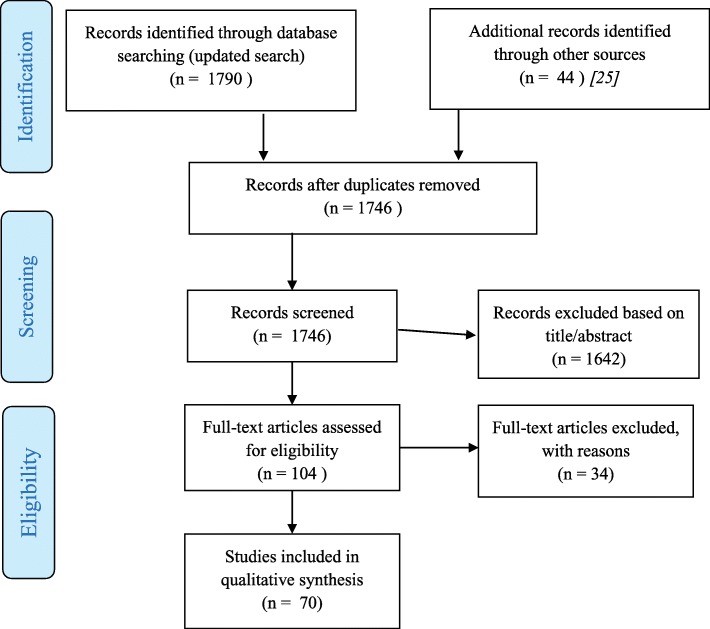
“1 for PRISMA Flow Diagram of study selection and exclusion process [26].”
Preferred reporting items for systematic reviews and meta-analyses: the PRISMA Statement.
(2009) · PubMed Central · Cited by 44,859
Wang, G., Ma, R., Qiao, G., Wada, K., Aizawa, Y., & Satoh, T. (2015) · Integrative Medicine International · doi:10.1159/000368408 · Cited by 18,657
(1993) · Cited by 7,136
Cognitive-Behavioral Treatment of Borderline Personality Disorder
Cary, G. L. (1994) · American Journal of Psychotherapy · doi:10.1176/appi.psychotherapy.1994.48.1.155 · Cited by 6,283
DSM-IV Personality Disorders in the National Comorbidity Survey Replication
Lenzenweger, M. F., Lane, M. C., Loranger, A. W., & Kessler, R. C. (2007) · Biological Psychiatry · doi:10.1016/j.biopsych.2006.09.019 · Cited by 1,352
Crowell, S. E., Beauchaine, T. P., & Linehan, M. M. (2009) · Psychological Bulletin · doi:10.1037/a0015616 · Cited by 1,292 · cited 1×
“Contemporary theories suggest that emotion dysregulation as well as impulsivity figure prominently in the development of both disorders [20, 21, 28, 29].”
Background
Research works printed but not linked: 1
- 63. Dammann G, Gerber H, Denier N, Schmid O, Huber C, Riecher-Rossler A, et al. The influence of comorbid personality disorder on patients in heroin- assisted treatment: Pilot data on clinical outcome. Heroin Addict Relat Clin Prob. 2017; in press
Cited by
Items 201–237 of 237
ACT for multiple disadvantage and EUPD: Adapting a manual through consultation
Holland, H. S. (2024) · Nottingham ePrints (University of Nottingham)
Mendoza Trinidad, E. E. (2024) · El Repositorio Academico Digital de la UANL (Universidad Autónoma de Nuevo León)
Borderline och beroendeproblematik : Påverkan på symtombörda för män med beroendeproblematik
Fagerberg, K. (2025) · Publications (Mid Sweden University)
Análisis de constructos personales en el trastorno límite de la personalidad
Aragonès, V. S. (2023) · Dipòsit Digital de la Universitat de Barcelona (Universitat de Barcelona)
Ferreira, L. M. E. (2025) · Portuguese National Funding Agency for Science, Research and Technology (RCAAP Project by FCT)
Bowen, A. (2025) · Oxford University Research Archive (ORA) (University of Oxford) · doi:10.5287/ora-7jq5x79m2
Darmmikrobiom bei Borderline-Persönlichkeitsstörung
Ockel, S. (. M. ). (2026) · Dokumentenrepositorium der RUB (Ruhr University Bochum) · doi:10.13154/294-14214
Hamdullahpur, K., & Uliaszek, A. (2021) · TSpace (University of Toronto) · doi:10.17605/osf.io/3n7mb
Hogoboom, A., & Penttinen, M. (2025) · Tampere University Institutional Repository (Tampere University)
Kantian Perspectives on Drug Use and Drug Criminalization
Johnstad, P. G. (2026) · Criminal Justice Ethics · doi:10.1080/0731129x.2026.2644079
Herrera, B. C. (2025) · TITULA · Cited by 1
Martin, S. S. (2019) · theses.fr (ABES) · doi:10.70675/31e97cd6z44aaz43f8z9772z56f775d2c86a · Cited by 1
L'utilisation de la réalité virtuelle comme thérapie d'exposition dans la consommation d'alcool
Nègre, F. (2024) · theses.fr (ABES) · doi:10.70675/e235706ez79eaz4622za171zcfe4327f19a9
Impulsivité et controle inhibiteur dans le trouble de personnalité borderline
Barakat, N. (2025) · theses.fr (ABES) · doi:10.70675/11106d59z91bcz40bezbc53z5a85d21caf09
(2024) · American Psychiatric Association Publishing eBooks · doi:10.1176/appi.books.9798894551876.lg12
Pineda-García, G., Franco-Schilling, G., Ambrocio, K. R., Acevedo, S. P., López-Yee, L., & Hernández, R. C. L. (2026) · Suma Psicológica · doi:10.14349/sumapsi.2026.v33.n1.1
“It Was Like They'd Lit a Fuse”: A Mixed‐Methods Investigation Into Rage
Denson, T. F., Harmon‐Jones, E., Larsson, J., Curtis, A., Harries, T., & Miller, P. G. (2026) · Aggressive Behavior · doi:10.1002/ab.70076
Corona-Figueroa, B. A., Ruiz-Díaz, M., Sánchez, D. O., Nieto-Preciado, D., Venegas-Peña, H., Fernández-Plaschinski, M., Valenzuela-Acosta, A. C., & Mejía-Montoya, C. C. (2026) · Revista Española de Drogodependencias · doi:10.54108/10135
Riddell, L. M., Scott, S., & Hasson, F. (2026) · International Journal of Mental Health Nursing · doi:10.1111/inm.70299
Digital and Substance Dependence in the Post-Digital Era
Romeo, V. M. (2026) · Encyclopedia · doi:10.3390/encyclopedia6070160
“In these phenotypes, digital hyper-stimulation may intensify rejection sensitivity, rumination, and cue-driven craving via social-affective contingencies, thereby potentiating substance misuse episodes as short-term emotion regulation attempts [58].”
A gender perspective of dual diagnosis: a narrative review
Vilas, S. P., Arenas, L. P., Vidal‐Infer, A., & Tirado-Muñoz, J. (2026) · Irish Journal of Psychological Medicine · doi:10.1017/ipm.2026.10202
“The explanatory theories of such comorbidity suggest that emotional dysregulation as well as impulsivity may play a relevant role in the development of both disorders (Trull et al .”
der Linde, A. V. (2025) · University of the Witwatersrand, Johannesburg Institutional Repository on DSpace (University of the Witwatersrand, Johannesburg)
La thérapie comportementale dialectique
Speranza, M., & Perroud, N. (2025) · Carrefour des psychothérapies · doi:10.3917/dbu.chiro.2025.01.0295
Borderline personality disorder: Challenges in an inpatient setting
Chazhoor, J., & Younger, J. (2026) · Australasian Psychiatry · doi:10.1177/10398562261486316
Patología dual en trastornos de la personalidad y consumo de sustancias: revisión narrativa
Medina-Torres, J. D. (2026) · REVMEDUAS · doi:10.28960/revmeduas.3122-4342.v16.n2.009
Çarıkçı-Özgül, D. N., & Alkar, O. Y. (2026) · Dusunen Adam The Journal of Psychiatry and Neurological Sciences · doi:10.14744/dajpns.2026.00342
Sadeghi, A., Ngoy, A., George, T., Gowin, J. L., Ruocco, A. C., Tang, V. M., & Sloan, M. E. (2026) · Journal of Dual Diagnosis · doi:10.1080/15504263.2026.2726792
Yadav, K. (2024) · Advances in Nonlinear Variational Inequalities
ประสบการณ์ทำร้ายตนเองของผู้ใช้กัญชาเพื่อสันทนาการ
Chansuk, S., Ritmontree, S., & Bumrungros, J. (2025) · Journal of Health and Nursing Research (Journal of Boromarajonani College of Nursing, Bangkok)
Rull, M. D. R. (2023) · Rovira & Virgili repository
Pryor, J., Sawyer, A. C. P., Due, C., Watson, S., & Williams, A. S. (2026) · Infant Mental Health Journal · doi:10.1002/imhj.70119
“In general, BPD is prevalent among women who may encounter unique challenges related to accepting their identity as mothers (Zalewski et al., 2023) and expressing and regulating emotions when triggered by distress (Trull et al., 2018).”
Gil, I. A. (2026) · Index of Texas Archaeology Open Access Grey Literature from the Lone Star State
Der Einsatz von Dialektisch-Behavioraler Therapie bei der Behandlung von Suchterkrankungen
Marth, B., Humer, E. C., & Unterrainer, H. (2026) · Fortschritte der Neurologie · Psychiatrie · doi:10.1055/a-2954-0980
Personality disorder and substance use disorder: an updated review
Biswas, T., Naik, V., & Parmar, A. (2026) · Current Opinion in Psychiatry · doi:10.1097/yco.0000000000001127
Cowie, K. D., Syan, S. K., Bojman, K. M., Levitt, E. E., Rahman, L., Ahuja, D., Amlung, M. T., & MacKillop, J. M. (2026) · Journal of Personality Assessment · doi:10.1080/00223891.2026.2754523
Metadata
- Authors
- Trull, T. J., Freeman, L. K., Vebares, T. J., Choate, A. M., Helle, A. C., & Wycoff, A. M.
- Affiliations
- University of Missouri (US)
- Corresponding author
- Trull, Timothy J.
- ORCID
- Venue
- Borderline Personality Disorder and Emotion Dysregulation
- Published
- 2018-09-19
- Volume
- 5
- Issue
- 1
- Pages
- 15-15
- ISSN
- 2051-6673 (ISSN-L)
- PMC
- PMC6145127
- OpenAlex
- W2891113994
- Semantic Scholar
- 2cf4abd163eab97054e1066c08e26d06ab09da87
- Cited by
- 196
- References
- 114
- Citations by year
- 2026: 16 · 2025: 24 · 2024: 28 · 2023: 25 · 2022: 31 · 2021: 34 · 2020: 17 · 2019: 17 · 2018: 2
- FWCI
- 2.95
- Type
- journal article
- Language
- en
- Open access
- gold
- doi.org
- Licence
- cc-by
- creativecommons.org/licenses/by/4.0/ (tdm)
- Locations
- Borderline Personality Disorder and Emotion Dysregulation (publishedVersion, cc-by)
- Europe PMC (PubMed Central) (publishedVersion, other-oa)
- PubMed Central (publishedVersion, cc-by)
- PubMed (publishedVersion)
- DOAJ (DOAJ: Directory of Open Access Journals) (submittedVersion, cc-by-sa)
- Funders
- National Institute on Alcohol Abuse and Alcoholism (T32AA013526)
- Topics
- Social Sciences › Psychology › Clinical Psychology › Personality Disorders and Psychopathology
- Health Sciences › Medicine › Epidemiology › Substance Abuse Treatment and Outcomes
- Social Sciences › Psychology › Clinical Psychology › Personality Traits and Psychology
- Keywords
- borderline personality disorder, substance use disorders, comorbidities, co-occurrence of disorders, dual diagnosis, emotional dysregulation
About these checks
Registry, retraction, Cites and statistics results are computed, not judged, with one exception: a printed reference that no index lists is read once by a model before it counts as a citation error. Claims are extracted by a model and kept only when their quote appears verbatim in the text; each cited source is then checked, with a model’s help, for whether it says what the claim relies on. Those verdicts can be wrong — read the claim’s quote and the cited source before relying on one.
Statistics and arithmetic are recomputed, not judged.
Confidence bands are shown only for fields calibrated on our annotated test set. None is calibrated yet, so no band is shown.
What counts as a claim ›How we measure confidence ›How we check this ›
Are you an author, or do you see a problem with this page? Request a review
Data sources
Bibliographic data: Semantic Scholar, OpenAlex, Crossref.
Contains information from the Semantic Scholar Academic Graph Datasets, made available under the ODC Attribution License (ODC-BY 1.0).
Semantic Scholar’s data is described in: Kinney, R., et al. (2023). The Semantic Scholar Open Data Platform. arXiv:2301.10140.
