

Deep Learning applications for COVID-19
Open accessThe DOI matches its Crossref record; 188 of the 189 references it cites were found in a registry or an index.
Abstract
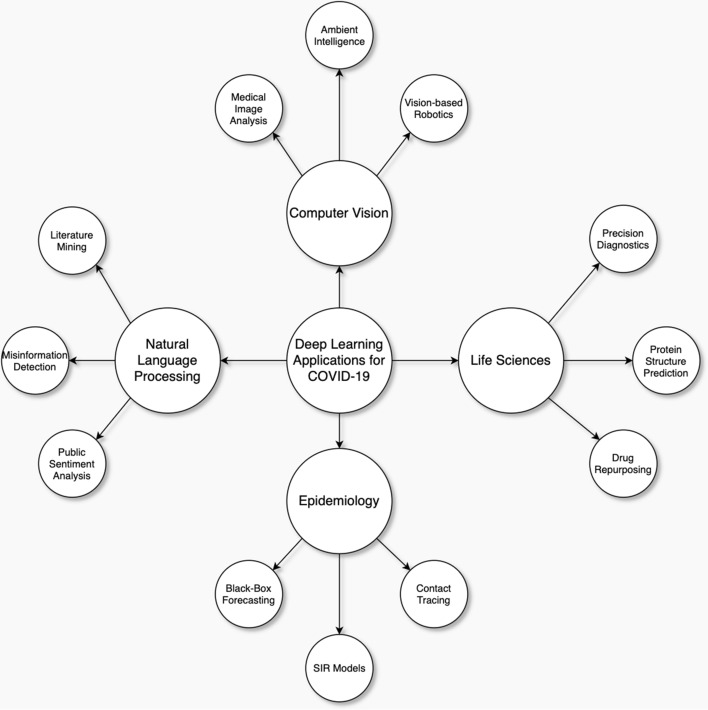
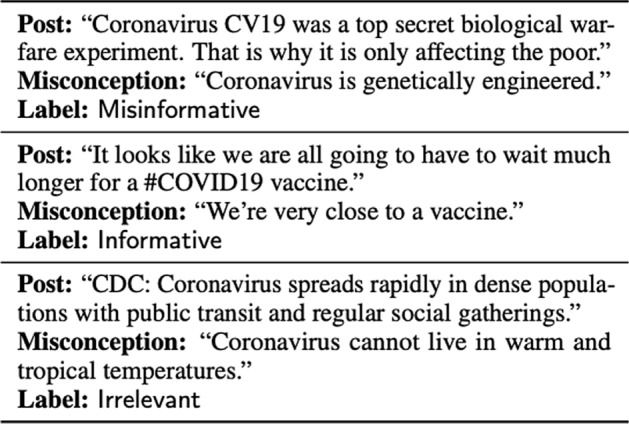
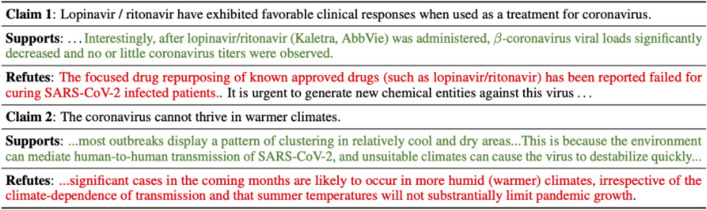
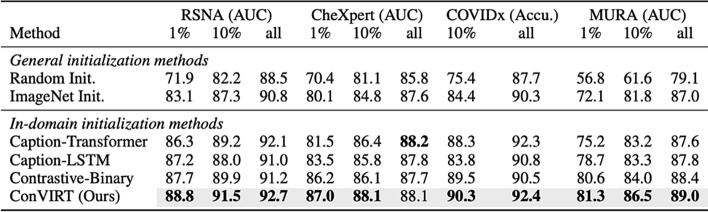
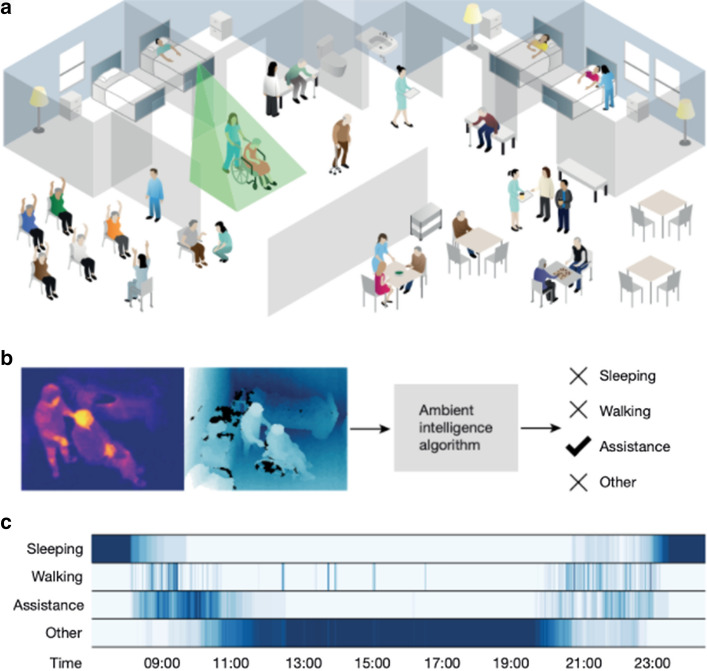
This survey explores how Deep Learning has battled the COVID-19 pandemic and provides directions for future research on COVID-19. We cover Deep Learning applications in Natural Language Processing, Computer Vision, Life Sciences, and Epidemiology. We describe how each of these applications vary with the availability of big data and how learning tasks are constructed. We begin by evaluating the current state of Deep Learning and conclude with key limitations of Deep Learning for COVID-19 applications. These limitations include Interpretability, Generalization Metrics, Learning from Limited Labeled Data, and Data Privacy. Natural Language Processing applications include mining COVID-19 research for Information Retrieval and Question Answering, as well as Misinformation Detection, and Public Sentiment Analysis. Computer Vision applications cover Medical Image Analysis, Ambient Intelligence, and Vision-based Robotics. Within Life Sciences, our survey looks at how Deep Learning can be applied to Precision Diagnostics, Protein Structure Prediction, and Drug Repurposing. Deep Learning has additionally been utilized in Spread Forecasting for Epidemiology. Our literature review has found many examples of Deep Learning systems to fight COVID-19. We hope that this survey will help accelerate the use of Deep Learning for COVID-19 research.
Overview
The claims and statistics of this paper haven’t been checked yet.
Free: it reads the open-access text and checks the first 5 claims that cite a source we can check. Create a free account to check every claim.
Integrity signals
Registry
Cites
Statistics
Figures
Verification
Claims the paper makes
The claims and statistics of this paper haven’t been checked yet.
Free: it reads the open-access text and checks the first 5 claims that cite a source we can check. Create a free account to check every claim.
Claims other papers make about this one
Each is checked against this paper’s own text: does it say what the citing paper says it does?
The source backs part of the claim, not all of it — or backs it for a different population, condition or comparison.
In the citing paper
“In 2020, DL is playing an increasingly vital role in early diagnosis of the novel coronavirus (COVID-19) [29, 46–48].”
From Review of deep learning: concepts, CNN architectures, challenges, applications, future directions (2021) · cites this paper as [29]
Experimental — accuracy not yet measured
Self-check
Percentages, sums and reported differences re-computed from the paper’s own numbers.
The self-check needs the paper’s full text.
Citations
Cites
Deep Residual Learning for Image Recognition
He, K., Zhang, X., Ren, S., & Sun, J. (2016) · 2016 IEEE Conference on Computer Vision and Pattern Recognition (CVPR) · doi:10.1109/cvpr.2016.90 · Cited by 235,474 · cited 6×
“This results in a 3% accuracy improvement over a more standard ResNet-50 architecture.”
MethodInfluentialVaswani, A., Shazeer, N., Parmar, N., Uszkoreit, J., Jones, L., Gomez, A. N., Kaiser, L., & Polosukhin, I. (2017) · arXiv · doi:10.48550/arxiv.1706.03762 · Cited by 120,404 · cited 2×
“NLP has seen a boom of interest due to the invention of the Transformer Neural Network architecture [21].”
BackgroundMethodImageNet classification with deep convolutional neural networks
Krizhevsky, A., Sutskever, I., & Hinton, G. E. (2017) · Communications of the ACM · doi:10.1145/3065386 · Cited by 112,155 · cited 8×
“AlexNet inspired further interest in Deep Neural Networks for Computer Vision.”
BackgroundInfluentialBERT: Pre-training of Deep Bidirectional Transformers for Language Understanding
Devlin, J., Chang, M.-W., Lee, K., & Toutanova, K. (2019) · Proceedings of the 2019 Conference of the North American Chapter of the Association for Computational Linguistics: Human Language Technologies, Volume 1 (Long and Short Papers) · doi:10.18653/v1/n19-1423 · Cited by 54,325
Densely Connected Convolutional Networks
Huang, G., Liu, Z., Van Der Maaten, L., & Weinberger, K. Q. (2017) · 2017 IEEE Conference on Computer Vision and Pattern Recognition (CVPR) · doi:10.1109/cvpr.2017.243 · Cited by 48,566
ImageNet Large Scale Visual Recognition Challenge
Russakovsky, O., Deng, J., Su, H., Krause, J., Satheesh, S., Ma, S., Huang, Z., Karpathy, A., Khosla, A., Bernstein, M., et al. (2015) · International Journal of Computer Vision · doi:10.1007/s11263-015-0816-y · Cited by 39,380 · cited 1×
“The success of Deep Computer Vision is largely attributed to the ImageNet dataset [82].”
Background(2008) · Journal of Machine Learning Research · Cited by 33,051
Exploring the Limits of Transfer Learning with a Unified Text-to-Text Transformer
Raffel, C., Shazeer, N., Roberts, A., Lee, K., Narang, S., Matena, M., Zhou, Y., Li, W., & Liu, P. J. (2019) · arXiv · doi:10.48550/arxiv.1910.10683 · Cited by 31,859 · cited 1×
“Some approaches to QA surveyed generate the answer directly [35], rather than classifying its presence in a context.”
BackgroundPyTorch: An Imperative Style, High-Performance Deep Learning Library
Paszke, A., Gross, S., Massa, F., Lerer, A., Bradbury, J., Chanan, G., Killeen, T., Lin, Z., Gimelshein, N., Antiga, L., et al. (2019) · arXiv · doi:10.48550/arxiv.1912.01703 · Cited by 31,473
Distributed Representations of Words and Phrases and their Compositionality
Mikolov, T., Sutskever, I., Chen, K., Corrado, G., & Dean, J. (2013) · arXiv · doi:10.48550/arxiv.1310.4546 · Cited by 24,533 · cited 1×
“A promising approach to this is the emphasis on evidence retrieval such as Retrieval-Augmented Generation [151].”
Background
Research works printed but not linked: 1
- Kingma D, Ba J. Adam: A method for stochastic optimization. In: International conference on learning representations; 2014.
Cited by
Items 201–300 of 350
CoSev: Data-Driven Optimizations for COVID-19 Severity Assessment in Low-Sample Regimes
Garg, A., Alag, S., & Duncan, D. (2024) · Diagnostics · doi:10.3390/diagnostics14030337 · Cited by 3
Fardela, R., Milvita, D., Almuhayar, M., Mardiansyah, D., Rasyada, L. A., & Hakim, L. (2024) · Journal of Computer Science · doi:10.3844/jcssp.2024.357.364 · Cited by 4
“To surmount these hurdles, researchers worldwide have devised numerous computer-assisted detection or diagnostic approaches grounded in medical image processing and machine learning (Alafif et al ., 2021; Alakus and Turkoglu, 2020; Shorten et al ., 2021).”
BackgroundHe, S. (2024) · Systems and Soft Computing · doi:10.1016/j.sasc.2024.200116 · Cited by 6
Efficient distributed continual learning for steering experiments in real-time
Bouvier, T., Nicolae, B., Costan, A., Biçer, T., Foster, I. T., & Antoniu, G. (2024) · Future Generation Computer Systems · doi:10.1016/j.future.2024.07.016 · Cited by 7
“Deep learning (DL) models are rapidly gaining traction both in industry and scientific computing in many areas, including speech and vision [1], climate science [2], fusion energy science [3], cancer research [4], personalized medicine [5] and pandemics [6].”
Architecture of Deep Learning and Its Applications
Dawood, A. S., & Faris, Z. M. (2023) · Iraqi Journal of Computer Communication Control and System Engineering · doi:10.33103/uot.ijccce.23.1.4 · Cited by 4
Susanti, L., & Estherina, R. (2022) · Edcomtech Jurnal Kajian Teknologi Pendidikan · doi:10.17977/um039v7i12022p079 · Cited by 10
Wang, W., Cai, J., Xu, J., Wang, Y., & Zou, Y. (2021) · Soft Computing · doi:10.1007/s00500-021-06142-0 · Cited by 3
“In the past research, some scholars used deep learning technology to realize the prediction of infectious diseases (Alakus & Turkoglu 2020) (Shorten et al. 2021) (Panwar et al.”
BackgroundAn LWE-Based Multi-Key Privacy-Preserving Distributed Deep Learning
Antwi‐Boasiako, E., Zhou, S., Liao, Y., & Danso, E. K. (2021) · IEEE International Conference on High Performance Computing and Communications; IEEE International Conference on Smart City; IEEE International Conference on Data Science and Systems (HPCC/SmartCity/DSS) · doi:10.1109/hpcc-dss-smartcity-dependsys53884.2021.00094 · Cited by 4
“Learning from limited data and privacy issues have been some of the main concerns of using deep learning to diagnose COVID-19 [34].”
BackgroundExploring Language-Interfaced Fine-Tuning for COVID-19 Patient Survival Classification
Shorten, C., Cardenas, E., Khoshgoftaar, T. M., Hashemi, J., Dalmida, S. G., Newman, D. M., Datta, D., Martinez, L. A., Sareli, C., & Eckard, P. (2022) · IEEE International Conference on Tools with Artificial Intelligence (ICTAI) · doi:10.1109/ictai56018.2022.00219 · Cited by 5
“Deep NLP is expanding into novel tasks for COVID-19 [7].”
BackgroundSelf-citationTong, Y., & Chen, R. (2023) · Research Square · doi:10.21203/rs.3.rs-3267317/v1 · Cited by 3
Ma, J. (2022) · Mathematical Problems in Engineering · doi:10.1155/2022/4137386 · Cited by 2
“Although computers have unlimited prospects for development, only computers are only a means of research, and if they are excessively relied upon, they lose the spiritual value and meaning of literary research [26].”
BackgroundNetwork Mathematical Virtual Data Analysis Model Based on Deep Learning Algorithm
Teng, X. (2024) · Procedia Computer Science · doi:10.1016/j.procs.2024.09.046 · Cited by 2
Automatic Detection of Coronaphobia in Twitter: Study Case of Republic of Panama
Cedeño-Moreno, D., Vargas-Lombardo, M., & Navarro, N. D. C. (2024) · Lecture notes in networks and systems · doi:10.1007/978-3-031-69228-4_7 · Cited by 2
Islam, M. Z., Rafi, M. F. A., Podder, P., Siddika, A., Kabir, M., Khan, E. M., Islam, A. K. M. N., & Mukta, S. H. (2025) · Data and Information Management · doi:10.1016/j.dim.2025.100104 · Cited by 3
Zhang, L., Song, X., Li, P., Yuan, Y., Wan, K., Huang, F., Guo, Y., & Zhang, H. (2025) · Arabian Journal of Chemistry · doi:10.25259/ajc_33_2025 · Cited by 2
Houssein, E. H., Dirar, A., Ibrahim, I. A., & Al-Sayed, M. M. (2026) · Archives of Computational Methods in Engineering · doi:10.1007/s11831-026-10628-1 · Cited by 2
Optimal Deep Dense Convolutional Neural Network Based Classification Model for COVID-19 Disease
Oliver, A. S., Suresh, P., Mohanarathinam, A., Kadry, S., & Thinnukool, O. (2021) · Computers, materials & continua/Computers, materials & continua (Print) · doi:10.32604/cmc.2022.019876 · Cited by 2
“COVID-19 dataset may contain triplets-labeled instances that easily segregate the affected and non-affected individuals [7].”
BackgroundChang, V. I. C., Ali, M. A., & Hossain, A. (2022) · Elsevier eBooks · doi:10.1016/b978-0-323-90054-6.00007-6 · Cited by 3
“Big data can also help provide opportunities and possible sources for the people that can help in having this stressful situation (Shorten, Khoshgoftaar, & Furht, 2021).”
BackgroundDevelopment of Website for COVID-19 Detection on Chest X-Ray Images
Cahyani, D. E., Satyananda, D., Yasin, M., Hariadi, A. D., Setyawan, F. F., & Setumin, S. (2022) · International Seminar on Research of Information Technology and Intelligent Systems (ISRITI) · doi:10.1109/isriti56927.2022.10053059 · Cited by 2
“COVID-19 detection using Chest X-Ray combined with deep learning techniques has good potential to diagnose COVID-19 automatically[9], [10].”
MethodSmart Artificial Intelligence techniques using embedded band for diagnosis and combating COVID-19
Ashwin, M., Alqahtani, A. S., & Mubarakali, A. (2023) · Microprocessors and Microsystems · doi:10.1016/j.micpro.2023.104819 · Cited by 3
Deep Learning Applications and Challenges for Healthcare System: A Review
Ahmed, S., Bhutto, A., & Bashir, F. (2023) · International Journal of Artificial Intelligence & Mathematical Sciences · doi:10.58921/ijaims.v1i2.34 · Cited by 2
Husain, A., & Vishwakarma, V. P. (2023) · Journal of Intelligent Systems · doi:10.1515/jisys-2022-0235 · Cited by 3
“The term deep in deep learning refers to stacking multiple layers, and the word learning refers to parameter optimization [ 7 ] .”
BackgroundRajeswari, K., Vispute, S. R., Maitre, A., Kharat, R. S., Aher, A., Vivekanandan, N., Kachhoria, R., & Jaiswal, S. (2023) · International Journal of Online and Biomedical Engineering (iJOE) · doi:10.3991/ijoe.v19i07.39089 · Cited by 2
Rajudin, M. N., Fadzil, A. F. B. A., Zapuan, N. N. M. M., Nordin, S., & Mangshor, N. N. A. (2023) · IEEE Control and System Graduate Research Colloquium (ICSGRC) · doi:10.1109/icsgrc57744.2023.10215472 · Cited by 2
Data-Driven Classification of Fatty Liver From 3D Unenhanced Abdominal CT Scans
Leiby, J. S., Lee, M. E., Choe, E. K., & Kim, D. (2023) · Lecture notes in computer science · doi:10.1007/978-3-031-45676-3_27 · Cited by 3
Object detection in optical imaging of the Internet of Things based on deep learning
Chen, R., Hei, L., & Lai, Y. (2023) · PeerJ Computer Science · doi:10.7717/peerj-cs.1718 · Cited by 5
Enhancing Augmentation-Based Resnet50 for Car Brand Classification
Sugiarto, T. A., Soeleman, M. A., & Pujiono, P. (2023) · Journal of Applied Intelligent System · doi:10.33633/jais.v8i3.9385 · Cited by 4
“The recognition of vehicle brands and models assumes a vital role in traffic monitoring [2], [9].”
BackgroundEnhanced SARS-CoV-2 case prediction using public health data and machine learning models
Price, B. S., Khodaverdi, M., Hendricks, B. M., Smith, G. S., Kimble, W., Halász, Á., Guthrie, S. K., Fraustino, J. D., & Hodder, S. (2024) · JAMIA Open · doi:10.1093/jamiaopen/ooae014 · Cited by 2
Deep Learning Applications for Healthcare Risk Assessment
Fateh, S., Shah, I. A., Sial, Q., & Jhanjhi, N. Z. (2024) · Advances in healthcare information systems and administration book series · doi:10.4018/979-8-3693-6577-9.ch004 · Cited by 2
Predict Mobile Legends Match Results Based on In-Game Conditions Using Deep Learning Models
Mukmin, C. S., Masyfa, F. H., Widiyaningtyas, T., Syahri, E. P. M., Wirawan, I. M., & Hidayati, L. (2024) · Beyond Technology Summit on Informatics International Conference (BTS-I2C) · doi:10.1109/bts-i2c63534.2024.10941825 · Cited by 2
Zhu, L., Liu, H., Zhao, J., Liang, K., Zhou, L., & Yang, J. (2025) · Expert Systems with Applications · doi:10.1016/j.eswa.2025.127357 · Cited by 7
Ahmad, S., & Parveen, R. (2025) · EDPACS · doi:10.1080/07366981.2025.2518666 · Cited by 2
“Current integrated models for performing multi-modal analysis are in the form of deep learning architectures; for example, CNNs for imaging and RNNs for sequential data (Connor et al., 2021).”
Machine Learning: Algorithms, Real World Applications and Research Directions
Al-Tameemi, M. N. (2025) · Academia Open · doi:10.21070/acopen.9.2024.10451 · Cited by 3
Sial, H. A., Carandell, F., Ajanovic, S. A., Jiménez, J., Quesada, R., Santos, F., Buck, W. C., Sidat, M., Bassat, Q., Jobst, B., et al. (2025) · Ultrasound in Medicine & Biology · doi:10.1016/j.ultrasmedbio.2025.04.009 · Cited by 4
Samee, N. M. A., Houssein, E. H., Saber, E., Hu, G., & Wang, M. (2025) · Knowledge-Based Systems · doi:10.1016/j.knosys.2025.114293 · Cited by 4
Review of Deep Learning: Architectures, Applications and Challenges
Sirmorya, A., Chaudhari, M., & Balasinor, S. (2022) · International Journal of Computer Applications · doi:10.5120/ijca2022922164 · Cited by 3
The Acceptability of Traditional Culture under the Background of Deep Learning
Sima, Q., & Wu, S. M. (2022) · Computational Intelligence and Neuroscience · doi:10.1155/2022/4010099 · Cited by 2
“[8] evaluated the current state of deep learning for natural language processing for information retrieval and question answering, as well as misinformation detection and public sentiment analysis.”
BackgroundRetractedSong, X., & Luan, F. (2022) · Computational Intelligence and Neuroscience · doi:10.1155/2022/5386737 · Cited by 2
Soomro, I., Mallah, R., Iqbal, M. J., Ahmed, W., & Ghafoor, A. (2023) · Pakistan Journal of Engineering Technology & Science · doi:10.22555/pjets.v11i2.1019 · Cited by 1
Multicriteria Recommender System: A New Model for Determining risk level of COVID-19 in IndonesiaPreprint
Hikmawati, E., Maulidevi, N. U., & Surendro, K. (2021) · Research Square · doi:10.21203/rs.3.rs-152475/v1 · Cited by 2
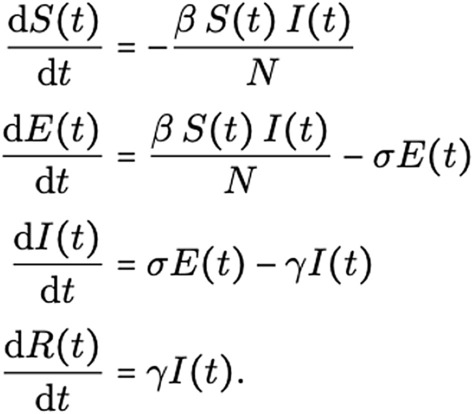
“( ) ( ) ( ) dS t I t S t dt N [1] ( ) ( ) ( ) ( ) dI t I t S t I t dt N [2] ( ) ( ) dR t I t dt [3] ( ) ( ) ( ) S t I t R t N [4]”
Student Satisfaction on Online Learning During Covid-19 Using Machine Learning Techniques
Singha, C., & Mohapatra, R. L. (2023) · International Conference on Sustainable Communication Networks and Application (ICSCNA) · doi:10.1109/icscna58489.2023.10370345 · Cited by 2
“Besides being more convenient, online learning also provides a good platform to students to acquire new methods of learning [32].”
BackgroundExploration on Malicious Encrypted Traffic Classification Based on Deep Learning
Cheng, K., Qiu, R., Li, L., Liang, L., Liu, T., Wu, Z., Wang, Q., Ren, M., & Qin, C. (2023) · International Conference on Ambient Intelligence, Knowledge Informatics and Industrial Electronics (AIKIIE) · doi:10.1109/aikiie60097.2023.10390209 · Cited by 2
“After the above processing, 10 samples including normal traffic and unencrypted traffic were finally obtained [18].”
Liu, B. (2024) · Procedia Computer Science · doi:10.1016/j.procs.2024.09.095 · Cited by 1
Iworiso, J., Mansi, N. E., Ocharive, A., & Fubara, S. (2024) · Journal of Data Analysis and Information Processing · doi:10.4236/jdaip.2025.131001 · Cited by 2
Xue, Y. (2024) · International Conference on Computational Intelligence and Communication Networks (CICN) · doi:10.1109/cicn63059.2024.10847324 · Cited by 1
“The best choice usually requires experimentation and cross validation to determine [17-18].”
Digital Transformation Challenges: Adaptation to AI Technologies in Service Marketing
Jenefa, L., & Jayakumar, M. (2025) · IGI Global eBooks · doi:10.4018/979-8-3373-0164-8.ch006 · Cited by 1
Karthi, S., Ramalingam, T., Iyswarya, R., & Kumar, D. A. (2025) · Computational Biology and Chemistry · doi:10.1016/j.compbiolchem.2025.108625 · Cited by 1
Zhou, Z., Wang, P., Su, H., Liu, D., & Zheng, X. (2025) · Physica A Statistical Mechanics and its Applications · doi:10.1016/j.physa.2025.131069 · Cited by 4
Real-time Covid-19 diagnosis on embedded IoT platforms
Benmalek, E., Rhalem, W., Jbari, A., Jilbab, A., & Mhamdi, J. E. (2025) · Informatyka Automatyka Pomiary w Gospodarce i Ochronie Środowiska · doi:10.35784/iapgos.7616 · Cited by 1
“These models are capable of directly analyzing CT scan images to accurately classify COVID-19 positive and negative cases, offering a valuable decision-support tool to complement traditional clinical diagnostics [2–17].”
Spatiotemporal dynamics of infectious diseases: From mechanistic models to data-driven models
Sun, G., Hou, L.-F., Luo, X., Liu, Q.-H., & Lu, X. (2026) · Journal of Data and Dynamic Systems · doi:10.1142/s3029286726300022 · Cited by 1
Yang, Y. (2022) · Computational Intelligence and Neuroscience · doi:10.1155/2022/1857100 · Cited by 2
“Deep learning (DL) technology, as a technology of machine learning, provides important technical support for the current blossom of various industries [1].”
BackgroundA Deep Learning Framework for COVID-19 Diagnosis from Computed Tomography
Mansouri, N., Sultan, K., Ahmad, A., Alseadoon, I. M., & Alkhalil, A. (2022) · Intelligent Automation & Soft Computing · doi:10.32604/iasc.2022.025046 · Cited by 2
The New Normal using Top-Notch Technologies: Artificial Intelligence & Quantum
Ankita, Mangla, C., & Rani, S. (2021) · IEEE Technology Policy and Ethics · doi:10.1109/ntpe.2021.9778160 · Cited by 1
Artificial Intelligence Techniques and Methodology Available for Lung Cancer Detection
Priya, P. K., & Sivakumar, T. (2023) · International Conference on Sustainable Computing and Smart Systems (ICSCSS) · doi:10.1109/icscss57650.2023.10169510 · Cited by 1
Deteksi Citra X-Ray Paru-Paru Terinfeksi COVID-19 dengan Algoritma CNN berbasis Aplikasi Web
Amir, S. B. H., Akbar, S. N. A. F., Hendra, H., Anwar, A. M., & Sulfayanti, S. (2023) · Informatika Mulawarman Jurnal Ilmiah Ilmu Komputer · doi:10.30872/jim.v17i1.6534 · Cited by 3
Gifani, P., Vafaeezadeh, M., Ghorbani, M., Mehri-Kakavand, G., Pursamimi, M., Shalbaf, A., & Davanloo, A. A. (2023) · Journal of Medical Signals & Sensors · doi:10.4103/jmss.jmss_158_21 · Cited by 3
“[24] performed a literature review on the battle of deep learning against the COVID‑19 pandemic.”
BackgroundLarge-Scale Knowledge Synthesis and Complex Information Retrieval from Biomedical Documents
(2023) · Journal of Anesthesia & Pain Medicine · doi:10.33140/japm.08.03.03 · Cited by 1
COVID-19 Diagnosis Through Deep Learning Techniques and Chest X-Ray Images
Negreiros, R. R. B., Silva, I. H. S., Alves, A. L. F., Valadares, D. C. G., Perkusich, Â., & Baptista, C. D. S. (2023) · SN Computer Science · doi:10.1007/s42979-023-02043-1 · Cited by 1
“Still in this field of surveys, [46] provide directions for future research on COVID-19 using deep learning, addressing the current state of Deep Learning and its limitations for applications related to COVID-19.”
BackgroundRamya, R., & Arokiaraj, S. P. (2024) · International Journal on Information Technologies and Security · doi:10.59035/vnwf2548 · Cited by 1
Mechanical Automation Acquisition System Based on Deep Learning and Big Data
Song, J., & Cui, M. (2024) · International Conference on Data Science and Information System (ICDSIS) · doi:10.1109/icdsis61070.2024.10594206 · Cited by 1
“Shorten C Explore the new infectious disease prevention and control technology based on deep learning [6].”
BackgroundKhan, M. S., Abualnaja, K. M., Sagheer, A., Memon, M. A., & Fenta, A. (2024) · AIP Advances · doi:10.1063/5.0239079 · Cited by 2
Harnessing the Power of Deep Learning
Anitha, V., & Reddy, C. K. K. (2025) · Advances in computational intelligence and robotics book series · doi:10.4018/979-8-3693-9077-1.ch013 · Cited by 1
COVID-19 prediction with doubly multi-task Gaussian Process
Kim, S., Lim, Y., Lim, S., Seo, G., Kim, J., Park, H., Jung, J., & Song, K. (2025) · Journal of Biomedical Informatics · doi:10.1016/j.jbi.2025.104872 · Cited by 1
Tomatala, M. F., & Mambu, J. Y. (2021) · International Conference on Cybernetics and Intelligent System (ICORIS) · doi:10.1109/icoris52787.2021.9649595 · Cited by 1
Bose, S. S. C., Kumar, A. V., Premkumar, A., Deepika, M., & Gokilavani, M. (2022) · Soft Computing · doi:10.1007/s00500-022-06943-x · Cited by 1
“The deep Learning method was developed in Connor Shorten et al. (2021) for COVID-19 applications.”
RetractedLSTM-based Model for Forecasting of COVID-19 Vaccines in Pakistan
Bashir, S., Rohail, K., & Qureshi, R. (2022) · doi:10.1109/icai55435.2022.9773668 · Cited by 1
Estimating the Basic Reproduction Number for the Second Wave of Covid-19 Pandemic in Nigeria
Wusu, A. S., Olabanjo, O. A., & Mazzara, M. (2022) · International Journal of Pure and Applied Mathematics Research · doi:10.51483/ijpamr.2.2.2022.1-9
“Deep learning models have also been proposed by authors in detecting the virus using medical images (Liu et al., 2022; Gaur et al. , 2021; Shorten et al. , 2021; Kaur and Kaur, 2021).”
MethodAnalysis spiritual intelligence of IAIN Bone students in learning in the covid-19 period
Irfan, A. (2022) · Ekspose Jurnal Penelitian Hukum dan Pendidikan · doi:10.30863/ekspose.v21i1.3399 · Cited by 1
Detection of multiple anomalous instances in video surveillance systems
Sharma, P., & Gangadharappa, M. (2022) · Journal of Intelligent & Fuzzy Systems · doi:10.3233/jifs-221925 · Cited by 1
“In recent years these models have had a critical role in the early detection of new coronaviruses(COVID-19) [15–17] which have become the most widely used technology for automatic corona identification and prediction utilizing chest X-ray images in hospitals worldwide.”
Retracted: Corona Virus Chest CT Scan Classification Using Deep Learning
Ishwarya, K., Arunadevi, R., Nandhini, G., Gurumoorthy, S., & Abinaya, K. (2023) · International Conference on Applied Intelligence and Sustainable Computing (ICAISC) · doi:10.1109/icaisc58445.2023.10199981 · Cited by 1
RetractedHowington, J., & Andrade, M. D. E. (2022) · Research Square · doi:10.21203/rs.3.rs-1721483/v2 · Cited by 1
Cmbatting COVID-19: Artificial Intelligence Technologies & ChallengesPreprint
Patel, N., Trivedi, S., & Chatterjee, J. M. (2022) · doi:10.14293/s2199-1006.1.sor-.ppvk63o.v1 · Cited by 3
Recent Machine Learning and Deep Learning Theories and Methods for COVID-19 DiagnosisPreprint
Tang, W. (2023) · Preprints.org · doi:10.20944/preprints202309.1746.v1 · Cited by 1
Dubey, A. K., Agarwal, S., Chabert, G. L., Sanga, P., Laird, J. R., Singh, I. M., Kalra, M. K., Višković, K., Singh, N., Fouda, M. M., et al. (2023) · Research Square · doi:10.21203/rs.3.rs-3688115/v1 · Cited by 1
DERİN SİNİR AĞLARI VE YENİDEN ÖRNEKLEME METOTLARI İLE RUTİN KAN TESTLERİNE DAYALI COVID-19 TESPİTİ
Tokmak, M., & Küçüksille, E. U. (2021) · Konya Journal of Engineering Sciences · doi:10.36306/konjes.877805
What Is Deep Learning and How Has It Helped the COVID-19 Pandemic?
Kartal, E., & Schwartz, O. (2021) · Advances in human services and public health (AHSPH) book series · doi:10.4018/978-1-7998-8674-7.ch018
Addala, V. (2021) · Proceedings of the World Congress on Electrical Engineering and Computer Systems and Science · doi:10.11159/icbes21.112
“This includes the ability to learn patterns to help make informed decisions [6].”
BackgroundCovid-19 Analysis and Prediction using Data Science and Machine Learning
Kulkarni, A. (2021) · International Journal for Research in Applied Science and Engineering Technology · doi:10.22214/ijraset.2021.39272
Boymuradov, S. A., Kurbonov, Y. K., & Djuraev, J. A. (2022) · The American Journal of Medical Sciences and Pharmaceutical Research · doi:10.37547/tajmspr/volume04issue01-02
Proceedings of the Sixth International Conference on Research in Intelligent and Computing
(2022) · Annals of Computer Science and Information Systems · doi:10.15439/978-83-962423-2-7
Fonnegra, R. D., Narváez, F., & Díaz, G. M. (2022) · Communications in computer and information science · doi:10.1007/978-3-030-99170-8_26
COVID-19 Analysis, Prediction, and Misconceptions
Balachandran, K., Kokatnoor, S. A., Reddy, V., & Prathap, B. R. (2022) · Advances in knowledge acquisition, transfer, and management book series/Advances in knowledge acquisition, transfer and management book series · doi:10.4018/978-1-7998-9805-4.ch010
Vibha, V. (2021) · Journal of Biomedical Engineering and Biosciences · doi:10.11159/jbeb.2021.005
A Survey on Chatbots in Healthcare Domain
(2022) · INTERANTIONAL JOURNAL OF SCIENTIFIC RESEARCH IN ENGINEERING AND MANAGEMENT · doi:10.55041/ijsrem14300 · Cited by 1
A Novel Approach towards Healthcare using Identity Access Management and Machine Learning
Sharma, R. (2022) · International Journal for Research in Applied Science and Engineering Technology · doi:10.22214/ijraset.2022.44459
Multi-class classification and modeling of the hospitalization status of COVID-19 patients
Adetiloye, T. O., Dansu, E. J., & Akinola, A. (2022) · IEEE Nigeria International Conference on Disruptive Technologies for Sustainable Development (NIGERCON) · doi:10.1109/nigercon54645.2022.9803121
Howington, J., & Andrade, M. D. E. (2022) · Research Square · doi:10.21203/rs.3.rs-1721483/v1
CHARACTERIZATION OF ARTIFICIALLY GENERATED 2D MATERIALS USING CONVOLUTIONAL NEURAL NETWORKS
Perkgöz, C., & Angi, M. Z. (2022) · Eskişehir Technical University Journal of Science and Technology A - Applied Sciences and Engineering · doi:10.18038/estubtda.1149416 · Cited by 1
Combatting COVID-19: Artificial Intelligence Technologies & ChallengesPreprint
Patel, N., Trivedi, S., & Chatterjee, J. M. (2022) · doi:10.14293/s2199-1006.1.sor-.ppvk63o.v2
Lung Segmentation Algorithm and SVM Classification of COVID-19 in CT Images
Gaeta-Ledesma, L. E., & Padilla, F. J. A. (2022) · World Congress on Medical Physics and Biomedical Engineering, September 7 - 12, 2009, Munich, Germany · doi:10.1007/978-3-031-18256-3_46
Vijayvargiya, S., Kumar, L., Murthy, L. B., & Misra, S. (2022) · Communications in computer and information science · doi:10.1007/978-3-031-19647-8_2
Role of artificial intelligence in the diagnosis of COVID-19
Mohammed, P. R., Gulati, S., & Gupta, S. (2022) · Journal of Acute Disease · doi:10.4103/2221-6189.357454
Covid Analysis Prediction Using Densenet Method in Deep Learning
Usha, M., Prittopaul, P., & Lekha, D. (2023) · Lecture notes in electrical engineering · doi:10.1007/978-981-19-7169-3_24
DHW 2021: Digital Humanities Workshop, Kyiv, Ukraine, 23 December 2021
Махачашвілі, Р. К., Мінтій, І. С., Проценко, О., & Semerikov, S. O. (2022) · doi:10.31812/123456789/6995
An analysis of Deep Learning Models for Detection of COVID-19 Diseases
Sri, D. B., Suma, K. S., Lalitha, R. V. S., & Devi, B. S. K. (2022) · International Conference on Parallel, Distributed and Grid Computing (PDGC) · doi:10.1109/pdgc56933.2022.10053162
(2023) · International Journal of Advanced Technology and Engineering Exploration · doi:10.19101/ijatee.2022.10100070
Journal Of Big Data: A Bibliometric AnalysisPreprint
Mishra, P., & Bhardwaj, M. (2023) · Research Square · doi:10.21203/rs.3.rs-3041418/v1 · Cited by 1
Aligholipour, O., & Sadaghiyanfam, S. (2023) · Communications in computer and information science · doi:10.1007/978-3-031-40395-8_17
Exploring deep learning techniques in healthcare sectors for clinical traits
Rajendran, A., Murugesan, T., Chinnasamy, N., Rao, G. B., Muthuraj, I., & Krishnamoorthy, M. (2023) · AIP conference proceedings · doi:10.1063/5.0153663
Actas del Congreso Internacional Virtual USATIC 2023, Ubicuo y Social: Aprendizaje con TIC
Alejandre Marco, J. L., & Allueva Pinilla, A. I. (. ). (2023) · Universidad de Zaragoza eBooks · doi:10.26754/uz.978-84-18321-84-9
Metadata
- Authors
- Shorten, C., Khoshgoftaar, T. M., & Furht, B.
- Affiliations
- Florida Atlantic University (US)
- Corresponding author
- Shorten, Connor
- Venue
- Journal of Big Data
- Published
- 2021-01-11
- Volume
- 8
- Issue
- 1
- Pages
- 18-18
- ISSN
- 2196-1115 (ISSN-L)
- PMC
- PMC7797891
- OpenAlex
- W3121263745
- Cited by
- 350
- References
- 175
- Citations by year
- 2026: 10 · 2025: 42 · 2024: 54 · 2023: 92 · 2022: 100 · 2021: 52
- FWCI
- 39.32
- Type
- journal article
- Language
- en
- Open access
- gold
- doi.org
- Licence
- cc-by
- creativecommons.org/licenses/by/4.0 (tdm)
- creativecommons.org/licenses/by/4.0 (vor)
- Locations
- Journal Of Big Data (publishedVersion, cc-by)
- PubMed Central (publishedVersion, cc-by)
- PubMed (publishedVersion)
- DOAJ (DOAJ: Directory of Open Access Journals) (submittedVersion, cc-by-sa)
- Funders
- National Science Foundation (IIS-2027890)
- Topics
- Health Sciences › Medicine › Radiology, Nuclear Medicine and Imaging › COVID-19 diagnosis using AI
- Health Sciences › Medicine › Health Informatics › Artificial Intelligence in Healthcare and Education
- Physical Sciences › Computer Science › Information Systems › Healthcare during COVID-19 Pandemic
- Keywords
- COVID-19 pandemic, deep learning applications, natural language processing, computer vision, information retrieval, question answering, misinformation detection, sentiment analysis, medical image analysis, ambient intelligence, vision-based robotics, precision diagnostics, protein structure prediction, drug repurposing, interpretability, limited labeled data, data privacy
About these checks
Registry, retraction, Cites and statistics results are computed, not judged, with one exception: a printed reference that no index lists is read once by a model before it counts as a citation error. Claims are extracted by a model and kept only when their quote appears verbatim in the text; each cited source is then checked, with a model’s help, for whether it says what the claim relies on. Those verdicts can be wrong — read the claim’s quote and the cited source before relying on one.
Statistics and arithmetic are recomputed, not judged.
Confidence bands are shown only for fields calibrated on our annotated test set. None is calibrated yet, so no band is shown.
What counts as a claim ›How we measure confidence ›How we check this ›
Are you an author, or do you see a problem with this page? Request a review
Data sources
Bibliographic data: Semantic Scholar, OpenAlex, Crossref.
Contains information from the Semantic Scholar Academic Graph Datasets, made available under the ODC Attribution License (ODC-BY 1.0).
Semantic Scholar’s data is described in: Kinney, R., et al. (2023). The Semantic Scholar Open Data Platform. arXiv:2301.10140.
