

Deep Learning applications for COVID-19
Open accessThe DOI matches its Crossref record; 188 of the 189 references it cites were found in a registry or an index.
Abstract
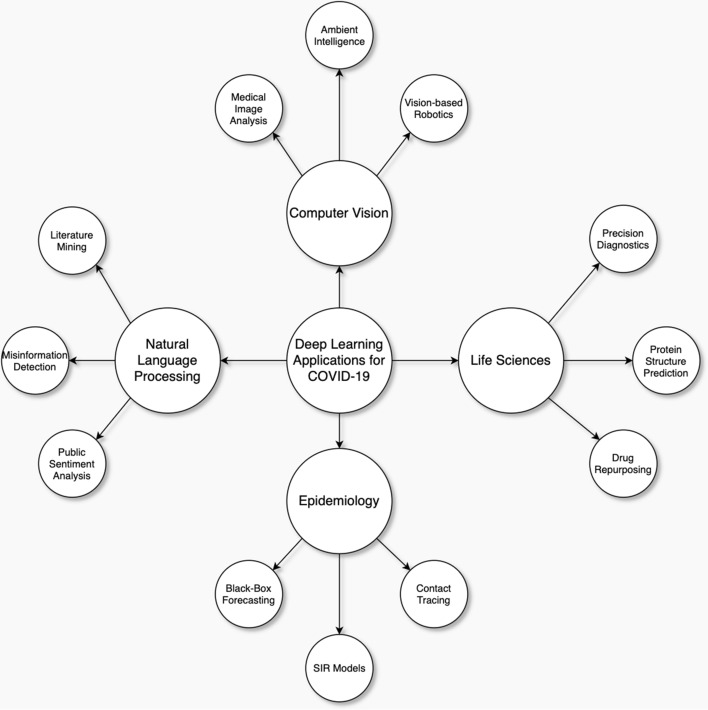
This survey explores how Deep Learning has battled the COVID-19 pandemic and provides directions for future research on COVID-19. We cover Deep Learning applications in Natural Language Processing, Computer Vision, Life Sciences, and Epidemiology. We describe how each of these applications vary with the availability of big data and how learning tasks are constructed. We begin by evaluating the current state of Deep Learning and conclude with key limitations of Deep Learning for COVID-19 applications. These limitations include Interpretability, Generalization Metrics, Learning from Limited Labeled Data, and Data Privacy. Natural Language Processing applications include mining COVID-19 research for Information Retrieval and Question Answering, as well as Misinformation Detection, and Public Sentiment Analysis. Computer Vision applications cover Medical Image Analysis, Ambient Intelligence, and Vision-based Robotics. Within Life Sciences, our survey looks at how Deep Learning can be applied to Precision Diagnostics, Protein Structure Prediction, and Drug Repurposing. Deep Learning has additionally been utilized in Spread Forecasting for Epidemiology. Our literature review has found many examples of Deep Learning systems to fight COVID-19. We hope that this survey will help accelerate the use of Deep Learning for COVID-19 research.
Overview
The claims and statistics of this paper haven’t been checked yet.
Free: it reads the open-access text and checks the first 5 claims that cite a source we can check. Create a free account to check every claim.
Integrity signals
Registry
Cites
Statistics
Figures
Verification
Claims the paper makes
The claims and statistics of this paper haven’t been checked yet.
Free: it reads the open-access text and checks the first 5 claims that cite a source we can check. Create a free account to check every claim.
Claims other papers make about this one
Each is checked against this paper’s own text: does it say what the citing paper says it does?
The source backs part of the claim, not all of it — or backs it for a different population, condition or comparison.
In the citing paper
“In 2020, DL is playing an increasingly vital role in early diagnosis of the novel coronavirus (COVID-19) [29, 46–48].”
From Review of deep learning: concepts, CNN architectures, challenges, applications, future directions (2021) · cites this paper as [29]
Experimental — accuracy not yet measured
Self-check
Percentages, sums and reported differences re-computed from the paper’s own numbers.
The self-check needs the paper’s full text.
Citations
Cites
Deep Residual Learning for Image Recognition
He, K., Zhang, X., Ren, S., & Sun, J. (2016) · 2016 IEEE Conference on Computer Vision and Pattern Recognition (CVPR) · doi:10.1109/cvpr.2016.90 · Cited by 235,474 · cited 6×
“This results in a 3% accuracy improvement over a more standard ResNet-50 architecture.”
MethodInfluentialVaswani, A., Shazeer, N., Parmar, N., Uszkoreit, J., Jones, L., Gomez, A. N., Kaiser, L., & Polosukhin, I. (2017) · arXiv · doi:10.48550/arxiv.1706.03762 · Cited by 120,404 · cited 2×
“NLP has seen a boom of interest due to the invention of the Transformer Neural Network architecture [21].”
BackgroundMethodImageNet classification with deep convolutional neural networks
Krizhevsky, A., Sutskever, I., & Hinton, G. E. (2017) · Communications of the ACM · doi:10.1145/3065386 · Cited by 112,155 · cited 8×
“AlexNet inspired further interest in Deep Neural Networks for Computer Vision.”
BackgroundInfluentialBERT: Pre-training of Deep Bidirectional Transformers for Language Understanding
Devlin, J., Chang, M.-W., Lee, K., & Toutanova, K. (2019) · Proceedings of the 2019 Conference of the North American Chapter of the Association for Computational Linguistics: Human Language Technologies, Volume 1 (Long and Short Papers) · doi:10.18653/v1/n19-1423 · Cited by 54,325
Densely Connected Convolutional Networks
Huang, G., Liu, Z., Van Der Maaten, L., & Weinberger, K. Q. (2017) · 2017 IEEE Conference on Computer Vision and Pattern Recognition (CVPR) · doi:10.1109/cvpr.2017.243 · Cited by 48,566
ImageNet Large Scale Visual Recognition Challenge
Russakovsky, O., Deng, J., Su, H., Krause, J., Satheesh, S., Ma, S., Huang, Z., Karpathy, A., Khosla, A., Bernstein, M., et al. (2015) · International Journal of Computer Vision · doi:10.1007/s11263-015-0816-y · Cited by 39,380 · cited 1×
“The success of Deep Computer Vision is largely attributed to the ImageNet dataset [82].”
Background(2008) · Journal of Machine Learning Research · Cited by 33,051
Exploring the Limits of Transfer Learning with a Unified Text-to-Text Transformer
Raffel, C., Shazeer, N., Roberts, A., Lee, K., Narang, S., Matena, M., Zhou, Y., Li, W., & Liu, P. J. (2019) · arXiv · doi:10.48550/arxiv.1910.10683 · Cited by 31,859 · cited 1×
“Some approaches to QA surveyed generate the answer directly [35], rather than classifying its presence in a context.”
BackgroundPyTorch: An Imperative Style, High-Performance Deep Learning Library
Paszke, A., Gross, S., Massa, F., Lerer, A., Bradbury, J., Chanan, G., Killeen, T., Lin, Z., Gimelshein, N., Antiga, L., et al. (2019) · arXiv · doi:10.48550/arxiv.1912.01703 · Cited by 31,473
Distributed Representations of Words and Phrases and their Compositionality
Mikolov, T., Sutskever, I., Chen, K., Corrado, G., & Dean, J. (2013) · arXiv · doi:10.48550/arxiv.1310.4546 · Cited by 24,533 · cited 1×
“A promising approach to this is the emphasis on evidence retrieval such as Retrieval-Augmented Generation [151].”
BackgroundLanguage Models are Few-Shot Learners
Brown, T. B., Mann, B., Ryder, N., Subbiah, M., Kaplan, J., Dhariwal, P., Neelakantan, A., Shyam, P., Sastry, G., Askell, A., et al. (2020) · arXiv · doi:10.48550/arxiv.2005.14165 · Cited by 23,372
Momentum Contrast for Unsupervised Visual Representation LearningPreprint
He, K., Fan, H., Wu, Y., Xie, S., & Girshick, R. B. (2019) · Computer Vision and Pattern Recognition · doi:10.48550/arxiv.1911.05722 · Cited by 16,385 · cited 2×
“MoCo [94] and SimCLR [95] are two of the most promising models for this.”
BackgroundMastering the game of Go with deep neural networks and tree search
Silver, D., Huang, A., Maddison, C. J., Guez, A., Sifre, L., van den Driessche, G., Schrittwieser, J., Antonoglou, I., Panneershelvam, V., Lanctot, M., et al. (2016) · Nature · doi:10.1038/nature16961 · Cited by 15,612 · cited 1×
“Deep Learning has gained massive attention by defeating the world champion at Go [2], controlling a robotic hand to solve a Rubik’s cube [3], and completing fill-in-the-blank”
BackgroundDistilling the Knowledge in a Neural Network
Hinton, G., Vinyals, O., & Dean, J. (2015) · arXiv · doi:10.48550/arxiv.1503.02531 · Cited by 14,204 · cited 1×
“[141] generate images from activations for the sake of providing a knowledge distillation [142] set for compressing”
BackgroundMomentum Contrast for Unsupervised Visual Representation Learning
He, K., Fan, H., Wu, Y., Xie, S., & Girshick, R. (2020) · 2020 IEEE/CVF Conference on Computer Vision and Pattern Recognition (CVPR) · doi:10.1109/cvpr42600.2020.00975 · Cited by 13,347
A survey on Image Data Augmentation for Deep Learning
Shorten, C., & Khoshgoftaar, T. M. (2019) · Journal of Big Data · doi:10.1186/s40537-019-0197-0 · Cited by 13,203 · cited 1×
“The emerging practice in contrastive self-supervised learning [94, 95] is to form positive pairs from views of an image, where a view is a data augmentation transformation of the image [96].”
BackgroundSelf-citationSentence-BERT: Sentence Embeddings using Siamese BERT-Networks
Reimers, N., & Gurevych, I. (2019) · Proceedings of the 2019 Conference on Empirical Methods in Natural Language Processing and the 9th International Joint Conference on Natural Language Processing (EMNLP-IJCNLP) · doi:10.18653/v1/d19-1410 · Cited by 12,778 · cited 12×
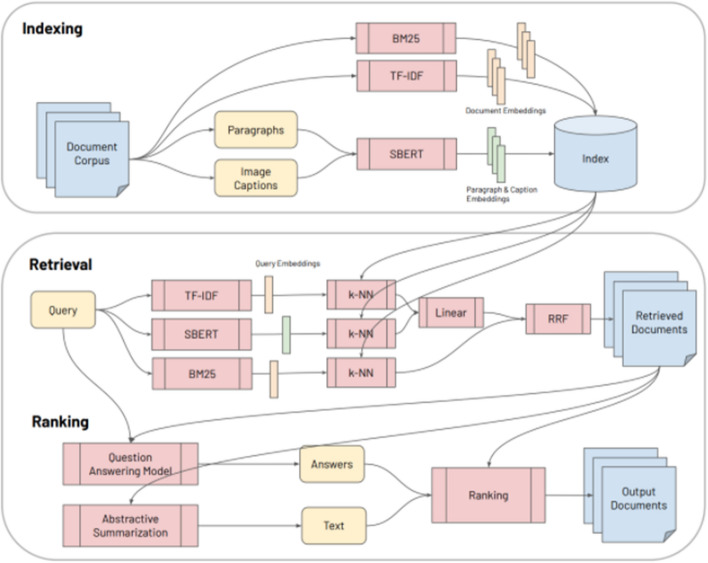
“SBERT is then used to encode the documents from a database.”
MethodInfluentialA simple framework for contrastive learning of visual representations
Chen, T., Kornblith, S., Norouzi, M., & Hinton, G. (2020) · arXiv · doi:10.48550/arxiv.2002.05709 · Cited by 10,857 · cited 2×
“MoCo [94] and SimCLR [95] are two of the most promising models for this.”
BackgroundExplaining and Harnessing Adversarial Examples
Goodfellow, I. J., Shlens, J., & Szegedy, C. (2014) · arXiv · doi:10.48550/arxiv.1412.6572 · Cited by 10,381 · cited 1×
“[147] showed that you could add an optimized noise map to a panda image such that it was classified as a gibbon with 99.”
BackgroundScaling Laws for Neural Language Models
Kaplan, J., McCandlish, S., Henighan, T., Brown, T. B., Chess, B., Child, R., Gray, S., Radford, A., Wu, J., & Amodei, D. (2020) · arXiv · doi:10.48550/arxiv.2001.08361 · Cited by 9,550
TensorFlow: Large-Scale Machine Learning on Heterogeneous Distributed Systems
Abadi, M., Agarwal, A., Barham, P., Brevdo, E., Chen, Z., Citro, C., Corrado, G. S., Davis, A., Dean, J., Devin, M., et al. (2016) · arXiv · doi:10.48550/arxiv.1603.04467 · Cited by 9,408
Model-Agnostic Meta-Learning for Fast Adaptation of Deep Networks
Finn, C., Abbeel, P., & Levine, S. (2017) · arXiv · doi:10.48550/arxiv.1703.03400 · Cited by 8,512 · cited 1×
“Outer, inner-loop optimization for few-shot learning has advanced considerably with models such as MAML [153].”
MIMIC-III, a freely accessible critical care database
Johnson, A. E. W., Pollard, T. J., Shen, L., Lehman, L.-W. H., Feng, M., Ghassemi, M., Moody, B., Szolovits, P., Anthony Celi, L., & Mark, R. G. (2016) · Scientific Data · doi:10.1038/sdata.2016.35 · Cited by 8,141 · cited 1×
“One of the best open-source datasets is MIMIC-III [160], but even this dataset only contains about 60,000 records at the time of this publication.”
BackgroundBioBERT: a pre-trained biomedical language representation model for biomedical text mining
Lee, J., Yoon, W., Kim, S., Kim, D., Kim, S., So, C. H., & Kang, J. (2020) · Bioinformatics · doi:10.1093/bioinformatics/btz682 · Cited by 7,218 · cited 3×
“This system tests the generalization of existing QA models comprising of a pre-trained BioBERT [26] fine-tuned on the SQuAD dataset.”
MethodUMAP: Uniform Manifold Approximation and Projection for Dimension Reduction
McInnes, L., Healy, J., & Melville, J. (2018) · arXiv · doi:10.48550/arxiv.1802.03426 · Cited by 7,101 · cited 4×
“McInnes L, Healy J, Melville J. UMAP: uniform manifold approximation and projection for dimension reduction; 2020. arXiv :1802.03426 .”
MethodInfluential“Why Should I Trust You?”: Explaining the Predictions of Any Classifier
Ribeiro, M., Singh, S., & Guestrin, C. (2016) · Proceedings of the 2016 Conference of the North American Chapter of the Association for Computational Linguistics: Demonstrations · doi:10.18653/v1/n16-3020 · Cited by 6,682
SQuAD: 100,000+ Questions for Machine Comprehension of Text
Rajpurkar, P., Zhang, J., Lopyrev, K., & Liang, P. (2016) · Proceedings of the 2016 Conference on Empirical Methods in Natural Language Processing · doi:10.18653/v1/d16-1264 · Cited by 6,208 · cited 1×
“QA has been well studied on the SQuAD benchmark [34].”
BackgroundDense Passage Retrieval for Open-Domain Question Answering
Karpukhin, V., Oğuz, B., Min, S., Lewis, P., Wu, L., Edunov, S., Chen, D., & Yih, W.-T. (2020) · arXiv · doi:10.48550/arxiv.2004.04906 · Cited by 5,311
Network medicine: a network-based approach to human disease
Barabási, A.-L., Gulbahce, N., & Loscalzo, J. (2011) · Nature Reviews Genetics · doi:10.1038/nrg2918 · Cited by 5,034 · cited 5×
“Precision Medicine in COVID-19 applications looks at predicting patient outcome based on patient history recorded in Electronic Health Records (EHR), as well as miscellaneous biomarkers such as blood testing results.”
BackgroundInfluentialBillion-scale similarity search with GPUs
Johnson, J., Douze, M., & Jegou, H. (2021) · IEEE Transactions on Big Data · doi:10.1109/tbdata.2019.2921572 · Cited by 4,228
GLUE: A Multi-Task Benchmark and Analysis Platform for Natural Language Understanding
Wang, A., Singh, A., Michael, J., Hill, F., Levy, O., & Bowman, S. (2018) · Proceedings of the 2018 EMNLP Workshop BlackboxNLP: Analyzing and Interpreting Neural Networks for NLP · doi:10.18653/v1/w18-5446 · Cited by 4,222 · cited 2×
“Tweet classification is very similar to the Single-Sentence GLUE benchmark [29] tasks previously described.”
BackgroundMethodBillion-scale similarity search with GPUs
Johnson, J., Douze, M., & Jégou, H. (2017) · arXiv · doi:10.48550/arxiv.1702.08734 · Cited by 4,140 · cited 1×
“Nearest neighbor GPU index optimizations [50] are extremely fast at finding the most similar representations to a query embedding.”
BackgroundThe future of digital health with federated learning
Rieke, N., Hancox, J., Li, W., Milletarì, F., Roth, H. R., Albarqouni, S., Bakas, S., Galtier, M. N., Landman, B. A., Maier-Hein, K., et al. (2020) · npj Digital Medicine · doi:10.1038/s41746-020-00323-1 · Cited by 4,015 · cited 2×
“The question as data scientists is, “can we answer questions using data we cannot see?” [85].”
BackgroundNeural Architecture Search with Reinforcement Learning
Zoph, B., & Le, Q. V. (2016) · arXiv (Cornell University) · doi:10.48550/arxiv.1611.01578 · Cited by 3,974 · cited 1×
“This search is usually done with evolutionary search [101] or reinforcement learning [102].”
BackgroundThe Lottery Ticket Hypothesis: Finding Sparse, Trainable Neural Networks
Frankle, J., & Carbin, M. (2018) · arXiv · doi:10.48550/arxiv.1803.03635 · Cited by 3,763 · cited 1×
“The lottery ticket hypothesis [107] showed that it is even possible to train pruned networks, rather than waiting until training is completed to prune networks to zero.”
BackgroundDense passage retrieval for open-domain question answering
Karpukhin, V., Oguz, B., Min, S., Lewis, P., Wu, L., Edunov, S., Chen, D., & Yih, W.-T. (2020) · Proceedings of the 2020 Conference on Empirical Methods in Natural Language Processing (EMNLP) · doi:10.18653/v1/2020.emnlp-main.550 · Cited by 3,575
The Future of Digital Health with Federated Learning
Rieke, N., Hancox, J., Li, W., Milletari, F., Roth, H., Albarqouni, S., Bakas, S., Galtier, M. N., Landman, B., Maier-Hein, K., et al. (2020) · arXiv · doi:10.48550/arxiv.2003.08119 · Cited by 3,495 · cited 2×
“The question as data scientists is, “can we answer questions using data we cannot see?” [85].”
BackgroundImproved protein structure prediction using potentials from deep learning
Senior, A. W., Evans, R., Jumper, J., Kirkpatrick, J., Sifre, L., Green, T., Qin, C., Žídek, A., Nelson, A. W. R., Bridgland, A., et al. (2020) · Nature · doi:10.1038/s41586-019-1923-7 · Cited by 3,378 · cited 10×
“AlphaFold marked an incremental improvement in the approach to this problem.”
BackgroundMethodInfluentialMedical error—the third leading cause of death in the US
Makary, M. A., & Daniel, M. (2016) · BMJ · doi:10.1136/bmj.i2139 · Cited by 3,264 · cited 1×
“In a report on medical error, Mackary and Daneil found that “as many as 400,000 people die every year in the United States owing to lapses and defects in clinical decision-making and physical actions” [106].”
BackgroundSciBERT: A Pretrained Language Model for Scientific Text
Beltagy, I., Lo, K., & Cohan, A. (2019) · Proceedings of the 2019 Conference on Empirical Methods in Natural Language Processing and the 9th International Joint Conference on Natural Language Processing (EMNLP-IJCNLP) · doi:10.18653/v1/d19-1371 · Cited by 3,218 · cited 3×
“SciBERT is an extension to BERT that has been pre-trained on Scientific Text.”
MethodWang, L., Lin, Z. Q., & Wong, A. (2020) · Scientific Reports · doi:10.1038/s41598-020-76550-z · Cited by 3,113 · cited 6×
“Whereas CORD-19 is general purpose, TREC-COVID [42] is more narrowly focused on a test evaluation of information retrieval.”
BackgroundInfluentialSurvey on deep learning with class imbalance
Johnson, J. M., & Khoshgoftaar, T. M. (2019) · Journal of Big Data · doi:10.1186/s40537-019-0192-5 · Cited by 3,032
Self-citationModel Inversion Attacks that Exploit Confidence Information and Basic Countermeasures
Fredrikson, M., Jha, S., & Ristenpart, T. (2015) · Proceedings of the 22nd ACM SIGSAC Conference on Computer and Communications Security · doi:10.1145/2810103.2813677 · Cited by 2,961 · cited 2×
“[86] use adversarial attacking to recover face images from a facial recognition given only black-box access to a person’s name and the confidence scores from the model.”
BackgroundMS MARCO: A Human Generated MAchine Reading COmprehension Dataset
Bajaj, P., Campos, D., Craswell, N., Deng, L., Gao, J., Liu, X., Majumder, R., McNamara, A., Mitra, B., Nguyen, T., et al. (2016) · arXiv · doi:10.48550/arxiv.1611.09268 · Cited by 2,473
Don’t Stop Pretraining: Adapt Language Models to Domains and Tasks
Gururangan, S., Marasović, A., Swayamdipta, S., Lo, K., Beltagy, I., Downey, D., & Smith, N. A. (2020) · Proceedings of the 58th Annual Meeting of the Association for Computational Linguistics · doi:10.18653/v1/2020.acl-main.740 · Cited by 2,103
Text Data Augmentation for Deep Learning
Shorten, C., Khoshgoftaar, T. M., & Furht, B. (2021) · Journal of Big Data · doi:10.1186/s40537-021-00492-0 · Cited by 1,740
Self-citationA deep learning algorithm using CT images to screen for Corona virus disease (COVID-19)
Wang, S., Kang, B., Ma, J., Zeng, X., Xiao, M., Guo, J., Cai, M., Yang, J., Li, Y., Meng, X., et al. (2021) · European Radiology · doi:10.1007/s00330-021-07715-1 · Cited by 1,677 · cited 1×
“[92] explore the Inception model, and Afshar et al.”
BackgroundBaricitinib as potential treatment for 2019-nCoV acute respiratory disease
Richardson, P., Griffin, I., Tucker, C., Smith, D., Oechsle, O., Phelan, A., Rawling, M., Savory, E., & Stebbing, J. (2020) · The Lancet · doi:10.1016/s0140-6736(20)30304-4 · Cited by 1,456 · cited 3×
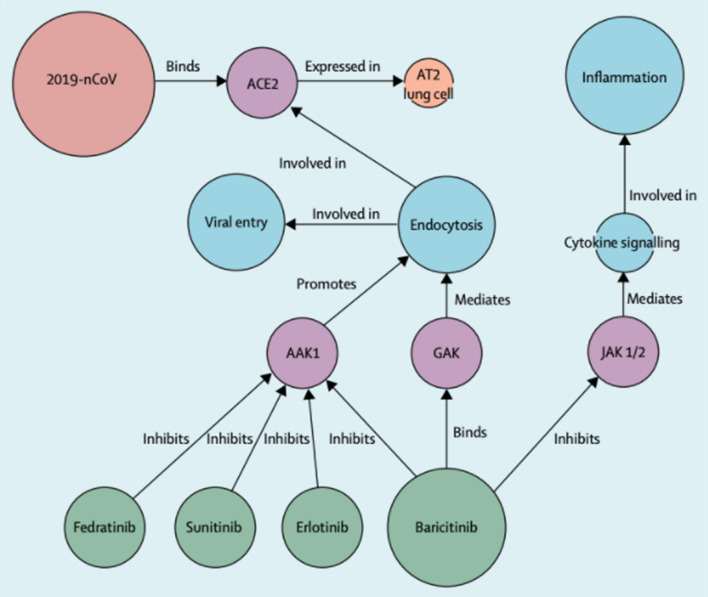
“[8] describe how they use the BenevolentAI knowledge graph to discover baricitinib as potential treatment for COVID-19.”
BackgroundMethodInfluentialWhat Does BERT Look at? An Analysis of BERT’s Attention
Clark, K., Khandelwal, U., Levy, O., & Manning, C. D. (2019) · Proceedings of the 2019 ACL Workshop BlackboxNLP: Analyzing and Interpreting Neural Networks for NLP · doi:10.18653/v1/w19-4828 · Cited by 1,373
FEVER: a Large-scale Dataset for Fact Extraction and VERification
Thorne, J., Vlachos, A., Christodoulopoulos, C., & Mittal, A. (2018) · Proceedings of the 2018 Conference of the North American Chapter of the Association for Computational Linguistics: Human Language Technologies, Volume 1 (Long Papers) · doi:10.18653/v1/n18-1074 · Cited by 1,343 · cited 2×
“The most notable dataset of this is the FEVER, Fact Extraction and Verification, dataset [70].”
BackgroundMethodExploiting Cloze-Questions for Few-Shot Text Classification and Natural Language Inference
Schick, T., & Schütze, H. (2021) · Proceedings of the 16th Conference of the European Chapter of the Association for Computational Linguistics: Main Volume · doi:10.18653/v1/2021.eacl-main.20 · Cited by 1,305
The Human Genome Project: Lessons from Large-Scale Biology
Collins, F. S., Morgan, M., & Patrinos, A. (2003) · Science · doi:10.1126/science.1084564 · Cited by 1,284 · cited 2×
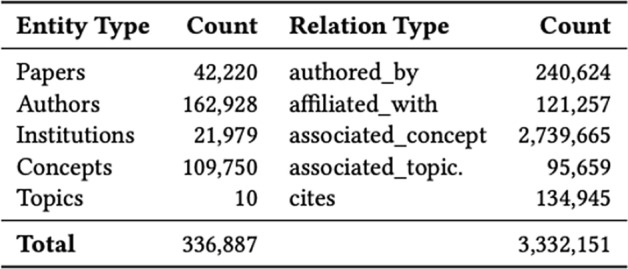
“These numbers illustrate “Large-Scale Biology” [117].”
BackgroundGuarino, N., Oberle, D., & Staab, S. (2009) · Handbook on Ontologies · doi:10.1007/978-3-540-92673-3_0 · Cited by 1,244 · cited 1×
“, the relevant entities and relations that emerge from its observation, and which are useful to our purposes” [56].”
BackgroundCOVID-19: combining antiviral and anti-inflammatory treatments
Stebbing, J., Phelan, A., Griffin, I., Tucker, C., Oechsle, O., Smith, D., & Richardson, P. (2020) · The Lancet Infectious Diseases · doi:10.1016/s1473-3099(20)30132-8 · Cited by 1,117
Artificial intelligence–enabled rapid diagnosis of patients with COVID-19
Mei, X., Lee, H.-C., Diao, K.-Y., Huang, M., Lin, B., Liu, C., Xie, Z., Ma, Y., Robson, P. M., Chung, M., et al. (2020) · Nature Medicine · doi:10.1038/s41591-020-0931-3 · Cited by 1,084
SuperGLUE: A Stickier Benchmark for General-Purpose Language Understanding Systems
Wang, A., Pruksachatkun, Y., Nangia, N., Singh, A., Michael, J., Hill, F., Levy, O., & Bowman, S. R. (2019) · arXiv · doi:10.48550/arxiv.1905.00537 · Cited by 1,051 · cited 2×
“Wang A, Pruksachatkun Y, Nangia N, Singh A, Michael J, Hill F, Levy O, Bowman SR. SuperGLUE: a stickier bench- mark for general-purpose language understanding systems; 2019. arXiv :1905.00537 .”
BackgroundInfluentialA deep learning algorithm using CT images to screen for Corona Virus Disease (COVID-19)Preprint
Wang, S., Kang, B., Ma, J., et al. (2020) · medRxiv · doi:10.1101/2020.02.14.20023028 · Cited by 1,035
An estimation of the number of cells in the human body
Bianconi, E., Piovesan, A., Facchin, F., Beraudi, A., Casadei, R., Frabetti, F., Vitale, L., Pelleri, M. C., Tassani, S., Piva, F., et al. (2013) · Annals of Human Biology · doi:10.3109/03014460.2013.807878 · Cited by 1,012
Document Ranking with a Pretrained Sequence-to-Sequence ModelPreprint
Nogueira, R., Jiang, Z., Pradeep, R., & Lin, J. (2020) · Findings · doi:10.48550/arxiv.2003.06713 · Cited by 956 · cited 1×
“monoT5 [47] seq2seq re-ranker takes as input “Query q: Document: d Relevant: “ to classify whether the document is relevant or not to the query.”
BackgroundBeyond Accuracy: Behavioral Testing of NLP models with CheckList
Ribeiro, M. T., Wu, T., Guestrin, C., & Singh, S. (2020) · arXiv · doi:10.48550/arxiv.2005.04118 · Cited by 901
Beyond accuracy: behavioral testing of NLP models with CheckList
Ribeiro, M. T., Wu, T., Guestrin, C., & Singh, S. (2020) · Proceedings of the 58th Annual Meeting of the Association for Computational Linguistics · doi:10.18653/v1/2020.acl-main.442 · Cited by 890
A survey on addressing high-class imbalance in big data
Leevy, J. L., Khoshgoftaar, T. M., Bauder, R. A., & Seliya, N. (2018) · Journal of Big Data · doi:10.1186/s40537-018-0151-6 · Cited by 759
Self-citationIt’s Not Just Size That Matters: Small Language Models Are Also Few-Shot Learners
Schick, T., & Schütze, H. (2021) · Proceedings of the 2021 Conference of the North American Chapter of the Association for Computational Linguistics: Human Language Technologies · doi:10.18653/v1/2021.naacl-main.185 · Cited by 747
Evaluating Protein Transfer Learning with TAPE
Rao, R., Bhattacharya, N., Thomas, N., Duan, Y., Chen, X., Canny, J., Abbeel, P., & Song, Y. S. (2019) · doi:10.1101/676825 · Cited by 719 · cited 1×
“[126] inspire exploring into these un-labeled protein sequences, “billions of years of evolution have sampled the portions of protein sequence space that are relevant to life, so large unlabeled datasets of protein sequences are expected to contain significant biological information” [126].”
BackgroundCOVID-CAPS: A capsule network-based framework for identification of COVID-19 cases from X-ray images
Afshar, P., Heidarian, S., Naderkhani, F., Oikonomou, A., Plataniotis, K. N., & Mohammadi, A. (2020) · Pattern Recognition Letters · doi:10.1016/j.patrec.2020.09.010 · Cited by 705
SQuAD: 100,000+ Questions for Machine Comprehension of Text
Rajpurkar, P., Zhang, J., Lopyrev, K., & Liang, P. (2016) · arXiv · doi:10.48550/arxiv.1606.05250 · Cited by 678 · cited 1×
“QA has been well studied on the SQuAD benchmark [34].”
BackgroundCritical assessment of methods of protein structure prediction (CASP) — round x
Moult, J., Fidelis, K., Kryshtafovych, A., Schwede, T., & Tramontano, A. (2014) · Proteins: Structure, Function, and Bioinformatics · doi:10.1002/prot.24452 · Cited by 652
Protein–Protein Interactions Essentials: Key Concepts to Building and Analyzing Interactome Networks
De Las Rivas, J., & Fontanillo, C. (2010) · PLoS Computational Biology · doi:10.1371/journal.pcbi.1000807 · Cited by 644 · cited 1×
“We refer readers to [131] for more information on these interaction networks such as Protein-Protein interaction networks.”
BackgroundGozes, O., Frid-Adar, M., Greenspan, H. K., Browning, P. D., Zhang, H., Ji, W., Bernheim, A., & Siegel, E. L. (2020) · arXiv (Cornell University) · doi:10.48550/arxiv.2003.05037 · Cited by 639 · cited 1×
“[104] that uses Medical Image Analysis to explore COVID-19 disease progression over time.”
MethodHow Much Knowledge Can You Pack into the Parameters of a Language Model?
Roberts, A., Raffel, C., & Shazeer, N. (2020) · Proceedings of the 2020 Conference on Empirical Methods in Natural Language Processing (EMNLP) · doi:10.18653/v1/2020.emnlp-main.437 · Cited by 638
Artificial intelligence in COVID-19 drug repurposing
Zhou, Y., Wang, F., Tang, J., Nussinov, R., & Cheng, F. (2020) · The Lancet Digital Health · doi:10.1016/s2589-7500(20)30192-8 · Cited by 636 · cited 3×
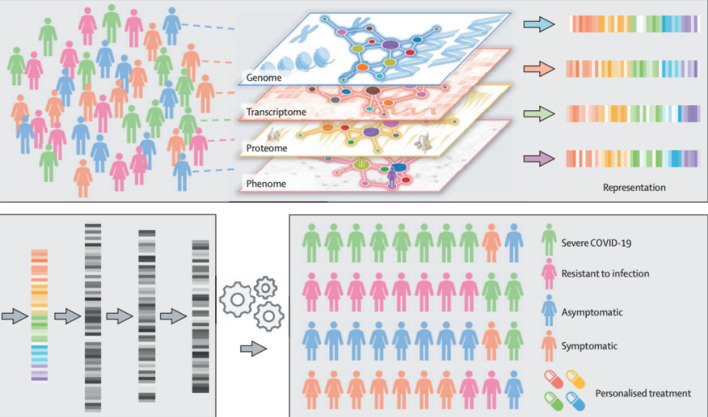
“We refer readers to the illustrative diagram from their study [122] describing the integration of different data sources for Precision Diagnostics, shown in Fig.”
BackgroundMethodInfluentialClinicalBERT: Modeling Clinical Notes and Predicting Hospital Readmission
Huang, K., Altosaar, J., & Ranganath, R. (2019) · arXiv · doi:10.48550/arxiv.1904.05342 · Cited by 618 · cited 1×
“Integrating structured and unstructured data is challenging, but unstructured text data, such as clinical notes [159], can improve diagnosis.”
BackgroundTransfusion: Understanding Transfer Learning for Medical Imaging
Raghu, M., Zhang, C., Kleinberg, J. M., & Bengio, S. (2019) · arXiv (Cornell University) · doi:10.48550/arxiv.1902.07208 · Cited by 613 · cited 6×
“[83] report a more sobering view of Transfer Learning for Medical Image Analysis.”
BackgroundInfluentialSurvey on categorical data for neural networks
Hancock, J. T., & Khoshgoftaar, T. M. (2020) · Journal of Big Data · doi:10.1186/s40537-020-00305-w · Cited by 611 · cited 1×
“Data such as images are inputted as pixel grids, whereas categorical variables are embedded into dense representation tables [155].”
BackgroundSelf-citationSolving Rubik's Cube with a Robot Hand
OpenAI, Akkaya, I., Andrychowicz, M., Chociej, M., Litwin, M., McGrew, B., Petron, A., Paino, A., Plappert, M., Powell, G., et al. (2019) · arXiv · doi:10.48550/arxiv.1910.07113 · Cited by 602 · cited 1×
“Deep Learning has gained massive attention by defeating the world champion at Go [2], controlling a robotic hand to solve a Rubik’s cube [3], and completing fill-in-the-blank”
BackgroundLearning Distributed Representations of Sentences from Unlabelled Data
Hill, F., Cho, K., & Korhonen, A. (2016) · Proceedings of the 2016 Conference of the North American Chapter of the Association for Computational Linguistics: Human Language Technologies · doi:10.18653/v1/n16-1162 · Cited by 566 · cited 1×
“They instead use a co-occurrence frequency to extract nodes and use word2vec [63] similarity to filter edges.”
MethodGLUE: A Multi-Task Benchmark and Analysis Platform for Natural Language Understanding
Wang, A., Singh, A., Michael, J., Hill, F., Levy, O., & Bowman, S. R. (2018) · arXiv · doi:10.48550/arxiv.1804.07461 · Cited by 562 · cited 2×
“Tweet classification is very similar to the Single-Sentence GLUE benchmark [29] tasks previously described.”
BackgroundMethodThe Comparative Toxicogenomics Database: update 2017
Davis, A. P., Grondin, C. J., Johnson, R. J., Sciaky, D., King, B. L., McMorran, R., Wiegers, J., Wiegers, T. C., & Mattingly, C. J. (2017) · Nucleic Acids Research · doi:10.1093/nar/gkw838 · Cited by 544
Dreaming to Distill: Data-Free Knowledge Transfer via DeepInversion
Yin, H., Molchanov, P., Alvarez, J. M., Li, Z., Mallya, A., Hoiem, D., Jha, N. K., & Kautz, J. (2020) · 2020 IEEE/CVF Conference on Computer Vision and Pattern Recognition (CVPR) · doi:10.1109/cvpr42600.2020.00874 · Cited by 540
(2009) · Springer eBooks · doi:10.1007/978-3-540-92673-3 · Cited by 529
Deep learning methods for forecasting COVID-19 time-Series data: A Comparative study
Zeroual, A., Harrou, F., Dairi, A., & Sun, Y. (2020) · Chaos, Solitons & Fractals · doi:10.1016/j.chaos.2020.110121 · Cited by 508 · cited 2×
“[132] “accurate short-term forecasting of the number of new contaminated and recovered cases is crucial for optimizing the available resources and arresting or slowing down the progression of such diseases”.”
BackgroundCritical assessment of methods of protein structure prediction (CASP)—Round XIII
Kryshtafovych, A., Schwede, T., Topf, M., Fidelis, K., & Moult, J. (2019) · Proteins: Structure, Function, and Bioinformatics · doi:10.1002/prot.25823 · Cited by 506 · cited 1×
“The CASP competition is the premier competition for protein structure prediction [128].”
BackgroundVisualizing Deep Convolutional Neural Networks Using Natural Pre-images
Mahendran, A., & Vedaldi, A. (2016) · International Journal of Computer Vision · doi:10.1007/s11263-016-0911-8 · Cited by 496 · cited 1×
“Another question explored under the interpretability is, what activates certain neurons? Some researchers have looked at optimizing an image map to maximize the activations of an individual or set of neurons [140].”
BackgroundLung Infection Quantification of COVID-19 in CT Images with Deep Learning
Shan, F., Gao, Y., Wang, J., Shi, W., Shi, N., Han, M., Xue, Z., Shen, D. G., & Shi, Y. (2020) · arXiv (Cornell University) · doi:10.48550/arxiv.2003.04655 · Cited by 490 · cited 1×
“[103] present an interesting humanin-the-loop strategy for labeling the pixels in COVID-19 CT scans.”
MethodS2ORC: The Semantic Scholar Open Research Corpus
Lo, K., Wang, L. L., Neumann, M., Kinney, R., & Weld, D. (2020) · Proceedings of the 58th Annual Meeting of the Association for Computational Linguistics · doi:10.18653/v1/2020.acl-main.447 · Cited by 457 · cited 1×
“The CORD-19 data is cleaned and implemented with the same system used for the Semantic Scholar Open Research Corpus [41].”
MethodDocument Ranking with a Pretrained Sequence-to-Sequence Model
Nogueira, R., Jiang, Z., Pradeep, R., & Lin, J. (2020) · Findings of the Association for Computational Linguistics: EMNLP 2020 · doi:10.18653/v1/2020.findings-emnlp.63 · Cited by 448
GShard: Scaling Giant Models with Conditional Computation and Automatic Sharding
Lepikhin, D., Lee, H., Xu, Y., Chen, D., Firat, O., Huang, Y., Krikun, M., Shazeer, N., & Chen, Z. (2020) · arXiv · doi:10.48550/arxiv.2006.16668 · Cited by 412 · cited 1×
“Two of the largest models publicly reported are composed of 600 and 175 billion parameters [4, 13].”
BackgroundCOVID-ResNet: A Deep Learning Framework for Screening of COVID19 from Radiographs
Farooq, M. A., & Hafeez, A. B. (2020) · arXiv (Cornell University) · doi:10.48550/arxiv.2003.14395 · Cited by 409 · cited 3×
“Farooq and Hafeez [91] transfer weights”
InfluentialCheXpert: A Large Chest Radiograph Dataset with Uncertainty Labels and Expert Comparison
Irvin, J., Rajpurkar, P., Ko, M., Yu, Y., Ciurea-Ilcus, S., Chute, C., Marklund, H., Haghgoo, B., Ball, R., Shpanskaya, K., et al. (2019) · Proceedings of the AAAI Conference on Artificial Intelligence · doi:10.1609/aaai.v33i01.3301590 · Cited by 392
Fact or Fiction: Verifying Scientific Claims
Wadden, D., Lin, S., Lo, K., Wang, L. L., van Zuylen, M., Cohan, A., & Hajishirzi, H. (2020) · Proceedings of the 2020 Conference on Empirical Methods in Natural Language Processing (EMNLP) · doi:10.18653/v1/2020.emnlp-main.609 · Cited by 382
COVID-Twitter-BERT: A Natural Language Processing Model to Analyse COVID-19 Content on TwitterPreprint
Müller, M., Salathé, M., & Kummervold, P. E. (2020) · arXiv (Cornell University) · doi:10.48550/arxiv.2005.07503 · Cited by 369
Detection of COVID-19 Infection from Routine Blood Exams with Machine Learning: A Feasibility Study
Brinati, D., Campagner, A., Ferrari, D., Locatelli, M., Banfi, G., & Cabitza, F. (2020) · Journal of Medical Systems · doi:10.1007/s10916-020-01597-4 · Cited by 362 · cited 3×
“Given some of the general shortcomings of RT-PCR testing such as long turnaround times and availability of tests, researchers have also explored the diagnostic capability of routine blood tests [116].”
BackgroundMethodInfluentialKILT: a Benchmark for Knowledge Intensive Language Tasks
Petroni, F., Piktus, A., Fan, A., Lewis, P., Yazdani, M., De Cao, N., Thorne, J., Jernite, Y., Karpukhin, V., Maillard, J., et al. (2021) · Proceedings of the 2021 Conference of the North American Chapter of the Association for Computational Linguistics: Human Language Technologies · doi:10.18653/v1/2021.naacl-main.200 · Cited by 357
Mapping the landscape of Artificial Intelligence applications against COVID-19
Bullock, J., Luccioni, A., Hoffman Pham, K., Sin Nga Lam, C., & Luengo-Oroz, M. (2020) · Journal of Artificial Intelligence Research · doi:10.1613/jair.1.12162 · Cited by 348
A generic framework for privacy preserving deep learning
Ryffel, T., Trask, A., Dahl, M., Wagner, B., Mancuso, J., Rueckert, D., & Passerat-Palmbach, J. (2018) · arXiv · doi:10.48550/arxiv.1811.04017 · Cited by 335 · cited 1×
“[87] train their model on a dataset of 1341 normal, 1345 viral pneumonia, and 864 COVID-19 images.”
BackgroundRegularized Evolution for Image Classifier Architecture Search
Real, E., Aggarwal, A., Huang, Y., & Le, Q. V. (2019) · Proceedings of the AAAI Conference on Artificial Intelligence · doi:10.1609/aaai.v33i01.33014780 · Cited by 328
A review of data mining using big data in health informatics
Herland, M., Khoshgoftaar, T. M., & Wald, R. (2014) · Journal Of Big Data · doi:10.1186/2196-1115-1-2 · Cited by 319 · cited 1×
“[123] to develop intuition on data available for Precision Diagnostics.”
BackgroundSelf-citationRepresentation Learning on Graphs: Methods and Applications
Hamilton, W. L., Ying, R., & Leskovec, J. (2017) · arXiv (Cornell University) · doi:10.48550/arxiv.1709.05584 · Cited by 290 · cited 1×
“[130] for a more detailed survey on representation learning on graphs.”
BackgroundGeePS: scalable deep learning on distributed GPUs with a GPU-specialized parameter server
Cui, H., Zhang, H., Ganger, G. R., Gibbons, P. B., & Xing, E. P. (2016) · Proceedings of the Eleventh European Conference on Computer Systems · doi:10.1145/2901318.2901323 · Cited by 286 · cited 4×
“The Transformer revolution in Natural Language Processing largely owes its success to Computer Vision’s pioneering into large datasets, massive models, and the utilization of hardware that accelerates parallel computation, namely GPUs [9].”
BackgroundInfluentialBisk, Y., Holtzman, A., Thomason, J., Andreas, J., Bengio, Y., Chai, J., Lapata, M., Lazaridou, A., May, J., Nisnevich, A., et al. (2020) · Proceedings of the 2020 Conference on Empirical Methods in Natural Language Processing (EMNLP) · doi:10.18653/v1/2020.emnlp-main.703 · Cited by 274
Illuminating the dark spaces of healthcare with ambient intelligence
Haque, A., Milstein, A., & Fei-Fei, L. (2020) · Nature · doi:10.1038/s41586-020-2669-y · Cited by 274 · cited 5×
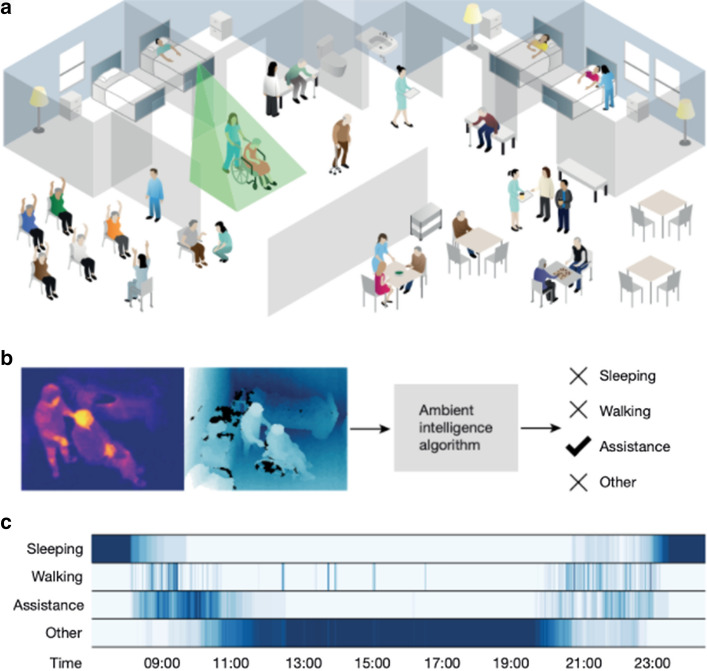
“[10] recently published a survey on Computer Vision applications for physical space monitoring in hospitals and daily living spaces.”
BackgroundInfluentialLeveraging Data Science to Combat COVID-19: A Comprehensive Review
Latif, S., Usman, M., Manzoor, S., Iqbal, W., Qadir, J., Tyson, G., Castro, I., Razi, A., Boulos, M. N. K., Weller, A., et al. (2020) · IEEE Transactions on Artificial Intelligence · doi:10.1109/tai.2020.3020521 · Cited by 270
Contrastive Learning of Medical Visual Representations from Paired Images and Text
Zhang, Y., Jiang, H., Miura, Y., Manning, C. D., & Langlotz, C. P. (2020) · arXiv (Cornell University) · doi:10.48550/arxiv.2010.00747 · Cited by 265 · cited 2×
“[97] take a unique multi-modal approach to construct this learning task.”
BackgroundRepurpose Open Data to Discover Therapeutics for COVID-19 Using Deep Learning
Zeng, X., Song, X., Ma, T., Pan, X., Zhou, Y., Hou, Y., Zhang, Z., Li, K., Karypis, G., & Cheng, F. (2020) · Journal of Proteome Research · doi:10.1021/acs.jproteome.0c00316 · Cited by 257 · cited 3×
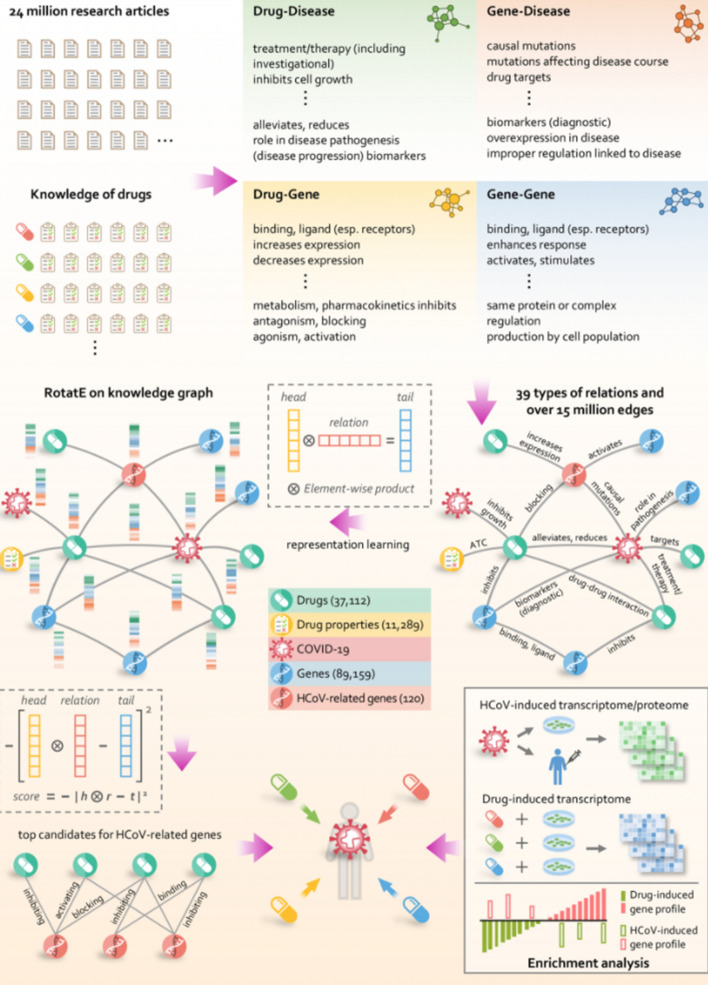
“[61] use the RotatE graph representation learning algorithm to embed relations into a low-dimensional vector space.”
BackgroundMethodInfluentialDeep Learning in Protein Structural Modeling and Design
Gao, W., Mahajan, S. P., Sulam, J., & Gray, J. J. (2020) · Patterns · doi:10.1016/j.patter.2020.100142 · Cited by 227
On the Measure of Intelligence
Chollet, F. (2019) · arXiv · doi:10.48550/arxiv.1911.01547 · Cited by 218
The Ingredients of Real-World Robotic Reinforcement LearningPreprint
Zhu, H., Yu, J., Gupta, A., Shah, D., Hartikainen, K., Singh, A., Kumar, V., & Levine, S. (2020) · arXiv (Cornell University) · doi:10.48550/arxiv.2004.12570 · Cited by 218
MRQA 2019 Shared Task: Evaluating Generalization in Reading Comprehension
Fisch, A., Talmor, A., Jia, R., Seo, M., Choi, E., & Chen, D. (2019) · Proceedings of the 2nd Workshop on Machine Reading for Question Answering · doi:10.18653/v1/d19-5801 · Cited by 215 · cited 2×
“In: MRQA@EMNLP; 2019.”
MethodCURL: Contrastive Unsupervised Representations for Reinforcement Learning
Srinivas, A., Laskin, M., & Abbeel, P. (2020) · arXiv (Cornell University) · doi:10.48550/arxiv.2004.04136 · Cited by 213 · cited 1×
“[113] recently showed a breakthrough performance by introducing a multi-task self-supervised learning system to facilitate visual representation learning.”
BackgroundCOVID-Twitter-BERT: A natural language processing model to analyse COVID-19 content on Twitter
Müller, M., Salathé, M., & Kummervold, P. E. (2023) · Frontiers in Artificial Intelligence · doi:10.3389/frai.2023.1023281 · Cited by 180 · cited 2×
“Another example, COVID-BERT [28] is pre-trained on a corpus of tweets about COVID-19.”
MethodTransformers as Soft Reasoners over Language
Clark, P., Tafjord, O., & Richardson, K. (2020) · Proceedings of the Twenty-Ninth International Joint Conference on Artificial Intelligence · doi:10.24963/ijcai.2020/537 · Cited by 176
Learning to Manipulate Deformable Objects without Demonstrations
Wu, Y., Yan, W., Kurutach, T., Pinto, L., & Abbeel, P. (2020) · Robotics: Science and Systems XVI · doi:10.15607/rss.2020.xvi.065 · Cited by 173
Richter, A. N., & Khoshgoftaar, T. M. (2018) · Artificial Intelligence in Medicine · doi:10.1016/j.artmed.2018.06.002 · Cited by 162 · cited 1×
“This begins with structured clinical data [158], and graduates to Deep Learning models processing structured and unstructured, multi-modal data.”
BackgroundSelf-citationComplete Genome Sequence of a 2019 Novel Coronavirus (SARS-CoV-2) Strain Isolated in Nepal
Sah, R., Rodriguez-Morales, A. J., Jha, R., Chu, D. K. W., Gu, H., Peiris, M. J. S., Bastola, A., Lal, B. K., Ojha, H. C., Rabaan, A. A., et al. (2020) · Microbiology Resource Announcements · doi:10.1128/mra.00169-20 · Cited by 157 · cited 1×
“the virus [12], and individuals across the world quarantined themselves to contain the spread.”
BackgroundS2ORC: The Semantic Scholar Open Research CorpusPreprint
Lo, K., Wang, L. L., Neumann, M., Kinney, R., & Weld, D. S. (2019) · arXiv (Cornell University) · doi:10.48550/arxiv.1911.02782 · Cited by 155
Training with Quantization Noise for Extreme Model Compression
Fan, A., Stock, P., Graham, B., Grave, E., Gribonval, R., Jegou, H., & Joulin, A. (2020) · arXiv · doi:10.48550/arxiv.2004.07320 · Cited by 145 · cited 1×
“Some interesting directions include understanding the success and phenomena of sparse networks, and the opportunity to further explore quantization noise during training [108].”
BackgroundCovid-twitter-bert: A natural language processing model to analyse covid-19 content on twitter
Müller, M., Salathé, M., & Kummervold, P. E. (2022) · Zenodo (CERN European Organization for Nuclear Research) · doi:10.5281/zenodo.7074654 · Cited by 141
Vokenization: Improving Language Understanding via Contextualized, Visually-Grounded SupervisionPreprint
Tan, H., & Bansal, M. (2020) · Conference on Empirical Methods in Natural Language Processing · doi:10.48550/arxiv.2010.06775 · Cited by 138 · cited 1×
“Vision-language learning has recently improved GLUE benchmark performance [157].”
BackgroundWelcoming new guidelines for AI clinical research
Topol, E. J. (2020) · Nature Medicine · doi:10.1038/s41591-020-1042-x · Cited by 136 · cited 2×
“[84] present detailed guidelines for Human-AI Interaction design based on these failures.”
BackgroundCovid-twitter-bert: A natural language processing model to analyse covid-19 content on twitter
Müller, M., Salathé, M., & Kummervold, P. E. (2022) · Zenodo (CERN European Organization for Nuclear Research) · doi:10.5281/zenodo.7074653 · Cited by 136
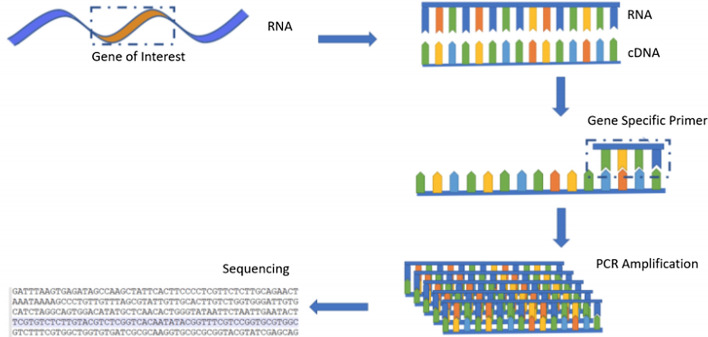
Classification and specific primer design for accurate detection of SARS-CoV-2 using deep learning
Lopez-Rincon, A., Tonda, A., Mendoza-Maldonado, L., Mulders, D. G. J. C., Molenkamp, R., Perez-Romero, C. A., Claassen, E., Garssen, J., & Kraneveld, A. D. (2021) · Scientific Reports · doi:10.1038/s41598-020-80363-5 · Cited by 133
TREC-COVID: rationale and structure of an information retrieval shared task for COVID-19
Roberts, K., Alam, T., Bedrick, S., Demner-Fushman, D., Lo, K., Soboroff, I., Voorhees, E., Wang, L. L., & Hersh, W. R. (2020) · Journal of the American Medical Informatics Association · doi:10.1093/jamia/ocaa091 · Cited by 123
TREC-COVID: constructing a pandemic information retrieval test collection
Voorhees, E., Alam, T., Bedrick, S., Demner-Fushman, D., Hersh, W. R., Lo, K., Roberts, K., Soboroff, I., & Wang, L. L. (2020) · ACM SIGIR Forum · doi:10.1145/3451964.3451965 · Cited by 123 · cited 1×
“The authors state the twin goals of the dataset are “to evaluate search algorithms and systems for helping scientists, clinicians, policy makers, and others manage the existing and rapidly growing corpus of scientific literature related to COVID-19 and to discover methods that will assist with managing scientific info…”
BackgroundNguyen, T. T. (2020) · doi:10.36227/techrxiv.12743933.v1 · Cited by 122 · cited 1×
“Furthermore, applications we do not cover include the diagnostic potential of audio data from breathing recordings [6], and IoT applications such as smartphone temperature and inertial sensors [19].”
BackgroundCOVID-19 Literature Knowledge Graph Construction and Drug Repurposing Report Generation
Wang, Q., Li, M., Wang, X., Parulian, N., Han, G., Ma, J., Tu, J., Lin, Y., Zhang, R. H., Liu, W., et al. (2021) · Proceedings of the 2021 Conference of the North American Chapter of the Association for Computational Linguistics: Human Language Technologies: Demonstrations · doi:10.18653/v1/2021.naacl-demos.8 · Cited by 121 · cited 1×
“[57] link the MeSH IDs entities together based on the Comparative Toxicogenomics Database (CTD) ontology.”
MethodEsteva, A., Kale, A., Paulus, R., Hashimoto, K., Yin, W., Radev, D., & Socher, R. (2021) · npj Digital Medicine · doi:10.1038/s41746-021-00437-0 · Cited by 109
Quantifying the effect of quarantine control in Covid-19 infectious spread using machine learning
Dandekar, R., & Barbastathis, G. (2020) · medRxiv · doi:10.1101/2020.04.03.20052084 · Cited by 104 · cited 4×
“Dandekar R, Barbastathis G. Quantifying the effect of quarantine control in Covid-19 infectious spread using machine learning. https ://doi.org/10.1101/2020.04.03.20052 084.”
BackgroundInfluentialWT5?! Training Text-to-Text Models to Explain their Predictions
Narang, S., Raffel, C., Lee, K., Roberts, A., Fiedel, N., & Malkan, K. (2020) · arXiv (Cornell University) · doi:10.48550/arxiv.2004.14546 · Cited by 99
Fighting the COVID-19 Infodemic in Social Media: A Holistic Perspective and a Call to Arms
Alam, F., Dalvi, F., Shaar, S., Durrani, N., Mubarak, H., Nikolov, A., Da San Martino, G., Abdelali, A., Sajjad, H., Darwish, K., et al. (2021) · Proceedings of the International AAAI Conference on Web and Social Media · doi:10.1609/icwsm.v15i1.18114 · Cited by 92
Su, D., Xu, Y., Yu, T., Siddique, F. B., Barezi, E., & Fung, P. (2020) · Proceedings of the 1st Workshop on NLP for COVID-19 (Part 2) at EMNLP 2020 · doi:10.18653/v1/2020.nlpcovid19-2.14 · Cited by 88 · cited 4×
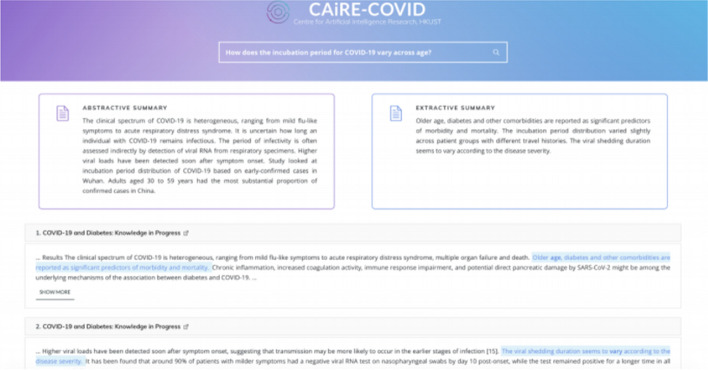
“• CAiRE-COVID [39] is a similar system to CO-Search.”
MethodInfluentialNguyen, T. T., Nguyen, Q. V. H., Nguyen, D. T., Yang, S. S., Eklund, P., Huynh‐The, T., Nguyên, T. T., Pham, Q., Razzak, I., & Hsu, E. B. (2020) · arXiv (Cornell University) · doi:10.48550/arxiv.2008.07343 · Cited by 88 · cited 1×
“Furthermore, applications we do not cover include the diagnostic potential of audio data from breathing recordings [6], and IoT applications such as smartphone temperature and inertial sensors [19].”
BackgroundInterpretable Sequence Learning for COVID-19 ForecastingPreprint
Arık, S. Ö., Li, C., Yoon, J., Sinha, R., Epshteyn, A., Le, L. T., Menon, V., Singh, S. K., Zhang, L., Yoder, N., et al. (2020) · arXiv (Cornell University) · doi:10.48550/arxiv.2008.00646 · Cited by 83 · cited 1×
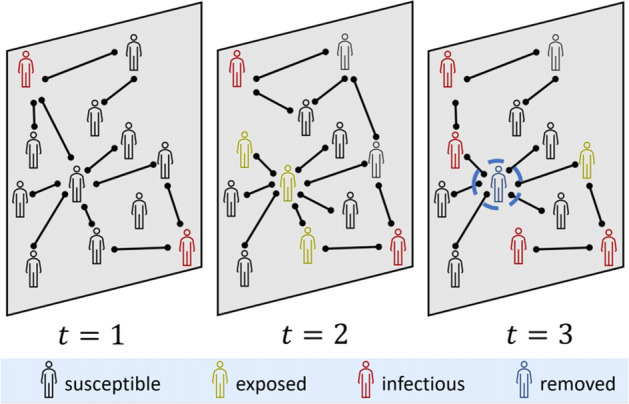
“[136] extend the SIR Model by adding additional compartments.”
BackgroundWNUT-2020 Task 2: Identification of Informative COVID-19 English Tweets
Nguyen, D. Q., Vu, T., Rahimi, A., Dao, M. H., Nguyen, L. T., & Doan, L. (2020) · Workshop on Noisy User-generated Text (W-NUT) · doi:10.18653/v1/2020.wnut-1.41 · Cited by 83
Rapidly Bootstrapping a Question Answering Dataset for COVID-19Preprint
Tang, R., Nogueira, R. F., Zhang, E., Gupta, N., Cam, P., Cho, K., & Lin, J. (2020) · arXiv (Cornell University) · doi:10.48550/arxiv.2004.11339 · Cited by 82
KGTK: A Toolkit for Large Knowledge Graph Manipulation and Analysis
Ilievski, F., Garijo, D., Chalupsky, H., Divvala, N. T., Yao, Y., Rogers, C. M., Li, R., Liu, J., Singh, A., Schwabe, D., et al. (2020) · Lecture notes in computer science · doi:10.1007/978-3-030-62466-8_18 · Cited by 77
Vokenization: Improving Language Understanding with Contextualized, Visual-Grounded Supervision
Tan, H., & Bansal, M. (2020) · Proceedings of the 2020 Conference on Empirical Methods in Natural Language Processing (EMNLP) · doi:10.18653/v1/2020.emnlp-main.162 · Cited by 75
Xu, M., Ouyang, L., Han, L., Sun, K., Yu, T., Li, Q., Tian, H., Safarnejad, L., Zhang, H., Gao, Y., et al. (2021) · Journal of Medical Internet Research · doi:10.2196/25535 · Cited by 65
Hope, T., Portenoy, J., Vasan, K., Borchardt, J., Horvitz, E., Weld, D. S., Hearst, M. A., & West, J. D. (2020) · Conference on Empirical Methods in Natural Language Processing: System Demonstrations (EMNLP) · doi:10.18653/v1/2020.emnlp-demos.18 · Cited by 63
Virus Detection and Identification in Minutes Using Single-Particle Imaging and Deep Learning
Shiaelis, N., Tometzki, A., Peto, L., McMahon, A., Hepp, C., Bickerton, E., Favard, C., Muriaux, D. M., Andersson, M. I., Oakley, S. J., et al. (2022) · ACS Nano · doi:10.1021/acsnano.2c10159 · Cited by 63 · cited 1×
“[120] deploy Computer Vision in single-particle fluorescence microscopy”
MethodSurvey on RNN and CRF models for de-identification of medical free text
Leevy, J. L., Khoshgoftaar, T. M., & Villanustre, F. (2020) · Journal Of Big Data · doi:10.1186/s40537-020-00351-4 · Cited by 62
Self-citationA Survey of Deep Learning for Scientific Discovery
Raghu, M., & Schmidt, E. (2020) · arXiv (Cornell University) · doi:10.48550/arxiv.2003.11755 · Cited by 56
Neuroevolution of self-interpretable agents
Tang, Y., Nguyen, D., & Ha, D. (2020) · Proceedings of the 2020 Genetic and Evolutionary Computation Conference · doi:10.1145/3377930.3389847 · Cited by 51
Zhang, E., Gupta, N., Tang, R., Han, X., Pradeep, R., Lu, K., Zhang, Y., Nogueira, R., Cho, K., Fang, H., et al. (2020) · Proceedings of the First Workshop on Scholarly Document Processing · doi:10.18653/v1/2020.sdp-1.5 · Cited by 51
Detection of COVID-19 Infection from Routine Blood Exams with Machine Learning: a Feasibility StudyPreprint
Brinati, D., Campagner, A., Ferrari, D., et al. (2020) · medRxiv · doi:10.1101/2020.04.22.20075143 · Cited by 49
Esteva, A., Kale, A., Paulus, R., Hashimoto, K., Yin, W., Radev, D., & Socher, R. (2020) · arXiv (Cornell University) · doi:10.48550/arxiv.2006.09595 · Cited by 48 · cited 5×
“Esteva A, Kale A, Paulus R, Hashimoto K, Yin W, Radev D, Socher R. CO-Search: COVID-19 information retrieval with semantic search, question answering, and abstractive summarization; 2020. arXiv :2006.09595 .”
BackgroundMethodInfluentialFighting the COVID-19 Infodemic in Social Media: A Holistic Perspective and a Call to ArmsPreprint
Alam, F., Dalvi, F., Shaar, S., Durrani, N., Mubarak, H., Nikolov, A., Martino, G. D. S., Abdelalí, A., Sajjad, H., Darwish, K. M., et al. (2020) · arXiv (Cornell University) · doi:10.48550/arxiv.2007.07996 · Cited by 48 · cited 1×
“[66] label tweets according to 7 question labels; contains a verifiable factual claim, is likely to contain false information, is of interest to the general public, is potentially harmful to a person, a company, a product, or society, requires verification by a fact-checker, poses a specific kind of harm to society, a…”
BackgroundDeep Learning and Data Sampling with Imbalanced Big Data
Johnson, J. M., & Khoshgoftaar, T. M. (2019) · 2019 IEEE 20th International Conference on Information Reuse and Integration for Data Science (IRI) · doi:10.1109/iri.2019.00038 · Cited by 46
Self-citation(2020) · Utrecht University Repository (Utrecht University) · Cited by 46
Classification and Specific Primer Design for Accurate Detection of SARS-CoV-2 Using Deep LearningPreprint
Lopez‐Rincon, A., Tonda, A. P., Mendoza‐Maldonado, L., et al. (2020) · bioRxiv (Cold Spring Harbor Laboratory) · doi:10.1101/2020.03.13.990242 · Cited by 45
Controlling Graph Dynamics with Reinforcement Learning and Graph Neural NetworksPreprint
Meirom, E. A., Maron, H., Mannor, S., & Chechik, G. (2020) · arXiv (Cornell University) · doi:10.48550/arxiv.2010.05313 · Cited by 45 · cited 1×
“[137] present a promising strategy to control the spread using reinforcement learning and graph neural networks.”
BackgroundPaperRobot: Incremental Draft Generation of Scientific Ideas
Wang, Q., Huang, L., Jiang, Z., Knight, K., Ji, H., Bansal, M., & Luan, Y. (2019) · Proceedings of the 57th Annual Meeting of the Association for Computational Linguistics · doi:10.18653/v1/p19-1191 · Cited by 44
Contrastive Training for Improved Out-of-Distribution Detection
Winkens, J., Bunel, R., Roy, A. G., Stanforth, R., Natarajan, V., Ledsam, J. R. E., MacWilliams, P., Kohli, P., Karthikesalingam, A., Köhl, S., et al. (2020) · arXiv (Cornell University) · doi:10.48550/arxiv.2007.05566 · Cited by 44 · cited 1×
“[148] look at how contrastive learning can improve the ability to detect out-of-”
BackgroundMoCo-CXR: MoCo Pretraining Improves Representation and Transferability of Chest X-ray Models
Sowrirajan, H., Yang, J., Ng, A. Y., & Rajpurkar, P. (2020) · arXiv (Cornell University) · doi:10.48550/arxiv.2010.05352 · Cited by 43 · cited 1×
“[98] also present massive gains of the MoCo representation learning scheme.”
BackgroundSciBERT: A Pretrained Language Model for Scientific Text
Beltagy, I., Lo, K., & Cohan, A. (2019) · arXiv · doi:10.48550/arxiv.1903.10676 · Cited by 41 · cited 3×
“SciBERT is an extension to BERT that has been pre-trained on Scientific Text.”
MethodApplications of Robots for COVID-19 ResponsePreprint
Murphy, R. R., Gandudi, V. B. M., & Adams, J. (2020) · arXiv (Cornell University) · doi:10.48550/arxiv.2008.06976 · Cited by 40 · cited 1×
“[111] survey 262 reports on ground and aerial robots for the COVID-19 response.”
BackgroundKim, M., Kang, J.-H., Kim, D., Song, H., Min, H., Nam, Y., Park, D., & Lee, J.-G. (2020) · ACM SIGKDD Conference on Knowledge Discovery and Data Mining (KDD) · doi:10.1145/3394486.3412864 · Cited by 40 · cited 1×
“[133] predict how much the virus would spread given travel from certain geographic regions.”
BackgroundInformation Mining for COVID-19 Research From a Large Volume of Scientific LiteraturePreprint
Ahamed, S., & Samad, M. D. (2020) · arXiv (Cornell University) · doi:10.48550/arxiv.2004.02085 · Cited by 36 · cited 1×
““If a group of viruses shares a common protein structure, then therapies for one viral infection can be repurposed for new diseases like COVID-19” [125].”
BackgroundDharawat, A., Lourentzou, I., Morales, A., & Zhai, C. (2020) · arXiv (Cornell University) · Cited by 36
Hope, T., Portenoy, J., Vasan, K., Borchardt, J., Horvitz, E., Weld, D. S., Hearst, M. A., & West, J. D. (2020) · bioRxiv (Cold Spring Harbor Laboratory) · doi:10.1101/2020.05.23.112284 · Cited by 35 · cited 4×
“In SciSight [64], the authors design a knowledge graph that is integrated with the social”
BackgroundInfluentialSocial media for polling and predicting United States election outcome
Heredia, B., Prusa, J. D., & Khoshgoftaar, T. M. (2018) · Social Network Analysis and Mining · doi:10.1007/s13278-018-0525-y · Cited by 30 · cited 1×
“Are individuals endorsing or rejecting health behaviors which help reduce the spread of the virus? Previous studies have looked at the use of Twitter data for election sentiment [72, 73].”
BackgroundSelf-citationWhat Are People Asking About COVID-19? A Question Classification DatasetPreprint
Wei, J., Huang, C. F., Vosoughi, S., & Wei, J. (2020) · arXiv (Cornell University) · doi:10.48550/arxiv.2005.12522 · Cited by 29
SLEDGE: A Simple Yet Effective Baseline for Coronavirus Scientific Knowledge SearchPreprint
MacAvaney, S., Cohan, A., & Goharian, N. (2020) · arXiv (Cornell University) · Cited by 26
Zhang, E., Gupta, N., Tang, R., Han, X., Pradeep, R., Lu, K., Zhang, Y., Nogueira, R. F., Cho, K., Fang, H., et al. (2020) · arXiv (Cornell University) · doi:10.48550/arxiv.2007.07846 · Cited by 25 · cited 1×
“• Covidex [45] is a Retrieve-then-Rank system combining keyword retrieval with”
MethodVirus detection and identification in minutes using single-particle imaging and deep learningPreprint
Shiaelis, N., Tometzki, A., Peto, L., et al. (2020) · medRxiv · doi:10.1101/2020.10.13.20212035 · Cited by 23
Exploring the Effectiveness of Twitter at Polling the United States 2016 Presidential Election
Heredia, B., Prusa, J. D., & Khoshgoftaar, T. M. (2017) · IEEE International Conference on Collaboration and Internet Computing (CIC) · doi:10.1109/cic.2017.00045 · Cited by 22 · cited 1×
“Are individuals endorsing or rejecting health behaviors which help reduce the spread of the virus? Previous studies have looked at the use of Twitter data for election sentiment [72, 73].”
BackgroundSelf-citationAuthor Correction: Tumour lineage shapes BRCA-mediated phenotypes
Jonsson, P., Bandlamudi, C., Cheng, M. L., Srinivasan, P., Chavan, S. S., Friedman, N. D., Rosen, E. Y., Richards, A. L., Bouvier, N., Selçuklu, S. D., et al. (2019) · Nature · doi:10.1038/s41586-019-1839-2 · Cited by 20
SLEDGE: A Simple Yet Effective Baseline for COVID-19 Scientific Knowledge SearchPreprint
MacAvaney, S., Cohan, A., & Goharian, N. (2020) · arXiv (Cornell University) · doi:10.48550/arxiv.2005.02365 · Cited by 20
Coronavirus Knowledge Graph: A Case StudyPreprint
Chen, C., Ebeid, I. A., Bu, Y., & Ding, Y. (2020) · arXiv (Cornell University) · doi:10.48550/arxiv.2007.10287 · Cited by 19 · cited 1×
“[62] present a more skeptical view of NER for automated COVID-19 knowledge graph construction.”
BackgroundBarfoot, T. D., Burgner-Kahrs, J., Diller, E., Garg, A., Goldenberg, A. A., Kelly, J., Liu, X., Naguib, H. E., Nejat, G., Schoellig, A. P., et al. (2020) · arXiv (Cornell University) · doi:10.48550/arxiv.2009.08577 · Cited by 19 · cited 2×
“point for accelerating investment in robotics” [110].”
BackgroundLearning to Manipulate Deformable Objects without DemonstrationsPreprint
Wu, Y., Yan, W., Kurutach, T., et al. (2019) · arXiv (Cornell University) · doi:10.48550/arxiv.1910.13439 · Cited by 18 · cited 1×
“[114] demonstrate how a Soft Actor Critic agent can learn to fold cloth material.”
BackgroundDeep Learning in Protein Structural Modeling and DesignPreprint
Gao, W., Mahajan, S. P., Sulam, J., et al. (2020) · arXiv (Cornell University) · doi:10.48550/arxiv.2007.08383 · Cited by 16
RoboNet: Large-Scale Multi-Robot Learning
Dasari, S., Ebert, F., Tian, S., Nair, S., Bucher, B., Schmeckpeper, K., Singh, S., Levine, S., & Finn, C. (2019) · Digital Eprints Services at ISB (DESI) (Indian School of Business) · doi:10.48550/arxiv.1910.11215 · Cited by 16
Xu, M. J., Ouyang, L., Gao, Y., et al. (2020) · medRxiv · doi:10.1101/2020.08.18.20176776 · Cited by 15 · cited 1×
“[69] look to combine these features with CT scans and clinical information through a late fusion model.”
BackgroundDETECTING COVID-19 MISINFORMATION ON SOCIAL MEDIA
Michaud, J. (2023) · Issues in Information Systems · doi:10.48009/3_iis_2023_124 · Cited by 12
COVID-19 Knowledge Graph: Accelerating Information Retrieval and Discovery for Scientific Literature
Wise, C., Romero Calvo, M., Bhatia, P., Ioannidis, V., Karypus, G., Price, G., Song, X., Brand, R., & Kulkani, N. (2020) · Proceedings of Knowledgeable NLP: the First Workshop on Integrating Structured Knowledge and Neural Networks for NLP · doi:10.18653/v1/2020.knlp-1.1 · Cited by 11
MoCo-Pretraining Improves Representations and Transferability of Chest X-ray ModelsPreprint
Sowrirajan, H., Yang, J. B., Ng, A. Y., & Rajpurkar, P. (2021) · arXiv (Cornell University) · Cited by 10
Identifying Radiological Findings Related to COVID-19 from Medical LiteraturePreprint
Liang, Y., & Xie, P. (2020) · arXiv (Cornell University) · doi:10.48550/arxiv.2004.01862 · Cited by 9
Meirom, E. A., Maron, H., Mannor, S., & Chechik, G. (2020) · arXiv (Cornell University) · Cited by 9
Su, D., Xu, Y. H., Yu, T., et al. (2020) · arXiv (Cornell University) · doi:10.48550/arxiv.2005.03975 · Cited by 9
t-SNE-CUDA: GPU-Accelerated t-SNE and its Applications to Modern DataPreprint
Chan, D. M., Rao, R., Huang, F., & Canny, J. (2018) · arXiv (Cornell University) · doi:10.48550/arxiv.1807.11824 · Cited by 7
NEU at WNUT-2020 Task 2: Data Augmentation To Tell BERT That Death Is Not Necessarily Informative
Chauhan, K. (2020) · Workshop on Noisy User-generated Text (W-NUT) · doi:10.18653/v1/2020.wnut-1.64 · Cited by 7
Neural Structured Learning: Training Neural Networks with Structured Signals
Gopalan, A., Juan, D.-C., Magalhaes, C. I., Ferng, C.-S., Heydon, A., Lu, C.-T., Pham, P., & Yu, G. C. (2020) · ACM SIGKDD Conference on Knowledge Discovery and Data Mining (KDD) · doi:10.1145/3394486.3406701 · Cited by 5
Sancheti, A., Chawla, K., & Verma, G. (2020) · Workshop on Noisy User-generated Text (W-NUT) · doi:10.18653/v1/2020.wnut-1.65 · Cited by 4
Preprint: Leveraging Data Science To Combat COVID-19: A Comprehensive Review
Latif, S., Usman, M., Manzoor, S., Iqbal, W., Qadir, J., Gareth Tyson, A., Castro, I., Razi, A., Boulos, M. N. K., & Crowcroft, J. (2020) · doi:10.13140/rg.2.2.12685.28644/4 · Cited by 4
Not Just Semantics: Social Distancing and COVID Discourse on Twitter
van Loon, A., Stewart, S. A., Waldon, B., Lakshmikanth, S. K., Shah, I., Guntuku, S. C., Sherman, G. T., Zou, J., & Eichstaedt, J. C. (2020) · Cited by 3
Dharawat, A., Lourentzou, I., Morales, A., et al. (2020) · arXiv (Cornell University) · doi:10.48550/arxiv.2010.08743 · Cited by 3 · cited 1×
“[67] look at the seriousness of misinformation, reasoning that “urging users to eat garlic is less severe than urging users to drink bleach”.”
BackgroundCastaneda, G., Morris, P., Prusa, J. D., & Khoshgoftaar, T. M. (2019) · The Florida AI Research Society · Cited by 2
Self-citationWNUT-2020 Task 2: Identification of Informative COVID-19 English TweetsPreprint
Nguyen, D. Q., Vu, T., Rahimi, A., et al. (2020) · arXiv (Cornell University) · doi:10.48550/arxiv.2010.08232 · Cited by 2 · cited 1×
“[74] construct a dataset of 10K COVID tweets.”
MethodCORD-19: The COVID-19 Open Research Dataset
Wang, L. L., Lo, K., Chandrasekhar, Y., Reas, R., Yang, J., Burdick, D., Eide, D., Funk, K., Katsis, Y., Kinney, R., et al. (2020) · arXiv · doi:10.48550/arxiv.2004.10706 · cited 7×
“Whereas CORD-19 is general purpose, TREC-COVID [42] is more narrowly focused on a test evaluation of information retrieval.”
BackgroundInfluential
Research works printed but not linked: 1
- Kingma D, Ba J. Adam: A method for stochastic optimization. In: International conference on learning representations; 2014.
Cited by
Review of deep learning: concepts, CNN architectures, challenges, applications, future directions
Alzubaidi, L., Zhang, J., Humaidi, A. J., Al-Dujaili, A., Duan, Y., Al-Shamma, O., Santamaría, J., Fadhel, M. A., Al-Amidie, M., & Farhan, L. (2021) · Journal of Big Data · doi:10.1186/s40537-021-00444-8 · Cited by 7,906
Machine learning: Algorithms, real-world applications and research directions
Sarker, I. H. (2021) · SN Computer Science · doi:10.1007/s42979-021-00592-x · Cited by 5,583
Text Data Augmentation for Deep Learning
Shorten, C., Khoshgoftaar, T. M., & Furht, B. (2021) · Journal of Big Data · doi:10.1186/s40537-021-00492-0 · Cited by 1,740
Self-citationAlzubaidi, L., Bai, J., Al-Sabaawi, A., Santamaría, J., Albahri, A. S., Al-dabbagh, B. S. N., Fadhel, M. A., Manoufali, M., Zhang, J., Al-Timemy, A. H., et al. (2023) · Journal of Big Data · doi:10.1186/s40537-023-00727-2 · Cited by 907
Machine Learning Methods for Small Data Challenges in Molecular Science
Dou, B., Zhu, Z., Merkurjev, E., Ke, L., Chen, L., Jiang, J., Zhu, Y., Liu, J., Zhang, B., & Wei, G.-W. (2023) · Chemical Reviews · doi:10.1021/acs.chemrev.3c00189 · Cited by 499
Metadata
- Authors
- Shorten, C., Khoshgoftaar, T. M., & Furht, B.
- Affiliations
- Florida Atlantic University (US)
- Corresponding author
- Shorten, Connor
- Venue
- Journal of Big Data
- Published
- 2021-01-11
- Volume
- 8
- Issue
- 1
- Pages
- 18-18
- ISSN
- 2196-1115 (ISSN-L)
- PMC
- PMC7797891
- OpenAlex
- W3121263745
- Cited by
- 350
- References
- 175
- Citations by year
- 2026: 10 · 2025: 42 · 2024: 54 · 2023: 92 · 2022: 100 · 2021: 52
- FWCI
- 39.32
- Type
- journal article
- Language
- en
- Open access
- gold
- doi.org
- Licence
- cc-by
- creativecommons.org/licenses/by/4.0 (tdm)
- creativecommons.org/licenses/by/4.0 (vor)
- Locations
- Journal Of Big Data (publishedVersion, cc-by)
- PubMed Central (publishedVersion, cc-by)
- PubMed (publishedVersion)
- DOAJ (DOAJ: Directory of Open Access Journals) (submittedVersion, cc-by-sa)
- Funders
- National Science Foundation (IIS-2027890)
- Topics
- Health Sciences › Medicine › Radiology, Nuclear Medicine and Imaging › COVID-19 diagnosis using AI
- Health Sciences › Medicine › Health Informatics › Artificial Intelligence in Healthcare and Education
- Physical Sciences › Computer Science › Information Systems › Healthcare during COVID-19 Pandemic
- Keywords
- COVID-19 pandemic, deep learning applications, natural language processing, computer vision, information retrieval, question answering, misinformation detection, sentiment analysis, medical image analysis, ambient intelligence, vision-based robotics, precision diagnostics, protein structure prediction, drug repurposing, interpretability, limited labeled data, data privacy
About these checks
Registry, retraction, Cites and statistics results are computed, not judged, with one exception: a printed reference that no index lists is read once by a model before it counts as a citation error. Claims are extracted by a model and kept only when their quote appears verbatim in the text; each cited source is then checked, with a model’s help, for whether it says what the claim relies on. Those verdicts can be wrong — read the claim’s quote and the cited source before relying on one.
Statistics and arithmetic are recomputed, not judged.
Confidence bands are shown only for fields calibrated on our annotated test set. None is calibrated yet, so no band is shown.
What counts as a claim ›How we measure confidence ›How we check this ›
Are you an author, or do you see a problem with this page? Request a review
Data sources
Bibliographic data: Semantic Scholar, OpenAlex, Crossref.
Contains information from the Semantic Scholar Academic Graph Datasets, made available under the ODC Attribution License (ODC-BY 1.0).
Semantic Scholar’s data is described in: Kinney, R., et al. (2023). The Semantic Scholar Open Data Platform. arXiv:2301.10140.
