

Deep Learning applications for COVID-19
Open accessThe DOI matches its Crossref record; 188 of the 189 references it cites were found in a registry or an index.
Abstract
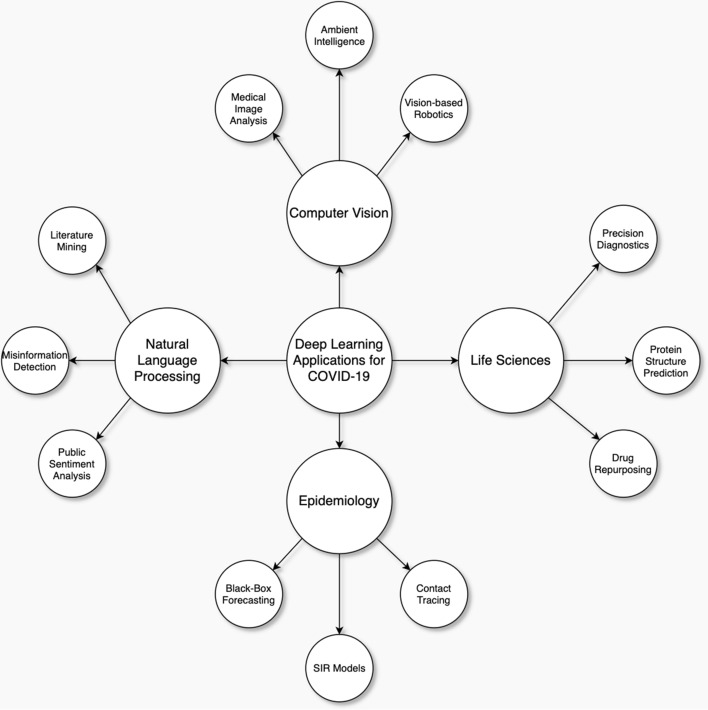
This survey explores how Deep Learning has battled the COVID-19 pandemic and provides directions for future research on COVID-19. We cover Deep Learning applications in Natural Language Processing, Computer Vision, Life Sciences, and Epidemiology. We describe how each of these applications vary with the availability of big data and how learning tasks are constructed. We begin by evaluating the current state of Deep Learning and conclude with key limitations of Deep Learning for COVID-19 applications. These limitations include Interpretability, Generalization Metrics, Learning from Limited Labeled Data, and Data Privacy. Natural Language Processing applications include mining COVID-19 research for Information Retrieval and Question Answering, as well as Misinformation Detection, and Public Sentiment Analysis. Computer Vision applications cover Medical Image Analysis, Ambient Intelligence, and Vision-based Robotics. Within Life Sciences, our survey looks at how Deep Learning can be applied to Precision Diagnostics, Protein Structure Prediction, and Drug Repurposing. Deep Learning has additionally been utilized in Spread Forecasting for Epidemiology. Our literature review has found many examples of Deep Learning systems to fight COVID-19. We hope that this survey will help accelerate the use of Deep Learning for COVID-19 research.
Overview
The claims and statistics of this paper haven’t been checked yet.
Free: it reads the open-access text and checks the first 5 claims that cite a source we can check. Create a free account to check every claim.
Integrity signals
Registry
Cites
Statistics
Figures
Verification
Claims the paper makes
The claims and statistics of this paper haven’t been checked yet.
Free: it reads the open-access text and checks the first 5 claims that cite a source we can check. Create a free account to check every claim.
Claims other papers make about this one
Each is checked against this paper’s own text: does it say what the citing paper says it does?
The source backs part of the claim, not all of it — or backs it for a different population, condition or comparison.
In the citing paper
“In 2020, DL is playing an increasingly vital role in early diagnosis of the novel coronavirus (COVID-19) [29, 46–48].”
From Review of deep learning: concepts, CNN architectures, challenges, applications, future directions (2021) · cites this paper as [29]
Experimental — accuracy not yet measured
Self-check
Percentages, sums and reported differences re-computed from the paper’s own numbers.
The self-check needs the paper’s full text.
Citations
Cites
Deep Residual Learning for Image Recognition
He, K., Zhang, X., Ren, S., & Sun, J. (2016) · 2016 IEEE Conference on Computer Vision and Pattern Recognition (CVPR) · doi:10.1109/cvpr.2016.90 · Cited by 235,474 · cited 6×
“This results in a 3% accuracy improvement over a more standard ResNet-50 architecture.”
MethodInfluentialVaswani, A., Shazeer, N., Parmar, N., Uszkoreit, J., Jones, L., Gomez, A. N., Kaiser, L., & Polosukhin, I. (2017) · arXiv · doi:10.48550/arxiv.1706.03762 · Cited by 120,404 · cited 2×
“NLP has seen a boom of interest due to the invention of the Transformer Neural Network architecture [21].”
BackgroundMethodImageNet classification with deep convolutional neural networks
Krizhevsky, A., Sutskever, I., & Hinton, G. E. (2017) · Communications of the ACM · doi:10.1145/3065386 · Cited by 112,155 · cited 8×
“AlexNet inspired further interest in Deep Neural Networks for Computer Vision.”
BackgroundInfluentialBERT: Pre-training of Deep Bidirectional Transformers for Language Understanding
Devlin, J., Chang, M.-W., Lee, K., & Toutanova, K. (2019) · Proceedings of the 2019 Conference of the North American Chapter of the Association for Computational Linguistics: Human Language Technologies, Volume 1 (Long and Short Papers) · doi:10.18653/v1/n19-1423 · Cited by 54,325
Densely Connected Convolutional Networks
Huang, G., Liu, Z., Van Der Maaten, L., & Weinberger, K. Q. (2017) · 2017 IEEE Conference on Computer Vision and Pattern Recognition (CVPR) · doi:10.1109/cvpr.2017.243 · Cited by 48,566
ImageNet Large Scale Visual Recognition Challenge
Russakovsky, O., Deng, J., Su, H., Krause, J., Satheesh, S., Ma, S., Huang, Z., Karpathy, A., Khosla, A., Bernstein, M., et al. (2015) · International Journal of Computer Vision · doi:10.1007/s11263-015-0816-y · Cited by 39,380 · cited 1×
“The success of Deep Computer Vision is largely attributed to the ImageNet dataset [82].”
Background(2008) · Journal of Machine Learning Research · Cited by 33,051
Exploring the Limits of Transfer Learning with a Unified Text-to-Text Transformer
Raffel, C., Shazeer, N., Roberts, A., Lee, K., Narang, S., Matena, M., Zhou, Y., Li, W., & Liu, P. J. (2019) · arXiv · doi:10.48550/arxiv.1910.10683 · Cited by 31,859 · cited 1×
“Some approaches to QA surveyed generate the answer directly [35], rather than classifying its presence in a context.”
BackgroundPyTorch: An Imperative Style, High-Performance Deep Learning Library
Paszke, A., Gross, S., Massa, F., Lerer, A., Bradbury, J., Chanan, G., Killeen, T., Lin, Z., Gimelshein, N., Antiga, L., et al. (2019) · arXiv · doi:10.48550/arxiv.1912.01703 · Cited by 31,473
Distributed Representations of Words and Phrases and their Compositionality
Mikolov, T., Sutskever, I., Chen, K., Corrado, G., & Dean, J. (2013) · arXiv · doi:10.48550/arxiv.1310.4546 · Cited by 24,533 · cited 1×
“A promising approach to this is the emphasis on evidence retrieval such as Retrieval-Augmented Generation [151].”
Background
Research works printed but not linked: 1
- Kingma D, Ba J. Adam: A method for stochastic optimization. In: International conference on learning representations; 2014.
Cited by
Review of deep learning: concepts, CNN architectures, challenges, applications, future directions
Alzubaidi, L., Zhang, J., Humaidi, A. J., Al-Dujaili, A., Duan, Y., Al-Shamma, O., Santamaría, J., Fadhel, M. A., Al-Amidie, M., & Farhan, L. (2021) · Journal of Big Data · doi:10.1186/s40537-021-00444-8 · Cited by 7,906
Machine learning: Algorithms, real-world applications and research directions
Sarker, I. H. (2021) · SN Computer Science · doi:10.1007/s42979-021-00592-x · Cited by 5,583
Text Data Augmentation for Deep Learning
Shorten, C., Khoshgoftaar, T. M., & Furht, B. (2021) · Journal of Big Data · doi:10.1186/s40537-021-00492-0 · Cited by 1,740
Self-citationAlzubaidi, L., Bai, J., Al-Sabaawi, A., Santamaría, J., Albahri, A. S., Al-dabbagh, B. S. N., Fadhel, M. A., Manoufali, M., Zhang, J., Al-Timemy, A. H., et al. (2023) · Journal of Big Data · doi:10.1186/s40537-023-00727-2 · Cited by 907
Machine Learning Methods for Small Data Challenges in Molecular Science
Dou, B., Zhu, Z., Merkurjev, E., Ke, L., Chen, L., Jiang, J., Zhu, Y., Liu, J., Zhang, B., & Wei, G.-W. (2023) · Chemical Reviews · doi:10.1021/acs.chemrev.3c00189 · Cited by 499
Novel Transfer Learning Approach for Medical Imaging with Limited Labeled Data
Alzubaidi, L., Al-Amidie, M., Al-Asadi, A., Humaidi, A. J., Al-Shamma, O., Fadhel, M. A., Zhang, J., Santamaría, J., & Duan, Y. (2021) · Cancers · doi:10.3390/cancers13071590 · Cited by 292
“It is still in continuous inspirational development regarding the novel performance of several machine learning tasks [31–34], and it has simplified the improvement of many learning fields [35,36].”
BackgroundAI in precision agriculture: A review of technologies for sustainable farming practices
Adewusi, A. O., Asuzu, O. F., Olorunsogo, T., Olorunsogo, T., Adaga, E. M., & Daraojimba, D. O. (2024) · World Journal of Advanced Research and Reviews · doi:10.30574/wjarr.2024.21.1.0314 · Cited by 197
“The marriage of Machine Learning and Decision Support Systems marks a significant advancement in precision agriculture (Shorten, et al., 2021).”
BackgroundA Review of Deep Learning Algorithms and Their Applications in Healthcare
Abdel-Jaber, H., Devassy, D., Al Salam, A., Hidaytallah, L., & EL-Amir, M. (2022) · Algorithms · doi:10.3390/a15020071 · Cited by 147
The Role of Artificial Intelligence in Fighting the COVID-19 Pandemic
Piccialli, F., di Cola, V. S., Giampaolo, F., & Cuomo, S. (2021) · Information Systems Frontiers · doi:10.1007/s10796-021-10131-x · Cited by 143
“Successful applications of Deep Learning (DL) (Shorten et al. 2021) and Machine Learning (ML) (Nayak et al. 2021) techniques in image recognition and segmentation, time series forecasting, sentiment analysis, system control and dynamics simulation are widely present in the literature, as well as…”
BackgroundA deep learning ensemble model for wildfire susceptibility mapping
Bjånes, A., la Fuente, R. A. D., & Mena, P. (2021) · Ecological Informatics · doi:10.1016/j.ecoinf.2021.101397 · Cited by 163
A Review on Machine Learning Strategies for Real-World Engineering Applications
Jhaveri, R. H., Revathi, A. R., Ramana, K., Raut, R., & Dhanaraj, R. K. (2022) · Mobile Information Systems · doi:10.1155/2022/1833507 · Cited by 173
Ospina, R., Gondim, J. A. M., Leiva, V., & Castro, C. (2023) · Mathematics · doi:10.3390/math11143069 · Cited by 204
“Support vector machines, neural networks, logistic regression, and deep learning models have been leveraged to interpret and project the progression of COVID-19 [33,55].”
MethodRobotics and Intelligent Systems Against a Pandemic
Khamis, A. M., Meng, J., Wang, J., Azar, A. T., Prestes, E., Li, H., Hameed, I. A., Takács, Á., Rudas, I. J., & Haidegger, T. P. (2021) · Acta Polytechnica Hungarica · doi:10.12700/aph.18.5.2021.5.3 · Cited by 121
“AI solutions are covered in other publications [3, 4].”
BackgroundApplication of Deep Learning Techniques in Diagnosis of Covid-19 (Coronavirus): A Systematic Review
Bhosale, Y. H., & Patnaik, K. S. (2023) · Neural Processing Letters · doi:10.1007/s11063-022-11023-0 · Cited by 101
“Using Named Entity Recognition and Relation Extraction tasks, DL accelerates the building of Knowledge Graphs[162].”
BackgroundMethodZhou, Z., Tian, D., Yang, Y., Cui, H., Li, Y., Ren, S., Han, T., & Gao, Z. (2024) · Current Research in Food Science · doi:10.1016/j.crfs.2024.100679 · Cited by 108
“DL is based on artificial neural networks, and it performs better than other algorithms because of its deep architecture (Shorten et al., 2021).”
Heidari, A., Jafari Navimipour, N., Unal, M., & Toumaj, S. (2022) · Computers in Biology and Medicine · doi:10.1016/j.compbiomed.2021.105141 · Cited by 89
“In addition, Shorten, Khoshgoftaar [56] investigated how DL dealt with the pandemic and offered suggestions for potential COVID-19 studies.”
BackgroundKhan, J. I., Khan, J., Ali, F., Ullah, F., Bacha, J., & Lee, S. (2022) · IEEE Access · doi:10.1109/access.2022.3181605 · Cited by 118
“Computer vision influence on medical imaging can be realized as either classification, segmentation, or reconstruction tasks [458] on images or videos.”
BackgroundZhang, Y., Abdullah, S., Ullah, I., & Ghani, F. (2023) · Engineering Applications of Artificial Intelligence · doi:10.1016/j.engappai.2023.107581 · Cited by 89
A Review of Graph Neural Networks in Epidemic Modeling
Liu, Z., Wan, G., Prakash, B. A., Lau, M. S. Y., & Jin, W. (2024) · ACM SIGKDD Conference on Knowledge Discovery and Data Mining (KDD) · doi:10.1145/3637528.3671455 · Cited by 149
Velpula, V. K., & Sharma, L. D. (2023) · Frontiers in Physiology · doi:10.3389/fphys.2023.1175881 · Cited by 77
“Many image processing tasks, such as classification and diagnosis, can be carried out with deep learning models (Anwar et al., 2018; Islam et al., 2018; Shorten et al., 2021).”
BackgroundAbiola, O., Abayomi-Alli, A. A., Arogundade, O. '., Misra, S., & Abayomi‐Alli, O. (2023) · Journal of Electrical Systems and Information Technology · doi:10.1186/s43067-023-00070-9 · Cited by 102
A review on lung disease recognition by acoustic signal analysis with deep learning networks
Sfayyih, A. H., Sulaiman, N., & Sabry, A. H. (2023) · Journal Of Big Data · doi:10.1186/s40537-023-00762-z · Cited by 77
Olawade, D. B., Fidelis, S. C., Marinze, S., Egbon, E., Osunmakinde, A., & Osborne, A. (2025) · International Journal of Medical Informatics · doi:10.1016/j.ijmedinf.2025.106141 · Cited by 96
Making decisions: Bias in artificial intelligence and data‑driven diagnostic tools
Aquino, Y. S. J. (2023) · Australian Journal of General Practice · doi:10.31128/ajgp-12-22-6630 · Cited by 58
Majeed, A., & Hwang, S. O. (2021) · Symmetry · doi:10.3390/sym14010016 · Cited by 105
“Hence, it is an emerging research area to lower the computing burden of these techniques via pruning and quantization techniques [271–274].”
BackgroundPractically Adopting Human Activity Recognition
Xu, H., Zhou, P., Tan, R., & Li, M. (2023) · Proceedings of the 29th Annual International Conference on Mobile Computing and Networking · doi:10.1145/3570361.3613299 · Cited by 55
MS MARCO: Benchmarking Ranking Models in the Large-Data Regime
Craswell, N., Mitra, B., Yilmaz, E., Campos, D., & Lin, J. (2021) · Proceedings of the 44th International ACM SIGIR Conference on Research and Development in Information Retrieval · doi:10.1145/3404835.3462804 · Cited by 55
“on one hand, and a flurry of new research and development of IR systems specializing on this task [9, 69, 80] on the other.”
BackgroundArtificial Intelligence and COVID-19: A Systematic umbrella review and roads ahead
Adadi, A., Lahmer, M., & Nasiri, S. (2021) · Journal of King Saud University - Computer and Information Sciences · doi:10.1016/j.jksuci.2021.07.010 · Cited by 69
“…review 31 (Syeda et al., 2021) Role of Machine Learning Techniques to Tackle the COVID-19 Crisis: Systematic Review Systematic Review 32 Shorten et al. (2021) Deep Learning applications for Literature survey Appendix (continued) N Authors Title Review type COVID 19 33 Kamalov et…”
InfluentialInvolving machine learning techniques in heart disease diagnosis: a performance analysis
Shukur, B. S., & Mijwil, M. M. (2023) · International Journal of Power Electronics and Drive Systems/International Journal of Electrical and Computer Engineering · doi:10.11591/ijece.v13i2.pp2177-2185 · Cited by 74
Deep learning for Covid-19 forecasting: State-of-the-art review.
Kamalov, F., Rajab, K. D., Cherukuri, A. K., Elnagar, A., & Safaraliev, M. (2022) · Neurocomputing · doi:10.1016/j.neucom.2022.09.005 · Cited by 63
“In most cases, general surveys focus on Covid-19 diagnosis leaving Covid-19 forecasting as a secondary topic [43,84,85].”
BackgroundSplit-Level Evolutionary Neural Architecture Search With Elite Weight Inheritance
Huang, J., Xue, B., Sun, Y., Zhang, M., & Yen, G. G. (2023) · IEEE Transactions on Neural Networks and Learning Systems · doi:10.1109/tnnls.2023.3269816 · Cited by 54
“O VER the past decade, the superiority of deep learning [1] has been demonstrated by numerous scientific studies and industrial applications [2], [3], [4].”
BackgroundEpi-DNNs: Epidemiological priors informed deep neural networks for modeling COVID-19 dynamics
Ning, X., Jia, L., Wei, Y., Li, X., & Chen, F. (2023) · Computers in Biology and Medicine · doi:10.1016/j.compbiomed.2023.106693 · Cited by 61
Al-Garadi, M. A., Yang, Y., & Sarker, A. (2022) · Healthcare · doi:10.3390/healthcare10112270 · Cited by 69
Personalized and privacy-preserving federated heterogeneous medical image analysis with PPPML-HMI
Zhou, J., Zhou, L., Wang, D., Xu, X., Li, H., Chu, Y., Han, W., & Gao, X. (2023) · Computers in Biology and Medicine · doi:10.1016/j.compbiomed.2023.107861 · Cited by 57
Situation-Aware BDI Reasoning to Detect Early Symptoms of Covid 19 Using Smartwatch
Saleem, K., Saleem, M., Ahmad, R. Z., Javed, A. R., Alazab, M., Gadekallu, T. R., & Suleman, A. (2022) · IEEE Sensors Journal · doi:10.1109/jsen.2022.3156819 · Cited by 43
“This is the limitation to using these approaches as safety-critical applications [32].”
Estimating the impact of interventions against COVID-19: From lockdown to vaccination
Thompson, J., & Wattam, S. (2021) · PLoS ONE · doi:10.1371/journal.pone.0261330 · Cited by 46
“The article [78] provides a review of deep learning applications for COVID-19, in the context of not only epidemiology but also natural language processing, computer vision and life sciences.”
BackgroundExploration of Interpretability Techniques for Deep COVID-19 Classification Using Chest X-ray Images
Chatterjee, S., Saad, F., Sarasaen, C., Ghosh, S., Krug, V., Khatun, R., Mishra, R., Desai, N., Radeva, P. I., Rose, G., et al. (2024) · Journal of Imaging · doi:10.3390/jimaging10020045 · Cited by 50
Ferrer-Sánchez, A., Sebastián, J. V. B., Vila‐Francés, J., Magdalena‐Benedito, R., & Bagán, L. (2022) · Oral Oncology · doi:10.1016/j.oraloncology.2022.105967 · Cited by 46
Peng, L., Wang, C., Tian, G., Liu, G., Gan, L., Lu, Y., Yang, J., Chen, M., & Li, Z. (2022) · Frontiers in Microbiology · doi:10.3389/fmicb.2022.995323 · Cited by 40
“…thoracic radiologists are not likely to immediately diagnose positive cases at all times, which may not only cause treatment delay, but also urge further transmission of COVID-19 because the COVID-19 patients are not promptly isolated (Jin et al., 2020; Shorten et al., 2021; Afshar et al., 2022).”
BackgroundOmics Data and Data Representations for Deep Learning-Based Predictive Modeling
Tsimenidis, S., Vrochidou, Ε., & Papakostas, G. A. (2022) · International Journal of Molecular Sciences · doi:10.3390/ijms232012272 · Cited by 46
“The DL models take up the front lines in the battle to understand, prognosticate, and cure COVID-19 [188–191].”
BackgroundEzugwu, A. E.-S., Hashem, M., Oyelade, O. N., Chiroma, H., Al-Garadi, M. A., Abdullahi, I. N., Otegbeye, O., Shukla, A. K., & Almutari, M. (2021) · BioMed Research International · doi:10.1155/2021/5546790 · Cited by 45
“Furthermore, the works of Shorten et al. [74] and Pan et al. [75] demonstrate the importance of integrating machine learning algorithms in the city-wide management of COVID-19, as can be achieved by adopting the framework proposed in this study.”
MethodRetractedGürsoy, E., & Kaya, Y. (2023) · Multimedia Systems · doi:10.1007/s00530-023-01083-0 · Cited by 43
“In the literature, there are some studies on COVID-19 detection [15–20].”
BackgroundMishra, A. K., Mishra, P., & Mathur, H. D. (2022) · Electric Power Systems Research · doi:10.1016/j.epsr.2022.108960 · Cited by 34
Abunadi, I., Albraikan, A. A., Alzahrani, J. S., Eltahir, M. M. E., Hilal, A. M., Eldesouki, M. I., Motwakel, A., & Yaseen, I. (2022) · Healthcare · doi:10.3390/healthcare10040697 · Cited by 32
Data Augmentation for Improving Emotion Recognition in Software Engineering Communication
Imran, M. M., Jain, Y., Chatterjee, P., & Damevski, K. (2022) · IEEE/ACM International Conference on Automated Software Engineering (ASE) · doi:10.1145/3551349.3556925 · Cited by 51
Deep Learning for Covid-19 Screening Using Chest X-Rays in 2020: A Systematic Review
Santosh, K., Ghosh, S., & Roy, D. G. (2022) · International Journal of Pattern Recognition and Artificial Intelligence · doi:10.1142/s0218001422520103 · Cited by 32
Ansari, A., Rao, K. S., Jain, A. K., & Ansari, A. (2023) · Journal of Earth System Science · doi:10.1007/s12040-023-02178-y · Cited by 28
“Deep learning (DL) is a subset of AI that allows systems to learn and improve on their own without being explicitly programmed (Shorten et al. 2021).”
BackgroundSentiment Analysis in the Age of COVID-19: A Bibliometric Perspective
Sandu, A., Cotfas, L., Delcea, C., Crăciun, L., & Molănescu, A. G. (2023) · Information · doi:10.3390/info14120659 · Cited by 31
Ganesh, N., Shankar, R., Mahdal, M., Murugan, J. S., Chohan, J. S., & Kalita, K. (2024) · Computer Modeling in Engineering & Sciences · doi:10.32604/cmes.2023.028018 · Cited by 52
Mask and Emotion: Computer Vision in the Age of COVID-19
Semerikov, S. O., Вакалюк, Т. А., Мінтій, І. С., Гаманюк, В. А., Soloviev, V., Bondarenko, O. V., Nechypurenko, P. P., Шокалюк, С. В., Моісеєнко, Н. В., & Ruban, V. R. (2021) · Digital Humanities Workshop (DHW) · doi:10.1145/3526242.3526263 · Cited by 28
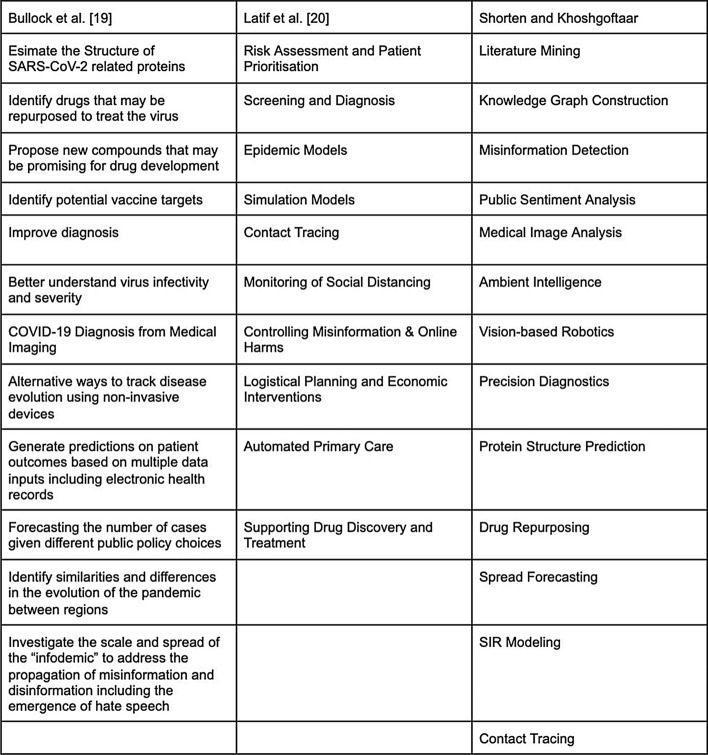
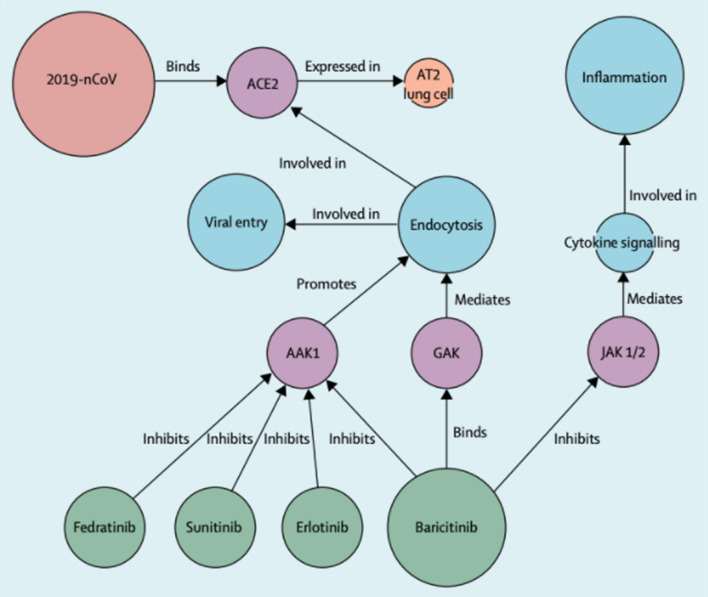
“Connor Shorten, Taghi M. Khoshgoftaar and Borko Furht in [15] presents a knowledge graph of deep learning and computer vision applications to fight COVID-19 (figure 9).”
BackgroundShah, K., Abdeljawad, T., Abdalla, B., & Ali, Z. (2025) · Modeling Earth Systems and Environment · doi:10.1007/s40808-025-02473-1 · Cited by 25
“Analyzing and explaining the spread of the epidemiological disease and other physical systems also involved the use of AI, particularly DNNs models (Shorten et al. 2021).”
The forecast of COVID-19 spread risk at the county level
Hssayeni, M. D., Chala, A., Dev, R., Xu, L., Shaw, J., Furht, B., & Ghoraani, B. (2021) · Journal Of Big Data · doi:10.1186/s40537-021-00491-1 · Cited by 24
Self-citationAutomated detection of schizophrenia using deep learning: a review for the last decade
Sharma, M. D., Patel, R. K., Garg, A., SanTan, R., & Acharya, U. R. (2023) · Physiological Measurement · doi:10.1088/1361-6579/acb24d · Cited by 32
“The extraction and selection of features exert a significant impact on the performance ofML learning algorithms: biased feature extraction can lead to inaccurate class discrimination (Shorten et al 2021).”
BackgroundNew Insights Into Drug Repurposing for COVID-19 Using Deep Learning
Lee, C. Y., & Chen, Y. P. (2021) · IEEE Transactions on Neural Networks and Learning Systems · doi:10.1109/tnnls.2021.3111745 · Cited by 26
“It is widely used to combat with the limitation of sample size for adapting generalizability [66].”
BackgroundApproach to COVID-19 time series data using deep learning and spectral analysis methods
Oshinubi, K., Amakor, A. C., Peter, O. J., Rachdi, M., Demongeot, J., & Industrial and Applied Mathematics unit, E. (2021) · AIMS bioengineering · doi:10.3934/bioeng.2022001 · Cited by 30
“In [52], a survey approach was used to investigate how deep learning has combated the COVID-19 pandemic, and they described how different data types are inputted to deep neural networks and how tasks are constructed as learning problems.”
MethodA Feature-space Multimodal Data Augmentation Technique for Text-video Retrieval
Falcon, A., Serra, G., & Lanz, O. (2022) · ACM International Conference on Multimedia (ACM MM) · doi:10.1145/3503161.3548365 · Cited by 34
COVID-19 health data prediction: a critical evaluation of CNN-based approaches
Kim, T., Chinthaginjala, R., Srinivasulu, A., Tera, S. P., & Rab, S. O. (2025) · Scientific Reports · doi:10.1038/s41598-025-92464-0 · Cited by 32
The Influence of Deep Learning in Detecting Cyber Attacks on E-Government Applications
Gaur, L., Ujjan, R. M. A., & Hussain, M. (2022) · Advances in electronic government, digital divide, and regional development book series · doi:10.4018/978-1-7998-9624-1.ch007 · Cited by 25
Nanotechnology and COVID-19: Prevention, diagnosis, vaccine, and treatment strategies
Ayan, S., Aranci, K., Çiftçi, F., & Üstündağ, C. B. (2023) · Frontiers in Materials · doi:10.3389/fmats.2022.1059184 · Cited by 25
“Moreover, robots help incapacitated people and play an important role in their recovery process (Javaid et al., 2020; Firouzi et al., 2021; Khamis et al., 2021; Mbunge et al., 2021; Sarker et al., 2021; Shorten et al., 2021).”
BackgroundMethodSantosh, K., Roy, D. G., & Nakarmi, S. (2023) · Healthcare · doi:10.3390/healthcare11172388 · Cited by 24
Mapping the Landscape of Misinformation Detection: A Bibliometric Approach
Sandu, A., Ioanăş, I., Delcea, C., Geantă, L.-M., & Cotfas, L. (2024) · Information · doi:10.3390/info15010060 · Cited by 27
High-performance computing in healthcare: An automatic literature analysis perspective
Li, J., Wang, S., Rudinac, S., & Osseyran, A. (2024) · Journal Of Big Data · doi:10.1186/s40537-024-00929-2 · Cited by 30
Recent omics-based computational methods for COVID-19 drug discovery and repurposing
Tayara, H., Abdelbaky, I., & Chong, K. T. (2021) · Briefings in Bioinformatics · doi:10.1093/bib/bbab339 · Cited by 22
A survey on computer vision based human analysis in the COVID-19 era
Eyiokur, F. İ., Kantarcı, A., Erakın, M. E., Damer, N., Ofli, F., Imran, M., Križaj, J., Salah, A. A., Waibel, A. H., Štruc, V., et al. (2022) · Image and Vision Computing · doi:10.1016/j.imavis.2022.104610 · Cited by 27
“[22], where vision approaches, againmostly related tomedical applications, are briefly discussed.”
Morita, P. P., Hussain, I. Z., Kaur, J., Lotto, M., & Butt, Z. A. (2023) · Journal of Medical Internet Research · doi:10.2196/44356 · Cited by 23
“Although VADER presented a limited accuracy compared with deep learning sentiment analyzers, its interpretability is friendly to nonspecialists [47].”
Trend analysis of COVID-19 mis/disinformation narratives–A 3-year study
Kotseva, B., Vianini, I., Nikolaidis, N., Faggiani, N., Potapova, K., Gasparro, C., Steiner, Y., Scornavacche, J., Jacquet, G., Dragu, V., et al. (2023) · PLoS ONE · doi:10.1371/journal.pone.0291423 · Cited by 40
Big Data Research in Fighting COVID-19: Contributions and Techniques
Riswantini, D., Nugraheni, E., Arisal, A., Khotimah, P. H., Munandar, D., & Suwarningsih, W. (2021) · Big Data and Cognitive Computing · doi:10.3390/bdcc5030030 · Cited by 25
Introduction to machine learning
Saifuzzaman, M., & Ananna, T. N. (2024) · Advances in computers · doi:10.1016/bs.adcom.2024.06.005 · Cited by 19
Modern Deep Learning Techniques for Big Medical Data Processing in Cloud
Shakor, M. Y., & Khaleel, M. I. (2025) · IEEE Access · doi:10.1109/access.2025.3556327 · Cited by 32
“In 2021 , [103] explains in detail DL applications in Natural Language Processing, Computer Vision, Life Sciences, and Epidemiology, among other fields, that use big data to advance prediction models and analytics tools into better-performing tools with more accuracy and efficiency.”
Pham, P., Witold Pedrycz, C., & Vo, B. (2022) · Expert Systems with Applications · doi:10.1016/j.eswa.2022.117514 · Cited by 18
“In recent years, the tremendous raises of deep learning in multiple disciplines have shed some lights for enhancing the performance of Covid-19 outbreak forecasting problem (Shorten, Khoshgoftaar, & Furht, 2021).”
BackgroundWang, J., & Chen, Z. (2024) · PLoS ONE · doi:10.1371/journal.pone.0306094 · Cited by 34
Sakthivel, R., Thaseen, I. S., Vanitha, M., Deepa, M., Angulakshmi, M., Ramaiah, M., Mahendran, A., Alnumay, W. S., & Chatterjee, P. (2022) · Sustainable Cities and Society · doi:10.1016/j.scs.2022.103713 · Cited by 22
“Few deep learning models result in generalization metric issues (Shorten, Khoshgoftaar, & Furht, 2021).”
de Carvalho, V. D. H., Nepomuceno, T. C. C., Poleto, T., Turet, J., & Costa, A. P. C. S. (2022) · Tropical Medicine and Infectious Disease · doi:10.3390/tropicalmed7100256 · Cited by 18
Khan, A. A. R., Akram, M. U., & Nazir, S. (2023) · PLoS ONE · doi:10.1371/journal.pone.0280352 · Cited by 25
“The performance of CNN models to a great extent is attributed to massive labelled data which is difficult for medical imaging applications [4].”
BackgroundInfluentialJiang, Z., Chen, H., Zhou, R., Deng, J., Zhang, X., Zhao, R., Xie, C., Wang, Y., & Ngai, E. C. ‐. (2023) · IEEE Transactions on Visualization and Computer Graphics · doi:10.1109/tvcg.2023.3326943 · Cited by 30
“However, many traditional machine learning models are also unable to deal with multimodal data, and the models based on deep learning usually have limited interpretability [60].”
BackgroundThe non-linear nature of the cost of comprehensibility
Goethals, S., Martens, D., & Evgeniou, T. (2022) · Journal Of Big Data · doi:10.1186/s40537-022-00579-2 · Cited by 29
Funding COVID-19 research: Insights from an exploratory analysis using open data infrastructures
Mugabushaka, A.-M., van Eck, N. J., & Waltman, L. (2022) · Quantitative Science Studies · doi:10.1162/qss_a_00212 · Cited by 27
Zheng, Q., & Ding, Q. (2022) · PLOS ONE · doi:10.1371/journal.pone.0268007 · Cited by 16
“The Immersive Marketing environment can comprehensively improve users’ shopping experience and promote commodity marketing [2, 3].”
BackgroundRadiological Analysis of COVID-19 Using Computational Intelligence: A Broad Gauge Study
Ligi, S. V., Kundu, S. S., Kumar, R., Narayanamoorthi, R., Lai, K. W., & Dhanalakshmi, S. (2022) · Journal of Healthcare Engineering · doi:10.1155/2022/5998042 · Cited by 19
“[52] by exploring different paradigms of deep learning.”
BackgroundResultInfluentialDevelopment of the computer vision system based on machine learning for educational purposes
Semerikov, S. O., Вакалюк, Т. А., Мінтій, І. С., Гаманюк, В. А., Soloviev, V., Bondarenko, O. V., Nechypurenko, P. P., Шокалюк, С. В., Моісеєнко, Н. В., & Ruban, V. R. (2021) · Educational Dimension · doi:10.31812/educdim.4717 · Cited by 17
Application of Learning Cloud Computing Technology (Cloud Computing) to Students in Higher Education
Fernanda, A., Huda, M., & Geovanni, A. R. F. (2023) · International Journal of Cyber and IT Service Management · doi:10.34306/ijcitsm.v3i1.121 · Cited by 16
“This cloud computing application can facilitate the process of presenting and storing information on student learning materials, as well as sharing information and distributing teacher learning materials in a structured manner[11].”
BackgroundIntegrating Transformer and GCN for COVID-19 Forecasting
Li, Y., Wang, Y., & Ma, K. (2022) · Sustainability · doi:10.3390/su141610393 · Cited by 20
Zhou, J., Li, G., Wang, R., Chen, R., & Luo, S. (2023) · Entropy · doi:10.3390/e25020268 · Cited by 18
Xiang, W., Chen, L., Yan, X., Wang, B., & Liu, X. (2023) · Cities · doi:10.1016/j.cities.2023.104238 · Cited by 15
A Real Time Method for Distinguishing COVID-19 Utilizing 2D-CNN and Transfer Learning
Sultana, A., Nahiduzzaman, M., Bakchy, S. C., Shahriar, S. M., Peyal, H. I., Chowdhury, M. E. H., Khandakar, A. A., Ayari, M. A., Ahsan, M., & Haider, J. (2023) · Sensors · doi:10.3390/s23094458 · Cited by 19
“[34] concerning the application of deep learning to the COVID-19 pandemic as well as the application of deep learning in many other fields.”
BackgroundComparing the Performance of Machine Learning Algorithms for Groundwater Mapping in Delhi
Khan, Z., Mohsin, M., Ali, S. A., Vashishtha, D., Husain, M., Parveen, A., Shamim, S. K., Parvin, F., Anjum, R., Jawaid, S., et al. (2023) · Journal of the Indian Society of Remote Sensing · doi:10.1007/s12524-023-01789-8 · Cited by 15
“The most widely used modern breakthroughs in the fourth industrial revolution, machine learning (ML) gives devices the capability to learn from experience and improve naturally without being specifically designed (Shorten et al., 2021 and Sarker et al., 2020).”
Altini, N., Brunetti, A., Mazzoleni, S., Moncelli, F., Zagaria, I., Prencipe, B., Lorusso, E., Buonamico, E., Carpagnano, G. E., Bavaro, D. F., et al. (2021) · Sensors · doi:10.3390/s21248503 · Cited by 16
SCA-CGAN:A New Side-Channel Attack Method for Imbalanced Small Samples
Wang, W., Wang, J. N., Hu, F. L., & Ni, F. (2023) · Radioengineering · doi:10.13164/re.2023.0124 · Cited by 15
Data science in healthcare: techniques, challenges and opportunities
Devi, P. P., & Bansal, K. L. (2024) · Health and Technology · doi:10.1007/s12553-024-00861-8 · Cited by 19
“F e w - s ho t a nd ze r o - s ho t l ea r n i ng , m od e l c o m p r e ss i on t ec hn i qu e s , a dv a n ce m e n t i n h a r d w a r e f o r f a s t e r c o m pu t a ti on , a nd e xp l a i n a b l e D L m od e l s [ 75 ] .”
Tsao, S., MacLean, A. C., Chen, H., Li, L., Yang, Y., Michalopoulos, G., & Butt, Z. A. (2022) · International Journal of Public Health · doi:10.3389/ijph.2022.1604658 · Cited by 15
“In other words, although deep learning has more optimal performance than conventional techniques, it has been a “black box” viewed by many public health professionals [24].”
BackgroundHeredia, I., Díaz, J. S.-P., Castrillo, M., & García, Á. L. (2023) · Scientific Reports · doi:10.1038/s41598-023-33795-8 · Cited by 16
Lung Disease Detection Using U-Net Feature Extractor Cascaded by Graph Convolutional Network
Rashid, P. Q., & Türker, İ. (2024) · Diagnostics · doi:10.3390/diagnostics14121313 · Cited by 17
“However, the intersection of cutting-edge technology and medical science is opening new avenues to increase the precision and effectiveness of the early diagnosis of respiratory diseases [3].”
BackgroundViderman, D., Kotov, A., Popov, M., & Abdildin, Y. G. (2023) · International Journal of Medical Informatics · doi:10.1016/j.ijmedinf.2023.105308 · Cited by 15
Reliability Evaluation of the Factors That Influenced COVID-19 Patients’ Condition
Levashenko, V., Rabčan, J., & Zaitseva, E. (2021) · Applied Sciences · doi:10.3390/app11062589 · Cited by 13
“The Deep Leaningbased method has been used for COVID-19 detection based on X-ray image analysis [64], natural language processing [65], and epidemiology forecasting [66].”
MethodVeluchamy, S., Sudharson, S., Annamalai, R., Bassfar, Z., Aljaedi, A., & Jamal, S. S. (2024) · Journal of Imaging Informatics in Medicine · doi:10.1007/s10278-024-01077-y · Cited by 13
“In the medical field, there has been a recent surge in the popularity of artificial intelligence (AI) based diagnostic approaches [4, 5].”
Standing tall like Caesar? Qatar’s unwavering voice for Palestine at the United Nations
Aras, B., & Al-Ansari, M. (2024) · Third World Quarterly · doi:10.1080/01436597.2024.2346214 · Cited by 12
“Topic modelling is a text analysis technique that employs unsupervised machine learning to discern patterns of word usage within a given text (Shorten, Khoshgoftaar, and Furht 2021).”
MethodIslam, M. S., Farid, F. A., Shamrat, F. M. J. M., Islam, M. N., Rashid, M., Bari, B. S., Abdullah, J., Islam, M. N., Akhtaruzzaman, M., Kabir, M. N., et al. (2024) · PeerJ Computer Science · doi:10.7717/peerj-cs.2517 · Cited by 15
Lu, G., Businger, M., Dollfus, C., Wozniak, T., Fleck, M., Heroth, T., Lock, I., & Lipenkova, J. (2022) · International Journal of Data Science and Analytics · doi:10.1007/s41060-022-00364-7 · Cited by 13
COVID-19 infection segmentation using hybrid deep learning and image processing techniques
Antar, S., El-Sattar, H. K. H. A., Abdel-Rahman, M. H., & Ghaleb, F. F. M. (2023) · Scientific Reports · doi:10.1038/s41598-023-49337-1 · Cited by 14
“It works with all image types, not just thermal images, such as those in 70,71 .”
BackgroundAnalysis of COVID-19 Using Machine Learning & Data Science Technologies
Sravani, B., Sai, G. H. S. V., Vyshnavi, V., Sandeep, T., & Devi, M. M. Y. (2023) · International Conference on Pervasive Computing and Social Networking (ICPCSN) · doi:10.1109/icpcsn58827.2023.00019 · Cited by 11
Metadata
- Authors
- Shorten, C., Khoshgoftaar, T. M., & Furht, B.
- Affiliations
- Florida Atlantic University (US)
- Corresponding author
- Shorten, Connor
- Venue
- Journal of Big Data
- Published
- 2021-01-11
- Volume
- 8
- Issue
- 1
- Pages
- 18-18
- ISSN
- 2196-1115 (ISSN-L)
- PMC
- PMC7797891
- OpenAlex
- W3121263745
- Cited by
- 350
- References
- 175
- Citations by year
- 2026: 10 · 2025: 42 · 2024: 54 · 2023: 92 · 2022: 100 · 2021: 52
- FWCI
- 39.32
- Type
- journal article
- Language
- en
- Open access
- gold
- doi.org
- Licence
- cc-by
- creativecommons.org/licenses/by/4.0 (tdm)
- creativecommons.org/licenses/by/4.0 (vor)
- Locations
- Journal Of Big Data (publishedVersion, cc-by)
- PubMed Central (publishedVersion, cc-by)
- PubMed (publishedVersion)
- DOAJ (DOAJ: Directory of Open Access Journals) (submittedVersion, cc-by-sa)
- Funders
- National Science Foundation (IIS-2027890)
- Topics
- Health Sciences › Medicine › Radiology, Nuclear Medicine and Imaging › COVID-19 diagnosis using AI
- Health Sciences › Medicine › Health Informatics › Artificial Intelligence in Healthcare and Education
- Physical Sciences › Computer Science › Information Systems › Healthcare during COVID-19 Pandemic
- Keywords
- COVID-19 pandemic, deep learning applications, natural language processing, computer vision, information retrieval, question answering, misinformation detection, sentiment analysis, medical image analysis, ambient intelligence, vision-based robotics, precision diagnostics, protein structure prediction, drug repurposing, interpretability, limited labeled data, data privacy
About these checks
Registry, retraction, Cites and statistics results are computed, not judged, with one exception: a printed reference that no index lists is read once by a model before it counts as a citation error. Claims are extracted by a model and kept only when their quote appears verbatim in the text; each cited source is then checked, with a model’s help, for whether it says what the claim relies on. Those verdicts can be wrong — read the claim’s quote and the cited source before relying on one.
Statistics and arithmetic are recomputed, not judged.
Confidence bands are shown only for fields calibrated on our annotated test set. None is calibrated yet, so no band is shown.
What counts as a claim ›How we measure confidence ›How we check this ›
Are you an author, or do you see a problem with this page? Request a review
Data sources
Bibliographic data: Semantic Scholar, OpenAlex, Crossref.
Contains information from the Semantic Scholar Academic Graph Datasets, made available under the ODC Attribution License (ODC-BY 1.0).
Semantic Scholar’s data is described in: Kinney, R., et al. (2023). The Semantic Scholar Open Data Platform. arXiv:2301.10140.
