

Review of deep learning: concepts, CNN architectures, challenges, applications, future directions
Open accessThe DOI matches its Crossref record; 361 of the 372 references it cites were found in a registry or an index; 138 of the 246 sources its claims cite were checked for support.
Abstract
In the last few years, the deep learning (DL) computing paradigm has been deemed the Gold Standard in the machine learning (ML) community. Moreover, it has gradually become the most widely used computational approach in the field of ML, thus achieving outstanding results on several complex cognitive tasks, matching or even beating those provided by human performance. One of the benefits of DL is the ability to learn massive amounts of data. The DL field has grown fast in the last few years and it has been extensively used to successfully address a wide range of traditional applications. More importantly, DL has outperformed well-known ML techniques in many domains, e.g., cybersecurity, natural language processing, bioinformatics, robotics and control, and medical information processing, among many others. Despite it has been contributed several works reviewing the State-of-the-Art on DL, all of them only tackled one aspect of the DL, which leads to an overall lack of knowledge about it. Therefore, in this contribution, we propose using a more holistic approach in order to provide a more suitable starting point from which to develop a full understanding of DL. Specifically, this review attempts to provide a more comprehensive survey of the most important aspects of DL and including those enhancements recently added to the field. In particular, this paper outlines the importance of DL, presents the types of DL techniques and networks. It then presents convolutional neural networks (CNNs) which the most utilized DL network type and describes the development of CNNs architectures together with their main features, e.g., starting with the AlexNet network and closing with the High-Resolution network (HR.Net). Finally, we further present the challenges and suggested solutions to help researchers understand the existing research gaps. It is followed by a list of the major DL applications. Computational tools including FPGA, GPU, and CPU are summarized along with a description of their influence on DL. The paper ends with the evolution matrix, benchmark datasets, and summary and conclusion.
Overview
CoChat Summary
## TL;DR
This paper is a broad review of deep learning that explains core concepts, classifies DL approaches, and surveys CNN architectures from AlexNet to HRNet. It also summarizes major challenges, applications, and computational platforms, with a heavy emphasis on medical imaging and CNN-based solutions.
## Key findings
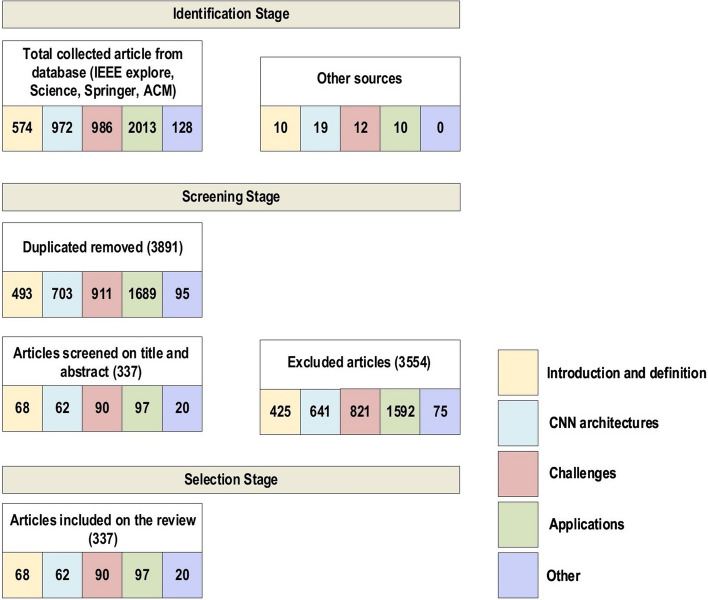
- The authors reviewed more than 300 papers on deep learning topics, with 108 papers from 2020, 76 from 2019, and 48 from 2018.
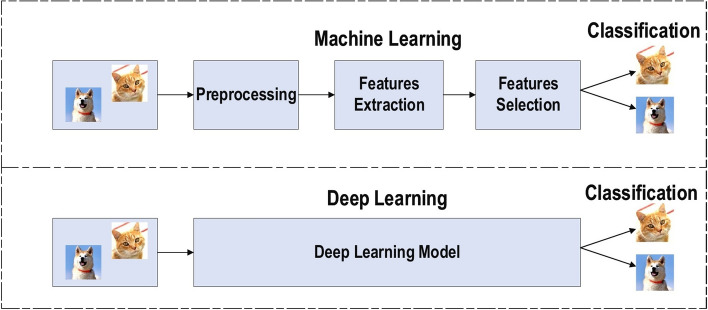
- They argue that DL can reduce manual feature engineering by learning features automatically and that it has already achieved strong results in tasks such as image classification, detection, segmentation, and registration.
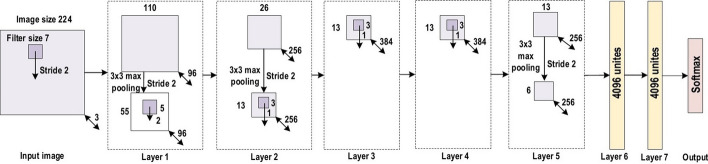
- The paper highlights that CNNs are the most used DL network type and reviews their architectural evolution from AlexNet (2012) to HRNet (2020).
- It identifies major DL challenges including lack of training data, imbalanced data, interpretability, uncertainty scaling, catastrophic forgetting, model compression, overfitting, vanishing/exploding gradients, and underspecification.
## Methods
- This is a survey/review paper, not an experimental study.
- The authors report reviewing literature from 2010–2020 (mainly 2020 and 2019, with some 2021 papers), drawing from publishers including IEEE, Elsevier, MDPI, Nature, ACM, and Springer, plus some arXiv papers.
- Their review was organized to cover DL approaches and network types, CNN architectures, challenges and solutions, applications, and computational approaches.
## Limitations
- The paper itself states that the review is not exhaustive for every topic; for example, in registration it says it is “out of the scope of this work to provide an extensive review of this topic.”
- The text also makes evident that some sections are descriptive rather than systematic: it summarizes many studies and architectures but does not report a formal meta-analysis or quantitative comparison across all included papers. (This is evident from the text.)
- Several sections are labeled only as headings or brief placeholders in the provided text, suggesting the supplied version is fragmentary/incomplete in places. (This is evident from the text.)
Model-written summary. Check it against the paper before relying on it.
Integrity signals
Registry
Cites
Statistics
Figures
Verification
Claims the paper makes
81 Valid · 72 Not valid · 63 Not checked · 158 Own results and interpretations
Some cited sources support this claim and some don’t — read each source’s verdict below.
In the paper
“Increase the depth (or width) of the model.”
§ Review of deep learning: concepts, CNN architectures, challenges, applications, future directions > Types of DL networks > Convolutional neural networks
What the sources say
- Disputedcites [86] Alzubaidi L Fadhel MA Al-Shamma O Zhang J Duan Y Deep learning models for classification of red blood cells in microscopy images to aid in sickle cell anemia diagnosis Electronics 2020 9 3 427 10.3390/electronics9030427 sourceExperimental — accuracy not yet measured
In the paper’s model-comparison discussion (page not available in our copy), the authors say they increased network depth to improve performance, but it did not help; Model 2 performed best. The cited passage therefore does not support recommending greater depth as a way to improve performance, and it gives no corresponding result for greater width. (LLM, conf=0.86)
Checked by a reasoning model — may be wrong.
- Not checked yetcites [87] Alzubaidi L Fadhel MA Al-Shamma O Zhang J Santamaría J Duan Y Oleiwi SR Towards a better understanding of transfer learning for medical imaging: a case study Appl Sci 2020 10 13 4523 10.3390/app10134523 source
Checked before — its earlier verdict is held back until a new check runs.
- Partly supportedcites [88] Alzubaidi L Al-Shamma O Fadhel MA Farhan L Zhang J Duan Y Optimizing the performance of breast cancer classification by employing the same domain transfer learning from hybrid deep convolutional neural network model Electronics 2020 9 3 445 10.3390/electronics9030445 sourceExperimental — accuracy not yet measured
Section 3.5 (Proposed Model; page unavailable) says a deep CNN with improved feature extraction is needed for breast-biopsy classification and describes a multi-branch architecture. It does not establish that simply increasing a model’s depth or width improves CNN performance; the proposed model also uses residual links and other design choices. (LLM, conf=0.78)
plainstates a possible cause- Asserted: passes — The authors put it forward as true.
- Checkable: passes — It can be checked against evidence.
- Load-bearing: unclear — It is unclear whether the paper’s conclusions depend on it.
- Based: passes — The paper gives a reason why it holds.
- Disputed
The cited sources support only part of this claim — read each source’s verdict below.
In the paper
“The main benefit of CNN compared to its predecessors is that it automatically identifies the relevant features without any human supervision [76].”
§ Review of deep learning: concepts, CNN architectures, challenges, applications, future directions > Types of DL networks > Convolutional neural networks
What the sources say
- Partly supportedcites [76] Gu J Wang Z Kuen J Ma L Shahroudy A Shuai B Liu T Wang X Wang G Cai J Recent advances in convolutional neural networks Pattern Recogn 2018 77 354 377 10.1016/j.patcog.2017.10.013 sourceExperimental — accuracy not yet measured
The paper says CNNs learn features automatically rather than relying on handcrafted features (5.3, p. 22), supporting the feature-learning part of the claim. But it does not support “without any human supervision”: the Conclusions (p. 28) say training requires manually collected labeled data and identify unsupervised CNN learning as a goal for further work. (LLM, conf=0.88)
plainstates a cause- Asserted: passes — The authors put it forward as true.
- Checkable: passes — It can be checked against evidence.
- Load-bearing: unclear — It is unclear whether the paper’s conclusions depend on it.
- Based: passes — The paper gives a reason why it holds.
- Partly supported
The cited sources support only part of this claim — read each source’s verdict below.
In the paper
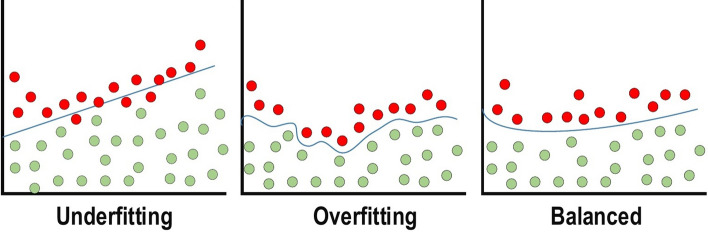
“Add regularization.”
§ Review of deep learning: concepts, CNN architectures, challenges, applications, future directions > Types of DL networks > Convolutional neural networks
What the sources say
- Supportedcites [86] Alzubaidi L Fadhel MA Al-Shamma O Zhang J Duan Y Deep learning models for classification of red blood cells in microscopy images to aid in sickle cell anemia diagnosis Electronics 2020 9 3 427 10.3390/electronics9030427 source
Section 3.2 (p. 8) says data augmentation enhances classification performance and helps prevent CNN overfitting. The paper thus supports the hedged claim that adding an overfitting-control technique may improve CNN performance, specifically in red-blood-cell classification. (LLM, conf=0.82)
- Partly supportedcites [87] Alzubaidi L Fadhel MA Al-Shamma O Zhang J Santamaría J Duan Y Oleiwi SR Towards a better understanding of transfer learning for medical imaging: a case study Appl Sci 2020 10 13 4523 10.3390/app10134523 sourceExperimental — accuracy not yet measured
Our copy places regularization among techniques for limiting overfitting (Sec. 5.2.4 Dropout: 'A limited number of solutions are used to reduce the risk of overfitting... Other techniques involve the use of regularization and enlargement of the training dataset'), and lists 'regularization strategies' among the attributes in which DCNNs advanced (Sec. 2.2). That supports regularization as a performance-related device, but the paper never states that adding regularization improves CNN performance; on the contrary, its only comparative statement favours the alternative: 'Compared to regularization, dropout performs well in accelerating the process of training, as well as reducing the overfitting risk' (Sec. 5.2.4). The claim's asserted benefit of adding regularization is therefore only partly carried by this source. (LLM, conf=0.68)
- Supportedcites [88] Alzubaidi L Al-Shamma O Fadhel MA Farhan L Zhang J Duan Y Optimizing the performance of breast cancer classification by employing the same domain transfer learning from hybrid deep convolutional neural network model Electronics 2020 9 3 445 10.3390/electronics9030445 source
Section 3.5 (Proposed Model; page unavailable) says the authors placed a dropout layer in their CNN to prevent overfitting. Dropout is a form of regularization, so this supports the qualified claim that adding regularization may improve CNN performance. (LLM, conf=0.85)
plainstates a possible cause- Asserted: passes — The authors put it forward as true.
- Checkable: passes — It can be checked against evidence.
- Load-bearing: unclear — It is unclear whether the paper’s conclusions depend on it.
- Based: passes — The paper gives a reason why it holds.
- Supported
Every source the paper cites for this claim was checked and supports it.
In the paper
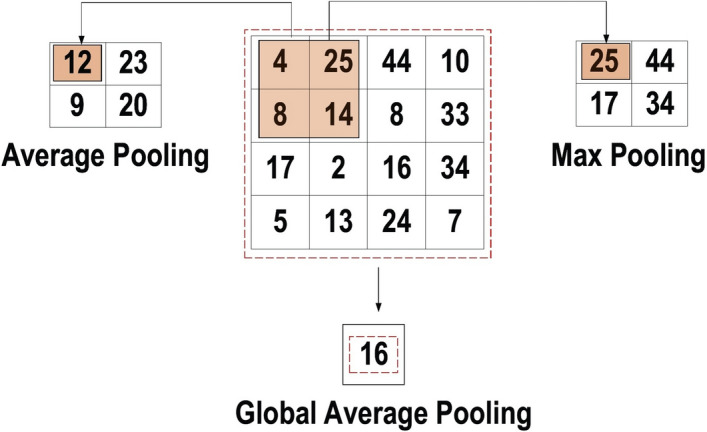
“As a substitution for a FC layer, the GAP is also employed, which represents the second novel concept and enables a significant reduction in the number of model parameters.”
§ Review of deep learning: concepts, CNN architectures, challenges, applications, future directions > CNN architectures > Network-in-network
What the sources say
- Supportedcites [94] Lin M, Chen Q, Yan S. Network in network; 2013. arXiv preprint arXiv:1312.4400. source
Section 3.2 (p. 4) proposes global average pooling as a replacement for fully connected layers and says the pooling layer has no parameters to optimize. Section 4.6 (p. 7) contrasts this with fully connected layers’ trainable dense transformation matrices, supporting the claimed reduction in parameters, though it does not quantify the reduction. (LLM, conf=0.90)
plainstates a cause- Asserted: passes — The authors put it forward as true.
- Checkable: passes — It can be checked against evidence.
- Load-bearing: unclear — It is unclear whether the paper’s conclusions depend on it.
- Based: passes — The paper gives a reason why it holds.
- Supported
Every source the paper cites for this claim was checked and supports it.
In the paper
“In 2015, Srivastava et al. [105] suggested a novel CNN architecture, called Highway Network, to overcome this issue.”
§ Review of deep learning: concepts, CNN architectures, challenges, applications, future directions > CNN architectures > Highway network
What the sources say
- Supportedcites [105] Srivastava RK, Greff K, Schmidhuber J. Highway networks; 2015. arXiv preprint arXiv:1505.00387. source
The Introduction (p. 1) presents highway networks as a novel architecture intended to make very deep networks easier to optimize. Section 2.1 (p. 2) describes convolutional highway layers, supporting the CNN characterization, although the architecture is not limited to CNNs. (LLM, conf=0.93)
plainstates a cause- Asserted: passes — The authors put it forward as true.
- Checkable: passes — It can be checked against evidence.
- Load-bearing: unclear — It is unclear whether the paper’s conclusions depend on it.
- Based: passes — The paper gives a reason why it holds.
- Rests on 2 assumptions not shown here.
- Supported
93 more claims · 31 with their cited sources checked
Create a free account to see all 374 claims and to verify the 24 references still open.
- Probably not a substantial claim. 224
- It may state two separate claims as one. 109
- The quote only partly states this claim. 2
Claims other papers make about this one
Each is checked against this paper’s own text: does it say what the citing paper says it does?
The source backs part of the claim, not all of it — or backs it for a different population, condition or comparison.
In the citing paper
“Previous methodologies, such as, artificial neural networks (NNs), and the more recent DL techniques, have been preferred in SOC estimation because of their applicability to depict more intricate correlation systems of input parameters and SOC [44].”
From Review Paper for SOC Estimation Techniques: Challenges and Future Areas for Improvement (2024) · cites this paper as [44]
Experimental — accuracy not yet measured
Self-check
Percentages, sums and reported differences re-computed from the paper’s own numbers.
Self-check results appear here once an independent check has confirmed them.
Cited works that were retracted
Works this paper cites that were later retracted, from the retraction notices publishers deposit. Major when the notice came out before this paper was published.
Rated major: it would touch a result — a value a result rests on, reported and recomputed p-values on opposite sides of the significance level, two passages that conflict with no sign which is right, or a cited work retracted before this paper was published.
In the paper
“Min Z. Public welfare organization management system based on FPGA and deep learning. Microprocess Microsyst. 2020;80:103333.”
Cited work 10.1016/j.micpro.2020.103333 · retracted 2021-02-01 · notice 10.1016/j.micpro.2020.103333 · this paper published 2021-03-31
Citations
Cites
1 retracted
RETRACTED: Public welfare organization management system based on FPGA and deep learning
Min, Z. (2020) · Microprocessors and Microsystems · doi:10.1016/j.micpro.2020.103333 · Cited by 16
RetractedDeep Residual Learning for Image Recognition
He, K., Zhang, X., Ren, S., & Sun, J. (2016) · 2016 IEEE Conference on Computer Vision and Pattern Recognition (CVPR) · doi:10.1109/cvpr.2016.90 · Cited by 235,474
Very Deep Convolutional Networks for Large-Scale Image Recognition
Simonyan, K., & Zisserman, A. (2014) · arXiv · doi:10.48550/arxiv.1409.1556 · Cited by 114,148
ImageNet classification with deep convolutional neural networks
Krizhevsky, A., Sutskever, I., & Hinton, G. E. (2017) · Communications of the ACM · doi:10.1145/3065386 · Cited by 112,155
U-Net: Convolutional Networks for Biomedical Image Segmentation
Ronneberger, O., Fischer, P., & Brox, T. (2015) · Lecture notes in computer science · doi:10.1007/978-3-319-24574-4_28 · Cited by 99,404
LeCun, Y., Bengio, Y., & Hinton, G. (2015) · Nature · doi:10.1038/nature14539 · Cited by 84,126
ImageNet: A large-scale hierarchical image database
Deng, J., Dong, W., Socher, R., Li, L.-J., Li, K., & Fei-Fei, L. (2009) · 2009 IEEE Conference on Computer Vision and Pattern Recognition · doi:10.1109/cvpr.2009.5206848 · Cited by 65,333
Densely Connected Convolutional Networks
Huang, G., Liu, Z., Van Der Maaten, L., & Weinberger, K. Q. (2017) · 2017 IEEE Conference on Computer Vision and Pattern Recognition (CVPR) · doi:10.1109/cvpr.2017.243 · Cited by 48,566
Going deeper with convolutions
Szegedy, C., Liu, W., Jia, Y., Sermanet, P., Reed, S., Anguelov, D., Erhan, D., Vanhoucke, V., & Rabinovich, A. (2015) · 2015 IEEE Conference on Computer Vision and Pattern Recognition (CVPR) · doi:10.1109/cvpr.2015.7298594 · Cited by 48,562
Squeeze-and-Excitation Networks
Hu, J., Shen, L., & Sun, G. (2018) · 2018 IEEE/CVF Conference on Computer Vision and Pattern Recognition · doi:10.1109/cvpr.2018.00745 · Cited by 35,667
Research works printed but not linked: 4
- Erhan D Bengio Y Courville A Vincent P Visualizing higher-layer features of a deep network Univ Montreal 2009 1341 3 1
- Ribeiro AH, Tiels K, Aguirre LA, Schön T. Beyond exploding and vanishing gradients: analysing RNN training using attractors and smoothness. In: International conference on artificial intelligence and statistics, PMLR; 2020. p. 2370–80.
- Zhao H, Han Z, Yang Z, Zhang Q, Yang F, Zhou L, Yang M, Lau FC, Wang Y, Xiong Y, et al. Hived: sharing a {GPU} cluster for deep learning with guarantees. In: 14th {USENIX} symposium on operating systems design and implementation ({OSDI} 20); 2020. p. 515–32.
- Rakotomamonyj A. Optimizing area under roc with SVMS. In: Proceedings of the European conference on artificial intelligence workshop on ROC curve and artificial intelligence (ROCAI 2004), 2004. p. 71–80.
Cited by
Items 7,701–7,800 of 7,963
Predicting resist pattern collapse in EUVL using machine learning
D’Silva, S., Arava, R., Erdmann, A. A., et al. (2023) · European Mask and Lithography Conference (EMLC) · doi:10.1117/12.2675700
Wang, D., Li, E., Wang, Y., Liu, Z., Sun, A., Wei, W., Zhang, X., Peng, C., & Wei, F. (2025) · PLoS ONE · doi:10.1371/journal.pone.0337007 · Cited by 2
Penetration-state recognition based on deep learning in welding: a review
Zhou, Q., Zhang, Z., Dong-liang, L., Yi, J., Ye, J., Wu, J., Li, S., & 蔡翠兰 (2026) · The International Journal of Advanced Manufacturing Technology · doi:10.1007/s00170-026-19099-x
Dumont, Z. B. (2024) · theses.fr (ABES) · doi:10.70675/cbb41473z9e66z49a9z8c2dz0bd957139376
Jabbar, M. A., Sun, Y., Ashraf, M. A., Ahmed, S., & Yu, D. (2026) · Journal of Chemical Information and Modeling · doi:10.1021/acs.jcim.6c01478
Li, H., Gu, Y., Li, Y., Han, J., Sun, Y., Lei, H., Li, C., & Xu, N. (2025) · IEEE International Conference on Pattern Recognition, Machine Vision and Artificial Intelligence (PRMVAI) · doi:10.1109/prmvai65741.2025.11108384
Automated Detection and Classification of Multi-species Malaria Parasites Using YOLOv11
Ohdar, K., Priyadarshy, S., & Nigam, A. (2026) · Lecture notes in networks and systems · doi:10.1007/978-3-032-13544-5_38
Machine learning approaches in predicting circadian rhythm sleep-wake disorders: A review
Sengupta, T., Gaur, A., & Varatharajan, S. (2026) · Chronobiology International · doi:10.1080/07420528.2026.2667404 · Cited by 1
“ML encompasses a family of computational techniques that enable models to learn complex patterns from data and to improve performance over time (Alzubaidi et al. 2021).”
Germain, L., Sertucha, J., Lacaze, J., et al. (2024) · SSRN Electronic Journal · doi:10.2139/ssrn.4801355
From Rivers to Floodplains: Leveraging Transfer Learning to Predict Floodplain Dissolved Oxygen
Myers, G. H., Underwood, K. L., Diehl, R. M., Rizzo, D. M., Chin, T. L., & Roy, E. D. (2025) · Water Resources Research · doi:10.1029/2024wr039820 · Cited by 2
Zhang, Z., Zhang, M., Hou, H., Shi, Q., Meng, F., Li, X., Yang, T., Ren, W., & Jing, P. (2026) · Digital Signal Processing · doi:10.1016/j.dsp.2026.106377
Canine Sleeping Posture Identification using Transfer Learning
Nisansala, A., & Puvnendran, R. (2023) · International Research Conference on Smart Computing and Systems Engineering (SCSE) · doi:10.1109/scse59836.2023.10215030
Windriasari, I., Aradea, A., Rianto, R., et al. (2025) · International Conference on Wireless and Telematics (ICWT) · doi:10.1109/icwt66752.2025.11181778
Toward the Use of Machine Learning and Ensemble Learning Algorithms for IDS in the IoT Domain
Hafid, B., Ezzouhairi, A., & Haddouch, K. (2024) · Lecture notes in networks and systems · doi:10.1007/978-3-031-74491-4_74
Gao, R. (2025) · International Conference on Intelligent Communication Networks and Computational Techniques (ICICNCT) · doi:10.1109/icicnct66124.2025.11232671
Image-to-Video Retrieval by ResNet50
Pornpanomchai, C. (2023) · International Journal of Membrane Science and Technology · doi:10.15379/ijmst.v10i3.3411 · Cited by 1
Classification of crown density and foliage transparency scale for broadleaf tree using VGG-16
Octarina, N. A., Andrian, R., & Safe’i, R. (2023) · Journal of Soft Computing Exploration · doi:10.52465/joscex.v4i4.251
Deep learning-based computer vision in forest monitoring and management: a systematic review
Forkuo, G. O., & Borz, S. A. (2026) · Biodiversity and Conservation · doi:10.1007/s10531-026-03412-x
“The rapid develop - ment of DL frameworks—from Convolutional Neural Networks (CNNs) (Ali and Khati 2024 ; Alzubaidi et al. 2021) to Vision Transformers (ViTs) (Dosovitskiy et al. 2021; Khan et al. 2025 ), object-detection transformers (Amitrano et al. 2023; Arkin et al. 2022 ; Arun et al. 2025 ;…”
N, H. B., & Sumathi, R. (2025) · IEEE Pune Section International Conference (PuneCon) · doi:10.1109/punecon67554.2025.11378958
Memristor-Based Adaptive Activation Function Circuit Design for Neural Network Hardware AccelerationPreprint
Xu, Z., Tian, J., Sun, J., et al. (2026) · SSRN Electronic Journal · doi:10.2139/ssrn.7239093
Cell-by-cell storage ring optics calibration with machine learning
周, 泓., Jiang, B., Zhang, Y., et al. (2026) · Radiation Detection Technology and Methods · doi:10.1007/s41605-026-00738-6
PatchTST--LightGBM Hybrid for Fantasy Premier League High-Scoring Player Prediction
Li, Y. (2026) · International Conference on Digital Society and Artificial Intelligence (DSAI) · doi:10.1145/3833541.3833591
“LSTM networks demonstrated superior sequence capture capability compared to CNNs, with concurrent work optimizing CNN architectures [2] against ridge regression and LightGBM while exploring news-based transfer learning.”
Feature Densities for Uncertainty Quantification for Complex Text Detection in Spanish
Abreu-Cardenas, M., & Calderón-Ramírez, S. (2025) · IEEE International Conference on BioInspired Processing (BIP) · doi:10.1109/bip68491.2025.11489140 · Cited by 2
Research on Driver Distracted State Recognition Algorithm Based on YOLOv8
庞, 夏. (2026) · Software Engineering and Applications · doi:10.12677/sea.2026.151005
Inland water oil spill detection method based on lightweight DSAN-UNet
Jiang, F., Wu, H., En, X., Ji, C., & Bai, X. (2026) · Engineering Research Express · doi:10.1088/2631-8695/ae72ef
“Additionally, RepViT, proposed by Wang et al [28], revis-its the design of mobile CNNs [29] from the perspective of Vision Transformers [30], achieving a dual improvement in speed and accuracy through structural re-parameterization techniques.”
Attention-Optimized Models for Early Detection of Neurological Aging
Jain, G., & Sharma, S. (2026) · Lecture notes in networks and systems · doi:10.1007/978-981-96-6329-3_16
Attention guided multi-scale fusion network for 3D temporal bone small organ segmentation
Zhang, Q., Li, J., Duan, J., Zhou, Y., Qin, J., & Jia, H. (2026) · Biomedical Signal Processing and Control · doi:10.1016/j.bspc.2026.110662
Patch-Based Interpretability in Pediatric Pneumonia: An Evaluation of Proto-BagNet
Mehra, P., Tiwari, P., Pathak, P., & Jindal, R. (2026) · Learning and analytics in intelligent systems · doi:10.1007/978-3-032-29501-9_41
Identifying Fault-Related Deformation in Large InSAR Datasets Using Transfer Learning
Liu, X., Zhang, Y., Biggs, J., Wang, Z., & Shan, X. (2026) · IEEE Transactions on Geoscience and Remote Sensing · doi:10.1109/tgrs.2026.3660317
An AI-Enabled Framework for Object Detection in Autonomous Vehicles Using Deep Learning and OpenCV
Bisen, A. S., Khatik, D. J. K., Dhillon, Y., Bhansali, A., Jain, I., & Rathore, R. (2026) · IEEE International Conference on Interdisciplinary Approaches in Technology and Management for Social Innovation (IATMSI) · doi:10.1109/iatmsi68868.2026.11465959
“These models are suitable to be used in real-world environment because of their high accuracy and training with benchmark data [9].”
Optimizing CNNs with Gram Schmidt Non-iterative Learning for Image Recognition
Kuttichira, D. P., Azam, B., Verma, B., Rahman, A., & Wang, L. (2025) · Lecture notes in computer science · doi:10.1007/978-981-96-6582-2_2
Gupta, M., Asthana, A., & Ali, M. A. (2024) · Lecture notes in networks and systems · doi:10.1007/978-981-97-1329-5_14
Huang, S., Zeng, W., Deng, X., & Yang, Y. B. (2026) · International Journal of Structural Stability and Dynamics · doi:10.1142/s0219455427503329 · Cited by 1
Airtightness anomaly monitoring in the cigarette manufacturing process via latent graph inference
Chen, L., Zhang, B., Zheng, S., Qian, C., & Yu, Z. (2025) · Advanced Engineering Informatics · doi:10.1016/j.aei.2025.104098 · Cited by 1
Eb-Cnn: Ensemble of Branch Convolutional Neural Network for Image ClassificationPreprint
Abdullah, A., Albashish, D., & Wong, W. S. (2024) · SSRN Electronic Journal · doi:10.2139/ssrn.4756259
Saravanan, V., Sidharth, T., Vijay, S., et al. (2024) · International Conference on Recent Advances in Electrical, Electronics, Ubiquitous Communication, and Computational Intelligence (RAEEUCCI) · doi:10.1109/raeeucci61380.2024.10547857
Pudota, N. (2021) · San José State University ScholarWorks (San Jose State University) · doi:10.31979/etd.9462-4z5q
Enhancing Legal Text Classification in the Indian Judiciary Using Transformer Models and Legal-BERT
Pilla, B. A., Saha, V., Biswas, D., & Raheja, S. (2026) · Lecture notes in networks and systems · doi:10.1007/978-3-032-10756-5_7
Symbiotic Coevolution Simulation Study of the AI Large Model Industry Innovation Ecosystem
Wang, H. W. H., & Guo, K. (2023) · International Conference on Electronic Information Technology and Computer Engineering (EITCE) · doi:10.1145/3650400.3650655
Wang, B., Ren, Z., Zhang, H., et al. (2025) · Measurement · doi:10.1016/j.measurement.2025.119575
Advancements and Challenges in Image Inpainting: a Comprehensive Review of Deep Learning
Luo, L., Diah, N. M., & Ariffin, S. M. Z. S. Z. (2026) · IEEE Symposium on Computer Applications & Industrial Electronics (ISCAIE) · doi:10.1109/iscaie68866.2026.11576408
“Deep learning image inpaint techniques are contrasted in Table II.”
Enhancing Beef and Pork Image Classification Using Hyperparameter-Tuned ResNet50
Anggrivani, D. S., Sasongko, P. S., & Rismiyati (2025) · International Conference on Informatics and Computational Sciences (ICICoS) · doi:10.1109/icicos68590.2025.11329555
Computation Caching and Reuse for Mobile CNN Optimization
Mariani, J., Ki, Y., & Xiao, L. (2026) · International Symposium on Networks, Computers and Communications (ISNCC) · doi:10.1109/isncc70543.2026.11693888
“Finally, the last layer of a CNN is traditionally a fully-connected layer which produces the final classification of the image [19].”
A New Benchmark on Cx22 Cervical Cell Segmentation Using a Tailored Focus U-Net++
Sarkar, R., Sahu, S., SahaRoy, K., & Das, N. (2026) · IEEE Guwahati Subsection Conference (GCON) · doi:10.1109/gcon69192.2026.11648252
“In recent years, automated segmentation methods based on modern deep learning techniques, such as Convolutional Neural Networks (CNNs)[10] , Mask R-CNN, and Fully Convolutional Networks (FCNs), have been widely utilized to address these challenges.”
Xu, X., Yu, Q., Guo, Z., Weng, D., Zhang, R., & Zhu, W. (2025) · IEEE International Geoscience and Remote Sensing Symposium (IGARSS) · doi:10.1109/igarss55030.2025.11242926
MACHINE LEARNING APPROACHES FOR SENSOR DATA
(2023) · International Research Journal of Modernization in Engineering Technology and Science · doi:10.56726/irjmets47742
Vega-Huerta, H., Cuba-Aquino, C. I., Suca-Mariño, G. M., Adrianzén-Olano, I., Maquen-Niño, G. L. E., López-Córdova, F., Guillermo, J., Carrión-Barco, G., Rodriguez-Zevallos, K. V., Adrianzén, D. J. F., et al. (2026) · Frontiers in Digital Health · doi:10.3389/fdgth.2026.1805311 · Cited by 5
“…learning, a technique that allows pre-trained models to be reused on large datasets to adapt them to specific tasks with smaller datasets (9, 10), has emerged as a particularly effective strategy in AI-assisted medical diagnosis, significantly reducing data requirements and training time (11).”
Bai, M., Ji, Y., Sun, X., Wang, J., & Liang, W. (2025) · IEEE International Conference on Computer and Communications (ICCC) · doi:10.1109/iccc68654.2025.11438104
Multi-Model Ensemble and Optimization for Baby Cry Analysis: Application of CNN and LSTM Methods
Lin, Y., & Yu, J. (2024) · China Automation Congress (CAC) · doi:10.1109/cac63892.2024.10864844
Research Trends on Chicken Gait Score Evaluation: A Review
Kang, M.-H., & Oh, S.-H. (2024) · Korean Journal of Poultry Science · doi:10.5536/kjps.2024.51.4.171
Deep learning methods for localization, segmentation and robustness in medical imaging
Laousy, O. (2024) · theses.fr (ABES) · doi:10.70675/4ffc4285z667dz430czb4d9za731fb5f4d27 · Cited by 2
Xu, S., Miao, Z., Wang, B. Y., et al. (2025) · SSRN Electronic Journal · doi:10.2139/ssrn.5372988
Advancing low resource information extraction and dialogue system using data efficient methods
Ding, B. (2024) · DR-NTU (Nanyang Technological University) · doi:10.32657/10356/179560 · Cited by 3
Lee, Y. W., Wu, M., & Kwon, T. J. (2026) · Cold Regions Science and Technology · doi:10.1016/j.coldregions.2026.104832 · Cited by 1
Deep learning-based classification model for GPR151 activator activity prediction
Xu, H., Zhang, B., & Liu, Q. (2023) · doi:10.21203/rs.3.rs-2825069/v1 · Cited by 4
AI-driven Technologies for Wrist Fracture Prediction: A Narrative Review of Emerging Approaches
Briano, S., May, M. C., Demontis, G., Pachera, G., Mazzola, V., Vitali, F., Galuppi, A., Dapelo, E., Zanirato, A., & Formica, M. (2025) · Journal of Wrist Surgery · doi:10.1055/a-2674-3914 · Cited by 1
Enhancing Image Classification Performance: A Comparative Analysis of Optimization Algorithms
Gonzales, S. L. (2023) · International Journal of Advanced Research in Science Communication and Technology · doi:10.48175/ijarsct-11918 · Cited by 1
Reliable Staging of Pressure Ulcers using Deep Learning on an Unbalanced Dataset
Blase, D., Kim, M., Leonhardt, S. K., et al. (2025) · doi:10.1109/memea65319.2025.11068048
The Performance Evaluation of Pre-trained CNN Architectures for Tumor Classification
Chandni, Sachdeva, M., & Kushwaha, A. K. S. (2022) · International Conference on System Modeling & Advancement in Research Trends (SMART) · doi:10.1109/smart55829.2022.10047790
Plant Health Monitoring: Early Detection and Prevention Using Deep Learning Models
Aravind, G., Kumar, C. S. P., & Bhargav, P. S. (2026) · Smart innovation, systems and technologies · doi:10.1007/978-3-032-18849-6_42
A review of the use of machine learning to predict the properties of porous media
I'Anson, J. M., Simmons, M. J. H., López-Quiroga, E., Stitt, E. H., & Gallen, R. W. (2026) · Reviews in Chemical Engineering · doi:10.1515/revce-2025-0056
“CNNs are a type of feed forward neural network that is able to extract features from image data with convolution layers (Li et al. 2022) and detect features automatically without human supervision (Alzubaidi et al. 2021).”
Nourildean, S. W., Mefteh, W., & Frihida, A. (2026) · The Journal of Supercomputing · doi:10.1007/s11227-026-08529-y · Cited by 2
Pinheira, A. G., Casal-Guisande, M., Comesaña-Campos, A., et al. (2024) · Lecture notes in educational technology · doi:10.1007/978-981-97-1814-6_23
ConvNeXGB: Light Curve Classification with Multi-Modal Data based on ConvXGB
Yuenyong, B., Thammasudjarit, R., Khonthapagdee, S., Tanirat, P., Channumsin, S., & Thongsuwan, S. (2025) · International Computer Science and Engineering Conference · doi:10.1109/icsec67360.2025.11298031
Qi, Y., Zhang, A., Ma, Y., Wang, H., Li, J., & Chen, C. (2023) · PubMed Central · doi:10.7507/1001-5515.202211054 · Cited by 1
Adaptive compound scaling of efficientNet via entropy estimation for Chest X-ray and CT Image
Hammadah, N. H., & Patel, D. (2026) · Al-Qadisiyah Journal for Engineering Sciences · doi:10.30772/qjes.2026.164191.1705
“Deep learning algorithms belong to neural networks, which are among the core technologies of artificial intelligence [9].”
Enhancing the Accuracy of Monopole and Dipole Source Identification with Vision Transformer
Chen, J., Ma, B., Lee, C. W., Liu, X., & Ma, W. (2025) · Acoustics · doi:10.3390/acoustics7040073 · Cited by 1
Evaluation of Deep Learning Model for Tooth Number Recognition from Smartphone PhotographsPreprint
Väyrynen, E., Nedaei, A., Tiensuu, H., et al. (2025) · Research Square · doi:10.21203/rs.3.rs-8018860/v1
Liu, Y., Li, L., Su, X., Lin, H., Zhang, L., Guan, D.-W., & Cai, H. (2026) · Journal of Management in Engineering · doi:10.1061/jmenea.meeng-7452
Progress in Computer Vision: Object Recognition
Namdari, H., Nanda, D., & Yuan, X. (2022) · Educational communications and technology: issues and innovations · doi:10.1007/978-3-030-84729-6_5 · Cited by 2
Motor Bearing Fault Diagnosis Method Based on Gramian Angle Field Image Coding and CNN-SVM
Zhang, C., Wu, L., & Fei, H. (2024) · Mechanisms and machine science · doi:10.1007/978-3-031-49413-0_91
Aplop, F., & Mohamad, S. B. (2022) · Bulletin of Electrical Engineering and Informatics · doi:10.11591/eei.v12i2.4289
BERT-based Models for Predicting Protein-Protein Interaction Sites
Malviya, B., Yigitaliyev, A. B., Sharma, M., et al. (2024) · doi:10.1109/iicccs61609.2024.10763870
Detection and Mitigation of Glitches in LISA Data: A Machine Learning ApproachPreprint
Houba, N., Ferraioli, L., & Giardini, D. (2024) · arXiv (Cornell University) · doi:10.3929/ethz-b-000653247
Combining NMF and DFNN for Data-Driven Kansei Design of New Energy Vehicle Rear-End Styling
章以慶, & Chen, Z. (2026) · Mathematics · doi:10.3390/math14173171 · Cited by 1
Nyatha, V. K., & Biradar, D. N. (2024) · SSRN Electronic Journal · doi:10.2139/ssrn.4817082
Systematic image perturbations reveal persistent gaps between human and machine vision
Mugihiko, K., & He, B. J. (2026) · iScience · doi:10.1016/j.isci.2026.117370 · Cited by 3
“To test this and evaluate various DNN models on global shape-based perception that is fully decoupled from local cues, we conducted experiment 2.”
FPGA-Based Artificial Intelligence Accelerator for On-Board Processing of Aerial Scenes
AbdElkarim, O., Sherif, S., Inoue, K., Zewail, R., & Sayed, M. S. (2025) · doi:10.1109/icm66518.2025.11322530
Wang, X., He, H., Zhang, J., & Song, M. (2026) · Fire · doi:10.3390/fire9090385
“Initial advancements significantly improved detection precision using region-based frameworks, as demonstrated by R-CNN [18], generalized CNN approaches [19], Fast R-CNN [20], Faster R-CNN [21], and Mask R-CNN [22].”
Self-citationMulti-Object Tracking Algorithm for Infrared Images Based on Multi-Scale Large-Kernel Attention
Zhang, J., Dai, Y., & Li, Q. (2025) · International Conference on Electronic Information Engineering and Computer Communication (EIECC) · doi:10.1109/eiecc67963.2025.11409480
Self-citationReghunadhan, R., & Somarajan, A. (2025) · Pattern Recognition and Image Analysis · doi:10.1134/s1054661825700580
Sentiment Strength Detection: Deep Learning with Attention Mechanism and Multi-channel CNN
Karthikeya, K., Reddy, V. R., Reddy, S. M. M., et al. (2025) · Lecture notes in networks and systems · doi:10.1007/978-981-96-7614-9_9
Research on Aerospace Intelligent Question Answering Model Based on Large Model Technology
Liu, B., Chen, F., & Wen, Z. (2025) · doi:10.1109/ainit65432.2025.11034989
Enhancing Mobile AI: Feature-Based Knowledge Distillation for Efficient Image Classification
Canala, L., Uzair, M., Ullah, F., & Shah, B. (2026) · Lecture notes in networks and systems · doi:10.1007/978-3-032-21174-3_31
Demidova, L. A., Isaev, R. A., & Salyamov, R. R. (2023) · International Conference on Control Systems, Mathematical Modeling, Automation and Energy Efficiency (SUMMA) · doi:10.1109/summa60232.2023.10349633
Adversarial examples detection based on ensembles of defenses and counter-attacks
Sánchez, R. A. V. R. (2022) · doi:10.47749/t/unicamp.2022.1245035
On-Device KWS and Speaker Recognition System for Discreet Emergency Assistance on Android
Duarte, D. L. F., de Figueiredo, F. A. P., & Souto, V. D. P. (2025) · Symposium on Internet of Things (SIoT) · doi:10.1109/siot68426.2025.11368782
Yan, T., Wu, Y., Shi, Y., 林超旺, & Ji, L. (2026) · Information · doi:10.3390/info17070623
Optimization of the Tau Parameter in Phase Space Plots for ECG Signal Quality Assessment
Herráiz, Á. H., Escribano, P., Martín, Ó. A., Rieta, J. J., & Alcaraz, R. (2025) · Lecture notes in computer science · doi:10.1007/978-3-032-08452-1_2
Senobari, N. S., Shearer, P. M., Funning, G. J., Zimmermann, Z., Brisk, P., Zhu, Y., & Keogh, E. (2022) · doi:10.1002/essoar.10512525.1
Hussain, S. A., Prasad, P. N. S. B. S. V., Khadke, S., Gupta, P., & Sanki, P. K. (2024) · Journal of Electronic Materials · doi:10.1007/s11664-024-11092-y
Kong, W., Li, H., Du, Q., Cao, H., & Kuang, X. (2024) · Proceedings - IEEE International Conference on Robotics and Automation/Proceedings · doi:10.1109/icra57147.2024.10611437
Artificial Intelligence Models to Help Process Medical Data
Gandikota, N., Kim, S., Vibert, B., East, T., & Berry, S. D. (2026) · Springer eBooks · doi:10.1007/978-3-032-19116-8_7
Road crash severity classification: a novel integrated approach
Roul, R. K., & Mangla, S. (2026) · Soft Computing · doi:10.1007/s00500-025-10780-z
“…due to the back-propagation, huge memory bandwidth is needed to handle a large volume of input data, tuning of hyperparameters, and maintaining interdependencies among the internal layers are challenging (Ahmed et al. 2023 ; Madabhushi and Lee 2016 ; Chen and Lin 2014; Alzubaidi et al. 2021 ).”
Classification of Facial Skin Diseases Using Xception Convolutional Neural Network Model
Haerani, E., Khodijah, A. Z., Sutriani, L., Rahmatulloh, A., Darmawan, I., & Rizal, R. (2025) · doi:10.1109/icoict66265.2025.11193114
Paithane, P. M. (2024) · Research Square · doi:10.21203/rs.3.rs-3945678/v1
Linux Ransomware Analysis and Detection Using Machine Learning and Deep Learning Approaches
Alqarni, S. I., Aljahdali, A. O., & Alsafari, S. (2025) · International Conference on Innovation in Artificial Intelligence and Internet of Things (AIIT) · doi:10.1109/aiit63112.2025.11082970 · Cited by 2
Zhou, T., Zhang, Q., Tian, Y., et al. (2026) · Chinese Control and Decision Conference (CCDC) · doi:10.1109/ccdc69976.2026.11560347
“Recurrent Neural Networks(RNN) [7] [8]and Long Short-Term Memory networks (LSTM) [9] [10]excel in modeling temporal dynamics in time series data, while Convolutional Neural Networks (CNN) [11] demonstrate strong capabilities in extracting local spatial patterns.”
Metadata
- Authors
- Alzubaidi, L., Zhang, J., Humaidi, A. J., Al-Dujaili, A., Duan, Y., Al-Shamma, O., Santamaría, J., Fadhel, M. A., Al-Amidie, M., & Farhan, L.
- Affiliations
- Queensland University of Technology (AU)
- University of Technology - Iraq (IQ)
- Middle Technical University (IQ)
- University of Missouri (US)
- University of Information Technology and Communications (IQ)
- Universidad de Jaén (ES)
- University of Sumer (IQ)
- Manchester Metropolitan University (GB)
- Corresponding author
- Alzubaidi, Laith
- ORCID
- Venue
- Journal of Big Data
- Published
- 2021-03-31
- Volume
- 8
- Issue
- 1
- Pages
- 53-53
- ISSN
- 2196-1115 (ISSN-L)
- PMC
- PMC8010506
- OpenAlex
- W3140854437
- Semantic Scholar
- 0084f3cb0a1754272151c5268a783f24bf5676a0
- Cited by
- 7,906
- References
- 372
- Citations by year
- 2026: 1140 · 2025: 2146 · 2024: 2166 · 2023: 1583 · 2022: 719 · 2021: 152
- FWCI
- 414.94
- Type
- journal article
- Language
- en
- Open access
- gold
- doi.org
- Licence
- cc-by
- creativecommons.org/licenses/by/4.0 (tdm)
- creativecommons.org/licenses/by/4.0 (vor)
- Locations
- Journal Of Big Data (publishedVersion, cc-by)
- PubMed Central (publishedVersion, cc-by)
- PubMed (publishedVersion)
- RUJA. Institutional Repository of Scientific Production of the University of Jaén (University of Jaén) (publishedVersion, cc-by-nc-nd)
- QUT ePrints (Queensland University of Technology) (submittedVersion, cc-by)
- DOAJ (DOAJ: Directory of Open Access Journals) (submittedVersion, cc-by-sa)
- Funders
- Queensland University of Technology
- Topics
- Physical Sciences › Computer Science › Computer Vision and Pattern Recognition › Advanced Neural Network Applications
- Physical Sciences › Computer Science › Artificial Intelligence › Neural Networks and Applications
- Physical Sciences › Computer Science › Artificial Intelligence › Domain Adaptation and Few-Shot Learning
- Keywords
- deep learning, convolutional neural networks, convolutional neural network architecture, AlexNet, HRNet, deep learning applications, FPGA, graphics processing units, CPU, benchmark dataset
About these checks
Registry, retraction, Cites and statistics results are computed, not judged, with one exception: a printed reference that no index lists is read once by a model before it counts as a citation error. Claims are extracted by a model and kept only when their quote appears verbatim in the text; each cited source is then checked, with a model’s help, for whether it says what the claim relies on. Those verdicts can be wrong — read the claim’s quote and the cited source before relying on one.
The claim verdicts this report counts are experimental: their accuracy is not yet measured.
A language model drew the claims from the paper on 2026-09-28, under version 3 of the claim definition (model deepseek-v4.1-flash, prompt extract-v3).
A second model labelled each claim on 2026-09-28 (model jev-1.13-20260917, definition revision gold-guideline-v0.2).
Cited sources are checked with a language model’s help (gpt-6-sol and qwen3.8-omni-flash).
Statistics and arithmetic are recomputed, not judged.
Confidence bands are shown only for fields calibrated on our annotated test set. None is calibrated yet, so no band is shown.
What counts as a claim ›How we measure confidence ›How we check this ›
Are you an author, or do you see a problem with this page? Request a review
Data sources
Bibliographic data: Semantic Scholar, OpenAlex, Crossref.
Contains information from the Semantic Scholar Academic Graph Datasets, made available under the ODC Attribution License (ODC-BY 1.0).
Semantic Scholar’s data is described in: Kinney, R., et al. (2023). The Semantic Scholar Open Data Platform. arXiv:2301.10140.
