

Fostering computational thinking through educational robotics: a model for creative computational problem solving
Open accessThe DOI matches its Crossref record; 54 of the 55 references it cites were found in a registry or an index; 9 of the 62 sources its claims cite were checked for support.
Abstract
Educational robotics is increasingly used in classrooms to implement activities aimed at fostering the development of students’ computational thinking skills.
Overview
CoChat Summary
TL;DR
The paper proposes the Creative Computational Problem Solving (CCPS) model to guide educational robotics activities for computational thinking and tests it in a Thymio lawnmower mission. With 29 primary students, scheduled blocking/partial blocking of the programming interface reduced the trial-and-error PROG-EVAL loop and promoted more balanced CT phase use.
Key findings
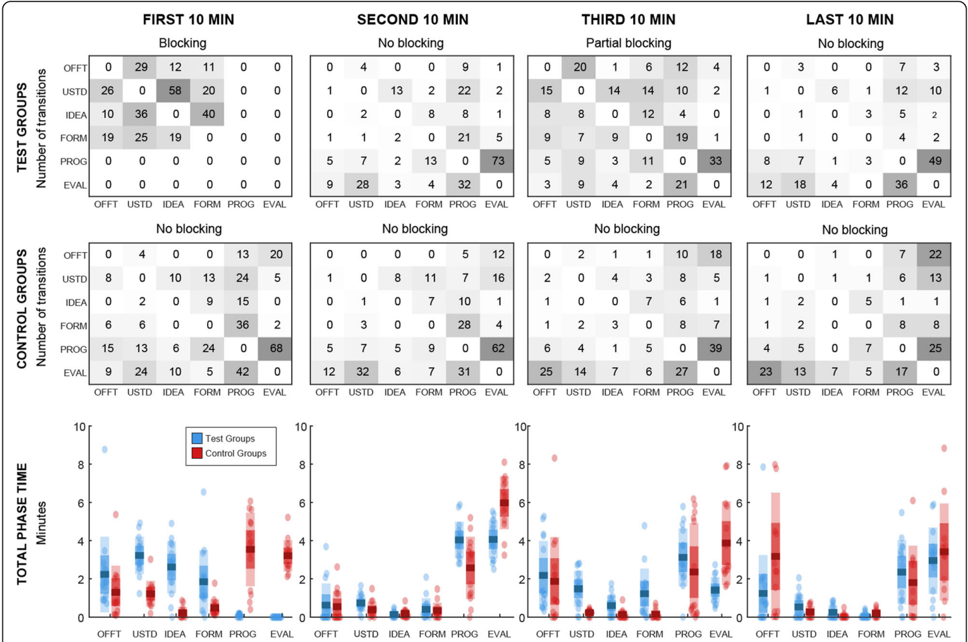
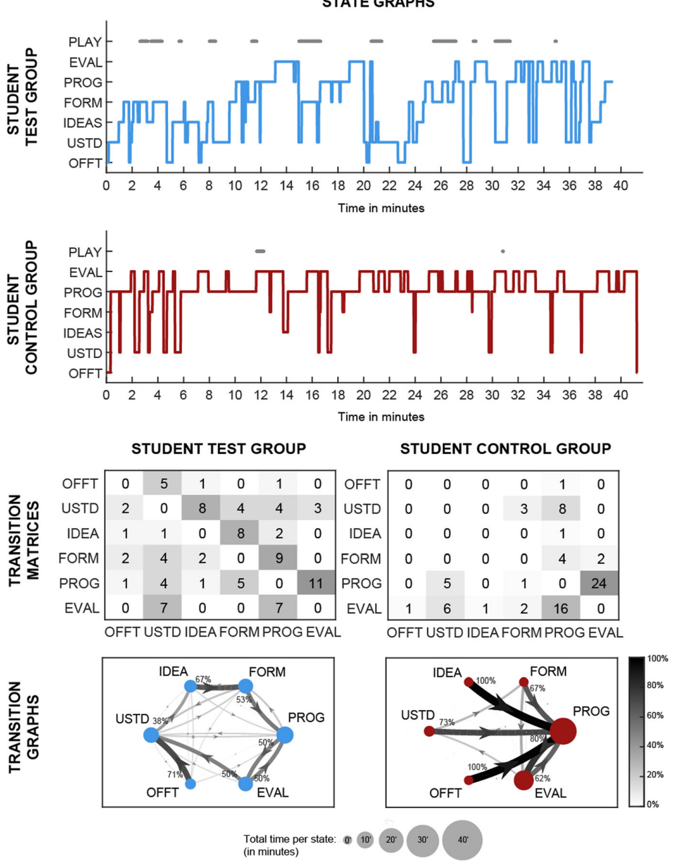
- Control groups with unlimited programming access stayed largely in PROG-EVAL: first three quarters averaged 22/30 min in PROG/EVAL vs. 8/30 min in USTD/IDEA/FORM/OFFT; off-task behavior rose in the last quarter (3/10 min).
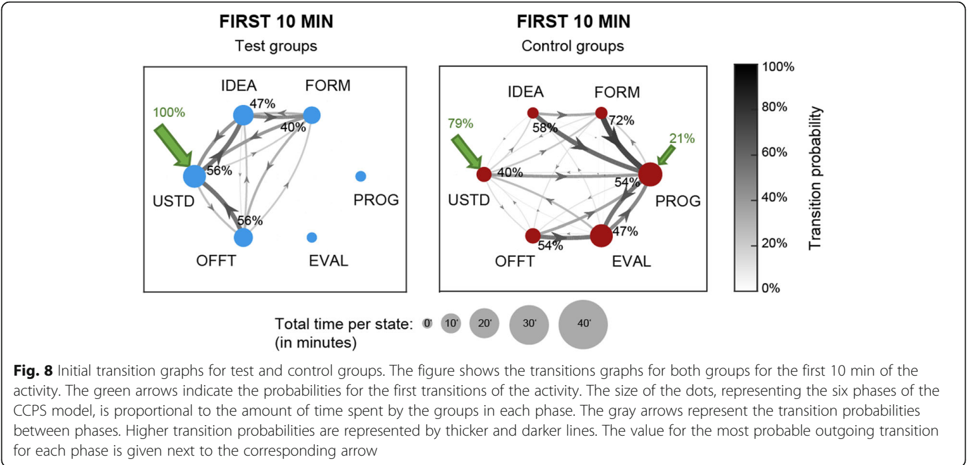
- Test groups with blocking distributed time more evenly: first three quarters averaged 13/30 min in PROG/EVAL and 12/30 min in USTD/IDEA/FORM; all 15 test students started with USTD, and off-task behavior did not increase in the last quarter.
- Partial blocking supported gradual progression and debugging: high PROG-EVAL transitions occurred without executing code; test groups had more playground interactions (93 vs. 59 total).
- Task performance: all five test groups covered at least six lawn squares and two completed all eight; control groups included two that covered only four squares and two that covered six, with one completing all eight.
Methods
- Experimental study with two conditions: control groups had 40 min free access to playground, Thymio, and VPL; test groups had 10 min full VPL blocking, 10 min free, 10 min partial blocking (VPL but no code execution), and 10 min free.
- Sample: 29 primary school students (13 girls, 16 boys, ages 9–10), randomly assigned to groups of 2–3 and to test/control; all had prior Thymio/VPL lessons (1 h/week for 12 weeks).
- Video analysis: two independent evaluators mapped behavior to CCPS phases (USTD, IDEA, FORM, PROG, EVAL, OFFT); inter-rater Cohen’s kappa was 0.59 < k < 0.84; 2162 transitions were mapped over 400 min (1072 test, 1090 control), with transition matrices and time-per-phase analyses.
Limitations
- Paper states small sample due to limited classroom access, though 2162 mapped transitions were considered sufficient for model verification; future work should test teacher-perceived value, other intervention hypotheses, and longitudinal learning gains.
- Evident from text: short experimental duration (two 45-min sessions/40-min activity) and no delayed learning-outcome measure beyond lawnmower task performance; findings may be limited to this age group and context (9–10-year-olds in one Swiss canton with prior Thymio/VPL experience).
- Evident from text: behavioral coding relies on evaluator interpretation despite substantial agreement; data are not publicly available due to sensitivity of under-age participants’ data.
Model-written summary. Check it against the paper before relying on it.
Integrity signals
Registry
Cites
Statistics
Figures
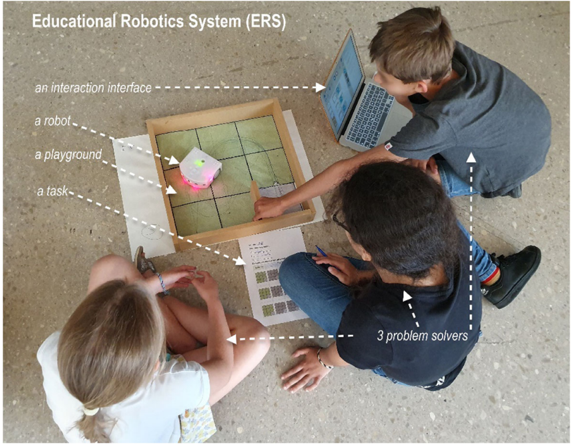
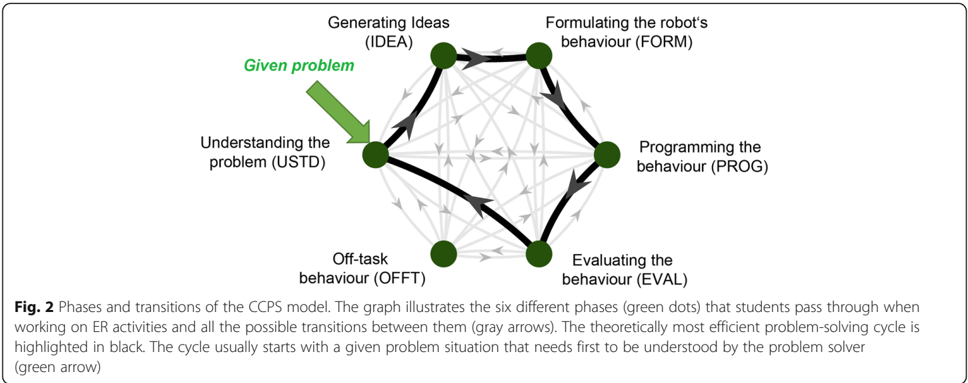
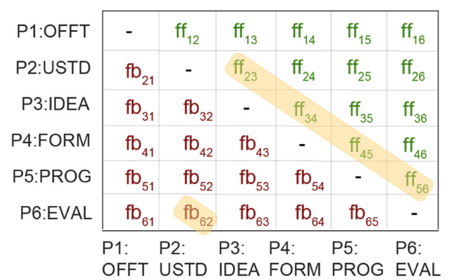
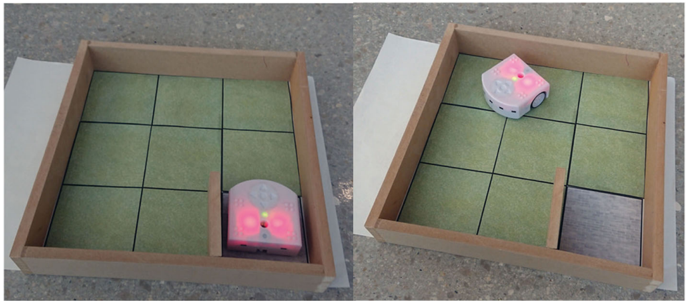
Verification
Claims the paper makes
9 Valid · 2 Not valid · 27 Not checked · 104 Own results and interpretations
The cited sources support only part of this claim — read each source’s verdict below.
In the paper
“The programming activity is thus not the only one that is important for CT skills development.Instead, evaluating (i.e., testing and observing) can be considered equally important.”
§ Fostering computational thinking through educational robotics: a model for creative computational problem solving > CT development with ER is more than just programming a robot
What the sources say
- Partly supportedcites Romero et al., 2017 matched to “Computational thinking development through creative programming in higher education” (2017) sourceExperimental — accuracy not yet measured
The ‘Computational thinking components within the #5c21’ section treats programming and evaluation as separate components of computational thinking, and ‘From code writing to creative programming’ describes testing models. The paper does not say that evaluation is equally important to programming for CT development or specifically equate evaluation with ‘testing and observing.’ (LLM, conf=0.78)
plain- Asserted: passes — The authors put it forward as true.
- Checkable: passes — It can be checked against evidence.
- Load-bearing: passes — The paper’s conclusions depend on it.
- Based: passes — The paper gives a reason why it holds.
- Partly supported
The sources with a verdict support this claim; the rest weren’t checked yet, have no full text we could read, or their verdicts aren’t rated yet.
In the paper
“In many different learning situations, however, researchers have shown that a pure trial-and-error-approach may limit skill development (Antle, 2013;Sadik, Leftwich, & Nadiruzzaman, 2017;Tsai, Hsu, & Tsai, 2012).”
§ Fostering computational thinking through educational robotics: a model for creative computational problem solving > CT development with ER is more than just programming a robot
What the sources say
- Supportedcites Antle, 2013 matched to “Exploring how children use their hands to think: an embodied interactional analysis” (2013) source
The Recommendations for design (section 8) say that a static trial-and-error approach may support task completion but not skills development. This directly supports the hedged claim. (LLM, conf=0.92)
- Not checked — no full text of the sourcecites Sadik, Leftwich, & Nadiruzzaman, 2017 matched to “Computational Thinking Conceptions and Misconceptions: Progression of Preservice Teacher Thinking During Computer Science Lesson Planning” (2017) source
- Not checked — no full text of the sourcecites Tsai, Hsu, & Tsai, 2012 matched to “Investigation of High School Students’ Online Science Information Searching Performance: The Role of Implicit and Explicit Strategies” (2012) source
hedgedstates a possible cause- Asserted: passes — The authors put it forward as true.
- Checkable: passes — It can be checked against evidence.
- Load-bearing: passes — The paper’s conclusions depend on it.
- Based: passes — The paper gives a reason why it holds.
- Supported
The cited sources support only part of this claim — read each source’s verdict below.
In the paper
“The latest meta-analyses carried out on ER and CT (Hsu, Chang, & Hung, 2018;Jung & Won, 2018;Shute et al., 2017) have mentioned only four works between 2006 and 2018 that elaborated how ER activities should be implemented in order to foster CT skills in K-5 education (particularly for grades 3 and 4, i.e., for students of age between 8 and 10 years old).”
§ Fostering computational thinking through educational robotics: a model for creative computational problem solving > Introduction
What the sources say
- Not checked — no full text of the sourcecites Hsu, Chang, & Hung, 2018 matched to “How to learn and how to teach computational thinking: Suggestions based on a review of the literature” (2018) source
- Partly supportedcites Jung & Won, 2018 matched to “Systematic Review of Research Trends in Robotics Education for Young Children” (2018) sourceExperimental — accuracy not yet measured
Section 3.2.1 (p. 8) reports that kindergarten children learned computational-thinking concepts through robotics, supporting the general connection between educational robotics and computational thinking. It does not say that only four works from 2006–2018 described how to implement such activities for grades 3–4; the review mainly targets preschool and kindergarten children (Data Collection, p. 2). (LLM, conf=0.84)
- Not checked — no full text of the sourcecites Shute et al., 2017 matched to “Demystifying computational thinking” (2017) source
plain- Asserted: passes — The authors put it forward as true.
- Checkable: passes — It can be checked against evidence.
- Load-bearing: passes — The paper’s conclusions depend on it.
- Based: passes — The paper gives a reason why it holds.
A result the paper reports from its own data — it cites no other source for it, so there is none to check. The quote shows it is in the paper.
In the paper
“This phase was not considered a priori, however, the experiments with students showed that offtask behavior is part of the reality in classrooms and should therefore be included in the model.”
§ Fostering computational thinking through educational robotics: a model for creative computational problem solving > Formulating the behavior (FORM)
plain- Asserted: passes — The authors put it forward as true.
- Checkable: passes — It can be checked against evidence.
- Load-bearing: passes — The paper’s conclusions depend on it.
- Based: passes — The paper gives a reason why it holds.
A result the paper reports from its own data — it cites no other source for it, so there is none to check. The quote shows it is in the paper.
In the paper
“The results suggest that (i) a non-instructional approach for educational robotics activities (i.e., unlimited access to the programming interface) promotes a trial-and-error behavior;”
§ Fostering computational thinking through educational robotics: a model for creative computational problem solving > Abstract
hedgedstates a cause- Asserted: passes — The authors put it forward as true.
- Checkable: passes — It can be checked against evidence.
- Load-bearing: passes — The paper’s conclusions depend on it.
- Based: passes — The paper gives a reason why it holds.
63 more claims
Create a free account to see all 142 claims and to verify the 1 reference still open.
- Probably not a substantial claim. 49
- It may state two separate claims as one. 39
- The quote only partly states this claim. 3
Self-check
Percentages, sums and reported differences re-computed from the paper’s own numbers.
Each contradiction between two passages listed here was confirmed by an independent check.
Rated minor: it would not touch a result — a value no result rests on, a p-value that stays on the same side of the significance level, or a conflict that is clerical, resolved elsewhere in the paper, or outside its own findings.
In the paper
§ Fostering computational thinking through educational robotics: a model for creative computational problem solving > Limitations and future work
“The theoretically most efficient problemsolving cycle is highlighted in yellow (ff 23 -ff 34 -ff 45 -ff 56 -ff 62 )”
§ Fostering computational thinking through educational robotics: a model for creative computational problem solving > Formulating the behavior (FORM)
“In this model, special emphasis is therefore placed on the cycle considering the transitions ff 23 -ff 34ff 45 -ff 56 -fb 62 (highlighted in yellow in Fig. 3)”
Citations
Cites
The Measurement of Observer Agreement for Categorical Data
Landis, J. R., & Koch, G. G. (1977) · Biometrics · doi:10.2307/2529310 · Cited by 81,148
Wing, J. M. (2006) · Communications of the ACM · doi:10.1145/1118178.1118215 · Cited by 8,102
Observing Interaction: An Introduction to Sequential Analysis
Willson, V. L., Bakeman, R., & Gottman, J. M. (1988) · Journal of Educational Statistics · doi:10.2307/1164658 · Cited by 2,301
Barr, V., & Stephenson, C. (2011) · ACM Inroads · doi:10.1145/1929887.1929905 · Cited by 1,692
Defining Computational Thinking for Mathematics and Science Classrooms
Weintrop, D., Beheshti, E., Horn, M., Orton, K., Jona, K., Trouille, L., & Wilensky, U. (2016) · Journal of Science Education and Technology · doi:10.1007/s10956-015-9581-5 · Cited by 1,609
Demystifying computational thinking
Shute, V. J., Sun, C., & Asbell-Clarke, J. (2017) · Educational Research Review · doi:10.1016/j.edurev.2017.09.003 · Cited by 1,466
Observing Interaction: An Introduction to Sequential Analysis
Bakeman, R., & Gottman, J. M. (1997) · doi:10.1017/cbo9780511527685 · Cited by 1,439
Computational thinking and tinkering: Exploration of an early childhood robotics curriculum
Bers, M. U., Flannery, L., Kazakoff, E. R., & Sullivan, A. (2014) · Computers & Education · doi:10.1016/j.compedu.2013.10.020 · Cited by 959
Hsu, T.-C., Chang, S.-C., & Hung, Y.-T. (2018) · Computers & Education · doi:10.1016/j.compedu.2018.07.004 · Cited by 788
Atmatzidou, S., & Demetriadis, S. (2016) · Robotics and Autonomous Systems · doi:10.1016/j.robot.2015.10.008 · Cited by 630
Research works printed but not linked: 2
- 17. Eguchi, A. (2014). Robotics as a learning tool for educational transformation. In D. Alimisis, G. Granosik, & M. Moro (Eds.), 4th International Workshop Teaching Robotics, Teaching with Robotics & 5th International Conference Robotics in Education, (pp. 27-34). Padova: RIE ISBN 978-88-95872-06-3. Available at http://www.terecop.eu/TRTWR-RIE2014/files/00_WFr1/00_WFr1_04.pdf. Accessed 6 June 2020.
- 50. Sullivan, A., Bers, M., & Mihm, C. (2017). Imagining, playing, and coding with kibo: Using robotics to foster computational thinking in young children. In Proceedings of the International Conference on Computational Thinking Education. Wanchai: Available at https://ase.tufts.edu/devtech/publications/ Sullivan_Bers_Mihm_KIBOHongKong%20.pdf. Accessed 6 June 2020.
Cited by
Items 101–200 of 221
Kurniawan, H. E., Saputro, S., Suranto, S., & Ramli, M. (2025) · Journal of Baltic Science Education · doi:10.33225/jbse/25.24.935 · Cited by 6
Teachers' and Learners' Acceptance of the Use of Robotics in the Intermediate Phase
Mihai, M. A., & Mapheto, D. (2024) · Advances in educational technologies and instructional design book series · doi:10.4018/979-8-3693-1066-3.ch011 · Cited by 7
Pangestu, W. T., Setyawan, A., & Maula, Q. I. (2023) · International Journal of Elementary Education · doi:10.23887/ijee.v7i2.58519 · Cited by 6
Shang, X. (2025) · European Journal of Education · doi:10.1111/ejed.70257 · Cited by 5
Identifying Preliminary Design Principles for a Robotics-based Learning Environment
Tengler, K., Kastner-Hauler, O., & Sabitzer, B. (2021) · International Conference on Computer Science & Education (ICCSE) · doi:10.1109/iccse51940.2021.9569250 · Cited by 4
A simple interactive robot to promote computational thinking
Funk, M. G., Cascalho, J., Santos, A. I., Pedro, F., Medeiros, P. J., Amaral, B., Domingos, M., Ramos, A. G., & Mendes, A. B. (2022) · Frontiers in Computer Science · doi:10.3389/fcomp.2022.1022778 · Cited by 5
“moments followed the same logic: presentation of the robot to teachers, exploring its potential and structuring the challenges to be implemented; preparation of a model for assessing CT skills, based on the CCPS model (Chevalier et al., 2020); experimentation of the activities in the classroom context and data collect…”
BackgroundMethodKalmpourtzis, G., & Roméro, M. (2022) · Interactive Learning Environments · doi:10.1080/10494820.2022.2158478 · Cited by 10
“Feedback Perception of external feedback (coming either from instructions or facilitator) The creative approach of ER (Alimisis et al., 2017; Chevalier et al., 2020; Komis et al., 2016) engages the learner in di ff erent challenges, the solution to which invokes the use of CPS (Isaksen & Tre ffi nger,…”
Sjöberg, J., & Brooks, E. (2023) · Lecture notes in computer science · doi:10.1007/978-3-031-35979-8_5 · Cited by 8
Informatics in Schools. Beyond Bits and Bytes: Nurturing Informatics Intelligence in Education
Pellet, J., & Parriaux, G. (2023) · Lecture notes in computer science · doi:10.1007/978-3-031-44900-0 · Cited by 6
Nursafitri, L., Firdaus, T., Sudomo, R. I., & Kurniasih, A. (2023) · QALAMUNA Jurnal Pendidikan Sosial dan Agama · doi:10.37680/qalamuna.v15i2.2933 · Cited by 11
Li, Y. (2023) · International Journal of STEM Education · doi:10.1186/s40594-023-00459-y · Cited by 9
“The 2022 list contained 7 (out of these 10 most-cited) articles published in 2020 (Chevalier et al., 2020; Gao et al., 2020; Kelley, et al., 2020; Kricorian et al., 2020; Li et al., 2020; Limeri et al., 2020; Reinholz & Andrews, 2020), with an average of 23.6 citations per article in 2022.”
BackgroundInfluentialComparative analysis of creative problem solving tasks across age groups using modular cube robotics
Anik, M. H., & Roméro, M. (2024) · Frontiers in Robotics and AI · doi:10.3389/frobt.2024.1497511 · Cited by 3
Liang, C., & Du, L. (2025) · Journal of Educational Computing Research · doi:10.1177/07356331251363863 · Cited by 5
“…for example, incremental hands-on activities in robotics have been shown to reduce extraneous load and facilitate deeper problem-solving (Chevalier et al., 2020), while drag-and-drop interfaces in virtual coding environments lower intrinsic load and support algorithmic thinking (Hsu et…”
InfluentialKasenides, N., Piki, A., & Paspallis, N. (2024) · Lecture notes in computer science · doi:10.1007/978-3-031-61305-0_7 · Cited by 4
Özcan, M. Ş., Göksun, T., & Kisbu‐Sakarya, Y. (2024) · Journal of Research on Technology in Education · doi:10.1080/15391523.2024.2381231 · Cited by 5
“Through coding, children actively engage in practices such as problem analysis, planning potential solutions, testing proposed approaches, and making necessary revisions based on outcomes (Blume & Schoen, 1988; Buitrago Flórez et al., 2017; Chevalier et al., 2020; Siegle, 2017).”
InfluentialTrilles, S., Monfort‐Muriach, A., Cueto-Rubio, E., López-Girona, C., & Granell, C. (2024) · IEEE Transactions on Education · doi:10.1109/te.2024.3422666 · Cited by 3
“Although there are different strategies to deploy computational thinking education in schools, such as coding and programming, robotics [8], [9], games and puzzles, “the boundary between programming and computational thinking is somewhat blurry” [10, p. 30] when it comes to teaching and assessing…”
Serrano, A. D. L. H., Álvarez-Murillo, A., Torrado, E. J. F., Maestre, M. Á. G., & Niño, L. V. M. (2025) · Computers · doi:10.3390/computers14050192 · Cited by 7
“While existing studies report promising outcomes from integrative interventions [28–31], they often rely on generalized evaluation frameworks or competency rubrics that emphasize surface-level indicators such as correctness or procedural fluency.”
Jung, Y., Tscholl, M., & Xie, Y. (2025) · International Journal of Child-Computer Interaction · doi:10.1016/j.ijcci.2025.100765 · Cited by 5
Developing and validating a digital test of preschool children’s computational thinking skills
Li, H., & Zhang, X. (2025) · Education and Information Technologies · doi:10.1007/s10639-025-13745-9 · Cited by 7
“We chose this assessment environment based on our conceptual definition of CT, which emphasizes that CT is a specific set of cognitive skills for solving problems in a computational context in a way that allows computers or robots to execute the solutions (e.g., Aho, 2012; Chevalier et al., 2020).”
Students’ Use of Computational Thinking Practices in an Undergraduate Biology-Engineering Course
DeJarnette, A. F., Larrison, C., Rollmann, S. M., Vanderelst, D. F., Layne, J. E., & Hutchinson, A. E. (2021) · Journal for STEM Education Research · doi:10.1007/s41979-021-00058-y · Cited by 3
“Although there are certainly ways in which CT has long been used in the professional disciplines of science and math (Brodland, 2015; Chevalier et al., 2020; Garner et al., 2016; Lockwood et al., 2019), this does not always translate to the school subjects of science and math.”
BackgroundTasarım Odaklı Düşünmeye Dayalı Robotik Etkinliklerin Planlama Becerisine Etkisi
DEMİR, E. G., & Gümüş, İ. (2022) · Ankara Universitesi Egitim Bilimleri Fakultesi Dergisi · doi:10.30964/auebfd.1042755 · Cited by 4
de Souza, I. M. L., Sampaio, L. M. R., & Andrade, W. L. (2023) · Anais do ... Simpósio Brasileiro de Informática na Educação/Anais do Simpósio Brasileiro de Informática na Educação · doi:10.5753/sbie.2023.235154 · Cited by 4
“Regardless of the purpose and learning strategies, there is a trend to plan, design, or implement an algorithm to control the robot’s behavior to perform a specific task [Chevalier et al. 2020a], an idea directly related to solving problems from the CT Skills [Pivetti et al. 2020].”
BackgroundMethodXu, R., Jiang, C., & Sun, L. (2022) · Scientific Programming · doi:10.1155/2022/3575457 · Cited by 3
Analyse du processus de construction de connaissances dans des activités de programmation à l’école
Roméro, M., & DeBlois, L. (2022) · Canadian Journal of Science Mathematics and Technology Education · doi:10.1007/s42330-022-00210-9 · Cited by 5
“La démarche de modélisation n’est cependant pas toujours observée dans les activités de programmation créative (Chevalier et al., 2020).”
Omari, S., Mamane, A., Ouahi, M. B., & Benjelloun, N. (2024) · TEM Journal · doi:10.18421/tem131-46 · Cited by 3
Wang, Y. (2025) · Thinking Skills and Creativity · doi:10.1016/j.tsc.2025.102068 · Cited by 4
Zhang, L., Wang, X., Chen, W., Ji, S., Liu, Z., & Ouyang, F. (2026) · International Journal of STEM Education · doi:10.1186/s40594-025-00591-x · Cited by 5
Soboleva, E. V., Kirillova, E. P., Lomakin, D. E., & Gribkov, D. N. (2021) · Perspectives of science and education · doi:10.32744/pse.2021.1.32 · Cited by 2
“Mondada развивают эту идею и дополняют, что решение при этом может быть выполнено человеком или машиной, или, в более общем смысле, комбинацией людей и машин [15].”
Kelana, J. B., Widodo, A., & Suwarma, I. R. (2024) · Advances in Social Science, Education and Humanities Research/Advances in social science, education and humanities research · doi:10.2991/978-2-38476-206-4_27 · Cited by 2
Escola, C. A. B., Martín, E., Zapata-Cáceres, M., & Román-González, . (2024) · Workshop in Primary and Secondary Computing Education · doi:10.1145/3677619.3678110 · Cited by 2
“Thus, utilizing tangible materials is recommended to enhance CT and problem-solving abilities [12].”
Observing Students' Behavior During Problem Solving: Determinants of Success
Braune, G., & Mühling, A. (2024) · Workshop in Primary and Secondary Computing Education · doi:10.1145/3677619.3678109 · Cited by 2
“Finally, the Creative Computational Problem Solving (CCPS) model proposed by Chevalier et al. [6] tries to model the behavior of students during programming tasks with robots.”
InfluentialVargas, A. M. C., Mina, M. A. E., Catalán, L. L., & López‐Catalán, B. (2024) · IJERI International Journal of Educational Research and Innovation · doi:10.46661/ijeri.10369 · Cited by 6
Artificial Intelligence and Educational Robotics in Maker Education
Λαμπρόπουλος, Γ., López-Belmonte, J., & Marín, J. A. M. (2024) · Advances in educational technologies and instructional design book series · doi:10.4018/979-8-3693-9806-7.ch004 · Cited by 5
Tscholl, M., Xie, Y., Smith, T. J., & Hung, W. (2025) · Education and Information Technologies · doi:10.1007/s10639-025-13638-x · Cited by 2
“Our analyses took a similar approach to those described in Romero et al. (2017) and Chevalier et al. (2020 ).”
InfluentialΠαπαγιαννοπούλου, Θ., Vaiopoulou, J., & Stamovlasis, D. (2025) · Behavioral Sciences · doi:10.3390/bs15091227 · Cited by 10
“A previous study found that the perceived usefulness of robotics declined dramatically as teachers implemented it in their classrooms due to unforeseen obstacles (Chevalier et al., 2020).”
Azbot-1C: An Educational Robot Prototype for Learning Mathematical Concepts
Pedro, F., Cascalho, J., Medeiros, P. J., Novo, P., Funk, M. G., Ramos, A., Mendes, A. B., & Lima, J. (2021) · Communications in computer and information science · doi:10.1007/978-3-030-91885-9_49 · Cited by 3
A Framework for teaching programming in High School through Educational Robotics
de Souza, I. M. L., Andrade, W. L., & Sampaio, L. M. R. (2022) · IEEE Frontiers in Education Conference (FIE) · doi:10.1109/fie56618.2022.9962686 · Cited by 4
Aligning the Design of Educational Robotics Tools With Classroom Activities
Giang, C., Piatti, A., & Mondada, F. (2021) · Advances in educational technologies and instructional design book series · doi:10.4018/978-1-7998-7443-0.ch001 · Cited by 3
Self-citationA Systems Thinking Approach to Computational Thinking in Education
Hamidi, A. (2023) · doi:10.15626/lnulic.45.2023 · Cited by 4
Dubois, F., Burton, S., Wang, P., & Chevalier, M. (2023) · Lecture notes in computer science · doi:10.1007/978-3-031-44900-0_9 · Cited by 1
Self-citationIncremental development with an AR coding environment
Wetzel, S., Stäter, R. S., & Ludwig, M. (2024) · WiPSCE Conference on Primary and Secondary Computing Education Research (WiPSCE) · doi:10.1145/3677619.3677640 · Cited by 1
“We decided to use an adaption from the model proposed in [3] due to its cyclic nature where any prior phase can be re-entered during the whole process.”
Implementing Informatics Core Curriculum in Early School Education in Poland
Sysło, M. M. (2024) · Lecture notes in computer science · doi:10.1007/978-3-031-73474-8_4 · Cited by 1
Computational Thinking and the Circulatory System
Aytekin, A., & Topçu, M. S. (2025) · The American Biology Teacher · doi:10.1525/abt.2025.87.1.41 · Cited by 1
“They also engage in various games or board games, physical activities, competitions, kinesthetic activities, and artistic activities (Busuttil & Formosa, 2020; Chen & Chi, 2020; Chevalier et al., 2020).”
Putra, Z. H., Sumadinata, H., Witri, G., Barokah, R. G. S., Gunawan, Y., Dahnlisyah, & Jamil, M. R. M. (2025) · Education and Information Technologies · doi:10.1007/s10639-025-13429-4 · Cited by 10
“On the other hand, Chevalier et al. (2020) obtained results that CT skills can solve problems and provide learning to students, and educational robotics can be used to support students’ CT skills.”
Çakıroğlu, Ü., & Türker, K. (2025) · Computers in the Schools · doi:10.1080/07380569.2025.2496166 · Cited by 2
Designing Inclusive Coding Display Cards for Micro:bit
Menziltsidou, S., Tsiomi, E., Vasiloudi, E., et al. (2024) · doi:10.1145/3716554.3716600 · Cited by 1
Ouahouda, F., Achtaich, K., & Achtaich, N. (2025) · LatIA · doi:10.62486/latia2025342 · Cited by 1
Computational Thinking Development Through Robotics in Kindergarten: A Pilot Study
Tsingidou, S., & Sapounidis, T. (2025) · Lecture notes in networks and systems · doi:10.1007/978-3-031-98762-5_11 · Cited by 1
Brender, J., El‐Hamamsy, L., Giang, C., Mathex, L., Käser, T., & Francesco Mondada, C. (2025) · Educational Technology Research and Development · doi:10.1007/s11423-025-10503-z · Cited by 3
“Future work could conduct a more in-depth investigation into students’ thought processes when addressing the tasks, and how these differ according to the platforms, for instance, by using Chevalier et al.’s (2020) Creative Computational Problem Solving (CCPS) model.”
Self-citationTeacher scaffolding in robot-based computational thinking: A video-based study
Lam, E., & Yang, W. (2025) · Education and Information Technologies · doi:10.1007/s10639-025-13692-5 · Cited by 2
“CT is defined as a problem-solving skill in all aspects, and it improves interior thinking by using computer principles (Chevalier et al., 2020; Wing, 2006, 2008).”
Designing Tools and Activities for Educational Robotics in Online Learning
Negrini, L., Giang, C., & Bonnet, E. (2021) · Advances in educational technologies and instructional design book series · doi:10.4018/978-1-7998-7443-0.ch010 · Cited by 1
Self-citationAtmatzidou, S., Βekiari, C. N., & Demetriadis, S. (2021) · Advances in educational technologies and instructional design book series · doi:10.4018/978-1-7998-7443-0.ch005 · Cited by 1
Sari, R. R., Sugiharto, B., & Widoretno, S. (2022) · Tadris Jurnal Keguruan dan Ilmu Tarbiyah · doi:10.24042/tadris.v7i2.13265 · Cited by 2
“The instrument by which the teacher needs to evaluate creative thinking skills requires a series of tests to ensure its reliability of the instrument (Baer et al., 2014; Chevalier et al., 2020; Runco & Acar, 2012; Simper, 2018).”
BackgroundHsu, T., Chang, C., & Liang, Y.-S. (2023) · IEEE Transactions on Learning Technologies · doi:10.1109/tlt.2023.3311331 · Cited by 4
“ERs are not only widely used to promote students’ computational thinking (CT) skills (e.g., [5]), they have also become an interdisciplinary pathway to integrate language development with CT learning [6], [7].”
BackgroundMayub, A., Setiawan, A., Fahmizal, F., Wardaya, R. W., Lazfihma, L., Johan, H., & Nursaadah, E. (2023) · Jurnal Pendidikan IPA Indonesia · doi:10.15294/jpii.v12i4.44991 · Cited by 10
Computational Thinking Assessment: Bibliometric Analysis-VOSviewer
Ria, R. R. P. (2024) · Jurnal Simki Pedagogia · doi:10.29407/jsp.v7i1.343 · Cited by 7
“These conditions require educators to apply CT skills in the learning process in classroom (Lytle et al., 2019; Chevalier et al., 2020).”
BackgroundFrom Automaton to AI Robot: the Added Value for Learning
Martin, M., Deneux, T., & Chevalier, M. (2024) · Lecture notes in networks and systems · doi:10.1007/978-3-031-67059-6_35 · Cited by 2
Self-citationKubincová, Z., Miková, K., & Budinská, L. (2024) · International Conference on Information Technology Based Higher Education and Training (ITHET) · doi:10.1109/ithet61869.2024.10837599 · Cited by 1
Izza, K. K., & Andrijati, N. (2024) · Jurnal Penelitian dan Pengembangan Pendidikan · doi:10.23887/jppp.v8i3.78029 · Cited by 1
“Learning mathematics requires this skill because it is essential for developing thinking skills to solve problems (Chevalier et al., 2020; Soboleva et al., 2021).”
Hsu, T., Chang, C., Wu, L., et al. (2022) · Frontiers in Psychology · doi:10.3389/fpsyg.2022.1054561 · Cited by 1
Creative Procedure of Bin Products for Children
Egwutvongsa, S., & Setvisat, S. (2021) · Academic Journal of Interdisciplinary Studies · doi:10.36941/ajis-2021-0135
Rammos, D., Ziouzios, D., Bratitsis, T., et al. (2022) · SHS Web of Conferences · doi:10.1051/shsconf/202213905004
“TheEducational robotics is becoming increasingly exploited in primary schools as it differentiates the teaching routine and gives more interest to the activities and projects that are being developed [1].”
BackgroundMotion Balance of Creative Assembly JIMU Robot with a Smartphone Remote Control
Weng, T.-S., & I-Ching, C. (2022) · Lecture notes in computer science · doi:10.1007/978-3-031-15273-3_38
Designing GeoGebra Applet of Coordinate System for Fifth Graders: A Preliminary Study
Putra, Z. H., Hermita, N., Ulfiyani, Noviana, E., & Jismulatif (2022) · doi:10.1109/icet56879.2022.9990619
“In the era of the Industrial Revolution 4.0, marked by the rapid development of technology, teachers are required to integrate technology into learning activities [1]–[6].”
BackgroundInfluentialBUiD Doctoral Research Conference 2022: Multidisciplinary Studies
Marri, K. A., Mir, F. A., David, S. A., & Aljuboori, A. (2023) · Lecture notes in civil engineering · doi:10.1007/978-3-031-27462-6 · Cited by 1
(2023) · Education and new developments · doi:10.36315/2023v2end101
“Furthermore, research has shown that coding and robotics expose students to computational thinking, enhancing their understanding of science (Chevalier et al., 2020).”
BackgroundCreative Thinking Level of Students in Posing Conditional Probability Problems
Prayitno, S., Novitasari, D., Triutami, T. W., & Tyaningsih, R. Y. (2023) · Jurnal Didaktik Matematika · doi:10.24815/jdm.v10i1.29016 · Cited by 2
Taş, N., & Gülcü, A. (2023) · Iğdır üniversitesi sosyal bilimler dergisi · doi:10.54600/igdirsosbilder.1315071
Evaluating the Effectiveness of Comparison Activities in a Programming Tutor
Keech, A. J. (2023) · Carleton University's Institutional Repository (MacOdrum Library, Carleton University) · doi:10.22215/etd/2023-15821
How to Develop CT Skills Using Robotics Projects Combined with Arts - a Pilot Study
Miková, K., & Kubincová, Z. (2023) · International Conference on Emerging eLearning Technologies and Applications (ICETA) · doi:10.1109/iceta61311.2023.10343894
Sun, D., Ouyang, F., Li, Y., & Zhu, C. (2021) · Figshare · doi:10.6084/m9.figshare.16674749
Sun, D., Ouyang, F., Li, Y., & Zhu, C. (2021) · Figshare · doi:10.6084/m9.figshare.16674752
Shchedrina, E. V., Soboleva, E. V., Lyapunoff, D. Y., et al. (2024) · Perspectives of science and education · doi:10.32744/pse.2024.2.11
Exploration of computational thinking skills: A case study of islamic senior high school students
Amrizaldi, A., Yuliati, L., Supriana, E., et al. (2024) · Momentum Physics Education Journal · doi:10.21067/mpej.v8i2.9575
“In addition, the CT skills possessed by students still need to be improved (Chevalier et al., 2020; Fanchamps et al., 2021; Gong et al., 2020).”
BackgroundIrvani, A. I., Rochintaniawati, D., Riandi, R., et al. (2024) · Kasuari Physics Education Journal (KPEJ) · doi:10.37891/kpej.v7i1.620
“Kemampuan pemecahan masalah juga erat kaitannya dengan keterampilan berpikir komputasional, di mana pendekatan sistematis dan logis digunakan untuk merancang solusi menggunakan konsep-konsep komputasi (Chevalier et al., 2020).”
BackgroundHerlambang, A. D., Mukti, N. K., & Wijoyo, S. H. (2024) · Journal of Information Technology and Computer Science · doi:10.25126/jitecs.92489
“Computational thinking is also a problem-solving methodology that takes into account computational limits to determine if solutions can be used automatically [5], [6], [7].”
BackgroundThe Influence of Music Producing and Creativity on Computational Thinking in Primary School Children
Fanchamps, N. L. J. A., van Gool, E., Folkertsma, A., & Meyst, K. D. (2024) · Education Sciences · doi:10.3390/educsci14121380 · Cited by 6
Ugwunwoti, E. P., Edeh, N. I., Nweze, B. N., Anamezie, R. C., Egbo, J. J., Chukwu, P. N., Eya, G. M., Okoli, S. N., Onyia, B. C., Oluka, S. N., et al. (2024) · Innovations in Education and Teaching International · doi:10.1080/14703297.2024.2442604 · Cited by 2
“To address these challenges, contemporary pedagogies like inquiry-based learning (IBL) and computational thinking (CTP) have been identified as effective in promoting active learning and critical thinking (Chevalier et al., 2020).”
Assessment Strategies in Robotics Courses: An Analysis of Methodology and Learning Outcomes
Granja, J. C., Mingrone, I. A., Campos, L. F. R. D. B., & Pazelli, T. F. P. A. T. (2024) · Brazilian Symposium on Robotics and Workshop on Robotics in Education (SBR/WRE) · doi:10.1109/sbr/wre63066.2024.10837846
Analisis Kompetensi Siswa Dalam Ilmu Robotika Menggunakan Mixed Methods
Akbar, T., Sugiantara, J., Sandi, A., Nasution, M. H., & Satriadi, A. (2025) · Infotek Jurnal Informatika dan Teknologi · doi:10.29408/jit.v8i1.28449
Understanding CTProgER's Impact on High School Students' Programming Learning
de Souza, I. M. L., Andrade, W. L., & Sampaio, L. M. R. (2024) · 2022 IEEE Frontiers in Education Conference (FIE) · doi:10.1109/fie61694.2024.10893507
“Regardless of the particular goals and learning strategies employed, there is a common emphasis on planning, designing, or implementing algorithms to control the behavior of robots, which directly contributes to the development of CT skills [7], [33].”
The Swiss Robotic Camp: an innovative nationwide teacher training format in educational robotics
Negrini, L., Marras, A., & Giang, C. (2025) · Swiss Journal of Educational Research · doi:10.24452/sjer.47.1.2 · Cited by 4
“In addition to the technical work on the functionality of the robots, there was also a didactical component where teachers learned to design educational activities using robots, guided by research-based frameworks such as the model for Creative Computational Problem Solving (Chevalier et al., 2020).”
Self-citationChuman, T., Sukkon, K., Torasa, C., & Srimarut, T. (2025) · International STEM Education Conference (iSTEM-Ed) · doi:10.1109/istem-ed65612.2025.11129336 · Cited by 1
“Robotics education has emerged as a key driver of engagement in STEM (Science, Technology, Engineering, and Mathematics) learning, promoting critical thinking, creativity, and technological fluency among students [1], [2].”
Mahlaba, S. C. (2025) · Pythagoras · doi:10.4102/pythagoras.v46i1.855 · Cited by 2
Robotics Education in Schools: Ac n Inclusive and Scalable Pedagogical Approach
Itacaramby, G., Cabral, J. L., Pastrana, M. A., Sánchez, W. H. C., Baptista, R. D. S., & Daniel, M. (2025) · Brazilian Symposium on Robotics and Workshop on Robotics in Education (SBR/WRE) · doi:10.1109/sbr/wre66973.2025.11249616
“Educational robotics serves as an effective medium for teaching computational thinking , a problem-solving process that involves algorithmic design, decomposition, pattern recognition, and abstraction [16], [17].”
Mari, E. (2025) · Annales de didactique et de sciences cognitives · doi:10.4000/15dhu
El pensamiento computacional en la población infantil latinoamericana: un análisis de la prueba BCTt
Osnaya-Moreno, M., Ortiz, J. L. R., Ocampo, L. M., et al. (2026) · Interdisciplinary journal of didactics · doi:10.14198/ijd.30616
Jake-Prime: Educational Robot for Improving Children's Dysorthography
Albornoz-Rosario, J., Alfaro-Cainiciela, S., Ayala-Mauricio, L., Cusi-Apomayta, A., Gave-Ramirez, J., Huaytalla-Pariona, J., Escobar-Baquerizo, S., & Huamanchahua, D. (2025) · IEEE Colombian Caribbean Conference (C3) · doi:10.1109/c366505.2025.11340138
“Nevertheless, the application of educational robotics as a support mechanism for students with dysorthography remains a relatively unexplored area in current research, presenting a promising avenue for innovation and pedagogical advancement [14].”
Using the body and material artefacts for spatial reasoning in classroom programming activities
Niemi, K., Jakonen, T., & Roos, S. L. (2026) · Linguistics and Education · doi:10.1016/j.linged.2026.101502 · Cited by 2
Afifah, A., & Karim, S. (2025) · Child Education Journal · doi:10.33086/cej.v7i3.8424
Culturally Situated Computational Thinking: Interactive Physical Computing in Cultural K-12 Contexts
Ru, Z., Ibrahim, M., Chyngyz, A., Jawad, A., & Melniczuk, A. (2026) · International Conference on Tangible, Embedded, and Embodied Interaction (TEI) · doi:10.1145/3731459.3778120 · Cited by 1
“Computational Thinking (CT) has emerged as a vital skill set within K-12 education [65], significantly contributing to analytical reasoning [72], problem-solving [22], and creative expression skills [56] necessary for the 21st century.”
Song, P., Chin, W. M., Nie, X.-C., Li, L.-Y., Yang, Y.-J., Zhang, L., & Zhong, M. (2026) · Humanities and Social Sciences Communications · doi:10.1057/s41599-026-06897-7 · Cited by 1
“…users manifests as a technology-mediated, distributed system where inspiration is derived from the algorithm ’ s real-time integration and recon fi guration of multimodal data, including cross-genre artistic images, social media trends, and open-source code repositories (Chevalier et al., 2020).”
Mathrix Sense Intervention on the Learning Performance of Grade 7 Learners in Mathematics
Tuardon, R., & Colipano, T. (2026) · Psychology and Education A Multidisciplinary Journal · doi:10.70838/pemj.530403
Chichekian, T., Trudeau, J., Jawhar, T., & Sapounidis, T. (2026) · Research Square · doi:10.21203/rs.3.rs-9215107/v1
The significance of educational robotics according to preschool and primary education teachers
Gavrilas, L., Kotsis, K. Τ., & Papanikolaou, M.-S. (2026) · International Journal of Early Years Education · doi:10.1080/09669760.2026.2645338
Modelling communicative behaviours for different roles of pedagogical agents
Krishna, S. (2021) · theses.fr (ABES) · doi:10.70675/f8e9d4b6z9585z4883z8fa1z2afa484bd27b · Cited by 1
Rahimi, A. R., & Faskhodi, A. A. (2026) · Smart Learning Environments · doi:10.1186/s40561-026-00451-3 · Cited by 4
Molaba, S. E. (2026) · International Journal of Studies in Systematic Reviews · doi:10.66434/ijssr.v1i1.514 · Cited by 1
Emotional engagement in AI storytelling: The role of nonverbal cues in child-AI interactions
Cui, Y., & He, W. (2026) · International Journal of Human-Computer Studies · doi:10.1016/j.ijhcs.2026.103825 · Cited by 1
Metadata
- Authors
- Chevalier, M., Giang, C., Piatti, A., & Mondada, F.
- Affiliations
- Haute École Pédagogique du Canton de Vaud (CH)
- University of Applied Sciences and Arts of Southern Switzerland (CH)
- Corresponding author
- Chevalier, Morgane
- Venue
- International Journal of STEM Education
- Published
- 2020-08-03
- Volume
- 7
- Issue
- 1
- ISSN
- 2196-7822 (ISSN-L)
- OpenAlex
- W3046440829
- Semantic Scholar
- 80945bbc08998b1e20514bcfff3dd0ebda9ba284
- Cited by
- 223
- References
- 55
- Citations by year
- 2026: 36 · 2025: 37 · 2024: 47 · 2023: 41 · 2022: 36 · 2021: 25 · 2020: 1
- FWCI
- 23.95
- Type
- journal article
- Language
- en
- Open access
- gold
- doi.org
- Licence
- cc-by
- creativecommons.org/licenses/by/4.0 (tdm)
- creativecommons.org/licenses/by/4.0 (vor)
- Locations
- International Journal of STEM Education (publishedVersion, cc-by)
- DOAJ (DOAJ: Directory of Open Access Journals) (submittedVersion, cc-by-sa)
- Infoscience (Ecole Polytechnique Fédérale de Lausanne) (submittedVersion, cc-by-nc-nd)
- Funders
- National Centre of Competence in Research Robotics (51NF40-185543)
- Topics
- Physical Sciences › Computer Science › Computer Science Applications › Teaching and Learning Programming
- Social Sciences › Education › Educational Robotics and Engineering
- Physical Sciences › Engineering › Mechanical Engineering › Design Education and Practice
- Keywords
- educational robotics, computational thinking, teaching model, scaffolding, elementary school students, creative problem solving, problem understanding, idea generation, solution formulation
About these checks
Registry, retraction, Cites and statistics results are computed, not judged, with one exception: a printed reference that no index lists is read once by a model before it counts as a citation error. Claims are extracted by a model and kept only when their quote appears verbatim in the text; each cited source is then checked, with a model’s help, for whether it says what the claim relies on. Those verdicts can be wrong — read the claim’s quote and the cited source before relying on one.
The claim verdicts this report counts are experimental: their accuracy is not yet measured.
A language model drew the claims from the paper on 2026-10-10, under version 3 of the claim definition (model deepseek-v4.1-flash, prompt extract-v3).
A second model labelled each claim on 2026-10-10 (model jev-1.13-20260917, definition revision gold-guideline-v0.2).
Cited sources are checked with a language model’s help (gpt-6-sol).
Statistics and arithmetic are recomputed, not judged.
Confidence bands are shown only for fields calibrated on our annotated test set. None is calibrated yet, so no band is shown.
What counts as a claim ›How we measure confidence ›How we check this ›
Are you an author, or do you see a problem with this page? Request a review
Data sources
Bibliographic data: Semantic Scholar, OpenAlex, Crossref.
Contains information from the Semantic Scholar Academic Graph Datasets, made available under the ODC Attribution License (ODC-BY 1.0).
Semantic Scholar’s data is described in: Kinney, R., et al. (2023). The Semantic Scholar Open Data Platform. arXiv:2301.10140.
