

Trends and research foci of robotics-based STEM education: a systematic review from diverse angles based on the technology-based learning model
Open accessThe DOI matches its Crossref record; 92 of the 93 references it cites were found in a registry or an index, and 1 are not checked yet; 5 of the 35 sources its claims cite were checked for support.
Abstract
Abstract Fostering students’ competence in applying interdisciplinary knowledge to solve problems has been recognized as an important and challenging issue globally. This is why STEM (Science, Technology, Engineering, Mathematics) education has been emphasized at all levels in schools. Meanwhile, the use of robotics has played an important role in STEM learning design. The purpose of this study was to fill a gap in the current review of research on Robotics-based STEM (R-STEM) education by systematically reviewing existing research in this area. This systematic review examined the role of robotics and research trends in STEM education. A total of 39 articles published between 2012 and 2021 were analyzed. The review indicated that R-STEM education studies were mostly conducted in the United States and mainly in K-12 schools. Learner and teacher perceptions were the most popular research focus in these studies which applied robots. LEGO was the most used tool to accomplish the learning objectives. In terms of application, Technology (programming) was the predominant robotics-based STEM discipline in the R-STEM studies. Moreover, project-based learning (PBL) was the most frequently employed learning strategy in robotics-related STEM research. In addition, STEM learning and transferable skills were the most popular educational goals when applying robotics. Based on the findings, several implications and recommendations to researchers and practitioners are proposed.
Verified 2026-11-22 · 1 reference not checked yet
Overview
CoChat Summary
## TL;DR
This systematic review analyzed 39 R-STEM articles published from 2012 to 2021 using a technology-based learning model and content analysis. It found that U.S.-based K-12 studies dominated, with learner/teacher perceptions, LEGO, technology/programming, and project-based learning appearing most often.
## Key findings
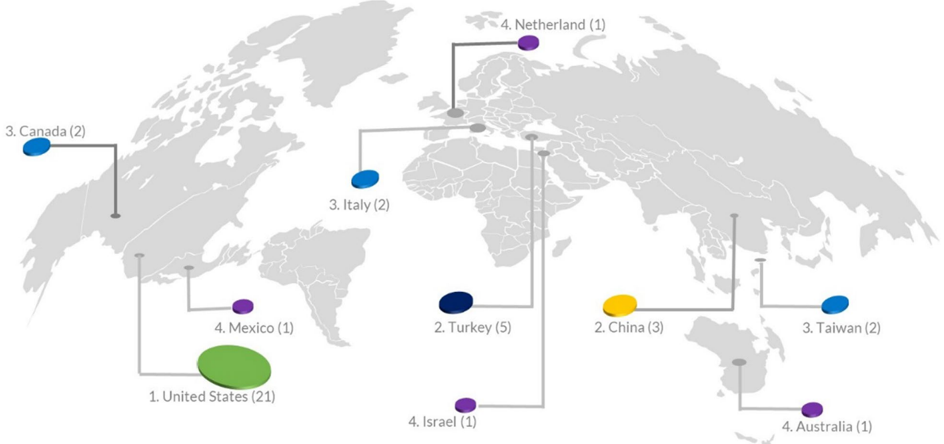
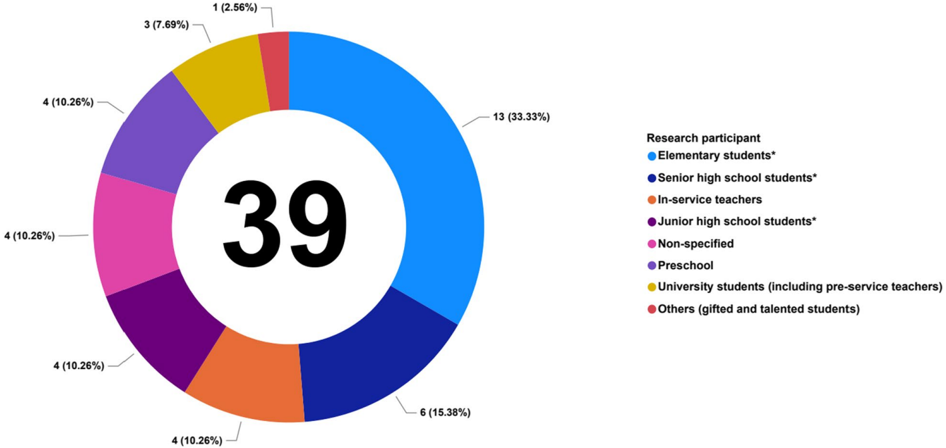
- The review included 39 articles; 53.8% were conducted in the United States, and the studies were mainly in K-12 schools.
- The most common research foci were learner/teacher perceptions (23/39, 58.97%) and, for cognition, learning performance (15/39).
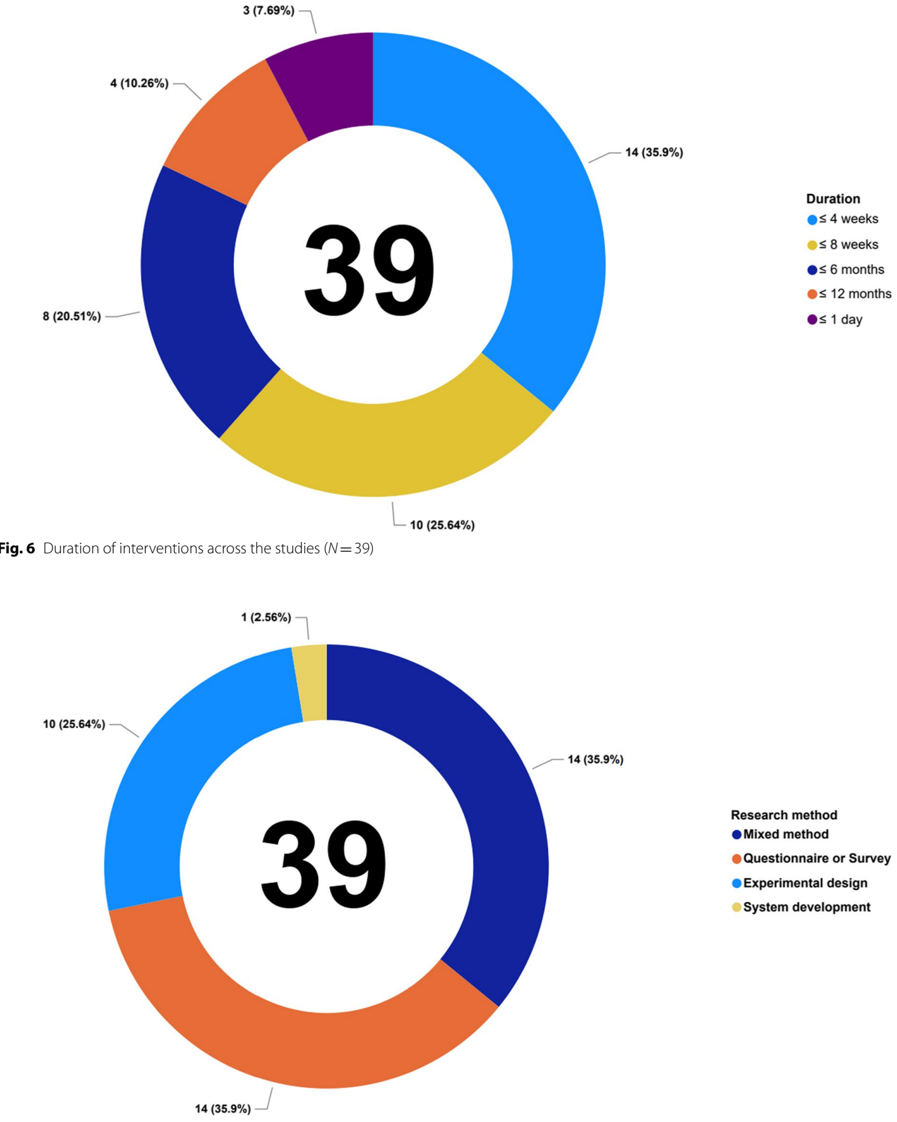
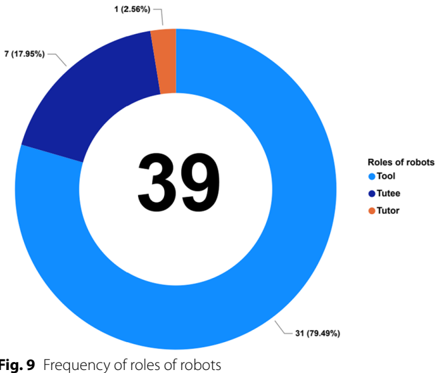
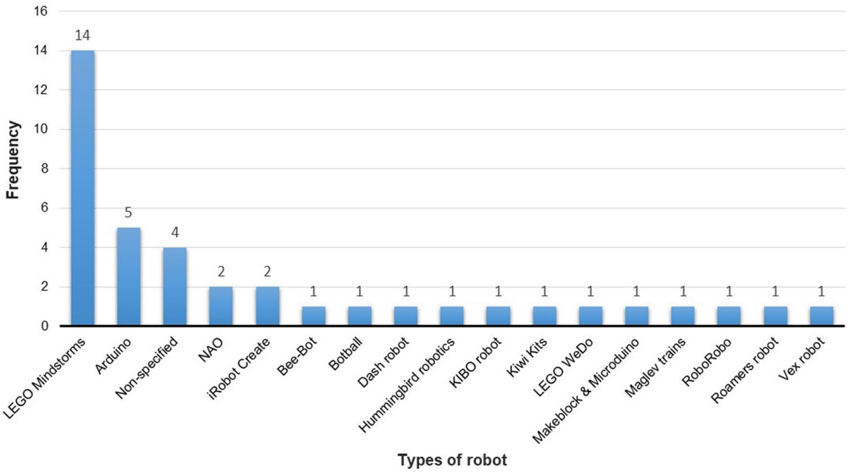
- LEGO MINDSTORMS was the most used robot/tool (14/39, 35.89%), while robots were most often used as tools (31/39, 79.49%); the tutor role appeared only 1/39 (2.56%).
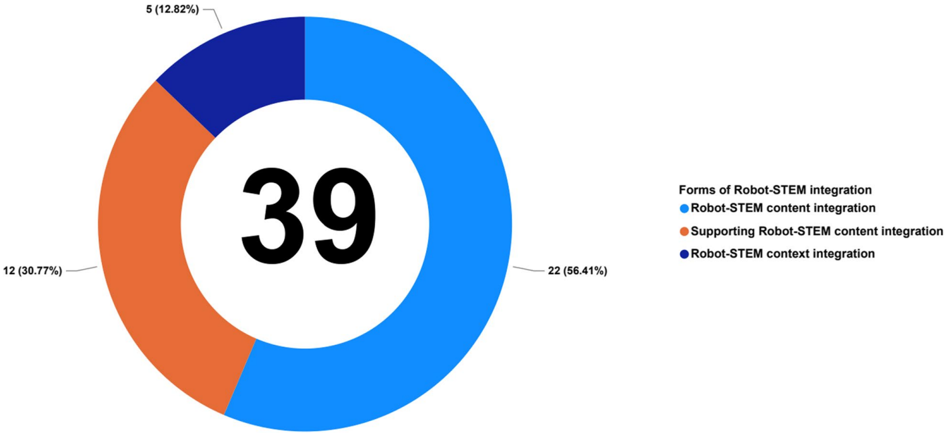
- Technology/programming was the dominant STEM discipline, with programming appearing in 25/36 (64.1%) studies; robot-STEM content integration was the most common integration form (22/39, 56.41%).
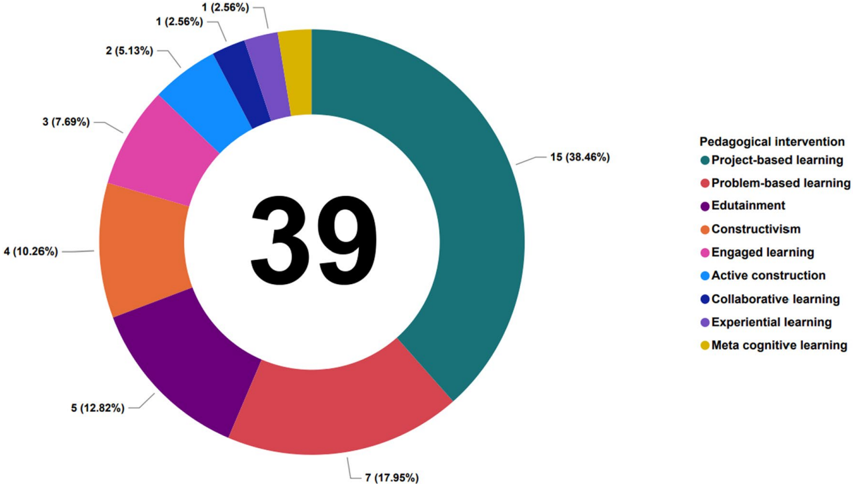
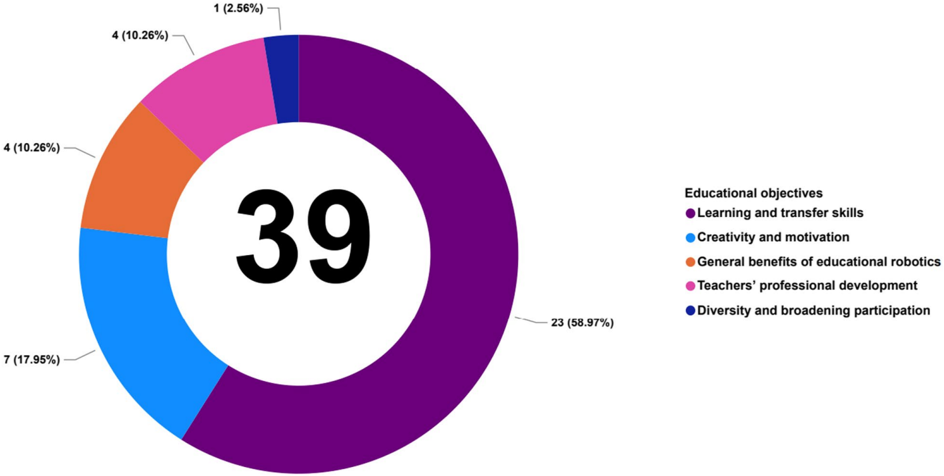
- Project-based learning (PBL) was the most frequently used pedagogical intervention (15/39, 38.46%), and the main educational objective was learning and transfer skills (23/39, 58.97%).
## Methods
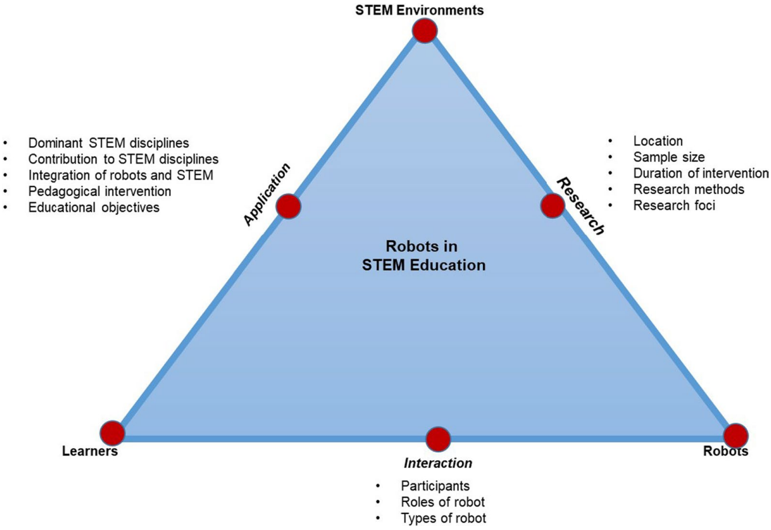
- Systematic review and content analysis guided by Lin and Hwang’s (2019) technology-based learning model, with dimensions covering research, interaction, and application issues.
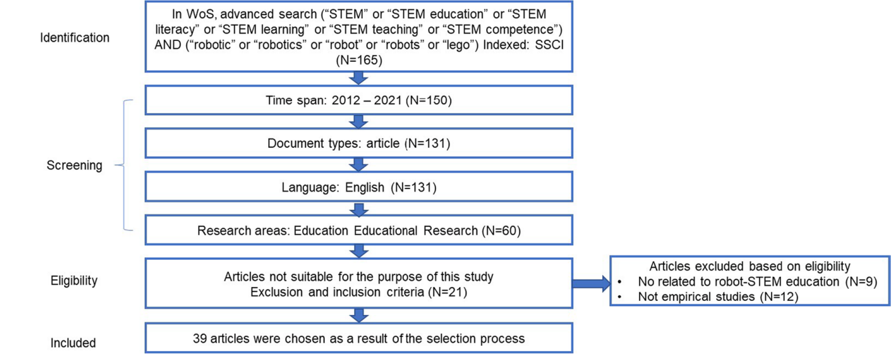
- Literature search was limited to Web of Science; the authors found 165 papers, reduced to 131 after filters (article, English, 2012–2021), then to 60 in education/educational research, and finally 39 after screening; Cohen’s kappa = 0.8 for coding agreement.
- The review synthesized studies across location, sample size, duration, research methods, research foci, participants, robot roles/types, STEM disciplines, integration forms, pedagogical interventions, and educational objectives.
## Limitations
- The paper states it was limited to journals indexed in Web of Science and SSCI articles related to R-STEM education; it suggests that other databases such as SCOPUS and SCI should be considered.
- The number of studies analyzed was relatively small (39), and the authors recommend extending the review to include publications from coming years.
- Evident from the text: the review draws only on published English-language article-type papers from 2012–2021, so its scope is restricted to that publication set (this is evident from the methods, not stated as a limitation).
Model-written summary. Check it against the paper before relying on it.
Integrity signals
Registry
Cites
Statistics
Figures
Verification
Claims the paper makes
5 Valid · 2 Not valid · 28 Not checked · 104 Own results and interpretations
The cited sources support only part of this claim — read each source’s verdict below.
In the paper
“This issue has been frequently reported as a barrier to implementing R-STEM in the interdisciplinary subject.”
What the sources say
- Partly supportedcites Margot & Kettler, 2019 matched to “Teachers’ Perception of STEM Integration and Education: A Systematic Literature Review” (2019) sourceExperimental — accuracy not yet measured
The Pedagogical challenges section (p. 11) reports concern that STEM instruction could hinder direct teaching of science, and Curriculum challenges (p. 11) describes barriers to integrating STEM subjects. The review does not report that both science and mathematics are given less weight, or identify that specific issue as a frequently reported barrier to R-STEM. (LLM, conf=0.82)
plainstates a cause- Asserted: passes — The authors put it forward as true.
- Checkable: passes — It can be checked against evidence.
- Load-bearing: unclear — It is unclear whether the paper’s conclusions depend on it.
- Based: passes — The paper gives a reason why it holds.
- Partly supported
A result the paper reports from its own data — it cites no other source for it, so there is none to check. The quote shows it is in the paper.
In the paper
“The review indicated that R-STEM education studies were mostly conducted in the United States and mainly in K-12 schools.”
hedged- Asserted: passes — The authors put it forward as true.
- Checkable: passes — It can be checked against evidence.
- Load-bearing: unclear — It is unclear whether the paper’s conclusions depend on it.
- Based: passes — The paper gives a reason why it holds.
A result the paper reports from its own data — it cites no other source for it, so there is none to check. The quote shows it is in the paper.
In the paper
“LEGO was the most used tool to accomplish the learning objectives.”
plain- Asserted: passes — The authors put it forward as true.
- Checkable: passes — It can be checked against evidence.
- Load-bearing: unclear — It is unclear whether the paper’s conclusions depend on it.
- Based: passes — The paper gives a reason why it holds.
A result the paper reports from its own data — it cites no other source for it, so there is none to check. The quote shows it is in the paper.
In the paper
“Learner and teacher perceptions were the most popular research focus in these studies which applied robots.”
plain- Asserted: passes — The authors put it forward as true.
- Checkable: passes — It can be checked against evidence.
- Load-bearing: passes — The paper’s conclusions depend on it.
- Based: passes — The paper gives a reason why it holds.
A result the paper reports from its own data — it cites no other source for it, so there is none to check. The quote shows it is in the paper.
In the paper
“Moreover, project-based learning (PBL) was the most frequently employed learning strategy in robotics-related STEM research.”
plain- Asserted: passes — The authors put it forward as true.
- Checkable: passes — It can be checked against evidence.
- Load-bearing: passes — The paper’s conclusions depend on it.
- Based: passes — The paper gives a reason why it holds.
70 more claims
Create a free account to see all 139 claims and to verify the 3 references still open.
- It may state two separate claims as one. 18
- Probably not a substantial claim. 47
- Borderline: one of the tests for a substantial claim is unclear. 1
- The quote only partly states this claim. 5
Self-check
Percentages, sums and reported differences re-computed from the paper’s own numbers.
Rated major: it would touch a result — a value a result rests on, reported and recomputed p-values on opposite sides of the significance level, two passages that conflict with no sign which is right, or a cited work retracted before this paper was published.
In the paper
“The geographic distribution of the reviewed studies indicated that more than half of the studies were conducted in the United States (53.8%), while Turkey and China were the location of five and three studies, respectively. Taiwan, Canada, and Italy were indicated to have two studies each. One study each was conducted in Australia, Mexico, and the Netherlands.”
Reported 39 · recomputed 38
Citations
Cites
Preferred Reporting Items for Systematic Reviews and Meta-Analyses: The PRISMA Statement
Moher, D., Liberati, A., Tetzlaff, J., Altman, D. G., & The PRISMA Group (2009) · PLoS Medicine · doi:10.1371/journal.pmed.1000097 · Cited by 64,042 · cited 2×
“, 2022), discussing the adoption of R-STEM education, and the data collection procedures for this study followed the Preferred Reporting Items for Systematic Reviews and Meta-Analyses (PRISMA) guidelines (Moher et al., 2009) as referred to by prior studies (e.”
A Coefficient of Agreement for Nominal Scales
Cohen, J. (1960) · Educational and Psychological Measurement · doi:10.1177/001316446002000104 · Cited by 42,398 · cited 1×
“The coding result had a Kappa coefficient of 0.8 for both coders (Cohen, 1960).”
MethodInfluentialDesigning and Conducting Mixed Methods Research
Robinson, P. (2007) · Australian and New Zealand Journal of Public Health · doi:10.1111/j.1753-6405.2007.00096.x · Cited by 23,258
Designing and Conducting Mixed Methods Research, 3rd ed.
Creswell, J. W. (2018) · Cited by 13,713
Motivating Project-Based Learning: Sustaining the Doing, Supporting the Learning
Blumenfeld, P. C., Soloway, E., Marx, R. W., Krajcik, J. S., Guzdial, M., & Palincsar, A. (1991) · Educational Psychologist · doi:10.1080/00461520.1991.9653139 · Cited by 3,594 · cited 1×
“Blumenfeld et al. (1991) cred-ited PBL with the main purpose of engaging students in investigating learning models.”
BackgroundA conceptual framework for integrated STEM education
Kelley, T. R., & Knowles, J. G. (2016) · International Journal of STEM Education · doi:10.1186/s40594-016-0046-z · Cited by 1,832 · cited 1×
“Consequently, STEM education promotes a bridge between learning in authentic real-life scenarios (Erdoğan et al., 2016; Kelley & Knowles, 2016).”
BackgroundSocial robots for education: a review.
Belpaeme, T., Kennedy, J., Ramachandran, A., Scassellati, B., & Tanaka, F. (2018) · Science Robotics · doi:10.1126/scirobotics.aat5954 · Cited by 1,558 · cited 1×
“…Spolaôr & Benitti, 2017; van den Berghe et al., 2019), the potential value of R-STEM education (Çetin & Demircan, 2020; Conde et al., 2021; Zhang et al., 2021), and the types of robots used in learning practices (Belpaeme et al., 2018; Çetin & Demircan, 2020; Tselegkaridis & Sapounidis, 2021).”
Vision, challenges, roles and research issues of Artificial Intelligence in Education
Hwang, G.-J., Xie, H., Wah, B. W., & Gašević, D. (2020) · Computers and Education: Artificial Intelligence · doi:10.1016/j.caeai.2020.100001 · Cited by 1,435 · cited 1×
“To some extent, artificial intelligence (AI) has driven the use of robotics and tools, such as their application to designing instructional activities (Hwang et al., 2020).”
BackgroundSelf-citationExploring the educational potential of robotics in schools: A systematic review
Benitti, F. B. V. (2012) · Computers & Education · doi:10.1016/j.compedu.2011.10.006 · Cited by 1,200 · cited 3×
“Despite the focus on system development, the help of robotics was identified as increasing the success of STEM learning (Benitti, 2012).”
BackgroundInfluentialMotivating Project-Based Learning: Sustaining the Doing, Supporting the Learning
Blumenfeld, P. C., Soloway, E. M., Marx, R. W., et al. (1991) · Educational Psychologist · doi:10.1207/s15326985ep2603&4_8 · Cited by 1,120
Research works printed but not linked: 6
- Chesloff, J. D. (2013). STEM education must start in early childhood. Education Week, 32 (23), 27-32.
- Creswell, J. W., Plano-Clark, V. L., Gutmann, M. L., & Hanson, W. E. (2003). Advanced mixed methods research designs. Handbook of mixed methods in social and behavioral research. Sage.
- Jou, M., Chuang, C. P., & Wu, Y. S. (2010). Creating interactive web-based environments to scaffold creative reasoning and meaningful learning: From physics to products. Turkish Online Journal of Educational Technology-TOJET, 9(4), 49–57.
- *Li, Y., Huang, Z., Jiang, M., & Chang, T. W. (2016). The effect on pupils' science performance and problem-solving ability through Lego: An engineering design-based modeling approach. Educational Technology and Society, 19 (3), 143-156. https:// doi. org/ 10. 2307/ jeduc techs oci. 19.3. 14 · doi:10.2307/jeductechsoci.19.3.14
- *Ma, H. L., Wang, X. H., Zhao, M., Wang, L., Wang, M. R., & Li, X. J. (2020). Impact of robotic instruction with a novel inquiry framework on primary schools students. International Journal of Engineering Education, 36(5), 1472–1479.
- Moomaw, S. (2012). STEM Begins in the Early Years. School Science and Mathematics, 112(2), 57–58. https://doi.org/10.1111/j.1949-8594.2011.00119.x · DOI
Cited by
Artificial intelligence (AI) learning tools in K-12 education: A scoping review
Yim, I. H. Y., & Su, J. (2024) · Journal of Computers in Education · doi:10.1007/s40692-023-00304-9 · Cited by 249
“The technology-based learning model of Hsu et al. (2012) is adopted and modified in this study; it has been widely used by other researchers conducting similar systematic reviews (Chang et al., 2018, 2022; Darmawansah et al., 2023; Tu & Hwang, 2020), as shown in Fig.”
Jiang, H.-Z., Zhu, D., Chugh, R., Turnbull, D., & Jin, W. (2025) · Education and Information Technologies : Official Journal of the IFIP technical committee on Education · doi:10.1007/s10639-024-13210-z · Cited by 106
“According to Darmawansah et al. (2023), Fu and Hwang (2018), Huang et al., (2022a), Slavin (1986) and Xie et al. (2019 ), it is crucial to include high-quality data sources in literature reviews.”
Education in the AI era: a long-term classroom technology based on intelligent robotics
Bellas, F., Naya-Varela, M., Mallo, A., & Paz-López, A. (2024) · Humanities and Social Sciences Communications · doi:10.1057/s41599-024-03953-y · Cited by 65
“After a deep review of the literature in the scope of ER, some remarkable initiatives and platforms can be highlighted (Bezerra Junior et al. 2018; Anwar et al. 2019; Darmawansah et al. 2023).”
A shape of play to come: Exploring children's play and imaginaries with robots and AI
Samuelsson, R. (2023) · Computers and Education Artificial Intelligence · doi:10.1016/j.caeai.2023.100173 · Cited by 49
Fan, L., & Chiang, J. (2023) · Journal of Language Teaching · doi:10.54475/jlt.2023.026 · Cited by 35
“Secondly, we referred to previous review studies in this area of computer-assisted language teaching and found that these two databases were commonly chosen (e.g. Zou, et al., 2020; Cramarenco, et al., 2023; Amores-Valencia et al., 2022, Darmawansah et al., 2023).”
BackgroundMethodPromoting primary school students’ creativity via reverse engineering pedagogy in robotics education
Liu, X., Gu, J., & Zhao, L. (2023) · Thinking Skills and Creativity · doi:10.1016/j.tsc.2023.101339 · Cited by 36
Hu, C., Yang, Y., Cheng, Y.-W., & Chen, N. (2023) · Behaviour and Information Technology · doi:10.1080/0144929x.2023.2222308 · Cited by 55
“Robotic activities in STEM education are not only highly related to problem-solving and algorithmic skills but also bene fi cial to improving collaboration, learning motivation, and an increase in learners ’ con fi dence (Chetty 2015; Darmawansah et al. 2023; Lauwers, Nour-bakhsh, and Hamner 2009).”
BackgroundGonzález, I. T., Lucena, F. J. H., Rodríguez, J. M. R., & Menéndez, A. M. (2024) · Frontiers in Education · doi:10.3389/feduc.2024.1480908 · Cited by 51
A unified framework for understanding teachers’ adoption of robotics in STEM education
Ateş, H., & GÜNDÜZALP, C. (2023) · Education and Information Technologies · doi:10.1007/s10639-023-12382-4 · Cited by 34
Assessing teacher readiness for educational robotics integration in primary and preschool education
Gavrilas, L., Kotsis, K. Τ., & Papanikolaou, M.-S. (2024) · Education 3-13 · doi:10.1080/03004279.2023.2300699 · Cited by 29
“They collaborate and exchange ideas and opinions with their peers (Anwar et al. 2019; Darmawansah et al. 2023; Taylor and Baek 2018), with application possibilities in various learning environments, both formal and informal (Williams, Ma, and Prejean 2010).”
They believe students can fly: A scoping review on the utilization of drones in educational settings
Jiang, M. Y., Jong, M. S., Chai, C. S., Huang, B., Chen, G., Lo, C. K., & Wong, F. K. K. (2024) · Computers & Education · doi:10.1016/j.compedu.2024.105113 · Cited by 35
Anđić, B., Maričić, M., Mumcu, F., Prodromou, T., Leoste, J., Saimon, M., & Lavicza, Z. (2024) · Smart Learning Environments · doi:10.1186/s40561-024-00298-6 · Cited by 32
“Within the cognitive domain, researchers have shown that the application of ER improves student learning out - comes in general (Atman Uslu et al., 2022), as well as student achievements in STEM learning environments (Benitti, 2012; Darmawansah et al., 2023).”
Su, S., Chen, L., Yuan, S., & Sun, C. (2024) · Education Sciences · doi:10.3390/educsci14070695 · Cited by 26
Rozgonjuk, D., Täht, K., Soobard, R., Teppo, M., & Rannikmäe, M. (2024) · International Journal of STEM Education · doi:10.1186/s40594-024-00504-4 · Cited by 43
“Finally, it would be interesting to compare the science-related variables of this study with other STEM components, such as engineering and mathematics, as well as in interdisciplinary contexts (Darmawansah et al., 2023; Gao et al., 2020).”
BackgroundGavrilas, L., & Kotsis, K. Τ. (2024) · Contemporary Mathematics and Science Education · doi:10.30935/conmaths/14384 · Cited by 21
“It is important to emphasize that educational robotics constitutes a significant auxiliary tool for the successful implementation of STEM education (Darmawansah et al., 2023).”
BackgroundGavrilas, L., & Kotsis, K. Τ. (2024) · International Journal of Research & Method in Education · doi:10.1080/1743727x.2024.2358780 · Cited by 21
Innovative Uses of Technologies in Science, Mathematics and STEM Education in K-12 Contexts
Jong, M. S., Zhaı, X., & Chen, W. (2024) · International Journal of Science and Mathematics Education · doi:10.1007/s10763-024-10530-x · Cited by 26
“Against the backdrop of the rapid advancement and widespread adoption of technologies, the field of education has experienced significant changes (Darmawansah et al., 2023), not to mention the shifts in learning and teaching modes introduced during the outbreak of COVID-19 between 2020 and 2022…”
Torres, I., & Inga, E. (2025) · Information · doi:10.3390/info16020096 · Cited by 36
Yang, H., Hu, L., Wang, H., & Xin, Y. (2025) · Journal of Computer Assisted Learning · doi:10.1111/jcal.70079 · Cited by 23
Gavrilas, L., Kotsis, K. Τ., & Papanikolaou, M.-S. (2023) · Pedagogical Research · doi:10.29333/pr/14049 · Cited by 16
“Ultimately, robotics stands as an engaging activity that captivates students, aiding their comprehension of STEM fields through practical exercises, problem-solving, and the integration of prior knowledge with new insights (Darmawansah et al., 2023; Hughes et al., 2022; Williams et al., 2007).”
The impact of robotics on STEM education: Facilitating cognitive and interdisciplinary advancements
Zhang, D., Wang, J., Jing, Y., & Shen, A. (2024) · Applied and Computational Engineering · doi:10.54254/2755-2721/69/20241433 · Cited by 18
Educational robotics in physics education: a systematic review
Lotriet, H., & Gouws, P. (2025) · Studies in Science Education · doi:10.1080/03057267.2025.2455334 · Cited by 26
“The inclusion of 25% studies with experimental designs is in the review by Darmawansah et al. (2023), is significant.”
Chen, Y., Zhang, X., Hu, L., Hwang, G., Xie, H., & Tu, Y. (2025) · Computers & Education · doi:10.1016/j.compedu.2025.105471 · Cited by 12
Self-citationAn Innovative STEAM-Based Method for Teaching Cycloidal Curves in Engineering Higher Education
Szilágyi, S., Körei, A., & Vaičiulytė, I. (2024) · Education Sciences · doi:10.3390/educsci14101087 · Cited by 14
la Hoz, A. D., Niño, L. V. M., Cañada, F. C., & Cubero, J. (2024) · Heliyon · doi:10.1016/j.heliyon.2024.e40032 · Cited by 19
Augmented reality and robotics in education: A systematic literature review
Pasalidou, C., Lytridis, C., Tsinakos, A. A., & Fachantidis, N. (2025) · Computers in Human Behavior Artificial Humans · doi:10.1016/j.chbah.2025.100157 · Cited by 20
LUPDA: a comprehensive rubrics-based assessment model for STEAM education
Cheng, Y., & Huang, Y. (2025) · International Journal of STEM Education · doi:10.1186/s40594-025-00570-2 · Cited by 19
“The effective use of technological tools not only aids students in grasping the principles and specifications of materials but also fosters their ability to apply this knowledge practically (Darmawansah et al., 2023; El Bedewy et al., 2022).”
Tailoring AI agents for early learning: The Creative Project Approach
Yang, W., Li, H., & Lee, J. C. (2025) · Computers and Education Artificial Intelligence · doi:10.1016/j.caeai.2025.100473 · Cited by 13
Wang, F., Huang, J., Zheng, X., Wu, J.-Q., & Zhao, A. (2024) · Journal of Research on Technology in Education · doi:10.1080/15391523.2024.2398504 · Cited by 18
“Different scholars have respectively explored ways to cultivate CT from STEM perspectives (Darmawansah et al., 2023; Huang & Qiao, 2022; Sung et al., 2023).”
Systems Thinking in the Role of Fostering Technological and Engineering Literacy
Kurent, B., & Avsec, S. (2025) · Systems · doi:10.3390/systems14010005 · Cited by 15
Epistemic Agency in Preservice Teachers’ Science Lessons with Robots
Vasconcelos, L., Gleasman, C., Umutlu, D., & Kim, C. (2024) · Journal of Science Education and Technology · doi:10.1007/s10956-024-10092-1 · Cited by 8
“However, a systematic review of empirical studies on educational robots for interdisciplinary STEM learning revealed that science is the least emphasized STEM subject in robotics activities (Darmawansah et al., 2023).”
Shofiyah, N., Jatmiko, B., Suprapto, N., Prahanı, B. K., & Anggraeni, D. M. (2025) · Social Sciences & Humanities Open · doi:10.1016/j.ssaho.2025.101534 · Cited by 25
Millán, M. D. C. S., & Arango, J. P. B. (2025) · Discover Education · doi:10.1007/s44217-025-00735-9 · Cited by 9
“…in the development of a subject that demonstrates the application of tools, methods and approaches transversal to STEM/STEAM in a personal, group and integral way, thus demonstrating the importance of combining science and technology [4], giving rise to the concept of STEM based robotics [39].”
Perceived MOOC satisfaction: A review mining approach using machine learning and fine-tuned BERTs
Chen, X., Xie, H., Zou, D., Cheng, G., Tao, X., & Wang, F. L. (2025) · Computers and Education Artificial Intelligence · doi:10.1016/j.caeai.2025.100366 · Cited by 10
Hands-On STEAM Programming: Microteaching with Micro:bit for Enhanced Learning
Rafti, M., Milakis, E. D., Argyrakou, C. C., Vangeli, D. G., & Katsarou, M. C. (2025) · Journal of Hypermedia & Technology-Enhanced Learning (J-HyTEL) · doi:10.58536/j-hytel.172 · Cited by 13
“This dual engagement reflects the broader pedagogical trend of using project-based learning to improve understanding and retention of complex concepts [51], [52].”
Huang, J., Xu, X. W., & Polzer, J. (2025) · Journal of Manufacturing Systems · doi:10.1016/j.jmsy.2025.08.018 · Cited by 9
Trends of high impact educational research in scientific disciplines
Li, Y. (2026) · International Journal of STEM Education · doi:10.1186/s40594-026-00607-0 · Cited by 7
Exploring the Impact of Arduino Robotics Instruction on Physical Computing and Programming Skills
Noordin, N. H. (2024) · International Conference on Research and Education in Mechatronics (REM) · doi:10.1109/rem63063.2024.10735477 · Cited by 8
“Today’s era of rapid technological advancements increases the demand for engineering education competencies, and robotics education has emerged as a key tool for equipping students with essential skills and knowledge [1].”
BackgroundAI in Educational Design and Technological Development
Edam, S. M. I. (2024) · Advances in educational technologies and instructional design book series · doi:10.4018/979-8-3693-2728-9.ch002 · Cited by 9
Advancing STEM education as a dynamic and distinct academic field
Li, Y. (2025) · International Journal of STEM Education · doi:10.1186/s40594-025-00584-w · Cited by 20
“A closer examination reveals that four of the five 2023 articles focus on educational technologies (Casal-Otero et al., 2023; Darmawansah et al., 2023; Nam & Bai, 2023; Park et al., 2023), while one centers on computational thinking (Ye et al., 2023).”
Chu, S., Chang, C., & Tu, Y. (2025) · Educational Technology Research and Development · doi:10.1007/s11423-025-10460-7 · Cited by 7
“…in language education (Liang et al., 2023), game-based learning in higher education (Zheng et al., 2024), artificial intelligence-supported e-learning (Tang et al., 2023), concept map-supported education (CMSE) (Chang et al., 2023), and robotics-based STEM education (Darmawansah et al., 2023).”
Mukhasheva, M., Ыбыраимжанов, К., Naubaeva, K., Mamekova, A., & Almukhambetova, B. (2023) · European Journal of Educational Research · doi:10.12973/eu-jer.12.4.1683 · Cited by 15
“Students are more likely to be enthusiastic about their studies when they can work with objects that enable them to influence their environment and apply theoretical knowledge to create real-world change (Darmawansah et al., 2023; Kert et al., 2020).”
The challenges encountered by preschool and primary educators in implementing educational robotics
Gavrilas, L., Kotsis, K. Τ., & Papanikolaou, M.-S. (2025) · Research in Science & Technological Education · doi:10.1080/02635143.2025.2578308 · Cited by 6
Al–Nawaiseh, S. J., Tabieh, A. A. S., Maqableh, W. F., Altawalbeh, M. A., & Ahmad, F. B. (2024) · International Journal of Education and Practice · doi:10.18488/61.v12i3.3768 · Cited by 16
“Educational robots offer the chance to teach arithmetic, including engineering concepts and mathematical engineering abilities, as an essential component of education (Darmawansah et al., 2023).”
BackgroundKörei, A., Szilágyi, S., & Vaičiulytė, I. (2023) · Problems of Education in the 21st Century · doi:10.33225/pec/23.81.840 · Cited by 6
Acceptance of independent curriculum in North Kalimantan
Setyaningsih, A., Bagea, I., Mulyadi, M., Sarip, M., Agustiwi, A., Mubarok, E. S., & Haetami, A. (2024) · Journal of Education and Learning (EduLearn) · doi:10.11591/edulearn.v18i3.20984 · Cited by 21
“Students not only learn theory in class, but students can apply the material through robots [18].”
BackgroundInterventions in STEM Education Through Speech Recognition-Based Learning Analysis
Lin, C., Wang, W., Lee, H., Huang, Y., & Wu, T. (2024) · Journal of Educational Computing Research · doi:10.1177/07356331241307904 · Cited by 6
“STEM learning activities emphasize “ learning by doing, ” which often requires learners to collaborate in completing complex tasks, applying acquired knowledge to real-life practices (Darmawansah et al., 2023).”
Kelesbayev, K., Ramankulov, S. J., Нуризинова, М., Kurbanbekov, B. A., & Pattayev, A. (2025) · International Journal of Innovative Research and Scientific Studies · doi:10.53894/ijirss.v8i1.4180 · Cited by 5
Altan, E. B., Coşkun, T. K., Öztürk, N., & Hacıoğlu, Y. (2025) · PLoS ONE · doi:10.1371/journal.pone.0332047 · Cited by 12
“…used to collect data [27,48], planning applications to develop algorithmic thinking skills [49,50], the implementation of robotic applications [51], the use of information and communication technologies [52], the creation of digital stories, creating projects using chrome books and google…”
Kasenides, N., Piki, A., & Paspallis, N. (2024) · Lecture notes in computer science · doi:10.1007/978-3-031-61305-0_7 · Cited by 4
Virtual Reality for Teaching Power Electronics: Boost Converter Simulation and Learning Outcomes
Alenabi, S. A., Gavagsaz‐Ghoachani, R., Phattanasak, M., et al. (2025) · doi:10.1109/icelet66022.2025.11025320 · Cited by 3
“With the astonishing pace of technological advancements, engineering graduates must collaborate with other professionals from diverse disciplines [2]-[3].”
Teachers’ Views on STEM Education in Bulgaria: A Qualitative Survey
Paunova-Hubenova, E., Bontchev, B., Terzieva, V. T., & Dankov, Y. (2025) · Education Sciences · doi:10.3390/educsci15091155 · Cited by 7
Capaldi, E. (2024) · PeerJ Computer Science · doi:10.7717/peerj-cs.1826 · Cited by 7
Walker, A. J., Diaz, K. R. V., McKie, D., et al. (2024) · Lecture notes in networks and systems · doi:10.1007/978-981-97-3289-0_30 · Cited by 3
Wendt, T. M., Blöchle, J. J., Fischer-Janzen, A., et al. (2025) · Lecture notes in networks and systems · doi:10.1007/978-3-031-98762-5_1 · Cited by 3
Omari, S., Mamane, A., Ouahi, M. B., & Benjelloun, N. (2024) · TEM Journal · doi:10.18421/tem131-46 · Cited by 3
Chikurteva, A. (2024) · International Conference on Emerging eLearning Technologies and Applications (ICETA) · doi:10.1109/iceta63795.2024.10850854 · Cited by 2
Zivanayi, W., & Malinga, S. N. (2025) · African Journal of Teacher Education · doi:10.21083/ajote.v14i1.8013 · Cited by 5
A REVIEW OF THE IMPLEMENTATION OF STEM EDUCATION IN THE USA BASED ON ROBOTICS
Batyuk, L. V., & Masych, V. (2025) · Problems of engineer-pedagogical education · doi:10.26565/2074-8922-2025-84-40 · Cited by 6
Enhance or hinder? Exploring the role of AI-powered notetaking in Video-based STEM learning
Pi, Z., Zhou, D., Zheng, S., Li, X., & Zhao, X. (2026) · Contemporary Educational Psychology · doi:10.1016/j.cedpsych.2026.102455 · Cited by 5
Emerging technologies for STEM education: global evidence on learning, equity, and SDG4
Nedungadi, P., Thushara, M. G., Veena, G., Tang, K., & Raman, R. (2026) · Humanities and Social Sciences Communications · doi:10.1057/s41599-026-06565-w · Cited by 9
The effects of educational robotics on students’ learning outcomes: A three-level meta-analysis
Lu, Y., & Geng, S. (2026) · Educational Research Review · doi:10.1016/j.edurev.2026.100790 · Cited by 5
Practical Engineering Education: Use of collaborative robots in the context of Industry 5.0
Vogel, C., Lindner, F., & Kratzsch, A. (2023) · World Engineering Education Forum - Global Engineering Deans Council (WEEF-GEDC) · doi:10.1109/weef-gedc59520.2023.10344213 · Cited by 2
“[3], [4] In the context of Industry 5.0, the use of robots in studies is becoming increasingly important.”
BackgroundInfluentialUiAbot: A Versatile Autonomous Mobile Robot Platform for Research and Education
Hagen, D., Mæland, M., Skotterud, T., Hermansen, M. D., Haij, H., & Wad, M. S. (2024) · IEEE Conference on Industrial Electronics and Applications (ICIEA) · doi:10.1109/iciea61579.2024.10664856 · Cited by 2
“For example, robotics platforms have been successfully used in the teaching of STEM subjects, promoting interdisciplinary learning and participation [14], [15].”
MethodEducational Robotics and Preservice Teachers: STEM Problem-Solving Skills and Self-Efficacy to Teach
Jaipal-Jamani, K. (2024) · Canadian Journal of Learning and Technology · doi:10.21432/cjlt28599 · Cited by 10
“…with few teachers employing ER to support students’ learning of programming knowledge and skills such as problem-solving and collaboration (Aurini et al., 2017; Darmawansah et al., 2023) or using it to develop confidence and interest in STEM subjects and careers (Hudson et al., 2020; Park, 2015).”
BackgroundHuang, T., Chou, Y.-Y., Gao, Z.-Q., & Shu, Y. (2025) · International Journal of Technology and Design Education · doi:10.1007/s10798-025-09972-3 · Cited by 9
“…of metacognitive experiences through effective pedagogical strategies and technological interventions, thereby boosting learners’ reflection and self-regulation capabilities, which ultimately lead to superior learning outcomes (Margot & Kettler, 2019; Haug & Mork, 2021; Darmawansah et al., 2023).”
Παπαγιαννοπούλου, Θ., Vaiopoulou, J., & Stamovlasis, D. (2025) · Behavioral Sciences · doi:10.3390/bs15091227 · Cited by 10
“Furthermore, it serves as a tool to enhance students’ 21st century capabilities, including creative thinking, decision-making, problem-solving, information, and communication skills, and fosters their capacity to collaborate in teams (Ali et al., 2023; Darmawansah et al., 2023).”
The USA - China robotics competition: Leading the race in innovation and global power
Reshetnikova, M. S., & Tretyakova, S. S. (2024) · RUDN Journal of Economics · doi:10.22363/2313-2329-2024-32-1-154-169 · Cited by 1
QUANTITATIVE TECHNIQUES WITH SMALL SAMPLE SIZES: AN EDUCATIONAL SUMMER CAMP EXAMPLE
Kilty, T. J., Kilty, K., Borowczak, M., et al. (2024) · Problems of Education in the 21st Century · doi:10.33225/pec/24.82.507 · Cited by 1
STEM and Sustainability: Shaping Future Eco-Leaders
Awad, M. J., Kaabi, N. A. M. A., & Awadhi, M. A. A. (2024) · Advances in human services and public health (AHSPH) book series · doi:10.4018/979-8-3693-2987-0.ch014 · Cited by 2
Exploring the frontiers: A comprehensive bibliometric analysis of robotics in science education
Aleksandrova, N. S., Sokolova, E. G., Kosarenko, N. N., Ibragimova, E. M., Budkevich, R. L., & Yagudina, R. I. (2024) · Eurasia Journal of Mathematics Science and Technology Education · doi:10.29333/ejmste/15432 · Cited by 1
“…trends in robotics integration in science education are distinguished by the emphasis on STEM education at the levels of lower schools, by the use of robotics as learning tools, and by the popularity of robots during pre-university and higher education (Chiu et al., 2022; Darmawansah et al., 2023).”
BackgroundIntegrating Arduino and Artificial Intelligence in STEM Education
Bedoya-Cano, Ó., Marín, J. A. M., & López-Belmonte, J. (2025) · Studies in computational intelligence · doi:10.1007/978-3-031-82915-4_7 · Cited by 7
Yu, W., You, Y., & Chiang, F. (2025) · Journal of Computer Assisted Learning · doi:10.1111/jcal.70092 · Cited by 2
STEM Education in MENA Region: Preparing Educators for the Future
Qablan, A. M., Maradian, P., Badawy, H. R. I., & Badawy, H. R. I. (2025) · IGI Global eBooks · doi:10.4018/979-8-3373-0837-1.ch011 · Cited by 1
Shaping Future Trajectories: Skill Development, School Challenges, and Innovativeness at BILSEM
Özden, C., & Atasoy, R. (2025) · Gifted Child Quarterly · doi:10.1177/00169862251347217 · Cited by 1
“In school innovation research, Darmawansah et al. (2023) highlighted the impact of STEM education and robotics projects on shaping students’ vocational interests and career orientations.”
Empowering self-directed learners through digital innovation and open educational practices
Laubscher, D. J. (2026) · NWU self-directed learning series · doi:10.4102/aosis.2025.bk546 · Cited by 4
Child-Robot Musical Theater for STEAM Education: A Case Study in Early Childhood Classrooms
Yu, S., Choi, K., Kim, J., Dong, J., Lee, Y., Haines, C. E., Newbill, P. L., Wyatt, A., Upthegrove, T., & Jeon, M. (2026) · Early Childhood Education Journal · doi:10.1007/s10643-026-02135-6 · Cited by 2
“Yet , these studies have mainly focused on robots as pedagogical tools for learning (Darmawansah et al., 2023), rather than recognizing robots as social partners that support learners through social interaction.”
Koch, H., Lilla, N., & Schüpbach, M. (2026) · Technology Knowledge and Learning · doi:10.1007/s10758-026-09958-7 · Cited by 2
“Mind-storms, introduced in 1999, has become dominant due to its functionality and widespread use in secondary education (Darmawansah et al., 2023; Scaradozzi et al., 2015).”
Lorenzo, A. D., Musso, M., Bono, V., Martin, B., & Rabaglietti, E. (2026) · Contemporary Educational Technology · doi:10.30935/cedtech/18601 · Cited by 2
Interactive Digital Notice Boards for Universities in Ghana
Sackey, E. A., Yandoh, J. B., & Sangban, K. (2023) · African Journal Of Applied Research · doi:10.26437/ajar.v9i1.527 · Cited by 1
Teaching Strategy for Enabling Technologies of Industry 4.0 to High School Students
Castellanos-Cárdenas, D., & Álvarez, M. C. G. (2023) · Communications in computer and information science · doi:10.1007/978-3-031-47372-2_10 · Cited by 1
The Influence of a Robotics Program on Students’ Attitudes Toward Effective Communication
Sharif, S., Muniandy, T., & Mariappan, M. (2024) · European Journal of Educational Research · doi:10.12973/eu-jer.13.3.1171 · Cited by 3
Choi, I.-C., Choi, W. C., Huang, B., & Mendes, A. J. (2024) · IEEE Frontiers in Education Conference (FIE) · doi:10.1109/fie61694.2024.10893583 · Cited by 3
“[David, 6:29] d) Relevance of robotics in future development within the field.”
InfluentialBeneficios del uso la robótica educativa para mejorar el aprendizaje de la Matemática
Villacis, A. E. N., Veloz, A. B. L., Paredes, L. E. B., & Revelo, O. F. C. (2025) · Revista Ciencia Innovadora · doi:10.64422/rci.v3n1.2025.4 · Cited by 1
Pham, V. D., Luu, B. A., Ly, T. D., Vuong, K. M., Bui, T. A., & Ngoc, L. A. (2024) · Wiley eBooks · doi:10.1002/9781394272303.ch24 · Cited by 1
Research on the Construction of First-class Robotics Engineering Program Based on the RoboMaster
Cheng, L., & He, D. (2023) · IEEE Conference on Industrial Electronics and Applications (ICIEA) · doi:10.1109/iciea58696.2023.10241871
“Unlike traditional industries such as the process industry (large entities, large systems) and microdevices and electronic design (small entities, subsystems), robotics engineering deals with “small entities and whole systems” with an emphasis on practicality [7].”
BackgroundA Survey of Evaluation Approaches in STE(A)M Education
Wong, B. T. M., Li, K. C., & Chan, H. T. (2023) · Communications in computer and information science · doi:10.1007/978-981-99-8255-4_25
Lestari, D., Suwarma, I. R., & Suhendi, E. (2023) · Jurnal Penelitian & Pengembangan Pendidikan Fisika · doi:10.21009/1.09202
“…in STEM disciplines, helping them develop an interest in STEM and consequently fostering the development of various skills such as computational thinking, creativity and motivation, collaboration and teamwork, problem-solving, and other higher-order thinking skills (Darmawansah et al. 2023).”
BackgroundSTEM Learning Platform Exemplified by Talkative Power ConversionPreprint
Hoeher, P. A., Homayounnasab, N., & Hansen, S. (2024) · doi:10.36227/techrxiv.24205818.v2
Intelligent Non-Looped Maze Solving Robot: IR Sensor-Driven Autonomous Navigation
Suthar, S., & Shukla, V. (2023) · IEEE Technology & Engineering Management Conference - Asia Pacific (TEMSCON-ASPAC) · doi:10.1109/temscon-aspac59527.2023.10531440 · Cited by 1
“In addition to it, Students have learned robotics and programming with maze-solving robots[13].”
BackgroundMódszertani innovációk és alkalmazásaik a szívgörbe projekt alapú tanulásában
Szilágyi, S., & Körei, A. (2024) · Gradus · doi:10.47833/2024.1.csc.006
“Az oktatási robotika hosszú évek óta eredményesen alkalmazott eszköz a tanulás élményszer˝uvé tételére és a hatékonyság növelésére [14, 15].”
Playing Tic-Tac-Toe with Dobot Magician: An Experiment to Engage Students for Engineering Studies
Oliveira, D. M. D. S., Filipe, V. M. D. J., & Oliveira, P. M. (2024) · Lecture notes in educational technology · doi:10.1007/978-981-97-1814-6_54
MPROVIOT – Çok Amaçlı IoT Rover Robot
Bağbars, A., Talu, M. F., & Alpaslan, N. (2024) · Türk doğa ve fen dergisi :/Türk doğa ve fen dergisi · doi:10.46810/tdfd.1486465
Studying the Learning Effects of Linear Motion with Teleoperated Mobile Robots: A Train-the-Trainer
Samrit, C., Tirasuntarakul, N., & Joochim, O. (2024) · World Symposium on Software Engineering (WSSE) · doi:10.1145/3698062.3698098
Nurlina, N., Musdar, M., Hajati, K., et al. (2024) · Jurnal Penelitian & Pengembangan Pendidikan Fisika · doi:10.21009/1.10215
What Pre-Conceptions Do Students Have About Sensors? Preliminary Results*
Stenová, B., & Miková, K. (2024) · International Conference on Emerging eLearning Technologies and Applications (ICETA) · doi:10.1109/iceta63795.2024.10850873
Axiomatic-deductive system of ontologies based on STEM education
Kuzmenko, O., Zasenko, O., & Shapovalov, Y. A. (2025) · Scientific Notes of Junior Academy of Sciences of Ukraine · doi:10.51707/2618-0529-2024-31_1-02
Constructivism and Robotics: Building Bridges in Learning Theories and Educational Practice
Asrifan, A., Octaberlina, L. R., Nursyam, N., Sudiati, R., Tasni, N., & Pajarianto, H. (2025) · Advances in computational intelligence and robotics book series · doi:10.4018/979-8-3693-6165-8.ch003
AXIOMATIC-DEDUCTIVE SYSTEM OF ONTOLOGY BASED ON THE FUNDAMENTALS OF STEM EDUCATION
Kuzmenko, O., Dembitska, S., Kobylianskyi, O. V., et al. (2025) · Academic Notes Series Pedagogical Science · doi:10.36550/2415-7988-2025-1-218-36-42
Metadata
- Authors
- Darmawansah, D., Hwang, G.-J., Chen, M.-R. A., & Liang, J.-C.
- Affiliations
- National Taiwan University of Science and Technology (TW)
- Soochow University (TW)
- Corresponding author
- Chen, Mei-Rong Alice
- Venue
- International Journal of STEM Education
- Published
- 2023-02-10
- Volume
- 10
- Issue
- 1
- ISSN
- 2196-7822 (ISSN-L)
- OpenAlex
- W4319985634
- Cited by
- 147
- References
- 92
- Citations by year
- 2026: 36 · 2025: 51 · 2024: 45 · 2023: 15
- FWCI
- 3.08
- Type
- journal article
- Language
- en
- Open access
- gold
- doi.org
- Licence
- cc-by
- creativecommons.org/licenses/by/4.0 (tdm)
- creativecommons.org/licenses/by/4.0 (vor)
- Locations
- International Journal of STEM Education (publishedVersion, cc-by)
- DOAJ (DOAJ: Directory of Open Access Journals) (submittedVersion, cc-by-sa)
- Funders
- Ministry of Science and Technology, Taiwan (MOST-109-2511-H-011-002-MY3, MOST-108-2511-H-011-005-MY3)
- National Science and Technology Council (NSTC 111-2410-H-031-092-MY2)
- Soochow University (111160605-0014)
- Topics
- Social Sciences › Education › Educational Robotics and Engineering
- Physical Sciences › Computer Science › Computer Science Applications › Teaching and Learning Programming
- Physical Sciences › Engineering › Mechanical Engineering › Mechatronics Education and Applications
- Keywords
- educational robotics, research trends, LEGO robots, programming education, project-based learning, transferable skills, learner perceptions, teacher perceptions, K-12 education, interdisciplinary problem solving
About these checks
Registry, retraction, Cites and statistics results are computed, not judged, with one exception: a printed reference that no index lists is read once by a model before it counts as a citation error. Claims are extracted by a model and kept only when their quote appears verbatim in the text; each cited source is then checked, with a model’s help, for whether it says what the claim relies on. Those verdicts can be wrong — read the claim’s quote and the cited source before relying on one.
The claim verdicts this report counts are experimental: their accuracy is not yet measured.
A language model drew the claims from the paper on 2026-10-10, under version 3 of the claim definition (model deepseek-v4.1-flash, prompt extract-v3).
A second model labelled each claim on 2026-10-10 (model jev-1.13-20260917, definition revision gold-guideline-v0.2).
Cited sources are checked with a language model’s help (gpt-6-sol).
Statistics and arithmetic are recomputed, not judged.
Confidence bands are shown only for fields calibrated on our annotated test set. None is calibrated yet, so no band is shown.
What counts as a claim ›How we measure confidence ›How we check this ›
Are you an author, or do you see a problem with this page? Request a review
Data sources
Bibliographic data: Semantic Scholar, OpenAlex, Crossref.
Contains information from the Semantic Scholar Academic Graph Datasets, made available under the ODC Attribution License (ODC-BY 1.0).
Semantic Scholar’s data is described in: Kinney, R., et al. (2023). The Semantic Scholar Open Data Platform. arXiv:2301.10140.
