

Trends and research foci of robotics-based STEM education: a systematic review from diverse angles based on the technology-based learning model
Open accessThe DOI matches its Crossref record; 92 of the 93 references it cites were found in a registry or an index, and 1 are not checked yet; 5 of the 35 sources its claims cite were checked for support.
Abstract
Abstract Fostering students’ competence in applying interdisciplinary knowledge to solve problems has been recognized as an important and challenging issue globally. This is why STEM (Science, Technology, Engineering, Mathematics) education has been emphasized at all levels in schools. Meanwhile, the use of robotics has played an important role in STEM learning design. The purpose of this study was to fill a gap in the current review of research on Robotics-based STEM (R-STEM) education by systematically reviewing existing research in this area. This systematic review examined the role of robotics and research trends in STEM education. A total of 39 articles published between 2012 and 2021 were analyzed. The review indicated that R-STEM education studies were mostly conducted in the United States and mainly in K-12 schools. Learner and teacher perceptions were the most popular research focus in these studies which applied robots. LEGO was the most used tool to accomplish the learning objectives. In terms of application, Technology (programming) was the predominant robotics-based STEM discipline in the R-STEM studies. Moreover, project-based learning (PBL) was the most frequently employed learning strategy in robotics-related STEM research. In addition, STEM learning and transferable skills were the most popular educational goals when applying robotics. Based on the findings, several implications and recommendations to researchers and practitioners are proposed.
Verified 2026-11-25 · 1 reference not checked yet
Overview
CoChat Summary
## TL;DR
This systematic review analyzed 39 R-STEM articles published from 2012 to 2021 using a technology-based learning model and content analysis. It found that U.S.-based K-12 studies dominated, with learner/teacher perceptions, LEGO, technology/programming, and project-based learning appearing most often.
## Key findings
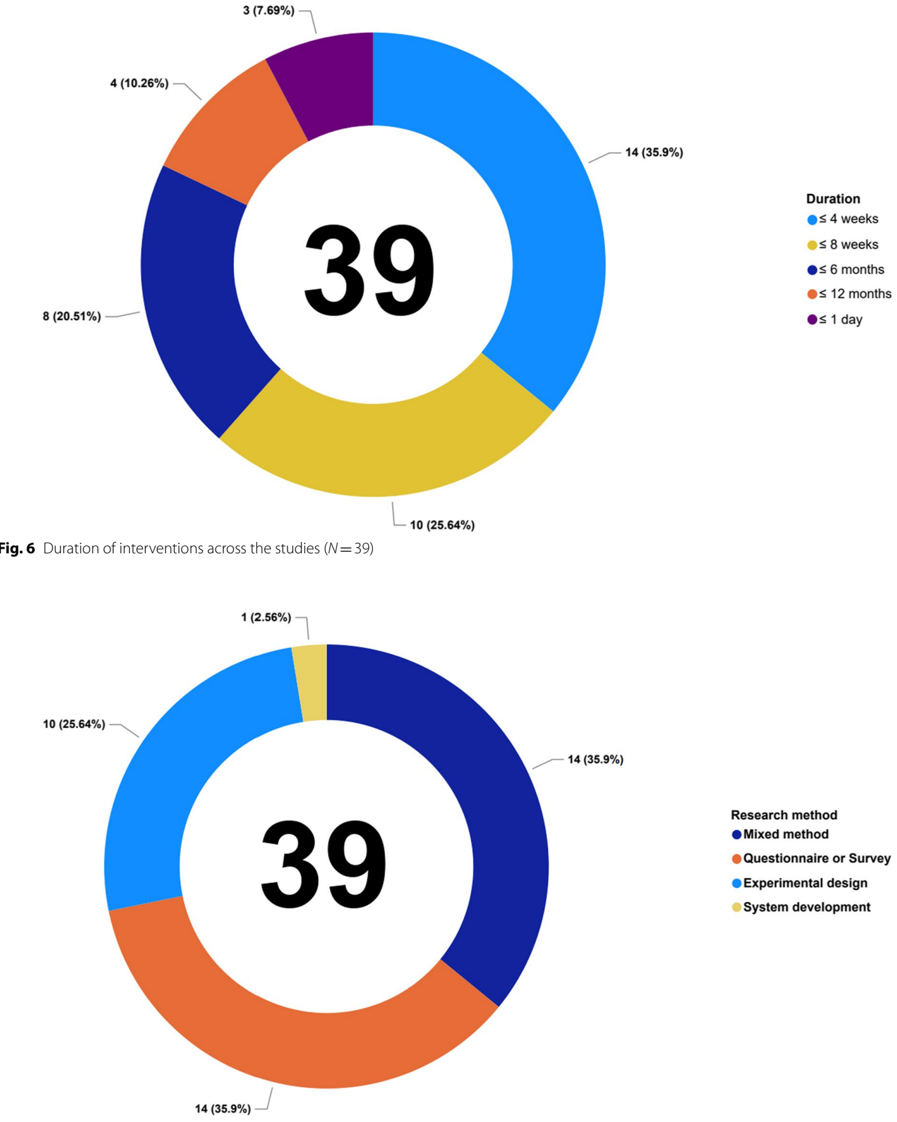
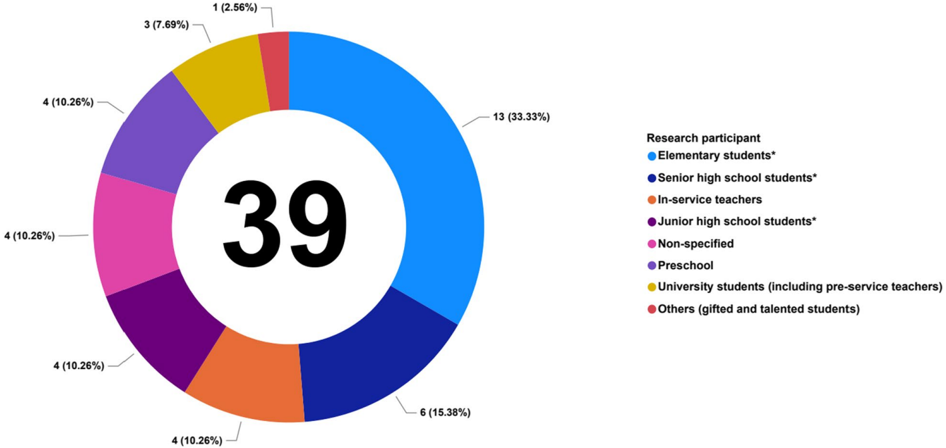
- The review included 39 articles; 53.8% were conducted in the United States, and the studies were mainly in K-12 schools.
- The most common research foci were learner/teacher perceptions (23/39, 58.97%) and, for cognition, learning performance (15/39).
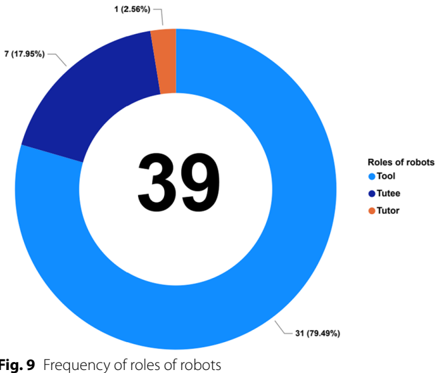
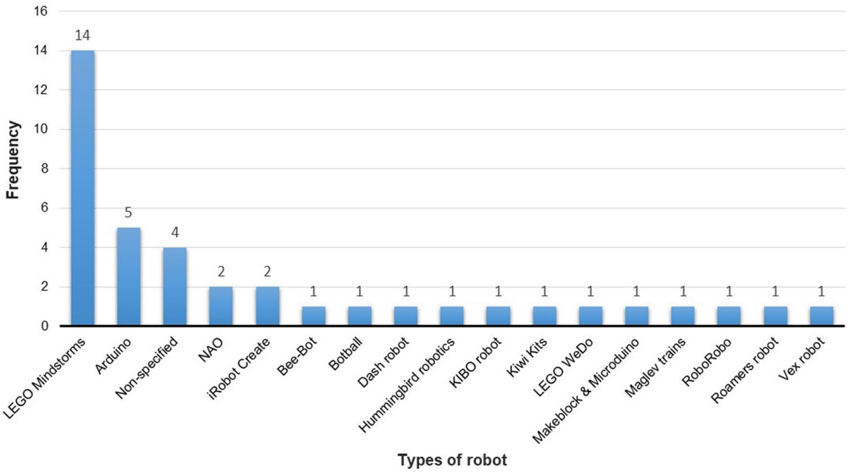
- LEGO MINDSTORMS was the most used robot/tool (14/39, 35.89%), while robots were most often used as tools (31/39, 79.49%); the tutor role appeared only 1/39 (2.56%).
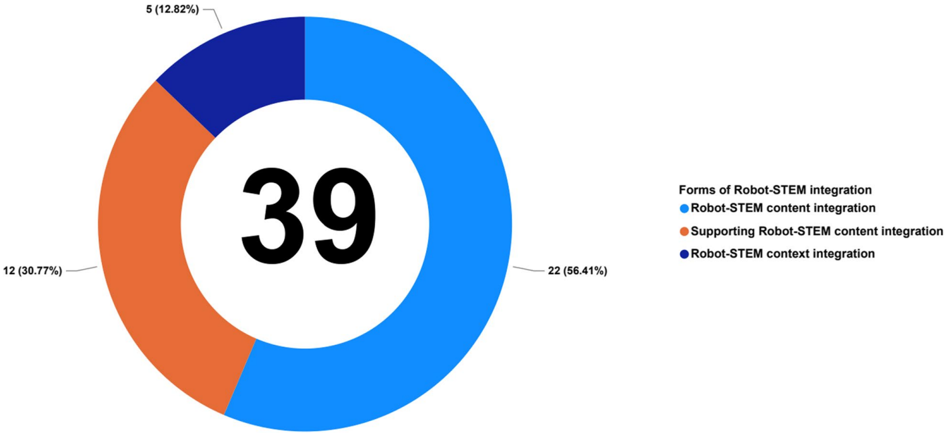
- Technology/programming was the dominant STEM discipline, with programming appearing in 25/36 (64.1%) studies; robot-STEM content integration was the most common integration form (22/39, 56.41%).
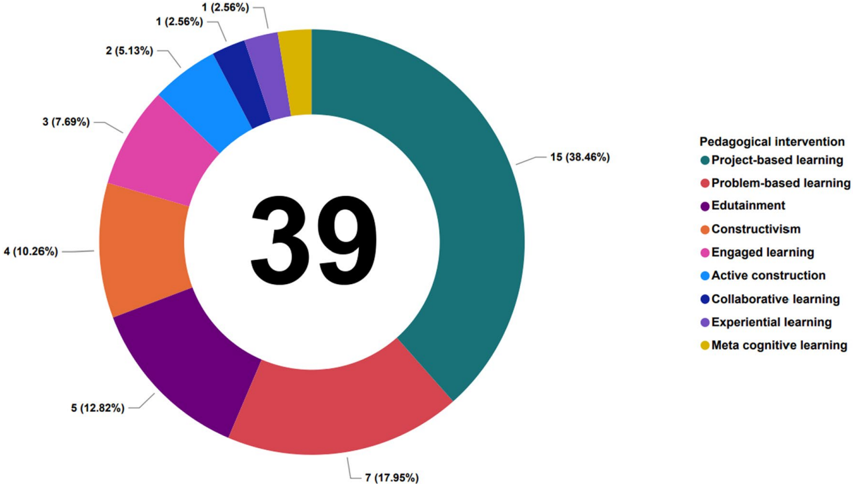
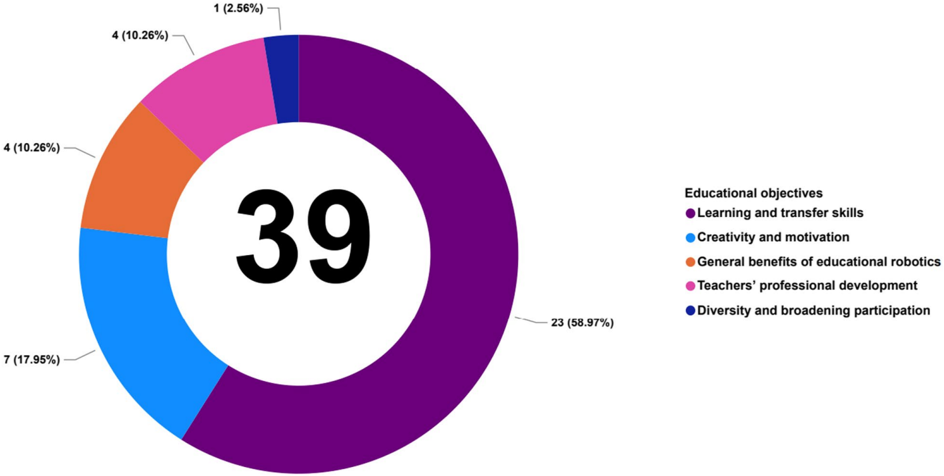
- Project-based learning (PBL) was the most frequently used pedagogical intervention (15/39, 38.46%), and the main educational objective was learning and transfer skills (23/39, 58.97%).
## Methods
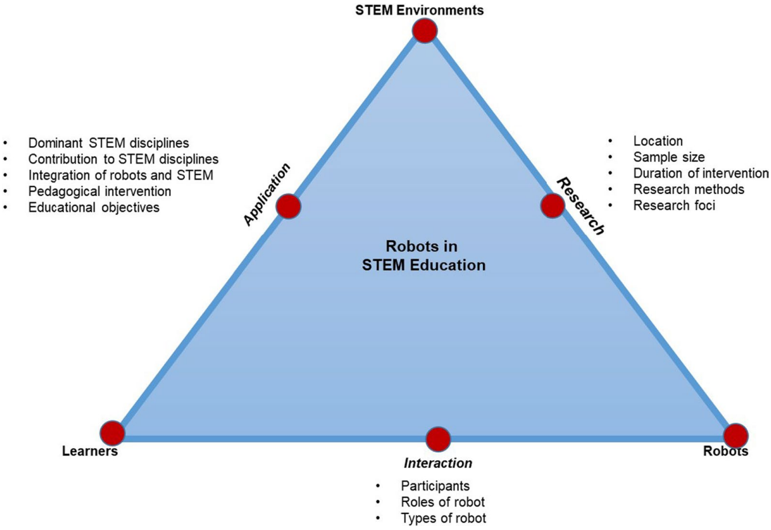
- Systematic review and content analysis guided by Lin and Hwang’s (2019) technology-based learning model, with dimensions covering research, interaction, and application issues.
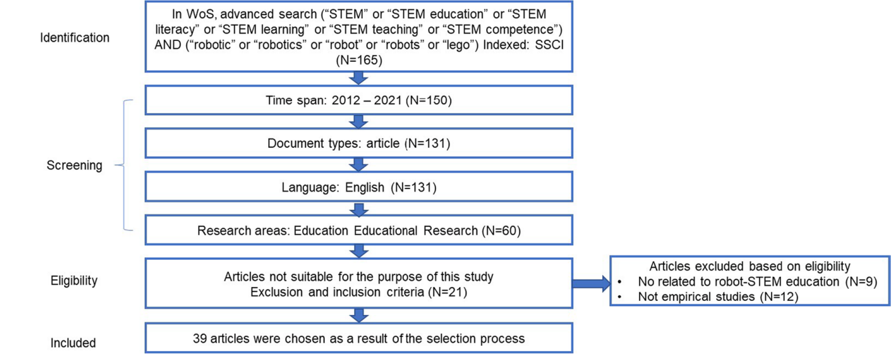
- Literature search was limited to Web of Science; the authors found 165 papers, reduced to 131 after filters (article, English, 2012–2021), then to 60 in education/educational research, and finally 39 after screening; Cohen’s kappa = 0.8 for coding agreement.
- The review synthesized studies across location, sample size, duration, research methods, research foci, participants, robot roles/types, STEM disciplines, integration forms, pedagogical interventions, and educational objectives.
## Limitations
- The paper states it was limited to journals indexed in Web of Science and SSCI articles related to R-STEM education; it suggests that other databases such as SCOPUS and SCI should be considered.
- The number of studies analyzed was relatively small (39), and the authors recommend extending the review to include publications from coming years.
- Evident from the text: the review draws only on published English-language article-type papers from 2012–2021, so its scope is restricted to that publication set (this is evident from the methods, not stated as a limitation).
Model-written summary. Check it against the paper before relying on it.
Integrity signals
Registry
Cites
Statistics
Figures
Verification
Claims the paper makes
5 Valid · 2 Not valid · 28 Not checked · 104 Own results and interpretations
The cited sources support only part of this claim — read each source’s verdict below.
In the paper
“This issue has been frequently reported as a barrier to implementing R-STEM in the interdisciplinary subject.”
What the sources say
- Partly supportedcites Margot & Kettler, 2019 matched to “Teachers’ Perception of STEM Integration and Education: A Systematic Literature Review” (2019) sourceExperimental — accuracy not yet measured
The Pedagogical challenges section (p. 11) reports concern that STEM instruction could hinder direct teaching of science, and Curriculum challenges (p. 11) describes barriers to integrating STEM subjects. The review does not report that both science and mathematics are given less weight, or identify that specific issue as a frequently reported barrier to R-STEM. (LLM, conf=0.82)
plainstates a cause- Asserted: passes — The authors put it forward as true.
- Checkable: passes — It can be checked against evidence.
- Load-bearing: unclear — It is unclear whether the paper’s conclusions depend on it.
- Based: passes — The paper gives a reason why it holds.
- Partly supported
A result the paper reports from its own data — it cites no other source for it, so there is none to check. The quote shows it is in the paper.
In the paper
“The review indicated that R-STEM education studies were mostly conducted in the United States and mainly in K-12 schools.”
hedged- Asserted: passes — The authors put it forward as true.
- Checkable: passes — It can be checked against evidence.
- Load-bearing: unclear — It is unclear whether the paper’s conclusions depend on it.
- Based: passes — The paper gives a reason why it holds.
A result the paper reports from its own data — it cites no other source for it, so there is none to check. The quote shows it is in the paper.
In the paper
“LEGO was the most used tool to accomplish the learning objectives.”
plain- Asserted: passes — The authors put it forward as true.
- Checkable: passes — It can be checked against evidence.
- Load-bearing: unclear — It is unclear whether the paper’s conclusions depend on it.
- Based: passes — The paper gives a reason why it holds.
A result the paper reports from its own data — it cites no other source for it, so there is none to check. The quote shows it is in the paper.
In the paper
“Learner and teacher perceptions were the most popular research focus in these studies which applied robots.”
plain- Asserted: passes — The authors put it forward as true.
- Checkable: passes — It can be checked against evidence.
- Load-bearing: passes — The paper’s conclusions depend on it.
- Based: passes — The paper gives a reason why it holds.
A result the paper reports from its own data — it cites no other source for it, so there is none to check. The quote shows it is in the paper.
In the paper
“Moreover, project-based learning (PBL) was the most frequently employed learning strategy in robotics-related STEM research.”
plain- Asserted: passes — The authors put it forward as true.
- Checkable: passes — It can be checked against evidence.
- Load-bearing: passes — The paper’s conclusions depend on it.
- Based: passes — The paper gives a reason why it holds.
70 more claims
Create a free account to see all 139 claims and to verify the 3 references still open.
- It may state two separate claims as one. 18
- Probably not a substantial claim. 47
- Borderline: one of the tests for a substantial claim is unclear. 1
- The quote only partly states this claim. 5
Self-check
Percentages, sums and reported differences re-computed from the paper’s own numbers.
Rated major: it would touch a result — a value a result rests on, reported and recomputed p-values on opposite sides of the significance level, two passages that conflict with no sign which is right, or a cited work retracted before this paper was published.
In the paper
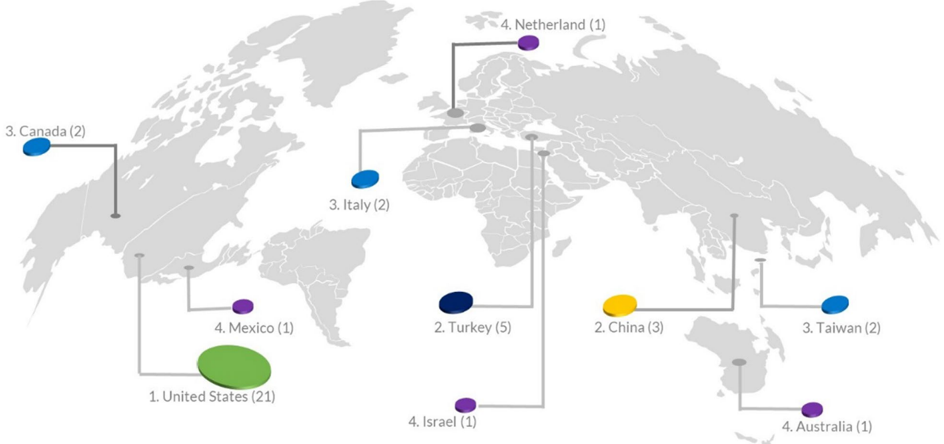
“The geographic distribution of the reviewed studies indicated that more than half of the studies were conducted in the United States (53.8%), while Turkey and China were the location of five and three studies, respectively. Taiwan, Canada, and Italy were indicated to have two studies each. One study each was conducted in Australia, Mexico, and the Netherlands.”
Reported 39 · recomputed 38
Citations
Cites
Preferred Reporting Items for Systematic Reviews and Meta-Analyses: The PRISMA Statement
Moher, D., Liberati, A., Tetzlaff, J., Altman, D. G., & The PRISMA Group (2009) · PLoS Medicine · doi:10.1371/journal.pmed.1000097 · Cited by 64,042 · cited 2×
“, 2022), discussing the adoption of R-STEM education, and the data collection procedures for this study followed the Preferred Reporting Items for Systematic Reviews and Meta-Analyses (PRISMA) guidelines (Moher et al., 2009) as referred to by prior studies (e.”
A Coefficient of Agreement for Nominal Scales
Cohen, J. (1960) · Educational and Psychological Measurement · doi:10.1177/001316446002000104 · Cited by 42,398 · cited 1×
“The coding result had a Kappa coefficient of 0.8 for both coders (Cohen, 1960).”
MethodInfluentialDesigning and Conducting Mixed Methods Research
Robinson, P. (2007) · Australian and New Zealand Journal of Public Health · doi:10.1111/j.1753-6405.2007.00096.x · Cited by 23,258
Designing and Conducting Mixed Methods Research, 3rd ed.
Creswell, J. W. (2018) · Cited by 13,713
Motivating Project-Based Learning: Sustaining the Doing, Supporting the Learning
Blumenfeld, P. C., Soloway, E., Marx, R. W., Krajcik, J. S., Guzdial, M., & Palincsar, A. (1991) · Educational Psychologist · doi:10.1080/00461520.1991.9653139 · Cited by 3,594 · cited 1×
“Blumenfeld et al. (1991) cred-ited PBL with the main purpose of engaging students in investigating learning models.”
BackgroundA conceptual framework for integrated STEM education
Kelley, T. R., & Knowles, J. G. (2016) · International Journal of STEM Education · doi:10.1186/s40594-016-0046-z · Cited by 1,832 · cited 1×
“Consequently, STEM education promotes a bridge between learning in authentic real-life scenarios (Erdoğan et al., 2016; Kelley & Knowles, 2016).”
BackgroundSocial robots for education: a review.
Belpaeme, T., Kennedy, J., Ramachandran, A., Scassellati, B., & Tanaka, F. (2018) · Science Robotics · doi:10.1126/scirobotics.aat5954 · Cited by 1,558 · cited 1×
“…Spolaôr & Benitti, 2017; van den Berghe et al., 2019), the potential value of R-STEM education (Çetin & Demircan, 2020; Conde et al., 2021; Zhang et al., 2021), and the types of robots used in learning practices (Belpaeme et al., 2018; Çetin & Demircan, 2020; Tselegkaridis & Sapounidis, 2021).”
Vision, challenges, roles and research issues of Artificial Intelligence in Education
Hwang, G.-J., Xie, H., Wah, B. W., & Gašević, D. (2020) · Computers and Education: Artificial Intelligence · doi:10.1016/j.caeai.2020.100001 · Cited by 1,435 · cited 1×
“To some extent, artificial intelligence (AI) has driven the use of robotics and tools, such as their application to designing instructional activities (Hwang et al., 2020).”
BackgroundSelf-citationExploring the educational potential of robotics in schools: A systematic review
Benitti, F. B. V. (2012) · Computers & Education · doi:10.1016/j.compedu.2011.10.006 · Cited by 1,200 · cited 3×
“Despite the focus on system development, the help of robotics was identified as increasing the success of STEM learning (Benitti, 2012).”
BackgroundInfluentialMotivating Project-Based Learning: Sustaining the Doing, Supporting the Learning
Blumenfeld, P. C., Soloway, E. M., Marx, R. W., et al. (1991) · Educational Psychologist · doi:10.1207/s15326985ep2603&4_8 · Cited by 1,120
Research works printed but not linked: 6
- Chesloff, J. D. (2013). STEM education must start in early childhood. Education Week, 32 (23), 27-32.
- Creswell, J. W., Plano-Clark, V. L., Gutmann, M. L., & Hanson, W. E. (2003). Advanced mixed methods research designs. Handbook of mixed methods in social and behavioral research. Sage.
- Jou, M., Chuang, C. P., & Wu, Y. S. (2010). Creating interactive web-based environments to scaffold creative reasoning and meaningful learning: From physics to products. Turkish Online Journal of Educational Technology-TOJET, 9(4), 49–57.
- *Li, Y., Huang, Z., Jiang, M., & Chang, T. W. (2016). The effect on pupils' science performance and problem-solving ability through Lego: An engineering design-based modeling approach. Educational Technology and Society, 19 (3), 143-156. https:// doi. org/ 10. 2307/ jeduc techs oci. 19.3. 14 · doi:10.2307/jeductechsoci.19.3.14
- *Ma, H. L., Wang, X. H., Zhao, M., Wang, L., Wang, M. R., & Li, X. J. (2020). Impact of robotic instruction with a novel inquiry framework on primary schools students. International Journal of Engineering Education, 36(5), 1472–1479.
- Moomaw, S. (2012). STEM Begins in the Early Years. School Science and Mathematics, 112(2), 57–58. https://doi.org/10.1111/j.1949-8594.2011.00119.x · DOI
Cited by
Items 101–142 of 142
Enhancing Data Literacy for Senior Engineering Students Through Educational Robotics
Jerez, J. B. B., Bastidas-Flores, V., Aymara-Amagua, J., et al. (2025) · Lecture notes in networks and systems · doi:10.1007/978-3-031-87704-9_19
Exploration of the Application of Educational Robots in Civil Aviation Flight Specialty
Zou, Y., & Wei, Z. (2024) · International Conference on Big Data, Artificial Intelligence and Risk Management (ICBAR) · doi:10.1145/3718751.3718861
“Educational robots have significant advantages in the application of flight principle teaching [ 2 ] .”
Rodriguez, R. A. P., Jaime-Carriel, J. R., Pintado-Cuji, M., & Llerena-Izquierdo, J. (2025) · Lecture notes in networks and systems · doi:10.1007/978-3-031-87065-1_1 · Cited by 1
Effective Strategies for Teaching STEM
Charles, T., & Alkhatib, M. (2025) · IGI Global eBooks · doi:10.4018/979-8-3693-9370-3.ch010 · Cited by 2
Scrutinizing the role of advanced robotics in educational processes: A qualitative study
Kalbani, M. A. (2025) · Research and Practice in Technology Enhanced Learning · doi:10.58459/rptel.2026.21009
“This personalization is especially advantageous in classrooms with a wide range of capacities, as it guarantees that each student gets the fitting level of challenge and bolster (Darmawansah et al., 2023).”
VEXCODE VR: A Virtual Tool as Support in the Teaching of Analytical Geometry
Cardona-Reyes, H., Parra-González, E. F., & Alfaro, R. M. (2025) · CLEI electronic journal · doi:10.19153/cleiej.28.2.4 · Cited by 3
Students’ Perspectives on the Pros and Cons of Current Instructional and Learning Methods
Abdulrahman, A. K. B., & Alturki, H. S. (2025) · Springer eBooks · doi:10.1007/978-981-96-5670-7_15
Exploring the Far Transfer Effect and Self-efficacy of Hugging Strategy in STEM Education
Cheng, Y., Lin, C.-W., & Huang, Y. (2025) · Lecture notes in computer science · doi:10.1007/978-3-031-98197-5_28
Şahin, G., & Bulut, S. (2025) · International Journal of Technology and Design Education · doi:10.1007/s10798-025-10026-x · Cited by 2
“In Darmawansah et al.‘s (2023) studies, STEM education that integrates robotics is highlighted, and the use of these two elements together in skill acquisition is often included in the identified educational goals.”
Ahmad, A., Nasir, N. R. M., & Yusof, A. (2025) · IEEE Symposium on Computers & Informatics (ISCI) · doi:10.1109/isci65687.2025.11167403
“Moreover, robotics has been highlighted as a cognitive bridge between theory and practice, enabling students to test hypotheses, observe behaviours, and iteratively refine their logic within a safe, interactive, and playful environment [17].”
Arıkan, K. (2025) · International Journal of Science Education · doi:10.1080/09500693.2025.2567512 · Cited by 1
Benjamin, N., Belle, J.-P. V., & Turpin, M. (2025) · Lecture notes in networks and systems · doi:10.1007/978-3-032-00701-8_3
Exploring Graduate Student Views on Robotics Policy Relevant Information
Balali, S., Parham-Mocello, J., Jones, M. D., Steel, B. S., & Billah, W. (2025) · IEEE Frontiers in Education Conference (FIE) · doi:10.1109/fie63693.2025.11328351
Integrating Robotics into University Curriculum: Driving the Future of Robotics Education
Wendt, T. M., Waltersbacher, R., Stiglmeier, L., & Hangst, N. (2025) · International Symposium on Accreditation of Engineering and Computing Education (ICACIT) · doi:10.1109/icacit66767.2025.11369626
“Students should be made aware of the objectives of the teaching concept in order to enhance the theoretical learning experience and carry out the practical application using the robot [5].”
Open-Source Educational Robot for Resource-Constrained Environments
Favaretto, D., de Assis, V., Martinelli, D., Oliveira, A., & Kalempa, V. C. (2026) · Lecture notes in electrical engineering · doi:10.1007/978-3-032-17899-2_10
Modelo didáctico basado en robótica educativa con LEGO EV3 para el aprendizaje en ingeniería
Castro-Vargas, C., & CABANA-CACERES, M. R. (2026) · ESPACIOS · doi:10.48082/espacios-a26v47n01i19
Kemp, A. C., & Havenga, M. (2026) · NWU self-directed learning series · doi:10.4102/aosis.2025.bk546.06
The Impact of AI- STEM Based Stories in Reading Comprehension and Motivation
Bulut, A., & Aktepe, V. (2026) · The Journal of Educational Research · doi:10.1080/00220671.2026.2633434
“The integration of STEM education into learning scenarios that are linked to real-life experiences has been shown to support students’ critical thinking and collaboration skills (Darmawansah et al., 2023).”
InfluentialUnlocking student creativity through a robotics-enhanced story creation summer camp: A pilot study
Cai, Q. V., & Ge, P. (2026) · International Journal of Technology and Design Education · doi:10.1007/s10798-026-10069-8
PBL-CDIO: Design and Implementation of a Zerocarbon Robot Car for Stem Education
Boonsongsrikul, A., & Wattanamongkhol, N. (2025) · doi:10.1109/icest65883.2025.11428537
“Darmawansah et al. [6] mentioned the reasons why robots are popular as STEM teaching materials, indicating that robots help stimulate motivation and develop important skills in students, such as computational thinking, creativity, collaboration, and problem-solving, which are all essential skills…”
Bafail, O. A., & Miski, A. (2026) · Journal of Industrial and Management Optimization · doi:10.3934/jimo.2026073
Xmobot: Enabling Rapid Build-and-Train Robotics Education With Agentic AI
Wang, Y., Wang, M., Xu, D., Lee, C.-K. J., & Xie, Y. (2026) · IEEE Transactions on Learning Technologies · doi:10.1109/tlt.2026.3681123
Robotics-based stem activities: effects on achievement, interest, and stem teacher identity
Eren, E., & Dökme, Ï. (2026) · Research in Science & Technological Education · doi:10.1080/02635143.2026.2656732
Design and Validation of EASYbot: An Open, Scalable and Modular Platform for Educational Robotics
Ruiz-de-Garibay, J., Garaizar, P., & Yesa, S. R. (2026) · Electronics · doi:10.3390/electronics15081650
Mhlongo, T. (2026) · Research Square · doi:10.21203/rs.3.rs-9419614/v1
Mhlongo, T. (2026) · Research Square · doi:10.21203/rs.3.rs-9419544/v1
DCIRV Based on AI For Ed-comm In Asia and Europe
Darmawan, D., Gardère, É., Surahman, E., Kustandi, C., Mukhamedov, G. I., Khimmataliev, D. O., Eshbekovich, U. J., & Ergashev, R. R. (2025) · International Conference on Information Education and Artificial Intelligence (ICIEAI) · doi:10.1145/3799457.3799603
Hybrid Hands-On and Simulation-Based Learning to Teach Velocity and Acceleration in Year 9 STEMPreprint
Lam, B., & Collins, J. (2026) · Research Square · doi:10.21203/rs.3.rs-9668054/v1
Trends and Methodological Features of Engineering Design-Based Science Education Research in Turkey
Gök, T. (2026) · Bartın University Journal of Faculty of Education · doi:10.14686/buefad.1595467
Developing talented students in robotics, AI, and coding with Work-Integrated Learning
Malakul, S., Sangkawetai, C., Joochim, O., Tirasuntarakul, N., Kaewkamnerd, S., & Sereevoravitgul, T. (2026) · Computer Science Education · doi:10.1080/08993408.2026.2694764
Educational Robotics for Emotional Health and School in the Hospital
Wei, H., Chew, E., Chidgey, B., Yang, J., Jinyu, L., & Kamar, A. A. (2026) · International Conference on Information Technology Based Higher Education and Training (ITHET) · doi:10.1109/ithet69978.2026.11585064
“In STEM education and language learning, educational robotics is helpful and accepted by many researchers, students and teachers [5]-[7].”
Belščak, J. (2026) · International Convention on Information and Communication Technology, Electronics and Microelectronics · doi:10.1109/mipro70003.2026.11591964
Li, C.-H., Chen, P., & Hsia, L. (2026) · Journal of Computers in Education · doi:10.1007/s40692-026-00402-4
Silva, M. G. V., Garzón, W. A. O., & Parga, M. A. R. (2026) · Education + Training · doi:10.1108/et-11-2025-1007
AI-Assisted STEM Curriculum for Children With ASD
Akula, V., Rajoli, N. R., Nallapareddy, S. R., & Marghitu, D. (2026) · Advances in computational intelligence and robotics book series · doi:10.4018/979-8-3373-7724-7.ch001
Luo, J., Li, S., Chiu, T. K. F., & Xiaoming, C. (2026) · Interactive Learning Environments · doi:10.1080/10494820.2026.2685803
Zidani, Y., Zahrou, Y., Nissabouri, S., ECH-CHHIBAT, M. E. H., & Mansouri, K. (2026) · Frontiers in Education · doi:10.3389/feduc.2026.1860922
Building the Future: Educational Framework for Robotics in Industrialized Construction
Foskett, F., Alwisy, A., Xie, C., et al. (2026) · ASCE Construction Research Congress (CRC) · doi:10.1061/9780784486993.066
Pekarčíková, M., Trebuňa, P., Kliment, M., & Kronová, J. (2026) · Electronics · doi:10.3390/electronics15173872
Chen, P., Lee, H., Huang, Y., & Wu, T. (2026) · Journal of Educational Computing Research · doi:10.1177/07356331261486324
Kanaki, K., Kalogiannakis, M., & Zaranis, N. (2026) · Computers · doi:10.3390/computers15090613
Jamaludin, K. A., Ebrahim, M. I., Nasri, N., Rashid, S. M. M., Kamaruzaman, F. M., Nasri, N. M., Hashim, H. B., & Alias, N. (2026) · Discover Education · doi:10.1007/s44217-026-02250-x
“Consequently, findings presented as evidence of STEM literacy may represent substantially different constructs, limiting meaningful interpretation and comparison across studies [14, 15].”
Metadata
- Authors
- Darmawansah, D., Hwang, G.-J., Chen, M.-R. A., & Liang, J.-C.
- Affiliations
- National Taiwan University of Science and Technology (TW)
- Soochow University (TW)
- Corresponding author
- Chen, Mei-Rong Alice
- Venue
- International Journal of STEM Education
- Published
- 2023-02-10
- Volume
- 10
- Issue
- 1
- ISSN
- 2196-7822 (ISSN-L)
- OpenAlex
- W4319985634
- Semantic Scholar
- 44b3e157294a9c75a620b8ba6c22d92671886cfe
- Cited by
- 147
- References
- 92
- Citations by year
- 2026: 36 · 2025: 51 · 2024: 45 · 2023: 15
- FWCI
- 3.08
- Type
- journal article
- Language
- en
- Open access
- gold
- doi.org
- Licence
- cc-by
- creativecommons.org/licenses/by/4.0 (tdm)
- creativecommons.org/licenses/by/4.0 (vor)
- Locations
- International Journal of STEM Education (publishedVersion, cc-by)
- DOAJ (DOAJ: Directory of Open Access Journals) (submittedVersion, cc-by-sa)
- Funders
- Ministry of Science and Technology, Taiwan (MOST-109-2511-H-011-002-MY3, MOST-108-2511-H-011-005-MY3)
- National Science and Technology Council (NSTC 111-2410-H-031-092-MY2)
- Soochow University (111160605-0014)
- Topics
- Social Sciences › Education › Educational Robotics and Engineering
- Physical Sciences › Computer Science › Computer Science Applications › Teaching and Learning Programming
- Physical Sciences › Engineering › Mechanical Engineering › Mechatronics Education and Applications
- Keywords
- educational robotics, research trends, LEGO robots, programming education, project-based learning, transferable skills, learner perceptions, teacher perceptions, K-12 education, interdisciplinary problem solving
About these checks
Registry, retraction, Cites and statistics results are computed, not judged, with one exception: a printed reference that no index lists is read once by a model before it counts as a citation error. Claims are extracted by a model and kept only when their quote appears verbatim in the text; each cited source is then checked, with a model’s help, for whether it says what the claim relies on. Those verdicts can be wrong — read the claim’s quote and the cited source before relying on one.
The claim verdicts this report counts are experimental: their accuracy is not yet measured.
A language model drew the claims from the paper on 2026-10-10, under version 3 of the claim definition (model deepseek-v4.1-flash, prompt extract-v3).
A second model labelled each claim on 2026-10-10 (model jev-1.13-20260917, definition revision gold-guideline-v0.2).
Cited sources are checked with a language model’s help (gpt-6-sol).
Statistics and arithmetic are recomputed, not judged.
Confidence bands are shown only for fields calibrated on our annotated test set. None is calibrated yet, so no band is shown.
What counts as a claim ›How we measure confidence ›How we check this ›
Are you an author, or do you see a problem with this page? Request a review
Data sources
Bibliographic data: Semantic Scholar, OpenAlex, Crossref.
Contains information from the Semantic Scholar Academic Graph Datasets, made available under the ODC Attribution License (ODC-BY 1.0).
Semantic Scholar’s data is described in: Kinney, R., et al. (2023). The Semantic Scholar Open Data Platform. arXiv:2301.10140.
