

Trends and research foci of robotics-based STEM education: a systematic review from diverse angles based on the technology-based learning model
Open accessThe DOI matches its Crossref record; 92 of the 93 references it cites were found in a registry or an index, and 1 are not checked yet; 5 of the 35 sources its claims cite were checked for support.
Abstract
Abstract Fostering students’ competence in applying interdisciplinary knowledge to solve problems has been recognized as an important and challenging issue globally. This is why STEM (Science, Technology, Engineering, Mathematics) education has been emphasized at all levels in schools. Meanwhile, the use of robotics has played an important role in STEM learning design. The purpose of this study was to fill a gap in the current review of research on Robotics-based STEM (R-STEM) education by systematically reviewing existing research in this area. This systematic review examined the role of robotics and research trends in STEM education. A total of 39 articles published between 2012 and 2021 were analyzed. The review indicated that R-STEM education studies were mostly conducted in the United States and mainly in K-12 schools. Learner and teacher perceptions were the most popular research focus in these studies which applied robots. LEGO was the most used tool to accomplish the learning objectives. In terms of application, Technology (programming) was the predominant robotics-based STEM discipline in the R-STEM studies. Moreover, project-based learning (PBL) was the most frequently employed learning strategy in robotics-related STEM research. In addition, STEM learning and transferable skills were the most popular educational goals when applying robotics. Based on the findings, several implications and recommendations to researchers and practitioners are proposed.
Verified 2026-11-25 · 1 reference not checked yet
Overview
CoChat Summary
## TL;DR
This systematic review analyzed 39 R-STEM articles published from 2012 to 2021 using a technology-based learning model and content analysis. It found that U.S.-based K-12 studies dominated, with learner/teacher perceptions, LEGO, technology/programming, and project-based learning appearing most often.
## Key findings
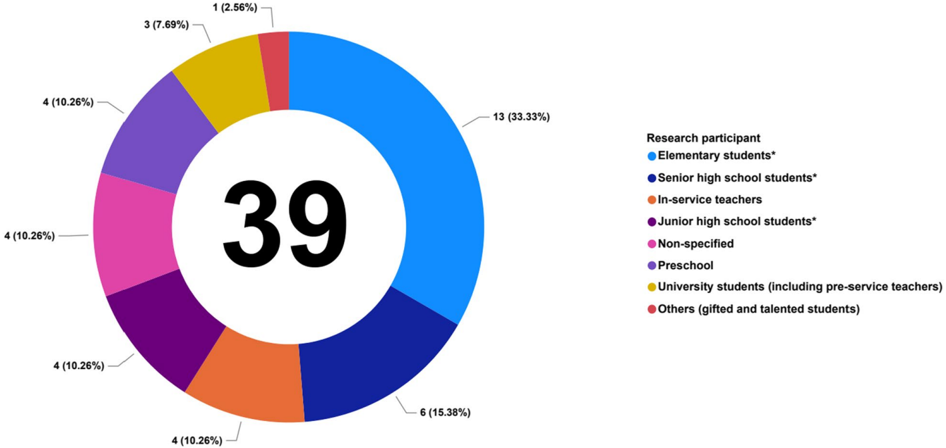
- The review included 39 articles; 53.8% were conducted in the United States, and the studies were mainly in K-12 schools.
- The most common research foci were learner/teacher perceptions (23/39, 58.97%) and, for cognition, learning performance (15/39).
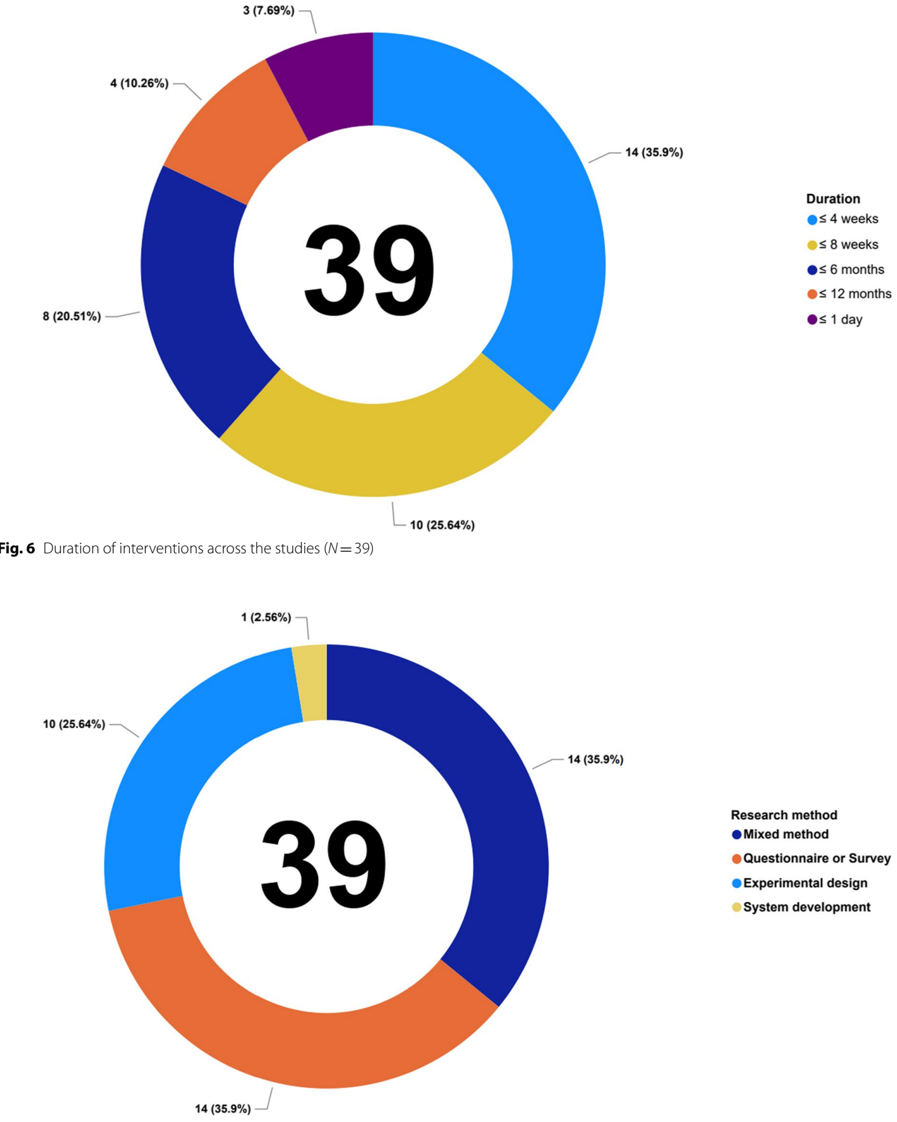
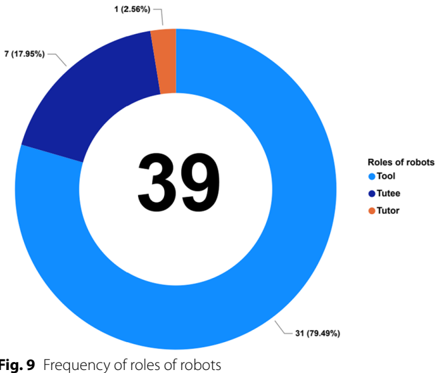
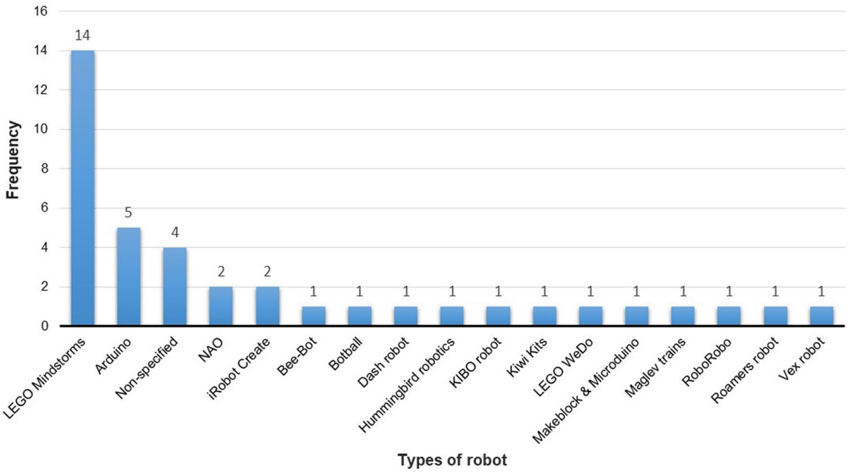
- LEGO MINDSTORMS was the most used robot/tool (14/39, 35.89%), while robots were most often used as tools (31/39, 79.49%); the tutor role appeared only 1/39 (2.56%).
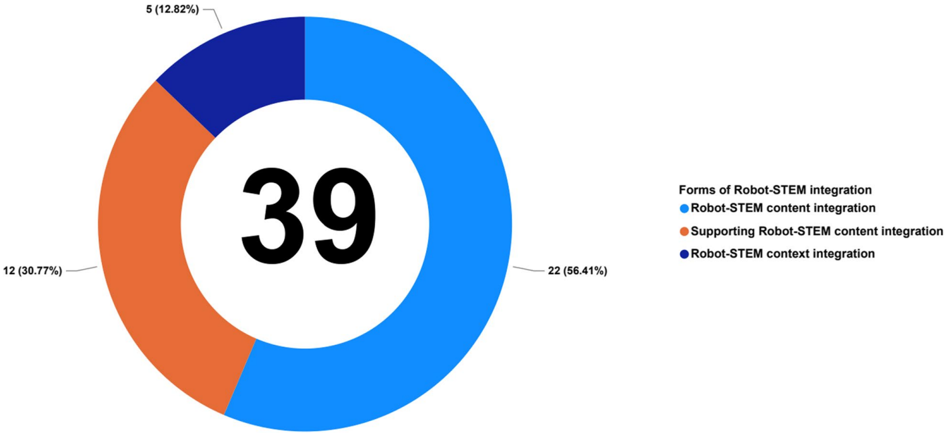
- Technology/programming was the dominant STEM discipline, with programming appearing in 25/36 (64.1%) studies; robot-STEM content integration was the most common integration form (22/39, 56.41%).
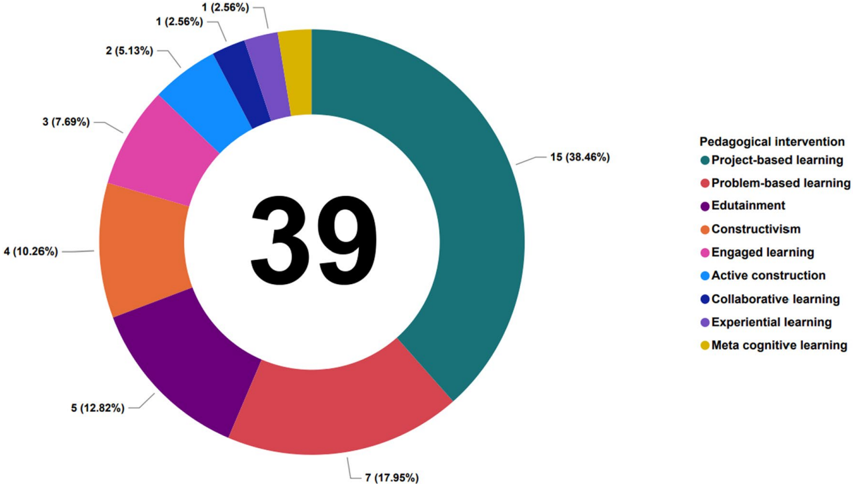
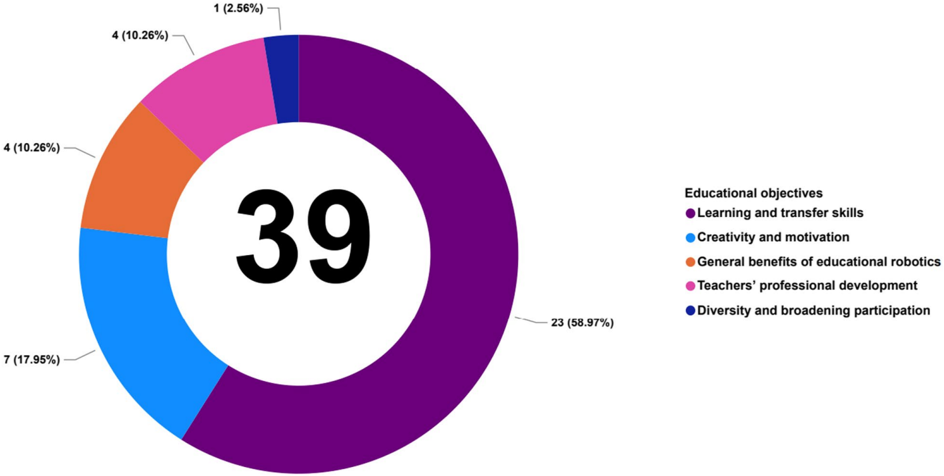
- Project-based learning (PBL) was the most frequently used pedagogical intervention (15/39, 38.46%), and the main educational objective was learning and transfer skills (23/39, 58.97%).
## Methods
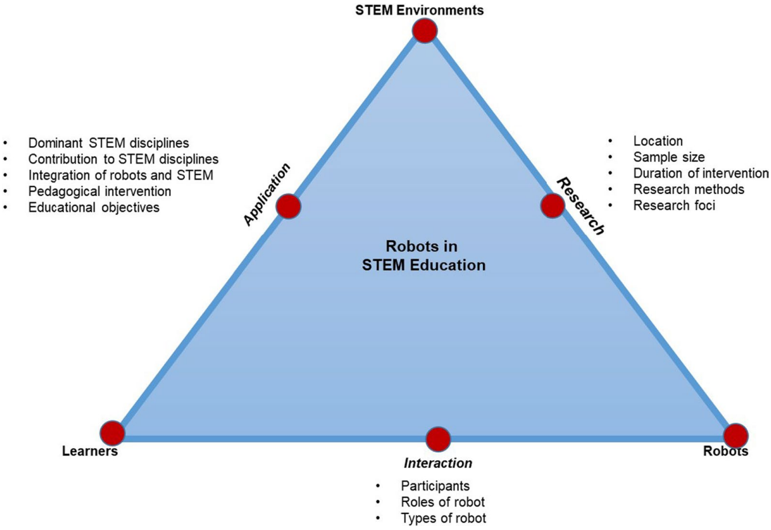
- Systematic review and content analysis guided by Lin and Hwang’s (2019) technology-based learning model, with dimensions covering research, interaction, and application issues.
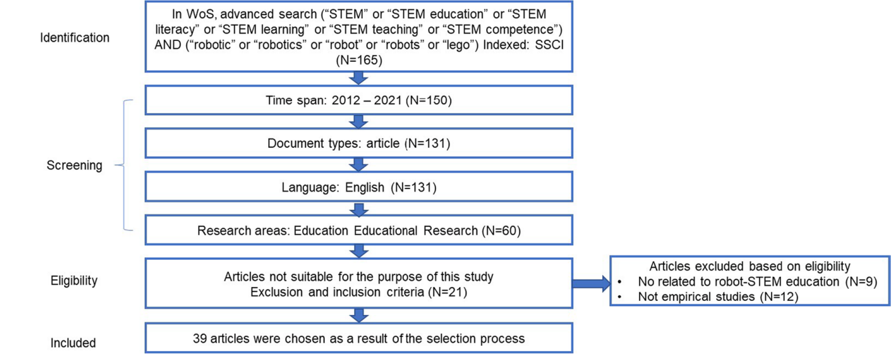
- Literature search was limited to Web of Science; the authors found 165 papers, reduced to 131 after filters (article, English, 2012–2021), then to 60 in education/educational research, and finally 39 after screening; Cohen’s kappa = 0.8 for coding agreement.
- The review synthesized studies across location, sample size, duration, research methods, research foci, participants, robot roles/types, STEM disciplines, integration forms, pedagogical interventions, and educational objectives.
## Limitations
- The paper states it was limited to journals indexed in Web of Science and SSCI articles related to R-STEM education; it suggests that other databases such as SCOPUS and SCI should be considered.
- The number of studies analyzed was relatively small (39), and the authors recommend extending the review to include publications from coming years.
- Evident from the text: the review draws only on published English-language article-type papers from 2012–2021, so its scope is restricted to that publication set (this is evident from the methods, not stated as a limitation).
Model-written summary. Check it against the paper before relying on it.
Integrity signals
Registry
Cites
Statistics
Figures
Verification
Claims the paper makes
5 Valid · 2 Not valid · 28 Not checked · 104 Own results and interpretations
The cited sources support only part of this claim — read each source’s verdict below.
In the paper
“This issue has been frequently reported as a barrier to implementing R-STEM in the interdisciplinary subject.”
What the sources say
- Partly supportedcites Margot & Kettler, 2019 matched to “Teachers’ Perception of STEM Integration and Education: A Systematic Literature Review” (2019) sourceExperimental — accuracy not yet measured
The Pedagogical challenges section (p. 11) reports concern that STEM instruction could hinder direct teaching of science, and Curriculum challenges (p. 11) describes barriers to integrating STEM subjects. The review does not report that both science and mathematics are given less weight, or identify that specific issue as a frequently reported barrier to R-STEM. (LLM, conf=0.82)
plainstates a cause- Asserted: passes — The authors put it forward as true.
- Checkable: passes — It can be checked against evidence.
- Load-bearing: unclear — It is unclear whether the paper’s conclusions depend on it.
- Based: passes — The paper gives a reason why it holds.
- Partly supported
A result the paper reports from its own data — it cites no other source for it, so there is none to check. The quote shows it is in the paper.
In the paper
“The review indicated that R-STEM education studies were mostly conducted in the United States and mainly in K-12 schools.”
hedged- Asserted: passes — The authors put it forward as true.
- Checkable: passes — It can be checked against evidence.
- Load-bearing: unclear — It is unclear whether the paper’s conclusions depend on it.
- Based: passes — The paper gives a reason why it holds.
A result the paper reports from its own data — it cites no other source for it, so there is none to check. The quote shows it is in the paper.
In the paper
“LEGO was the most used tool to accomplish the learning objectives.”
plain- Asserted: passes — The authors put it forward as true.
- Checkable: passes — It can be checked against evidence.
- Load-bearing: unclear — It is unclear whether the paper’s conclusions depend on it.
- Based: passes — The paper gives a reason why it holds.
A result the paper reports from its own data — it cites no other source for it, so there is none to check. The quote shows it is in the paper.
In the paper
“Learner and teacher perceptions were the most popular research focus in these studies which applied robots.”
plain- Asserted: passes — The authors put it forward as true.
- Checkable: passes — It can be checked against evidence.
- Load-bearing: passes — The paper’s conclusions depend on it.
- Based: passes — The paper gives a reason why it holds.
A result the paper reports from its own data — it cites no other source for it, so there is none to check. The quote shows it is in the paper.
In the paper
“Moreover, project-based learning (PBL) was the most frequently employed learning strategy in robotics-related STEM research.”
plain- Asserted: passes — The authors put it forward as true.
- Checkable: passes — It can be checked against evidence.
- Load-bearing: passes — The paper’s conclusions depend on it.
- Based: passes — The paper gives a reason why it holds.
70 more claims
Create a free account to see all 139 claims and to verify the 3 references still open.
- It may state two separate claims as one. 18
- Probably not a substantial claim. 47
- Borderline: one of the tests for a substantial claim is unclear. 1
- The quote only partly states this claim. 5
Self-check
Percentages, sums and reported differences re-computed from the paper’s own numbers.
Rated major: it would touch a result — a value a result rests on, reported and recomputed p-values on opposite sides of the significance level, two passages that conflict with no sign which is right, or a cited work retracted before this paper was published.
In the paper
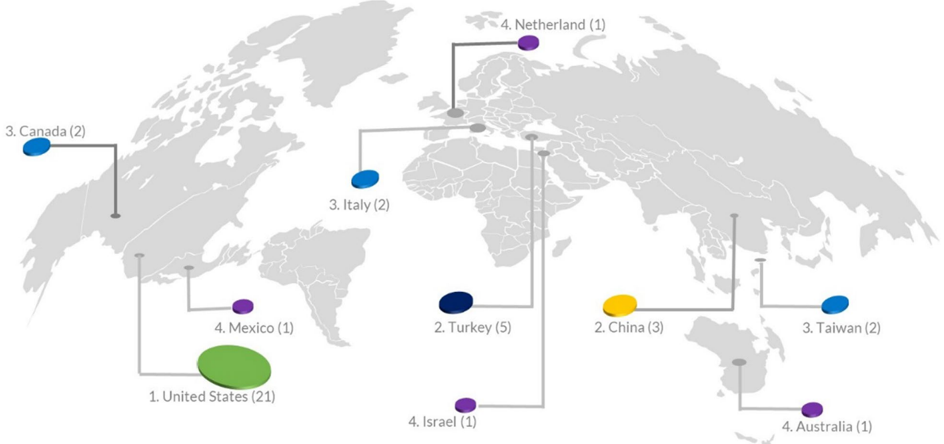
“The geographic distribution of the reviewed studies indicated that more than half of the studies were conducted in the United States (53.8%), while Turkey and China were the location of five and three studies, respectively. Taiwan, Canada, and Italy were indicated to have two studies each. One study each was conducted in Australia, Mexico, and the Netherlands.”
Reported 39 · recomputed 38
Citations
Cites
Preferred Reporting Items for Systematic Reviews and Meta-Analyses: The PRISMA Statement
Moher, D., Liberati, A., Tetzlaff, J., Altman, D. G., & The PRISMA Group (2009) · PLoS Medicine · doi:10.1371/journal.pmed.1000097 · Cited by 64,042 · cited 2×
“, 2022), discussing the adoption of R-STEM education, and the data collection procedures for this study followed the Preferred Reporting Items for Systematic Reviews and Meta-Analyses (PRISMA) guidelines (Moher et al., 2009) as referred to by prior studies (e.”
A Coefficient of Agreement for Nominal Scales
Cohen, J. (1960) · Educational and Psychological Measurement · doi:10.1177/001316446002000104 · Cited by 42,398 · cited 1×
“The coding result had a Kappa coefficient of 0.8 for both coders (Cohen, 1960).”
MethodInfluentialDesigning and Conducting Mixed Methods Research
Robinson, P. (2007) · Australian and New Zealand Journal of Public Health · doi:10.1111/j.1753-6405.2007.00096.x · Cited by 23,258
Designing and Conducting Mixed Methods Research, 3rd ed.
Creswell, J. W. (2018) · Cited by 13,713
Motivating Project-Based Learning: Sustaining the Doing, Supporting the Learning
Blumenfeld, P. C., Soloway, E., Marx, R. W., Krajcik, J. S., Guzdial, M., & Palincsar, A. (1991) · Educational Psychologist · doi:10.1080/00461520.1991.9653139 · Cited by 3,594 · cited 1×
“Blumenfeld et al. (1991) cred-ited PBL with the main purpose of engaging students in investigating learning models.”
BackgroundA conceptual framework for integrated STEM education
Kelley, T. R., & Knowles, J. G. (2016) · International Journal of STEM Education · doi:10.1186/s40594-016-0046-z · Cited by 1,832 · cited 1×
“Consequently, STEM education promotes a bridge between learning in authentic real-life scenarios (Erdoğan et al., 2016; Kelley & Knowles, 2016).”
BackgroundSocial robots for education: a review.
Belpaeme, T., Kennedy, J., Ramachandran, A., Scassellati, B., & Tanaka, F. (2018) · Science Robotics · doi:10.1126/scirobotics.aat5954 · Cited by 1,558 · cited 1×
“…Spolaôr & Benitti, 2017; van den Berghe et al., 2019), the potential value of R-STEM education (Çetin & Demircan, 2020; Conde et al., 2021; Zhang et al., 2021), and the types of robots used in learning practices (Belpaeme et al., 2018; Çetin & Demircan, 2020; Tselegkaridis & Sapounidis, 2021).”
Vision, challenges, roles and research issues of Artificial Intelligence in Education
Hwang, G.-J., Xie, H., Wah, B. W., & Gašević, D. (2020) · Computers and Education: Artificial Intelligence · doi:10.1016/j.caeai.2020.100001 · Cited by 1,435 · cited 1×
“To some extent, artificial intelligence (AI) has driven the use of robotics and tools, such as their application to designing instructional activities (Hwang et al., 2020).”
BackgroundSelf-citationExploring the educational potential of robotics in schools: A systematic review
Benitti, F. B. V. (2012) · Computers & Education · doi:10.1016/j.compedu.2011.10.006 · Cited by 1,200 · cited 3×
“Despite the focus on system development, the help of robotics was identified as increasing the success of STEM learning (Benitti, 2012).”
BackgroundInfluentialMotivating Project-Based Learning: Sustaining the Doing, Supporting the Learning
Blumenfeld, P. C., Soloway, E. M., Marx, R. W., et al. (1991) · Educational Psychologist · doi:10.1207/s15326985ep2603&4_8 · Cited by 1,120
Teachers’ Perception of STEM Integration and Education: A Systematic Literature Review
Margot, K. C., & Kettler, T. (2019) · International Journal of STEM Education · doi:10.1186/s40594-018-0151-2 · Cited by 992 · cited 1×
“Some reasons include difficulties in pedagogy and classroom roles, lack of curriculum integration, and a limited opportunity to embody one learning subject into others (Margot & Kettler, 2019).”
BackgroundEducational research: Quantitative and qualitative approaches.
Johnson, B., & Christensen, L. B. (2000) · Allyn and Bacon eBooks · Cited by 811
Hwang, G., & Tsai, C. (2011) · British Journal of Educational Technology · doi:10.1111/j.1467-8535.2011.01183.x · Cited by 613 · cited 2×
“The search was then restricted to 2012–2021 as suggested by Hwang and Tsai (2011).”
BackgroundMethodSelf-citationThe Computer in the School: Tutor, Tool, Tutee
(1981) · Mathematics and Computers in Simulation · doi:10.1016/0378-4754(81)90040-9 · Cited by 597
What are we talking about when we talk about STEM education? A review of literature
Martín‐Páez, T., Aguilera, D., Perales‐Palacios, F. J., & Vílchez‐González, J. M. (2019) · Science Education · doi:10.1002/sce.21522 · Cited by 566 · cited 2×
“38 McDonald and Howell (2012) Elementary school students Tool LEGO WeDo Technology Programming, and students and construction Content inte‐ gration Project‐based learning Learning and transfer skills”
BackgroundSullivan, A., & Bers, M. U. (2016) · International Journal of Technology and Design Education · doi:10.1007/s10798-015-9304-5 · Cited by 455
A Systematic Review of Studies on Educational Robotics
Anwar, S., Bascou, N. A., Menekse, M., & Kardgar, A. (2019) · Journal of Pre-College Engineering Education Research (J-PEER) · doi:10.7771/2157-9288.1223 · Cited by 419
Social Robots for Language Learning: A Review
van den Berghe, R., Verhagen, J., Oudgenoeg-Paz, O., van der Ven, S., & Leseman, P. (2019) · Review of Educational Research · doi:10.3102/0034654318821286 · Cited by 365 · cited 1×
“…from several research foci such as the specific robot users (Atman Uslu et al., 2022; Benitti, 2012; Jung & Won, 2018; Spolaôr & Benitti, 2017; van den Berghe et al., 2019), the potential value of R-STEM education (Çetin & Demircan, 2020; Conde et al., 2021; Zhang et al., 2021), and the types…”
BackgroundKim, C., Kim, D., Yuan, J., Hill, R. B., Doshi, P., & Thai, C. N. (2015) · Computers & Education · doi:10.1016/j.compedu.2015.08.005 · Cited by 344 · cited 1×
“…teachers could examine and identify distinctive instructional approaches with robotics work (Bernstein et al., 2022), design meaningful learning instruction (Ryan et al., 2017) and lesson materials (Kim et al., 2015), and develop more robust cultural responsive self-efficacy (Leonard et al., 2018).”
BackgroundFu, Q.-K., & Hwang, G.-J. (2018) · Computers & Education · doi:10.1016/j.compedu.2018.01.004 · Cited by 324 · cited 1×
“Considering publication quality, previous studies (Fu & Hwang, 2018; Martín-Páez et al., 2019) suggested using Boolean expressions to search Web of Science databases.”
MethodSelf-citation(2008) · Cited by 306
Systematic Review of Research Trends in Robotics Education for Young Children
Jung, S., & Won, E.-S. (2018) · Sustainability · doi:10.3390/su10040905 · Cited by 288 · cited 3×
“Along the same lines, Jung and Won (2018) also reviewed theoretical approaches to Robotics education in 47 studies from 2006 to 2017.”
BackgroundInfluentialLeonard, J., Buss, A., Gamboa, R., Mitchell, M., Fashola, O. S., Hubert, T., & Almughyirah, S. (2016) · Journal of Science Education and Technology · doi:10.1007/s10956-016-9628-2 · Cited by 275
Jaipal-Jamani, K., & Angeli, C. (2017) · Journal of Science Education and Technology · doi:10.1007/s10956-016-9663-z · Cited by 274
Multiple Perspectives on Engaging Future Engineers
Adams, R., Evangelou, D., English, L., De Figueiredo, A. D., Mousoulides, N., Pawley, A. L., Schiefellite, C., Stevens, R., Svinicki, M., Trenor, J. M., et al. (2011) · Journal of Engineering Education · doi:10.1002/j.2168-9830.2011.tb00004.x · Cited by 242 · cited 1×
“Similarly, recent studies have reported that the use of robots in school settings has an impact on student curiosity (Adams et al., 2011), arts and craftwork (Sullivan & Bers, 2016), and logic (Bers, 2008).”
BackgroundBryan, L. A., Moore, T. J., Johnson, C. C., & Roehrig, G. H. (2015) · STEM Road Map · doi:10.4324/9781315753157-3 · Cited by 233 · cited 2×
“Bryan et. al.”
BackgroundEducational Robotics: Platforms, Competitions and Expected Learning Outcomes
Evripidou, S., Georgiou, K., Doitsidis, L., Amanatiadis, A. A., Zinonos, Z., & Chatzichristofis, S. A. (2020) · IEEE Access · doi:10.1109/access.2020.3042555 · Cited by 192 · cited 1×
“Learner interest can elicit the development of various skills such as computational thinking, creativity and motivation, collaboration and cooperation, problem-solving, and other higher-order thinking skills (Evripidou et al., 2020).”
BackgroundBarak, M., & Assal, M. (2018) · International Journal of Technology and Design Education · doi:10.1007/s10798-016-9385-9 · Cited by 190
Examining young children’s perception toward augmented reality-infused dramatic play
Han, J., Jo, M., Hyun, E.-J., & So, H. (2015) · Educational Technology Research and Development · doi:10.1007/s11423-015-9374-9 · Cited by 185 · cited 1×
“Researchers may also compare the robotics-based approach with other technology-based approaches (e.g., Han et al., 2015; Hsiao et al., 2015) in supporting STEM learning.”
ResultA Systematic Review on Exploring the Potential of Educational Robotics in Mathematics Education
Zhong, B., & Xia, L. (2020) · International Journal of Science and Mathematics Education · doi:10.1007/s10763-018-09939-y · Cited by 183
Comparing Robot Embodiments in a Guided Discovery Learning Interaction with Children
Kennedy, J., Baxter, P., & Belpaeme, T. (2015) · International Journal of Social Robotics · doi:10.1007/s12369-014-0277-4 · Cited by 175 · cited 1×
“In response to these issues, the adoption of robotics in STEM education has been encouraged as part of an innovative and methodological approach to learning (Bargagna et al., 2019; Ferreira et al., 2018; Kennedy et al., 2015; Köse et al., 2015).”
BackgroundSullivan, A., & Bers, M. U. (2018) · International Journal of Technology and Design Education · doi:10.1007/s10798-018-9483-y · Cited by 175 · cited 2×
“24 Taylor (2018) Kindergarten and elementary school students Tool Dash robot Technology Programming, Content inte‐ gration Problem‐based learning Learning and transfer skills”
BackgroundHuang, B., Siu-Yung Jong, M., Tu, Y.-F., Hwang, G.-J., Chai, C. S., & Yi-Chao Jiang, M. (2022) · Computers & Education · doi:10.1016/j.compedu.2022.104577 · Cited by 167 · cited 2×
“Concurrently, these pedagogical content skills in R-STEM disciplines might not be taught in the traditional pre-service teacher education and particular teachers’ development program (Huang et al., 2022).”
BackgroundMethodSelf-citationLin, H.-C., & Hwang, G.-J. (2019) · Interactive Learning Environments · doi:10.1080/10494820.2018.1467462 · Cited by 159 · cited 2×
“To address the following questions, this study analyzed published research in the Web of Science database regarding the technology-based learning model (Lin & Hwang, 2019):”
MethodInfluentialSelf-citationChristensen, R., Knezek, G., & Tyler-Wood, T. (2015) · Journal of Science Education and Technology · doi:10.1007/s10956-015-9572-6 · Cited by 157 · cited 1×
“Until that point, very few studies had investigated the prominence use of robots in various and large-scale multidiscipline studies (e.g., Christensen et al., 2015).”
BackgroundMATLAB Meets LEGO Mindstorms—A Freshman Introduction Course Into Practical Engineering
Behrens, A., Atorf, L., Schwann, R., Neumann, B., Schnitzler, R., Balle, J., Herold, T., Telle, A., Noll, T. G., Hameyer, K., et al. (2010) · IEEE Transactions on Education · doi:10.1109/te.2009.2017272 · Cited by 149 · cited 2×
“Both theories were found to increase learners’ motivation and foster their skills (Behrens et al., 2010; Jou et al., 2010).”
BackgroundA systematic review study on educational robotics and robots
Atman Uslu, N., Yavuz, G. Ö., & Koçak Usluel, Y. (2023) · Interactive Learning Environments · doi:10.1080/10494820.2021.2023890 · Cited by 144 · cited 3×
“This finding contradicts Atman Uslu et. al.”
BackgroundResultInfluentialRobotics applications grounded in learning theories on tertiary education: A systematic review
Spolaôr, N., & Benitti, F. B. V. (2017) · Computers & Education · doi:10.1016/j.compedu.2017.05.001 · Cited by 141 · cited 7×
“(3) In terms of application, five dimensions were included, namely “dominant STEM disciplines”, “integration of robot and STEM” (Martín ‐ Páez et al., 2019), “contribution to STEM disciplines”, “pedagogical intervention”, (Spolaôr & Benitti, 2017) and “educational objectives” (Anwar et al., 2019).”
BackgroundMethodInfluentialChen, Y., Huang, L.-F., & Wu, P. (2020) · Early Childhood Education Journal · doi:10.1007/s10643-020-01055-3 · Cited by 139
Zhang, Y., Luo, R., Zhu, Y., & Yin, Y. (2021) · Journal of Educational Computing Research · doi:10.1177/0735633121994070 · Cited by 137 · cited 2×
“…2018; Spolaôr & Benitti, 2017; van den Berghe et al., 2019), the potential value of R-STEM education (Çetin & Demircan, 2020; Conde et al., 2021; Zhang et al., 2021), and the types of robots used in learning practices (Belpaeme et al., 2018; Çetin & Demircan, 2020; Tselegkaridis & Sapounidis,…”
MethodHong, Z., Huang, Y. M., Hsu, M., & Shen, W.-W. (2016) · Educational Technology & Society · Cited by 137
Conde, M. Á., Rodríguez‐Sedano, F. J., Fernández‐Llamas, C., Gonçalves, J., Lima, J., & García‐Peñalvo, F. J. (2021) · Computer Applications in Engineering Education · doi:10.1002/cae.22354 · Cited by 132 · cited 5×
“Although robots are generally inexpensive, some products are particularly low-cost and are commonly available in some regions (Conde et al., 2021).”
BackgroundMethodInfluentialLeonard, J., Mitchell, M., Barnes-Johnson, J., Unertl, A., Outka-Hill, J., Robinson, R., & Hester-Croff, C. (2018) · Journal of Teacher Education · doi:10.1177/0022487117732317 · Cited by 130 · cited 2×
“, 2015), and develop more robust cultural responsive self-efficacy (Leonard et al., 2018).”
BackgroundŞEN, C., Ay, Z. S., & Kıray, S. A. (2021) · Thinking Skills and Creativity · doi:10.1016/j.tsc.2021.100931 · Cited by 125 · cited 1×
“One study exclusively investigated gifted and talented students without reporting their levels of education (Sen et al., 2021).”
BackgroundDebugging during block-based programming
Kim, C., Yuan, J., Vasconcelos, L., Shin, M., & Hill, R. B. (2018) · Instructional Science · doi:10.1007/s11251-018-9453-5 · Cited by 110 · cited 2×
“They targeted transferable skills because they require learners to develop individual competencies in STEM skills (Kim et al., 2018; McDonald & Howell, 2012; Sullivan & Bers, 2016) and to master STEM in actual competition-related skills (Chiang et al., 2020; Hennessy Elliott, 2020).”
BackgroundEducational technology research trends in Turkey from 1990 to 2011
Küçük, S., Aydemir, M., Yıldırım, G., Arpacık, Ö., & Göktaş, Y. (2013) · Computers & Education · doi:10.1016/j.compedu.2013.04.016 · Cited by 108 · cited 1×
“Although mixed methods can be daunting and time-consuming to conduct (Kucuk et al., 2013), the analysis found that it was one of the most used methods in the published articles, regardless of year.”
MethodÇetin, M., & Demircan, H. Ö. (2020) · Early Child Development and Care · doi:10.1080/03004430.2018.1534844 · Cited by 108 · cited 3×
“…Spolaôr & Benitti, 2017; van den Berghe et al., 2019), the potential value of R-STEM education (Çetin & Demircan, 2020; Conde et al., 2021; Zhang et al., 2021), and the types of robots used in learning practices (Belpaeme et al., 2018; Çetin & Demircan, 2020; Tselegkaridis & Sapounidis, 2021).”
BackgroundMethodSimulators in Educational Robotics: A Review
Tselegkaridis, S., & Sapounidis, T. (2021) · Education Sciences · doi:10.3390/educsci11010011 · Cited by 104 · cited 2×
“…Spolaôr & Benitti, 2017; van den Berghe et al., 2019), the potential value of R-STEM education (Çetin & Demircan, 2020; Conde et al., 2021; Zhang et al., 2021), and the types of robots used in learning practices (Belpaeme et al., 2018; Çetin & Demircan, 2020; Tselegkaridis & Sapounidis, 2021).”
BackgroundThe Effect of Embodiment in Sign Language Tutoring with Assistive Humanoid Robots
Köse, H., Uluer, P., Akalın, N., Yorgancı, R., Ozkul, A. S., & İnce, G. (2015) · International Journal of Social Robotics · doi:10.1007/s12369-015-0311-1 · Cited by 100 · cited 1×
“In response to these issues, the adoption of robotics in STEM education has been encouraged as part of an innovative and methodological approach to learning (Bargagna et al., 2019; Ferreira et al., 2018; Kennedy et al., 2015; Köse et al., 2015).”
BackgroundErdoğan, N., Navruz, B., Younes, R., & Capraro, R. M. (2016) · Eurasia Journal of Mathematics Science and Technology Education · doi:10.12973/eurasia.2016.1294a · Cited by 100 · cited 1×
“Consequently, STEM education promotes a bridge between learning in authentic real-life scenarios (Erdoğan et al., 2016; Kelley & Knowles, 2016).”
BackgroundRobot tutor and pupils’ educational ability: Teaching the times tables
Konijn, E. A., & Hoorn, J. F. (2020) · Computers & Education · doi:10.1016/j.compedu.2020.103970 · Cited by 100 · cited 5×
“They targeted learning because the authors investigated the effectiveness of R-STEM learning activities (Castro et al., 2018; Convertini, 2021; Konijn & Hoorn, 2020; Ma et al., 2020) and conceptual knowledge of STEM disciplines (Barak & Assal, 2018; Gomoll et al., 2017; Jaipal-Jamani & Angeli 2017).”
BackgroundInfluentialDragons, Ladybugs, and Softballs: Girls’ STEM Engagement with Human-Centered Robotics
Gomoll, A. S., Hmelo‐Silver, C. E., Šabanović, S., & Francisco, M. (2016) · Journal of Science Education and Technology · doi:10.1007/s10956-016-9647-z · Cited by 90
Güven, G., Çakır, N. K., Sülün, Y., Çetin, G., & GÜVEN, E. (2020) · Journal of Research on Technology in Education · doi:10.1080/15391523.2020.1812136 · Cited by 90 · cited 2×
“For instance, these studies were driven by the idea that employing robots could develop students’ scientific creativity (Guven et al., 2020), confidence and presentation ability (Chiang et al., 2020), passion for college and STEM fields (Meyers et al., 2012), and career choice (Ayar, 2015).”
BackgroundSystematic review of research in p-12 engineering education from 2000–2015
Hynes, M. M., Mathis, C. A., Purzer, Ş., Rynearson, A. M., & Siverling, E. A. (2017) · International journal of engineering education · Cited by 86
Educational Robotics in Down Syndrome: A Feasibility Study
Bargagna, S., Castro, E., Cecchi, F., Cioni, G., Dario, P., Dell’Omo, M., Lieto, M., Inguaggiato, E., Martinelli, A., Pecini, C., et al. (2018) · Technology Knowledge and Learning · doi:10.1007/s10758-018-9366-z · Cited by 85 · cited 1×
“In response to these issues, the adoption of robotics in STEM education has been encouraged as part of an innovative and methodological approach to learning (Bargagna et al., 2019; Ferreira et al., 2018; Kennedy et al., 2015; Köse et al., 2015).”
BackgroundWatching, creating and achieving: Creative technologies as a conduit for learning in the early years
McDonald, S., & Howell, J. (2012) · British Journal of Educational Technology · doi:10.1111/j.1467-8535.2011.01231.x · Cited by 85
Hsiao, H.-S., Chang, C.-S., Lin, C.-Y., & Hsu, H.-L. (2015) · Interactive Learning Environments · doi:10.1080/10494820.2012.745435 · Cited by 83 · cited 1×
“Researchers may also compare the robotics-based approach with other technology-based approaches (e.g., Han et al., 2015; Hsiao et al., 2015) in supporting STEM learning.”
ResultNetworking for online teacher collaboration
García‐Martínez, I., Tadeu, P. J. A., Rueda, M. M., & Fernández‐Batanero, J. M. (2020) · Interactive Learning Environments · doi:10.1080/10494820.2020.1764057 · Cited by 75 · cited 1×
“…adoption of R-STEM education, and the data collection procedures for this study followed the Preferred Reporting Items for Systematic Reviews and Meta-Analyses (PRISMA) guidelines (Moher et al., 2009) as referred to by prior studies (e.g., Chen et al., 2021a, 2021b; García-Martínez et al., 2020).”
MethodDesign and development issues for educational robotics training camps
Ucgul, M., & Cagiltay, K. (2014) · International Journal of Technology and Design Education · doi:10.1007/s10798-013-9253-9 · Cited by 67
Pérez, E. S., & Juárez-López, F. (2018) · Computer Applications in Engineering Education · doi:10.1002/cae.22074 · Cited by 67
Stewart, W. H., Baek, Y., Kwid, G., & Taylor, K. (2021) · Journal of Educational Computing Research · doi:10.1177/0735633121992479 · Cited by 66
Improvement of Japanese adults' English speaking skills via experiences speaking to a robot
Iio, T., Maeda, R., Ogawa, K., Yoshikawa, Y., Ishiguro, H., Suzuki, K., Aoki, T., Maesaki, M., & Hama, M. (2018) · Journal of Computer Assisted Learning · doi:10.1111/jcal.12325 · Cited by 60 · cited 1×
“Designing a robot-assisted system has become common in other fields such as language learning (e.g., Hong et al., 2016; Iio et al., 2019) and special education (e.g., Özdemir & Karaman, 2017) where the robots instruct the learning activities for students.”
MethodComputer Programming With Pre-K Through First-Grade Students With Intellectual Disabilities
Taylor, M. S. (2018) · The Journal of Special Education · doi:10.1177/0022466918761120 · Cited by 56
Chang, C.-C., & Chen, Y. (2022) · Interactive Learning Environments · doi:10.1080/10494820.2020.1741400 · Cited by 56 · cited 4×
“Researchers considered programming because this particular topic was frequently emphasized in their studies (Chang & Chen, 2020, 2022; Newton et al., 2020).”
BackgroundMethodInfluentialChen, M. A., Hwang, G., Majumdar, R., Toyokawa, Y., & Ogata, H. (2021) · Interactive Learning Environments · doi:10.1080/10494820.2021.1888755 · Cited by 54 · cited 3×
“This may place better provision of opportunities for understanding the form of pedagogical content knowledge to enhance practitioners’ self-efficacy and pedagogical beliefs (Chen et al., 2021a, 2021b).”
BackgroundMethodSelf-citationInformal STEM: learning with robotics and game design in an urban context
Newton, K. J., Leonard, J., Buss, A., Wright, C. G., & Barnes-Johnson, J. (2020) · Journal of Research on Technology in Education · doi:10.1080/15391523.2020.1713263 · Cited by 51 · cited 3×
“Their main research question was answered quantitatively, while the second and remaining research questions were reported through qualitative analysis (Casey et al., 2018; Chapman et al., 2020; Ma et al., 2020; Newton et al., 2020; Sullivan & Bers, 2019).”
BackgroundOkita, S. Y. (2014) · British Journal of Educational Technology · doi:10.1111/bjet.12101 · Cited by 49
Examining fidelity of program implementation in a STEM-oriented out-of-school setting
Barker, B. S., Nugent, G., & Grandgenett, N. F. (2014) · International Journal of Technology and Design Education · doi:10.1007/s10798-013-9245-9 · Cited by 49
(2015) · Educational Sciences: Theory & Practice · doi:10.12738/estp.2015.6.0134 · Cited by 49 · cited 1×
“For instance, these studies were driven by the idea that employing robots could develop students’ scientific creativity (Guven et al., 2020), confidence and presentation ability (Chiang et al., 2020), passion for college and STEM fields (Meyers et al., 2012), and career choice (Ayar, 2015).”
BackgroundCharacteristics of Schools Successful in STEM: Evidence from Two States’ Longitudinal Data
Hansen, M. (2014) · The Journal of Educational Research · doi:10.1080/00220671.2013.823364 · Cited by 48 · cited 1×
“The essence of STEM lies in interdisciplinary issues that integrate one discipline into another to create authentic learning (Hansen, 2014).”
BackgroundÜçgül, M., & Altıok, S. (2021) · International Journal of Technology and Design Education · doi:10.1007/s10798-021-09673-7 · Cited by 42 · cited 4×
“37 Ucgul and Cagiltay (2014) Turkey 41–60 ≤ 4 weeks Questionnaire or survey Learning performance, satisfaction or interest, and learning perceptions”
BackgroundInfluentialCan educational robotics introduce young children to robotics and how can we measure it?
Castro, E., Cecchi, F., Valente, M., Buselli, E., Salvini, P., & Dario, P. (2018) · Journal of Computer Assisted Learning · doi:10.1111/jcal.12304 · Cited by 40 · cited 3×
“For instance, whether robots with multiple sensors, a sensor, or without a sensor could affect students’ cognitive, metacognitive, emotional, and motivational in STEM areas (e.g., Castro et al., 2018).”
BackgroundLuo, W., Wei, H.-R., Ritzhaupt, A. D., Huggins‐Manley, A. C., & Gardner‐McCune, C. (2019) · Journal of Science Education and Technology · doi:10.1007/s10956-019-09773-z · Cited by 35 · cited 5×
“However, Science and Mathematics were given less weight in STEM learning activities compared to Technology and Engineering.”
BackgroundInfluentialÖzdemir, D., & Karaman, S. (2017) · TED EĞİTİM VE BİLİM · doi:10.15390/eb.2017.6948 · Cited by 33
Convertini, J. (2021) · Research in Science Education · doi:10.1007/s11165-020-09957-3 · Cited by 33
Chang, C.-C., & Chen, Y. (2020) · Journal of Science Education and Technology · doi:10.1007/s10956-020-09841-9 · Cited by 32 · cited 4×
“Researchers considered programming because this particular topic was frequently emphasized in their studies (Chang & Chen, 2020, 2022; Newton et al., 2020).”
BackgroundMethodInfluential“Run it through me:” Positioning, power, and learning on a high school robotics team
Elliott, C. H. (2020) · Journal of the Learning Sciences · doi:10.1080/10508406.2020.1770763 · Cited by 32 · cited 2×
“The sample studies suggested that robotics in STEM could promote active learning and improve students’ learning experience through social interaction (Hennessy Elliott, 2020) and collaborative science projects (Li et al., 2016).”
BackgroundSTEM Begins in the Early Years
Moomaw, S. (2012) · School Science and Mathematics · doi:10.1111/j.1949-8594.2011.00119.x · Cited by 30 · cited 1×
“The learning experience and real-life situation might be intangible in some areas due to pre-and in-conditioning such as unfamiliarity with STEM content (Moomaw, 2012), unstructured learning activities (Sarama & Clements, 2009), and inadequate preparation of STEM curricula (Conde et al., 2021).”
BackgroundA multiparadigm intelligent tutoring system for robotic arm training
Fournier-Viger, P., Nkambou, R., Nguifo, E. M., Mayers, A., & Faghihi, U. (2013) · IEEE Transactions on Learning Technologies · doi:10.1109/tlt.2013.27 · Cited by 30
Effects of the world robot Olympiad on the students who participate: a qualitative study
Chiang, F., Liu, Y., Feng, X., Zhuang, Y., & Sun, Y. (2020) · Interactive Learning Environments · doi:10.1080/10494820.2020.1775097 · Cited by 29 · cited 5×
“, 2020), confidence and presentation ability (Chiang et al., 2020), passion for college and STEM fields (Meyers et al.”
BackgroundMethodInfluentialElizabeth Casey, J., Gill, P., Pennington, L., & Mireles, S. V. (2018) · Education and Information Technologies · doi:10.1007/s10639-017-9677-z · Cited by 27
Moving Apart and Coming Together: Discourse, Engagement, and Deep Learning
Gomoll, A. S., Hmelo‐Silver, C. E., Tolar, E., Šabanović, S., & Francisco, M. (2017) · IUScholarWorks Open (Indiana University) · Cited by 26
ÖZÜORÇUN, N. Ç., & Bicen, H. (2017) · Eurasia Journal of Mathematics Science and Technology Education · doi:10.12973/eurasia.2017.00964a · Cited by 24 · cited 1×
“Also, there could be instructional strategies embedded in R-STEM education that can lead students to do high-order thinking, such as problem-solving with a decision (Özüorçun & Bicen, 2017), self-regulated and self-engagement learning (e.g., Li et al., 2016).”
BackgroundIntensive summer course in robotics – Robotcraft
Ferreira, N. M. F., Araújo, A. G., Couceiro, M. S., & Portugal, D. (2018) · Applied Computing and Informatics · doi:10.1016/j.aci.2018.04.005 · Cited by 24 · cited 1×
“In response to these issues, the adoption of robotics in STEM education has been encouraged as part of an innovative and methodological approach to learning (Bargagna et al., 2019; Ferreira et al., 2018; Kennedy et al., 2015; Köse et al., 2015).”
BackgroundChapman, A., Rodriguez, F. D., Pena, C., Hinojosa, E., Morales, L., Del Bosque, V., Tijerina, Y., & Tarawneh, C. (2020) · Cultural Studies of Science Education · doi:10.1007/s11422-019-09947-6 · Cited by 24
Lamptey, D., Cagliostro, E., Srikanthan, D., Hong, S., Dief, S., & Lindsay, S. (2019) · International Journal of Disability Development and Education · doi:10.1080/1034912x.2019.1650902 · Cited by 23 · cited 2×
“Similarly, programming concepts were taught through support robots for kindergarteners (Sullivan & Bers, 2019), girls attending summer camps (Chapman et al., 2020), and young learners with disabilities (Lamptey et al., 2021).”
BackgroundTeaching with robotics: creating and implementing integrated units in middle school subjects
Bernstein, D., Mutch‐Jones, K., Cassidy, M. F., & Hamner, E. (2020) · Journal of Research on Technology in Education · doi:10.1080/15391523.2020.1816864 · Cited by 19 · cited 4×
“Similarly, programming concepts were taught through support robots for kindergarteners (Sullivan & Bers, 2019), girls attending summer camps (Chapman et al., 2020), and young learners with disabilities (Lamptey et al., 2021). Because programming simultaneously accompanies students’ STEM learning, we believe future res…”
BackgroundInfluentialAfrikaBot: Design of a Robotics Challenge to Promote STEM in Africa
Nel, H., Ettershank, M., & Venter, J. (2016) · Advances in intelligent systems and computing · doi:10.1007/978-3-319-50340-0_44 · Cited by 7 · cited 1×
“For example, Nel et. al.”
An Interactive Robotic Fish Exhibit for Designed Settings in Informal Science Learning
Phamduy, P., Leou, M., Milne, C., & Porfiri, M. (2017) · IEEE Transactions on Education · doi:10.1109/te.2017.2695173 · Cited by 6 · cited 2×
“…learning behavior, five out of 39 studies measured students’ learning behavior, such as students’ engagement with robots (Ma et al., 2020), students’ social behavior while interacting with robots (Konijn & Hoorn, 2020), and learner–parent interactions with interactive robots (Phamduy et al., 2017).”
BackgroundRyan, M. J., Gale, J., & Usselman, M. (2017) · International journal of engineering education · Cited by 6
I2D2: Imagination, Innovation, Discovery, and Design
Meyers, K. L., Goodrich, V., Brockman, J. B., et al. (2020) · ASEE Annual Conference & Exposition · doi:10.18260/1-2--21464 · Cited by 2
Creative Technologies as a Conduit for Learning in the Early Years
McDonald, S., & Howell, J. (2012) · Australasian Journal of Early Childhood · doi:10.1177/183693911203700116
Erratum to: Dragons, Ladybugs, and Softballs: Girls’ STEM Engagement with Human-Centered Robotics
Gomoll, A., Hmelo-Silver, C. E., Šabanović, S., et al. (2016) · Journal of Science Education and Technology · doi:10.1007/s10956-016-9671-z
Research works printed but not linked: 6
- Chesloff, J. D. (2013). STEM education must start in early childhood. Education Week, 32 (23), 27-32.
- Creswell, J. W., Plano-Clark, V. L., Gutmann, M. L., & Hanson, W. E. (2003). Advanced mixed methods research designs. Handbook of mixed methods in social and behavioral research. Sage.
- Jou, M., Chuang, C. P., & Wu, Y. S. (2010). Creating interactive web-based environments to scaffold creative reasoning and meaningful learning: From physics to products. Turkish Online Journal of Educational Technology-TOJET, 9(4), 49–57.
- *Li, Y., Huang, Z., Jiang, M., & Chang, T. W. (2016). The effect on pupils' science performance and problem-solving ability through Lego: An engineering design-based modeling approach. Educational Technology and Society, 19 (3), 143-156. https:// doi. org/ 10. 2307/ jeduc techs oci. 19.3. 14 · doi:10.2307/jeductechsoci.19.3.14
- *Ma, H. L., Wang, X. H., Zhao, M., Wang, L., Wang, M. R., & Li, X. J. (2020). Impact of robotic instruction with a novel inquiry framework on primary schools students. International Journal of Engineering Education, 36(5), 1472–1479.
- Moomaw, S. (2012). STEM Begins in the Early Years. School Science and Mathematics, 112(2), 57–58. https://doi.org/10.1111/j.1949-8594.2011.00119.x · DOI
Cited by
Artificial intelligence (AI) learning tools in K-12 education: A scoping review
Yim, I. H. Y., & Su, J. (2024) · Journal of Computers in Education · doi:10.1007/s40692-023-00304-9 · Cited by 249
“The technology-based learning model of Hsu et al. (2012) is adopted and modified in this study; it has been widely used by other researchers conducting similar systematic reviews (Chang et al., 2018, 2022; Darmawansah et al., 2023; Tu & Hwang, 2020), as shown in Fig.”
Jiang, H.-Z., Zhu, D., Chugh, R., Turnbull, D., & Jin, W. (2025) · Education and Information Technologies : Official Journal of the IFIP technical committee on Education · doi:10.1007/s10639-024-13210-z · Cited by 106
“According to Darmawansah et al. (2023), Fu and Hwang (2018), Huang et al., (2022a), Slavin (1986) and Xie et al. (2019 ), it is crucial to include high-quality data sources in literature reviews.”
Education in the AI era: a long-term classroom technology based on intelligent robotics
Bellas, F., Naya-Varela, M., Mallo, A., & Paz-López, A. (2024) · Humanities and Social Sciences Communications · doi:10.1057/s41599-024-03953-y · Cited by 65
“After a deep review of the literature in the scope of ER, some remarkable initiatives and platforms can be highlighted (Bezerra Junior et al. 2018; Anwar et al. 2019; Darmawansah et al. 2023).”
A shape of play to come: Exploring children's play and imaginaries with robots and AI
Samuelsson, R. (2023) · Computers and Education Artificial Intelligence · doi:10.1016/j.caeai.2023.100173 · Cited by 49
Fan, L., & Chiang, J. (2023) · Journal of Language Teaching · doi:10.54475/jlt.2023.026 · Cited by 35
“Secondly, we referred to previous review studies in this area of computer-assisted language teaching and found that these two databases were commonly chosen (e.g. Zou, et al., 2020; Cramarenco, et al., 2023; Amores-Valencia et al., 2022, Darmawansah et al., 2023).”
BackgroundMethod
Metadata
- Authors
- Darmawansah, D., Hwang, G.-J., Chen, M.-R. A., & Liang, J.-C.
- Affiliations
- National Taiwan University of Science and Technology (TW)
- Soochow University (TW)
- Corresponding author
- Chen, Mei-Rong Alice
- Venue
- International Journal of STEM Education
- Published
- 2023-02-10
- Volume
- 10
- Issue
- 1
- ISSN
- 2196-7822 (ISSN-L)
- OpenAlex
- W4319985634
- Semantic Scholar
- 44b3e157294a9c75a620b8ba6c22d92671886cfe
- Cited by
- 147
- References
- 92
- Citations by year
- 2026: 36 · 2025: 51 · 2024: 45 · 2023: 15
- FWCI
- 3.08
- Type
- journal article
- Language
- en
- Open access
- gold
- doi.org
- Licence
- cc-by
- creativecommons.org/licenses/by/4.0 (tdm)
- creativecommons.org/licenses/by/4.0 (vor)
- Locations
- International Journal of STEM Education (publishedVersion, cc-by)
- DOAJ (DOAJ: Directory of Open Access Journals) (submittedVersion, cc-by-sa)
- Funders
- Ministry of Science and Technology, Taiwan (MOST-109-2511-H-011-002-MY3, MOST-108-2511-H-011-005-MY3)
- National Science and Technology Council (NSTC 111-2410-H-031-092-MY2)
- Soochow University (111160605-0014)
- Topics
- Social Sciences › Education › Educational Robotics and Engineering
- Physical Sciences › Computer Science › Computer Science Applications › Teaching and Learning Programming
- Physical Sciences › Engineering › Mechanical Engineering › Mechatronics Education and Applications
- Keywords
- educational robotics, research trends, LEGO robots, programming education, project-based learning, transferable skills, learner perceptions, teacher perceptions, K-12 education, interdisciplinary problem solving
About these checks
Registry, retraction, Cites and statistics results are computed, not judged, with one exception: a printed reference that no index lists is read once by a model before it counts as a citation error. Claims are extracted by a model and kept only when their quote appears verbatim in the text; each cited source is then checked, with a model’s help, for whether it says what the claim relies on. Those verdicts can be wrong — read the claim’s quote and the cited source before relying on one.
The claim verdicts this report counts are experimental: their accuracy is not yet measured.
A language model drew the claims from the paper on 2026-10-10, under version 3 of the claim definition (model deepseek-v4.1-flash, prompt extract-v3).
A second model labelled each claim on 2026-10-10 (model jev-1.13-20260917, definition revision gold-guideline-v0.2).
Cited sources are checked with a language model’s help (gpt-6-sol).
Statistics and arithmetic are recomputed, not judged.
Confidence bands are shown only for fields calibrated on our annotated test set. None is calibrated yet, so no band is shown.
What counts as a claim ›How we measure confidence ›How we check this ›
Are you an author, or do you see a problem with this page? Request a review
Data sources
Bibliographic data: Semantic Scholar, OpenAlex, Crossref.
Contains information from the Semantic Scholar Academic Graph Datasets, made available under the ODC Attribution License (ODC-BY 1.0).
Semantic Scholar’s data is described in: Kinney, R., et al. (2023). The Semantic Scholar Open Data Platform. arXiv:2301.10140.
