

Recovering together: building resiliency in dyads of stroke patients and their caregivers at risk for chronic emotional distress; a feasibility study
Open accessThe DOI matches its Crossref record; 64 of the 65 references it cites were found in a registry or an index.
Abstract
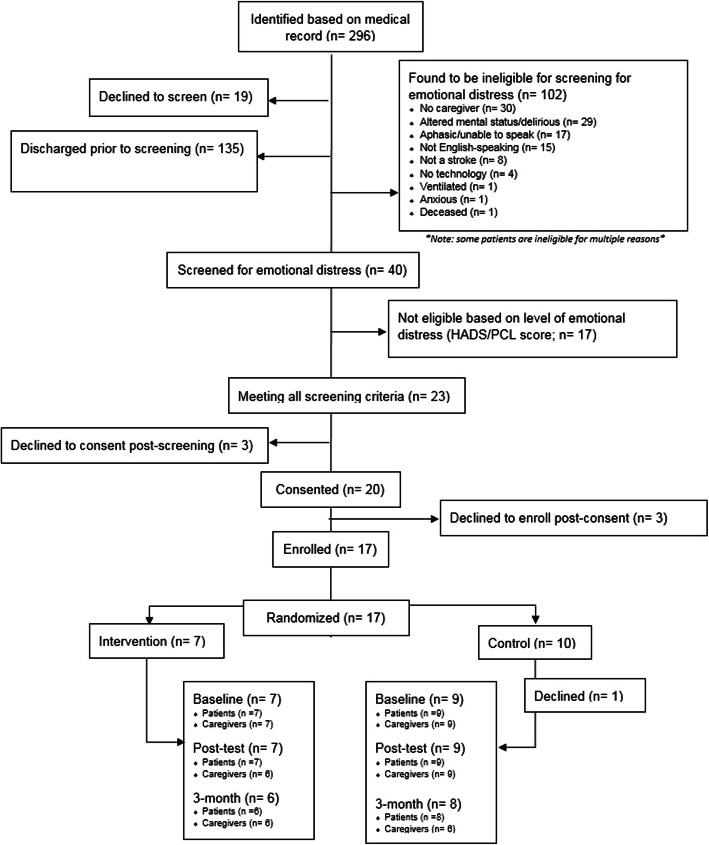
Background: A stroke is a sudden, life-altering event with potentially devastating consequences for survivors and their loved ones. Despite advances in endovascular and neurocritical care approaches to stroke treatment and recovery, there remains a considerable unmet need for interventions targeting the emotional impact of stroke for both patients and their informal caregivers. This is important because untreated emotional distress becomes chronic and negatively impacts quality of life in both patients and caregivers. Our team previously used mixed methods to iteratively develop a six-session modular dyadic intervention to prevent chronic emotional distress in patients with stroke and their informal caregivers called “Recovering Together” (RT) using feedback from dyads and the medical team. The aim of the current study is to test the feasibility of recruitment, acceptability of screening and randomization methods, acceptability of RT, satisfaction with RT, feasibility of the assessment process at all time points, and acceptability of outcome measures. Secondarily, we aimed to explore within-treatment effect sizes and change in clinically significant symptoms of depression, anxiety, and post-traumatic stress (PTS). The larger goal was to strengthen methodological rigor before a subsequent efficacy trial. Methods: We conducted a feasibility randomized controlled trial to evaluate the RT intervention relative to minimally enhanced usual care (MEUC) in stroke patients admitted to a Neurosciences Intensive Care Unit (Neuro-ICU). Dyads were enrolled within 1 week of hospitalization if they met specific eligibility criteria. Assessments were done via paper and pencil at baseline, and electronically via REDCap or over the phone at post-intervention (approximately 6 weeks after baseline), and 3 months later. Assessments included demographics, resiliency intervention targets (mindfulness, coping, self-efficacy, and interpersonal bond), and emotional distress (depression, anxiety, and PTS). Primary outcomes were feasibility and acceptability markers. Secondary outcomes were depression, anxiety, PTS, mindfulness, coping, self-efficacy, and interpersonal bond. Results: We consented 20 dyads, enrolled 17, and retained 16. Although many patients were missed before we could approach them, very few declined to participate or dropped out once study staff made initial contact. Feasibility of enrollment (87% of eligible dyads enrolled), acceptability of screening, and randomization (all RT dyads retained after randomization) were excellent. Program satisfaction (RT post-test M = 11.33/12 for patients M = 12/12 for caregivers), and adherence to treatment sessions (six of seven RT dyads attending 4/6 sessions) were high. There were no technical difficulties that affected the delivery of the intervention. There was minimal missing data. For both patients and caregivers, participation in RT was generally associated with clinically significant improvement in emotional distress symptoms from baseline to post-test. Participation in MEUC was associated with clinically significant worsening in emotional distress. Although some of the improvement in emotional distress symptoms decreased in the RT group between post-test to 3 months, these changes were not clinically significant. RT was also associated with substantial decrease in frequency of individuals who met criteria for clinically significant symptoms, while the opposite was true for MEUC. There were many lessons that informed current and future research. Conclusions: This study provided evidence of feasibility and signal of improvement in RT, as well as necessary methodological changes to increase recruitment efficiency before the future hybrid efficacy-effectiveness trial. Trial registration: NCT02797509.
Overview
The claims and statistics of this paper haven’t been checked yet.
Free: it reads the open-access text and checks the first 5 claims that cite a source we can check. Create a free account to check every claim.
Integrity signals
Registry
Cites
Statistics
Figures
Verification
Claims the paper makes
The claims and statistics of this paper haven’t been checked yet.
Free: it reads the open-access text and checks the first 5 claims that cite a source we can check. Create a free account to check every claim.
Claims other papers make about this one
Each is checked against this paper’s own text: does it say what the citing paper says it does?
The cited source says what the claim attributes to it.
In the citing paper
“Recovering Together intervention is feasible and acceptable in dyads.”
From Nursing Implications of Mindfulness-Informed Interventions for Stroke Survivors and Their Families. (2022) · cites this paper as Bannon et al, 2020
The cited source says what the claim attributes to it.
In the citing paper
“Findings suggest improved emotional distress symptoms in dyads who participated in Recovering Together intervention.”
From Nursing Implications of Mindfulness-Informed Interventions for Stroke Survivors and Their Families. (2022) · cites this paper as Bannon et al, 2020
The cited source says what the claim attributes to it.
In the citing paper
“Present research studies are focused on either the informal caregiver or the stroke survivor; however, given the symbiotic nature of this relationship, it is suggested that the stroke survivor and informal caregiver be addressed as a dyad.4,9,64,65”
From Nursing Implications of Mindfulness-Informed Interventions for Stroke Survivors and Their Families. (2022) · cites this paper as [9]
The cited source says what the claim attributes to it.
In the citing paper
“There is compelling evidence for the interdependence of psychological health poststroke in both informal caregivers and stroke survivors.4,9,64”
From Nursing Implications of Mindfulness-Informed Interventions for Stroke Survivors and Their Families. (2022) · cites this paper as [9]
Self-check
Percentages, sums and reported differences re-computed from the paper’s own numbers.
The self-check needs the paper’s full text.
Citations
Cites
Harris, P. A., Taylor, R., Thielke, R., Payne, J., Gonzalez, N., & Conde, J. G. (2009) · Journal of Biomedical Informatics · doi:10.1016/j.jbi.2008.08.010 · Cited by 51,384
The validity of the Hospital Anxiety and Depression Scale
Bjelland, I., Dahl, A. A., Haug, T. T., & Neckelmann, D. (2002) · Journal of Psychosomatic Research · doi:10.1016/s0022-3999(01)00296-3 · Cited by 9,779
Heart Disease and Stroke Statistics—2015 Update: A Report From the American Heart Association
Mozaffarian, D., Benjamin, E. J., Go, A. S., Arnett, D. K., Blaha, M. J., Cushman, M., de Ferranti, S., Després, J.-P., Fullerton, H. J., Howard, V. J., et al. (2015) · Circulation · doi:10.1161/cir.0000000000000152 · Cited by 5,797
Psychometric properties of the PTSD checklist (PCL)
Blanchard, E. B., Jones-Alexander, J., Buckley, T. C., & Forneris, C. A. (1996) · Behaviour Research and Therapy · doi:10.1016/0005-7967(96)00033-2 · Cited by 3,997
Feigin, V. L., Forouzanfar, M. H., Krishnamurthi, R., Mensah, G. A., Connor, M., Bennett, D. A., Moran, A. E., Sacco, R. L., Anderson, L., Truelsen, T., et al. (2014) · The Lancet · doi:10.1016/s0140-6736(13)61953-4 · Cited by 3,899
Validation of a New General Self-Efficacy Scale
Chen, G., Gully, S. M., & Eden, D. (2001) · Organizational Research Methods · doi:10.1177/109442810141004 · Cited by 3,542
Assessment of client/patient satisfaction: development of a general scale
Larsen, D. L., Attkisson, C. C., Hargreaves, W. A., & Nguyen, T. D. (1979) · Evaluation and Program Planning · doi:10.1016/0149-7189(79)90094-6 · Cited by 2,887
Design and analysis of pilot studies: recommendations for good practice
Lancaster, G. A., Dodd, S., & Williamson, P. R. (2004) · Journal of Evaluation in Clinical Practice · doi:10.1111/j..2002.384.doc.x · Cited by 2,572
Psychometric properties of the credibility/expectancy questionnaire
Devilly, G. J., & Borkovec, T. D. (2000) · Journal of Behavior Therapy and Experimental Psychiatry · doi:10.1016/s0005-7916(00)00012-4 · Cited by 2,295 · cited 3×
“Abbreviations RCT: Randomized controlled trial; RT: Recovering Together; PTS: Posttraumatic stress; Neuro-ICU: Neurosciences intensive care unit; MEUC: Minimally enhanced usual care; CBT: Cognitive behavioral therapy; DBT: Dialectical behavior therapy; HADS: Hospital Depression and Anxiety Scale; MCIDs: Minimally impo…”
MethodThe role and interpretation of pilot studies in clinical research
Leon, A. C., Davis, L. L., & Kraemer, H. C. (2011) · Journal of Psychiatric Research · doi:10.1016/j.jpsychires.2010.10.008 · Cited by 1,917
Research works printed but not linked: 1
- Schwarzer R Jerusalem M Generalized Self-Efficacy scale. In J. Weinman, S. Wright, & M. Johnston, Measures in health psychology: a user’s portfolio. Causal and control beliefs Windsor 1995 England Nfer-Nelson
Cited by
Vranceanu, A.-M., Bannon, S., Mace, R., Lester, E., Meyers, E., Gates, M., Popok, P., Lin, A., Salgueiro, D., Tehan, T., et al. (2020) · JAMA Network Open · doi:10.1001/jamanetworkopen.2020.20807 · Cited by 114
Self-citationSystematic review of the evidence for stroke family caregiver and dyad interventions
Bakas, T., McCarthy, M. J., & Miller, E. L. (2022) · Stroke · doi:10.1161/strokeaha.121.034090 · Cited by 109
Psychological Distress After Sudden Cardiac Arrest and Its Impact on Recovery
Agarwal, S., Birk, J. L., Abukhadra, S. L., Rojas, D. A., Cornelius, T. M., Bergman, M., Chang, B., Edmondson, D. E., & Kronish, I. M. (2022) · Current Cardiology Reports · doi:10.1007/s11886-022-01747-9 · Cited by 80
Mou, H., Lam, S. K. K., & Chien, W. T. (2023) · International Journal of Nursing Studies · doi:10.1016/j.ijnurstu.2023.104504 · Cited by 76
Rojas, D. A., DeForge, C. E., Abukhadra, S. L., Farrell, L. M., George, M., & Agarwal, S. (2023) · Resuscitation Plus · doi:10.1016/j.resplu.2023.100370 · Cited by 53
“involving patients and co-survivors are beneficial for recovery after other acute brain injuries.(54,55) Other opportunities for future observational research include a”
BackgroundBannon, S. M., Reichman, M., Popok, P., Wagner, J., Gates, M. V., Uppal, S., LeFeber, L., Wong, B., Dickerson, B. C., & Vranceanu, A. (2020) · The Gerontologist · doi:10.1093/geront/gnaa169 · Cited by 66
“Though such approaches have yet to be used with PWDs and CGs with YOD, they have served as the basis of evidence-based dyadic interventions that prevent emotional distress in both members of dyads (Badr et al., 2019; Bannon et al., 2020; Moon & Adams, 2013; Vranceanu et al., 2020).”
BackgroundSelf-citationThematic Analysis of Dyadic Coping in Couples With Young-Onset Dementia
Bannon, S. M., Grunberg, V. A., Reichman, M., Popok, P., Traeger, L. N., Dickerson, B. C., & Vranceanu, A. (2021) · JAMA Network Open · doi:10.1001/jamanetworkopen.2021.6111 · Cited by 42
Self-citationMeyers, E. E., Shaffer, K. M., Gates, M., Lin, A., Rosand, J., & Vranceanu, A.-M. (2020) · Psychosomatics · doi:10.1016/j.psym.2019.11.007 · Cited by 38
Self-citationBannon, S. M., Cornelius, T. M., Gates, M. V., Lester, E. G., Mace, R. A., Popok, P., Macklin, E. A., Rosand, J. M., & Vranceanu, A. (2021) · Health Psychology · doi:10.1037/hea0001102 · Cited by 31
Self-citationVideoconferencing psychotherapy for couples and families: A systematic review
de Boer, K., Muir, S. D., Silva, S. S. M., Nedeljkovic, M., Seabrook, E., Thomas, N., & Meyer, D. (2021) · Journal of Marital and Family Therapy · doi:10.1111/jmft.12518 · Cited by 33
How and when post intensive care syndrome-family is measured: A scoping review
Hayes, K., Harding, S. A., Blackwood, B., & Latour, J. M. (2024) · Intensive and Critical Care Nursing · doi:10.1016/j.iccn.2024.103768 · Cited by 31
Hinwood, M., Ilicic, M., Gyawali, P., Coupland, K., Kluge, M. G., Smith, A., Bowden, S., Nilsson, M., & Walker, F. R. (2022) · Annals of Behavioral Medicine · doi:10.1093/abm/kaac002 · Cited by 36
“Two studies recruited participants during the acute period, whilst patients were hospitalized [36, 39].”
BackgroundMethodInfluentialBannon, S. M., Reichman, M., Wang, K. E., Uppal, S., Grunberg, V. A., & Vranceanu, A. (2021) · Dementia · doi:10.1177/14713012211048118 · Cited by 29
“, loss of employment, increased caregiving, and change in roles) that accompany young onset dementias (Bannon et al., 2020; Spreadbury & Kipps, 2019a, 2019b; Stamou et al., 2020).”
BackgroundMethodResultSelf-citationHughes, A. K., & Cummings, C. E. (2020) · Journal of Patient Experience · doi:10.1177/2374373520967796 · Cited by 32
“Recent findings from the development and pilot study of the program “Recovering Together,” a dyadic cognitive behavioral approach, indicate that programs targeting both the stroke survivor and caregiver after discharge and during recovery may have positive effects on resilience, coping, and emotional well-being (37,38…”
BackgroundPauley, E., & Walsh, T. S. (2021) · Journal of the Intensive Care Society · doi:10.1177/17511437211034701 · Cited by 26
Nursing Implications of Mindfulness-Informed Interventions for Stroke Survivors and Their Families.
Saban, K. L., Tell, D., & De La Pena, P. (2022) · Stroke · doi:10.1161/strokeaha.122.038457 · Cited by 22
Jia, Y., Shi, J. C., Sznajder, K. K., Yang, F., Cui, C., Zhang, W., & Yang, X. (2020) · Psychogeriatrics · doi:10.1111/psyg.12635 · Cited by 31
Lester, E. G., Mace, R. A., Bannon, S. M., Popok, P., Gates, M. V., Meyers, E. E., Tehan, T. M., Sagueiro, D., Rosand, J. M., Macklin, E. A., et al. (2021) · Neurocritical Care · doi:10.1007/s12028-021-01222-3 · Cited by 21
“As biomedical advances have increased survivorship in neurocritical care settings, survivors and informal caregivers (family or friends providing support and care [1]), together called dyads, are often challenged with significant adjustments after hospitalization in a neuro-ICU for an acute neurological injury (ANI) […”
BackgroundMethodSelf-citationChong, W. F., Ng, L. H., Ho, R. M.-H., Koh, G. C., Hoenig, H., Matchar, D. B., Yap, P. L. K., Venketasubramanian, N., Tan, K. B., Chou, N., et al. (2021) · Journal of the American Medical Directors Association · doi:10.1016/j.jamda.2021.02.036 · Cited by 19
Hwang, D. Y., Bannon, S. M., Meurer, K., Kubota, R., Baskaran, N., Kim, J., Zhang, Q., Reichman, M., Fishbein, N. S., Lichstein, K., et al. (2023) · Neurocritical Care · doi:10.1007/s12028-023-01804-3 · Cited by 15
“We developed a 60-min semistructured interview guide (see eAppendix Supplement) structured around a stress and coping framework [11, 12] via multidisciplinary team meetings among one neurointensivist (DYH) and two clinical psychologists (SMB and A-MV) with expertise in ICU settings [13–15].”
Self-citationThe Recovering Together Initiative: Integrating Psychosocial Care into ICUs
Lester, E. G., Grunberg, V. A., Bannon, S. M., Mace, R. A., Plys, E., Jacobo, M., Tehan, T. M., Rosand, J. M., & Vranceanu, A. (2022) · NEJM Catalyst · doi:10.1056/cat.22.0103 · Cited by 14
Self-citationRhudy, L. M., Hines, E. A., Farr, E. M., Esterov, D., & Chesak, S. S. (2023) · Neurorehabilitation · doi:10.3233/nre-220127 · Cited by 12
“Similarly,inanotherfeasibilitystudythatincluded randomization and a 3-month follow up the authors concluded that the results revealed promising outcomes suggesting that skills in resiliency may be protective against psychological symptoms (Bannon et al., 2020).”
Hwang, D. Y., Reichman, M., Bannon, S. M., Meurer, K., Kubota, R., Kim, J., Baskaran, N., Zhang, Q., Fishbein, N. S., Lichstein, K., et al. (2025) · Neurocritical Care · doi:10.1007/s12028-024-02202-z · Cited by 10
“Psycho-social interventions that show promise in preventing caregiver emotional distress beginning in other inpatient settings [21, 22] would need to be adapted to address the unique needs of SABI caregivers to be efficacious and implementable.”
Self-citationSurviving cardiac arrest - what do we know about recovery & survivorship?
Sawyer, K. N. (2022) · Current Opinion in Critical Care · doi:10.1097/mcc.0000000000000935 · Cited by 16
“Further, while dyadic interventions to build resiliency after stroke [33] and prevent chronic affective symptoms among patients/partners in the neuroscience intensive care unit [34–36], these have not been evaluated in the cardiac arrest population.”
BackgroundVranceanu, A., Woodworth, E. C., Kanaya, M. R., Bannon, S. M., Mace, R. A., Manglani, H. R., Duarte, B. A., Rush, C. L., Choukas, N. R., Briskin, E. A., et al. (2022) · SSRN Electronic Journal · doi:10.1016/j.cct.2022.106998 · Cited by 10
Self-citationPant, U., Vyas, K., & Papathanassoglou, E. D. E. (2025) · Healthcare · doi:10.3390/healthcare13172182 · Cited by 8
“All studies included some sort of support intervention, including positive suggestions [41,42,45], relaxation techniques [39,43], spiritual and/or religious support [40,44], and psychotherapy-based [46–48].”
InfluentialXing, X., Pu, L., Hu, W., Xiao, Y., & Xiao, H. (2025) · Frontiers in Public Health · doi:10.3389/fpubh.2025.1583621 · Cited by 7
Bannon, S. M., McCage, S., Walker, K., Brewer, J. R., Ahmad, N., Cornelius, T. M., Parker, R. A., Dams-O’Connor, K., Dickerson, B. C., Ritchie, C. S., et al. (2025) · Journal of Alzheimer s Disease · doi:10.1177/13872877251332658 · Cited by 8
“…model and interview script in the Recovering Together dyadic intervention that members of our team developed for dyads facing acute neurological conditions, 19 – 23 and a framework that we developed for early transdiagnostic interventions to support dyads facing neurodegenerative diseases.”
Self-citationZhang, L., Chen, Y., Tang, W., Wang, Q., Zou, L., & Zhou, L. (2025) · BMC Nursing · doi:10.1186/s12912-025-02835-1 · Cited by 11
Plys, E., Szapary, C. L., & Vranceanu, A. (2024) · Seminars in Neurology · doi:10.1055/s-0044-1791568 · Cited by 6
Self-citationFakolade, A. O., Awadia, Z., Cardwell, K. L., McKenna, O. J., Venasse, M., Hume, T. A., Ludgate, J., Freedman, M. S., Finlayson, M. L., Latimer‐Cheung, A. E., et al. (2023) · Contemporary Clinical Trials Communications · doi:10.1016/j.conctc.2023.101222 · Cited by 5
Bartoli, D., Petrosino, F., Nuccio, E., Damico, V., Rago, C., Veronese, M., Virgolesi, M., Alvaro, R., Vellone, E., Lombardi, E., et al. (2025) · Healthcare · doi:10.3390/healthcare13162039 · Cited by 7
“Consecutive enrollment methods have been commonly adopted in dyadic intervention trials to enhance feasibility and ecological validity in clinical settings [32,33].”
Hartley, P., Brown, C., Danesh, V. C., Forsyth, F., Bond, K. K., Kuhn, I. L., Shaw, M., & McPeake, J. M. (2025) · Journal of Intensive Care · doi:10.1186/s40560-025-00839-2 · Cited by 9
Sang, E., Hirschman, K. B., & Bowles, K. H. (2023) · Research in Nursing & Health · doi:10.1002/nur.22358 · Cited by 5
Survivorship After Neurocritical Care: A Scoping Review of Outcomes Beyond Physical Status
LaBuzetta, J. N., Bongbong, D. N., Mlodzinski, E., Sheth, R., Trando, A., Ibrahim, N., Yip, B., Malhotra, A., Dinglas, V. D., Needham, D. M., et al. (2024) · Neurocritical Care · doi:10.1007/s12028-024-01965-9 · Cited by 4
“[18, 35, 54, 59, 61, 66, 78, 87, 90, 91], and intracerebral hemorrhage (including vascular malformations, n = 7 [9”
Hines, E. A., Farr, E. M., Rhudy, L. M., Chesak, S. S., Kinzelman-Vesely, E. A., & Esterov, D. (2023) · Neurorehabilitation · doi:10.3233/nre-220125 · Cited by 5
“Theresiliencedefinition thatwechosethusresultedinexpandingourinter-ventionsearchtoincludenotonlystudiesthatwere describedasresilienceinterventions (Bannon et al., 2020; Inci & Temel, 2016; Lester et al., 2021; Vranceanu et al., 2020).”
InfluentialLester, E. G., Fishbein, N. S., Higgins, O., Rosand, J. M., & Vranceanu, A. (2022) · PLoS ONE · doi:10.1371/journal.pone.0261635 · Cited by 5
Self-citationRush, C. L., Lester, E. G., Manglani, H. R., Woodworth, E. C., Vitolo, O. V., Fava, M., Berry, J. D., Brizzi, K. T., Babu, S., Lindenberger, E. C., et al. (2023) · Amyotrophic Lateral Sclerosis and Frontotemporal Degeneration · doi:10.1080/21678421.2023.2224400 · Cited by 4
Self-citationMao, Y.-C., Li, H.-H., Tao, S., Zhang, W., Zhang, L., Geng, D., Ren, N., & Gao, L. (2024) · Journal of Neuroscience Nursing · doi:10.1097/jnn.0000000000000798 · Cited by 5
Conceptualisation and operationalisation of social support in health interventions: a scoping review
Kersey, J., Lee, S., Connor, L. T., Shyres, S., Alimi, E., Serrano, N. R., Kim, M. Y., Sang, P. V., Casem, N., Le, C., et al. (2026) · BMJ Public Health · doi:10.1136/bmjph-2025-003444 · Cited by 4
The Need for Continuity of Care in Neurocritical Care and Recovery
Ader, J., Agarwal, S., & Naqvi, I. A. (2023) · Current Treatment Options in Neurology · doi:10.1007/s11940-023-00768-1 · Cited by 3
“…from the Recovering Together pilot study of patients discharged from a neurocritical care unit suggest a behavioral intervention that teaches resiliency skills focused on patients and families as dyads, successfully reduced depression and anxiety among patients and caregivers [35, 55, 63, 64].”
Recovering Together: Clinician Guide
Vranceanu, A., & Grunberg, V. A. (2025) · doi:10.1093/med-psych/9780197693902.001.0001 · Cited by 3
Self-citationKoppel, P. D., Gagne, J. C. D., Docherty, S. L., Smith, S. K., Prose, N. S., Thompson, J. A., & Otero, M. C. (2024) · Journal of Clinical Nursing · doi:10.1111/jocn.17174 · Cited by 1
Törnbom, K., Carlsson, G. E., & Sunnerhagen, K. S. (2026) · PLoS ONE · doi:10.1371/journal.pone.0345795 · Cited by 1
Psychological distress in patients receiving critical care: An evolutionary concept analysis
Kusi‐Appiah, E., Allana, S., Rewa, O. G., Montgomery, C., Olson, J., & Papathanassoglou, E. (2026) · Australian Critical Care · doi:10.1016/j.aucc.2026.101606 · Cited by 1
Behavioral Medicine Strategies in Medical Settings
Grunberg, V. A., Doorley, J. D., Reichman, M., Lester, E. G., Bannon, S. M., Greenberg, J., Bakhshaie, J., & Vranceanu, A. (2023) · Current clinical psychiatry · doi:10.1007/978-3-031-29368-9_24
Self-citationVisual Analysis of a Binary Study of Stroke Patients and Caregivers
Wei, X., Deng, C., Zhang, X., Ni, C., & Gai, H. (2024) · Research in Health Science · doi:10.22158/rhs.v9n3p17
Perez, N. P., Pannu, P. R., Kunitake, H., Berger, D., Ricciardi, R., Brindle, M. E., Cooper, Z. R., Ritchie, C. S., Bordeianou, L., & Cauley, C. E. (2024) · Journal of Gastrointestinal Surgery · doi:10.1016/j.gassur.2024.07.024
Emotions in spouse caregiving: a study based on written stories
Autio, T., Rissanen, S., & Hämäläinen, J. E. A. (2025) · International Journal of Social Pedagogy · doi:10.14324/111.444.ijsp.2025.v14.x.005 · Cited by 3
“The expected loss of relationships, hobbies and friends may also evoke fear (Bachmann, 2020; Bannon et al., 2020; Chua et al., 2020).”
Session 6: Managing Fear and Worries
Vranceanu, A., & Grunberg, V. A. (2025) · Oxford University Press eBooks · doi:10.1093/med-psych/9780197693902.003.0007
Self-citationSession 5: Engaging with Positive Activities
Vranceanu, A., & Grunberg, V. A. (2025) · Oxford University Press eBooks · doi:10.1093/med-psych/9780197693902.003.0006
Self-citationSession 1: Staying in the Here and Now
Vranceanu, A., & Grunberg, V. A. (2025) · Oxford University Press eBooks · doi:10.1093/med-psych/9780197693902.003.0002
Self-citationVranceanu, A., & Grunberg, V. A. (2025) · Oxford University Press eBooks · doi:10.1093/med-psych/9780197693902.002.0004
Self-citationSession 4: Navigating Relationships
Vranceanu, A., & Grunberg, V. A. (2025) · Oxford University Press eBooks · doi:10.1093/med-psych/9780197693902.003.0005
Self-citationVranceanu, A., & Grunberg, V. A. (2025) · Oxford University Press eBooks · doi:10.1093/med-psych/9780197693902.005.0001
Self-citationSession 3: Adjusting to Life After an Acute Neurological Illness (ANI)
Vranceanu, A., & Grunberg, V. A. (2025) · Oxford University Press eBooks · doi:10.1093/med-psych/9780197693902.003.0004
Self-citationVranceanu, A., & Grunberg, V. A. (2025) · Oxford University Press eBooks · doi:10.1093/med-psych/9780197693902.003.0008
Self-citationSession 2: Coping with Uncertainty
Vranceanu, A., & Grunberg, V. A. (2025) · Oxford University Press eBooks · doi:10.1093/med-psych/9780197693902.003.0003
Self-citation(2025) · Oxford University Press eBooks · doi:10.1093/med-psych/9780197693902.002.0006
Introductory Information for Clinicians
Vranceanu, A., & Grunberg, V. A. (2025) · Oxford University Press eBooks · doi:10.1093/med-psych/9780197693902.003.0001
Self-citationKersey, J., Schwartz, J. K., Connor, L. T., & Stark, S. L. (2025) · Disability and health journal · doi:10.1016/j.dhjo.2025.101978
Riegel, B. J., Kim, S. H., Quinn, R., Walser, T. J., Pitcher, K. S., Ferguson, J., Sang, E., MATUS, A. M., Thomas, G. L., & Hirschman, K. B. (2026) · The Journal of Cardiovascular Nursing · doi:10.1097/jcn.0000000000001308 · Cited by 1
Cauley, C. E., Zeineddine, J. H., Brooks, E., Chang, D., Brindle, M. E., Cooper, Z. R., Vranceanu, A., & Ritchie, C. (2026) · JMIR Research Protocols · doi:10.2196/96625
Self-citationHuang, B., Li, J., Shen, K., He, S., Luo, R., Wang, Y., Yin, N., Jing, J., & Zhang, J. (2026) · Frontiers in Medicine · doi:10.3389/fmed.2026.1847415
Kersey, J., Lee, S., Connor, L. T., Shyres, S., Alimi, E., Serrano, N. R., Kim, M. Y., Sang, P. V., Casem, N., Le, C., et al. (2026) · BMJ Public Health · doi:10.1136/bmjph-2025-003445
Bannon, S. M., McCage, S., Carrillo, R. E., Brandt, S. A., Allison, G. O., Aminpour, A., Walker, K. L., Cornelius, T. M., Parker, R. A., Dams-O’Connor, K., et al. (2026) · JMIR Research Protocols · doi:10.2196/106005
“Benchmarks were established based on prior feasibility trials of behavioral interventions [29,33] (Table 2).”
Self-citationJain, K. G., & Goswami, S. P. (2026) · Journal of Indian Speech Language & Hearing Association · doi:10.4103/jisha.jisha_26_25
Mental Health Outcomes After Neurocritical Care: A Systematic Review and Meta-analysis
LaBuzetta, J. N., Chen, H. G., Ibrahim, N., Ezeokeke, O. S., Gandhi, S., Malhotra, A. K., Dinglas, V. D., Needham, D. M., & Kamdar, B. B. (2026) · Neurocritical Care · doi:10.1007/s12028-026-02576-2
“At similar follow-up timepoints, mean (SD) anxiety severity ranged from 5.3 (4.4) [45] to 10.2 (4.9) [32] at discharge, 5.9 (4.7) [33] to 12.7 (5.9) [32] at 1.5 months, and 6.4 (5.7) [49] to 9.9 (6.5) [32] at 6 months.”
InfluentialSiyang, L., Husain, N. R. N., Hassan, I. I., 6th, R. A. J., Halim, S. A., Liang, J., Wang, Z., & Liang, R. (2026) · doi:10.2196/preprints.110945
Metadata
- Authors
- Bannon, S., Lester, E. G., Gates, M. V., McCurley, J., Lin, A., Rosand, J., & Vranceanu, A.-M.
- Affiliations
- Harvard University (US)
- Massachusetts General Hospital (US)
- Corresponding author
- Vranceanu, Ana-Maria
- ORCID
- Venue
- Pilot and Feasibility Studies
- Published
- 2020-05-25
- Volume
- 6
- Issue
- 1
- Pages
- 75-75
- ISSN
- 2055-5784 (ISSN-L)
- PMC
- PMC7249683
- OpenAlex
- W3032149014
- Semantic Scholar
- d641c8ce80af4dfb5b88d19171170c401d24e6c9
- Cited by
- 70
- References
- 65
- Citations by year
- 2026: 11 · 2025: 21 · 2024: 7 · 2023: 10 · 2022: 9 · 2021: 7 · 2020: 4
- FWCI
- 4.16
- Type
- journal article
- Language
- en
- Open access
- gold
- doi.org
- Licence
- cc-by
- creativecommons.org/licenses/by/4.0 (tdm)
- creativecommons.org/licenses/by/4.0 (vor)
- Locations
- Pilot and Feasibility Studies (publishedVersion, cc-by)
- PubMed Central (publishedVersion, cc-by)
- PubMed (publishedVersion)
- DOAJ (DOAJ: Directory of Open Access Journals) (submittedVersion, cc-by-sa)
- Funders
- American Heart Association
- National Institute of Nursing Research (5R21 NR017979)
- Henry and Allison McCance Center for Brain Health at Massachusetts General Hospital
- Topics
- Health Sciences › Medicine › Rehabilitation › Stroke Rehabilitation and Recovery
- Health Sciences › Medicine › Oncology › Cancer survivorship and care
- Health Sciences › Nursing › Research and Theory › Nursing care and research
- Keywords
- stroke, stroke patients, informal caregivers, dyadic intervention, depression, anxiety, post-traumatic stress, resilience, mindfulness, coping, self-efficacy, interpersonal relationships, neurocritical care, intensive care unit, treatment acceptability, feasibility, program satisfaction, caregiver burden, quality of life, intervention development, medication adherence
About these checks
Registry, retraction, Cites and statistics results are computed, not judged, with one exception: a printed reference that no index lists is read once by a model before it counts as a citation error. Claims are extracted by a model and kept only when their quote appears verbatim in the text; each cited source is then checked, with a model’s help, for whether it says what the claim relies on. Those verdicts can be wrong — read the claim’s quote and the cited source before relying on one.
Statistics and arithmetic are recomputed, not judged.
Confidence bands are shown only for fields calibrated on our annotated test set. None is calibrated yet, so no band is shown.
What counts as a claim ›How we measure confidence ›How we check this ›
Are you an author, or do you see a problem with this page? Request a review
Data sources
Bibliographic data: Semantic Scholar, OpenAlex, Crossref.
Contains information from the Semantic Scholar Academic Graph Datasets, made available under the ODC Attribution License (ODC-BY 1.0).
Semantic Scholar’s data is described in: Kinney, R., et al. (2023). The Semantic Scholar Open Data Platform. arXiv:2301.10140.
