

Financial technology and the future of banking
Open accessThe DOI matches its Crossref record; 33 of the 34 references it cites were found in a registry or an index.
Abstract
This paper presents an analytical framework that describes the business model of banks. It draws on the classical theory of banking and the literature on digital transformation. It provides an explanation for existing trends and, by extending the theory of the banking firm, it illustrates how financial intermediation will be impacted by innovative financial technology applications. It further reviews the options that established banks will have to consider in order to mitigate the threat to their profitability. Deposit taking and lending are considered in the context of the challenge made from shadow banking and the all-digital banks. The paper contributes to an understanding of the future of banking, providing a framework for scholarly empirical investigation. In the discussion, four possible strategies are proposed for market participants, (1) customer retention, (2) customer acquisition, (3) banking as a service and (4) social media payment platforms. It is concluded that, in an increasingly digital world, trust will remain at the core of banking. That said, liquidity transformation will still have an important role to play. The nature of banking and financial services, however, will change dramatically.
Overview
The claims and statistics of this paper haven’t been checked yet.
Free: it reads the open-access text and checks the first 5 claims that cite a source we can check. Create a free account to check every claim.
Integrity signals
Registry
Cites
Statistics
Figures
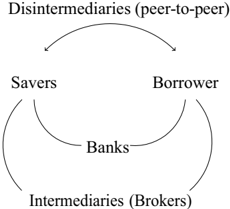
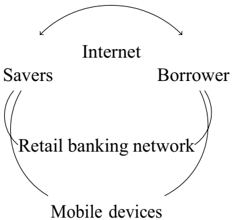
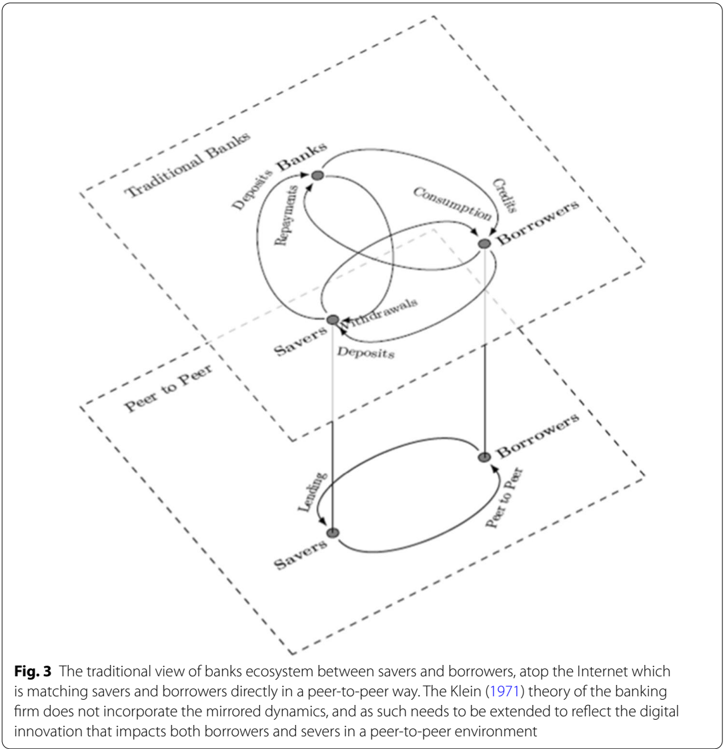
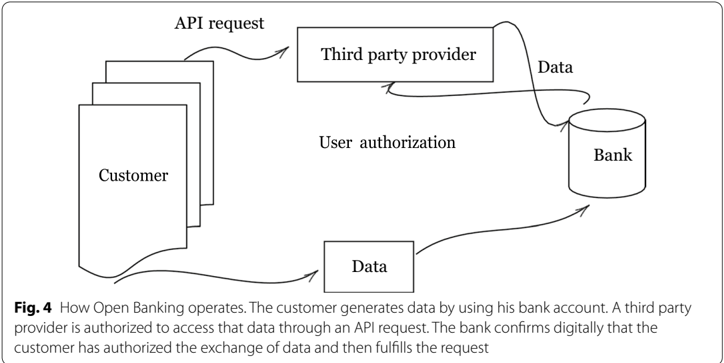
Verification
Claims the paper makes
The claims and statistics of this paper haven’t been checked yet.
Free: it reads the open-access text and checks the first 5 claims that cite a source we can check. Create a free account to check every claim.
Claims other papers make about this one
Each is checked against this paper’s own text: does it say what the citing paper says it does?
The source backs part of the claim, not all of it — or backs it for a different population, condition or comparison.
In the citing paper
“According to previous studies, trust positively affects Fintech adoption [43,44].”
From Fintech Adoption Drivers for Innovation for SMEs in Indonesia (2022) · cites this paper as [44]
Experimental — accuracy not yet measured
Self-check
Percentages, sums and reported differences re-computed from the paper’s own numbers.
The self-check needs the paper’s full text.
Citations
Cites
The Theory of Economic Development
Schumpeter, J., & Backhaus, U. (2006) · The European Heritage in Economics and the Social Sciences · doi:10.1007/0-306-48082-4_3 · Cited by 22,506
The Cost of Capital, Corporation Finance and the Theory of Investment
Miller, M. H. (1958) · American Economic Review · Cited by 14,574
Bank Runs, Deposit Insurance, and Liquidity
Diamond, D. W., & Dybvig, P. H. (1983) · Journal of Political Economy · doi:10.1086/261155 · Cited by 9,369
Financial intermediation and delegated monitoring
Diamond, D. W. (1984) · The Review of Economic Studies · doi:10.2307/2297430 · Cited by 8,476 · cited 1×
“Diamond (1984) and Ramakrishnan and Thakor (1984) suggested the answer was due to diversification and its impact on reducing monitoring costs.”
BackgroundThe financial accelerator, and the flight to quality
Bernanke, B., Gertler, M., & Gilchrist, S. (1996) · The Review of Economics and Statistics · doi:10.2307/2109844 · Cited by 2,351
Berger, A. N., Miller, N. H., Petersen, M. A., Rajan, R. G., & Stein, J. C. (2005) · Journal of Financial Economics · doi:10.1016/j.jfineco.2004.06.003 · Cited by 1,888
Fintech, regulatory arbitrage, and the rise of shadow banks
Buchak, G., Matvos, G., Piskorski, T., & Seru, A. (2018) · Journal of Financial Economics · doi:10.1016/j.jfineco.2018.03.011 · Cited by 1,784
FinTech and banking: What do we know?
Thakor, A. V. (2020) · Journal of Financial Intermediation · doi:10.1016/j.jfi.2019.100833 · Cited by 1,378 · cited 2×
“A review of financial technology and banking literature is provided by Thakor (2020).”
BackgroundMethodDoes deposit insurance increase banking system stability? An empirical investigation
Demirgüç-Kunt, A., & Detragiache, E. (2002) · Journal of Monetary Economics · doi:10.1016/s0304-3932(02)00171-x · Cited by 1,371
Diamond, D. W., & Rajan, R. G. (2000) · The Journal of Finance · doi:10.1111/0022-1082.00296 · Cited by 1,334
Information Reliability and a Theory of Financial Intermediation
Ramakrishnan, R. T. S., & Thakor, A. V. (1984) · The Review of Economic Studies · doi:10.2307/2297431 · Cited by 1,160
The role of capital in financial institutions
Berger, A. N., Herring, R. J., & Szegö, G. P. (1995) · Journal of Banking & Finance · doi:10.1016/0378-4266(95)00002-x · Cited by 980
Banking in the theory of finance
Fama, E. F. (1980) · Journal of Monetary Economics · doi:10.1016/0304-3932(80)90017-3 · Cited by 855 · cited 3×
“As Fama (1980) explains, a bank is an intermediary.”
BackgroundInfluentialKlein, M. A. (1971) · Journal of Money, Credit and Banking · doi:10.2307/1991279 · Cited by 738 · cited 10×
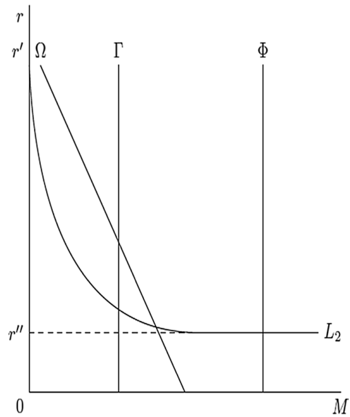
“This can be depicted algebraically if we let incumbents be represented by Φ and challengers represented by Γ: Klein (1971) further explains that a bank’s equity is therefore made up of its share capital and unimpaired reserves.”
BackgroundMethodInfluentialFintech and regtech: Impact on regulators and banks
Anagnostopoulos, I. (2018) · Journal of Economics and Business · doi:10.1016/j.jeconbus.2018.07.003 · Cited by 663 · cited 1×
“Anagnostopoulos (2018) suggests that the difference between challenger and traditional banks is that the former address its customers problems more directly.”
BackgroundInternational Financial Liberalization and Economic Growth
Levine, R. (2001) · Review of International Economics · doi:10.1111/1467-9396.00307 · Cited by 658 · cited 1×
“There is considerable evidence, as outlined by Levine (2001), that market liberalization has a causal impact on economic growth.”
BackgroundThe market for information and the origin of financial intermediation
Allen, F. (1990) · Journal of Financial Intermediation · doi:10.1016/1042-9573(90)90006-2 · Cited by 412 · cited 1×
“Allen (1990) argues that where risk aversion is observable, information markets are viable.”
BackgroundFintech investments in European banks: a hybrid IT2 fuzzy multidimensional decision-making approach
Kou, G., Olgu Akdeniz, Ö., Dinçer, H., & Yüksel, S. (2021) · Financial Innovation · doi:10.1186/s40854-021-00256-y · Cited by 394 · cited 1×
“Whether accommodating crytpo-currencies or CBDC’s, Kou et al. (2021) recommend that banks keep focused on alternative payment and money transferring technologies.”
BackgroundI.—The Mathematical Theory of Banking
Edgeworth, E. Y. (1888) · Journal of the Royal Statistical Society Series A (Statistics in Society) · doi:10.1111/j.2397-2335.1888.tb02403.x · Cited by 216
The hidden advantages of customer retention
Reichheld, F. F., & Kenny, D. W. (1990) · Cited by 187
Financial System Architecture and the Co‐evolution of Banks and Capital Markets
Song, F., & Thakor, A. V. (2010) · The Economic Journal · doi:10.1111/j.1468-0297.2009.02345.x · Cited by 169
FINANCIAL INTERMEDIARIES AND THE SAVING‐INVESTMENT PROCESS*
Gurley, J. G., & Shaw, E. S. (1956) · The Journal of Finance · doi:10.1111/j.1540-6261.1956.tb00707.x · Cited by 162 · cited 1×
“Gurley and Shaw (1956) describe how the customer relationship means a bank can borrow funds by way of deposits (liabilities) and subsequently use them to lend or invest (assets).”
Backgroundshadow banking: a review of the literature
Adrian, T., & Ashcraft, A. B. (2013) · Palgrave Macmillan UK eBooks · doi:10.1057/9780230226203.3890 · Cited by 146
Social commerce and the mobile platform: Payment and security perceptions of potential users
Williams, M. D. (2018) · Computers in Human Behavior · doi:10.1016/j.chb.2018.06.005 · Cited by 126 · cited 1×
“Williams (2018) estimates that there are 2.46 billion social media users.”
BackgroundInfluentialThe Nonbank-Bank Nexus and the Shadow Banking System
Pozsar, Z., & Singh, M. (2011) · IMF Working Paper · doi:10.5089/9781463927233.001 · Cited by 122
Bank intermediation activity in a low‐interest‐rate environment
Brei, M., Borio, C. E. V., & Gambacorta, L. (2020) · Economic Notes · doi:10.1111/ecno.12164 · Cited by 106
The Payment Services Directive II and Competitiveness: The Perspective of European Fintech Companies
Romānova, I., Grima, S., Spiteri, J., & Kudinska, M. (2018) · EUROPEAN RESEARCH STUDIES JOURNAL · doi:10.35808/ersj/981 · Cited by 71 · cited 1×
“Romānova et al. (2018) undertook a questionnaire on the Payment Services Directive II.”
MethodData-centered Dependencies and Opportunities for Robotics Process Automation in Banking
Vishnu, S., Agochiya, V., & Palkar, R. (2017) · Journal of financial transformation · Cited by 25
Kou, G. (2015) · Financial Innovation · doi:10.1186/s40854-015-0007-4 · Cited by 24
Does uniqueness in banking matter?
Liu, F. H., Nordén, L., & Spargoli, F. (2020) · Journal of Banking & Finance · doi:10.1016/j.jbankfin.2020.105941 · Cited by 23
Data, Innovation and Competition in Finance: The Case of the Access to Account Rule
Borgogno, O., & Colangelo, G. (2020) · European Business Law Review · doi:10.54648/eulr2020023 · Cited by 17
Is FinTech a Threat to Financial Stability? Evidence from Peer-to-Peer Lending in ChinaPreprint
Braggion, F., Manconi, A., & Zhu, H. (2017) · SSRN Electronic Journal · doi:10.2139/ssrn.2957411 · Cited by 16
Data, Innovation and Transatlantic Competition in Finance: The Case of the Access to Account RulePreprint
Colangelo, G., & Borgogno, O. (2018) · SSRN Electronic Journal · doi:10.2139/ssrn.3251584 · Cited by 8
shadow banking: a review of the literature
Adrian, T., & Ashcraft, A. B. (2016) · Banking Crises · doi:10.1057/9781137553799_29
Research works printed but not linked: 1
- 7. Bord V, Santos JC (2012) The rise of the originate-to-distribute model and the role of banks in financial intermediation. Federal Reserve Bank N Y Econ Policy Rev 18(2):21-34
Cited by
Utilization of artificial intelligence in the banking sector: a systematic literature review
Fares, O. H., Butt, I., & Lee, S. H. M. (2023) · Journal of Financial Services Marketing · doi:10.1057/s41264-022-00176-7 · Cited by 222
“We begin from the initial step of customer acquisition, and proceed to credit decision, and post-decision (Broby, 2021).”
MethodFintech Adoption Drivers for Innovation for SMEs in Indonesia
Nugraha, D. P., Setiawan, B., Nathan, R. J., & Fekete-Farkas, M. (2022) · Journal of Open Innovation: Technology, Market, and Complexity · doi:10.3390/joitmc8040208 · Cited by 188
“According In the context of technology adoption, trust correlates with reducing anxiety which then increases consumer confidence to adopt new technology. to previous studies, trust positively affects Fintech adoption [43,44].”
Setiawan, B., Phan, T. D., Medina, J., Wieriks, M., Nathan, R. J., & Fekete‐Farkas, M. (2023) · Journal of Financial Services Marketing · doi:10.1057/s41264-023-00217-9 · Cited by 156
“Trust is the foundation of financial services (Broby 2021).”
BackgroundDigital payment and banking stability in emerging economy with dual banking system
Kasri, R. A., Indrastomo, B. S., Hendranastiti, N. D., & Prasetyo, M. B. (2022) · Heliyon · doi:10.1016/j.heliyon.2022.e11198 · Cited by 131
“In other words, digital innovation disintermediates the surplus side and deficit side (Broby, 2021).”
BackgroundGrassi, L., Figini, N., & Fedeli, L. (2022) · Financial Innovation · doi:10.1186/s40854-022-00378-x · Cited by 116
“Monte dei Paschi di Siena is the oldest bank in the world that is still operating (Broby 2021) and Italy has more retail bank branches, on average, than any other country in Western Europe, about one branch for every 2500 people versus one for every 3100 in the EU28 or one for every 7000 in Sweden…”
Background
Metadata
- Authors
- Broby, D.
- Affiliations
- University of Strathclyde (GB)
- Corresponding author
- Broby, Daniel
- ORCID
- Broby, Daniel
- Venue
- Financial Innovation
- Published
- 2021-06-18
- Volume
- 7
- Issue
- 1
- ISSN
- 2199-4730 (ISSN-L)
- OpenAlex
- W3171594084
- Cited by
- 259
- References
- 34
- Citations by year
- 2026: 48 · 2025: 80 · 2024: 52 · 2023: 45 · 2022: 30 · 2021: 4
- FWCI
- 49.53
- Type
- journal article
- Language
- en
- Open access
- diamond
- doi.org
- Licence
- cc-by
- creativecommons.org/licenses/by/4.0 (tdm)
- creativecommons.org/licenses/by/4.0 (vor)
- Locations
- Financial Innovation (publishedVersion, cc-by)
- Ulster University Research Portal (Ulster University) (acceptedVersion, cc-by)
- Strathprints: The University of Strathclyde institutional repository (University of Strathclyde) (acceptedVersion)
- RePEc: Research Papers in Economics (submittedVersion)
- DOAJ (DOAJ: Directory of Open Access Journals) (submittedVersion, cc-by-sa)
- Econstor (Econstor) (submittedVersion, cc-by)
- Topics
- Social Sciences › Economics, Econometrics and Finance › General Economics, Econometrics and Finance › Digital Transformation in Financial Services
- Social Sciences › Business, Management and Accounting › Management Information Systems › FinTech, Crowdfunding, Digital Finance
- Social Sciences › Economics, Econometrics and Finance › Finance › Banking stability, regulation, efficiency
- Keywords
- fintech, future of banking, bank business models, digital transformation, financial intermediation, shadow banking, deposit taking, lending, bank profitability, customer retention, customer acquisition, banking-as-a-service, trust in banks, liquidity transformation
About these checks
Registry, retraction, Cites and statistics results are computed, not judged, with one exception: a printed reference that no index lists is read once by a model before it counts as a citation error. Claims are extracted by a model and kept only when their quote appears verbatim in the text; each cited source is then checked, with a model’s help, for whether it says what the claim relies on. Those verdicts can be wrong — read the claim’s quote and the cited source before relying on one.
Statistics and arithmetic are recomputed, not judged.
Confidence bands are shown only for fields calibrated on our annotated test set. None is calibrated yet, so no band is shown.
What counts as a claim ›How we measure confidence ›How we check this ›
Are you an author, or do you see a problem with this page? Request a review
Data sources
Bibliographic data: Semantic Scholar, OpenAlex, Crossref.
Contains information from the Semantic Scholar Academic Graph Datasets, made available under the ODC Attribution License (ODC-BY 1.0).
Semantic Scholar’s data is described in: Kinney, R., et al. (2023). The Semantic Scholar Open Data Platform. arXiv:2301.10140.
