

Financial technology and the future of banking
Open accessThe DOI matches its Crossref record; 33 of the 34 references it cites were found in a registry or an index.
Abstract
This paper presents an analytical framework that describes the business model of banks. It draws on the classical theory of banking and the literature on digital transformation. It provides an explanation for existing trends and, by extending the theory of the banking firm, it illustrates how financial intermediation will be impacted by innovative financial technology applications. It further reviews the options that established banks will have to consider in order to mitigate the threat to their profitability. Deposit taking and lending are considered in the context of the challenge made from shadow banking and the all-digital banks. The paper contributes to an understanding of the future of banking, providing a framework for scholarly empirical investigation. In the discussion, four possible strategies are proposed for market participants, (1) customer retention, (2) customer acquisition, (3) banking as a service and (4) social media payment platforms. It is concluded that, in an increasingly digital world, trust will remain at the core of banking. That said, liquidity transformation will still have an important role to play. The nature of banking and financial services, however, will change dramatically.
Overview
The claims and statistics of this paper haven’t been checked yet.
Free: it reads the open-access text and checks the first 5 claims that cite a source we can check. Create a free account to check every claim.
Integrity signals
Registry
Cites
Statistics
Figures
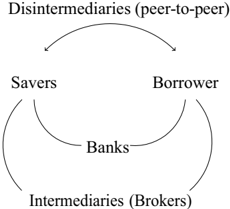
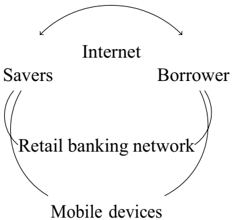
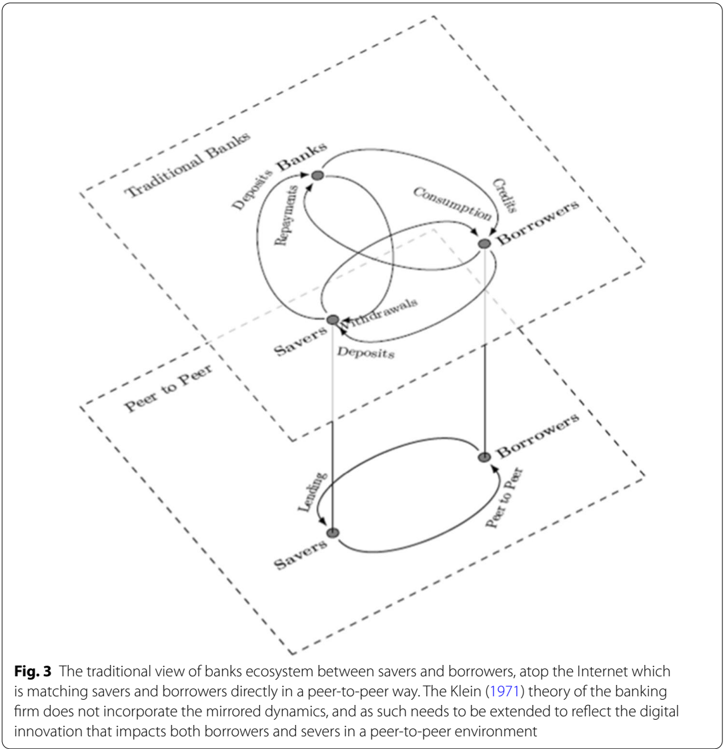
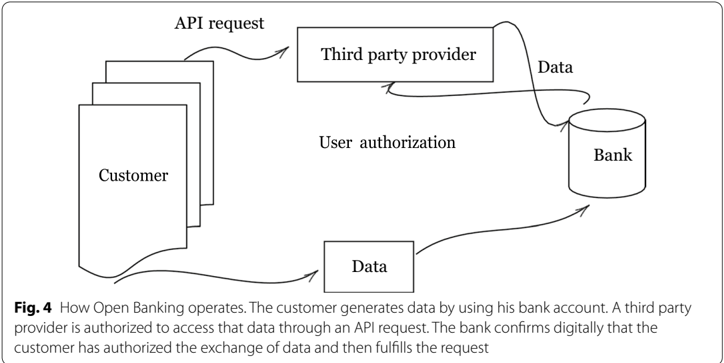
Verification
Claims the paper makes
The claims and statistics of this paper haven’t been checked yet.
Free: it reads the open-access text and checks the first 5 claims that cite a source we can check. Create a free account to check every claim.
Claims other papers make about this one
Each is checked against this paper’s own text: does it say what the citing paper says it does?
The source backs part of the claim, not all of it — or backs it for a different population, condition or comparison.
In the citing paper
“According to previous studies, trust positively affects Fintech adoption [43,44].”
From Fintech Adoption Drivers for Innovation for SMEs in Indonesia (2022) · cites this paper as [44]
Experimental — accuracy not yet measured
Self-check
Percentages, sums and reported differences re-computed from the paper’s own numbers.
The self-check needs the paper’s full text.
Citations
Cites
The Theory of Economic Development
Schumpeter, J., & Backhaus, U. (2006) · The European Heritage in Economics and the Social Sciences · doi:10.1007/0-306-48082-4_3 · Cited by 22,506
The Cost of Capital, Corporation Finance and the Theory of Investment
Miller, M. H. (1958) · American Economic Review · Cited by 14,574
Bank Runs, Deposit Insurance, and Liquidity
Diamond, D. W., & Dybvig, P. H. (1983) · Journal of Political Economy · doi:10.1086/261155 · Cited by 9,369
Financial intermediation and delegated monitoring
Diamond, D. W. (1984) · The Review of Economic Studies · doi:10.2307/2297430 · Cited by 8,476 · cited 1×
“Diamond (1984) and Ramakrishnan and Thakor (1984) suggested the answer was due to diversification and its impact on reducing monitoring costs.”
BackgroundThe financial accelerator, and the flight to quality
Bernanke, B., Gertler, M., & Gilchrist, S. (1996) · The Review of Economics and Statistics · doi:10.2307/2109844 · Cited by 2,351
Berger, A. N., Miller, N. H., Petersen, M. A., Rajan, R. G., & Stein, J. C. (2005) · Journal of Financial Economics · doi:10.1016/j.jfineco.2004.06.003 · Cited by 1,888
Fintech, regulatory arbitrage, and the rise of shadow banks
Buchak, G., Matvos, G., Piskorski, T., & Seru, A. (2018) · Journal of Financial Economics · doi:10.1016/j.jfineco.2018.03.011 · Cited by 1,784
FinTech and banking: What do we know?
Thakor, A. V. (2020) · Journal of Financial Intermediation · doi:10.1016/j.jfi.2019.100833 · Cited by 1,378 · cited 2×
“A review of financial technology and banking literature is provided by Thakor (2020).”
BackgroundMethodDoes deposit insurance increase banking system stability? An empirical investigation
Demirgüç-Kunt, A., & Detragiache, E. (2002) · Journal of Monetary Economics · doi:10.1016/s0304-3932(02)00171-x · Cited by 1,371
Diamond, D. W., & Rajan, R. G. (2000) · The Journal of Finance · doi:10.1111/0022-1082.00296 · Cited by 1,334
Research works printed but not linked: 1
- 7. Bord V, Santos JC (2012) The rise of the originate-to-distribute model and the role of banks in financial intermediation. Federal Reserve Bank N Y Econ Policy Rev 18(2):21-34
Cited by
Utilization of artificial intelligence in the banking sector: a systematic literature review
Fares, O. H., Butt, I., & Lee, S. H. M. (2023) · Journal of Financial Services Marketing · doi:10.1057/s41264-022-00176-7 · Cited by 222
“We begin from the initial step of customer acquisition, and proceed to credit decision, and post-decision (Broby, 2021).”
MethodFintech Adoption Drivers for Innovation for SMEs in Indonesia
Nugraha, D. P., Setiawan, B., Nathan, R. J., & Fekete-Farkas, M. (2022) · Journal of Open Innovation: Technology, Market, and Complexity · doi:10.3390/joitmc8040208 · Cited by 188
“According In the context of technology adoption, trust correlates with reducing anxiety which then increases consumer confidence to adopt new technology. to previous studies, trust positively affects Fintech adoption [43,44].”
Setiawan, B., Phan, T. D., Medina, J., Wieriks, M., Nathan, R. J., & Fekete‐Farkas, M. (2023) · Journal of Financial Services Marketing · doi:10.1057/s41264-023-00217-9 · Cited by 156
“Trust is the foundation of financial services (Broby 2021).”
BackgroundDigital payment and banking stability in emerging economy with dual banking system
Kasri, R. A., Indrastomo, B. S., Hendranastiti, N. D., & Prasetyo, M. B. (2022) · Heliyon · doi:10.1016/j.heliyon.2022.e11198 · Cited by 131
“In other words, digital innovation disintermediates the surplus side and deficit side (Broby, 2021).”
BackgroundGrassi, L., Figini, N., & Fedeli, L. (2022) · Financial Innovation · doi:10.1186/s40854-022-00378-x · Cited by 116
“Monte dei Paschi di Siena is the oldest bank in the world that is still operating (Broby 2021) and Italy has more retail bank branches, on average, than any other country in Western Europe, about one branch for every 2500 people versus one for every 3100 in the EU28 or one for every 7000 in Sweden…”
BackgroundPreziuso, M., Koefer, F., & Ehrenhard, M. (2023) · Financial Innovation · doi:10.1186/s40854-023-00522-1 · Cited by 100
“Thanks to technological innovations, they have tended to become more competitive and customer-oriented organizations (Broby, 2021; Kou et al., 2021).”
BackgroundFinTech’s rapid growth and its effect on the banking sector
Basdekis, C., Christopoulos, A. G., Katsampoxakis, I., & Vlachou, A. (2022) · Journal of Banking and Financial Technology · doi:10.1007/s42786-022-00045-w · Cited by 102
“In another recent study, Broby [14] concluded that, in an increasingly digital world, trust will remain at the core of banking, which means that transformation of assets will continue to play an important role.”
BackgroundBhatnagr, P., & Rajesh, A. (2024) · Management Decision · doi:10.1108/md-07-2023-1145 · Cited by 94
Cheng, X., Du, A. M., Yan, C., & Goodell, J. W. (2025) · International Review of Financial Analysis · doi:10.1016/j.irfa.2025.103927 · Cited by 79
CYBERSECURITY RISK ASSESSMENT IN BANKING: METHODOLOGIES AND BEST PRACTICES
Dawodu, S. O., Omotosho, A., Akindote, O. J., Adegbite, A. O., & Ewuga, S. K. (2023) · Computer Science & IT Research Journal · doi:10.51594/csitrj.v4i3.659 · Cited by 88
RegTech innovations streamlining compliance, reducing costs in the financial sector
Olawale, O., Ajayi, F. A., Udeh, C. A., & Odejide, O. A. (2024) · GSC Advanced Research and Reviews · doi:10.30574/gscarr.2024.19.1.0146 · Cited by 58
“This includes the use of technologies such as artificial intelligence, machine learning, big data analytics, and blockchain to streamline and simplify compliance procedures, reduce risks, and minimize costs associated with regulatory adherence (Broby, D., 2021).”
MethodThe strategic options of fintech platforms: An overview and research agenda
Ng, E., Tan, B. C. C., Sun, Y., & Meng, T. (2022) · Information Systems Journal · doi:10.1111/isj.12388 · Cited by 84
“And more importantly, a closer examination of the articles aligned with this theme suggests that many of them tend to be descriptive (e.g., Chong et al., 2019; Gimpel et al., 2018; I. Lee & Shin, 2018) and/or based solely on anecdotal evidence (e.g., Broby, 2021; Dhar & Stein, 2017).”
BackgroundA Bibliometric mapping of peer-to-peer lending research based on economic and business perspective
Kholidah, H., Hijriah, H. Y., Mawardi, I., Huda, N., Herianingrum, S., & Alkausar, B. (2022) · Heliyon · doi:10.1016/j.heliyon.2022.e11512 · Cited by 64
“…the differences between peer-to-peer lending and bank on their business models as well as the possible substitution effects between them, but only a few studies can propose a collaboration model between the two institutions (Havrylchyk and Verdier, 2019; Kohardinata et al., 2020a; Broby, 2021).”
BackgroundEntrepreneurial, institutional and financial strategies for FinTech profitability
Valverde, S. C., Solas, P. J. C., & Fernández, F. R. (2022) · Financial Innovation · doi:10.1186/s40854-021-00325-2 · Cited by 64
“Broby (2021) argues that financial technology is changing the future of banking and the way banks intermediate.”
BackgroundChallenges and opportunities to enhance digital financial transformation in crisis management
Dafri, W., & Al-Qaruty, R. (2023) · Social Sciences & Humanities Open · doi:10.1016/j.ssaho.2023.100662 · Cited by 43
A framework to improve churn prediction performance in retail banking
Brito, J. B. G., Bucco, G. B., Heldt, R., Becker, J. L., Silveira, C. S., Luce, F. B., & Anzanello, M. J. (2024) · Financial Innovation · doi:10.1186/s40854-023-00558-3 · Cited by 56
“Broby (2021) also reported that the advancement of technology has reduced information asymmetry between banks and their clients, boosting competition and making customer retention management increasingly important.”
BackgroundMethodAhmed, F., Hussain, A., Khan, S. N., Malik, A. H., Asim, M., Ahmad, S., & ELAffendi, M. A. (2024) · Risks · doi:10.3390/risks12080133 · Cited by 48
Science and Technology Financial Policies and Enterprise Digital Technology Innovation
Shao, X., Xi, K., & Chen, Z. (2025) · Finance research letters · doi:10.1016/j.frl.2025.107646 · Cited by 40
Inclusive FinTech, open banking, and bank performance: evidence from China
Liu, Z., Li, X., & Li, Z. (2024) · Financial Innovation · doi:10.1186/s40854-024-00679-3 · Cited by 46
“Open banking, which allows third-parity developers to access financial data in traditional banking system, has already become one of the most important inclusive outcomes of FinTech applications in banking, helping to reshape the future of banking (Broby 2021).”
Central bank digital currency, loan supply, and bank failure risk: a microeconomic approach
Jun, J., & Yeo, E. (2021) · Financial Innovation · doi:10.1186/s40854-021-00296-4 · Cited by 38
Zhang, R., Fu, W., & Kuang, Y. (2022) · International Journal of Environmental Research and Public Health · doi:10.3390/ijerph19169812 · Cited by 39
Chai, Z.-M., Malik, M., Hussain, M., & Hussain, S. (2024) · Heliyon · doi:10.1016/j.heliyon.2024.e36919 · Cited by 30
Digital transformation in commercial banks: Unraveling the flow of Industry 4.0
Felipe, T. F., de Oliveira, R. T., Toth‐Peter, A., Mathews, S. W., & Dulleck, U. (2025) · Digital Business · doi:10.1016/j.digbus.2025.100129 · Cited by 53
Financial technology (Fintech) research trend: a bibliometric analysis
Jafri, J. A., Amin, S. I. M., & Abdul-Rahman, A. (2025) · Discover Sustainability · doi:10.1007/s43621-025-01225-6 · Cited by 51
Impact of bank competition on financial stability-a study on Indian banks
Verma, D., & Chakarwarty, Y. (2023) · Competitiveness Review An International Business Journal incorporating Journal of Global Competitiveness · doi:10.1108/cr-07-2022-0102 · Cited by 39
An Ensemble Model for Predicting Retail Banking Churn in the Youth Segment of Customers
Bharathi, S. V., Pramod, D., & Raman, R. (2022) · Data · doi:10.3390/data7050061 · Cited by 42
Digital banking: how social media is shaping the game
Sarto, N. D., Bocchialini, E., Gai, L., & Ielasi, F. (2024) · Qualitative Research in Financial Markets · doi:10.1108/qrfm-12-2023-0314 · Cited by 32
Hughes, L., Seddon, J. J. M., & Dwivedi, Y. K. (2023) · Journal of Information Technology · doi:10.1177/02683962231219512 · Cited by 47
“…within the banking industry and the impact of the signi fi cant levels of innovative change driven by new entrants (Agarwal and Zhang, 2020; Broby, 2021; Chanias et al., 2019; Dapp, 2017; Khrais and Shidwan, 2020; Vasiljeva and Lukanova, 2016), researchers have omitted to assess these…”
Isiaku, L., & Adalıer, A. (2024) · Information Development · doi:10.1177/02666669241307024 · Cited by 25
“Furthermore, another study conducted by Broby (2021) found that competition from non-banking fi nancial institutions, such as mobile money operators, has also accelerated technological innovations in traditional banking services.”
Chand, S. A., Singh, B., Narayan, K., & Chand, A. (2025) · Journal of risk and financial management · doi:10.3390/jrfm18070366 · Cited by 38
Digital banking and deposit: Substitution effect of mobile applications on web services
Wu, L., Yu, D., & Lv, Y. (2023) · Finance research letters · doi:10.1016/j.frl.2023.104138 · Cited by 40
Polasik, M., & Kotkowski, R. (2022) · SSRN Electronic Journal · doi:10.2139/ssrn.4105648 · Cited by 34
Research on the impact of financial technology on risk-taking of commercial banks
Li, C., Li, Y., Xu, Y., & Sun, G. (2025) · Research in International Business and Finance · doi:10.1016/j.ribaf.2025.102804 · Cited by 33
Does digital transformation affect systemic risk? Evidence from the banking sector in China
Li, Y., Xia, Y., Sun, Z., & Sun, N. (2025) · International Review of Financial Analysis · doi:10.1016/j.irfa.2025.104137 · Cited by 32
AI-Enhanced Detection and Mitigation of Cybersecurity Threats in Digital Banking
Nuthalapati, S. B. (2023) · doi:10.53555/kuey.v29i1.6908 · Cited by 47
Perea-Khalifi, D., Diéguez, A. I. I., & Palos‐Sánchez, P. R. (2024) · Financial Innovation · doi:10.1186/s40854-023-00496-0 · Cited by 26
“In addition, paytech providers must minimize the costs of implementing a new environment using technology to enhance the delivery of banking services (Broby 2021).”
BackgroundOdionu, C. S., Adepoju, P. A., Ikwuanusi, U. F., Azubuike, C., & Sule, A. K. (2024) · Engineering Science & Technology Journal · doi:10.51594/estj.v5i12.1786 · Cited by 20
Ungratwar, S., Sharma, D., & Kumar, S. (2025) · Humanities and Social Sciences Communications · doi:10.1057/s41599-025-05186-z · Cited by 31
“Financial technology is altering the future of banking and the way banks position themselves in the fi nancial market; however, trust will still be on core banking (Broby, 2021).”
Does FinTech efficiently hamper manipulating ESG data behavior?
Zhang, D., Wang, C., He, Y., & Vigne, S. A. (2024) · The British Accounting Review · doi:10.1016/j.bar.2024.101494 · Cited by 35
Nexus Between Fintech Innovations and Liquidity Risk in GCC Banks: The Moderating Role of Bank Size
Alshouha, L. F., Khasawneh, O., Alshannag, F. M., & Tanbour, K. A. (2025) · Journal of risk and financial management · doi:10.3390/jrfm18050226 · Cited by 29
“Innovations, such as online loans with lower interest rates than those offered by traditional banks, attract consumers, which affects banks’ liquidity (Broby, 2021).”
Impact of FinTech Growth on Bank Performance in GCC Region
Litimi, H., BenSaïda, A., & Raheem, M. M. (2023) · Journal of Emerging Market Finance · doi:10.1177/09726527231218423 · Cited by 13
Alfarizi, M. (2023) · International Journal of Islamic Economics and Finance (IJIEF) · doi:10.18196/ijief.v6i1.16824 · Cited by 31
Broby, D., & Yang, Z. (2025) · Journal of risk and financial management · doi:10.3390/jrfm18070379 · Cited by 21
Self-citationA bibliometric analysis of the review papers in finance: Evidence from the last two decades
Rabbani, M. R., Hassan, M. K., Dejan, A., Bashar, A., & Hasan, M. B. (2024) · Review of Financial Economics · doi:10.1002/rfe.1197 · Cited by 22
Metaverse finance: shaping the future of Islamic fintech solutions in UAE
Alkasasbeh, H., Oudat, M., Abu-AlSondos, I. A., & Alhawamdeh, L. N. (2024) · Journal of Islamic marketing · doi:10.1108/jima-01-2024-0039 · Cited by 25
Determinants of Intention to Use Buy Now Pay Later (BNPL)
Hoo, W. C., Khee, K. H., Wolor, C. W., Teck, T. S., & Toh, J. S. (2024) · Journal of Lifestyle and SDGs Review · doi:10.47172/2965-730x.sdgsreview.v5.n01.pe02698 · Cited by 28
Will fintech enhance financial regulation?
Zhao, Y., & Ma, F. (2025) · Research in International Business and Finance · doi:10.1016/j.ribaf.2025.103005 · Cited by 16
Finans Sektöründe Metaverse Teknolojisinin Bugünü ve Geleceği
Er, H., & Yücel, R. (2023) · Özgür Yayınları eBooks · doi:10.58830/ozgur.pub245.c1068 · Cited by 20
van Zeeland, I., & Pierson, J. (2024) · Financial Innovation · doi:10.1186/s40854-023-00533-y · Cited by 33
“For example, the Internet has fundamentally altered the nature of banking, changing banking services and practices, which, in turn, means that banking institutions must adapt (Broby 2021).”
BackgroundRehman, S. U., Hussain, S., & Rasheed, A. (2024) · Journal of Modelling in Management · doi:10.1108/jm2-12-2023-0304 · Cited by 23
Management and administration of financial resources using digital technologies
Yudina, S., Lysa, О., Разумова, Г. В., Оскома, О., & Halahanov, V. (2024) · Scientific Bulletin of Mukachevo State University Series “Economics” · doi:10.52566/msu-econ1.2024.92 · Cited by 20
Financial technology and credit risk management: the case of non-performing loans in Tanzanian banks
Ally, O. J., Kulindwa, Y. J., & Mataba, L. D. (2025) · Cogent Economics & Finance · doi:10.1080/23322039.2025.2459188 · Cited by 15
“Broby (2021) and Pantielieieva et al. (2020) highlighted FinTech ’ s role in strengthening financial intermediation, particularly in emerging markets.”
Effect of innovation practices of banks on customer loyalty: an SEM-ANN approach
Tiwari, P. (2023) · Benchmarking An International Journal · doi:10.1108/bij-06-2022-0392 · Cited by 22
Key Factors Influencing Fintech Development in ASEAN-4 Countries: A Mediation Analysis
Warokka, A., Setiawan, A., & Aqmar, A. Z. (2025) · FinTech · doi:10.3390/fintech4020017 · Cited by 15
“These trends, accelerated by the 2008 financial crisis, have coincided with advances in digital technology that have increased competitiveness by enabling mobile service distribution [30].”
Cybercrime dan Cybersecurity pada Fintech: Sebuah Tinjauan Pustaka Sistematis
Riskiyadi, M., Anggono, A., & Tarjo, T. (2021) · Jurnal Manajemen dan Organisasi · doi:10.29244/jmo.v12i3.33528 · Cited by 41
“Meskipun di sisi lain, keberadan fintech juga memberikan ancaman serius terhadap keberlangsungan lembaga keuangan, perbankan dan asuransi yang masih berkembang secara konvesional (Broby, 2021; Şcheau, 2017).”
BackgroundHAMARAT, Ç., & Broby, D. (2022) · Financial Innovation · doi:10.1186/s40854-022-00377-y · Cited by 20
Self-citationPOTENSI BISNIS PERBANKAN SYARIAH INDONESIA TAHUN 2024: PELUANG DAN TANTANGAN
Wahyudi, I., Qizam, I., Amelia, E., & Yama, I. (2024) · JURNAL LENTERA BISNIS · doi:10.34127/jrlab.v13i1.945 · Cited by 31
“Tanpa akselerasi transformasi digital yang memadai, perbankan syariah berisiko kesulitan bersaing dan berinovasi untuk memenuhi ekspektasi masyarakat terhadap layanan perbankan yang semakin canggih (Broby, 2021).”
BackgroundRacicot, F., & Théoret, R. (2022) · Financial Innovation · doi:10.1186/s40854-021-00316-3 · Cited by 14
“On this issue see: Arslanian, H., 5 ways FinTech will change the hedge fund industry (www. henri arsla nian. com); Broby (2021); and Kou et al.”
BackgroundMortgage lending with the participation of the construction financing fund of the bank of the future
Abdullayeva, M., & Ataeva, N. (2022) · Futurity Economics&Law · doi:10.57125/fel.2022.03.25.05 · Cited by 19
Al-Majali, M., Aldalaien, B., Al-Khazaleh, S. M., & Al-Smadi, R. W. (2025) · Economics · doi:10.2478/eoik-2025-0044 · Cited by 12
Digital transformation and bank risk-taking: management efficiency and credit structure perspectives
Zheng, J., Bruna, M. G., Hunjra, A. I., & Zhao, S. (2025) · Journal of Organizational Change Management · doi:10.1108/jocm-12-2024-0823 · Cited by 12
Neuromarketing and Big Data Analysis of Banking Firms’ Website Interfaces and Performance
Giannakopoulos, N. T., Σακάς, Δ. Π., & Migkos, S. P. (2024) · Electronics · doi:10.3390/electronics13163256 · Cited by 13
Okoli, T. T. (2024) · Investment Management and Financial Innovations · doi:10.21511/imfi.21(4).2024.31 · Cited by 14
Apendi, D. A. O., Li, K., Pea-Assounga, J. B. B., & Bambi, P. D. R. (2025) · Sustainable Futures · doi:10.1016/j.sftr.2025.100605 · Cited by 23
Predicting M-banking adoption: the moderating role of age in technology acceptance
Kusairi, K., Sukmawati, A., Nanang, A. S., & Rahman, M. S. (2025) · Cogent Business & Management · doi:10.1080/23311975.2025.2547964 · Cited by 14
“…affects bank stability and performance and may increase risk and fragility in simple terms, digital innovation brings both benefits and challenges (Broby, 2021). this trend raises concerns among central banks and regulators, as financial transactions are increasingly conducted outside the…”
Improving bank customer churn prediction with feature reduction using GA
Nisha, T. N., & Pramod, D. (2025) · Scientific Reports · doi:10.1038/s41598-025-23867-2 · Cited by 13
Chandani, A., Sanghvi, M., Wagholikar, S., Pathak, M., Bagade, S. J., Ubarhande, P., & Saini, U. (2025) · Journal of Behavioral and Experimental Finance · doi:10.1016/j.jbef.2025.101092 · Cited by 15
Kemala, P. N., Koesrindartoto, D. P., & Hakam, D. F. (2025) · Digital Finance · doi:10.1007/s42521-025-00166-z · Cited by 10
From Closed Banking to Open Banking: Risks and Opportunities
Zeynalova, A. (2024) · Journal of Applied Business Taxation and Economics Research · doi:10.54408/jabter.v3i3.278 · Cited by 10
“This encourages financial institutions to be more innovative and customer-focused (Broby, D. 2021).”
BackgroundInfluentialDisruptor or enabler? AI and financial system stability
Imandojemu, K., Otokiti, S. E. E., Adebukunola, A. M., Osabohien, R. A., & Al‐Faryan, M. A. S. (2025) · Journal of Financial Economic Policy · doi:10.1108/jfep-10-2024-0306 · Cited by 12
Wang, X., Hu, W., & Guan, N. (2025) · Systems · doi:10.3390/systems13050342 · Cited by 12
Liu, J., & Xia, W. (2025) · Finance research letters · doi:10.1016/j.frl.2025.107658 · Cited by 9
FinTech, heterogeneous innovation, and firm total factor productivity
Wei, R., & Xia, Y. (2026) · Journal of Innovation & Knowledge · doi:10.1016/j.jik.2026.101003 · Cited by 12
Is nobody interested in the future of banks? a scoping literature review on the state of the debate
Hübenbecker, U. (2023) · Management Review Quarterly · doi:10.1007/s11301-023-00334-8 · Cited by 9
“Broby (2021) also takes a strong look at the bank as an intermediary.”
Financial Services Digitainability: Financial Inclusion and Efficiency in EU Countries
Spilbergs, A. (2023) · WSEAS TRANSACTIONS ON BUSINESS AND ECONOMICS · doi:10.37394/23207.2023.20.128 · Cited by 13
“As research shows, the development and successful implementation of digital technologies is one of the essential factors for ensuring sustainability, [2], [5], [6], [8], [13], [18], [24], [31], [48], which creates an opportunity to provide customers with more friendly access to financial services, [26], [28], to”
BackgroundFinancial Technologies and Financial Inclusion in Emerging Economies: Perspectives from Nigeria
Ogunode, O. A., & Akintoye, I. R. (2023) · Asian Journal of Economics Business and Accounting · doi:10.9734/ajeba/2023/v23i1915 · Cited by 27
Pinochet, L. H. C., Bastos, D. C. M., Pardim, V. I., Sun, V., & dos Santos, M. (2023) · Procedia Computer Science · doi:10.1016/j.procs.2023.08.045 · Cited by 8
Er, M., & Altunışık, R. (2023) · Özgür Yayınları eBooks · doi:10.58830/ozgur.pub245.c1058 · Cited by 4
Wider, W., Salimullah, A. H. M., Islam, M. R., Rahman, J., Tanchangya, T., Siddiqi, K. O., & Rahman, M. H. (2025) · Social Sciences & Humanities Open · doi:10.1016/j.ssaho.2025.102299 · Cited by 11
Open Public Data and the Path to Urban Sustainable Development: A Resilience Perspective
Jiang, W., Jiang, N., & Yu, D. (2026) · Sustainable Development · doi:10.1002/sd.70695 · Cited by 12
The dichotomy of inclusiveness and vulnerability as a consequence of banking platform development
Łasak, P., & Wyciślak, S. (2024) · Research in International Business and Finance · doi:10.1016/j.ribaf.2024.102536 · Cited by 10
Digital Payment Adoption: Review of Literature
Colline, F., Furinto, A., & Rano Kartono, M. (2022) · International Conference on Industrial Engineering and Operations Management (IEOM) · doi:10.46254/in02.20220496 · Cited by 10
Future trends in Fintech and sustainability: Empirical study
hazimeh, A. M. A., Al-Smadi, R. W., & Al-Smadi, A. W. (2024) · Investment Management and Financial Innovations · doi:10.21511/imfi.21(3).2024.05 · Cited by 12
“In Fintech (Financial Technology), for instance, relationships between customer trust and the competitiveness of Fintech solutions are usually the key topics in contemporary literature (Broby, 2021).”
BackgroundKey factors influencing fintech adoption among Saudi banks: a conceptual framework
Alrsheedi, A., & Iskandar, Y. H. P. (2025) · Humanities and Social Sciences Communications · doi:10.1057/s41599-025-05532-1 · Cited by 10
“Furthermore, during the 2008 global fi nancial crisis, the banking industry experienced signi fi cant losses in investments, leading to bank failures, bankruptcy, and severe damage to its reputation (Bu et al., 2022; Sidaoui et al., 2022, Broby, 2021; Loiacono and Rulli, 2022).”
InfluentialThe Degree of Big Data Technology Transformation and Green Operations in the Banking Sector
Yun, J., & Jin, S. (2024) · Systems · doi:10.3390/systems12040135 · Cited by 12
“Banks have become intrinsically linked to technology [7] and must allocate resources for the digitization of internal processes to offer new products and services [8].”
BackgroundBernardelli, M., Korzeb, Z., & Niedziółka, P. (2024) · International Journal of Management and Economics · doi:10.2478/ijme-2024-0022 · Cited by 8
Navigating liquidity management challenges in the era of digital banking in the United States
Adebayo, O., Mensah, N., & Adukpo, T. K. (2025) · World Journal of Advanced Research and Reviews · doi:10.30574/wjarr.2025.25.2.0576 · Cited by 10
“…on the concept of liquidity, this poses an increasing challenge of immediate access to funds that can drive problems for any organization including banks as customers today expect seamless and on-demand access to their funds, thus requiring a shift in liquidity management from banks [12].”
Alsmadi, A. A., & Al‐Okaily, M. (2025) · Competitiveness Review An International Business Journal incorporating Journal of Global Competitiveness · doi:10.1108/cr-11-2023-0298 · Cited by 15
Leadership Is a Driving Factor: Financial Technology Effect in Rural Bank Performance
Tedyono, R., Madyan, M., Harymawan, I., & Margono, H. (2025) · Journal of risk and financial management · doi:10.3390/jrfm18070353 · Cited by 12
Nugraha, G. I. K., Handayati, P., & Siswanto, E. (2025) · Formosa Journal of Multidisciplinary Research · doi:10.55927/fjmr.v4i6.261 · Cited by 10
“(Broby, 2021) in theoretical analysis, it is explained that digitalization is changing the business model of banks and financial intermediaries, creating a new ecosystem that is more conducive to MSMEs.”
SCIENTOMETRIC ANALYSIS OF DIGITAL BANKING: FUTURE ISLAMIC DIGITAL BANK IN INDONESIA
Riani, R., & Rusydiana, A. S. (2022) · International Journal of Islamic Business Ethics · doi:10.30659/ijibe.7.2.125-137 · Cited by 7
“Thus, the Islamic banking sector must immediately prepare a business strategy to be able to compete with other banks (Broby, 2021).”
BackgroundManaging regulatory risks of small bank—fintech collaborations
Simda, P., & Gimpel, G. (2025) · Journal of Banking Regulation · doi:10.1057/s41261-025-00288-9 · Cited by 9
“…as platform-based intermediaries rather than lending money themselves, allowing them to make riskier loans that reach customers banks traditionally overlooked, or to charge lower rates than banks because these fintechs do not hold the loans so they do not need to charge the same risk premium [33].”
Siddik, A. B., & Amin, N. U. (2025) · Research in International Business and Finance · doi:10.1016/j.ribaf.2025.103245 · Cited by 10
Irawan, I., Fadhlihi, A., Diwasya, I. R., & Astuti, S. (2026) · Academia Open · doi:10.21070/acopen.11.2026.13046 · Cited by 10
Daoud, M. K., Odeh, M. H., Almanaseer, S. R., & Twaissi, N. M. (2026) · FIIB Business Review · doi:10.1177/23197145261416212 · Cited by 6
Drivers of FinTech adoption: a bibliometric approach
da Silva, S. R. T., Coelho, A., & Proença, C. (2026) · Financial Innovation · doi:10.1186/s40854-025-00855-z · Cited by 9
“…to ensure comprehensive coverage, methodological rigor, and reliability of the results, considering that bibliographic data and bibliometric methods, which employ quantitative techniques, make this analysis more transparent and definitive (Baker et al. 2020; Pattnaik et al. 2020, 2021, 2022).”
The Impact of Digital Technologies on the Efficiency of Banking
Ануарбековна, Г. Н., Zhanibekova, G. K., Imramziyeva, M., Kabdeshova, A., & Исаева, А. У. (2023) · The economy strategy and practice · doi:10.51176/1997-9967-2023-3-241-250 · Cited by 6
The role of persuasion by significant others and engagement in bank-switching intention
Bortne, Ø., Bjørnestad, J. R., Arnestad, M. N., Tjora, T., & Brønnick, K. (2024) · Journal of Financial Services Marketing · doi:10.1057/s41264-024-00293-5 · Cited by 8
“…of open banking, banking-as-a-service, artificial intelligence, neo-banks, and fintech companies are further fuelling digital transformation, consumer expectation, engagement, and mobility (Broby 2021; Fares et al. 2023; Mukerjee 2024; Nambiar & Bolar 2023; Onyia & Tuyon 2023; Szopinski 2021).”
An exploratory review of the fintech influence field
Maknickienė, N., & Lapkovskaja, J. (2024) · Journal of Infrastructure Policy and Development · doi:10.24294/jipd.v8i4.3410 · Cited by 7
“Broby (2021) proposed four strategies for digitising banking services for different types of customers, which, along with risk assessment and building trust in financial institutions, can improve the delivery of banking services.”
BackgroundKhalil, M. A. (2026) · Future Business Journal · doi:10.1186/s43093-025-00706-4 · Cited by 5
“Fintech refers to offering a broad range of financial [15].”
Metadata
- Authors
- Broby, D.
- Affiliations
- University of Strathclyde (GB)
- Corresponding author
- Broby, Daniel
- ORCID
- Broby, Daniel
- Venue
- Financial Innovation
- Published
- 2021-06-18
- Volume
- 7
- Issue
- 1
- ISSN
- 2199-4730 (ISSN-L)
- OpenAlex
- W3171594084
- Semantic Scholar
- 4476dcafc7b0e19af8d07ce26d2a1bd12f80f835
- Cited by
- 259
- References
- 34
- Citations by year
- 2026: 48 · 2025: 80 · 2024: 52 · 2023: 45 · 2022: 30 · 2021: 4
- FWCI
- 49.53
- Type
- journal article
- Language
- en
- Open access
- diamond
- doi.org
- Licence
- cc-by
- creativecommons.org/licenses/by/4.0 (tdm)
- creativecommons.org/licenses/by/4.0 (vor)
- Locations
- Financial Innovation (publishedVersion, cc-by)
- Ulster University Research Portal (Ulster University) (acceptedVersion, cc-by)
- Strathprints: The University of Strathclyde institutional repository (University of Strathclyde) (acceptedVersion)
- RePEc: Research Papers in Economics (submittedVersion)
- DOAJ (DOAJ: Directory of Open Access Journals) (submittedVersion, cc-by-sa)
- Econstor (Econstor) (submittedVersion, cc-by)
- Topics
- Social Sciences › Economics, Econometrics and Finance › General Economics, Econometrics and Finance › Digital Transformation in Financial Services
- Social Sciences › Business, Management and Accounting › Management Information Systems › FinTech, Crowdfunding, Digital Finance
- Social Sciences › Economics, Econometrics and Finance › Finance › Banking stability, regulation, efficiency
- Keywords
- fintech, future of banking, bank business models, digital transformation, financial intermediation, shadow banking, deposit taking, lending, bank profitability, customer retention, customer acquisition, banking-as-a-service, trust in banks, liquidity transformation
About these checks
Registry, retraction, Cites and statistics results are computed, not judged, with one exception: a printed reference that no index lists is read once by a model before it counts as a citation error. Claims are extracted by a model and kept only when their quote appears verbatim in the text; each cited source is then checked, with a model’s help, for whether it says what the claim relies on. Those verdicts can be wrong — read the claim’s quote and the cited source before relying on one.
Statistics and arithmetic are recomputed, not judged.
Confidence bands are shown only for fields calibrated on our annotated test set. None is calibrated yet, so no band is shown.
What counts as a claim ›How we measure confidence ›How we check this ›
Are you an author, or do you see a problem with this page? Request a review
Data sources
Bibliographic data: Semantic Scholar, OpenAlex, Crossref.
Contains information from the Semantic Scholar Academic Graph Datasets, made available under the ODC Attribution License (ODC-BY 1.0).
Semantic Scholar’s data is described in: Kinney, R., et al. (2023). The Semantic Scholar Open Data Platform. arXiv:2301.10140.
