

The DOI matches its Crossref record; 82 of the 83 references it cites were found in a registry or an index.
Humans versus AI: whether and why we prefer human-created compared to AI-created artwork
Open accessAbstract
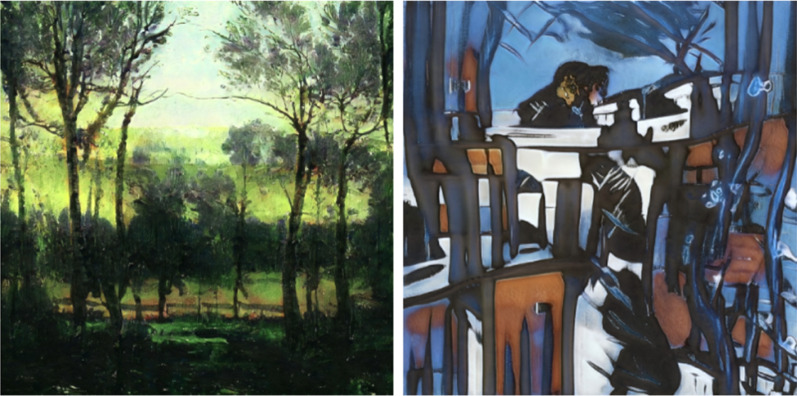
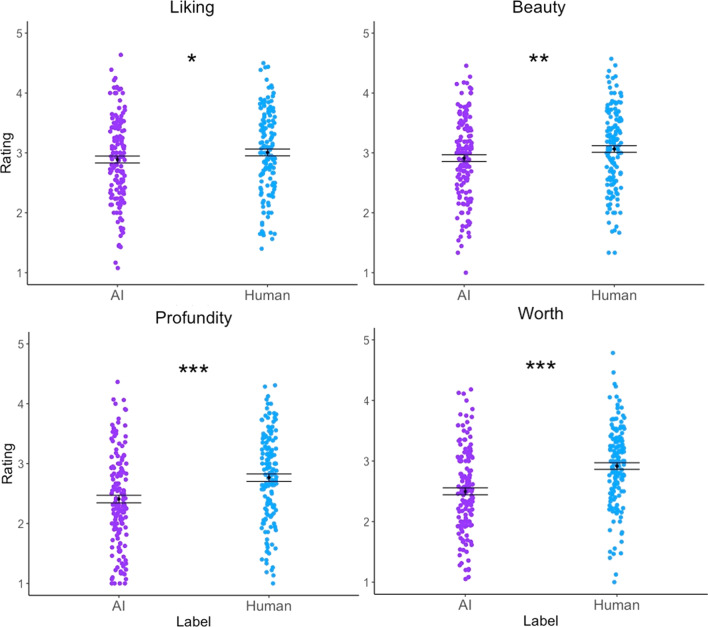
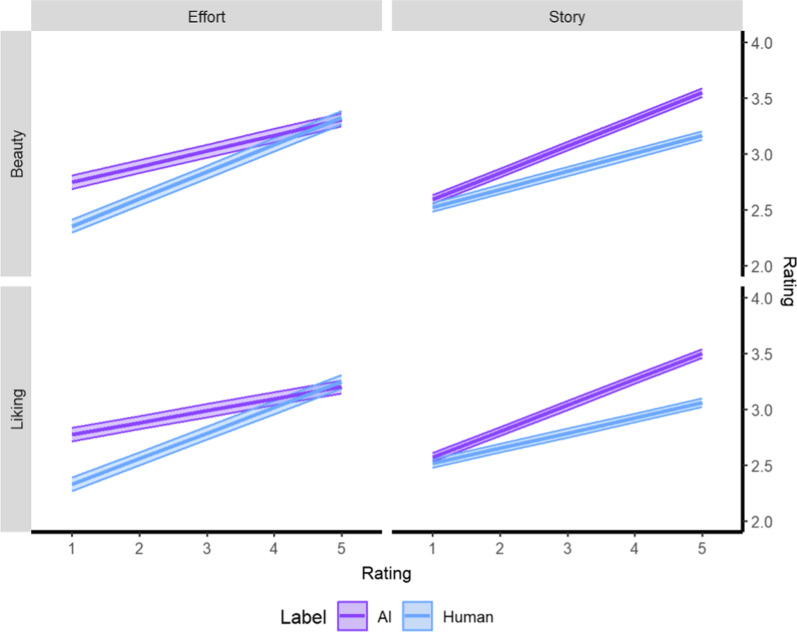
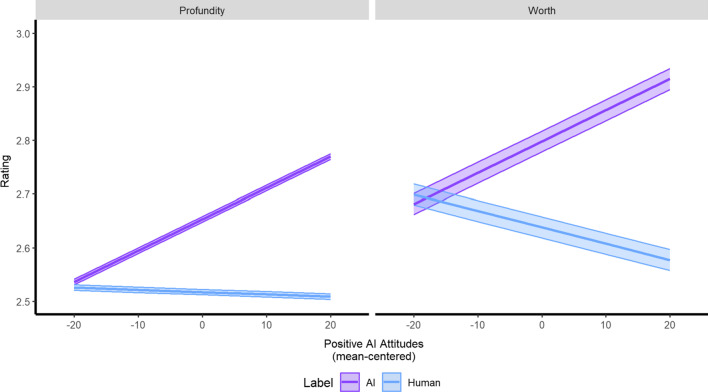
With the recent proliferation of advanced artificial intelligence (AI) models capable of mimicking human artworks, AI creations might soon replace products of human creativity, although skeptics argue that this outcome is unlikely. One possible reason this may be unlikely is that, independent of the physical properties of art, we place great value on the imbuement of the human experience in art. An interesting question, then, is whether and why people might prefer human-compared to AI-created artworks. To explore these questions, we manipulated the purported creator of pieces of art by randomly assigning a “Human-created” or “AI-created” label to paintings actually created by AI, and then assessed participants’ judgements of the artworks across four rating criteria (Liking, Beauty, Profundity, and Worth). Study 1 found increased positive judgements for human- compared to AI-labelled art across all criteria. Study 2 aimed to replicate and extend Study 1 with additional ratings (Emotion, Story, Meaningful, Effort, and Time to create) intended to elucidate why people more-positively appraise Human-labelled artworks. The main findings from Study 1 were replicated, with narrativity (Story) and perceived effort behind artworks (Effort) moderating the label effects (“Human-created” vs. “AI-created”), but only for the sensory-level judgements (Liking, Beauty). Positive personal attitudes toward AI moderated label effects for more-communicative judgements (Profundity, Worth). These studies demonstrate that people tend to be negatively biased against AI-created artworks relative to purportedly human-created artwork, and suggest that knowledge of human engagement in the artistic process contributes positively to appraisals of art.
Overview
The claims and statistics of this paper haven’t been checked yet.
Run the check — free, no account needed. It reads the open-access text and checks the sources it cites.
Integrity signals
Registry
Cites
Statistics
Figures
Verification
Claims the paper makes
The claims and statistics of this paper haven’t been checked yet.
Run the check — free, no account needed. It reads the open-access text and checks the sources it cites.
Self-check
Percentages, sums and reported differences re-computed from the paper’s own numbers.
The self-check needs the paper’s full text.
Citations
Cites
Fitting Linear Mixed-Effects Models Using lme4
Bates, D., Mächler, M., Bolker, B., & Walker, S. (2015) · Journal of Statistical Software · doi:10.18637/jss.v067.i01 · Cited by 86,835 · cited 1×
“Linear mixed-effects models using maximum likelihood estimation were estimated in R (version 4.2.0; R Core Team, 2022) using the {lme4} package (version 1.1.33; Bates et al., 2015).”
MethodInfluentialConflict, arousal, and curiosity.
Berlyne, D. E. (1960) · McGraw-Hill Book Company · doi:10.1037/11164-000 · Cited by 6,018 · cited 1×
“…cascade of evaluations, implicating more-complex and elaborative processes in judgements of art that seek to understand meaning and communication through the piece (Berlyne, 1960, 1971; Chatterjee & Vartanian, 2016; Cupchik & Berlyn, 1979; Graf & Landwehr, 2015; Leder et al., 2004; Silvia, 2005).”
BackgroundCognitive Reflection and Decision Making
Frederick, S. (2005) · Journal of Economic Perspectives · doi:10.1257/089533005775196732 · Cited by 5,256
Guilford, J. P. (1950) · American Psychologist · doi:10.1037/h0063487 · Cited by 3,588
Social psychology of creativity: A consensual assessment technique.
Amabile, T. M. (1982) · Journal of Personality and Social Psychology · doi:10.1037/0022-3514.43.5.997 · Cited by 2,278 · cited 2×
“Though contention ensues over whether artificial programs are capable of producing “creative” products (in line with the computer science principle known as the Lovelace Objection; Natale & Henrickson, 2022), it is nonetheless critical to understand how audiences perceive such art given that contemporary psychological…”
BackgroundA model of aesthetic appreciation and aesthetic judgments
Leder, H., Belke, B., Oeberst, A., & Augustin, D. (2004) · British Journal of Psychology · doi:10.1348/0007126042369811 · Cited by 1,968 · cited 4×
“…e.g., Margulis et al., 2019; McAuley et al., 2021), the act of deriving meaning from artwork that is often posited in models of aesthetics (e.g., Leder et al., 2004; Pelowski et al., 2017), and that effort and time involved in creation of a product is often a heuristic for quality (Kruger…”
BackgroundResultInfluentialNeural Correlates of Behavioral Preference for Culturally Familiar Drinks
McClure, S. M., Li, J., Tomlin, D., Cypert, K. S., Montague, L. M., & Montague, P. R. (2004) · Neuron · doi:10.1016/j.neuron.2004.09.019 · Cited by 1,413 · cited 2×
“…the extant literature on the role of labels in subjective evaluations—both in aesthetics and other domains of preferences (e.g., Kirk et al., 2009; McClure et al., 2004; Newman & Bloom, 2012; Plassmann et al., 2008; Turpin et al., 2019)—our findings demonstrate that labels significantly…”
BackgroundResultMotion, emotion and empathy in esthetic experience
Freedberg, D., & Gallese, V. (2007) · Trends in Cognitive Sciences · doi:10.1016/j.tics.2007.02.003 · Cited by 1,334
The Cambridge Handbook of Creativity
(2010) · doi:10.1017/cbo9780511763205 · Cited by 1,291
Spreng*, R. N., McKinnon*, M. C., Mar, R. A., & Levine, B. (2009) · Journal of Personality Assessment · doi:10.1080/00223890802484381 · Cited by 1,161
Research works printed but not linked: 1
- Moffat, D., & Kelly, M. G. (2006). An investigation into people’s bias against computational creativity in music composition. Assessment, 13(11), 1–8.
Cited by
Sorted by citations
Items 101–200 of 229
Exploring Value Creation in Human-AI Collaborative Art: An Affordance Perspective
Zhang, Q. (2026) · Information Systems Frontiers · doi:10.1007/s10796-026-10706-6 · Cited by 2
“In traditional art markets, value has been attributed to its technical execution, origi - nality, and the identity of its creator, with the physical act of creation providing observable evidence of skill and labor (Bellaiche et al., 2023 ; Hernando & Campo, 2017 ).”
GenFrame: An Interactive Picture Frame Painting the Portrait of Any Girl
Kun, P., Freiberger, M., Risi, S., & Løvlie, A. S. (2024) · Designing Interactive Systems Conference · doi:10.1145/3656156.3665437 · Cited by 5
“Some studies show that people have a more favorable judgment of AI-generated art when a human is engaged in the making process [2].”
BackgroundExamining the role of compression in influencing AI-generated image authenticity
Fang, X., Chen, P., Wang, M., et al. (2025) · Scientific Reports · doi:10.1038/s41598-025-91545-4 · Cited by 2
The Next-GenAI-Rtists: A New Generation of Artists with Generative Tools
Vinchon, F., Rafner, J. F., Sherson, J. F., Botella, M., & Lubart, T. (2025) · Springer series on cultural computing · doi:10.1007/978-3-031-86551-0_11 · Cited by 3
Jasińska, K. (2025) · PRAWO i WIĘŹ · doi:10.36128/priw.vi54.1169 · Cited by 2
Trenowanie sztucznej inteligencji a naruszenie praw autorskich. Aspekty dowodowe
Jasińska, K. (2024) · PRAWO i WIĘŹ · doi:10.36128/priw.vi47.796 · Cited by 2
Personalizing Ai Art Boosts Credit, Not BeautyPreprint
Khan, M. A., Mikalonytė, E. S., Mann, S. P., Liu, P., Chu, Y., Picker, M. A., Buyukbabani, M. B., Savulescu, J., Hannikainen, I. R., & Earp, B. D. (2025) · SSRN Electronic Journal · doi:10.2139/ssrn.5218833 · Cited by 2
Letras, IA, bytes y bits: ¿quién escribirá la literatura del futuro?
Vergara, A. (2024) · La Palabra · doi:10.19053/uptc.01218530.n48.2024.18137 · Cited by 1
Cognitive Computing for Understanding and Restoring Color in Renaissance Art
Grigoryan, A. M., Agaian, S. С., & Shao, L. (2025) · Big Data and Cognitive Computing · doi:10.3390/bdcc9050113 · Cited by 1
Leveraging Convolutional Neural Networks for AI Artwork Classification
Ohal, H. S., Balote, T. S., Joshi, M. H., Suryawanshi, H. C., & Suryawanshi, N. V. (2025) · International Conference on Emerging Smart Computing and Informatics (ESCI) · doi:10.1109/esci63694.2025.10988229 · Cited by 1
“[6] investigate bias against artificial intelligence in artistic preference, demonstrating that participants always favored art created by humans over art created by AI.”
The “Aura” of Artworks in the Era of Artificial Intelligence
Wang, Y., & Sun, L. (2025) · Leonardo · doi:10.1162/leon.a.76 · Cited by 1
“AI is no longer just a tool but now participates in the creative process by analyzing vast datasets and learning human aesthetic preferences to generate new artworks [14].”
Jassim, A. L. H. A. (2025) · Journal of Arts, Literature, Humanities and Social Sciences · doi:10.33193/jalhss.121.2025.1455 · Cited by 1
Generative Artificial Intelligence, Creativity, and Innovation
Schilirò, D. (2025) · Emerald Group Publishing Limited eBooks · doi:10.1108/978-1-83549-105-820251011 · Cited by 2
A Consensus Definition of Creativity in Surgery: A Focus Group and Modified Delphi Study
Thabane, A., McKechnie, T., Staibano, P., Calic, G., Arora, V., Webb, M. E., Busse, J. W., Parpia, S., & Bhandari, M. (2025) · Creativity Research Journal · doi:10.1080/10400419.2025.2543734 · Cited by 1
“The significance of authenticity in artistic domains is why human art-work are oft preferred over artificial intelligence (AI) products (Bellaiche et al., 2023).”
Creativity reimagined: ethical authorship, ownership and social impact of AI-generated art
Singh, A. (2025) · Journal of Information Communication and Ethics in Society · doi:10.1108/jices-06-2025-0137 · Cited by 1
Less human, less art? The impact of designer identity on perceptions of art-infused product
Zhao, X., & Zhou, X. (2025) · Journal of Digital Management · doi:10.1007/s44362-025-00012-7 · Cited by 1
“Existing studies in this area have primarily focused on whether consumers can distinguish between AI-and human-created products (Bellaiche et al., 2023; Horton et al., 2023).”
AI-POWERED GRAPHIC DESIGN TOOLS: A PARADIGM SHIFT IN ART CURRICULUM
Kharadi, M., Sagar, V., Bhanot, D., Soumya, K, S., Singh, S., & Bayas, V. (2025) · ShodhKosh Journal of Visual and Performing Arts · doi:10.29121/shodhkosh.v6.i4s.2025.6855 · Cited by 2
Generative AI in Multimedia Arts Courses: Benefits and Limitations
Ortega, J. H. J., Alix, A. L., Yu, W. L., Lagman, A. C., & Dorongon, V. D. (2026) · Lecture notes in networks and systems · doi:10.1007/978-981-96-8399-4_10 · Cited by 1
Student Perspectives on AI’s Role in Multimedia Arts and Its Threat to Tradition
Ortega, J. H. J. (2026) · Smart innovation, systems and technologies · doi:10.1007/978-981-95-1357-4_10 · Cited by 1
Human touch versus algorithm: reception of AI poetry among Romanian adolescents
Roiniță, A. (2026) · Frontiers in Education · doi:10.3389/feduc.2026.1728281 · Cited by 1
Understanding meme design in hospitality marketing: The role of perceived AI capacity and meme type
Ou, C. E., Wong, I. A., Lian, Q. L., & Zhang, G. (2026) · International Journal of Hospitality Management · doi:10.1016/j.ijhm.2026.104649 · Cited by 1
Jin, C. (2026) · Scientific Reports · doi:10.1038/s41598-026-42766-8 · Cited by 1
“Patterns of human preference indicate significant cognitive differences for humans in human-created and AI-generated artworks in several evaluation dimensions 16 .”
Who cares about artificial intelligence? Human and artificial voices in audiobooks
Schwabe, A., Kosch, L., Stocker, G., & Boomgaarden, H. G. (2026) · Computers in Human Behavior Reports · doi:10.1016/j.chbr.2026.101068 · Cited by 1
Vu, T. P., & Lee, B. (2026) · CHI Conference on Human Factors in Computing Systems · doi:10.1145/3772318.3790352 · Cited by 1
Wang, Y., Leng, X., He, G., & Lin, H. (2026) · Empirical Studies of the Arts · doi:10.1177/02762374261441560 · Cited by 1
Human-made vs. AI-generated: how provenance labels drive strategic curation via perceived effort
Lim, H. S., Lee, B. I., Sung, Y. H., & Jung, C. W. (2026) · Frontiers in Psychology · doi:10.3389/fpsyg.2026.1840483 · Cited by 2
Liu, C., & Cang, P. (2026) · Frontiers in Psychology · doi:10.3389/fpsyg.2026.1904639 · Cited by 1
Imagining audiences in the age of generative AI
Fong, S. Y. (2026) · European Journal of Cultural Studies · doi:10.1177/13675494261468646 · Cited by 1
Li, K., Zhang, Y., & Ji, W. (2026) · Frontiers in Psychology · doi:10.3389/fpsyg.2026.1923159 · Cited by 2
“…and viewers often evaluate AI-generated or AI-performed art differently when they attribute different authorship, effort, intention, or authenticity to it (Rodero and Lucas, 2023; Shank et al., 2023; Bellaiche et al., 2023; Ansani et al., 2025; van Hees et al., 2025; Samo and Highhouse, 2025).”
Aldous, B., & Abdelmoniem, A. M. (2024) · Workshop on Machine Learning and Systems (EuroMLSys) · doi:10.1145/3642970.3655847 · Cited by 1
Goma, J. C. D., Olivar, J. B. L., Perez, H. L., et al. (2024) · Asia Service Sciences and Software Engineering Conference (ASSE) · doi:10.1145/3702138.3702147 · Cited by 1
“Whether they are paintings, music, or poetry, AI is becoming a more significant part of the art scene [3] [4].”
Yeğinsü, İ. (2025) · AI & Society · doi:10.1007/s00146-025-02462-z · Cited by 1
Buying the Blended Brushstroke: Consumer Responses to AI Involvement in Digital Art CreationPreprint
Xie, P., & Li, X. (2024) · SSRN Electronic Journal · doi:10.2139/ssrn.4814916 · Cited by 1
How AI Transforms the World of the Fine Arts
Oksanen, A., Cvetkovic, A., & Savolainen, I. (2025) · Springer eBooks · doi:10.1007/978-3-031-75316-9_81-1 · Cited by 1
Pennanen, N., Welsch, R., & Christian Guckelsberger, B. (2026) · ACM International Conference on Intelligent User Interfaces (IUI) · doi:10.1145/3742413.3789101
“By including both abstract and representational images, we aimed to mitigate potential style-specific biases [e.g., 5, 19] in artistic work and captured a wider range of visual attributes that could influence creativity perceptions.”
Apparatus for Teaching Physics: Circular Motion and an Inverse Square Machine.
Scott, A. (1989) · The Physics Teacher
Are Computers Able to Understand Art?
Florea, L., Florea, C., & Vertan, C. (2024) · Intelligent systems reference library · doi:10.1007/978-3-031-55952-5_9
The Tortured Artist Effect: The Impact of Tragic Artist Biography on Artwork EvaluationPreprint
Sung, Y., Lee, S. S., & Park, K. (2024) · SSRN Electronic Journal · doi:10.2139/ssrn.4829688
Daniele, A., & Bryan–Kinns, N. (2024) · SSRN Electronic Journal · doi:10.2139/ssrn.4903353
Palazzo, S., Piarulli, C., Lerario, F., et al. (2024) · Allergy · doi:10.1111/all.16331
Nishida, S. (2024) · Computers in Human Behavior Artificial Humans · doi:10.1016/j.chbah.2024.100104
Development of a Quality Management Framework for Company Equipment Utilising Industry 4.0
Pillay, P., Ramdass, K. R., & Phuluwa, H. S. (2024) · Lecture notes in mechanical engineering · doi:10.1007/978-3-031-74485-3_41
Use of Artificial Intelligence (AI) in Writing Scientific Works
Andiopenta, A. (2024) · Jurnal Penelitian Pendidikan IPA · doi:10.29303/jppipa.v10i12.9414 · Cited by 1
Ai Bias for Creative Writing: Subjective Assessment Versus Willingness to PayPreprint
Abel, M., & Johnson, R. (2025) · SSRN Electronic Journal · doi:10.2139/ssrn.5118633 · Cited by 2
“By contrast, findings indicate holding the artwork constant while changing the labeling as AI-or human-generated causes assessments biased against AI along various qualitative measures such as authenticity, novelty, and meaningfulness [14, 15, 16, 17, 18].”
Shank, D. B. (2025) · Springer eBooks · doi:10.1007/978-3-031-86061-4_10
Ali, S. M. A., & Ghose, A. (2025) · SSRN Electronic Journal · doi:10.2139/ssrn.5222540
Superfície artificial, interior visceral
de Almeida, R. G. (2024) · Revista da Universidade Federal de Minas Gerais · doi:10.35699/2965-6931.2023.47661
Luther, T., Sommer, M., & Kimmerle, J. (2025) · Lecture notes in computer science · doi:10.1007/978-3-031-93536-7_7
Understanding Fans' Attitudes Toward AI-generated Fan Content About Their Favorite Musician
Wohn, D. Y., Li, T., Oh, S., Kanpa, V., & Cho, I. (2025) · ACM International Conference on Interactive Media Experiences · doi:10.1145/3706370.3727855
“The reception of AI-generated art also varies based on viewers’ pre-existing knowledge; knowing that an artwork was created by AI can lead to less favorable ratings, whereas mistakenly perceiving it as human-made may garner more positive responses [8, 32].”
Banerjee, M., Koçak, Ö., & Yeaton, M. (2025) · doi:10.31235/osf.io/w4ybc_v1
Cheng, S., & Peng, H. (2025) · International Journal of Emerging Technologies in Learning (iJET) · doi:10.3991/ijet.v20i02.52089
AI and politics: Do political ideologies influence people's views on AI?
Rangsarittikun, R., Todd, R. W., & Louw, S. (2025) · Discourse and Interaction · doi:10.5817/di2025-1-121 · Cited by 1
The "Disruption" of AI Artistic Creation on Traditional or Human Art as a Human Creative Expression
Yang, J., & Aguas, J. J. (2025) · Philosophia International Journal of Philosophy · doi:10.46992/pijp.26.2.a.61 · Cited by 1
Artificial Intelligence and Selective Exposure: Generating a Public Perception
Anderson, J., Brown, J., Mareske, M., & Vernon, T. (2025) · Aletheia · doi:10.21081/ax0417
Khalaileh, L., Alhayali, M., & Jokhrasha, A. (2025) · International journal for humanities and social sciences. · doi:10.69792/ijhs.25.1.4
Leite, J., & de Aragão, B. S. (2025) · Aracê. · doi:10.56238/arev7n8-196
Abel, M., & Johnson, R. (2025) · The Conversation · doi:10.64628/aai.athdhx7ss
Blekač, E., Ficko, M. M., Cugmas, A., & Kožuh, I. (2025) · IGI Global eBooks · doi:10.4018/979-8-3693-7610-2.ch011
이, 연., 이, 지., & 강, 준. (2025) · 한국체육학회지 · doi:10.23949/kjpe.2025.7.64.4.32
The Implementation of AI-Generated Art in Increasing Student Wellness
Xiao, Y., & Sabran, K. (2025) · Advances in computational intelligence and robotics book series · doi:10.4018/979-8-3373-7508-3.ch008
Attention, Emotion, and Authenticity: Eye-Tracking Evidence from AI vs. Human Visual DesignPreprint
Aytaş, M., Yıldırım, K. K., Kalaman, S., Böyük, M., & Otovic, E. N. C. (2025) · bioRxiv (Cold Spring Harbor Laboratory) · doi:10.1101/2025.10.22.684027 · Cited by 1
Unpacking professional vision: a cognitive task analysis of illustrators’ liminal knowledge
Haragi, M., Kudo, K., Oga, T., & Kiuchi, T. (2025) · Cogent Arts and Humanities · doi:10.1080/23311983.2025.2582056
“…‘narrativity’, which previous scholarship has demonstrated functions as a primary driver of aesthetic judgement that remains sensitive to context (Bellaiche et al., 2023). these notions—intention and narrative—may not only moderate current enthusiasm for ai, which enables effortless generation…”
Is the message of art bigger than the tools of the artist?
Srinath, D. D. (2025) · Conference on Animation and Interactive Art (CAIA) · doi:10.1145/3749893.3749899 · Cited by 1
“The previous research suggests that participants tend to favor human made artworks over AI generated ones, primarily due to the perceived effort involved [28], the current study offers a more complex view.”
Bernaschina, D. (2025) · Contemporary Visual Culture and Art · doi:10.63385/cvca.v1i1.189
(Art)ificial Reminiscence of Cultural Heritage in the Service of Marketing Communication
Štosel, M., Spálová, L., & Kapsová, E. (2025) · European Journal Of Media Art & Photography · doi:10.34135/ejmap-25-02-07
Large language models and creativity
Poibeau, T. (2025) · Ubiquity Press eBooks · doi:10.5334/bde.f
Rosa, H. T., Warno, S., Ningsih, R. Y., et al. (2025) · doi:10.1109/icet67257.2025.11290748
“Human-created art and literature are more desirable because they can better communicate meaning and value [1].”
Move the Stasis: Animating Classical Illustration
Rall, H., Osinska, A., & Lim, A. Z. Q. (2025) · International Symposium on Visual Information Communication and Interaction (VINCI) · doi:10.1145/3769534.3769561
“This belief is essentially grounded in the notion that generative AI forms a sort of ‘artificial magic’ that mostly remains indistinguishable from human-made works [3].”
„KI, bitte übernehmen Sie!“– Müssen Marketer in Zukunft noch kreativ sein?
Henzler, H., & Tanasi, V. (2025) · FOM-Edition · doi:10.1007/978-3-658-49537-4_11
Perception Toward AI in Culture: Current Trends and Future Challenges
Moura, F. T. (2026) · Springer eBooks · doi:10.1007/978-3-031-75316-9_57-1
The Posthumous Usage of AI in Artistic Contexts
Gao, F., Eccles, K., & Dantas, D. C. (2026) · Springer eBooks · doi:10.1007/978-3-031-75316-9_54-1
Who Creates Art? Artist–Machine Collaboration in the Age of Generative AI
Kattan, L. M. (2026) · Scientific Journal of King Faisal University Humanities and Management Sciences · doi:10.37575/h/art/250081
Black, S., Moruzzi, C., Osborne, N., et al. (2026) · PLoS ONE · doi:10.1371/journal.pone.0340255
“There is a worry that any creative role that already involves the creation of digital media is at risk of being partially replaced by AI agents, despite criticisms of the quality of output from current AI technologies [35,36].”
Conflict and Symbiosis: The Impact of AI-Generated Scripts on Theatrical AestheticsPreprint
Luo, L., & Zhao, M. (2026) · Research Square · doi:10.21203/rs.3.rs-8566576/v1
KI in der Innovation – von der Effizienzsteigerung zur Transformation
Mandl, T. V., & Cao, H. Y. (2025) · Springer eBooks · doi:10.1007/978-3-658-46399-1_11-1
Generative AI as a Probabilistic Medium: A Systems-Theoretical Analysis of Art and SciencePreprint
Fahlstrom, S. (2026) · SSRN Electronic Journal · doi:10.2139/ssrn.6109429
Song, P., Chin, W. M., Nie, X.-C., Li, L.-Y., Yang, Y.-J., Zhang, L., & Zhong, M. (2026) · Humanities and Social Sciences Communications · doi:10.1057/s41599-026-06897-7 · Cited by 1
“For example, collaborating with Midjourney facilitates creativity by generating diverse ideas within a short timeframe, enabling rapid validation and re fi nement of problem-solving solutions, and improving outcomes ef fi ciency (Magni et al., 2023; Horton et al., 2023; Bellaiche et al., 2023).”
Contextual Cues Influencing the Evaluation of AI-Generated Artworks by Laypeople
Fortuna, P., & Modliński, A. (2026) · Springer eBooks · doi:10.1007/978-3-031-75316-9_88-1
ART AND ARTIFICIAL INTELLIGENCE IN SHAPING CONTEMPORARY VISUAL CULTURE
Gayathri, M., Harshini, R., Gayathri, B., et al. (2026) · ShodhKosh Journal of Visual and Performing Arts · doi:10.29121/shodhkosh.v7.i3s.2026.7326
ARTIFICIAL INTELLIGENCE AS A CREATIVE COLLABORATOR IN CONTEMPORARY VISUAL AND PERFORMING ARTS
Pushpalatha, P., Sripada, P. N., Vinitha, M., et al. (2026) · ShodhKosh Journal of Visual and Performing Arts · doi:10.29121/shodhkosh.v7.i3s.2026.7310
Exploring Generative AI Use in Multimedia Arts Courses and Its Impact on Pedagogy and Innovation
Ortega, J. H. J. C. (2025) · International Conference on Electrical, Computer and Energy Technologies (ICECET) · doi:10.1109/icecet63943.2025.11472018
“While these innovations offer students powerful creative tools, they also evoke concerns about the diminishing value of traditional craftsmanship, the potential displacement of artistic skills, and the impact on future job opportunities in the creative industry [17][18].”
Aesthetics on Autopilot: AI's Role in the Works of Abrantes and Manovich
Pereira, C. L., Loureiro, D., & Costa, D. (2025) · International Conference on Digital and Interactive Arts (ARTECH) · doi:10.1145/3773699.3773705
Espasa, D. S., & Martí, M. D. M. C. (2026) · Research Square · doi:10.21203/rs.3.rs-8994993/v1
AI Penalty in Judicial Reasoning: Indistinguishable From Human, Devalued When Revealed
Liu, J. Z., & Jia, H. (2026) · Journal of law & empirical analysis. · doi:10.1177/2755323x261445146 · Cited by 1
Hu, C., Wang, Q., Kuang, R., Ning, J. Y., & Cheng, P. (2025) · doi:10.1145/3797552.3797779
“AI tools like GANs and Stable Diffusion have enabled art students to explore diverse styles and creative methods, reducing technical barriers and fostering new avenues for inspiration and experimentation in artistic creation [4-5].”
Unbound Dialogue: Exploring the Perception of AI-Mediated Art
Willems, M., Pistolas, E., Winter, S. D., Wagemans, J. P., & Brosens, K. (2026) · Empirical Studies of the Arts · doi:10.1177/02762374261445337
KI in der Innovation – von der Effizienzsteigerung zur Transformation
Mandl, T. V., & Cao, H. Y. (2026) · Springer eBooks · doi:10.1007/978-3-658-49581-7_11
Generalized psychology and human wellness in the era of artificial intelligence: A review
Jia, S., Ren, Y., Wu, M. S., & Peng, K. (2026) · Well-Being Sciences Review · doi:10.54844/wsr.2025.1113
“Audience studies echo this tension: When identical images are labeled as AI-generated, viewers reliably downgrade perceived creativity, profundity, and WTP; conversely, cues of human authorship elevate value even when perceptual quality is comparable (Bellaiche et al ., 2023; Horton et al ., 2023).”
Generative AI as a probabilistic medium: a systems-theoretical analysis of the art system
Fahlstrom, S. (2026) · AI & Society · doi:10.1007/s00146-026-03111-9
“When observers are not informed of an artwork’s origin, AI-generated and human-made works receive broadly comparable esthetic evaluations; the premium on human authorship emerges only at the moment of disclosure (Bellaiche et al. 2023).”
Opportunities and Limitations of AI Voice Synthesis in Chemistry Teaching
Karlsson, B. C. G., & Gevorgyan, A. (2026) · Journal of Chemical Education · doi:10.1021/acs.jchemed.5c01562
Jiexiao, T., & Pang, Q. (2026) · Discover Artificial Intelligence · doi:10.1007/s44163-026-01479-7
“…on exploiting high level semantics and themes to judge aesthetics, a skill that transformers can easily tap into, by introducing a theme-informed aesthetic scale that reasons through content-and context-related aspects describing an image (e.g., subject or genre) to predict its aesthetics [23].”
冯志超 (2026) · 人文学刊 · doi:10.71411/rwxk.2026.v1i4.1397
Wang, Y., Cao, Y., Cai, J., & Sun, B. (2026) · Frontiers in Psychology · doi:10.3389/fpsyg.2026.1827956
Hua, J., Cunningham, J., & Wang, P. (2026) · Digital Society · doi:10.1007/s44206-026-00263-5
“When viewers are informed that an artwork was generated by AI, they often rate it lower in quality, emotional appeal, and artistic merit compared to pieces labeled as human-created (Horton et al., 2023 ; Bellaiche et al., 2023; Grassini & Koivisto, 2024; Wu et al., 2020).”
When Algorithms Create Culture: An Integrative Model of Consumer Acceptance of AI-Generated Music
Douros, P., Kasaras, K., & Milioris, K. (2026) · AI · doi:10.3390/ai7060212
“Although evidence indicates that listeners frequently find it difficult to differentiate between human and AI-generated music [8,9], research demonstrates a persistent labeling bias: music designated as AI-generated receives less favorable evaluations than that labeled as human-made [10,11].”
Beyond Extraction? Generating Games with AI, Responsibly
Sharma, V., Mather, E., Mirza-Babaei, P., & Kumar, N. (2026) · Designing Interactive Systems Conference · doi:10.1145/3800645.3813025 · Cited by 1
Risky business: how digital artists perceive generative AI
Amos, C., Zhang, L., & Wilson, K. (2026) · AI & Society · doi:10.1007/s00146-026-03149-9
Metadata
- Authors
- Bellaiche, L., Shahi, R., Turpin, M. H., Ragnhildstveit, A., Sprockett, S., Barr, N., Christensen, A., & Seli, P.
- Affiliations
- Duke University (US)
- University of Waterloo (CA)
- University of Cambridge (GB)
- California College of the Arts (US)
- Sheridan College (US)
- Vanderbilt University (US)
- Corresponding author
- Bellaiche, Lucas
- ORCID
- Venue
- Cognitive Research: Principles and Implications
- Published
- 2023-07-04
- Volume
- 8
- Issue
- 1
- Pages
- 42-42
- ISSN
- 2365-7464 (ISSN-L)
- PMC
- PMC10319694
- OpenAlex
- W4383058345
- Cited by
- 233
- References
- 83
- Citations by year
- 2026: 82 · 2025: 98 · 2024: 48 · 2023: 4
- FWCI
- 34.66
- Type
- journal article
- Language
- en
- Open access
- gold
- doi.org
- Locations
- Cognitive Research Principles and Implications (publishedVersion, cc-by)
- PubMed Central (publishedVersion, cc-by)
- PubMed (publishedVersion)
- Apollo (University of Cambridge) (submittedVersion, cc-by)
- DOAJ (DOAJ: Directory of Open Access Journals) (submittedVersion, cc-by-sa)
- SOURCE Sheridan's Institutional Repository (Sheridan College) (submittedVersion, cc-by)
- Funders
- National Science Foundation
- Topics
- Life Sciences › Neuroscience › Cognitive Neuroscience › Aesthetic Perception and Analysis
- Social Sciences › Arts and Humanities › Visual Arts and Performing Arts › Art, Technology, and Culture
- Physical Sciences › Computer Science › Computer Graphics and Computer-Aided Design › Digital Media and Visual Art
- Keywords
- AI-generated art, art evaluation, aesthetic judgment, narrativity, perceived effort, attitudes toward AI
- MeSH terms
- Artificial Intelligence, Beauty, Emotions, Humans, Judgment, Paintings
About these checks
Registry, retraction, Cites and statistics results are computed, not judged, with one exception: a printed reference that no index lists is read once by a model before it counts as a citation error. Claims are extracted by a model and kept only when their quote appears verbatim in the text; each cited source is then checked, with a model’s help, for whether it says what the claim relies on. Those verdicts can be wrong — read the claim’s quote and the cited source before relying on one.
Statistics and arithmetic are recomputed, not judged.
Confidence bands are shown only for fields calibrated on our annotated test set. None is calibrated yet, so no band is shown.
What counts as a claim ›How we measure confidence ›How we check this ›
Are you an author, or do you see a problem with this page? Request a review
