

The DOI matches its Crossref record; 82 of the 82 references it cites were found in a registry or an index.
Educational chatbots for project-based learning: investigating learning outcomes for a team-based design course
Open accessAbstract
Educational chatbots (ECs) are chatbots designed for pedagogical purposes and are viewed as an Internet of Things (IoT) interface that could revolutionize teaching and learning. These chatbots are strategized to provide personalized learning through the concept of a virtual assistant that replicates humanized conversation. Nevertheless, in the education paradigm, ECs are still novel with challenges in facilitating, deploying, designing, and integrating it as an effective pedagogical tool across multiple fields, and one such area is project-based learning. Therefore, the present study investigates how integrating ECs to facilitate team-based projects for a design course could influence learning outcomes. Based on a mixed-method quasi-experimental approach, ECs were found to improve learning performance and teamwork with a practical impact. Moreover, it was found that ECs facilitated collaboration among team members that indirectly influenced their ability to perform as a team. Nevertheless, affective-motivational learning outcomes such as perception of learning, need for cognition, motivation, and creative self-efficacy were not influenced by ECs. Henceforth, this study aims to add to the current body of knowledge on the design and development of EC by introducing a new collective design strategy and its pedagogical and practical implications.
Overview
The claims and statistics of this paper haven’t been checked yet.
Run the check — free, no account needed. It reads the open-access text and checks the sources it cites.
Integrity signals
Registry
Cites
Statistics
Figures
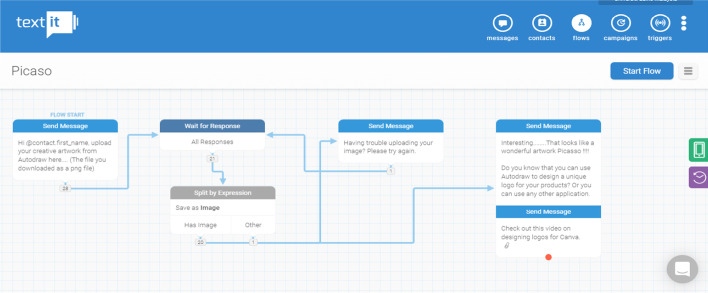
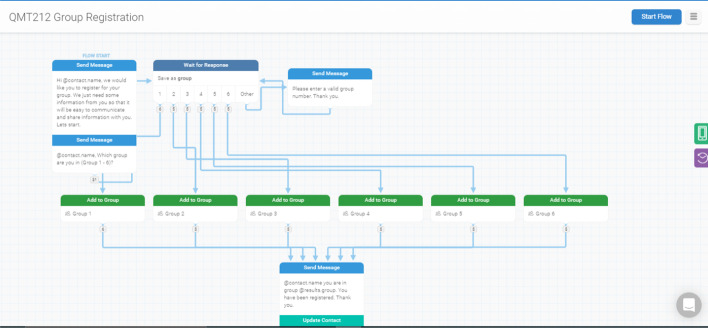
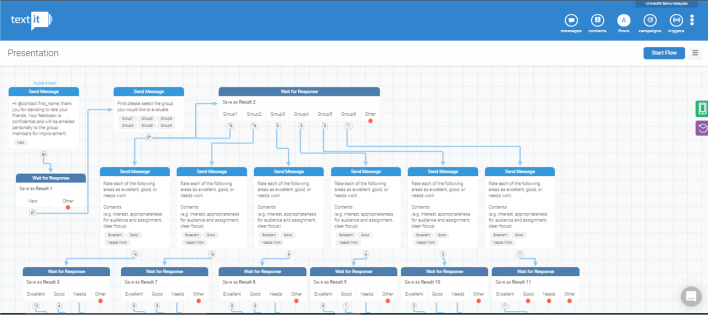
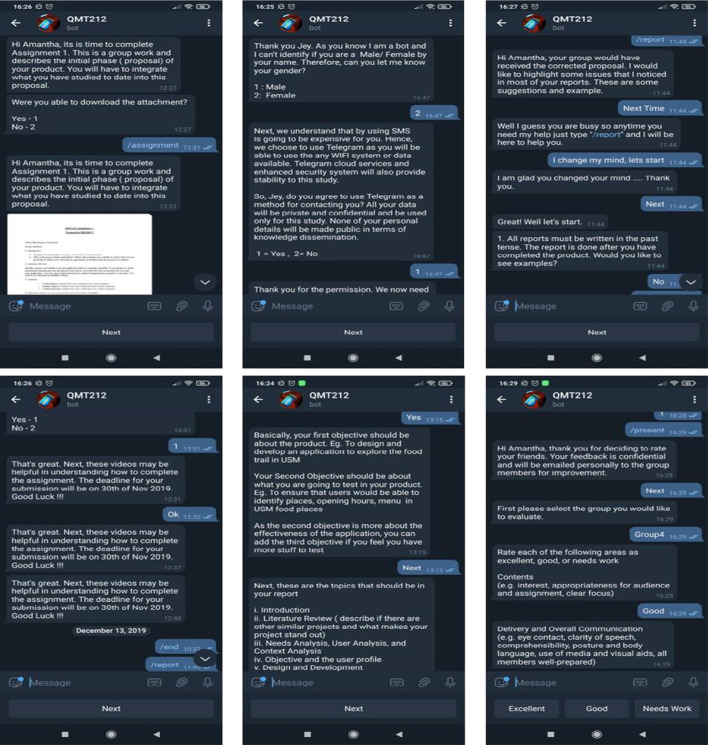
Verification
Claims the paper makes
The claims and statistics of this paper haven’t been checked yet.
Run the check — free, no account needed. It reads the open-access text and checks the sources it cites.
Claims other papers make about this one
Each is checked against this paper’s own text: does it say what the citing paper says it does?
The cited source says what the claim attributes to it.
In the citing paper
“Only two studies reported chatbot use to have a non-significant effect on learning outcomes (Deveci Topal et al., 2021), cognition, motivation, and self-efficacy (Kumar, 2021).”
From Implementing the bashayer chatbot in Saudi higher education: measuring the influence on students' motivation and learning strategies (2023) · cites this paper as Kumar, 2021
In the citing paper
“Using chatbots as teaching assistants, learners significantly outperformed those in traditional classroom settings in terms of projected-based learning performance [51].”
From A Meta-Analysis and Systematic Review of the Effect of Chatbot Technology Use in Sustainable Education (2023) · cites this paper as [51]
In the citing paper
“The students were thus motivated by this learning environment that they considered important and of great benefit, which was as advocated by the learning-based chatbot technology of many studies (Pereira et al., 2019; Yueh and Chiang, 2020; Kumar, 2021; Chang et al., 2022; Troussas et al., 2022).”
From Implementing the bashayer chatbot in Saudi higher education: measuring the influence on students' motivation and learning strategies (2023) · cites this paper as Kumar, 2021
In the citing paper
“Despite recent studies (e.g., Deveci Topal et al., 2021; Kumar, 2021) that found no significant influence of chatbot use on K-12 and undergraduate students' cognition and learning achievements, the results of our study highlight the significant potential of chatbot-based learning environments in enhancing and supporting cognitive learning strategies among postgraduate students.”
From Implementing the bashayer chatbot in Saudi higher education: measuring the influence on students' motivation and learning strategies (2023) · cites this paper as Kumar, 2021
In the citing paper
“In the educational field, chatbots are increasingly adopted since they support immediate and personalized feedback (Kumar, 2021; Okonkwo & Ade-Ibijola, 2021; Winkler & Söllner, 2018).”
From Designing learning technology collaboratively: analysis of a chatbot co-design (2023) · cites this paper as Kumar, 2021
Self-check
Percentages, sums and reported differences re-computed from the paper’s own numbers.
The self-check needs the paper’s full text.
Citations
Cites
Motivational and self-regulated learning components of classroom academic performance.
Pintrich, P. R., & De Groot, E. V. (1990) · Journal of Educational Psychology · doi:10.1037/0022-0663.82.1.33 · Cited by 8,332 · cited 5×
“Subsequently, motivational beliefs are reflected by perceived self-efficacy and intrinsic values students have towards their cognitive engagement and academic performance (Pintrich & de Groot, 1990).”
BackgroundMethodInfluentialMotivational beliefs, values, and goals
Eccles, J. S., & Wigfield, A. (2002) · Annual Review of Psychology · doi:10.1146/annurev.psych.53.100901.135153 · Cited by 7,587
Reliability and Predictive Validity of the Motivated Strategies for Learning Questionnaire (Mslq)
Pintrich, P. R., Smith, D. A. F., Garcia, T., & Mckeachie, W. J. (1993) · Educational and Psychological Measurement · doi:10.1177/0013164493053003024 · Cited by 3,646
Cacioppo, J. T., Petty, R. E., Feinstein, J. A., & Jarvis, W. B. G. (1996) · Psychological Bulletin · doi:10.1037/0033-2909.119.2.197 · Cited by 2,517 · cited 1×
“The need for cognition also indicates positive acceptance towards problem-solving (Cacioppo et al., 1996), enjoyment (Park et al., 2008), and it is critical for teamwork, as it fosters team performance and information-processing motivation (Kearney et al., 2009).”
BackgroundAn Overview of Chatbot Technology
Adamopoulou, E., & Moussiades, L. (2020) · IFIP advances in information and communication technology · doi:10.1007/978-3-030-49186-4_31 · Cited by 1,300
The interpersonal communication book
DeVito, J. A. (1976) · Cited by 799
Chatbots for learning: A review of educational chatbots for the Facebook Messenger
Smutny, P., & Schreiberova, P. (2020) · Computers & Education · doi:10.1016/j.compedu.2020.103862 · Cited by 770
In the shades of the uncanny valley: An experimental study of human–chatbot interaction
Ciechanowski, L., Przegalińska, A., Magnuski, M., & Gloor, P. A. (2018) · Future Generation Computer Systems · doi:10.1016/j.future.2018.01.055 · Cited by 680
The applicability of Visible Learning to higher education
Hattie, J. (2015) · Scholarship of Teaching and Learning in Psychology · doi:10.1037/stl0000021 · Cited by 656
WHEN AND HOW DIVERSITY BENEFITS TEAMS: THE IMPORTANCE OF TEAM MEMBERS' NEED FOR COGNITION
Kearney, E., Gebert, D., & Voelpel, S. C. (2009) · Academy of Management Journal · doi:10.5465/amj.2009.41331431 · Cited by 591
Research works printed but not linked: 7
- Brockhus, S., van der Kolk, T. E. C., Koeman, B., & Badke-Schaub, P. G. (2014). The influence of ambient green on creative performance. Proceeding of International Design Conference (DESIGN 2014), Croatia, 437–444.
- Chan, T. J., Yong, W. K. Y., & Harmizi, A. (2020). Usage of whatsapp and interpersonal communication skills among private university students. Journal of Arts & Social Sciences, 3(January), 15–25.
- Creswell, J. W. (2012). Educational Research : Planning, Conducting and Evaluating Quantitative and Qualitative Research (4th ed.). Pearson Education.
- Haristiani, N., Danuwijaya, A. A., Rifai, M. M., & Sarila, H. (2019). Gengobot: A chatbot-based grammar application on mobile instant messaging as language learning medium. Journal of Engineering Science and Technology, 14(6), 3158–3173.
- Khan, A., Ranka, S., Khakare, C., & Karve, S. (2019). NEEV: An education informational chatbot. International Research Journal of Engineering and Technology, 6(4), 492–495.
- Lapina, A. (2020). Does exposure to problem-based learning strategies increase postformal thought and need for cognition in higher education students? A quasi-experimental study (Publication No. 28243240) Doctoral dissertation, Texas State University-San Marcos. ProQuest Dissertations & Theses Global.
- Riel, J. (2020). Essential features and critical issues with educational chatbots: toward personalized learning via digital agents. In: M. Khosrow-Pour (Ed.), Handbook of research on modern educational technologies, applications, and management (pp. 246–262). IGI Global. https://doi.org/10.1142/S0218194019400163. · DOI
Cited by
Sorted by citations
Items 101–183 of 183
Arqam, A., & Asrifan, A. (2024) · Journal of English Education and Teaching · doi:10.33369/jeet.8.3.586-608 · Cited by 8
The Perceived Value of Chatbot Support in Enhancing College Student Self-Efficacy
Bation, N. D. (2024) · International Journal of Social Science and Human Research · doi:10.47191/ijsshr/v7-i01-47 · Cited by 4
Kumar, J. A. (2025) · IEEE Frontiers in Education Conference (FIE) · doi:10.1109/fie63693.2025.11328420 · Cited by 4
Self-citationHybrid Intelligence Feedback: A Model Proposal and Preliminary Study
Coşkun, A., & Er, E. (2026) · Journal of Computer Assisted Learning · doi:10.1002/jcal.70212 · Cited by 3
Student-AI collaboration patterns in project-based learning: Temporal and structural characteristics
Fei, X. (2026) · Journal of Research on Technology in Education · doi:10.1080/15391523.2026.2661697 · Cited by 3
Goyez, J. P. L., González‐Briones, A., & Chamorro, A. (2024) · Lecture notes in computer science · doi:10.1007/978-3-031-70415-4_16 · Cited by 3
How important are Chatbots within Engineering Education? A literature-based review from 2011 to 2023
Maladzhi, R. W., Tšoeu, M. S., Mthombeni, N. H., Moloi, K., Mashifana, T., & Nemavhola, F. J. (2023) · World Engineering Education Forum - Global Engineering Deans Council (WEEF-GEDC) · doi:10.1109/weef-gedc59520.2023.10344203 · Cited by 4
Designing a Conversational Agent for Education using a Personality-based Approach
Wang, J., Chen, J. Q., Kang, D., Herath, S., & Abuhussein, A. (2024) · International Journal of Advanced Computer Science and Applications · doi:10.14569/ijacsa.2024.0150602 · Cited by 3
Enhancing CS Education with LAs Using AI-Empowered AIELA Program
Ramasamy, V., Kulpinski, E., Beaupre, T., Antreassian, A., Jeong, Y., Clarke, P., Aiello, A., & Ray, C. (2024) · IEEE Frontiers in Education Conference (FIE) · doi:10.1109/fie61694.2024.10893294 · Cited by 6
Qiu, W., Chit, L. S., Jamil, N. B., Thway, M., Hwee, S. N. S., Zhang, L., Lim, F. S., & Lai, J. W. (2024) · doi:10.35542/osf.io/7yga3 · Cited by 3
Wei, S., Wei, W., & Zou, G. (2026) · Frontiers in Medicine · doi:10.3389/fmed.2026.1832598 · Cited by 2
“This finding supports existing research that calls for further exploration and optimization of chat-bot technology in education (45, 46).”
Megbowon, F. K. (2025) · Studies in Learning and Teaching · doi:10.46627/silet.v6i2.641 · Cited by 3
Zhang, Q., & Liang, Y. (2026) · Education and Information Technologies · doi:10.1007/s10639-026-14038-5 · Cited by 5
AL-Smadi, M., Debbek, S., & Tawileh, W. (2026) · IEEE Global Engineering Education Conference (EDUCON) · doi:10.1109/educon67543.2026.11574349 · Cited by 2
Evangelista, S. H., Bestard, G. A., Oliveira, F. H. M., da Silva, I. A., Amorim, F. F., Llanos, C. H., & Barbalho, S. C. M. (2023) · IEEE Revista Iberoamericana de Tecnologias del Aprendizaje · doi:10.1109/rita.2023.3301392 · Cited by 2
Maulana, M. S., & Pratiwi, D. (2024) · Jurnal Pengabdian Inovatif Masyarakat · doi:10.62759/jpim.v1i1.52 · Cited by 2
Rahman, N. A. A. (2025) · Pakistan Journal of Life and Social Sciences (PJLSS) · doi:10.57239/pjlss-2025-23.1.0086 · Cited by 2
Felipe, A. L., Eleazar, M., Aragoncillo, A., Azuela, L., Azuela, H. P., Ricafort, R., & Khwakhali, U. S. (2024) · International Conference on Innovation and Intelligence for Informatics, Computing, and Technologies (3ICT) · doi:10.1109/3ict64318.2024.10824500 · Cited by 4
Sriadhi, S., Hamid, A., Siagian, S., Sutopo, A., & Adhitya, W. R. (2023) · TEM Journal · doi:10.18421/tem122-57 · Cited by 2
LINGUADIDACTIC POTENTIAL OF A CHATBOT IN TEACHING A FOREIGN LANGUAGE AT UNIVERSITY
Greenwald, O., Islamov, R. S., Александровна, Р. А., & Savel'eva, I. V. (2023) · Современные наукоемкие технологии (Modern High Technologies) · doi:10.17513/snt.39829 · Cited by 2
Online Edtech Platform with AI Doubt Assistance
Ketak, R., Mittal, S., Gupta, V., & Gupta, H. (2024) · International Conference on Database Theory · doi:10.1109/icdt61202.2024.10489310 · Cited by 3
The problems and countermeasures of private education management based on fuzzy logic system
Liu, J. (2024) · Journal of Computational Methods in Sciences and Engineering · doi:10.3233/jcm-237043 · Cited by 1
Altun, E., & Seferoğlu, S. S. (2024) · İnönü Üniversitesi Eğitim Fakültesi Dergisi · doi:10.17679/inuefd.1397735 · Cited by 2
Anhwere, D. K., Attipoe, E. K., Abdul-Gafaar, S., Nyaaba, R. A., & Addai, O.-D. (2025) · Creative Education · doi:10.4236/ce.2025.163027 · Cited by 2
A learning assistance framework for supporting and analyzing student teams in project-based learning
Haddou, Y., Talbi, O., Ouared, A., & Chadli, A. (2025) · Education and Information Technologies · doi:10.1007/s10639-025-13503-x · Cited by 3
Critical Thinking Skills and Artificial Intelligence (AI)
Kaddouri, M., Chniete, I., Mhamdi, K., Bouamri, A., & Atmani, K. (2025) · Advances in computational intelligence and robotics book series · doi:10.4018/979-8-3373-4576-5.ch010 · Cited by 3
A Bibliometric Analysis and Insights Into Artificial Intelligence Chatbots in Education
Dou, A., Xu, W., & Liu, R. (2025) · International Journal of Information and Communication Technology Education · doi:10.4018/ijicte.386591 · Cited by 1
How AI Chatbots Enhance Student Support in Higher Education
Saif, A., Aldowah, H. A., & Ghazal, S. (2025) · Advances in computational intelligence and robotics book series · doi:10.4018/979-8-3373-3815-6.ch007 · Cited by 1
Investigating the Effects of Prompt Engineering in STEM Activities Designed with ChatGPT-4o
Güler, N. K., & Tarım, K. (2025) · Cukurova University Faculty of Education Journal · doi:10.14812/cuefd.1673406 · Cited by 1
Ünal, E., Kaya, M., Uzun, A. M., & Erdem, C. (2026) · Journal of Educational Computing Research · doi:10.1177/07356331261424767 · Cited by 2
Zhang, Q., Zhang, N., & Lu, C. (2026) · Educational Research Review · doi:10.1016/j.edurev.2026.100783 · Cited by 3
Liu, G., & Zhang, X. (2026) · Frontiers in Psychology · doi:10.3389/fpsyg.2026.1829753 · Cited by 1
Li, X., Zh, L., Jiang, S., Chen, J., & Chen, W. (2026) · International Journal of STEM Education · doi:10.1186/s40594-026-00641-y · Cited by 1
AI and student motivation: A scoping review
Li, J., King, R. B., Chai, C. S., Lee, V. W. Y., & Li, R. (2026) · Journal of Research on Technology in Education · doi:10.1080/15391523.2026.2672515 · Cited by 1
Putra, A. N., Andajani, K., & Widyartono, D. (2023) · Jurnal Onoma Pendidikan Bahasa dan Sastra · doi:10.30605/onoma.v9i2.2826 · Cited by 1
الجريسي, و. ح. (2023) · مجلة المناهج وطرق التدريس · doi:10.26389/ajsrp.j090723 · Cited by 2
Smart Virtual Assistant Academic Model for a University Website
Sowmya, A. M., Sarkar, R. I., Singh, S., Sinha, S., & Manjunath, R. V. (2024) · International Journal of Innovative Science and Research Technology (IJISRT) · doi:10.38124/ijisrt/ijisrt24apr1711 · Cited by 2
Bantoto, F. M. O., Flores, B. I., & Jindal, M. (2024) · Lecture notes in networks and systems · doi:10.1007/978-3-031-68653-5_6 · Cited by 1
Samonte, M. J. C., Arlando, R. D. C., Joquino, N. A., Manongas, J. B., & poblete, J. O. (2024) · IEEE International Conference on Software Engineering and Artificial Intelligence (SEAI) · doi:10.1109/seai62072.2024.10674229 · Cited by 3
Quan, J., Li, R., Wu, W., & Chen, H. (2024) · International Symposium on Educational Technology · doi:10.1109/iset61814.2024.00027 · Cited by 1
Postigo-Zumarán, J. E., Revilla, L. J. N., Arias-Chávez, D., & Sevillano, L. M. C. (2024) · International Journal of Religion · doi:10.61707/3m2s5y94 · Cited by 1
Retrieval Augmented Generated for Earth Fault Simulation
Cenreng, F., Riantini, R., Nugroho, S. M. S., & Rachmadi, R. F. (2024) · International Conference on Computer Engineering, Network, and Intelligent Multimedia (CENIM) · doi:10.1109/cenim64038.2024.10882682 · Cited by 2
Fostering Human Wellbeing Through Project-Based Learning in Higher Education
Gougou, S. A.-M., Eichman, E., & Koffi, D. E. (2025) · International Journal of Positivity & Well-Being · doi:10.61518/ijpw-87 · Cited by 1
Karaköse, T., & Polat, H. (2025) · Studies in computational intelligence · doi:10.1007/978-3-031-82915-4_18 · Cited by 1
Nair, U. N., & Azath, H. (2025) · Journal of Experimental & Theoretical Artificial Intelligence · doi:10.1080/0952813x.2025.2511091 · Cited by 1
A Codesign Approach for Conversational User Interfaces to Support College Students with Depression
de Souza, P. M., Alves, V., Pires, I. D. C., Bleicher, T., Garcia, F. E., Silva, G., & Néris, V. P. D. A. (2025) · Simpósio Brasileiro de Fatores Humanos em Sistemas Computacionais (IHC) · doi:10.5753/ihc.2025.10757 · Cited by 1
Chatbots Benefications Towards the Education Sector
Jindal, T., Ishika, L. N. U., Sharma, P., & Kaur, G. (2023) · Advances in library and information science (ALIS) book series · doi:10.4018/978-1-6684-8671-9.ch006 · Cited by 1
Nesnelerin İnterneti Araçlarının Uzaktan Eğitimde Kullanımı: Sistematik Alan Yazın Taraması
YILMAZ, F., & ÖZDEMİR, D. D. S. (2023) · Mersin Üniversitesi Eğitim Fakültesi Dergisi · doi:10.17860/mersinefd.1291873
Effect of Chatgpt Use on Business College Students’ SatisfactionPreprint
Suchánek, P., & Kŕaĺová, M. (2024) · SSRN Electronic Journal · doi:10.2139/ssrn.4776409
Importance of the Chatbot in the Different Social Areas
Benalcazar, C., Mendez, M., Melendez, A., & Chango, W. G. (2024) · ESPOCH Congresses The Ecuadorian Journal of S T E A M · doi:10.18502/espoch.v4i1.15819 · Cited by 2
ESROB_BOTI, el tutor virtual para aprender a buscar información en internet
Escobedo, M. D. C. P., & González, J. M. (2024) · Revista Agraria · doi:10.59741/agraria.v21i2.590
Analysis of the Effect of Using AI as a Tool to Assist Mechatronics Engineering Students in Learning
Niño-Juárez, E., & Menchaca-Torre, H. L. (2024) · World Engineering Education Forum - Global Engineering Deans Council (WEEF-GEDC) · doi:10.1109/weef-gedc63419.2024.10854933
Personalized Online Learning Based on IoT (Systematic Mapping Study)
Spaho, E., & Çiço, B. (2025) · Communications in computer and information science · doi:10.1007/978-3-031-84093-7_11
IoT based personalized online learning systems (Systematic Mapping Study)
Spaho, E., & Çiço, B. (2025) · Computer Science and Information Systems · doi:10.2298/csis241126032s
Let's chat(GPT): Implementation of a ChatGPT-generated social determinants of health activity
Kodweis, K. R., Cory, T. J., Hall, E. A., George, C. M., & March, K. L. (2025) · Exploratory Research in Clinical and Social Pharmacy · doi:10.1016/j.rcsop.2024.100553
The Future of Pharma Training: AI-Driven Conversation for Assessment & Professional Growth
Surya, V., Tyagi, R., Rampally, V. S. K., Gonala, D., & Gonala, S. K. (2025) · doi:10.38124/ijisrt/25apr1781
Exploring Prospects of Artificial Intelligence-Based ChatGPT for Higher Education Context
Makgato-Khunou, P., & Tlale, L. D. N. (2025) · Journal of Education and Learning Technology · doi:10.38159/jelt.2025652
AI's Role in Collaborative Learning Settings in Higher Education – A Systematic Review
Pernu, H., Paananen, S., Aksovaara, S., & Silvennoinen, M. (2025) · Bled eConference · doi:10.18690/um.fov.4.2025.21
Boosting Punctuation Proficiency: The Power of an Interactive Chatbot for EFL Learners
Ghaithi, A. A., & Behforouz, B. (2025) · Journal of language and Education · doi:10.17323/jle.2025.17642 · Cited by 5
Collaboration with AI: How group composition affects solution quality in problem solving
Shulgina, G., Витальевна, Г. А., Gulenkov, I. V., & Costley, J. (2025) · Innovations in Education and Teaching International · doi:10.1080/14703297.2025.2539779
Digital Technologies for Automating Communication in the Activities of a State University
Gayazova, E. B., & Nikitina, T. N. (2025) · Lecture notes in networks and systems · doi:10.1007/978-3-031-99598-9_17
Cantu, C., Ortiz-Espinosa, A., Ramírez-Cedillo, E., Anthony, B., Bradley, R., Mastrascusa-González, D., & Vargas‐Martínez, A. (2025) · Lecture notes in networks and systems · doi:10.1007/978-3-031-98880-6_16
Integrating a chatbot into simulation-based perfusion training: A pilot randomized controlled trial
Warlick, A., Clifton, C., Trinh, T., Kaur, R., Weinberg, A., & Collins, J. (2025) · Perfusion · doi:10.1177/02676591251394841
Boakye, A. A., Essel, H. B., Tachie-Menson, A., Nunoo, F. K. N., & Dwamena, A. A. (2025) · Journal of Education · doi:10.1177/00220574251393975
Integrated Learning with AI Enabled Interactions with Customers by Fashion Retailers
Ai-Shafei, M., Gupta, S., Shin, M. M., Yan, Y., & Liu, R. (2025) · Corporate Reputation Review · doi:10.1057/s41299-025-00246-1 · Cited by 2
Cha, H., & Oh, M. (2025) · Educational Gerontology · doi:10.1080/03601277.2025.2596307
Alhassan, H., Essel, H. B., & Kquofi, S. (2026) · Studies in Learning and Teaching · doi:10.46627/silet.v6i3.702
Kızılay, F. E., & Çelik, M. (2025) · International Workshop on Artificial Intelligence and Education (WAIE) · doi:10.1109/waie67422.2025.11381056
Moura, A. (2026) · Advances in computational intelligence and robotics book series · doi:10.4018/979-8-2600-0101-1.ch003
Kochakornjarupong, D., & Sunthon, S. (2026) · AIP conference proceedings · doi:10.1063/5.0312713
Use of a Retrieval-Augmented Generation (RAG) Chatbot for First-Year Engineering Education at ESPRIT
Maalaoui, H., & Samet, Y. (2026) · Lecture notes of the Institute for Computer Sciences, Social Informatics and Telecommunications Engineering · doi:10.1007/978-3-032-16635-7_28 · Cited by 1
Using chatbot in education – A systematic review and research agenda
Wut, T. M., Low, M. P., & Tam, K.-W. (2026) · Social Sciences & Humanities Open · doi:10.1016/j.ssaho.2026.102956
Evaluating Multimodal AI Interfaces for Cognitive Performance in Design Education
Bauer, C. N., Ebert, A., & Lachmann, T. (2026) · Lecture notes in computer science · doi:10.1007/978-3-032-26051-2_12
Cognitive AI Agents and Natural Language Processing Transforming Higher Education
Farooqi, A. H. A. (2026) · Advances in computational intelligence and robotics book series · doi:10.4018/979-8-2600-2811-7.ch003
Kanoh, H. (2026) · Lecture notes in networks and systems · doi:10.1007/978-3-032-32029-2_15
Xuan, T. T. T., Salminen, J. O., Tillotson, J. S., Akhtar, W., Bui, T. V., Aldous, K. K., Medina, J., Jung, S., & Jansen, B. J. (2026) · Journal of Educational Technology Systems · doi:10.1177/00472395261467419
Spaho, E., & Çiço, B. (2024) · Albanian Journal of Natural and Technical Sciences · doi:10.67537/ajnts2901011
Integrated Teaching Model Based on Project-Based Learning for Physics Education
Aubakir, I., Rēvalde, G., & Murzagaliyeva, A. (2026) · Education Sciences · doi:10.3390/educsci16081189 · Cited by 1
Eyzaguirre, I. A. L., Martins, Y. D. J., Iwama, A. Y., & Fernandes, M. E. B. (2026) · SoftwareX · doi:10.1016/j.softx.2026.102905
Conversational AI Interfaces for Retail Data Engineering and Business Intelligence
Amaran, A. (2026) · IEEE International Conference on Big Data and Artificial Intelligence (BDAI) · doi:10.1109/bdai70753.2026.11655112
Collaborating in the age of GenAI: a mixed-methods study of model preferences
Perifanou, M. A., & Economides, A. A. (2026) · Education and Information Technologies · doi:10.1007/s10639-026-14167-x
Artificial intelligence and its influence on student engagement in higher education
Chen, Y., Dong, J., & 冀国娟 (2026) · Frontiers in Psychology · doi:10.3389/fpsyg.2026.1949332
Kızılay, F. E., & Çelik, M. (2026) · WMU Journal of Maritime Affairs · doi:10.1007/s13437-026-00440-w
Metadata
- Authors
- Kumar, J. A.
- Affiliations
- Universiti Sains Malaysia (MY)
- Corresponding author
- Kumar, Jeya Amantha
- ORCID
- Kumar, Jeya Amantha
- Venue
- International Journal of Educational Technology in Higher Education
- Published
- 2021-12
- Volume
- 18
- Issue
- 1
- Pages
- 65-65
- ISSN
- 2365-9440 (ISSN-L)
- PMC
- PMC8670881
- OpenAlex
- W4200531362
- Cited by
- 183
- References
- 82
- Citations by year
- 2026: 27 · 2025: 59 · 2024: 45 · 2023: 39 · 2022: 13
- FWCI
- 8.54
- Type
- journal article
- Language
- en
- Open access
- diamond
- doi.org
- Licence
- Locations
- International Journal of Educational Technology in Higher Education (publishedVersion, cc-by)
- PubMed Central (publishedVersion, cc-by)
- PubMed (publishedVersion)
- DOAJ (DOAJ: Directory of Open Access Journals) (submittedVersion, cc-by-sa)
- Funders
- Universiti Sains Malaysia (304/PMEDIA/6315219)
- Topics
- Physical Sciences › Computer Science › Artificial Intelligence › Intelligent Tutoring Systems and Adaptive Learning
- Social Sciences › Education › Artificial Intelligence in Education
- Social Sciences › Education › Problem and Project Based Learning
- Keywords
- educational chatbots, project-based learning, team design, learning outcomes, teamwork, collaboration, need for cognition, creative self-efficacy, virtual assistants, design education
About these checks
Registry, retraction, Cites and statistics results are computed, not judged, with one exception: a printed reference that no index lists is read once by a model before it counts as a citation error. Claims are extracted by a model and kept only when their quote appears verbatim in the text; each cited source is then checked, with a model’s help, for whether it says what the claim relies on. Those verdicts can be wrong — read the claim’s quote and the cited source before relying on one.
Statistics and arithmetic are recomputed, not judged.
Confidence bands are shown only for fields calibrated on our annotated test set. None is calibrated yet, so no band is shown.
What counts as a claim ›How we measure confidence ›How we check this ›
Are you an author, or do you see a problem with this page? Request a review
