

Artificial intelligence applications in Latin American higher education: a systematic review
Open accessThe DOI matches its Crossref record; 67 of the 67 references it cites were found in a registry or an index; 4 of the 40 sources its claims cite were checked for support.
Abstract
Over the last decade, there has been great research interest in the application of artificial intelligence (AI) in various fields, such as medicine, finance, and law. Recently, there has been a research focus on the application of AI in education, where it has great potential. Therefore, a systematic review of the literature on AI in education is therefore necessary. This article considers its usage and applications in Latin American higher education institutions. After identifying the studies dedicated to educational innovations brought about by the application of AI techniques, this review examines AI applications in three educational processes: learning, teaching, and administration. Each study is analyzed for the AI techniques used, such as machine learning, deep learning, and natural language processing, the AI tools and algorithms that are applied, and the main education topic. The results reveal that the main AI applications in education are: predictive modelling, intelligent analytics, assistive technology, automatic content analysis, and image analytics. It is further demonstrated that AI applications help to address important education issues (e.g., detecting students at risk of dropping out) and thereby contribute to ensuring quality education. Finally, the article presents the lessons learned from the review concerning the application of AI technologies in higher education in the Latin American context.
Overview
CoChat Summary
## TL;DR
This systematic review maps 31 empirical studies on AI in Latin American higher education published from July 2016 to June 2021. It finds that AI is used mainly for predictive modelling, content analysis, chatbots, and classification, with dropout/retention and student performance among the most common problems addressed.
## Key findings
- The review included 31 published articles from 7 countries: Mexico (7), Colombia (7), Ecuador (6), Brazil (5), Peru (2), Chile (2), Argentina (1), and Bolivia (1).
- The most common AI application was predictive modelling in education with 16 studies; followed by AI computer-assisted content analysis (6), assistive technology/chatbots (5), intelligent analytics/classification (3), and image analytics/facial recognition (1).
- Machine learning was the most common technique, used in 17 studies; natural language processing appeared in 8, deep learning in 3, and ML+NLP or DL+NLP combinations were also reported.
- The most frequently used algorithms were MLP-ANN, Random Forest (RF), and Decision Tree (DT); the paper says MLP-ANN and RF reported the highest accuracy across the studies, with examples of reported accuracies including 99.38% (DT), 99.29% (KNN), 98.67% (MLP), 95.59% (NB), and 98.55% (RF) in one study.
## Methods
- The paper is a systematic literature review guided by 3 research questions about AI applications, techniques/tools/algorithms, and education topics/issues in Latin American higher education.
- Searches were run in July 2021 across Web of Science, IEEE Xplorer, Scielo, and CAPES Portal for studies published from July 2016 to June 2021 in English, Spanish, or Portuguese.
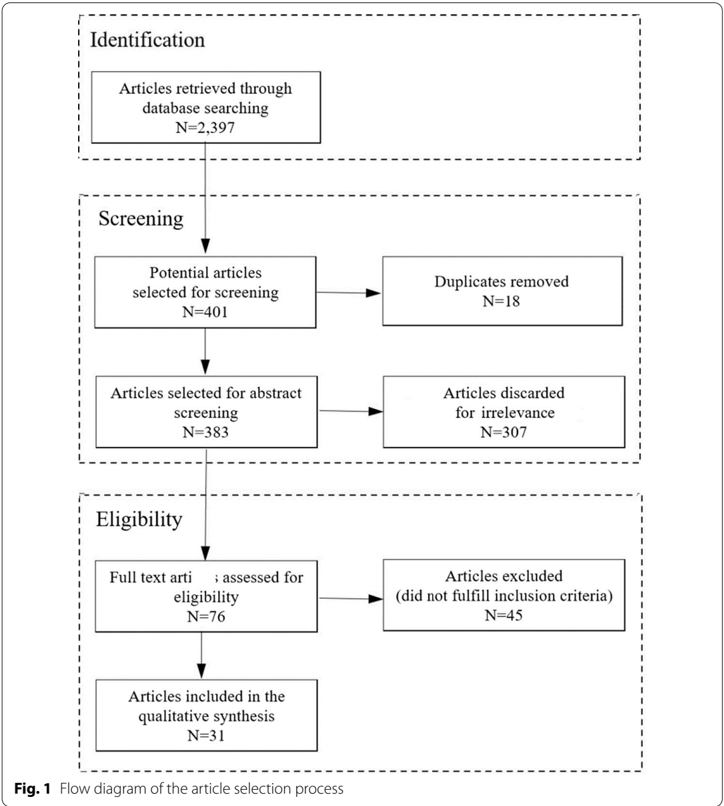
- The screening process went from 2397 articles to 401 after initial refinement, then 383 after removing 18 duplicates, then 76 after abstract screening, and finally 31 studies after full-text screening and eligibility checks.
## Limitations
- The paper states that there is “a lack of attention to ethics and data privacy” and that few reviewed studies mentioned ethical clearance; it says there is a need for protocols for personal data protection.
- It also notes that the rate of AI adoption in education is still slow compared with medicine, industry, and finance, which constrains how much evidence exists in this area.
- Evident from the text: the review is limited to 4 databases, a 5-year window, and English/Spanish/Portuguese publications, so relevant studies outside those sources, dates, or languages may have been missed.
Model-written summary. Check it against the paper before relying on it.
Integrity signals
Registry
Cites
Statistics
Figures
Verification
Claims the paper makes
4 Valid · 1 Not valid · 29 Not checked · 56 Own results and interpretations
The cited sources support only part of this claim — read each source’s verdict below.
In the paper
“AI applications can contribute to forecasting the student dropout rate and determining the factors that affect their performance”
What the sources say
- Not matchedcites Bedregal-Alpaca etal., 2020
An author–year citation the paper’s reference list doesn’t settle. We don’t search these by name.
- Not matchedcites da Fonseca Silveira etal., 2019
An author–year citation the paper’s reference list doesn’t settle. We don’t search these by name.
- Partly supportedcites Miranda & Guzmán, 2017 matched to “Análisis de la Deserción de Estudiantes Universitarios usando Técnicas de Minería de Datos” (2017) sourceExperimental — accuracy not yet measured
The Abstract reports that data-mining techniques identified variables associated with university student dropout, particularly socioeconomic circumstances and university entrance scores. The Conclusions likewise describe academic results and socioeconomic status as influencing whether students remain enrolled. These passages support identifying factors related to dropout, but not factors that affect student performance. (LLM, conf=0.83)
plainstates a cause- Asserted: passes — The authors put it forward as true.
- Checkable: passes — It can be checked against evidence.
- Load-bearing: unclear — It is unclear whether the paper’s conclusions depend on it.
- Based: passes — The paper gives a reason why it holds.
- Not matched
The cited sources support only part of this claim — read each source’s verdict below.
In the paper
“AI applications can contribute to forecasting the student dropout rate and determining the factors that affect their performance”
What the sources say
- Not matchedcites Bedregal-Alpaca etal., 2020
An author–year citation the paper’s reference list doesn’t settle. We don’t search these by name.
- Not matchedcites da Fonseca Silveira etal., 2019
An author–year citation the paper’s reference list doesn’t settle. We don’t search these by name.
- Supportedcites Miranda & Guzmán, 2017 matched to “Análisis de la Deserción de Estudiantes Universitarios usando Técnicas de Minería de Datos” (2017) source
The Methodology (p. 63) describes Bayesian-network, neural-network, and decision-tree classifiers used to predict whether students will drop out. The Abstract reports their predictive accuracy and a retention rate estimated by the decision tree, supporting the claim that these applications can help forecast dropout. (LLM, conf=0.88)
plainstates a possible cause- Asserted: passes — The authors put it forward as true.
- Checkable: passes — It can be checked against evidence.
- Load-bearing: unclear — It is unclear whether the paper’s conclusions depend on it.
- Based: passes — The paper gives a reason why it holds.
- Not matched
Every source the paper cites for this claim was checked and supports it.
In the paper
“AI applications can be used to analyze student academic results for university quality accreditation purposes”
What the sources say
- Supportedcites Delahoz-Dominguez et al., 2020 matched to “Análisis de la acreditación de calidad en programas de ingeniería industrial y los resultados en las pruebas nacionales estandarizadas, en Colombia” (2020) source
The Abstract (Resumen) states the article performs a relational analysis between university quality accreditations in industrial engineering programs and national standardized test results 'usando tecnicas de aprendizaje automatico', and the METODOLOGIA section describes PCA, decision-tree and Random Forest models used to group, classify and forecast accreditation category from Saber Pro results. RESULTS (p. 133) report Random Forest reaching 91% accuracy and 0.94 mean AUC in determining a university's accreditation category from test results, i.e. the paper demonstrates the capability the claim attributes to it. The only difference is terminology: our copy speaks of machine learning (a branch of AI) rather than 'AI applications', and its empirical setting is Colombian industrial engineering programs, which bounds a general 'can be used' statement only by example, not by contradiction. (LLM, conf=0.85)
plainstates a possible cause- Asserted: passes — The authors put it forward as true.
- Checkable: passes — It can be checked against evidence.
- Load-bearing: unclear — It is unclear whether the paper’s conclusions depend on it.
- Based: passes — The paper gives a reason why it holds.
- Supported
A result the paper reports from its own data — it cites no other source for it, so there is none to check. The quote shows it is in the paper.
In the paper
“Predictive modelling in education | [1], [2], [3], [6], [8], [13], [14], [15], [20], [23], [24], [25], [28], [29], [31] | 16”
plain- Asserted: passes — The authors put it forward as true.
- Checkable: passes — It can be checked against evidence.
- Load-bearing: unclear — It is unclear whether the paper’s conclusions depend on it.
- Based: passes — The paper gives a reason why it holds.
A result the paper reports from its own data — it cites no other source for it, so there is none to check. The quote shows it is in the paper.
In the paper
“Assistive technology (chatbots) | [5], [7], [9], [11], [17] | 5”
plain- Asserted: passes — The authors put it forward as true.
- Checkable: passes — It can be checked against evidence.
- Load-bearing: unclear — It is unclear whether the paper’s conclusions depend on it.
- Based: passes — The paper gives a reason why it holds.
49 more claims
Create a free account to see all 90 claims and to verify the 4 references still open.
- It may state two separate claims as one. 11
- Probably not a substantial claim. 30
- The quote only partly states this claim. 2
Claims other papers make about this one
Each is checked against this paper’s own text: does it say what the citing paper says it does?
The source backs part of the claim, not all of it — or backs it for a different population, condition or comparison.
In the citing paper
“Salas-Pilco y Yang (2022) realizaron una revisión sistemática de 139 artículos indexados en Scopus, identificando aplicaciones en modelado predictivo, analítica inteligente y tecnologías de asistencia, y destacando su contribución a la detección temprana del riesgo de deserción [1].”
From Avances, Retos Éticos y Perspectivas de la Inteligencia Artificial (IA) en la Educación de América Latina (2025) · cites this paper as [1]
Experimental — accuracy not yet measuredThe source backs part of the claim, not all of it — or backs it for a different population, condition or comparison.
In the citing paper
“Salas-Pilco et al. (2022) identifican aplicaciones de procesamiento de lenguaje natural que generan retroalimentación automatizada en ensayos y guías de estudio, liberando al profesor de tareas repetitivas [1].”
From Avances, Retos Éticos y Perspectivas de la Inteligencia Artificial (IA) en la Educación de América Latina (2025) · cites this paper as [1]
Experimental — accuracy not yet measuredThe source backs part of the claim, not all of it — or backs it for a different population, condition or comparison.
In the citing paper
“AI applications in education also raise ethical considerations, ranging from professional readiness to lapses in rigour, such as not adhering to ethical procedures when collecting data (e.g., Salas-Pilco & Yang, 2022), and ethical and legal issues related to using tools prematurely (Zhang et al., 2023).”
From A meta systematic review of artificial intelligence in higher education: a call for increased ethics, collaboration, and rigour (2024) · cites this paper as Salas-Pilco & Yang, 2022
Experimental — accuracy not yet measuredThe cited source says what the claim attributes to it.
In the citing paper
“The results revealed that the main AI applications in higher education in Latin America are: (1) predictive modeling, (2) intelligent analytics, (3) assistive technology, (4) automatic content analysis, and (5) image analytics.”
From Artificial intelligence in higher education: the state of the field (2023) · cites this paper as Salas-Pilco and Yang (2022)
In the citing paper
“These include the replacement of traditional instruction methods with cost-effective AI programs by administrators during budget constraints, as well as privacy and data protection challenges related to sensitive student and faculty information (Salas-Pilco & Yang, 2022;Wu et al., 2024;Zawacki-Richter et al., 2019).”
From Barriers to and Opportunities for the Adoption of Generative Artificial Intelligence in Higher Education in the Global South: Insights from Sri Lanka (2025) · cites this paper as Salas-Pilco & Yang, 2022
2 more claims about this paper
Create a free account to see every claim other papers make about this one.
Citations
Cites
Systematic Literature Reviews in Software Engineering—A Systematic Literature Review
Kitchenham, B., Pearl Brereton, O., Budgen, D., Turner, M., Bailey, J., & Linkman, S. (2009) · Information and Software Technology · doi:10.1016/j.infsof.2008.09.009 · Cited by 4,537 · cited 1×
“A systematic review explores previous studies to answer specific research questions based on an explicit, systematic, and replicable search strategy, with inclusion and exclusion criteria (Kitchenham et al., 2009; Xiao & Watson, 2019).”
BackgroundArtificial Intelligence in Education: A Review
Chen, L., Chen, P., & Lin, Z. (2020) · IEEE Access · doi:10.1109/access.2020.2988510 · Cited by 4,133 · cited 1×
“The education sector is now significantly influenced by AI research, as AI applications are being used by learners, educators, and administrators and various tools, algorithms, and applications have been developed with the capacity to transform the education field (Chen et al., 2020).”
BackgroundGuidance on Conducting a Systematic Literature Review
Xiao, Y., & Watson, M. (2019) · Journal of Planning Education and Research · doi:10.1177/0739456x17723971 · Cited by 3,467 · cited 1×
“A systematic review explores previous studies to answer specific research questions based on an explicit, systematic, and replicable search strategy, with inclusion and exclusion criteria (Kitchenham et al., 2009; Xiao & Watson, 2019).”
BackgroundExploring the impact of artificial intelligence on teaching and learning in higher education
Popenici, S. A. D., & Kerr, S. (2017) · Research and Practice in Technology Enhanced Learning · doi:10.1186/s41039-017-0062-8 · Cited by 2,019 · cited 2×
“AI is defined as “computing systems that are able to engage in human-like processes such as learning, adapting, synthesizing, self-correction and use of data for complex processing tasks” (Popenici & Kerr, 2017, para.”
BackgroundOverview of artificial intelligence in medicine
Amisha, Malik, P., Pathania, M., & Rathaur, V. K. (2019) · Journal of Family Medicine and Primary Care · doi:10.4103/jfmpc.jfmpc_440_19 · Cited by 1,106
The TESOL Encyclopedia of English Language Teaching
(2018) · Wiley eBooks · doi:10.1002/9781118784235 · Cited by 1,055
AI technologies for education: Recent research & future directions
Zhang, K., & Aslan, A. B. (2021) · Computers and Education: Artificial Intelligence · doi:10.1016/j.caeai.2021.100025 · Cited by 923
Some guidance on conducting and reporting qualitative studies
Twining, P., Heller, R. S., Nussbaum, M., & Tsai, C.-C. (2017) · Computers & Education · doi:10.1016/j.compedu.2016.12.002 · Cited by 291 · cited 1×
“Moreover, Twining et al. (2017) highlighted the importance of qualitative studies—regarding technologies applied in education—in understanding a situation or phenomenon through the identification of themes and patterns in the data.”
BackgroundBorsci, S., Malizia, A., Schmettow, M., van der Velde, F., Tariverdiyeva, G., Balaji, D., & Chamberlain, A. (2022) · Personal and Ubiquitous Computing · doi:10.1007/s00779-021-01582-9 · Cited by 266 · cited 1×
“These applications are being integrated in social networks, websites, and a variety of platforms (Borsci et al., 2021).”
BackgroundOwoc, M. L., Sawicka, A., & Weichbroth, P. (2021) · IFIP Advances in Information and Communication Technology · doi:10.1007/978-3-030-85001-2_4 · Cited by 222 · cited 1×
“Furthermore, Owoc et al. (2021) indicated that the benefits of AI in education are the following: (a) automation of repetitive and time-consuming activities such as grading or controlling student attendance, (b) use of AI facilitators to support teachers in their classroom work, (c) feedback for…”
BackgroundLa evaluación del desempeño docente en la educación superior
López, L. F. G., & Dávila, M. G. V. (2019) · Propósitos y Representaciones · doi:10.20511/pyr2019.v7n2.255 · Cited by 205
Klos, M. C., Escoredo, M., Joerin, A., Lemos, V. N., Rauws, M., & Bunge, E. L. (2021) · JMIR Formative Research · doi:10.2196/20678 · Cited by 200 · cited 2×
“Chatbots are also being used to detect anxiety and depressive symptoms in students and address delays associated with access to treatment (Klos et al., 2021).”
BackgroundPredicting academic performance by considering student heterogeneity
Helal, S., Li, J., Liu, L., Ebrahimie, E., Dawson, S., Murray, D. J., & Long, Q. (2018) · Knowledge-Based Systems · doi:10.1016/j.knosys.2018.07.042 · Cited by 190 · cited 1×
“Student performance Improving students’ academic performance is crucial for higher education institutions (Helal et al., 2018) but is not an easy task because of the influence of different personal, socioeconomical, and institutional factors.”
BackgroundCiolacu, M., Tehrani, A. F., Binder, L., & Svasta, P. M. (2018) · 2018 IEEE 24th International Symposium for Design and Technology in Electronic Packaging (SIITME) · doi:10.1109/siitme.2018.8599203 · Cited by 187 · cited 1×
“In education, machine learning can be used to predict students’ learning performance and produce personalized learning pathways (Ciolacu et al., 2018).”
BackgroundConley, C. S., Shapiro, J. B., Kirsch, A. C., & Durlak, J. A. (2017) · Journal of Counseling Psychology · doi:10.1037/cou0000190 · Cited by 159 · cited 1×
“Student mental health and well-being As well-being is an important condition for academic achievement, preventing various health issues, such as depression, anxiety, or interpersonal difficulties, can be effective (Conley et al., 2017).”
BackgroundPalacios, C. A., Reyes-Suárez, J. A., Bearzotti, L. A., Leiva, V., & Marchant, C. (2021) · Entropy · doi:10.3390/e23040485 · Cited by 148 · cited 2×
“It can also identify at-risk students before they begin their studies (Palacios et al., 2021) so that they can be provided with greater attention and support to succeed in their academic studies.”
BackgroundBridgstock, R., & Jackson, D. (2019) · Journal of Higher Education Policy and Management · doi:10.1080/1360080x.2019.1646378 · Cited by 146 · cited 1×
“…employability has revealed the importance of providing guidance for graduates to build their careers, assessing quality in higher education pro-vision (Bridgstock & Jackson, 2019), and researching the behavioral patterns of graduates (Chacón-Sánchez et al., 2020; Gómez Cravioto et al., 2020).”
BackgroundUsage of Machine Learning for Strategic Decision Making at Higher Educational Institutions
Nieto, Y., Gacia-Diaz, V., Montenegro, C., Gonzalez, C. C., & Gonzalez Crespo, R. (2019) · IEEE Access · doi:10.1109/access.2019.2919343 · Cited by 123 · cited 1×
“Interestingly, AI techniques can help to evaluate university performance (Visbal-Cadavid et al., 2019) and to support the decision-making process at a strategic level through the timely compilation of the necessary data (Nieto et al., 2019).”
BackgroundPredicción del rendimiento académico por medio de técnicas de inteligencia artificial
Castrillón, O. D., Sarache, W., & Ruiz-Herrera, S. (2020) · Formación universitaria · doi:10.4067/s0718-50062020000100093 · Cited by 96 · cited 2×
“For example, Castrillón et al. (2020) found that student performance was influenced by the academic factors of teacher pedagogy, appropriate schedules, the teacher–student relationship, teacher academic quality, and student internship experience.”
BackgroundPredictive Modelling in Teaching and Learning
University of Michigan, U., Brooks, C., Thompson, C., & University of Saskatchewan, C. (2017) · Handbook of Learning Analytics · doi:10.18608/hla17.005 · Cited by 85 · cited 1×
“AI prediction models estimate educational processes using large educational datasets (Brooks & Thompson, 2017).”
Impact of students evaluation of teaching: a text analysis of the teachers qualities by gender
Okoye, K., Arrona-Palacios, A., Camacho-Zuñiga, C., Hammout, N., Nakamura, E. L., Escamilla, J., & Hosseini, S. (2020) · International Journal of Educational Technology in Higher Education · doi:10.1186/s41239-020-00224-z · Cited by 80 · cited 2×
“…(Mendoza Jurado, 2020), for extracting information from university documents to generate a dataset that can provide answers to queries (Sayama et al., 2019), and for evaluating teacher performance through student comments (Gutiérrez et al., 2018) or the analysis of syllabuses (Okoye et al., 2020).”
BackgroundContreras, L. E., Fuentes, H. J., & Rodríguez, J. I. (2020) · Formación universitaria · doi:10.4067/s0718-50062020000500233 · Cited by 79
Empowering Qualitative Research Methods in Education with Artificial Intelligence
Longo, L. (2019) · Advances in intelligent systems and computing · doi:10.1007/978-3-030-31787-4_1 · Cited by 75 · cited 1×
“Therefore, AI research can enhance the teaching–learning process when seeking to answer why and how a particular observed phenomenon occurs in the education field (Longo, 2020).”
BackgroundImage Recognition Technology Based on Deep Learning
Cheng, F., Zhang, H., Fan, W., et al. (2018) · Wireless Personal Communications · doi:10.1007/s11277-018-5246-z · Cited by 65 · cited 1×
“Trained deep learning algorithms can make predictions based on very large datasets; this is used, for example, for image recognition (Cheng et al., 2018).”
BackgroundLu, X., Li, S., & Fujimoto, M. (2019) · SpringerBriefs in computer science · doi:10.1007/978-981-15-0595-9_2 · Cited by 55
21st Century Assessment: Online Assessment
Khairil, L. F., & Mokshein, S. E. (2018) · International Journal of Academic Research in Business and Social Sciences · doi:10.6007/ijarbss/v8-i1/3838 · Cited by 53 · cited 1×
“Assessment and evaluation Assessment is an ongoing process for learning and an essential part of formal higher education (Khairil & Mokshein, 2018).”
BackgroundOnline assessment in Moodle: A framework for supporting our students
Padayachee, P., Wagner-Welsh, S., & Johannes, H. (2018) · South African Journal of Higher Education · doi:10.20853/32-5-2599 · Cited by 51 · cited 1×
“Online assessment could optimize results, reduce administrative time, promote immediate feedback, and increase the speeds of grading and student progress (Padayachee et al., 2018).”
BackgroundAnálisis de la Deserción de Estudiantes Universitarios usando Técnicas de Minería de Datos
Miranda, M. A., & Guzmán, J. (2017) · Formación universitaria · doi:10.4067/s0718-50062017000300007 · Cited by 50 · cited 1×
“In this context, AI applications can contribute to forecasting the student dropout rate and determining the factors that affect their performance (Bedregal-Alpaca et al., 2020; da Fonseca Silveira et al., 2019; Miranda & Guzmán, 2017; Santos et al., 2020).”
BackgroundExplainable AI in Industry: Practical Challenges and Lessons Learned
Gade, K., Geyik, S., Kenthapadi, K., Mithal, V., & Taly, A. (2020) · Companion Proceedings of the Web Conference 2020 · doi:10.1145/3366424.3383110 · Cited by 46
Natural Language Processing and Intelligent Computer‐Assisted Language Learning ( ICALL )
Lu, X. (2018) · Wiley eBooks · doi:10.1002/9781118784235.eelt0422 · Cited by 45
Explainable AI in industry: practical challenges and lessons learned: implications tutorial
Gade, K., Geyik, S. C., Kenthapadi, K., Mithal, V., & Taly, A. (2020) · ACM Conference on Fairness, Accountability, and Transparency (FAccT) · doi:10.1145/3351095.3375664 · Cited by 40
Villaseñor, E., Jorge, R. A., & Carrillo-Calvet, H. (2016) · Scientometrics · doi:10.1007/s11192-016-2166-0 · Cited by 38
Mining: Students Comments about Teacher Performance Assessment using Machine Learning Algorithms
Gutiérrez, G., Canul-Reich, J., Zezzatti, A. O., Margain, L., & Ponce, J. (2018) · International Journal of Combinatorial Optimization Problems and Informatics. · Cited by 38
Salas‐Pilco, S. Z., & Yang, Y. (2020) · British Journal of Educational Technology · doi:10.1111/bjet.12952 · Cited by 38
Self-citationThe role of university research centers in promoting research
Kumar, V. (2017) · Journal of the Academy of Marketing Science · doi:10.1007/s11747-016-0496-3 · Cited by 37 · cited 1×
“…accreditation, governance) Generally, higher educa - tion institutions are intent on prioritizing the quality of their services, which strengthens the institutional duties of teaching and research and is reflected in the university’s efficiency and performance (Artiukhov et al., 2021; Kumar, 2017).”
BackgroundFaQuAD: Reading Comprehension Dataset in the Domain of Brazilian Higher Education
Sayama, H. F., de Araujo, A. V., & Fernandes, E. R. (2019) · Brazilian Conference on Intelligent Systems · doi:10.1109/bracis.2019.00084 · Cited by 37 · cited 2×
“…assessment (Mendoza Jurado, 2020), for extracting information from university documents to generate a dataset that can provide answers to queries (Sayama et al., 2019), and for evaluating teacher performance through student comments (Gutiérrez et al., 2018) or the analysis of syllabuses (Okoye…”
BackgroundLearning analytics and open, flexible, and distance learning
Siemens, G. (2019) · Distance Education · doi:10.1080/01587919.2019.1656153 · Cited by 36 · cited 1×
“As Siemens (2019) stated, there is a need for careful consideration of ethics and privacy in education research.”
BackgroundNeural Networks for Predicting Student Performance in Online Education
Cazarez, R. L. U., & López‐Martín, C. (2018) · IEEE Latin America Transactions · doi:10.1109/tla.2018.8447376 · Cited by 34
Brunner, J. J., & Labraña, J. (2020) · Higher Education in Latin America and the Challenges of the 21st Century · doi:10.1007/978-3-030-44263-7_3 · Cited by 34
Higher Education in Latin America and the Challenges of the 21st Century
(2020) · Springer eBooks · doi:10.1007/978-3-030-44263-7 · Cited by 32
Visbal-Cadavid, D., Mendoza, A. M., & Hoyos, I. Q. (2019) · Pesquisa Operacional · doi:10.1590/0101-7438.2019.039.02.0261 · Cited by 24 · cited 1×
“Interestingly, AI techniques can help to evaluate university performance (Visbal-Cadavid et al., 2019) and to support the decision-making process at a strategic level through the timely compilation of the necessary data (Nieto et al., 2019).”
BackgroundAcademic Quality Management System Audit Using Artificial Intelligence Techniques
Bojorque, R., & Pesántez-Avilés, F. (2020) · Advances in Intelligent Systems and Computing · doi:10.1007/978-3-030-20454-9_28 · Cited by 23
Use of chatbots for user service in higher education institutions
Cordero, J., Toledo, A., Guamán, F., & Barba-Guamán, L. (2020) · Iberian Conference on Information Systems and Technologies (CISTI) · doi:10.23919/cisti49556.2020.9141108 · Cited by 22
EvolveDTree: Analyzing Student Dropout in Universities
Santos, G. A. S., Belloze, K. T., Tarrataca, L. D. T. J., Haddad, D. B., Bordignon, A., & Brandão, D. N. (2020) · International Conference on Systems, Signals and Image Processing · doi:10.1109/iwssip48289.2020.9145203 · Cited by 20
Impact of Using Technology on Teacher-Student Communication/Interaction: Improve Students Learning
Erkan, A. (2019) · World Journal of Education · doi:10.5430/wje.v9n4p30 · Cited by 19 · cited 1×
“Teacher–student communication Higher education institutions are looking to make improvements in teacher–student communication because it can have a positive impact on the teaching and learning process (Erkan, 2019).”
BackgroundДжангаров, А. И., Suleymanova, M. A., & Zolkin, A. L. (2020) · IOP Conference Series Materials Science and Engineering · doi:10.1088/1757-899x/862/4/042046 · Cited by 18 · cited 1×
“The most widely known application of AI for image analytics is facial recognition (Dzhangarov et al., 2020).”
BackgroundBedregal-Alpaca, N., Tupacyupanqui-Jaén, D., & Cornejo-Aparicio, V. (2020) · Ingeniare. Revista chilena de ingeniería · doi:10.4067/s0718-33052020000400668 · Cited by 18
The Nature of Intelligent Analytics
Sun, Z., & Stranieri, A. (2021) · Advances in data mining and database management book series · doi:10.4018/978-1-7998-4963-6.ch001 · Cited by 18
Educational Data Mining: Analysis of Drop out of Engineering Majors at the UnB - Brazil
Silveira, R. D. F., de Holanda, M. T., Victorino, M. D. C., & Ladeira, M. (2019) · International Conference on Machine Learning and Applications · doi:10.1109/icmla.2019.00048 · Cited by 17 · cited 2×
“For example, AI applications can predict students’ dropout rates (da Fonseca Silveira et al., 2019; Palacios et al., 2021), course performance (Bojorque & Pesántez-Avilés, 2020), and academic performance (Castrillón et al., 2020).”
BackgroundCastro, D., Rodríguez-Gómez, D., & Gairín, J. (2017) · Education and Urban Society · doi:10.1177/0013124516630599 · Cited by 16
Cognitive technology model to enhanced academic support services with chatbots
Choque-Diaz, M., Armas-Aguirre, J., & Shiguihara-Juarez, P. (2018) · 2018 IEEE XXV International Conference on Electronics, Electrical Engineering and Computing (INTERCON) · doi:10.1109/intercon.2018.8526411 · Cited by 16
Rodríguez, R. E., Herrero, C. P. D. C., Muñoz, M. D. C. L., García, M. J. S., & Torres, I. (2018) · Revista Iberoamericana de Tecnología en Educación y Educación en Tecnología · doi:10.24215/18509959.22.e06 · Cited by 16 · cited 1×
“…is the use of well-known AI applications called chatbots that can address mental health issues such as attention deficit hyperactivity disorder (Espinosa Rodríguez et al., 2018), identify suicidal tendencies (Torres Soto et al., 2019), and detect anxiety and depressive symptoms in university…”
BackgroundDelahoz-Dominguez, E. J., Guillen-Ibarra, S., & Fontalvo-Herrera, T. (2020) · Formación universitaria · doi:10.4067/s0718-50062020000100127 · Cited by 16
Automatic Attendance Management System based on Deep One-Shot Learning
Menezes, A. G., Sa, J. M. D. D. C., Llapa, E., & Estombelo-Montesco, C. A. (2020) · 2020 International Conference on Systems, Signals and Image Processing (IWSSIP) · doi:10.1109/iwssip48289.2020.9145230 · Cited by 16
Review of some studies on university student dropout in Colombia and Latin America
Patiño de Peña, L., & Cardona Pérez, A. M. (2013) · Acta Universitaria · doi:10.15174/au.2013.468 · Cited by 13
Evaluation of higher education services: social media learning
Dağlı, G., Altınay, F., Altınay, Z., & Altınay, M. (2020) · International Journal of Information and Learning Technology · doi:10.1108/ijilt-03-2020-0032 · Cited by 13 · cited 1×
“…it can be time-consuming for university students to search for information on institutional websites, and it is therefore necessary to provide new communication channels that allow students to resolve their doubts or concerns about various matters at the university level (Dagli et al., 2020).”
BackgroundCVChatbot: Um Chatbot para o Aplicativo Facebook Messenger Integrado ao AVA Moodle
Dehon, P., Silva, A. S., Inocêncio, A. C. G., et al. (2018) · Anais do ... Simpósio Brasileiro de Informática na Educação/Anais do Simpósio Brasileiro de Informática na Educação · doi:10.5753/cbie.sbie.2018.1623 · Cited by 12 · cited 1×
“One strategy could be to integrate chatbots in virtual LMS platforms to provide information about learning activities (Dehon et al., 2018).”
BackgroundSandoval, I., Naranjo, D., Corbí, R. G., et al. (2020) · Frontiers in Psychology · doi:10.3389/fpsyg.2020.515531 · Cited by 12
On Data Protection Regulations, Big Data and Sledgehammers in Higher Education
García-Vélez, R. A., López‐Nores, M., González-Fernández, G., Robles-Bykbaev, V., Wallace, M., Pazos-Arias, J. J., & Gil‐Solla, A. (2019) · Applied Sciences · doi:10.3390/app9153084 · Cited by 9
Scientific communities detection and analysis in the bibliographic database: SCOPUS
Fiallos, A., Jiménes, K., Vaca, C., et al. (2017) · International Conference on eDemocracy & eGovernment · doi:10.1109/icedeg.2017.7962521 · Cited by 8 · cited 1×
“Therefore, the use of AI to detect scientific communities and prominent research areas can provide important information for policymakers as they look to set research priorities (Fiallos et al., 2017; Villaseñor et al., 2017).”
BackgroundExpanding Access and Improving Equity in Higher Education: The National Systems Perspective
Balán, J. (2020) · Higher Education in Latin America and the Challenges of the 21st Century · doi:10.1007/978-3-030-44263-7_5 · Cited by 8 · cited 1×
“Despite increased access to higher education, however, higher education systems in the region face several challenges, such as educational inequality, delays in graduation, and high dropout rates among students with low socioeconomic status (Balán, 2020).”
BackgroundAn integrated method for evaluating the quality of education and university performance
Artyukhov, A. Y., Vasylieva, T. A., & Lyeonov, S. V. (2021) · Naukovyi Visnyk Natsionalnoho Hirnychoho Universytetu · doi:10.33271/nvngu/2021-3/148 · Cited by 7
Intelligent Analytics With Advanced Multi-Industry Applications
Sun, Z. (2021) · Advances in data mining and database management book series · doi:10.4018/978-1-7998-4963-6 · Cited by 6
Suicidal Tendency Neural Identifier in University Students from Aguascalientes, Mexico
Soto, M. D. T., Soto, A. T., Aranda, D. A. B., Munoz, N. C., Sentí, E. E. P. D. L., & Amador, C. E. V. (2019) · Latin American Conference on Learning Technologies (LACLO) · doi:10.1109/laclo49268.2019.00071 · Cited by 5 · cited 1×
“…that can address mental health issues such as attention deficit hyperactivity disorder (Espinosa Rodríguez et al., 2018), identify suicidal tendencies (Torres Soto et al., 2019), and detect anxiety and depressive symptoms in university students (Klos et al., 2021) through user interactions.”
BackgroundBehavior of employability indicators in university graduates
Sánchez, N. V. C., Casas-Mateus, D. E., & Nieto, L. D. A. (2020) · Ingenieria Solidaria · doi:10.16925/2357-6014.2020.02.03 · Cited by 4
Analysing factors that influence alumni graduate studies attainment with decision trees
Cravioto, D. A. G., Ramos, R. E. D., Galaz, M. A. Z., Gress, N. H., & Cancino, H. G. C. (2020) · 2020 International Conference on Computer Science and Software Engineering (CSASE) · doi:10.1109/csase48920.2020.9142069 · Cited by 4
Representation of Latin American University Syllabuses in a Semantic Network
Tapia-León, M., Rivera, A. C., Chicaiza, J. A., et al. (2017) · International Conference on Information Systems and Computer Science (INCISCOS) · doi:10.1109/inciscos.2017.28 · Cited by 3
Research works printed but not linked: 3
- *García-González, D. J., & Skrita, A. (2019). Predicting academic performance based on students' family environment: Evidence for Colombia using classification trees. Psychology Society & Education, 11 (3), 299-311. https:// doi. org/ 10. 21071/ psye. v11i3. 13947. · doi:10.21071/psye.v11i3.13947
- *Mendoza Jurado, H. F. (2020). Modelos de redes neuronales artificiales, como sustento evaluativo al crecimiento pedagógico virtual en Educación Superior [Artificial neural network models, as evaluative support to virtual pedagogical growth in Higher Education]. Educación Superior, 7(2), 25–36. https://www.scielo.org.bo/pdf/escepies/v7n2/v7n2_a06.pdf.
- Torre, D., & Zapata, G. (2012). Impacto de procesos de aseguramiento de la calidad sobre las instituciones de educación superior: un estudio en siete países [Impact of quality assurance processes on higher education institutions: A study in seven countries]. In M. Lemaitre, & M. Zenteno (Eds.), Aseguramiento de la Calidad en Iberoamérica. Informe 2012 (pp. 115–157). RIL Editores.
Cited by
Artificial intelligence in higher education: the state of the field
Crompton, H., & Burke, D. (2023) · International Journal of Educational Technology in Higher Education · doi:10.1186/s41239-023-00392-8 · Cited by 2,010
Bond, M., Khosravi, H., De Laat, M., Bergdahl, N., Negrea, V., Oxley, E., Pham, P., Chong, S. W., & Siemens, G. (2024) · International Journal of Educational Technology in Higher Education · doi:10.1186/s41239-023-00436-z · Cited by 852
“%) reported on findings of ITS diagnosing strengths and gaps, suggesting learning paths and providing automated feedback (Salas-Pilco & Yang, 2022), which can help reduce educator workload (Alam & Mohanty, 2022) and ensure that students receive timely information about their learning (Crompton &…”
BackgroundMethodInfluentialEssel, H. B., Vlachopoulos, D., Tachie-Menson, A., Johnson, E. E., & Baah, P. K. (2022) · International Journal of Educational Technology in Higher Education · doi:10.1186/s41239-022-00362-6 · Cited by 428
Yu, H., & Guo, Y. (2023) · Frontiers in Education · doi:10.3389/feduc.2023.1183162 · Cited by 357
“Generative AI can automatically identify students’ learning weaknesses and bottlenecks through machine learning algorithms and deep learning technology, providing corresponding targeted tutoring and exercises to help students better master learning content and skills (Salas-Pilco and Yang, 2022).”
BackgroundArtificial intelligence and learning analytics in teacher education: A systematic review
Salas-Pilco, S., Xiao, K., & Hu, X. (2022) · Education Sciences · doi:10.3390/educsci12080569 · Cited by 326
Self-citation
Metadata
- Authors
- Salas-Pilco, S. Z., & Yang, Y.
- Affiliations
- Central China Normal University (CN)
- Corresponding author
- Yang, Yuqin
- Venue
- International Journal of Educational Technology in Higher Education
- Published
- 2022-04-18
- Volume
- 19
- Issue
- 1
- ISSN
- 2365-9440 (ISSN-L)
- OpenAlex
- W4223914794
- Semantic Scholar
- 559fb134eb17d97d8118a8dbfab7eae7388142b6
- Cited by
- 330
- References
- 63
- Citations by year
- 2026: 88 · 2025: 110 · 2024: 87 · 2023: 36 · 2022: 8
- FWCI
- 7.60
- Type
- journal article
- Language
- en
- Open access
- diamond
- doi.org
- Licence
- cc-by
- creativecommons.org/licenses/by/4.0 (tdm)
- creativecommons.org/licenses/by/4.0 (vor)
- Locations
- International Journal of Educational Technology in Higher Education (publishedVersion, cc-by)
- DOAJ (DOAJ: Directory of Open Access Journals) (submittedVersion, cc-by-sa)
- Funders
- Central China Normal University (Research Grant No. 1100/30106200286, ZNXBJY202108, CCNUTEIII 2021-11)
- National Natural Science Foundation of China (Grant No. 62107020)
- Ministry of Education of the People's Republic of China (Grant No. 21YJA880078)
- Topics
- Social Sciences › Education › Artificial Intelligence in Education
- Social Sciences › Education › Educational Technology and Pedagogy
- Physical Sciences › Computer Science › Computer Science Applications › Online Learning and Analytics
- Keywords
- artificial intelligence in education, higher education, Latin America, machine learning, deep learning, natural language processing, predictive modeling, intelligent analytics, assistive technology, automatic content analysis, image analytics, student dropout prediction, educational management, educational quality
About these checks
Registry, retraction, Cites and statistics results are computed, not judged, with one exception: a printed reference that no index lists is read once by a model before it counts as a citation error. Claims are extracted by a model and kept only when their quote appears verbatim in the text; each cited source is then checked, with a model’s help, for whether it says what the claim relies on. Those verdicts can be wrong — read the claim’s quote and the cited source before relying on one.
The claim verdicts this report counts are experimental: their accuracy is not yet measured.
A language model drew the claims from the paper on 2026-10-10, under version 3 of the claim definition (model deepseek-v4.1-flash, prompt extract-v3).
A second model labelled each claim on 2026-10-10 (model jev-1.13-20260917, definition revision gold-guideline-v0.2).
Cited sources are checked with a language model’s help (gpt-6-sol and qwen3.8-omni-flash).
Statistics and arithmetic are recomputed, not judged.
Confidence bands are shown only for fields calibrated on our annotated test set. None is calibrated yet, so no band is shown.
What counts as a claim ›How we measure confidence ›How we check this ›
Are you an author, or do you see a problem with this page? Request a review
Data sources
Bibliographic data: Semantic Scholar, OpenAlex, Crossref.
Contains information from the Semantic Scholar Academic Graph Datasets, made available under the ODC Attribution License (ODC-BY 1.0).
Semantic Scholar’s data is described in: Kinney, R., et al. (2023). The Semantic Scholar Open Data Platform. arXiv:2301.10140.
