

Artificial intelligence applications in Latin American higher education: a systematic review
Open accessThe DOI matches its Crossref record; 67 of the 67 references it cites were found in a registry or an index; 4 of the 40 sources its claims cite were checked for support.
Abstract
Over the last decade, there has been great research interest in the application of artificial intelligence (AI) in various fields, such as medicine, finance, and law. Recently, there has been a research focus on the application of AI in education, where it has great potential. Therefore, a systematic review of the literature on AI in education is therefore necessary. This article considers its usage and applications in Latin American higher education institutions. After identifying the studies dedicated to educational innovations brought about by the application of AI techniques, this review examines AI applications in three educational processes: learning, teaching, and administration. Each study is analyzed for the AI techniques used, such as machine learning, deep learning, and natural language processing, the AI tools and algorithms that are applied, and the main education topic. The results reveal that the main AI applications in education are: predictive modelling, intelligent analytics, assistive technology, automatic content analysis, and image analytics. It is further demonstrated that AI applications help to address important education issues (e.g., detecting students at risk of dropping out) and thereby contribute to ensuring quality education. Finally, the article presents the lessons learned from the review concerning the application of AI technologies in higher education in the Latin American context.
Overview
CoChat Summary
## TL;DR
This systematic review maps 31 empirical studies on AI in Latin American higher education published from July 2016 to June 2021. It finds that AI is used mainly for predictive modelling, content analysis, chatbots, and classification, with dropout/retention and student performance among the most common problems addressed.
## Key findings
- The review included 31 published articles from 7 countries: Mexico (7), Colombia (7), Ecuador (6), Brazil (5), Peru (2), Chile (2), Argentina (1), and Bolivia (1).
- The most common AI application was predictive modelling in education with 16 studies; followed by AI computer-assisted content analysis (6), assistive technology/chatbots (5), intelligent analytics/classification (3), and image analytics/facial recognition (1).
- Machine learning was the most common technique, used in 17 studies; natural language processing appeared in 8, deep learning in 3, and ML+NLP or DL+NLP combinations were also reported.
- The most frequently used algorithms were MLP-ANN, Random Forest (RF), and Decision Tree (DT); the paper says MLP-ANN and RF reported the highest accuracy across the studies, with examples of reported accuracies including 99.38% (DT), 99.29% (KNN), 98.67% (MLP), 95.59% (NB), and 98.55% (RF) in one study.
## Methods
- The paper is a systematic literature review guided by 3 research questions about AI applications, techniques/tools/algorithms, and education topics/issues in Latin American higher education.
- Searches were run in July 2021 across Web of Science, IEEE Xplorer, Scielo, and CAPES Portal for studies published from July 2016 to June 2021 in English, Spanish, or Portuguese.
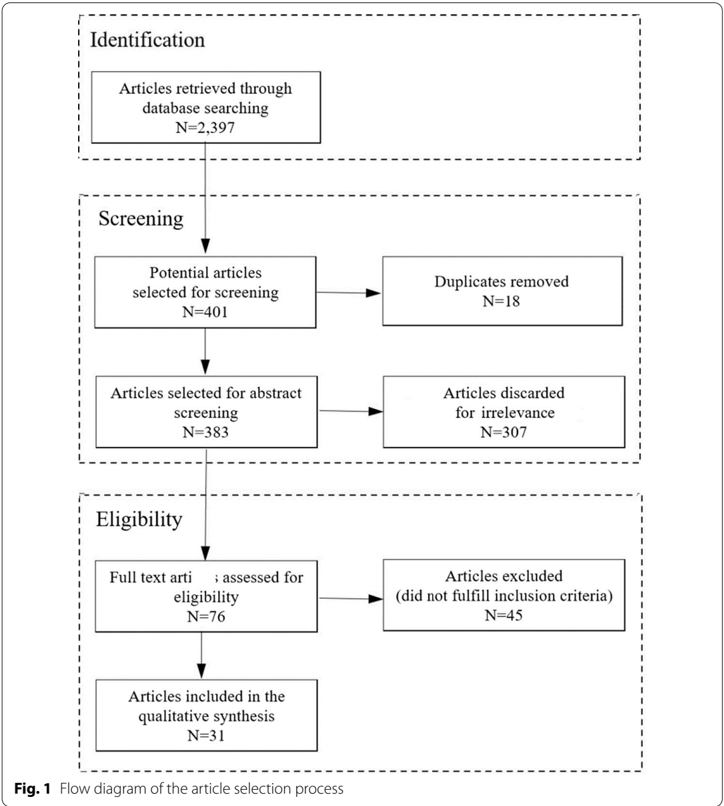
- The screening process went from 2397 articles to 401 after initial refinement, then 383 after removing 18 duplicates, then 76 after abstract screening, and finally 31 studies after full-text screening and eligibility checks.
## Limitations
- The paper states that there is “a lack of attention to ethics and data privacy” and that few reviewed studies mentioned ethical clearance; it says there is a need for protocols for personal data protection.
- It also notes that the rate of AI adoption in education is still slow compared with medicine, industry, and finance, which constrains how much evidence exists in this area.
- Evident from the text: the review is limited to 4 databases, a 5-year window, and English/Spanish/Portuguese publications, so relevant studies outside those sources, dates, or languages may have been missed.
Model-written summary. Check it against the paper before relying on it.
Integrity signals
Registry
Cites
Statistics
Figures
Verification
Claims the paper makes
4 Valid · 1 Not valid · 29 Not checked · 56 Own results and interpretations
The cited sources support only part of this claim — read each source’s verdict below.
In the paper
“AI applications can contribute to forecasting the student dropout rate and determining the factors that affect their performance”
What the sources say
- Not matchedcites Bedregal-Alpaca etal., 2020
An author–year citation the paper’s reference list doesn’t settle. We don’t search these by name.
- Not matchedcites da Fonseca Silveira etal., 2019
An author–year citation the paper’s reference list doesn’t settle. We don’t search these by name.
- Partly supportedcites Miranda & Guzmán, 2017 matched to “Análisis de la Deserción de Estudiantes Universitarios usando Técnicas de Minería de Datos” (2017) sourceExperimental — accuracy not yet measured
The Abstract reports that data-mining techniques identified variables associated with university student dropout, particularly socioeconomic circumstances and university entrance scores. The Conclusions likewise describe academic results and socioeconomic status as influencing whether students remain enrolled. These passages support identifying factors related to dropout, but not factors that affect student performance. (LLM, conf=0.83)
plainstates a cause- Asserted: passes — The authors put it forward as true.
- Checkable: passes — It can be checked against evidence.
- Load-bearing: unclear — It is unclear whether the paper’s conclusions depend on it.
- Based: passes — The paper gives a reason why it holds.
- Not matched
The cited sources support only part of this claim — read each source’s verdict below.
In the paper
“AI applications can contribute to forecasting the student dropout rate and determining the factors that affect their performance”
What the sources say
- Not matchedcites Bedregal-Alpaca etal., 2020
An author–year citation the paper’s reference list doesn’t settle. We don’t search these by name.
- Not matchedcites da Fonseca Silveira etal., 2019
An author–year citation the paper’s reference list doesn’t settle. We don’t search these by name.
- Supportedcites Miranda & Guzmán, 2017 matched to “Análisis de la Deserción de Estudiantes Universitarios usando Técnicas de Minería de Datos” (2017) source
The Methodology (p. 63) describes Bayesian-network, neural-network, and decision-tree classifiers used to predict whether students will drop out. The Abstract reports their predictive accuracy and a retention rate estimated by the decision tree, supporting the claim that these applications can help forecast dropout. (LLM, conf=0.88)
plainstates a possible cause- Asserted: passes — The authors put it forward as true.
- Checkable: passes — It can be checked against evidence.
- Load-bearing: unclear — It is unclear whether the paper’s conclusions depend on it.
- Based: passes — The paper gives a reason why it holds.
- Not matched
Every source the paper cites for this claim was checked and supports it.
In the paper
“AI applications can be used to analyze student academic results for university quality accreditation purposes”
What the sources say
- Supportedcites Delahoz-Dominguez et al., 2020 matched to “Análisis de la acreditación de calidad en programas de ingeniería industrial y los resultados en las pruebas nacionales estandarizadas, en Colombia” (2020) source
The Abstract (Resumen) states the article performs a relational analysis between university quality accreditations in industrial engineering programs and national standardized test results 'usando tecnicas de aprendizaje automatico', and the METODOLOGIA section describes PCA, decision-tree and Random Forest models used to group, classify and forecast accreditation category from Saber Pro results. RESULTS (p. 133) report Random Forest reaching 91% accuracy and 0.94 mean AUC in determining a university's accreditation category from test results, i.e. the paper demonstrates the capability the claim attributes to it. The only difference is terminology: our copy speaks of machine learning (a branch of AI) rather than 'AI applications', and its empirical setting is Colombian industrial engineering programs, which bounds a general 'can be used' statement only by example, not by contradiction. (LLM, conf=0.85)
plainstates a possible cause- Asserted: passes — The authors put it forward as true.
- Checkable: passes — It can be checked against evidence.
- Load-bearing: unclear — It is unclear whether the paper’s conclusions depend on it.
- Based: passes — The paper gives a reason why it holds.
- Supported
A result the paper reports from its own data — it cites no other source for it, so there is none to check. The quote shows it is in the paper.
In the paper
“Predictive modelling in education | [1], [2], [3], [6], [8], [13], [14], [15], [20], [23], [24], [25], [28], [29], [31] | 16”
plain- Asserted: passes — The authors put it forward as true.
- Checkable: passes — It can be checked against evidence.
- Load-bearing: unclear — It is unclear whether the paper’s conclusions depend on it.
- Based: passes — The paper gives a reason why it holds.
A result the paper reports from its own data — it cites no other source for it, so there is none to check. The quote shows it is in the paper.
In the paper
“Assistive technology (chatbots) | [5], [7], [9], [11], [17] | 5”
plain- Asserted: passes — The authors put it forward as true.
- Checkable: passes — It can be checked against evidence.
- Load-bearing: unclear — It is unclear whether the paper’s conclusions depend on it.
- Based: passes — The paper gives a reason why it holds.
49 more claims
Create a free account to see all 90 claims and to verify the 4 references still open.
- It may state two separate claims as one. 11
- Probably not a substantial claim. 30
- The quote only partly states this claim. 2
Claims other papers make about this one
Each is checked against this paper’s own text: does it say what the citing paper says it does?
The source backs part of the claim, not all of it — or backs it for a different population, condition or comparison.
In the citing paper
“Salas-Pilco y Yang (2022) realizaron una revisión sistemática de 139 artículos indexados en Scopus, identificando aplicaciones en modelado predictivo, analítica inteligente y tecnologías de asistencia, y destacando su contribución a la detección temprana del riesgo de deserción [1].”
From Avances, Retos Éticos y Perspectivas de la Inteligencia Artificial (IA) en la Educación de América Latina (2025) · cites this paper as [1]
Experimental — accuracy not yet measuredThe source backs part of the claim, not all of it — or backs it for a different population, condition or comparison.
In the citing paper
“Salas-Pilco et al. (2022) identifican aplicaciones de procesamiento de lenguaje natural que generan retroalimentación automatizada en ensayos y guías de estudio, liberando al profesor de tareas repetitivas [1].”
From Avances, Retos Éticos y Perspectivas de la Inteligencia Artificial (IA) en la Educación de América Latina (2025) · cites this paper as [1]
Experimental — accuracy not yet measuredThe source backs part of the claim, not all of it — or backs it for a different population, condition or comparison.
In the citing paper
“AI applications in education also raise ethical considerations, ranging from professional readiness to lapses in rigour, such as not adhering to ethical procedures when collecting data (e.g., Salas-Pilco & Yang, 2022), and ethical and legal issues related to using tools prematurely (Zhang et al., 2023).”
From A meta systematic review of artificial intelligence in higher education: a call for increased ethics, collaboration, and rigour (2024) · cites this paper as Salas-Pilco & Yang, 2022
Experimental — accuracy not yet measuredThe cited source says what the claim attributes to it.
In the citing paper
“The results revealed that the main AI applications in higher education in Latin America are: (1) predictive modeling, (2) intelligent analytics, (3) assistive technology, (4) automatic content analysis, and (5) image analytics.”
From Artificial intelligence in higher education: the state of the field (2023) · cites this paper as Salas-Pilco and Yang (2022)
In the citing paper
“These include the replacement of traditional instruction methods with cost-effective AI programs by administrators during budget constraints, as well as privacy and data protection challenges related to sensitive student and faculty information (Salas-Pilco & Yang, 2022;Wu et al., 2024;Zawacki-Richter et al., 2019).”
From Barriers to and Opportunities for the Adoption of Generative Artificial Intelligence in Higher Education in the Global South: Insights from Sri Lanka (2025) · cites this paper as Salas-Pilco & Yang, 2022
2 more claims about this paper
Create a free account to see every claim other papers make about this one.
Citations
Cites
Systematic Literature Reviews in Software Engineering—A Systematic Literature Review
Kitchenham, B., Pearl Brereton, O., Budgen, D., Turner, M., Bailey, J., & Linkman, S. (2009) · Information and Software Technology · doi:10.1016/j.infsof.2008.09.009 · Cited by 4,537 · cited 1×
“A systematic review explores previous studies to answer specific research questions based on an explicit, systematic, and replicable search strategy, with inclusion and exclusion criteria (Kitchenham et al., 2009; Xiao & Watson, 2019).”
BackgroundArtificial Intelligence in Education: A Review
Chen, L., Chen, P., & Lin, Z. (2020) · IEEE Access · doi:10.1109/access.2020.2988510 · Cited by 4,133 · cited 1×
“The education sector is now significantly influenced by AI research, as AI applications are being used by learners, educators, and administrators and various tools, algorithms, and applications have been developed with the capacity to transform the education field (Chen et al., 2020).”
BackgroundGuidance on Conducting a Systematic Literature Review
Xiao, Y., & Watson, M. (2019) · Journal of Planning Education and Research · doi:10.1177/0739456x17723971 · Cited by 3,467 · cited 1×
“A systematic review explores previous studies to answer specific research questions based on an explicit, systematic, and replicable search strategy, with inclusion and exclusion criteria (Kitchenham et al., 2009; Xiao & Watson, 2019).”
BackgroundExploring the impact of artificial intelligence on teaching and learning in higher education
Popenici, S. A. D., & Kerr, S. (2017) · Research and Practice in Technology Enhanced Learning · doi:10.1186/s41039-017-0062-8 · Cited by 2,019 · cited 2×
“AI is defined as “computing systems that are able to engage in human-like processes such as learning, adapting, synthesizing, self-correction and use of data for complex processing tasks” (Popenici & Kerr, 2017, para.”
BackgroundOverview of artificial intelligence in medicine
Amisha, Malik, P., Pathania, M., & Rathaur, V. K. (2019) · Journal of Family Medicine and Primary Care · doi:10.4103/jfmpc.jfmpc_440_19 · Cited by 1,106
The TESOL Encyclopedia of English Language Teaching
(2018) · Wiley eBooks · doi:10.1002/9781118784235 · Cited by 1,055
AI technologies for education: Recent research & future directions
Zhang, K., & Aslan, A. B. (2021) · Computers and Education: Artificial Intelligence · doi:10.1016/j.caeai.2021.100025 · Cited by 923
Some guidance on conducting and reporting qualitative studies
Twining, P., Heller, R. S., Nussbaum, M., & Tsai, C.-C. (2017) · Computers & Education · doi:10.1016/j.compedu.2016.12.002 · Cited by 291 · cited 1×
“Moreover, Twining et al. (2017) highlighted the importance of qualitative studies—regarding technologies applied in education—in understanding a situation or phenomenon through the identification of themes and patterns in the data.”
BackgroundBorsci, S., Malizia, A., Schmettow, M., van der Velde, F., Tariverdiyeva, G., Balaji, D., & Chamberlain, A. (2022) · Personal and Ubiquitous Computing · doi:10.1007/s00779-021-01582-9 · Cited by 266 · cited 1×
“These applications are being integrated in social networks, websites, and a variety of platforms (Borsci et al., 2021).”
BackgroundOwoc, M. L., Sawicka, A., & Weichbroth, P. (2021) · IFIP Advances in Information and Communication Technology · doi:10.1007/978-3-030-85001-2_4 · Cited by 222 · cited 1×
“Furthermore, Owoc et al. (2021) indicated that the benefits of AI in education are the following: (a) automation of repetitive and time-consuming activities such as grading or controlling student attendance, (b) use of AI facilitators to support teachers in their classroom work, (c) feedback for…”
Background
Research works printed but not linked: 3
- *García-González, D. J., & Skrita, A. (2019). Predicting academic performance based on students' family environment: Evidence for Colombia using classification trees. Psychology Society & Education, 11 (3), 299-311. https:// doi. org/ 10. 21071/ psye. v11i3. 13947. · doi:10.21071/psye.v11i3.13947
- *Mendoza Jurado, H. F. (2020). Modelos de redes neuronales artificiales, como sustento evaluativo al crecimiento pedagógico virtual en Educación Superior [Artificial neural network models, as evaluative support to virtual pedagogical growth in Higher Education]. Educación Superior, 7(2), 25–36. https://www.scielo.org.bo/pdf/escepies/v7n2/v7n2_a06.pdf.
- Torre, D., & Zapata, G. (2012). Impacto de procesos de aseguramiento de la calidad sobre las instituciones de educación superior: un estudio en siete países [Impact of quality assurance processes on higher education institutions: A study in seven countries]. In M. Lemaitre, & M. Zenteno (Eds.), Aseguramiento de la Calidad en Iberoamérica. Informe 2012 (pp. 115–157). RIL Editores.
Cited by
Artificial intelligence in higher education: the state of the field
Crompton, H., & Burke, D. (2023) · International Journal of Educational Technology in Higher Education · doi:10.1186/s41239-023-00392-8 · Cited by 2,010
Bond, M., Khosravi, H., De Laat, M., Bergdahl, N., Negrea, V., Oxley, E., Pham, P., Chong, S. W., & Siemens, G. (2024) · International Journal of Educational Technology in Higher Education · doi:10.1186/s41239-023-00436-z · Cited by 852
“%) reported on findings of ITS diagnosing strengths and gaps, suggesting learning paths and providing automated feedback (Salas-Pilco & Yang, 2022), which can help reduce educator workload (Alam & Mohanty, 2022) and ensure that students receive timely information about their learning (Crompton &…”
BackgroundMethodInfluentialEssel, H. B., Vlachopoulos, D., Tachie-Menson, A., Johnson, E. E., & Baah, P. K. (2022) · International Journal of Educational Technology in Higher Education · doi:10.1186/s41239-022-00362-6 · Cited by 428
Yu, H., & Guo, Y. (2023) · Frontiers in Education · doi:10.3389/feduc.2023.1183162 · Cited by 357
“Generative AI can automatically identify students’ learning weaknesses and bottlenecks through machine learning algorithms and deep learning technology, providing corresponding targeted tutoring and exercises to help students better master learning content and skills (Salas-Pilco and Yang, 2022).”
BackgroundArtificial intelligence and learning analytics in teacher education: A systematic review
Salas-Pilco, S., Xiao, K., & Hu, X. (2022) · Education Sciences · doi:10.3390/educsci12080569 · Cited by 326
Self-citationShahzad, M. F., Xu, S., Lim, W. M., Yang, X., & Khan, Q. R. (2024) · Heliyon · doi:10.1016/j.heliyon.2024.e29523 · Cited by 205
“AI tools like ChatGPT [3] offer more than informational support; they can serve as non-judgmental platforms for students to articulate their emotional and cognitive struggles [45].”
BackgroundInfluentialChatGPT in physics education: A pilot study on easy-to-implement activities
Bitzenbauer, P. (2023) · Contemporary Educational Technology · doi:10.30935/cedtech/13176 · Cited by 181
“…(Ahuja, 2019; Veloso et al., 2021) research investigating the implementation of chatbots into classroom practice is still in its infancy (Hwang & Chang, 2021), especially with respect to secondary schools (Adiguzel et al., 2023; Salas-Pilco & Yang, 2022; Salas-Pilco et al., 2022; Halaweh, 2023).”
BackgroundWu, W., Zhang, B., Li, S., & Liu, H. (2022) · Frontiers in Psychology · doi:10.3389/fpsyg.2022.870777 · Cited by 168
“AI technology such as predictive modeling, intelligent analytics, assistive technology, automated content analysis, and image analysis applied in education can help solve important educational problems and ensure quality education (Salas-Pilco and Yang, 2022).”
BackgroundForero-Corba, W., & Bennásar, F. N. (2023) · RIED Revista Iberoamericana de Educación a Distancia · doi:10.5944/ried.27.1.37491 · Cited by 376
Tassoti, S. (2024) · Journal of Chemical Education · doi:10.1021/acs.jchemed.4c00212 · Cited by 129
Wang, F., King, R. B., Chai, C. S., & Zhou, Y. (2023) · International Journal of Educational Technology in Higher Education · doi:10.1186/s41239-023-00417-2 · Cited by 124
“However, existing research on AI education has mostly focused on the curriculum and technical aspects (Salas-Pilco & Yang, 2022; Zawacki-Richter et al., 2019).”
BackgroundAILA Applied Linguistics Series
(2013) · AILA applied linguistics series · doi:10.1075/aals · Cited by 114
Cultivating writing skills: The role of ChatGPT as a learning assistant—A case study
Punar Özçelik, N., & Yangın Ekşi, G. (2024) · Smart Learning Environments · doi:10.1186/s40561-024-00296-8 · Cited by 115
Nam, B. H., & Bai, Q. (2023) · International Journal of STEM Education · doi:10.1186/s40594-023-00452-5 · Cited by 111
“Furthermore, Salas-Pilco and Yang (2022) perceived that higher education administrators could also practically utilize AI chat-bots to manage documents.”
BackgroundArtificial intelligence in entrepreneurship education: a scoping review
Chen, L., Ifenthaler, D., Yau, J. Y.-K., & Sun, W. (2024) · Education + Training · doi:10.1108/et-05-2023-0169 · Cited by 199
Ouyang, F., & Zhang, L. (2024) · Educational Research Review · doi:10.1016/j.edurev.2024.100616 · Cited by 177
Jafari, F., & Keykha, A. (2024) · Journal of Applied Research in Higher Education · doi:10.1108/jarhe-09-2023-0426 · Cited by 102
Artificial Intelligence in Personalised Learning: A Bibliometric Analysis
Li, K. C., & Wong, B. T.-M. (2023) · Interactive Technology and Smart Education · doi:10.1108/itse-01-2023-0007 · Cited by 88
Artificial Intelligence in Higher Education: A Predictive Model for Academic Performance
Pacheco-Mendoza, S., Guevara, C., Mayorga-Albán, A., & Fernández-Escobar, J. (2023) · Education Sciences · doi:10.3390/educsci13100990 · Cited by 75
Zhu, H., Sun, Y., & Yang, J. (2025) · Humanities and Social Sciences Communications · doi:10.1057/s41599-025-05252-6 · Cited by 196
Fadlelmula, F. K., & Qadhi, S. M. (2024) · Journal of University Teaching and Learning Practice · doi:10.53761/pswgbw82 · Cited by 75
“For future research, with an increasing number of studies on AI in education, researchers “should keep a close eye on AI development and include both content analysis and in-depth quantitative analysis of relevant studies” (Salas-Pilco & Yang, 2022, p.16).”
BackgroundKatsantonis, A., & Katsantonis, I. G. (2024) · Education Sciences · doi:10.3390/educsci14090988 · Cited by 77
Rodríguez-Ortiz, M. Á., Santana-Mancilla, P. C., & Anido, L. (2025) · Applied Sciences · doi:10.3390/app15158679 · Cited by 172
Artificial Intelligence in Higher Education: An Analysis of Existing Bibliometrics
López-Chila, R., Llerena-Izquierdo, J., Sumba-Nacipucha, N., & Cueva-Estrada, J. (2023) · Education Sciences · doi:10.3390/educsci14010047 · Cited by 65
Rad, H. S. (2025) · Smart Learning Environments · doi:10.1186/s40561-025-00377-2 · Cited by 184
“This feature allows learners to progress at their own pace, enhancing their motivation and engagement with the learning process (Salas-Pilco & Yang, 2022).”
InfluentialAl-Qaysi, N., Al‐Emran, M., Al-Sharafi, M. A., Iranmanesh, M., Ahmad, A., & Mahmoud, M. A. (2024) · International Journal of Human-Computer Interaction · doi:10.1080/10447318.2024.2361210 · Cited by 78
“ChatGPT can tailor tutoring sessions and exercises to address these weaknesses, significantly enhancing students’ mastery of content and essential skills (Salas-Pilco & Yang, 2022).”
Zhao, Y., Li, Y., Xiao, Y., Chang, H., & Liu, B. (2024) · SAGE Open · doi:10.1177/21582440241289835 · Cited by 94
“…(Chatterjee & Bhattacharjee, 2020), promote students’ creativity and self-efficacy (Wang et al., 2023), improve course satisfaction of undergraduates (He et al., 2022), and even forecast student attrition rates to alert educators to improve teaching methods and quality (Salas-Pilco & Yang, 2022).”
Examining AI Use in Educational Contexts: A Scoping Meta-Review and Bibliometric Analysis
Fu, Y., Weng, Z., & Wang, J. (2025) · International Journal of Artificial Intelligence in Education · doi:10.1007/s40593-024-00442-w · Cited by 57
Generative AI and Gamification for Personalized Learning: Literature Review and Future Challenges
Abbes, F., Bennani, S., & Maalel, A. (2024) · SN Computer Science · doi:10.1007/s42979-024-03491-z · Cited by 89
“…as text, code, image, audio, music and video [1, 3–5] offering a wide range of opportunities in all domains such as learning, teaching, assessment, and administration [2, 3, 6] to automate tasks, improve decision-making, perform the analysis of data and personalized experience, and reason [6, 7].”
Yurt, E., & Kasarci, I. (2024) · International Journal of Technology in Education · doi:10.46328/ijte.725 · Cited by 54
“According to the Expectancy-Value Theory, two critical factors determining students' motivation, academic performance, and activity choices are achievement expectations and task values (Rosenzweig et al., 2019).”
An Introduction to Generative AI Tools for Education 2030
Sandhu, R., Channi, H. K., Ghai, D., Cheema, G. S., & Kaur, M. (2024) · Advances in educational technologies and instructional design book series · doi:10.4018/979-8-3693-2440-0.ch001 · Cited by 76
The Use of Artificial Intelligence in Higher Education
Drach, I., Petroye, O., Borodiyenko, O., Reheilo, I. Y., Базелюк, О., БАЗЕЛЮК, Н. В., & Слободянюк, О. М. (2023) · International Scientific Journal of Universities and Leadership · doi:10.31874/2520-6702-2023-15-66-82 · Cited by 205
Adaptive learning in computer science education: A scoping review
Barbosa, P. L. S., do Carmo, R. A. F., Gomes, J. P. P., & Viana, W. (2023) · Education and Information Technologies · doi:10.1007/s10639-023-12066-z · Cited by 78
“AI can achieve sustainable changes in the education system by improving not only learning and teaching but also the administration and management of educational institutions (Salas-Pilco and Yang, 2022).”
Enhancing artificial intelligence literacy through cross-cultural online workshops
Korte, S.-M., Cheung, W. M.-Y., Maasilta, M., Kong, S.-C., Keskitalo, P., Wang, L., Lau, C. M., Lee, J. C. K., & Gu, M. M. (2024) · Computers and Education Open · doi:10.1016/j.caeo.2024.100164 · Cited by 49
“The education sector is significantly influenced by AI applications that have the potential to transform it by, for example, personalising instruction and learning as well as automating assessment and administrative tasks [9,40].”
BackgroundInteligencia Artificial y la Educación Universitaria: Una revisión sistemática
Aguilar, G. M. F., Gavilánes, D. C. A., Freire, E. M. A., & Quincha, M. L. (2023) · Magazine de las Ciencias: Revista de Investigación e Innovación · doi:10.33262/rmc.v8i1.2935 · Cited by 190
Henadirage, A., & Gunarathne, N. (2025) · International Journal of Artificial Intelligence in Education · doi:10.1007/s40593-024-00439-5 · Cited by 48
“…of traditional instruction methods with cost-effective AI programs by administrators during budget constraints, as well as privacy and data protection challenges related to sensitive student and faculty information (Salas-Pilco & Yang, 2022; Wu et al., 2024; Zawacki-Richter et al., 2019).”
Yılmaz, Ö. (2024) · Educational Technology Quarterly · doi:10.55056/etq.744 · Cited by 93
Valdivieso, T., & González, O. (2025) · Education Sciences · doi:10.3390/educsci15020214 · Cited by 49
Durak, G., Çankaya, S., Özdemir, D., & Can, S. (2024) · The International Review of Research in Open and Distributed Learning · doi:10.19173/irrodl.v25i3.7757 · Cited by 86
“Salas-Pilco and Yang (2022) conducted a targeted review of AI applications in Latin American higher education.”
Maia, J. D. S. Z., Bueno, A. P. A., & Sato, J. R. (2023) · World · doi:10.3390/world4020019 · Cited by 83
Cubillos, C., Mellado, R., Cabrera‐Paniagua, D., & Urra, E. (2025) · IEEE Access · doi:10.1109/access.2025.3532883 · Cited by 71
“Recent analyses have pointed out the limited adoption and exploration of AI applications in Latin American higher education institutions, especially in programming education [14].”
The AI Motivation Scale (AIMS): a self-determination theory perspective
Li, J., King, R. B., Chai, C. S., Zhai, X., & Lee, V. W. Y. (2025) · Journal of Research on Technology in Education · doi:10.1080/15391523.2025.2478424 · Cited by 79
“…AI in education, most existing studies in the educational context have concentrated on AI-based applications (Güner & Er, 2025; Oubibi et al., 2025; Salas-Pilco & Yang, 2022), AI-oriented curricula and policy (Chai et al., 2021; McDonald et al., 2025; Zhai et al., 2021), and future trends in the…”
Al-Shallakh, M. A. I. (2024) · Theory and Practice in Language Studies · doi:10.17507/tpls.1406.31 · Cited by 49
Use of generative AI in research: ethical considerations and emotional experiences
Farangi, M. R., Nejadghanbar, H., & Hu, G. (2024) · Ethics & Behavior · doi:10.1080/10508422.2024.2420133 · Cited by 57
“Recent scholarship has underscored the necessity of educating stakeholders about ethical AI use and fostering ethical conduct when interacting with GenAI technologies (Lee et al., 2021; Salas-Pilco & Yang, 2022).”
La inteligencia artificial generativa y la educación universitaria: ¿Salió el genio de la lámpara?
Mendiola, M. S., & Carbajal-Degante, E. (2023) · Perfiles Educativos · doi:10.22201/iisue.24486167e.2023.especial.61692 · Cited by 141
Mujtaba, B. G. (2024) · Business Ethics and Leadership · doi:10.61093/bel.8(2).107-127.2024 · Cited by 53
A Bibliometric Analysis of Research on ChatGPT in Education
Polat, H., Topuz, A. C., Yıldız, M., Taşlıbeyaz, E., & Kurşun, E. (2024) · International Journal of Technology in Education · doi:10.46328/ijte.606 · Cited by 35
Kyambade, M., Namatovu, A., & Ssentumbwe, A. M. (2025) · Cogent Education · doi:10.1080/2331186x.2025.2505297 · Cited by 71
“The AI-Driven Personalized Learning paradigm emphasizes integrating human intelligence with AI systems to overcome challenges such as algorithmic bias, governance issues, and lack of transparency (Hwang & Tu, 2021; Lee & Kwon, 2024; Salas-Pilco & Yang, 2022).”
Who is Helping Whom? Student Concerns about AI-Teacher Collaboration in Higher Education Classrooms
Han, B., Coghlan, S., Buchanan, G., & McKay, D. (2025) · Proceedings of the ACM on Human-Computer Interaction · doi:10.1145/3711104 · Cited by 31
de la Torre, A., & Baldeon-Calisto, M. (2024) · International Symposium on Digital Forensics and Security (ISDFS) · doi:10.1109/isdfs60797.2024.10527283 · Cited by 64
“The pioneering review conducted by Salas-Pilco & Yang [8] stands out as the sole available study in this domain.”
Using Artificial Intelligence for Higher Education: An Overview and Future Research Avenues
Aguado-García, J.-M., Alonso‐Muñoz, S., & De‐Pablos‐Heredero, C. (2025) · SAGE Open · doi:10.1177/21582440251340352 · Cited by 67
“In 1955, the term AI was coined by the computer scientists (McCarty et al., 2006; Salas-Pilco & Yang, 2022) AI is defined as ‘computing systems that are able to engage in human-like processes such as learning, adapting, synthesising, self-correction and use of data for complex processing tasks’…”
College Teachers’ Behavioral Intention to Adopt Artificial Intelligence-Assisted Teaching Systems
Zhang, W., & Hou, Z. (2024) · IEEE Access · doi:10.1109/access.2024.3445909 · Cited by 40
“Based on previous studies on AIATS classification and the current status of generative AI systems [36], [37], [38], [39], [40], this study divides AIATS functions and application scenarios into four categories: i) big data dynamic analysis, ii) teaching and research collaboration, iii) immersive…”
MethodSolórzano, S. S. S., Romero, J. P., Díaz-Cueva, J. G., Montero, J. E. A., Campoverde, M. A. Z., Valarezo, M. M. L., Ninaquispe, J. C. M., Acosta-Enriquez, B. G., & Ballesteros, M. A. A. (2024) · Journal of Innovation and Entrepreneurship · doi:10.1186/s13731-024-00412-5 · Cited by 53
“…variability in the quality and focus of AI education across different regions and countries complicates the understanding of this phenomenon, as differences in available resources and educational policies significantly influence how students interact with and perceive AI (Salas-Pilco & Yang, 2022).”
AI4Design: A generative AI-based system to improve creativity in design–A field evaluation
Abrusci, L., Dabaghi, K., D’Urso, S., & Sciarrone, F. (2025) · Computers and Education Artificial Intelligence · doi:10.1016/j.caeai.2025.100401 · Cited by 50
Useche, A. C., Galvis, Á. H., Arceo, F. D. B., Rivera, A. P., & Muñoz-Reyes, C. (2022) · International Journal of Educational Technology in Higher Education · doi:10.1186/s41239-022-00365-3 · Cited by 61
“Salas-Pilco and Yang (2022) identified AI applications in Latin América that support learning, teaching, and administrative functions.”
BackgroundMethodSlimi, Z., & Villarejo-Carballido, B. (2024) · European Journal of Educational Research · doi:10.12973/eu-jer.13.4.1477 · Cited by 43
A Study on Role of Artificial Intelligence in Education
Mon, B. F., Wasfi, A., Hayajneh, M., & Slim, A. (2023) · International Conference on Computing, Electronics & Communications Engineering (iCCECE) · doi:10.1109/iccece59400.2023.10238613 · Cited by 50
“industry [13], and an interdisciplinary strategy is needed to combine multiple disciplines, such as psychology, computer science, image processing, languages, and neuroscience.”
BackgroundChatGPT como herramienta de apoyo al aprendizaje en la educación superior: una experiencia docente
Segarra‐Ciprés, M., Grangel, R., & Belmonte, Ó. (2024) · Revista Tecnología Ciencia y Educación · doi:10.51302/tce.2024.19083 · Cited by 80
Transforming Rural and Underserved Schools with AI-Powered Education Solutions
Leong, W. Y. (2024) · ASM Science Journal · doi:10.32802/asmscj.2023.1895 · Cited by 47
Innovations in Introductory Programming Education: The Role of AI with Google Colab and Gemini
Llerena-Izquierdo, J., Reyes, J. M., Ayala-Carabajo, R., & Martínez, C. M. A. (2024) · Education Sciences · doi:10.3390/educsci14121330 · Cited by 64
Mohammed, I. A., Bello, A., & Ayuba, B. (2025) · Education and Information Technologies · doi:10.1007/s10639-024-13293-8 · Cited by 33
“…sector is not an exception due to the huge amount of studies aimed at incorporating AI into education in the form of intelligent tutoring systems, learning management systems, adaptive learning, design of assessment, and learning analytics (Falode & Mohammed, 2023; Salas-Pilco & Yang, 2020, 2022).”
Segbenya, M., Senyametor, F., Aheto, S.-P. K., Agormedah, E. K., Nkrumah, K., & Kaedabi‐Donkor, R. (2024) · Cogent Education · doi:10.1080/2331186x.2024.2387943 · Cited by 37
“Research has demonstrated the application of Al in higher education as well as the effects of artificial intelligence on it (Chan & Hu, 2023; Crompton & Burke, 2023; Rasul et al., 2023; Salas-Pilco & Yang, 2022; Schiller International University [SIU], 2023; Segbenya et al., 2023).”
Ghazali, R. C., Hanid, M. F. A., Said, M. N. H. M., & Lee, H. Y. (2025) · Journal of Research on Technology in Education · doi:10.1080/15391523.2025.2456044 · Cited by 37
“The rapid global expansion of AI-driven educational tools further emphasizes their potential to enhance education quality and support student learning, making AIEd a critical area of innovation (Salas-Pilco & Yang, 2022).”
Ethical Problems in the Use of Artificial Intelligence by University Educators
Chinoracký, R., & Stalmašeková, N. (2025) · Education Sciences · doi:10.3390/educsci15101322 · Cited by 43
Ethics of artificial intelligence
Rios-Campos, C., Tejada-Castro, M. I., Viteri, J. D. C. L., Zambrano, E. O. G., Núñez, J. B., & Vara, F. E. O. (2023) · South Florida Journal of Development · doi:10.46932/sfjdv4n4-022 · Cited by 19
Quo Vadis, University? A Roadmap for AI and Ethics in Higher Education
Sirvent, F. C., Roger‐Monzó, V., & Rodrigues, R. G. (2024) · The Electronic Journal of e-Learning · doi:10.34190/ejel.22.6.3267 · Cited by 44
Implementing AI-based Conversational Chatbots in EFL Speaking Classes: An Evolutionary PerspectivePreprint
Mahmoud, R. H. (2022) · Research Square · doi:10.21203/rs.3.rs-1911791/v1 · Cited by 40
Boulhrir, T., & Hamash, M. (2025) · Computers and Education Artificial Intelligence · doi:10.1016/j.caeai.2025.100442 · Cited by 63
A Comparative Study of Machine Learning Techniques for College Student Success Prediction
Tang, Z., Jain, A., & Colina, F. E. (2024) · Journal of Higher Education Theory and Practice · doi:10.33423/jhetp.v24i1.6764 · Cited by 32
“Recent research suggests a departure from the umbrella of data mining to be nestled under artificial intelligence while still deploying the same machine learning models in education (Salas-Pilco & Yang, 2022; Stadlman et al., 2022).”
BackgroundFierro-Saltos, W., Saltos, F. E. F., Segura, E. A. V., & Rivera, E. F. (2025) · Information · doi:10.3390/info16090819 · Cited by 26
Text mining applied to distance higher education: A systematic literature review
Takaki, P., & Dutra, M. L. (2023) · Education and Information Technologies · doi:10.1007/s10639-023-12235-0 · Cited by 19
“This article by Salas-Pilco and Yang (2022) considers the use and applications of Artificial Intelligence in education in Latin American higher-edu-cational institutions and highlights relevant characteristics of this geographic context.”
Gao, M., Zhang, H., Dong, Y., & Li, J. (2025) · Educational Studies · doi:10.1080/03055698.2025.2483831 · Cited by 24
“The application of generative AI in education spans various fields, including persona-lised learning (Das et al. 2023), intelligent tutoring (Salas-Pilco and Yang 2022), and educational resource creation (Chen and Wu 2024; Xu et al. 2024).”
Bond, M. (2024) · International Journal of Educational Technology in Higher Education · doi:10.1186/s41239-024-00492-z · Cited by 33
Sol, K., Heng, K., & Sok, S. (2024) · SSRN Electronic Journal · doi:10.2139/ssrn.4687461 · Cited by 16
Avello, D., & Zurita, S. A. (2025) · International Journal for Educational Integrity · doi:10.1007/s40979-025-00199-2 · Cited by 34
“Students can utilize these tools to enhance their writing, brainstorm ideas, stream-line the use of software through basic programming commands, and conduct deeper analyses of quantitative, qualitative, and even visual data, such as images or diagrams (Chan and Hu 2023; Salas-Pilco and Yang 2022).”
InfluentialHu, X., Sui, H., Geng, X., & Zhao, L. (2024) · Education and Information Technologies · doi:10.1007/s10639-024-12513-5 · Cited by 25
AI-Driven Curriculum Transformation and Faculty Development in Developing Universities
Hadi, W. M., & Hasan, M. A.-S. (2025) · IGI Global eBooks · doi:10.4018/979-8-3373-1375-7.ch010 · Cited by 19
Data-Driven Learning Analytics and Artificial Intelligence in Higher Education: A Systematic Review
González-Pérez, L. I., García‐Peñalvo, F. J., & Argüelles-Cruz, A.-J. (2025) · IEEE Revista Iberoamericana de Tecnologias del Aprendizaje · doi:10.1109/rita.2025.3615512 · Cited by 29
Yang, H., Xu, N., Lin, X., & Zhang, W. (2025) · Computers in Human Behavior Reports · doi:10.1016/j.chbr.2025.100833 · Cited by 27
Athanassopoulos, S., Tzavara, A., Aravantinos, S., Lavidas, K., Komis, V., & Papadakis, S. (2026) · Education Sciences · doi:10.3390/educsci16020228 · Cited by 26
ARTIFICIAL INTELLIGENCE IN HIGHER EDUCATION. A LITERATURE REVIEW
Heredia–Carroza, J., & Stoica, R. (2024) · Journal of Public Administration Finance and Law · doi:10.47743/jopafl-2023-30-09 · Cited by 28
Singh, V. V., Kumar, N., Singh, S., Kaul, M., Gupta, A. K., & Kapur, P. K. (2024) · International Journal of Systems Assurance Engineering and Management · doi:10.1007/s13198-024-02411-x · Cited by 21
“A recent research focus has been on the potential applications of AI in education; therefore, a systematic review of the literature on AI in education is needed (Salas-Pilco and Yang 2022).”
Hacia revisiones de la literatura más eficientes potenciadas por inteligencia artificial
Carbajal-Degante, E., Gutiérrez, M. H., & Mendiola, M. S. (2023) · Investigación en Educación Médica · doi:10.22201/fm.20075057e.2023.47.23526 · Cited by 30
The emergence of artificial intelligence in the higher education
Ajani, O. A., Akintolu, M., & Afolabi, S. (2024) · International Journal of Research in Business and Social Science (2147-4478) · doi:10.20525/ijrbs.v13i8.3507 · Cited by 31
Qehaja, A. B. (2025) · foresight · doi:10.1108/fs-04-2024-0079 · Cited by 36
Cutillas, A. L. (2025) · Environment and Social Psychology · doi:10.59429/esp.v10i4.3185 · Cited by 14
Álamo, E. M.-C. (2024) · European Public & Social Innovation Review · doi:10.31637/epsir-2024-440 · Cited by 20
Moheno, J. M., Calzada, M. A. H., & Ortega-Mohedano, J. (2024) · Educational Media International · doi:10.1080/09523987.2024.2436737 · Cited by 20
“…the degree of adoption of AI in education is lower than in other areas of society, requiring higher education to address the impact of new technologies on the creation and transmission of knowledge, and in particular, to recognize the potential benefits of AI tools (Salas-Pilco & Yang, 2022).”
Inteligencia artificial en educación: De usuarios pasivos a creadores críticos
González-Videgaray, M. C., & Ruiz, R. R. (2022) · FIGURAS REVISTA ACADÉMICA DE INVESTIGACIÓN · doi:10.22201/fesa.26832917e.2022.4.1.243 · Cited by 28
Application Status, Problems and Future Prospects of Generative AI in Education
Yu, H., Liu, Z., & Guo, Y. (2023) · International Conference on Computer Science and Technologies in Education (CSTE) · doi:10.1109/cste59648.2023.00065 · Cited by 23
Artificial intelligence in higher education: a PRISMA 2020 review
Jaboob, M., Al-Ansi, A. M., & Riyadh, H. A. (2026) · International Journal of Educational Management · doi:10.1108/ijem-09-2024-0560 · Cited by 10
Bernuy, J. B. V., Nolasco-Mamani, M. A., Rodríguez, N. C. V., Quelopana, R. L. G., Valdivia, A. N. M., & Vidaurre, S. M. E. (2025) · Sustainability · doi:10.3390/su17188329 · Cited by 31
Artificial Intelligence in Higher Education: Examining the AI Policy Landscape at U.S. Institutions
Kim, D., & Wu, J. (2024) · The 25th Annual Conference on Information Technology Education · doi:10.1145/3686852.3687076 · Cited by 10
Zambrano-Romero, W. D., Rodriguez, C. R., Pita-Valencia, J., Zambrano-Romero, W. J., & Moran-Tubay, J. M. (2025) · Information · doi:10.3390/info16030181 · Cited by 17
A Bibliometric and Thematic Analysis of Systematic Reviews of Artificial Intelligence in Education
Nguyen, V. T., Phung, T.-N., & Cuong, D.-D. (2024) · Lecture notes in networks and systems · doi:10.1007/978-3-031-50818-9_37 · Cited by 21
Jiménez, W. C. (2024) · Actualidades Investigativas en Educación · doi:10.15517/aie.v24i1.55612 · Cited by 14
“Other researchers (Beyduz, 2023; Salas-Pilco and Yang, 2022; Schiff, 2022; Smith, 2022) have claimed that AI may merge with educational practices and help teach students.”
BackgroundRoberts, L. N., Solomon, F. N., & Cummings, R. (2024) · Advances in educational technologies and instructional design book series · doi:10.4018/979-8-3693-2728-9.ch012 · Cited by 11
Mukhamedkarimova, D. F., & Umurkulova, M. M. (2025) · European Journal of Educational Research · doi:10.12973/eu-jer.14.4.1373 · Cited by 20
The ChatGPT Application: Initial Perceptions of University Teachers
Llontop, L. R. A., Ramírez, S. P., & Mirez, K. F. T. (2023) · LACCEI International Multi-Conference for Engineering, Education and Technology (LACCEI) · doi:10.18687/laccei2023.1.1.336 · Cited by 23
“En América Latina, en la última década, se ha presentado un gran interés de investigación en la aplicación de la IA; se considera que hay un gran potencial en su uso de tres procesos educativos: aprendizaje, enseñanza y administración [17].”
BackgroundEl análisis de la percepción de los profesores respecto al uso de la Inteligencia Artificial
de Wood, P. S., Chaves, V. E. J., & Esteche, A. P. R. (2024) · Revista EDUCA UMCH · doi:10.35756/educaumch.202424.293 · Cited by 21
Metadata
- Authors
- Salas-Pilco, S. Z., & Yang, Y.
- Affiliations
- Central China Normal University (CN)
- Corresponding author
- Yang, Yuqin
- Venue
- International Journal of Educational Technology in Higher Education
- Published
- 2022-04-18
- Volume
- 19
- Issue
- 1
- ISSN
- 2365-9440 (ISSN-L)
- OpenAlex
- W4223914794
- Semantic Scholar
- 559fb134eb17d97d8118a8dbfab7eae7388142b6
- Cited by
- 330
- References
- 63
- Citations by year
- 2026: 88 · 2025: 110 · 2024: 87 · 2023: 36 · 2022: 8
- FWCI
- 7.60
- Type
- journal article
- Language
- en
- Open access
- diamond
- doi.org
- Licence
- cc-by
- creativecommons.org/licenses/by/4.0 (tdm)
- creativecommons.org/licenses/by/4.0 (vor)
- Locations
- International Journal of Educational Technology in Higher Education (publishedVersion, cc-by)
- DOAJ (DOAJ: Directory of Open Access Journals) (submittedVersion, cc-by-sa)
- Funders
- Central China Normal University (Research Grant No. 1100/30106200286, ZNXBJY202108, CCNUTEIII 2021-11)
- National Natural Science Foundation of China (Grant No. 62107020)
- Ministry of Education of the People's Republic of China (Grant No. 21YJA880078)
- Topics
- Social Sciences › Education › Artificial Intelligence in Education
- Social Sciences › Education › Educational Technology and Pedagogy
- Physical Sciences › Computer Science › Computer Science Applications › Online Learning and Analytics
- Keywords
- artificial intelligence in education, higher education, Latin America, machine learning, deep learning, natural language processing, predictive modeling, intelligent analytics, assistive technology, automatic content analysis, image analytics, student dropout prediction, educational management, educational quality
About these checks
Registry, retraction, Cites and statistics results are computed, not judged, with one exception: a printed reference that no index lists is read once by a model before it counts as a citation error. Claims are extracted by a model and kept only when their quote appears verbatim in the text; each cited source is then checked, with a model’s help, for whether it says what the claim relies on. Those verdicts can be wrong — read the claim’s quote and the cited source before relying on one.
The claim verdicts this report counts are experimental: their accuracy is not yet measured.
A language model drew the claims from the paper on 2026-10-10, under version 3 of the claim definition (model deepseek-v4.1-flash, prompt extract-v3).
A second model labelled each claim on 2026-10-10 (model jev-1.13-20260917, definition revision gold-guideline-v0.2).
Cited sources are checked with a language model’s help (gpt-6-sol and qwen3.8-omni-flash).
Statistics and arithmetic are recomputed, not judged.
Confidence bands are shown only for fields calibrated on our annotated test set. None is calibrated yet, so no band is shown.
What counts as a claim ›How we measure confidence ›How we check this ›
Are you an author, or do you see a problem with this page? Request a review
Data sources
Bibliographic data: Semantic Scholar, OpenAlex, Crossref.
Contains information from the Semantic Scholar Academic Graph Datasets, made available under the ODC Attribution License (ODC-BY 1.0).
Semantic Scholar’s data is described in: Kinney, R., et al. (2023). The Semantic Scholar Open Data Platform. arXiv:2301.10140.
