

Twenty-first century California, USA, wildfires: fuel-dominated vs. wind-dominated fires
Open accessThe DOI matches its Crossref record; 46 of the 47 references it cites were found in a registry or an index.
Abstract
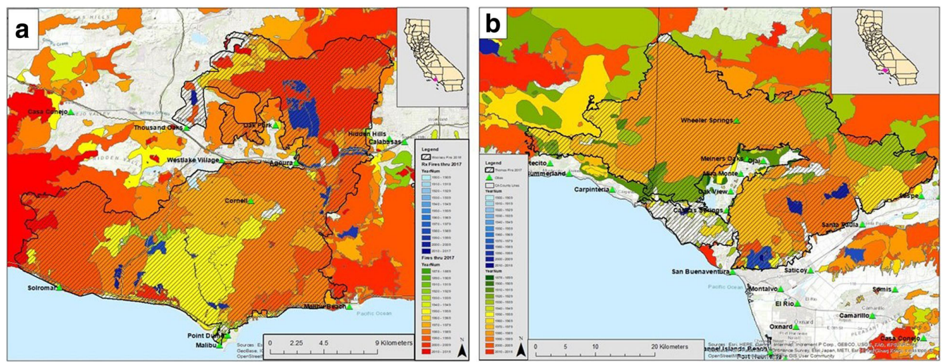
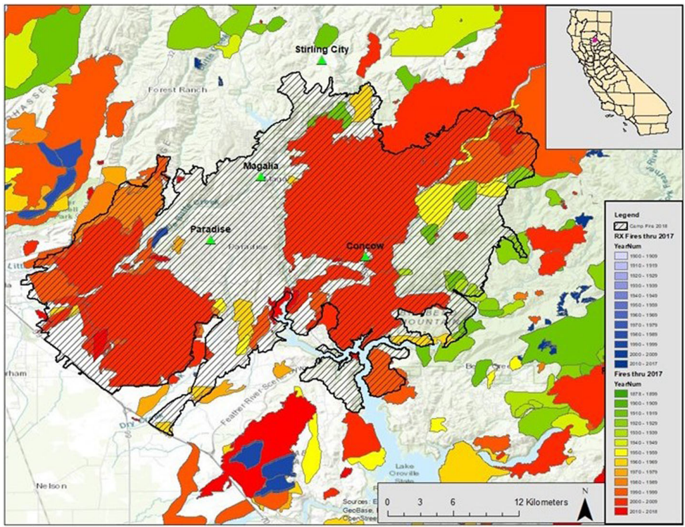
Since the beginning of the twenty-first century California, USA, has experienced a substantial increase in the frequency of large wildfires, often with extreme impacts on people and property. Due to the size of the state, it is not surprising that the factors driving these changes differ across this region. Although there are always multiple factors driving wildfire behavior, we believe a helpful model for understanding fires in the state is to frame the discussion in terms of bottom-up vs. top-down controls on fire behavior; that is, fires that are clearly dominated by anomalously high fuel loads from those dominated by extreme wind events. Of course, this distinction is somewhat artificial in that all fires are controlled by multiple factors involving fuels, winds, and topography. However, we believe that fires clearly recognizable as fuel-dominated vs. wind-dominated provide interesting case studies of factors behind these two extremes. These two types of fires differ greatly in their (1) geographical distribution in the state, (2) past fire history, (3) prominent sources of ignition, (4) seasonal timing, (5) resources most at risk, and (6) requirement for different management responses.
Overview
The claims and statistics of this paper haven’t been checked yet.
Free: it reads the open-access text and checks the first 5 claims that cite a source we can check. Create a free account to check every claim.
Integrity signals
Registry
Cites
Statistics
Figures
Verification
Claims the paper makes
The claims and statistics of this paper haven’t been checked yet.
Free: it reads the open-access text and checks the first 5 claims that cite a source we can check. Create a free account to check every claim.
Claims other papers make about this one
Each is checked against this paper’s own text: does it say what the citing paper says it does?
The cited source says what the claim attributes to it.
In the citing paper
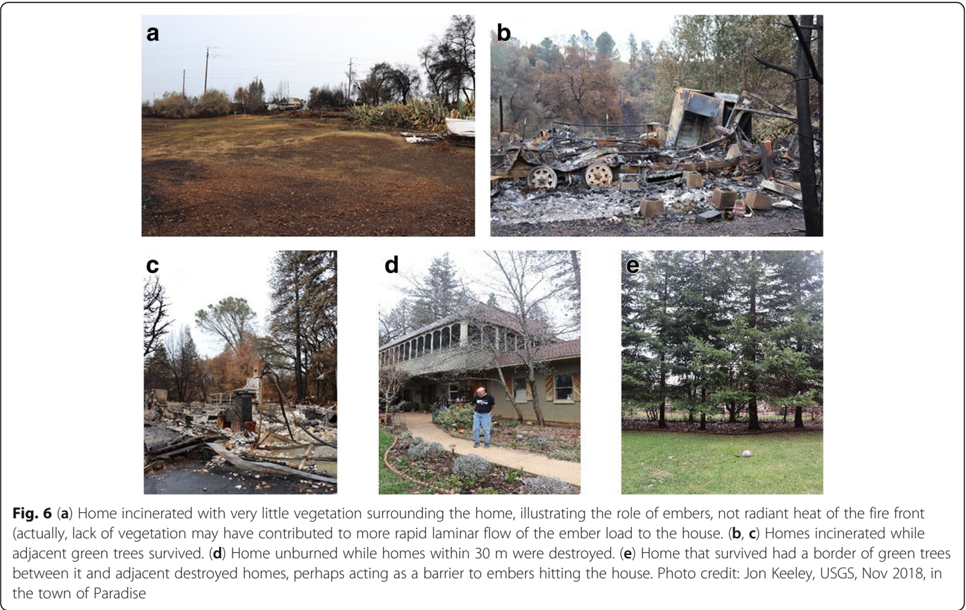
“With the Camp Fire, many overstory trees located away from burning homes survived (Keeley and Syphard 2019; Cohen and Strohmaier 2020) (Fig. 7).”
From Housing arrangement and vegetation factors associated with single-family home survival in the 2018 Camp Fire, California (2021) · cites this paper as Keeley and Syphard 2019
Self-check
Percentages, sums and reported differences re-computed from the paper’s own numbers.
The self-check needs the paper’s full text.
Citations
Cites
Impact of anthropogenic climate change on wildfire across western US forests
Abatzoglou, J. T., & Williams, A. P. (2016) · Proceedings of the National Academy of Sciences · doi:10.1073/pnas.1607171113 · Cited by 3,073
The wildland urban interface in the United States
Radeloff, V. C., Hammer, R. B., Stewart, S. I., Fried, J. S., Holcomb, S. S., & McKeefry, J. F. (2005) · Ecological Applications · doi:10.1890/04-1413 · Cited by 1,236
Climate and wildfire area burned in western U.S. ecoprovinces, 1916–2003
Littell, J. S., McKenzie, D., Peterson, D. L., & Westerling, A. L. (2009) · Ecological Applications · doi:10.1890/07-1183.1 · Cited by 1,053
Contribution of anthropogenic warming to California drought during 2012–2014
Williams, A. P., Seager, R., Abatzoglou, J. T., Cook, B. I., Smerdon, J. E., & Cook, E. R. (2015) · Geophysical Research Letters · doi:10.1002/2015gl064924 · Cited by 587
Long-term climate and competition explain forest mortality patterns under extreme drought
Young, D. J. N., Stevens, J. T., Earles, J. M., Moore, J., Ellis, A., Jirka, A. L., & Latimer, A. M. (2017) · Ecology Letters · doi:10.1111/ele.12711 · Cited by 443
Drought, Tree Mortality, and Wildfire in Forests Adapted to Frequent Fire
Stephens, S. L., Collins, B. M., Fettig, C. J., Finney, M. A., Hoffman, C. M., Knapp, E. E., North, M. P., Safford, H., & Wayman, R. B. (2018) · BioScience · doi:10.1093/biosci/bix146 · Cited by 407
Ecological effects of large fires on US landscapes: benefit or catastrophe?A
Keane, R. E., Agee, J. K., Fulé, P., Keeley, J. E., Key, C., Kitchen, S. G., Miller, R., & Schulte, L. A. (2008) · International Journal of Wildland Fire · doi:10.1071/wf07148 · Cited by 251
Self-citationHammer, R. B., Stewart, S. I., Winkler, R. L., Radeloff, V. C., & Voss, P. R. (2004) · Landscape and Urban Planning · doi:10.1016/j.landurbplan.2003.08.011 · Cited by 247
Housing Arrangement and Location Determine the Likelihood of Housing Loss Due to Wildfire
Syphard, A. D., Keeley, J. E., Massada, A. B., Brennan, T. J., & Radeloff, V. C. (2012) · PLoS ONE · doi:10.1371/journal.pone.0033954 · Cited by 220
Self-citationTaylor, A. H. (2000) · Journal of Biogeography · doi:10.1046/j.1365-2699.2000.00353.x · Cited by 219
Research works printed but not linked: 6
- Kennedy, R.G., and A. Troy. 2009. Advances in the economics of environmental resources. Volume 6. Living on the edge: economic, institutional and management perspectives on wildfire hazard in the urban interface. Bradford: Emerald Group Publishing Limited.
- Schuft, P.H. 1973. A prescribed burning program for Sequoia and Kings Canyon national parks. Proceedings of the Tall Timbers Fire Ecology Conference 12: 377-389.
- Stephens, S.L., and B.M. Collins. 2004. Fire regimes of mixed conifer forests in the north- central Sierra Nevada at multiple spatial scales. Northwest Science 78: 12-23.
- Davis: Centers for Water and Wildland Resources, University of California.
- Wuerthner, G. 2006. Logging and wildfire: ecological differences and the need to preserve large fires. In The wildfire reader: a century of failed forest policy. ed. G. Wuerthner, 178-190. Washington, D.C.: Island Press.
- Zimmerman, G.T., and R. Lasko. 2006. The changing face of wildland fire use. Fire Management Today 66 (4): 7-12.
Cited by
Pausas, J. G., & Keeley, J. E. (2021) · Frontiers in Ecology and the Environment · doi:10.1002/fee.2359 · Cited by 626
“Application of these tools will vary across ecosystems, however; for instance, areas in which fuel-driven fires dominate require very different management approaches from those dominated by wind-driven fires (fuel versus ignition control, respectively; Keeley and Syphard 2019).”
BackgroundInfluentialSelf-citationLarge California wildfires: 2020 fires in historical context
Keeley, J. E., & Syphard, A. D. (2021) · Fire Ecology · doi:10.1186/s42408-021-00110-7 · Cited by 227
“While large fires are known in the historical record, in the first few decades of the twenty-first century, the pace of these events has greatly accelerated (Keeley and Syphard 2019).”
BackgroundSelf-citationFactors Associated with Structure Loss in the 2013–2018 California Wildfires
Syphard, A., & Keeley, J. (2019) · Fire · doi:10.3390/fire2030049 · Cited by 122
“In the last several years, however, this recognition has turned into bewilderment and terror as tens of thousands of structures and hundreds of human lives have been lost in fire events throughout the state [2].”
BackgroundSelf-citationHazardous air pollutant emissions estimates from wildfires in the wildland urban interface
Holder, A. L., Ahmed, A., Vukovich, J. M., & Rao, V. (2023) · PNAS Nexus · doi:10.1093/pnasnexus/pgad186 · Cited by 117
Climate change and extreme weather: A review focusing on the continental United States
Robinson, W. A. (2021) · Journal of the Air & Waste Management Association · doi:10.1080/10962247.2021.1942319 · Cited by 108
Knapp, E. E., Valachovic, Y. S., Quarles, S. L., & Johnson, N. G. (2021) · Fire Ecology · doi:10.1186/s42408-021-00117-0 · Cited by 84
“In an analysis of CAL FIRE DINS data over multiple fires, including the Camp Fire, Syphard and Keeley (2019) re-ported that defensible space was a poor predictor of outcome, with structural variables (e.g., eave construction details, numbers of windowpanes (double vs. single), vent screen size)…”
Neighborhood Externalities and Coordinated Rebuilding after Wildfires: Evidence from CaliforniaPreprint
Issler, P., Stanton, R., Vergara‐Alert, C., & Wallace, N. E. (2020) · SSRN Electronic Journal · doi:10.2139/ssrn.3511843 · Cited by 89
Ecological resilience and vegetation transition in the face of two successive large wildfires
Steel, Z. L., Foster, D. E., Coppoletta, M., Lydersen, J. M., Stephens, S. L., Paudel, A., Markwith, S. H., Merriam, K. E., & Collins, B. M. (2021) · Journal of Ecology · doi:10.1111/1365-2745.13764 · Cited by 93
“…future changes in climate, we may see the rate of transition from forest to early seral vegetation grow following reburns as aridity increases (Pausas & Fernández- Muñoz, 2012; Williams et al., 2019), especially if fires continue to occur more often during high wind events (Keeley & Syphard, 2019).”
BackgroundJager, H. I., Long, J. W., Malison, R. L., Murphy, B. P., Rust, A. J., Silva, L. G. M., Sollmann, R., Steel, Z. L., Bowen, M. D., Dunham, J. B., et al. (2021) · Ecology and Evolution · doi:10.1002/ece3.8026 · Cited by 84
“For example, the long distance from seed sources prevents regeneration of ponderosa pine and Douglas fir, especially in dry, low- elevation settings (Davis et al., 2019; Haffey et al., 2018; Keeley & Syphard, 2019).”
BackgroundAnthropogenic Influence on Recent Severe Autumn Fire Weather in the West Coast of the United States
Hawkins, L., Abatzoglou, J. T., Li, S., & Rupp, D. E. (2022) · Geophysical Research Letters · doi:10.1029/2021gl095496 · Cited by 78
“…western US where recent large fires have occurred and were driven by strong offshore winds such as Santa Ana and Diablo winds of California (Jin et al., 2015; Keeley & Syphard, 2019; Kolden & Abatzoglou, 2018; Mass & Ovens, 2019) and East winds of western Oregon (Abatzoglou, Rupp, et al., 2021).”
BackgroundMiranda, A., Carrasco, J., González, M. E., Pais, C., Lara, A., Altamirano, A., Weintraub, A., & Syphard, A. D. (2020) · Environmental Research Letters · doi:10.1088/1748-9326/ab9be5 · Cited by 81
“…potential for WUI expansion, successful human coexistence with wildfires will necessitate informed maps that can assist with community and landscape planning to identify wheremitigation practices should be adopted tominimize fire risk (Calkin et al 2014, Moritz et al 2014, Keeley and Syphard 2019).”
BackgroundSelf-citationThomas, A. S., Escobedo, F. J., Sloggy, M. R., & Sánchez, J. J. (2022) · PLoS ONE · doi:10.1371/journal.pone.0271019 · Cited by 84
“The increasing number of homes in the WUI has been shown to result in more destructive fires and greater socioeconomic impacts [20].”
BackgroundPovak, N. A., Kane, V. R., Collins, B. M., Lydersen, J. M., & Kane, J. T. (2019) · Landscape Ecology · doi:10.1007/s10980-019-00947-z · Cited by 70
Predicting Paradise: Modeling future wildfire disasters in the western US
Ager, A. A., Day, M. A., Alcasena, F., Evers, C., Short, K. C., & Grenfell, I. C. (2021) · The Science of The Total Environment · doi:10.1016/j.scitotenv.2021.147057 · Cited by 79
“Top down and bottom up drivers of risk are well studied (Keeley and Syphard, 2019), including the expanding urban footprint (Radeloff et al.”
BackgroundLong-term trends in wildfire damages in California
Buechi, H., Weber, P. E., Heard, S., Cameron, D., & Plantinga, A. J. (2021) · International Journal of Wildland Fire · doi:10.1071/wf21024 · Cited by 78
“Keeley and Syphard (2019) characterise California’s wildfires as either fueldominated or wind-dominated.”
BackgroundSuccess of post-fire plant recovery strategies varies with shifting fire seasonality
Tangney, R., Paroissien, R., Breton, T. D. L., Thomsen, A. M., Doyle, C., Ondik, M. M., Miller, R. G., Miller, B. P., & Ooi, M. K. J. (2022) · Communications Earth & Environment · doi:10.1038/s43247-022-00453-2 · Cited by 78
Drivers of California’s changing wildfires: a state-of-the-knowledge synthesis
MacDonald, G. M. S. D., Wall, T., Enquist, C. A. F., LeRoy, S. R., Bradford, J. B., Breshears, D. D., Brown, T. J., Cayan, D. R., Dong, C., Falk, D. A., et al. (2023) · International Journal of Wildland Fire · doi:10.1071/wf22155 · Cited by 68
“…in most human-caused ignitions in the past 40 years likely reflects a number of factors including increasing efficiency of fire prevention, fire-resistant infrastructure, declining rates of smoking, anti-arson measures, and wide public wildfire messaging and education (Keeley and Syphard 2019).”
BackgroundInfluentialIntensified burn severity in California’s northern coastal mountains by drier climatic condition
Huang, Y., Jin, Y., Schwartz, M. W., & Thorne, J. H. (2020) · Environmental Research Letters · doi:10.1088/1748-9326/aba6af · Cited by 58
“Further studies are needed when high-resolution wind data becomes available, to separate fires into fuel- and wind- dominant types for a better quantification of the impacts of wind on burn severity (Keeley and Syphard 2019).”
BackgroundEffects of canopy midstory management and fuel moisture on wildfire behavior
Banerjee, T., Heilman, W. E., Goodrick, S. L., Hiers, J. K., & Linn, R. R. (2020) · Scientific Reports · doi:10.1038/s41598-020-74338-9 · Cited by 66
Downslope Wind‐Driven Fires in the Western United States
Abatzoglou, J. T., Kolden, C. A., Williams, P., Sadegh, M., Balch, J. K., & Hall, A. D. (2023) · Earth s Future · doi:10.1029/2022ef003471 · Cited by 64
“…of 16 highlighted the dichotomy of fuel-driven fires, which occur with primarily contiguous dry fuels in the absence of strong winds, and wind-driven fires, which occur during strong synoptically-driven wind events (Keeley & Syphard, 2019; Kolden & Abatzoglou, 2018; Pausas & Keeley, 2021).”
Backgrounddos Santos, A. C., Montenegro, S. D. R., Ferreira, M. C., Barradas, A. C. S., & Schmidt, I. B. (2021) · Journal of Environmental Management · doi:10.1016/j.jenvman.2021.112508 · Cited by 61
Pais, C., Miranda, A., Carrasco, J., & Shen, Z. M. (2021) · Environmental Modelling & Software · doi:10.1016/j.envsoft.2021.105122 · Cited by 52
Juliano, T. W., Lareau, N. P., Frediani, M. E. B., Shamsaei, K., Eghdami, M., Kosiba, K., Wurman, J. M., DeCastro, A. L., Kosović, B., & Ebrahimian, H. (2023) · Geophysical Research Letters · doi:10.1029/2022gl101557 · Cited by 53
Law, B. E., Moomaw, W. R., Hudiburg, T. W., Schlesinger, W. H., Sterman, J. D., & Woodwell, G. M. (2022) · Land · doi:10.3390/land11050721 · Cited by 47
“Additionally, a large number of the most destructive fires have been ignited by poorly maintained powerlines [65].”
BackgroundDry Live Fuels Increase the Likelihood of Lightning‐Caused Fires
Rao, K., Williams, P., Diffenbaugh, N. S., Yebra, M., Bryant, C. J., & Konings, A. G. (2023) · Geophysical Research Letters · doi:10.1029/2022gl100975 · Cited by 42
“For example, vegetation density (Hessilt, 2022), dead fuel moisture (Dorph et al., 2022), winds (Keeley & Syphard, 2019; Kolden & Abatzoglou, 2018), and extreme fire weather (Goss et al., 2020; He et al., 2022) all affect fire likelihood in complex and non-linear ways.”
BackgroundBraziunas, K. H., Seidl, R., Rammer, W., & Turner, M. G. (2020) · Landscape Ecology · doi:10.1007/s10980-020-01162-x · Cited by 43
“…fire risk into planning and regulation of WUI developments (Spyratos et al. 2007; Bihari et al. 2012; Syphard et al. 2012; Haas et al. 2013; Keeley and Syphard 2019), developing community wildfire protection plans to coordinate efforts in multi-jurisdictional landscapes (WFEC 2014; Rasker…”
BackgroundEvers, C., Busby, S., Nielsen‐Pincus, M., & Holz, A. (2022) · Fire · doi:10.3390/fire5020041 · Cited by 47
“While conceptual frameworks describing the relative influence and roles of topography and vegetation on fire activity have been proposed in drier/warmer ecosystems in North America [71,72] and elsewhere [73–75], our study explores the nuances of how these factors interact in bioma s-rich, emperate rainforests with his…”
BackgroundIgnitions explain more than temperature or precipitation in driving Santa Ana wind fires
Keeley, J. E., Guzman‐Morales, J., Gershunov, A., Syphard, A. D., Cayan, D. R., Pierce, D. W., Flannigan, M., & Brown, T. J. (2021) · Science Advances · doi:10.1126/sciadv.abh2262 · Cited by 45
Self-citationThe Synoptic and Mesoscale Evolution Accompanying the 2018 Camp Fire of Northern California
Mass, C. F., & Ovens, D. (2020) · Bulletin of the American Meteorological Society · doi:10.1175/bams-d-20-0124.1 · Cited by 46
“…dry downslope winds preceding the Camp Fire would have ensured that the 1- and 10-h dry fuels that dominated the path would likely have been highly flammable irrespective of the longer-term meteorological anomalies in the preceding months, a conclusion also made by Keeley and Syphard (2019).”
BackgroundHakkenberg, C. R., Clark, M. L., Bailey, T., Burns, P., & Goetz, S. J. (2024) · Communications Earth & Environment · doi:10.1038/s43247-024-01893-8 · Cited by 49
Carrasco, J., Acuna, M. A., Miranda, A., Alfaro, G., Pais, C., & Weintraub, A. (2021) · Journal of Environmental Management · doi:10.1016/j.jenvman.2021.113428 · Cited by 39
The September 2020 Wildfires over the Pacific Northwest
Mass, C. F., Ovens, D., Conrick, R., & Saltenberger, J. (2021) · Weather and Forecasting · doi:10.1175/waf-d-21-0028.1 · Cited by 45
Perkins, J. P., Diaz, C., Corbett, S. C., Cerovski-Darriau, C. R., Stock, J. D., Prancevic, J., Micheli, E. R., & Jasperse, J. (2022) · Journal of Geophysical Research Earth Surface · doi:10.1029/2022jf006591 · Cited by 37
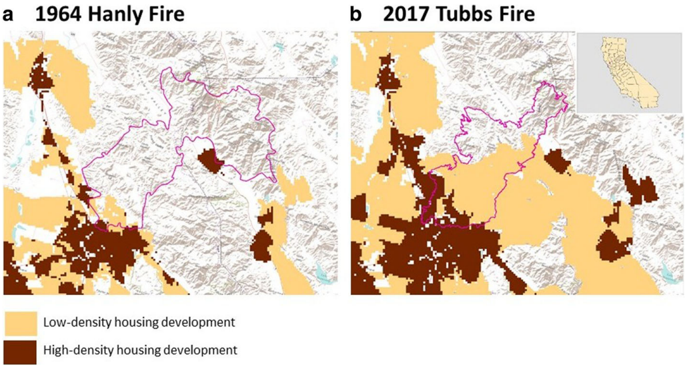
“…Rosa (PRISM Climate Group, Oregon State University, http://prism.oregonstate. edu, created 4 February 2004), and last experienced a comparable wildfire with the 1964 Hanly fire, whose burn 10.1029/2022JF006591 3 of 19 scar exhibited a similar footprint to the Tubbs fire (Keeley & Syphard, 2019).”
BackgroundInfluentialPlantinga, A. J., Walsh, R., & Wibbenmeyer, M. J. (2022) · Journal of the Association of Environmental and Resource Economists · doi:10.1086/719426 · Cited by 41
“Not all structures within a fire perimeter are necessarily destroyed or even damaged, and properties outside a fire’s perimeter can sometimes incur damage due to the spread of embers, which can travel up to 2 km from a fire’s periphery (Keeley and Syphard 2019).”
BackgroundKody, A., West, A., & Molzahn, D. K. (2022) · IEEE Conference on Decision and Control (CDC) · doi:10.1109/cdc51059.2022.9993295 · Cited by 32
Wildfire burn severity and emissions inventory: an example implementation over California
Xu, Q., Westerling, A. L., Notohamiprodjo, A., Wiedinmyer, C., Picotte, J. J., Parks, S. A., Hurteau, M. D., Marlier, M. E., Kolden, C. A., Sam, J. A., et al. (2022) · Environmental Research Letters · doi:10.1088/1748-9326/ac80d0 · Cited by 41
Kiely, L., Neyestani, S. E., Shahid, S. B., York, R. A., Porter, W. C., & Barsanti, K. C. (2024) · Environmental Science & Technology · doi:10.1021/acs.est.3c06421 · Cited by 37
Reilly, S., Clark, M. L., Bentley, L. P., Matley, C., Piazza, E., & Menor, I. O. (2021) · Remote Sensing · doi:10.3390/rs13193810 · Cited by 31
“Therefore, the mixed signal across forest types and in conifer forests may be attributable to wind strength overwhelming any difference that ladder fuel densities may have otherwise caused in burn severity [61].”
BackgroundForest connectivity percolation thresholds for fire spread under different weather conditions
Duane, A., Miranda, M. D., & Brotons, L. (2021) · Forest Ecology and Management · doi:10.1016/j.foreco.2021.119558 · Cited by 30
Whitman, E., Barber, Q. E., Jain, P., Parks, S. A., Guindon, L., Thompson, D. K., & Parisien, M. (2024) · Global Change Biology · doi:10.1111/gcb.17363 · Cited by 30
“For example, Foehn winds in California have created large, fast-moving fires, even in areas without extensive fuels (Keeley & Syphard, 2019).”
BackgroundCira, M., Bafna, A., Lee, C., Kong, Y., Holt, B., Ginger, L., Cawse-Nicholson, K. A., Rieves, L., & Jay, J. A. (2022) · Scientific Reports · doi:10.1038/s41598-022-05945-x · Cited by 32
Rainsford, F. W., Kelly, L. T., Leonard, S., & Bennett, A. F. (2021) · Diversity and Distributions · doi:10.1111/ddi.13278 · Cited by 29
“…type ecosystems— including sclerophyll vegetation of Australia, chaparral in the United States, fynbos in South Africa, and matorral in Chile— with substantial consequences for the biota (González et al., 2018; Keeley & Syphard, 2019; Msweli et al., 2020; Nolan et al., 2020; Vitolo et al., 2019).”
BackgroundWagner, S., Harvey, E. L., Baetge, N., McNair, H. M., Arrington, E. C., & Stubbins, A. (2021) · Journal of Geophysical Research Biogeosciences · doi:10.1029/2021jg006442 · Cited by 29
“The encroachment of urban sprawl on wildland vegetation and the occurrence of Santa Ana Winds also contribute to the ignition and spread of massive wildfires in southern California today (Keeley & Syphard, 2019).”
BackgroundWhat Makes Wildfires Destructive in California?
Syphard, A. D., Keeley, J. E., Gough, M., Lazarz, M. T., & Rogan, J. S. (2022) · Fire · doi:10.3390/fire5050133 · Cited by 32
“This is not surprising, as wind-driven fires are generally implicated as the most destructive [29,32,78], especially in Southern California where extreme wind conditions have long been associated with structure loss [29,79].”
Self-citationJames, D., & Kappen, L. (2021) · Insects · doi:10.3390/insects12020161 · Cited by 22
“A potential hazard to migrating monarchs in the western US is the incidence of wildfires and associated profuse smoke and poor air quality that has increased since the turn of the century [35].”
BackgroundProlonged Drought in a Northern California Coastal Region Suppresses Wildfire Impacts on Hydrology
Newcomer, M., Underwood, J. C., Murphy, S. F., Ulrich, C., Schram, T., Maples, S. R., Peña, J., Siirila‐Woodburn, E. R., Trotta, M., Jasperse, J., et al. (2023) · Water Resources Research · doi:10.1029/2022wr034206 · Cited by 23
Maxwell, C. J., Scheller, R. M., Wilson, K. N., & Manley, P. N. (2022) · Frontiers in Forests and Global Change · doi:10.3389/ffgc.2022.740869 · Cited by 25
Plant-soil feedback in the ‘real world’: how does fire fit into all of this?
Kardol, P., Yang, T., Arroyo, D., & Teste, F. P. (2022) · Plant and Soil · doi:10.1007/s11104-022-05778-7 · Cited by 26
“These medium and coarse fuels are responsible for the strongest impacts (Bradstock et al. 2010; Keeley 2009; Keeley and Syphard 2019) leading to higher soil temperature reaching deeper into the soil profile (Daigneault 2014), and hence, stronger impacts on PSF.”
BackgroundKumar, M., Kosović, B., Nayak, H. P., Porter, W. C., Randerson, J. T., & Banerjee, T. (2024) · Frontiers in Earth Science · doi:10.3389/feart.2023.1305124 · Cited by 25
Baker, B., Dinh, Y., Foxfoot, I. R., Ortiz, E., Sells, A., & Anderson, S. E. (2024) · Fire · doi:10.3390/fire7020041 · Cited by 25
The importance of geography in forecasting future fire patterns under climate change
Syphard, A. D., Velazco, S. J. E., Rose, M. B., Franklin, J., & Regan, H. M. (2024) · Proceedings of the National Academy of Sciences · doi:10.1073/pnas.2310076121 · Cited by 31
“In coastal shrublands, where positive feedbacks between wildfire and invasive annual grasses have been widely documented, actions such as ignition prevention and invasive species management may best meet mutual objectives of protecting community safety while conserving biodiversity (4).”
Self-citationShort-Term Health Effects of Air Pollution
Izah, S. C., Ogwu, M. C., Etim, N. G., Shahsavani, A., & Namvar, Z. (2024) · The handbook of environmental chemistry · doi:10.1007/698_2024_1132 · Cited by 31
Deary, M. E., & Griffiths, S. (2021) · Journal of Hazardous Materials · doi:10.1016/j.jhazmat.2021.126334 · Cited by 24
Cayan, D. R., DeHaan, L. L., Gershunov, A., Guzman‐Morales, J., Keeley, J. E., Mumford, J., & Syphard, A. D. (2022) · International Journal of Wildland Fire · doi:10.1071/wf22065 · Cited by 25
Self-citationLog, T., Vandvik, V., Velle, L. G., & Metallinou, M.-M. (2020) · Applied System Innovation · doi:10.3390/asi3010016 · Cited by 20
“In a recent study, Keeley and Syphard [12]”
BackgroundInfluentialClark, M. L., Hakkenberg, C. R., Bailey, T., Burns, P., & Goetz, S. J. (2025) · Remote Sensing of Environment · doi:10.1016/j.rse.2025.114718 · Cited by 24
Pausas, J. G., Keeley, J. E., & Bond, W. J. (2025) · BioScience · doi:10.1093/biosci/biaf132 · Cited by 28
“In addition, the effectiveness of these approaches varies depending on factors such as whether the ecosystem has grassy or woody fuels and whether fires are fuel driven or wind driven ( sensu Keeley and Syphard 2019 ).”
InfluentialSelf-citationFitting the solutions to the problems in managing extreme wildfire in California
Schwartz, M. W., & Syphard, A. D. (2021) · Environmental Research Communications · doi:10.1088/2515-7620/ac15e1 · Cited by 27
Self-citationLiu, W., Guo, Z., Lu, F., Wang, X., Zhang, M., Liu, B., Wei, Y., Cui, L., Luo, Y., Zhang, L., et al. (2020) · Journal of Cleaner Production · doi:10.1016/j.jclepro.2020.121000 · Cited by 20
Status and Practical Implications of Forest Fire Management in Nepal
Pandey, H. P., Pokhrel, N. P., Thapa, P., Paudel, N. S., & Maraseni, T. (2022) · Journal of Forest and Livelihood · doi:10.3126/jfl.v21i1.56583 · Cited by 31
“Unprecedented forest fires in Australia (Borchers Arriagada et al. 2020) and in the United States of America (Abatzoglou et al. 2018; Keeley and Syphard 2019), are a few recent examples, that have resulted in damage to invaluable forests, loss of biodiversity, and claimed dozens of human lives.”
BackgroundThe Strong, Dry Winds of Central and Northern California: Climatology and Synoptic Evolution
McClung, B., & Mass, C. F. (2020) · Weather and Forecasting · doi:10.1175/waf-d-19-0221.1 · Cited by 17
“Finally, Keeley and Syphard (2019) described both fueldominated and wind-dominated wildfires over California, noting that the wind-driven fires are usually associated with human ignition and that fuel availability rarely limits their initiation and spread.”
BackgroundVegetation structure and fuel dynamics in fire-prone, Mediterranean-type Banksia woodlands
Tangney, R., Miller, R. G., Fontaine, J. B., Veber, W. P., Ruthrof, K. X., & Miller, B. P. (2021) · Forest Ecology and Management · doi:10.1016/j.foreco.2021.119891 · Cited by 19
Seto, D., Jones, C., Trugman, A. T., Varga, K., Plantinga, A. J., Carvalho, L. M. V., Thompson, C. F., Gellman, J., & Daum, K. (2022) · Fire · doi:10.3390/fire5020037 · Cited by 18
Post-wildfire neighborhood change: Evidence from the 2018 Camp Fire
McConnell, K., & Braneon, C. V. (2024) · Landscape and Urban Planning · doi:10.1016/j.landurbplan.2023.104997 · Cited by 21
Adedokun, O. A., Egbelakin, T., Gajendran, T., & Sher, W. (2024) · International Journal of Disaster Risk Reduction · doi:10.1016/j.ijdrr.2024.104361 · Cited by 24
Li, X., & Mostafavi, A. (2025) · npj natural hazards. · doi:10.1038/s44304-025-00104-4 · Cited by 22
Pyrogenic HONO seen from space: insights from global IASI observations
Franco, B., Clarisse, L., Theys, N., Hadji‐Lazaro, J., Clerbaux, C., & Coheur, P. (2024) · Atmospheric chemistry and physics · doi:10.5194/acp-24-4973-2024 · Cited by 25
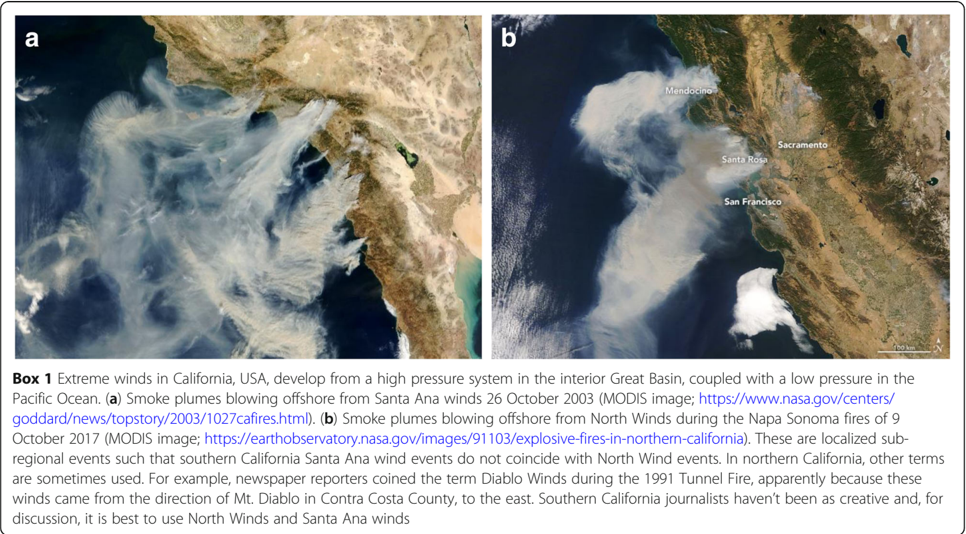
“On November 9, a large smoke plume engulfed western Malibu and spread over the Pacific (Keeley and Syphard, 2019; Schneising et al., 2020).”
BackgroundLi, F., Zhu, Q., Yuan, K., Ji, F., Paul, A., Lee, P., Radeloff, V. C., & Chen, M. (2024) · Earth s Future · doi:10.1029/2024ef004588 · Cited by 19
Miller, J. E. D., Weill, A. M., & Villella, J. (2021) · Diversity and Distributions · doi:10.1111/ddi.13295 · Cited by 15
“Increases in chaparral fire frequencies are well documented in southern California, with some parts of the Santa Monica Mountains now burn multiple times in a decade (Keeley & Syphard, 2019).”
BackgroundInfluentialWoo, H., Acuna, M. A., Madurapperuma, B. D., Geonhwi, J., Woo, C., & Park, J. (2021) · Sensors and Materials · doi:10.18494/sam.2021.3365 · Cited by 16
Grazing in California's Mediterranean Multi-Firescapes
Huntsinger, L., & Barry, S. J. (2021) · Frontiers in Sustainable Food Systems · doi:10.3389/fsufs.2021.715366 · Cited by 16
Climate change and plant regeneration from seeds in Mediterranean regions of the Northern Hemisphere
Mattana, E., Carta, A., Fernández‐Pascual, E., Keeley, J. E., & Pritchard, H. W. (2022) · Elsevier eBooks · doi:10.1016/b978-0-12-823731-1.00015-9 · Cited by 19
Self-citationFire Responses Shape Plant Communities in a Minimal Model for Fire Ecosystems across the World
Magnani, M., Díaz‐Sierra, R., Sweeney, L., Provenzale, A., & Baudena, M. (2023) · The American Naturalist · doi:10.1086/725391 · Cited by 18
“Because an increasing frequency of extreme events is expected according to climate change projections (Keeley and Syphard 2019; Masson-Delmotte et al. 2021), it becomes important to include stochastic effects for studies of possible state transitions in fire-prone communities.”
BackgroundLi, Z., Wei, J., He, W., Cao, X., Zhou, X., & Tian, Q. (2024) · Scientific Reports · doi:10.1038/s41598-024-61621-2 · Cited by 18
Martins, P. I., Belém, L. B. C., Peluso, L. M., Szabo, J. K., Trindade, W. C. F., Pott, A., Damasceno‐Júnior, G. A., Jimenez, D., Marques, R., Peterson, A. T., et al. (2024) · Ecological Engineering · doi:10.1016/j.ecoleng.2024.107411 · Cited by 13
The Role of Urban Vegetation in Mitigating Fire Risk Under Climate Change: A Review
Zhang, D., Yao, M., Chen, Y., & Liu, Y. (2025) · Sustainability · doi:10.3390/su17062680 · Cited by 12
“For instance, dynamic changes in wind direction and speed can cause fire behavior to shift from surface fire to crown fire [105].”
How does prescribed fire shape bird and plant communities in a temperate dry forest ecosystem?
Rainsford, F. W., Kelly, L. T., Leonard, S., & Bennett, A. F. (2021) · Ecological Applications · doi:10.1002/eap.2308 · Cited by 15
Modelling the Atmospheric Environment Associated with a Wind-Driven Fire Event in Portugal
Purificação, C., Andrade, N., Potes, M., Salgueiro, V., Couto, F. T., & Salgado, R. (2022) · Atmosphere · doi:10.3390/atmos13071124 · Cited by 18
Impact of prescribed fire on soil microbial communities in a Southern Appalachian Forest clear-cut
Rafie, S., Blentlinger, L. R., Putt, A. D., Williams, D. E., Joyner, D. C., Campa, M. F., Schubert, M. J., Hoyt, K. P., Horn, S. P., Franklin, J. A., et al. (2024) · Frontiers in Microbiology · doi:10.3389/fmicb.2024.1322151 · Cited by 17
Gomez, J. L., Allen, R. J., & Li, K. (2024) · Atmospheric chemistry and physics · doi:10.5194/acp-24-6937-2024 · Cited by 17
Erazo, K., Montalván-Burbano, N., Aburto, F. A., Matus, F. J., Jofré, I., Durán, P., Dörner, J., Dippold, M. A., & Guzmán, C. M. (2022) · CATENA · doi:10.1016/j.catena.2023.107065 · Cited by 20
Chapter 28 : Southwest. Fifth National Climate Assessment
White, D. D., Elias, E. H., Thomas, K. A., Brădăţan, C., Brunson, M. W., Chischilly, A. M., Enquist, C. A. F., Fisher, L. R., Froehlich, H. E., Koebele, E. A., et al. (2023) · doi:10.7930/nca5.2023.ch28 · Cited by 24
Predicting wildfire ignition induced by dynamic conductor swaying under strong winds
Wang, X., & Bocchini, P. (2023) · Scientific Reports · doi:10.1038/s41598-023-30802-w · Cited by 11
Modeling Wildland Firefighters’ Assessments of Structure Defensibility
Heeren, A., Dennison, P. E., Campbell, M. J., & Thompson, M. P. (2023) · Fire · doi:10.3390/fire6120474 · Cited by 11
Woolsey, G. A., Tinkham, W. T., Battaglia, M. A., & Hoffman, C. M. (2024) · Journal of Forestry · doi:10.1093/jofore/fvae012 · Cited by 16
Hamilton, D., Gibson, W., Harris, D., & McGath, C. (2023) · Remote Sensing · doi:10.3390/rs15215196 · Cited by 11
Escobedo, F. J., Yadav, K., Cappelluti, O., & Johnson, N. G. (2025) · Landscape and Urban Planning · doi:10.1016/j.landurbplan.2025.105421 · Cited by 14
How Vulnerable Are American States to Wildfires? A Livelihood Vulnerability Assessment
Baijnath‐Rodino, J. A., Kumar, M., Rivera, M. G., Tran, K. D., & Banerjee, T. (2021) · Fire · doi:10.3390/fire4030054 · Cited by 11
“Other examples include indicator variables pertaining to fuel, weather, and topography that are important drivers of wildfire danger and behavior, as referenced heavily in the literature [37,38].”
BackgroundVegetation ecology with anthropic drivers and consequences
Malanson, G. P., Talal, M. L., Pansing, E. R., & Franklin, S. B. (2021) · Progress in Physical Geography Earth and Environment · doi:10.1177/0309133321999371 · Cited by 12
“Wildland fire is one of the most important natural hazards addressed by vegetation ecologists because vegetation is fuel (Keeley and Syphard, 2019) in an increasing wildland urban interface (Ager et al., 2019).”
BackgroundReviewing the “Hottest” Fire Indices WorldwidePreprint
Baijnath‐Rodino, J. A., Foufoula‐Georgiou, E., & Banerjee, T. (2020) · doi:10.1002/essoar.10503854.1 · Cited by 11
Fire in Semi-Arid Shrublands and Woodlands: Spatial and Temporal Patterns in an Australian Landscape
van Etten, E. J. B., Davis, R. A., & Doherty, T. S. (2021) · Frontiers in Ecology and Evolution · doi:10.3389/fevo.2021.653870 · Cited by 11
Rother, D. E., Sales, F. D., Stow, D. A., & McFadden, J. P. (2022) · Fire · doi:10.3390/fire5060177 · Cited by 9
“Compared to forested regions of northern California, fire regime in non-forested regions of southern California are less susceptible to shifts in moisture availability and more so to availability of fuel, however, these chaparral and grassland ecosystems are sensitive to rainfall patterns in the year or two prior to f…”
BackgroundLong duration battery sizing, siting, and operation under wildfire risk using progressive hedging
Piansky, R., Stinchfield, G., Kody, A., Molzahn, D. K., & Watson, J. P. (2024) · Electric Power Systems Research · doi:10.1016/j.epsr.2024.110785 · Cited by 12
Hiraga, Y., & Kavvas, M. L. (2021) · Fire · doi:10.3390/fire4040090 · Cited by 9
Facing up to drought events: Understanding the potentials and challenges within farming systems
Moghaddam, S. M., Azadi, H., Mahmoudi, H., Lahooti, S., Sudar, S., Peković, S., & Janečková, K. (2024) · Regional Environmental Change · doi:10.1007/s10113-024-02280-x · Cited by 11
“Several factors that play an important role in drought are (Wang et al. 2023) temperatures (Boguszewska-Mańkowska et al. 2020), wind speed (Keeley and Syphard 2019), low relative humidity (Georgii et al. 2017), rainfall characteristics such as rainy days distributed over crop cycles, rain…”
Herbert, C., & Butsic, V. (2022) · Fire · doi:10.3390/fire5020044 · Cited by 10
“Our work relies on observations from historic fires, yet many of the most recent destructive fires in California have been notably wind-driven and may not be well represented in our observational dataset [1].”
BackgroundKasraee, N. K., Hawbaker, T. J., & Radeloff, V. C. (2023) · International Journal of Wildland Fire · doi:10.1071/wf22181 · Cited by 7
Urban forest cover and ecosystem service response to fire varies across California communities
Escobedo, F. J., Yadav, K., Ossola, A., Klein, R. W., & Drury, S. A. (2024) · Urban forestry & urban greening · doi:10.1016/j.ufug.2024.128547 · Cited by 11
Moran, C. J., Thompson, M. P., Young, B., Scott, J. H., & Jaffe, M. R. (2025) · Scientific Reports · doi:10.1038/s41598-025-07968-6 · Cited by 9
Garner, J. M., & Kovacik, C. E. (2022) · Weather Climate and Society · doi:10.1175/wcas-d-22-0043.1 · Cited by 7
Metadata
- Authors
- Keeley, J. E., & Syphard, A. D.
- Affiliations
- University of California, Los Angeles (US)
- Corresponding author
- Keeley, Jon E.
- Venue
- Fire Ecology
- Published
- 2019-07-18
- Volume
- 15
- Issue
- 1
- ISSN
- 1933-9747 (ISSN-L)
- OpenAlex
- W2959255705
- Cited by
- 190
- References
- 47
- Citations by year
- 2026: 22 · 2025: 28 · 2024: 36 · 2023: 20 · 2022: 28 · 2021: 37 · 2020: 17 · 2019: 2
- FWCI
- 10.81
- Type
- journal article
- Language
- en
- Open access
- gold
- doi.org
- Licence
- cc-by
- creativecommons.org/licenses/by/4.0 (tdm)
- creativecommons.org/licenses/by/4.0 (vor)
- Locations
- Fire Ecology (publishedVersion, cc-by)
- Funders
- U.S. Geological Survey
- California Department of Forestry and Fire Protection
- Topics
- Physical Sciences › Environmental Science › Global and Planetary Change › Fire effects on ecosystems
- Physical Sciences › Environmental Science › Ecology › Rangeland and Wildlife Management
- Social Sciences › Sociology and Political Science › Disaster Management and Resilience
- Keywords
- forest fires, California wildfires, fire behavior, fuel load, extreme wind events, fire history, ignition sources, seasonal timing, fire management, fire risk
About these checks
Registry, retraction, Cites and statistics results are computed, not judged, with one exception: a printed reference that no index lists is read once by a model before it counts as a citation error. Claims are extracted by a model and kept only when their quote appears verbatim in the text; each cited source is then checked, with a model’s help, for whether it says what the claim relies on. Those verdicts can be wrong — read the claim’s quote and the cited source before relying on one.
Statistics and arithmetic are recomputed, not judged.
Confidence bands are shown only for fields calibrated on our annotated test set. None is calibrated yet, so no band is shown.
What counts as a claim ›How we measure confidence ›How we check this ›
Are you an author, or do you see a problem with this page? Request a review
Data sources
Bibliographic data: Semantic Scholar, OpenAlex, Crossref.
Contains information from the Semantic Scholar Academic Graph Datasets, made available under the ODC Attribution License (ODC-BY 1.0).
Semantic Scholar’s data is described in: Kinney, R., et al. (2023). The Semantic Scholar Open Data Platform. arXiv:2301.10140.
