

Twenty-first century California, USA, wildfires: fuel-dominated vs. wind-dominated fires
Open accessThe DOI matches its Crossref record; 46 of the 47 references it cites were found in a registry or an index.
Abstract
Since the beginning of the twenty-first century California, USA, has experienced a substantial increase in the frequency of large wildfires, often with extreme impacts on people and property. Due to the size of the state, it is not surprising that the factors driving these changes differ across this region. Although there are always multiple factors driving wildfire behavior, we believe a helpful model for understanding fires in the state is to frame the discussion in terms of bottom-up vs. top-down controls on fire behavior; that is, fires that are clearly dominated by anomalously high fuel loads from those dominated by extreme wind events. Of course, this distinction is somewhat artificial in that all fires are controlled by multiple factors involving fuels, winds, and topography. However, we believe that fires clearly recognizable as fuel-dominated vs. wind-dominated provide interesting case studies of factors behind these two extremes. These two types of fires differ greatly in their (1) geographical distribution in the state, (2) past fire history, (3) prominent sources of ignition, (4) seasonal timing, (5) resources most at risk, and (6) requirement for different management responses.
Overview
The claims and statistics of this paper haven’t been checked yet.
Free: it reads the open-access text and checks the first 5 claims that cite a source we can check. Create a free account to check every claim.
Integrity signals
Registry
Cites
Statistics
Figures
Verification
Claims the paper makes
The claims and statistics of this paper haven’t been checked yet.
Free: it reads the open-access text and checks the first 5 claims that cite a source we can check. Create a free account to check every claim.
Claims other papers make about this one
Each is checked against this paper’s own text: does it say what the citing paper says it does?
The cited source says what the claim attributes to it.
In the citing paper
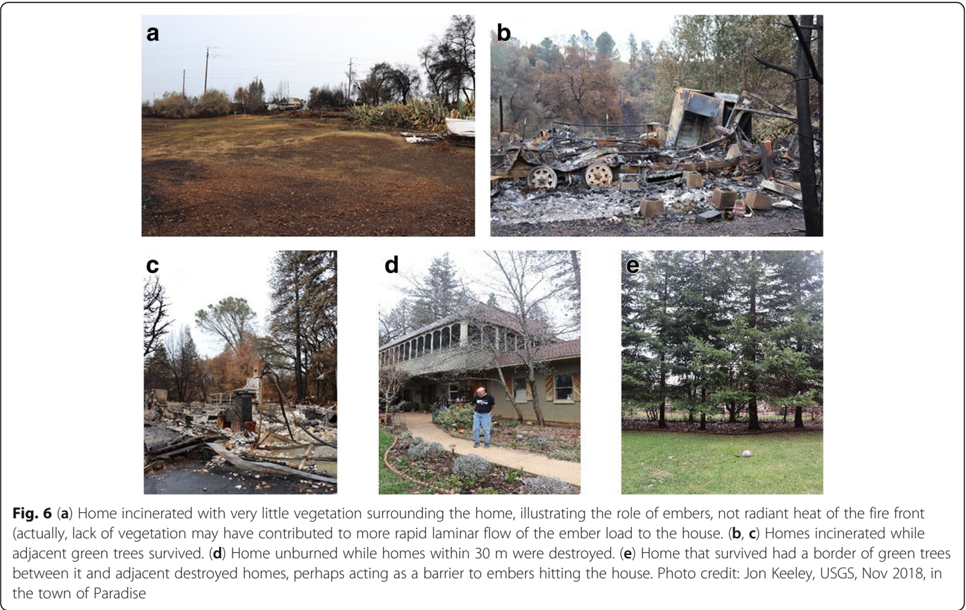
“With the Camp Fire, many overstory trees located away from burning homes survived (Keeley and Syphard 2019; Cohen and Strohmaier 2020) (Fig. 7).”
From Housing arrangement and vegetation factors associated with single-family home survival in the 2018 Camp Fire, California (2021) · cites this paper as Keeley and Syphard 2019
Self-check
Percentages, sums and reported differences re-computed from the paper’s own numbers.
The self-check needs the paper’s full text.
Citations
Cites
Impact of anthropogenic climate change on wildfire across western US forests
Abatzoglou, J. T., & Williams, A. P. (2016) · Proceedings of the National Academy of Sciences · doi:10.1073/pnas.1607171113 · Cited by 3,073
The wildland urban interface in the United States
Radeloff, V. C., Hammer, R. B., Stewart, S. I., Fried, J. S., Holcomb, S. S., & McKeefry, J. F. (2005) · Ecological Applications · doi:10.1890/04-1413 · Cited by 1,236
Climate and wildfire area burned in western U.S. ecoprovinces, 1916–2003
Littell, J. S., McKenzie, D., Peterson, D. L., & Westerling, A. L. (2009) · Ecological Applications · doi:10.1890/07-1183.1 · Cited by 1,053
Contribution of anthropogenic warming to California drought during 2012–2014
Williams, A. P., Seager, R., Abatzoglou, J. T., Cook, B. I., Smerdon, J. E., & Cook, E. R. (2015) · Geophysical Research Letters · doi:10.1002/2015gl064924 · Cited by 587
Long-term climate and competition explain forest mortality patterns under extreme drought
Young, D. J. N., Stevens, J. T., Earles, J. M., Moore, J., Ellis, A., Jirka, A. L., & Latimer, A. M. (2017) · Ecology Letters · doi:10.1111/ele.12711 · Cited by 443
Drought, Tree Mortality, and Wildfire in Forests Adapted to Frequent Fire
Stephens, S. L., Collins, B. M., Fettig, C. J., Finney, M. A., Hoffman, C. M., Knapp, E. E., North, M. P., Safford, H., & Wayman, R. B. (2018) · BioScience · doi:10.1093/biosci/bix146 · Cited by 407
Ecological effects of large fires on US landscapes: benefit or catastrophe?A
Keane, R. E., Agee, J. K., Fulé, P., Keeley, J. E., Key, C., Kitchen, S. G., Miller, R., & Schulte, L. A. (2008) · International Journal of Wildland Fire · doi:10.1071/wf07148 · Cited by 251
Self-citationHammer, R. B., Stewart, S. I., Winkler, R. L., Radeloff, V. C., & Voss, P. R. (2004) · Landscape and Urban Planning · doi:10.1016/j.landurbplan.2003.08.011 · Cited by 247
Housing Arrangement and Location Determine the Likelihood of Housing Loss Due to Wildfire
Syphard, A. D., Keeley, J. E., Massada, A. B., Brennan, T. J., & Radeloff, V. C. (2012) · PLoS ONE · doi:10.1371/journal.pone.0033954 · Cited by 220
Self-citationTaylor, A. H. (2000) · Journal of Biogeography · doi:10.1046/j.1365-2699.2000.00353.x · Cited by 219
Research works printed but not linked: 6
- Kennedy, R.G., and A. Troy. 2009. Advances in the economics of environmental resources. Volume 6. Living on the edge: economic, institutional and management perspectives on wildfire hazard in the urban interface. Bradford: Emerald Group Publishing Limited.
- Schuft, P.H. 1973. A prescribed burning program for Sequoia and Kings Canyon national parks. Proceedings of the Tall Timbers Fire Ecology Conference 12: 377-389.
- Stephens, S.L., and B.M. Collins. 2004. Fire regimes of mixed conifer forests in the north- central Sierra Nevada at multiple spatial scales. Northwest Science 78: 12-23.
- Davis: Centers for Water and Wildland Resources, University of California.
- Wuerthner, G. 2006. Logging and wildfire: ecological differences and the need to preserve large fires. In The wildfire reader: a century of failed forest policy. ed. G. Wuerthner, 178-190. Washington, D.C.: Island Press.
- Zimmerman, G.T., and R. Lasko. 2006. The changing face of wildland fire use. Fire Management Today 66 (4): 7-12.
Cited by
Items 101–190 of 190
Wildfires in the Atomic Age: Mitigating the Risk of Radioactive Smoke
Eriksen, C. (2021) · Fire · doi:10.3390/fire5010002 · Cited by 7
“The direction of dominant winds at certain times of the year, particularly during the fire season, is already a core part of wildfire management [30,31], and recent fire seasons have demonstrated the unequal consequences of drifting smoke on society more broadly [32].”
BackgroundEstimating WUI exposure probability to a nearby wildfire
Wei, Y., Gannon, B. M., Young, J. D., Belval, E. J., Thompson, M. P., O’Connor, C. D., & Calkin, D. E. (2023) · Fire Ecology · doi:10.1186/s42408-023-00191-6 · Cited by 9
“2.4 Gust impact The impact of wind to re and suppression is complicated and highly variable (Keeley and Syphard 2019).”
BackgroundInfluentialImpacts of California Wildfires on CO2 and Other Trace Gases
Gamalathge, T. D. K., Tai, N., Jiang, X., Wang, X., Li, L., & Yung, Y. L. (2024) · Geophysical Research Letters · doi:10.1029/2024gl109352 · Cited by 8
“Keeley and Syphard (2019) have found that wildfire's occurrence has significantly intensified in recent years.”
Flashpoints between Wildfire Recovery & Mitigation in Northern California
Schumann, R. L., Mockrin, M. H., Balachandran, B., Binder, S. B., & Greer, A. (2024) · International Journal of Disaster Risk Reduction · doi:10.1016/j.ijdrr.2025.105270 · Cited by 7
Xu, Q., Westerling, A. L., & Baldwin, W. J. (2022) · Environmental Research Letters · doi:10.1088/1748-9326/ac9704 · Cited by 9
Recent fire history enhances semi-arid conifer forest drought resistance
Norlen, C. A., Hemes, K. S., Wang, J. A., Randerson, J. T., Battles, J. J., Tubbesing, C. L., & Goulden, M. L. (2024) · Forest Ecology and Management · doi:10.1016/j.foreco.2024.122331 · Cited by 8
Wildfire indicators modeling for reserved forest of Vellore district (Tamil Nadu, India)
Sultan, Y. E. D., Pillai, K. R. A., & Sharma, A. (2025) · Frontiers in Remote Sensing · doi:10.3389/frsen.2025.1518539 · Cited by 6
Overview of extreme weather events, impacts and forecasting techniques
(2022) · Elsevier eBooks · doi:10.1016/b978-0-12-820124-4.00009-8 · Cited by 7
Schmidt, A., Ellsworth, L. M., Tilt, J. H., & Gough, M. (2022) · Machine Learning with Applications · doi:10.1016/j.mlwa.2023.100454 · Cited by 7
Backus, G. A., Rose, M. B., Velazco, S. J. E., Franklin, J., Syphard, A. D., & Regan, H. M. (2023) · Frontiers in Ecology and Evolution · doi:10.3389/fevo.2023.1149509 · Cited by 7
Self-citationChapungu, L., Maoela, M. A., Mashula, N., Kunene, H. P., & Nhamo, G. (2024) · Cogent Social Sciences · doi:10.1080/23311886.2024.2407024 · Cited by 6
“Particularly in tourism, extreme weather events linked to climate change are increasingly disconcerting (Leal Filho, 2022). climate change presents global industries with new challenges (cabal et al., 2021), triggering extreme weather events affecting popular vacation destinations worldwide (Dogru et al., 2019; hyman,…”
Beckmann, J. J., van Mantgem, P. J., Wright, M., & Engber, E. A. (2025) · Fire Ecology · doi:10.1186/s42408-025-00377-0 · Cited by 6
“…where treatments may be less effective, such as in forest types adapted to less frequent fire regimes, during strongly wind-driven fires (Keeley and Syphard 2019; Reilly et al. 2022), or, as suggested by high spatial autocorrelation, when upwind and adjacent fuels have not been recently…”
Piansky, R., Gupta, R., & Molzahn, D. K. (2025) · Sustainable Energy Grids and Networks · doi:10.1016/j.segan.2025.101838 · Cited by 6
Wang, W., Zhou, C., Zhang, J., Li, Y., Chen, Z., & Luo, Y. (2025) · Forests · doi:10.3390/f16091423 · Cited by 5
Schmidt, A., Ellsworth, L. M., Tilt, J. H., & Gough, M. (2021) · Machine Learning with Applications · doi:10.1016/j.mlwa.2021.100227 · Cited by 7
Systems in Flames: Dynamic Coproduction of Social–Ecological Processes
Cadenasso, M. L., Rademacher, A. M., & Pickett, S. T. A. (2022) · BioScience · doi:10.1093/biosci/biac047 · Cited by 7
Novel hybrid finds a peri-urban niche: Allen’s Hummingbirds in southern California
Godwin, B. L., LaCava, M. E. F., Mendelsohn, B., Gagne, R. B., Gustafson, K. D., Stowell, S. M. L., Engilis, A., Tell, L. A., & Ernest, H. B. (2020) · Conservation Genetics · doi:10.1007/s10592-020-01303-4 · Cited by 6
“Additionally, increased wildfires along the California coastlands (Keeley and Syphard 2019) may cause changes to S.”
BackgroundRepresentations of wildfires in academia
Whitman, M., & Holmgren, S. (2022) · Journal of Environmental Planning and Management · doi:10.1080/09640568.2022.2150155 · Cited by 9
“However, settlement patterns, land use such as forestry, and long-standing successful fire suppression have also changed the fire regime (Keeley and Syphard 2019; Williams et al. 2019).”
BackgroundMilligan, C. F., Galloway, A., Kendell, A. E., Zephro, L., Willey, P., & Bartelink, E. J. (2023) · Wiley eBooks · doi:10.1002/9781119682691.ch20 · Cited by 6
Wells, A. G., Yackulic, C. B., Kostelnik, J., Bock, A., Zuellig, R. E., Carlisle, D. M., Roberts, J. J., Rogers, K. B., & Munson, S. M. (2024) · International Journal of Wildland Fire · doi:10.1071/wf23199 · Cited by 4
Saim, A. A., & Aly, M. H. (2024) · Atmospheric Pollution Research · doi:10.1016/j.apr.2024.102226 · Cited by 6
Walking through a ‘phoenix landscape’: hiker surveys reveal nuanced perceptions of wildfire effects
Weill, A. M., Watson, L. M., & Latimer, A. M. (2020) · International Journal of Wildland Fire · doi:10.1071/wf19053 · Cited by 7
Dust pollution caused by an extreme Santa Ana wind event
Álvarez, C. A., Carbajal, N., & Pineda‐Martínez, L. F. (2021) · Natural Hazards · doi:10.1007/s11069-021-04996-z · Cited by 4
“During the November 2018 episode, several fires occurred in California, including the most dangerous fire in California’s history, killing 88 people and destroying over 18,000 homes (Keeley and Syphard 2019) with an economic cost of $16 billion (Lecomte 2019).”
Impacts of fire prevention strategies in a changing climate: an assessment for Portugal
DaCamara, C. C., Bento, V. A., Nunes, S. A., Lemos, G., Soares, P. M. M., & Trigo, R. M. (2024) · Environmental Research Climate · doi:10.1088/2752-5295/ad574f · Cited by 5
The impact of plant‐derived fire management prescriptions on fire‐responsive bird species
Makdissi, R., Verdon, S. J., Radford, J. Q., Bennett, A. F., & Clarke, M. F. (2024) · Ecological Applications · doi:10.1002/eap.3036 · Cited by 4
Assessing Wildfire Impacts from the Perspectives of Social and Ecological Remote Sensing
Wang, X., & Liu, S. (2025) · Remote Sensing · doi:10.3390/rs17233851 · Cited by 5
A Review of interactive smoldering-flaming fires at the wildland-urban interface
Huang, X., Lin, S., Chen, Y., Qin, Y., Zhang, Y., & Ding, Y. (2026) · Proceedings of the Combustion Institute · doi:10.1016/j.proci.2026.106298 · Cited by 3
Schellenberg, F., Irvine, I. C., Witter, M. S., Nielsen, A. T., & Raulund‐Rasmussen, K. (2020) · Madroño · doi:10.3120/0024-9637-67.1.9 · Cited by 3
“Much of the western United States, especially southern and mountain ecoregions, has seen an increase in large fire incidents, especially since the beginning of the twenty-first century (Dennison 2014; Keeley and Syphard 2019).”
BackgroundInfluentialFactors associated with single-family home survival in the 2018 Camp Fire, CaliforniaPreprint
Knapp, E. E., Valachovic, Y. S., Quarles, S. L., & Johnson, N. G. (2021) · Research Square · doi:10.21203/rs.3.rs-580864/v1 · Cited by 3
A tale of two fire systems: indigenous fire stewardship in British Columbia and California
Nikolakis, W. D., Schepens, G., Stephens, S. L., Ross, R. M., & Hankins, D. L. (2025) · Fire Ecology · doi:10.1186/s42408-025-00399-8 · Cited by 6
“…northern California conifer forests (though some recent significant wildfires have been wind-driven), whereas wildfires in coastal central and southern California shrublands are wind-dominated (Keeley and Syphard 2019); however, IFS was also conducted in these ecosystems (Anderson and Keeley 2018).”
Extension of Large Fire Emissions From Summer to Autumn and Its Drivers in the Western US
Wang, S., Leung, L.-Y. R., & Qian, Y. (2023) · Earth s Future · doi:10.1029/2022ef003086 · Cited by 2
“These winds are notorious for exacerbating fire hazards in Southern California (Keeley & Syphard, 2019; Westerling et al., 2004).”
BackgroundGao, X., Koven, C. D., Longo, M., Robbins, Z. J., Thornton, P., Hall, A. D., Levis, S., Rahimi, S., Xu, C., & Kueppers, L. M. (2025) · New Phytologist · doi:10.1111/nph.20421 · Cited by 3
Time to extinguish the exotic flame: Lessons from the 2021 Cape Town fire
MacAlister, D., Chimphango, S. B. M., Hattas, D., & Muasya, A. M. (2025) · South African Journal of Botany · doi:10.1016/j.sajb.2025.07.026 · Cited by 2
Estabrook, T., Fried, J. S., Xi, W., Su, H., & Zhang, J. (2025) · Canadian Journal of Forest Research · doi:10.1139/cjfr-2024-0305 · Cited by 2
Kim, K., Spirandelli, D., Rother, D., Yamashita, E., & Toner, M. (2025) · Transportation Research Interdisciplinary Perspectives · doi:10.1016/j.trip.2025.101526 · Cited by 6
Determinants of forest-fire containment success in the Viphya plantations of Northern Malawi
Mhone, F., Khataza, R., Kamanga-Thole, G., & Chioza, A. (2026) · Fire Ecology · doi:10.1186/s42408-026-00464-w · Cited by 4
Afolayan, S. A., Mekonnen, A., Gamelin, B. L., & Lin, Y. (2024) · Fire · doi:10.3390/fire7070247 · Cited by 4
Pattern recognition and modelling of virulent wildfires in Spain
Bugallo, M., Esteban, M. D., Pérez, M. F. M., & Morales, D. (2025) · International Journal of Wildland Fire · doi:10.1071/wf23162 · Cited by 2
Backus, G. A., Rose, M. B., Velazco, S. J. E., Franklin, J., Syphard, A. D., & Regan, H. M. (2025) · Diversity and Distributions · doi:10.1111/ddi.70067 · Cited by 3
“Shifting fire regimes can be exacerbated by widely varying distributions of plant communities (Keeley and Syphard 2015, 2016, 2017, 2019) and human activity across California (Syphard et al. 2007, 2009; Parisien et al. 2016; Balch et al. 2017), and heterogeneously shifting fire regimes could…”
Self-citationSMOKE-INDUCED GERMINATION IN THE ENDANGERED ERIODICTYON CAPITATUM (NAMACEAE)
Schneider, H. E., Carson, S. A., & Termondt, S. E. (2021) · Madroño · doi:10.3120/0024-9637-68.2.87 · Cited by 3
“These wind-driven fires have the ability to burn across large swaths of habitat, despite extensive local fire histories and a lack of large fuel accumulations (Keeley and Syphard 2019).”
BackgroundKeeley, J. E., Rubin, G., Brennan, T., & Piffard, B. (2020) · Bulletin Southern California Academy of Sciences · doi:10.3160/0038-3872-119.1.35 · Cited by 4
“Losses of lives and property from wildfires have spiraled out of control in recent years and we need to address potential strategies for reducing the impact of fires that spread into urban communities (Keeley and Syphard 2019).”
BackgroundSelf-citationStarns, H. D., Tolleson, D. R., Agnew, R. J., Schnitzler, E. G., & Weir, J. R. (2020) · Fire Ecology · doi:10.1186/s42408-020-00073-1 · Cited by 2
“Wildfire activity has been particularly high in the western US due to fuels and climatic conditions that favor large catastrophic fires (Keeley and Syphard 2019).”
BackgroundMetaphorical Framing of Wildfires Shapes What They Are, How They Act, and How We Should Respond
Marghetis, T., & Matlock, T. (2024) · Metaphor and Symbol · doi:10.1080/10926488.2024.2415139 · Cited by 6
“A wildfire, on the other hand, cannot be appeased by supplying fuel; the more a wildfire “eats,” the “hungrier” it gets (Keeley & Syphard, 2019).”
California’s Wildfire Crisis and the Future of Planetary Resilience
Yu, J., & Chaturvedi, E. (2025) · Springer eBooks · doi:10.1007/978-3-031-90621-3_6 · Cited by 1
Wind-Driven Ignition Behavior of Wildland Fuels: Experimental Insights Under Controlled Conditions
Saha, S., & Cobian‐Iñiguez, J. (2025) · Combustion Science and Technology · doi:10.1080/00102202.2025.2536215 · Cited by 2
“…by the combustion process, weather conditions, and various environmental and social factors that influence its initiations and spread, and determine whether it overcomes initial containment efforts to become a large-scale disaster (Cardille, Ventura, and Turner 2001; Keeley and Syphard 2019).”
Liang, M., Hakkenberg, C. R., Villa, L. M., Duncanson, L. I., & Field, C. B. (2025) · Journal of Environmental Management · doi:10.1016/j.jenvman.2025.128044 · Cited by 1
Hossain, M., & Talukder, T. (2025) · Journal of Environmental Science and Health Part A · doi:10.1080/10934529.2025.2604445 · Cited by 1
“[81] Year VOCs.”
InfluentialMultidisciplinary analysis of the park fire: advancing mega-fire management
Hardy, K. (2026) · Natural Hazards · doi:10.1007/s11069-025-07759-2 · Cited by 1
“In contrast, wind-dominated fires are driven by strong regional winds, such as the Santa Ana and Diablo winds (Keeley and Syphard 2019 ).”
Satellite-based analysis of hourly progression and driving factors of large U.S. wildfires
Fang, S., Yang, J., Jiao, X., Zou, C. B., Desjardins, A., Yang, H., Zhang, Q., & Hernandez, A. (2026) · International Journal of Applied Earth Observation and Geoinformation · doi:10.1016/j.jag.2026.105288 · Cited by 1
Bark traits and fire vulnerability in three California foothill oak species
Brande, K., Davis, F. W., & Kendall, B. E. (2026) · Fire Ecology · doi:10.1186/s42408-026-00488-2 · Cited by 1
Fields, R. M., Fischer, E. C., & Dunn, C. J. (2026) · International Journal of Wildland Fire · doi:10.1071/wf25222 · Cited by 2
Farajpoor, P., & Narimani, M. (2026) · Frontiers in Sustainability · doi:10.3389/frsus.2026.1975724 · Cited by 4
“The event is interpreted as a wind-dominated fire transitioning from chaparral into dense urban fabric [32, 33].”
Global Change, Pyrophysiology, and Wildfires
de Dios, V. R. (2020) · Managing forest ecosystems · doi:10.1007/978-3-030-41192-3_10 · Cited by 3
The Influence of Regional Meteorology on Carbon Emissions from California Wildfires
Murphy, P., & Mass, C. F. (2022) · Weather and Forecasting · doi:10.1175/waf-d-22-0045.1 · Cited by 1
Beyond the evacuation zone: Agricultural passes and the wildfire crisis in California
Craig-Scheckman, M., Matharage, S. S., Libershal, H., Khan, M., Schmitz, G. M., & Aldrich, D. P. (2025) · Natural Hazards Research · doi:10.1016/j.nhres.2025.09.007 · Cited by 2
Biblin, S. B. (2023) · San José State University ScholarWorks (San Jose State University) · doi:10.31979/etd.qdzg-zae5 · Cited by 1
Environmental Externalities of Urban Growth: Evidence from the California WildfiresPreprint
Kestelman, S. (2023) · SSRN Electronic Journal · doi:10.2139/ssrn.4629558 · Cited by 3
The Active Microwave Data-Based Analysis of Fire Risk in the Wildland-Urban Interface
Tan, L., Tong, L., Yang, X., & Yang, T. (2020) · IEEE International Geoscience and Remote Sensing Symposium (IGARSS) · doi:10.1109/igarss39084.2020.9324628
Wahyudie, M., Ferdinan, Salampak, S., & Yulianti, N. (2021) · International Journal of Biology and Biomedical Engineering · doi:10.46300/91011.2021.15.11 · Cited by 1
Incendios forestales: no todo es cambio climático
Pausas, J. G. (2021) · The Conversation · doi:10.59350/e9nq5-1fc50
An Empirical Assessment of Environmental Variable Combinations for Use in Fire Weather Forecasts
Sunvold, D. (2022) · San José State University ScholarWorks (San Jose State University) · doi:10.31979/etd.chd6-2sks
Factors Leading to Structure Loss on the Thomas Fire
Uribe, R. (2021) · DigitalCommons - CalPoly (California State Polytechnic University) · doi:10.15368/theses.2021.6
Schweizer, D. W., Cisneros, R., & Procter, T. (2023) · Global perspectives on health geography · doi:10.1007/978-3-031-38878-1_23
Comment on egusphere-2023-2827: Response to Reviewers
Gomez, J. L. (2024) · doi:10.5194/egusphere-2023-2827-ac1
SMOOTH-BARK TREES AND BARK TEMPERATURES: GETTING OUR NATURAL HISTORY STORIES CORRECT
Parker, V. T. (2024) · Madroño · doi:10.3120/0024-9637-70.4.225
Climate Projection Models and Data
Giovannettone, J., AghaKouchak, A., Ayyub, B. M., Chen, Z., Devineni, N., Lader, R. T., Sun, F., Tye, M. R., & Wu, T. (2024) · American Society of Civil Engineers eBooks · doi:10.1061/9780784485804.ch2
Wohl, E. (2024) · Special publications · doi:10.1002/9781394235186.ch6
Ignatius, A. R., Annis, A. N., Helton, C. A., Reeb, A. W., & Ricke, D. (2025) · Remote Sensing · doi:10.3390/rs17071142 · Cited by 3
Lee, J., Park, J., & Park, H. (2025) · IEEJ Transactions on Electrical and Electronic Engineering · doi:10.1002/tee.70056
Additive effect of wildfires on hospital admission in the Pantanal wetland, Brazil
Gonçalves, A. C., de Magalhães, M. M., Fernandes, G. A. D. A. L., Fernandes, I. F. D. A. L., Faria, K. D. A., dos Santos, G. A., Valentim, R., do Nascimento, G. M., Rodrigues, F. A., Ceneviva, R., et al. (2025) · Scientific Reports · doi:10.1038/s41598-025-13257-z
Abreu, P. I. D. S. C., Martins, G. D., Pereira, G. H. D. A., Gallis, R. B. D. A., Brito, J. L. S., Júnior, A., Xavier, L. C. M., & Bravo, J. V. M. (2025) · Fire · doi:10.3390/fire8080320
Ivey, M. A., Weidig, N. C., Ivory, A. A., & Donovan, V. M. (2025) · Forest Ecology and Management · doi:10.1016/j.foreco.2025.123446 · Cited by 1
Public Safety Power Shutoff with N$-$1 Security ConstraintsPreprint
Qiu, F., Shim, S., & Xavier, A. (2026) · SSRN Electronic Journal · doi:10.2139/ssrn.7597195
Pfoch, K. A., Schug, F., Cox, H., Pham, V.-D., van der Linden, S., & Radeloff, V. C. (2026) · Science of Remote Sensing · doi:10.1016/j.srs.2026.100387 · Cited by 1
Choi, J., Lagos, T., Segundo, B., Villa-Zapata, L. M., Prokopyev, O. A., Ntaimo, L., Stripling, C., & Gan, J. (2026) · PLoS ONE · doi:10.1371/journal.pone.0342049 · Cited by 1
Alvarez, A., Lecina‐Diaz, J., Cáceres, M. D., Vayreda, J., & Retana, J. (2026) · Journal of Forestry Research · doi:10.1007/s11676-026-01988-2 · Cited by 3
La maison brûle : cultiver le déni du changement climatique après un mégafeu en Californie du nord
Boutié, É. (2024) · theses.fr (ABES) · doi:10.70675/a526aceaz8ffbz4a82za3ebzdaf345af2c67 · Cited by 3
Cao, Z., Xue, Y., Ye, F., & Gillespie, T. (2026) · Environmental Research Letters · doi:10.1088/1748-9326/ae692d
“Wildfires, defined as unplanned and uncontrolled vegetation fires that require suppression response or other action, have become increasingly frequent, severe, and destructive in California in the 21st century (Keeley and Syphard 2019, D’Evelyn et al 2022, MacDonald et al 2023).”
Measuring fuel connectivity in coastal mallee shrublands using terrestrial mobile LiDAR
Telfer, S., Reinke, K. J., Jones, S., & Hilton, J. (2026) · Fire Ecology · doi:10.1186/s42408-026-00515-2
“Shrublands in areas such as California (Keeley et al. 2009, 2004; Keeley and Syphard 2019; Weise et al. 2005), the European Mediterranean region (Sa ǧ lam et al. 2008; Papió and Trabaud 1990; Fernandes et al. 2000), Chile (Castillo S et al. 2020), South Africa (Van Wilgen et al. 1985), and Southern…”
High-severity fire now dominant in California forests
Hung, M., & Williams, P. (2026) · Proceedings of the National Academy of Sciences · doi:10.1073/pnas.2532829123 · Cited by 1
UAV-Based Estimation of Fuel Structure and Dynamics in a California Canyon Fire Experiment
Ren, X., Benterou, D., Allen, J., Wilkin, K. M., Brillon, H., Clements, C. B., & Yang, B. (2026) · Drones · doi:10.3390/drones10070520
Kairouz, T., & Hashim, H. A. (2026) · Results in Engineering · doi:10.1016/j.rineng.2026.112218 · Cited by 1
Ren, X., Yang, B., Filkov, A. I., Wilkin, K. M., Benterou, D., Hussey, O., & Clements, C. B. (2026) · International Journal of Wildland Fire · doi:10.1071/wf25235
Vertiport Selection and Staging Node Deployment for UAVs in Forest Wildfire Rescue Areas
Zhang, Y., Pan, W., Jiang, Y., Lei, L., & He, Q. (2026) · Fire · doi:10.3390/fire9080321
Association of herbaceous fractional cover and wildfire ignition in Mediterranean-type ecosystems
West, K. R. L., Stow, D. A., O’Leary, J. F., Roberts, D. A., Syphard, A. D., Jennings, M. K., & Carvalho, L. M. V. (2026) · International Journal of Wildland Fire · doi:10.1071/wf26085
Self-citationLee, J. H., & Mao, J. (2026) · SSRN Electronic Journal · doi:10.2139/ssrn.7355119
Wildland-urban interface: dynamics, planning strategies, and remote sensing for fire risk mitigation
Beltrán-Marcos, D., & Calvo, L. (2026) · Elsevier eBooks · doi:10.1016/b978-0-443-41692-7.00011-1
Weakened downslope winds and slower simulated nighttime spread of the Camp Fire under warmingPreprint
Liu, W., Rahimi, S., Frediani, M. E. B., Hatchett, B., Thackeray, C. W., Taciroğlu, E., Zhao, F., Hall, A. D., Singh, K., & Juliano, T. (2026) · Research Square · doi:10.21203/rs.3.rs-11020281/v1
Metadata
- Authors
- Keeley, J. E., & Syphard, A. D.
- Affiliations
- University of California, Los Angeles (US)
- Corresponding author
- Keeley, Jon E.
- Venue
- Fire Ecology
- Published
- 2019-07-18
- Volume
- 15
- Issue
- 1
- ISSN
- 1933-9747 (ISSN-L)
- OpenAlex
- W2959255705
- Cited by
- 190
- References
- 47
- Citations by year
- 2026: 22 · 2025: 28 · 2024: 36 · 2023: 20 · 2022: 28 · 2021: 37 · 2020: 17 · 2019: 2
- FWCI
- 10.81
- Type
- journal article
- Language
- en
- Open access
- gold
- doi.org
- Licence
- cc-by
- creativecommons.org/licenses/by/4.0 (tdm)
- creativecommons.org/licenses/by/4.0 (vor)
- Locations
- Fire Ecology (publishedVersion, cc-by)
- Funders
- U.S. Geological Survey
- California Department of Forestry and Fire Protection
- Topics
- Physical Sciences › Environmental Science › Global and Planetary Change › Fire effects on ecosystems
- Physical Sciences › Environmental Science › Ecology › Rangeland and Wildlife Management
- Social Sciences › Sociology and Political Science › Disaster Management and Resilience
- Keywords
- forest fires, California wildfires, fire behavior, fuel load, extreme wind events, fire history, ignition sources, seasonal timing, fire management, fire risk
About these checks
Registry, retraction, Cites and statistics results are computed, not judged, with one exception: a printed reference that no index lists is read once by a model before it counts as a citation error. Claims are extracted by a model and kept only when their quote appears verbatim in the text; each cited source is then checked, with a model’s help, for whether it says what the claim relies on. Those verdicts can be wrong — read the claim’s quote and the cited source before relying on one.
Statistics and arithmetic are recomputed, not judged.
Confidence bands are shown only for fields calibrated on our annotated test set. None is calibrated yet, so no band is shown.
What counts as a claim ›How we measure confidence ›How we check this ›
Are you an author, or do you see a problem with this page? Request a review
Data sources
Bibliographic data: Semantic Scholar, OpenAlex, Crossref.
Contains information from the Semantic Scholar Academic Graph Datasets, made available under the ODC Attribution License (ODC-BY 1.0).
Semantic Scholar’s data is described in: Kinney, R., et al. (2023). The Semantic Scholar Open Data Platform. arXiv:2301.10140.
