

Translating radiology reports into plain language using ChatGPT and GPT-4 with prompt learning: results, limitations, and potential
Open accessThe DOI matches its Crossref record; 16 of the 16 references it cites were found in a registry or an index.
Abstract
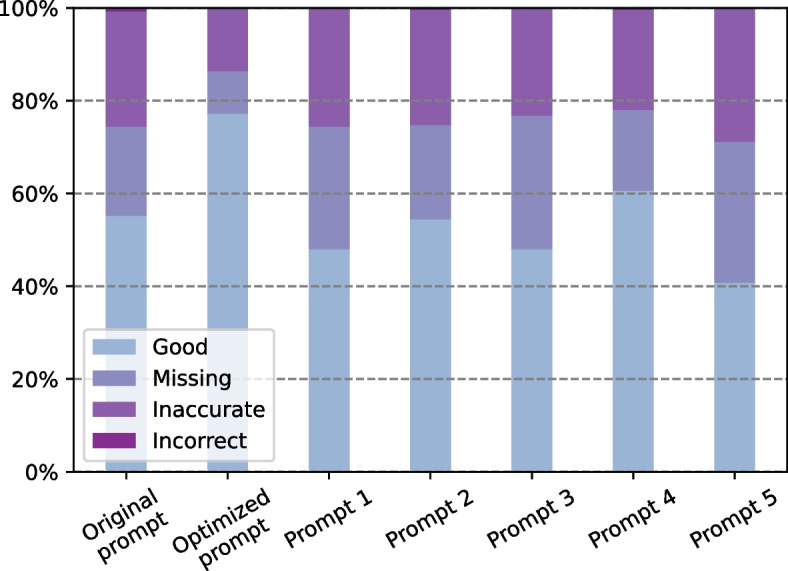
The large language model called ChatGPT has drawn extensively attention because of its human-like expression and reasoning abilities. In this study, we investigate the feasibility of using ChatGPT in experiments on translating radiology reports into plain language for patients and healthcare providers so that they are educated for improved healthcare. Radiology reports from 62 low-dose chest computed tomography lung cancer screening scans and 76 brain magnetic resonance imaging metastases screening scans were collected in the first half of February for this study. According to the evaluation by radiologists, ChatGPT can successfully translate radiology reports into plain language with an average score of 4.27 in the five-point system with 0.08 places of information missing and 0.07 places of misinformation. In terms of the suggestions provided by ChatGPT, they are generally relevant such as keeping following-up with doctors and closely monitoring any symptoms, and for about 37% of 138 cases in total ChatGPT offers specific suggestions based on findings in the report. ChatGPT also presents some randomness in its responses with occasionally over-simplified or neglected information, which can be mitigated using a more detailed prompt. Furthermore, ChatGPT results are compared with a newly released large model GPT-4, showing that GPT-4 can significantly improve the quality of translated reports. Our results show that it is feasible to utilize large language models in clinical education, and further efforts are needed to address limitations and maximize their potential.
Overview
The claims and statistics of this paper haven’t been checked yet.
Free: it reads the open-access text and checks the first 5 claims that cite a source we can check. Create a free account to check every claim.
Integrity signals
Registry
Cites
Statistics
Figures
Verification
Claims the paper makes
The claims and statistics of this paper haven’t been checked yet.
Free: it reads the open-access text and checks the first 5 claims that cite a source we can check. Create a free account to check every claim.
Claims other papers make about this one
Each is checked against this paper’s own text: does it say what the citing paper says it does?
The source backs part of the claim, not all of it — or backs it for a different population, condition or comparison.
In the citing paper
“However, the technical complexity of radiology publications presents a significant barrier to comprehension for nonspecialist audiences including patients, policymakers, healthcare professionals outside radiology, and the general public [2].”
From Evaluating the Capability of Large Language Model Chatbots for Generating Plain Language Summaries in Radiology (2025) · cites this paper as [2]
Experimental — accuracy not yet measuredThe source backs part of the claim, not all of it — or backs it for a different population, condition or comparison.
In the citing paper
“One important related yet underexplored issue is that chatbots may overlook uncertainties, limitations, and nuances in original research by omitting qualifiers and oversimplifying text [11,12], leading to overgeneralizations, i.e. generalizations that are broader than those in the original text and that may therefore be unwarranted by the original findings.”
From Generalization bias in large language model summarization of scientific research (2025) · cites this paper as [12]
Experimental — accuracy not yet measuredThe source backs part of the claim, not all of it — or backs it for a different population, condition or comparison.
In the citing paper
“LLMs can simplify complex medical information, improving patient understanding of diagnoses, treatments, and adverse effects.38,39”
From Artificial Intelligence in Oncology: Practical Applications Across Clinical Care, Scholarship, and Translation. (2026) · cites this paper as [38]
Experimental — accuracy not yet measuredThe source backs part of the claim, not all of it — or backs it for a different population, condition or comparison.
In the citing paper
“However, when summarizing scientific texts, LLMs may omit details that limit the scope of research conclusions, leading to generalizations of results broader than warranted by the original study.”
From Generalization bias in large language model summarization of scientific research (2025) · cites this paper as [12]
Experimental — accuracy not yet measured
Self-check
Percentages, sums and reported differences re-computed from the paper’s own numbers.
The self-check needs the paper’s full text.
Citations
Cites
BERT: Pre-training of Deep Bidirectional Transformers for Language Understanding
Devlin, J., Chang, M.-W., Lee, K., & Toutanova, K. (2018) · arXiv · doi:10.48550/arxiv.1810.04805 · Cited by 73,173
XLNet: Generalized Autoregressive Pretraining for Language Understanding
Yang, Z., Dai, Z., Yang, Y., Carbonell, J., Salakhutdinov, R., & Le, Q. V. (2019) · arXiv · doi:10.48550/arxiv.1906.08237 · Cited by 6,687 · cited 1×
“Compared with previous NLP models such as BERT [3], XLNet [4], and generative pre-trained transformer (GPT) [5], ChatGPT is a quantum leap characterized by several characteristic features, including a larger model with more parameters, chain of thought prompting, and training with reinforcement…”
MethodTraining language models to follow instructions with human feedback
Ouyang, L., Wu, J., Jiang, X., Almeida, D., Wainwright, C. L., Mishkin, P., Zhang, C., Agarwal, S., Slama, K., Ray, A., et al. (2022) · arXiv · doi:10.48550/arxiv.2203.02155 · Cited by 4,208 · cited 1×
“Prompted learning is used to effectively induce the reasoning process; RLHF injects high-quality human knowledge, helping align the results of ChatGPT to ensure it is friendly and safe for society [6].”
BackgroundKung, T. H., Cheatham, M., Medenilla, A., Sillos, C., De Leon, L., Elepaño, C., Madriaga, M., Aggabao, R., Diaz-Candido, G., Maningo, J., et al. (2023) · PLOS Digital Health · doi:10.1371/journal.pdig.0000198 · Cited by 4,115 · cited 1×
“Given the huge success of ChatGPT, recently there are studies on adapting ChatGPT for downstream tasks, like writing a systematic literature review [7], medical school education [8], language translation [9], scholar content generation for publication [9], and solving mathematical problems [10].”
BackgroundKung, T. H., Cheatham, M., ChatGPT, Medenilla, A., Sillos, C., De Leon, L., Elepaño, C., Madriaga, M., Aggabao, R., Diaz-Candido, G., et al. (2022) · doi:10.1101/2022.12.19.22283643 · Cited by 4,115
ChatGPT: the future of discharge summaries?
Patel, S. B., & Lam, K. (2023) · The Lancet Digital Health · doi:10.1016/s2589-7500(23)00021-3 · Cited by 728 · cited 2×
“…huge success of ChatGPT, studies have been conducted recently on adapting it for downstream tasks, such as writing a systematic literature review [7], medical school education [8], language translation [9], scholarly content generation for publication [9], and solving mathematical problems [10].”
BackgroundMethodGenerating scholarly content with ChatGPT: Ethical challenges for medical publishing
Liebrenz, M., Schleifer, R., Buadze, A., Bhugra, D., & Smith, A. (2023) · The Lancet Digital Health · doi:10.1016/s2589-7500(23)00019-5 · Cited by 594 · cited 1×
“…huge success of ChatGPT, studies have been conducted recently on adapting it for downstream tasks, such as writing a systematic literature review [7], medical school education [8], language translation [9], scholarly content generation for publication [9], and solving mathematical problems [10].”
BackgroundChatGPT and the future of medical writing
Biswas, S. (2023) · Radiology · doi:10.1148/radiol.223312 · Cited by 571 · cited 1×
“Biswas explored the use of ChatGPT for medical writing applications, including patient-care-related writing, medical publications, medical administrative documentation, and meeting summarization [11].”
MethodChatGPT makes medicine easy to swallow: an exploratory case study on simplified radiology reports
Jeblick, K., Schachtner, B., Dexl, J., Mittermeier, A., Stüber, A. T., Topalis, J., Weber, T., Wesp, P., Sabel, B. O., Ricke, J., et al. (2023) · European Radiology · doi:10.1007/s00330-023-10213-1 · Cited by 549 · cited 1×
“Jeblick et al. [12] investigated the quality of ChatGPT’s radiology report simplification and concluded that simplified reports were factually correct, complete, and not harmful to patients.”
BackgroundSarraju, A., Bruemmer, D., Van Iterson, E., Cho, L., Rodriguez, F., & Laffin, L. (2023) · JAMA · doi:10.1001/jama.2023.1044 · Cited by 452
Cited by
Items 101–200 of 371
Mert, S., Stoerzer, P., Brauer, J., Fuchs, B., Haas-Lützenberger, E. M., Demmer, W., Giunta, R. E., & Nürnberger, T. (2024) · Archives of Orthopaedic and Trauma Surgery · doi:10.1007/s00402-024-05298-2 · Cited by 26
RetractedChatGPT: A Threat Against the CIA Triad of Cyber Security
Chowdhury, M. M., Rifat, N., Ahsan, M., Latif, S., Gomes, R., & Rahman, M. S. (2023) · IEEE International Conference on Electro Information Technology · doi:10.1109/eit57321.2023.10187355 · Cited by 39
“The study [20] investigated the feasibility and performance of using ChatGPT to translate radiology reports into plain language and found to some extent, unpredictable.”
BackgroundMoglia, A., Georgiou, K. E., Cerveri, P., Mainardi, L. T., Satava, R. M., & Cuschieri, A. (2024) · Artificial Intelligence Review · doi:10.1007/s10462-024-10849-5 · Cited by 31
Gimeno, A. F., Krause, K., D’Souza, S., & Walsh, C. G. (2024) · JAMIA Open · doi:10.1093/jamiaopen/ooae050 · Cited by 26
“GPT-4 has shown promise in writing intelligible and coherent discharge summaries and instructions for patients post-surgery, 16,17 modulating the medical complexity of texts, 18 and in answering patient medical questions in Spanish.”
ChatGPT’s Impact on Education and Healthcare: Insights, Challenges, and Ethical Consideration
Hamad, Z. T., Jamil, N., & Belkacem, A. N. (2024) · IEEE Access · doi:10.1109/access.2024.3437374 · Cited by 30
“Research studies [38], [39] have showcased ChatGPT’s ability to aid in the creation of detailed and accurate clinical notes, discharge summaries, and radiology reports.”
BackgroundRust, P., Frings, J., Meister, S., & Fehring, L. (2025) · Communications Medicine · doi:10.1038/s43856-025-00927-2 · Cited by 30
“Althoughourstudylackedthestatisticalpowertodetect differences, these improvements suggest that re fi ning prompt design could mitigate some of the existing limitations of LLMs without modifyingtheunderlyingmodelarchitecture 15,35 .”
Wen, Q., Qiu, L., Qiu, C., Che, K., Zeng, R., Wang, X., Cao, P., Xing, L., Yang, Z., & Yu, J. (2025) · Cancer Letters · doi:10.1016/j.canlet.2025.217881 · Cited by 25
Rehman, U., Iqbal, F., & Shah, M. U. (2023) · AI and Ethics · doi:10.1007/s43681-023-00335-z · Cited by 28
Exploring the Boundaries of GPT-4 in Radiology
Liu, Q., Hyland, S. L., Bannur, S., Bouzid, K., Castro, D. C., Wetscherek, M. T., Tinn, R., Sharma, H., Pérez‐García, F., Schwaighofer, A., et al. (2023) · Conference on Empirical Methods in Natural Language Processing (EMNLP) · doi:10.18653/v1/2023.emnlp-main.891 · Cited by 59
Alabed, S., Anderson, A., Maiter, A., Hughes, A., McAnenly, N., Salehi, M., Sharkey, M. J., Dwivedi, K., Hokmabadi, A., Alahdab, F., et al. (2026) · The Lancet Digital Health · doi:10.1016/j.landig.2025.100960 · Cited by 33
Mishra, V., Sarraju, A., Kalwani, N. M., & Dexter, J. P. (2024) · Journal of Medical Internet Research · doi:10.2196/55388 · Cited by 27
“Our findings highlight the importance of optimizing prompts and incorporating expert clinical judgment when considering the use of LLMs to produce patient education materials, including AI-drafted replies to patient messages [3,6,7].”
Hu, Y., Hu, Z., Liu, W., Gao, A., Wen, S., Liu, S., & Lin, Z. (2024) · BMC Medical Informatics and Decision Making · doi:10.1186/s12911-024-02445-y · Cited by 23
“As different prompts can significantly impact the outputs [16], further studies using more prompts and compare the outputs of these prompts are needed in future.”
BackgroundResultPrompt engineering with ChatGPT3.5 and GPT4 to improve patient education on retinal diseases
Jung, H., Oh, J., Stephenson, K. A. J., Joe, A. W., & Mammo, Z. N. (2024) · Canadian Journal of Ophthalmology · doi:10.1016/j.jcjo.2024.08.010 · Cited by 24
The use of large language models in detecting Chinese ultrasound report errors
Yan, Y., Wang, K., Feng, B., Yao, J., Jiang, T., Jin, Z., Zheng, Y., Zhou, Y., Chen, C., Sui, L., et al. (2025) · npj Digital Medicine · doi:10.1038/s41746-025-01468-7 · Cited by 26
Towards Automatic Boundary Detection for Human-AI Collaborative Hybrid Essay in Education
Zeng, Z., Sha, L., Li, Y., Yang, K., Gašević, D., & Chen, G. (2024) · Proceedings of the AAAI Conference on Artificial Intelligence · doi:10.1609/aaai.v38i20.30258 · Cited by 20
“…H 2 and obtain H ′ 2 , we can prompt ChatGPT with ’ Please begin with 2 to obtain the hybrid essay as required by task 5, denoted as Due to the randomness 9 of the generative nature of Chat-GPT (Castro Nascimento and Pimentel 2023; Lyu et al. 2023a), we could occasionally get invalid 10 output.”
MethodAlRyalat, S. A., Musleh, A. M., & Kahook, M. Y. (2024) · Frontiers in Ophthalmology · doi:10.3389/fopht.2024.1387190 · Cited by 30
Osório, P., Jiménez-Pérez, G., Montalt‐Tordera, J., Hooge, J., Ballester, G. D., Singh, S., Radbruch, M., Bach, U. C., Schroeder, S., Siudak, K., et al. (2024) · Diagnostics · doi:10.3390/diagnostics14131442 · Cited by 31
“GPT-based models have been used to rephrase, summarize, and simplify text in a number of applications [34,58,59], with notable success in improving performance in other natural language processing tasks [60].”
MethodKahalian, S., Rajabzadeh, M., Öçbe, M., & Medişoğlu, M. S. (2024) · Folia Medica · doi:10.3897/folmed.66.e135584 · Cited by 24
Suárez, A., Arena, S., Calzada, A. H., Varón, A. I. C., García, V. D., & Freire, Y. (2025) · Computational and Structural Biotechnology Journal · doi:10.1016/j.csbj.2025.04.010 · Cited by 23
“Large language models (LLMs), such as ChatGPT, have attracted increasing interest in medicine [45,46], particularly in radiology, due to their potential to support decision-making, data analysis and the generation of patient-friendly clinical reports [12,18,19,21 – 25], among other applications.”
The Accuracy of ChatGPT-4o in Interpreting Chest and Abdominal X-Ray Images
Lacaita, P. G., Galijašević, M., Swoboda, M., Gruber, L. N., Scharll, Y., Barbieri, F., Widmann, G., & Feuchtner, G. M. (2025) · Journal of Personalized Medicine · doi:10.3390/jpm15050194 · Cited by 28
“This novel algorithm is helpful for translating complex medical reports into clearer, more accessible language, thereby enhancing patient understanding [13,28].”
Herwald, S. E., Shah, P., Johnston, A., Olsen, C., Delbrouck, J.-B., & Langlotz, C. P. (2025) · Journal of the American College of Radiology · doi:10.1016/j.jacr.2025.06.013 · Cited by 25
Best Practices for the Safe Use of Large Language Models and Other Generative AI in Radiology
Yi, P. H., Haver, H. L., Jeudy, J. J., Kim, W., Kitamura, F., Oluyemi, E. T., Smith, A. D., Moy, L. P., & Parekh, V. S. (2025) · Radiology · doi:10.1148/radiol.241516 · Cited by 25
Mallio, C. A., Bernetti, C., Sertorio, A. C., & Zobel, B. B. (2024) · Quantitative Imaging in Medicine and Surgery · doi:10.21037/qims-23-1300 · Cited by 21
Triantafyllopoulos, L., Feretzakis, G., Tzelves, L. I., Sakagianni, A., Verykios, V. S., & Kalles, D. (2024) · Computers in Human Behavior · doi:10.1016/j.chb.2024.108404 · Cited by 27
Khanna, P., Dhillon, G. S., Buddhavarapu, V. S., Verma, R., Kashyap, R., & Grewal, H. (2024) · Journal of Personalized Medicine · doi:10.3390/jpm14090923 · Cited by 24
“The strengths of our study include being the first to employ LLMs for translating radiology reports into the top five non-English spoken languages in the United States [11].”
BackgroundMethodGenerating colloquial radiology reports with large language models
Tang, C. C., Nagesh, S., Fussell, D. A., Glavis‐Bloom, J., Mishra, N., Li, C. H., Cortes, G., Hill, R., Zhao, J., Gordon, A., et al. (2024) · Journal of the American Medical Informatics Association · doi:10.1093/jamia/ocae223 · Cited by 20
Hanna, J. J., Wakene, A. D., Johnson, A. O., Lehmann, C. U., & Medford, R. J. (2025) · Journal of Medical Internet Research · doi:10.2196/57257 · Cited by 37
“ChatGPT has also been successfully used to translate radiology reports into plain language [14].”
Salmanpour, F., & Akpınar, M. (2025) · American Journal of Orthodontics and Dentofacial Orthopedics · doi:10.1016/j.ajodo.2025.02.017 · Cited by 23
Empowering radiology: the transformative role of ChatGPT
Arachchige, A. S. P. M. (2023) · Clinical Radiology · doi:10.1016/j.crad.2023.08.006 · Cited by 19
Exploring the use of ChatGPT/GPT-4 for patient follow-up after oral surgeries
Cai, Y., Zhao, R., Zhao, H., Li, Y., & Gou, L. (2024) · International Journal of Oral and Maxillofacial Surgery · doi:10.1016/j.ijom.2024.04.002 · Cited by 22
Kambhamettu, H., Metaxa, D., Johnson, K. B., & Head, A. (2024) · CHI Conference on Human Factors in Computing Systems · doi:10.1145/3613904.3642573 · Cited by 27
“For instance, ChatGPT has been shown to be capable of generating high-quality, highly-accurate plain language summaries of radiology reports [31, 47], and one recent model for biomedical QA [69] has produced answers that are judged by clinicians to be superior to clinicians’ answers.”
BackgroundInnovative Applications in Businesses: An Evaluation on Generative Artificial Intelligence
İşgüzar, S., FENDOĞLU, E., & Şimşek, A. İ. (2024) · Amfiteatru Economic · doi:10.24818/ea/2024/66/511 · Cited by 32
“Trained on a vast dataset including publicly available texts, books, articles, and other written sources, ChatGPT has been successful in producing results similar to human language abilities (Serdaliyev and Zhunissov, 2023; Lyu et al., 2023).”
BackgroundUsing Large Language Models to Promote Health Equity
Pierson, E., Shanmugam, D., Movva, R., Kleinberg, J. M., Agrawal, M., Dredze, M. H., Ferryman, K. S., Gichoya, J. W., Jurafsky, D., Koh, P. W., et al. (2025) · NEJM AI · doi:10.1056/aip2400889 · Cited by 41
Prucker, P., Bressem, K. K., Peeken, J. C., Jukic, M., Marka, A. W., Strenzke, M., Kim, S. H., Mertens, C. J., Weller, D., Lemke, T., et al. (2025) · Radiology · doi:10.1148/radiol.251844 · Cited by 25
Slavych, B. K., Atcherson, S. R., & Zraick, R. (2024) · Perspectives of the ASHA Special Interest Groups · doi:10.1044/2024_persp-23-00167 · Cited by 16
Sawamura, S., Bito, T., Ando, T., Masuda, K., Kameyama, S., & Ishida, H. (2024) · Journal of Physical Therapy Science · doi:10.1589/jpts.36.234 · Cited by 25
“Previous studies have found that ChatGPT answered questions as if they were correct, despite having insufficient evidence 24, 26) , and that it gave only superficial answers to highly specialized questions 8, 39 ) .”
ResultLeveraging GPT-4 enables patient comprehension of radiology reports
van Driel, M. H. E., Blok, N., van den Brand, J. A. J. G., van de Sande, D., de Vries, M., Eijlers, B., Smits, F., Visser, J. J., Gommers, D. A. M. P. J., Verhoef, C. K., et al. (2025) · European Journal of Radiology · doi:10.1016/j.ejrad.2025.112111 · Cited by 20
Potential merits and flaws of large language models in epilepsy care: A critical review
Diessen, E. G. A. L. V., van Amerongen, R. A., Zijlmans, M., & Otte, W. M. (2024) · Epilepsia · doi:10.1111/epi.17907 · Cited by 26
“21 Prompt engineering is essential for gaining a desirable model output.”
BackgroundAssessing the Code Clone Detection Capability of Large Language Models
Zhang, Z., & Saber, T. (2024) · International Conference on Code Quality (ICCQ) · doi:10.1109/iccq60895.2024.10576803 · Cited by 38
“This evolution led to a wide range of new applications in various domains including healthcare [15, 23], machine translation [17, 42], and recommendation systems [9, 36].”
BackgroundChatGPT in Oncology Diagnosis and Treatment: Applications, Legal and Ethical Challenges
Zhou, Z., Qin, P., Cheng, X., Shao, M., Ren, Z., Zhao, Y., Li, Q., & Liu, L. (2025) · Current Oncology Reports · doi:10.1007/s11912-025-01649-3 · Cited by 18
“However, ChatGPT can translate specialized terms into accessible terms, making them easier for the public to understand [38].”
A Thorough Review of the Clinical Applications of Artificial Intelligence in Lung Cancer
Kotoulas, S., Spyratos, D., Porpodis, Κ., Domvri, K., Boutou, A., Kaimakamis, E., Mouratidou, C., Alevroudis, I., Dourliou, V., Tsakiri, K., et al. (2025) · Cancers · doi:10.3390/cancers17050882 · Cited by 20
Parameswaran, V., Bernard, J., Bernard, A., Deo, N., Tsung, S., Lyytinen, K., Sharp, C., Rodríguez, F., Maron, D. J., & Dash, R. (2025) · Journal of Medical Internet Research · doi:10.2196/78625 · Cited by 30
“…constructed examples of simplified clinical language, when refined with expert clinician input and clinical judgment, may enhance readability while preserving critical information and preventing information loss, thereby addressing the readability–guideline adherence trade-off [7,8,10,34].”
ChatGPT-Enabled daVinci Surgical Robot Prototype: Advancements and Limitations
Pandya, A. D. (2023) · Robotics · doi:10.3390/robotics12040097 · Cited by 19
Große Sprachmodelle wie ChatGPT und GPT-4 für eine patientenzentrierte Radiologie
Fink, M. A. (2023) · Die Radiologie · doi:10.1007/s00117-023-01187-8 · Cited by 19
Artificial intelligence in clinical practice: A look at ChatGPT
Deng, J., Heybati, K., Park, Y., Zhou, F., & Bozzo, A. (2024) · Cleveland Clinic Journal of Medicine · doi:10.3949/ccjm.91a.23070 · Cited by 20
“Lyu et al 21 used ChatGPT to translate radiology reports into plain language summaries for patients and determined that the reports were concise, clear, and comprehensive.”
MethodAssessing Large Language Models for Oncology Data Inference From Radiology Reports
Chen, L.-C., Zack, T. I., Demirci, A., Sushil, M., Miao, B. Y., Kasap, C., Butte, A. J., Collisson, E. A., & Hong, J. C. (2024) · JCO Clinical Cancer Informatics · doi:10.1200/cci.24.00126 · Cited by 22
“5,6 This includes impressive performance in the extraction of provider notes, 7,8 and radiology reports.”
BackgroundEvaluation of AI Summaries on Interdisciplinary Understanding of Ophthalmology Notes
Tailor, P. D., D’Souza, H. S., Becerra, C. M. C., Dahl, H. M., Patel, N. R., Kaplan, T. M., Kohli, D., Bothun, E. D., Mohney, B. G., Tooley, A. A., et al. (2025) · JAMA Ophthalmology · doi:10.1001/jamaophthalmol.2025.0351 · Cited by 19
ChatGPT for Teachers and Students in Science Learning: A Systematic Literature Review
Purnama, I., Edi, F., Ruth Rize Paas Megahati, S., & Wijanarko, T. (2023) · Jurnal Penelitian Pendidikan IPA · doi:10.29303/jppipa.v9i10.5259 · Cited by 18
“…Garner, 2023); (Ray, 2023); (Moqbel & Al-Kadi, 2023) Language understanding (Pan et al., 2023); (Lewis, 2023) Dialogue systems (Jiao et al., 2023); (Lyu et al., 2023); (Siu, 2023) Language translation (Hassani & Silva, 2023); (Patel & Lam, 2023) Text summarization (Kung et al., 2023); (Thorp,…”
Performance of large language models for CAD-RADS 2.0 classification derived from cardiac CT reports
Arnold, P. G., Russe, M. F., Bamberg, F., Emrich, T., Vecsey-Nagy, M., Ashi, A., Kravchenko, D., Varga‐Szemes, Á., Soschynski, M., Rau, A., et al. (2025) · Journal of cardiovascular computed tomography · doi:10.1016/j.jcct.2025.03.007 · Cited by 19
“…the 95 % con fi dence interval range. a The κ value for CAD-RADS was calculated for scores 0 – 2 versus (cid:4) 3, and for plaque as absence versus P1 – P4. clinical progress notes 27 simplifying and translating radiology reports, 28 or even in various radiological board-certi fi cation examinations.”
Berzolla, E., Gosnell, G. G., Chen, L., Vonck, C., Alaia, E. F., & Meislin, R. J. (2025) · Arthroscopy The Journal of Arthroscopic and Related Surgery · doi:10.1016/j.arthro.2025.04.033 · Cited by 15
Hussain, A., Fareed, A., & Taseen, S. (2023) · Frontiers in Artificial Intelligence · doi:10.3389/frai.2023.1223909 · Cited by 19
“applications in healthcare settings (Lyu et al., 2023).”
A Brief Summary of Prompting in Using GPT ModelsPreprint
Wang, S., & Jin, P. (2023) · Qeios · doi:10.32388/imzi2q · Cited by 19
Deng, J., Li, L., Oosterhof, J. J., Malliaras, P., Silbernagel, K. G., Breda, S. J., Eygendaal, D., Oei, E. H., & de Vos, R.-J. (2025) · Musculoskeletal Science and Practice · doi:10.1016/j.msksp.2025.103275 · Cited by 12
Large Language Model Architectures in Health Care: Scoping Review of Research Perspectives
Leiser, F., Guse, R., & Sunyaev, A. (2025) · Journal of Medical Internet Research · doi:10.2196/70315 · Cited by 17
A survey of NLP methods for oncology in the past decade with a focus on cancer registry applications
Hands, I., & Kavuluru, R. (2025) · Artificial Intelligence Review · doi:10.1007/s10462-025-11316-5 · Cited by 19
“Our review identified only two articles employing decoder-only models to summa - rize patient information (Chung et al. 2023; Lyu et al. 2023), and only one article using a combination of rule-based and machine learning methods for visualization of patient data (Yuan et al. 2020).”
Kottlors, J., Iuga, A.-I., Blüthgen, C., Bressem, K. K., Kather, J. N., Moy, L. P., Wald, C., Wang, W., Liu, T., Ranschaert, E. R., et al. (2026) · Radiology · doi:10.1148/radiol.250913 · Cited by 16
ChatGPT Artificial Intelligence Integration in Science Learning Media: Systematic Literature Review
Prananta, A. W., Susanto, N., Purwantoro, A., & Fuadah, N. (2023) · Jurnal Penelitian Pendidikan IPA · doi:10.29303/jppipa.v9i7.4386 · Cited by 19
“, 2023); (Lyu et al., 2023); (Siu, 2023) Language translation (Hassani & Silva, 2023); (Patel & Lam, 2023) Text summarization (Kung et al.”
Li, Z., Belkadi, S., Micheletti, N., Han, L., Shardlow, M., & Nenadić, G. (2024) · IEEE International Conference on Healthcare Informatics (ICHI) · doi:10.1109/ichi61247.2024.00042 · Cited by 27
“[15] did a case study using chatGPT models on translating radiology reports into plain language for patient education.”
BackgroundChiasson, R. M., Goodboy, A. K., Vendemia, M. A., Beer, N., Meisz, G. C., Cooper, L., Arnold, A., Lincoski, A., George, W., Zuckerman, C., et al. (2024) · Communication Education · doi:10.1080/03634523.2024.2398105 · Cited by 14
“In addition, generative AI may encounter di ffi culties explaining more complex theories and topics, potentially leading to inaccurate information (Emsley, 2023) or over-simpli fi ed summaries (Lyu et al., 2023).”
Abhari, S., Afshari, Y., Fatehi, F., Salmani, H., Garavand, A., Chumachenko, D., Zakerabasali, S., & Morita, P. P. (2024) · Annals of Medicine and Surgery · doi:10.1097/ms9.0000000000002716 · Cited by 13
“It includes datasets of annotated discharge summaries and screening reports for machine learning training [55,60] , self-assessment exams for neurosurgery and general medical knowledge [25,39,61,62] , as well as clinical scenarios and quizzes for educational purposes [45,51,59] .”
Large language models in cancer: potentials, risks, and safeguards
Zitu, M. M., Le, T. D., Duong, T., Haddadan, S., Garcia, M. A., Amorrortu, R. P., Zhao, Y., Rollison, D. E. M., & Thieu, T. (2024) · BJR|Artificial Intelligence · doi:10.1093/bjrai/ubae019 · Cited by 31
“Lyu et al, 57 Rao et al, 59 and Nakamura et al 66 demonstrated feasibility of ChatGPT in medical communication and radiological decision support (see Table 3).”
InfluentialAtsukawa, N., Tatekawa, H., Oura, T., Matsushita, S., Horiuchi, D., Takita, H., Mitsuyama, Y., Omori, A., Shimono, T., Miki, Y., et al. (2025) · Japanese Journal of Radiology · doi:10.1007/s11604-025-01764-y · Cited by 17
Bignami, E. G., Russo, M., Lanza, R., & Bellini, V. (2024) · Journal of Anesthesia Analgesia and Critical Care · doi:10.1186/s44158-024-00215-w · Cited by 14
Human-AI in affordance perspective: a study on ChatGPT users in the context of Indonesian users
Haqqu, R., Zahrani, A. R., Wulandari, A., Ersyad, F. A., & Adim, A. K. (2025) · Frontiers in Computer Science · doi:10.3389/fcomp.2025.1623029 · Cited by 15
Zhu, L., Rong, Y., McGee, L. A., Rwigema, J. M., & Patel, S. H. (2024) · Cancers · doi:10.3390/cancers16132311 · Cited by 17
“Similar evaluation metrics have been utilized in previous studies [23,40,41].”
ResultArtificial intelligence methods available for cancer research
Murmu, A., & Győrffy, B. (2024) · Frontiers of Medicine · doi:10.1007/s11684-024-1085-3 · Cited by 18
Ghanta, S. N., Alaref, S. J., Lala, A., Nadkarni, G. N., Ganatra, S., Dani, S. S., & Mehta, J. L. (2024) · Diagnostics · doi:10.3390/diagnostics14212393 · Cited by 17
Langenbach, M. C., Foldyna, B., Hadžić, I., Langenbach, I. L., Raghu, V. K., Lu, M. T., Neilan, T. G., & Heemelaar, J. C. (2024) · European Radiology · doi:10.1007/s00330-024-11148-x · Cited by 16
La IA en la enseñanza de idiomas: chatbots y formación del profesorado
Manzanedo, M. S. (2024) · European Public & Social Innovation Review · doi:10.31637/epsir-2025-513 · Cited by 25
Generative artificial intelligence and social media: insights for tobacco control
Kong, G., Ouellette, R. R., & Murthy, D. (2024) · Tobacco Control · doi:10.1136/tc-2024-058813 · Cited by 11
“Such capabilities include summarising large amounts of text data into brief statements 16–18 (eg, health risks, marketing content), identifying potential misin-formation, 19 20 assisting with inductive qualitative data analysis by identifying themes across large amounts of content 21 22 and…”
Guo, Y., Wang, H., Ren, X., Wang, T., Chen, W., Xu, Z., & Ge, H. (2025) · Journal of Evidence-Based Medicine · doi:10.1111/jebm.70004 · Cited by 13
Nurses’ assessment of artificial ıntelligence chatbots for health literacy education
Aşıksoy, G. (2025) · Journal of Education and Health Promotion · doi:10.4103/jehp.jehp_1195_24 · Cited by 15
“[13] AI chatbots can further empower patients by providing information on appropriate healthcare institutions to seek medical attention.”
Sunshine, A., Honce, G. H., Callen, A. L., Zander, D. A., Tanabe, J., Petrucci, S. L. P., Lin, C., & Honce, J. M. (2025) · JMIR Formative Research · doi:10.2196/76097 · Cited by 20
“Though LLMs lack the ability to independently reason, there are several ways to optimize their output, including optimization of prompt engineering, incorporating structured templates for critical findings, and using standardized language for common pathologies [2,30,31].”
Negrini, F., Malfitano, C., Ferriero, G., Morone, G., Negrini, A., Zaina, F., Ferrario, I., Kiekens, C., Négrini, S., & Vitale, J. A. (2025) · European Spine Journal · doi:10.1007/s00586-025-09166-4 · Cited by 13
“A recent overview of reviews various areas of clinical medicine, such as orthopedic and spinal surgery [5– 7 ], hepatology [ 8 ], radiology [9], and dental medicine [ 10 ], mostly with positive outcomes [ 8 ].”
Liu, A., & Min, S. (2025) · AERA Open · doi:10.1177/23328584251374595 · Cited by 36
“5-turbo; Huang et al., 2023; Lyu et al., 2023; Sprenkamp et al., 2023).”
Comparative Evaluation of Large Language Models for Translating Radiology Reports into Hindi
Gupta, A., Rastogi, A., Malhotra, H., & Rangarajan, K. (2025) · Indian Journal of Radiology and Imaging · doi:10.1055/s-0044-1789618 · Cited by 10
“6,7,15 These studies have reported better performance of GPT models using the prompts where additional context was provided.”
Rau, A., Bamberg, F., Fink, A. M., Tran, P. H., Reisert, M., & Russe, M. F. (2024) · European Journal of Radiology · doi:10.1016/j.ejrad.2024.111756 · Cited by 15
Li, J., Gao, X., Dou, T., Gao, Y., Xu, L., & Zhu, W. (2024) · BMJ Open · doi:10.1136/bmjopen-2023-082344 · Cited by 15
McMinn, D., Grant, T., DeFord-Watts, L., Porkess, V., Lens, M., Rapier, C., Joe, W., Becker, T. A., & Bender, W. R. (2025) · JAMIA Open · doi:10.1093/jamiaopen/ooaf023 · Cited by 16
Optimizing Dragon Fruit Quality and Maturity Classification Through Deep Learning Techniques
Pallavi, N., Vijayakarthik, P., & Bylaiah, S. (2025) · SN Computer Science · doi:10.1007/s42979-025-04195-8 · Cited by 11
Prompt Engineering in Medical Image Segmentation: An Overview of the Paradigm Shift
Ali, H., Bulbul, M. F., & Shah, Z. (2023) · International Conference on Artificial Intelligence, Blockchain, and Internet of Things (AIBThings) · doi:10.1109/aibthings58340.2023.10292475 · Cited by 12
“SAM, empowered by prompt engineering, represents a paradigm shift in medical image segmentation, as it does not require any labeled data or domain-specific knowledge for segmentation [4].”
BackgroundLivermore, P., Kupiec, K. H., Wedderburn, L. R., Knight, A., Solebo, A. L., Shafran, R., Robert, G., Sebire, N. J., Gibson, F., & IMPACT Steering Group (2024) · JMIR Research Protocols · doi:10.2196/57238 · Cited by 12
“For example, ChatGPT and GPT-4 already show promise in translating radiology reports into plain language for families [24].”
BackgroundApplication of GenAI in Clinical Administration Support
Taheri, A., Farhadi, A., & Zamanifar, A. (2025) · Springer eBooks · doi:10.1007/978-3-031-82963-5_4 · Cited by 15
Sabanés, L. V., & da Cunha, I. (2025) · Terminology International Journal of Theoretical and Applied Issues in Specialized Communication · doi:10.1075/term.00083.vid · Cited by 16
Garín, D., Cook, S., Ferry, C., Bennar, W., Togni, M., Meier, P., Wenaweser, P., Puricel, S., & Arroyo, D. (2025) · European Heart Journal - Digital Health · doi:10.1093/ehjdh/ztaf068 · Cited by 11
Aalam, A. (2025) · Journal of Emergency Medicine · doi:10.1016/j.jemermed.2025.08.014 · Cited by 10
Large Language Models in Lung Cancer: Systematic Review
Zhong, R., Chen, S., Li, Z., Gao, T., Su, Y., Zhang, W., Liu, D., Gao, L., & Hu, K. (2025) · Journal of Medical Internet Research · doi:10.2196/74177 · Cited by 14
“%) studies [20-22, 24, 26-47]”
Fairframe: a fairness framework for bias detection and mitigation in news
Sallami, D., & Aïmeur, E. (2024) · AI and Ethics · doi:10.1007/s43681-024-00568-6 · Cited by 19
“Studies on manual prompting have also enhanced translation tasks, demonstrating the significant impact of well-defined prompts [53].”
Large language models in simplifying radiological reports: systematic reviewPreprint
Artsi, Y., Sorin, V., Konen, E., Glicksberg, B. S., Nadkarni, G. N., & Klang, E. (2024) · medRxiv · doi:10.1101/2024.01.05.24300884 · Cited by 15
Is ChatGPT Able to Generate Texts that Are Easy to Understand and Read?
Sastre, A., Iglesias, A. M., Morato, J., & Sánchez-Cuadrado, S. (2024) · Lecture notes in networks and systems · doi:10.1007/978-3-031-60221-4_14 · Cited by 8
Dehkordi, M. K. H., Zhou, S., Perl, Y., Deek, F. P., Einstein, A. J., Elhanan, G., He, Z., & Liu, H. (2024) · IEEE International Conference on Bioinformatics and Biomedicine (BIBM) · doi:10.1109/bibm62325.2024.10822313 · Cited by 11
Lau, C. W. Y., Kupiec, K. H., & Livermore, P. (2025) · JMIR Pediatrics and Parenting · doi:10.2196/70409 · Cited by 18
“ChatGPT also requires clear input from users to generate more accurate responses, than using ambiguous prompts [13].”
Bozer, A., & Pekçevik, Y. (2025) · Insights into Imaging · doi:10.1186/s13244-025-02121-3 · Cited by 14
“For example, Lyu et al [10] demonstrated the feasibility of using ChatGPT to translate radiology reports into plain language for patients and providers.”
Subiyantoro, S., Degeng, I. N. S., Kuswandi, D., & Ulfa, S. U. (2023) · Jurnal Pekommas · doi:10.56873/jpkm.v8i2.5206 · Cited by 37
Aggarwal, D., & Pallavi, K. (2024) · Cancer Research Statistics and Treatment · doi:10.4103/crst.crst_193_23 · Cited by 8
Gupta, A. K., Malhotra, H., Garg, A. K., & Rangarajan, K. (2024) · Indian journal of radiology and imaging - new series/Indian journal of radiology and imaging/Indian Journal of Radiology & Imaging · doi:10.1055/s-0044-1788589 · Cited by 10
Machine Advisors: Integrating Large Language Models Into Democratic Assemblies
Špecián, P. (2024) · Social Epistemology · doi:10.1080/02691728.2024.2379271 · Cited by 11
“…already seem on par with human performance in text summarization, at least when it comes to news articles (Zhang et al. 2023), and this capability increasingly extends to translating technical jargon into everyday language (Lyu et al. 2023) or the communication of complex ideas (Ayers et al. 2023).”
Withdrawn: Large Language Models in Healthcare Decision Support: A ReviewPreprint
Vavekanand, R., Karttunen, P., Xu, Y., Milani, S., & Li, H. (2024) · Preprints.org · doi:10.20944/preprints202407.1842.v1 · Cited by 14
Kim, M. K., Lovett, J. T., Doshi, A. M., & Prabhu, V. (2023) · Journal of the American College of Radiology · doi:10.1016/j.jacr.2023.12.015 · Cited by 8
Metadata
- Authors
- Lyu, Q., Tan, J., Zapadka, M. E., Ponnatapura, J., Niu, C., Myers, K. J., Wang, G., & Whitlow, C. T.
- Affiliations
- Wake Forest University Health Sciences (US)
- Rensselaer Polytechnic Institute (US)
- Corresponding author
- Myers, Kyle J.
- Wang, Ge
- Whitlow, Christopher T.
- ORCID
- Venue
- Visual Computing for Industry, Biomedicine, and Art
- Published
- 2023-05-18
- Volume
- 6
- Issue
- 1
- Pages
- 9-9
- ISSN
- 2096-496X (ISSN-L)
- 2524-4442
- PMC
- PMC10192466
- OpenAlex
- W4377010595
- Semantic Scholar
- 6c9263117c9276b4d373f32491dff0f92564f9e2
- Cited by
- 367
- References
- 10
- Citations by year
- 2026: 54 · 2025: 124 · 2024: 131 · 2023: 58
- FWCI
- 14.65
- Type
- journal article
- Language
- en
- Open access
- diamond
- doi.org
- Licence
- cc-by
- creativecommons.org/licenses/by/4.0 (tdm)
- creativecommons.org/licenses/by/4.0 (vor)
- Locations
- Visual Computing for Industry Biomedicine and Art (publishedVersion, cc-by)
- PubMed Central (publishedVersion, cc-by)
- PubMed (publishedVersion)
- arXiv (Cornell University) (submittedVersion)
- DOAJ (DOAJ: Directory of Open Access Journals) (submittedVersion, cc-by-sa)
- arXiv (Cornell University)
- Topics
- Health Sciences › Medicine › Health Informatics › Artificial Intelligence in Healthcare and Education
- Physical Sciences › Computer Science › Artificial Intelligence › Explainable Artificial Intelligence (XAI)
- Physical Sciences › Computer Science › Computer Vision and Pattern Recognition › Multimodal Machine Learning Applications
- Keywords
- plain language communication, ChatGPT, GPT-4, prompt learning, large language models, lung cancer screening, brain metastases, low-dose CT, magnetic resonance imaging, patient education, clinical teaching
About these checks
Registry, retraction, Cites and statistics results are computed, not judged, with one exception: a printed reference that no index lists is read once by a model before it counts as a citation error. Claims are extracted by a model and kept only when their quote appears verbatim in the text; each cited source is then checked, with a model’s help, for whether it says what the claim relies on. Those verdicts can be wrong — read the claim’s quote and the cited source before relying on one.
Statistics and arithmetic are recomputed, not judged.
Confidence bands are shown only for fields calibrated on our annotated test set. None is calibrated yet, so no band is shown.
What counts as a claim ›How we measure confidence ›How we check this ›
Are you an author, or do you see a problem with this page? Request a review
Data sources
Bibliographic data: Semantic Scholar, OpenAlex, Crossref.
Contains information from the Semantic Scholar Academic Graph Datasets, made available under the ODC Attribution License (ODC-BY 1.0).
Semantic Scholar’s data is described in: Kinney, R., et al. (2023). The Semantic Scholar Open Data Platform. arXiv:2301.10140.
