

Translating radiology reports into plain language using ChatGPT and GPT-4 with prompt learning: results, limitations, and potential
Open accessThe DOI matches its Crossref record; 16 of the 16 references it cites were found in a registry or an index.
Abstract
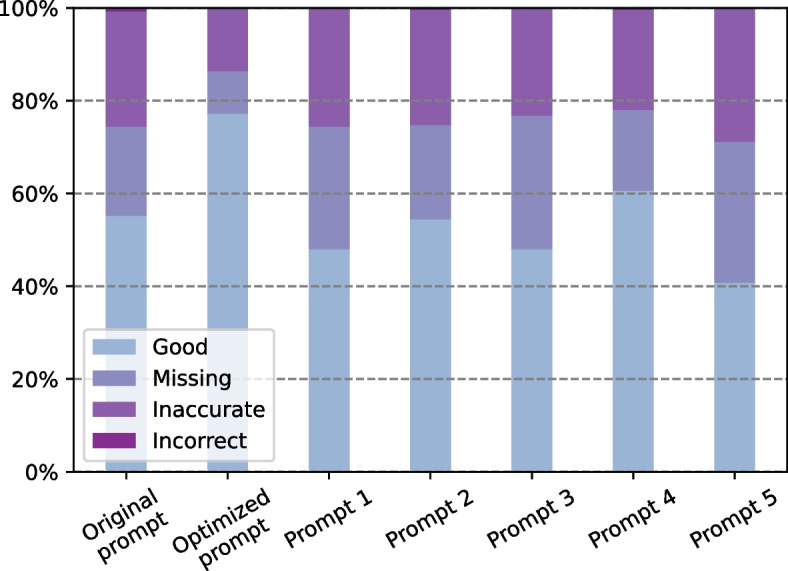
The large language model called ChatGPT has drawn extensively attention because of its human-like expression and reasoning abilities. In this study, we investigate the feasibility of using ChatGPT in experiments on translating radiology reports into plain language for patients and healthcare providers so that they are educated for improved healthcare. Radiology reports from 62 low-dose chest computed tomography lung cancer screening scans and 76 brain magnetic resonance imaging metastases screening scans were collected in the first half of February for this study. According to the evaluation by radiologists, ChatGPT can successfully translate radiology reports into plain language with an average score of 4.27 in the five-point system with 0.08 places of information missing and 0.07 places of misinformation. In terms of the suggestions provided by ChatGPT, they are generally relevant such as keeping following-up with doctors and closely monitoring any symptoms, and for about 37% of 138 cases in total ChatGPT offers specific suggestions based on findings in the report. ChatGPT also presents some randomness in its responses with occasionally over-simplified or neglected information, which can be mitigated using a more detailed prompt. Furthermore, ChatGPT results are compared with a newly released large model GPT-4, showing that GPT-4 can significantly improve the quality of translated reports. Our results show that it is feasible to utilize large language models in clinical education, and further efforts are needed to address limitations and maximize their potential.
Overview
The claims and statistics of this paper haven’t been checked yet.
Free: it reads the open-access text and checks the first 5 claims that cite a source we can check. Create a free account to check every claim.
Integrity signals
Registry
Cites
Statistics
Figures
Verification
Claims the paper makes
The claims and statistics of this paper haven’t been checked yet.
Free: it reads the open-access text and checks the first 5 claims that cite a source we can check. Create a free account to check every claim.
Claims other papers make about this one
Each is checked against this paper’s own text: does it say what the citing paper says it does?
The source backs part of the claim, not all of it — or backs it for a different population, condition or comparison.
In the citing paper
“However, the technical complexity of radiology publications presents a significant barrier to comprehension for nonspecialist audiences including patients, policymakers, healthcare professionals outside radiology, and the general public [2].”
From Evaluating the Capability of Large Language Model Chatbots for Generating Plain Language Summaries in Radiology (2025) · cites this paper as [2]
Experimental — accuracy not yet measuredThe source backs part of the claim, not all of it — or backs it for a different population, condition or comparison.
In the citing paper
“One important related yet underexplored issue is that chatbots may overlook uncertainties, limitations, and nuances in original research by omitting qualifiers and oversimplifying text [11,12], leading to overgeneralizations, i.e. generalizations that are broader than those in the original text and that may therefore be unwarranted by the original findings.”
From Generalization bias in large language model summarization of scientific research (2025) · cites this paper as [12]
Experimental — accuracy not yet measuredThe source backs part of the claim, not all of it — or backs it for a different population, condition or comparison.
In the citing paper
“LLMs can simplify complex medical information, improving patient understanding of diagnoses, treatments, and adverse effects.38,39”
From Artificial Intelligence in Oncology: Practical Applications Across Clinical Care, Scholarship, and Translation. (2026) · cites this paper as [38]
Experimental — accuracy not yet measuredThe source backs part of the claim, not all of it — or backs it for a different population, condition or comparison.
In the citing paper
“However, when summarizing scientific texts, LLMs may omit details that limit the scope of research conclusions, leading to generalizations of results broader than warranted by the original study.”
From Generalization bias in large language model summarization of scientific research (2025) · cites this paper as [12]
Experimental — accuracy not yet measured
Self-check
Percentages, sums and reported differences re-computed from the paper’s own numbers.
The self-check needs the paper’s full text.
Citations
Cites
BERT: Pre-training of Deep Bidirectional Transformers for Language Understanding
Devlin, J., Chang, M.-W., Lee, K., & Toutanova, K. (2018) · arXiv · doi:10.48550/arxiv.1810.04805 · Cited by 73,173
XLNet: Generalized Autoregressive Pretraining for Language Understanding
Yang, Z., Dai, Z., Yang, Y., Carbonell, J., Salakhutdinov, R., & Le, Q. V. (2019) · arXiv · doi:10.48550/arxiv.1906.08237 · Cited by 6,687 · cited 1×
“Compared with previous NLP models such as BERT [3], XLNet [4], and generative pre-trained transformer (GPT) [5], ChatGPT is a quantum leap characterized by several characteristic features, including a larger model with more parameters, chain of thought prompting, and training with reinforcement…”
MethodTraining language models to follow instructions with human feedback
Ouyang, L., Wu, J., Jiang, X., Almeida, D., Wainwright, C. L., Mishkin, P., Zhang, C., Agarwal, S., Slama, K., Ray, A., et al. (2022) · arXiv · doi:10.48550/arxiv.2203.02155 · Cited by 4,208 · cited 1×
“Prompted learning is used to effectively induce the reasoning process; RLHF injects high-quality human knowledge, helping align the results of ChatGPT to ensure it is friendly and safe for society [6].”
BackgroundKung, T. H., Cheatham, M., Medenilla, A., Sillos, C., De Leon, L., Elepaño, C., Madriaga, M., Aggabao, R., Diaz-Candido, G., Maningo, J., et al. (2023) · PLOS Digital Health · doi:10.1371/journal.pdig.0000198 · Cited by 4,115 · cited 1×
“Given the huge success of ChatGPT, recently there are studies on adapting ChatGPT for downstream tasks, like writing a systematic literature review [7], medical school education [8], language translation [9], scholar content generation for publication [9], and solving mathematical problems [10].”
BackgroundKung, T. H., Cheatham, M., ChatGPT, Medenilla, A., Sillos, C., De Leon, L., Elepaño, C., Madriaga, M., Aggabao, R., Diaz-Candido, G., et al. (2022) · doi:10.1101/2022.12.19.22283643 · Cited by 4,115
ChatGPT: the future of discharge summaries?
Patel, S. B., & Lam, K. (2023) · The Lancet Digital Health · doi:10.1016/s2589-7500(23)00021-3 · Cited by 728 · cited 2×
“…huge success of ChatGPT, studies have been conducted recently on adapting it for downstream tasks, such as writing a systematic literature review [7], medical school education [8], language translation [9], scholarly content generation for publication [9], and solving mathematical problems [10].”
BackgroundMethodGenerating scholarly content with ChatGPT: Ethical challenges for medical publishing
Liebrenz, M., Schleifer, R., Buadze, A., Bhugra, D., & Smith, A. (2023) · The Lancet Digital Health · doi:10.1016/s2589-7500(23)00019-5 · Cited by 594 · cited 1×
“…huge success of ChatGPT, studies have been conducted recently on adapting it for downstream tasks, such as writing a systematic literature review [7], medical school education [8], language translation [9], scholarly content generation for publication [9], and solving mathematical problems [10].”
BackgroundChatGPT and the future of medical writing
Biswas, S. (2023) · Radiology · doi:10.1148/radiol.223312 · Cited by 571 · cited 1×
“Biswas explored the use of ChatGPT for medical writing applications, including patient-care-related writing, medical publications, medical administrative documentation, and meeting summarization [11].”
MethodChatGPT makes medicine easy to swallow: an exploratory case study on simplified radiology reports
Jeblick, K., Schachtner, B., Dexl, J., Mittermeier, A., Stüber, A. T., Topalis, J., Weber, T., Wesp, P., Sabel, B. O., Ricke, J., et al. (2023) · European Radiology · doi:10.1007/s00330-023-10213-1 · Cited by 549 · cited 1×
“Jeblick et al. [12] investigated the quality of ChatGPT’s radiology report simplification and concluded that simplified reports were factually correct, complete, and not harmful to patients.”
BackgroundSarraju, A., Bruemmer, D., Van Iterson, E., Cho, L., Rodriguez, F., & Laffin, L. (2023) · JAMA · doi:10.1001/jama.2023.1044 · Cited by 452
Cited by
Items 301–371 of 371
Prajapati, M., Baliarsingh, S. K., & Dev, P. P. (2026) · International Journal of Machine Learning and Cybernetics · doi:10.1007/s13042-025-02880-x · Cited by 3
“Studies have dem - onstrated its effectiveness in scientific writing [ 37, 38], research topic generation [ 39 , 40], and domain report translation [41].”
Chen, J., Li, C., & Guo, Y. (2026) · Discover Applied Sciences · doi:10.1007/s42452-026-08518-z · Cited by 1
Prajapati, M., & Baliarsingh, S. K. (2026) · International Journal of Machine Learning and Cybernetics · doi:10.1007/s13042-026-03070-z · Cited by 2
From Technical Editing to Content Design: Harnessing Machine Rhetorics in the Age of AI
Agbozo, G. E., Cummings, L., & Reilly, C. A. (2026) · Technical Communication Quarterly · doi:10.1080/10572252.2026.2651135 · Cited by 1
“Lyu et al. (2023) analyzed translations of 138 original radiology reports using ChatGPT-3.”
Rinderknecht, E., Alexa, R., Wülfing, C., Carl, N., May, M., & Frees, S. (2026) · Die Urologie · doi:10.1007/s00120-026-02818-3 · Cited by 1
Khanna, P., Mazumder, A., Samuel, J. K. R., Hood, C., Vo, C. D., Rao, A. S., & Succi, M. D. (2026) · Journal of the American College of Radiology · doi:10.1016/j.jacr.2026.04.006 · Cited by 1
Artificial Intelligence Across the Radiology Workflow: A Nine-Stage Narrative Review
Rai, M. C. E., Far, A. B., Darweesh, M., Dhou, S., Aburaed, N., El, S., Elkhazendar, M., & Ellahham, S. (2026) · Diagnostics · doi:10.3390/diagnostics16101485 · Cited by 1
“Third, reliable deployment requires vendor-neutral integration, transparent model provenance, and clearer medico-legal accountability, which remain incompletely addressed [128,132,155].”
Su, L., Xu, L., Tang, J., & Zuo, M. (2026) · BMC Nephrology · doi:10.1186/s12882-026-05048-z · Cited by 3
Reference in English-Chinese Legal Translation: Human Translators Versus ChatGPT
Tang, N., & Moindjie, M. A. (2024) · World Journal of English Language · doi:10.5430/wjel.v14n4p254 · Cited by 5
ChatGPT/GPT-4 in Healthcare: Potential Opportunities and Limitations
Wang, R. (2024) · Placenta and Reproductive Medicine · doi:10.54844/prm.2024.0528 · Cited by 1
The Future of Artificial Intelligence in Clinical Radiology: Savior or False Hope?
Zaharchuk, G., & Mei, J. Y. (2024) · American Journal of Neuroradiology · doi:10.3174/ajnr.a8550 · Cited by 1
A narrative review of applications and enhancements of ChatGPT in respiratory medicine
Lin, J., Hua, Z. X., Zhang, L., Lin, Y. N., Ding, Y. J., Chen, X., Li, S. Q., Wáng, Y., & Li, Q. Y. (2024) · Clinical eHealth · doi:10.1016/j.ceh.2024.12.006 · Cited by 3
Applications of GPT in Cancer for Screening, Diagnosis and Treatment - A Global Comprehensive ReviewPreprint
Xu, P., Xu, A., Chai, Z., Xu, H., Xu, A., Huang, J., Kong, X., Huo, Y., Ge, Z., & Zhang, L. (2024) · SSRN Electronic Journal · doi:10.2139/ssrn.4885555 · Cited by 1
Yap, J. A., & Weber, M. (2025) · RöFo - Fortschritte auf dem Gebiet der Röntgenstrahlen und der bildgebenden Verfahren · doi:10.1055/a-2561-6948 · Cited by 1
“Innovative tools like large language models (LLMs), such as ChatGPT, offer solutions by providing translation assistance and structured outputs [1, 2, 3]; these hold potential to transform medical education and streamline reporting processes.”
Analyzing the Future of ChatGPT in Medical Research: A Pre-Print Investigation
(2023) · Advances in educational technologies and instructional design book series · doi:10.4018/978-1-6684-9300-7.ch011
(2023) · Advances in educational technologies and instructional design book series · doi:10.4018/978-1-6684-9300-7.ch001
Reply to Perera Molligoda Arachchige AS [1]
Laudicella, R., Davidzon, G., Dimos, N., Provenzano, G., Iagaru, A. H., & Bisdas, S. (2023) · Clinical and Translational Imaging · doi:10.1007/s40336-023-00597-x
“Nevertheless, another innovative ChatGPT preliminary application can be the translation of nuclear medicine and radiology reports into layman versions using optimized prompts, providing suggestions for both patients and physicians based on the content of each report [7, 8].”
Use ChatGPT to maximize everyday efficiency
Shi, D. (2024) · Naturalis scientias. · doi:10.62252/nss.2024.1006 · Cited by 1
“In this section, the author have presented a diverse array of prompts applicable across various fields, providing readers with a foundational base that they can adapt and customize to meet their specific needs 26-33 .”
BackgroundCurrent challenges and ethical hurdles of integrating ChatGPT in radiology (Preprint)Preprint
Kumar, S. S. (2024) · doi:10.2196/preprints.58634
Evaluating Students' Experiences with Project-Based Learning in Online Educational Contexts
Subiyantoro, S. (2024) · EDUKASIA Jurnal Pendidikan dan Pembelajaran · doi:10.62775/edukasia.v5i1.812 · Cited by 11
“…inquiry and teamwork are central to PjBL, enabling students to leverage diverse perspectives, skills, and resources to achieve shared goals (Lyu et al., 2023; Zhang et al., 2024). c. Inquiry: PjBL encourages inquiry-driven exploration, where students pose questions, conduct research, and…”
BackgroundXu, A., Chai, Z., Sun, C., Xu, H., Xu, A., Huang, J., Kong, X., Ge, Z., Huo, Y., & Zhang, L. (2024) · doi:10.2196/preprints.66857
Sing, D. C., Shah, K. S., Pompliano, M. J., Yi, P. H., Velluto, C., Bagheri, A., Eastlack, R. K., Stephan, S. R., & Mundis, G. M. (2024) · doi:10.2196/preprints.69654
From Code to Candidacy: Albania’s Accelerated European Union Application with ChatGPT
Nani, A. (2025) · Digital Society · doi:10.1007/s44206-024-00158-3
“In one study that used ChatGPT to translate radiology reports, researchers found that ChatGPT only produced accurate summaries for 55.2% of the report sample; other summarizations had either omitted or misrepresented information (Lyu et al., 2023 ).”
InfluentialLuzingu, J. K., Hakim, I. A., & Leal-Neto, O. B. (2025) · medRxiv · doi:10.1101/2025.01.12.25320440
Bibliometric analysis of ChatGPT research in medical education (Preprint)Preprint
Xu, Q., Zhang, Y., & Xie, X. (2025) · doi:10.2196/preprints.72356
Evaluating the Accuracy of ChatGPT and Baidu Translate in Chinese Menu Translation
Chandra, M. R., & Ying, Y. (2024) · International Conference on Business and Industrial Research (ICBIR) · doi:10.1109/icbir61386.2024.10875690 · Cited by 1
Chen, Y., Sun, J., Dong, M., Meng, Z., Yang, Y., Muhetaier, A., Li, C., & Qin, J. (2025) · doi:10.2196/preprints.70967
Quality improvement project: Patient-centered breast imaging letters
Hislop, J., Locklin, J., Ho, C., Krupinski, E. A., Bosley, C. R., Arleo, T. L., & Kadom, N. (2025) · Current Problems in Diagnostic Radiology · doi:10.1067/j.cpradiol.2025.04.015 · Cited by 2
New Methods for Waterfowl and Habitat Survey Using AI and Drone Imagery
Zhai, Z., Liu, Z., Zhang, Y., Zhao, A., & Shang, Y. (2025) · Drones · doi:10.3390/drones9070451 · Cited by 2
“[26] used both GPT-3.”
Building Healthcare Educational Scenarios by Tagging Clinical Narratives Using Large Language Models
Buendía, F., Gayoso-Cabada, J., & Sierra, J. L. (2025) · Lecture notes in educational technology · doi:10.1007/978-981-96-5658-5_25
Çamur, E., Cesur, T., Öztürk, Y., Kutlu, M., Karataş, H., Eroglu, S. E., Ökten, R. S., Duran, S., Özsoy, A., & Hatipoğlu, H. G. (2025) · Iranian Journal of Radiology · doi:10.5812/iranjradiol-161555 · Cited by 1
Mallio, C. A., Sertorio, A. C., Bernetti, C., Greco, F., Gennaro, G. D., & Zobel, B. B. (2025) · The Egyptian Journal of Radiology and Nuclear Medicine · doi:10.1186/s43055-025-01541-x
Chian, D. M.-G., Liauw, L., Chua, S. L., Chan, L. P., Cook, T. S., Goh, C. X.-Y., Lam, W. W.-C., Chua, W. M., & Lim, K. C. (2025) · Journal of Imaging Informatics in Medicine · doi:10.1007/s10278-025-01655-8
“…reports to increase comprehensibility for patients [38–41], (2) simplify radiology reports in non-English languages such as Italian [42] and Dutch [43], and (3) explain the implications of certain findings within radiology reports (benign or requiring follow-up/attention) to patients [44].”
Evaluating ChatGPT-4’s Role in Diagnosing and Grading Diabetic Retinopathy from Fundus ImagesPreprint
Bhanot, I., Rangu, N., Seo, D., & Shah, V. A. (2025) · Research Square · doi:10.21203/rs.3.rs-7181467/v1
Exploring the roles of Large Language Models in Medical Assistant
Tiwari, S. (2023) · Open Research Knowledge Graph (ORKG) · doi:10.48366/r641180
Padovano, M., Longo, F., Padovano, A., Frascio, M., & Nardo, B. (2025) · Procedia Computer Science · doi:10.1016/j.procs.2025.12.117 · Cited by 1
Proff, A., Salam, B., Hayawi, M., Kravchenko, D., Mesropyan, N., Aziz-Safaie, T., Dell, T., Theis, M., Pieper, C. C., Sprinkart, A. M., et al. (2026) · European Radiology · doi:10.1007/s00330-026-12329-6 · Cited by 4
Xu, W., Cao, L., Shen, Q., Shan, Y., Pan, S., & Ruan, M. (2026) · Frontiers in Digital Health · doi:10.3389/fdgth.2026.1741973 · Cited by 2
“The TNM staging system remains the cornerstone of cancer prognosis and treatment planning (1).”
InfluentialPlain Language for All: Research Challenges and First Prototypes in the CLINFO Project
Romero-Sanz, J., Iglesias, A. M., & Morato, J. (2026) · Communications in computer and information science · doi:10.1007/978-3-032-16848-1_25
Armstrong, B. A., Fang, Z., Johnston, A., Chang, M., Koirala, A., Na, H. S., González, C., & Larson, D. B. (2026) · Journal of the American College of Radiology · doi:10.1016/j.jacr.2026.02.037
Blackman, J., Friesen, D., Sikkel, M. B., & Veerapen, R. J. (2026) · Applied Clinical Informatics · doi:10.1055/a-2853-8892
Witmer, A. M., Aguirre, C., LEWIS, S., Howland, Z., King, L., Han, S., Dredze, M. H., Wilcox, H. C., & Aluri, J. (2026) · Journal of American College Health · doi:10.1080/07448481.2026.2649523
Yang, M. (2026) · International Conference on Informatics Education and Computer Technology Applications (IECA) · doi:10.1145/3802133.3802267
“Furthermore, LLMs trained on vast internet corpora can perpetuate and amplify societal biases related to race, gender, and socioeconomic status, which is antithetical to equitable medical education [17].”
Leveraging Prompt Engineering for Medical Applications Using Large Language Models
Bhandari, V., Maidh, D., & Dewangan, R. K. (2025) · IEEE International Conference on Recent Trends in Computing and Smart Mobility (RCSM) · doi:10.1109/rcsm67767.2025.11508005
de Oliveira, R., Bordalo, R. C. D. J., Salgado, L., & Cappelli, C. (2026) · Simpósio Brasileiro de Sistemas Colaborativos (SBSC) · doi:10.5753/sbsc.2026.20819
“…com os avanços em Inteligência Artificial (IA) e em Grandes Modelos de Linguagem ( Large Language Models - LLMs), o uso dessas tecnologias para tradução de LS, embora promissor, tem sido apontado como de baixo alinhamento às diretrizes formais da técnica de LS [Sastre et al. 2024; Lyu et al. 2023].”
Responsible Use of GenAI Technologies in Health Communication: Translating the Covid-19 Pandemic
Çetin, Ö., Eser, O., & Durán, A. (2026) · Öğretim Teknolojisi ve Hayat Boyu Öğrenme Dergisi - Instructional Technology and Lifelong Learning · doi:10.52911/itall.1870352
Automated iridocorneal angle classification using a multimodal large language model
Rubegni, G., Romano, D., Colizzi, B., Castellino, N., Cartocci, A., Luschi, A., Rabiolo, A., Cillà, S. D., Tosi, G. M., & Rossetti, L. M. (2026) · Graefe s Archive for Clinical and Experimental Ophthalmology · doi:10.1007/s00417-026-07333-x
“We followed the approach proposed by Lyu et al., which involves enhancing model performance by prompting Chat-GPT with: “Please design the best prompt for you based on this prompt” followed by a detailed task description [27].”
Akinwumi, P. O., Qian, M., Babatope, O. A., Ogunleye, R. O., & Olorunsogbon, T. A. (2026) · Research Square · doi:10.21203/rs.3.rs-9885996/v1
Shin, C., Park, J. H., Kim, S. J., Lee, Y. H., & Lee, H. S. (2026) · Journal of Imaging Informatics in Medicine · doi:10.1007/s10278-026-02109-5
Rehman, T., Jarrett, P. C., Lesko, J., Augustine, J. J., Shy, B. D., Sangal, R. B., Genes, N. G., Apakama, D. U., Abbott, E. E., Mehrotra, A., et al. (2026) · Journal of the American College of Emergency Physicians Open · doi:10.1016/j.acepjo.2026.100466
“64 LLMs can adapt questioning in real time based on health literacy or language preference, 65,66 and organized outputs can be presented to the clinician to complete formal risk assessment and decision making.”
Patient understanding of AI-simplified oncology imaging reports requires further validation
Wei, W., Du, C., & Shen, J. (2026) · Cancer Imaging · doi:10.1186/s40644-026-01091-z
“Similar tensions between improved readability and residual errors or omissions have been reported in earlier studies [2, 3].”
Oliveira, R., Bordalo, R. C. D. J., Salgado, L. C. D. C., Seixas, F. L., & Cappelli, C. (2026) · Lecture notes in networks and systems · doi:10.1007/978-3-032-32029-2_16 · Cited by 1
Rao, A. S., Nwokemodo-Ihejirika, C., Kincaid, J. W. R., Крылова, М. В., Esmail, K. P., Nguyen, D. S., Rivera, C., Koranteng, E., & Succi, M. D. (2026) · Journal of Medical Internet Research · doi:10.2196/87818
“Literature examining health care professionals’ perceptions of these tools has begun to emerge [1-7,9, 10, 12-16 Two recent surveys have specifically examined LLM perceptions among health care professionals.”
Khanna, S., Woo, S., Susanibar-Adaniya, S. P., Weissman, G. E., Blair, M. L., Bruno, X. J., & Guerra, C. E. (2026) · JCO Oncology Practice · doi:10.1200/op-26-00317
Alarifi, M., Luo, J., Jabour, A. M., Alashban, Y. I., Almusined, M. M., Mobara, M., Alshedi, A. F., & Almanaa, M. A. (2026) · Diagnostics · doi:10.3390/diagnostics16162495
Zhang, J., Wang, X., Zhao, Y., Cui, X., Zhao, L., Zhao, X., Zhang, H., & Zhu, Z. (2026) · Journal of Medical Internet Research · doi:10.2196/94904 · Cited by 1
“Current applications include evaluating medical knowledge on board examinations [1-3], simplifying radiology reports to improve patient readability [4-6], addressing patient inquiries [7-10], and extracting data from radiology reports [11-15].”
da Silva, L. M., Albuquerque, D. W., Souza, D. Y., Filho, E. D., & Ramos, F. (2026) · doi:10.5753/semish.2026.23117
LEWIS, S., Witmer, A. M., Han, S., Dredze, M. H., Wilcox, H. C., & Aluri, J. (2026) · Journal of American College Health · doi:10.1080/07448481.2026.2717318
Zhou, S., & Wang, Y. (2026) · Applied Artificial Intelligence Research · doi:10.65455/2c4jes43
“Early investigations found that general chatbots could restate radiology and pathology reports with encouraging factual performance [9-10] .”
InfluentialA Quality Assessment Rubric for Artificial Intelligence–Generated Patient-Friendly Radiology Reports
Armstrong, B. A., Koirala, A., Na, H. S., Johnston, A., Chang, M., Lyu, D., Cheuy, L. Y., Fang, Z., Chaudhari, A. S., & Larson, D. B. (2026) · American Journal of Roentgenology · doi:10.2214/ajr.26.35532
Zhang, W., Feng, Z., Liu, Y., Zhong, R., Chen, S., Li, Z., 李冰燕, Liu, D., Gao, L., & Hu, K. (2026) · Frontiers in Oncology · doi:10.3389/fonc.2026.1915669
Plain Language in Interactive Systems: A Systematic Mapping of Domains, Practices, and Challenges
Oliveira, R., Salgado, L. C. D. C., & Cappelli, C. (2026) · Journal on Interactive Systems · doi:10.5753/jis.2026.7741
Diaz, F., Morales, L., Pérez, D., Soto, V., & Alvarez, M. (2025) · Journal of Health Informatics and Digital Systems · doi:10.68159/b028722046
PRAGMATIC ADAPTATION OF PROMOTIONAL TEXTS IN ARTIFICIAL INTELLIGENCE CHATBOTS: AN ITERATIVE APPROACH
Volkova, I. D. (2026) · Vestnik Volgogradskogo gosudarstvennogo universiteta Serija 2 Jazykoznanije · doi:10.15688/jvolsu2.2026.3.13
“Beyond this variability tendency, researchers from Wake Forest University have identified ChatGPT’s propensity to simplify texts across iterations, resulting in the loss of critical information [Lyu et al., 2023].”
Yu, Z., Li, H., Hao, J., & Chen, G. (2026) · Research Square · doi:10.21203/rs.3.rs-10898204/v1
Sa, F., Zhou, P., Dong, Z., Wei, Z., Ma, X., Jia, X., Xu, W., Tang, Y., Chen, X., Liu, Y., et al. (2026) · Cardiovascular Innovations and Applications · doi:10.15212/cvia.2026.0025 · Cited by 1
Liu, S., & Wang, W. (2026) · Terminology International Journal of Theoretical and Applied Issues in Specialized Communication · doi:10.1075/term.26017.liu
Kırca, Ö., Çakır, M. O., Kaya, M. S., Kurt, B., Yilmaz, B., Bilge, U., & Ozdogan, M. (2026) · Biomedicines · doi:10.20944/preprints202609.0010.v1
Awawdeh¹, M., & Awawdeh², I. (2026) · The Egyptian Journal of Radiology and Nuclear Medicine · doi:10.1186/s43055-026-01898-7
“Related work demonstrated the feasibility of translating radiology reports into plain language using prompt-based approaches, while also high-lighting limitations and the need for safeguards [8].”
van der Mee, F. A. M., Broos, R., Ottenheijm, R. P. G., Puts, S., Zijta, F. M., Jansen, J., Cals, J., Nobel, J. M., & Leijenaar, R. T. H. (2026) · European Radiology · doi:10.1007/s00330-026-12971-0
Metadata
- Authors
- Lyu, Q., Tan, J., Zapadka, M. E., Ponnatapura, J., Niu, C., Myers, K. J., Wang, G., & Whitlow, C. T.
- Affiliations
- Wake Forest University Health Sciences (US)
- Rensselaer Polytechnic Institute (US)
- Corresponding author
- Myers, Kyle J.
- Wang, Ge
- Whitlow, Christopher T.
- ORCID
- Venue
- Visual Computing for Industry, Biomedicine, and Art
- Published
- 2023-05-18
- Volume
- 6
- Issue
- 1
- Pages
- 9-9
- ISSN
- 2096-496X (ISSN-L)
- 2524-4442
- PMC
- PMC10192466
- OpenAlex
- W4377010595
- Semantic Scholar
- 6c9263117c9276b4d373f32491dff0f92564f9e2
- Cited by
- 367
- References
- 10
- Citations by year
- 2026: 54 · 2025: 124 · 2024: 131 · 2023: 58
- FWCI
- 14.65
- Type
- journal article
- Language
- en
- Open access
- diamond
- doi.org
- Licence
- cc-by
- creativecommons.org/licenses/by/4.0 (tdm)
- creativecommons.org/licenses/by/4.0 (vor)
- Locations
- Visual Computing for Industry Biomedicine and Art (publishedVersion, cc-by)
- PubMed Central (publishedVersion, cc-by)
- PubMed (publishedVersion)
- arXiv (Cornell University) (submittedVersion)
- DOAJ (DOAJ: Directory of Open Access Journals) (submittedVersion, cc-by-sa)
- arXiv (Cornell University)
- Topics
- Health Sciences › Medicine › Health Informatics › Artificial Intelligence in Healthcare and Education
- Physical Sciences › Computer Science › Artificial Intelligence › Explainable Artificial Intelligence (XAI)
- Physical Sciences › Computer Science › Computer Vision and Pattern Recognition › Multimodal Machine Learning Applications
- Keywords
- plain language communication, ChatGPT, GPT-4, prompt learning, large language models, lung cancer screening, brain metastases, low-dose CT, magnetic resonance imaging, patient education, clinical teaching
About these checks
Registry, retraction, Cites and statistics results are computed, not judged, with one exception: a printed reference that no index lists is read once by a model before it counts as a citation error. Claims are extracted by a model and kept only when their quote appears verbatim in the text; each cited source is then checked, with a model’s help, for whether it says what the claim relies on. Those verdicts can be wrong — read the claim’s quote and the cited source before relying on one.
Statistics and arithmetic are recomputed, not judged.
Confidence bands are shown only for fields calibrated on our annotated test set. None is calibrated yet, so no band is shown.
What counts as a claim ›How we measure confidence ›How we check this ›
Are you an author, or do you see a problem with this page? Request a review
Data sources
Bibliographic data: Semantic Scholar, OpenAlex, Crossref.
Contains information from the Semantic Scholar Academic Graph Datasets, made available under the ODC Attribution License (ODC-BY 1.0).
Semantic Scholar’s data is described in: Kinney, R., et al. (2023). The Semantic Scholar Open Data Platform. arXiv:2301.10140.
