

Translating radiology reports into plain language using ChatGPT and GPT-4 with prompt learning: results, limitations, and potential
Open accessThe DOI matches its Crossref record; 16 of the 16 references it cites were found in a registry or an index.
Abstract
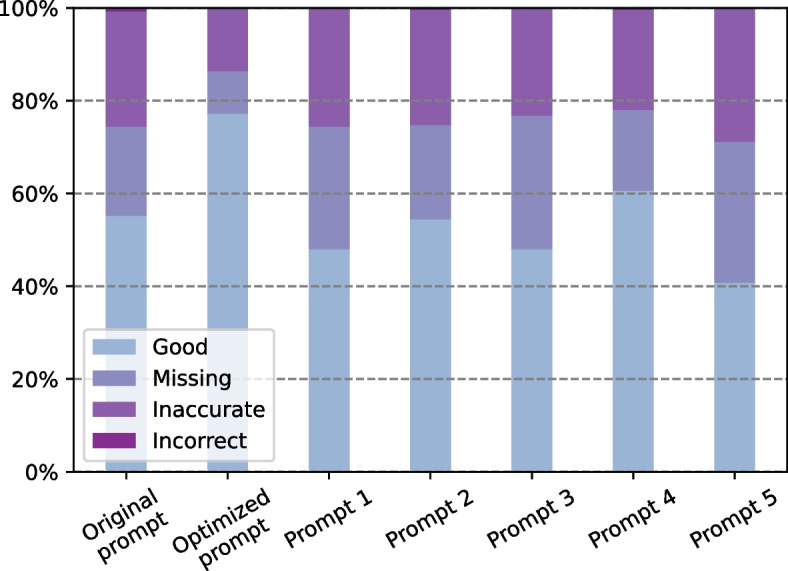
The large language model called ChatGPT has drawn extensively attention because of its human-like expression and reasoning abilities. In this study, we investigate the feasibility of using ChatGPT in experiments on translating radiology reports into plain language for patients and healthcare providers so that they are educated for improved healthcare. Radiology reports from 62 low-dose chest computed tomography lung cancer screening scans and 76 brain magnetic resonance imaging metastases screening scans were collected in the first half of February for this study. According to the evaluation by radiologists, ChatGPT can successfully translate radiology reports into plain language with an average score of 4.27 in the five-point system with 0.08 places of information missing and 0.07 places of misinformation. In terms of the suggestions provided by ChatGPT, they are generally relevant such as keeping following-up with doctors and closely monitoring any symptoms, and for about 37% of 138 cases in total ChatGPT offers specific suggestions based on findings in the report. ChatGPT also presents some randomness in its responses with occasionally over-simplified or neglected information, which can be mitigated using a more detailed prompt. Furthermore, ChatGPT results are compared with a newly released large model GPT-4, showing that GPT-4 can significantly improve the quality of translated reports. Our results show that it is feasible to utilize large language models in clinical education, and further efforts are needed to address limitations and maximize their potential.
Overview
The claims and statistics of this paper haven’t been checked yet.
Free: it reads the open-access text and checks the first 5 claims that cite a source we can check. Create a free account to check every claim.
Integrity signals
Registry
Cites
Statistics
Figures
Verification
Claims the paper makes
The claims and statistics of this paper haven’t been checked yet.
Free: it reads the open-access text and checks the first 5 claims that cite a source we can check. Create a free account to check every claim.
Claims other papers make about this one
Each is checked against this paper’s own text: does it say what the citing paper says it does?
The source backs part of the claim, not all of it — or backs it for a different population, condition or comparison.
In the citing paper
“However, the technical complexity of radiology publications presents a significant barrier to comprehension for nonspecialist audiences including patients, policymakers, healthcare professionals outside radiology, and the general public [2].”
From Evaluating the Capability of Large Language Model Chatbots for Generating Plain Language Summaries in Radiology (2025) · cites this paper as [2]
Experimental — accuracy not yet measuredThe source backs part of the claim, not all of it — or backs it for a different population, condition or comparison.
In the citing paper
“One important related yet underexplored issue is that chatbots may overlook uncertainties, limitations, and nuances in original research by omitting qualifiers and oversimplifying text [11,12], leading to overgeneralizations, i.e. generalizations that are broader than those in the original text and that may therefore be unwarranted by the original findings.”
From Generalization bias in large language model summarization of scientific research (2025) · cites this paper as [12]
Experimental — accuracy not yet measuredThe source backs part of the claim, not all of it — or backs it for a different population, condition or comparison.
In the citing paper
“LLMs can simplify complex medical information, improving patient understanding of diagnoses, treatments, and adverse effects.38,39”
From Artificial Intelligence in Oncology: Practical Applications Across Clinical Care, Scholarship, and Translation. (2026) · cites this paper as [38]
Experimental — accuracy not yet measuredThe source backs part of the claim, not all of it — or backs it for a different population, condition or comparison.
In the citing paper
“However, when summarizing scientific texts, LLMs may omit details that limit the scope of research conclusions, leading to generalizations of results broader than warranted by the original study.”
From Generalization bias in large language model summarization of scientific research (2025) · cites this paper as [12]
Experimental — accuracy not yet measured
Self-check
Percentages, sums and reported differences re-computed from the paper’s own numbers.
The self-check needs the paper’s full text.
Citations
Cites
BERT: Pre-training of Deep Bidirectional Transformers for Language Understanding
Devlin, J., Chang, M.-W., Lee, K., & Toutanova, K. (2018) · arXiv · doi:10.48550/arxiv.1810.04805 · Cited by 73,173
XLNet: Generalized Autoregressive Pretraining for Language Understanding
Yang, Z., Dai, Z., Yang, Y., Carbonell, J., Salakhutdinov, R., & Le, Q. V. (2019) · arXiv · doi:10.48550/arxiv.1906.08237 · Cited by 6,687 · cited 1×
“Compared with previous NLP models such as BERT [3], XLNet [4], and generative pre-trained transformer (GPT) [5], ChatGPT is a quantum leap characterized by several characteristic features, including a larger model with more parameters, chain of thought prompting, and training with reinforcement…”
MethodTraining language models to follow instructions with human feedback
Ouyang, L., Wu, J., Jiang, X., Almeida, D., Wainwright, C. L., Mishkin, P., Zhang, C., Agarwal, S., Slama, K., Ray, A., et al. (2022) · arXiv · doi:10.48550/arxiv.2203.02155 · Cited by 4,208 · cited 1×
“Prompted learning is used to effectively induce the reasoning process; RLHF injects high-quality human knowledge, helping align the results of ChatGPT to ensure it is friendly and safe for society [6].”
BackgroundKung, T. H., Cheatham, M., Medenilla, A., Sillos, C., De Leon, L., Elepaño, C., Madriaga, M., Aggabao, R., Diaz-Candido, G., Maningo, J., et al. (2023) · PLOS Digital Health · doi:10.1371/journal.pdig.0000198 · Cited by 4,115 · cited 1×
“Given the huge success of ChatGPT, recently there are studies on adapting ChatGPT for downstream tasks, like writing a systematic literature review [7], medical school education [8], language translation [9], scholar content generation for publication [9], and solving mathematical problems [10].”
BackgroundKung, T. H., Cheatham, M., ChatGPT, Medenilla, A., Sillos, C., De Leon, L., Elepaño, C., Madriaga, M., Aggabao, R., Diaz-Candido, G., et al. (2022) · doi:10.1101/2022.12.19.22283643 · Cited by 4,115
ChatGPT: the future of discharge summaries?
Patel, S. B., & Lam, K. (2023) · The Lancet Digital Health · doi:10.1016/s2589-7500(23)00021-3 · Cited by 728 · cited 2×
“…huge success of ChatGPT, studies have been conducted recently on adapting it for downstream tasks, such as writing a systematic literature review [7], medical school education [8], language translation [9], scholarly content generation for publication [9], and solving mathematical problems [10].”
BackgroundMethodGenerating scholarly content with ChatGPT: Ethical challenges for medical publishing
Liebrenz, M., Schleifer, R., Buadze, A., Bhugra, D., & Smith, A. (2023) · The Lancet Digital Health · doi:10.1016/s2589-7500(23)00019-5 · Cited by 594 · cited 1×
“…huge success of ChatGPT, studies have been conducted recently on adapting it for downstream tasks, such as writing a systematic literature review [7], medical school education [8], language translation [9], scholarly content generation for publication [9], and solving mathematical problems [10].”
BackgroundChatGPT and the future of medical writing
Biswas, S. (2023) · Radiology · doi:10.1148/radiol.223312 · Cited by 571 · cited 1×
“Biswas explored the use of ChatGPT for medical writing applications, including patient-care-related writing, medical publications, medical administrative documentation, and meeting summarization [11].”
MethodChatGPT makes medicine easy to swallow: an exploratory case study on simplified radiology reports
Jeblick, K., Schachtner, B., Dexl, J., Mittermeier, A., Stüber, A. T., Topalis, J., Weber, T., Wesp, P., Sabel, B. O., Ricke, J., et al. (2023) · European Radiology · doi:10.1007/s00330-023-10213-1 · Cited by 549 · cited 1×
“Jeblick et al. [12] investigated the quality of ChatGPT’s radiology report simplification and concluded that simplified reports were factually correct, complete, and not harmful to patients.”
BackgroundSarraju, A., Bruemmer, D., Van Iterson, E., Cho, L., Rodriguez, F., & Laffin, L. (2023) · JAMA · doi:10.1001/jama.2023.1044 · Cited by 452
Cited by
A Survey on Evaluation of Large Language Models
Chang, Y., Wang, X., Wang, J., Wu, Y., Yang, L., Zhu, K., Chen, H., Yi, X., Wang, C., Wang, Y., et al. (2023) · arXiv · doi:10.48550/arxiv.2307.03109 · Cited by 3,159
A Survey on Evaluation of Large Language Models
Chang, Y., Wang, X., Wang, J., Wu, Y., Yang, L., Zhu, K., Chen, H., Yi, X., Wang, C., Wang, Y., et al. (2024) · ACM Transactions on Intelligent Systems and Technology · doi:10.1145/3641289 · Cited by 4,254
Bahroun, Z., Anane, C., Ahmed, V., & Zacca, A. (2023) · Sustainability · doi:10.3390/su151712983 · Cited by 784
A Survey of GPT-3 Family Large Language Models Including ChatGPT and GPT-4
Kalyan, K. S. (2024) · Natural Language Processing Journal · doi:10.1016/j.nlp.2023.100048 · Cited by 335
Large language models in patient education: a scoping review of applications in medicine
Aydin, S., Karabacak, M., Vlachos, V., & Margetis, K. (2024) · Frontiers in Medicine · doi:10.3389/fmed.2024.1477898 · Cited by 288
LLMs for knowledge graph construction and reasoning: recent capabilities and future opportunities
Zhu, Y., Wang, X., Chen, J., Qiao, S., Ou, Y., Yao, Y., Deng, S., Chen, H., & Zhang, N. (2024) · World Wide Web · doi:10.1007/s11280-024-01297-w · Cited by 294
“Furthermore, there are some studies on GPT-4 that focus on cognitive psychology (Sifatkaur et al., 2023), academic exams (Nunes et al., 2023), and translation of radiology reports (Lyu et al., 2023).”
Chakraborty, C., Bhattacharya, M., Pal, S., & Lee, S.-S. (2024) · Current Research in Biotechnology · doi:10.1016/j.crbiot.2023.100164 · Cited by 274
Evaluation of ChatGPT-generated medical responses: A systematic review and meta-analysis
Wei, Q., Yao, Z., Cui, Y., Wei, B., Jin, Z., & Xu, X. (2024) · Journal of Biomedical Informatics · doi:10.1016/j.jbi.2024.104620 · Cited by 201
Assessing the research landscape and clinical utility of large language models: a scoping review
Park, Y.-J., Pillai, A., Deng, J., Guo, E., Gupta, M., Paget, M., & Naugler, C. (2024) · BMC Medical Informatics and Decision Making · doi:10.1186/s12911-024-02459-6 · Cited by 187
Samala, A. D., Rawas, S., Wang, T., Reed, J. M., Kim, J., Howard, N.-J., & Ertz, M. (2025) · Education and Information Technologies · doi:10.1007/s10639-024-12936-0 · Cited by 229
“Dependency on technology and infrastructure is a factor that users need to consider, especially in situations where Internet access may not always be available or when server stability becomes an issue (Abd-Alrazaq et al., 2023; Helberger & Diakopoulos, 2023; Lyu et al., 2023).”
Wang, L., Wan, Z., Ni, C., Song, Q., Li, Y., Clayton, E., Malin, B., & Yin, Z. (2024) · Journal of Medical Internet Research · doi:10.2196/22769 · Cited by 165
“Several studies highlighted that ChatGPT exhibited inaccuracies when asked to respond to certain questions [19,20,24,27,29,33,37,45,50,55,57,59,63,64,68,75,76].”
ChatGPT for Automated Qualitative Research: Content Analysis
Bijker, R., Merkouris, S., Dowling, N. A., & Rodda, S. N. (2024) · Journal of Medical Internet Research · doi:10.2196/59050 · Cited by 265
“Research has highlighted the importance of using high-quality prompts for LLMs given that different prompts that appear to reflect similar instructions may lead to highly variable responses [43,44].”
Rau, A., Rau, S., Zöller, D., Fink, A., Tran, H., Wilpert, C., Nattenmüller, J., Neubauer, J., Bamberg, F., Reisert, M., et al. (2023) · Radiology · doi:10.1148/radiol.230970 · Cited by 150
Prompt engineering for healthcare: Methodologies and applications
Wang, J., Shi, E., Yu, S., Wu, Z., Hu, H., Ma, C., Dai, H., Yang, Q., Kang, Y., Wu, J., et al. (2026) · Meta-Radiology · doi:10.1016/j.metrad.2025.100190 · Cited by 139
Prompt Engineering for Healthcare: Methodologies and Applications
Wang, J., Shi, E., Yu, S., Wu, Z., Ma, C., Dai, H., Yang, Q., Kang, Y., Wu, J., Hu, H., et al. (2023) · arXiv · doi:10.48550/arxiv.2304.14670 · Cited by 150
“In this section, we will provide a summary of the review and discuss its limitations and contributions.”
He, K., Mao, R., Lin, Q., Ruan, Y., Lan, X., Feng, M., & Cambria, E. (2025) · Information Fusion · doi:10.1016/j.inffus.2025.102963 · Cited by 147
Potential of GPT-4 for Detecting Errors in Radiology Reports: Implications for Reporting Accuracy
Gertz, R. J., Dratsch, T., Bunck, A. C., Lennartz, S., Iuga, A.-I., Hellmich, M. G., Persigehl, T., Pennig, L., Gietzen, C. H., Fervers, P., et al. (2024) · Radiology · doi:10.1148/radiol.232714 · Cited by 143
ChatAgri: Exploring potentials of ChatGPT on cross-linguistic agricultural text classification
Zhao, B., Jin, W., Ser, J. D., & Yang, G. (2023) · Neurocomputing · doi:10.1016/j.neucom.2023.126708 · Cited by 178
ChatGPT in radiology: A systematic review of performance, pitfalls, and future perspectives
Keshavarz, P., Bagherieh, S., Nabipoorashrafi, S. A., Chalian, H., Rahsepar, A. A., Kim, G. H. J., Hassani, C., Raman, S. S., & Bedayat, A. (2024) · Diagnostic and Interventional Imaging · doi:10.1016/j.diii.2024.04.003 · Cited by 132
Large language models for disease diagnosis: a scoping review
Zhou, S., Xu, Z., Zhang, M., Xu, C., Guo, Y., Zhan, Z., Fang, Y., Ding, S., Wang, J., Xu, K., et al. (2025) · npj Artificial Intelligence · doi:10.1038/s44387-025-00011-z · Cited by 122
Ayre, J., Mac, O., McCaffery, K., McKay, B. R., Liu, M., Shi, Y., Rezwan, A., & Dunn, A. G. (2024) · Journal of General Internal Medicine · doi:10.1007/s11606-023-08469-w · Cited by 124
“19, 20 21–24 This study sought to investigate the capacity for ChatGPT (GPT-3.”
BackgroundMethodInfluentialNakaura, T., Ito, R., Ueda, D., Nozaki, T., Fushimi, Y., Matsui, Y., Yanagawa, M., Yamada, A., Tsuboyama, T., Fujima, N., et al. (2024) · Japanese Journal of Radiology · doi:10.1007/s11604-024-01552-0 · Cited by 152
“Additionally, while the interpretation of radiology reports necessitates specialized knowledge, it has been reported that LLMs are capable of translating these specialized reports into more comprehensible language for a general patient [54].”
BackgroundWilliams, C. Y. K., Miao, B. Y., Kornblith, A. E., & Butte, A. J. (2024) · Nature Communications · doi:10.1038/s41467-024-52415-1 · Cited by 119
“5-turbo has been used to convert radiology reports into plain language, to classify whether statements of clinical recommendations in scienti fi c literature constitute health advice, and to accurately classify fi ve diseases from discharge summaries in the MIMIC-III dataset 21 – 23 .”
MethodGeneralization bias in large language model summarization of scientific research
Peters, U., & Chin-Yee, B. (2025) · Royal Society Open Science · doi:10.1098/rsos.241776 · Cited by 126
“While LLMs hold substantial potential as tools for scientific summarization [3,5], their use carries significant risks, as they may oversimplify or exaggerate scientific findings [12], which can lead to large-scale misunderstandings of science.”
A comprehensive survey of large language models and multimodal large language models in medicine
Xiao, H., Zhou, F., Liu, X., Liu, T., Li, Z., Liu, X., & Huang, X. (2025) · Information Fusion · doi:10.1016/j.inffus.2024.102888 · Cited by 113
“Efforts are currently underway to explore the application of MLLMs in surgical procedures [194].”
InfluentialFoundation Models in Radiology: What, How, Why, and Why Not
Paschali, M., Chen, Z., Blankemeier, L., Varma, M., Youssef, A., Blüthgen, C., Langlotz, C. P., Gatidis, S., & Chaudhari, A. S. (2025) · Radiology · doi:10.1148/radiol.240597 · Cited by 168
Herrmann-Werner, A., Festl-Wietek, T., Holderried, F., Herschbach, L., Griewatz, J., Masters, K., Zipfel, S., & Mahling, M. (2024) · Journal of Medical Internet Research · doi:10.2196/52113 · Cited by 96
“Second, the difference could be due to a random variation that is known to occur even when the same prompt is used more than once [29,30].”
Park, J., Oh, K., Han, K., & Lee, Y. H. (2024) · Scientific Reports · doi:10.1038/s41598-024-63824-z · Cited by 94
“Summary of radiology report is an actively researched topic, and there are some reports have shown the excellent agreements of simplified reports as well 18,29 .”
BackgroundEvaluating the ChatGPT family of models for biomedical reasoning and classification
Chen, S., Li, Y., Lu, S., Van, H., Aerts, H. J. W. L., Savova, G. K., & Bitterman, D. S. (2024) · Journal of the American Medical Informatics Association · doi:10.1093/jamia/ocad256 · Cited by 91
“Lyu et al. 10 research the feasibility of using ChatGPT to translate radiology reports into plain language for patients and healthcare providers.”
BackgroundEvaluation of ChatGPT Family of Models for Biomedical Reasoning and Classification
Chen, S., Li, Y., Lu, S., Van, H., Aerts, H. J., Savova, G. K., & Bitterman, D. S. (2023) · arXiv · doi:10.48550/arxiv.2304.02496 · Cited by 91
Hasani, A. M., Singh, S. M., Zahergivar, A., Ryan, B., Nethala, D., Bravomontenegro, G., Mendhiratta, N., Ball, M. W., Farhadi, F., & Malayeri, A. A. (2023) · European Radiology · doi:10.1007/s00330-023-10384-x · Cited by 96
“In our study, AI-generated reports had 34.53 fewer words than radiologist-generated reports, which might have affected the sequence matching score of 0.52, as observed in the findings of Lyu et al [14].”
InfluentialLarge Language Models: A Guide for Radiologists
Kim, S., Lee, C., & Kim, S. (2024) · Korean Journal of Radiology · doi:10.3348/kjr.2023.0997 · Cited by 95
“ChatGPT-4 demonstrated the capability to translate and simplify technical jargon in radiology reports into plain language, thus making the content more understandable to individuals without a medical background [25,26].”
BackgroundESR paper on structured reporting in radiology—update 2023
European Society of Radiology (ESR), dos Santos, D. P., Kotter, E., Mildenberger, P., & Martí‐Bonmatí, L. (2023) · Insights into Imaging · doi:10.1186/s13244-023-01560-0 · Cited by 97
Sallam, M., Barakat, M. M., & Sallam, M. (2024) · Interactive Journal of Medical Research · doi:10.2196/54704 · Cited by 105
“ChatGPT with unclear settings Lyu et al [64] The exact prompts were provided in English, with a new session for each question.”
Nasra, M., Jaffri, R., Pavlin‐Premrl, D., Kok, H. K., Khabaza, A., Barras, C. D., Slater, L., Yazdabadi, A., Moore, J. M., Russell, J. H., et al. (2024) · Internal Medicine Journal · doi:10.1111/imj.16607 · Cited by 103
“12,18”
InfluentialEvaluating large language models and agents in healthcare: key challenges in clinical applications
Chen, X., Xiang, J., Lu, S., Liu, Y., He, M., & Shi, D. (2025) · Intelligent Medicine · doi:10.1016/j.imed.2025.03.002 · Cited by 68
Jung, K.-H. (2025) · Healthcare Informatics Research · doi:10.4258/hir.2025.31.2.114 · Cited by 106
He, K., Mao, R., Lin, Q., Ruan, Y., Lan, X., Feng, M., & Cambria, E. (2024) · doi:10.2139/ssrn.4809363 · Cited by 69
Large language model integrations in cancer decision-making: a systematic review and meta-analysis
Hao, Y., Qiu, Z., Holmes, J., Löckenhoff, C. E., Liu, W., Ghassemi, M., & Kalantari, S. (2025) · npj Digital Medicine · doi:10.1038/s41746-025-01824-7 · Cited by 67
“Examples include translating chest computed tomography lung cancer screening scans and prostate magnetic resonance imaging(MRI)reports,inbothcasesdemonstratinghighef fi cacyincorrectness and completeness 21,22 .”
Radiology Gets Chatty: The ChatGPT Saga Unfolds
Grewal, H., Dhillon, G., Monga, V., Sharma, P., Buddhavarapu, V. S., Sidhu, G., & Kashyap, R. (2023) · Cureus · doi:10.7759/cureus.40135 · Cited by 66
Transformer technology in molecular science
Jian, J., Ke, L., Chen, L., Dou, B., Zhu, Y., Liu, J., Zhang, B., Zhou, T., & Wei, G. (2024) · Wiley Interdisciplinary Reviews Computational Molecular Science · doi:10.1002/wcms.1725 · Cited by 99
“53 Thanks to its excellent natural language processing (NLP) capabilities, it has achieved remarkable success in the fields of text generation, 54,55 language translation, 56,57 and so on.”
Göktaş, P., Karakaya, G., Kalyoncu, A. F., & Damadoğlu, E. (2023) · The Journal of Allergy and Clinical Immunology In Practice · doi:10.1016/j.jaip.2023.05.042 · Cited by 74
Large Language Model Applications for Health Information Extraction in Oncology: Scoping Review
Chen, D., Alnassar, S. A., Avison, K. E., Huang, R. S., & Raman, S. (2025) · JMIR Cancer · doi:10.2196/65984 · Cited by 66
“…indicated by the reviewed studies, should involve performance benchmarks against existing statistical and machine learning–based methods and the extension of LLM tool validation to external, hold-out cohorts from additional clinical domains beyond those used in initial training datasets [7,16,24].”
Scheschenja, M., Viniol, S., Bastian, M. B., Wessendorf, J., König, A. M., & Mahnken, A. H. (2024) · CardioVascular and Interventional Radiology · doi:10.1007/s00270-023-03563-2 · Cited by 60
Zhang, S., Liau, Z. Q. G., Tan, K. L. M., & Chua, W. L. (2024) · Knee Surgery and Related Research · doi:10.1186/s43019-024-00218-5 · Cited by 67
“Lyu et al. demonstrated the ability of ChatGPT to translate radiology reports into plain language, while Mondal et al. showed that ChatGPT could write articles to educate patients on dermatological conditions [32, 33].”
BackgroundTranslating musculoskeletal radiology reports into patient-friendly summaries using ChatGPT-4
Kuckelman, I. J., Wetley, K., Yi, P. H., & Ross, A. B. (2024) · Skeletal Radiology · doi:10.1007/s00256-024-04599-2 · Cited by 58
“Prior research has established that ChatGPT-4 can generate text summaries at designated reading levels with high reliability [10] and that these summaries contain minimal misinformation when employed to encapsulate the findings of screening exams [12].”
Improving radiology workflow using ChatGPT and artificial intelligence
Mese, I., Taslicay, C. A., & Sivrioglu, A. K. (2023) · Clinical Imaging · doi:10.1016/j.clinimag.2023.109993 · Cited by 58
ChatGPT and finetuned BERT: A comparative study for developing intelligent design support systems
Qiu, Y., & Jin, Y. (2023) · Intelligent Systems with Applications · doi:10.1016/j.iswa.2023.200308 · Cited by 105
Salam, B., Kravchenko, D., Nowak, S., Sprinkart, A. M., Weinhold, L., Odenthal, A., Mesropyan, N., Bischoff, L. M., Attenberger, U. I., Kuetting, D. L. R., et al. (2024) · Journal of Cardiovascular Magnetic Resonance · doi:10.1016/j.jocmr.2024.101035 · Cited by 62
Faithful AI in Medicine: A Systematic Review with Large Language Models and Beyond
Xie, Q., Schenck, E. J., Yang, H. S., Chen, Y., Peng, Y., & Wang, F. (2023) · doi:10.21203/rs.3.rs-3661764/v1 · Cited by 57
ChatGPT in Drug Discovery: A Case Study on Anticocaine Addiction Drug Development with Chatbots
Wang, R., Feng, H., & Wei, G. (2023) · Journal of Chemical Information and Modeling · doi:10.1021/acs.jcim.3c01429 · Cited by 65
Artificial Intelligence to Improve Patient Understanding of Radiology Reports
Amin, K., Khosla, P., Doshi, R. H., Chheang, S., & Forman, H. P. (2023) · The Yale Journal of Biology and Medicine · doi:10.59249/nkoy5498 · Cited by 72
Doshi, R. H., Amin, K., Khosla, P., Bajaj, S. S., Chheang, S., & Forman, H. P. (2023) · medRxiv · doi:10.1101/2023.06.04.23290786 · Cited by 74
“20,21 More specifically, these models leverage natural language processing (NLP) technologies to generate human-like text in response to a user’s prompts.”
BackgroundPotential Applications and Impact of ChatGPT in Radiology
Bajaj, S., Gandhi, D., & Nayar, D. (2023) · Academic Radiology · doi:10.1016/j.acra.2023.08.039 · Cited by 59
Kim, J., Wang, K., Weng, C., & Liu, C. (2024) · The American Journal of Human Genetics · doi:10.1016/j.ajhg.2024.08.010 · Cited by 53
Russe, M. F., Reisert, M., Bamberg, F., & Rau, A. (2024) · RöFo - Fortschritte auf dem Gebiet der Röntgenstrahlen und der bildgebenden Verfahren · doi:10.1055/a-2264-5631 · Cited by 52
Analyzing evaluation methods for large language models in the medical field: a scoping review
Lee, J., Park, S., Shin, J., & Cho, B. (2024) · BMC Medical Informatics and Decision Making · doi:10.1186/s12911-024-02709-7 · Cited by 52
Russe, M. F., Fink, A., Ngo, H., Tran, H., Bamberg, F., Reisert, M., & Rau, A. (2023) · Scientific Reports · doi:10.1038/s41598-023-41512-8 · Cited by 49
“The significantly higher performance of chatbots based on GPT version 4 compared with 3.5-Turbo is corroborated by recent studies on the simplification of radiological reports 7 or passing United States Medical Licensing Examination questions 4 .”
ResultInfluentialNia, M. F., Ahmadi, M., & Irankhah, E. (2025) · Frontiers in Dental Medicine · doi:10.3389/fdmed.2024.1456208 · Cited by 82
Kim, J. H., Kim, S. K., Choi, J., & Lee, Y. (2024) · DIGITAL HEALTH · doi:10.1177/20552076241227132 · Cited by 47
“41 A previous study identi fi ed varying performances depending on the prompt used to optimize LLMs. 42 In particular, the performance of ChatGPT4.”
MethodAdvancing medical imaging with language models: featuring a spotlight on ChatGPT
Hu, M., Qian, J. Y., Pan, S., Li, Y., Qiu, R. L. J., & Yang, X. (2024) · Physics in Medicine and Biology · doi:10.1088/1361-6560/ad387d · Cited by 120
The quality and safety of using generative AI to produce patient-centred discharge instructions
Stanceski, K., Zhong, S., Zhang, X., Khadra, S., Tracy, M., Koria, L., Lo, S., Naganathan, V., Kim, J., Dunn, A. G., et al. (2024) · npj Digital Medicine · doi:10.1038/s41746-024-01336-w · Cited by 45
Park, J., Fang, Y., Ta, C., Zhang, G., Idnay, B., Chen, F., Feng, D. D., Shyu, R., Gordon, E. R., Spotnitz, M., et al. (2024) · Journal of Biomedical Informatics · doi:10.1016/j.jbi.2024.104649 · Cited by 66
When vision meets reality: Exploring the clinical applicability of GPT-4 with vision
Deng, J., Heybati, K., & Shammas‐Toma, M. (2024) · Clinical Imaging · doi:10.1016/j.clinimag.2024.110101 · Cited by 48
Using GPT ‐4 for LI‐RADS feature extraction and categorization with multilingual free‐text reports
Gu, K., Lee, J. H., Shin, J., Hwang, J. A., Min, J. H., Jeong, W. K., Lee, M. W., Song, K. D., & Bae, S. H. (2024) · Liver International · doi:10.1111/liv.15891 · Cited by 54
“17,18 Despite GPT-4's high accuracy, we observed some errors in feature extraction, similar to the findings of Bhayana et al. 7,15 On the positive side, there were no obvious extrinsic hallucinations (defined as generated content that the source cannot verify) and all errors excluding those attributed to the ambiguity…”
BackgroundResultPapachristou, N., Kotronoulas, G., Δικαίος, Ν., Allison, S. J., Eleftherochorinou, H., Rai, T., Kunz, H. R., Barnaghi, P. M., Miaskowski, C. A., & Bamidis, P. D. (2023) · Seminars in Oncology Nursing · doi:10.1016/j.soncn.2023.151433 · Cited by 58
Gulati, V., Roy, S. G., Moawad, A. W., Garcia, D., Babu, A. S., Poot, J. D., & Teytelboym, O. M. (2024) · Journal of the American College of Radiology · doi:10.1016/j.jacr.2024.05.009 · Cited by 48
A Systematic Review of ChatGPT and Other Conversational Large Language Models in Healthcare
Wang, L., Wan, Z., Ni, C., Song, Q., Li, Y., Clayton, E. W., Malin, B. A., & Yin, Z. (2024) · medRxiv · doi:10.1101/2024.04.26.24306390 · Cited by 41
“Many authors expressed concerns about the inconsistency of the responses from LLMs [21,25,30], where different answers result from various prompts of the same question [17,32,39,58,59,64,67,72].”
BackgroundThe AI revolution in glaucoma: Bridging challenges with opportunities
Li, F., Wang, D., Yang, Z., Zhang, Y., Jiang, J., Liu, X., Kong, K., Zhou, F., Tham, C. C. Y., Medeiros, F. A., et al. (2024) · Progress in Retinal and Eye Research · doi:10.1016/j.preteyeres.2024.101291 · Cited by 49
Evaluation of ChatGPT and Google Bard using prompt engineering in cancer screening algorithms
Nguyen, D., Swanson, D., Newbury, A., & Kim, Y. H. (2024) · Academic Radiology · doi:10.1016/j.acra.2023.11.002 · Cited by 38
Large models in medical imaging: Advances and prospects
Fang, M., Wang, Z., Pan, S., Feng, X., Zhao, Y., Hou, D., Wu, L., Xie, X., Zhang, X.-Y., Tian, J., et al. (2025) · Chinese Medical Journal · doi:10.1097/cm9.0000000000003699 · Cited by 59
“[86] Overall, LLMs not only boost the efficiency of report processing and generation but also provide robust technical support for batch processing and information mining of large-scale report databases.”
Organizational preparedness for the use of large language models in pathology informatics
Hart, S. N., Hoffman, N. G., Gershkovich, P., Christenson, C., McClintock, D. S., Miller, L. J., Jackups, R., Azimi, V., Spies, N., & Brodsky, V. (2023) · Journal of Pathology Informatics · doi:10.1016/j.jpi.2023.100338 · Cited by 36
Hamed, E., Eid, A., & Alberry, M. (2023) · Cureus · doi:10.7759/cureus.38784 · Cited by 35
“Therefore, prompt engineering techniques are implemented to maximize the reliability and consistency of ChatGPT’s output [9-12].”
MethodContrast Agents of Magnetic Resonance Imaging and Future Perspective
Lv, J. H., Roy, S., Xie, M., Yang, X., & Guo, B. (2023) · Nanomaterials · doi:10.3390/nano13132003 · Cited by 46
Current applications and future potential of C hat GPT in radiology: A systematic review
Temperley, H. C., O’Sullivan, N. J., Curtain, B. M. M., Corr, A., Meaney, J. F., Kelly, M. E., & Brennan, I. M. (2024) · Journal of Medical Imaging and Radiation Oncology · doi:10.1111/1754-9485.13621 · Cited by 41
“21,22,27,28 Despite the promising potential of ChatGPT within radiology, the practical implementation of this technology in real-life clinical settings has been relatively limited thus far.”
BackgroundMethodInfluentialIQAGPT: computed tomography image quality assessment with vision-language and ChatGPT models
Chen, Z., Hu, B., Niu, C., Chen, T., Li, Y., Shan, H., & Wang, G. (2024) · Visual Computing for Industry Biomedicine and Art · doi:10.1186/s42492-024-00171-w · Cited by 69
“To address this gap, visual-language models (VLMs) [9, 10, 11, 12, 13, 14, 15], which synergistically combine the capabilities of LLMs with visual processing, were proposed to capture rich vision-language correspondence and perform well in various multi-modal tasks such as report generation,…”
Self-citationBečulić, H., Begagić, E., Skomorac, R., Mašović, A., Selimović, E., & Pojskić, M. (2023) · Medicinski Glasnik · doi:10.17392/1661-23 · Cited by 48
Ta-Adapter: Enhancing few-shot CLIP with task-aware encoders
Zhang, W., Zhang, Y., Deng, Y., Zhang, W., Lin, J., Huang, B., Zhang, J., & Yu, W. (2024) · Pattern Recognition · doi:10.1016/j.patcog.2024.110559 · Cited by 42
Evaluating the Reliability of ChatGPT for Health-Related Questions: A Systematic Review
Beheshti, M., Toubal, I. E., Alaboud, K., Almalaysha, M., Ogundele, O. B., Turabieh, H., Abdalnabi, N., Boren, S. A., Scott, G. J., & Dahu, B. M. (2025) · Informatics · doi:10.3390/informatics12010009 · Cited by 47
A dataset and benchmark for hospital course summarization with adapted large language models
Aali, A., Van Veen, D., Arefeen, Y. I., Hom, J., Bluethgen, C., Reis, E. P., Gatidis, S., Clifford, N., Daws, J., Tehrani, A. S., et al. (2025) · Journal of the American Medical Informatics Association · doi:10.1093/jamia/ocae312 · Cited by 32
Understanding natural language: Potential application of large language models to ophthalmology
Yang, Z., Wang, D., Zhou, F., Song, D., Zhang, Y., Jiang, J., Kong, K., Liu, X., Qiao, Y., Chang, R. T., et al. (2024) · Asia-Pacific Journal of Ophthalmology · doi:10.1016/j.apjo.2024.100085 · Cited by 50
Ho, C., Tian, T., Ayers, A. T., Aaron, R. E., Phillips, V., Wolf, R. M., Mathioudakis, N. N., Dai, T., & Klonoff, D. C. (2024) · BMC Medical Informatics and Decision Making · doi:10.1186/s12911-024-02757-z · Cited by 42
“5 [7, 8, 10, 11, 13–20, 22–25, 27, 29–33, 36–38, 40, 41, 44, 45, 47 [24, 36, 39, 46, 57, 65, 75, 78, 81, 85, 86] 11 (10.2”
InfluentialSosna, J., Joskowicz, L., & Saban, M. (2025) · Radiology · doi:10.1148/radiol.240982 · Cited by 42
Doo, F. X., Cook, T. S., Siegel, E. L., Joshi, A., Parekh, V. S., Elahi, A., & Yi, P. H. (2023) · Journal of the American College of Radiology · doi:10.1016/j.jacr.2023.07.007 · Cited by 36
ChatGPT and radiology report: potential applications and limitations
Parillo, M., Vaccarino, F., Zobel, B. B., & Mallio, C. A. (2024) · La radiologia medica · doi:10.1007/s11547-024-01915-7 · Cited by 38
“[ 38 ] 62 c h e s t C T a nd 76 b r a i n M R I r e po r t s T h e s u mm a r i e s o f C h a t G P T ( e s p ec i a ll y G P T - 4 ) o ff e r e d 3 po t e n ti a l b e n e fi t s : c on c i s e n e ss , c l a r it y , a nd c o m p r e h e n s i v e - n e ss C h a t G P T ’ s r e s pon s e s w e r…”
Multi-modal large language models in radiology: principles, applications, and potential
Shen, Y.-Q., Xu, Y.-Q., Ma, J.-J., Rui, W.-S., Zhao, C., Heacock, L., & Huang, C.-C. (2024) · Abdominal Radiology · doi:10.1007/s00261-024-04708-8 · Cited by 34
“LLMs can help by translating these reports into plain language or a patient’s native language, if legally permitted, thereby enhancing patient education and empowering patients to make informed decisions about their care [89–91].”
InfluentialRay, M., Kats, D. J., Moorkens, J., Rai, D., Shaar, N., Quinones, D., Vermeulen, A., Mateo, C. M., Brewster, R., Khan, A., et al. (2025) · Archives of Pediatrics and Adolescent Medicine · doi:10.1001/jamapediatrics.2025.1729 · Cited by 40
Assessing Racial and Ethnic Bias in Text Generation for Healthcare-Related Tasks by ChatGPT 1
Hanna, J. J., Wakene, A. D., Lehmann, C. U., & Medford, R. J. (2023) · doi:10.1101/2023.08.28.23294730 · Cited by 28
Generative AI in Technical Communication: A Review of Research from 2023 to 2024
Reeves, C. A., & Sylvia, J. J. (2024) · Journal of Technical Writing and Communication · doi:10.1177/00472816241260043 · Cited by 39
“Lyu et al. (2023) analyzed translations by ChatGTP-3.”
Gupta, A. K., Singh, S., Malhotra, H., Pruthi, H., Sharma, A., Garg, A. K., Yadav, M., Kandasamy, D., Batra, A., & Rangarajan, K. (2025) · JCO Clinical Cancer Informatics · doi:10.1200/cci-24-00166 · Cited by 41
Can ChatGPT rescue or assist with language barriers in healthcare communication?
da Silva, J. A. T. (2023) · Patient Education and Counseling · doi:10.1016/j.pec.2023.107940 · Cited by 28
Towards Automatic Boundary Detection for Human-AI Collaborative Hybrid Essay in Education
Zeng, Z., Sha, L., Li, Y., Yang, K., Gašević, D., & Chen, G. (2023) · arXiv · doi:10.48550/arxiv.2307.12267 · Cited by 25
“As illustrated in Figure 1, where we tested a commercial AI content detector released by Copyleaks 2 with a hybrid essay Figure 1: we tested a commercial AI content detector called Copyleaks with a hybrid essay written first by human (first half) and then by ChatGPT (second half) and observed that the detector suggested…”
MethodInfluentialData Quality in the Age of AI: A Review of Governance, Ethics, and the FAIR Principles
Guillen-Aguinaga, M., Aguinaga-Ontoso, E., Guillen-Aguinaga, L., Guillen-Grima, F., & Aguinaga-Ontoso, I. (2025) · Data · doi:10.3390/data10120201 · Cited by 37
“Technologies such as federated learning and homomorphic encryption enable training on distributed or encrypted data, embedding privacy-by-design into the technical architecture [261].”
Alanezi, F. (2025) · Nutrition and Health · doi:10.1177/02601060241244563 · Cited by 24
“…several factors, such as the quality of the input provided by the user, the complexity of the topic being discussed, and the context in which the conversation is taking place (Coskun et al., 2023; Iannantuono et al., 2023; Ji et al., 2023; Li et al., 2023; Lyu et al., 2023; Rahsepar et al., 2023).”
MediGPT: Exploring Potentials of Conventional and Large Language Models on Medical Data
Rony, M. A. T., Islam, M. S., Sultan, T., AlShathri, S. I., & El‐Shafai, W. (2024) · IEEE Access · doi:10.1109/access.2024.3428918 · Cited by 31
“5 [11] and its extension, ChatGPT-4 [9], in classifying medical-related documents.”
BackgroundRetrieval-Augmented Generation with Large Language Models in Radiology: From Theory to Practice
Fink, A., Rau, A., Reisert, M., Bamberg, F., & Russe, M. F. (2025) · Radiology Artificial Intelligence · doi:10.1148/ryai.240790 · Cited by 39
ChatGPT in Medical Education: Bibliometric and Visual Analysis
Zhang, Y., Xie, X., & Xu, Q. (2025) · JMIR Medical Education · doi:10.2196/72356 · Cited by 43
Use of Large Language Models on Radiology Reports: A Scoping Review
Lee, R. C., Hadidchi, R., Coard, M. C., Rubinov, Y., Alamuri, T. T., Liaw, A., Chandrupatla, R. S., & Duong, T. Q. (2025) · Journal of the American College of Radiology · doi:10.1016/j.jacr.2025.10.005 · Cited by 36
Extracting symptoms from free-text responses using ChatGPT among COVID-19 cases in Hong Kong
Wei, W. I., Leung, C. L. K., Tang, A., McNeil, E. B., Wong, S. Y. S., & Kwok, K. O. (2023) · Clinical Microbiology and Infection · doi:10.1016/j.cmi.2023.11.002 · Cited by 30
Data-Centric Foundation Models in Computational Healthcare: A Survey
Zhang, Y., Gao, J. G., Tan, Z., Zhou, L., Ding, K., Zhou, M., Zhang, S., & Wang, D. (2026) · ACM Computing Surveys · doi:10.1145/3800677 · Cited by 75
Metadata
- Authors
- Lyu, Q., Tan, J., Zapadka, M. E., Ponnatapura, J., Niu, C., Myers, K. J., Wang, G., & Whitlow, C. T.
- Affiliations
- Wake Forest University Health Sciences (US)
- Rensselaer Polytechnic Institute (US)
- Corresponding author
- Myers, Kyle J.
- Wang, Ge
- Whitlow, Christopher T.
- ORCID
- Venue
- Visual Computing for Industry, Biomedicine, and Art
- Published
- 2023-05-18
- Volume
- 6
- Issue
- 1
- Pages
- 9-9
- ISSN
- 2096-496X (ISSN-L)
- 2524-4442
- PMC
- PMC10192466
- OpenAlex
- W4377010595
- Cited by
- 367
- References
- 10
- Citations by year
- 2026: 54 · 2025: 124 · 2024: 131 · 2023: 58
- FWCI
- 14.65
- Type
- journal article
- Language
- en
- Open access
- diamond
- doi.org
- Licence
- cc-by
- creativecommons.org/licenses/by/4.0 (tdm)
- creativecommons.org/licenses/by/4.0 (vor)
- Locations
- Visual Computing for Industry Biomedicine and Art (publishedVersion, cc-by)
- PubMed Central (publishedVersion, cc-by)
- PubMed (publishedVersion)
- arXiv (Cornell University) (submittedVersion)
- DOAJ (DOAJ: Directory of Open Access Journals) (submittedVersion, cc-by-sa)
- arXiv (Cornell University)
- Topics
- Health Sciences › Medicine › Health Informatics › Artificial Intelligence in Healthcare and Education
- Physical Sciences › Computer Science › Artificial Intelligence › Explainable Artificial Intelligence (XAI)
- Physical Sciences › Computer Science › Computer Vision and Pattern Recognition › Multimodal Machine Learning Applications
- Keywords
- plain language communication, ChatGPT, GPT-4, prompt learning, large language models, lung cancer screening, brain metastases, low-dose CT, magnetic resonance imaging, patient education, clinical teaching
About these checks
Registry, retraction, Cites and statistics results are computed, not judged, with one exception: a printed reference that no index lists is read once by a model before it counts as a citation error. Claims are extracted by a model and kept only when their quote appears verbatim in the text; each cited source is then checked, with a model’s help, for whether it says what the claim relies on. Those verdicts can be wrong — read the claim’s quote and the cited source before relying on one.
Statistics and arithmetic are recomputed, not judged.
Confidence bands are shown only for fields calibrated on our annotated test set. None is calibrated yet, so no band is shown.
What counts as a claim ›How we measure confidence ›How we check this ›
Are you an author, or do you see a problem with this page? Request a review
Data sources
Bibliographic data: Semantic Scholar, OpenAlex, Crossref.
Contains information from the Semantic Scholar Academic Graph Datasets, made available under the ODC Attribution License (ODC-BY 1.0).
Semantic Scholar’s data is described in: Kinney, R., et al. (2023). The Semantic Scholar Open Data Platform. arXiv:2301.10140.
