

Translating radiology reports into plain language using ChatGPT and GPT-4 with prompt learning: results, limitations, and potential
Open accessThe DOI matches its Crossref record; 16 of the 16 references it cites were found in a registry or an index.
Abstract
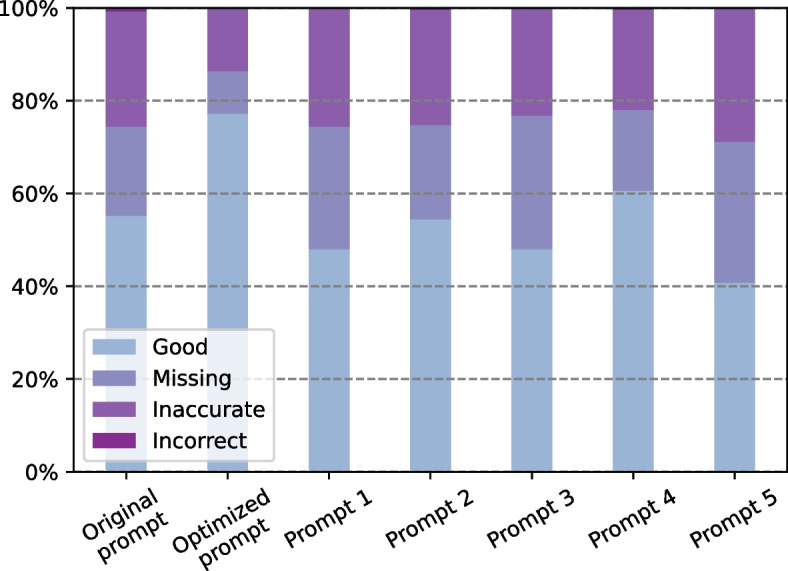
The large language model called ChatGPT has drawn extensively attention because of its human-like expression and reasoning abilities. In this study, we investigate the feasibility of using ChatGPT in experiments on translating radiology reports into plain language for patients and healthcare providers so that they are educated for improved healthcare. Radiology reports from 62 low-dose chest computed tomography lung cancer screening scans and 76 brain magnetic resonance imaging metastases screening scans were collected in the first half of February for this study. According to the evaluation by radiologists, ChatGPT can successfully translate radiology reports into plain language with an average score of 4.27 in the five-point system with 0.08 places of information missing and 0.07 places of misinformation. In terms of the suggestions provided by ChatGPT, they are generally relevant such as keeping following-up with doctors and closely monitoring any symptoms, and for about 37% of 138 cases in total ChatGPT offers specific suggestions based on findings in the report. ChatGPT also presents some randomness in its responses with occasionally over-simplified or neglected information, which can be mitigated using a more detailed prompt. Furthermore, ChatGPT results are compared with a newly released large model GPT-4, showing that GPT-4 can significantly improve the quality of translated reports. Our results show that it is feasible to utilize large language models in clinical education, and further efforts are needed to address limitations and maximize their potential.
Overview
The claims and statistics of this paper haven’t been checked yet.
Free: it reads the open-access text and checks the first 5 claims that cite a source we can check. Create a free account to check every claim.
Integrity signals
Registry
Cites
Statistics
Figures
Verification
Claims the paper makes
The claims and statistics of this paper haven’t been checked yet.
Free: it reads the open-access text and checks the first 5 claims that cite a source we can check. Create a free account to check every claim.
Claims other papers make about this one
Each is checked against this paper’s own text: does it say what the citing paper says it does?
The source backs part of the claim, not all of it — or backs it for a different population, condition or comparison.
In the citing paper
“However, the technical complexity of radiology publications presents a significant barrier to comprehension for nonspecialist audiences including patients, policymakers, healthcare professionals outside radiology, and the general public [2].”
From Evaluating the Capability of Large Language Model Chatbots for Generating Plain Language Summaries in Radiology (2025) · cites this paper as [2]
Experimental — accuracy not yet measuredThe source backs part of the claim, not all of it — or backs it for a different population, condition or comparison.
In the citing paper
“One important related yet underexplored issue is that chatbots may overlook uncertainties, limitations, and nuances in original research by omitting qualifiers and oversimplifying text [11,12], leading to overgeneralizations, i.e. generalizations that are broader than those in the original text and that may therefore be unwarranted by the original findings.”
From Generalization bias in large language model summarization of scientific research (2025) · cites this paper as [12]
Experimental — accuracy not yet measuredThe source backs part of the claim, not all of it — or backs it for a different population, condition or comparison.
In the citing paper
“LLMs can simplify complex medical information, improving patient understanding of diagnoses, treatments, and adverse effects.38,39”
From Artificial Intelligence in Oncology: Practical Applications Across Clinical Care, Scholarship, and Translation. (2026) · cites this paper as [38]
Experimental — accuracy not yet measuredThe source backs part of the claim, not all of it — or backs it for a different population, condition or comparison.
In the citing paper
“However, when summarizing scientific texts, LLMs may omit details that limit the scope of research conclusions, leading to generalizations of results broader than warranted by the original study.”
From Generalization bias in large language model summarization of scientific research (2025) · cites this paper as [12]
Experimental — accuracy not yet measured
Self-check
Percentages, sums and reported differences re-computed from the paper’s own numbers.
The self-check needs the paper’s full text.
Citations
Cites
BERT: Pre-training of Deep Bidirectional Transformers for Language Understanding
Devlin, J., Chang, M.-W., Lee, K., & Toutanova, K. (2018) · arXiv · doi:10.48550/arxiv.1810.04805 · Cited by 73,173
XLNet: Generalized Autoregressive Pretraining for Language Understanding
Yang, Z., Dai, Z., Yang, Y., Carbonell, J., Salakhutdinov, R., & Le, Q. V. (2019) · arXiv · doi:10.48550/arxiv.1906.08237 · Cited by 6,687 · cited 1×
“Compared with previous NLP models such as BERT [3], XLNet [4], and generative pre-trained transformer (GPT) [5], ChatGPT is a quantum leap characterized by several characteristic features, including a larger model with more parameters, chain of thought prompting, and training with reinforcement…”
MethodTraining language models to follow instructions with human feedback
Ouyang, L., Wu, J., Jiang, X., Almeida, D., Wainwright, C. L., Mishkin, P., Zhang, C., Agarwal, S., Slama, K., Ray, A., et al. (2022) · arXiv · doi:10.48550/arxiv.2203.02155 · Cited by 4,208 · cited 1×
“Prompted learning is used to effectively induce the reasoning process; RLHF injects high-quality human knowledge, helping align the results of ChatGPT to ensure it is friendly and safe for society [6].”
BackgroundKung, T. H., Cheatham, M., Medenilla, A., Sillos, C., De Leon, L., Elepaño, C., Madriaga, M., Aggabao, R., Diaz-Candido, G., Maningo, J., et al. (2023) · PLOS Digital Health · doi:10.1371/journal.pdig.0000198 · Cited by 4,115 · cited 1×
“Given the huge success of ChatGPT, recently there are studies on adapting ChatGPT for downstream tasks, like writing a systematic literature review [7], medical school education [8], language translation [9], scholar content generation for publication [9], and solving mathematical problems [10].”
BackgroundKung, T. H., Cheatham, M., ChatGPT, Medenilla, A., Sillos, C., De Leon, L., Elepaño, C., Madriaga, M., Aggabao, R., Diaz-Candido, G., et al. (2022) · doi:10.1101/2022.12.19.22283643 · Cited by 4,115
ChatGPT: the future of discharge summaries?
Patel, S. B., & Lam, K. (2023) · The Lancet Digital Health · doi:10.1016/s2589-7500(23)00021-3 · Cited by 728 · cited 2×
“…huge success of ChatGPT, studies have been conducted recently on adapting it for downstream tasks, such as writing a systematic literature review [7], medical school education [8], language translation [9], scholarly content generation for publication [9], and solving mathematical problems [10].”
BackgroundMethodGenerating scholarly content with ChatGPT: Ethical challenges for medical publishing
Liebrenz, M., Schleifer, R., Buadze, A., Bhugra, D., & Smith, A. (2023) · The Lancet Digital Health · doi:10.1016/s2589-7500(23)00019-5 · Cited by 594 · cited 1×
“…huge success of ChatGPT, studies have been conducted recently on adapting it for downstream tasks, such as writing a systematic literature review [7], medical school education [8], language translation [9], scholarly content generation for publication [9], and solving mathematical problems [10].”
BackgroundChatGPT and the future of medical writing
Biswas, S. (2023) · Radiology · doi:10.1148/radiol.223312 · Cited by 571 · cited 1×
“Biswas explored the use of ChatGPT for medical writing applications, including patient-care-related writing, medical publications, medical administrative documentation, and meeting summarization [11].”
MethodChatGPT makes medicine easy to swallow: an exploratory case study on simplified radiology reports
Jeblick, K., Schachtner, B., Dexl, J., Mittermeier, A., Stüber, A. T., Topalis, J., Weber, T., Wesp, P., Sabel, B. O., Ricke, J., et al. (2023) · European Radiology · doi:10.1007/s00330-023-10213-1 · Cited by 549 · cited 1×
“Jeblick et al. [12] investigated the quality of ChatGPT’s radiology report simplification and concluded that simplified reports were factually correct, complete, and not harmful to patients.”
BackgroundSarraju, A., Bruemmer, D., Van Iterson, E., Cho, L., Rodriguez, F., & Laffin, L. (2023) · JAMA · doi:10.1001/jama.2023.1044 · Cited by 452
Cited by
Items 201–300 of 371
Pisarcik, D., Kissling, M., Heimer, J., Farkas, M., Leo, C., Huch, R., & Euler, A. (2025) · Academic Radiology · doi:10.1016/j.acra.2025.05.065 · Cited by 11
Prompt mechanisms in medical imaging: A comprehensive survey
Yang, H., Liang, X., Li, Z., Sun, Y., Hu, Z., Xie, X., Dashtbozorg, B., Huang, J., Zhu, S., Han, L., et al. (2026) · The Innovation · doi:10.1016/j.xinn.2026.101271 · Cited by 10
“Key examples include large language models (LLMs) such as GPT-4 20,21 and Med-PaLM, 22,23 which are applied to tasks such as radiological report generation and clinical question answering.”
InfluentialGPT4: The Indispensable Helper for Neurosurgeons in the New Era
Liu, G., Ma, X., Zhang, Y., Su, B., & Liu, P. (2023) · Annals of Biomedical Engineering · doi:10.1007/s10439-023-03241-x · Cited by 10
“In addition, GPT4 can translate radiology reports into easyto-understand language for patients [10].”
BackgroundPre‐trained language models: What do they know?
Guimar�ães, N., Campos, R., & Jorge, A. (2023) · Wiley Interdisciplinary Reviews Data Mining and Knowledge Discovery · doi:10.1002/widm.1518 · Cited by 17
“In fact, studies have shown promising results on the use of PLMs as assistants in different health-related tasks such as the translation of radiology reports to a clear language (e.g., to be read by patients) (Lyu et al., 2023) and de-identification of medical texts (Liu et al., 2023).”
BackgroundKikuchi, T., Nakao, T., Nakamura, Y., Hanaoka, S., Mori, H., & Yoshikawa, T. (2024) · American Journal of Neuroradiology · doi:10.3174/ajnr.a8332 · Cited by 9
Evaluating the use of GPT-3.5-turbo to provide clinical recommendations in the Emergency DepartmentPreprint
Williams, C. Y. K., Miao, B. Y., & Butte, A. J. (2023) · medRxiv · doi:10.1101/2023.10.19.23297276 · Cited by 7
Sarangi, P. K., Hui, P., Mondal, H., Kumar Nayak, D. S., Swarup, M. S., Ishan, & Panda, S. (2025) · iRADIOLOGY · doi:10.1002/ird3.70030 · Cited by 6
Use of large language models in radiological reports: a study on simplifying turkish MRI findings
Cesur, T., Çamur, E., & Güneş, Y. C. (2024) · The Annals of Clinical and Analytical Medicine · doi:10.4328/acam.22266 · Cited by 6
“They also explored how different prompts could create varied reports for patients with different education levels and found no significant differences [10].”
InfluentialChuang, W.-K., Kao, Y., Liu, Y., & Lee, C.-Y. (2025) · Practical Radiation Oncology · doi:10.1016/j.prro.2025.04.009 · Cited by 6
Park, J., Lee, J. H., Yoon, M. A., Kim, D. H., Jung, J., & Lee, Y. H. (2025) · Journal of the Korean Society of Radiology · doi:10.3348/jksr.2025.0018 · Cited by 8
“LLMs have shown strong agreement in the effectiveness of simplified reports (25, 26).”
Chen, A., Rudin, R. S., Levine, D. M., & Mehrotra, A. (2025) · Journal of the American Medical Informatics Association · doi:10.1093/jamia/ocaf187 · Cited by 9
Benchmarking vision-language models for brain cancer diagnosis using multisequence MRI
Elboardy, A. T., Khoriba, G. A., Al-Shatouri, M. A., Mousa, M., & Rashed, E. A. (2025) · Informatics in Medicine Unlocked · doi:10.1016/j.imu.2025.101692 · Cited by 9
Miftaroski, A., Zowalla, R., Wiesner, M., & Pobiruchin, M. (2026) · JMIR AI · doi:10.2196/77149 · Cited by 9
“Lyu et al [65] did not measure the quality of the rephrased reports with readability scores but let them be evaluated by experts.”
Assessing ChatGPT’s summarization of 68Ga PSMA PET/CT reports for patients
Bülbül, O., Bülbül, H. M., & Kaba, E. (2024) · Abdominal Radiology · doi:10.1007/s00261-024-04619-8 · Cited by 6
Fink, A. M., Rau, A., Kotter, E., Bamberg, F., & Russe, M. F. (2025) · Die Radiologie · doi:10.1007/s00117-025-01416-2 · Cited by 8
“…etwa zur Optimierung der Untersuchungs-planung [2, 8, 13], der detaillierten Klassi-fikation von Verletzungen und Diagnosen auf Basis deskriptiver Befundtexte [14, 16] oder der Vereinfachung radiologischer Be-fundtexte für eine verbesserte Kommuni-kationmitAngehörigenundPatient*innen [1, 11, 17].”
Evaluation of a Chatbot Powered by ChatGPT for the Preliminary Diagnosis of Dengue
Jáuregui-Velarde, R., Celis, D. H., Molina-Velarde, P., Yactayo-Arias, C., & Andrade-Arenas, L. (2024) · International Journal of Online and Biomedical Engineering (iJOE) · doi:10.3991/ijoe.v20i01.45029 · Cited by 7
A Review ChatGPT and the Future of Education
Machado, A. D. B., Pesqueira, A. M., & Sousa, M. J. (2024) · EAI/Springer Innovations in Communication and Computing · doi:10.1007/978-3-031-52296-3_9 · Cited by 8
An Australasian survey on the use of ChatGPT and other large language models in medical physics
Norris, S. A., Kron, T., Masterson, M., & Badawy, M. K. (2025) · Physical and Engineering Sciences in Medicine · doi:10.1007/s13246-025-01571-9 · Cited by 8
Chen, Y., Dong, M., Sun, J., Meng, Z., Yang, Y., Muhetaier, A., Li, C., & Qin, J. (2025) · JMIR Medical Informatics · doi:10.2196/70967 · Cited by 6
“Such abilities enable them to learn from prompt-based examples and perform diverse tasks [14-16].”
A Survey of Large-Scale Deep Learning Models in Medicine and Healthcare
Chen, Z., Liu, R., Huang, S., Guo, Y., & Ren, Y. (2025) · Computer Modeling in Engineering & Sciences · doi:10.32604/cmes.2025.067809 · Cited by 11
Gertz, R. J., Beste, N. C., Dratsch, T., Lennartz, S., Bremm, J., Iuga, A.-I., Bunck, A. C., Laukamp, K. R., Schönfeld, M. H., & Kottlors, J. (2025) · European Radiology · doi:10.1007/s00330-025-11929-y · Cited by 9
“The fl exibility of LLM-generated reports enables customization for diverse audiences, such as simpli fi ed summaries for patients or structured data for inter-disciplinary tumor boards [11, 24].”
“It Becomes Very Intelligent”: ChatGPT as an Academic Reading Tool for Postgraduates
Abdullah, A. D., Qiu, X., Li, H., & Kabilan, M. K. (2025) · Reading Research Quarterly · doi:10.1002/rrq.70058 · Cited by 12
The early wave of ChatGPT research: A review and future agenda
Busch, P. A., Hausvik, G. I., & Nielsen, J. A. (2025) · Computers in Human Behavior Artificial Humans · doi:10.1016/j.chbah.2025.100213 · Cited by 13
The utility of artificial intelligence in plain language writing: A scoping review
Ugas, M. A., Huynh, J., Lenarcik-Packham, A., Kukan, A., Deol, A., Fazelzad, R., Fernando, S., Giannopoulos, E., Giuliani, M., Lawrie, K., et al. (2026) · Patient Education and Counseling · doi:10.1016/j.pec.2026.109483 · Cited by 8
Comparative Evaluation of Artificial Intelligence Models for Contraceptive Counseling
Patel, A. V., Jasani, S., AlAshqar, A., Doshi, R. H., Amin, K., Panakam, A., Patil, A., & Sheth, S. S. (2025) · Digital · doi:10.3390/digital5020010 · Cited by 5
Guiding ChatGPT for Better Code Generation: An Empirical Study
Liu, C., Bao, X., Zhang, H., Zhang, N., Hu, H., Zhang, X., & Yan, M. L. (2024) · IEEE International Conference on Software Analysis, Evolution and Reengineering (SANER) · doi:10.1109/saner60148.2024.00018 · Cited by 18
“It is known that ChatGPT may generate code with slight differences every time for the same prompt [54], [55].”
BackgroundGüneş, Y. C., Cesur, T., & Çamur, E. (2024) · European Journal of Therapeutics · doi:10.58600/eurjther2225 · Cited by 5
Large Language Models to Summarize Pediatric Admission Notes Into Plain Language
Ebby, C. G., Tse, G., Bethel, J., Zhao, Q., Gerber, D. T., & Kelly, M. M. (2025) · PEDIATRICS · doi:10.1542/peds.2024-069515 · Cited by 6
Scheschenja, M., Bastian, M. B., Wessendorf, J., Owczarek, A. D., König, A. M., Viniol, S., & Mahnken, A. H. (2024) · Current Problems in Diagnostic Radiology · doi:10.1067/j.cpradiol.2024.04.005 · Cited by 5
Large language models in Radiology: The importance of fine-tuning and the fable of the luthier
Martín‐Noguerol, T., Úbeda, P. L., & Luna, A. (2024) · European Journal of Radiology · doi:10.1016/j.ejrad.2024.111627 · Cited by 5
Decoding large language models for radiology: strategies for fine-tuning and prompt engineering
Vahdati, S., Mahmoudi, E., Ganjizadeh, A., Chao, C., & Erickson, B. J. (2025) · Radiology Advances · doi:10.1093/radadv/umaf024 · Cited by 5
“25,26 A few steps of CoT prompting can facilitate this process by elucidating the reasoning behind the model’s conclusions.”
Park, J. S., Hwang, J., Kim, P. H., Shim, W. H., Seo, M. J., Kim, D. H., Shin, J. I., Kim, I. H., Heo, H., & Suh, C. H. (2025) · Korean Journal of Radiology · doi:10.3348/kjr.2025.0240 · Cited by 8
“In addition, LLMs have been applied in clinical and research settings to suggest appropriate imaging protocols [15,16], generate differential diagnoses [17], produce structured reports [18,19], and simplify radiology reports for patients [20].”
From complexity to clarity: GPT-4 for patient-centered prostate cancer pathology reports
Fereydooni, S., Homer, R., & Chartash, D. (2026) · Patient Education and Counseling · doi:10.1016/j.pec.2026.109597 · Cited by 4
Comprehensive survey of large models-driving intelligent decision making
Zheng, Y., Wu, T., Xiao, X., & Xu, Z. (2025) · Applied Soft Computing · doi:10.1016/j.asoc.2025.113524 · Cited by 6
Understanding Health-Related Social Risks
Dako, F., Holden, N., Narayan, A. K., & Guerra, C. E. (2024) · Journal of the American College of Radiology · doi:10.1016/j.jacr.2024.03.004 · Cited by 5
Primer on Generative Artificial Intelligence and Large Language Models in Medical Imaging
Kim, K., Hong, G.-S., & Kim, N. (2024) · Journal of the Korean Society of Radiology · doi:10.3348/jksr.2024.0066 · Cited by 5
Metaverse for Education Information Systems: A Systematic Literature Review
Machado, A. D. B., Sousa, M. J., Pesqueira, A. M., & Rocha, Á. (2024) · Information systems engineering and management · doi:10.1007/978-3-031-72418-3_3 · Cited by 4
Sultan, L. R., Venkatakrishna, S. S. B., Anupindi, S. A., Andronikou, S., Acord, M. R., Otero, H. J., Darge, K., Sehgal, C. M., & Holmes, J. H. (2025) · JMIR AI · doi:10.2196/68144 · Cited by 6
“Recent studies demonstrated how ChatGPT can be integrated into radiology workflows to improve efficiency in patient registration, scheduling, image acquisition, interpretation, and reporting [40,41].”
Santana, L. A. D. M., Floresta, L. G., Alves, Ê. V. M., dos Santos, M. A. L., Barbosa, B. F., de Vasconcellos, S. J. D. A., & Valadares, C. V. (2023) · EXCLI journal · doi:10.17179/excli2023-6373 · Cited by 5
“For that, this software uses databank storage on a computer, in addition to web data, for the elaboration of responses (Lecler et al., 2023; Lyu et al., 2023).”
Beheshtian, E., Siegel, E. L., & Mezrich, J. L. (2024) · Academic Radiology · doi:10.1016/j.acra.2023.12.033 · Cited by 4
ChatGPT Goes to The Radiology Department: A Pictorial ReviewPreprint
Zanon, C., Toniolo, A., Bini, C., & Quaia, E. (2023) · Preprints.org · doi:10.20944/preprints202312.0714.v1 · Cited by 3
Patient Engagement in Neuroradiology: A Narrative Review and Case Studies
Kadom, N., Lasiecka, Z. M., Nemeth, A. J., Rykken, J., Lui, Y. W., & Seidenwurm, D. J. (2024) · American Journal of Neuroradiology · doi:10.3174/ajnr.a8077 · Cited by 3
GPT-4 to obtain Pfirrmann grade from lumbar spine magnetic resonance imaging (MRI) reports
Sertorio, A. C., Bernetti, C., Gennaro, G. D., Zobel, B. B., & Mallio, C. A. (2024) · Quantitative Imaging in Medicine and Surgery · doi:10.21037/qims-24-883 · Cited by 3
“Moreover, Lyu et al. highlighted that ChatGPT can robustly convert radiology reports into plain language, obtaining a score of 4.27 (based on a five-point system) with 0.08 places of missing information and 0.07 misinformation (5).”
BackgroundInfluentialResearch trends and the impact of ChatGPT on educational environments
Firdaus, T., Mufidah, R., Hamida, R. N., Febrianti, R. I., & Guivara, A. E. R. (2025) · International Journal of Social Sciences and Education Research · doi:10.24289/ijsser.1609741 · Cited by 6
Lockwood, P., & Mitchell, M. (2025) · Radiography · doi:10.1016/j.radi.2025.102990 · Cited by 4
The Use of ChatGPT-4.0 to Simplify Breast Pathology Reports: A Study on Readability and Accuracy
Bheemireddy, S., Leslie, S. E., Durden, J. A., Burnet, G., Aryanpour, Z., Fong, A., Higgins, M. G., Greenseid, S. A., McLemore, L., Li, G., et al. (2025) · Annals of Surgical Oncology · doi:10.1245/s10434-025-17860-2 · Cited by 3
“To develop our rubric we incorporated elements used in similar studies in existing literature examining the accuracy of AI-simplified radiology reports—the assessment of factual correctness and inclusion of extraneous information from Jeblick et al., 32 and assessment of information loss from Lyu et al. 26 A score of…”
InfluentialConstable, M., Rajsic, J., Renner, E., & Taylor, L. J. (2025) · Telematics and Informatics · doi:10.1016/j.tele.2025.102311 · Cited by 6
Alarifi, M. (2025) · Journal of Imaging Informatics in Medicine · doi:10.1007/s10278-025-01640-1 · Cited by 3
“In many cases, assessments were limited to a narrow group of experts, excluding practicing radiologists from diverse institutional or geographic backgrounds [16, 17].”
Khazanchi, R., Chen, A. R., Desai, P., Herrera, D. E., Staub, J. R., Follett, M. A., Krushelnytskyy, M. D., Kemeny, H. R., Hsu, W. K., Patel, A. A., et al. (2025) · Skeletal Radiology · doi:10.1007/s00256-025-05027-9 · Cited by 5
“Lyu et al. analyzed GPT translations of 138 radiology reports from chest CT scans and brain MRIs and demonstrated that GPT was able to significantly decrease word count, though no quantification of reading level was provided [2].”
InfluentialHussain, M., Hassan, M. M., Taj, T., & Shah, V. (2025) · Cureus · doi:10.7759/cureus.92066 · Cited by 6
“DeepSeek AI, a newer language model optimized for clinical contexts, is specifically designed to interpret and translate radiology findings into friendly and easy-to-understand explanations, with potential utility in bridging communication gaps in diagnostic imaging [7].”
Tanyeri, A., Akbulut, R., Gündoğdu, C., Öztürk, T., Ceylan, B., Yalçın, N. F., Dural, Ö., Kasap, S., Çildağ, M. B., Ünsal, A., et al. (2025) · Tomography · doi:10.3390/tomography11100108 · Cited by 3
Sales, A. H. A., Gizaw, C. J., Beck, J., & Grauvogel, J. (2025) · Diagnostics · doi:10.3390/diagnostics15222841 · Cited by 3
Eminovic, S., Lindholz, M., Dell’Orco, A., Meddeb, A., Baumgaertner, G. L., Schulze‐Weddige, S., Siebert, E., Wattjes, M. P., Penzkofer, T., & Nawabi, J. (2025) · European Radiology · doi:10.1007/s00330-025-12122-x · Cited by 4
Yum, J.-E. I., Naqvi, S. A. A., Zhou, B., & Riaz, I. B. (2025) · JCO Clinical Cancer Informatics · doi:10.1200/cci-25-00134 · Cited by 5
Anand, E., Ghersin, I., Lingam, G., Devlin, K., Pelly, T., Singer, D., Tomlinson, C., Munro, R. E. J., Capstick, R., Antoniou, A., et al. (2025) · Diagnostics · doi:10.3390/diagnostics16010072 · Cited by 5
Large Language Models in Radiologist–Patient Communication: A Narrative Review for Clinical Practice
Naidu, J. S., Muthyala, H., Naidu, S. S., Muralidharan, S., & Baskaradoss, V. K. (2026) · Cureus · doi:10.7759/cureus.101890 · Cited by 6
“These included randomised, prospective and observational evaluations, with sample sizes from 3 to 1982 radiology reports across multiple imaging modalities [8-12, 20, 22-64 22-64 ].”
InfluentialSimplifying Radiology Reports for Patients Using ChatGPT : A Systematic Review
Kwok, M., Franklin, A., & Wastney, T. (2026) · Journal of Medical Imaging and Radiation Oncology · doi:10.1111/1754-9485.70076 · Cited by 4
“Studies that used structured prompts or specified target reading levels generally reported better outcomes [11, 17].”
Classificação de Linguagem Simples: uma abordagem baseada em Leiturabilidade e Legibilidade
Silveira, V. I. S., Menezes, P. H. C., Silva, M., do Carmo, F. A., & Lobato, F. M. F. (2024) · Workshop de Computação Aplicada em Governo Eletrônico (WCGE) · doi:10.5753/wcge.2024.2536 · Cited by 4
Odhabi, H. I., & Abi-Raad, M. (2025) · Communications in computer and information science · doi:10.1007/978-3-031-79086-7_4 · Cited by 4
Unleashing the potential of AI: a deeper dive into GPT prompts for medical research
Garín, D. (2023) · BMJ Health & Care Informatics · doi:10.1136/bmjhci-2023-100857 · Cited by 3
Automatic Waterfowl and Habitat Detection using Drone Imagery and Deep Learning
Zhao, A., Fratila, A., Zhang, Y., Zhai, Z., Liu, Z., & Shang, Y. (2024) · International Conference on Consumer Electronics · doi:10.1109/icce59016.2024.10444338 · Cited by 5
“[11] is one such study, where GPT-3.”
Patient Communication Innovations in Breast Imaging
Aminololama‐Shakeri, S., & Ford, K. M. (2024) · Radiologic Clinics of North America · doi:10.1016/j.rcl.2024.01.004 · Cited by 3
Pesqueira, A. M., Sousa, M. J., Machado, A. D. B., Bolog, S., Vieira, L., & Bolog, I. (2024) · Advances in business information systems and analytics book series · doi:10.4018/979-8-3693-1210-0.ch008 · Cited by 4
Balas, M., Kaplan, A., Esmail, K., Saleh, S., Sharma, R. A., Yan, P., & Arjmand, P. (2024) · Canadian Journal of Ophthalmology · doi:10.1016/j.jcjo.2024.11.003 · Cited by 3
Exploring the capabilities of GenAI for oral cancer consultations in remote consultations
Xiong, Y., Liu, H.-N., Zeng, Y.-M., Zhan, Z., Liu, W., Wang, Y.-C., Tang, W. D., & Liu, C. (2025) · BMC Oral Health · doi:10.1186/s12903-025-05619-w · Cited by 3
“5-turbo and GPT-4o, have been employed in various domains such as telemedicine [3], physician-patient communication [4], and even in simulating hospital operations [5].”
Senge, J. F., McMurray, M. T., Haupt, F., Breiding, P. S., Beisbart, C., Daneshvar, K., Komarek, A., Nöldge, G., Mosler, F., & Bosbach, W. A. (2023) · medRxiv · doi:10.1101/2023.07.14.23292578 · Cited by 3
“Regarding the application in radiology and elsewhere, the strengths of properly trained language processing lie in the huge know-ledge base that is made available [13], and in the ability to communicate in different styles of lan-guage [14].”
BackgroundDetecting AI-Generated Text Using Fine-Tuned Transformers: A Study on Academic Integrity
Prajapati, M., Baliarsingh, S. K., Dev, P. P., Saleh, B. M., Hota, J., & Biswal, M. R. (2025) · Communications in computer and information science · doi:10.1007/978-3-031-83796-8_16 · Cited by 4
Sing, D. C., Shah, K. S., Pompliano, M. J., Yi, P. H., Velluto, C., Bagheri, A., Eastlack, R. K., Stephan, S. R., & Mundis, G. M. (2025) · JMIR AI · doi:10.2196/69654 · Cited by 5
“ChatGPT also performed well in explaining chest CT and brain MRI reports, as Lyu et al. concluded that the AI-generated explanations efficiently and effectively translated complex information into plain language without direct involvement from a human expert [18].”
Çelik, S., Kuran, A., Baysal, O., Seki, U., Tekkeşin, M. S., & Sinanoğlu, A. (2025) · Cumhuriyet Dental Journal · doi:10.7126/cumudj.1588132 · Cited by 2
Park, J., Sim, W., Yu, J. Y., Park, Y. R., & Lee, Y. H. (2025) · Journal of Imaging Informatics in Medicine · doi:10.1007/s10278-025-01685-2 · Cited by 2
Yanagita, Y., Yokokawa, D., Ihara, S., Yoshida, R. Y., Okano, Y., & Uehara, T. (2025) · JMIR Formative Research · doi:10.2196/80752 · Cited by 3
“Although this randomness poses challenges in terms of reproducibility and control, it offers opportunities for prompt-based modulation, whereby carefully designed prompts can elicit diverse and contextually appropriate outputs [23].”
Can LLMs simplify operative notes? A comparative analysis in otorhinolaryngology
Kılıçtaş, A. U., Gül, O., Kılıçtaş, B., Kaba, E., & Erdivanlı, B. (2025) · European Archives of Oto-Rhino-Laryngology · doi:10.1007/s00405-025-09758-2 · Cited by 3
“Moreover, a study involving radiology reports demonstrated that even responses generated by the same LLM for identical input texts could differ substantially, depend - ing on prompt phrasing and contextual cues [ 37].”
Human Perception of a Robot as an Authority Figure
Seo, S. H., Margoni, F., Itakura, S., & Kanda, T. (2026) · ACM Transactions on Human-Robot Interaction · doi:10.1145/3786200 · Cited by 3
“Advances in natural language processing now enable more natural and authentic communication between people and robots, and robots have the ability to understand and respond to nuanced queries and commands (e.g., [24, 25, 32, 45]).”
Prajapati, M., Baliarsingh, S. K., & Dev, P. P. (2026) · International Journal of Machine Learning and Cybernetics · doi:10.1007/s13042-025-02868-7 · Cited by 5
A multi-metric evaluation of readability in psychiatric discharge summaries
Li, F., Taylor, C. O., & Zirikly, A. (2026) · BioData Mining · doi:10.1186/s13040-026-00528-2 · Cited by 2
“Historically, readability has been evaluated using manual methods [14–16], which provide detailed feedback but lack scalability.”
Ribeiro, A. S., Husson, O., Matharu, S., Cox, S., Meo, D., Sidebottom, R., Emsley, R., Thomas, K. E., Shur, J. D., Castagnoli, F., et al. (2026) · Cancer Imaging · doi:10.1186/s40644-026-01031-x · Cited by 2
“Categories selected were based on earlier studies [14, 15], to include: (i) Factual correctness; (ii) Completeness; (iii) Potential harm; (iv) Accessibility and Readability; and (v) Benefit to patients.”
Soni, M., Anjaria, P. A., & KORINGA, P. G. (2023) · Future Medicine AI · doi:10.2217/fmai-2023-0011 · Cited by 5
ChatGPT in Content Creation: Techniques, Applications, and Ethical Implications
Htet, A., Liana, S. R., Aung, T., & Bhaumik, A. (2023) · Advances in computational intelligence and robotics book series · doi:10.4018/979-8-3693-0502-7.ch003 · Cited by 8
Moallem, G., Gonzalez-Suarez, A. D., Desai, A. M., & Rusu, M. (2024) · SPIE Medical Imaging: Computer-Aided Diagnosis · doi:10.1117/12.3006999 · Cited by 2
The Performance of ChatGPT on Short-answer Questions in a Psychiatry Examination: A Pilot Study
Lin, C.-C., Plooy, K. D., Gray, A. R., Brown, D. A., Hobbs, L., Patterson, T., Tan, V., Fridberg, D., & Hsu, C.-W. (2024) · Taiwanese Journal of Psychiatry · doi:10.4103/tpsy.tpsy_19_24 · Cited by 2
Chen, S., Cai, M., Tan, G., Guo, R., Liang, Q., Li, H., & Liu, X. (2024) · Frontiers in Immunology · doi:10.3389/fimmu.2024.1478163 · Cited by 2
Pesce, M. A., & Blanco, D. F. (2024) · European Journal of Education Studies · doi:10.46827/ejes.v11i12.5687 · Cited by 17
“Developed based on models like GPT-3 with a vast number of parameters, ChatGPT has shown promise across various fields such as medical education, CAD design, radiology, and computational social systems (Gilson et al. , 2023; Nelson et al. , 2023; Lyu et al. , 2023; Wang et al. , 2023).”
ChatGPT: A Useful Tool for Medical Students in Radiology Education?
Sirag, M., & Moloney, B. (2025) · The Clinical Teacher · doi:10.1111/tct.70220 · Cited by 2
Manfaat chatGPT dalam hubungan manusia dengan alam: menggunakan chatGPT di bidang pertanian
Basuki, R. S., Martin, L., & Mulyani, N. (2023) · Jurnal Riset Multidisiplin dan Inovasi Teknologi · doi:10.59653/jimat.v1i01.161 · Cited by 3
Evaluation of Prompts to Simplify Cardiovascular Disease Information Using a Large Language ModelPreprint
Mishra, V., Sarraju, A., Kalwani, N. M., & Dexter, J. P. (2023) · medRxiv · doi:10.1101/2023.11.08.23298225 · Cited by 2
Sunshine, A., Honce, G. H., Callen, A. L., Zander, D. A., Tanabe, J., Petrucci, S. P., Lin, C., & Honce, J. M. (2025) · doi:10.2196/preprints.76097 · Cited by 2
Hundal, J., Veettil, A. A. V., Chung, C., & Hosseini, M. (2026) · American Society of Clinical Oncology Educational Book · doi:10.1200/edbk-26-517280 · Cited by 1
Implications of ChatGPT on Radiology Workflow
CADTH (2023) · Canadian Journal of Health Technologies · doi:10.51731/cjht.2023.789 · Cited by 1
“…a Structured Template Radiologists often use a structured template to ensure consistency and enhance radiological workflow and communication� 25,26 A potential application of ChatGPT may be converting unstructured free-text radiology reports into structured reports, thereby reducing…”
BackgroundThe Most Disruptive Near-Term Use of AI in Cancer Care: Patient Empowerment Through Software Agents
Nothaft, F. A., & Power, B. (2024) · AI in Precision Oncology · doi:10.1089/aipo.2024.0027 · Cited by 2
“129 The LLM helped to make the report understandable, and a review of the transliteration by several doctor friends con fi rmed that the AI translation was accurate.”
A neural approach to the Turing Test: The role of emotions
Pizzi, R., Quan, H., Matteucci, M., Mentasti, S., & Sassi, R. (2025) · Neural Networks · doi:10.1016/j.neunet.2025.107362 · Cited by 1
Role of ChatGPT in interventional cardiology
Sule, A. A., Poh, K. K., & Srinivasan, D. K. (2025) · Singapore Medical Journal · doi:10.4103/singaporemedj.smj-2024-139 · Cited by 2
Saban, M., Alon, Y., Luxenburg, O., Singer, C., Hierath, M., Schreiner, A. K., Brkljačić, B., & Sosna, J. (2025) · European Radiology · doi:10.1007/s00330-025-11608-y · Cited by 4
Benchmarking Radiology Report Generation From Noisy Free-Texts
Yuan, Y., Zheng, Y., & Qu, L. (2025) · IEEE Journal of Biomedical and Health Informatics · doi:10.1109/jbhi.2025.3569428 · Cited by 3
“…chain of thought [19], self-refine [20]) have the potential to effectively harness the capabilities of LLMs. Recently, several studies use GPT-4/3.5 to simplify the radiology reports [21], [22], transform natural reports into structured form [23], [24], reshape reports from radiology notes [25].”
InfluentialImproving radiology reporting accuracy: use of GPT-4 to reduce errors in reports
Mayes, C. J., Reyes, C., Truman, M., Dodoo, C., Adler, C. R., Banerjee, I., Khandelwal, A., Alexander, L. F., Sheedy, S. P., Thompson, C. P., et al. (2025) · Abdominal Radiology · doi:10.1007/s00261-025-05079-4 · Cited by 4
Baumann, L., Lueg, M.-C., Pelka, B., & Dirks, S. (2025) · Springer eBooks · doi:10.1007/978-3-032-01628-7_4 · Cited by 1
Nguyen, D. T. D., Rahsepar, A. A., Chalian, H., Hassani, C., Kim, G. H. J., & Bedayat, A. (2025) · Academic Radiology · doi:10.1016/j.acra.2025.08.056 · Cited by 5
Pan, J., Tyrtova, E., Wiseman, D. B., Park, C., & Hofstetter, C. P. (2025) · World Neurosurgery · doi:10.1016/j.wneu.2025.124519 · Cited by 1
Enhancing Health Literacy in Radiology Reports Using Large Language Models
Ikemba, C., Garg, A., Asad, M., & Hewage, P. (2025) · International Conference on Reliability, Infocom Technologies and Optimization (Trends and Future Directions) (ICRITO) · doi:10.1109/icrito66076.2025.11241825 · Cited by 1
“This enhancement of patient understanding is crucial within the UK healthcare system, where evidence demonstrates that high levels of adults living in the UK have low health literacy and cannot read and understand medical information for the public [23].”
Banh, L., Stangl, F. J., Strobel, G., & Riedl, R. (2025) · Lecture notes in information systems and organisation · doi:10.1007/978-3-032-00815-2_3 · Cited by 2
Liu, T., Song, X., & Zhu, Q. (2026) · Humanities and Social Sciences Communications · doi:10.1057/s41599-025-06291-9 · Cited by 2
“…the English context have demonstrated the ability of large language models to control the readability of radiology reports (Jeblick, et al., 2023; Lyu et al., 2023) and biomedical abstracts (Li et al., 2023), which can simplify information for people with low health information literacy in the…”
Metadata
- Authors
- Lyu, Q., Tan, J., Zapadka, M. E., Ponnatapura, J., Niu, C., Myers, K. J., Wang, G., & Whitlow, C. T.
- Affiliations
- Wake Forest University Health Sciences (US)
- Rensselaer Polytechnic Institute (US)
- Corresponding author
- Myers, Kyle J.
- Wang, Ge
- Whitlow, Christopher T.
- ORCID
- Venue
- Visual Computing for Industry, Biomedicine, and Art
- Published
- 2023-05-18
- Volume
- 6
- Issue
- 1
- Pages
- 9-9
- ISSN
- 2096-496X (ISSN-L)
- 2524-4442
- PMC
- PMC10192466
- OpenAlex
- W4377010595
- Semantic Scholar
- 6c9263117c9276b4d373f32491dff0f92564f9e2
- Cited by
- 367
- References
- 10
- Citations by year
- 2026: 54 · 2025: 124 · 2024: 131 · 2023: 58
- FWCI
- 14.65
- Type
- journal article
- Language
- en
- Open access
- diamond
- doi.org
- Licence
- cc-by
- creativecommons.org/licenses/by/4.0 (tdm)
- creativecommons.org/licenses/by/4.0 (vor)
- Locations
- Visual Computing for Industry Biomedicine and Art (publishedVersion, cc-by)
- PubMed Central (publishedVersion, cc-by)
- PubMed (publishedVersion)
- arXiv (Cornell University) (submittedVersion)
- DOAJ (DOAJ: Directory of Open Access Journals) (submittedVersion, cc-by-sa)
- arXiv (Cornell University)
- Topics
- Health Sciences › Medicine › Health Informatics › Artificial Intelligence in Healthcare and Education
- Physical Sciences › Computer Science › Artificial Intelligence › Explainable Artificial Intelligence (XAI)
- Physical Sciences › Computer Science › Computer Vision and Pattern Recognition › Multimodal Machine Learning Applications
- Keywords
- plain language communication, ChatGPT, GPT-4, prompt learning, large language models, lung cancer screening, brain metastases, low-dose CT, magnetic resonance imaging, patient education, clinical teaching
About these checks
Registry, retraction, Cites and statistics results are computed, not judged, with one exception: a printed reference that no index lists is read once by a model before it counts as a citation error. Claims are extracted by a model and kept only when their quote appears verbatim in the text; each cited source is then checked, with a model’s help, for whether it says what the claim relies on. Those verdicts can be wrong — read the claim’s quote and the cited source before relying on one.
Statistics and arithmetic are recomputed, not judged.
Confidence bands are shown only for fields calibrated on our annotated test set. None is calibrated yet, so no band is shown.
What counts as a claim ›How we measure confidence ›How we check this ›
Are you an author, or do you see a problem with this page? Request a review
Data sources
Bibliographic data: Semantic Scholar, OpenAlex, Crossref.
Contains information from the Semantic Scholar Academic Graph Datasets, made available under the ODC Attribution License (ODC-BY 1.0).
Semantic Scholar’s data is described in: Kinney, R., et al. (2023). The Semantic Scholar Open Data Platform. arXiv:2301.10140.
